

Language:


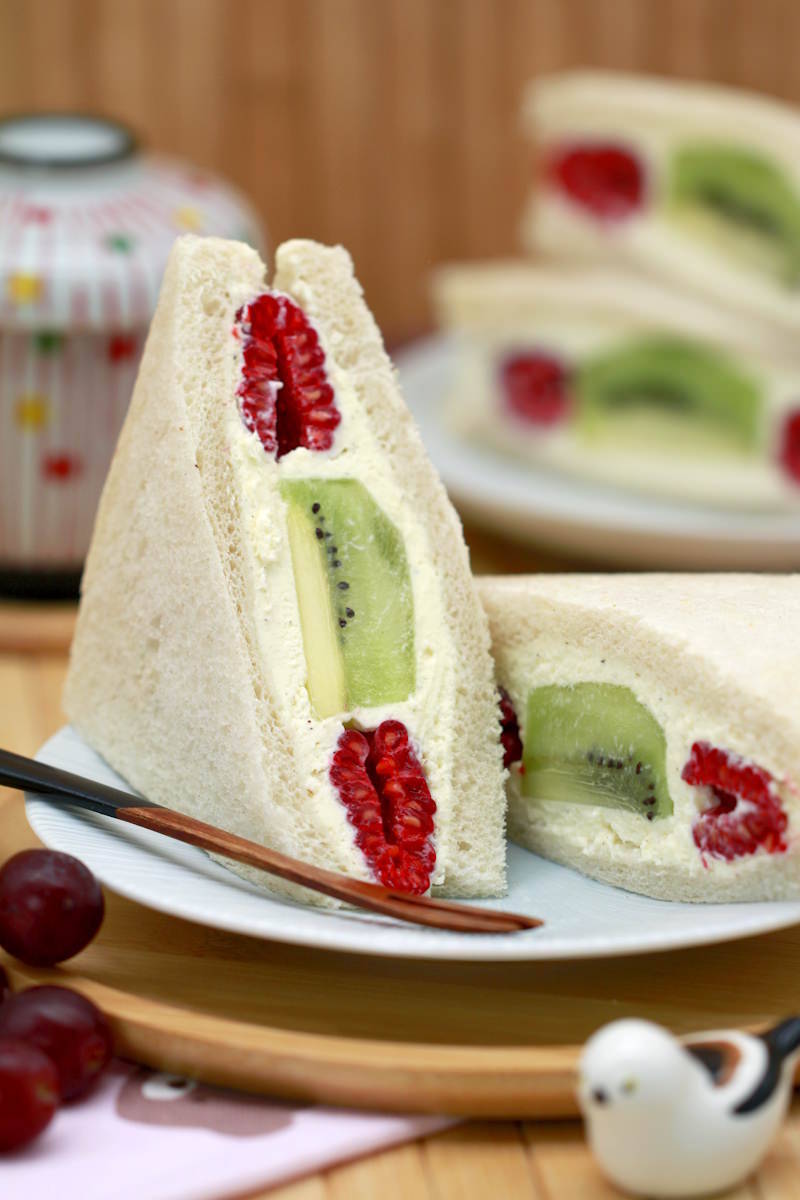
In Japan, it can remain surprisingly hot well into September – and it was on just such a muggy late-summer’s day that we tried a Fruit Sando for the first time. We were standing in the konbini, looking for something fresh and not too sweet, and there it was: a perfectly sliced sandwich with light green kiwi, dark grapes and a thick layer of cream between two slices of soft bread.
Since then, I’ve been hooked on this snack. Soft sandwich bread, chilled fruit and a cream that tastes almost like shortcake: simple, yet so typically Japanese in its attention to detail and aesthetics. And best of all: you can easily make this fluffy cream sandwich with fruit yourself at home.
Fruit meets aesthetics: why the Fruit Sando is so popular
In Japan, sandwiches have a special status all their own – unlike here, they’re not just a quick snack, but often a lovingly prepared packed lunch, a bento side, or even part of dessert culture. Especially soft, light sandwich bread (Shokupan) forms the base of many variations: from the hearty Katsu Sando with breaded pork cutlet, to the creamy Tamago Sando with egg, to the fruity Fruit Sando.
The Fruit Sando itself emerged in the 1980s as a sweet alternative to traditional sandwiches – initially in cafés and bakeries, and later in convenience stores too. It combines two typical Japanese favourites: light, airy white bread and the subtle sweetness of cream. The key, however, is the arrangement of the fruit. When cut open, a harmonious pattern should emerge – sometimes a heart made of strawberries, sometimes a colour gradient of kiwi and grapes.
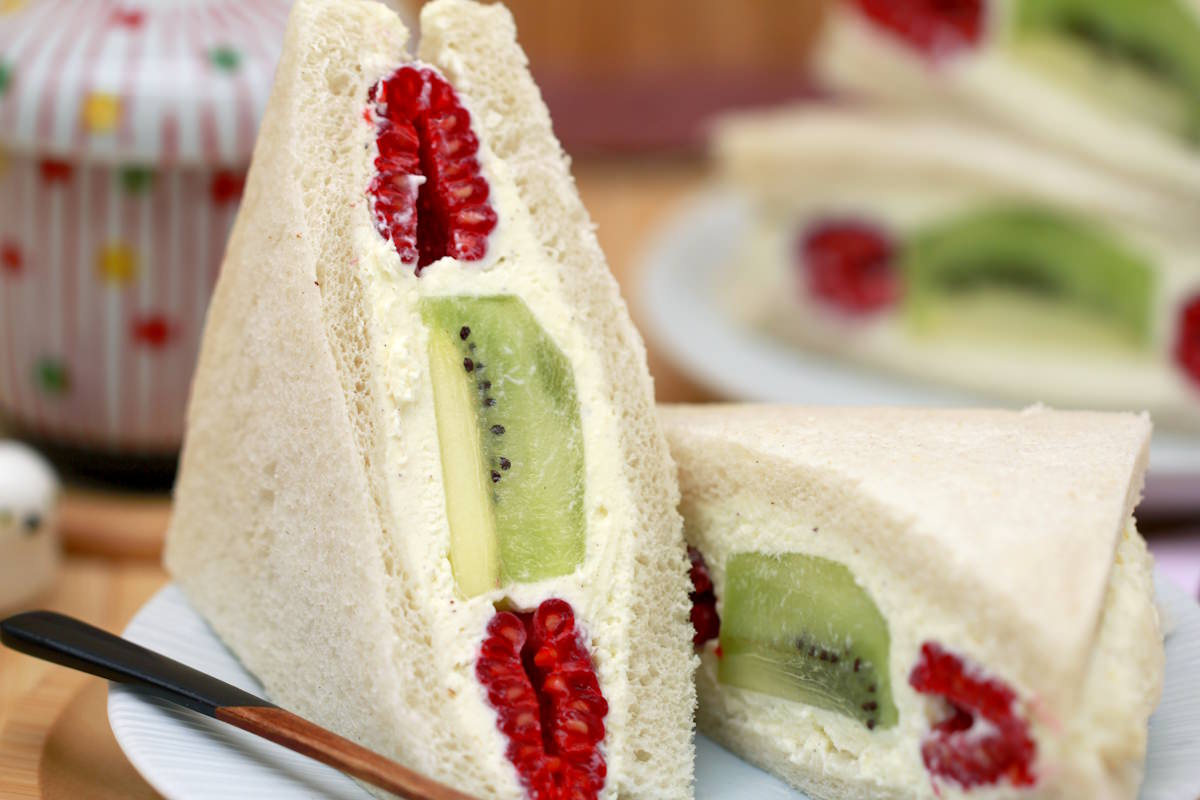
In Japan, the visual aspect plays a key role; particularly with desserts, great importance is placed on clean lines, soft colours and a calm presentation. This is particularly evident with the Fruit Sando: the fruit is arranged so that cutting it diagonally creates an aesthetic image. This is not only pleasing to the eye, but also demonstrates the care with which even simple snacks are prepared in Japan.
In convenience stores such as Lawson or 7-Eleven, you’ll usually find Fruit Sandos in the chilled section, attractively packaged with a small sticker that reveals which fruits are inside even before you cut them open. Alongside strawberries, mango and kiwi, seasonal fruits such as peaches and melon also feature – depending on the region and time of year.
If you’re interested in more Japanese sandwich recipes, you can find my other sandwich recipes here:
No post found!
Which fruits are suitable?
The best known is undoubtedly the strawberry sando – with bright red berries and white cream, it’s a real classic. But other fruits work wonderfully too: kiwi, raspberries, blueberries, grapes, peaches or mangoes are easy to slice and go well with the sweet cream. It’s important that the fruit isn’t too juicy and doesn’t leak when chilled; this keeps the sandwich stable and presentable.
It looks particularly pretty when you combine fruits with contrasting colours – for example, dark grapes with green kiwi or red strawberries with yellow peaches.

Which fruits go with which season?
Spring:
– Strawberries
– Kiwi
– Pink grapefruit
– Early blueberries
Summer:
– Peach
– Mango
– Raspberries
– Blueberries
– Seedless grapes (dark or light)
Autumn:
– Persimmons
– Pears
– Figs
– Apple slices (drizzle with lemon juice to prevent browning)
Winter:
– Mandarins
– Orange (fillets)
– Banana
– Pomegranate seeds (for decoration)
Make your own Fruit Sando: Here’s how
Making Fruit Sando at home is easier than you might think – and with the right mix of fruit, it not only looks great but tastes wonderfully fresh too. All you need is a few ripe fruits, some chilled whipped cream and light-coloured sandwich bread that’s easy to slice.
The key ingredients:
- Sandwich bread:
It’s best to use light, soft toast bread or original Japanese Shokupan. The crust is usually removed to ensure the result is particularly tender. - Cream:
A mixture of whipped cream, mascarpone (or sweetened condensed milk), vanilla sugar and cream stiffener provides stability and a subtle sweetness – not too heavy and firm enough to slice. - Fruit:
Kiwi, grapes, raspberries, strawberries or mango are ideal – they should be ripe but not too juicy. A combination of several colours when sliced is particularly popular. - For chilling:
Cling film is important here – it keeps the sandwich in shape and ensures that the cream sets and everything can be cut easily later.
Here’s how it works:
First, whip the cream. While it firms up slightly in the fridge, prepare the fruit: peel, slice and sort it. Then prepare the bread, remove the crusts and spread the cream evenly over each slice. The fruit is arranged on two slices of bread so that a pretty pattern emerges when cut diagonally. Then the second slice is placed on top – and everything is wrapped tightly in cling film.
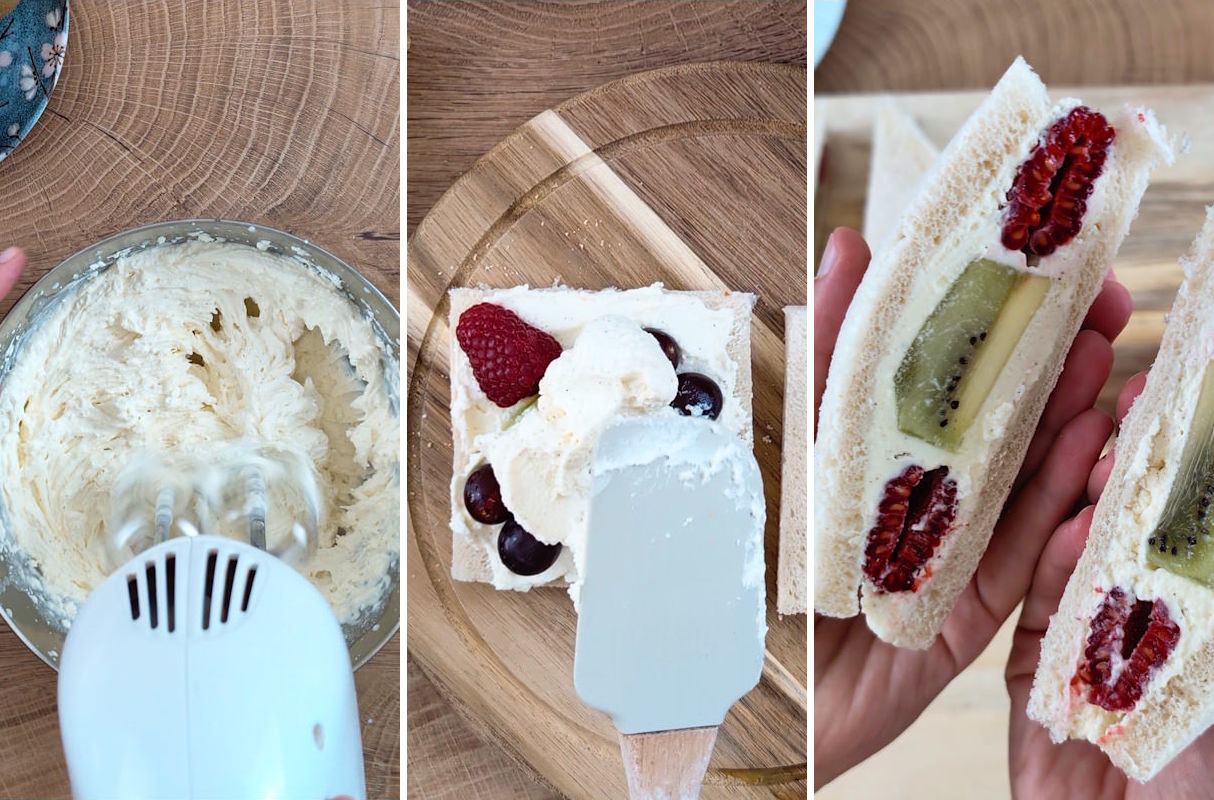
After about an hour in the fridge, the sandwich is firm enough to cut. Now carefully cut it in half diagonally – and admire the fruit pattern inside.
Tip
Fruit Sandos taste best fresh from the fridge, but they’re also easy to prepare in advance – for example, for a summer picnic or as a dessert the day before. Just make sure the fruit doesn’t release too much juice and the bread stays dry.
In Japan, you’ll find Fruit Sandos in traditional cafés, modern patisseries and, quite commonly, in konbini. Their popularity lies in their simplicity – and their versatility. If you like, try out different fruit combinations or experiment with the cream. The principle always remains the same: creamy, cool and simply delicious.
Have you ever made a Fruit Sando yourself? Perhaps even with your very own fruit ideas – from mango to blueberry? Feel free to tell me in the comments which combination you like best. Have fun trying it out and: いただきます Itadakimasu!
Fruit Sando
serves 2 | 20 minutes | 766 kcal
🖨️ Print PDF 📌 Save pinDelicate, fruity, Japanese-style beauty: this Fruit Sando with raspberries, kiwi and grapes is not only a treat but also a real eye-catcher. The combination of fluffy sandwich bread, sweet cream and fresh fruit makes this Japanese snack the perfect summer treat – quick to make, ideal for preparing in advance and so pretty that you almost don’t want to take a bite.
Ingredients (2 servings)
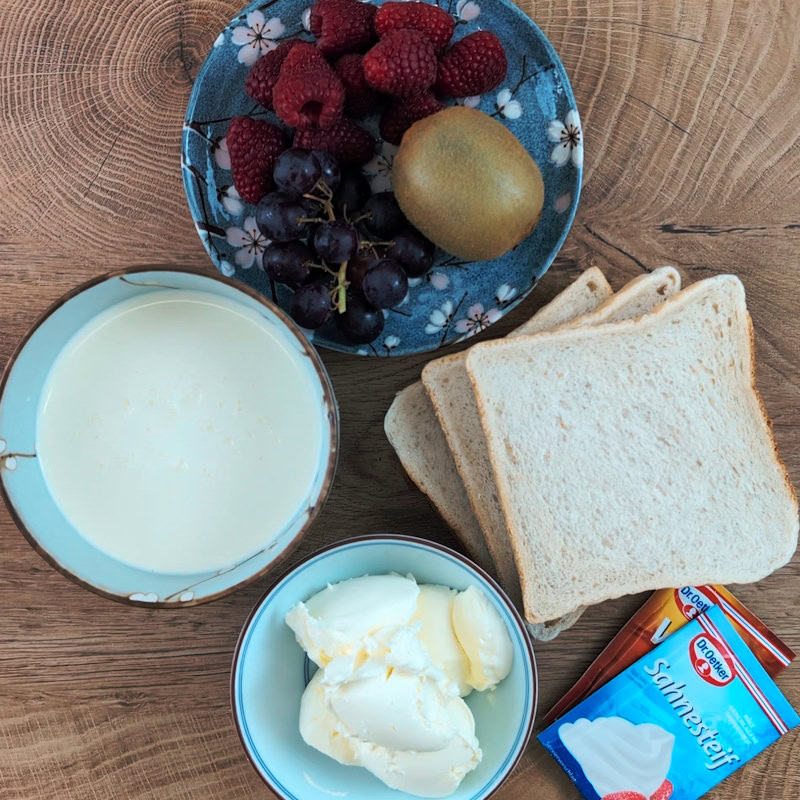
4 large raspberries (or 8 small ones)
1 kiwi
a small handful of dark, seedless grapes
200 g whipping cream
5 tbsp mascarpone (alternatively: sweetened condensed milk)
1 sachet whipped cream stabiliser
1 tbsp vanilla sugar
4 slices of light, soft sandwich bread
Preparation (20 minutes)
Step 1
Get the ingredients for your Fruit Sando ready. Wash the raspberries and grapes. Peel the kiwi and cut it in half lengthways.
Tip: You can also use other fruits – for example, strawberries, mango, banana, orange, blueberries or peach. It is important that they do not lose too much juice and are easy to cut. Different colours look particularly attractive when sliced.
Step 2
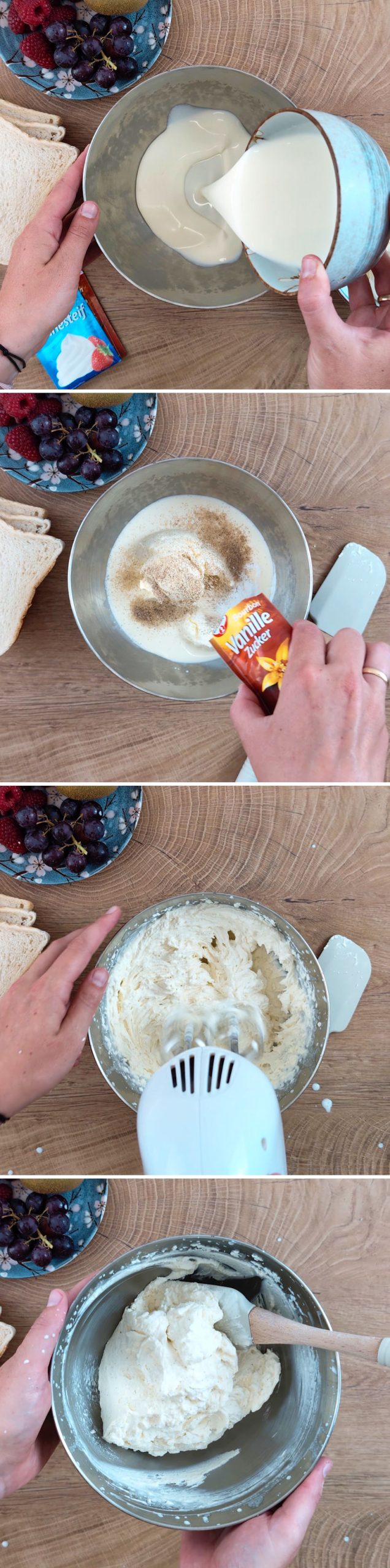
Add 200 g whipping cream, 5 tbsp mascarpone, 1 tbsp vanilla sugar and 1 sachet of whipping cream stabiliser into a mixing bowl. Whisk the mixture with a hand mixer until stiff, forming a smooth, firm cream. It should be firm enough that it doesn’t run out of the sandwich later.

Step 3
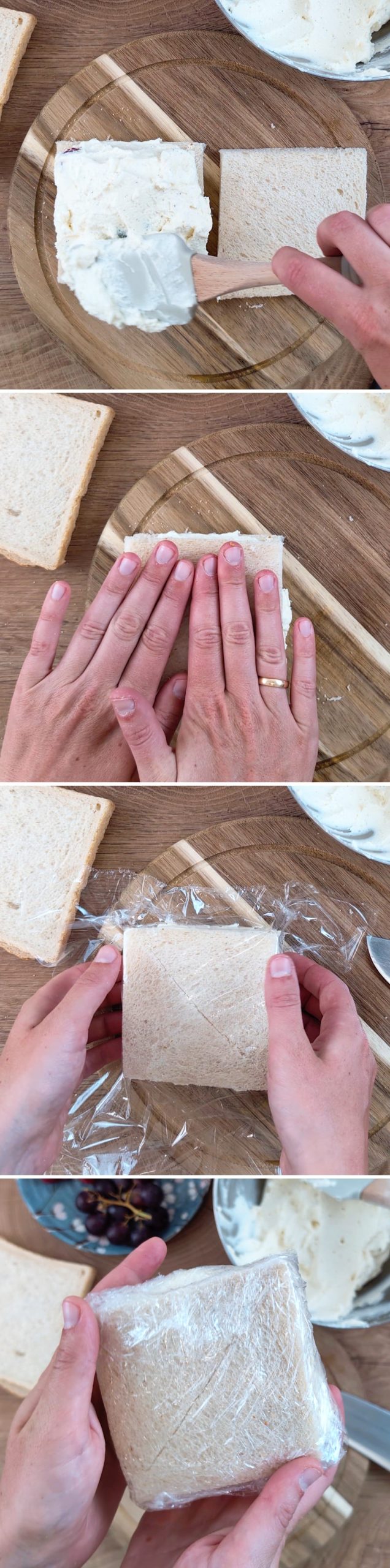
First, carefully trim the crusts off all 4 slices of bread – this makes the sandwich particularly tender and easier to cut later. Then spread 2 slices evenly with the cream mixture.
Now place the prepared fruit onto these two slices of bread – ideally in such a way that a nice pattern is visible when you cut it later. Arranging them diagonally looks particularly pretty. Fill any small gaps with a little extra cream.
Step 4
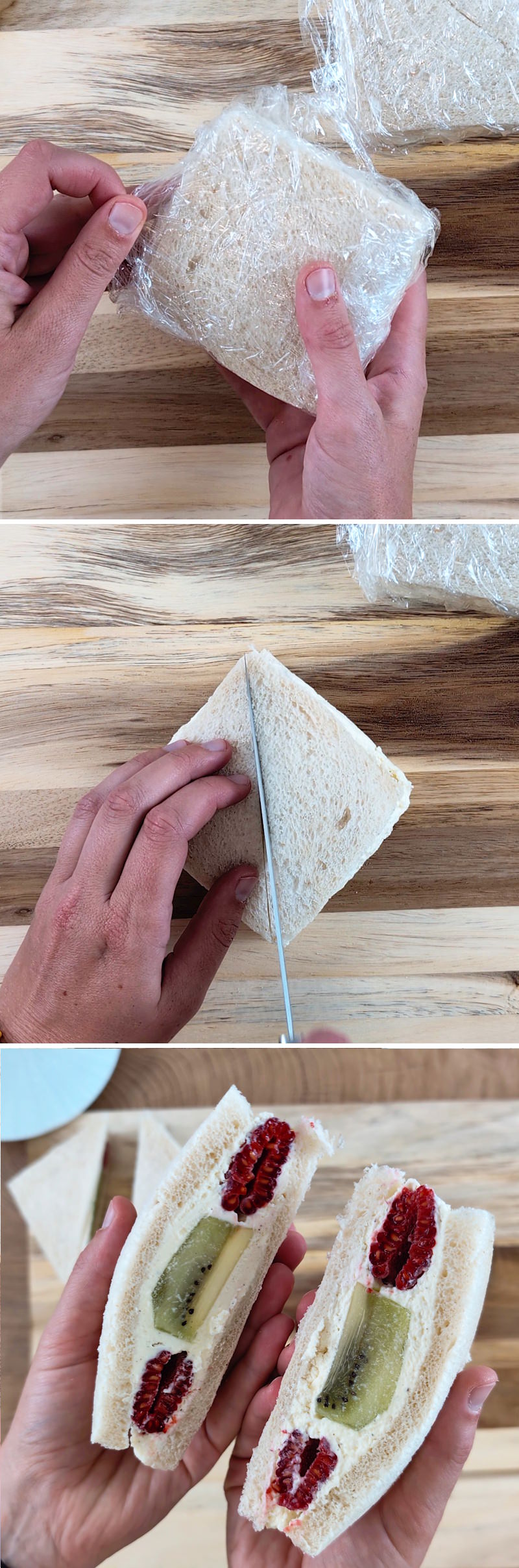
Place the two remaining slices of bread on top of the filled halves.
Tip: Use a sharp knife to mark the direction of the cut along the filling so that you can still see later how you arranged your fruit.
Now wrap the sandwiches tightly in cling film. Chill the sandwiches for at least 1 hour so that the cream can set.
Step 5
Take the sandwiches out of the fridge, carefully remove the cling film and cut them diagonally, ideally with a sharp, clean knife.

Step 6
Now you can see the lovely fruit arrangement inside. Serve straight away – best enjoyed fresh and chilled!
Fancy some more delicious Japanese-inspired ideas that go well with Fruit Sando? You can find our best recipes here:
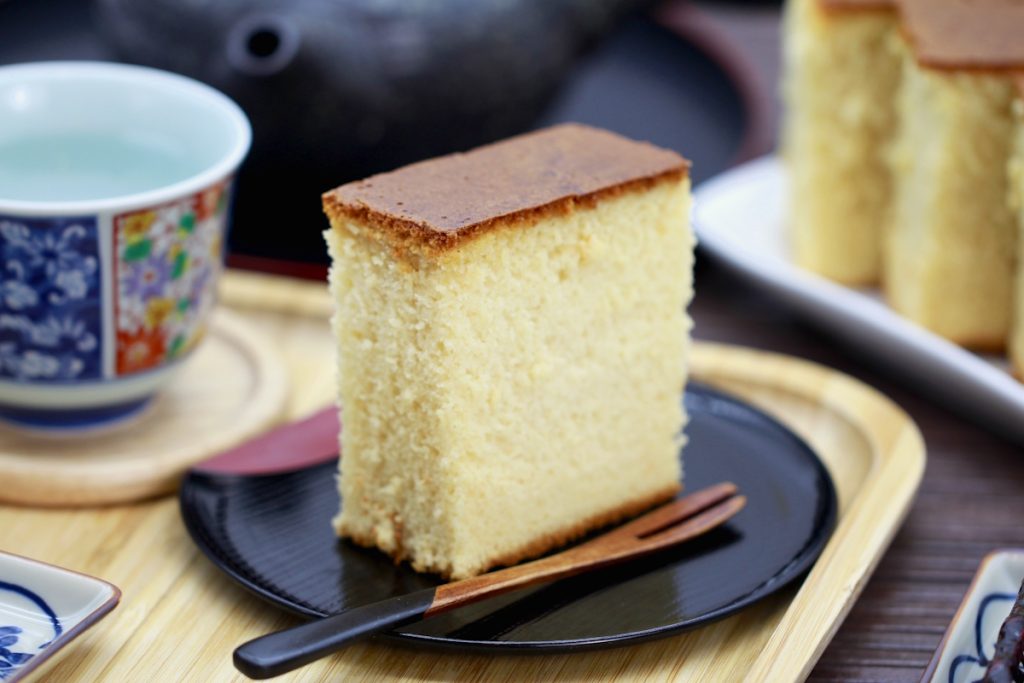
How to make Castella (Kasutera) yourself: How to make this Japanese honey cake
Why is Castella often described as Japan’s moistenest cake? Although Kasutera consists of just a…
Make your own Matcha butter Mochi: Hawaiian Mochi cake with green tea
If you drink Matcha regularly, you might be familiar with this: at some point, you…
Butter Mochi (Hawaiian Mochi Cake – gluten-free)
Butter Mochi is one of those recipes that’s hard to pigeonhole. It looks like a…
Warabi Mochi: Make your own delicate summer dessert with Kinako & Kuromitsu syrup
When the weather warms up, the appetite for light, refreshing sweets grows in Japan –…
Make your own Mochi ice cream: It’s easy, in three fruity flavours!
Oishii! Everyone really loves this food trend from Japan: homemade Mochi ice cream. A treat…
Feel the joy and beauty of Japanese spring with every bite of traditional Hanami Dango!…
Have you tried the recipe yet? Let me know in the comments – I can’t wait to hear from you.