
Language:


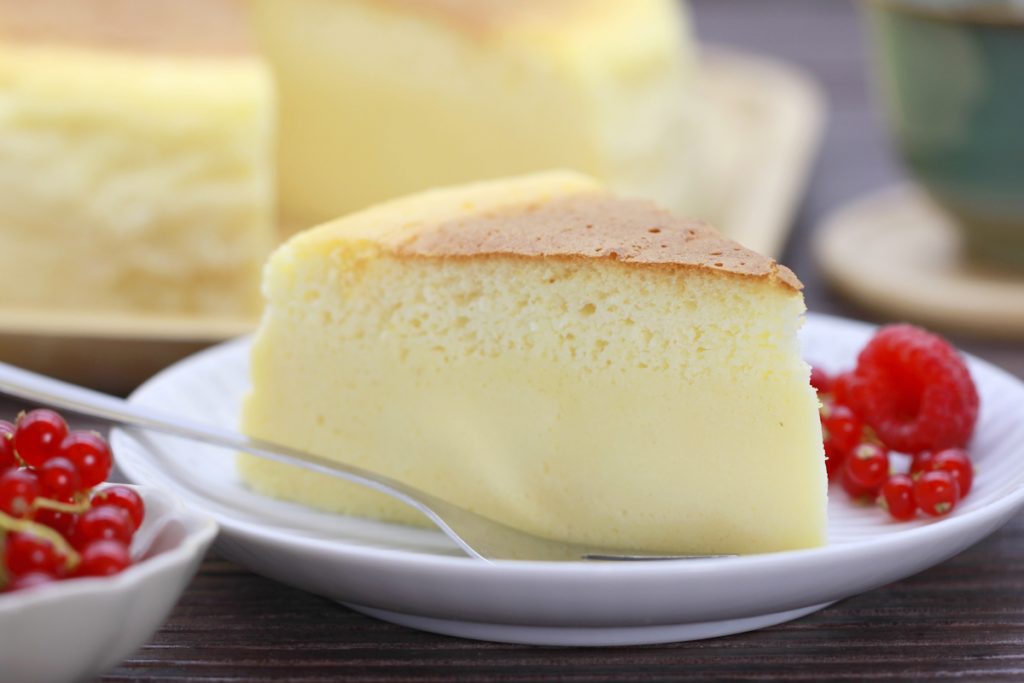
Japanese cheesecake is one of Japan’s most popular desserts and delights with its exceptionally light and airy texture. Unlike classic cheesecake, it is significantly lighter and, with its soft, springy texture, is almost reminiscent of a soufflé. That’s precisely why it’s often referred to as soufflé cheesecake or Japanese cotton cheesecake. Despite its light, airy structure, it has a pleasantly creamy flavour with a subtle hint of cream cheese, without feeling too heavy. In this recipe, I’ll show you step by step how you can easily bake this fluffy Japanese cheesecake at home.
What is Japanese cheesecake?
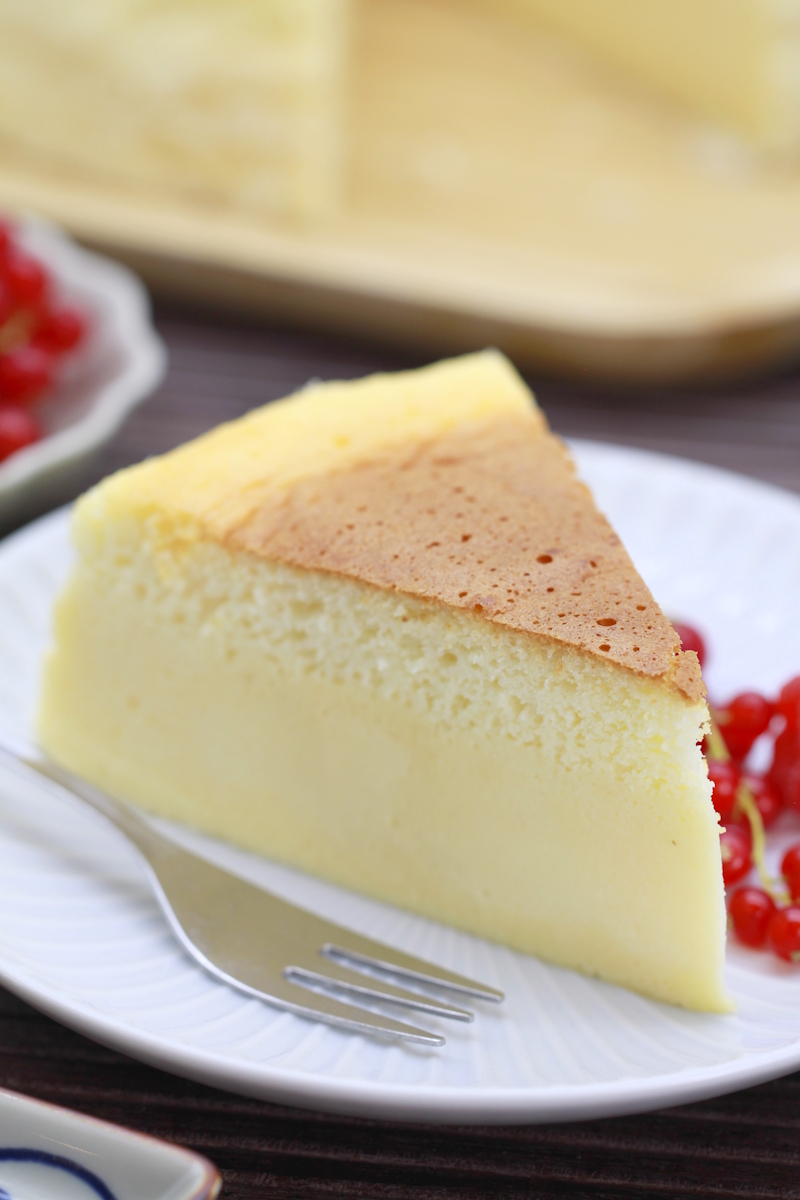
Japanese cheesecake (スフレチーズケーキ, Sufure Chīzukēki) is the Japanese version of the classic cheesecake. Unlike German cheesecake made with quark or the particularly creamy New York-style cheesecake, it is characterised by its exceptionally light and airy texture. Rather than being dense and heavy, it is soft, springy and almost reminiscent of a soufflé. It is therefore often referred to as soufflé cheesecake or Japanese Cotton Cheesecake.
The history of Japanese cheesecake
Although cheesecake originally hails from Europe, a unique Japanese interpretation of this dessert developed over the course of the 20th century. In the 1960s, Western baked goods became increasingly popular there. One of the best-known pioneers is the pastry chef Tomotarō Kuzuno, who discovered various types of cheesecake whilst travelling in Germany. Back in Japan, he began to adapt the recipe to Japanese taste preferences.
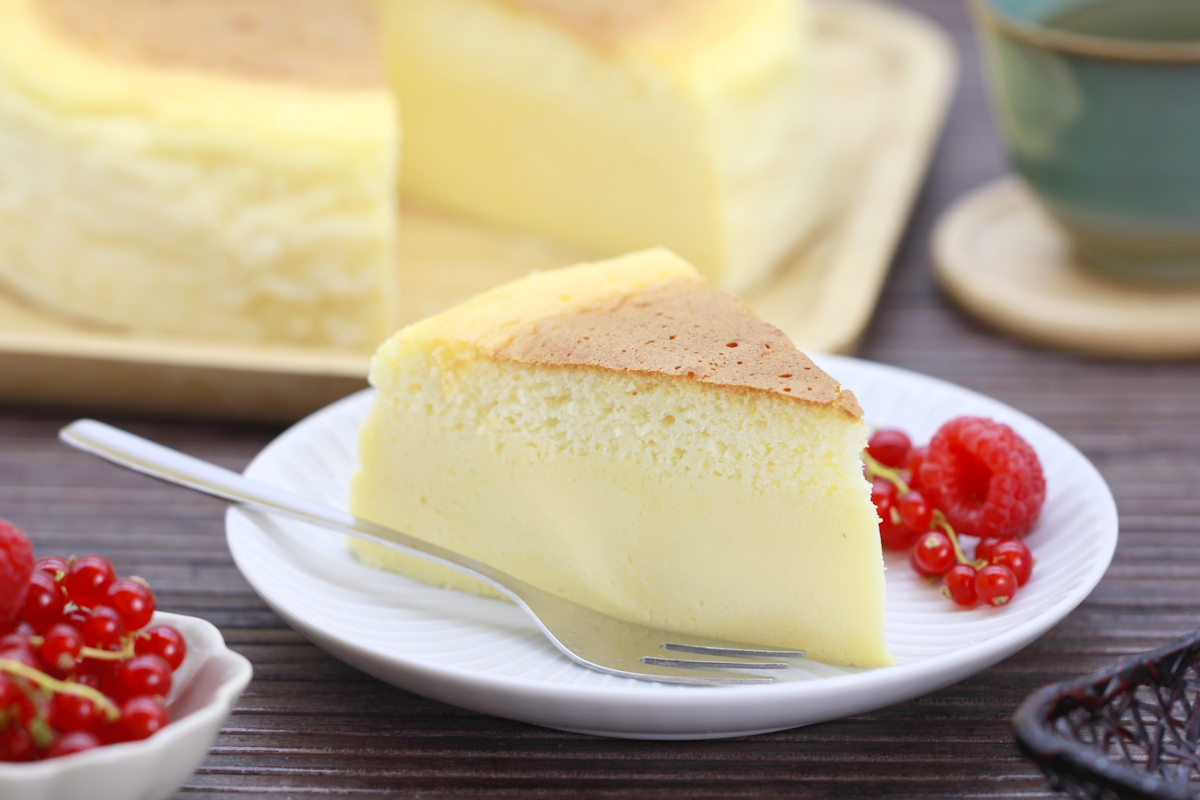
Whilst heavy, creamy cheesecakes were popular in Europe and the USA, the preference in Japan was for delicate, light desserts with a subtle sweetness. This gradually gave rise to today’s soufflé cheesecake, which is now one of Japan’s best-known desserts.
Why Japanese cheesecake is so special
Its characteristic texture comes from a combination of cream cheese, eggs and carefully folded-in beaten egg whites. Whilst the cream cheese provides the creamy flavour, the beaten egg whites lighten the batter and give the cake its impressive height. Japanese cheesecake is traditionally baked in a bain-marie. This ensures the heat is distributed particularly evenly, so that the cake bakes gently, remains wonderfully moist and achieves its delicate, almost cloud-like consistency. Incidentally, it is completely normal for it to sink back down slightly after baking – this is actually typical of this type of cheesecake.
Japanese cheesecake or German Käsekuchen?
Although they look similar, they differ significantly. German cheesecake is usually made with quark and has a firm, creamy texture. Japanese cheesecake, on the other hand, contains cream cheese and plenty of whipped egg whites. This makes it much lighter and airier, and more reminiscent of a soufflé than a classic cheesecake.
Today, Japanese cheesecake is a staple on the menus of many cafés, patisseries and bakeries throughout Japan. It is usually served very simply with a sprinkling of icing sugar, fresh berries or a dollop of whipped cream. This understated presentation fits perfectly with Japanese patisserie, which focuses on high-quality ingredients, precise craftsmanship and a harmonious balance of flavour, texture and appearance.
It was ultimately through social media that Japanese cheesecake finally gained international recognition. Videos shared millions of times show how the freshly baked cake wobbles gently when tapped lightly; a trademark feature that has earned it the nickname ‘wobbly cheesecake’. However, there’s no trick behind this effect – it’s simply the perfect combination of light, airy beaten egg whites, gentle baking in a bain-marie and a little patience whilst it cools.
How to make Japanese cheesecake yourself
Japanese cheesecake looks complicated at first glance, but it’s easy to make at home if you bear a few things in mind. The ingredients are straightforward, and you’ll probably already have many of them in your cupboard. The key is, above all, carefully whipped egg whites, gentle baking in a bain-marie and a little patience whilst it cools.
Unlike many other cheesecakes, the mixture isn’t simply stirred together. Instead, the cream cheese and egg yolks are first blended into a smooth mixture and then gently folded into the light, airy beaten egg whites. It is precisely this step that later gives the cake its characteristic light, almost cloud-like texture.
The bain-marie also plays an important role. It ensures an even heat and prevents the cake from setting too quickly on the outside whilst the inside is still not fully cooked. This keeps the Japanese cheesecake wonderfully moist and gives it its characteristic delicate texture.
You only need a few ingredients for a classic Japanese cheesecake. That’s precisely why it’s worth making sure you use good-quality ingredients.
The key ingredients for Japanese cheesecake:
- Cream cheese: This forms the basis of the cake and gives it its typical creamy flavour. Double-cream cream cheese is best suited.
- Eggs: These are the key ingredient for achieving a light, airy consistency. The egg yolks bind the ingredients together, whilst the beaten egg whites give the cheesecake its impressive height.
- Cream: This makes the mixture smooth and helps create the delicate, creamy texture.
- Wheat flour and cornflour: Both ingredients stabilise the cake without making it seem heavy. This keeps it light whilst still allowing it to be cut neatly.
- Lemon juice: A small splash adds a touch of freshness to the flavour and harmonises perfectly with the mild cream cheese.
Here’s how it works:
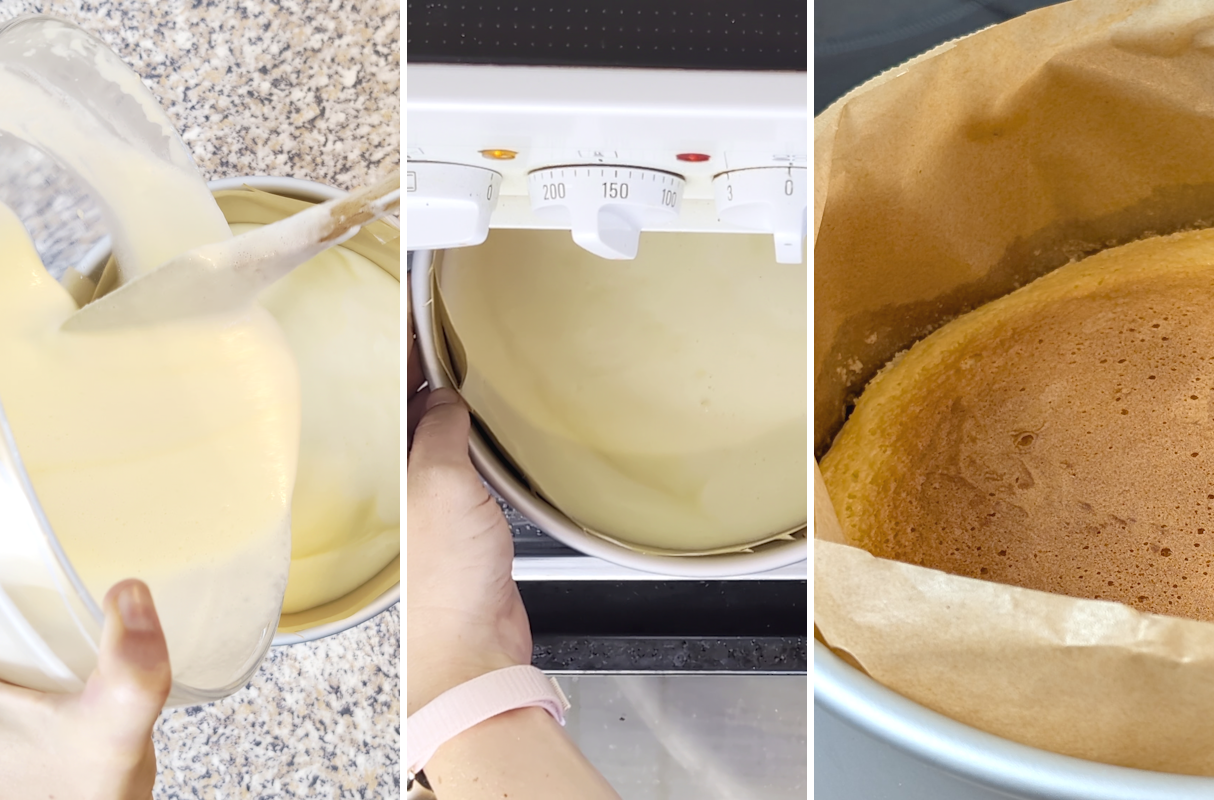
Although Japanese cheesecake requires a bit of patience, it’s much easier to make than it looks. To make Japanese cheesecake, first mix the cream cheese, butter and cream until smooth. Next, the egg yolks and dry ingredients are added, before gently whipped egg whites are folded in. The mixture is then poured into a prepared baking tin and gently baked in a bain-marie. After a short resting period in the switched-off oven, the cheesecake is left to cool completely and then set in the fridge. This creates the typically fluffy, light and wonderfully creamy texture, for which Japanese cheesecake is famous all over the world.
Why is Japanese cheesecake baked in a bain-marie?
The bain-marie ensures that the cake bakes particularly gently and evenly. The moisture prevents the surface from drying out too quickly or cracking. At the same time, the crumb remains wonderfully soft and retains the typical airy, almost melt-in-the-mouth texture for which Japanese cheesecake is known.
Tips for preparation:
To ensure your Japanese cheesecake turns out particularly light and airy, all ingredients should be at room temperature where possible. This makes it easier for them to combine into a smooth mixture and ensures the batter is particularly even.
Also, make sure to whisk the beaten egg whites only until they form soft to medium-stiff peaks. If they are too stiff, they are harder to fold in, and the cheesecake may crack more easily or rise unevenly later on.
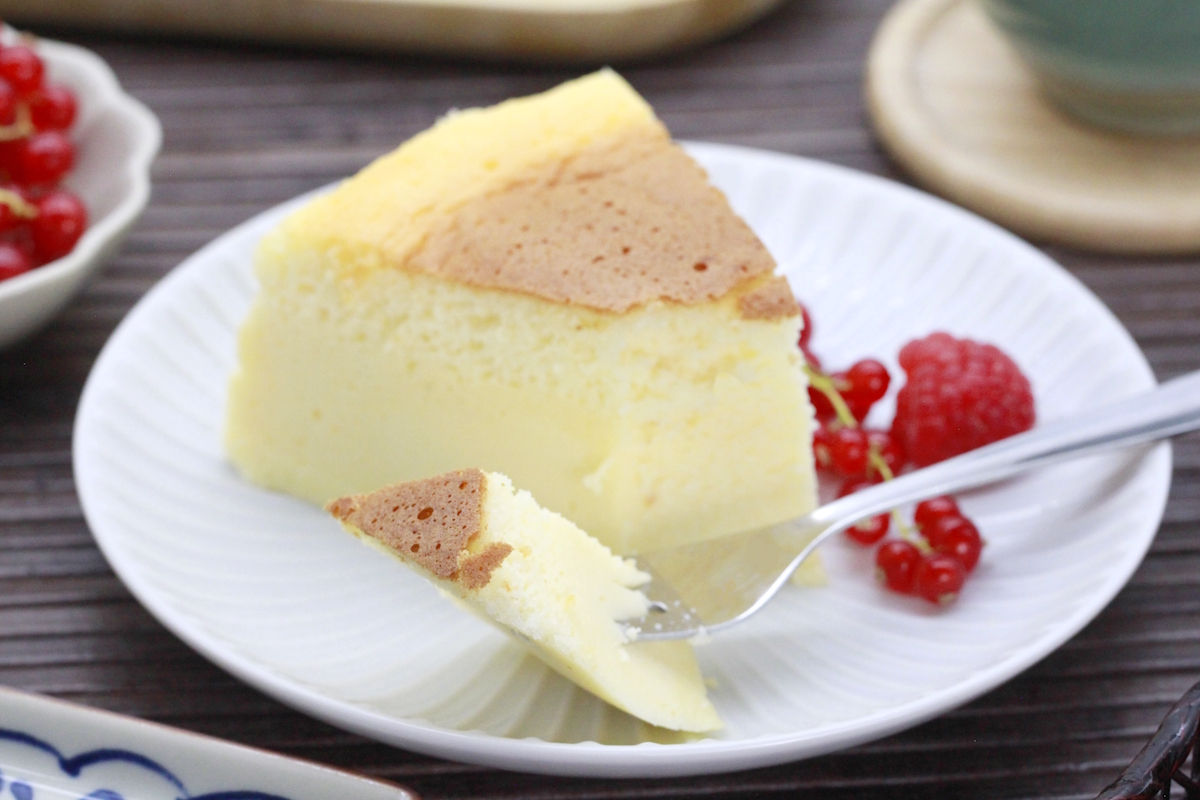
Another important step is the bain-marie. It ensures gentle and even heat, so that the cake bakes slowly, remains moist and retains its characteristic fluffy texture. It is equally important to let the cheesecake cool slowly after baking. If you leave it to rest in the switched-off oven first and then allow it to cool completely, it will settle much more evenly and develop a particularly fine texture.
Finally, the cheesecake needs a little patience: after a few hours in the fridge , it will set firmly enough to cut and develop its full flavour. It therefore tastes best when thoroughly chilled, ideally not until the next day.
Variations on Japanese cheesecake
In Japan, there are various types of cheesecake. The best known is the soufflé cheesecake, which is made particularly light and airy by using beaten egg whites and baking in a bain-marie. Also popular are the rare cheesecake, which is prepared without baking, and the Baked Cheesecake, which is slightly firmer and creamier. Many patisseries also offer seasonal variations, for example with Matcha, yuzu or sakura.
What goes well with Japanese cheesecake?
Japanese cheesecake tastes excellent on its own, but it also pairs wonderfully with various accompaniments. The following go particularly well with it:
- vanilla ice cream for a special dessert
- fresh berries such as strawberries, raspberries or blueberries
- whipped cream or lightly sweetened cream
- icing sugar as a classic, simple decoration
- Matcha latte or a cup of matcha as a typical Japanese accompaniment
- Green tea such as sencha or genmaicha
- Fresh fruit such as mango, kiwi or mandarins
- Fruit sauces made from strawberries, raspberries or yuzu
Have you ever baked this Japanese cheesecake yourself? I look forward to hearing about your experiences and variations in the comments. Have fun baking it and Itadakimasu!
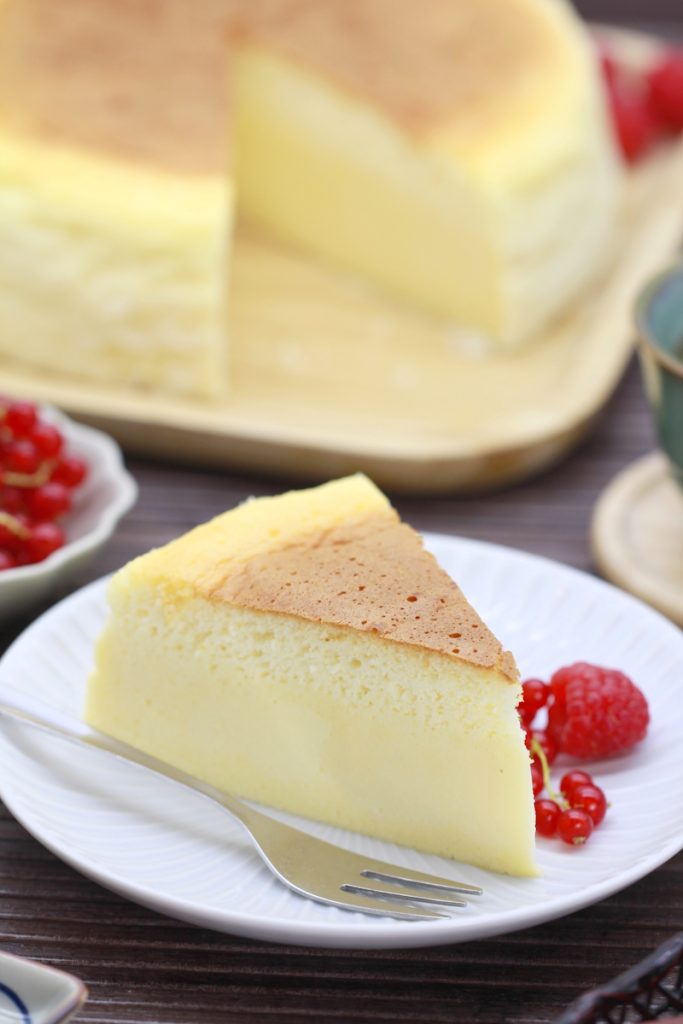
Japanese cheesecake
12 slices | 2 hours | 327 kcal
🖨️ Print PDF 📌 Save this pinJapanese cheesecake is a particularly light and creamy cheesecake made from cream cheese, eggs and finely whipped egg whites. Gentle baking in a bain-marie gives the soufflé cheesecake its characteristic springy, almost cloud-like texture. With this recipe, you can easily make the popular Japanese Cotton Cheesecake at home.
Ingredients (1 cake ∅ 20 cm = approx. 12 slices)
340 g cream cheese (double cream variety)
70 g butter
220 ml cream
180 g sugar (divided into 70 g and 110 g)
7 eggs (size M)
90 g plain flour (Type 405 or spelt flour Type 630)
20 g cornflour (im Shop ansehen)
1 pinch salt
1½ tbsp lemon juice
(optional) a little lemon zest
(optional) fresh berries to serve
Useful equipment:
Round cake tin (auf Amazon* kaufen)
Baking paper cut-outs for round cake tins with high sides (auf Amazon* kaufen) (or make your own)
Method (approx. 2 hours + cooling time)
Step 1
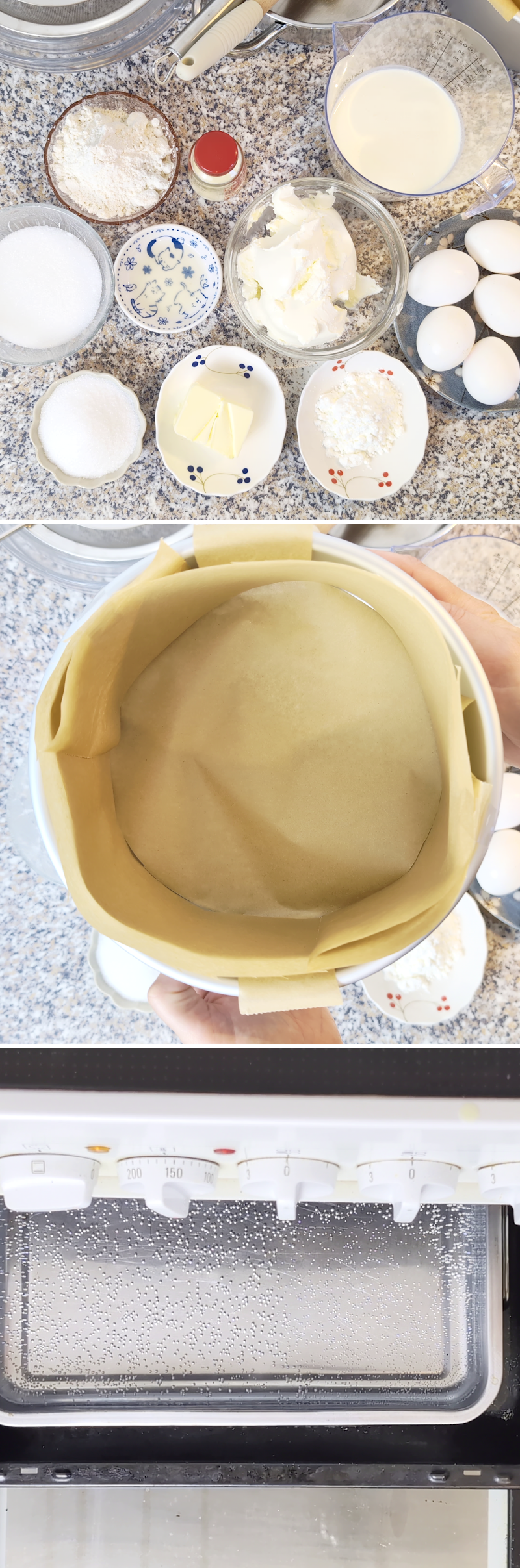
Preheat the oven to 160 °C top and bottom heat. Then line the cake tin with baking paper. The baking paper should extend a few centimetres beyond the rim, as the Japanese cheesecake rises significantly during baking. If your springform tin isn’t completely airtight, carefully wrap the outside with aluminium foil as well to prevent water from seeping in later.
Place a deep baking tray or a large ovenproof dish on the middle shelf of the oven and fill it with hot water to a depth of about 2–3 cm. This water bath will ensure the cheesecake bakes particularly evenly and gently.
Tip: For this recipe, I use an extra-tall cake tin with a diameter of 20 cm and a height of 10 cm. This gives the Japanese cheesecake its characteristic tall shape and allows it to rise nicely during baking without spilling over. The recipe also works with a standard springform tin (22–24 cm); the cake will simply be a little flatter.
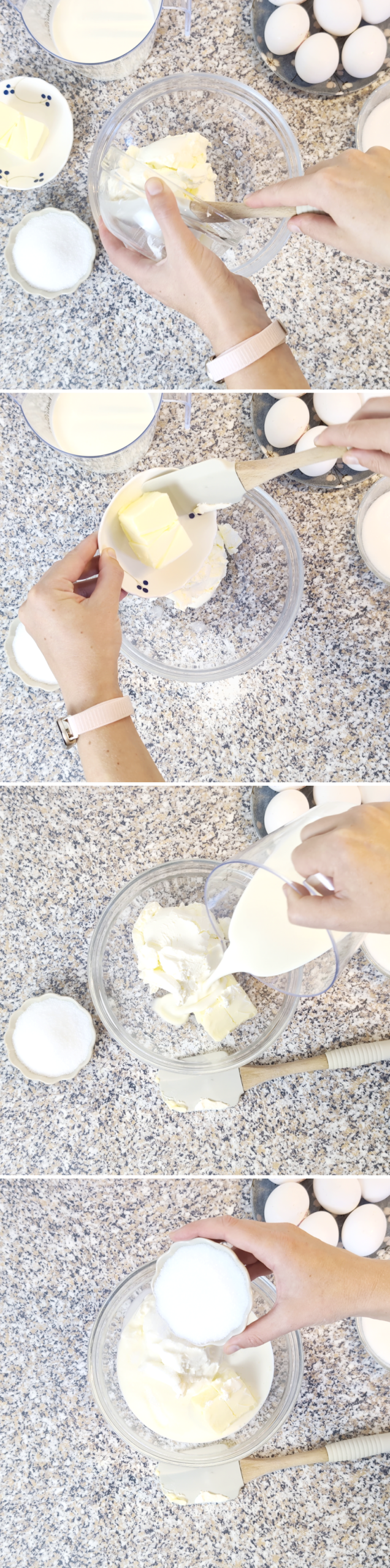
Step 2
Place 340 g cream cheese, 70 g butter, 220 ml cream and 70 g sugar into a heatproof bowl.
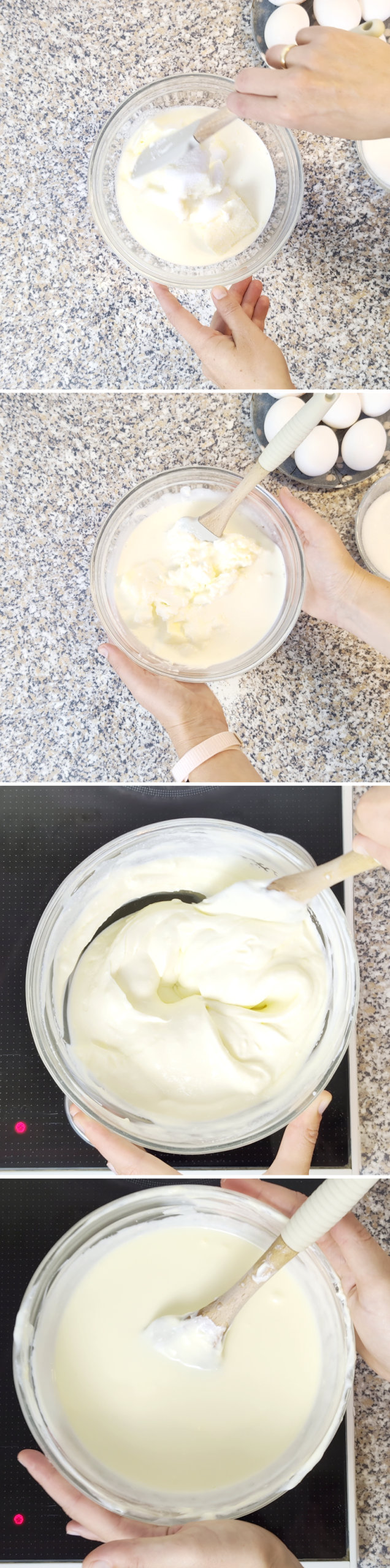
Step 3
First, stir the ingredients gently, then place the bowl over a warm bain-marie and slowly heat the mixture, stirring constantly, until it becomes smooth and creamy. The mixture should be allowed to become slightly warm, but must not boil. This takes about 5–10 minutes. Then remove the bowl from the bain-marie and set aside.
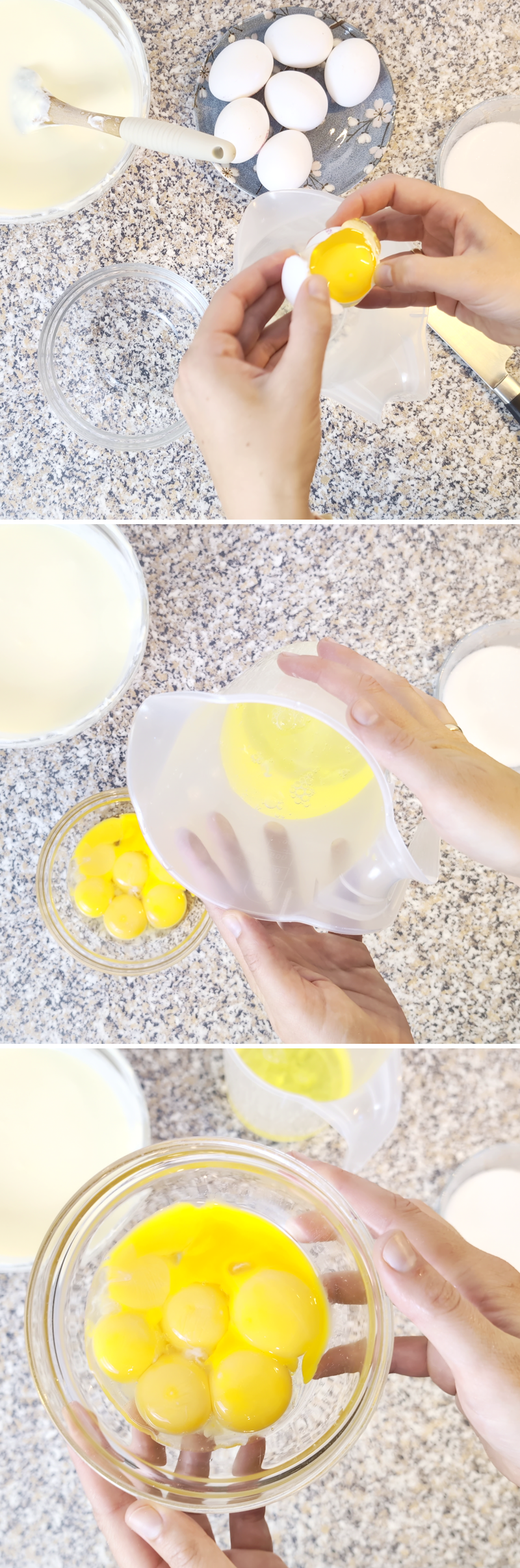
Step 4. Step
Separate the 7 eggs. Place the egg yolks in a bowl. Place the egg whites in a tall mixing bowl.
Note: The mixing bowl for the egg whites should be clean and free of grease. This will ensure you can whip up stiff egg whites later.
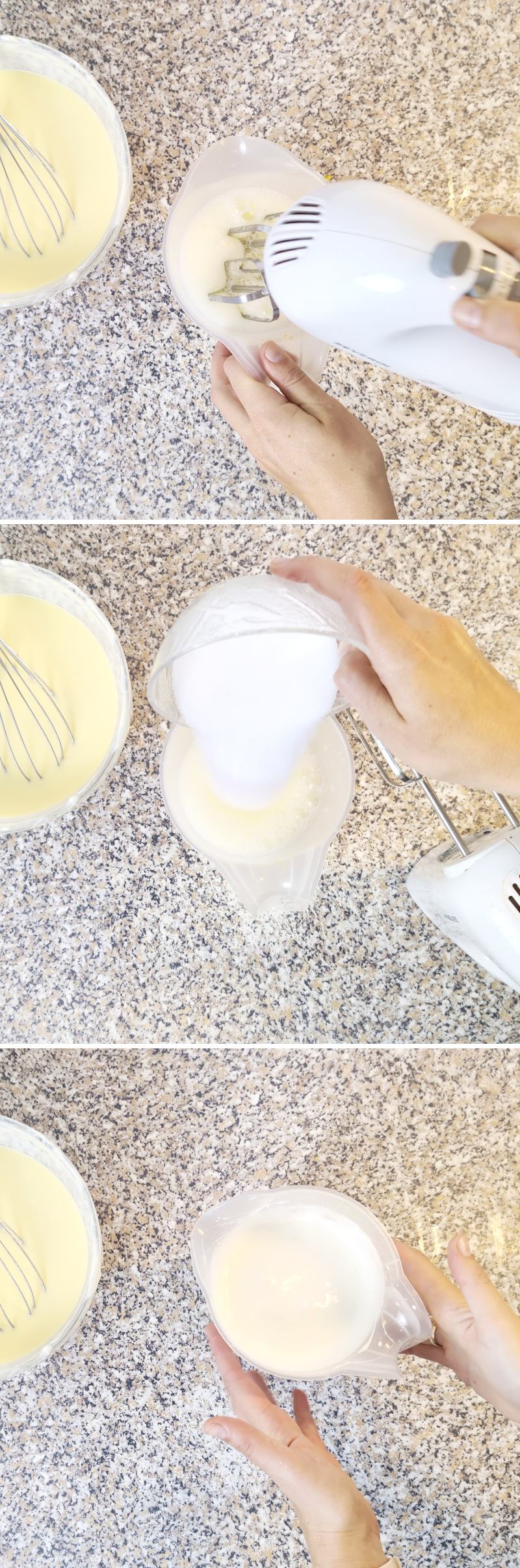
Step 5
Beat the egg whites in the mixing bowl with a mixer, starting on a medium setting. As soon as they become frothy, slowly sift in the remaining 110 g of sugar and continue beating. Beat the egg whites only until soft to medium peaks form. The mixture should be glossy and firm, but not dry or stiff. Set aside briefly.
Step 6
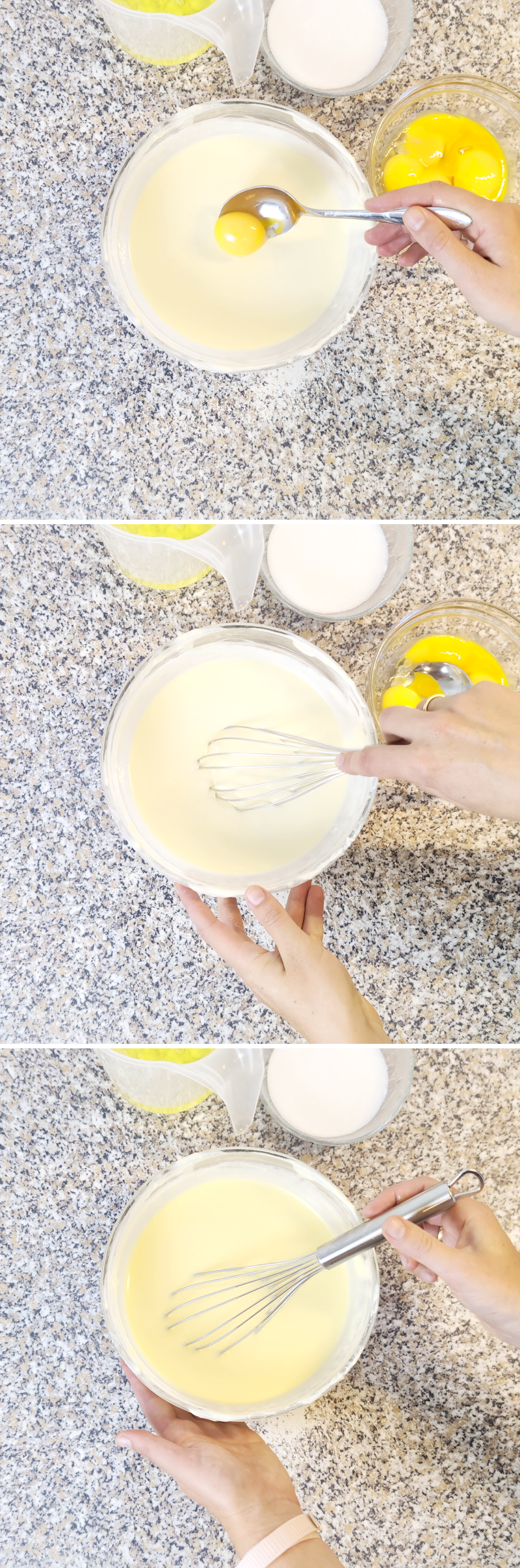
Gently fold the egg yolks one at a time into the slightly cooled cream cheese mixture. Only add the next yolk once the previous one has been fully incorporated.
Step 7
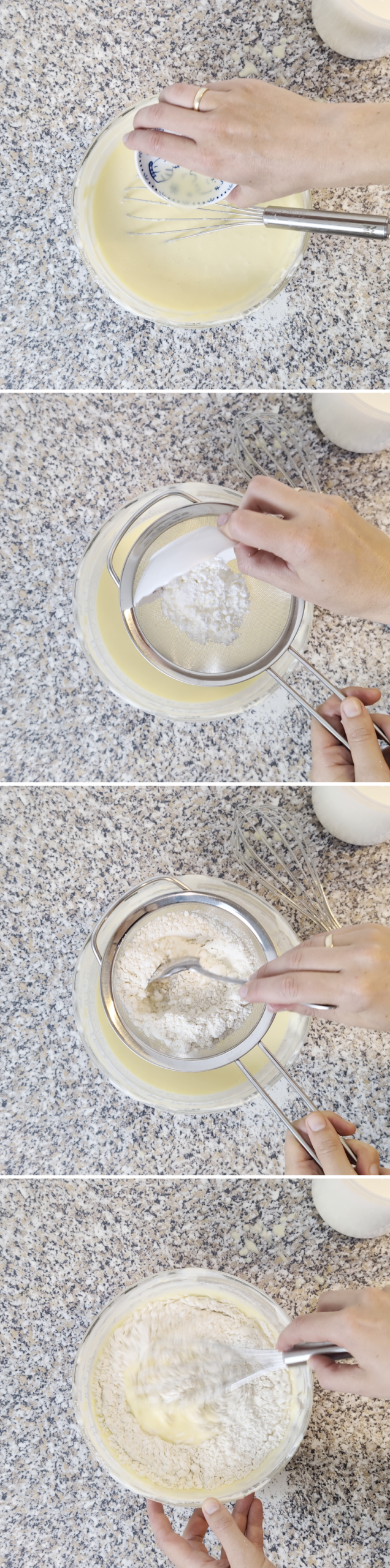
Then stir in 1½ tbsp lemon juice and, if desired, a little lemon zest.
90 g plain flour, 20 g cornflour and 1 pinch of salt into a fine sieve. Then sieve directly over the cream cheese mixture and stir just until no lumps remain.
Step 8
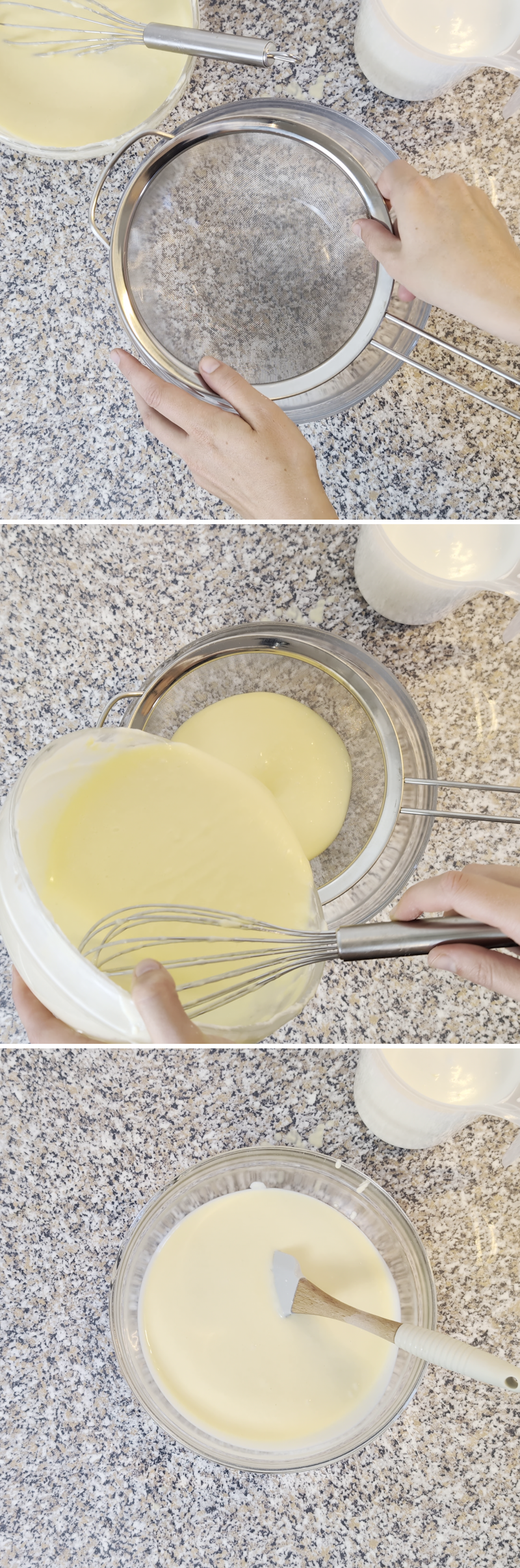
To achieve a particularly smooth and even texture, we then pass the mixture through a fine sieve into a second large bowl.
Step 9
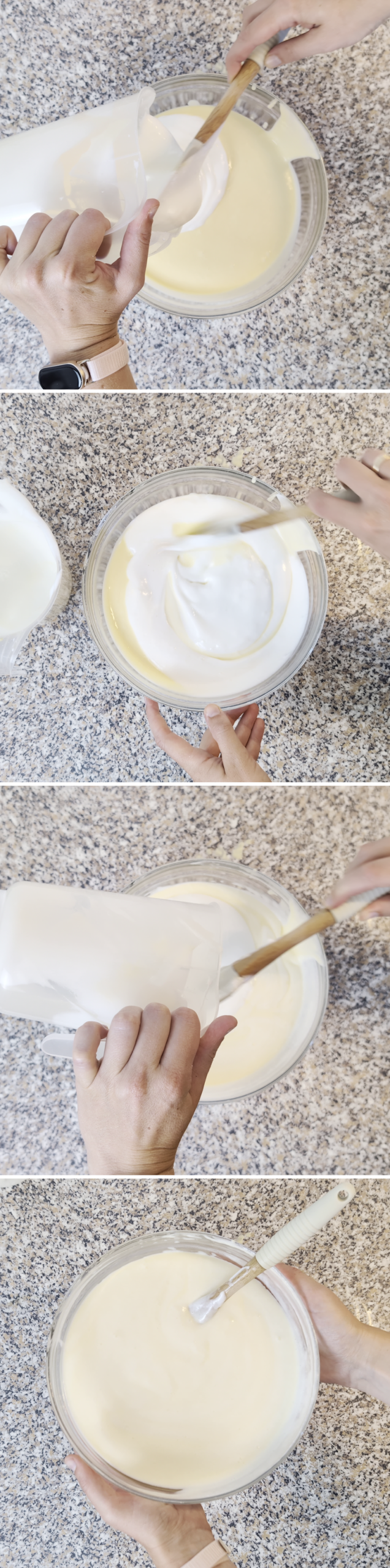
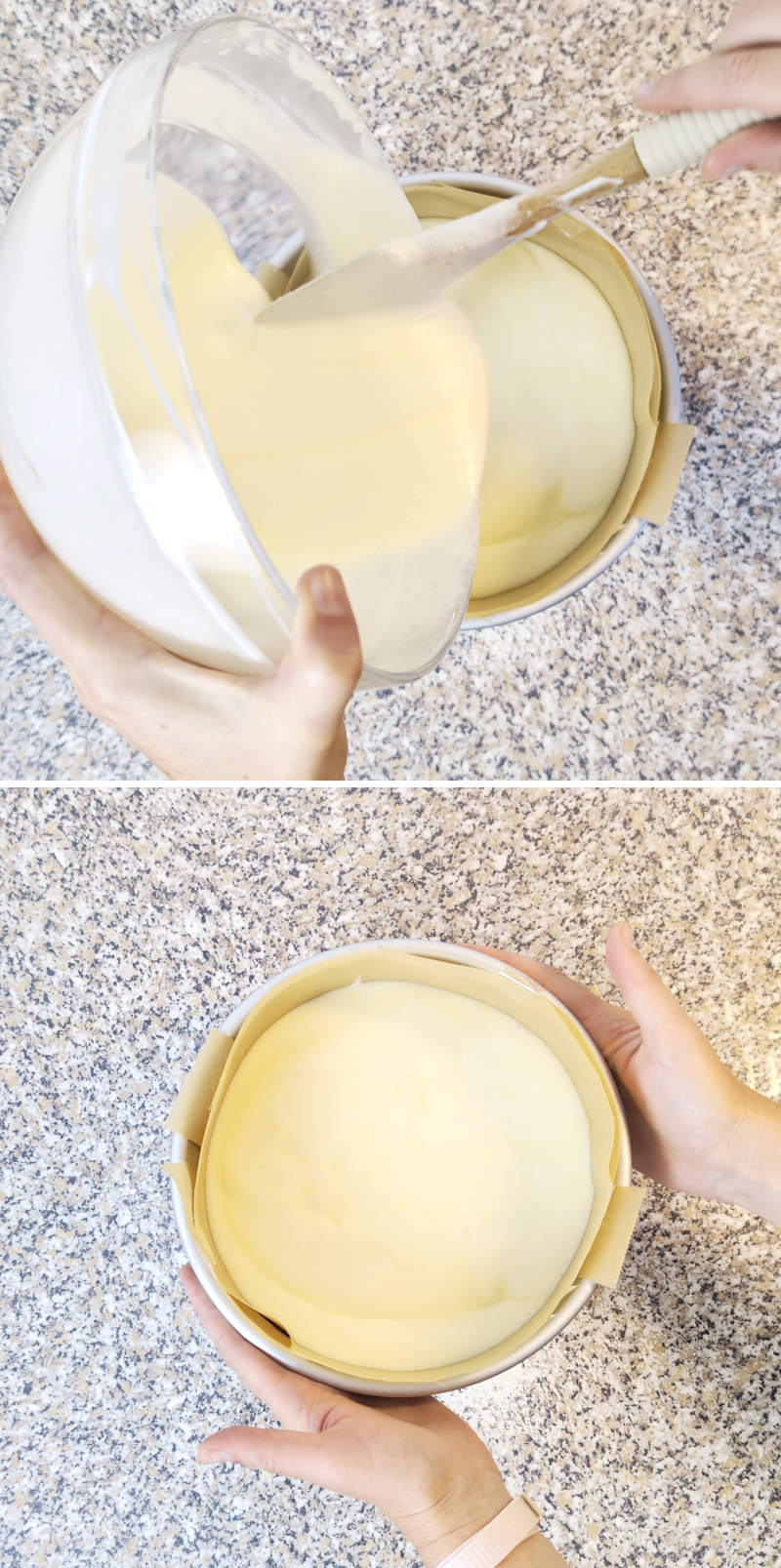
Fold about a third of the beaten egg whites into the cream cheese mixture using a spatula. This makes the mixture slightly lighter and makes it easier to combine with the remaining beaten egg whites later on. Now carefully fold in the rest of the beaten egg whites. Work from the bottom upwards and try to dislodge as little air as possible from the mixture. By the end, there should be no large white streaks visible.
Step 10
Pour the batter into the prepared springform tin and gently smooth the surface. Then tap the tin lightly on the work surface two or three times. This allows any larger air bubbles to escape.
Step 11
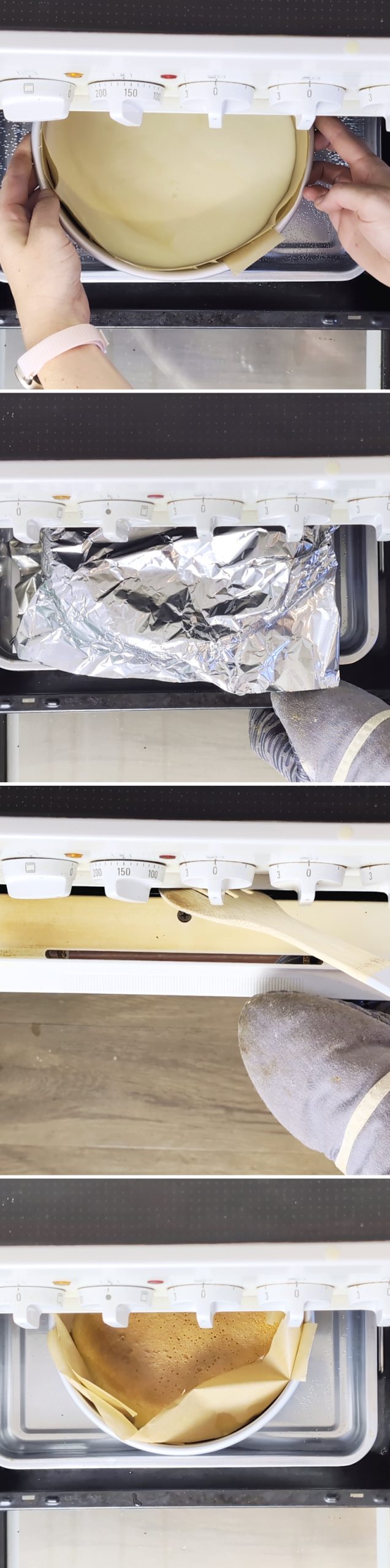
Carefully place the cake tin in the hot bain-marie and bake for 70 minutes at 160 °C (top and bottom heat). Then reduce the temperature to 150 °C and bake the cake for a further 20 minutes (if the surface is already well browned, feel free to cover it with aluminium foil and continue baking).
The surface should then be an even golden brown. The centre may still wobble slightly when the tin is moved carefully.
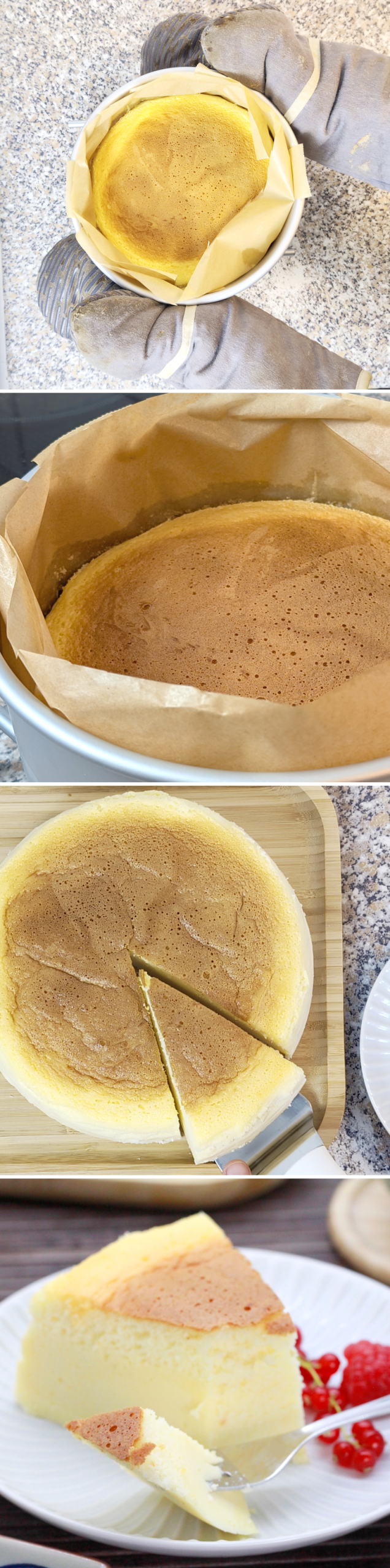
Switch off the oven and use a wooden spoon to keep the oven door open. Leave the cheesecake to stand in the switched-off oven for 20 minutes. This allows it to cool slowly and prevents it from sinking too much.
Step 12
Then remove from the oven and leave to cool completely.
Leave the cooled Japanese cheesecake cheesecake to set in the fridge for at least 4 hours, preferably overnight. Before serving, leave it to stand at room temperature for about 15 minutes, then cut into slices. Serve with fresh berries if desired.
Tip: It’s best to cut it with a sharp knife and rinse the blade briefly under hot water between cuts. This keeps the cut surfaces particularly clean.
Fancy some more sweet inspiration from Japan, perfect for an afternoon treat or as a dessert?
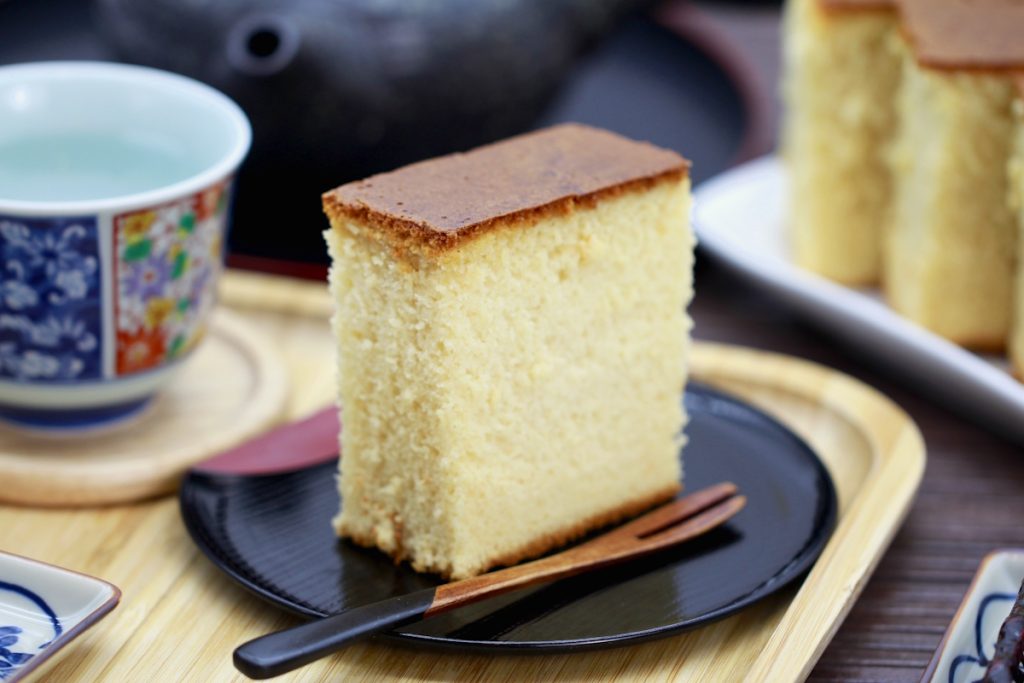
How to make Castella (Kasutera) yourself: How to make this Japanese honey cake
Why is Castella often described as Japan’s moistenest cake? Although Kasutera consists of just a…
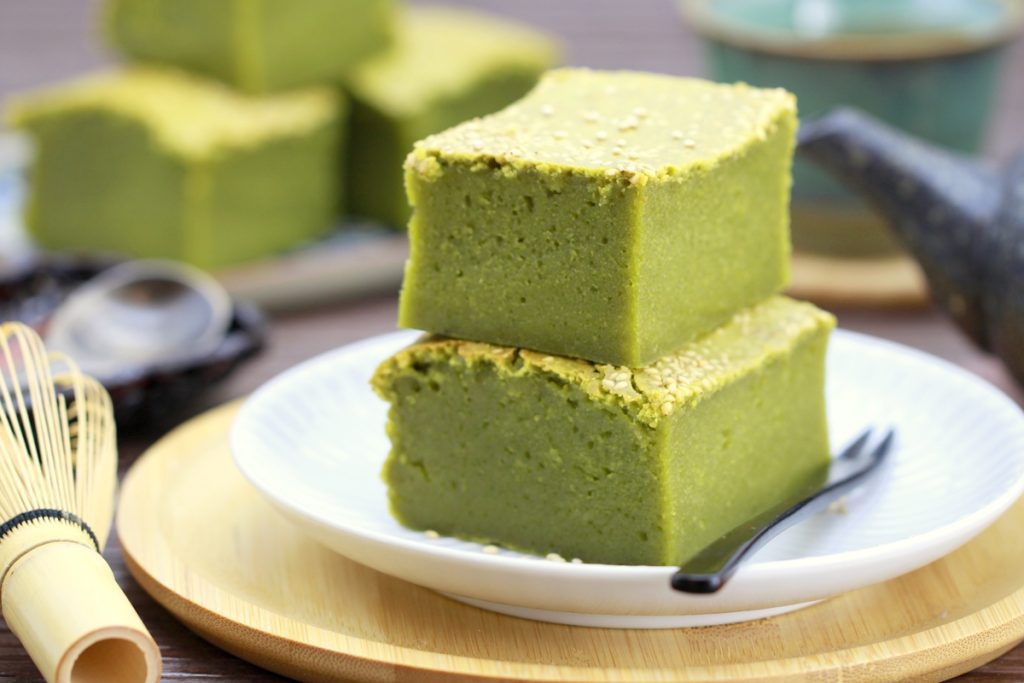
Make your own Matcha butter Mochi: Hawaiian Mochi cake with green tea
If you drink Matcha regularly, you might be familiar with this: at some point, you…
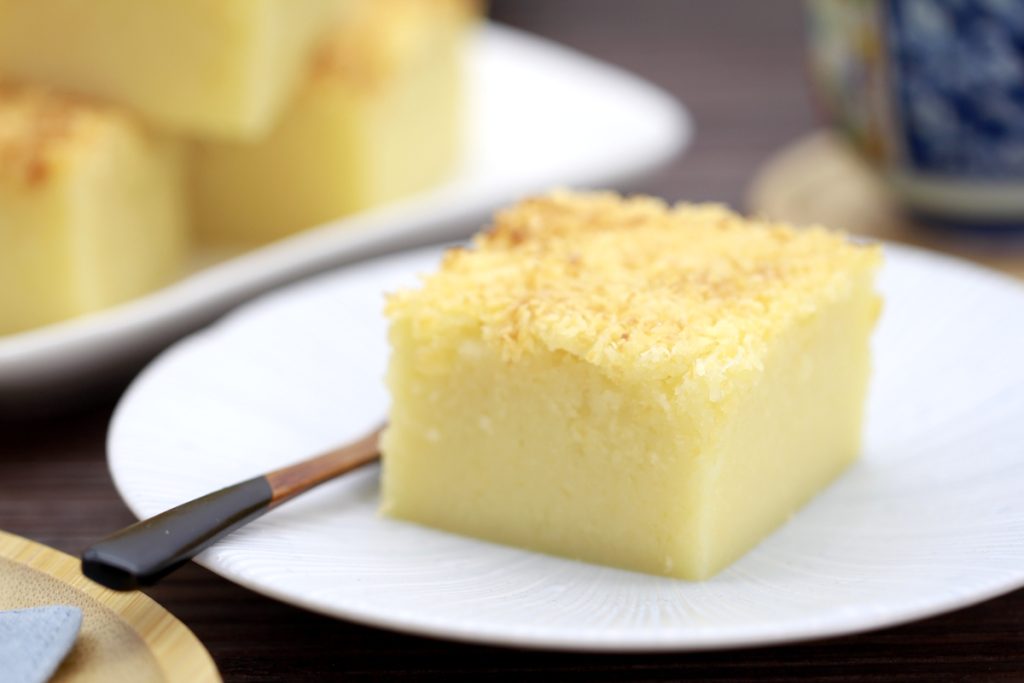
Butter Mochi (Hawaiian Mochi Cake – gluten-free)
Butter Mochi is one of those recipes that’s hard to pigeonhole. It looks like a…
Warabi Mochi: Make your own delicate summer dessert with Kinako & Kuromitsu syrup
When the weather warms up, the appetite for light, refreshing sweets grows in Japan –…
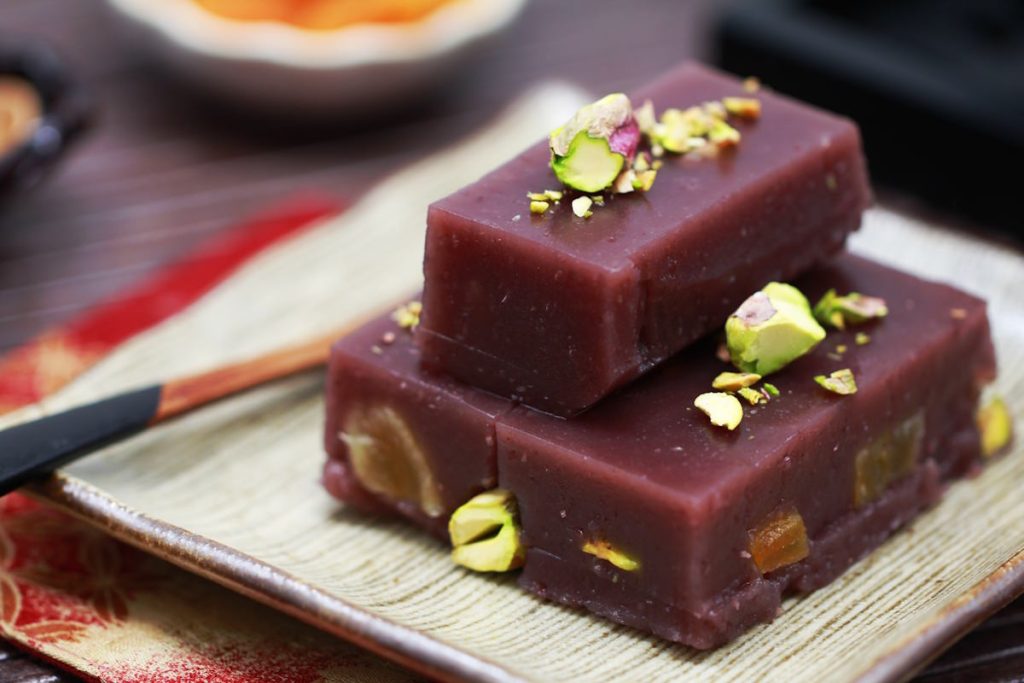
Make your own Yokan: Japanese jelly with red bean paste, apricot & pistachio filling
Yokan is a classic Japanese jelly made from red bean paste and agar-agar, which captivates…
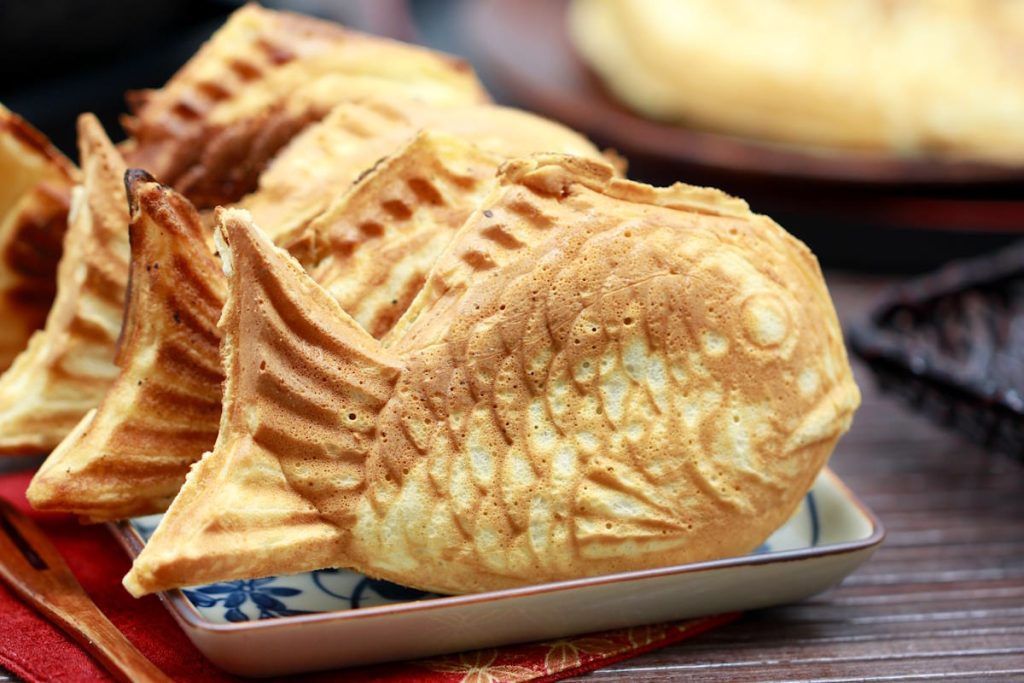
Make your own taiyaki: Japanese fish-shaped waffles with sweet anko filling – easy & so delicious!
Taiyaki is a classic of Japanese street food and delights with its charming fish shape…
Have you tried this recipe yet? Let me know in the comments – I’m really looking forward to hearing from you.