

Language:


Two highly sought-after specialities from Japan are combined in a delightful, typically green Japanese dessert: Matcha Dango with homemade green tea syrup! Does that sound tempting!? The simple rice flour dough is enhanced with bittersweet Matcha and is guaranteed to turn out perfectly. Topped with a grass-green Matcha syrup, these Dango skewers are a real eye-catcher!
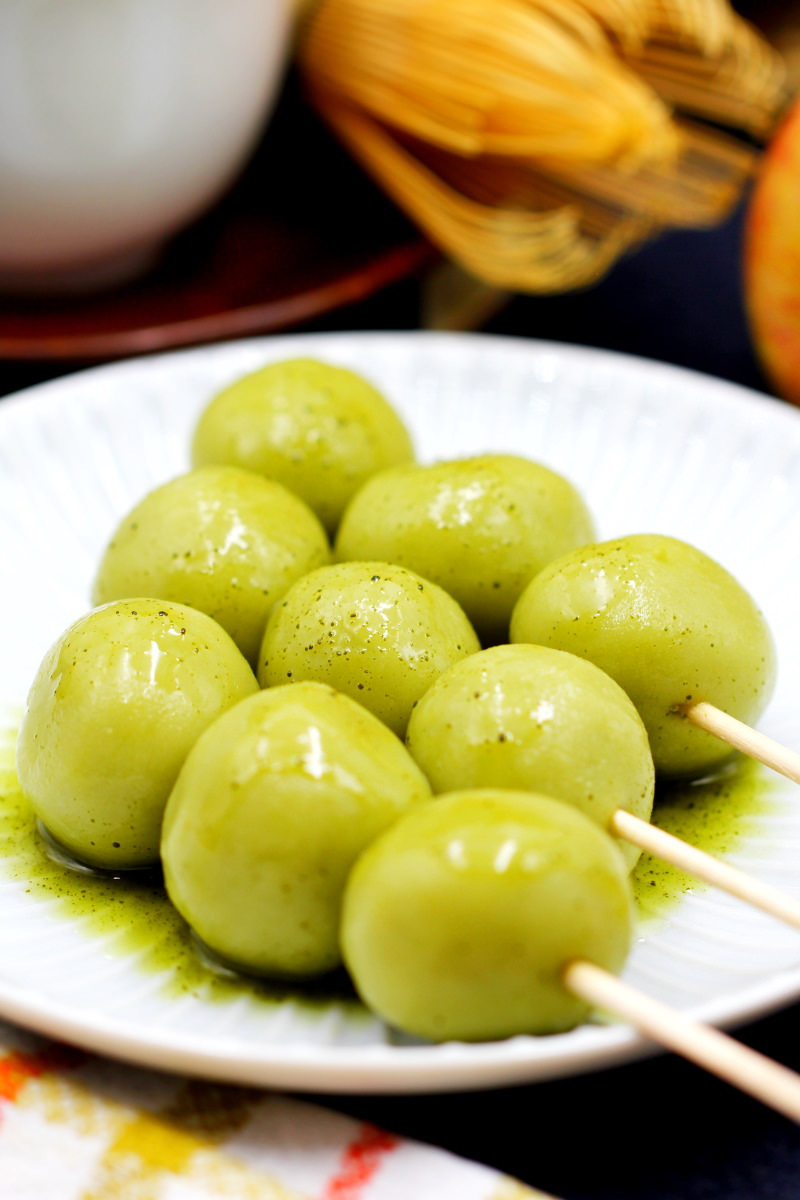
When it comes to Dango, Kyoto is just the place in Japan to indulge in these delicious little rice balls. And what a coincidence that Kyoto is also one of the most famous meccas for traditional Japanese green tea! So it’s hardly surprising that Matcha Dango is a very popular sweet in this beautiful metropolis, isn’t it?
The combination of these two highly sought-after Japanese specialities – both Matcha and Dango – can be brought together in one delicious dessert! The mellow flavour of the Matcha and the sticky texture of the rice balls are truly irresistible. In Japan, particularly in Kyoto, Uji and Shizuoka, where tea cultivation thrives, there are many shops specialising in Matcha green tea and Japanese sweets – many of these shops sell the strikingly green Matcha Dango.
In fact, you can easily make this fabulous treat at home – with just a few ingredients and without any complicated steps. I highly recommend this recipe!
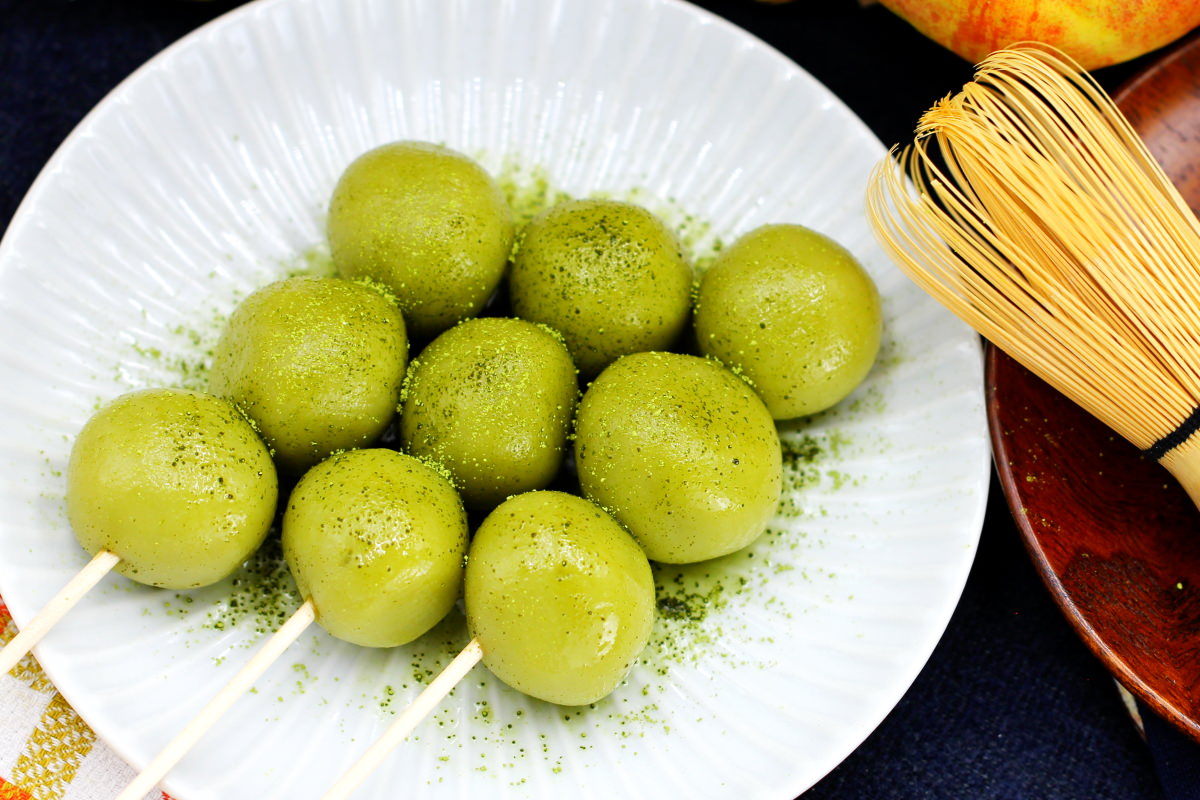
The most important ingredient in my matcha Dango is (as you’ve probably already guessed), as you can tell from the colour, of course, Japanese green tea powder: Matcha. Matcha is a typical Japanese green tea powder made from tencha (shade-grown green tea).
It is very silky and is made from pure leaves, meaning all the stems, veins and stalks have been removed. The leaves are shaded for around 3–4 weeks before harvesting. This causes the tea leaves to become larger and more delicate, and to produce more chlorophyll, which gives Matcha tea its light green colour and its sweet-bitter flavour.

Psst: Are you wondering whether Mochi and Dango are the same thing? They’re similar, but they’re not the same. Dango are made from rice flour and glutinous rice flour, whilst Mochi are made solely from glutinous rice flour.
Matcha has become synonymous with Japan’s proud tea culture and commands a high price due to its excellent quality. I therefore recommend using a good-quality cooking Matcha for use in the kitchen. Unlike drinking Matcha, cooking Matcha has a darker colour, a more astringent flavour and is slightly cheaper. It is therefore much better suited as an ingredient for baking and cooking. However, due to its intensity, it is not particularly recommended for drinking as tea.
As well as the matcha powder, we also need both glutinous rice flour and rice flour to make the Dango. For the glutinous rice flour, I used shiratamako, i.e. glutinous rice flour (im Shop ansehen).
We also need ‘normal’ rice flour (im Shop ansehen), known as Joshinko, made from ordinary short-grain rice.Tip: The recipe should, of course, also work with other types of rice and glutinous rice flour, but be careful – please don’t use just any rice flour! It is essential to use glutinous rice flour, not non-glutinous rice flour, to ensure the Dango turn out right.To make the dango dough, mix glutinous rice flour, rice flour and Matcha in a bowl. The dough, which is still a pale green colour at this stage, will take on a beautiful Matcha green hue later during cooking – so it’s best to use the tea powder sparingly!Then gradually add the water to the Matcha and flour mixture, stirring initially with a spoon and then kneading with your hands to form a firm dough. The dough should feel firm but not dry – it should also be supple without being runny. If not, add small amounts of glutinous rice flour or water and knead again until you have the ideal dough.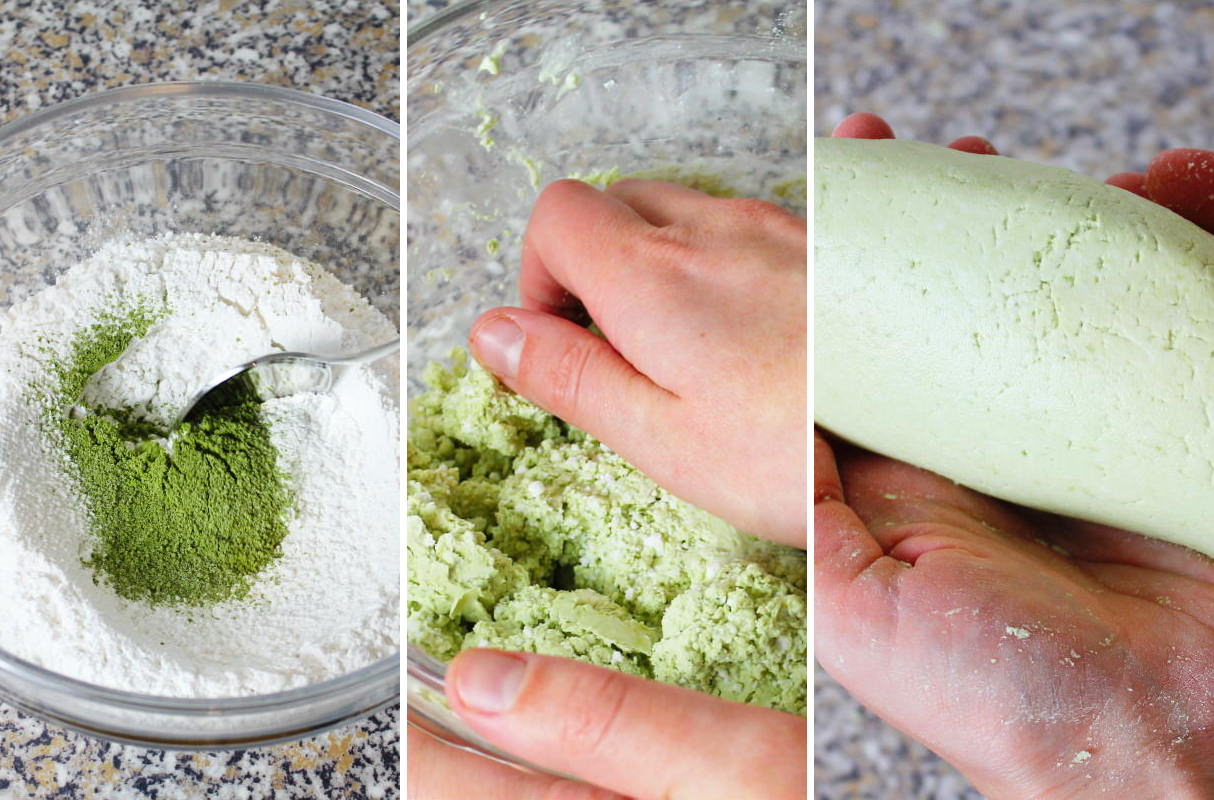
Tip: The recipe should of course also work with other rice and glutinous rice flours, but be careful, please don’t use just any rice flour! It absolutely must be sticky, glutinous rice flour and not non-sticky rice flour for the Dango to work.
TOP RECOMMENDATION
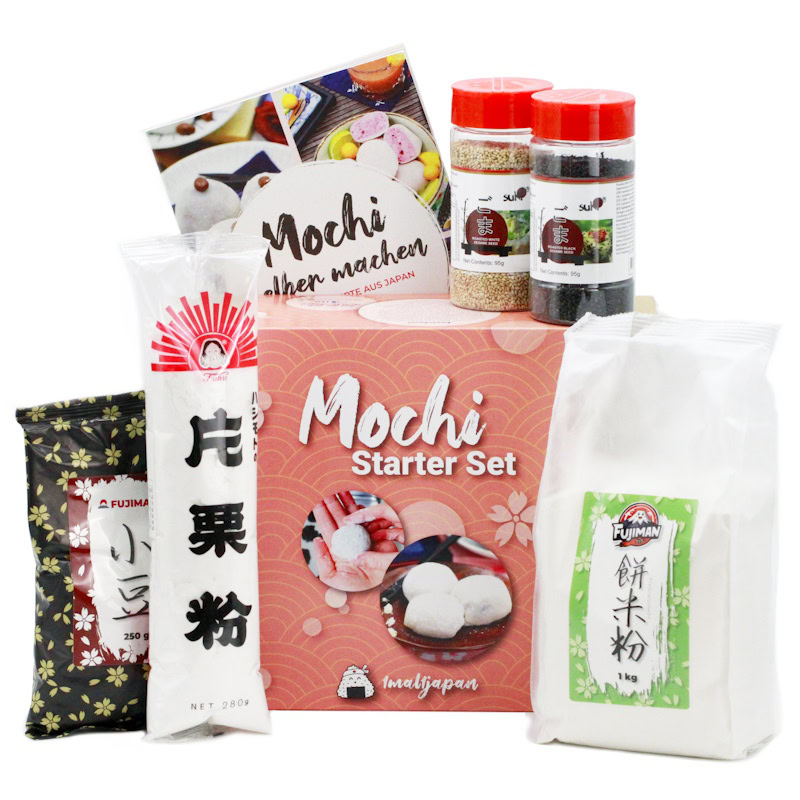
Mochi Starter Set | Klebreiskuchen selber machen, vegan
6-tlg. Kochset für 4 große Portionen Klebreiskuchen, inkl. Rezeptheft, glutenfrei & vegan. Mit dem Mochi Kochset stellst du japanische Reiskuchen ganz einfach selbst her –…
In stock
For the Dango dough, glutinous rice flour, rice flour and Matcha are stirred together in a bowl. The dough, still a delicate pale green at this stage, will take on a beautiful Matcha green colour once cooked – so go easy on the tea powder!
Then we gradually add the water to the Matcha flour mixture, first stirring with a spoon and then working it into a firm dough with your hands. The dough should feel firm but not dry – it should also be smooth without being runny. Otherwise, add either small amounts of glutinous rice flour or water and knead again until you get the ideal dough.
Making Dango isn’t difficult and is really important if you want to make typical Japanese sweets at home yourself. Here you’ll find more of my favourite recipes for homemade Dango treats: → Making Dango yourself: 7 really delicious recipes for sweet rice balls
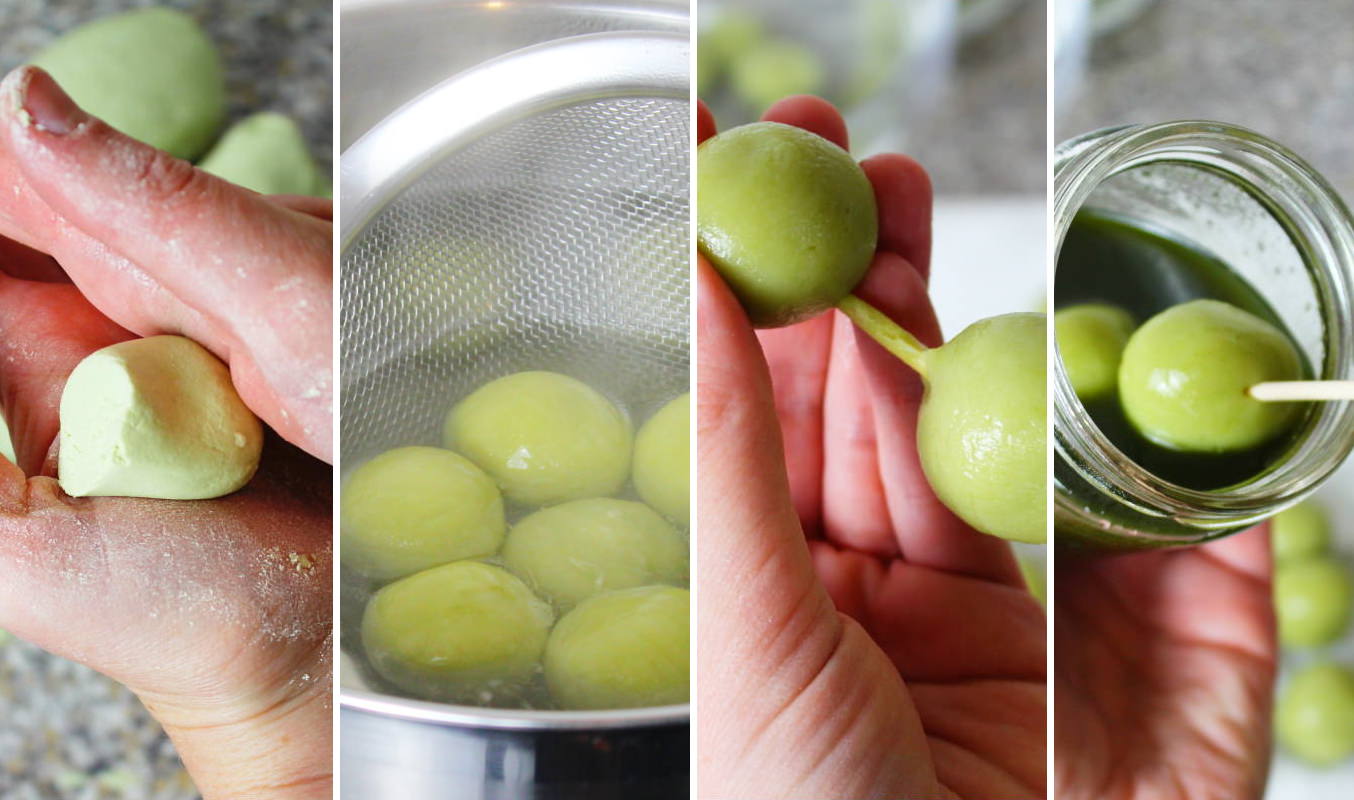
Once the dough has been shaped into 24 balls, the Dango are placed in gently boiling water for 5 minutes and then plunged into ice-cold water. The Matcha Dango are served three to a skewer and glazed with homemade Matcha syrup. Prepare the sweet syrup right at the start of the recipe so it can steep and cool in the fridge.
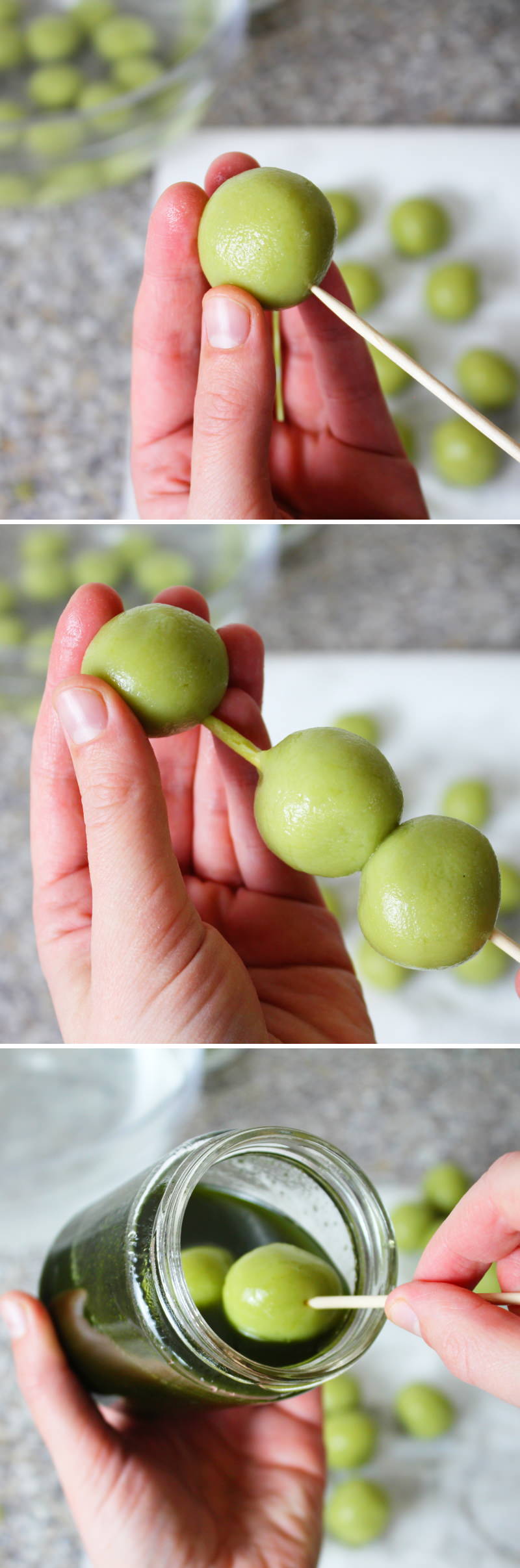
Tip: Pour the finished Matcha syrup into a tall glass so the Dango skewers can be completely submerged in the syrup!
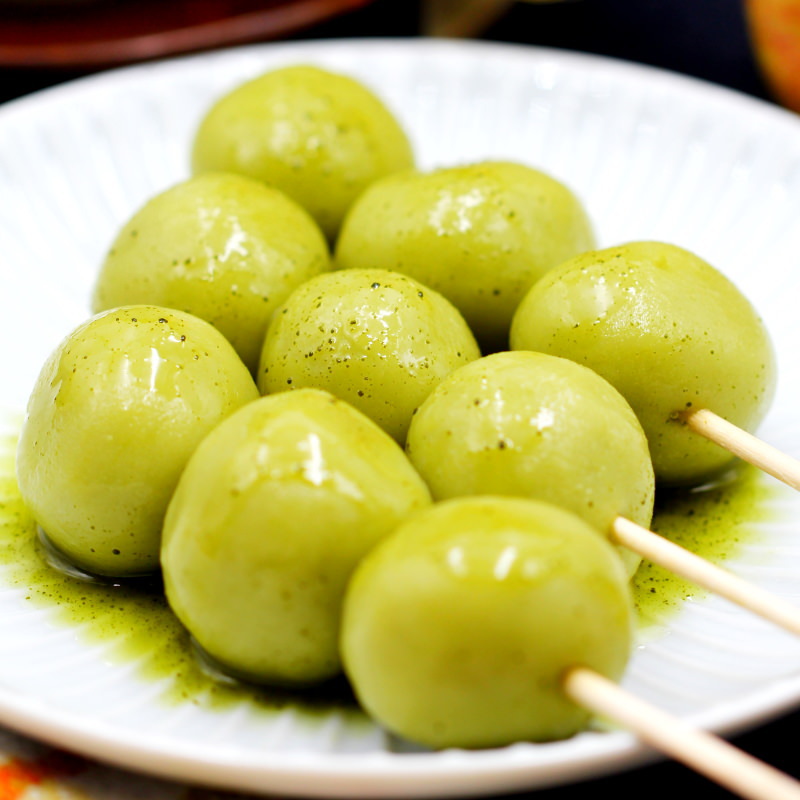
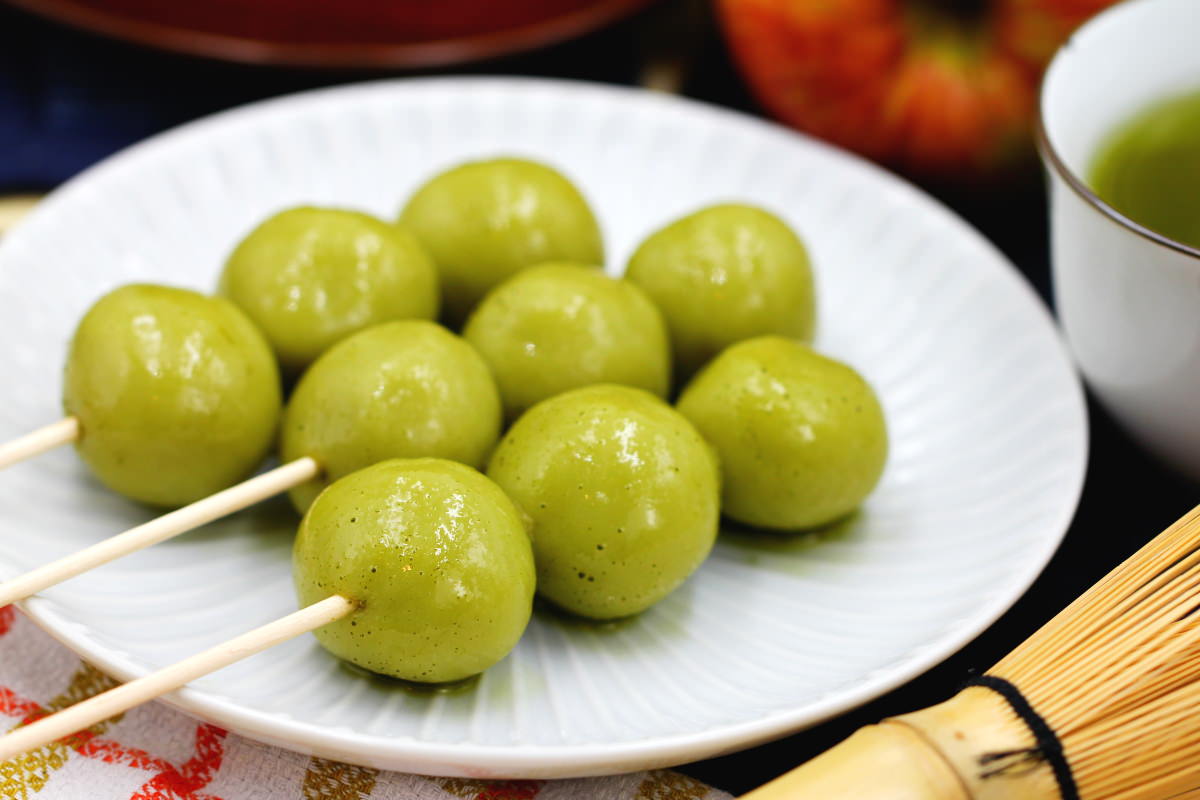
The finished Matcha Dango look so tempting with their lovely colour, reminiscent of Japanese green tea, that everyone will want to tuck in – true Japan fans in particular will be easily won over by this dessert!
Matcha Dango
Serves 4 | 30 minutes | 277 kcal
🖨️ Print PDF 📌 Save this pinTwo highly sought-after Japanese specialities are combined in a delicious, quintessentially Japanese dessert: Matcha Dango with homemade green tea syrup! Does that sound tempting!? The simple rice flour dough is enhanced with bittersweet Matcha and is guaranteed to turn out perfectly. Topped with a grass-green Matcha syrup, these Dango skewers are a real eye-catcher!
Ingredients (4 portions = 8 skewers)
100 g glutinous rice flour (im Shop ansehen)*
100 g rice flour (im Shop ansehen)*
2 tsp = 4 g Matcha (im Shop ansehen)*
175 ml water
For the matcha syrup:
100 g sugar
2 tsp = 4 g Matcha
100 ml water
8 skewers
Useful tools:
Fine-mesh sieve (im Shop ansehen)
Method (30 minutes)
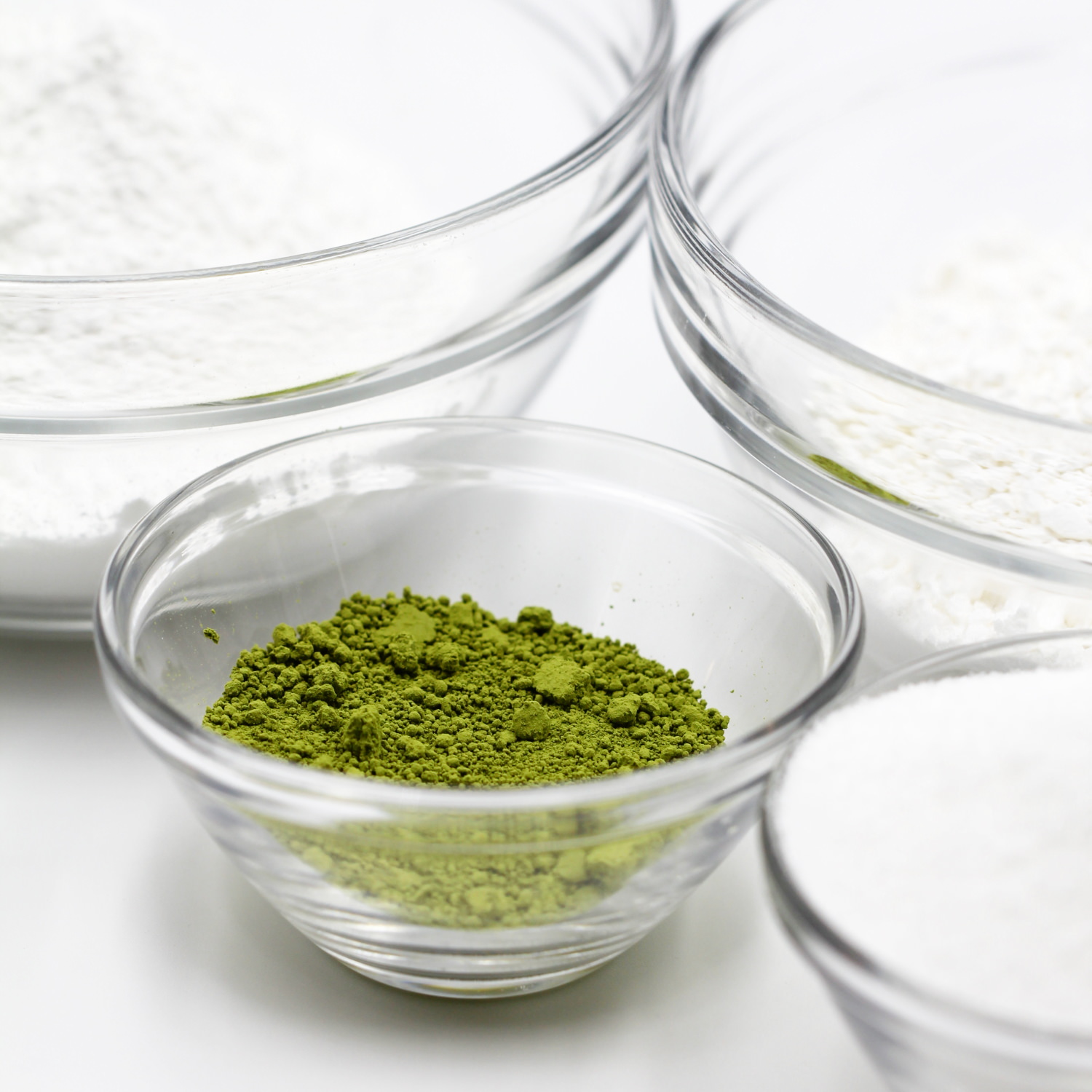
Step 1
Gather the ingredients for the delicious matcha dango with matcha syrup.
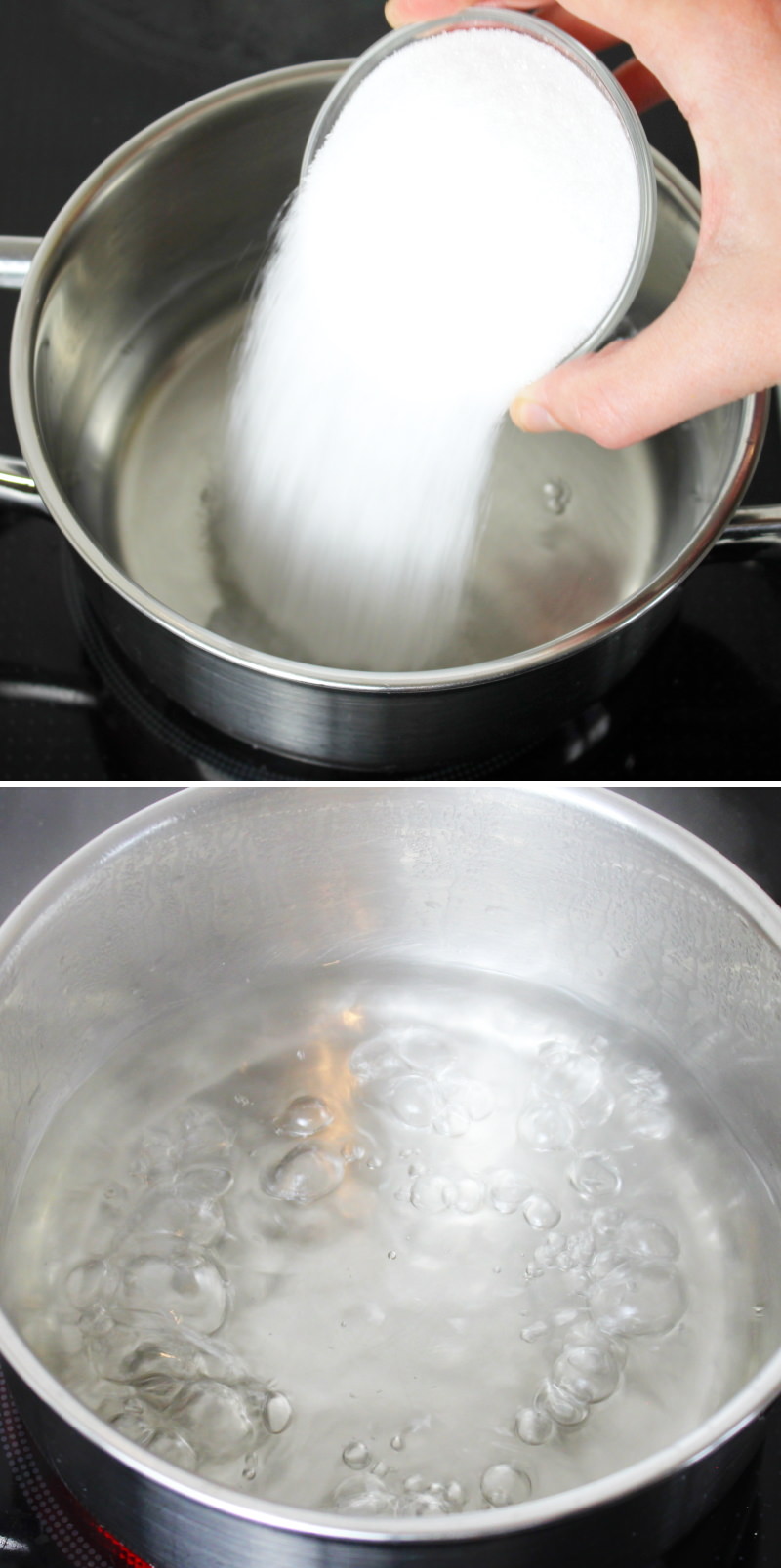
Step 2
First, we’ll make the homemade Matcha syrup: To do this, pour the water and the sugar into a saucepan, stir with a spoon and bring to the boil over a high heat, then reduce to a medium heat and boil vigorously for 10 minutes without a lid .
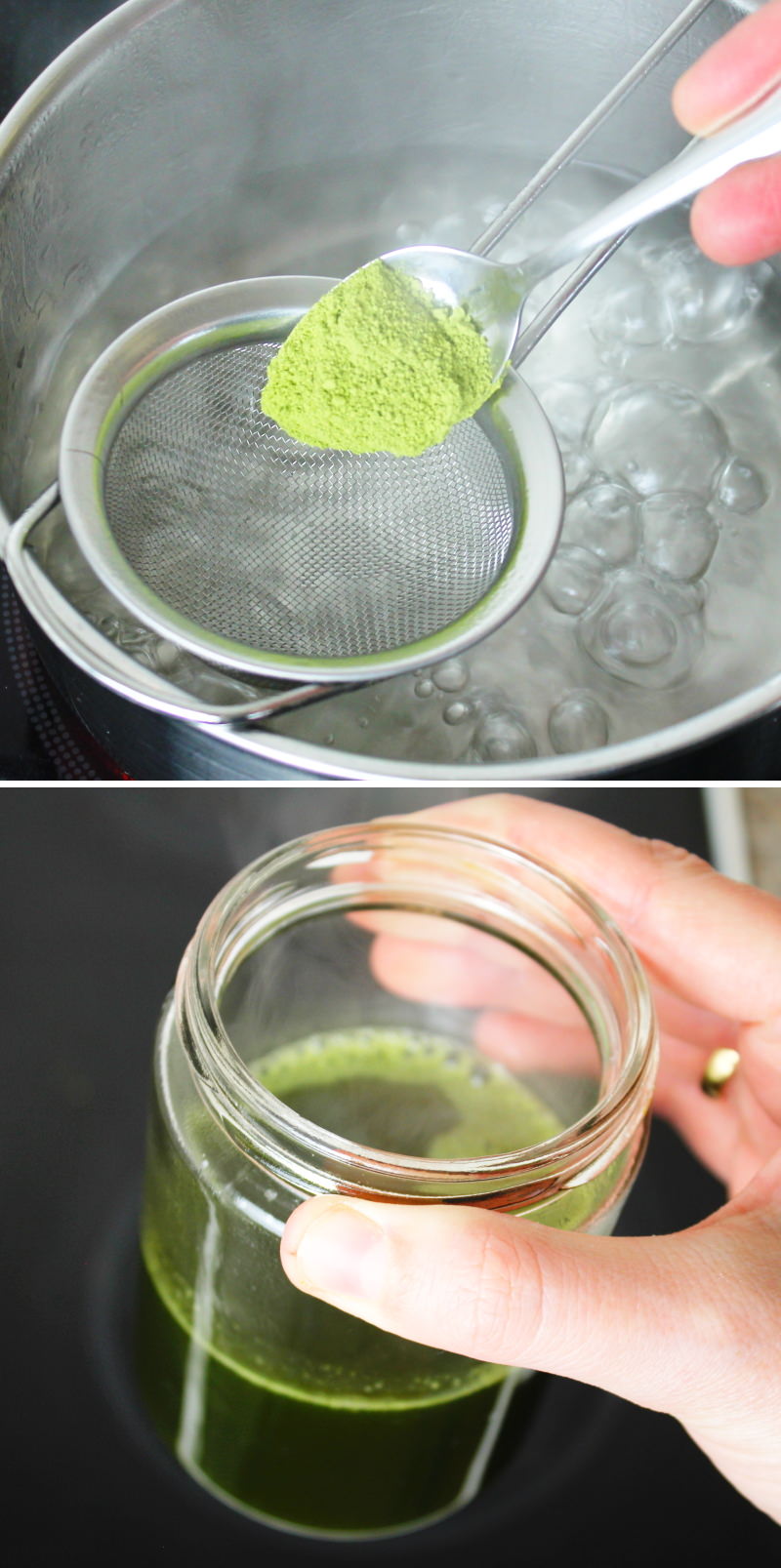
Step 3
After this time, the liquid in the saucepan will have reduced to a light syrup. Turn off the heat and, as soon as the syrup has stopped bubbling, add the Matcha using a fine sieve and stir it in. Then remove the saucepan from the hob, pour the Matcha syrup into a tall-sided glass (needed for dipping the Dango skewers!) and place in the fridge to cool until ready to serve.
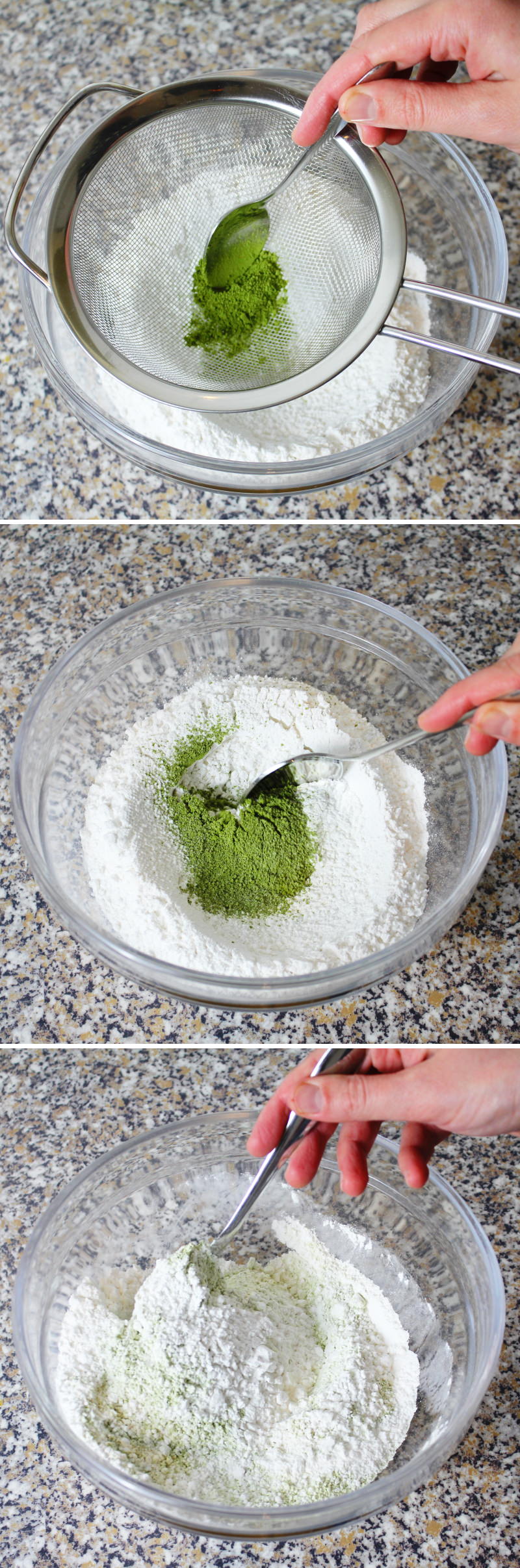
Step 4
Now it’s time to make the Dango: To do this, glutinous rice flour, rice flour and Matcha are mixed together in a bowl.
Tip: The dango dough, which is still a pale green colour at this stage, will take on a beautiful Matcha green hue when cooked – so it’s best to use the tea powder sparingly!

Step 5
Gradually add the water to the Matcha and flour mixture, stir initially with a spoon and then knead with your hands to form a firm dough.
Tip: The dough should feel firm but not dry – it should also be supple without being runny. If not, add small amounts (no more than 1 tsp at a time) of glutinous rice flour or water and knead again until you have the ideal dough.

Step 6
Cut the dough in half with a knife, cut each half in half again, and then cut each of those halves into thirds – dividing the dough into 12 equal pieces. Halve each piece of dough again and roll it between your palms to form neat balls. This will give you 24 equally sized Dango balls.
Step 7
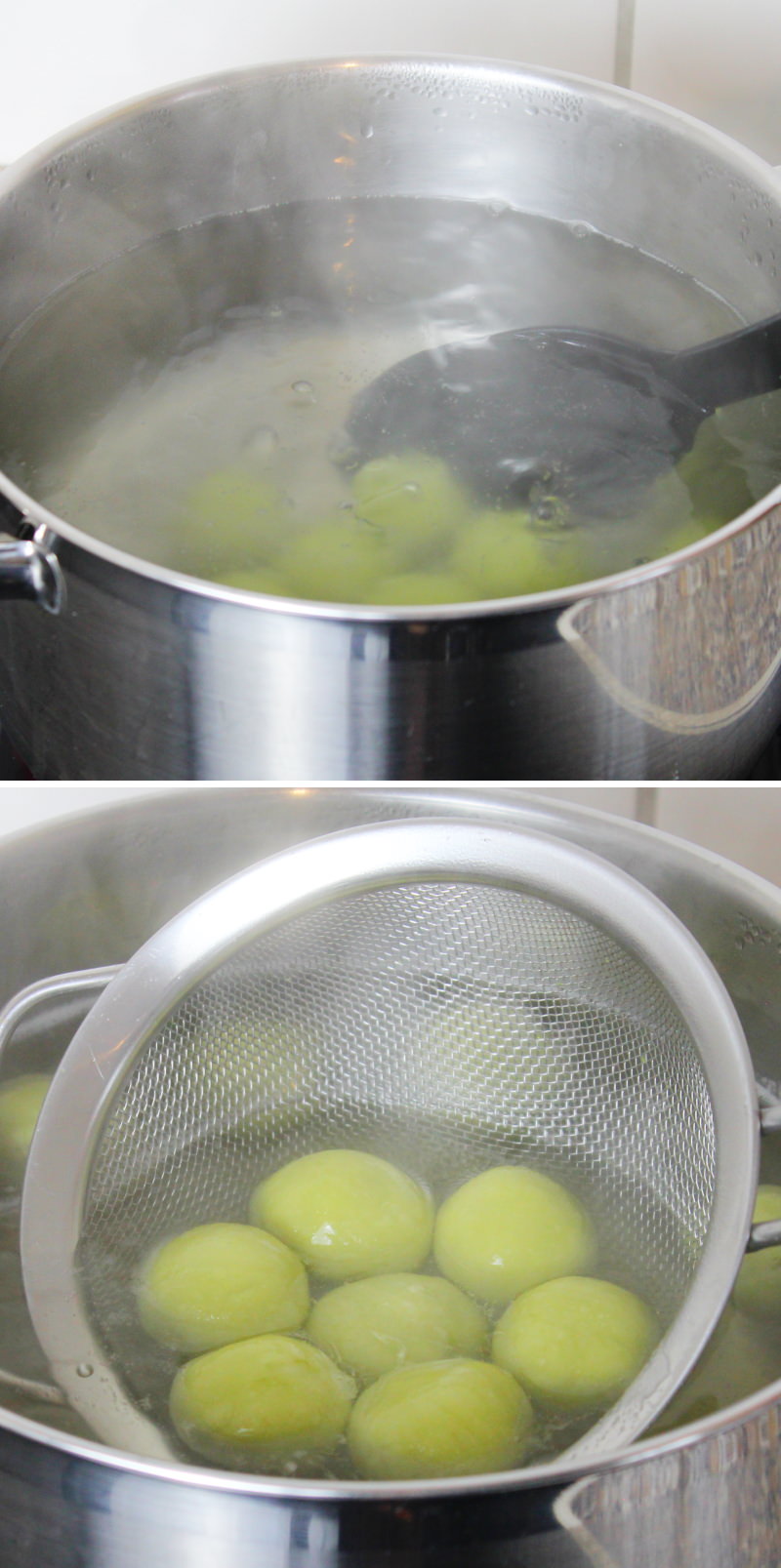
Bring 2 litres of water to the boil in a large saucepan, then reduce the heat to medium. Add 12 balls at a time to the boiling water in two batches, stir gently once (to prevent the balls from sticking to the bottom) and leave to cook for 5 minutes, until each ball has risen to the surface.
Step 8
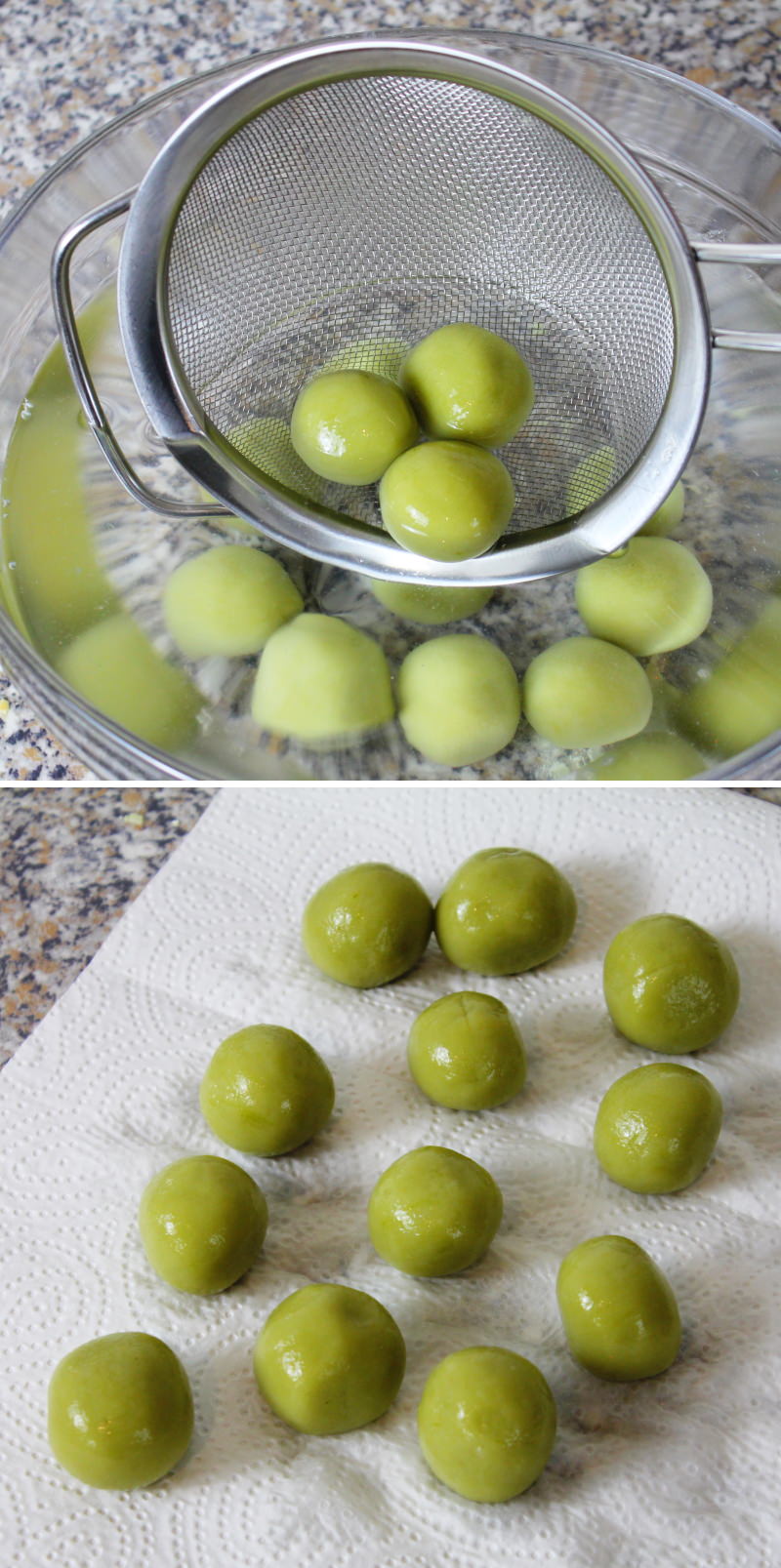
In the meantime, prepare a bowl of ice-cold water. Then lift the balls out of the water using a slotted spoon or a sieve and place them in the prepared cold water. Rinse briefly under cold water and then leave to drain on kitchen paper.
Step 9
Thread 3 Matcha rice balls onto each skewer. Make 8 Matcha dango skewers in this way.
Tip: Position the balls so that the last of the three Dango balls sits flush with the tip of the skewer.
Finally, dip each skewer into the cooled Matcha syrup so that all the Dango are well coated and have a lovely sheen.
Step 10
Serve the finished Matcha Dango within 24 hours, otherwise they will dry out. Done – Itadakimasu!
Are you looking for even more delicious Japanese desserts that will win you and your guests over? Here are my most popular recipes:
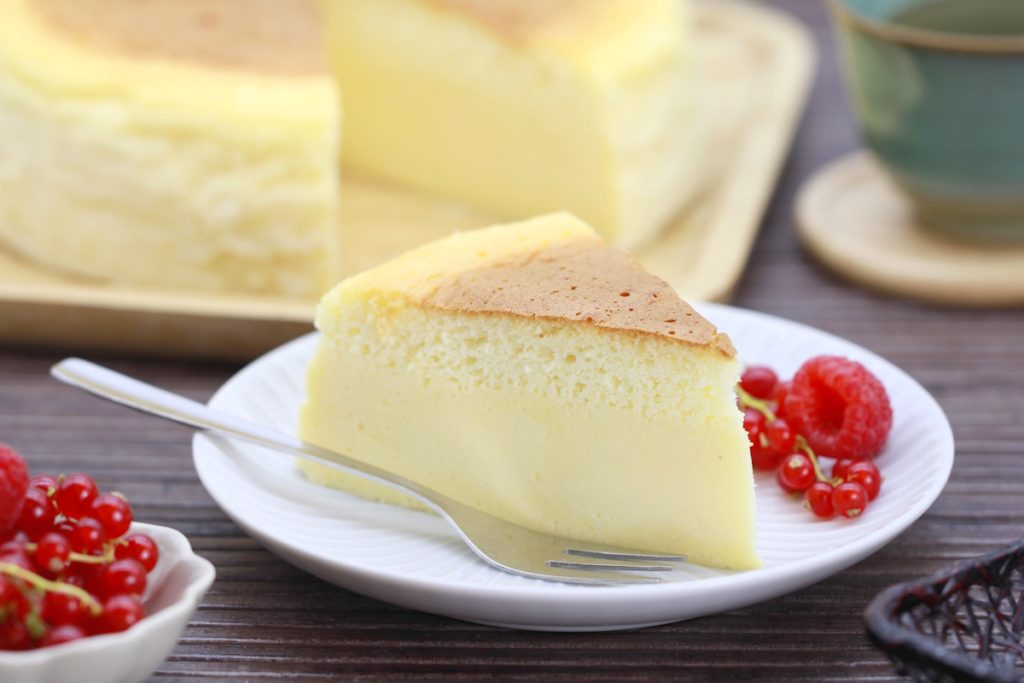
Japanese cheesecake: The best recipe for a fluffy soufflé-style cheesecake just like in Japan
Japanese cheesecake is one of Japan’s most popular desserts and delights with its exceptionally light and airy texture. Unlike classic…
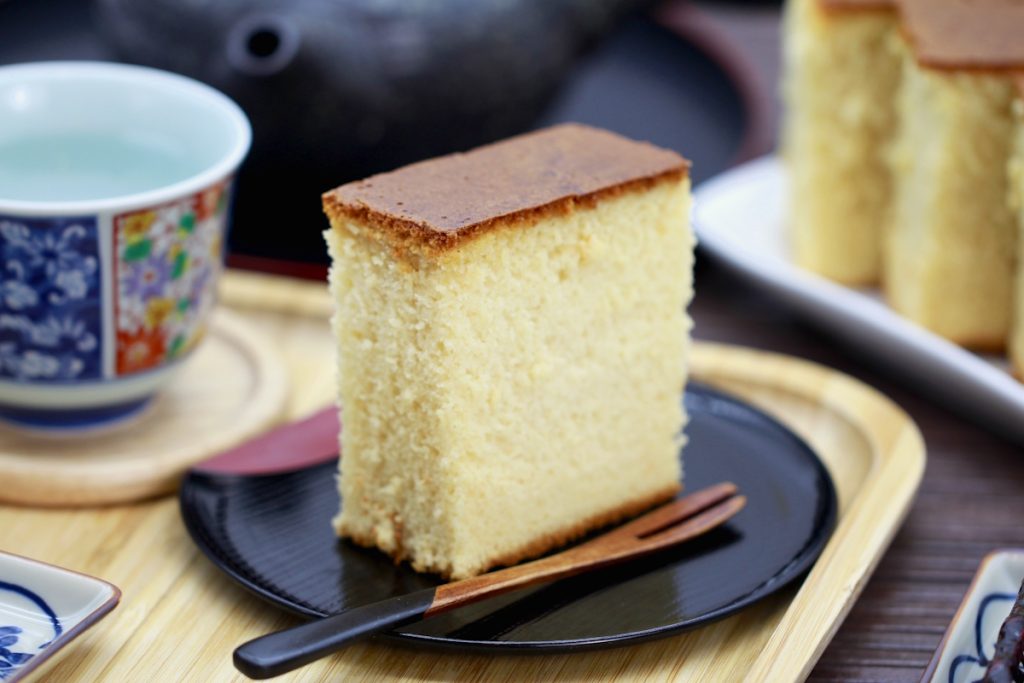
How to make Castella (Kasutera) yourself: How to make this Japanese honey cake
Why is Castella often described as Japan’s moistenest cake? Although Kasutera consists of just a few ingredients, the special preparation…
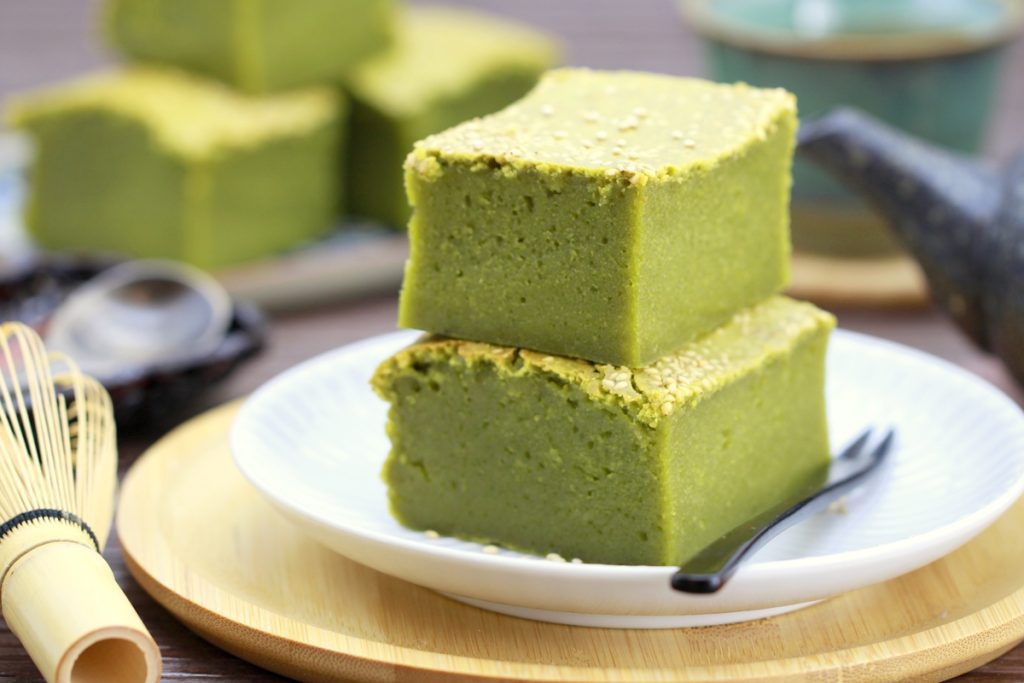
Make your own Matcha butter Mochi: Hawaiian Mochi cake with green tea
If you drink Matcha regularly, you might be familiar with this: at some point, you end up with more Matcha…
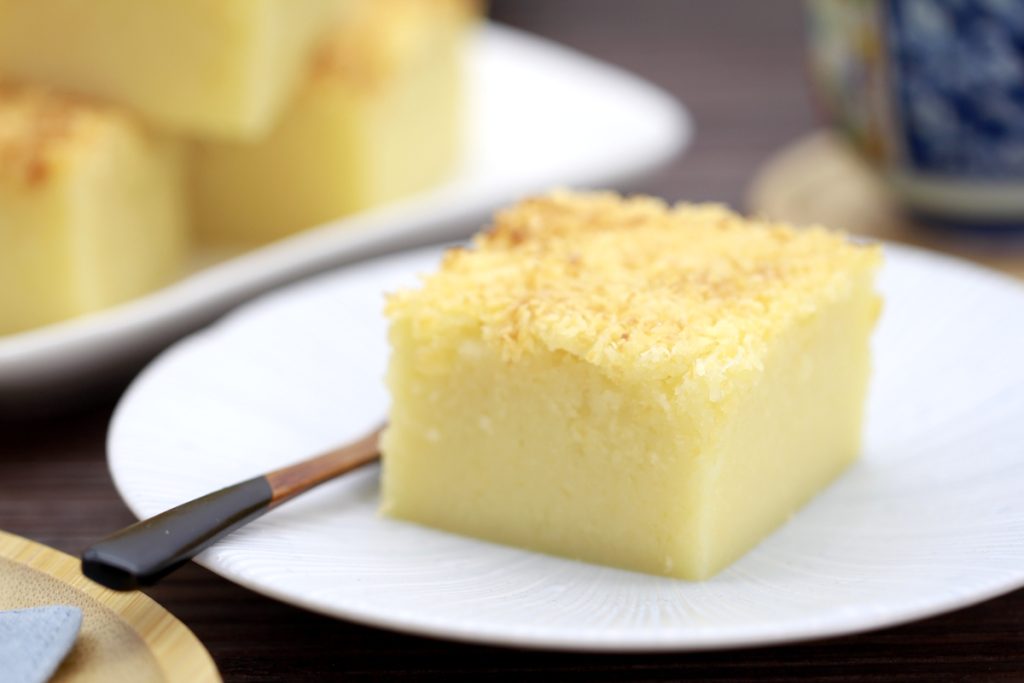
Butter Mochi (Hawaiian Mochi Cake – gluten-free)
Butter Mochi is one of those recipes that’s hard to pigeonhole. It looks like a simple tray bake, but has…
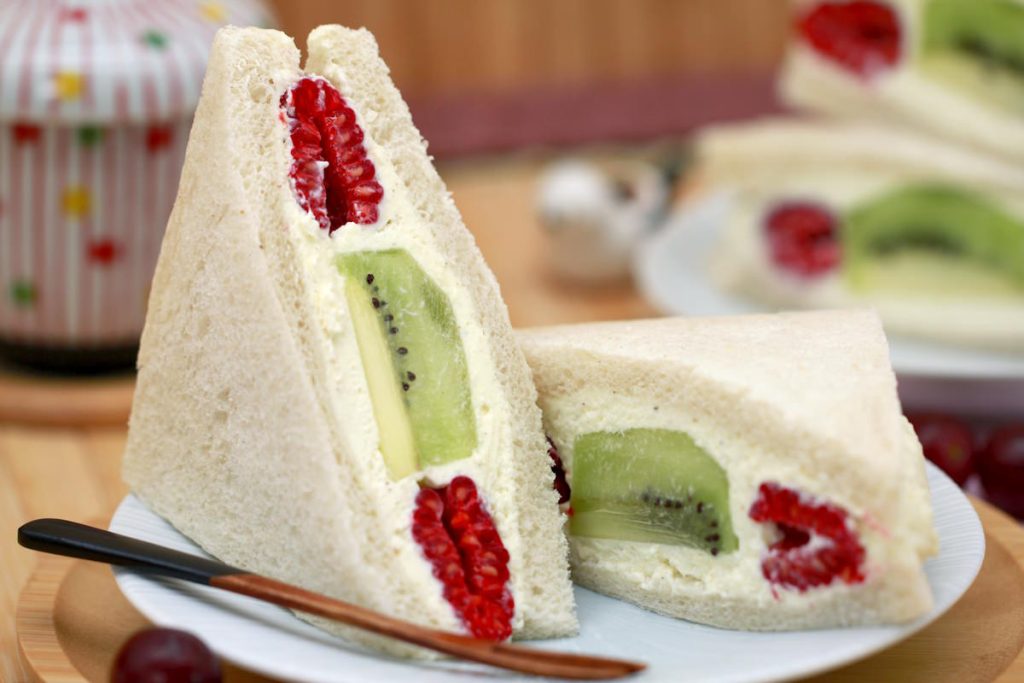
Make your own Fruit Sando: a fluffy cream sandwich with fruit – simple, fresh & typically Japanese
In Japan, it can remain surprisingly hot well into September – and it was on just such a muggy late-summer’s…
Warabi Mochi: Make your own delicate summer dessert with Kinako & Kuromitsu syrup
When the weather warms up, the appetite for light, refreshing sweets grows in Japan – and hardly any dessert embodies…
Have you tried out the recipe? Let me know in the comments – I can’t wait to hear from you.