
Language:


Beijing Soup (Suan La Tang) is a classic sour and spicy soup from Chinese cuisine. Fine strips of egg, wood ear mushrooms, bamboo shoots and a clear, aromatic broth ensure a balanced texture and a complex flavour. For me, Peking soup is a dish with plenty of scope. The combination of acidity, a mild heat and a pleasantly creamy consistency makes it versatile and adaptable. Depending on the ingredients and seasoning, it can turn out quite light or slightly stronger.
That’s exactly what I like about this soup: it lends itself well to variation without losing its character. This version provides a balanced, classic foundation whilst offering enough scope to develop your own favourite variation.
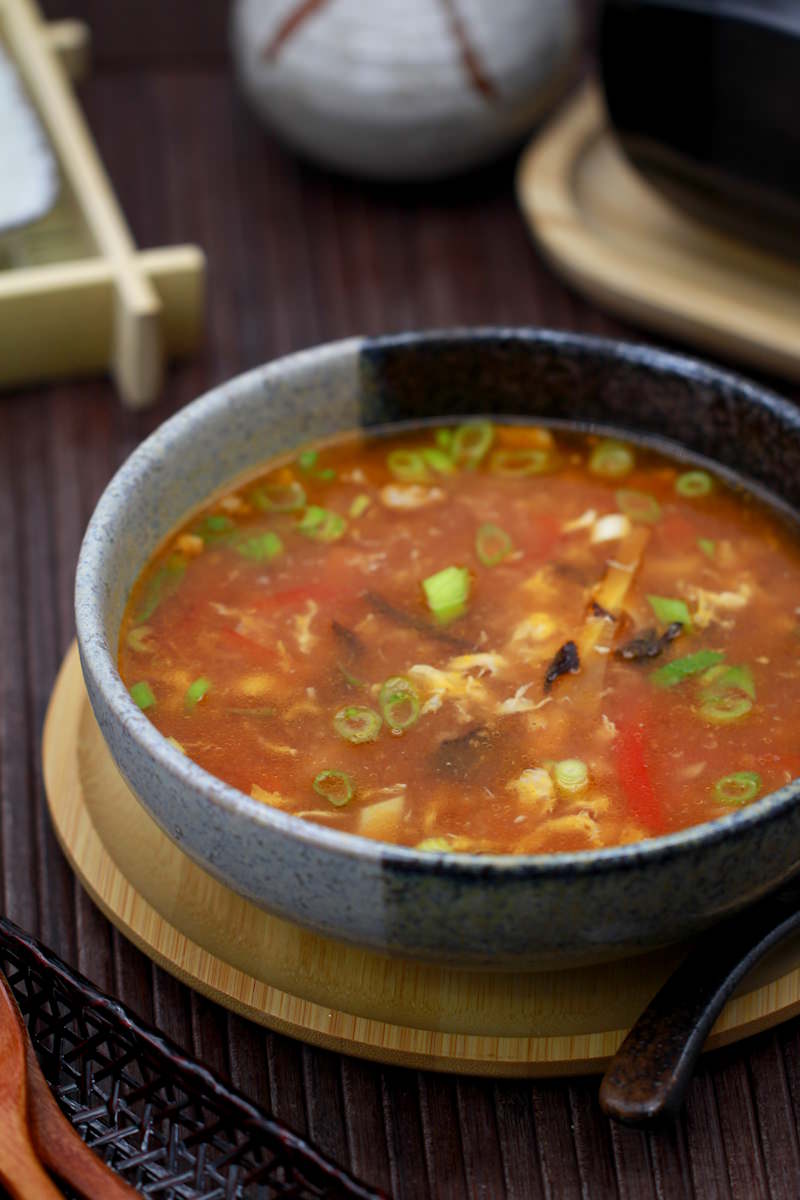
This versatility is no accident. Peking soup is one of those dishes defined less by a fixed recipe and more by its basic concept. To better understand it, it’s worth first taking a look at what actually makes this soup tick.
What exactly is Peking soup?
Beijing soup is a sour and spicy soup that is well known in many Chinese restaurants outside China. Its hallmarks are the delicate egg strips, a slightly thickened broth and the combination of sourness, spiciness and Umami. Ingredients such as mu-err mushrooms, bamboo shoots, vegetables and meat add texture and depth without making the soup feel heavy.
It is often served as a starter, but – depending on the ingredients – can also work well as a light main course. Its clear, warming flavour makes it particularly popular on cool days or as a starter to a larger meal.
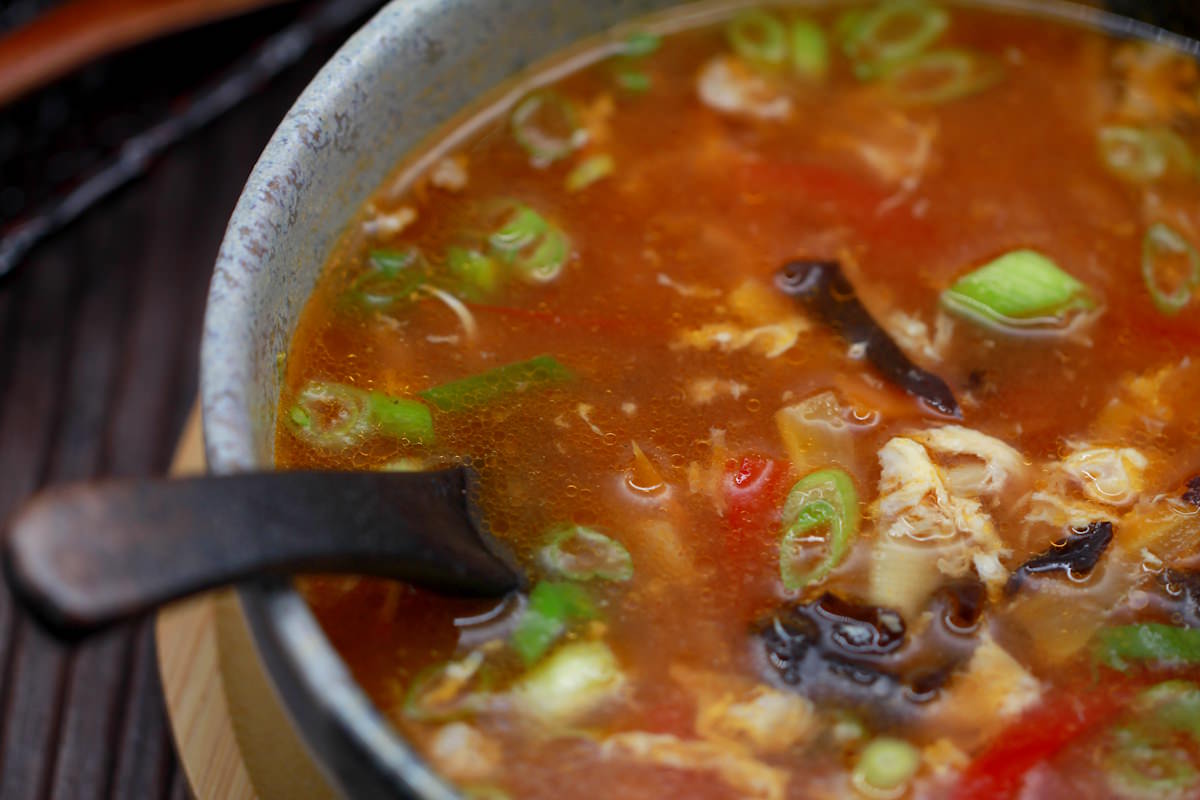
Peking Soup vs. Suan La Tang
The name ‘Peking Soup’ is mainly used in German-speaking countries. In China itself, the dish is called Suan La Tang (酸辣汤), which literally “sour and spicy soup”. The name therefore describes a flavour profile rather than a fixed recipe.
Depending on the region, household or restaurant, Suan La Tang varies considerably: sometimes clearer, sometimes thicker, with more vinegar or more heat, with pork, chicken or no meat at all. The European “Peking Soup” is usually somewhat milder and more evenly seasoned, but retains the basic concept of acidity, heat and egg strips.
What makes a good Suan La Tang?
A good Suan La Tang thrives on balance and technique. The sourness and heat should complement each other, not overpower one another. The vinegar is therefore only added at the end to preserve its freshness. The heat can be controlled using chilli, pepper or chilli oil and should be clearly noticeable but not overpowering.
Another typical feature is the silky texture created by starch. The soup should not be thick, but have a slightly creamy consistency. The egg strips are created by slowly pouring the beaten eggs into the gently simmering soup – they add texture, not bulk. It is precisely these details that make the difference between an ordinary soup and a good Suan La Tang.

Delicious variations of Peking soup
- Vegan: In the vegan version, the chicken stock is completely replaced by a rich vegetable stock. Instead of meat, Tofu, wood ear mushrooms and bamboo shoots provide texture and bite. Eggs are omitted, or fine strips of Tofu are added, so that the soup retains its typical texture but remains entirely plant-based.
- Vegetarian: Vegetable stock also works well as a base for a vegetarian Suan La Tang. As in the classic recipe, the eggs are beaten into fine strands, giving the soup its characteristic thickness. If you like, you can add glass noodles or some Chinese cabbage to make the soup even more filling.
- Spicier: If you prefer a more intense flavour, you can easily adjust the soup’s heat. More chilli paste or an extra dash of chilli oil will enhance the spicy note without upsetting the balance. Finely chopped fresh chilli or chilli crisp as a topping also work well, especially when the tangy element is brought out by a little extra vinegar.
Making Peking soup yourself: Here’s how
Making Peking soup at home often sounds more complicated than it actually is. Success depends less on special ingredients than on the correct sequence of passages. Once you’ve got the hang of it, you’ll quickly realise that Suan La Tang is easy to control and works perfectly well in everyday cooking.
TOP RECOMMENDATION
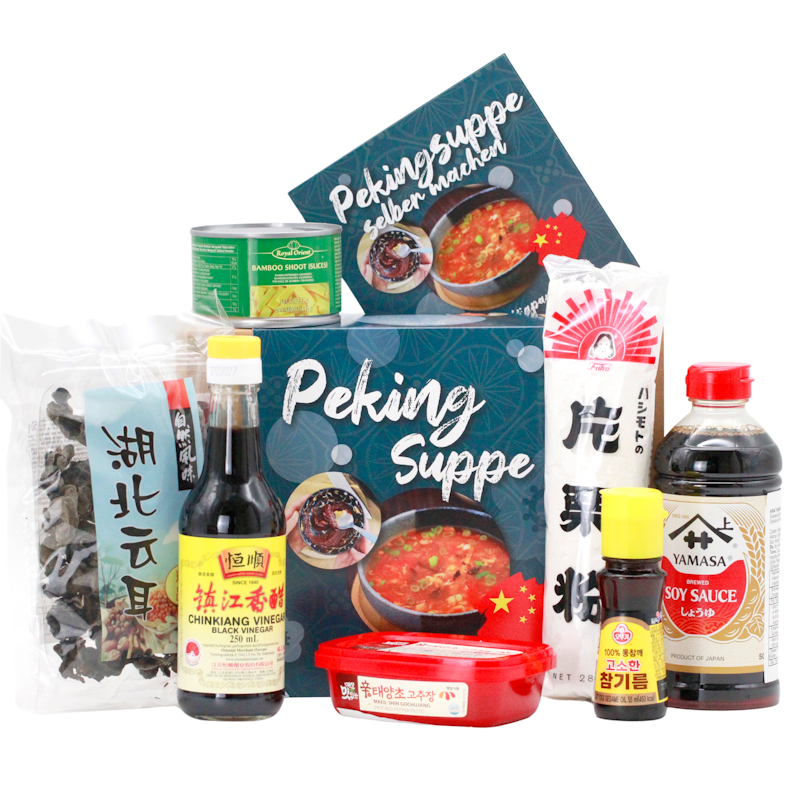
Pekingsuppe Kochbox | chinesische Sauer-Scharf Suppe selber machen
8-tlg. Set für 6 Portionen klassische Pekingsuppe + Anleitung, gelingt garantiert. Mit dem Pekingsuppe Kochset bereitest du die bekannte chinesische Sauer-Scharf Suppe (Suan La Tang)…
In stock
The key is balance: flavour the stock, gently cook the ingredients, lightly thicken the soup, and only add the acidity and egg right at the end. If you follow this order, you’ll end up with a clear, harmonious soup with its characteristic texture.
The key ingredients for Peking soup:
- Broth: A good Peking soup starts with an aromatic but not overpowering broth. Ginger and garlic add depth without being dominant. They form the base upon which all other flavours build.
- Ingredients: Mu-Err mushrooms, bamboo shoots and finely chopped vegetables provide texture and bite. It is important to chop them finely. This ensures everything is evenly distributed and remains easy to eat.
Thickening: The soup is not thickened, but only given a slightly creamy consistency. Potato starch provides this silky texture, which is typical of Suan La Tang. - Binding: The soup does not become thick, just lightly creamy. Potato starch gives it that silky consistency that is typical for Suan La Tang.
- Egg: The beaten eggs are slowly poured into the gently simmering Su . This creates fine strips of egg that give the soup texture without weighing it down.
- Acidity & flavour: Chinkiang vinegar and sesame oil are deliberately added at the very end. This ensures the acidity remains fresh and the sesame flavour is clearly discernible.
How it works:
First, the stock is prepared and the meat cooked, then the vegetables and mushrooms are added. The soup is then thickened before the eggs are carefully stirred in. Vinegar and sesame oil add the characteristic flavour at the end. This sequence ensures the Peking soup stays clear, balanced and aromatic.
What goes well with Peking soup?
Beijing soup is often served on its own or as a starter. Simple accompaniments such as steamed rice, spring rolls or steamed dumplings go well with it. It also works very well as a light finale to an Asian meal. With its clear, sour and spicy flavour, it complements dishes that are rather mild or greasy particularly well – it provides balance and freshness.
I look forward to your comments: please let me know how your Peking soup turned out and whether you prefer it strongly sour, a little spicier or perfectly balanced. Have fun cooking and enjoy!

Peking soup
Serves 4 | 45 minutes | 270 kcal
🖨️ Print PDF 📌 Pin thisPeking soup (Suan La Tang) is a classic sour and spicy soup from Chinese cuisine. Thin strips of egg, wood ear mushrooms, bamboo shoots and tender chicken create a light yet aromatic texture. This recipe shows you step by step how to make a well-balanced, clear and authentic soup at home.
Ingredients (4 servings)
1 l chicken stock
1 l water
300 g boneless chicken thighs (alternatively chicken breast fillet)
20 g mu-err mushrooms (dried) (im Shop ansehen)*
180 g bamboo shoots (drained) (im Shop ansehen)*
1 red pepper
1 carrot
2 eggs
2 spring onions
2 tbsp potato starch (im Shop ansehen)*
20 g ginger (fresh)
2 garlic cloves
5 tbsp Shoyu (im Shop ansehen)*
2 tbsp tomato purée
1 tbsp chilli paste(to taste)
(im Shop ansehen)*
1 tsp salt
1 tsp sugar
black or white pepper
4–5 tbsp Chinkiang vinegar (im Shop ansehen)*
1 tsp sesame oil (im Shop ansehen)*
Useful tools:
Santoku knife (im Shop ansehen)
Grater (im Shop ansehen)
Yukihiara pot
2-in-1 strainer & skimmer (im Shop ansehen)
Preparation (45 minutes)
Step 1
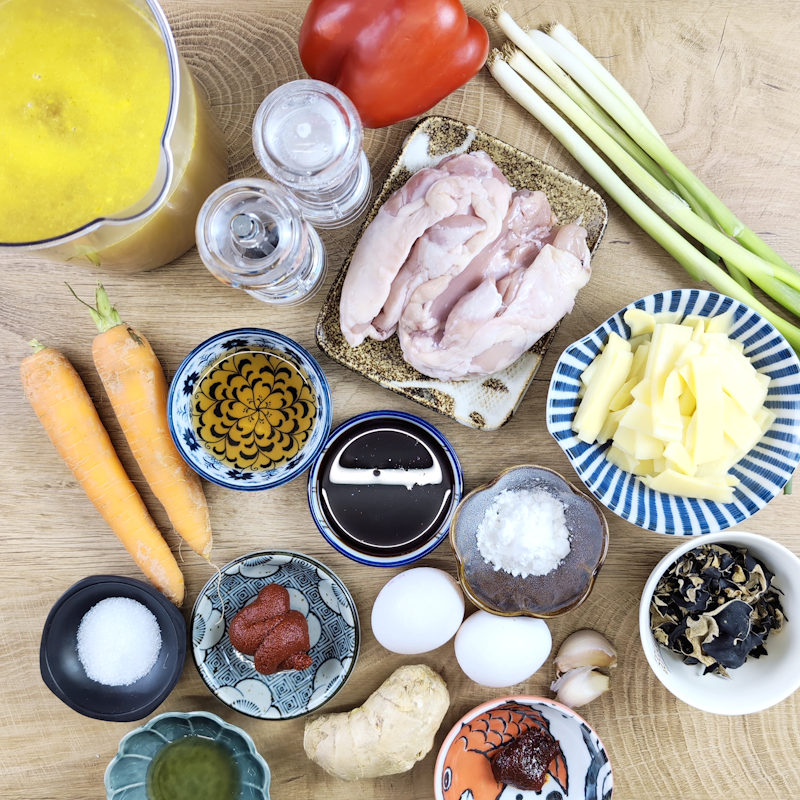
To begin with, gather all the ingredients for the Chinese Peking soup.
Step 2
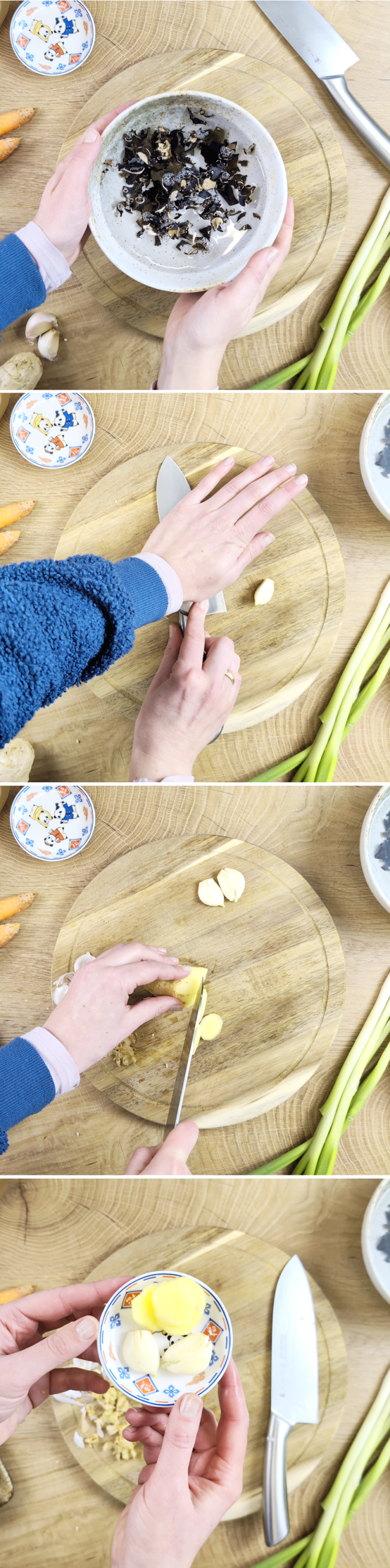
Meanwhile, soak 20 g of dried Mu-Err mushrooms in warm water until they have fully rehydrated.
Peel the ginger (approx. 20 g) and slice it. Peel the 2 garlic cloves and press them lightly with a knife to release their flavour.
Step 3
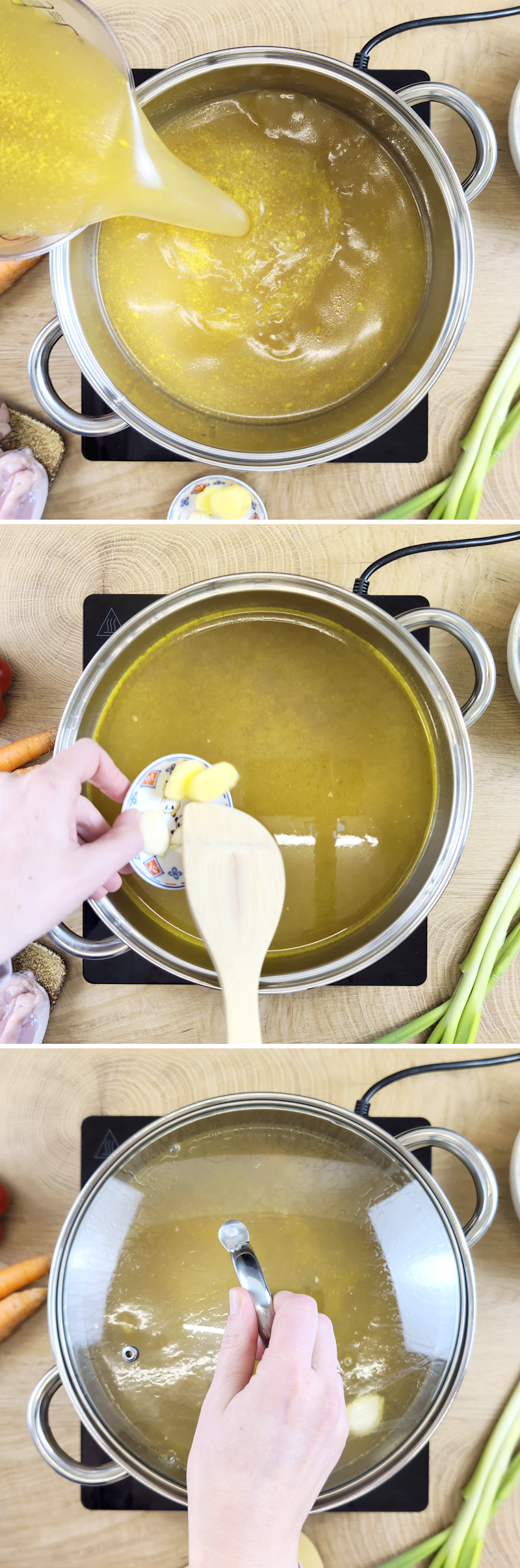
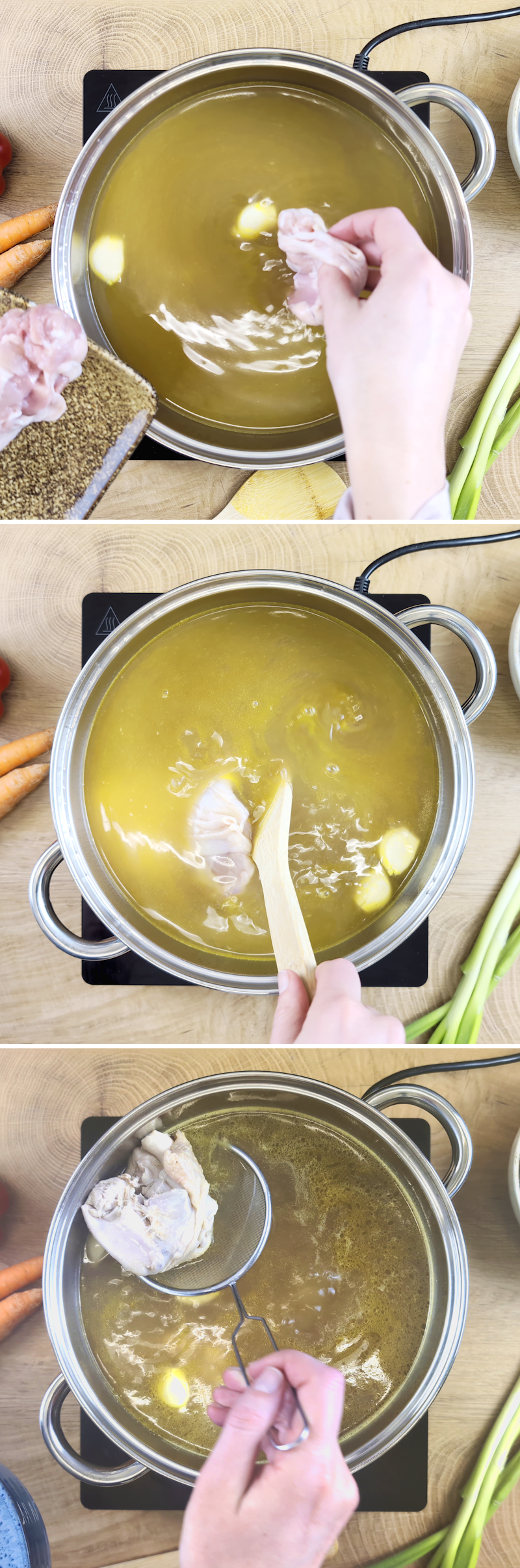
1 l chicken stock together with 1 l water in a large saucepan. Add the ginger and garlic and bring everything to the boil so that the stock becomes aromatic.
Step 4
Rinse 300 g boneless chicken thighs briefly under running water and pat dry. Add the meat to the boiling stock and simmer gently over a low heat until tender.
Remove the cooked chicken from the stock and leave to cool briefly.
Step 5
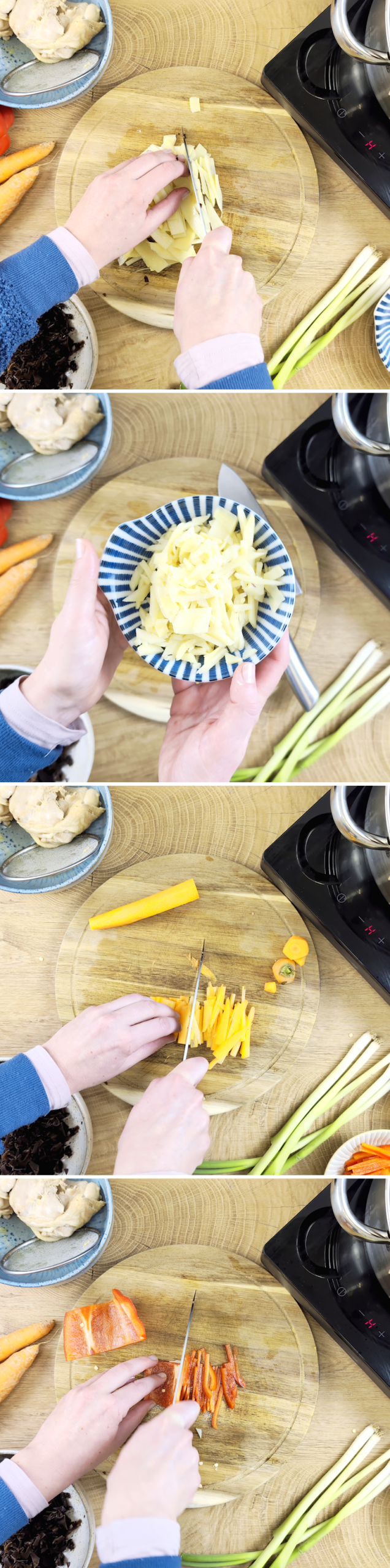
Drain 180 g bamboo shoots thoroughly. Peel 1 carrot and wash 1 red pepper. Cut the bamboo shoots, pepper and carrot into very fine strips and set aside.
Step 6
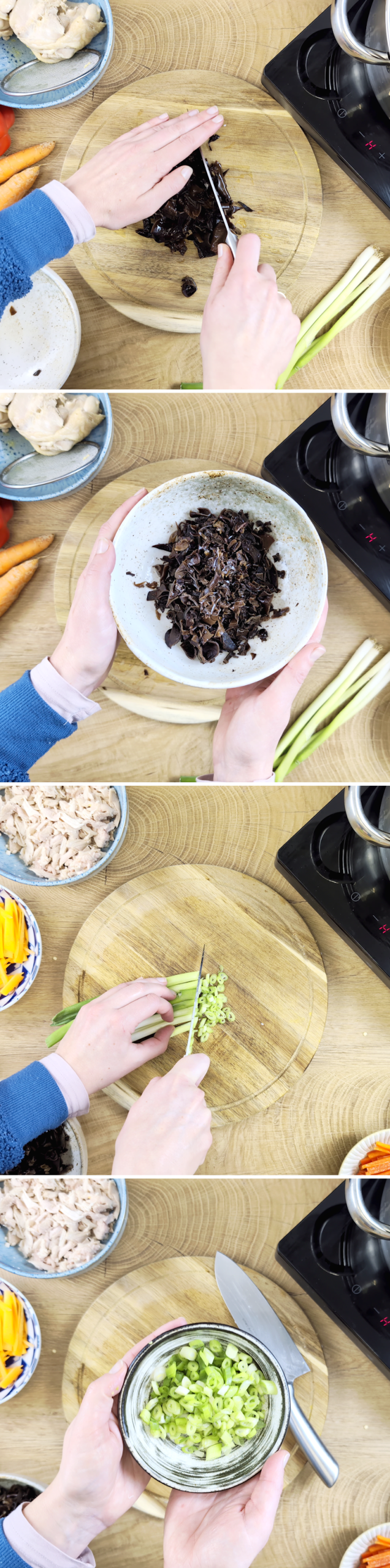
Drain the soaked Mu-Err mushrooms, squeeze out any excess liquid and cut them into fine strips as well. Cut the 2 spring onions into fine rings and set aside as a topping.
Step 7
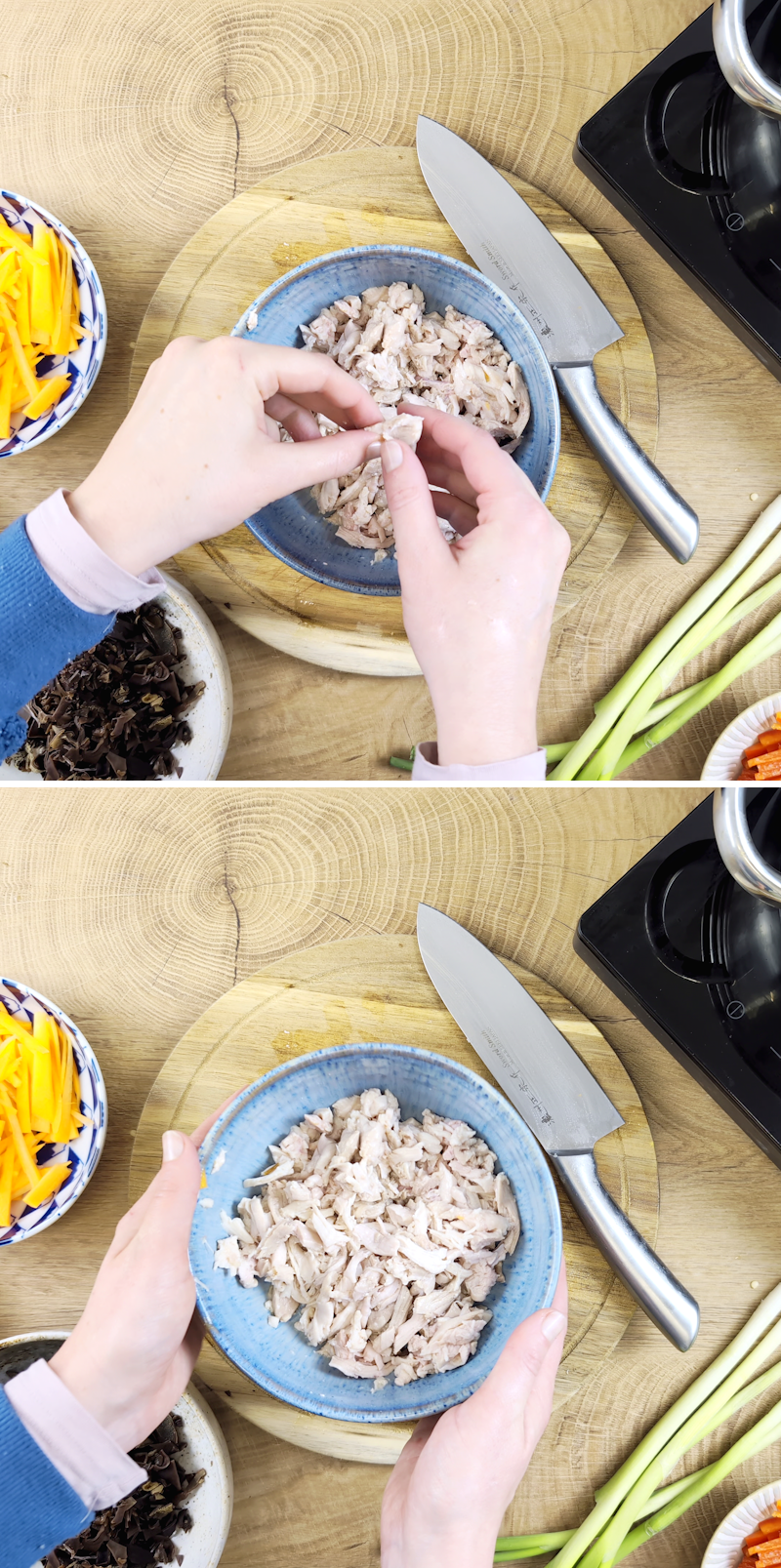
Shred the cooled chicken or cut it into fine strips and set aside.
Step 8
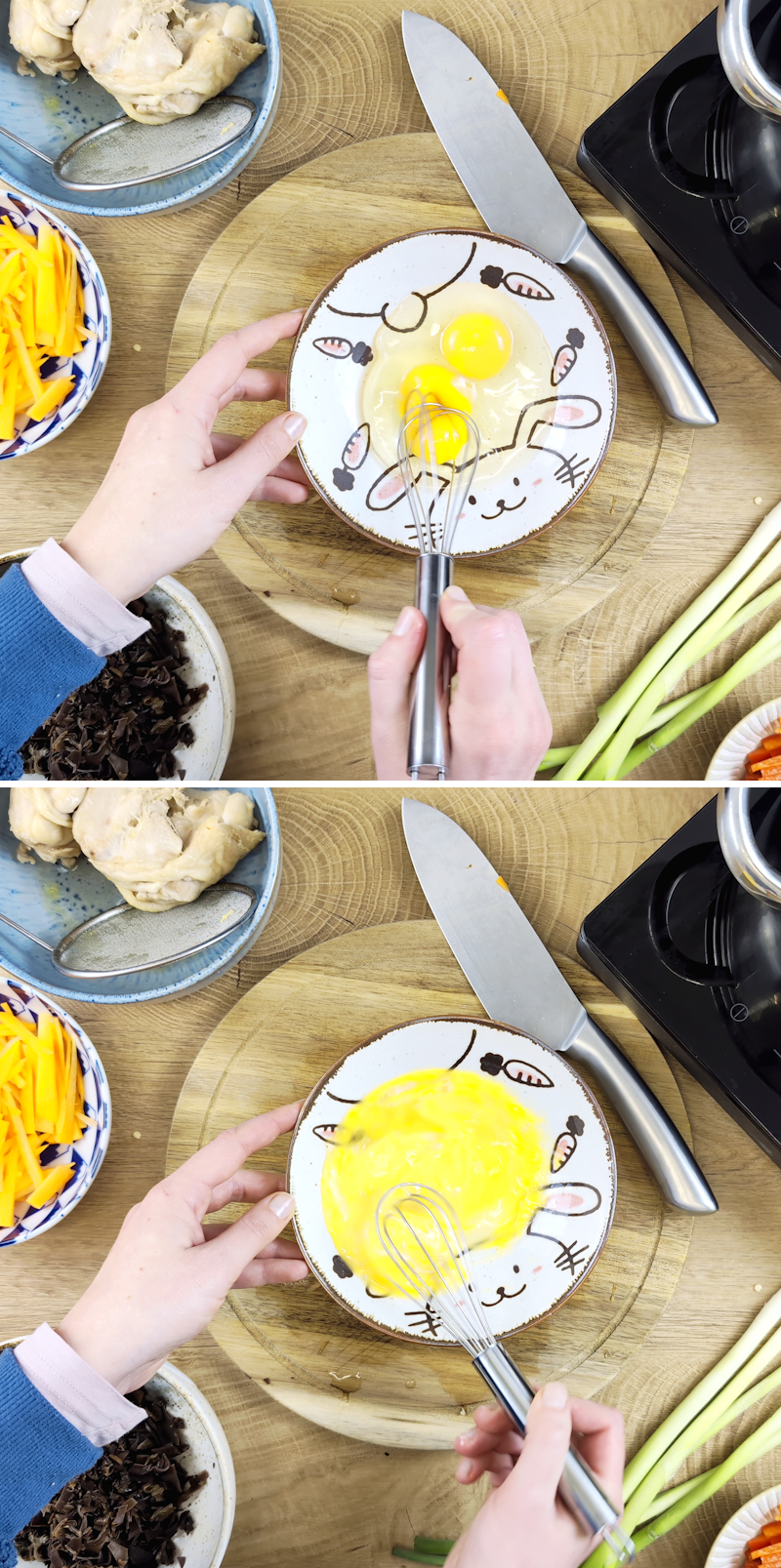
Beat 2 eggs thoroughly in a small bowl.
Step 9
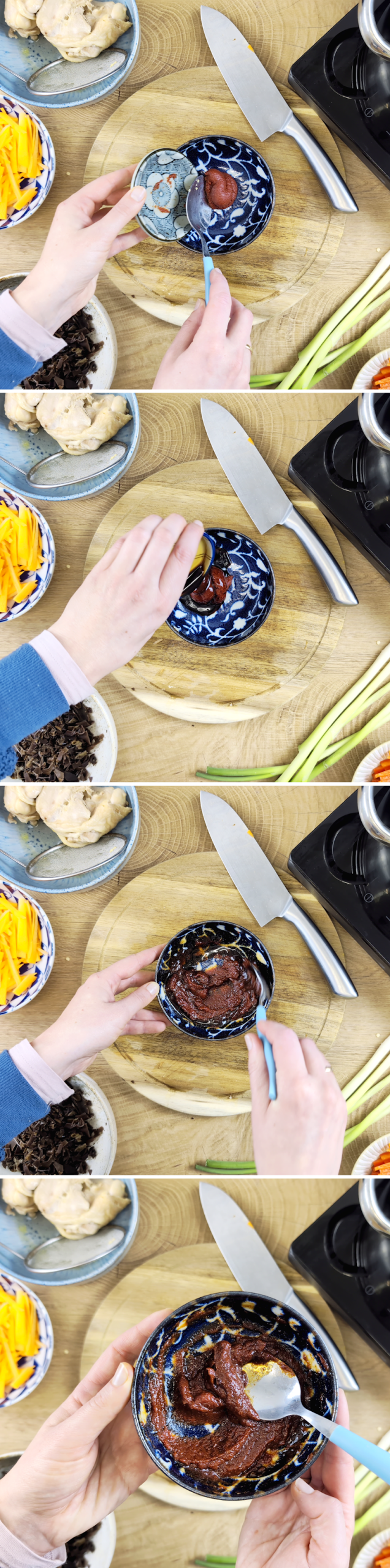
In a small bowl, 2 tbsp tomato purée, 5 tbsp soy sauce, 1 tsp sugar, 1 tbsp chilli paste, 1 tsp salt and a little pepper mix thoroughly.
Step 10
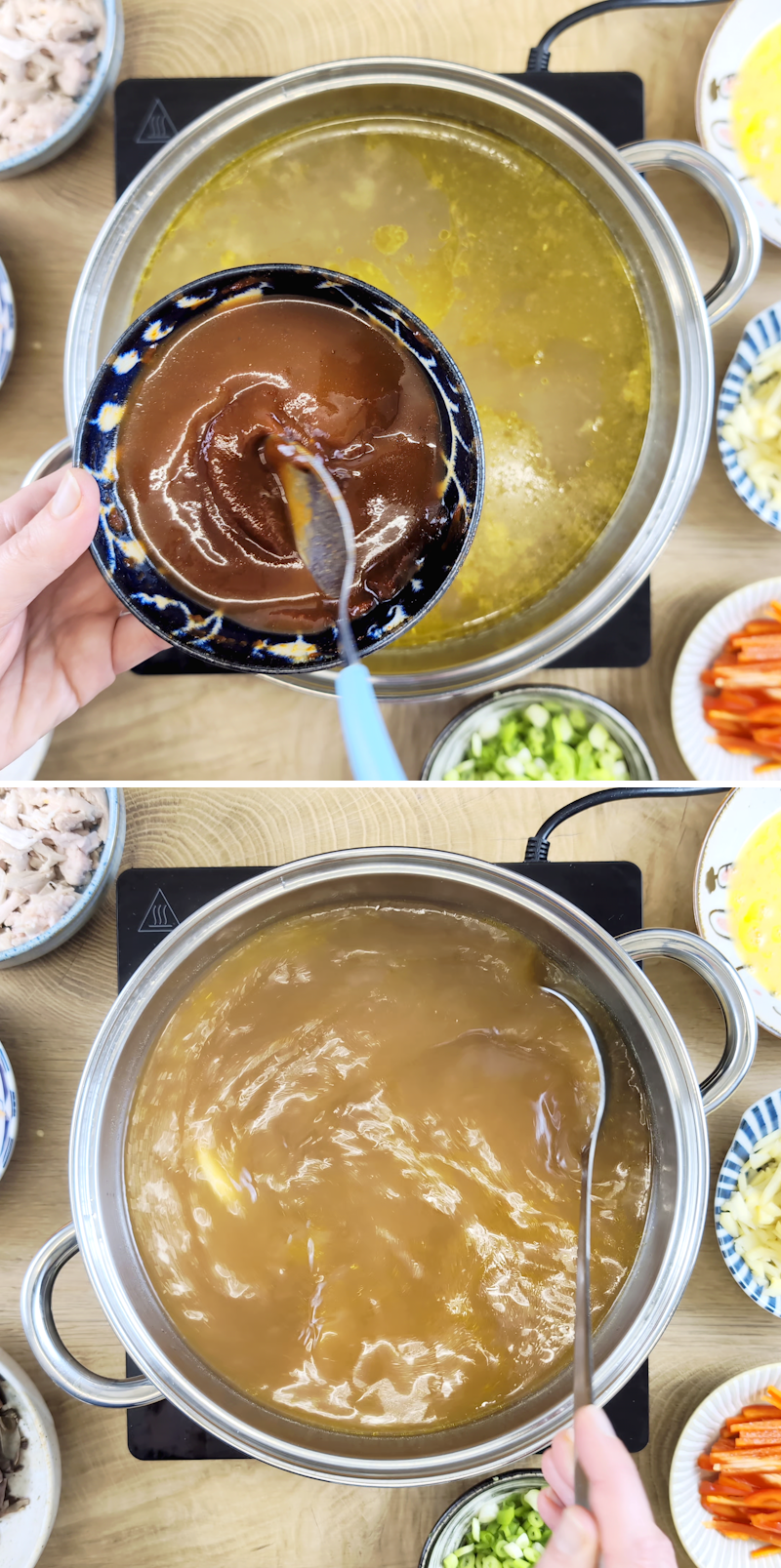
Bring the stock back to the boil and season to taste with the prepared seasoning mixture. The best way to do this is to pour a little hot stock into a bowl, stir it, and then stir everything back into the pan.
Step 11
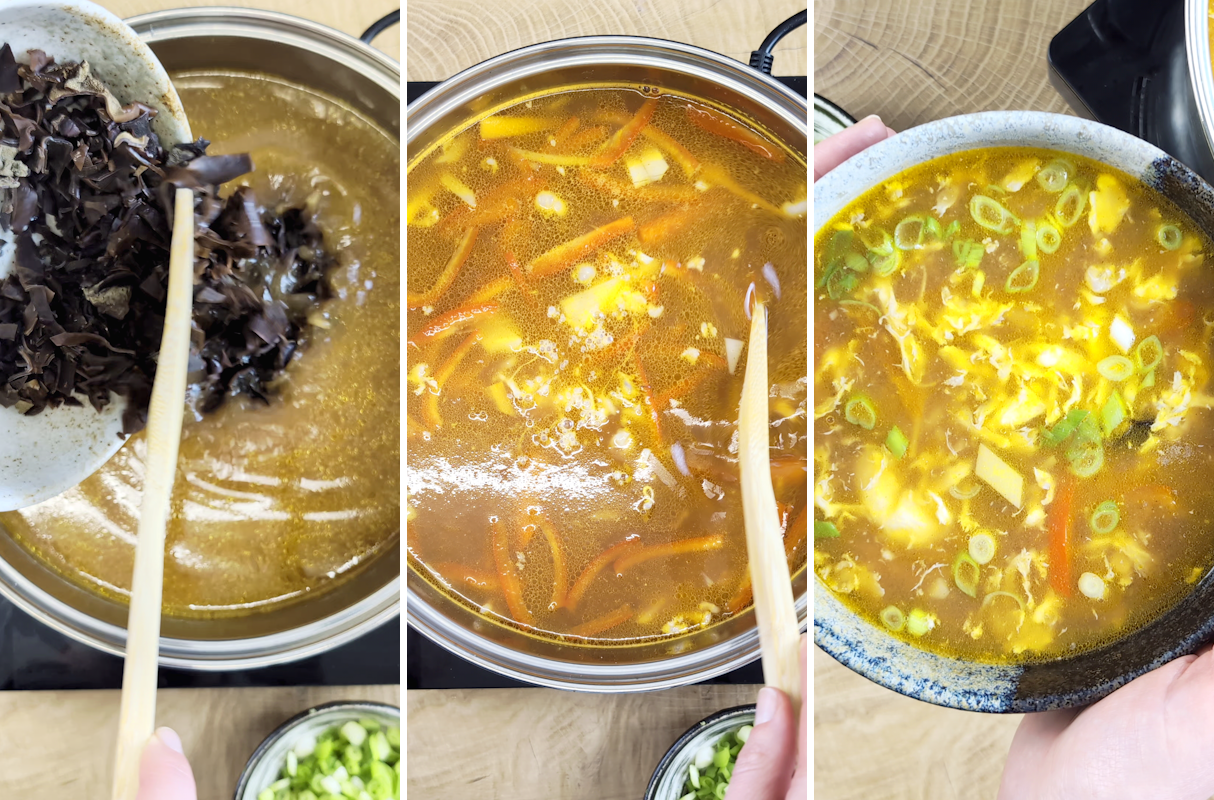
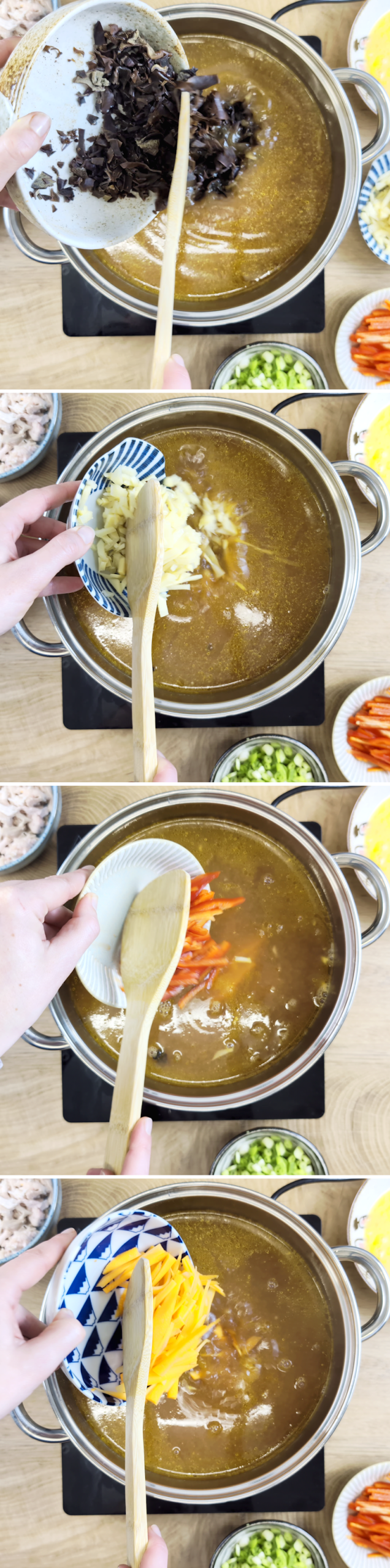
Add the Mu-Err mushrooms, bamboo shoots, peppers and carrots to the soup and let everything simmer gently for about 5 minutes. The soup should not be boiling vigorously.
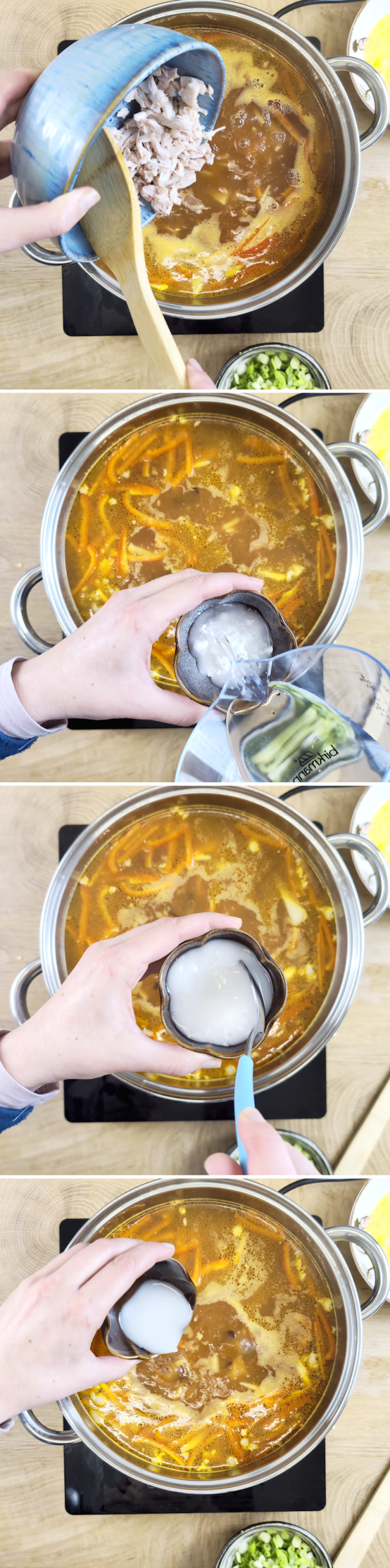
Step 12
Return the prepared chicken to the pan and reheat it in the soup.
Mix 2 tbsp potato starch with a little cold water until smooth and there are no lumps. Stir the mixed starch into the gently simmering soup in portions until a silky, slightly thick consistency is achieved.
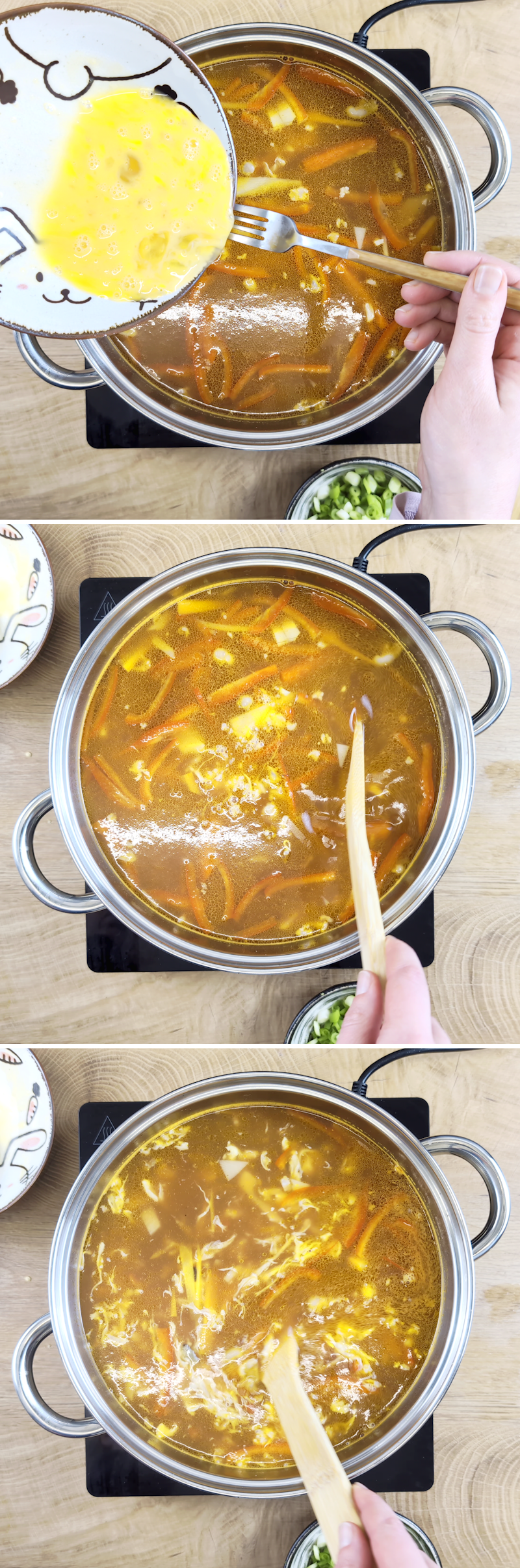
Step 13
Pour the beaten eggs in a thin stream through a fork into the gently simmering soup. Wait for about 10 seconds without stirring, so that fine egg strands form. Then stir the soup very gently so that the strands are evenly distributed.
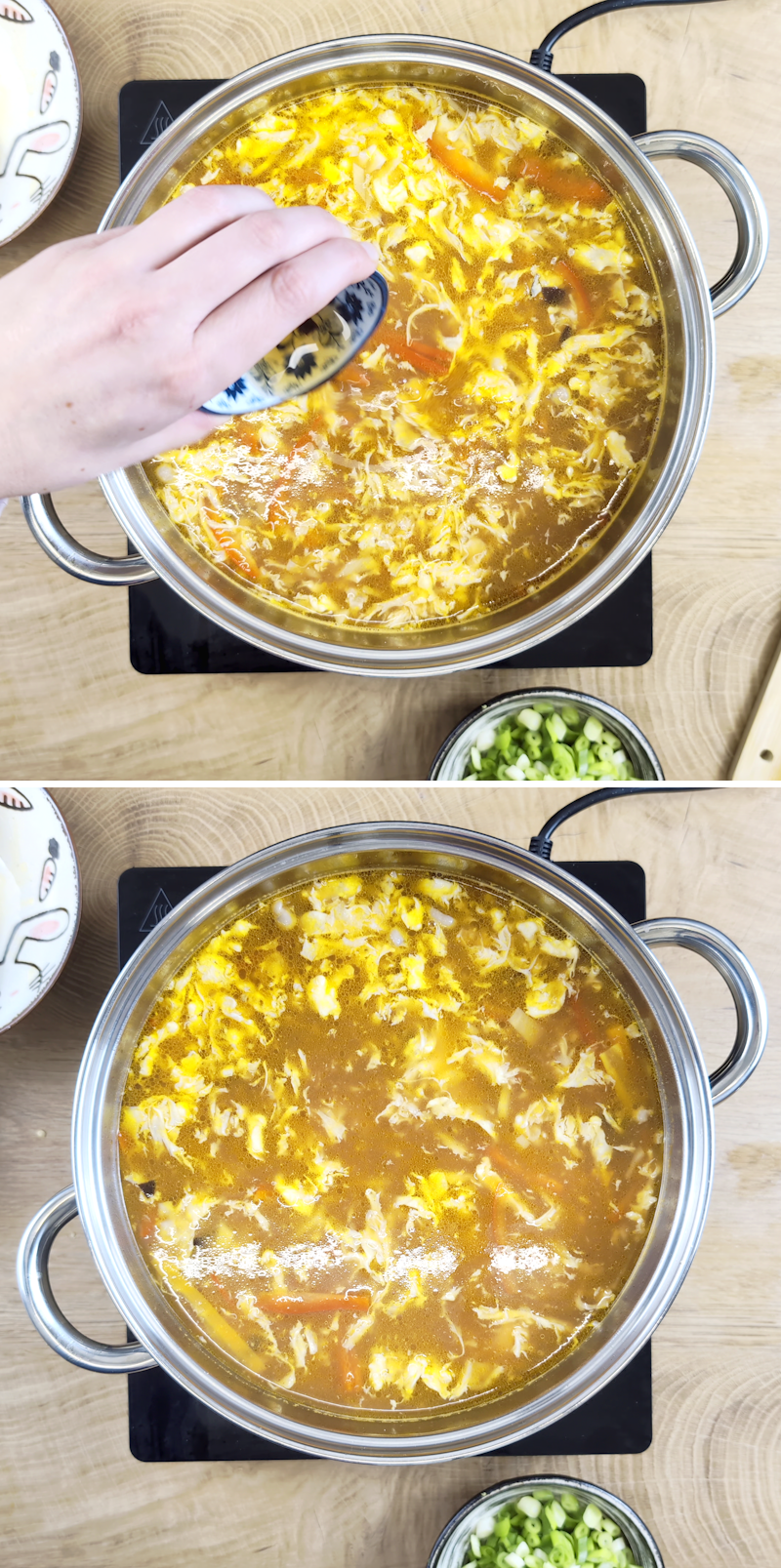
Step 14
Remove the pan from the heat and stir in 4–5 tbsp Chinkiang vinegar to create the typical tangy flavour. Finally, stir in 1 tsp sesame oil and season the soup to taste.
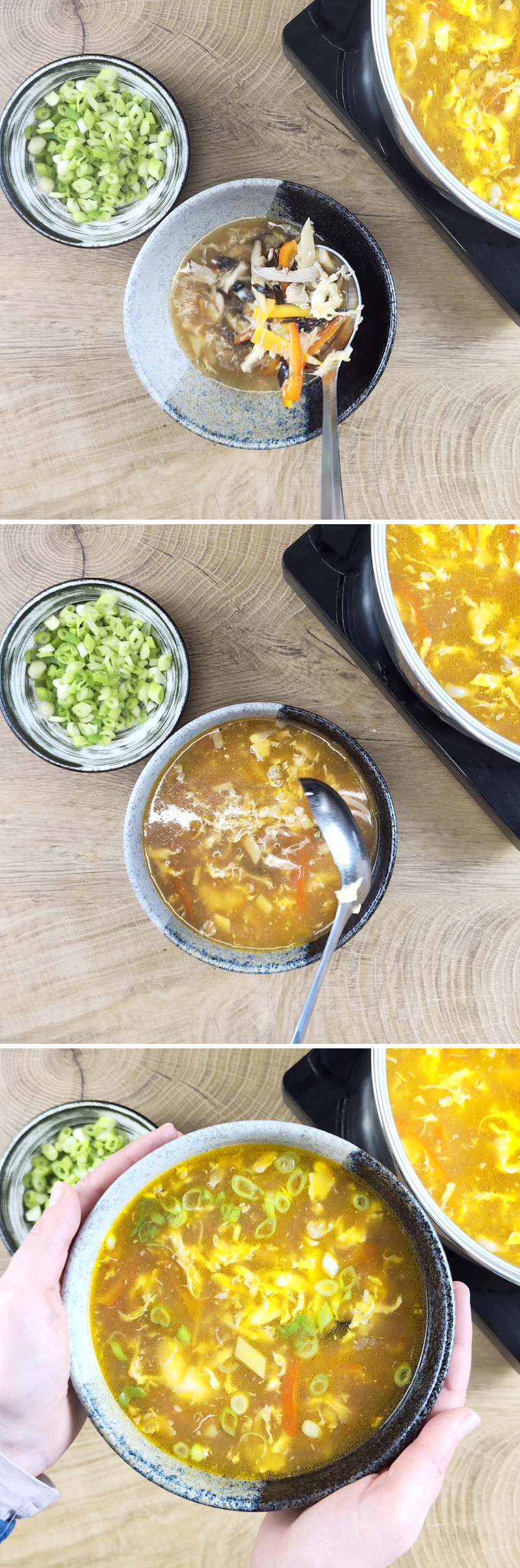
Step 15
Pour the hot soup into bowls and sprinkle with the prepared spring onions. Serve the Peking soup immediately, whilst the egg strips are still clearly visible and the flavours are fresh and distinct.
Fancy some more delicious inspiration from Asia? You can find even more quick recipe ideas here:
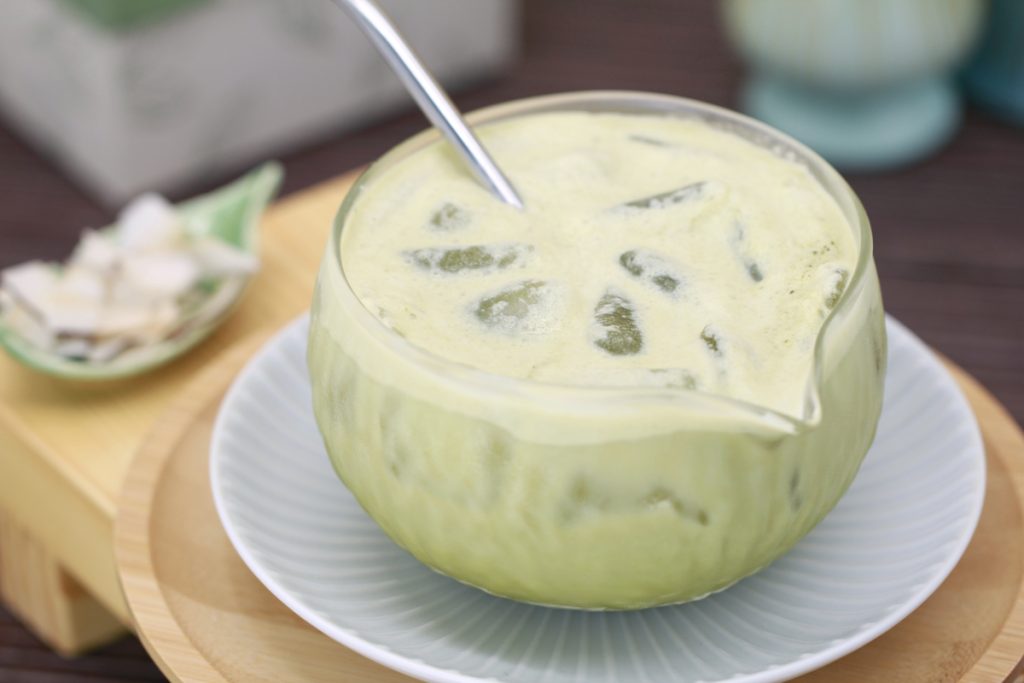
Make your own Coconut Matcha Cloud: A creamy Matcha latte with ice-cold coconut water
I couldn’t get away from the Coconut Matcha Cloud on social media this summer, and…
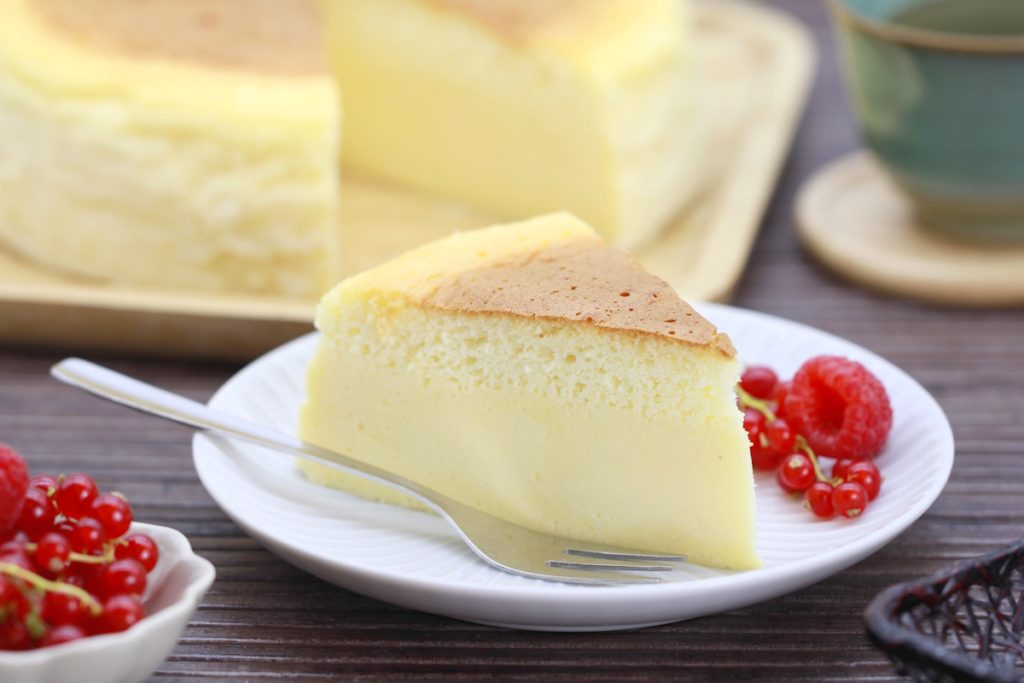
Japanese cheesecake: The best recipe for a fluffy soufflé-style cheesecake just like in Japan
Japanese cheesecake is one of Japan’s most popular desserts and delights with its exceptionally light…
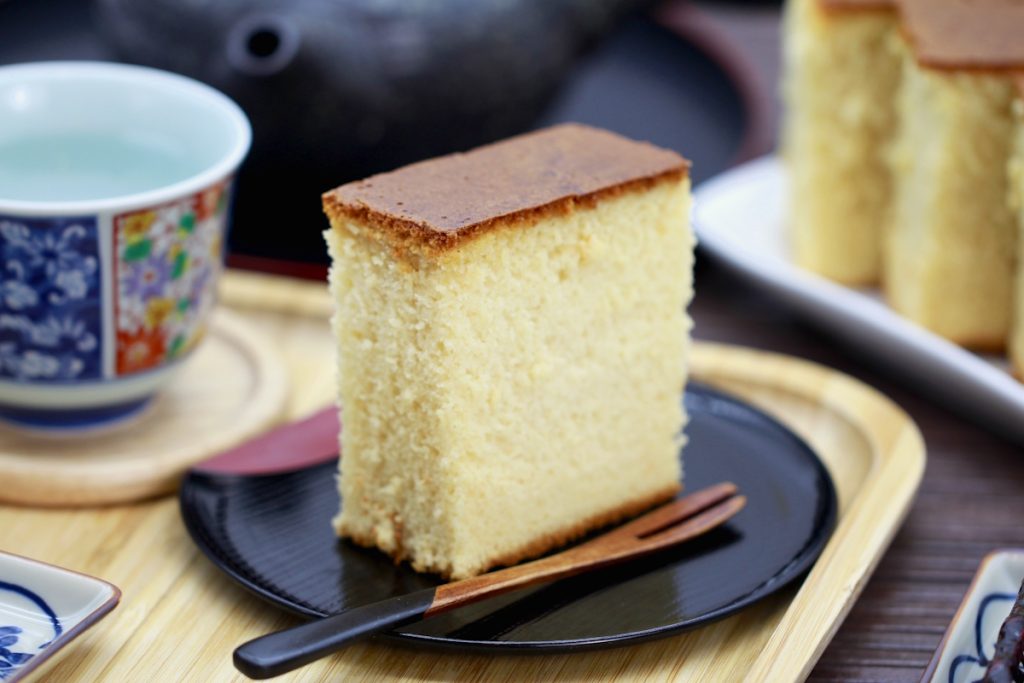
How to make Castella (Kasutera) yourself: How to make this Japanese honey cake
Why is Castella often described as Japan’s moistenest cake? Although Kasutera consists of just a…
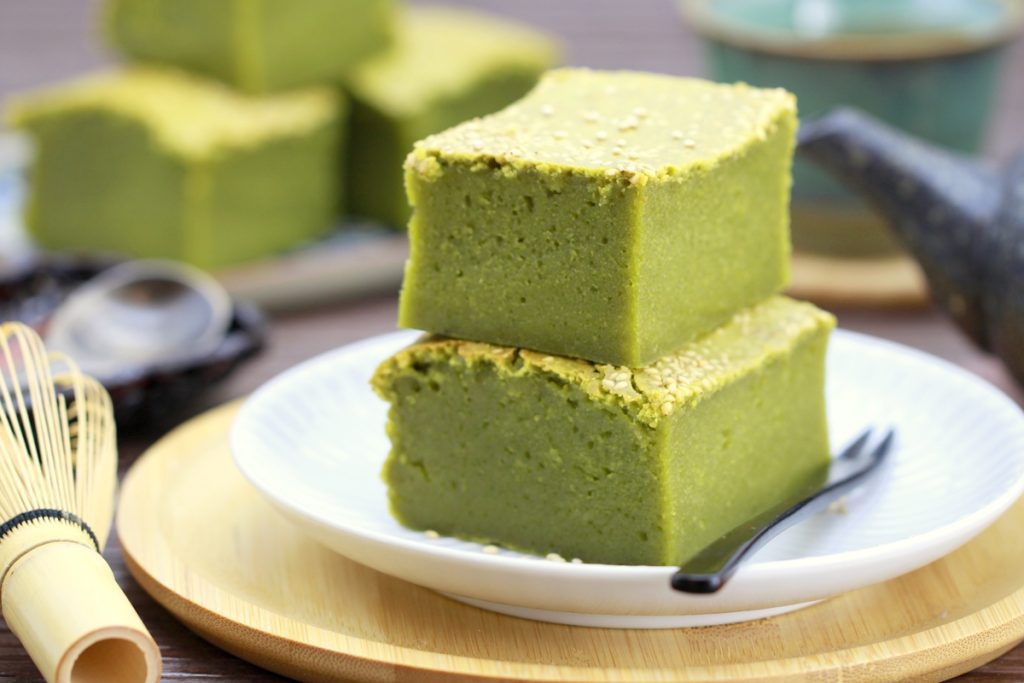
Make your own Matcha butter Mochi: Hawaiian Mochi cake with green tea
If you drink Matcha regularly, you might be familiar with this: at some point, you…
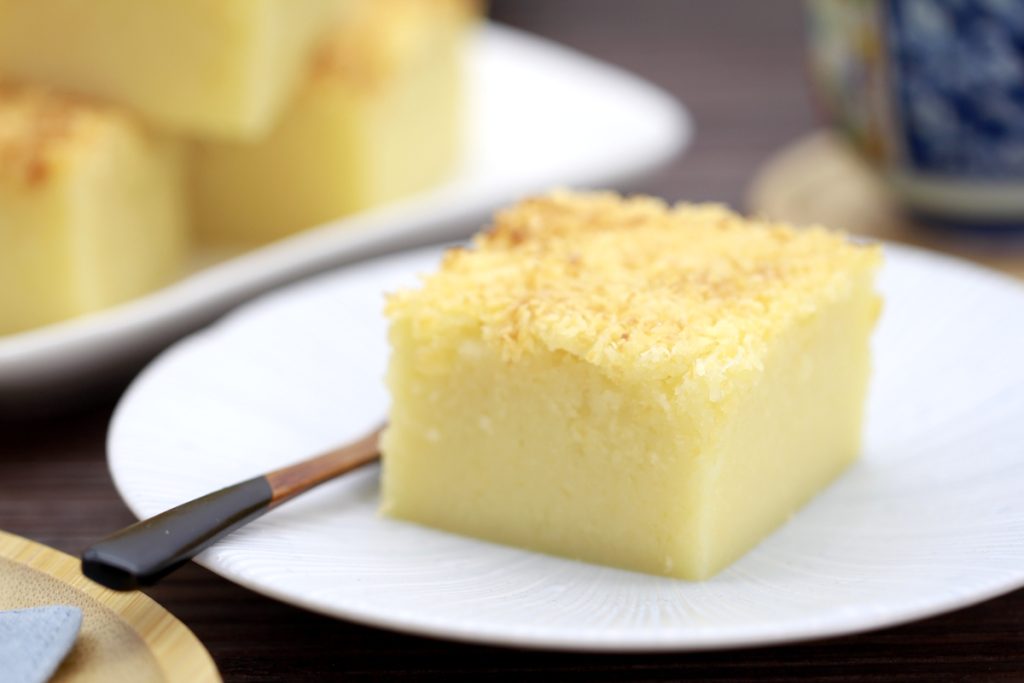
Butter Mochi (Hawaiian Mochi Cake – gluten-free)
Butter Mochi is one of those recipes that’s hard to pigeonhole. It looks like a…
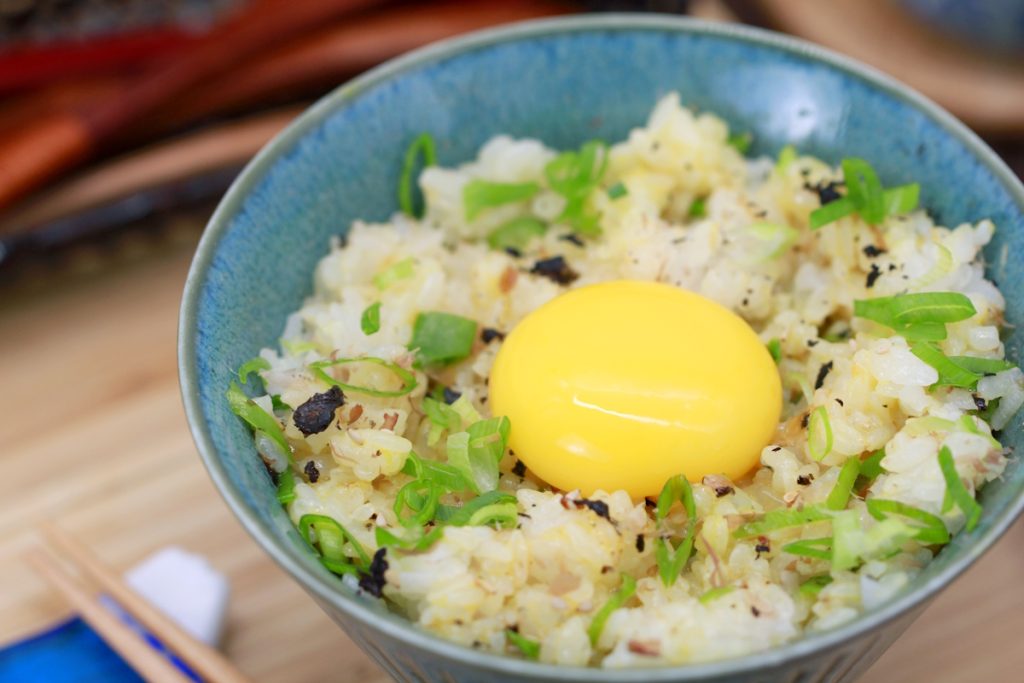
Tamago Kake Gohan: Japanese breakfast rice with egg, Furikake & Katsuobushi | TKG
In this recipe, I’ll show you a particularly flavourful version of Tamago Kake Gohan (TKG)…
Have you tried the recipe yet? Let me know in the comments – I can’t wait to hear from you.