Language:


Gong Bao Chicken is a classic stir-fry dish from Sichuan cuisine that requires just a few ingredients and a straightforward technique. Diced chicken, roasted nuts, dried chillies and a sweet, sour and spicy sauce combine to create a dish that is quick to prepare yet full of depth. It is precisely this combination that makes it suitable for everyday cooking, even outside of Chinese cuisine.
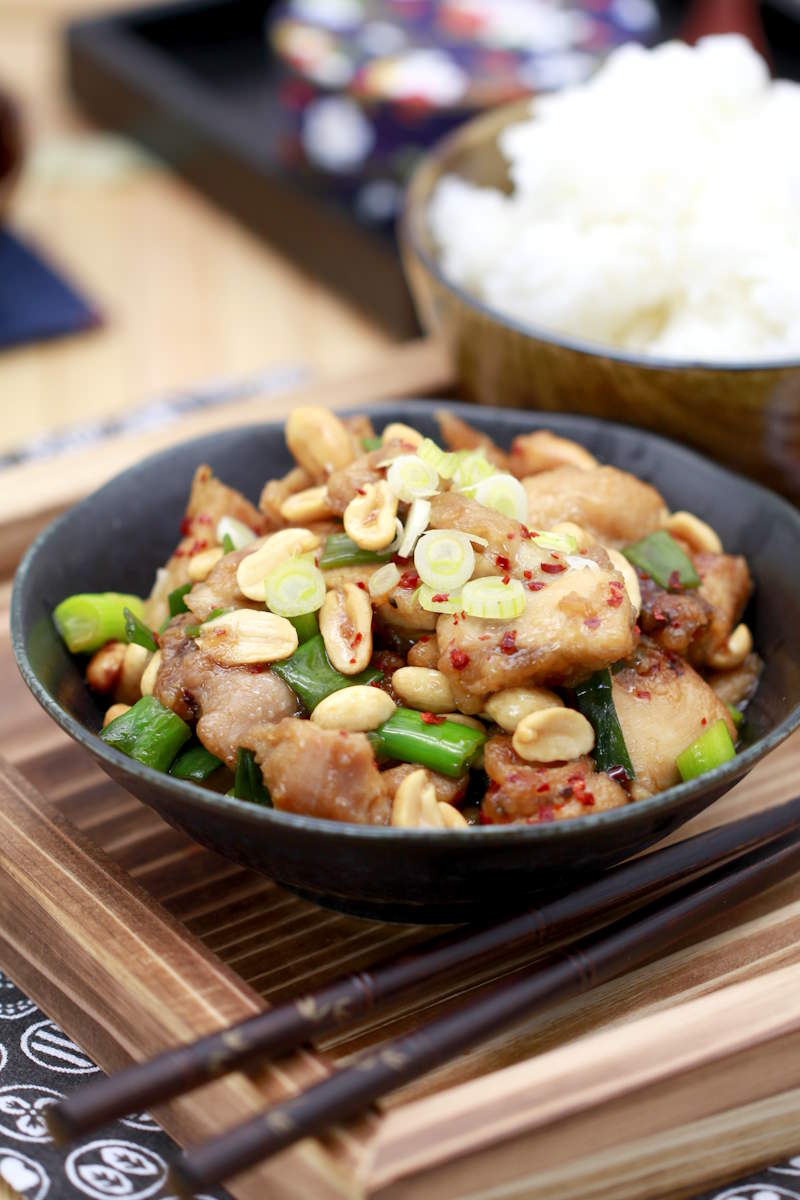
So why a Chinese dish on 1mal1japan? Because it’s hard to imagine everyday Japanese cuisine without Chinese influences. Many dishes that are taken for granted in Japan today, such as Ramen, Gyoza or stir-fried noodle dishes, have their origins in China and were further developed there. Gong Bao Chicken follows a similar logic: simple ingredients, short cooking times and a clear sequence of passages.
This recipe presents Gong Bao Chicken in a classic yet practical form. It is based on the traditional Sichuan preparation but avoids unnecessary complexity. This makes the dish easy to incorporate into your everyday cooking, whether you are making it for the first time or already have experience with Asian stir-fries.
What is Gong Bao Chicken?
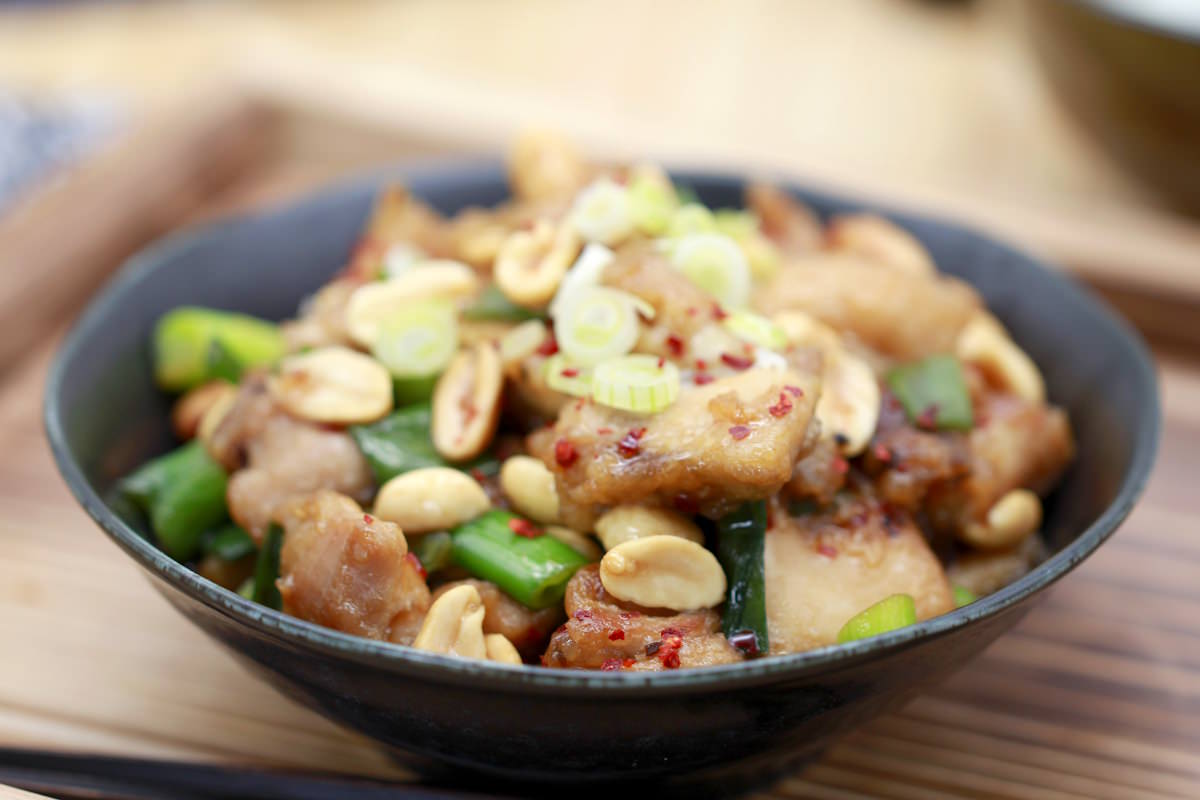
Gong Bao Chicken, known in Chinese as Gongbao Jiding, is a classic stir-fry dish from the Chinese province of Sichuan. It is characterised by evenly diced chicken,
dried chillies, Sichuan pepper and peanuts, all combined in a balanced, slightly thickened sauce. The dish is a prime example of Sichuan cuisine, which is known for its intense flavour and the typical Ma-La heat, a combination of spicy and slightly numbing.
Gong Bao Chicken is prepared using the principle of quick stir-frying (chǎo). All ingredients are prepared in advance, cut into bite-sized pieces and cooked quickly over a high heat. The chicken is usually marinated in a little starch, which keeps it juicy and helps the sauce adhere better later on. Chillies and Sichuan pepper are first toasted in hot oil to release their flavours before the meat, sauce and peanuts are added.
The key is the balance of sweet, sour, salty, spicy and Umami.
Where does Gong Bao Chicken come from?
Historically, the dish is closely linked to the development of Sichuan cuisine. This originated in the fertile region around Chengdu and Chongqing, where rice, vegetables and spices were plentiful. Stir-fries played a central role from early on, as they could be prepared quickly and adapted well to different ingredients. Chillies reached China in the 16th and 17th centuries via trade routes from the Americas to China and had a lasting impact on the cuisine. Sichuan pepper, which was already known, complemented this heat with its characteristic numbing note.
In the 20th century, the Sichuan style spread further, partly due to population movements during the Second World War, when many people from the region moved to Chongqing and later to other parts of China. Gong Bao Chicken evolved from a regional stir-fry into a nationally renowned classic and eventually became one of the most internationally famous dishes of Chinese cuisine.
How to make Gong Bao Chicken yourself: Here’s how
Gong Bao Chicken may seem complex at first glance, but it is a very straightforward stir-fry. The key is well-prepared ingredients and the correct order of cooking. Once everything is to hand, the dish will be on the table in a matter of minutes.
The key ingredients for Gong Bao Chicken:
The focus is on a few, clearly defined components that together create the typical flavour:
- Skinless chicken thighs: Boneless thighs remain juicy and withstand high heat better than breast meat. The starch-based marinade provides additional protection for the meat and gives it a tender surface later on.
- Chillies & Sichuan pepper: Dried chilli flakes provide the heat, whilst the Sichuan pepper adds the characteristic, slightly numbing tingle. Both are briefly toasted in oil to allow their flavours to develop without becoming bitter.
- Peanuts: Unsalted peanuts add roasted flavours and texture to the dish. They are stirred in at the very end to ensure they remain crunchy.
- The sauce: Soy sauce, black Chinkiang vinegar, sugar and water create a balanced sweet-sour-salty base. It is not pre-cooked, but thickened directly in the pan.
Here’s how it works:
First, marinate the chicken with garlic, ginger, soy sauce, Shaoxing wine and cornflour. While the meat is marinating briefly, chop the spring onions and prepare the sauce.
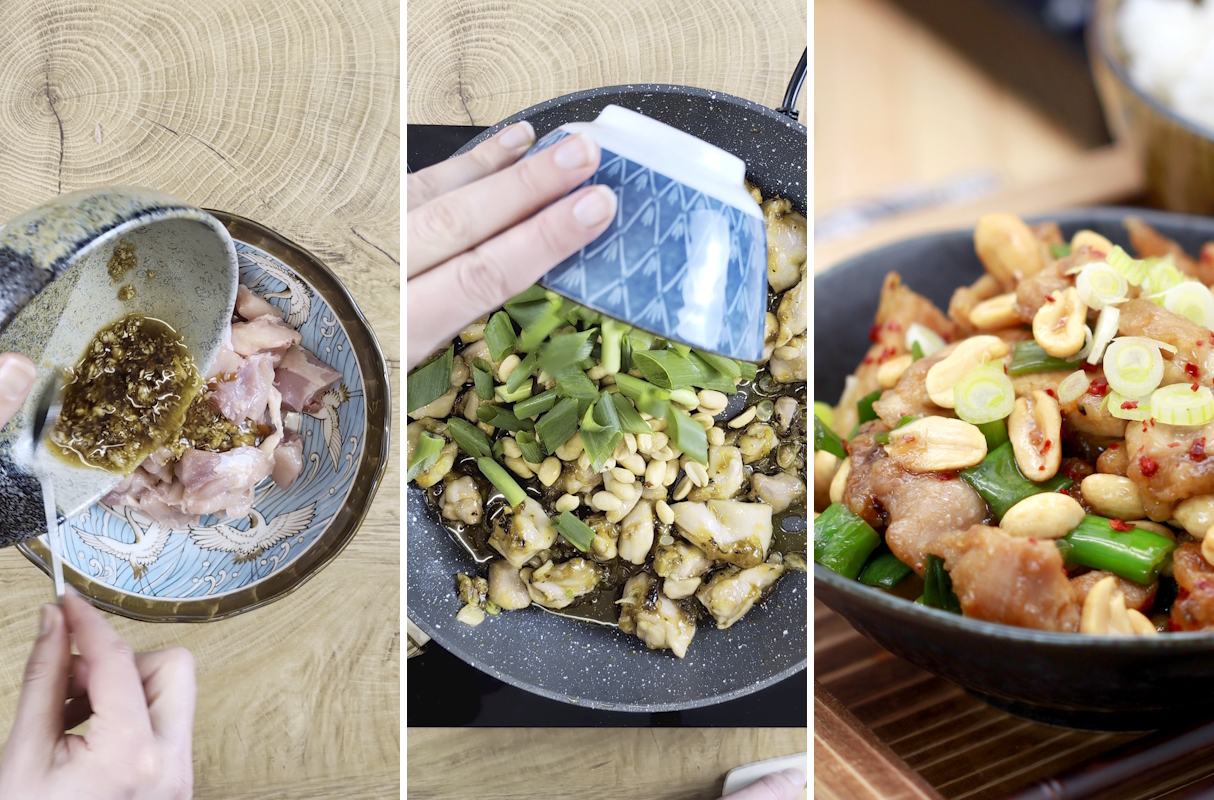
In a hot pan, first fry the chillies and Sichuan pepper in oil. As soon as they release their aroma, add the marinated chicken and sear it over a high heat. The meat takes on colour and roasted flavours without drying out.
Next, add the spring onions, sauce and peanuts to the pan. Within seconds, everything combines to form a glossy glaze that coats the meat. Finally, remove the dish from the heat and serve immediately, traditionally with plain rice.
Variations of Gong Bao Chicken
In Sichuan, the region of origin, Gong Bao Chicken is strongly spiced: plenty of dried chilli, Sichuan pepper for the typical ma-la heat, peanuts and a rather dry, glossy sauce with a clear sweet-sour balance.
In other regions of China, the dish is often milder. In Guizhou, it is prepared with more heat and acidity, sometimes using fermented chilli paste, whilst versions from Shandong are less spicy but have more soy flavour and a thicker sauce.
International versions, particularly from Chinese-American kitchens, are usually sweeter and significantly saucier. Peppers, onions or broccoli are often added, peanuts are sometimes replaced by cashews, and Sichuan pepper is reduced or omitted entirely.
Vegetarian versions use Tofu or mushrooms instead of chicken. The sauce remains similar, but relies more on texture and roasted flavours rather than meat.
What goes well with Gong Bao Chicken?
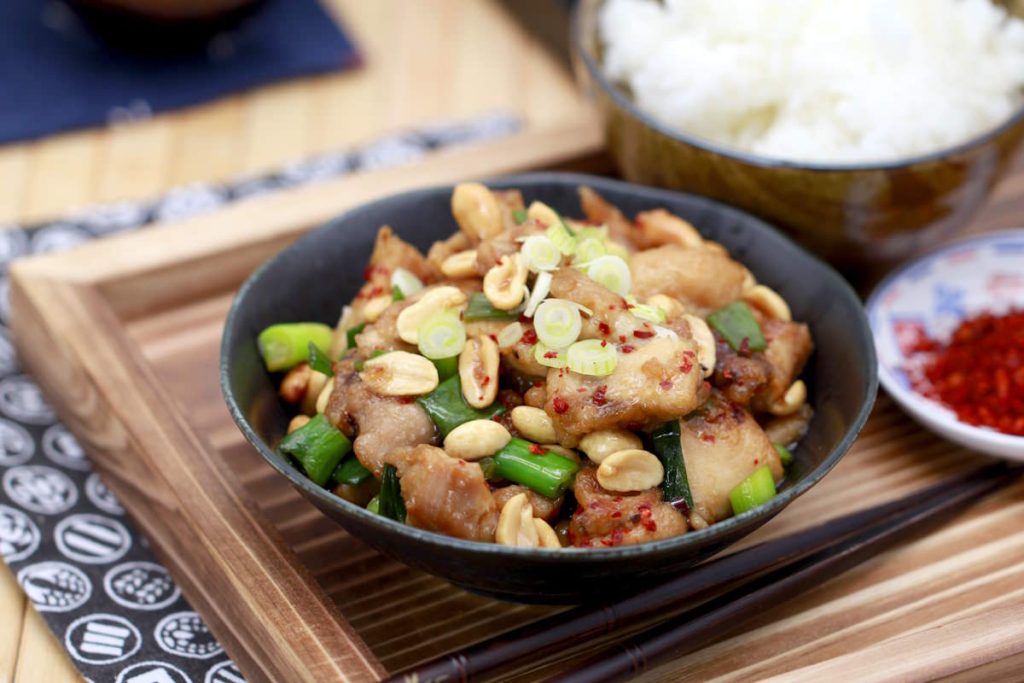
Gong Bao Chicken is best served with plain, neutral rice. Jasmine rice or Japanese short-grain rice absorb the sauce well and allow the flavours to come through. Simple, fresh side dishes such as cucumber salad or briefly blanched leafy greens make a good accompaniment, providing a gentle contrast to the spice.
I look forward to your comments: please let me know how your Gong Bao Chicken turned out and whether you prefer it strongly sour, a bit spicier or perfectly balanced. Enjoy cooking and savouring your meal!

Gong Bao Chicken
serves 2 | 30 minutes | 629 kcal
🖨️ Print PDF 📌 Save pinGong Bao Chicken is a classic stir-fry dish from Sichuan cuisine featuring tender chicken, roasted Sichuan pepper, chilli and peanuts. This recipe shows you a balanced, everyday version where heat, acidity and sweetness interact in a clearly structured way.
Ingredients (2 servings)
Meat & marinade:
500 g chicken thighs(boneless, skinless)
2 garlic cloves
1 piece ginger(fresh, approx. 2 cm)
1 tbsp Shoyu soya sauce (im Shop ansehen)*
1 tbsp Shaoxing wine (alternatively Sake (im Shop ansehen)* )
1 tbsp Katakuriko(potato starch) (im Shop ansehen)*
1 tbsp chilli flakes (more or less to taste) (im Shop ansehen)*
1 tbsp Sichuan pepper (Hua Jiao)
3 spring onions
50 g peanuts (unsalted)
3 tbsp oil (e.g. peanut or rapeseed oil)
Sauce:
5 tbsp water
2 tbsp soya sauce
1 tbsp Chinkiang vinegar (im Shop ansehen)*
2 tbsp sugar
Useful tools:
Santoku knife (im Shop ansehen)
Grater (im Shop ansehen)
Preparation (30 minutes)
Step 1
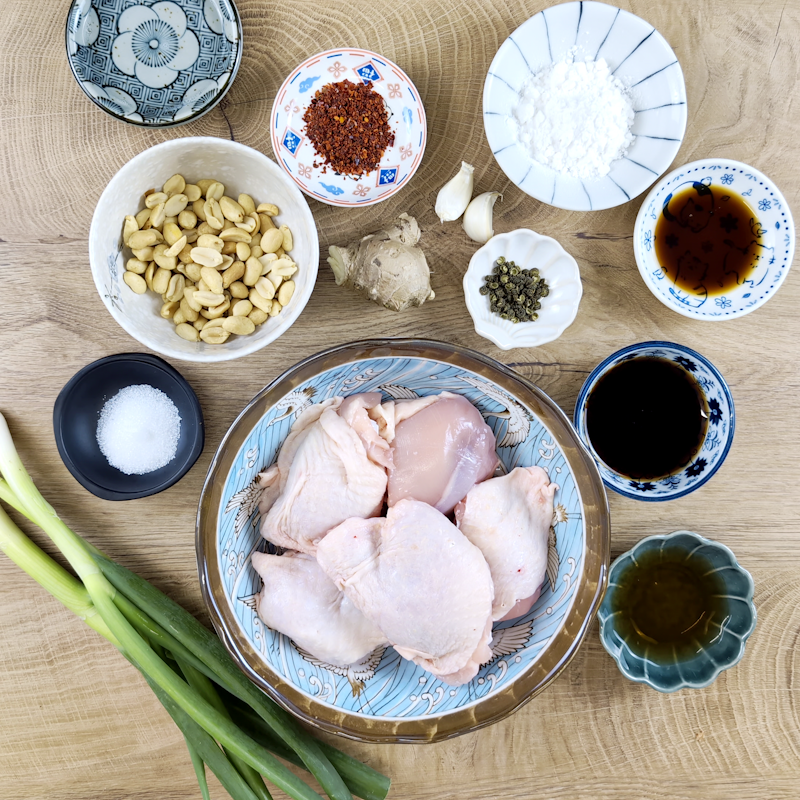
To begin with, have all the ingredients for the Chinese Gong Bao Chicken ready. Feel free to cook some freshly steamed rice at the same time (you can find the recipe for rice here).
Step 2
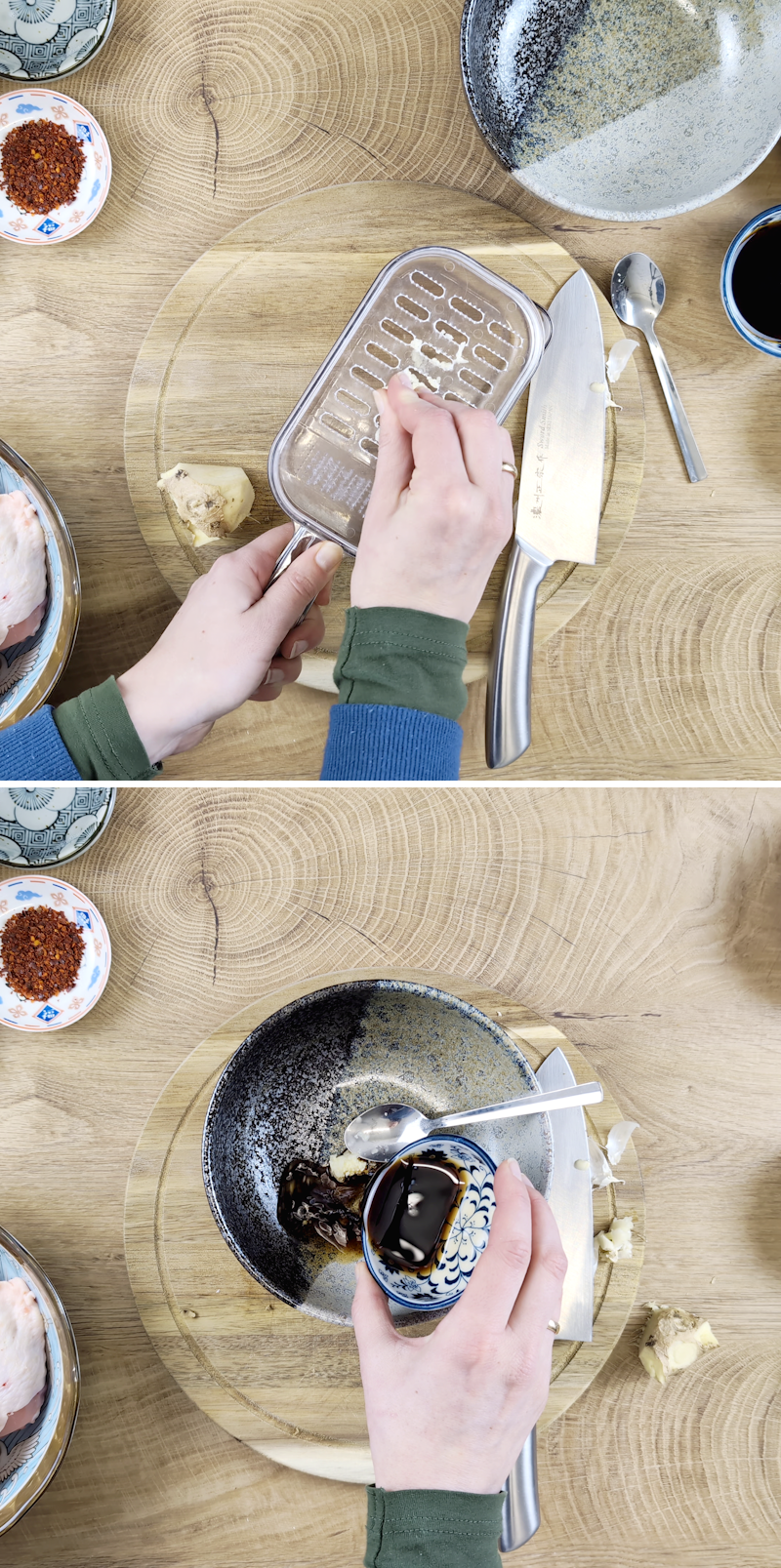
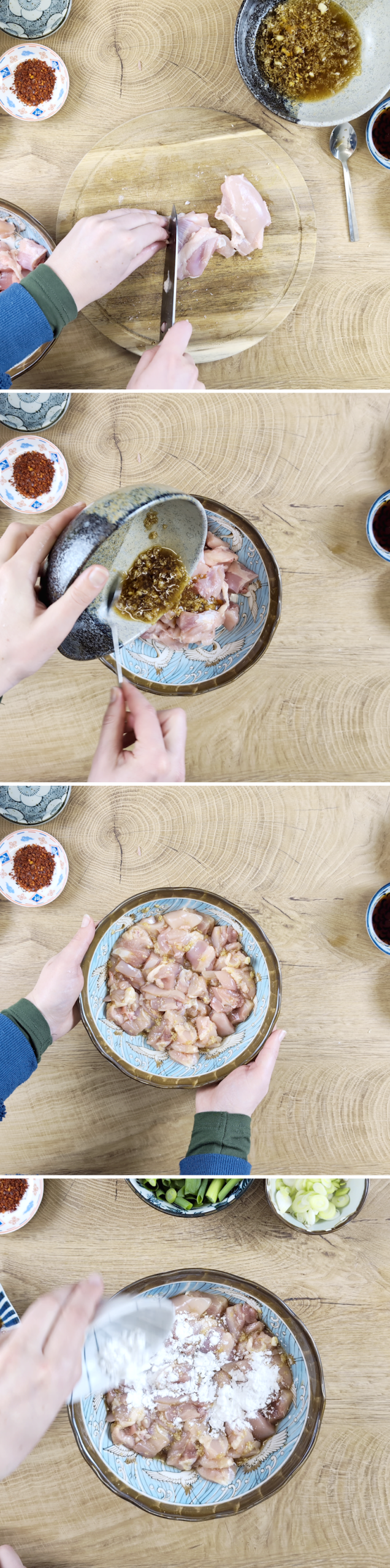
Peel and finely grate 2 cloves of garlic. Peel and finely grate the ginger (approx. 2 cm) as well. Place both in a bowl and mix until smooth with 1 tbsp soy sauce and 1 tbsp Shaoxing wine (or Sake).
Step 3
Cut the 500 g boneless chicken thighs (skinless) into 2–3 cm cubes and add to the marinade. Mix everything thoroughly so that each piece is coated. Then mix with 1 tbsp cornflour. Leave the meat to stand briefly whilst the remaining ingredients are prepared.
Step 4
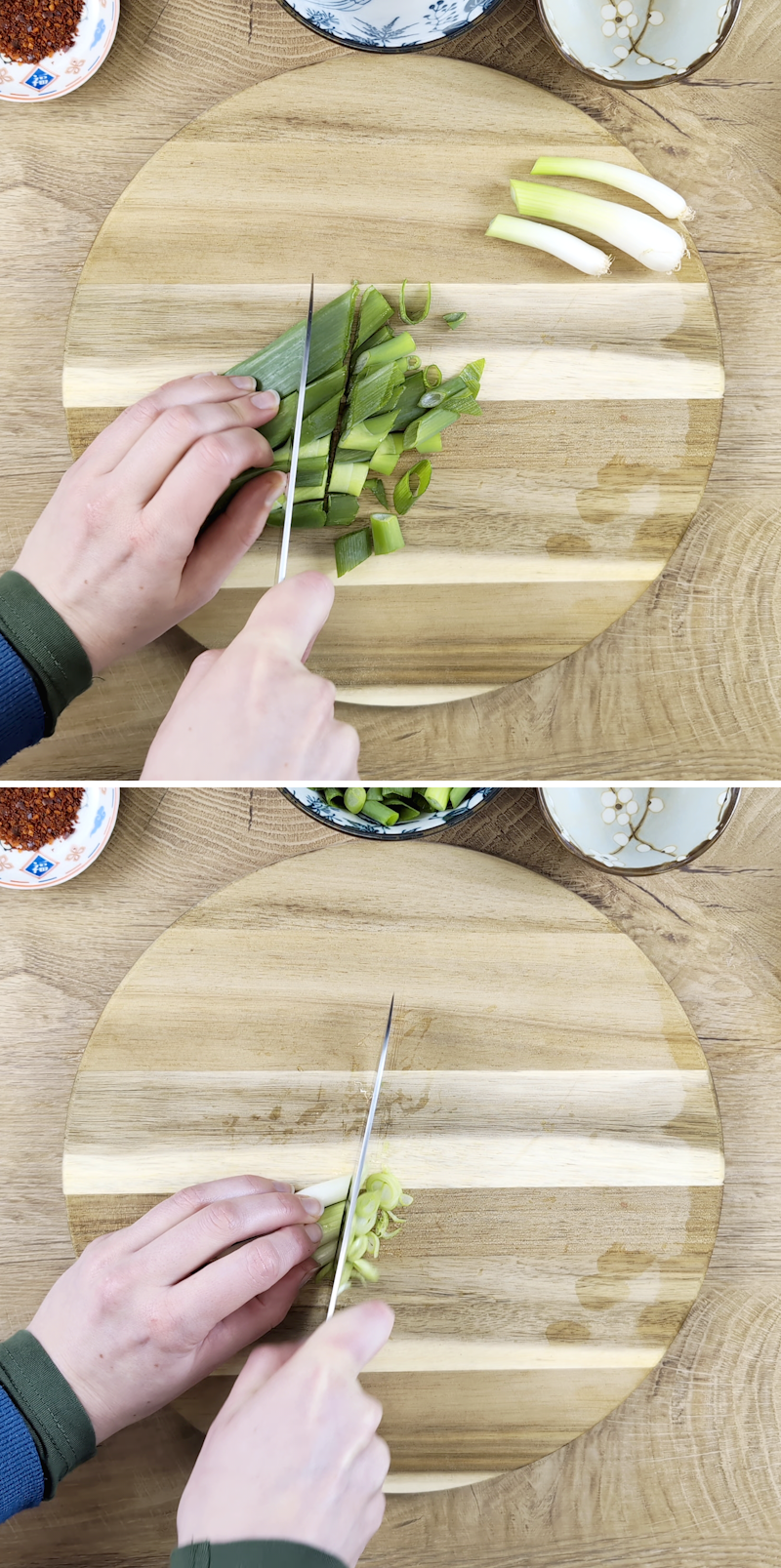
3 spring onions – wash and cut diagonally into pieces. Separate the white from the green. Set both aside separately.
Step 5
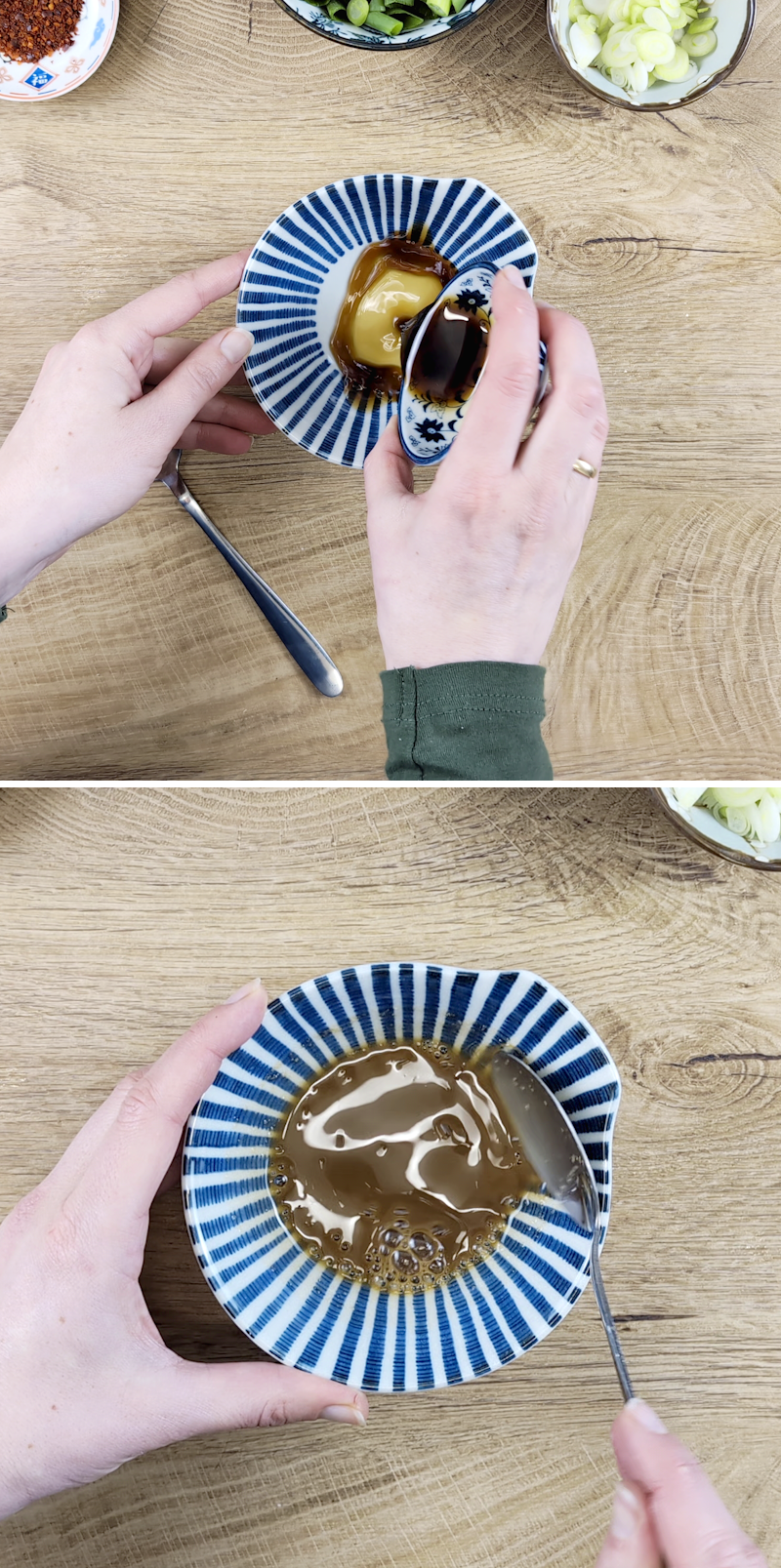
In a small bowl, mix together 2 tbsp soy sauce, 1 tbsp Chinkiang vinegar, 2 tbsp sugar and 5 tbsp water until the sugar has dissolved completely. Place the sauce next to the hob, ready to use.
Step 6
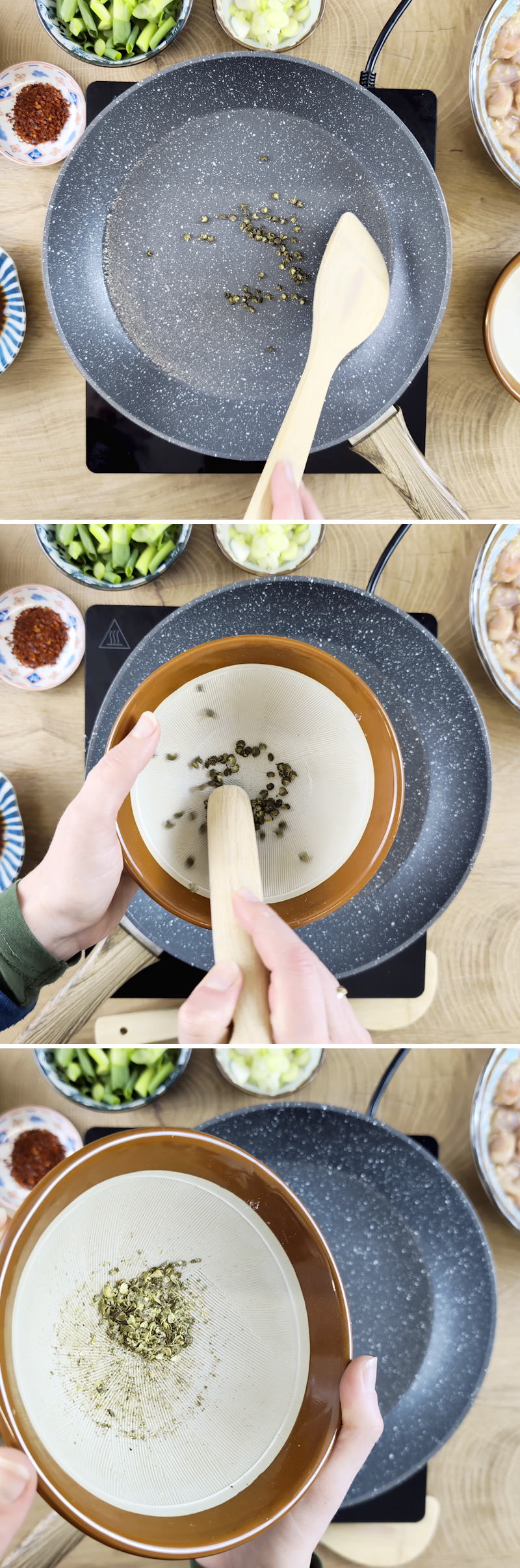
Briefly roast 1 tbsp Sichuan pepper in a dry frying pan until it gives off a distinct aroma. Then remove and coarsely crush in a mortar. (Not too finely – a bit of texture is good.)
Step 7
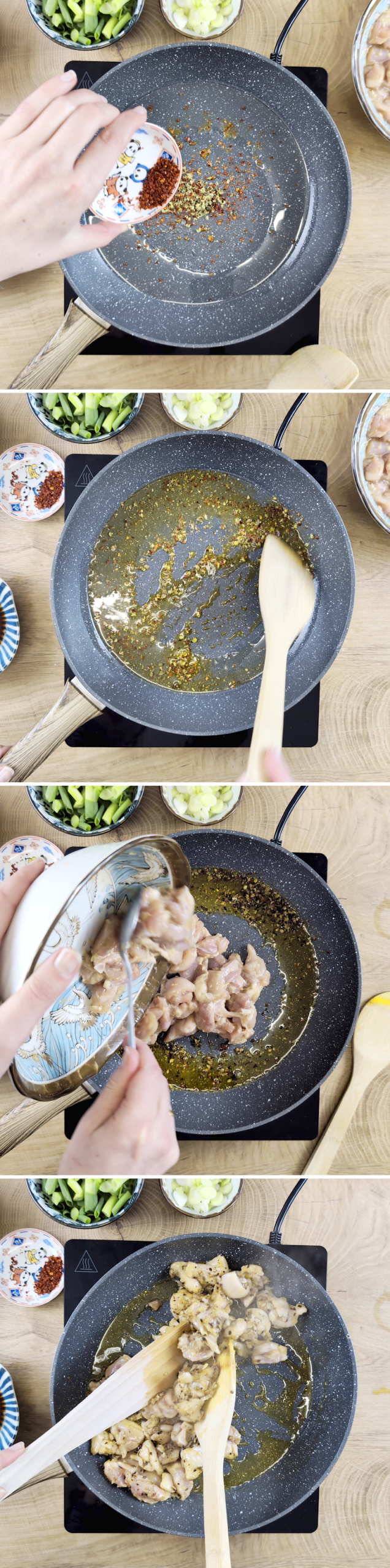
Heat 3 tbsp neutral oil in a large frying pan or wok over medium-high to high heat. Add 1 tbsp chilli flakes and the crushed Sichuan pepper and toast for just a few seconds until the aroma is intense.
Immediately add the marinated chicken to the pan and stir-fry vigorously until the pieces brown on the outside and look slightly crispy. Depending on the heat, this usually takes 4–6 minutes.
Step 8
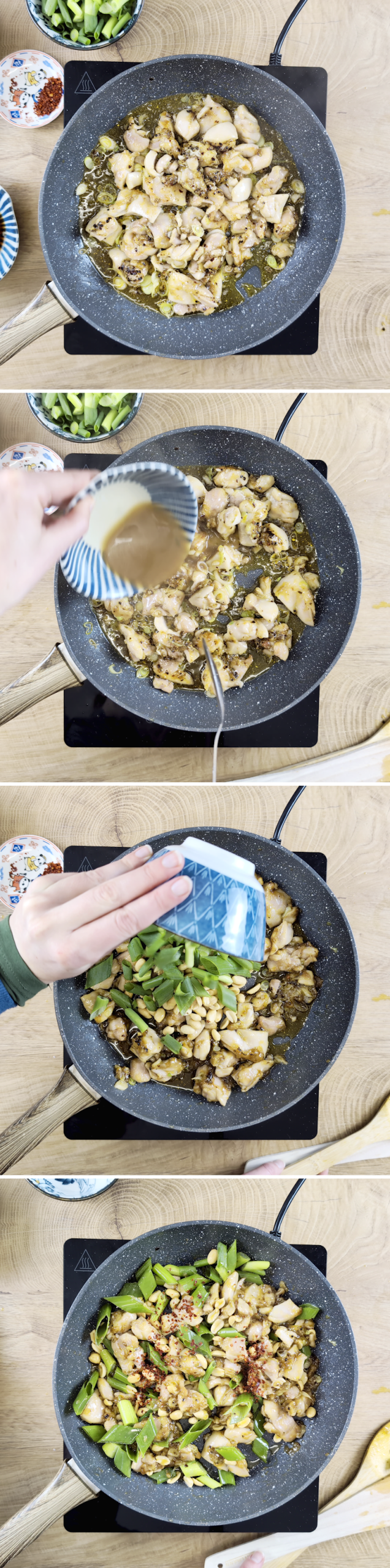
Now add the green spring onion pieces to the pan and stir briefly, just until they wilt slightly and release their aroma. Then pour the prepared sauce into the pan and toss or stir everything well. After a few seconds, the sauce will begin to glisten and coat the meat like a glaze. Allow to simmer briefly until everything is nicely thickened.
Finally, fold in 50 g unsalted peanuts, remove the pan from the heat and sprinkle the white spring onion pieces over the top.
Step 15
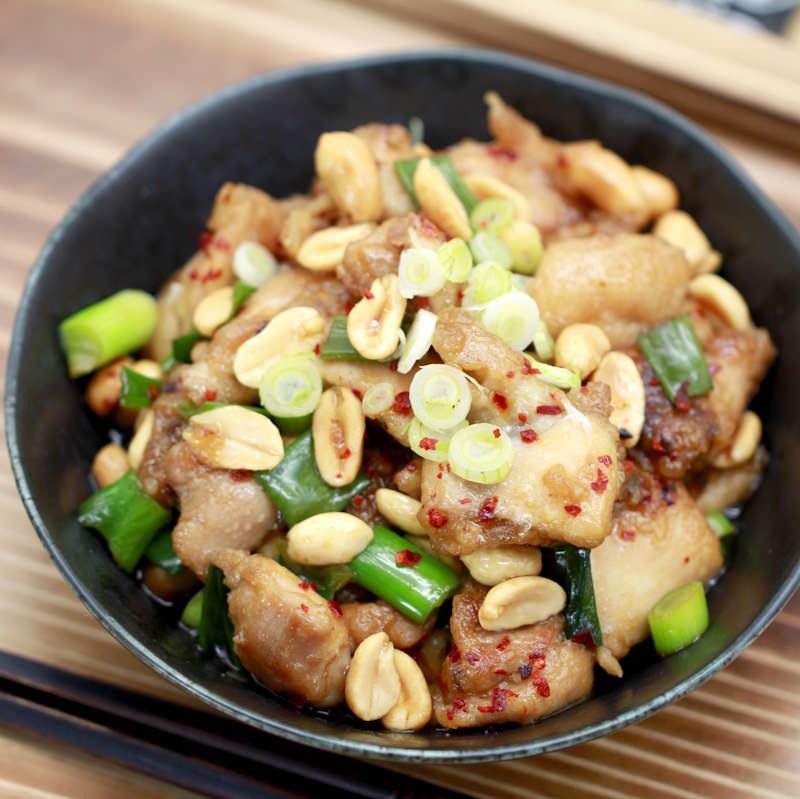
Garnish the Gong Bao Chicken with extra chilli and serve immediately, ideally with plain jasmine or short-grain rice, so that the sauce comes into its own.
Fancy some more delicious inspiration from Asia? You’ll find even more quick recipe ideas here:
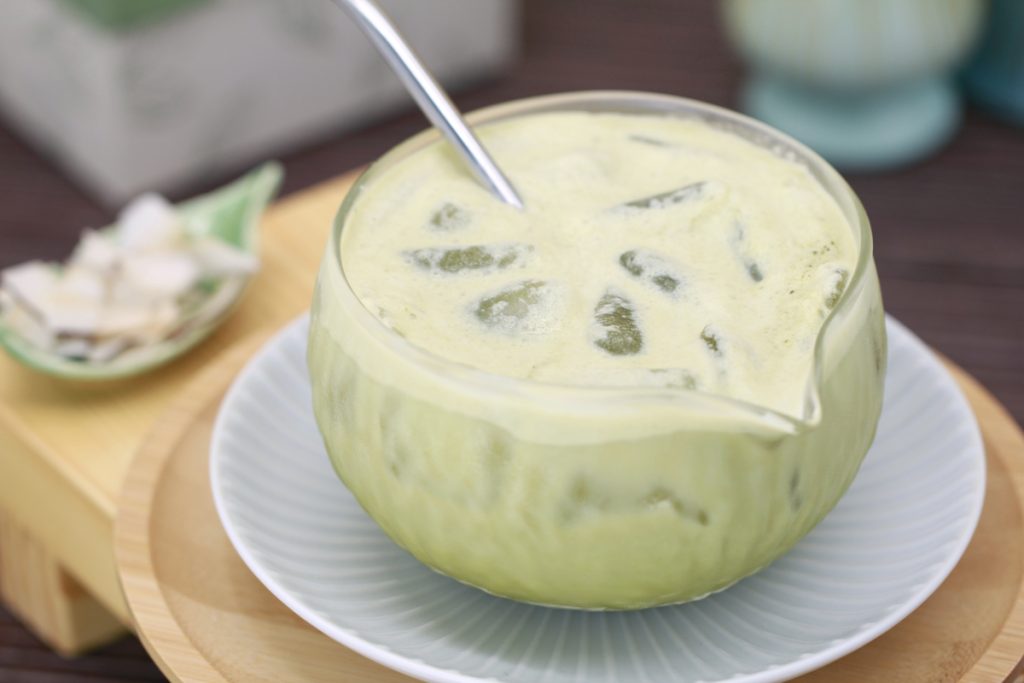
Make your own Coconut Matcha Cloud: A creamy Matcha latte with ice-cold coconut water
I couldn’t get away from the Coconut Matcha Cloud on social media this summer, and…
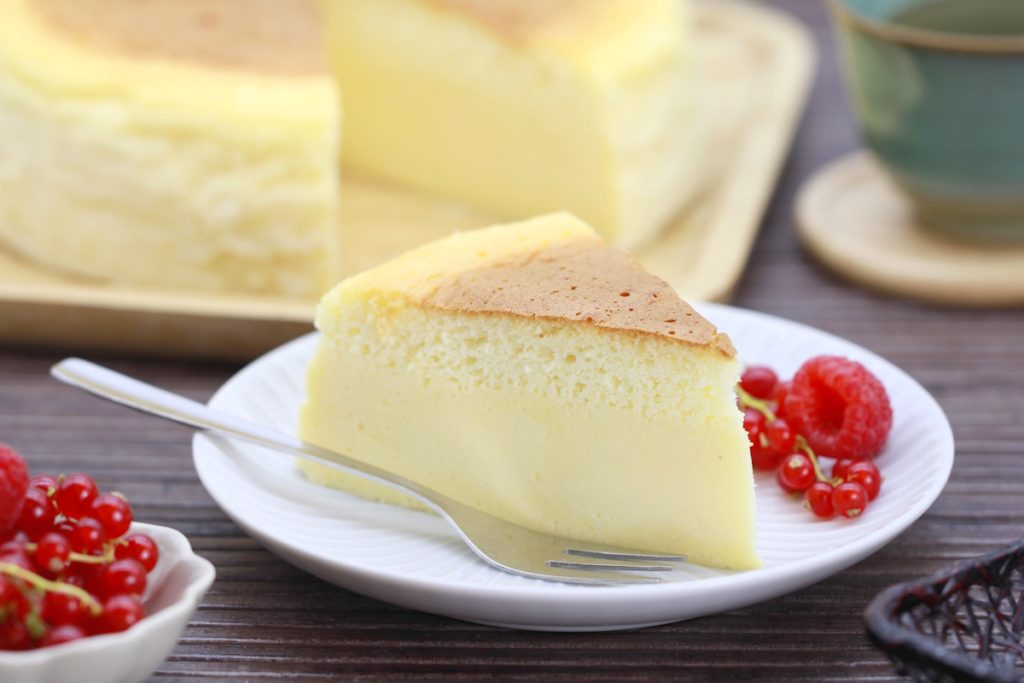
Japanese cheesecake: The best recipe for a fluffy soufflé-style cheesecake just like in Japan
Japanese cheesecake is one of Japan’s most popular desserts and delights with its exceptionally light…
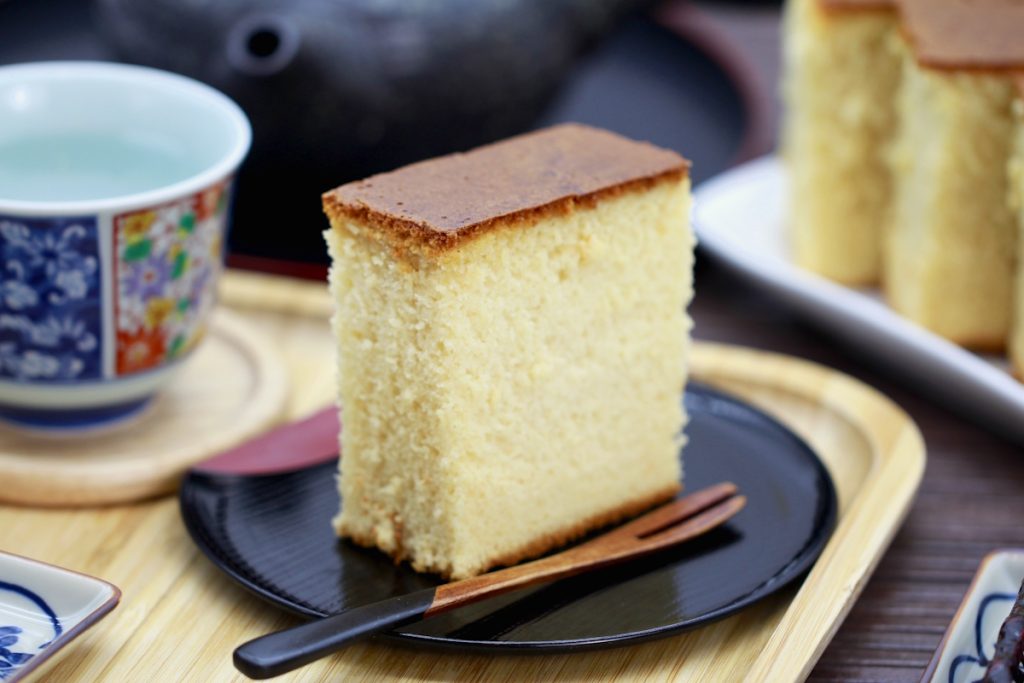
How to make Castella (Kasutera) yourself: How to make this Japanese honey cake
Why is Castella often described as Japan’s moistenest cake? Although Kasutera consists of just a…
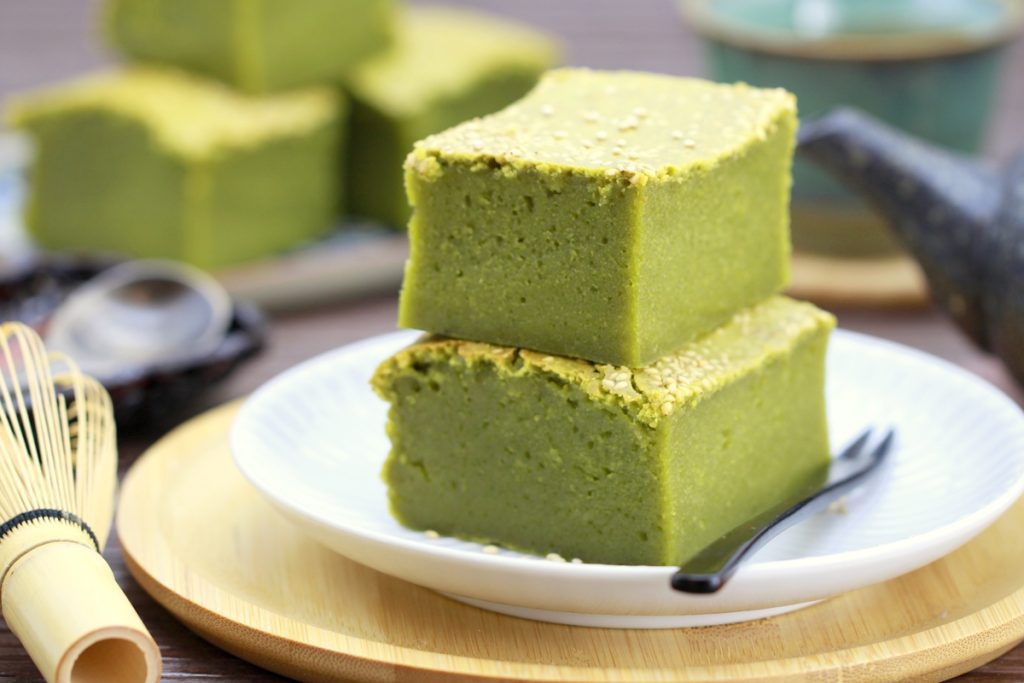
Make your own Matcha butter Mochi: Hawaiian Mochi cake with green tea
If you drink Matcha regularly, you might be familiar with this: at some point, you…
Butter Mochi (Hawaiian Mochi Cake – gluten-free)
Butter Mochi is one of those recipes that’s hard to pigeonhole. It looks like a…
Tamago Kake Gohan: Japanese breakfast rice with egg, Furikake & Katsuobushi | TKG
In this recipe, I’ll show you a particularly flavourful version of Tamago Kake Gohan (TKG)…
Have you tried the recipe yet? Let me know in the comments – I can’t wait to hear from you.