
Language:


A homemade Tori Chintan stock is a wonderful base for traditional Japanese Ramen noodle soups. This clear chicken stock is cooked with fresh garden vegetables – it’s simple to make and the result is absolutely full of flavour. With this simple basic recipe, you simply can’t go wrong!
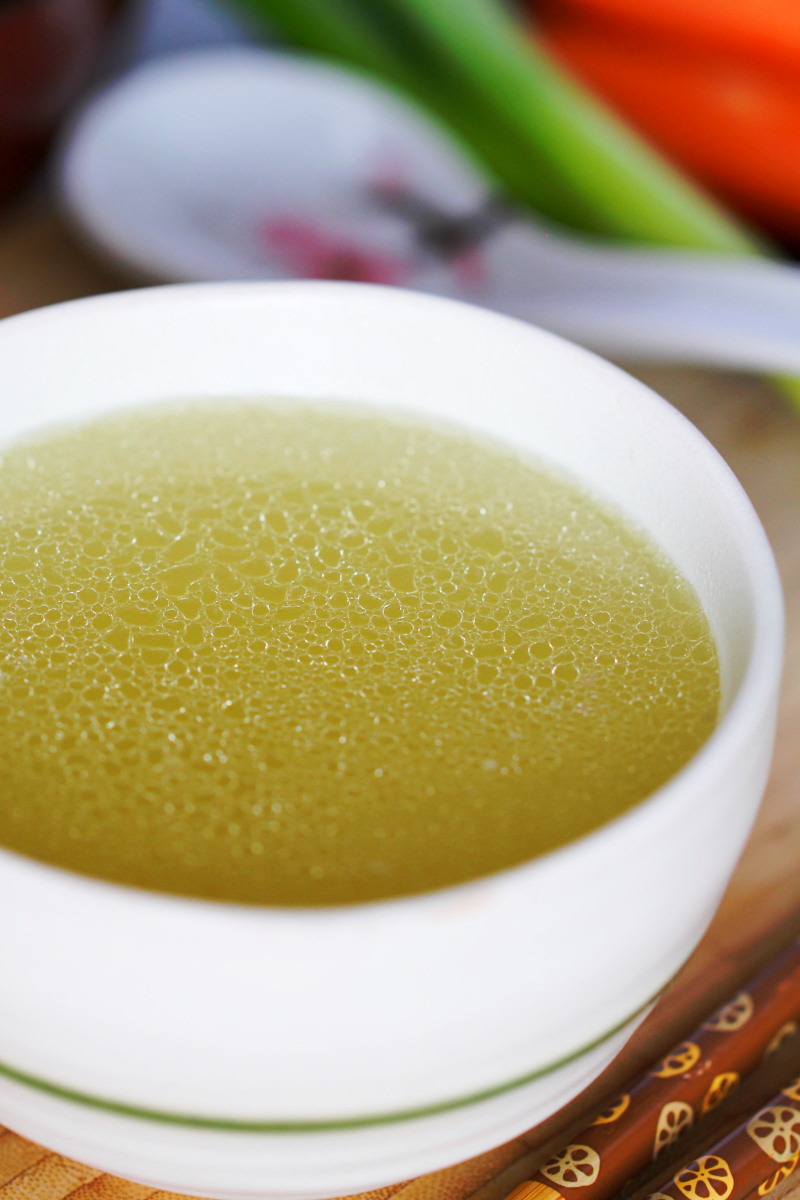
Ramen noodle soups are often thought to be a long and labour-intensive process to make. Quite the opposite – true to the motto ‘less is more’, some of the best ramen are the simplest!
Broths for Japanese ramen can be divided into two general categories: Chintan broths are clear, whilst Paitan broths are cloudy. One of the best-known Paitan broths is a thick, almost creamy Tonkotsu broth. This is made from pork bones and is one of the most popular Ramen broths both in and outside Japan. It is prepared over many hours, even days, and is a must for true Ramen fans.
However, if you’re just getting to grips with Ramen or don’t necessarily want to spend several days preparing a noodle soup, a clear Chintan broth is an ideal place to start!
That’s why today I’m showing you a simple recipe for a Japanese chicken stock – a Tori Chintan stock! It has a very light flavour and, unlike Tonkotsu stock, offers delicate flavours that leave plenty of scope for additional seasoning sauces and aromatic oils.
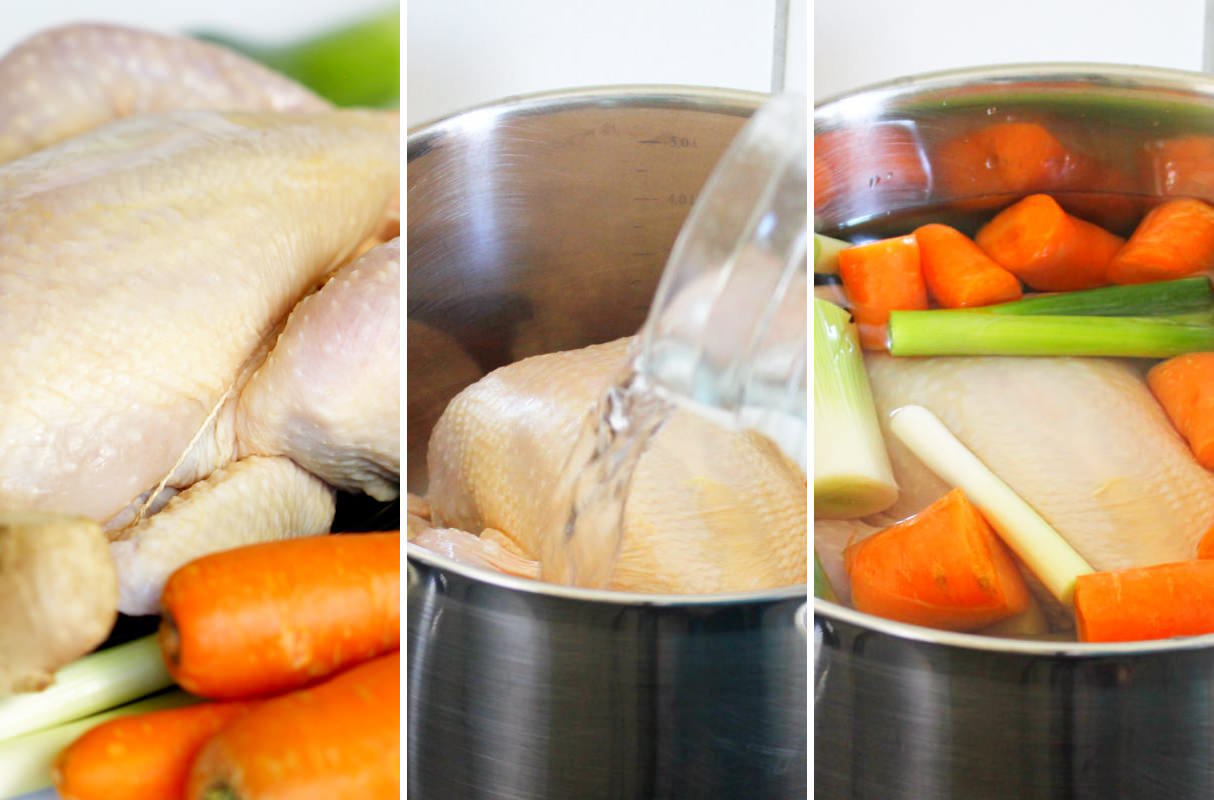
Furthermore, whole chickens are available in any supermarket, unlike pork or beef bones. Chickens also have more tender bones than pork or beef, so extracting the flavour takes less time.
You’ll also need fresh vegetables to make this: my favourite combination for this clear chicken stock is spring onions, leeks, carrots and ginger. But you can also use other aromatic vegetables such as celery, parsley root, radish, onions or garlic! Wash, trim or peel the vegetables, then chop them into rough pieces. Place them in the saucepan with the fresh chicken and cook for 2 hours.
Once strained, the stock is ready and can be used to make delicious Japanese noodle soups. I immediately think of a wonderful bowl of Hokkaido Ramen with homemade nikumiso (minced meat in spicy Miso paste), tender sweetcorn and a large knob of butter – absolutely irresistible!
No post found!
As well as the broth and seasoning sauce, a bowl of ramen naturally consists of ramen noodles, hearty accompaniments and aromatic toppings! Would you like to know how to cook ramen properly and what other ingredients you need for a bowl of ramen noodle soup?

Tip
In this post, I’ll show you in 5 steps how to easily make your own Japanese Ramen noodle soup, just like the real thing: → How to cook Ramen: 5-step plan for Japanese noodle soups [with basic recipe]
I hope that this delicious recipe for homemade Tori Chintan stock will provide you with a wonderful base for your next Ramen cooking session! And now I hope you have fun and enjoy making it:
Tori Chintan stock
serves 4 | 150 minutes | 443 kcal
🖨️ Print PDF 📌 Save this pinHomemade Tori Chintan stock is a wonderful base for traditional Japanese Ramen noodle soups. This clear chicken stock is cooked with fresh garden vegetables – – it’s simple to make and the result is absolutely full of flavour. With this simple basic recipe, you can’t go wrong!
Ingredients (2 litres = 4 portions)
1.2 kg whole chicken, fresh (or chicken pieces)
3 large carrots
1 leek
2 spring onions
40 g ginger (fresh)
2.4 l water
Useful tools:
Santoku knife (im Shop ansehen)
Method (2.5 hours)
Step 1
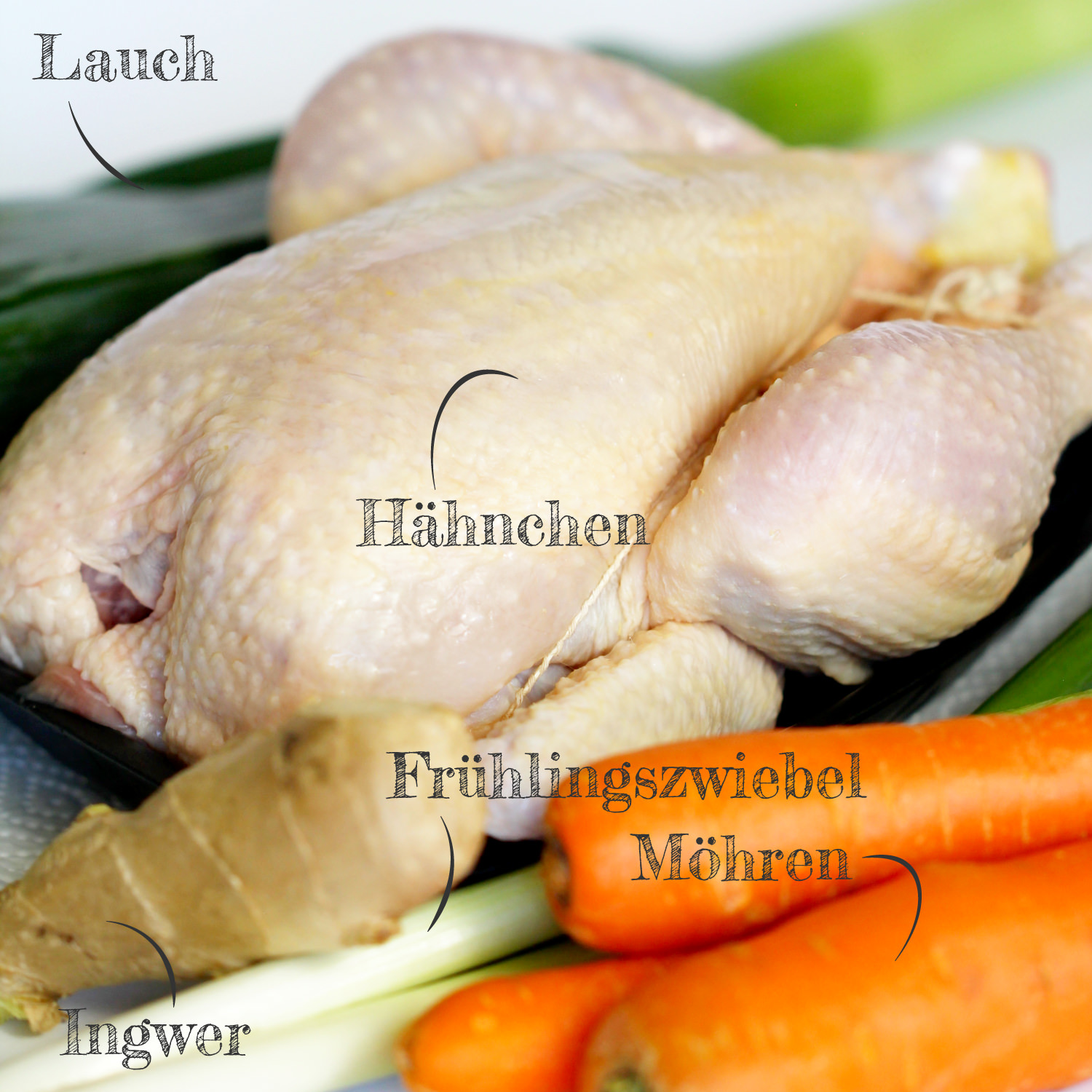
Prepare the ingredients for the homemade Tori Chintan chicken stock.
Step 2
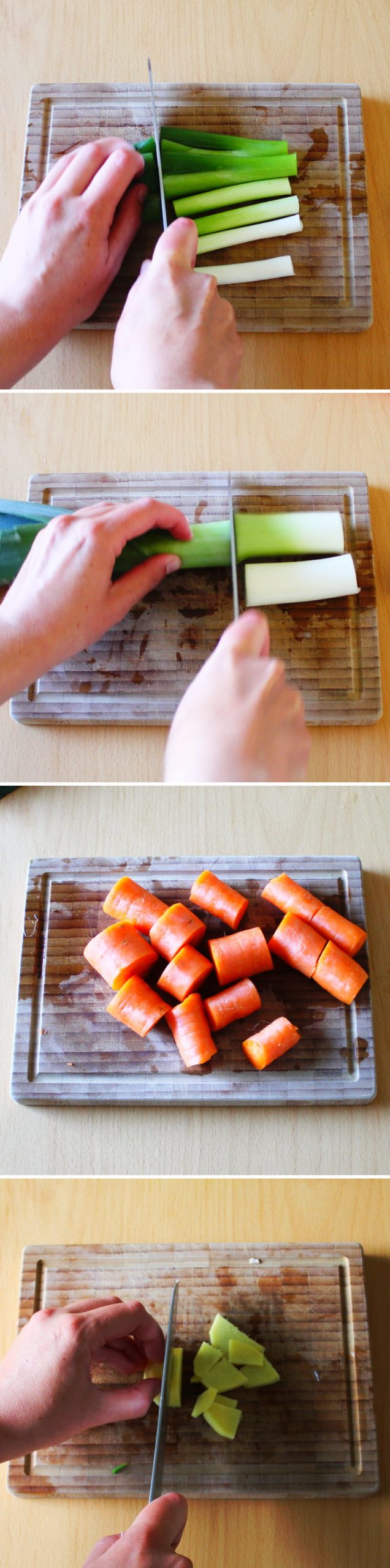
First, chop the vegetables; they only need to be roughly chopped: Spring onions, leeks and carrots – wash them, pat them dry, trim off the ends and cut them into rough chunks. Then peel the ginger and cut it into rough chunks as well.

3. Step
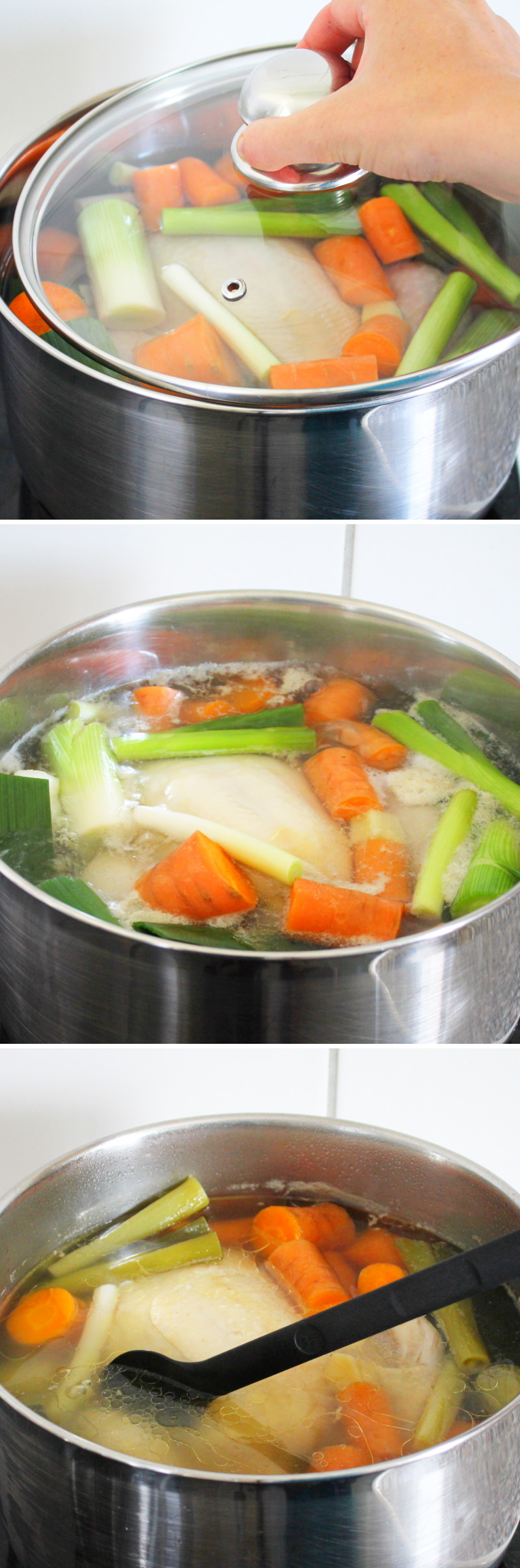
Rinse the chicken thoroughly under running water and place it in a large saucepan. Add enough cold water (about 2.4 litres) to cover the meat well. Then add the vegetables to the saucepan.
Step 4
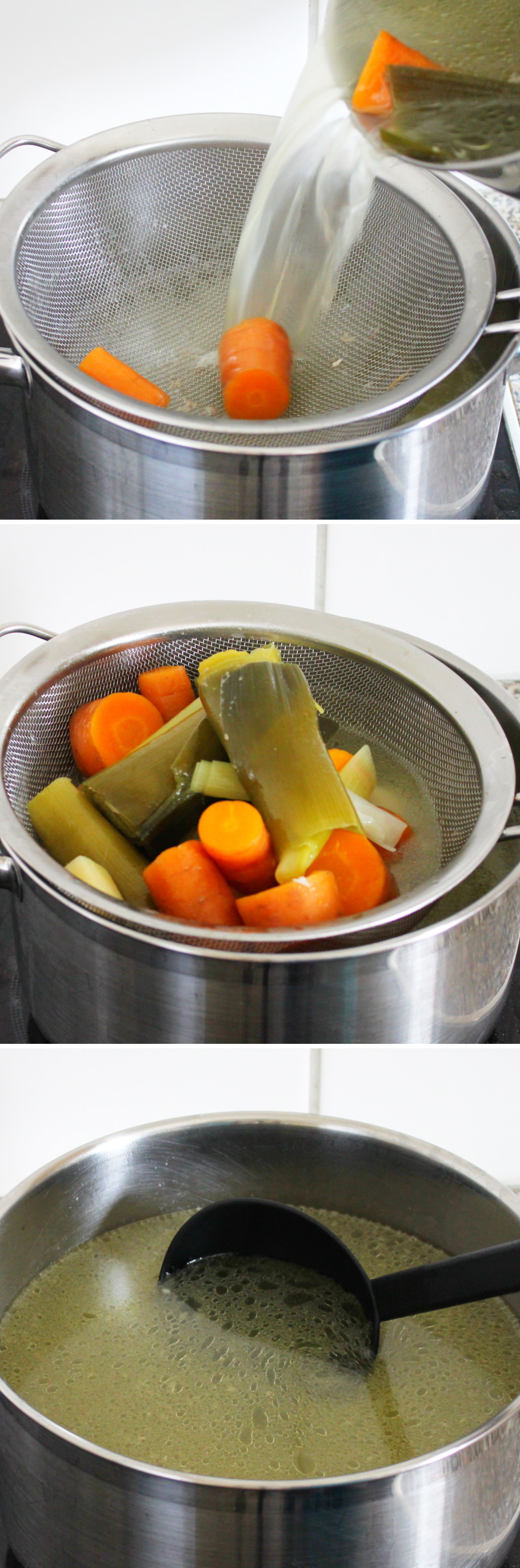
Bring the stock to the boil over a high heat, stirring occasionally. Then put the lids on and let the stock simmer gently over the lowest heat for 2 hours. Stir a little every 30 minutes.
Step 5
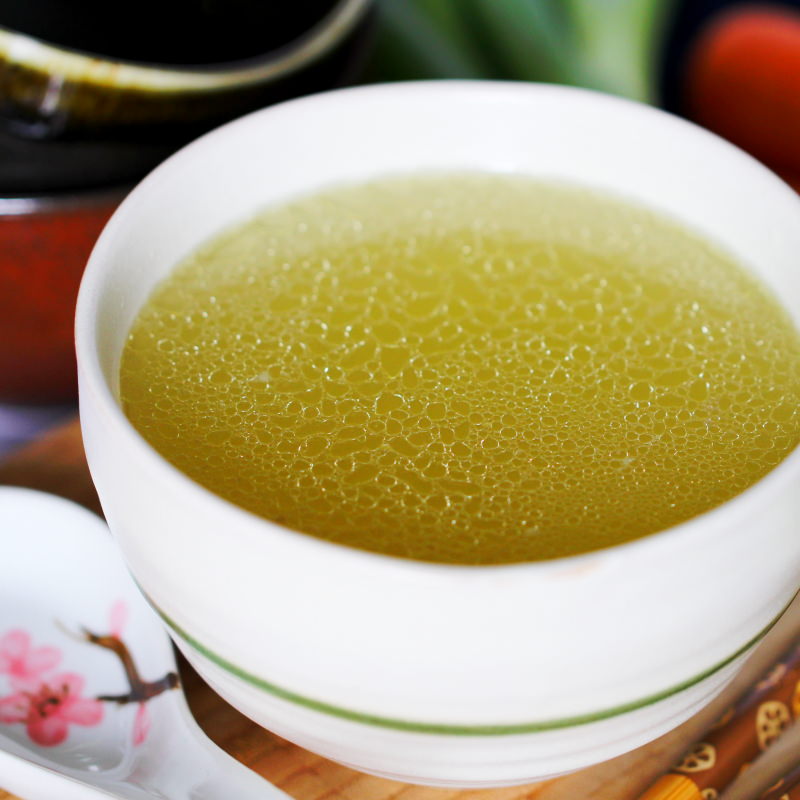
The chicken broth is now ready. Lift the boiled chicken out of the stock (once cooled, the meat can easily be removed from the bones and used as a topping for ramen or as a filling for onigiri). The broth with the boiled vegetables can be strained through a sieve into a second pot. Discard the vegetables.
Step 6
The authentic Japanese Tori Chintan stock is now ready and can be used to make delicious homemade noodle soups (500 ml stock = 2 portions of noodle soup; any leftovers can easily be frozen and used at a later date). Ready – Itadakimasu!

Fancy trying out some more delicious Ramen recipes? Here you’ll find my most popular recipes for Japanese Ramen noodle soups:
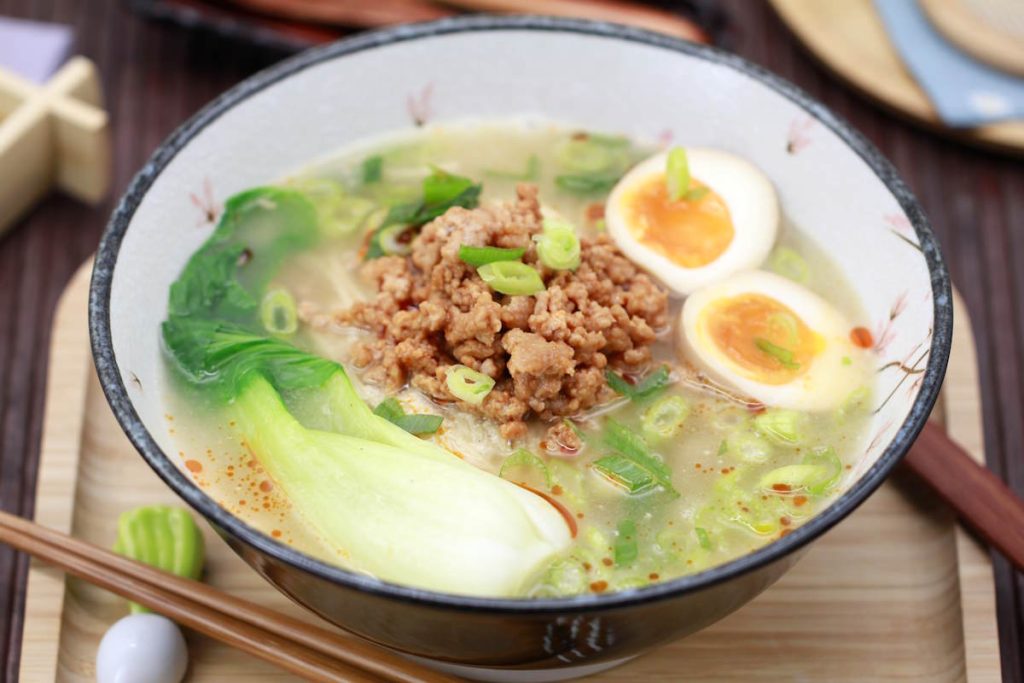
Make your own Tantanmen: creamy sesame Ramen with spicy Miso minced meat, pak choi & ramen eggs
Tantanmen is a Ramen soup for those who like it creamy but not heavy. A…
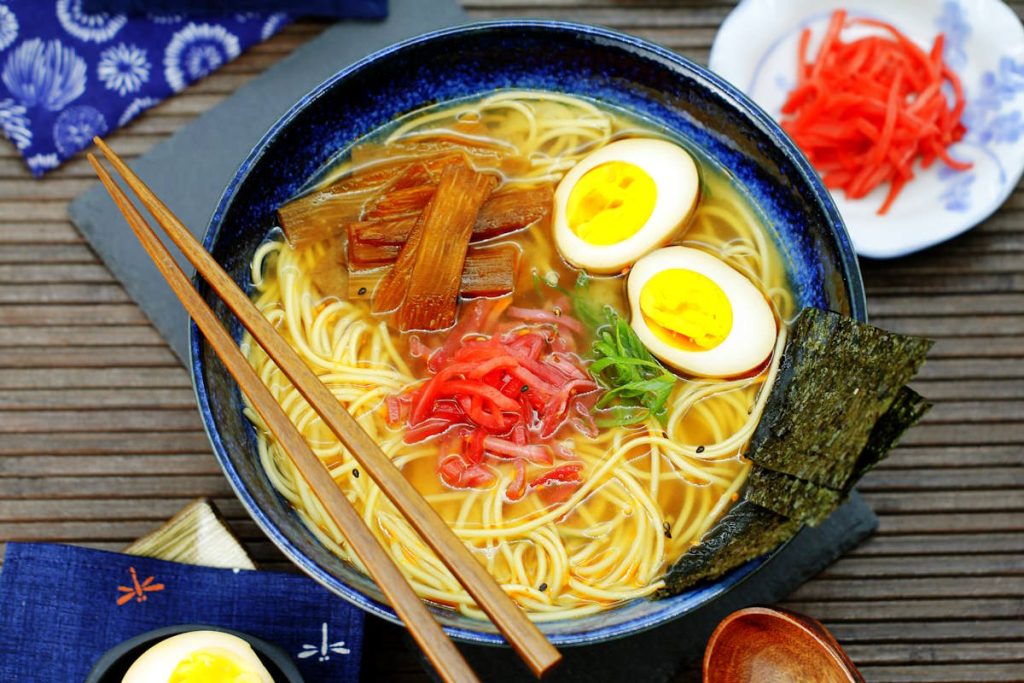
A bowl full of happiness: Miso Ramen with 7 varied toppings – vegetarian, spicy & really easy
Immerse yourself in the world of flavours of Japanese cuisine with our Happiness Bowl! It’s…
10-minute Shoyu Ramen with bamboo shoots & Ramen eggs – for quick meals
My 10-minute Shoyu ramen: Wavy ramen noodles, served in a rich and sinfully delicious tsuyu…
Hiyashi Chuka – cold Ramen salad with yuzu soy sauce & sesame dressing
Hiyashi Chuka is a summery ramen noodle dish packed with fresh garden vegetables. It’s a…
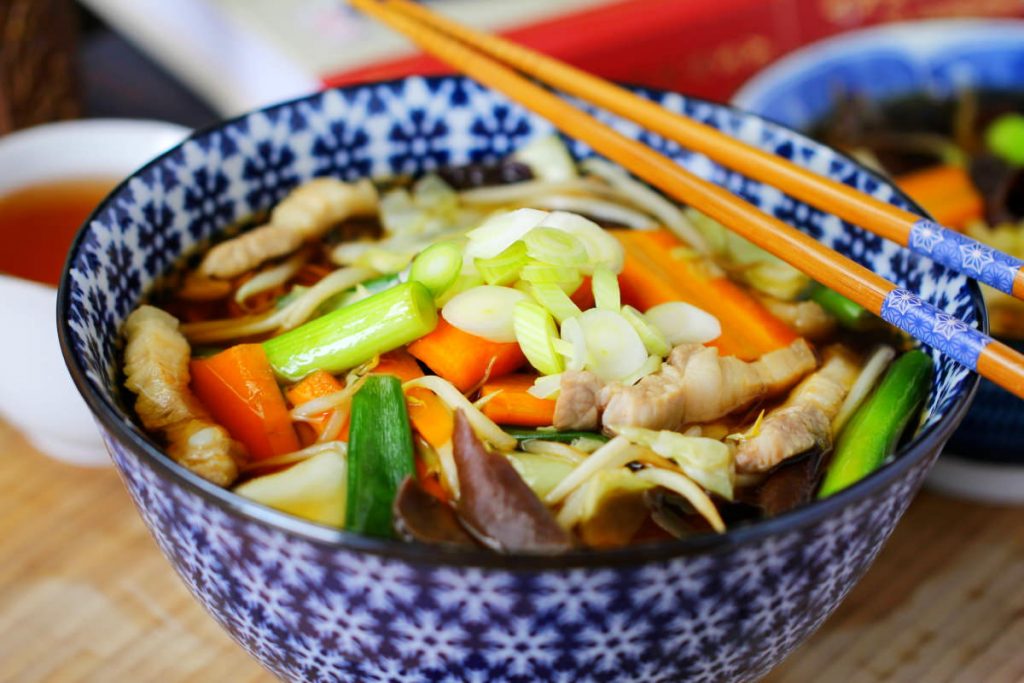
Tan-Men – Ramen noodle soup with stir-fried vegetables & pork belly
Tan-Men is a Japanese Ramen noodle soup with stir-fried pork belly and crisp vegetables. It’s…
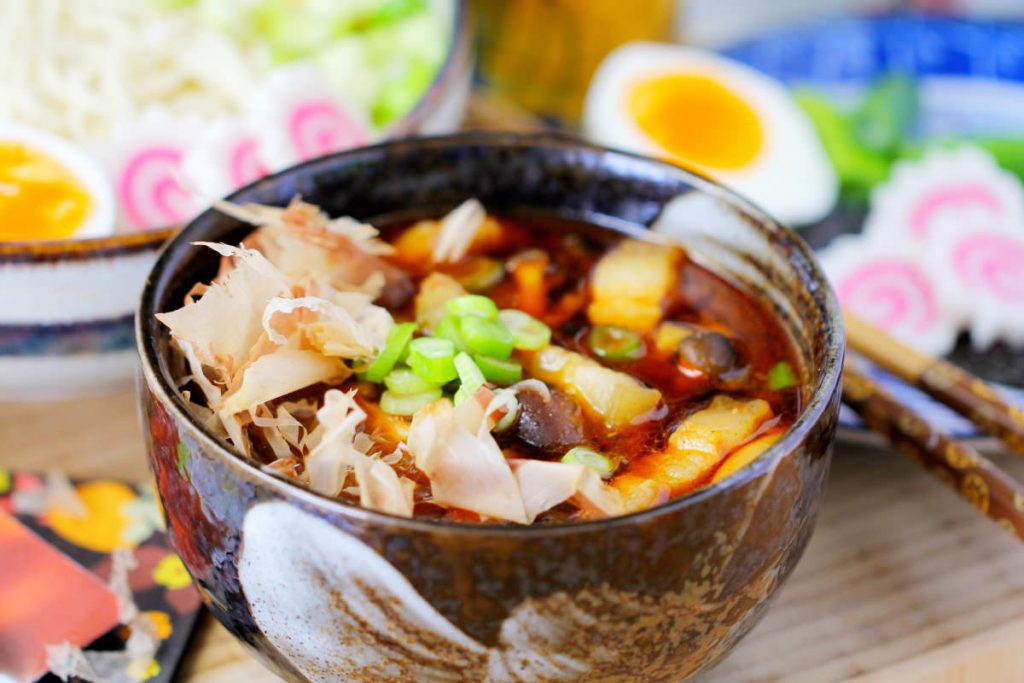
Tsukemen: Make your own cold ramen noodles with hot dipping sauce
Tsukemen is one of the most popular ramen recipes in Japan, particularly during the hot…
Has anyone tried this recipe yet? Let me know in the comments – I’m really looking forward to hearing from you.