

Language:


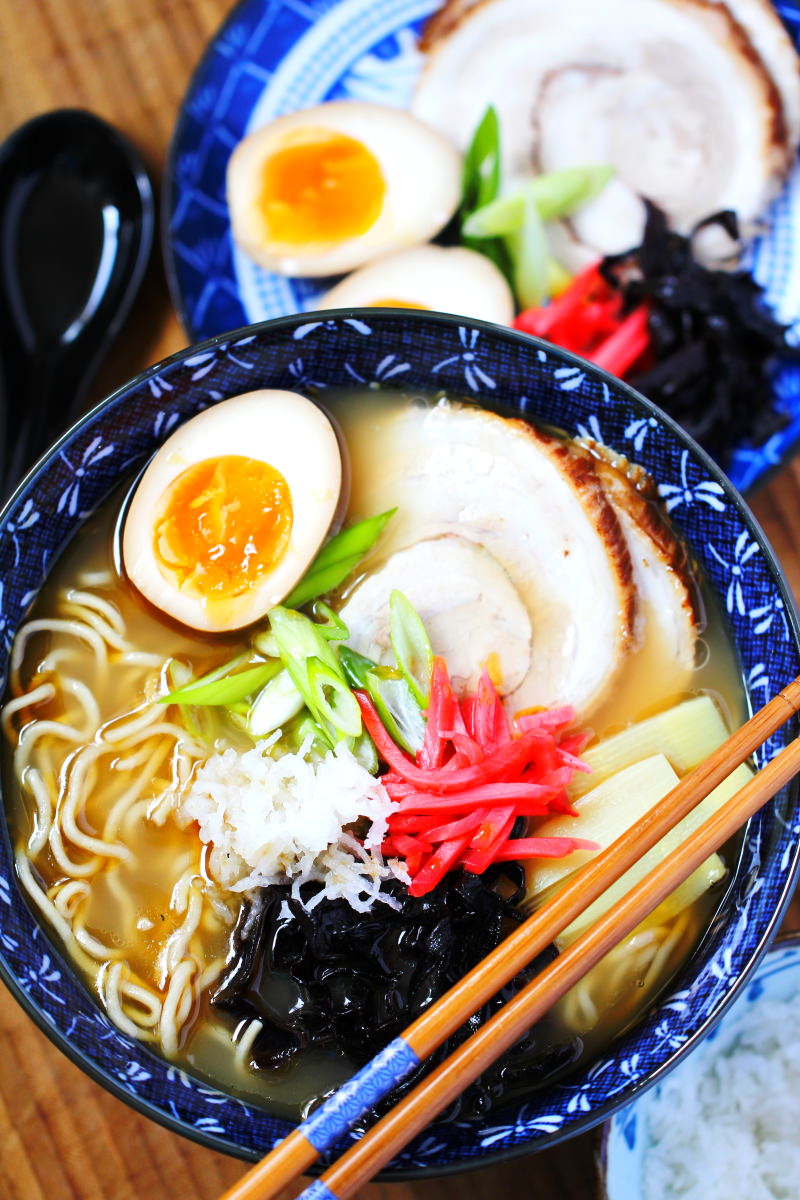
Today we’re conjuring up a very special Ramen speciality from southern Japan for your table: Hakata Tonkotsu Ramen! This delicious noodle soup is served in a homemade tonkotsu broth with shio Tare . It’s accompanied by equally intense toppings, which come together wonderfully. For example, we’ll be making black garlic oil , marinating kikurage mushrooms and, of course, preparing a homemade rolled pork roast!
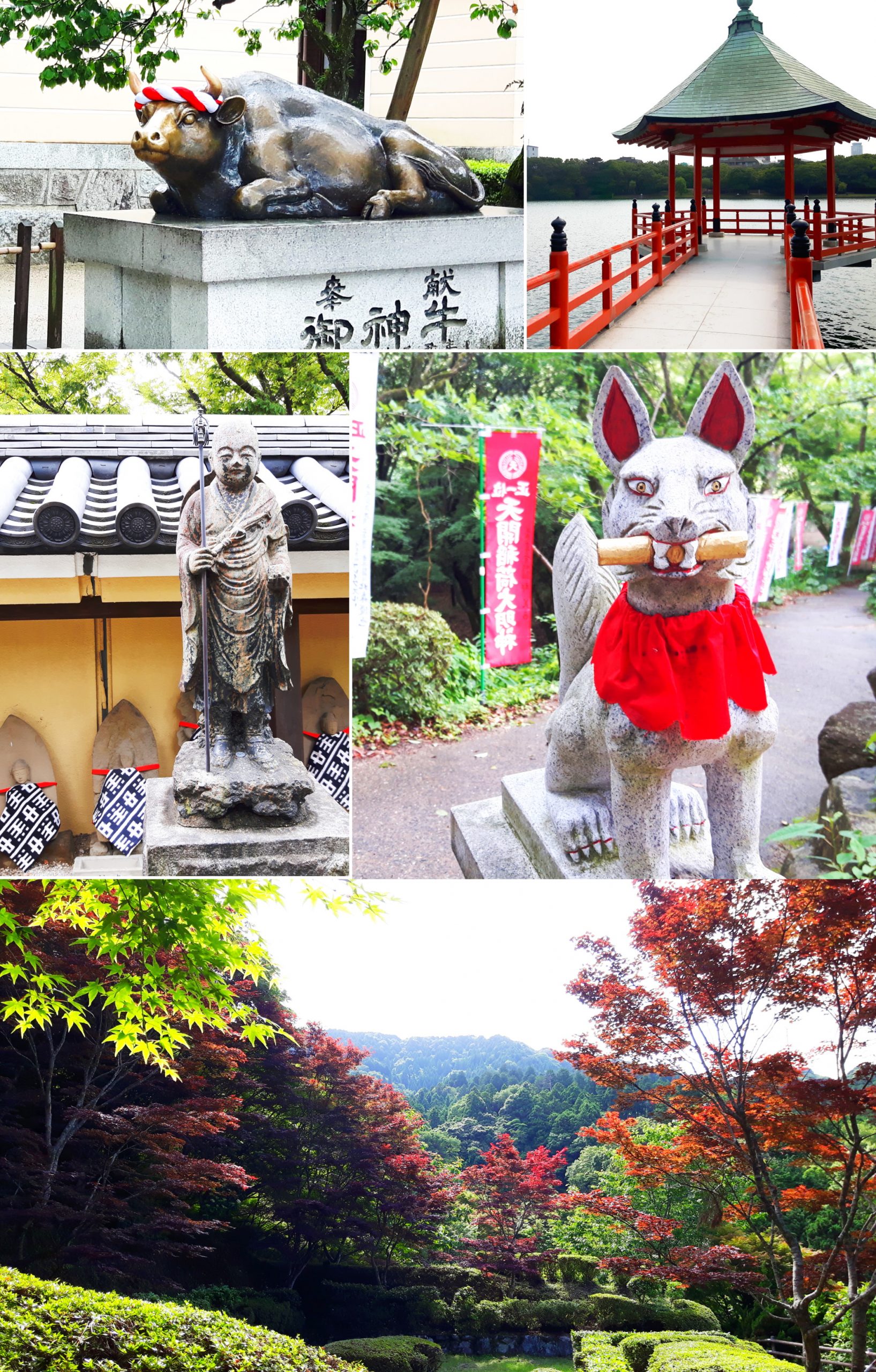
Fukuoka, historically known as Hakata, is the metropolis of the south and was ranked among the top 10 most liveable cities in 2016. In Japan, Fukuoka is known for its relaxed atmosphere and high quality of life. That’s exactly why my husband and I settled there for a while. Fukuoka, on the northern coast of the island of Kyushu, was the ideal place for us to work intensively whilst also enjoying plenty of nature.
And what could be better than tucking into a full bowl of delicious Hakata Ramen after a long day’s work or a strenuous hike? Hakata Ramen was originally prepared as an inexpensive and filling meal for the workers at the local fish markets. Today, however, the dish is treated more as a delicacy (albeit at affordable prices), as it is widely known just how labour-intensive the preparation of the tonkotsu stock is!
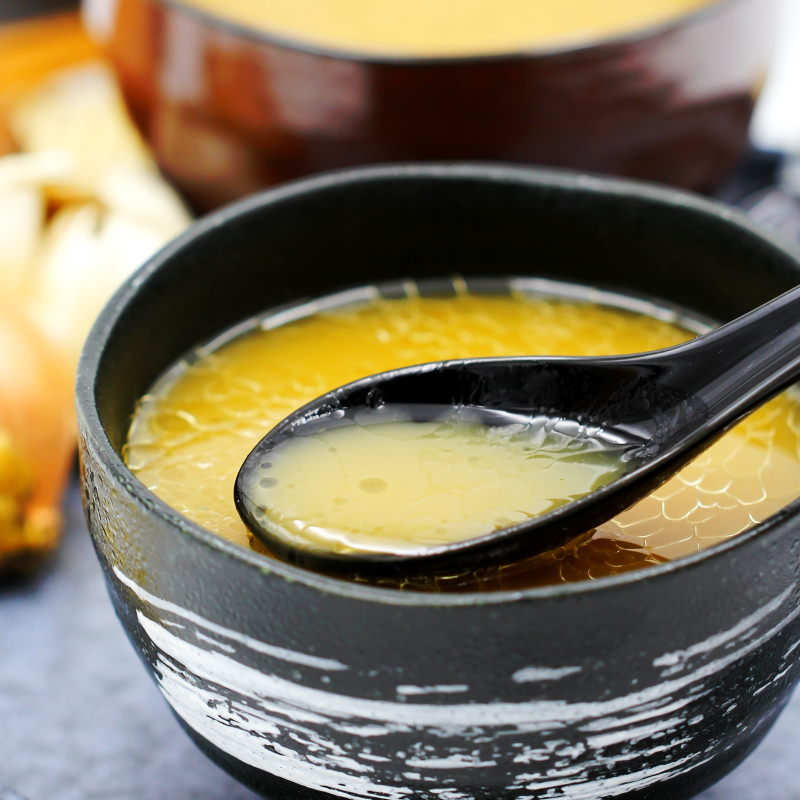
A homemade tonkotsu stock is the ideal starting point for this authentic Japanese Ramen noodle soup. The rich pork stock is simmered for several hours. A genuine Japanese tonkotsu stock is made from pork bones. The result is a fairly thick, almost creamy soup with a pure flavour.
Although it takes three days to make, the preparation is very simple. With this simple basic recipe from Japan, you’re guaranteed not to go wrong: → Tonkotsu – Japanese pork stock for Ramen noodle soups
The tonkotsu stock for Hakata Ramen is seasoned with an intense shio Tare based on Dashi and an aromatic black garlic oil (ma-yu) . The homemade Dashi broth for the shio tare (i.e. the main flavouring for the broth) is made from Shiitake and Kombu , and finished off with plenty of salt. The result is very salty on its own, but blends wonderfully with the flavour of the tonkotsu stock.
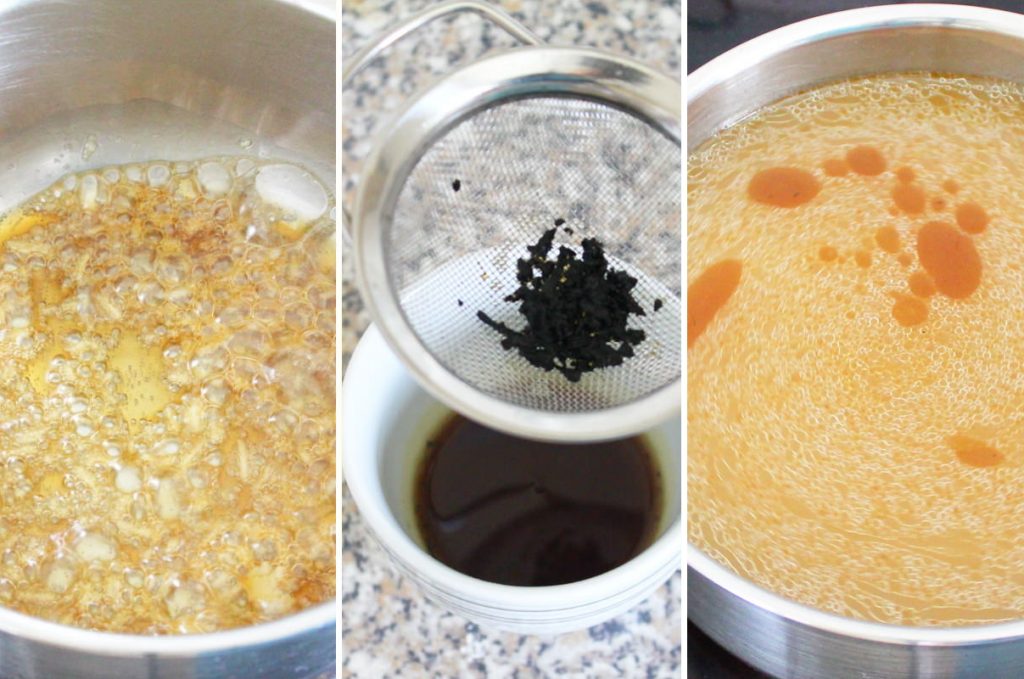
We make the black garlic oil, also called Ma-Yu, ourselves from roasted sesame oil (im Shop ansehen) and grated garlic. The garlic is fried until dark brown, turning the sesame oil deep black. This aromatic oil is slightly bitter and gives the broth that final kick!
As you’ll also learn in my main post about ramen, a ramen meal naturally consists of, besides the broth and seasoning sauce, ramen noodles, hearty side dishes, and aromatic toppings!
As a reminder: Ramen noodles are wheat noodles of Chinese origin and form the foundation of a good bowl of delicious ramen. They are long, elastic, and usually shaped with a slight wave. Larger, especially regional, differences exist in the thickness of the noodles (from very thin to thick) and their doneness (medium or firm).
Fresh, homemade ramen noodles are my first choice for this – you can find my recipe here: → Make your own ramen noodles – traditional recipe with kansui
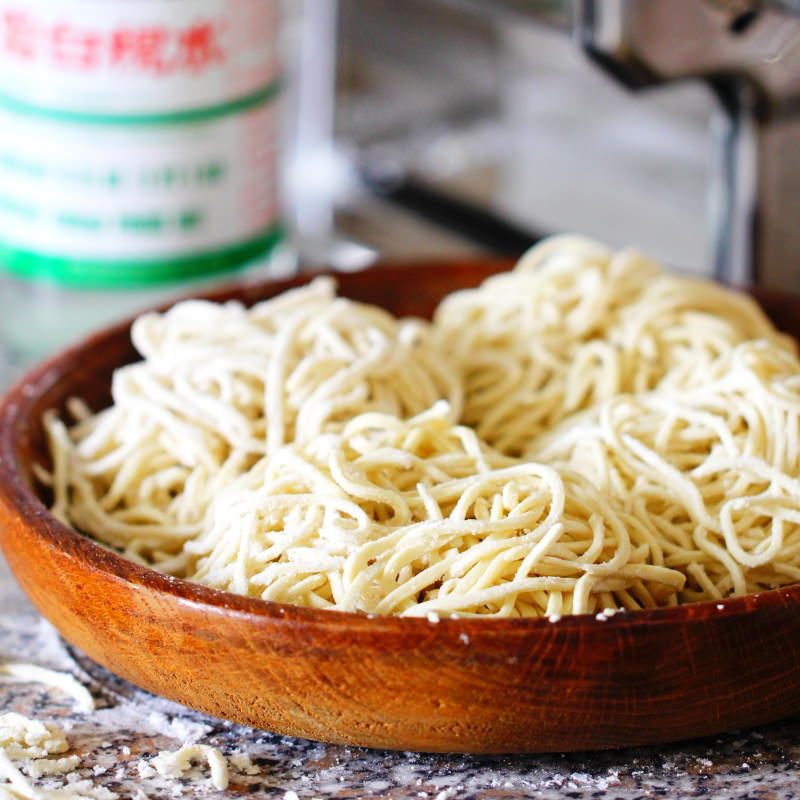
Alternatively, you can of course buy the best Japanese ramen noodles and cook a delicious bowl of ramen soup at home in no time at all. Dried ramen noodles are also ideal for an authentic Japanese ramen soup, as they are ready in a matter of moments and, of course, have a very long shelf life . Their texture is comparable to homemade ramen noodles and the flavour is simply unbeatable.
TOP RECOMMENDATION
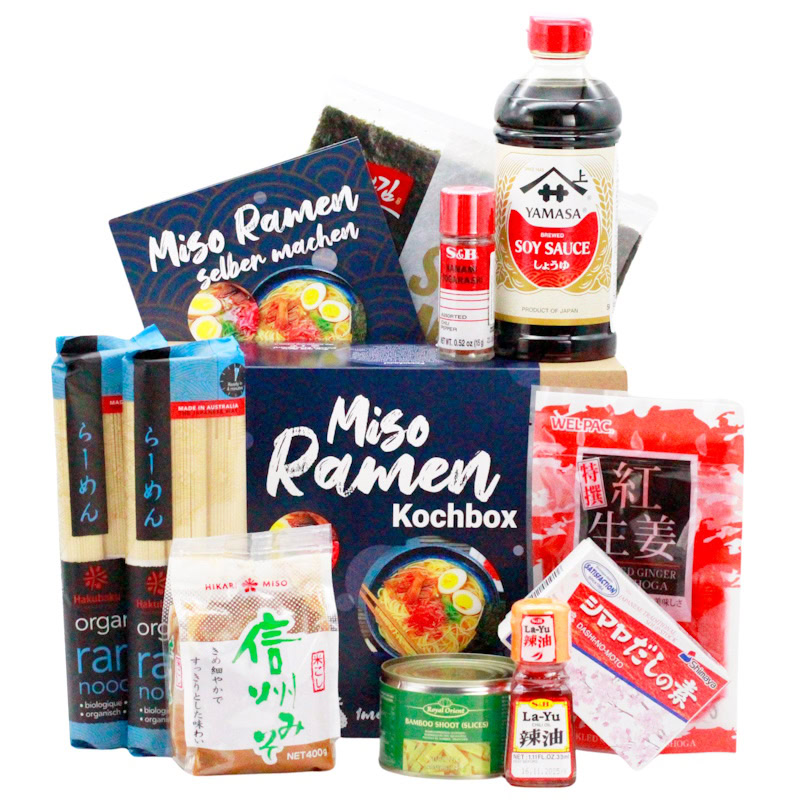
Miso Ramen Kochbox | japanische Ramen selber machen
10-teiliges Kochset für bis zu 6 Portionen Miso Ramen mit japanischen Zutaten und Rezeptanleitung. Mit der Miso Ramen Kochbox bereitest du zuhause eine herzhafte japanische…
In stock
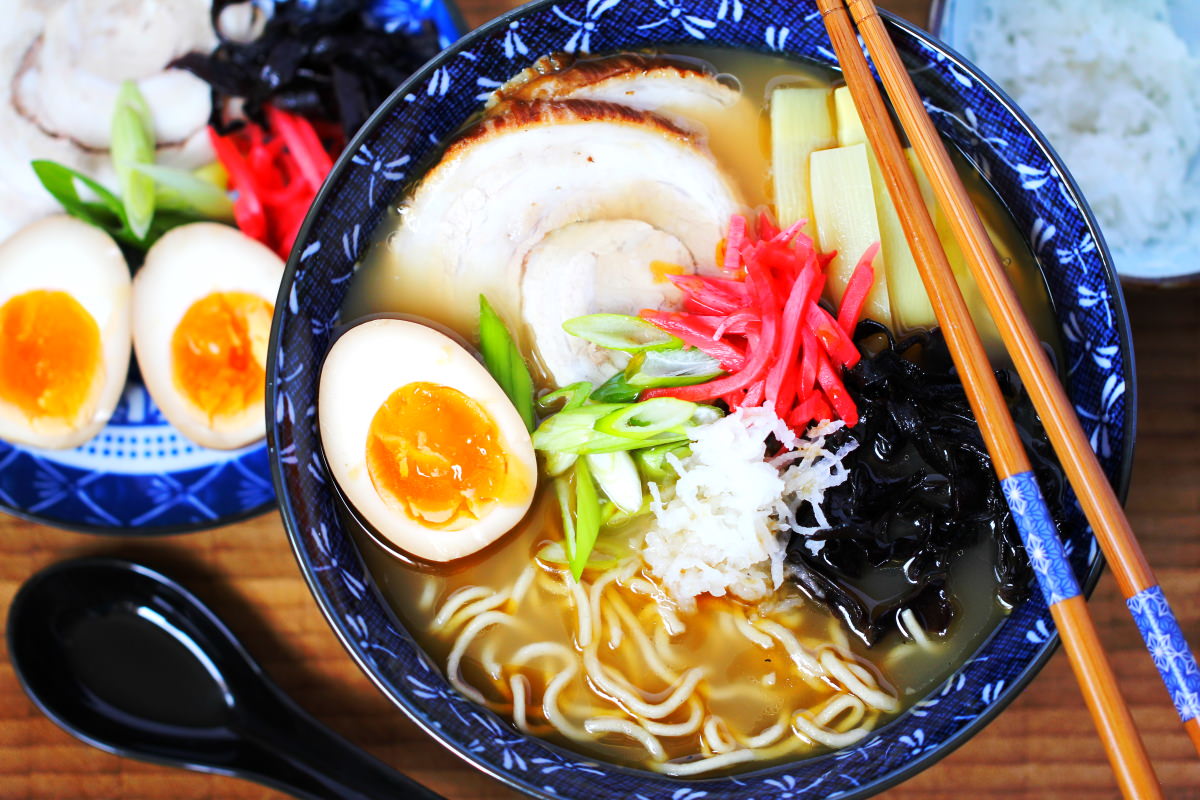
My personal highlight of Hakata ramen is actually the various side dishes and toppings! Every ramen-ya (i.e. ramen restaurant) in Fukuoka offers its own unique selection of toppings. A simple selection is often on offer, but I love a lovely combination of very different colours, flavours and textures. One of the best combinations of side dishes I had the pleasure of trying in Fukuoka consisted of rolled pork belly (chashu), ajitsuke kikurage (marinated black fungus mushrooms), ajitsuke tamago (marinated Ramen eggs), bamboo shoots, finely chopped spring onions, grated daikon and Beni Shoga (pickled ginger) .
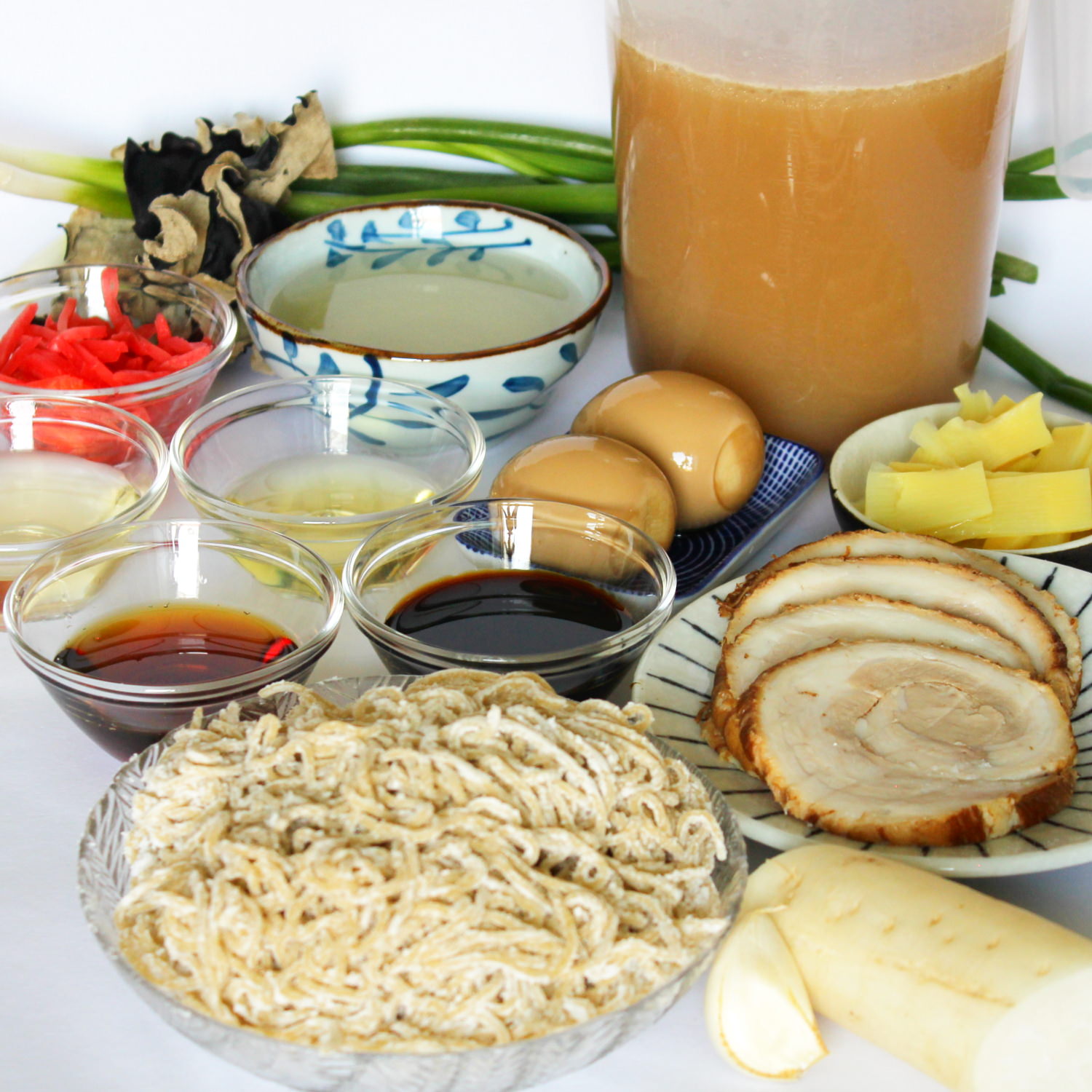
Tip: Some of the accompaniments, such as the rolled pork belly and the marinated Ramen eggs, are best prepared one to two days in advance!
This Hakata Tonkotsu Ramen, which I ate in Fukuoka, was simply delicious! That’s why I’ve recreated and adapted the recipe for you. I hope this brings a little bit of Japan into your homes…
So, have fun and good luck making this delicious Hakata Ramen with tonkotsu broth and colourful toppings, based on the original Japanese recipe:
Hakata Tonkotsu Ramen
serves 2 | 45 minutes | 1246 kcal
🖨️ Print PDF 📌 Save to PinterestToday we’re conjuring up a very special Ramen speciality from southern Japan for your table: Hakata Ramen! This delicious noodle soup is served in a homemade tonkotsu broth with shio Tare. It’s accompanied by equally flavourful toppings such as chashu, black garlic oil and marinated kikurage mushrooms, which come together wonderfully!
Ingredients (2 portions)
2 portions of ramen noodles (im Shop ansehen)* or make your own (see recipe)
1 l Tonkotsu stock – pork stock (see recipe) – prepare 3 days in advance
For the shio tare:
50 ml Dashi broth (see recipe)
8 g salt
1 tsp rice vinegar (im Shop ansehen)*
For Ma-Yu (black garlic oil):
3 tbsp sesame oil (im Shop ansehen)*
1 clove of garlic
For Ajitsuke Kikurage (marinated mushrooms):
15 g black fungus mushrooms (dried)
1 tbsp Shoyu (im Shop ansehen)*
1 tbsp Mirin (im Shop ansehen)*
1 tbsp sesame oil
Other accompaniments & toppings:
2 Ajitsuke Tamago – marinated Ramen eggs (see recipe) – prepare 48 hours in advance
6 slices Chashu – rolled pork belly (see recipe) – prepare the day before
a few slices of menma bamboo (see recipe)
2 spring onions
5 cm radish (e.g. daikon)
a little Beni Shoga (red pickled ginger) (im Shop ansehen)*
Useful kitchen tools:
Japanese Yukihiara saucepan
Japanese vegetable grater (im Shop ansehen)
Santoku knife (im Shop ansehen)
Ramen bowl from Japan (im Shop ansehen)
Preparation (45 minutes)
Step 1
Gather the ingredients for the Hakata Ramen noodle soup and prepare the Dashi broth using Kombu and Shiitake (click here for the recipe).
In addition, the tonkotsu stock (click here for the recipe for Japanese pork stock) – as described in the recipe, for two portions of noodle soup, mix 500 ml of tonkotsu jelly with 500 ml of fresh water in a saucepan and heat as a stock.
The marinated Ramen Tamago (click here for the recipe for Ajitsuke Tamago) and the rolled pork belly (click here for the recipe for Chashu) should now be ready.
Step 2
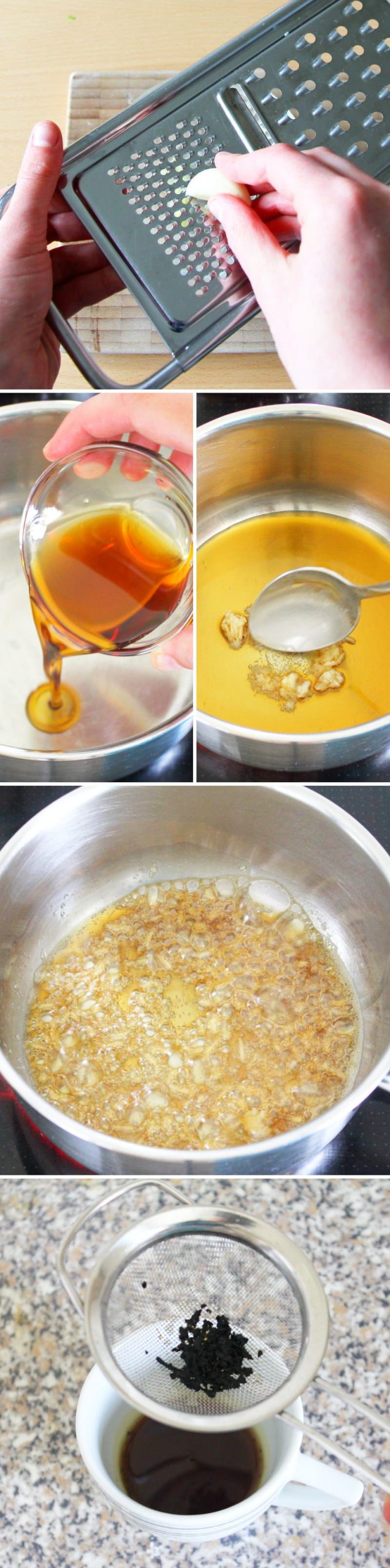
While the dashi broth is being prepared, make the black garlic oil (Ma-Yu): To do this, lightly press the garlic with the back of a knife, then remove the skin and grate it finely (for example with a fine kitchen grater). Then in a small pot over medium heat, roast the sesame oil together with the grated garlic while stirring, until the garlic has turned dark brown. Then turn off the heat. The oil in the pot will quickly turn black as it cools. Then strain the oil through a fine sieve and discard the garlic. Set the homemade black garlic oil aside.
Briefly rinse out the pot for the next step.
Step 3
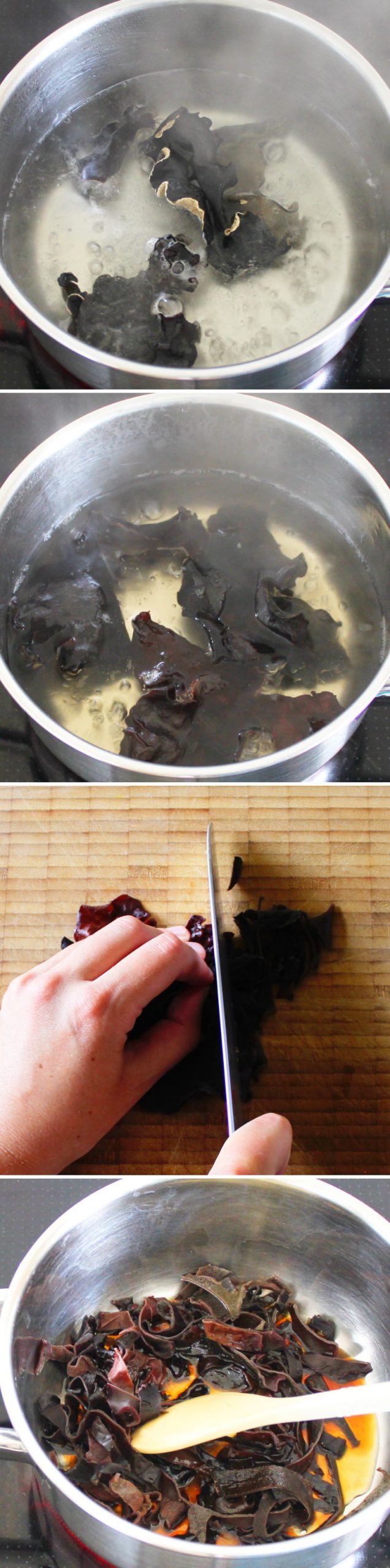
Now prepare the marinated black fungus mushrooms: Bring about 300 ml of water to the boil in the same saucepan. Then add the dried black fungus mushrooms and boil for 3 minutes. Next, drain them in a sieve and rinse under cold running tap water until the mushrooms have cooled down. Squeeze the excess liquid out of the mushrooms with your hands. Cut the mushrooms into thin strips and return them to the saucepan together with soy sauce, Mirin and sesame oil back into the pan. Heat the contents of the pan over a medium heat and stir-fry until there is no residual moisture left in the pan. Turn off the heat and set the marinated mushrooms aside.
Step 4
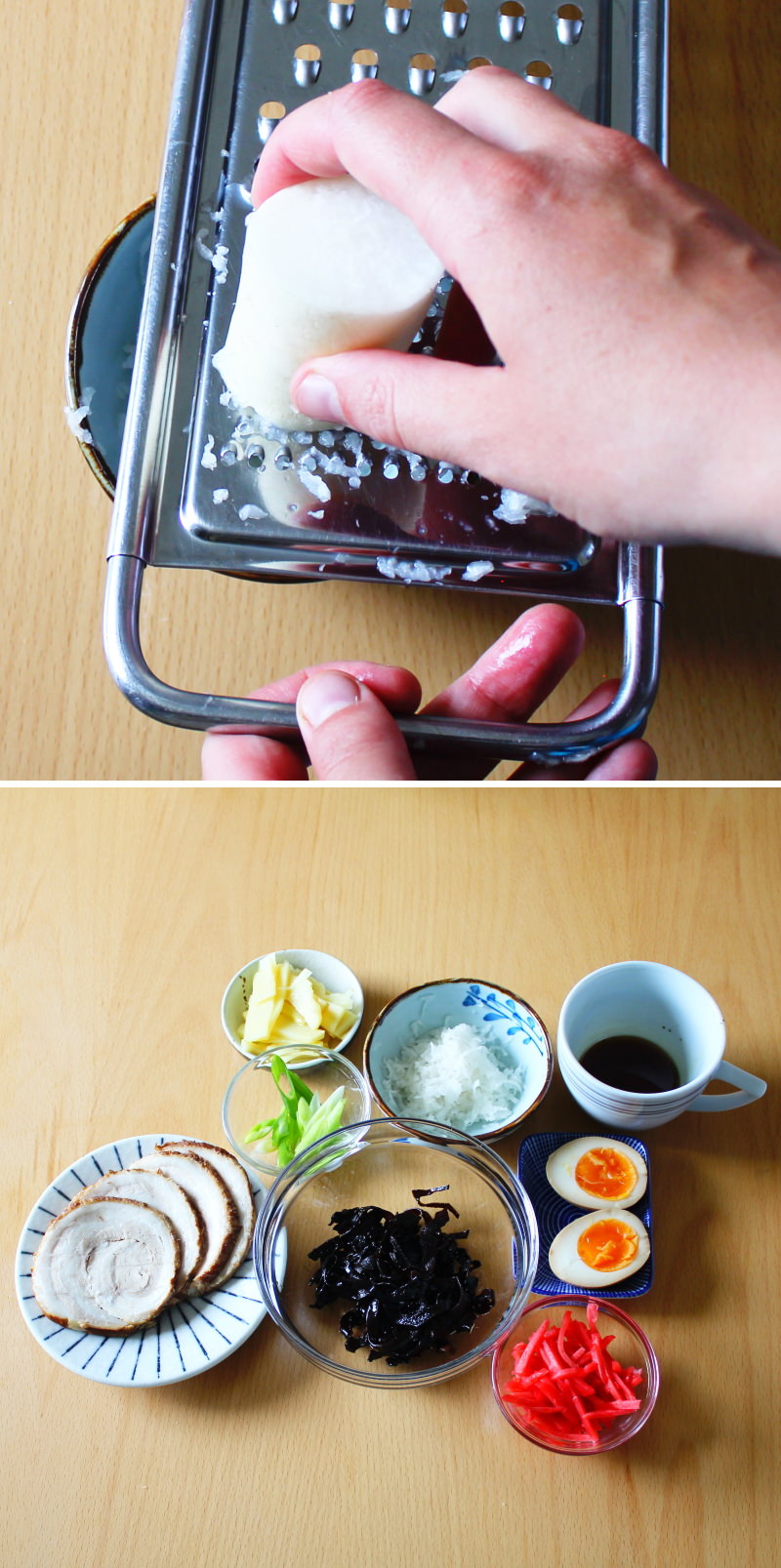
Next, prepare the remaining accompaniments: Drain the homemade Ajitsuke Tamago (marinated Ramen eggs) and cut each one in half. Cut the Chashu (rolled pork belly) into thin slices. Drain the bamboo shoots and Beni Shoga . Spring onions – wash, pat dry and cut into fine rings. Also, peel the daikon radish and use a kitchen grater to shave it into fine shavings. Keep all the accompaniments within easy reach.
Step 5
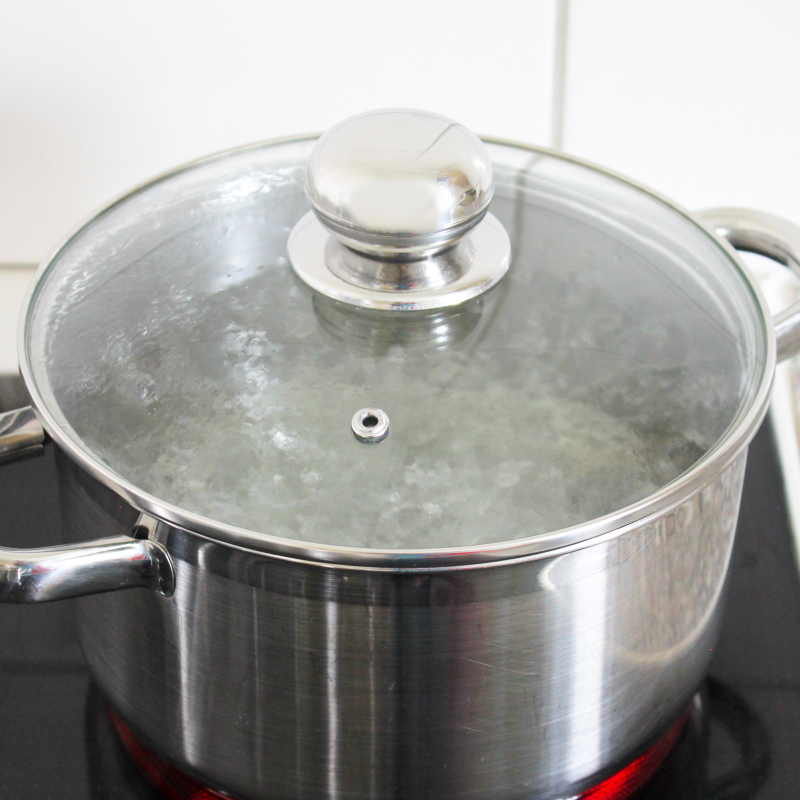
Meanwhile, bring a large saucepan of water for the ramen noodles (one litre of water per portion of noodles) to the boil.
Step 6
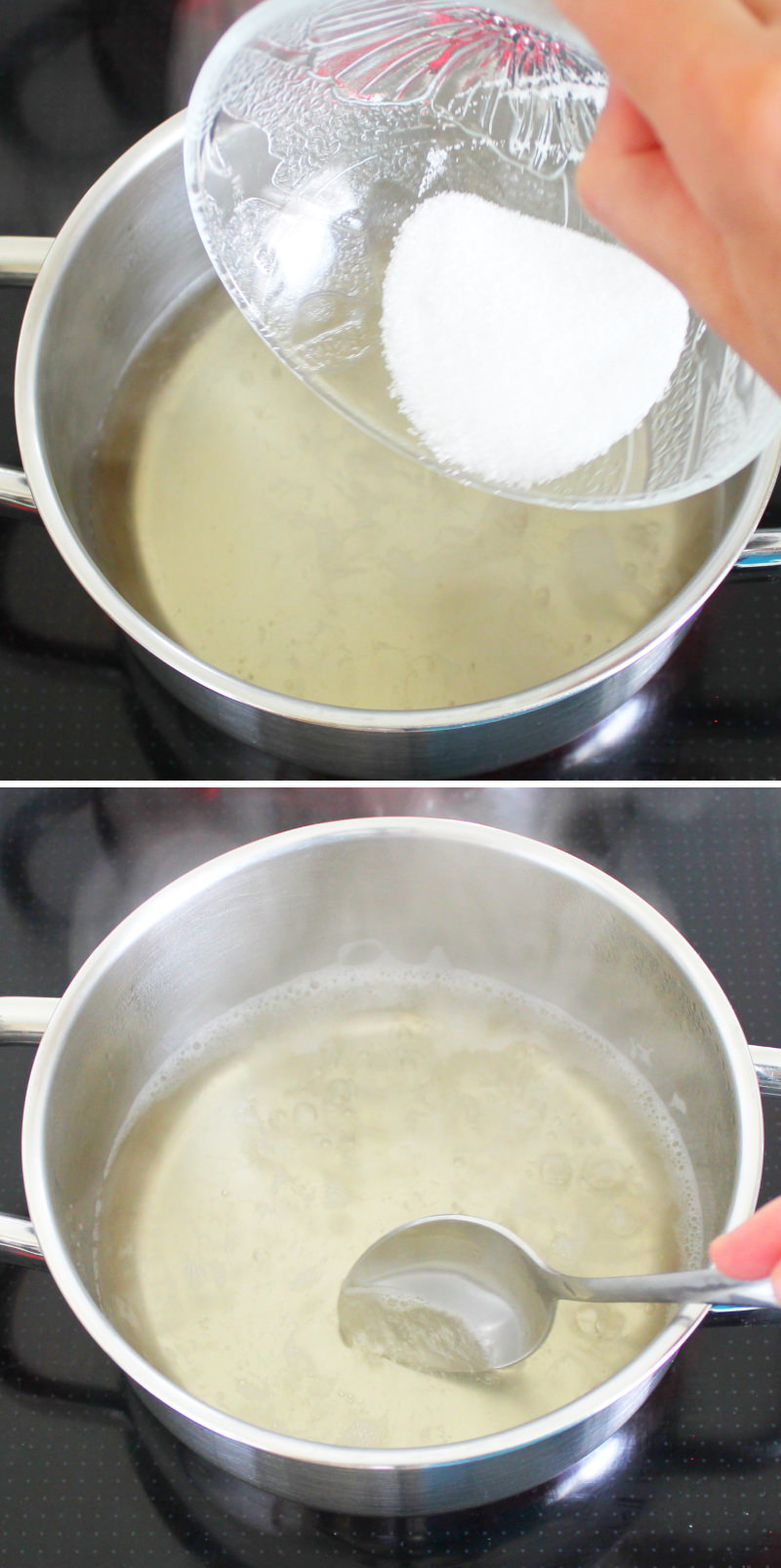
Now prepare the shio tare: The Dashi broth is now ready and can be thoroughly stirred with salt and rice vinegar until no salt crystals are visible.
Step 7
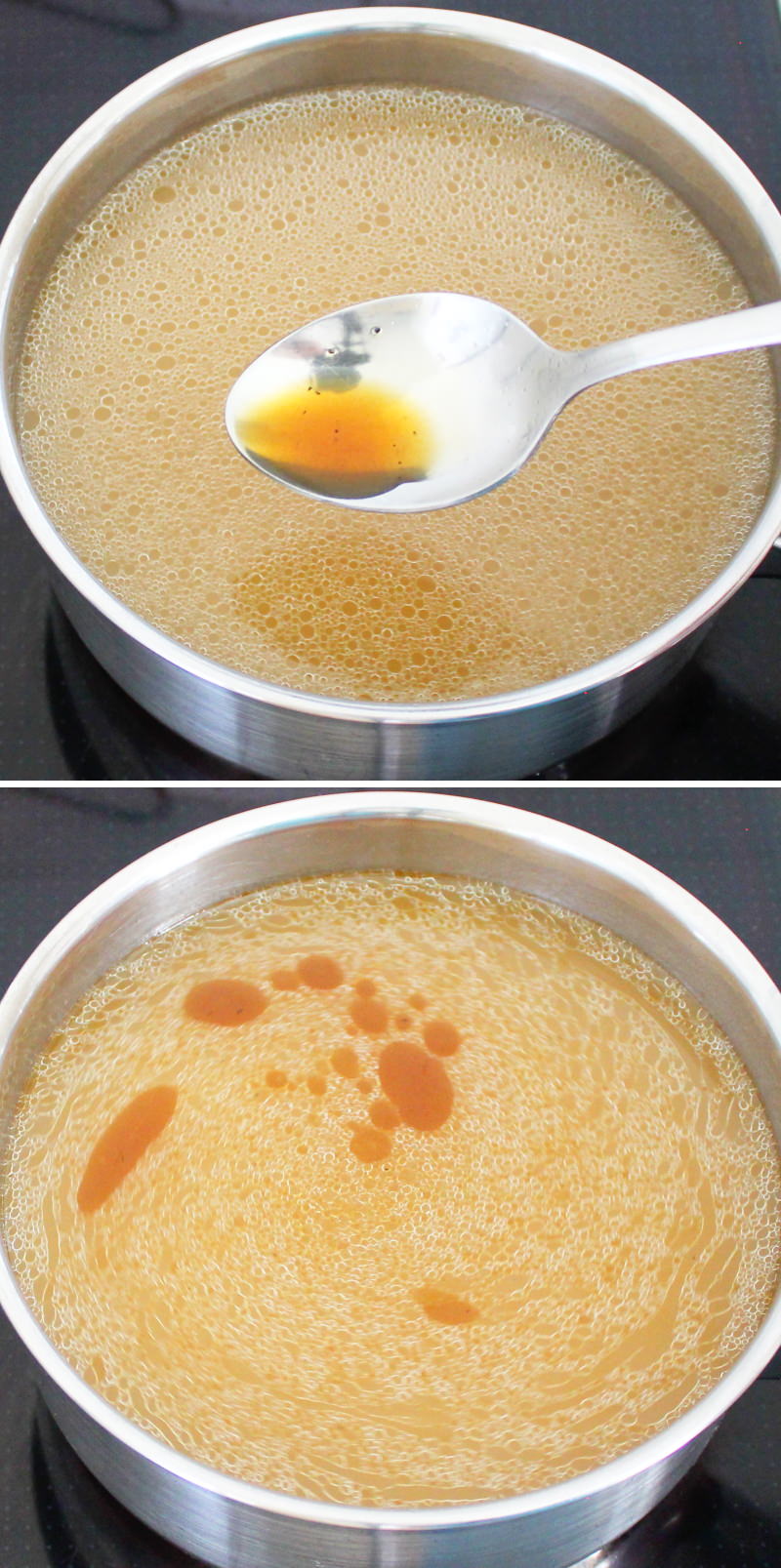
Add the Shio Tare and the black garlic oil to the warmed Tonkotsu stock (it’s best to add them by the tablespoon, adjusting to taste) and bring to the boil briefly once more. Leave the pan on the lowest heat so that the stock doesn’t go cold.
Step 8
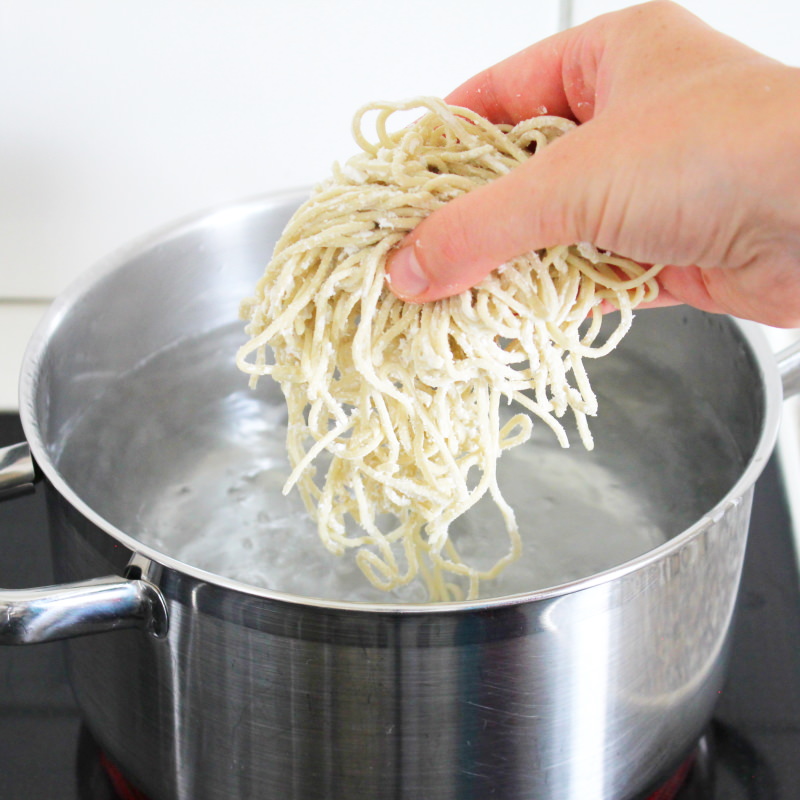
Add the ramen noodles to the boiling water and cook for 2 minutes (or according to the cooking instructions on the packet). Then drain in a colander and rinse briefly but thoroughly under cold water.
Step 9
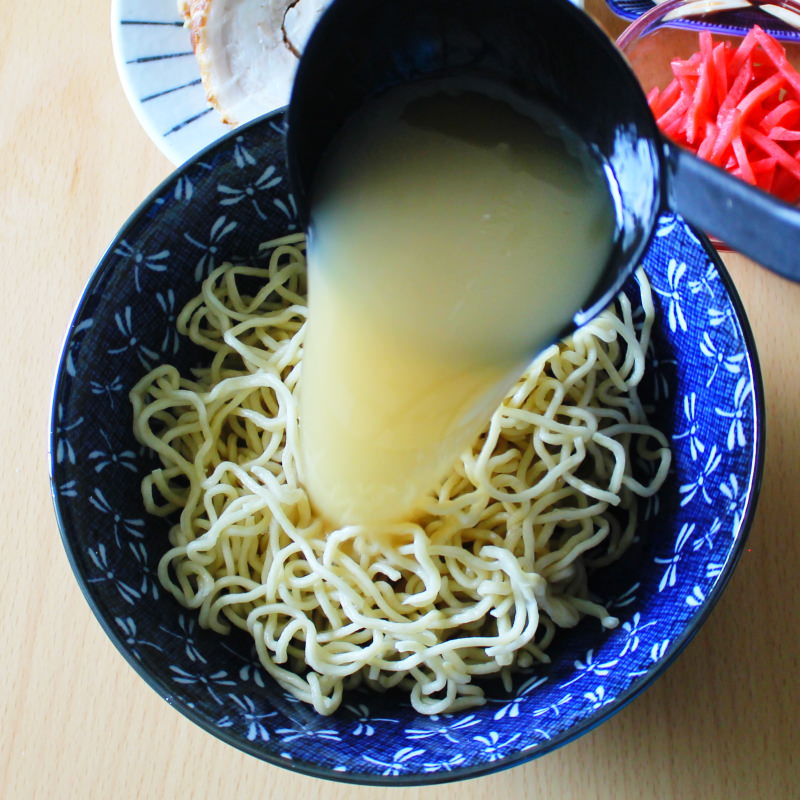
Divide the ramen noodles between bowls and top up with broth. Now arrange the side dishes on top and garnish with all the toppings .

Step 10
Serve hot and eat with chopsticks, slurping the broth straight from the bowl. Done – Itadakimasu!
Are you looking for even more wonderful Ramen creations from Japan? Here you’ll find my most popular Ramen recipes:
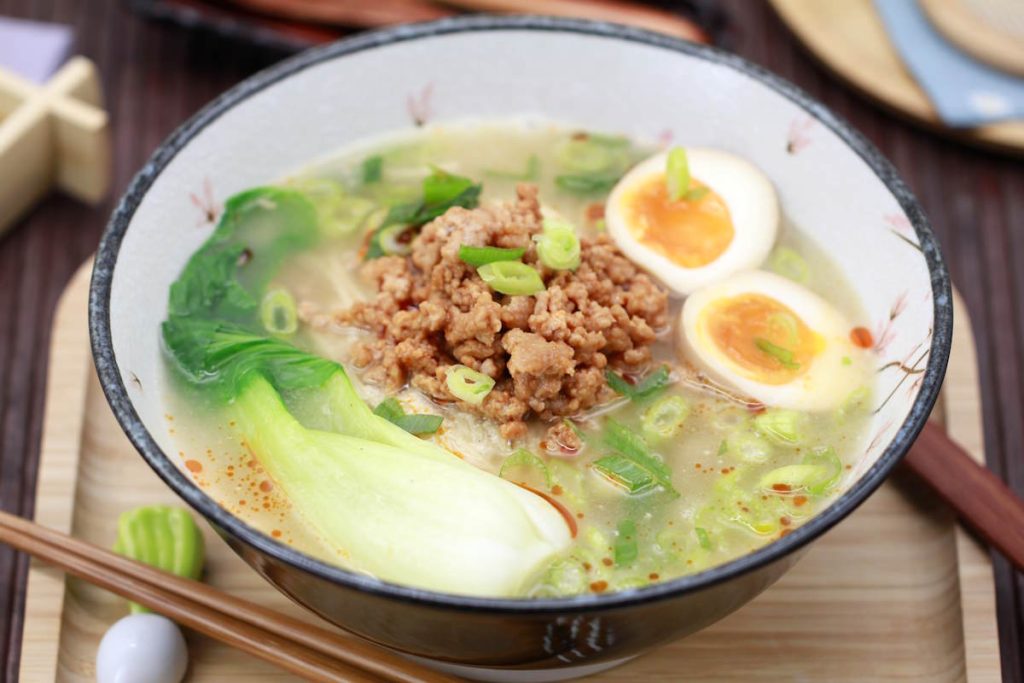
Make your own Tantanmen: creamy sesame Ramen with spicy Miso minced meat, pak choi & ramen eggs
Tantanmen is a Ramen soup for those who like it creamy but not heavy. A…
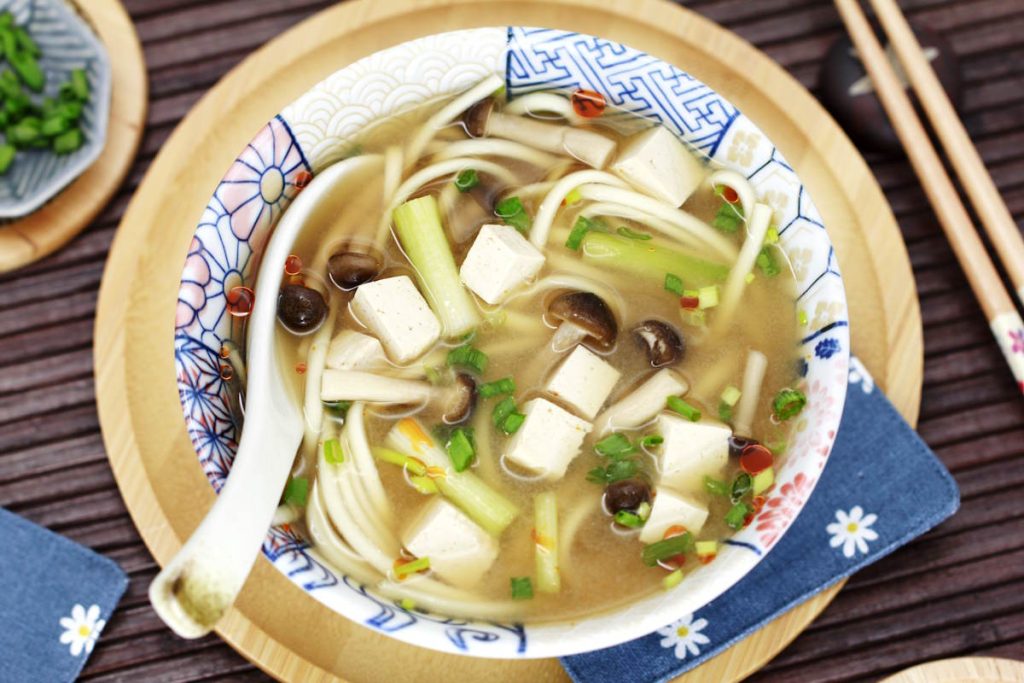
Quick Miso Udon: Spicy noodle soup with Miso, Tofu & Shimeji mushrooms
If you’re looking for a quick, comforting meal that’s both easy to prepare and incredibly…
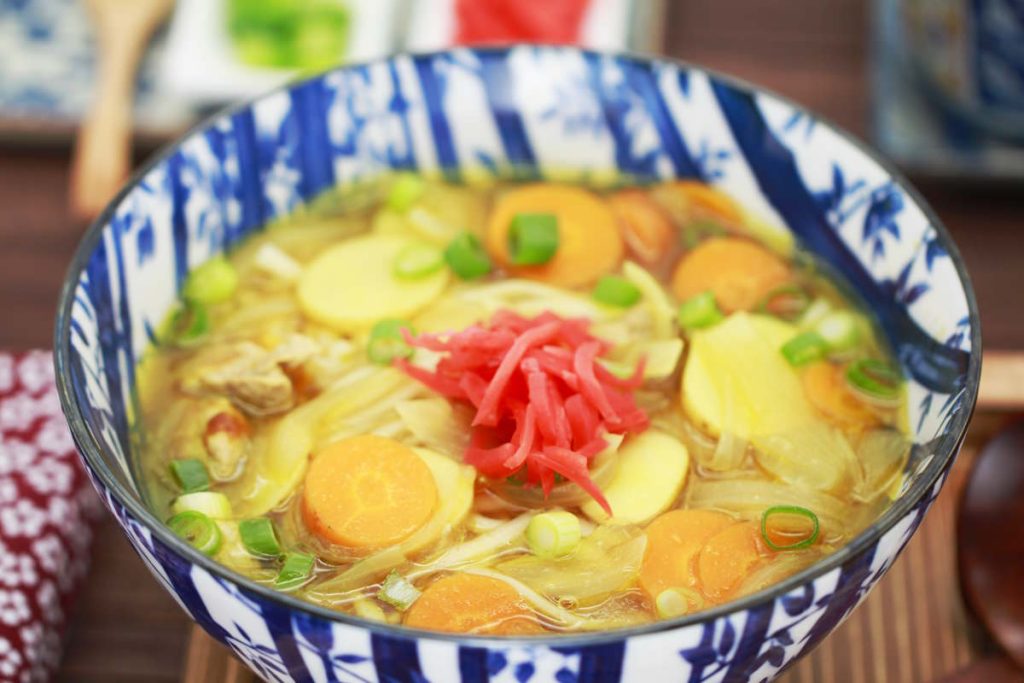
Curry Udon soup: A classic Japanese home-cooked meal – warming, traditional & delicious
Curry Udon combines the depth of Japanese Dashi broth with the spicy flavor of curry….
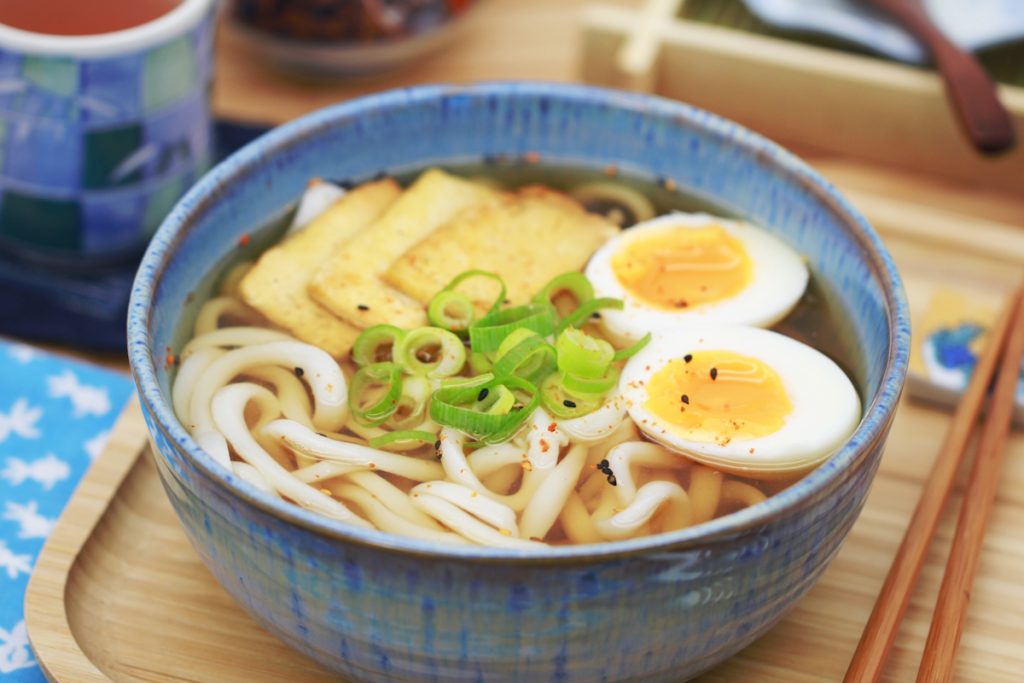
Delicious Kake Udon Noodle Soup: A classic of Japanese cuisine
Sometimes you just need a quick yet hearty meal that warms you up and satisfies…
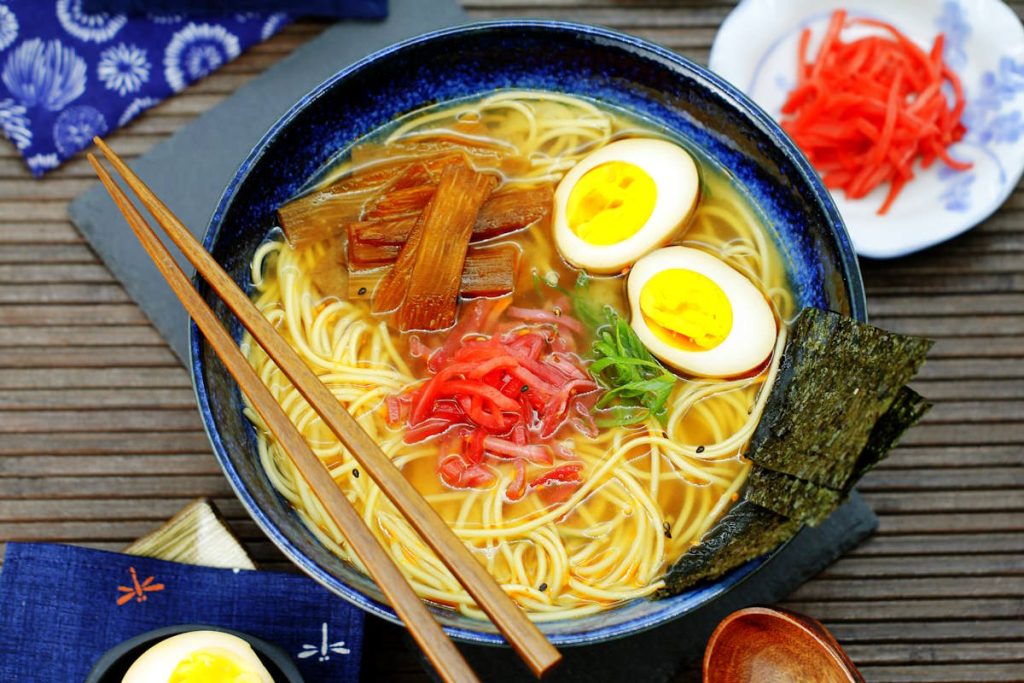
A bowl full of happiness: Miso Ramen with 7 varied toppings – vegetarian, spicy & really easy
Immerse yourself in the world of flavours of Japanese cuisine with our Happiness Bowl! It’s…
10-minute Shoyu Ramen with bamboo shoots & Ramen eggs – for quick meals
My 10-minute Shoyu ramen: Wavy ramen noodles, served in a rich and sinfully delicious tsuyu…
Has anyone tried this recipe yet? Let me know in the comments – I’m really looking forward to hearing from you.