
Language:


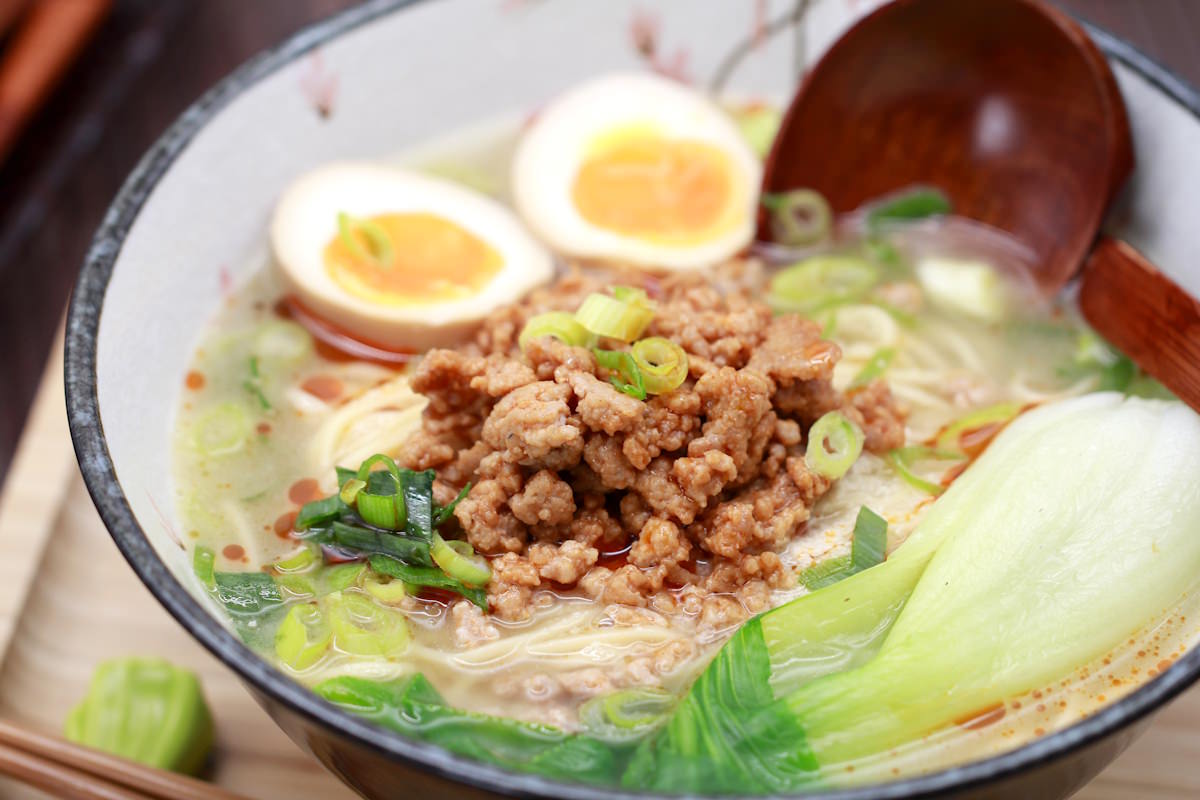
Tantanmen is a Ramen soup for those who like it creamy but not heavy. A sesame-based broth, spicy minced meat, a subtle heat and fresh greens – everything comes together without being overpowering. It is precisely this restraint that makes Tantanmen so special.
In Japan, it has long been considered an integral part of modern Ramen culture. It combines Chinese roots with Japanese finesse and is surprisingly easy to recreate at home. That is precisely what this recipe is all about: a balanced, everyday version of Tantanmen that shows just how much depth can be found in a few, well-balanced ingredients.
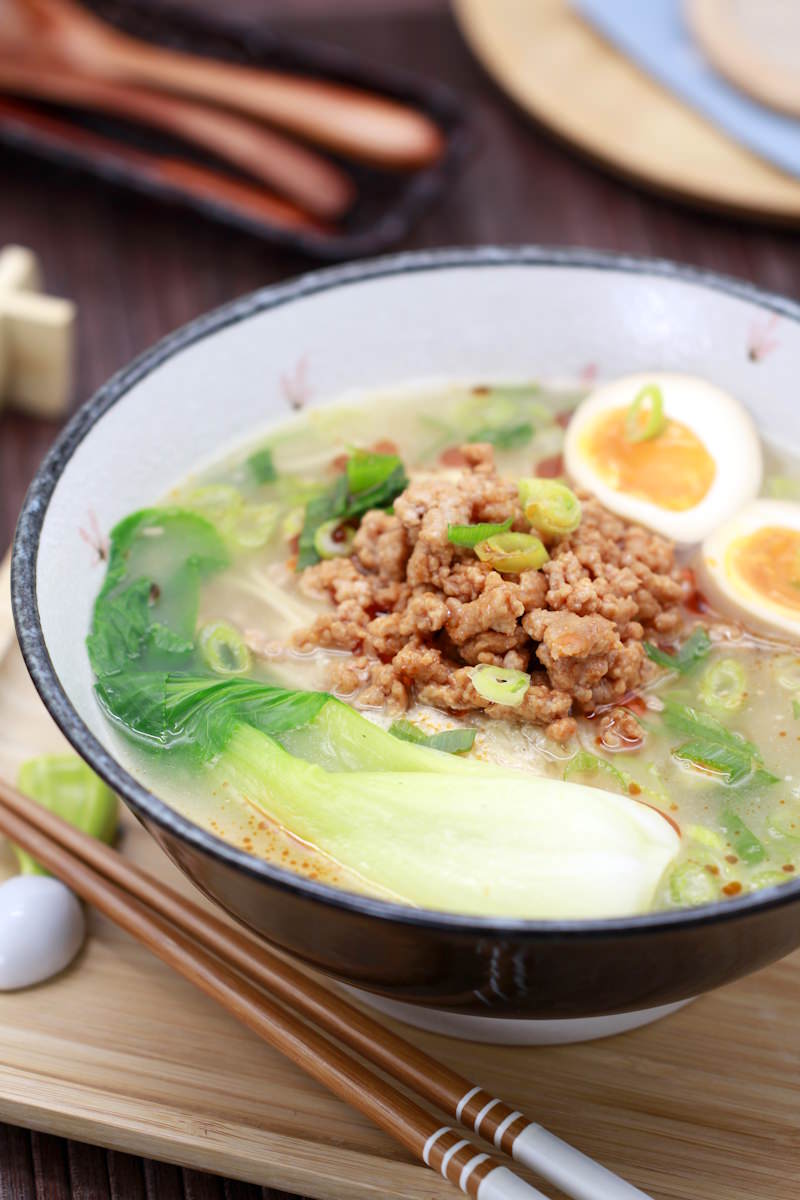
There are Ramen dishes that grab your attention straight away. Clear Shoyu Ramen, robust Miso broths or tonkotsu with plenty of depth – these were my first choice for a long time. For a surprisingly long time, Tantanmen wasn’t among them. Perhaps because, at first glance, it seems more unassuming. Creamy, light, not so easy to categorise.
It was only later that I realised just how much character this bowl holds. A Ramen that isn’t loud, but unfolds slowly. Nutty, spicy, slightly hot and, above all, incredibly well-rounded. Today, Tantanmen is one of those soups I keep coming back to.
What exactly is Tantanmen?
Tantanmen has its roots not in Japan, but in China. The original is dan dan mian, a dish from Sichuan cuisine that is traditionally served rather dry or with very little broth. It is intensely spiced, often significantly spicier and features the typical tingling Sichuan pepper.
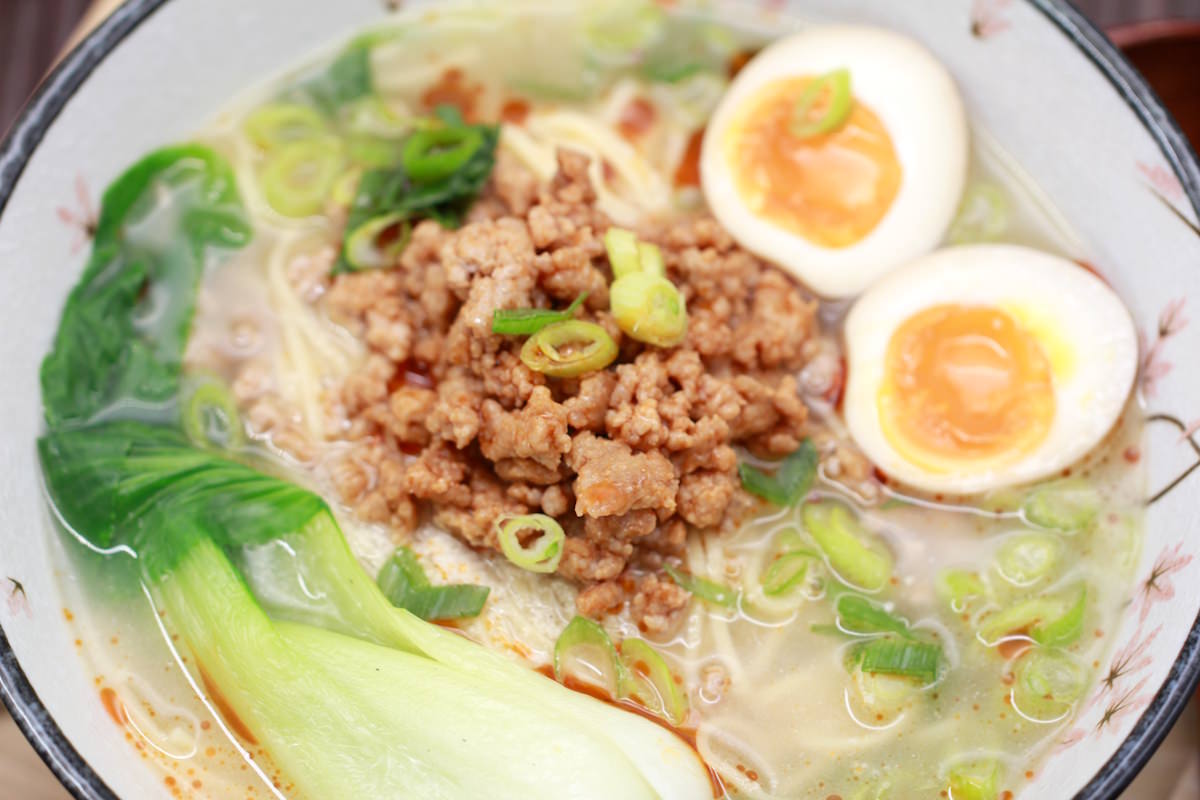
When the dish arrived in Japan, it was adapted – like many other dishes. The rather rustic noodle dish evolved into a proper Ramen soup. The heat was toned down, whilst sesame came more to the fore. Broth, sesame paste and a creamier texture made Tantanmen what we know today from Japanese Ramen shops.
This makes Tantanmen one of the dishes that demonstrate how creatively and independently Japanese cuisine deals with foreign influences.
Historically, Tantanmen long stood in the shadow of other Ramen styles. Whilst clear broths or heavy tonkotsu soups were quickly perceived as “typically Japanese”, Tantanmen seemed more like a special case. Too creamy for clear Ramen, too mild for lovers of extreme heat.
Yet this is precisely where its strength lies. Tantanmen is well-balanced. It plays with contrasts without being overwhelming. This is precisely why it has been making a comeback for years, particularly in modern Ramen shops, as an alternative for anyone seeking depth but not wanting a heavy broth.
Making Tantanmen yourself: Here’s how
At first glance, Tantanmen looks like a Ramen soup for advanced cooks, but it’s surprisingly easy to make at home. It’s not about complicated techniques, but the interplay of a few well-balanced ingredients. Once these are prepared, everything falls into place almost by itself.
TOP RECOMMENDATION
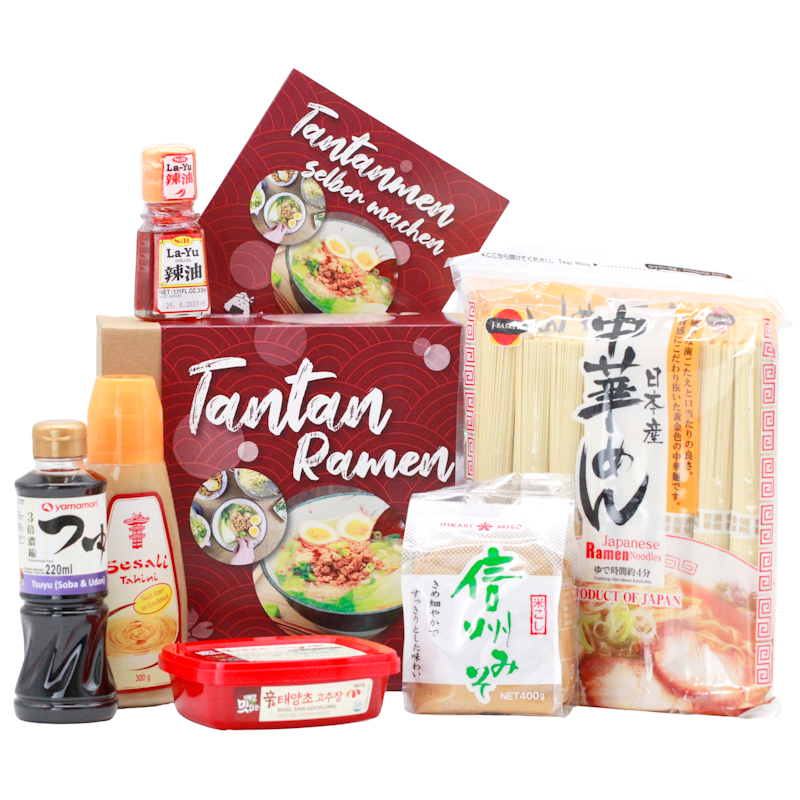
Tantanmen Kochbox | für japanische Sesam Ramen
7-tlg. Set für 6 Portionen cremige Sesam Ramen + Anleitung, gelingt garantiert. Mit dem Tantanmen Kochset bereitest du cremige Sesam Ramen mit würzigem Hackfleisch ganz…
In stock
At its core, Tantanmen consists of a creamy sesame broth, spicy minced meat and freshly cooked spaghetti Ramen. The balance between nuttiness, heat and Umami defines the character of this soup.
The key components:
- Sesame broth: The base is a rich broth, traditionally made from chicken stock, which is refined with sesame paste. Neri Goma or tahini provide the typical creaminess and a deep, slightly nutty note. Traditionally, this combination is entirely sufficient to give the soup its structure.
- Soya milk (optional): In modern versions, some of the water is replaced with soya milk. This makes the broth even rounder and slightly milder, without masking the sesame flavour. Not strictly traditional, but very common in Japan, especially in contemporary Ramen shops.
- Spicy minced meat: The minced meat is more than just a topping. Miso, gochujang, soy sauce, Mirin and sugar create a spicy, slightly sweet element that later blends with the broth, giving it depth.
- Noodles & Toppings: Spaghetti Ramen form the base, accompanied by pak choi for freshness, spring onions for heat and ramen eggs for additional Umami notes. A little La-Yu at the end adds colour and just the right amount of heat.
Here’s how it works:
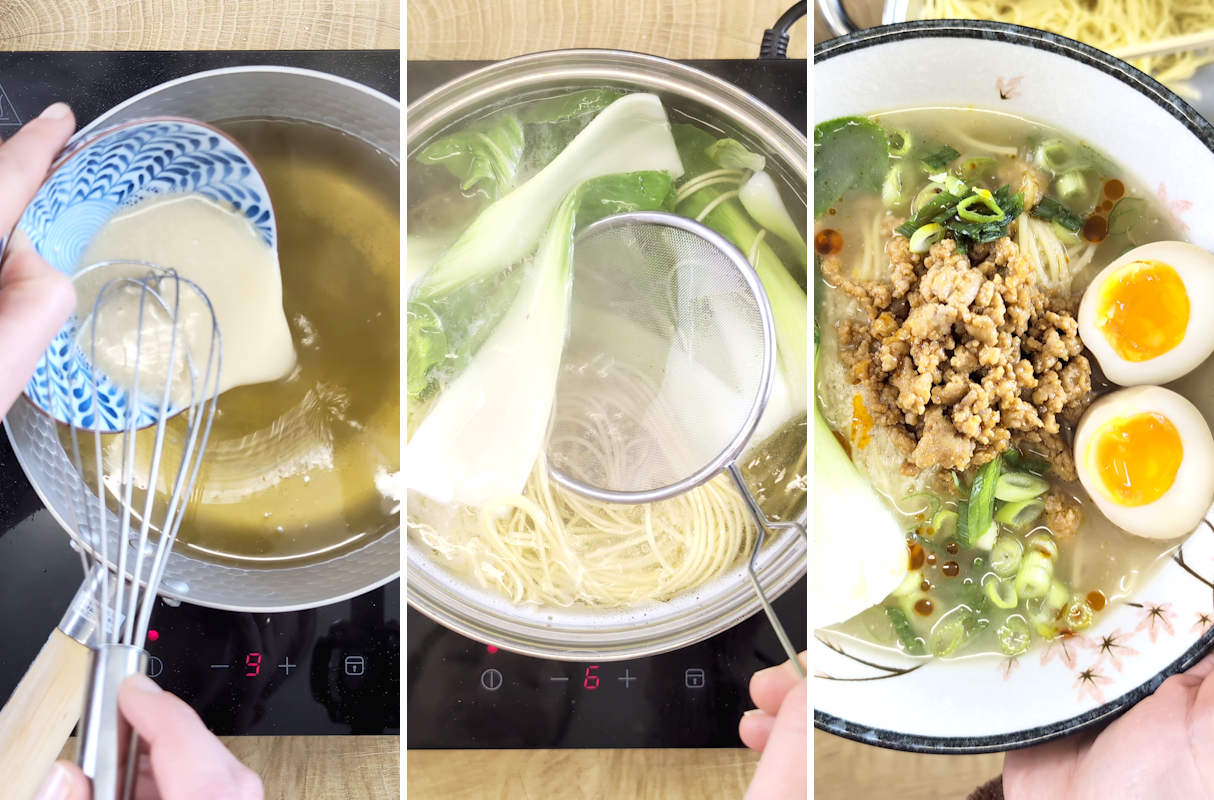
First, fry the minced meat vigorously and glaze it with the seasoning sauce until it is aromatic and slightly sticky. At the same time, make the sesame broth by stirring the sesame paste into hot stock until smooth, then season to taste.
The noodles are cooked separately, and the pak choi is blanched very briefly so that it retains its colour and texture. When plating up, all the components are combined whilst hot: noodles in the bowl, broth poured over the top, minced meat in the centre, and vegetables around the edge. Finally, add a small strip of La-Yu and the soup is ready.

Popular variations
Extra creamy: Replace a large portion of the water with soya milk or add an extra spoonful of sesame paste to the broth.
Spicier or milder: More La-Yu or a little chilli oil will make it spicier. For a milder version, use less gochujang or add more sesame seeds.
Vegetarian: The minced meat can easily be replaced with finely chopped mushrooms or soya granules. Use a strong vegetable stock as a base.
What goes well with Tantanmen?
Tantanmen is a creamy, rich Ramen soup that is very filling on its own. It is best served with light side dishes that add freshness and a touch of acidity.
A small Japanese salad or some pickled vegetables such as Tsukemono provide a good balance to the nutty broth. Simple starters such as edamame or a light spinach and sesame salad also go well with it.
Green tea is a classic choice of drink. If you like, you can also serve Tantanmen with a light beer or a dry Sake.
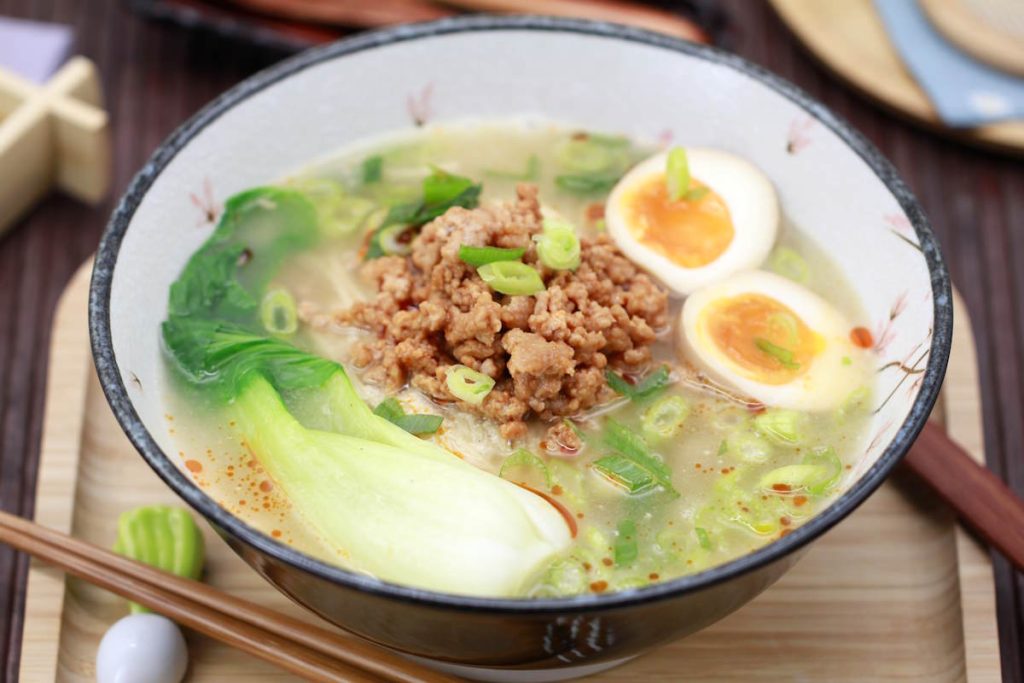
Do you have any questions or would you like to share your experiences? How do you like this recipe for Tantanmen? Have you already cooked it or tried your own variation – perhaps with soya milk or extra chilli? I look forward to your comments and hope you enjoy cooking and eating it.
Tantanmen
Serves 2 | 45 minutes | 794 kcal
🖨️ Print PDF 📌 Save pin Tantanmen is a creamy Ramen soup with sesame, spicy minced meat and a subtle heat. This recipe shows you step by step how to easily prepare the Japanese version of this classic at home – balanced, aromatic and wonderfully warming.Tantanmen is a creamy ramen soup with sesame, spicy minced meat and a fine heat. This recipe shows you step by step how to easily recreate the Japanese take on this classic at home – balanced, aromatic and wonderfully warming.
Ingredients (2 servings)
200 g spaghetti Ramen (im Shop ansehen)*
For the spicy minced meat:
200 g minced meat (pork or mixed)
1 tbsp miso paste (im Shop ansehen)*
1 tbsp gochujang (im Shop ansehen)*
1 tbsp soya sauce (im Shop ansehen)*
1 tbsp Mirin (im Shop ansehen) *
1 tbsp sugar
2 tbsp oil (e.g. rapeseed oil)
For the creamy sesame broth:
400 ml chicken stock
400 ml water (or soya milk for extra creaminess)
2 tbsp tahini (im Shop ansehen) (or preferably neri goma)
2 tbsp soya sauce
2 tbsp rice vinegar (im Shop ansehen)*
Toppings:
a little La-Yu (Japanese chilli oil) (im Shop ansehen)*
2 Ramen eggs
2 small pak choi
2 spring onions
Preparation (45 minutes)
Step 1
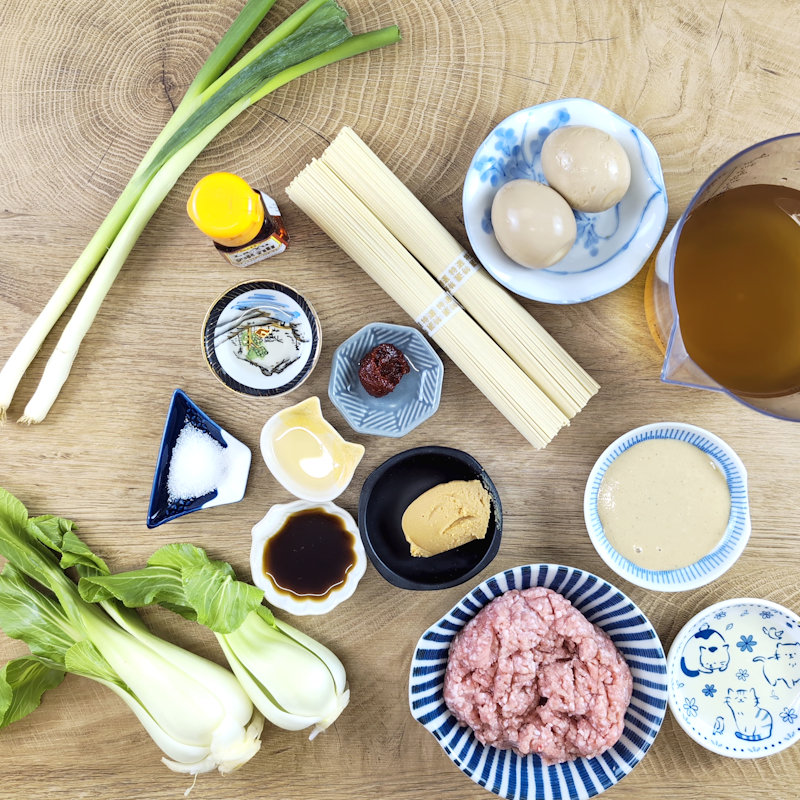
To begin with, please have your ingredients for the homemade Tantanmen ready.
Step 2
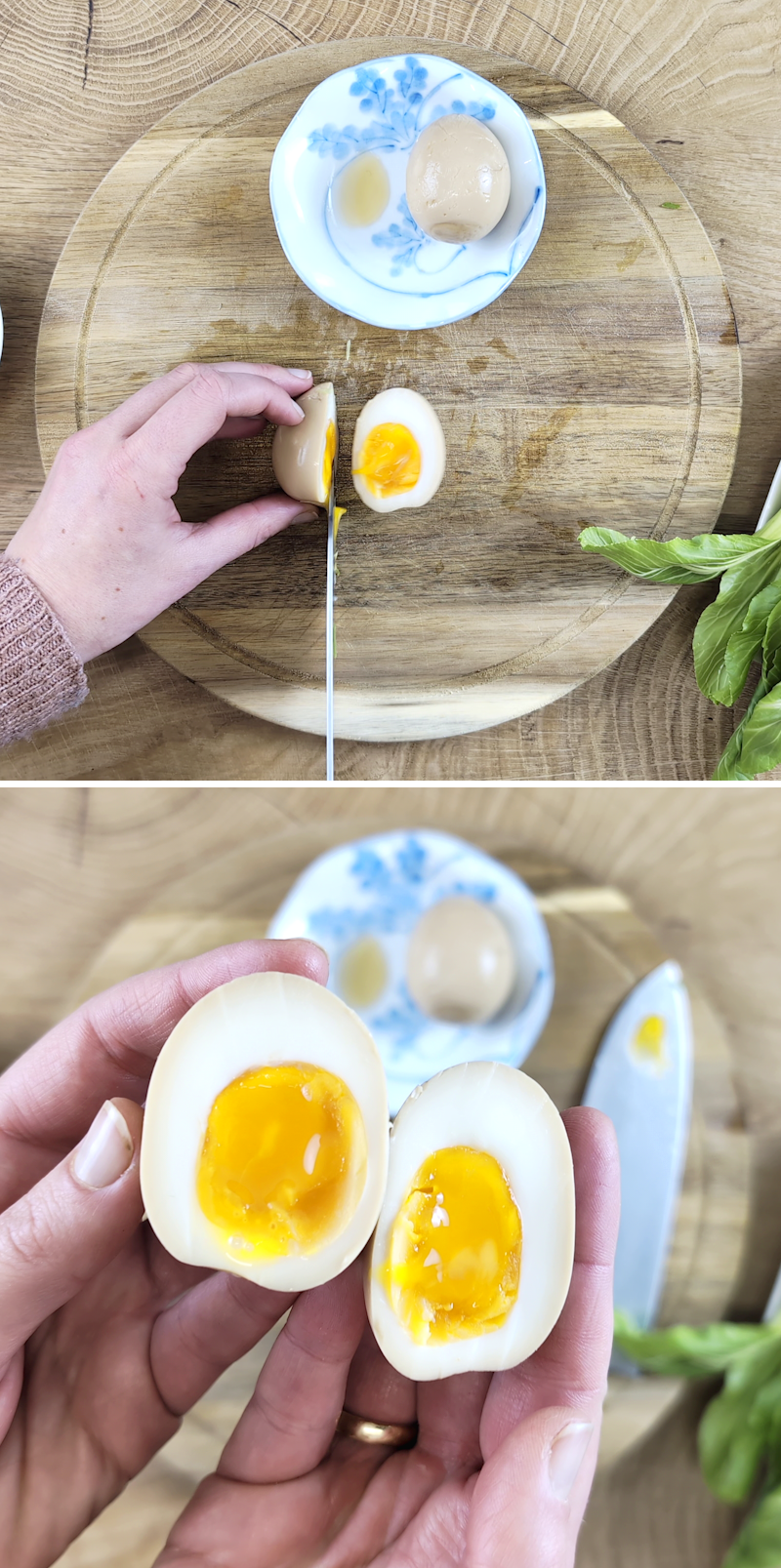
Please remember to prepare the Ramen eggs the day before (you can find my recipe for marinated eggs here). Cut them in half on the day of preparation.
Step 3
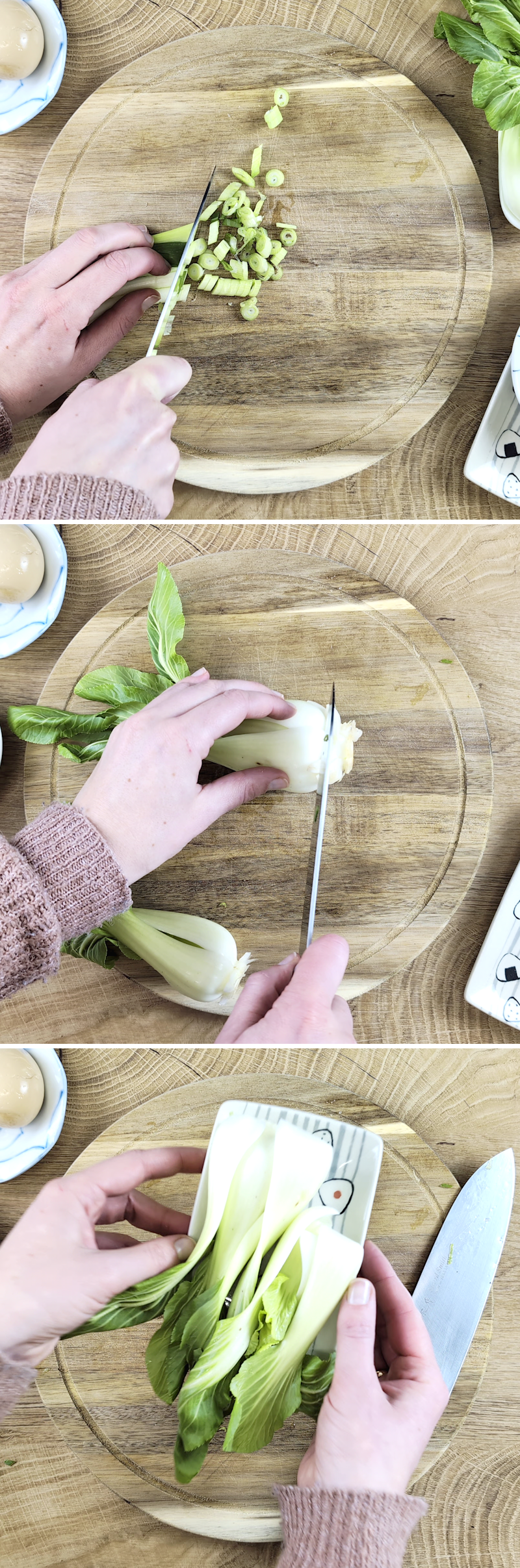
Wash and slice the spring onions into fine rings. Wash the pak choi as well and trim off the roots. Set everything aside, ready to hand.
Step 4
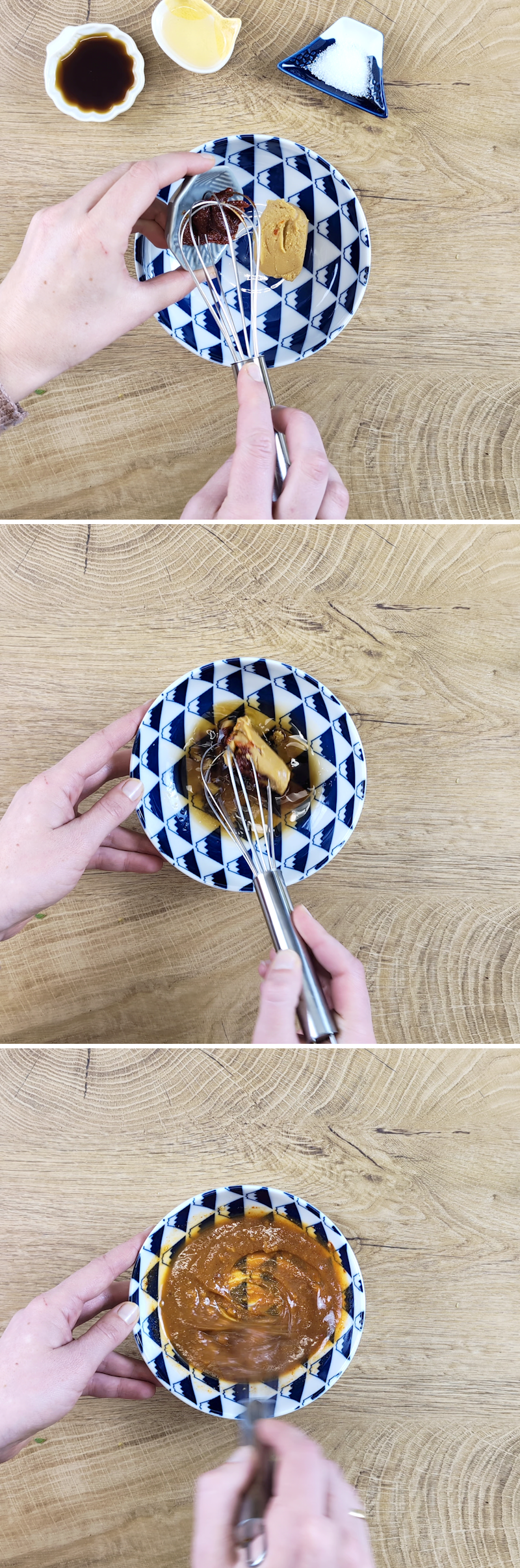
For the sauce for the seasoned ground meat (comes in the next step) 1 tablespoon miso, 1 tablespoon gochujang, 1 tablespoon soy sauce, 1 tablespoon mirin and 1 tablespoon sugar in a small bowl.
Step 5
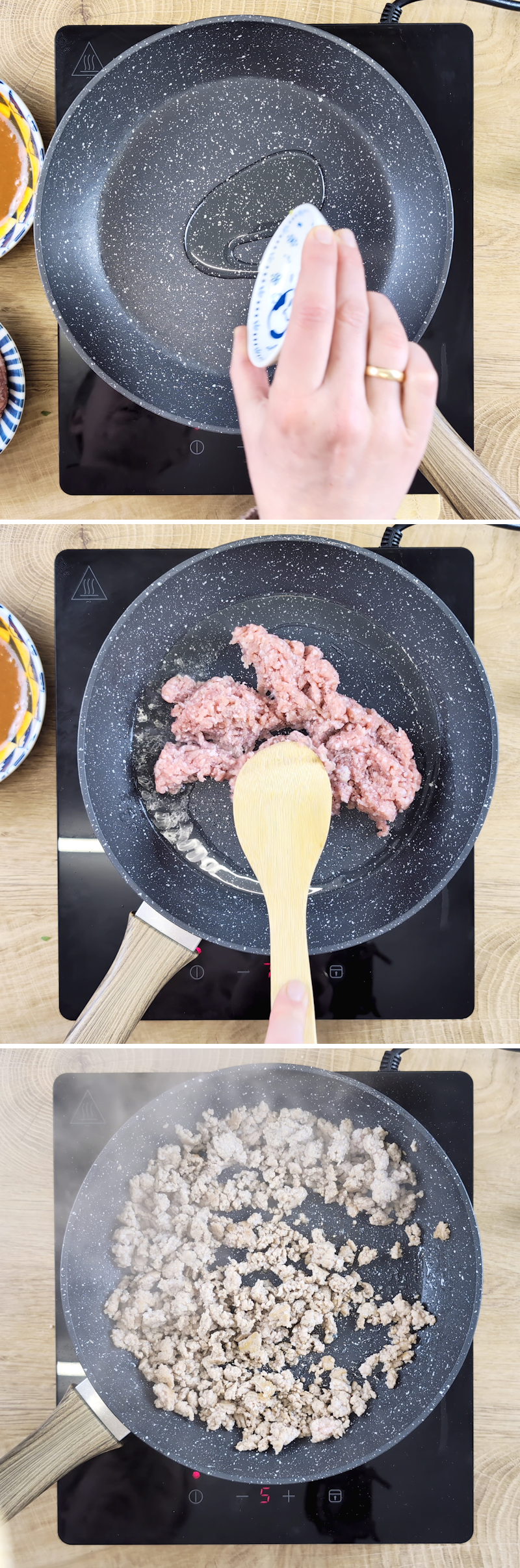
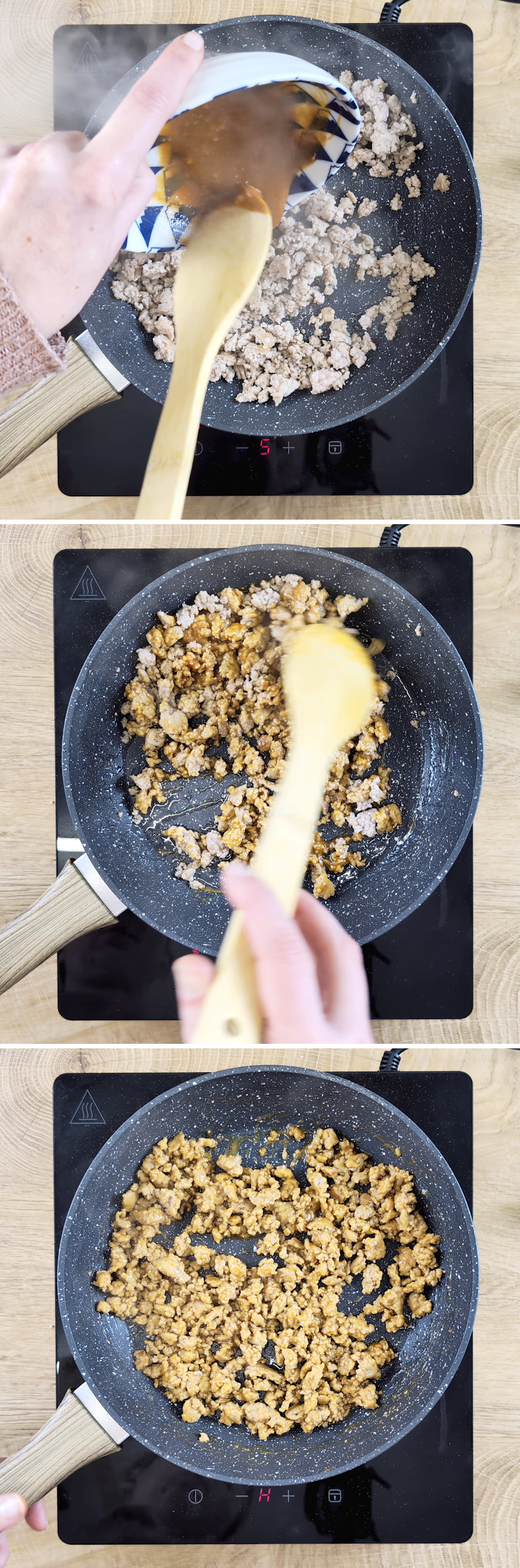
Heat a frying pan over a medium to high heat with oil, add the minced meat and fry until crumbly and lightly browned.
Step 6
As soon as it starts to brown, stir in the prepared sauce. Let everything simmer briefly until the meat glistens and the sauce clings to it. Remove from the pan and keep warm until serving.
Step 7
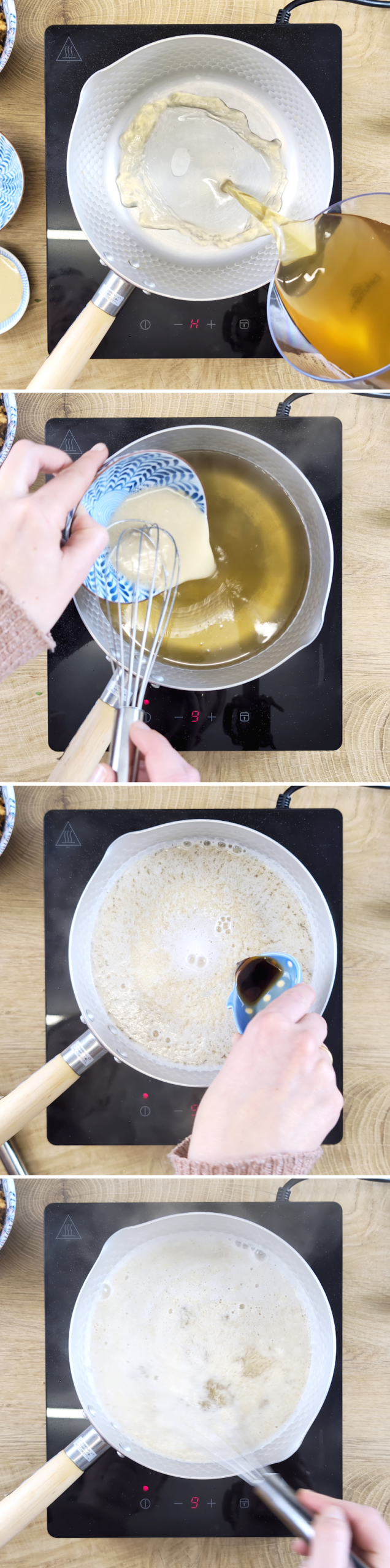
Heat 400 ml chicken stock with 400 ml water (or soya milk) in a saucepan. Take a small bowl and stir 2 tbsp sesame paste with a little hot stock until smooth.
Once the sesame paste has completely dissolved, pour the mixture back into the saucepan with the remaining stock. Season to taste with 2 tbsp soy sauce and 2 tbsp rice vinegar. The stock should be creamy and slightly nutty. Keep warm, but in the saucepan.

Step 8
Put a large pan of water on to boil and cook the spaghetti Ramen according to the instructions on the packet.
Just before the noodles are ready, add the pak choi to the pasta water for a few seconds so that it wilts. Then remove it with a sieve or a ladle. Drain the noodles.
Step 9
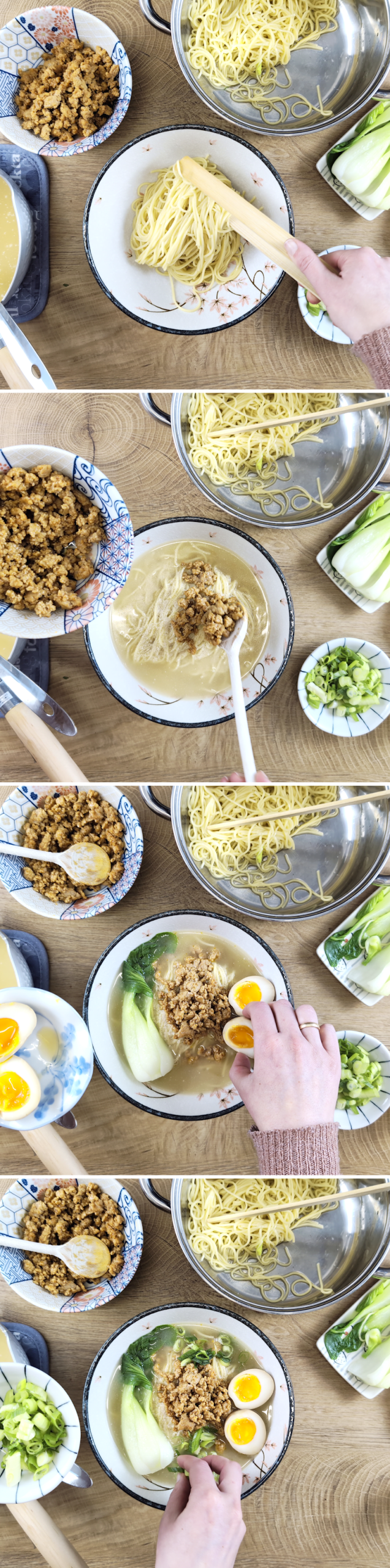
Divide the drained noodles between two bowls. Pour the creamy sesame broth over the top, arrange the vegetables around the edge and place the spicy minced meat in the centre. Sprinkle the spring onions over the top.
Step 9
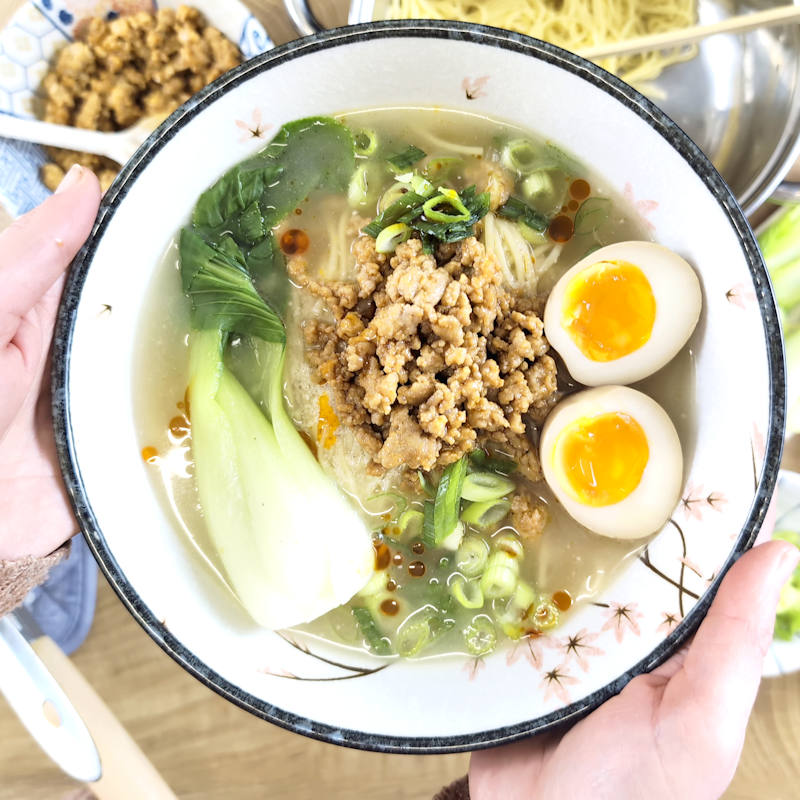
Finally, add a few drops of La-yu to the bowls. The red colour spreads through the light-coloured broth and brings out the typical Tantanmen flavour beautifully.
It’s best to serve everything straight away. Done. Itadakimasu!
Fancy some more delicious Japanese-inspired ideas that go well with Ramen?
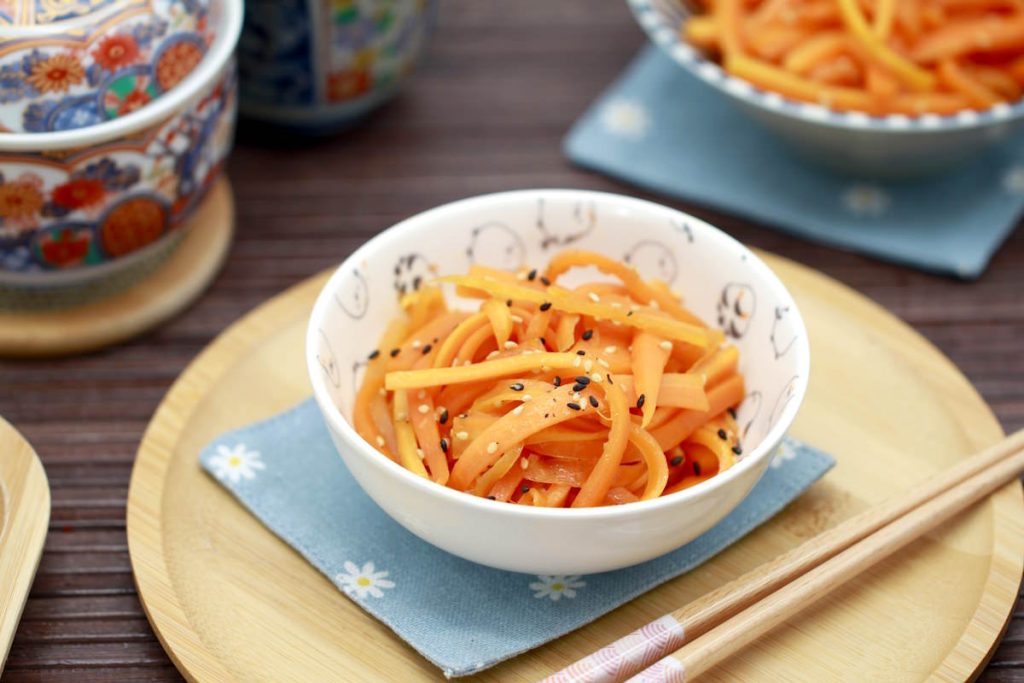
Make your own Ninjin no Kinpira: Japanese carrot side dish in the Kinpira style
Ninjin no Kinpira is a simple Japanese side dish made from finely sliced carrots, which…
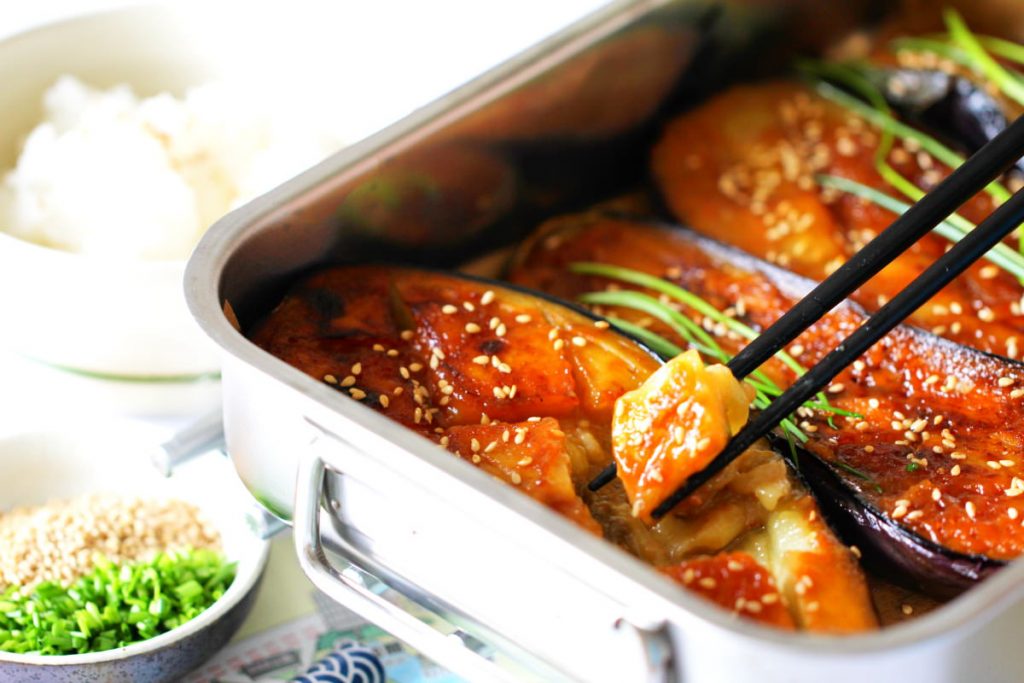
Nasu Dengaku: Oven-baked aubergines glazed with Miso – simple & irresistible
Nasu Dengaku is a true classic of Japanese cuisine and perfect as a side dish…

Make your own Japanese potato salad: fresh, creamy and irresistible!
If you’re looking for a delicious side dish that’s both familiar and excitingly new, then…
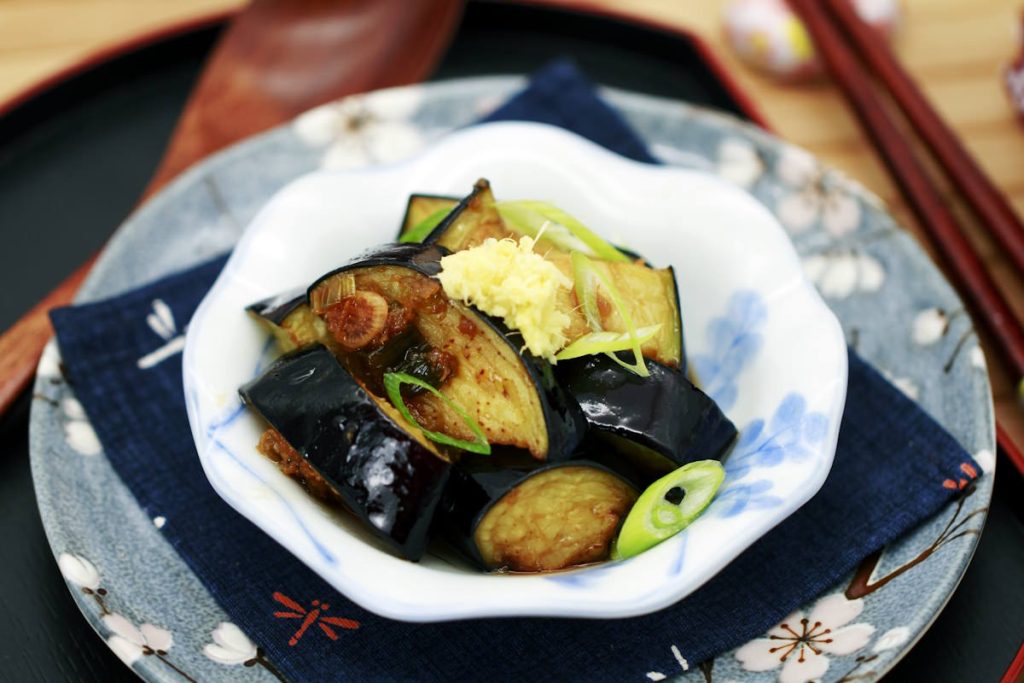
Nasu no Agebitashi: Make your own Japanese-style deep-fried aubergine
Creative cooking starts with simple, fresh ingredients. My recipe for deep-fried aubergine combines the delicious…

Potatoes in soy sauce: crispy-sweet Daigaku Jagaimo, Japanese style
Daigaku Jagaimo are delicious, crispy potato bites glazed in a sweet and savoury marinade. These…
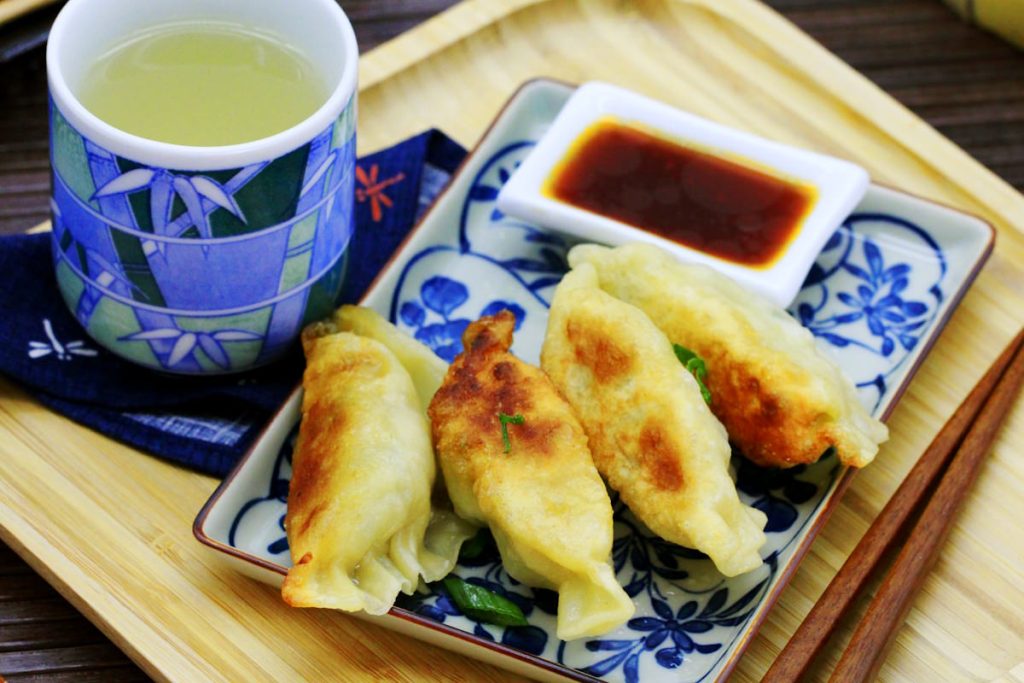
Make your own Gyoza: the best Japanese dumplings – cook, fold & enjoy!
Welcome to the fascinating world of Gyoza! These traditional Japanese dumplings are a culinary feast…
Have you tried the recipe yet? Let me know in the comments – I can’t wait to hear from you.