

Language:


A homemade tonkotsu stock is the ideal starting point for authentic Japanese Ramen noodle soups. This rich pork stock is simmered for several hours – but it’s actually very easy to make. With this simple basic recipe from Japan, you’re guaranteed not to go wrong!
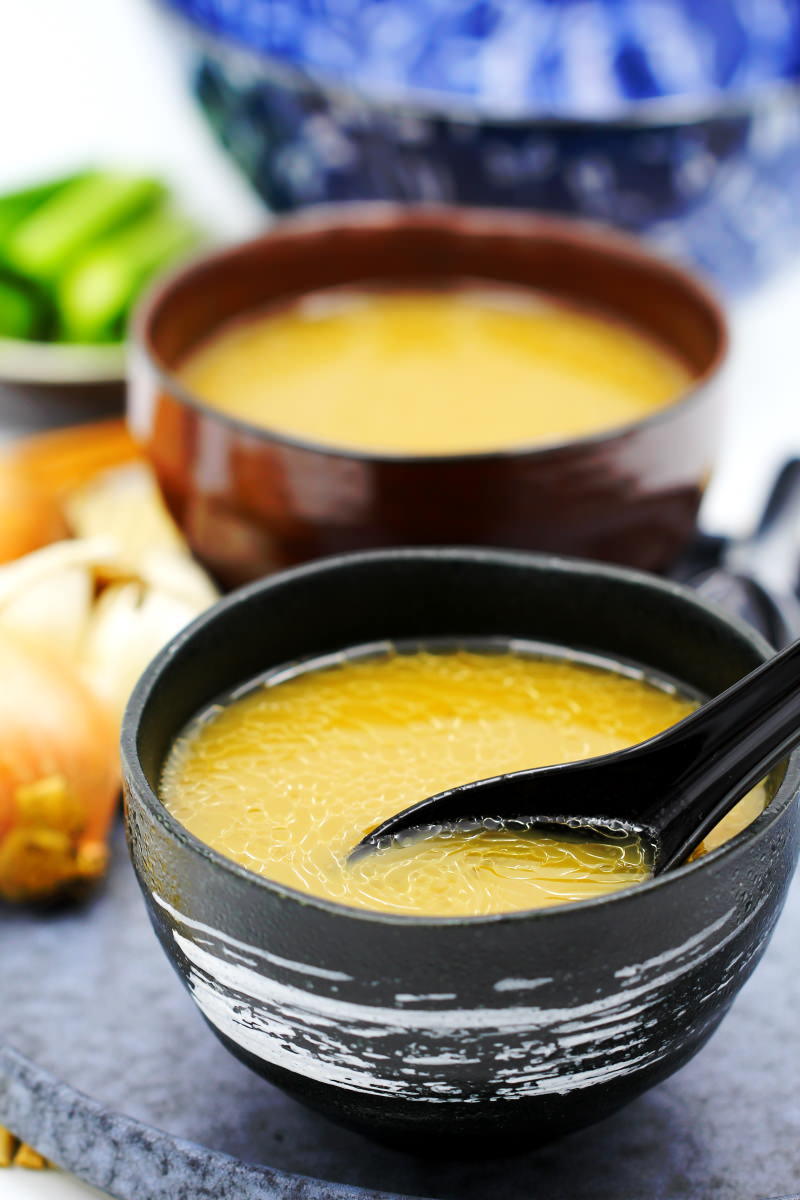
I know you’ve had to wait a long time for this – but today I’m bringing you one of the most authentic recipes from Japan: Homemade tonkotsu stock for homemade Ramen noodle soups!
Tonkotsu is also known as ‘white broth’ and is regarded in Japan as the holy grail of Ramen soups. There are various recipes for this very hearty pork broth – two main and widely popular versions originate from southern Fukuoka (also known as Hakata) on Kyushu and from the Kanto region around Tokyo.
Both broths offer highly complex flavours and great depth of taste. In the Tokyo-style tonkotsu variant, which is a more modern interpretation, two separate broths are prepared. One is made from pork fat and the other from pork bones. The tonkotsu broth based on the Fukuoka recipe is the original version and is far more popular and well-known both in and outside Japan. That’s why I’m going to show you a recipe based on this Japanese original.
In this case, the stock is made exclusively from pork bones. That’s right, you read that correctly… ‘Tonkotsu’ translates as ‘pork bones’. A genuine Japanese tonkotsu stock is made from pork bones. The result is a fairly thick, almost creamy soup with a pure flavour. Traditionally, the stock gets its creaminess from the use of trotters (yes, that’s right – pig’s trotters) in the preparation.
Pig’s trotters are full of gelatine and are the very best base for a Japanese tonkotsu broth. That’s why I’m showing you this traditional method today!
The process takes three days. On the first day, we lay the groundwork. This involves doing all the shopping and placing the Spitzbein in cold water in the fridge overnight to rinse out any impurities.
Tip: You should pre-order the shank from the butcher. Ideally, when placing your order, please remember (as also noted in the recipe) to ask for the bones to be cut into 5 cm-wide slices!
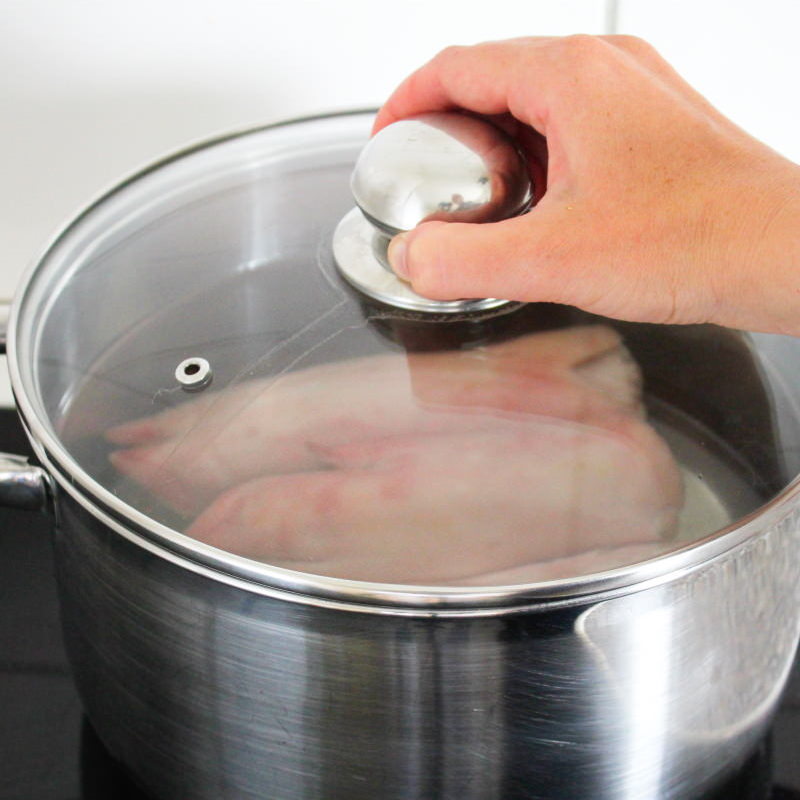
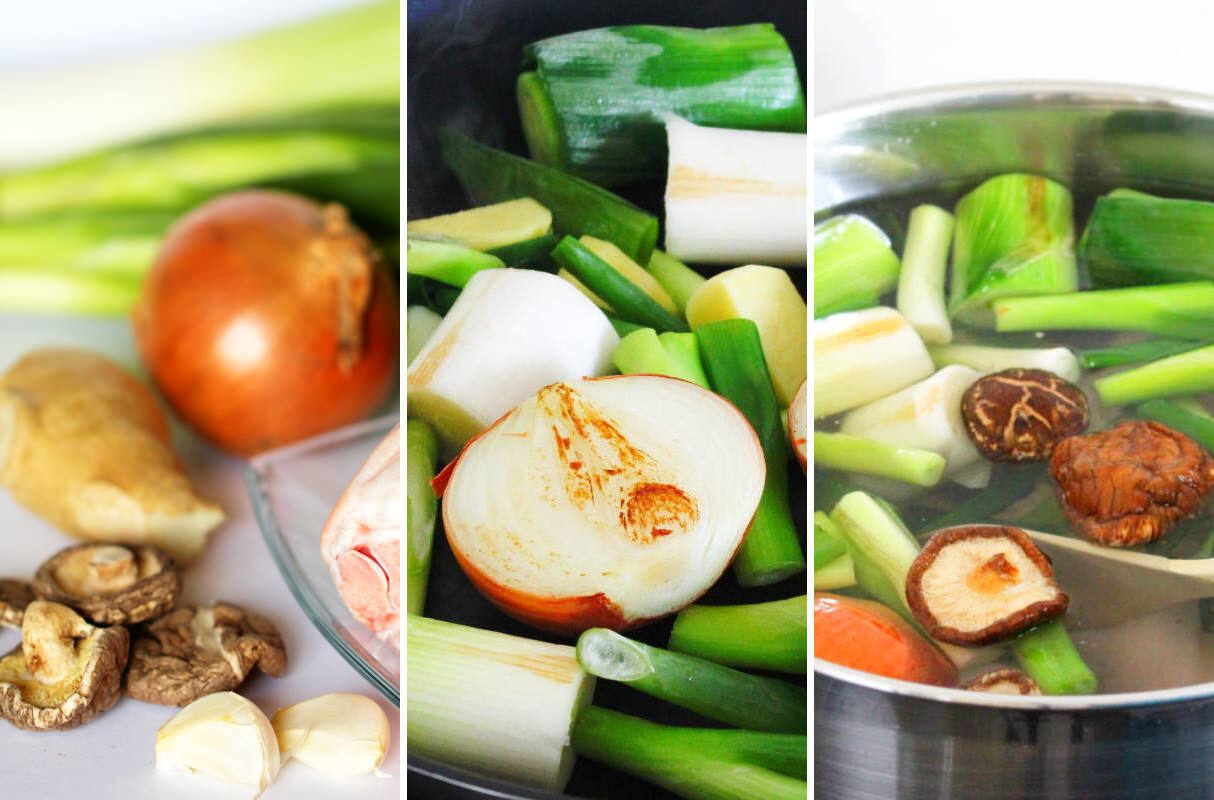
On the second day, you should get up early, as the bones will now be simmered for over 8 hours and the stock then reduced for a further 2 hours. However, our stock won’t consist solely of pork bones. Instead, aromatic, lightly roasted vegetables such as onions, leeks, spring onions and fresh ginger, as well as dried Shiitake mushrooms, are added to the soup to further maximise the complexity of the flavour!
When seared at a high heat, the vegetables release an incredible amount of glutamic acid, significantly enhancing the Umami experience. Through very slow and gentle cooking, the ingredients are transformed into pure flavour:
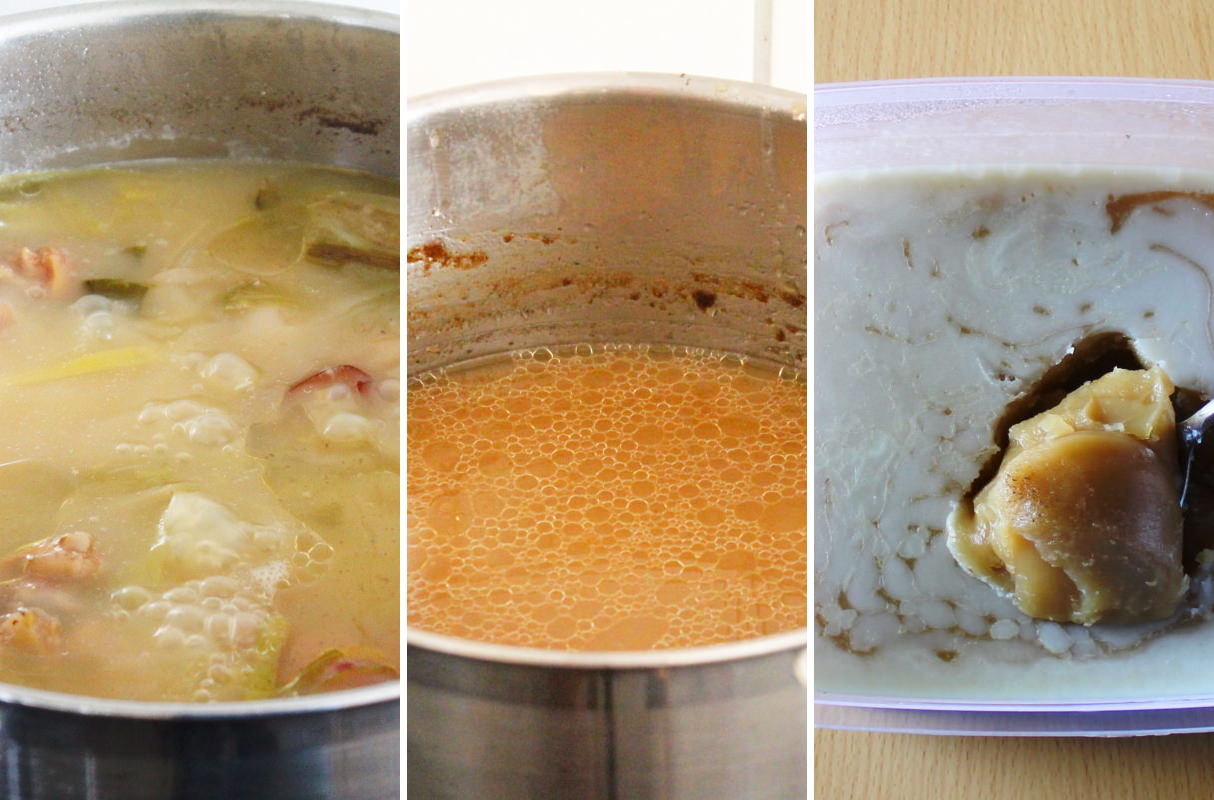
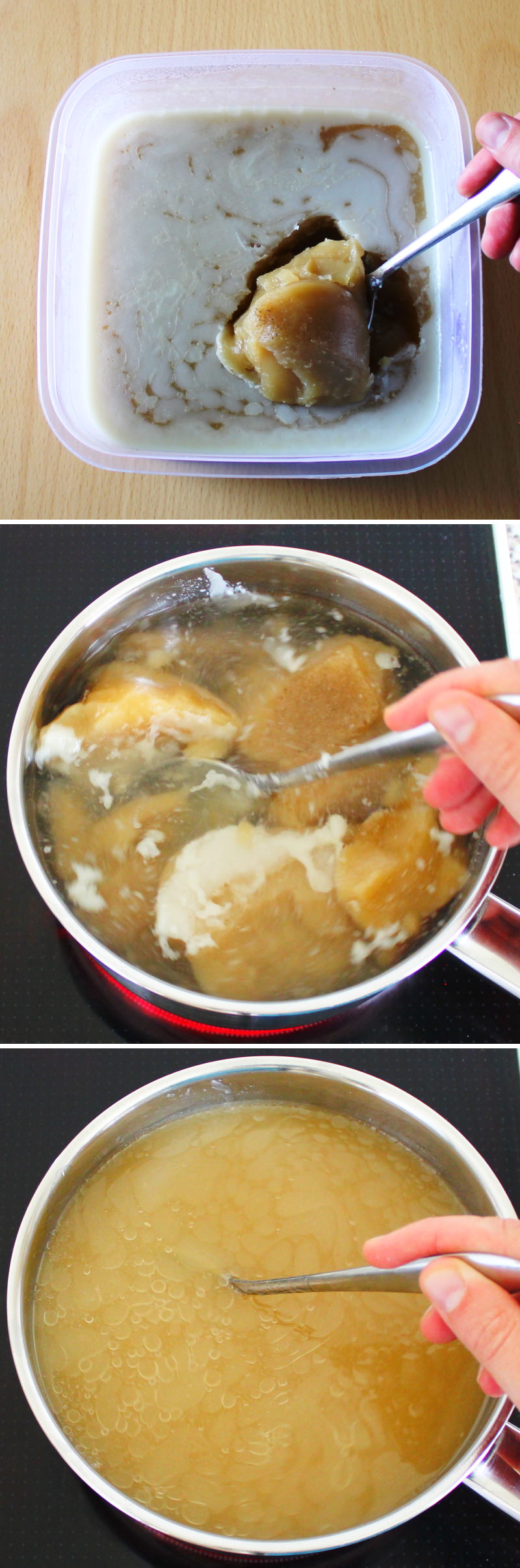
Once the stock has been reduced well on the evening of the second day, it is left to cool completely in the fridge overnight. The aromatic stock gains even more depth whilst resting. During this process, the gelatine extracted from the bones also develops, thickening the stock into a sort of pudding.
To transform the very concentrated tonkotsu jelly back into a stock for noodle soups, pour it into a saucepan and stir in fresh water. Then heat the contents of the saucepan over a medium heat and bring to the boil.

Tip
The tonkotsu jelly can easily be frozen and later thawed and used.
The authentic Japanese tonkotsu stock is now ready and can be used to make delicious Ramen noodle soups. The obvious first choice here is, of course, a wonderful bowl of Hakata Ramen with homemade chashu (rolled roast pork), marinated mushrooms (kikurage), pickled Ramen eggs (ajitsuke Tamago) and grated daikon – I promise, it’ll be delicious:
No post found!
As I mentioned above, the tonkotsu broth originates from Fukuoka Prefecture. Tonkotsu Ramen is the regional speciality of Fukuoka and the north coast of the southern Japanese island of Kyushu.
There, the dish is often referred to as Hakata Ramen, as Hakata is the historical name for Fukuoka. Hakata Ramen was originally prepared as an inexpensive and filling meal for the workers at the local fish markets.
TOP RECOMMENDATION
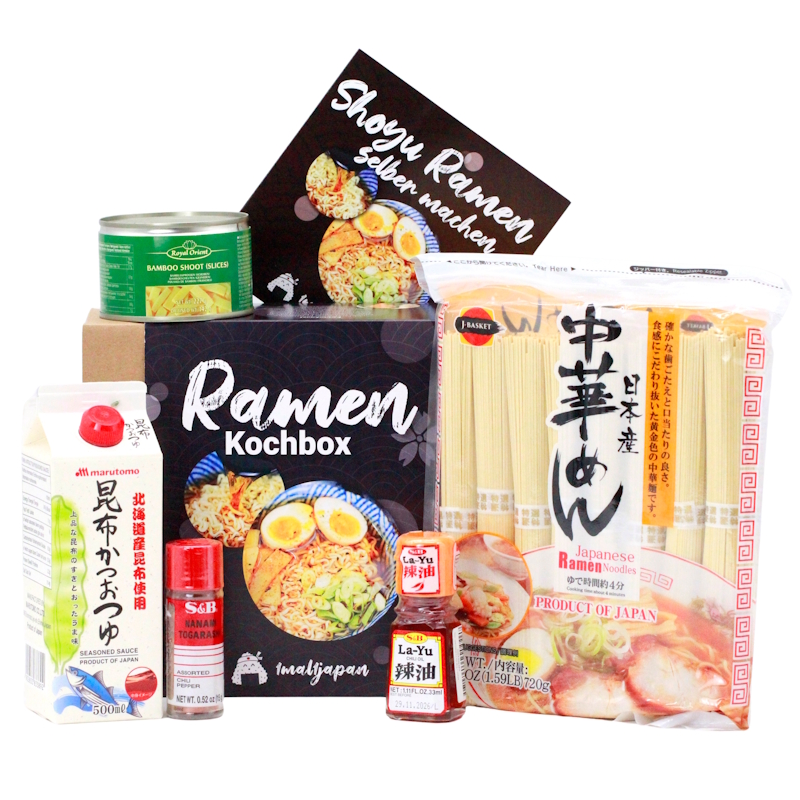
Ramen Kochbox | Shoyu Ramen selber machen
6-tlg. Set für 8 Portionen japanische Nudelsuppe + Rezepte für Shoyu Ramen, auch für Einsteiger. Mit dem Ramen Kochset bereitest du japanische Nudelsuppe ganz einfach…
In stock
Nowadays, however, the dish is treated more as a delicacy, as it is widely known just how labour-intensive the preparation of the tonkotsu stock is! But with my recipe, you’re guaranteed not to go wrong – you just need a bit of time and patience.
Tip
Would you like to know how to cook Ramen properly and what other ingredients you need for a bowl of Ramen noodle soup? In this post, I’ll show you in 5 steps how to easily make a Japanese Ramen noodle soup yourself, just like the real thing: → Make the best Ramen noodle soup yourself in 5 steps
I hope that this wonderful recipe for homemade tonkotsu stock will provide you with a great base for your next bowl of Ramen! And now I hope you have fun and enjoy making it:
Tonkotsu stock
for 1.5 litres = 6 portions | 3 days | 597 kcal
🖨️ Print PDF 📌 Save this pinHomemade tonkotsu stock is the ideal base for authentic Japanese Ramen noodle soups. This rich pork stock is simmered for several hours – but it’s actually very easy to make. With this simple basic recipe from Japan, you’re guaranteed not to go wrong!
Ingredients (1.5 litres = 6 portions)
1.2 kg pork bones (preferably shank)
1 large brown onion
1 leek
4 spring onions
2 garlic cloves
40 g ginger (fresh)
6 Shiitake mushrooms (dried) (im Shop ansehen)
2.4 l water
Please note that the quantities of the finished tonkotsu stock may vary slightly depending on the cooking time and choice of ingredients.
Useful tools:
Santoku knife (im Shop ansehen)
Authentic sieve for Japanese recipes (im Shop ansehen)
Preparation (3 days)
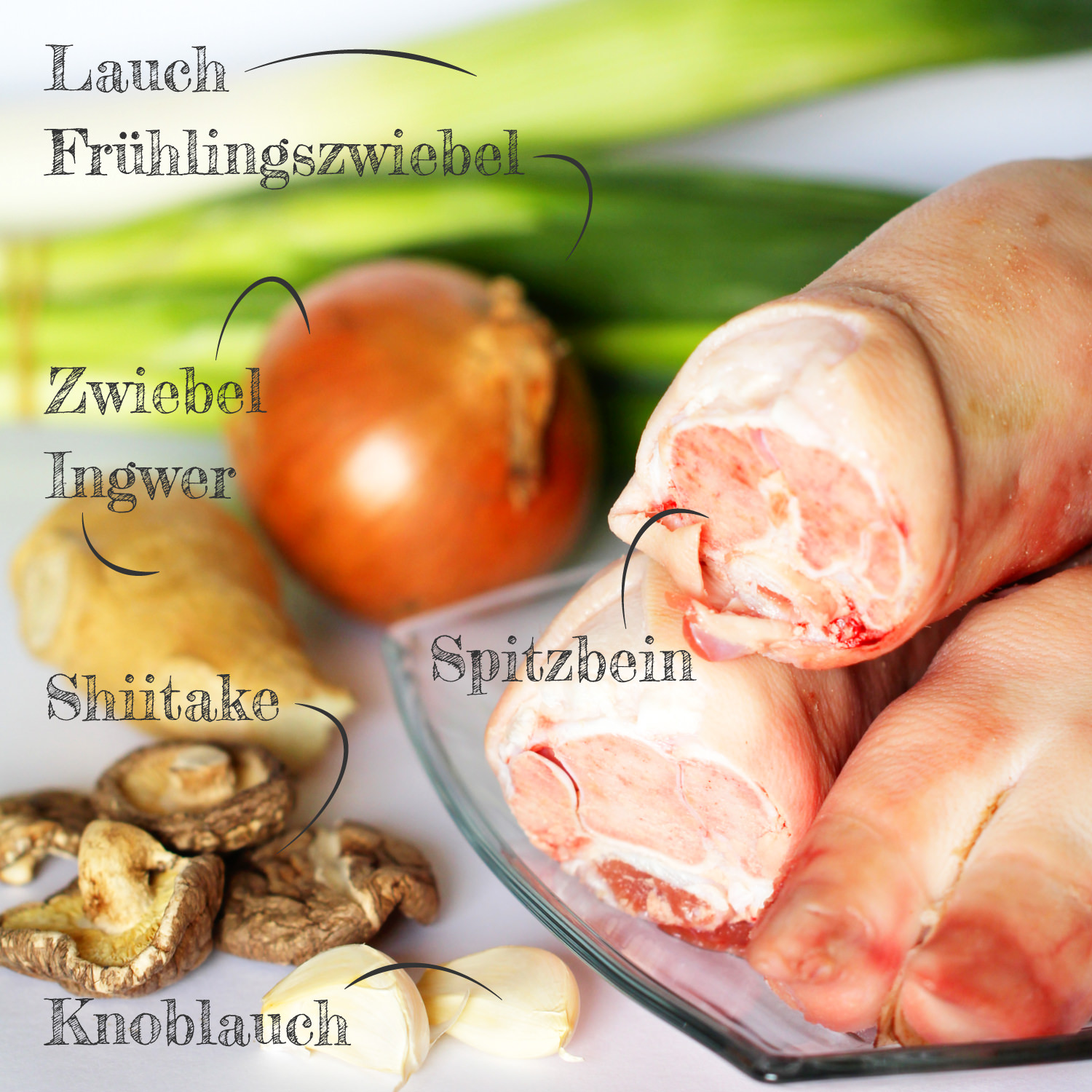
Step 1 – Day 1
Buy the ingredients for the homemade Tonkotsu pork stock.
Tip: It’s best to pre-order the trotters from your butcher and have them cut into 5 cm-wide slices.
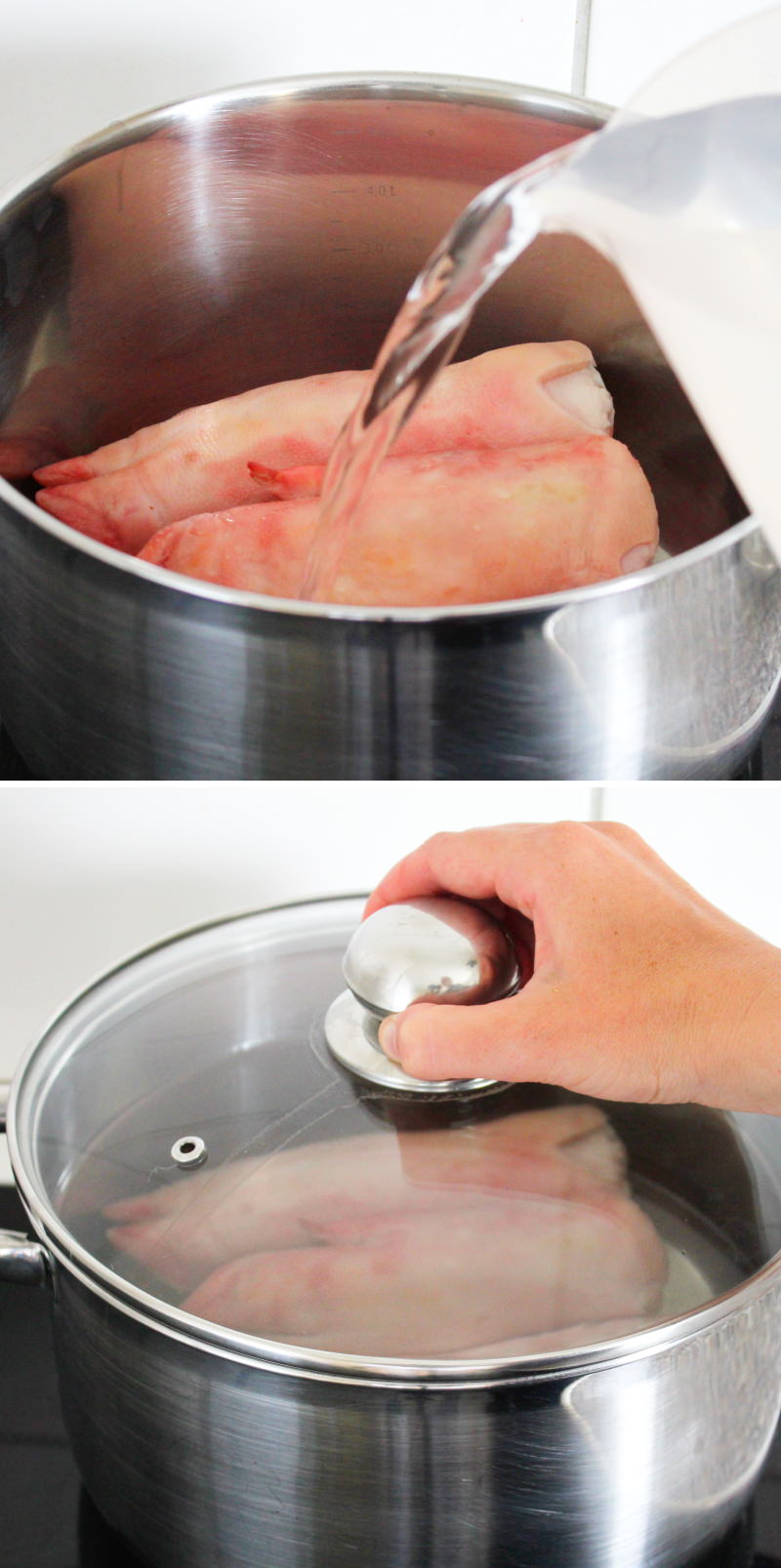
Step 2 – Day 1
Thoroughly wash the shank bone and place it in a large saucepan. Add enough cold water to ensure the meat is well covered. Place the saucepan, with the lid on, in the fridge overnight. This will draw out any remaining blood and other impurities.
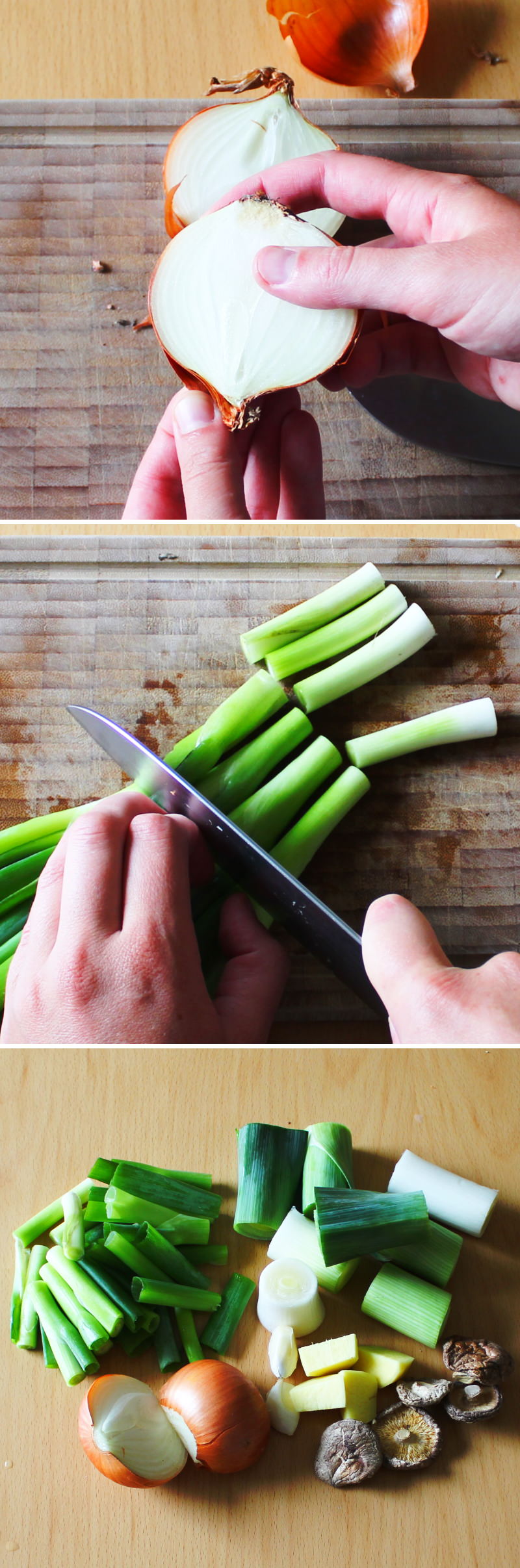
Step 3 – Day 2
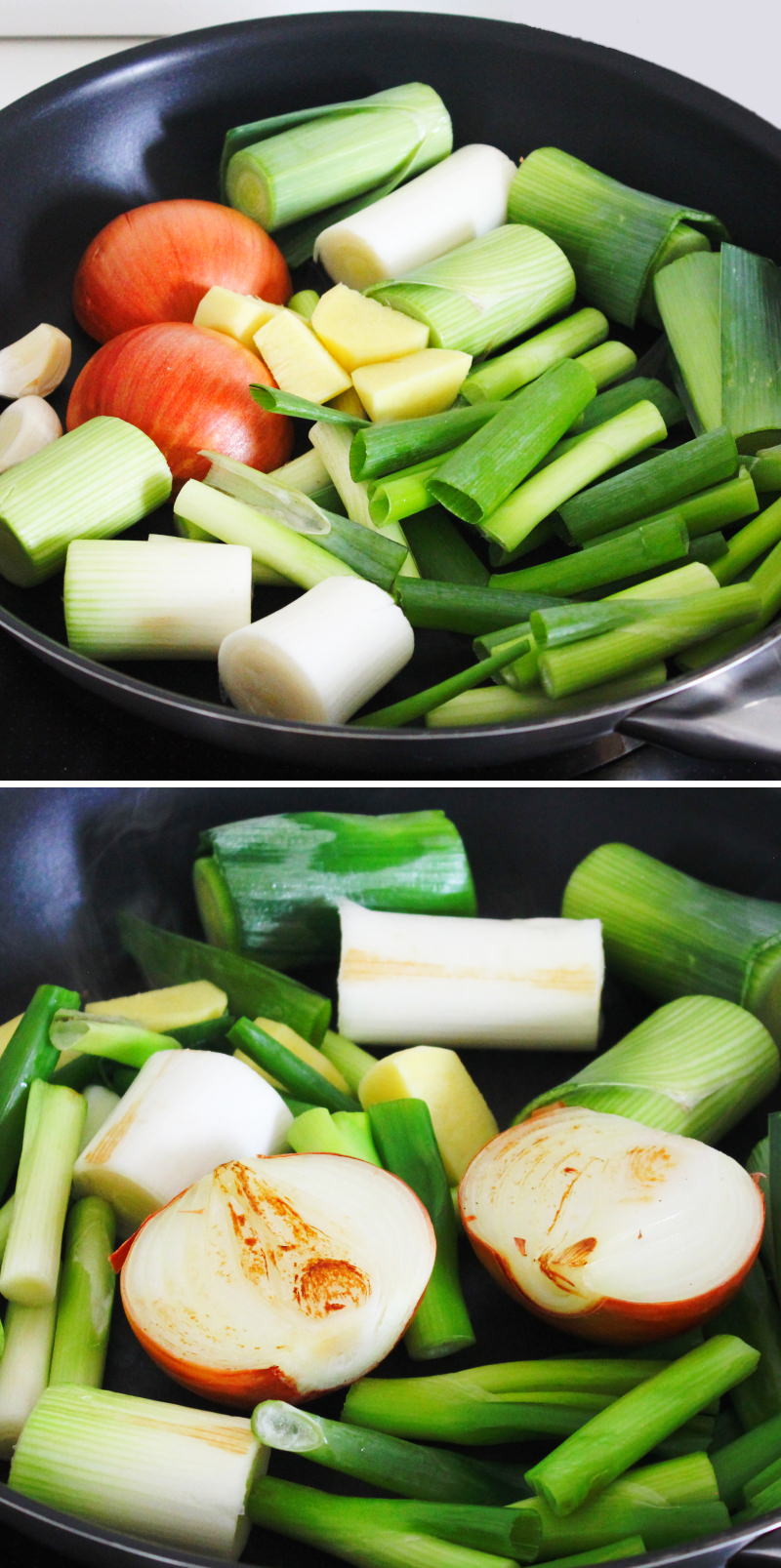
The next day, ideally very early in the morning, start by chopping the vegetables; everything just needs to be roughly chopped: Do NOT peel the onion (this will give the stock a lovely colour later) – simply halve it. Leek and spring onions wash, pat dry, trim the ends and cut into 5 cm-long rings. Then peel the ginger and cut it into rough chunks too. Just peel the garlic .
Step 4 – Day 2
Heat a large, shallow frying pan over a high heat and briefly roast the vegetables on all sides without oil. Turn off the heat and set the vegetables aside.
Step 5 – Day 2
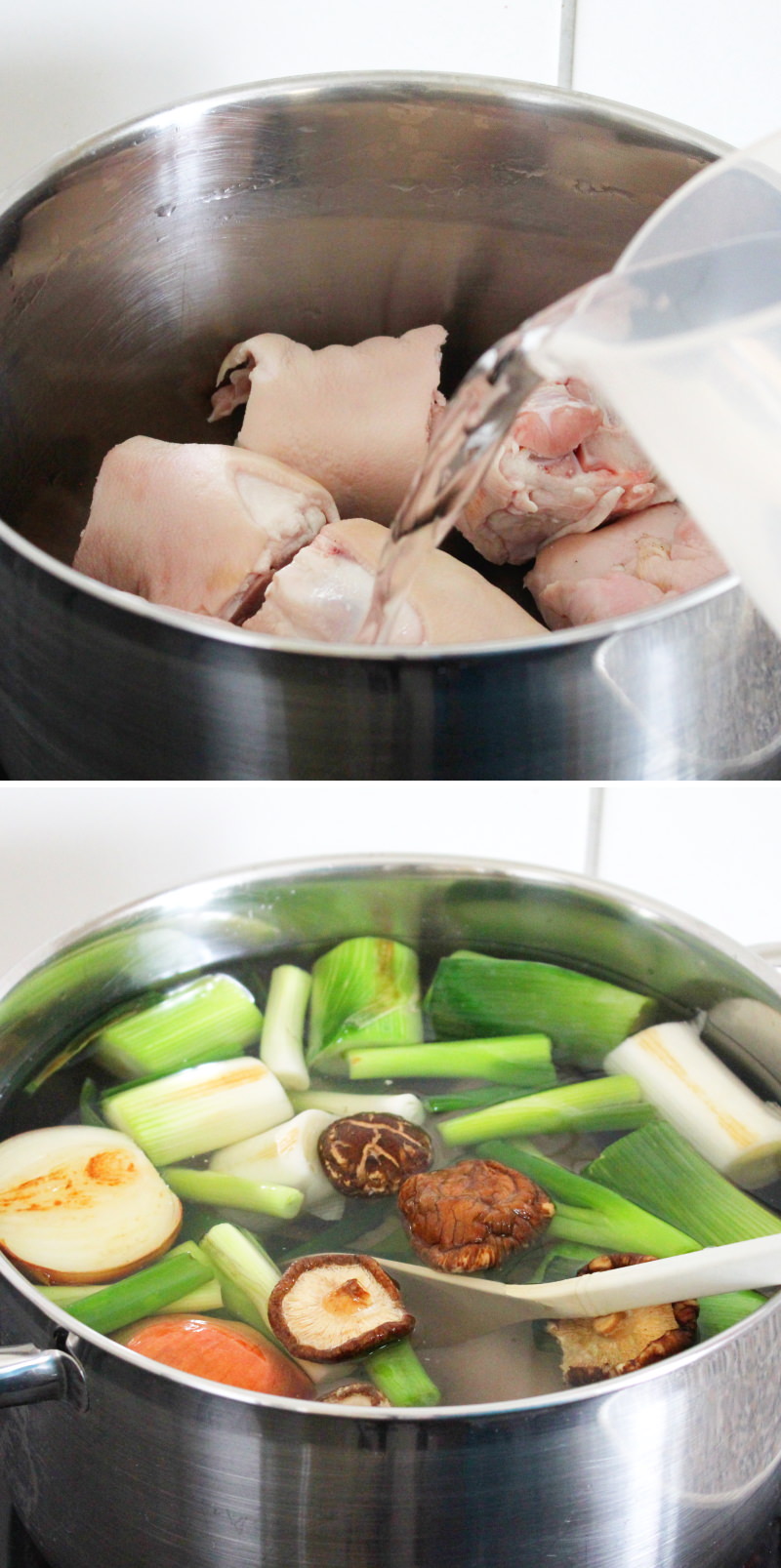
Take the shank out of the fridge, lift the meat out of the water and pour away the used water. Wash the saucepan and put the meat back in. Pour 2.4 litres of cold water over it and add the roasted vegetables and the Shiitake mushrooms.
Step 6 – Day 2
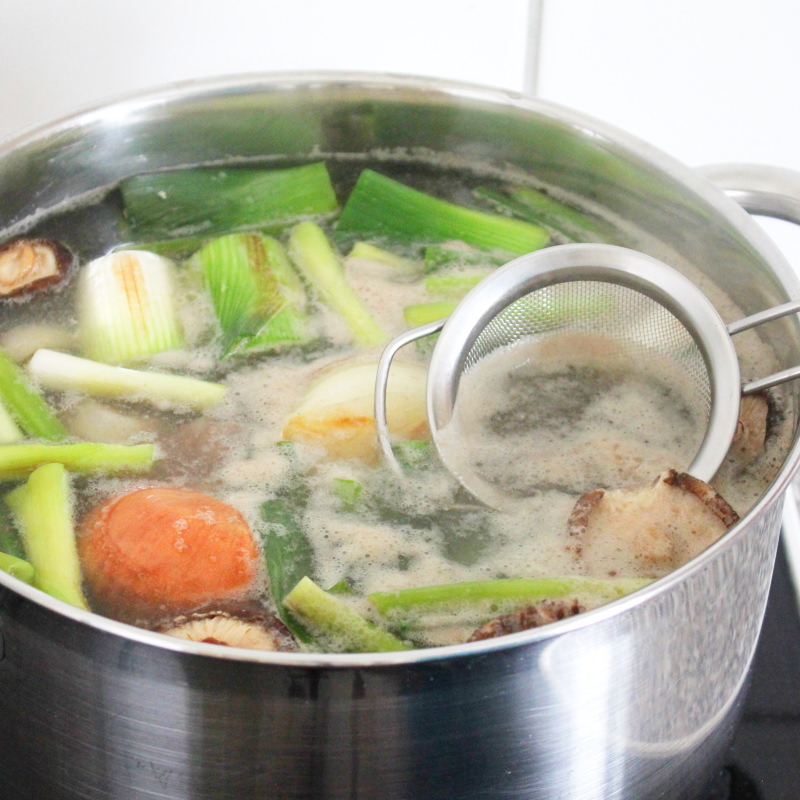
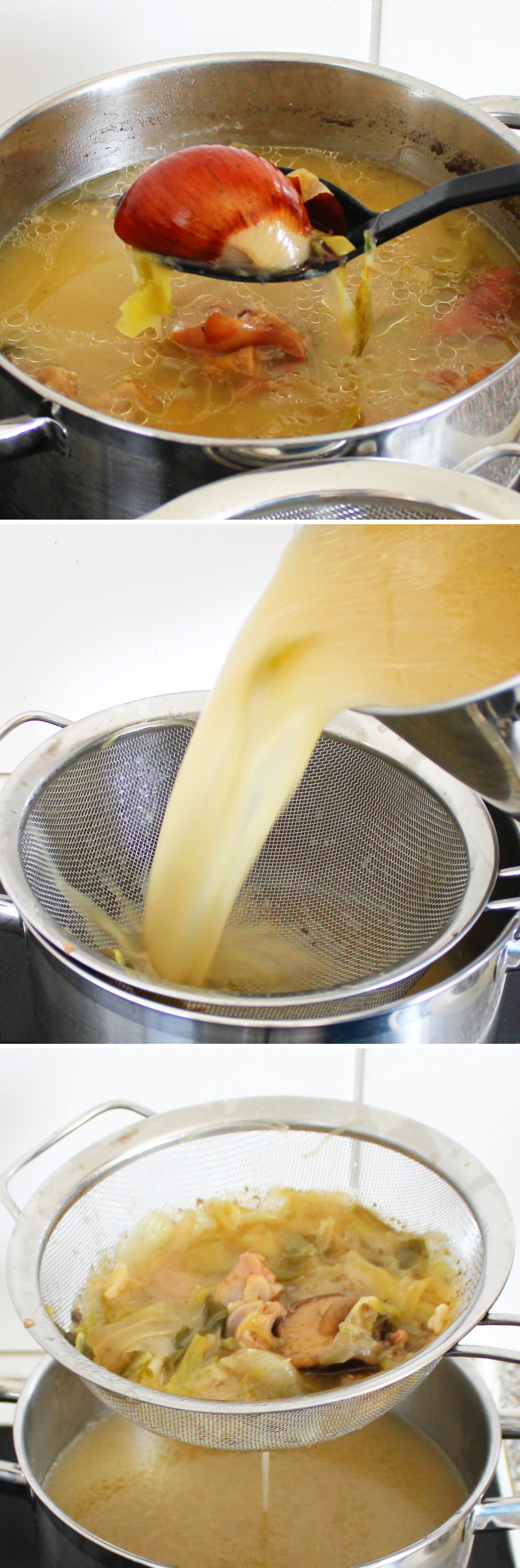
Bring the stock to the boil over a high heat, stirring occasionally. The foam that rises to the surface will be slightly brownish – remove this foam from the surface of the water using a fine sieve or a ladle and pour it away. Repeat this until the bubbles turn a pale whitish colour.
7. Step – Day 2
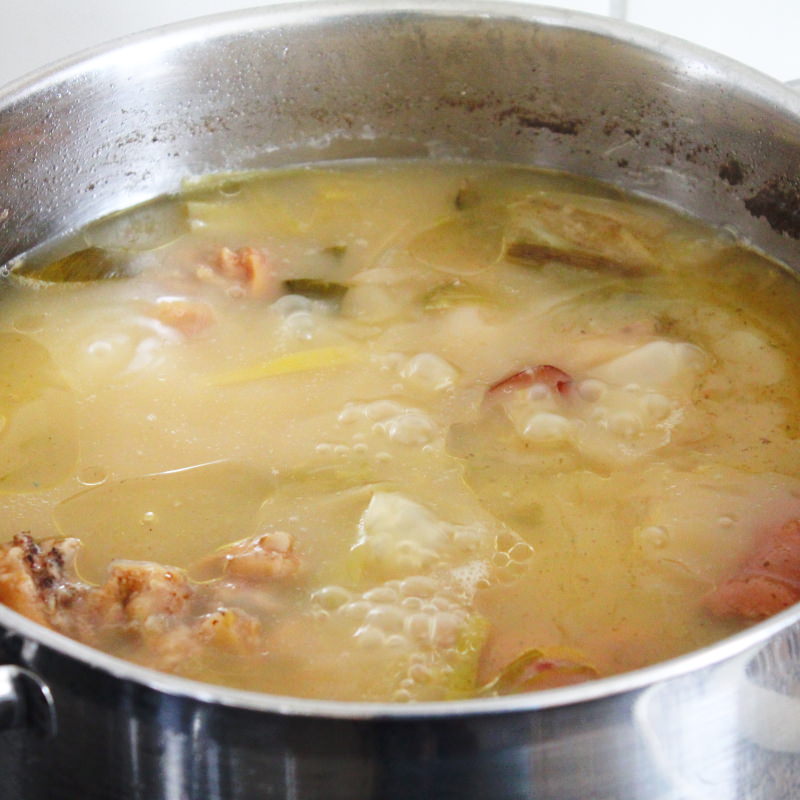
Then put the lids on and let the stock simmer gently over the lowest heat for 8 hours. Stir everything gently every hour and top up with enough fresh water to restore the original water level.
Step 8 – Day 2
Once the cooking time is up, turn off the heat and carefully remove the large pieces from the stock using tongs. Then strain the stock through a large, fine sieve into a second saucepan. The cooked ingredients can be discarded.
Step 9 – Day 2
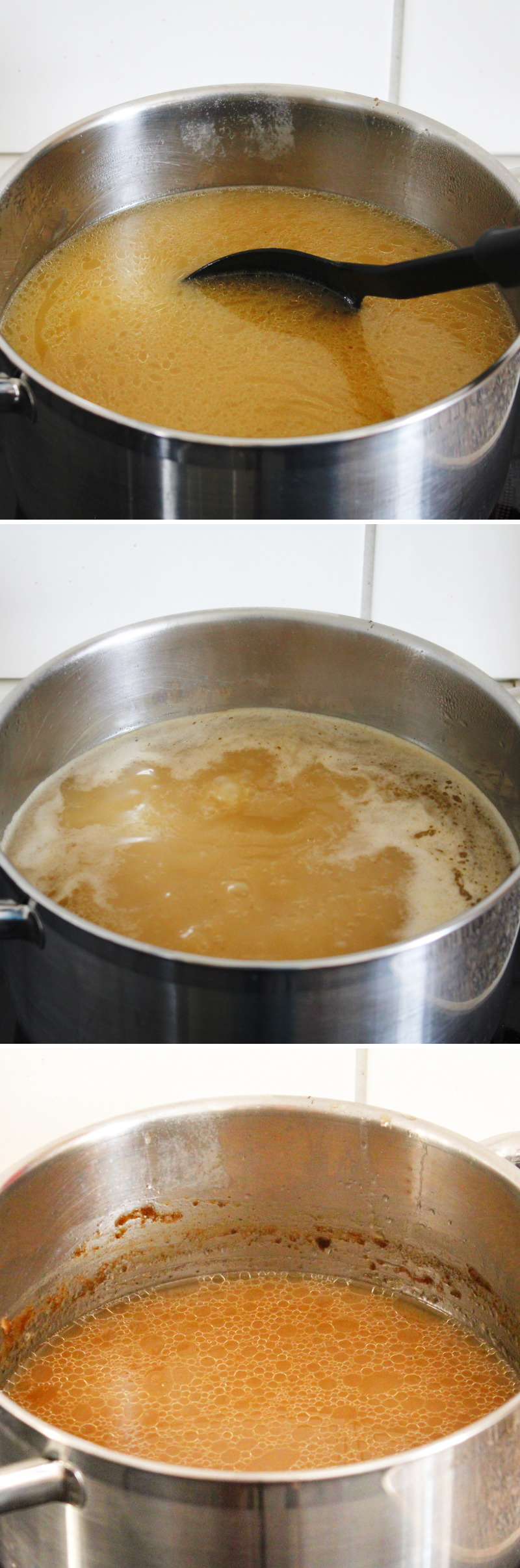
Now place the saucepan containing the strained stock back on the hob, bring to the boil and simmer uncovered for a further 2 hours. Do not add any water during this process; instead, allow the stock to reduce to about three-quarters of its original volume, stirring occasionally. This will yield about 1.5 litres of rich tonkotsu stock.
Once the cooking time is up, pour the stock into a sealable container and leave it to cool completely in the fridge overnight.
Step 10 – Day 3
The next day, take the box out. The Tonkotsu stock will now be heavily set, so it will look and feel like a pudding.
To turn the Tonkotsu jelly into a stock for 2 portions of noodle soup, pour some of it (500 ml of the jelly is enough for 2 portions of noodle soup!) from the box into a saucepan and stir in 500 ml of fresh water. Then heat the contents of the saucepan over a medium heat and bring to the boil.
The second half can easily be frozen and later thawed and used in the same way.
Step 11 – Day 3
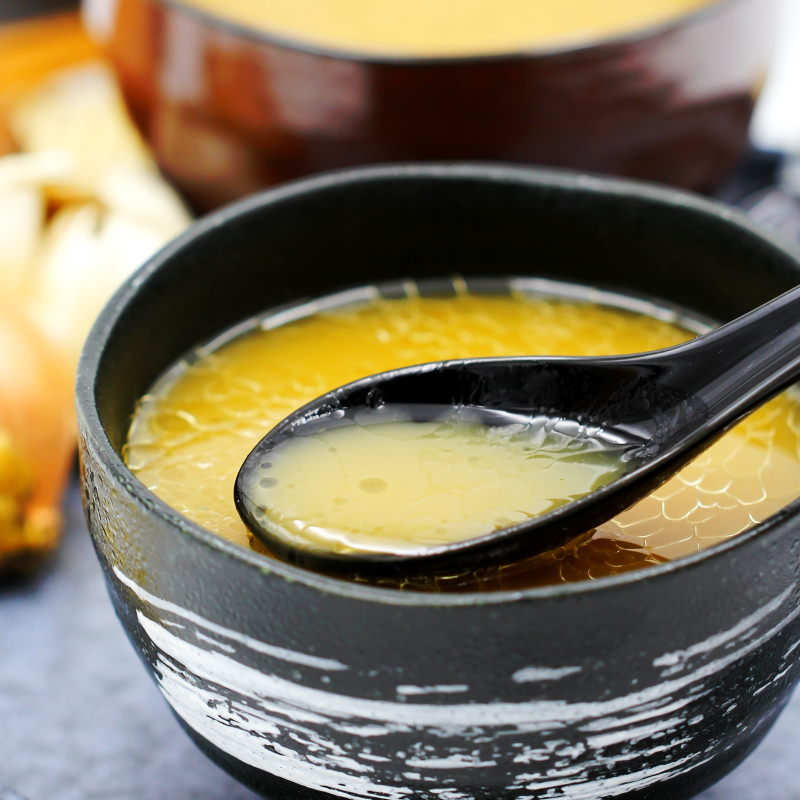
The authentic Japanese tonkotsu stock is now ready and can be used to make delicious homemade noodle soups. Ready – Itadakimasu!

Fancy trying out some more delicious Ramen recipes? Here you’ll find my most popular recipes for Japanese Ramen noodle soups:
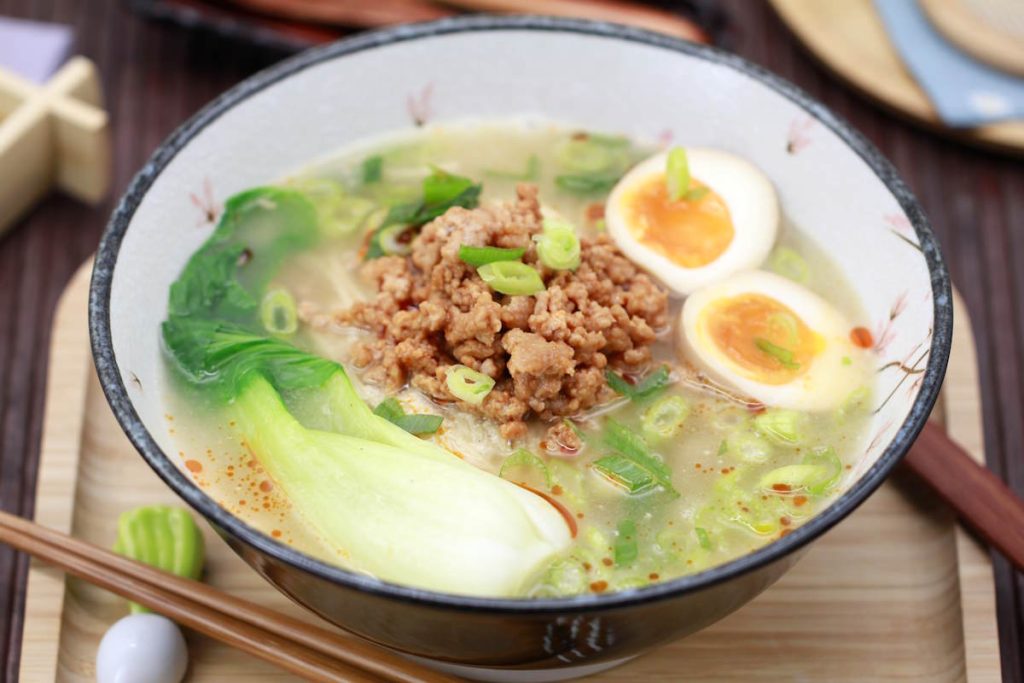
Make your own Tantanmen: creamy sesame Ramen with spicy Miso minced meat, pak choi & ramen eggs
Tantanmen is a Ramen soup for those who like it creamy but not heavy. A…
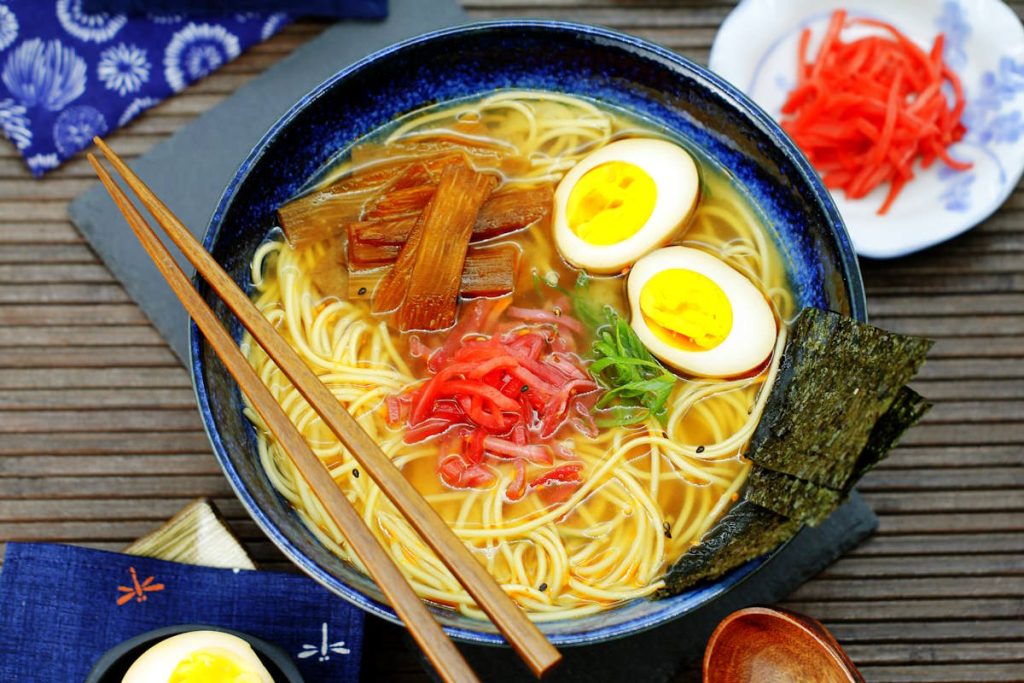
A bowl full of happiness: Miso Ramen with 7 varied toppings – vegetarian, spicy & really easy
Immerse yourself in the world of flavours of Japanese cuisine with our Happiness Bowl! It’s…
10-minute Shoyu Ramen with bamboo shoots & Ramen eggs – for quick meals
My 10-minute Shoyu ramen: Wavy ramen noodles, served in a rich and sinfully delicious tsuyu…
Hiyashi Chuka – cold Ramen salad with yuzu soy sauce & sesame dressing
Hiyashi Chuka is a summery ramen noodle dish packed with fresh garden vegetables. It’s a…
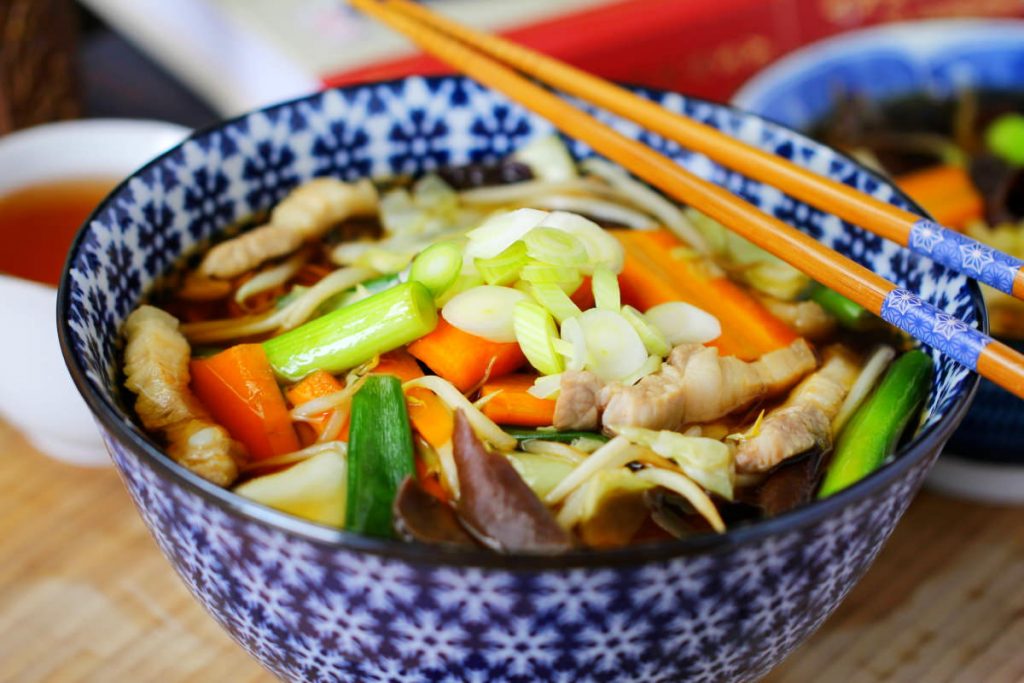
Tan-Men – Ramen noodle soup with stir-fried vegetables & pork belly
Tan-Men is a Japanese Ramen noodle soup with stir-fried pork belly and crisp vegetables. It’s…
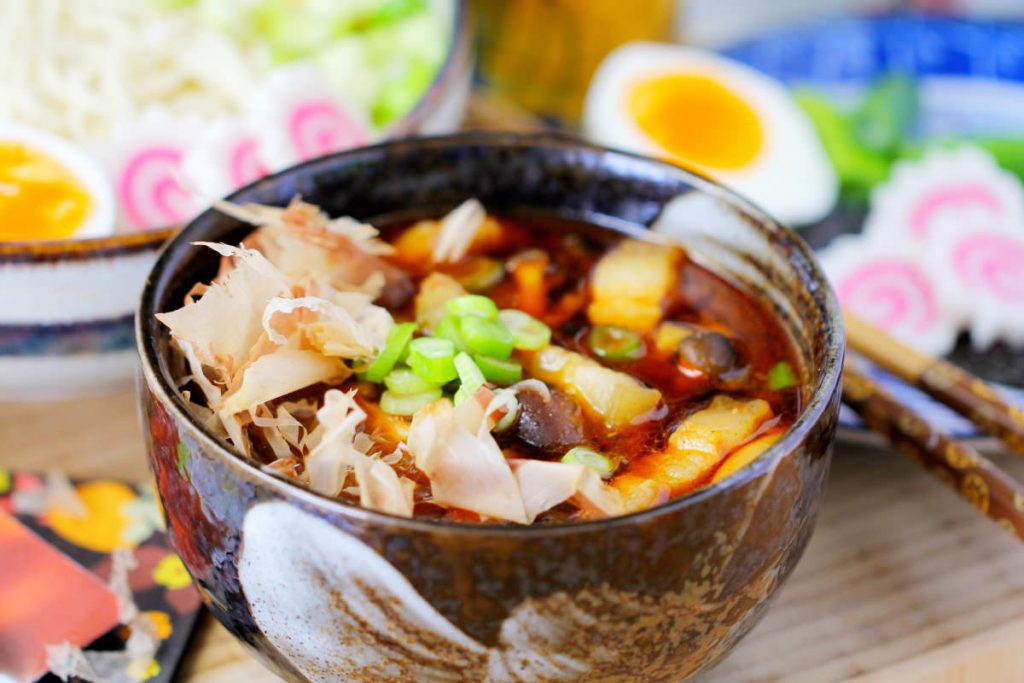
Tsukemen: Make your own cold ramen noodles with hot dipping sauce
Tsukemen is one of the most popular ramen recipes in Japan, particularly during the hot…
Has anyone tried this recipe yet? Let me know in the comments – I’m really looking forward to hearing from you.