
Language:


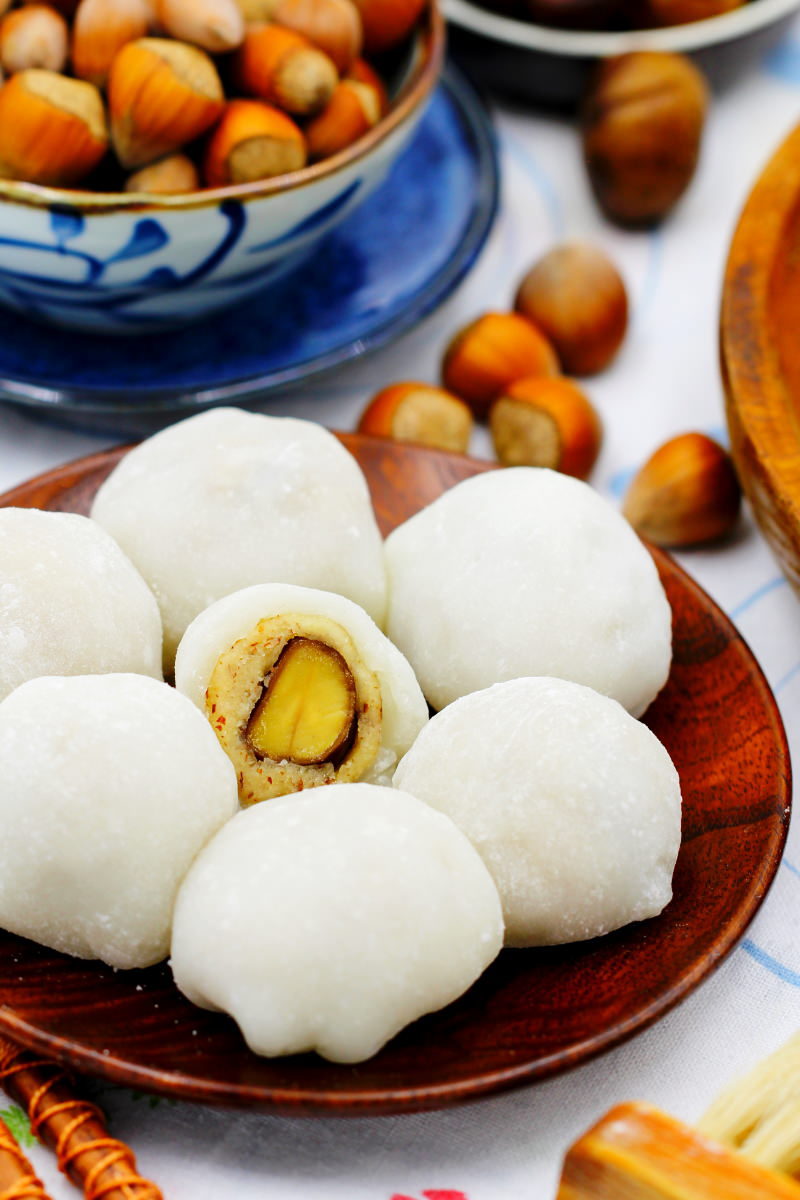
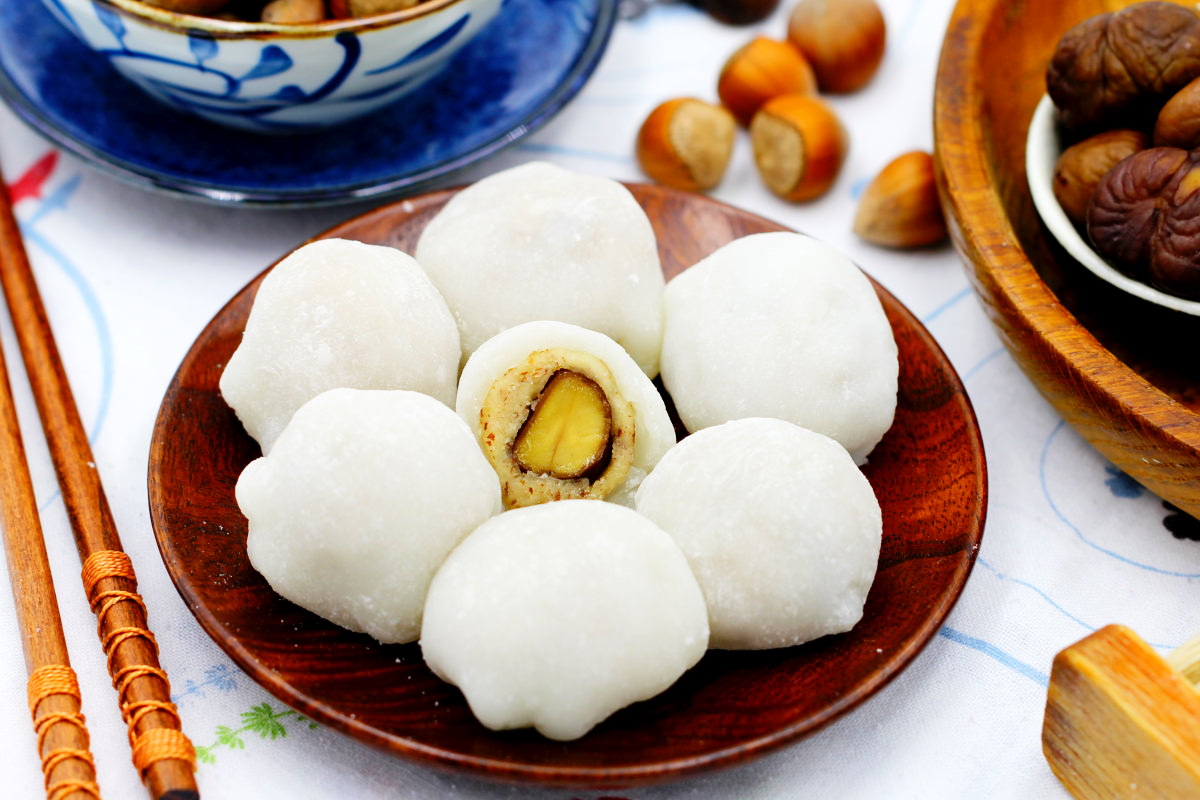
With these simple instructions, you can easily make your own Kuri Mochi with a heavenly filling of whole chestnuts and soft marzipan. In Japan, boiled chestnuts are particularly popular for making delicious sweet treats during the colder autumn months – and today I’m going to show you one of my favourite recipes for Japanese autumnal glutinous rice cakes!
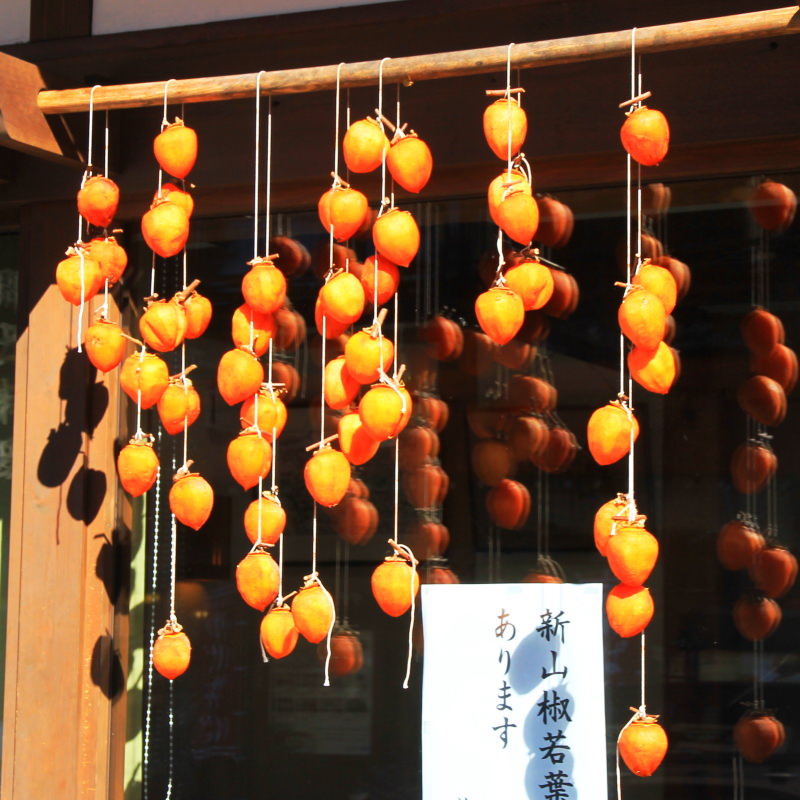
The year is slowly winding down, the hot summer days are behind us and a display of beautiful colours lies ahead… As summer gives way to autumn, Japan begins to cool down and offers the perfect weather for long walks in the fresh air.
From mid-November to early December, the trees take on vibrant shades of red, orange and yellow. It is this combination of cool weather and stunning scenery that makes autumn one of the most popular seasons for travelling to Japan.
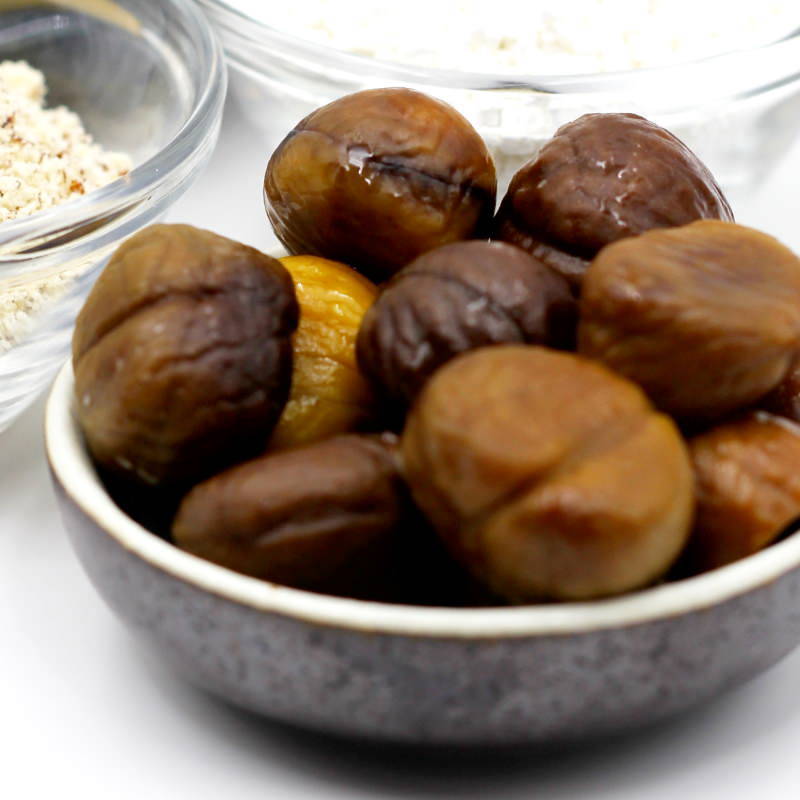
And this is also the best time of year to enjoy chestnuts in Japan. Boiled chestnuts are known as ‘kuri’ in Japan. Kuri are one of the first crops to have been cultivated in Japan – some even claim that chestnuts were cultivated before rice! Japanese chestnuts are an essential ingredient in many Japanese dishes, in both sweet and savoury recipes.
Tip: Fresh chestnuts are readily available in Asian shops or supermarkets, particularly during the autumn months. With a bit of luck, you can also find ready-to-cook chestnuts in shops all year round!
As promised, today I’m sharing one of my favourite recipes for Mochi with cooked chestnuts, Japanese-style. After all, we still only need a few ingredients to make Kuri Mochi!
So, for the filling, you’ll also need to buy marzipan and ground almonds. Using marzipan and ground almonds, we’ll whip up a sweet dough coating in no time at all, which we’ll use to wrap around the chestnuts. This way, the autumnal filling of halved chestnuts combines perfectly with the typical Japanese glutinous rice flour dough!
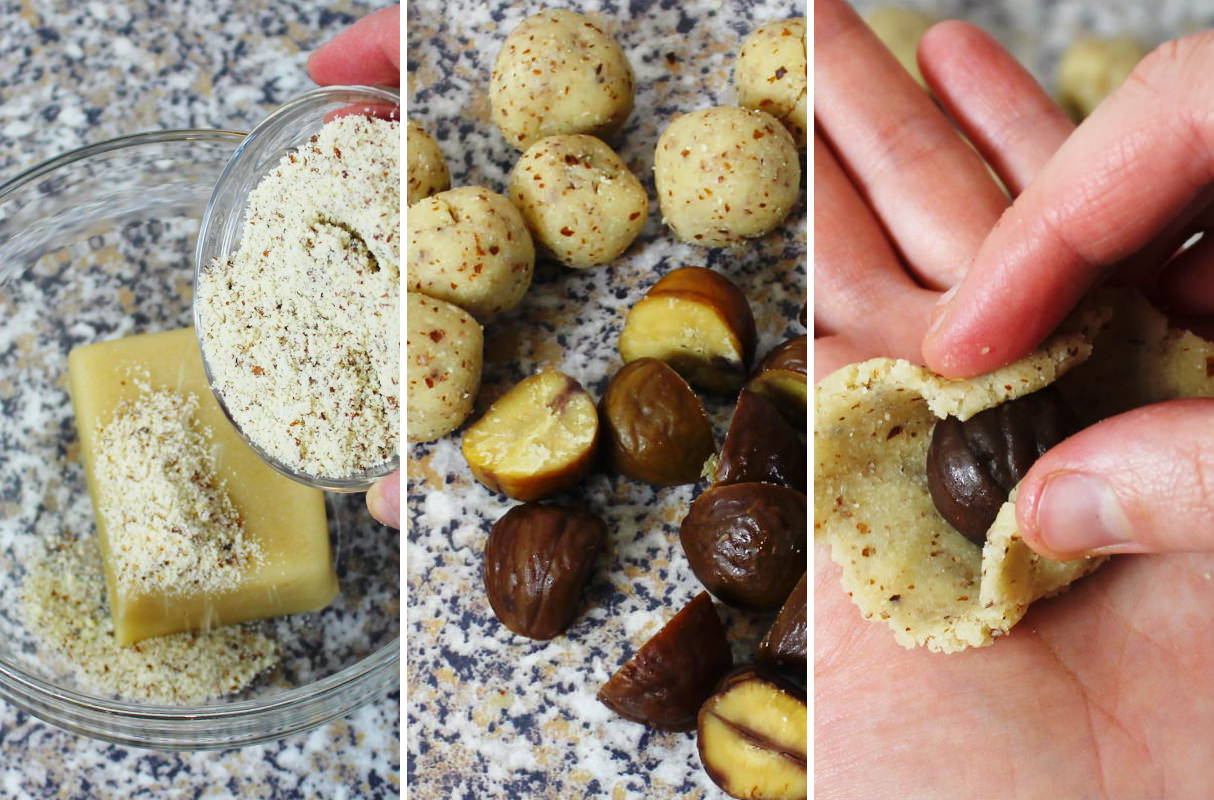
Tip: You can also use a sweetened bean paste, known as anko, for the sweet coating. Click here for the recipe for this traditional Japanese adzuki bean paste! Alternatively, you can buy it ready-to-use ;).
The glutinous rice flour dough is the essential core ingredient for Japanese Mochi. Japanese glutinous rice cakes are made by steaming glutinous rice that has been ground into flour. I always use shiratamako, i.e. glutinous rice flour (im Shop ansehen) .
It should also work with another type of glutinous rice flour, but be careful – please don’t use just any ‘normal’ rice flour! It absolutely must be glutinous rice flour for the Mochi to turn out right.
TOP RECOMMENDATION
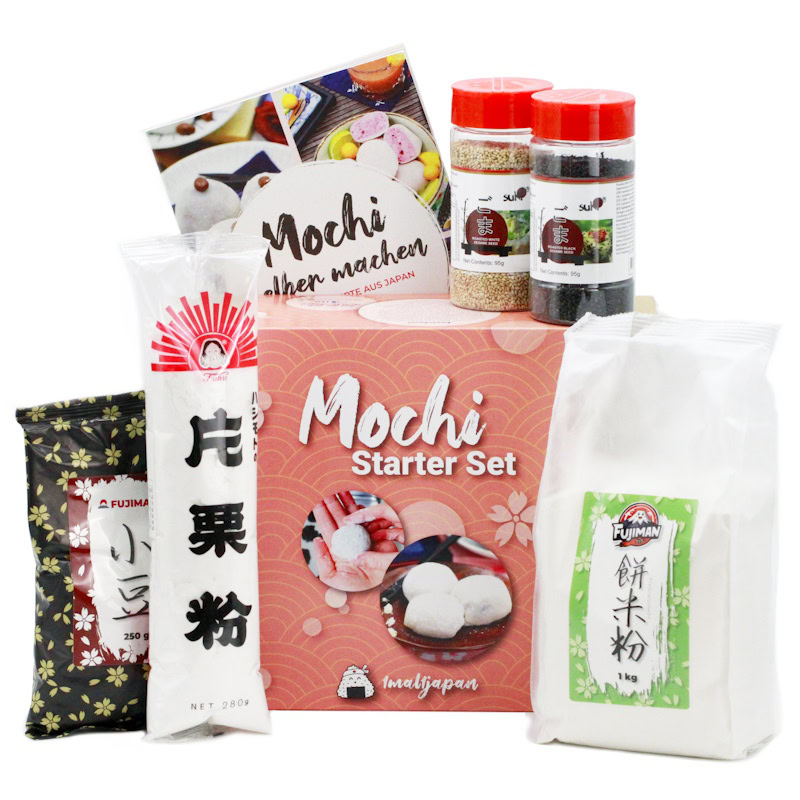
Mochi Starter Set | Klebreiskuchen selber machen, vegan
6-tlg. Kochset für 4 große Portionen Klebreiskuchen, inkl. Rezeptheft, glutenfrei & vegan. Mit dem Mochi Kochset stellst du japanische Reiskuchen ganz einfach selbst her –…
In stock
To make mochi dough from the glutinous rice flour, we’ll also need ordinary white sugar and water – yes, that’s all. Mix these three ingredients in a bowl and stir until a dough forms. At first, the mixture will be very stiff, almost lumpy. But please don’t let that put you off! Just keep stirring with a spoon. The sugar will slowly dissolve and the dough will become runny again after a short while. If the dough reminds you of icing, it’s ready.
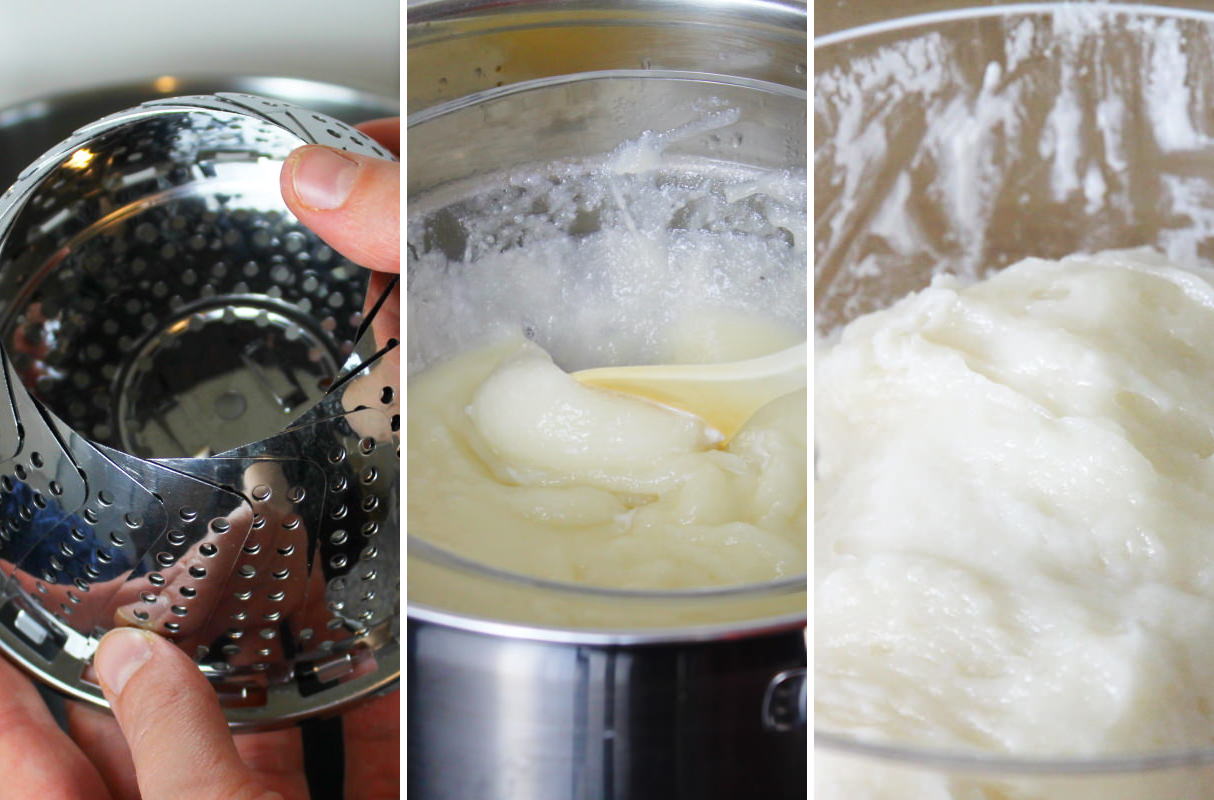
There are all sorts of different methods for cooking mochi dough. In my recipe for sesame mochi here, I’ll show you how to cook it using a traditional steamer insert in a saucepan.
You can also cook the dough in a non-stick frying pan or in the microwave. It’s best to follow my simple instructions in the recipe for mochi dough.
Either way, once cooked, we’ll roll out the dough and cut it to size.
Once the Mochi dough is cooked, we’ll roll it out and cut it to size. Then we’ll carefully lift out each piece of dough and place a portion of the filling in the centre of it.
Now, using our fingertips, we press two opposite corners of the dough firmly together in the centre over the filling, then fold the other two corners together in the same way. The filling inside should be completely enclosed by the mochi dough.
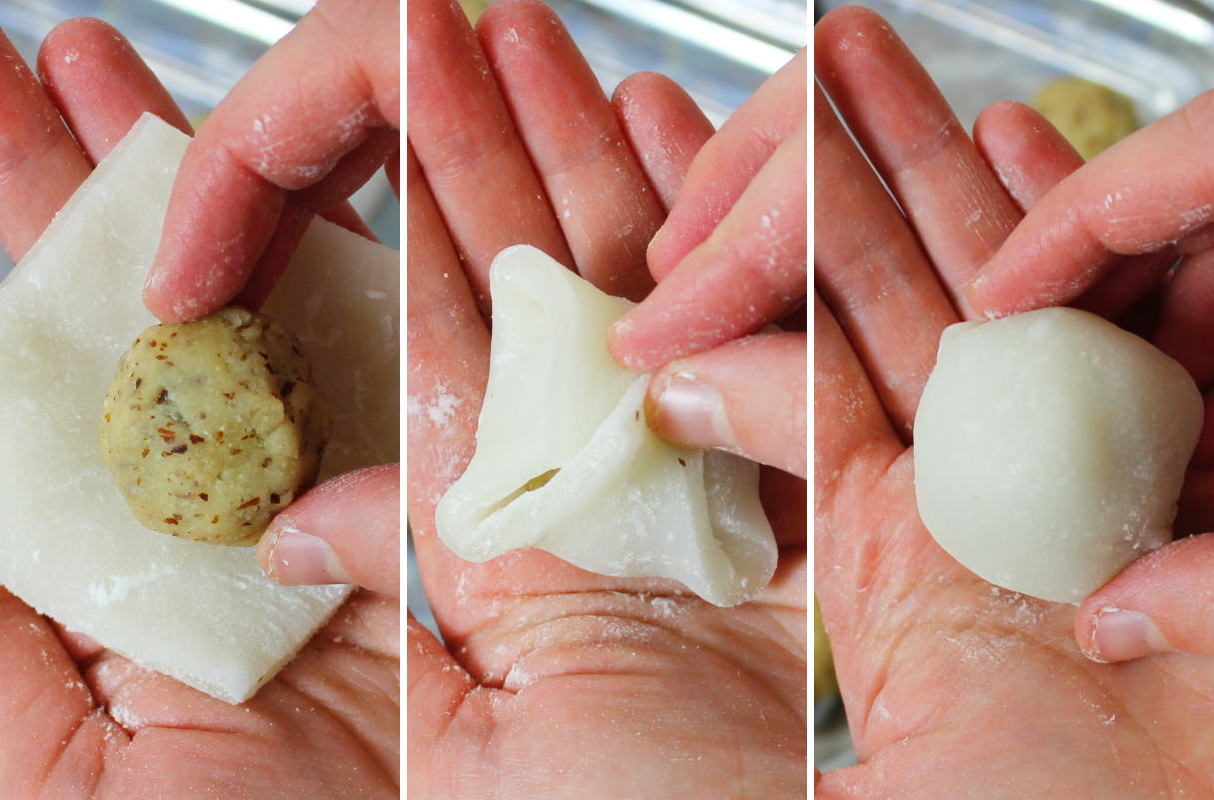
Tip: The point where all the folds meet is the underside of the Mochi – so the appearance isn’t particularly important. The main thing is that the Mochi dough on the top doesn’t tear!
Once finished, dust all the Mochi lightly on all sides with a little cornflour using a brush, then arrange them attractively on a large serving platter.
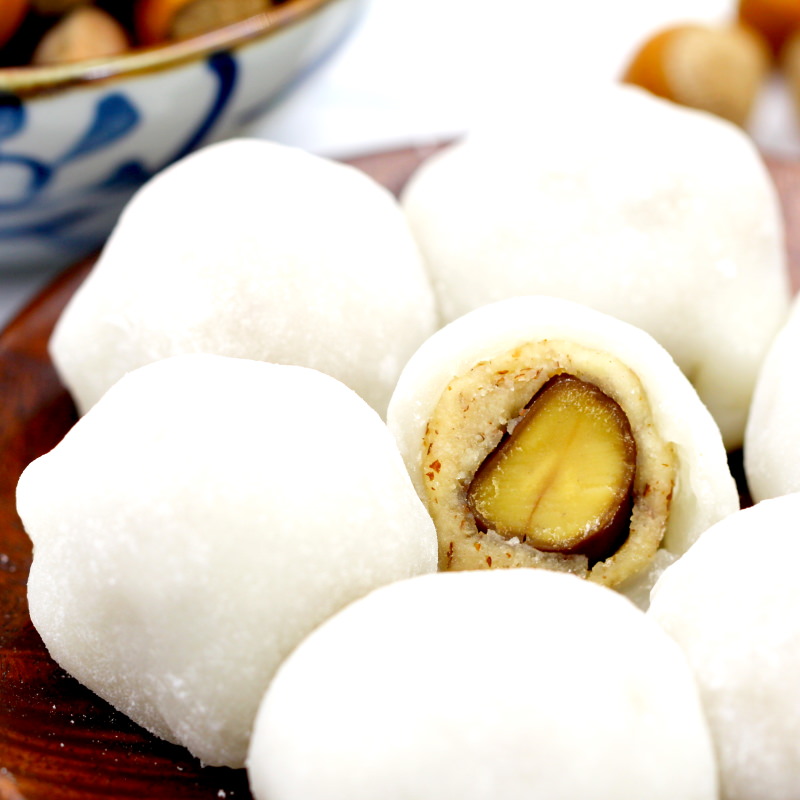
Would you like to find out more about these irresistibly sweet Mochi? Then let yourself be enchanted by the world of Japanese glutinous rice cakes here: → Make Mochi yourself: 7 recipes that really work!
By the way, Mochi are best eaten on the same day they’re made, as the glutinous rice dough dries out quickly and you’ll miss out on all the enjoyment. So do tuck in:
Kuri Mochi
Makes 12 | 45 minutes | 302 kcal
🖨️ Print PDF 📌 Save this pinWith these simple instructions, you can easily make your own Kuri Mochi with a heavenly filling of chestnuts and marzipan. In Japan, boiled chestnuts are particularly popular for making delicious sweet treats during the colder autumn months – and today I’m going to show you one of my favourite recipes for Japanese glutinous rice cakes!
Ingredients (12 pieces = 4 portions)
150 g glutinous rice flour (im Shop ansehen)
100 g sugar
180 ml water
100 g marzipan (raw)
25 g ground almonds
100 g chestnuts (ready to cook) = 6 large, cooked chestnuts
100 g Katakuriko (potato starch) (im Shop ansehen)
Useful equipment:
Steamer (im Shop ansehen)
Method (45 minutes)
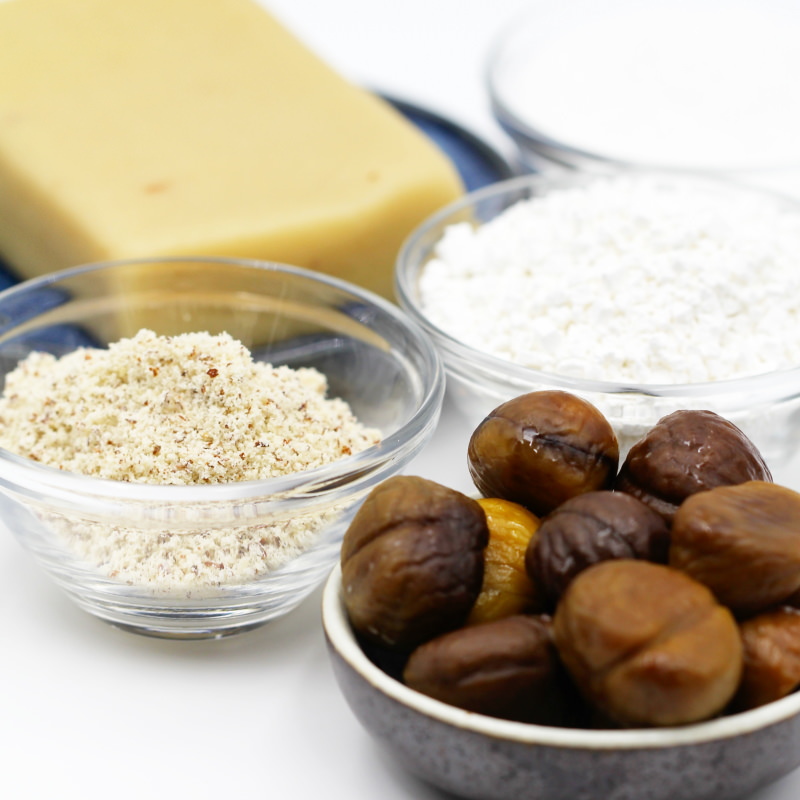
Step 1
Gather the ingredients for the autumnal Kuri Mochi with chestnuts and marzipan.
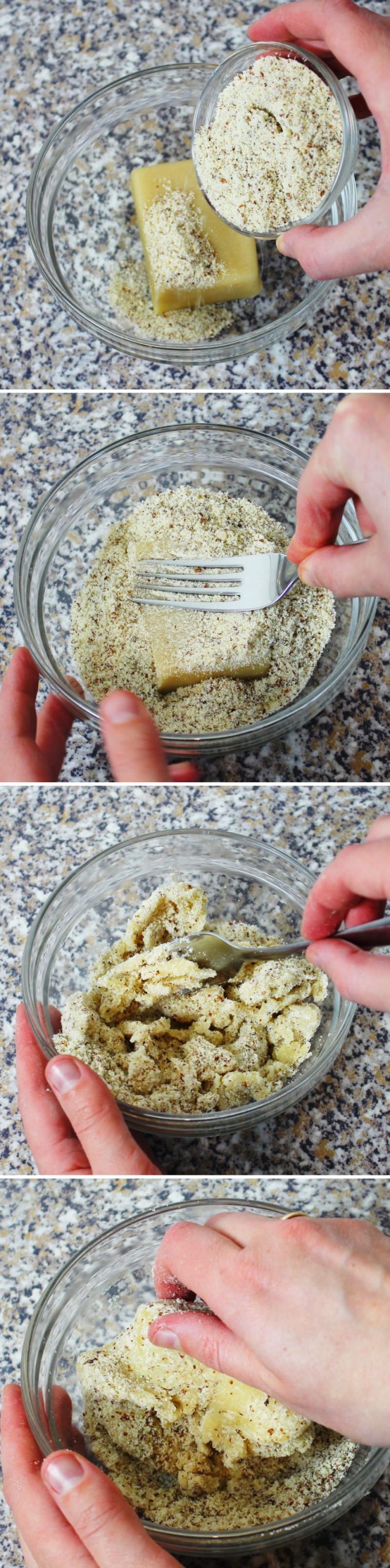
Step 2
First, we’ll make the filling: to do this, place the marzipan and the almond flour into a bowl. Knead both together, first with a fork and then with your hands.
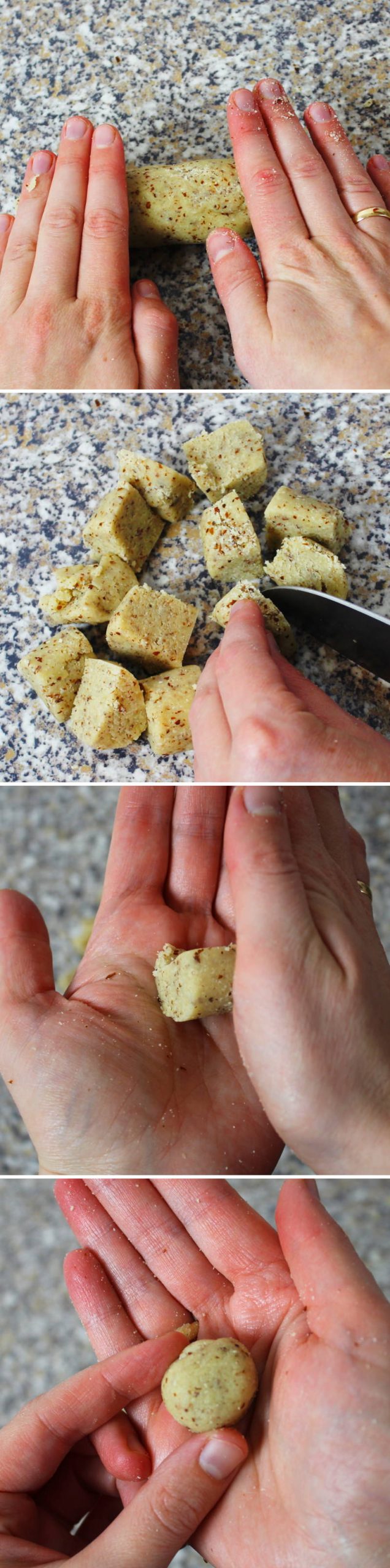
Step 3
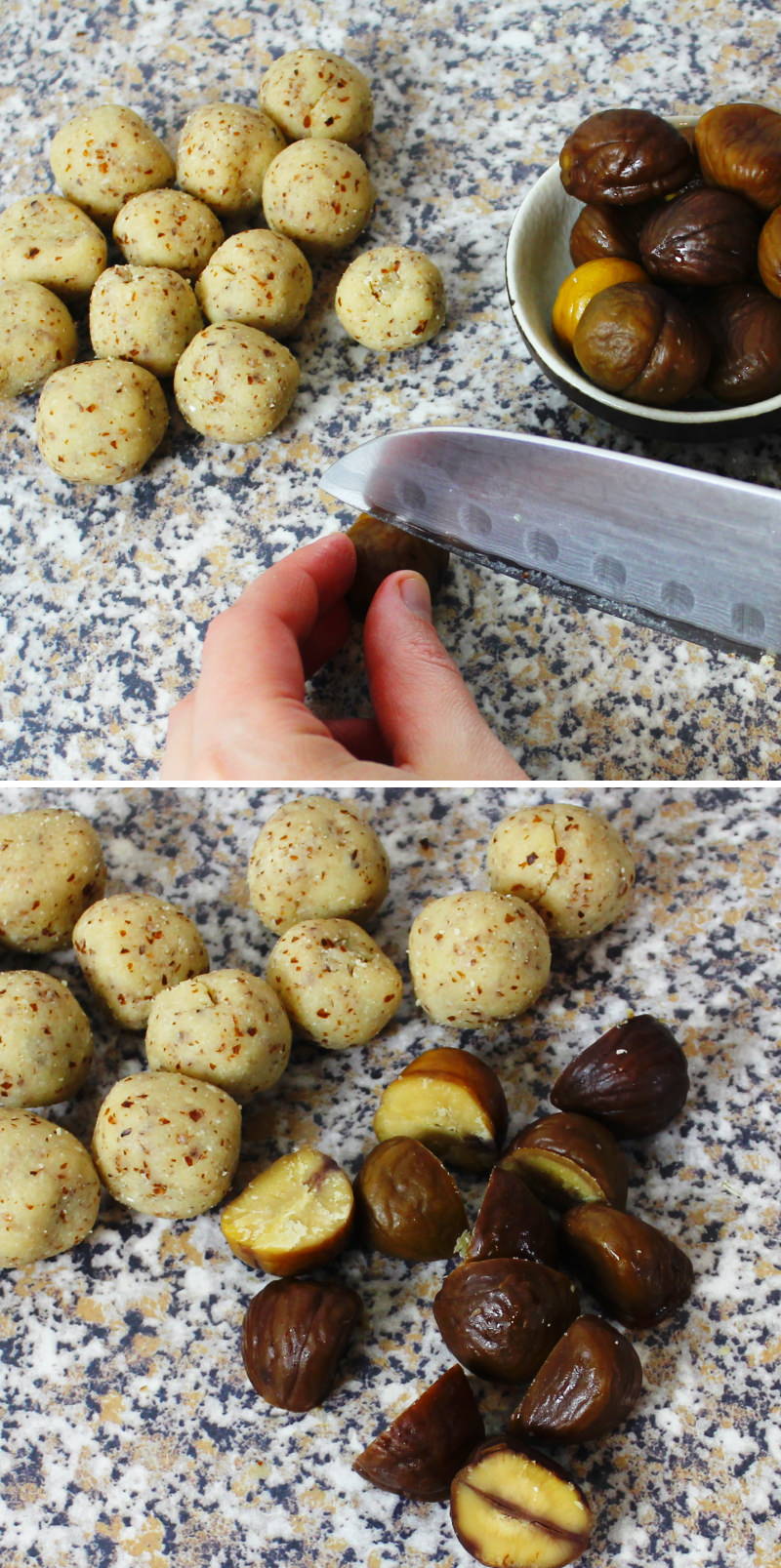
Shape the marzipan and ground almond mixture into a long roll and cut it into 12 roughly equal pieces with a knife. Then shape each piece into small balls between the palms of your hands.
Step 4
Now cut each of the 6 large chestnuts in half and set them aside together with the marzipan and almond balls.
Step 5
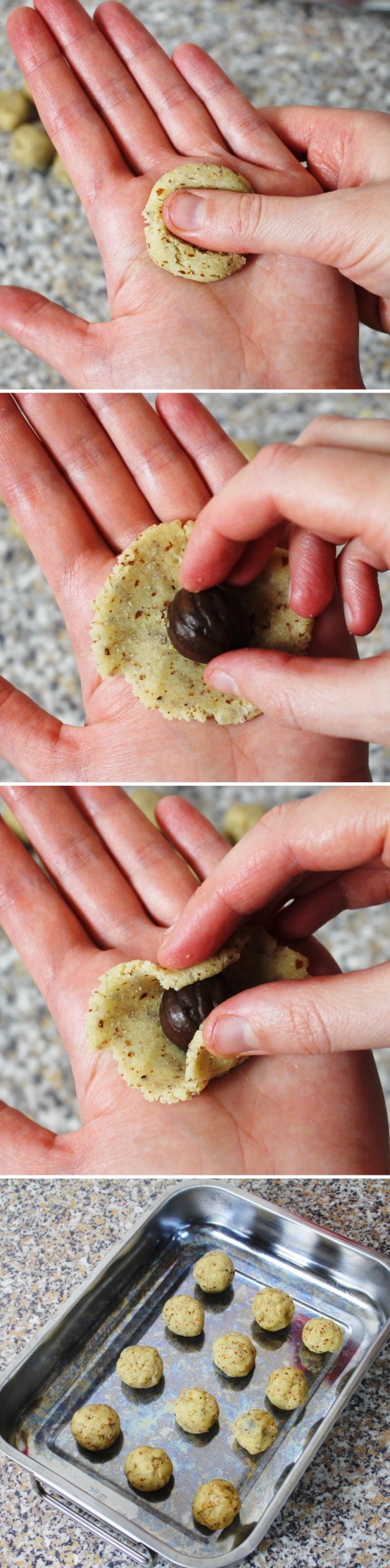
Now flatten a marzipan ball into a circle in the palm of your hand. Place a chestnut half in the centre and completely enclose it with the marzipan. Shape the ball into a round shape once more between your palms.
In this way, make 12 balls for the marzipan and chestnut filling.
Step 6
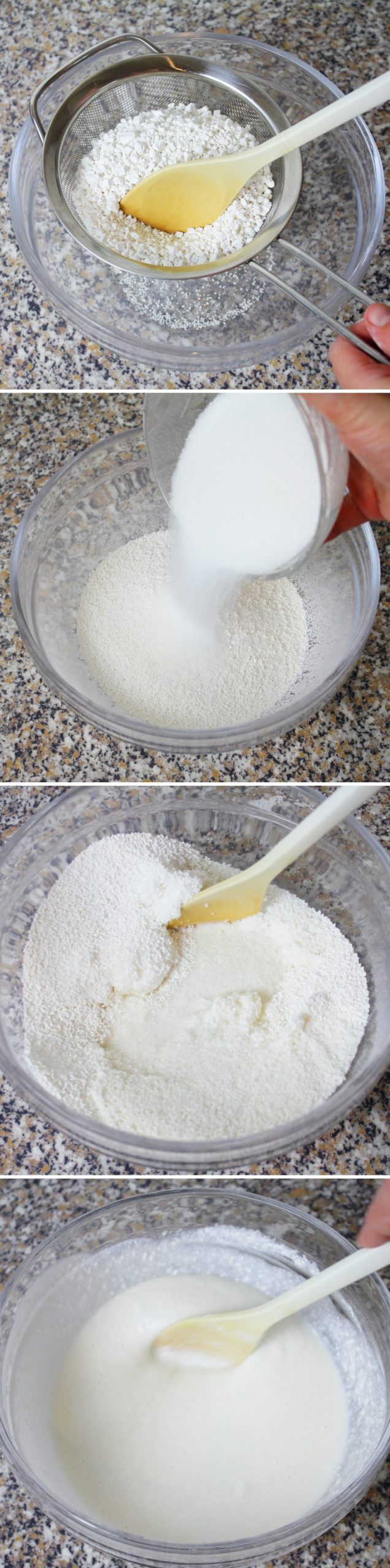
Now we move on to the mochi dough: Sift the glutinous rice flour through a sieve into a medium-sized bowl, add the sugar and mix thoroughly with the water.
Tip: To begin with, the mixture will be very stiff, almost lumpy. Don’t let that put you off! Just keep stirring with a spoon. The sugar will slowly dissolve and the mixture will become runny again after a while.
If the mixture reminds you of icing, it’s ready.
Step 7
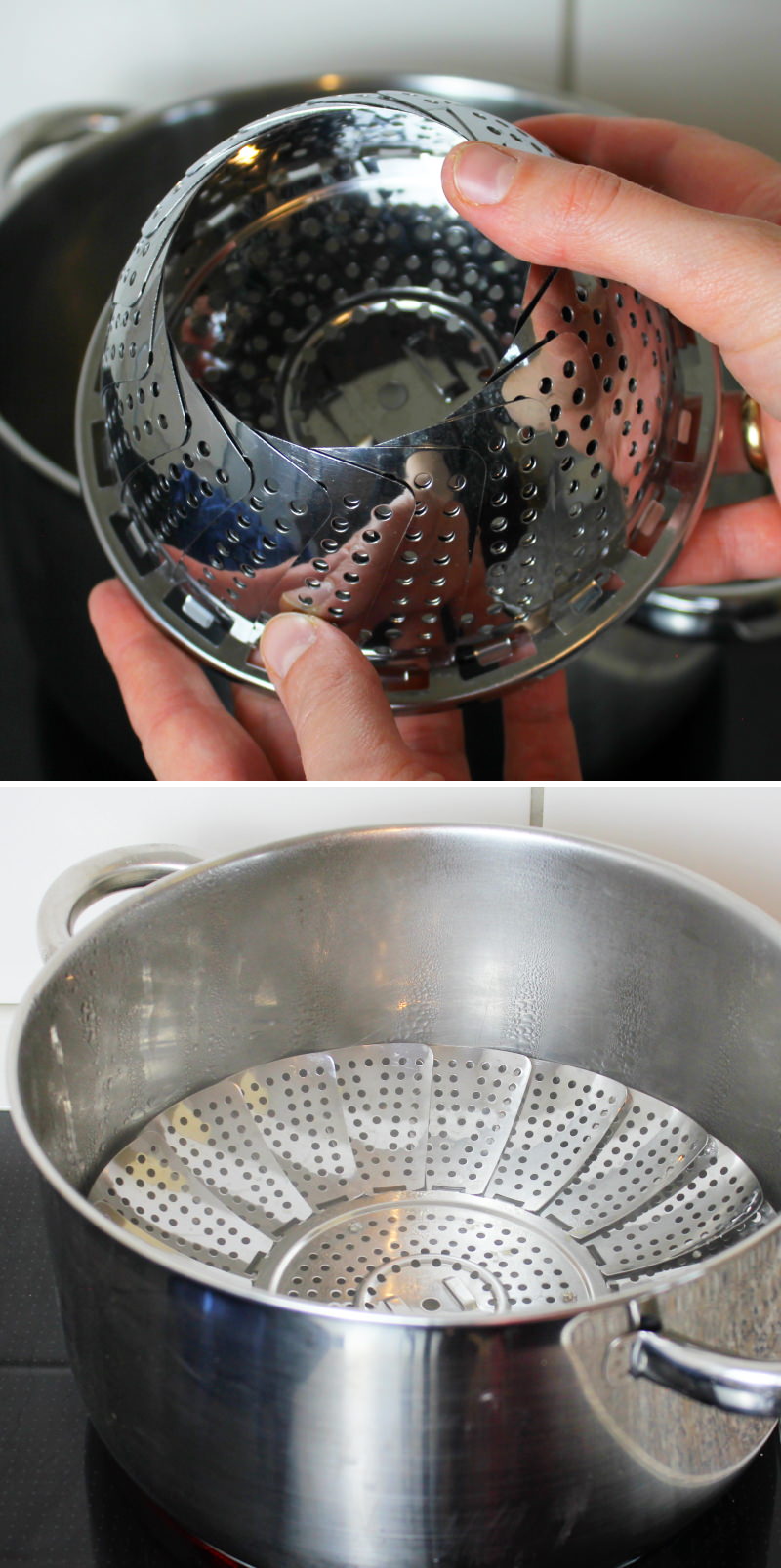
Fill a large saucepan (the medium-sized bowl from the previous step should fit comfortably inside) with about two fingers’ depth of water and place a steamer inside (only the legs of the steamer should be in the water). Bring the water to the boil.
Tip: To make the dough in a pan or in the microwave, follow my basic recipe for Mochi dough!
Step 8
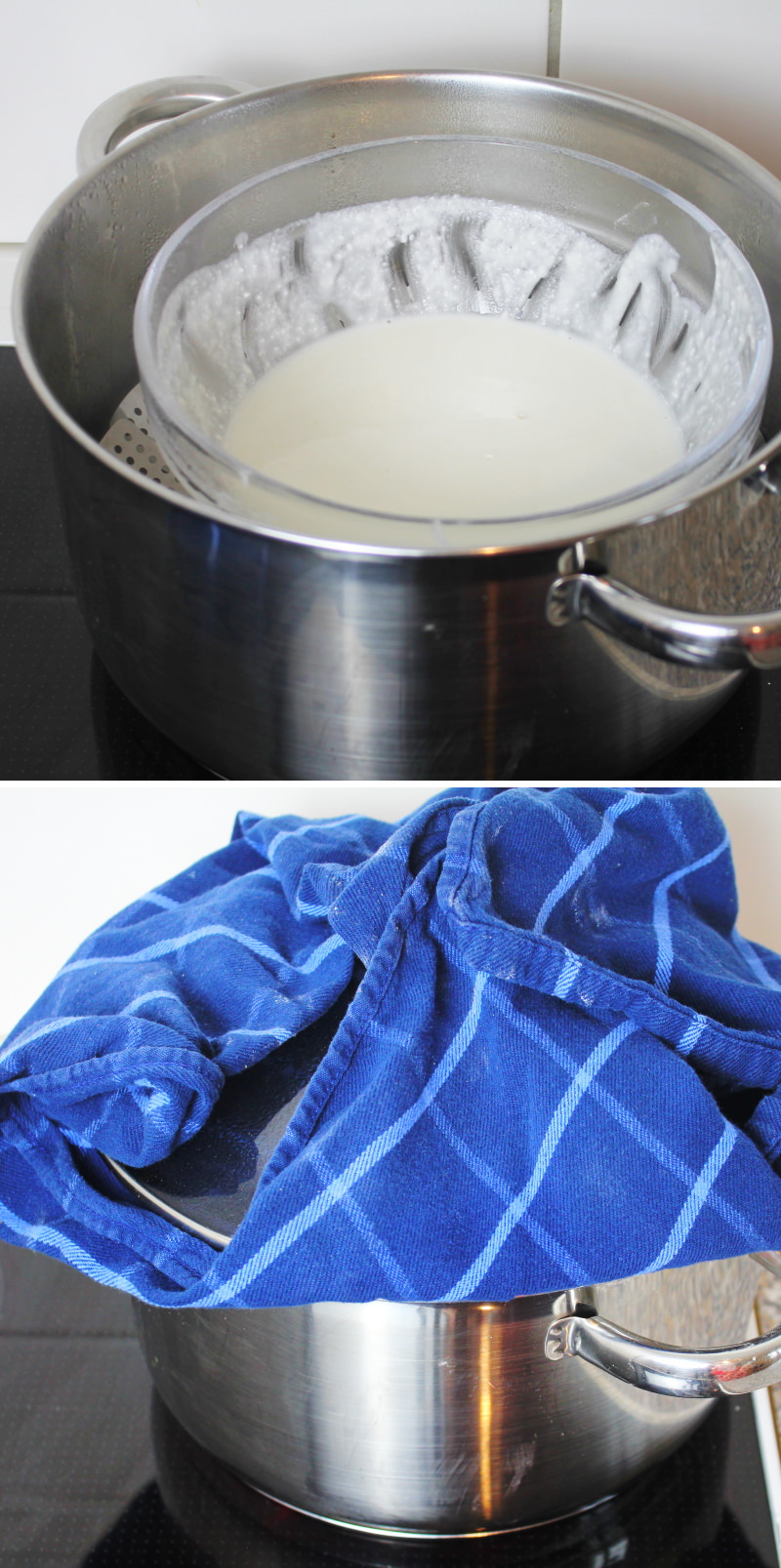
Place the bowl containing the dough into the steamer. Wrap the lid of the pot with a kitchen towel (to prevent condensation from dripping into the dough), fold the ends of the towel upwards and place the lid on the pot. Reduce the heat so that the water beneath the steamer is just simmering very gently. Steam the batter for 15 minutes.
Step 9
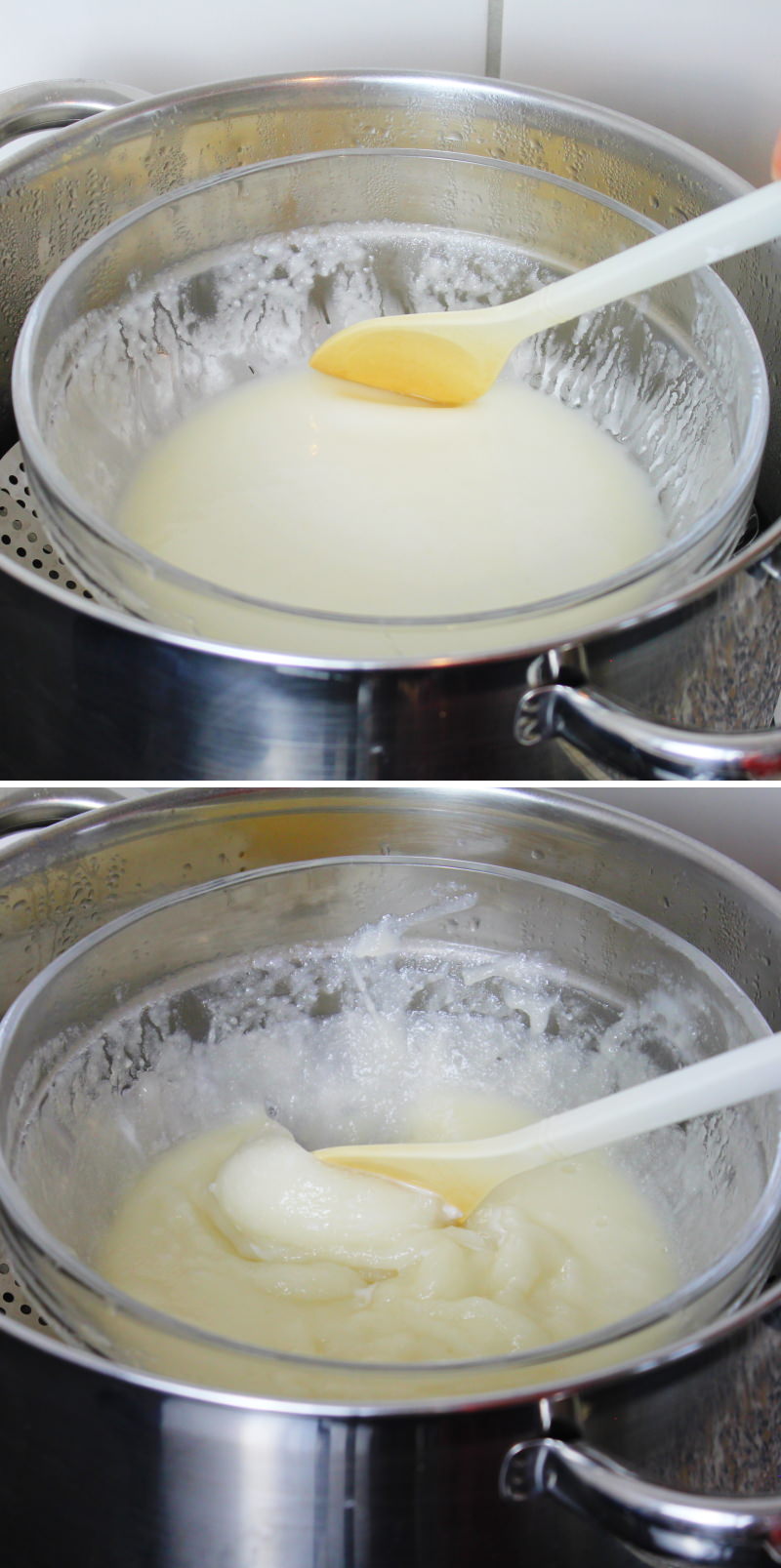
Halfway through the steaming time, remove the lid, stir the dough with a slightly damp spoon and replace the lid, including the tea towel. Caution: Risk of burns – please use oven gloves or pot holders!
Step 10
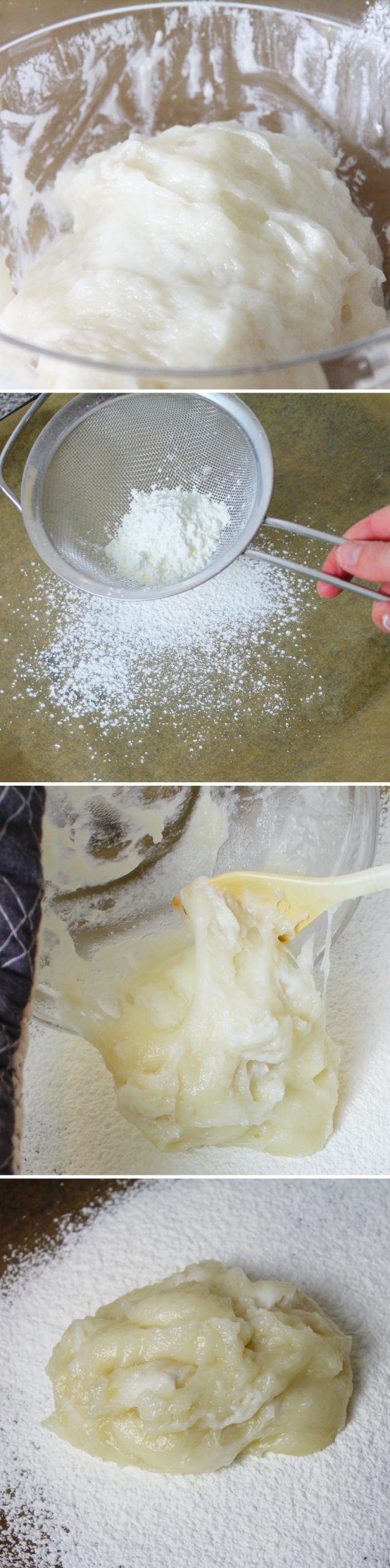
Shortly before the end of the cooking time Line a baking tray with baking paper and dust generously with cornflour using a sieve. Then, as soon as the batter is ready (it should be a white, thick, cohesive mixture that is no longer runny but still slightly moist), remove the bowl from the steamer. Using a spoon, transfer the dough from the bowl directly into the cornflour so that it doesn’t stick. Leave to cool briefly (for about 5 minutes).
Step 11
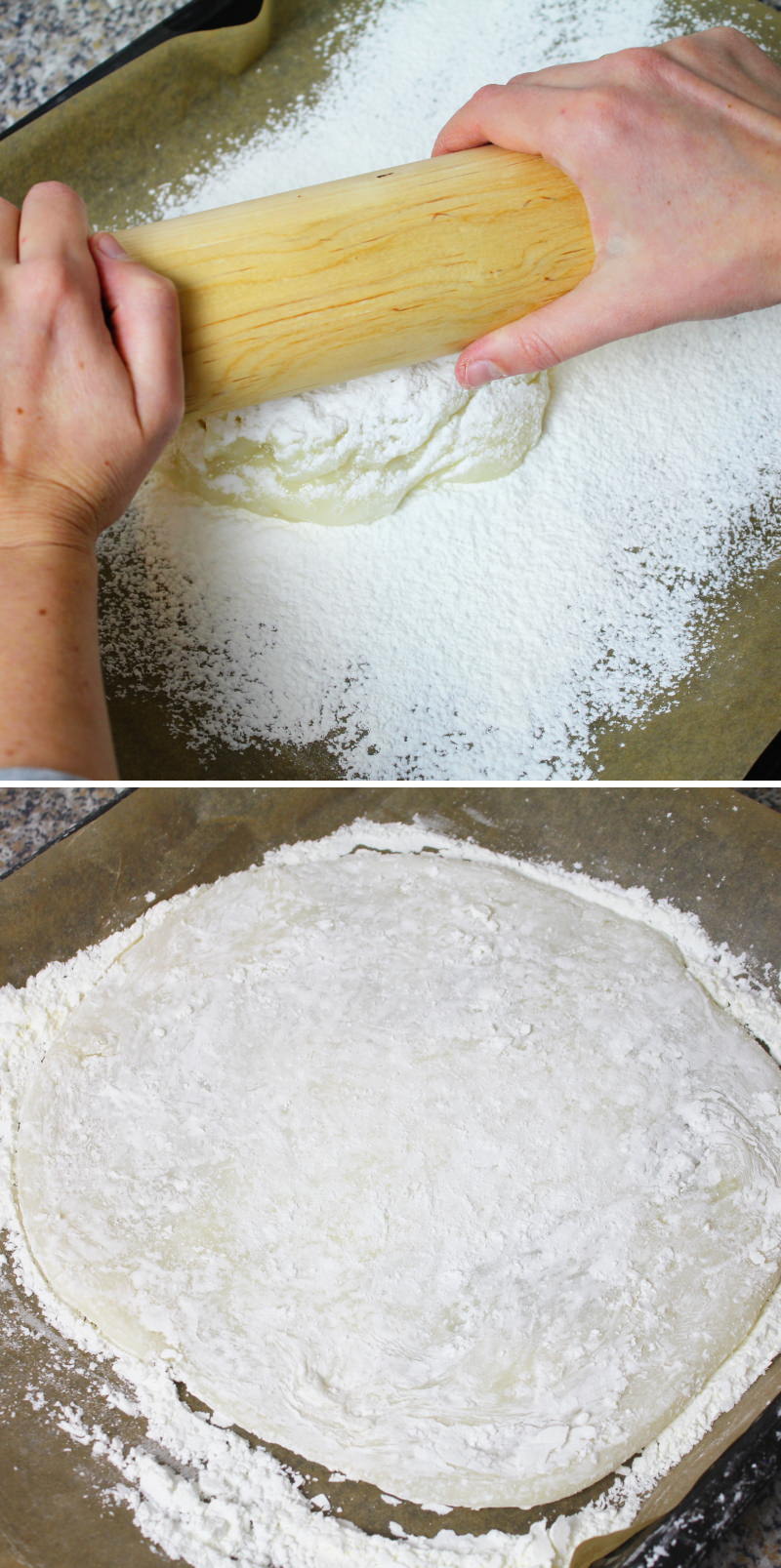
Once the dough has cooled slightly, dust it with a little cornflour. First, gently flatten it a little with your hands, then roll it out into a square shape using a rolling pin. The dough should be about 5 mm thick after rolling.
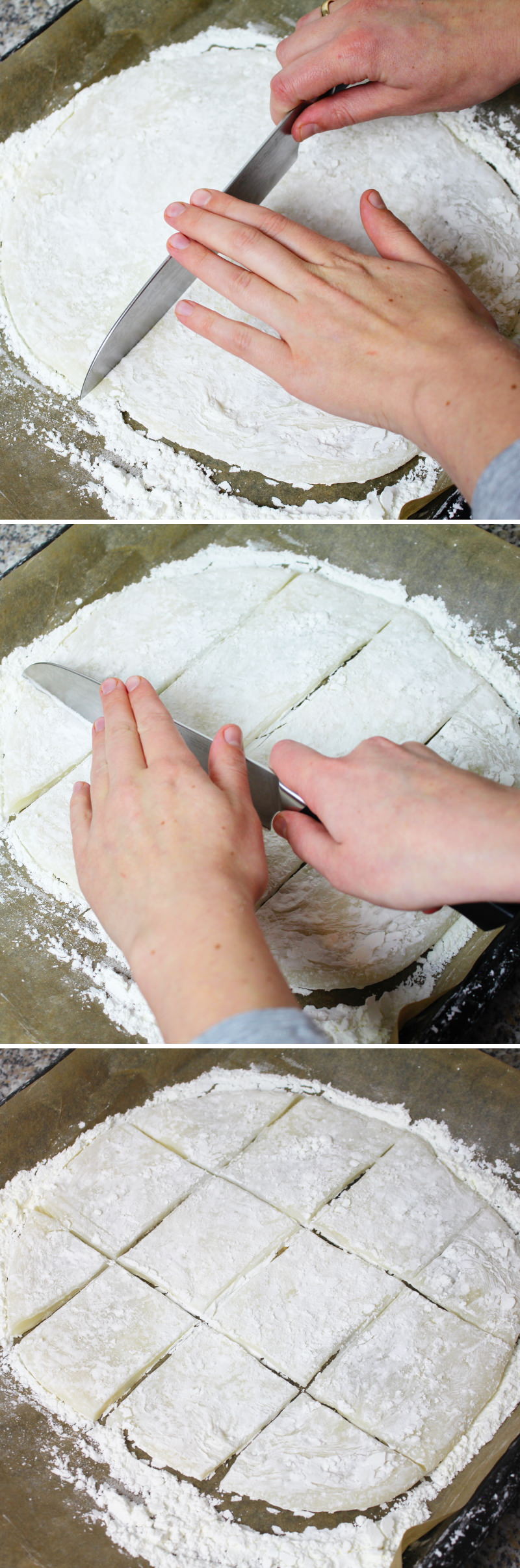
Step 12
Cut the dough into 12 roughly equal-sized squares using a sharp knife. Also, take out the marzipan and chestnut balls.
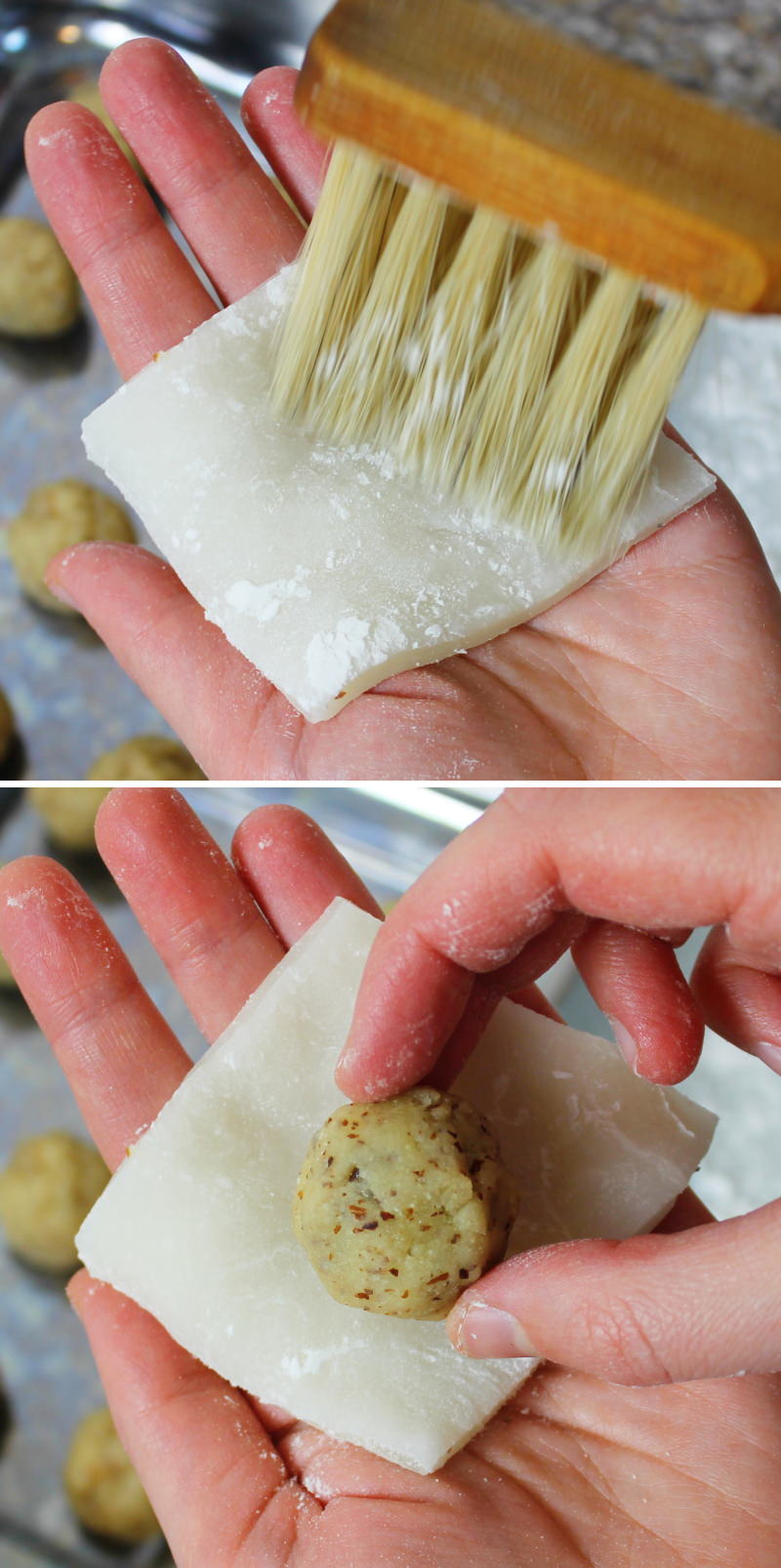
Step 13
Carefully lift out each piece of dough, remove the excess cornflour – for example, with a pastry brush – and place a portion of the filling in the centre of the dough.
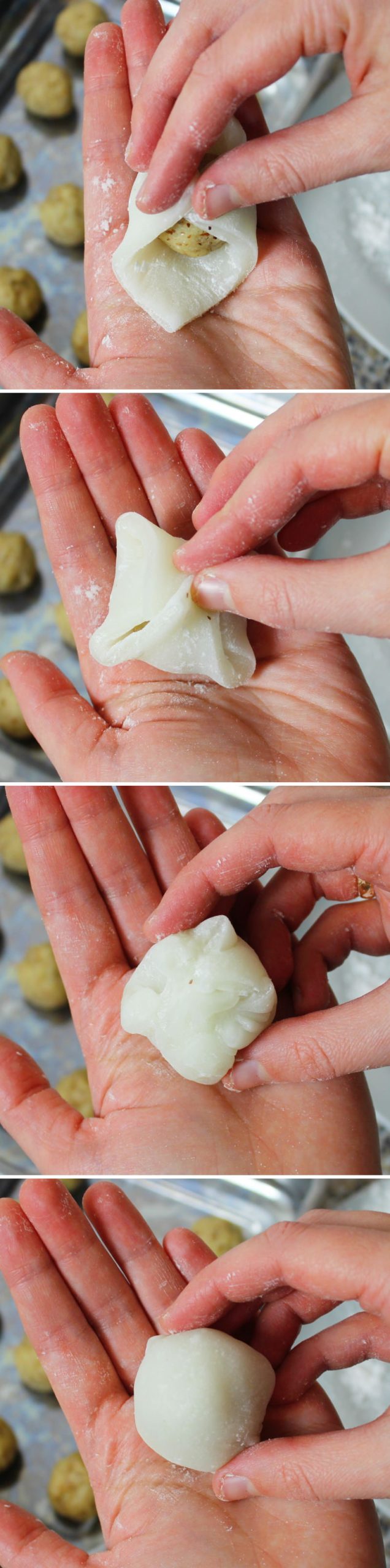
Step 14
Using your fingertips, press two opposite corners of the dough firmly together in the centre over the filling, then fold the other two corners together in the same way. The filling inside should be completely enclosed by the Mochi dough.
Tip: The point where all the folds meet is the underside of the Mochi – so the appearance isn’t particularly important. The main thing is that the Mochi dough doesn’t tear on the top!
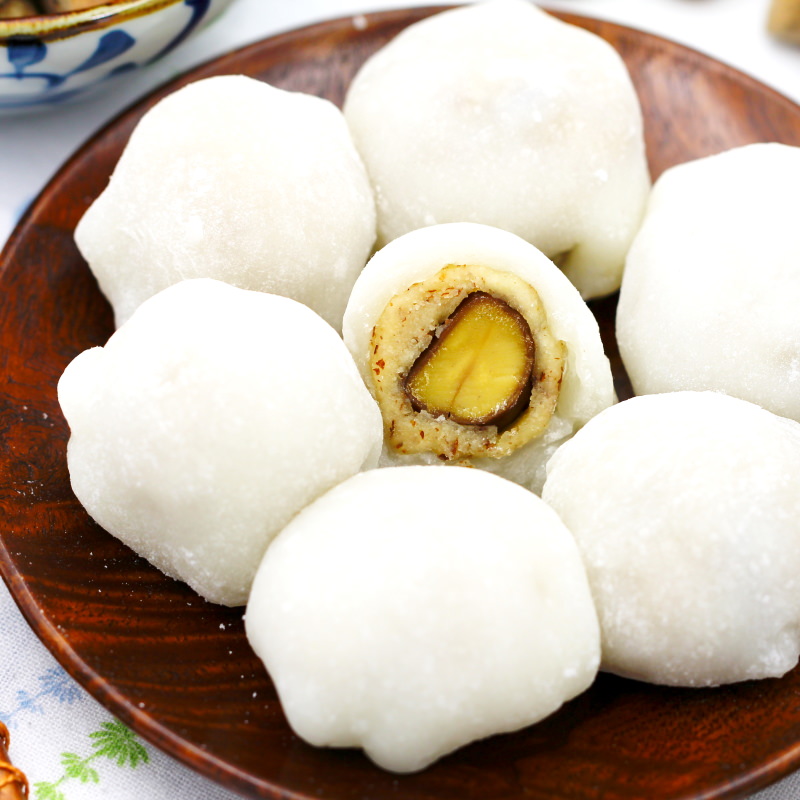
Step 15
Make all the remaining Kuri Mochi in this way and place them on a serving plate. Best eaten straight away. Done – Itadakimasu!
Are you looking for even more delicious Japanese desserts that will delight your guests? You can find my most popular recipes here:
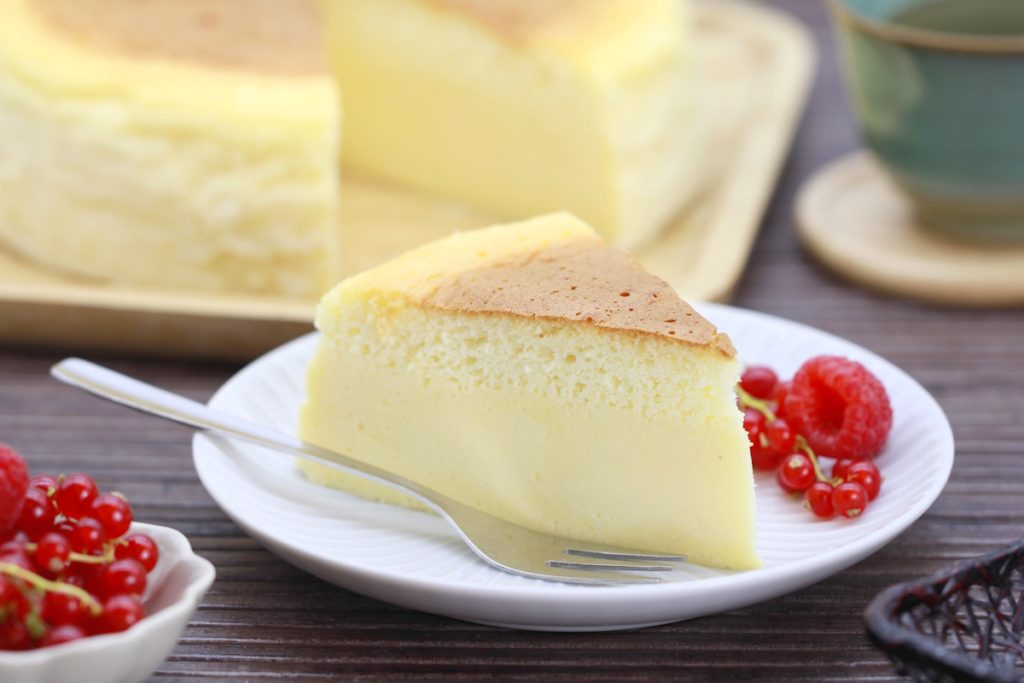
Japanese cheesecake: The best recipe for a fluffy soufflé-style cheesecake just like in Japan
Japanese cheesecake is one of Japan’s most popular desserts and delights with its exceptionally light and airy texture. Unlike classic…
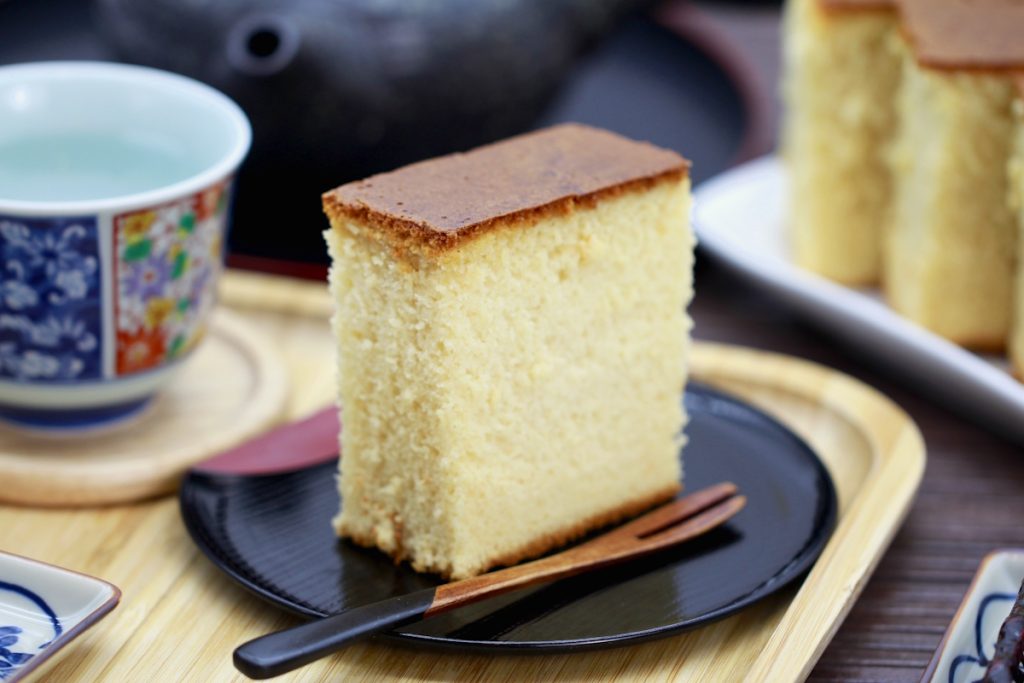
How to make Castella (Kasutera) yourself: How to make this Japanese honey cake
Why is Castella often described as Japan’s moistenest cake? Although Kasutera consists of just a few ingredients, the special preparation…
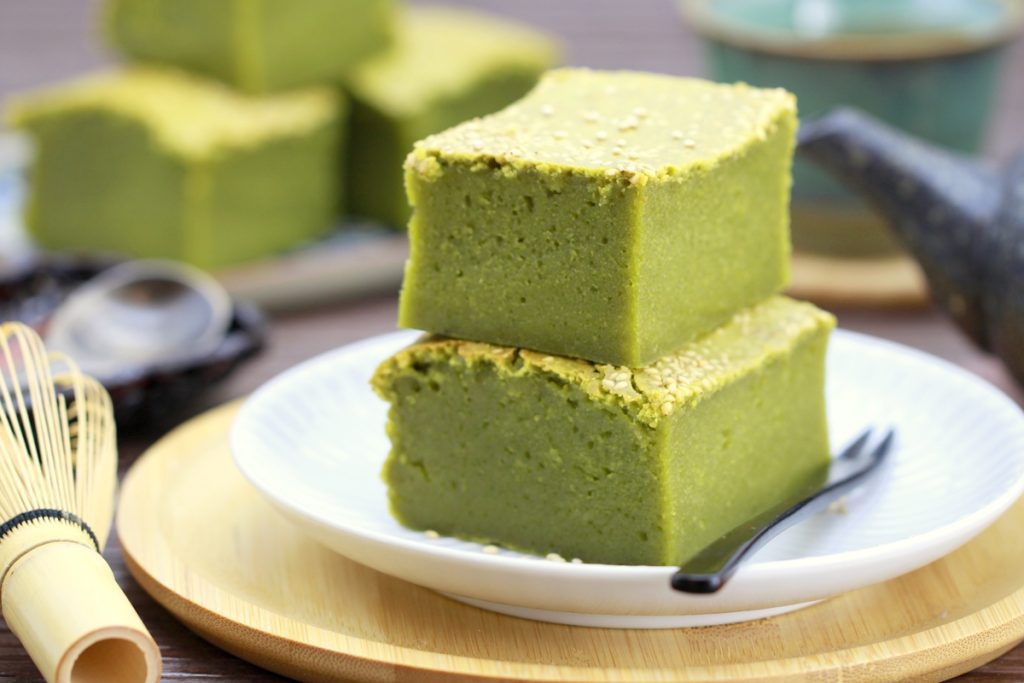
Make your own Matcha butter Mochi: Hawaiian Mochi cake with green tea
If you drink Matcha regularly, you might be familiar with this: at some point, you end up with more Matcha…
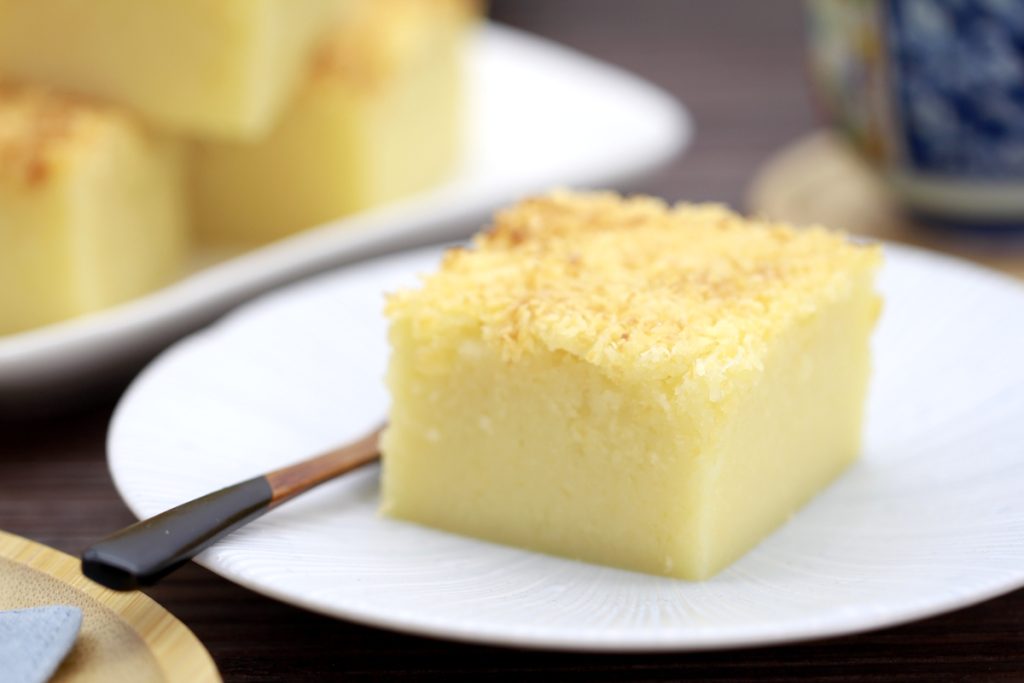
Butter Mochi (Hawaiian Mochi Cake – gluten-free)
Butter Mochi is one of those recipes that’s hard to pigeonhole. It looks like a simple tray bake, but has…
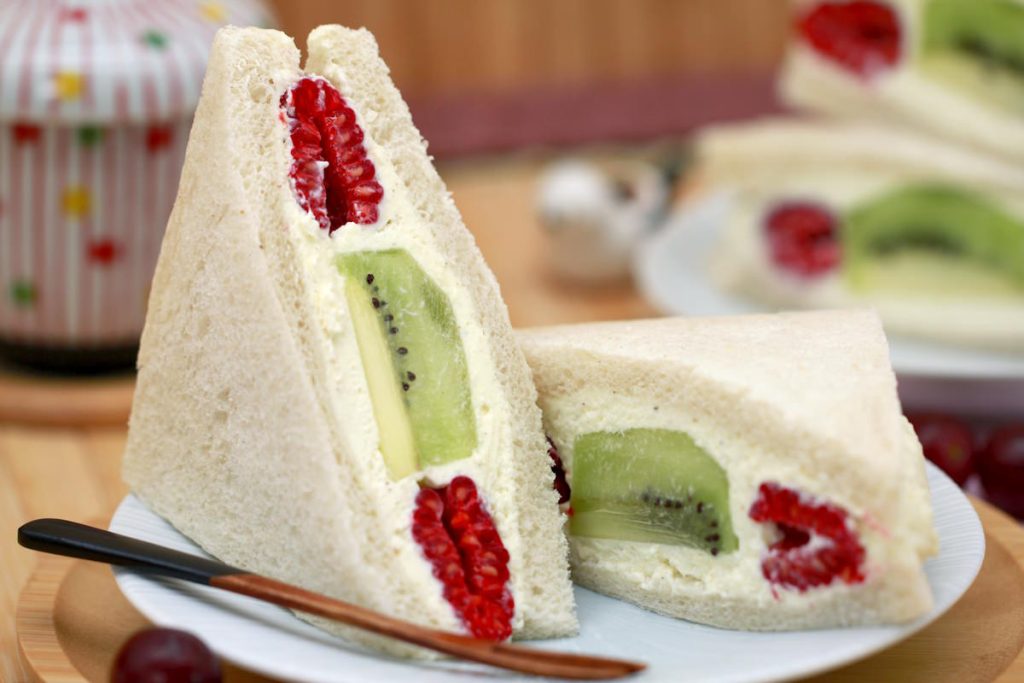
Make your own Fruit Sando: a fluffy cream sandwich with fruit – simple, fresh & typically Japanese
In Japan, it can remain surprisingly hot well into September – and it was on just such a muggy late-summer’s…
Warabi Mochi: Make your own delicate summer dessert with Kinako & Kuromitsu syrup
When the weather warms up, the appetite for light, refreshing sweets grows in Japan – and hardly any dessert embodies…
Have you tried out the recipe? Let me know in the comments – I can’t wait to hear from you.