
Language:


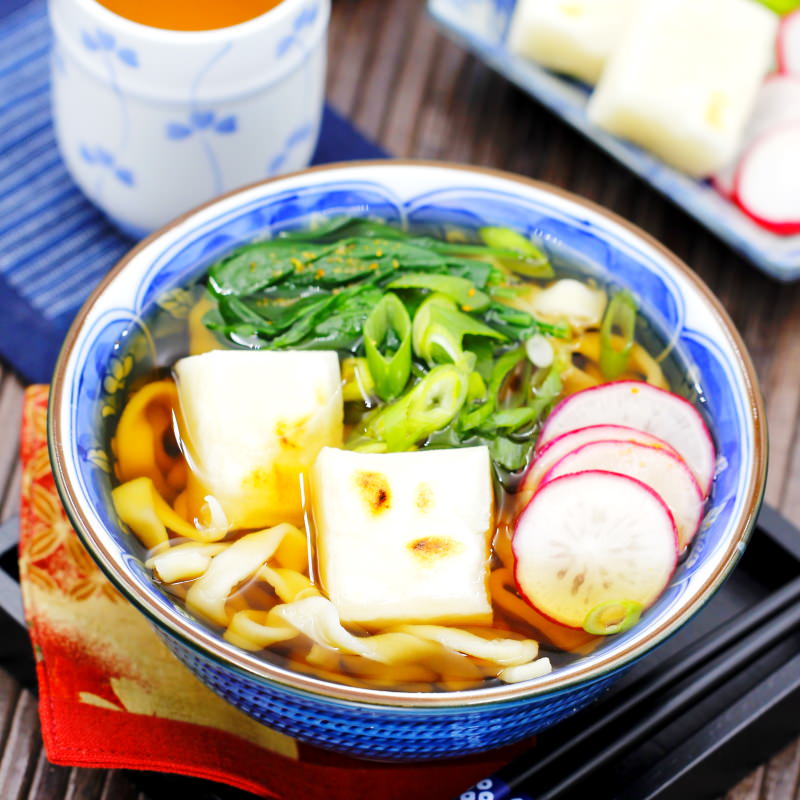
This varied, hearty Chikara Udon noodle soup with toasted Mochi is just the thing for any occasion! I think this recipe tastes best with homemade Udon noodles, a small selection of fresh vegetable accompaniments and, of course, crispy toasted kirimochi, which transforms the light noodle soup into a truly filling meal.
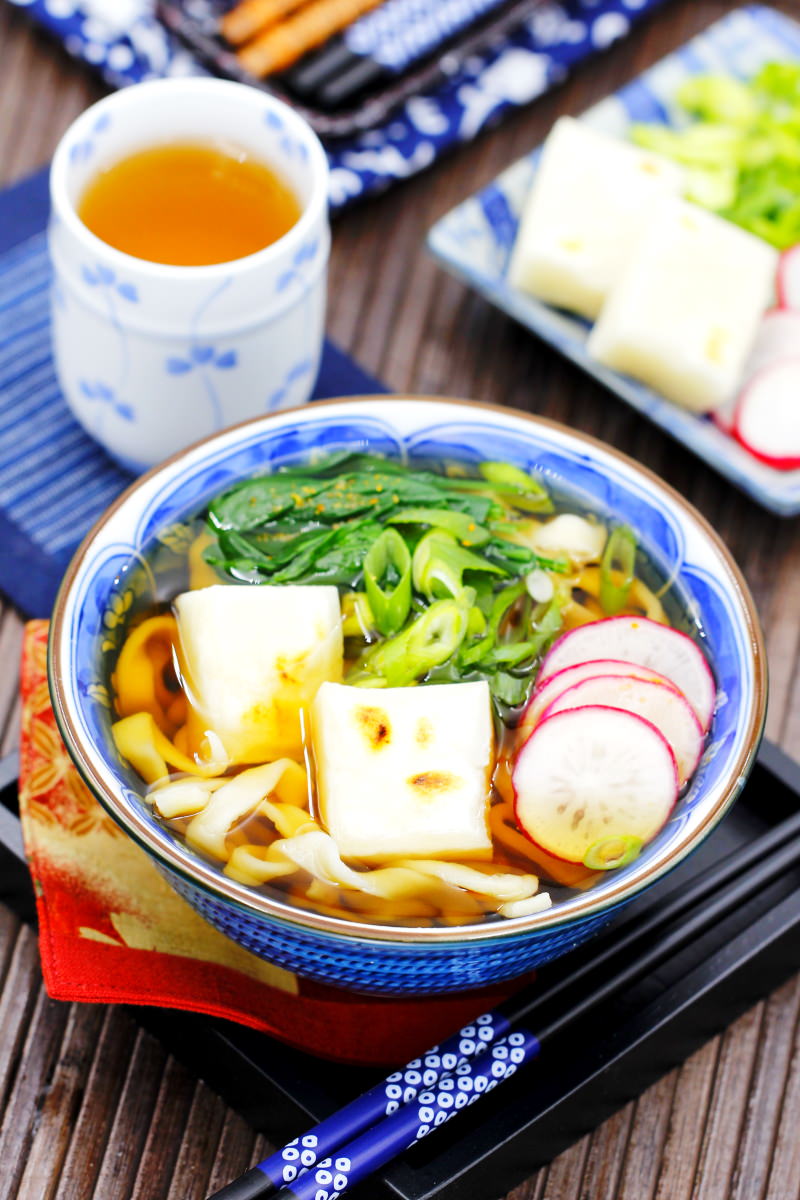
Have you ever had the pleasure of being served a truly satisfying bowl of Udon noodle soup? Yes, no, I can’t remember…?! Either way: in my opinion, this fantastic aspect of Japanese cuisine receives far too little attention anyway… So, my recommendation today is to discover these delicious noodles – made from flour, water and salt – all over again.
Japanese Udon noodles are thick, slightly chewy yet light wheat flour noodles, usually served with a savoury broth and various vegetables and/or protein sources. Sometimes they’re even topped with a few pieces of Tempura or deep-fried Tofu. But there’s much more to this versatile Japanese noodle than just one or two simple noodle dishes!
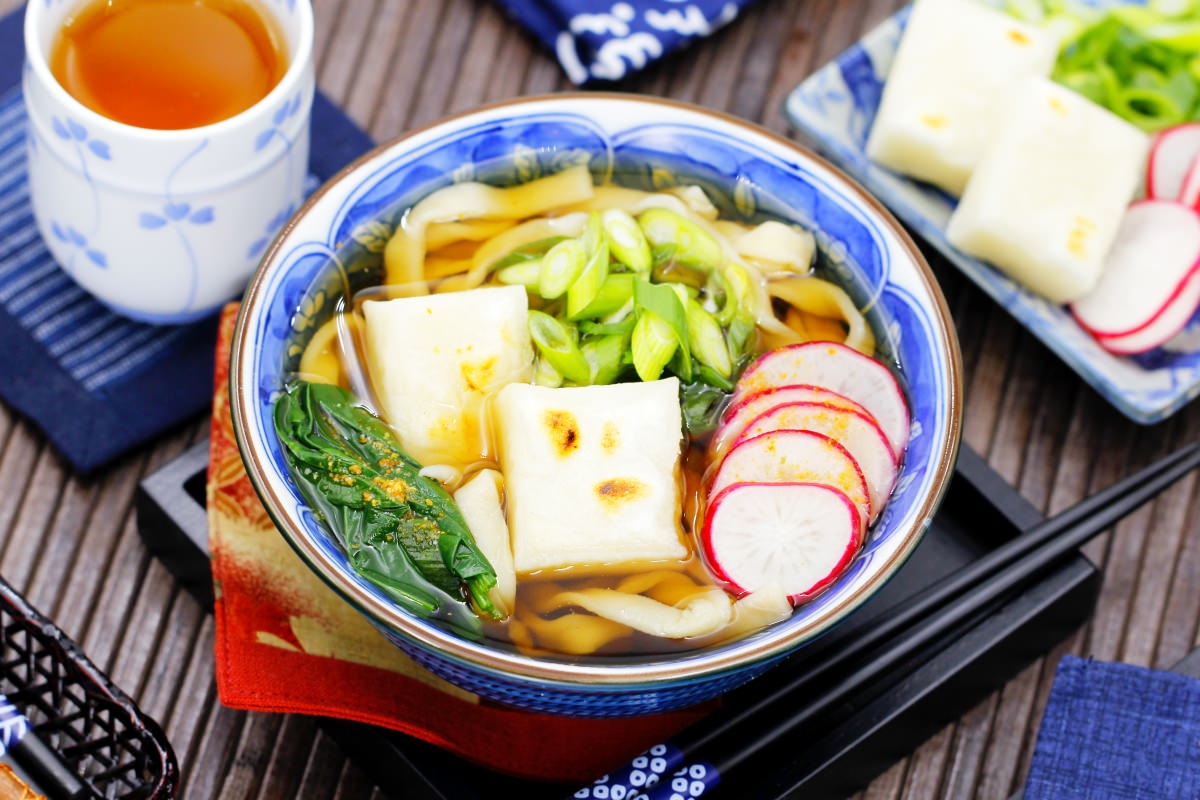
Today I’m going to show you a very special Udon noodle soup that you’ll only find on the menu at truly authentic Japanese restaurants! In today’s recipe, we’ll be making homemade Udon noodles the traditional Japanese way in a hot tsuyu broth and garnishing them with toasted mochi.
It’s said that adding Mochi gives everyone who eats the dish a little extra strength, which is where the dish gets its name Chikara, meaning “strength” or “power”.
For many of you, the word Mochi will surely bring to mind a whole range of delicious sweets from Japan. For example, ice-cold Mochi, Daifuku filled with sweet adzuki bean paste, or colourful Dango skewers. But watch out, Mochi can do so much more!
In Japanese cuisine, Mochi – rice cakes made from pounded glutinous rice – aren’t just prepared sugar-sweet, but also wonderfully savoury. I’m especially taken with the savoury, flavour-packed recipes at the moment – like Ozoni or this Chikara Udon!
The star of today’s recipe is typical Japanese kirimochi. Kirimochi are made by pounding glutinous rice into a fine paste, then pressing and drying it into firm shapes. They’re eaten all year round for many different occasions, but especially during the cold months. You’ll be surprised just how versatile a food kirimochi are.
KUNDENLIEBLING
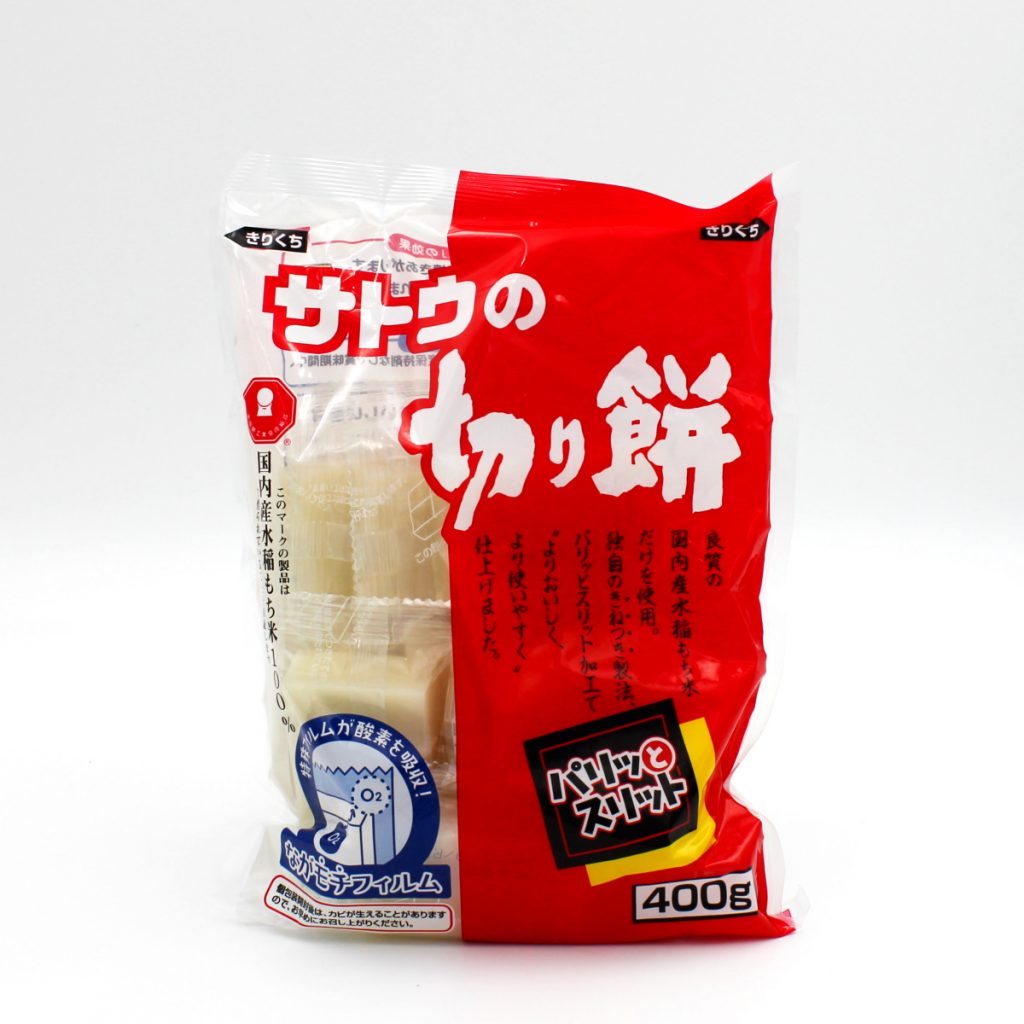
Kiri Mochi 400g (quadratische, getrocknete Mochi Reiskuchen), Sato
Kiri Mochi ist die wichtigste Zutat für herzhafte Mochi Rezepte. Sie werden gegrillt, gekocht oder gebraten und sind eins der vielseitigsten Lebensmittel der japanischen Küche.…
In stock
Kirimochi are usually grilled, boiled or fried – they cannot be eaten raw, instead, they must be heated first. The most popular way to prepare them is to grill them. In Japan, a simple toaster oven or even an open fire is used for this. Alternatively, however, you can also use a conventional oven or a non-stick frying pan. On the outside, kirimochi become crispy and always remind me very strongly of Japanese rice crackers – whilst inside, you’re surprised by a soft, slightly chewy texture.
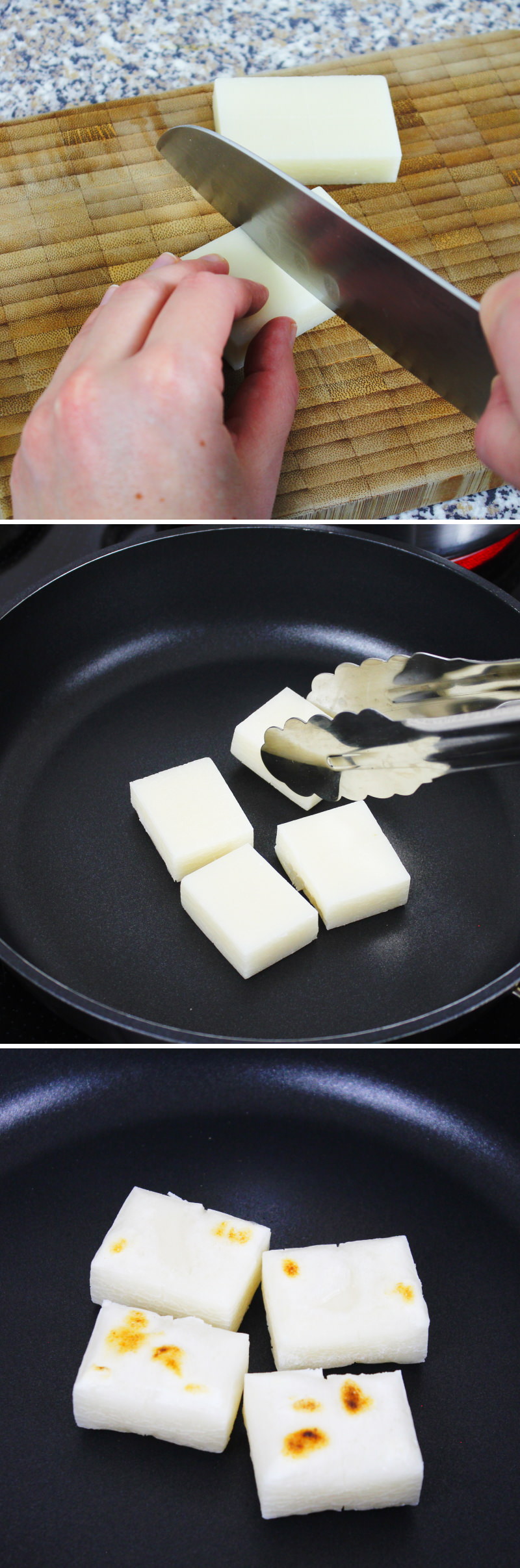
Tip: Kirimochi usually have delicate perforations. This means that each block of kirimochi rice can be halved or quartered again using a large, sharp knife!

In this recipe for Chikara Udon, the Kirimochi are fried in a hot frying pan over a medium heat until they have taken on a light golden colour on both sides. Every now and then, the Mochi blocks are turned carefully – ideally with tongs – to ensure they soften evenly on the inside. After about 5 minutes, the kirimochi have taken on a lovely colour and feel soft when turned.
Kirimochi should be a staple in your kitchen from now on. In my post on savoury Mochi recipes , I’ll show you even more delicious recipe ideas for kirimochi!
The crispy Mochi are essential for this dish, but you can easily adapt the other toppings – such as spring onions, radishes, spinach and the Japanese spice shichimi togarashi (im Shop ansehen) – to suit your own tastes. For example, with pak choi, silken tofu (im Shop ansehen) or a little Kimchi (im Shop ansehen).

You can easily make fresh Udon noodles at home – also known as teuchi Udon – using just 3 ingredients (you’ll need wheat flour, water and salt) and simple kitchen utensils! They make a great base for various Japanese noodle soups, as they absorb the flavour of a delicious broth particularly well. → Here’s my simple basic recipe for homemade Udon noodles.
Alternatively, for this recipe, I’d like to recommend some wonderful Sanuki udon, which take about 10 minutes to cook. What makes these udon noodles special is that they’re made right in Japan and don’t come from Korea or China like many other udon noodles:
CUSTOMER FAVOURITE
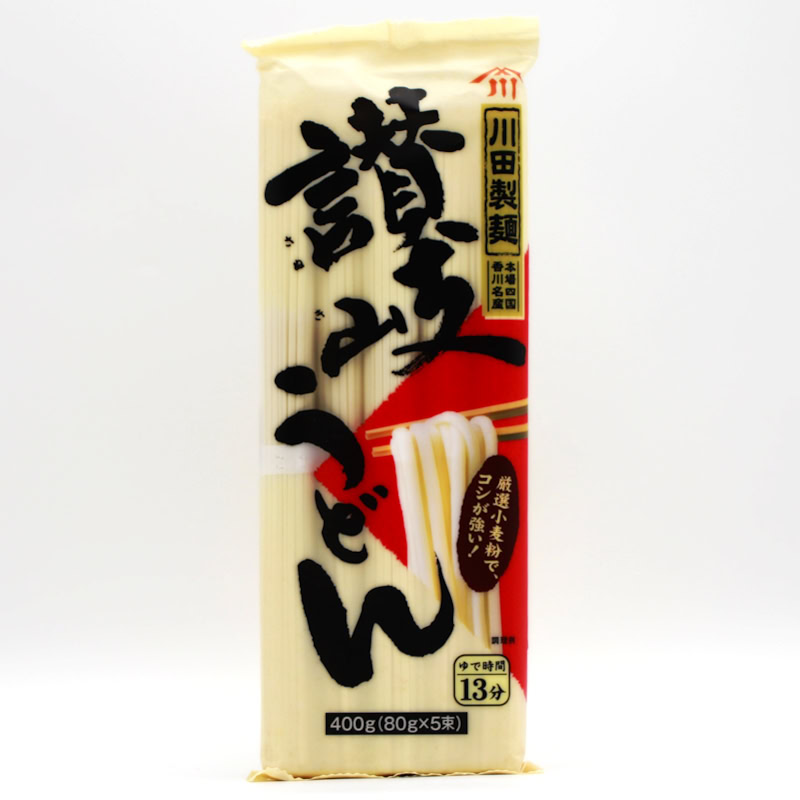
Udon Nudeln 400g (5 Portionen Sanuki Udon), Nisshin
Möchtest du eine Vielzahl von japanischen Nudelgerichten ganz einfach zu Hause zubereiten, dann solltest du dich für diese Udon Nudeln entscheiden. Die sind echtes Allroundtalent…
In stock
For the base stock in this recipe for Chikara Udon, we’re going to prepare a mentsuyu (also simply called tsuyu ) today. It’s a typical Japanese soup and sauce base, which is usually used for soba and Udon noodle dishes . This savoury sauce is made from Sake, Mirin, soya sauce, Dashi and a little sugar. The flavour is full of intense Umami and it’s really easy to make! → Here’s my simple basic recipe for homemade mentsuyu.
But here too, Japanese cuisine offers a great alternative, as tsuyu stock is available in every Japanese supermarket as a ready-to-use concentrate. Depending on how you’re using it, this is mixed with water in a ratio of roughly 1:3 and is only then ready to eat:
CUSTOMER FAVOURITE
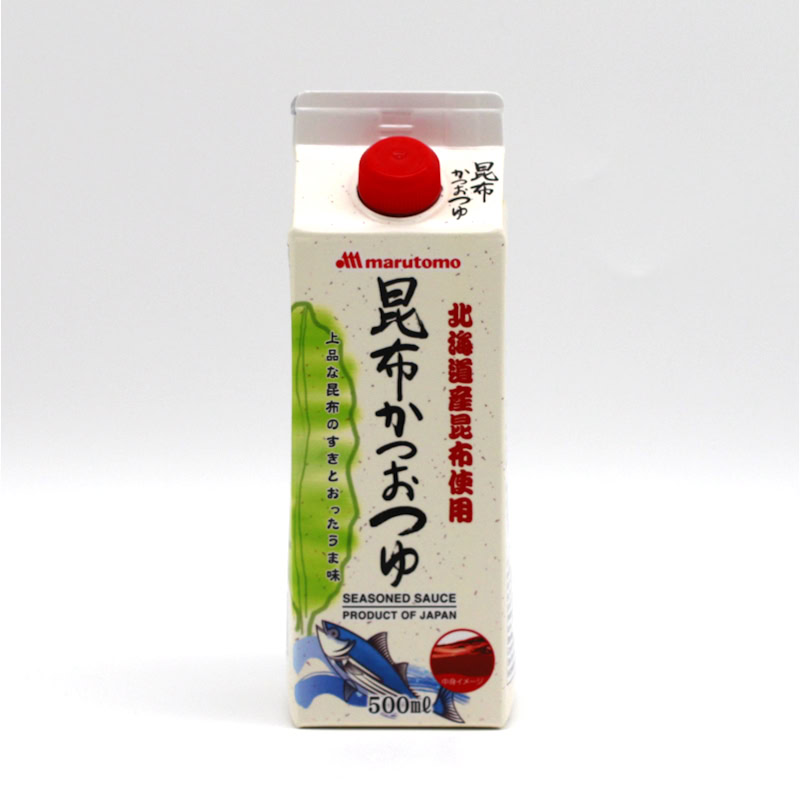
Tsuyu Sauce 500 ml (aus Japan)
Japanische Nudelbrühe & Dipping Sauce. Diese Tsuyu Sauce von Marutomo ist eine klassische japanische Würzsauce auf Basis von Sojasauce und Dashi. Sie eignet sich als…
In stock
A quick tip to finish with: The broth should be kept nice and hot until serving, and don’t let the noodles cook for too long – this energising noodle soup tastes best when the noodles still have a bit of bite. Have fun cooking and enjoy!
Chikara Udon with Mochi
Serves 2 | 30 minutes | 411 kcal
🖨️ Print PDF 📌 Save to PinterestThis varied, hearty Chikara Udon noodle soup with toasted Mochi is just the thing for any occasion! This recipe tastes best with homemade Udon noodles, a small selection of fresh vegetable accompaniments and, of course, crispy toasted kirimochi, which transforms this light noodle soup into a truly filling meal.
Ingredients (2 portions)
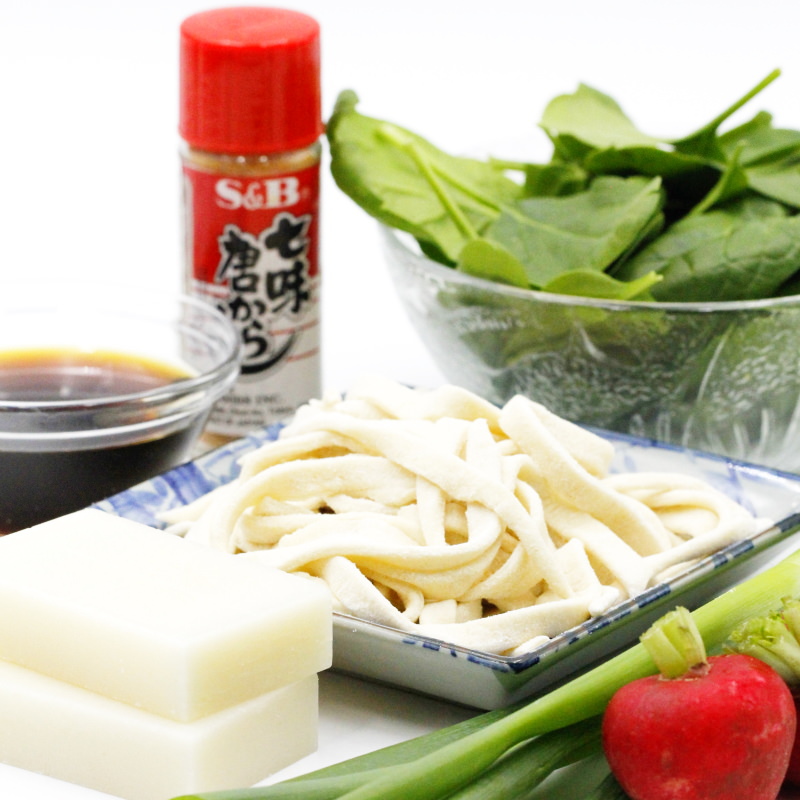
2 portions Udon noodles (im Shop ansehen) * or make your own (→ to the recipe)
2 Kirimochi – square Mochi blocks (im Shop ansehen)*
2 large radishes
2 spring onions
50 g komatsuna (Japanese mustard spinach; alternatively baby spinach)
a little shichimi togarashi (Japanese chilli spice) (im Shop ansehen)*
For the tsuyu broth:
600 ml mentsuyu (make your own → see recipe)
OR
100 ml Tsuyu (im Shop ansehen)* + 500 ml water (fresh, cold tap water)
Preparation (30 minutes)
Step 1
Gather the ingredients for the Japanese Chikara Udon noodle soup. If you’d like to use homemade mentsuyu, it should now be ready (→ click here for the recipe for Japanese mentsuyu). Your homemade Udon noodles should also be ready by now (→ click here for the recipe for Udon noodles)!
Also, bring a large saucepan of water to the boil for the Udon noodles (one litre of water per portion of noodles).
Step 2
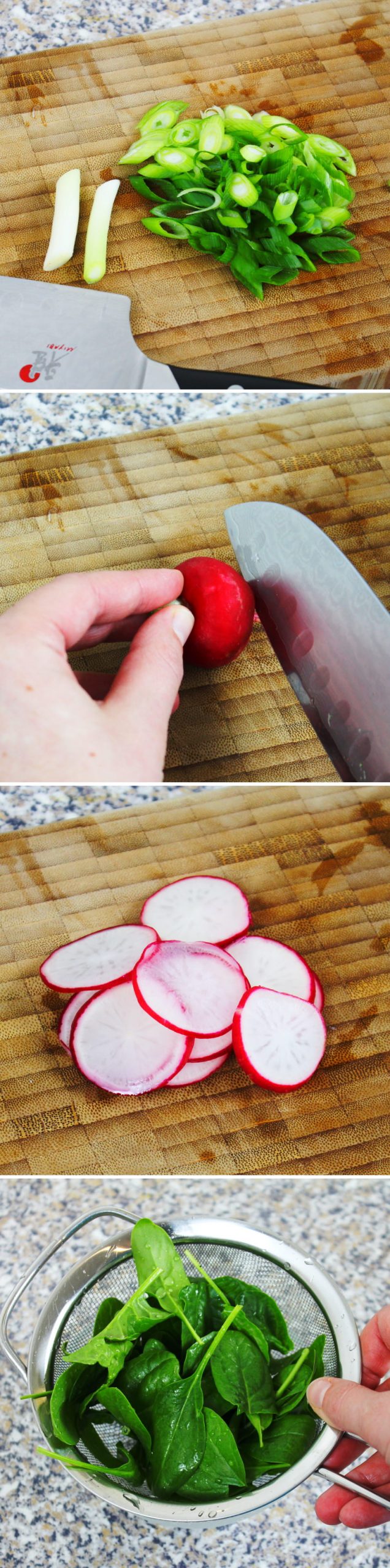
First, let’s prepare the accompaniments: wash the spring onions , pat them dry and slice the green parts into fine rings. Keep the white ends; we’ll use these to flavour the tsuyu broth in a moment. Wash the radishes as well and slice them thinly. Also, wash the spinach and drain it.
Set everything aside until ready to serve.
Step 3
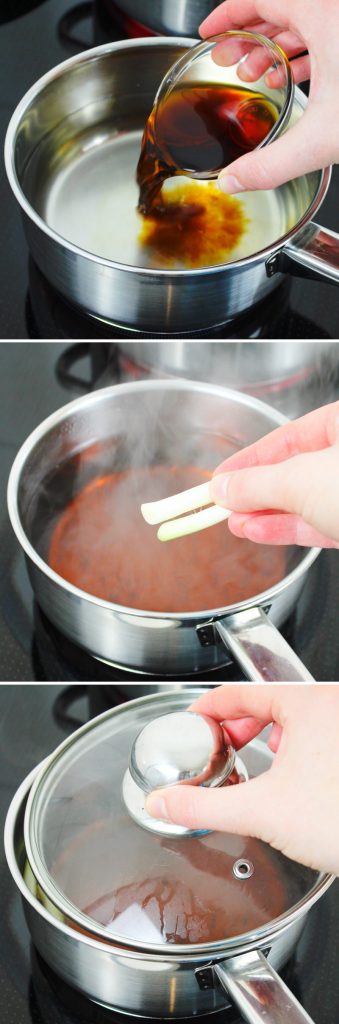
For the broth, pour the homemade mentsuyu into a saucepan (or mix the tsuyu concentrate and water in the saucepan), add the white parts of the spring onions, cover and heat over a medium heat.
Step 4
In the meantime, let’s move on to the toasted Mochi: To do this, cut each kirimochi in half. Fry the kirimochi in a frying pan (WITHOUT oil) over a medium heat until they have taken on a light golden colour on both sides (this will take about 5 minutes). Carefully turn the Mochi pieces over repeatedly (ideally using tongs) so that they soften evenly on the inside. Once the kirimochi have taken on a nice colour and feel soft when turned, remove them from the pan and set aside on a plate.
Step 5
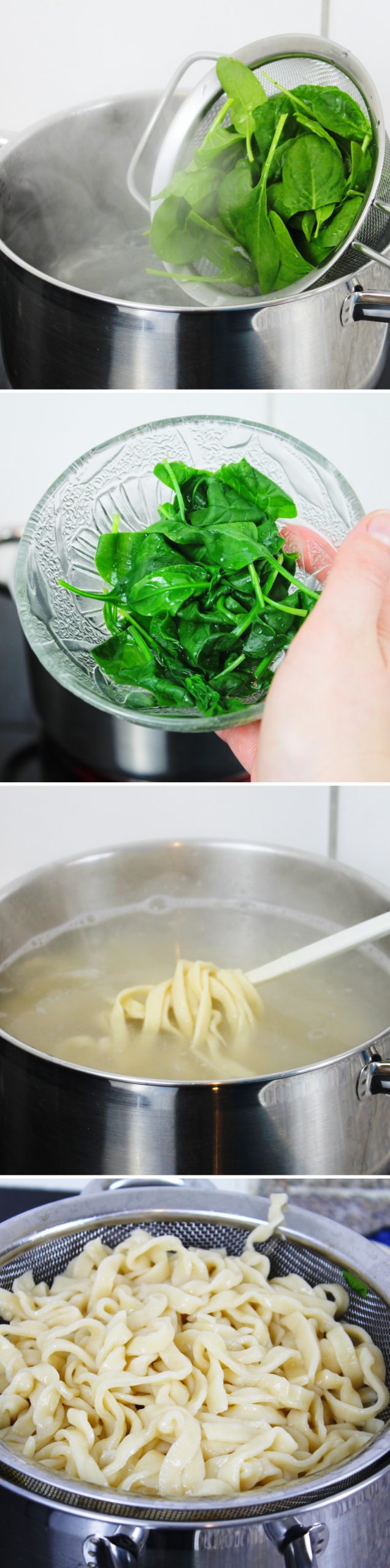
Once the tsuyu broth is hot, reduce the heat and keep the broth warm. Now we can cook the spinach and the Udon noodles: To do this, add the spinach to the boiling water for 30 seconds, then remove it with a small sieve, drain it and set it aside briefly.
Next, add the Udon noodles to the same boiling water and cook for 4 minutes (or as per the cooking instructions on the packet). Then drain in a large sieve and rinse briefly but thoroughly under cold water.
Step 6
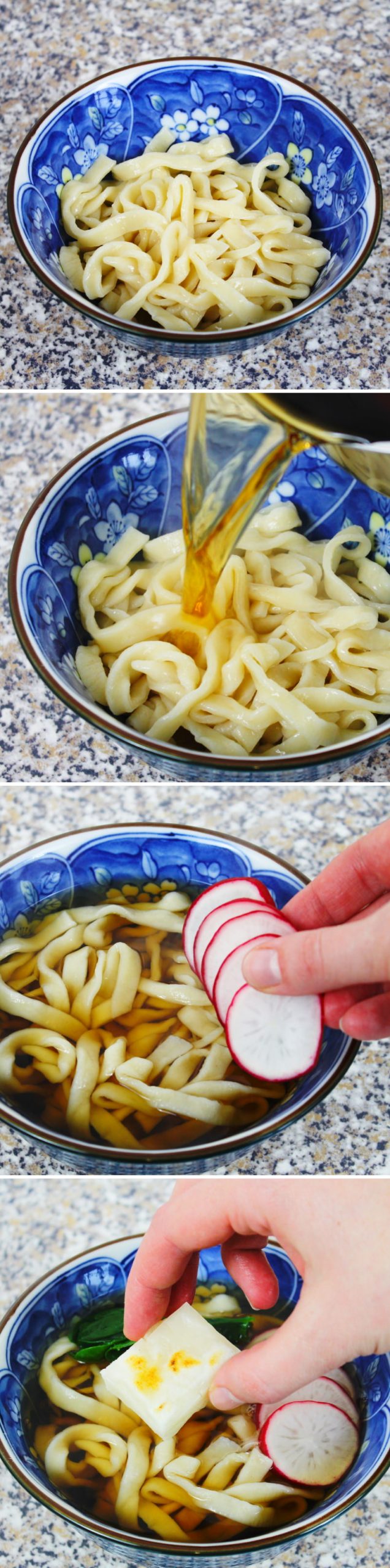
Divide the Udon noodles between bowls and top up with the warm stock. Garnish each bowl with a piece of toasted kirimochi, arrange the accompaniments around the edges and sprinkle with shichimi togarashi.
Step 7
The noodles and accompaniments are eaten with chopsticks, whilst the soup is sipped directly from the bowl. Done – Itadakimasu!
Are you looking for even more wonderful noodle soups from Japan? You can find my most popular recipes here:
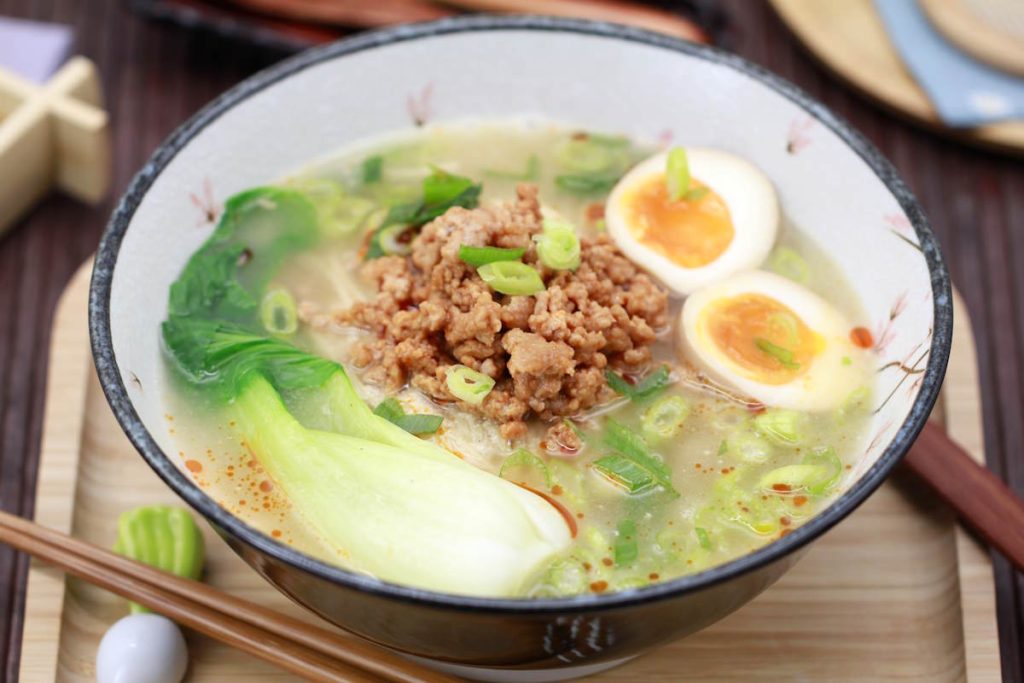
Make your own Tantanmen: creamy sesame Ramen with spicy Miso minced meat, pak choi & ramen eggs
Tantanmen is a Ramen soup for those who like it creamy but not heavy. A sesame-based broth, spicy minced meat,…
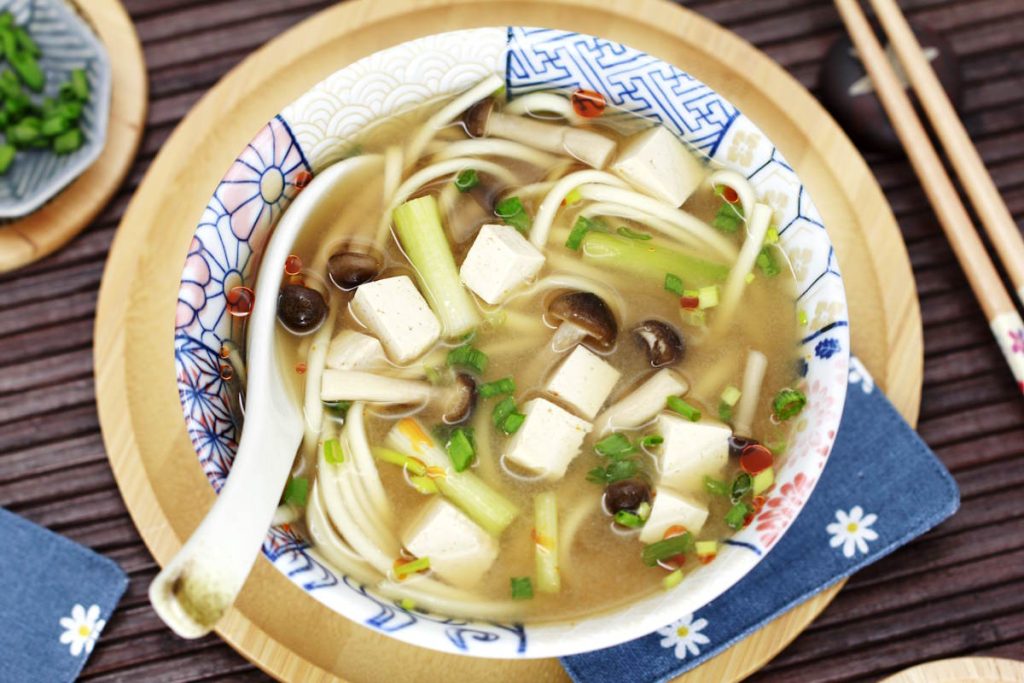
Quick Miso Udon: Spicy noodle soup with Miso, Tofu & Shimeji mushrooms
If you’re looking for a quick, comforting meal that’s both easy to prepare and incredibly tasty, then this Miso udon…
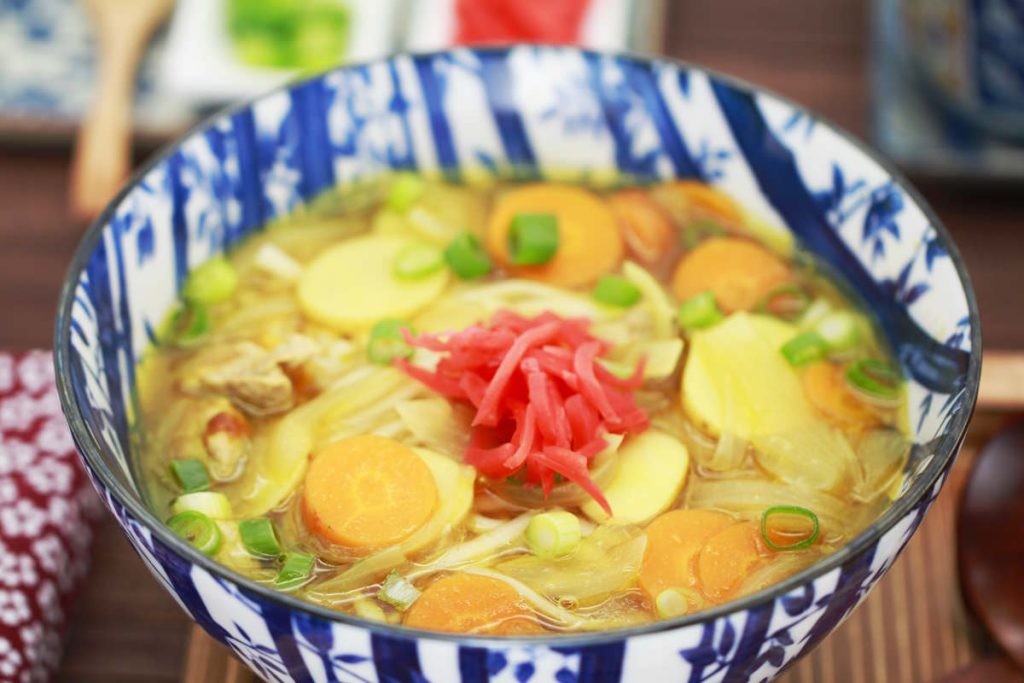
Curry Udon soup: A classic Japanese home-cooked meal – warming, traditional & delicious
Curry Udon combines the depth of Japanese Dashi broth with the spicy flavor of curry. This hot noodle dish is…
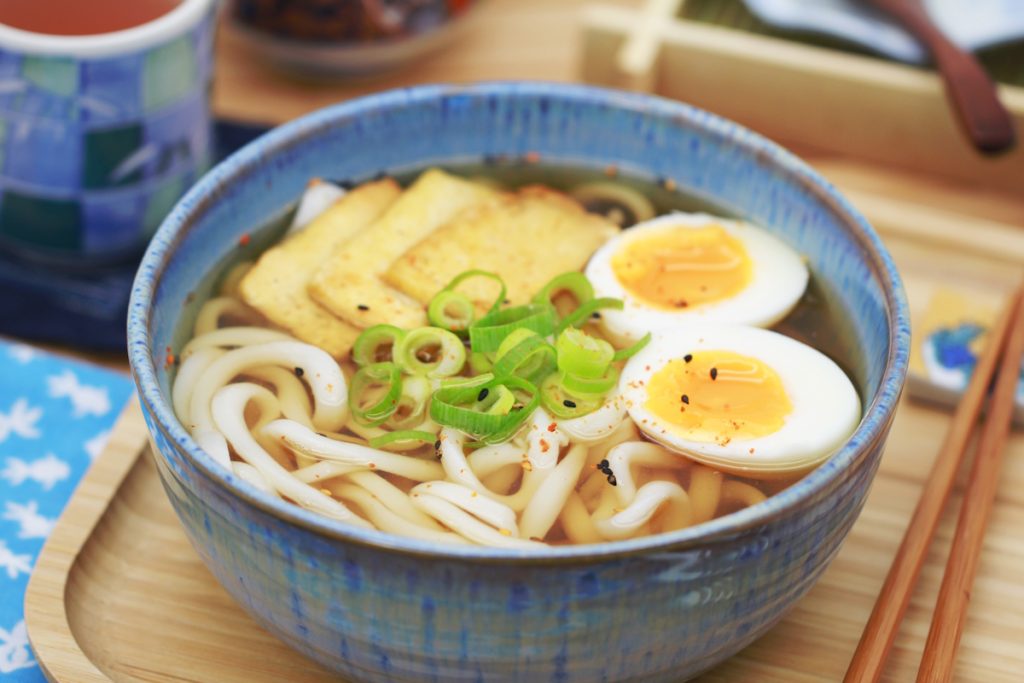
Delicious Kake Udon Noodle Soup: A classic of Japanese cuisine
Sometimes you just need a quick yet hearty meal that warms you up and satisfies your appetite. Kake Udon noodle…

A bowl full of happiness: Miso Ramen with 7 varied toppings – vegetarian, spicy & really easy
Immerse yourself in the world of flavours of Japanese cuisine with our Happiness Bowl! It’s all about Miso Ramen –…
10-minute Shoyu Ramen with bamboo shoots & Ramen eggs – for quick meals
My 10-minute Shoyu ramen: Wavy ramen noodles, served in a rich and sinfully delicious tsuyu broth made from Dashi, soy…
Have you tried out the recipe? Let me know in the comments – I’m really looking forward to hearing from you.