

Language:


Red anko is a very famous, traditional Japanese bean paste – it is made from small, red adzuki beans, which are gently cooked and heavily sweetened. Thanks to the beans’ thin skins, the finished paste is particularly soft, creamy and perfect for making all sorts of traditional Japanese sweets. And here’s how to make it!
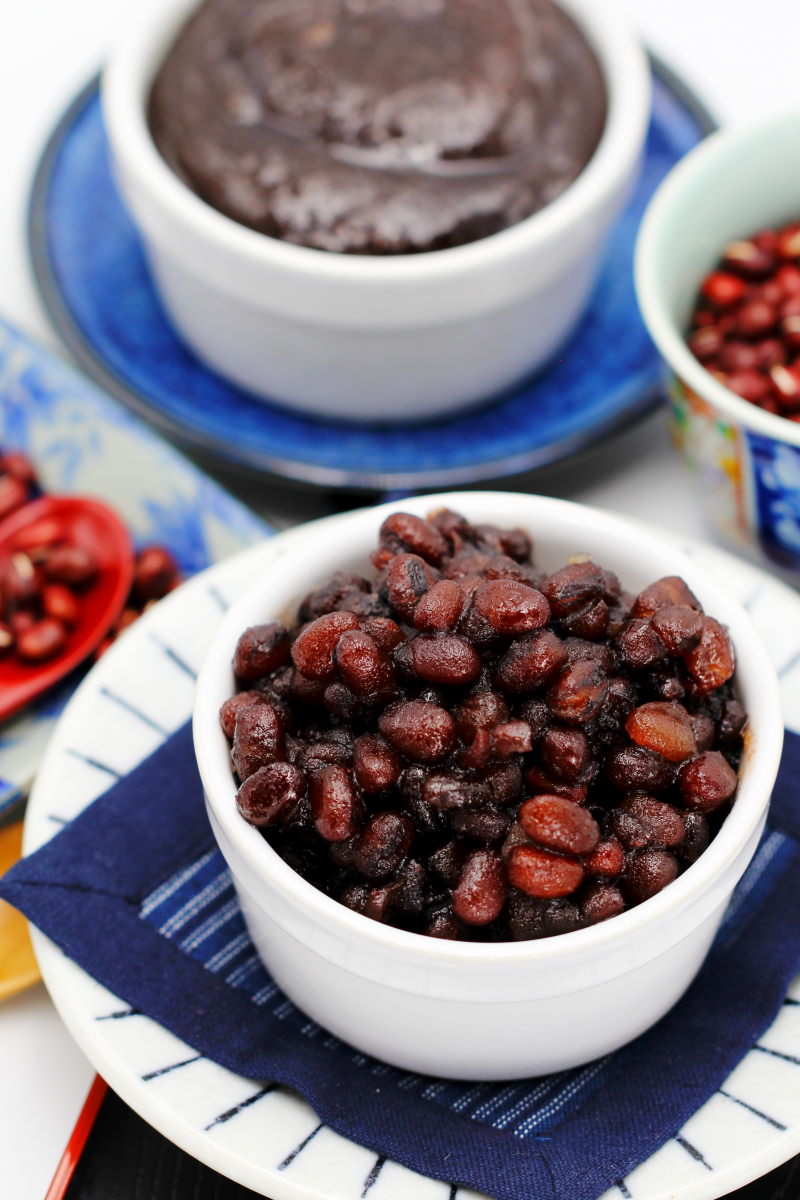
Anyone who discovers Japanese cuisine will fall in love in no time at all with the small, exquisite sweets and delicate desserts of this distant land. Whether it’s Mochi, dorayaki, taiyaki or sweet anpan buns, it doesn’t matter at all, because I love them all! They’re all filled with a sweet red bean paste that you simply can’t do without if you want to make authentic Japanese sweets.
This creamy paste is called anko, or simply an, and is made from adzuki beans. It’s the absolute first choice when it comes to the perfect filling for traditional Japanese sweets and pastries.
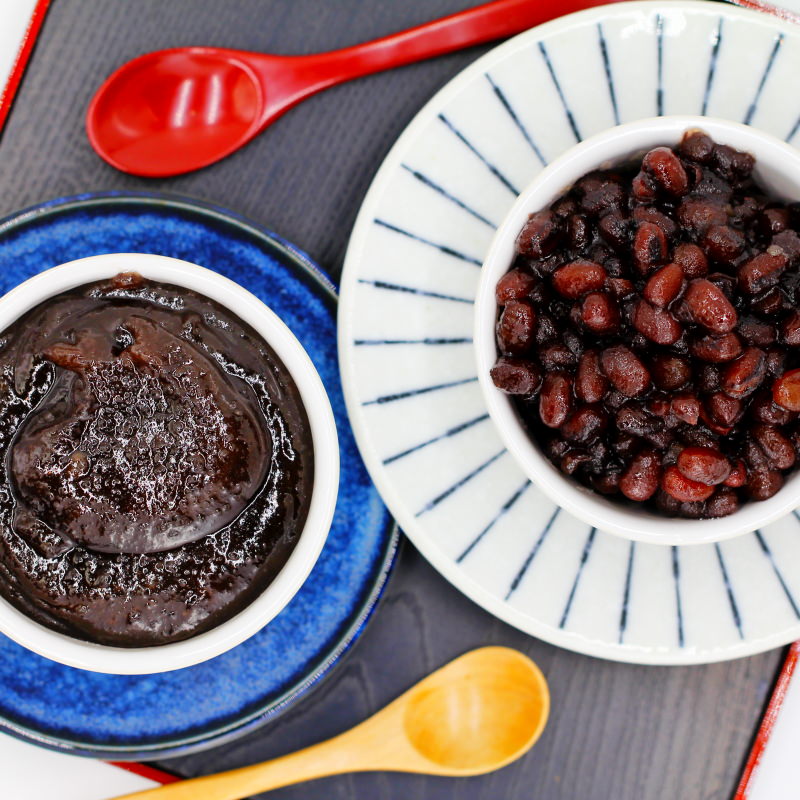
By the way: besides the typical red adzuki bean paste, white Shiroan, made from lima beans, or Kurian made from chestnuts are also referred to as An!
Making sweet red adzuki bean paste at home is much easier than you might think. All you need are adzuki beans, sugar and water!Anko is generally made by boiling the adzuki beans for quite a long time and then sweetening them with sugar.
In Japan, a distinction is made between two different varieties:
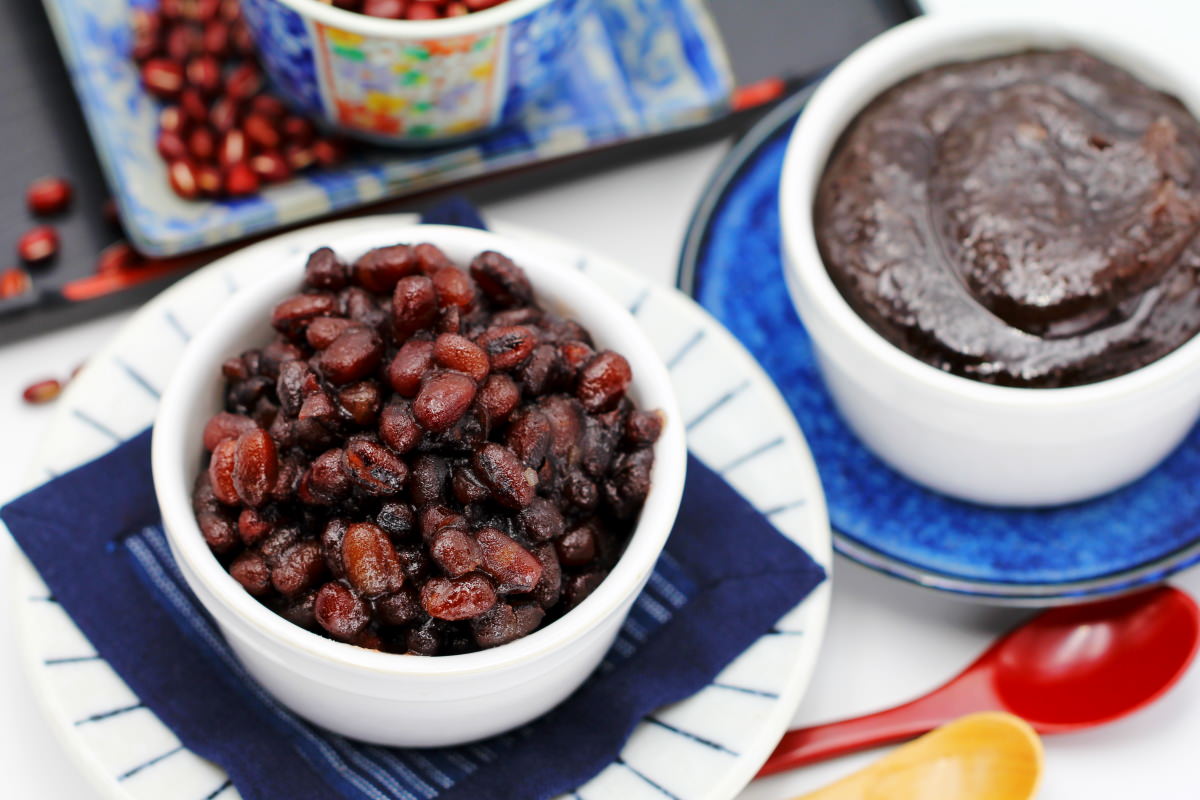
- Tsubu-an – The paste has a coarse texture, as the cooked beans are left whole. The coarse consistency is ideal for use as a filling for daifuku Mochi, dorayaki or taiyaki.
- Koshi-an – This paste has a fine, smooth texture because the beans are pressed through a sieve. This removes the skins from the beans and creates a creamy consistency. This paste tastes particularly delicious as a filling for Ichigo Daifuku Mochi with strawberries!
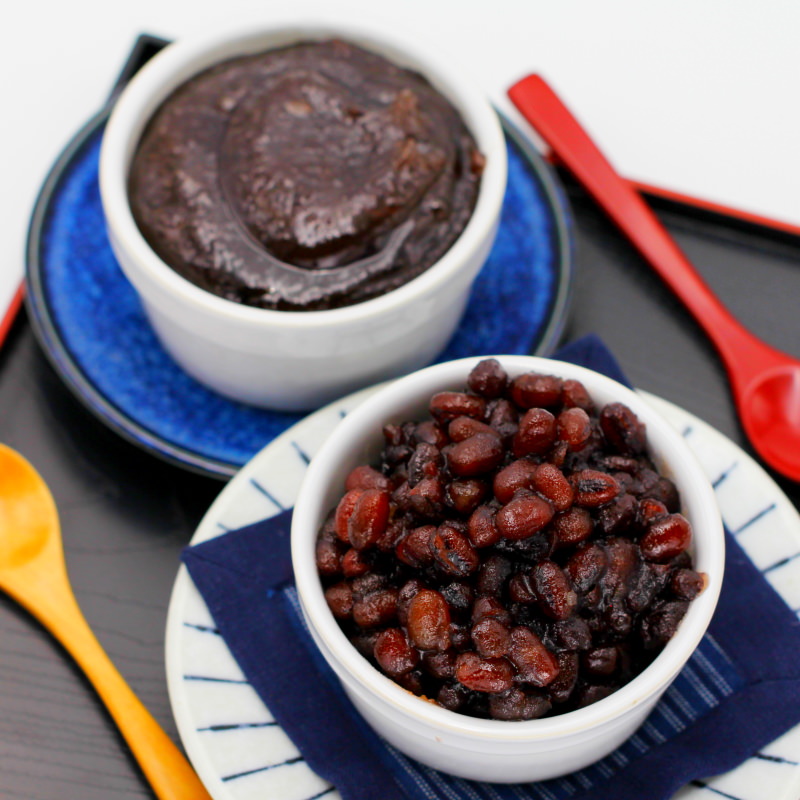
Tip: There is also a third variety, known as Tsubushi-an. For this, some of the cooked beans are briefly puréed and returned to the whole beans. The texture therefore lies between Tsubu-an and Koshi-an.
The basic recipe for anko that I’ve brought you today shows how to make both types: tsubu-an and koshi-an. Once you’ve mastered this recipe, you can make as many delicious Japanese sweets at home as your heart desires :).
Adzuki, or sometimes simply Azuki, literally means “little beans” in Japanese. Adzuki beans were brought to Japan from China over 2,000 years ago and are now mainly grown in the Hokkaido region.

Like many other types of bean, adzuki beans are very rich in fibre and protein.
They are closely related to mung beans, from which soya sprouts are produced. An ancient document states that it used to be customary in Japan to eat adzuki beans on the day of the winter solstice – the shortest day of the year – to ward off all evil.
The custom spread, and very soon it became common to prepare adzuki beans for other special ceremonies as well.
However, it was not until much later that it became common to use the red beans in recipes for sweet dishes. This happened when Japanese farmers began producing sugar in large quantities in the 18th century. Adzuki beans and sugar were therefore readily available and even relatively inexpensive. This could explain why sweet dishes and desserts made with sweet anko became so popular in Japan.
You can find adzuki beans in Asian food shops, health food shops or, of course, here in our online shop:
CUSTOMER FAVOURITE
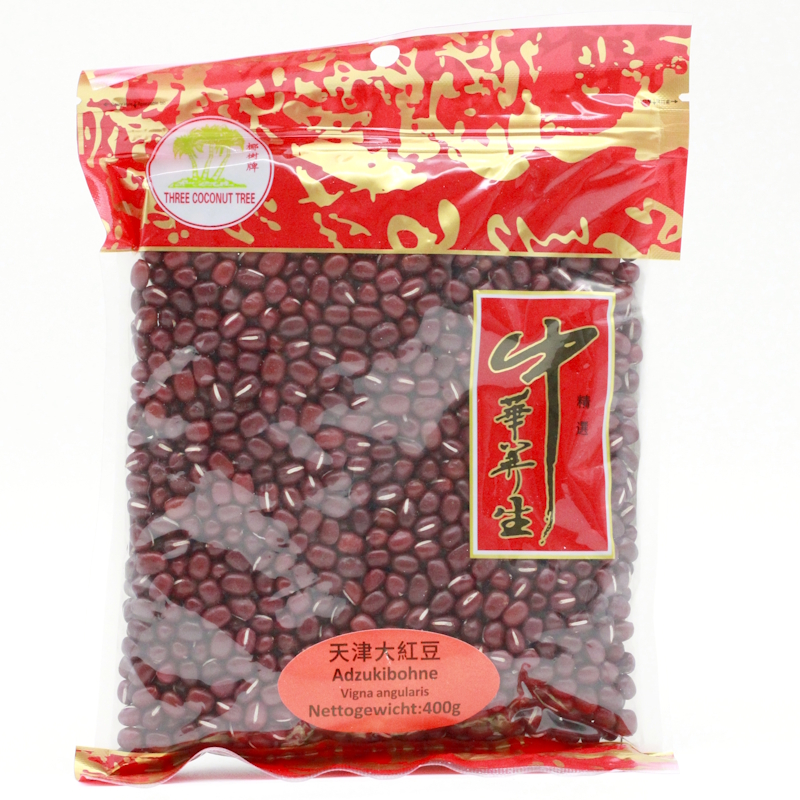
Adzukibohnen 400g (getrocknete rote Bohnen, für Anko, Mochi, Dango & Dorayaki), Three Coconut Tree
Diese getrockneten Adzukibohnen sind eine klassische Zutat der japanischen Küche und werden häufig für süße Bohnenpaste (Anko) verwendet. Sie eignen sich ideal für traditionelle Desserts…
In stock
When making your own anko adzuki bean paste, start by covering the dried adzuki beans with plenty of cold water. Bring everything to a gentle simmer for 5 minutes, so that the unpleasant tannic acid has time to leach out of the beans.
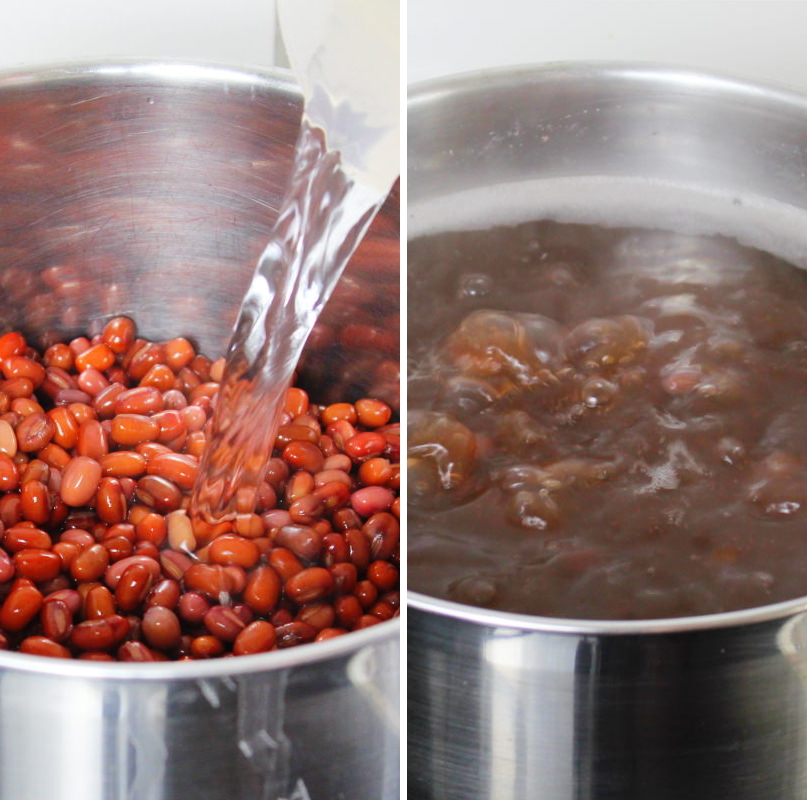
The adzuki beans are then briefly rinsed under running water and any damaged beans are sorted out. The washed beans are then boiled for 1.5 hours until they are tender enough to be easily mashed.
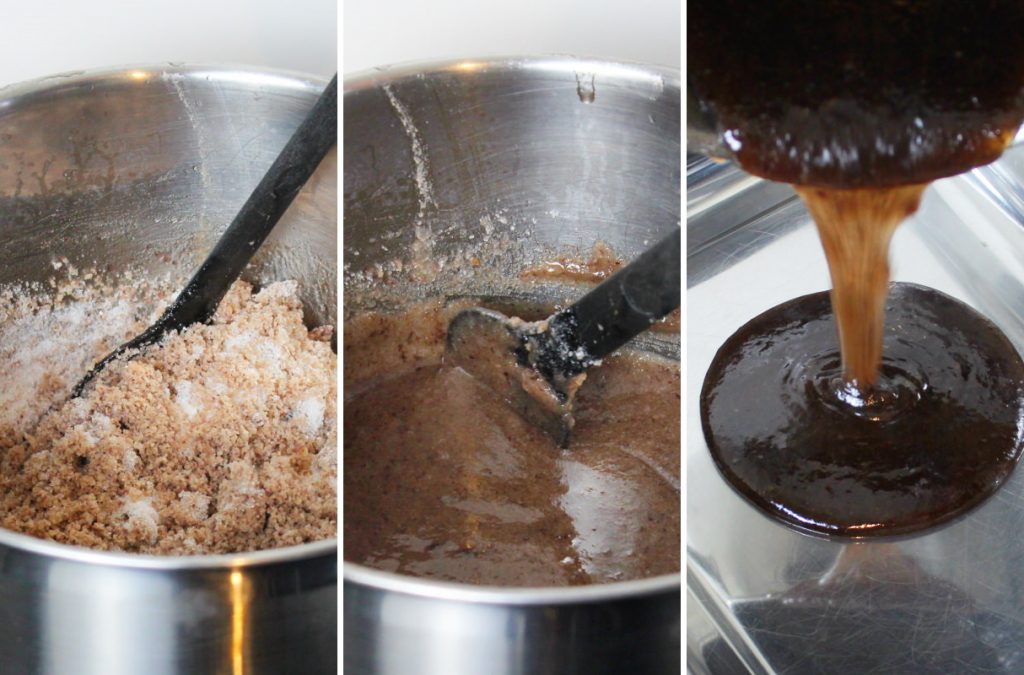
After cooking, the beans are drained and left whole for tsubu-an, or passed through a fine-mesh sieve for koshi-an. Next, the soft beans are sweetened by simmering the sugar with the beans for at least 10 minutes. The sugar will slowly liquefy and then reduce to a slightly thick consistency. As soon as the mixture has a lovely sheen, the anko is ready. It is poured into a large shallow bowl or a baking dish, smoothed out and left to cool completely.
A little tip: it’s best to leave the finished anko until the next day before using it. To do this, cover it airtight and place it in the fridge overnight so that the sugar can soak into the adzuki beans and the mixture becomes nice and firm.
And here’s what you can make with anko – my favourite recipe ideas for this sweet adzuki bean paste:
- Ichigo Daifuku Mochi – with anko & whole strawberries
- Dorayaki with anko (sweet red adzuki bean filling)
- Mame Daifuku Mochi – traditional glutinous rice balls with red bean paste
- Nama Yatsuhashi – Matcha and cinnamon Mochi from Kyoto with sweet tsubu-an
- Shiratama Zenzai – sweet adzuki bean soup with mini Mochi balls
Right, let’s roll up our sleeves: we’re making anko today!
Anko (coarse & fine)
makes 300–400 g | 120 minutes | 334 kcal
🖨️ Print PDF 📌 Save this pinRed anko is a very famous, traditional Japanese bean paste – it is made from small, red adzuki beans, which are gently cooked and heavily sweetened. Thanks to the beans’ thin skins, the finished paste is particularly soft, creamy and perfect for making all sorts of traditional Japanese sweets. And here’s how to make it!
Ingredients (coarse: 400 g tsubu-an | fine: 300 g koshi-an)
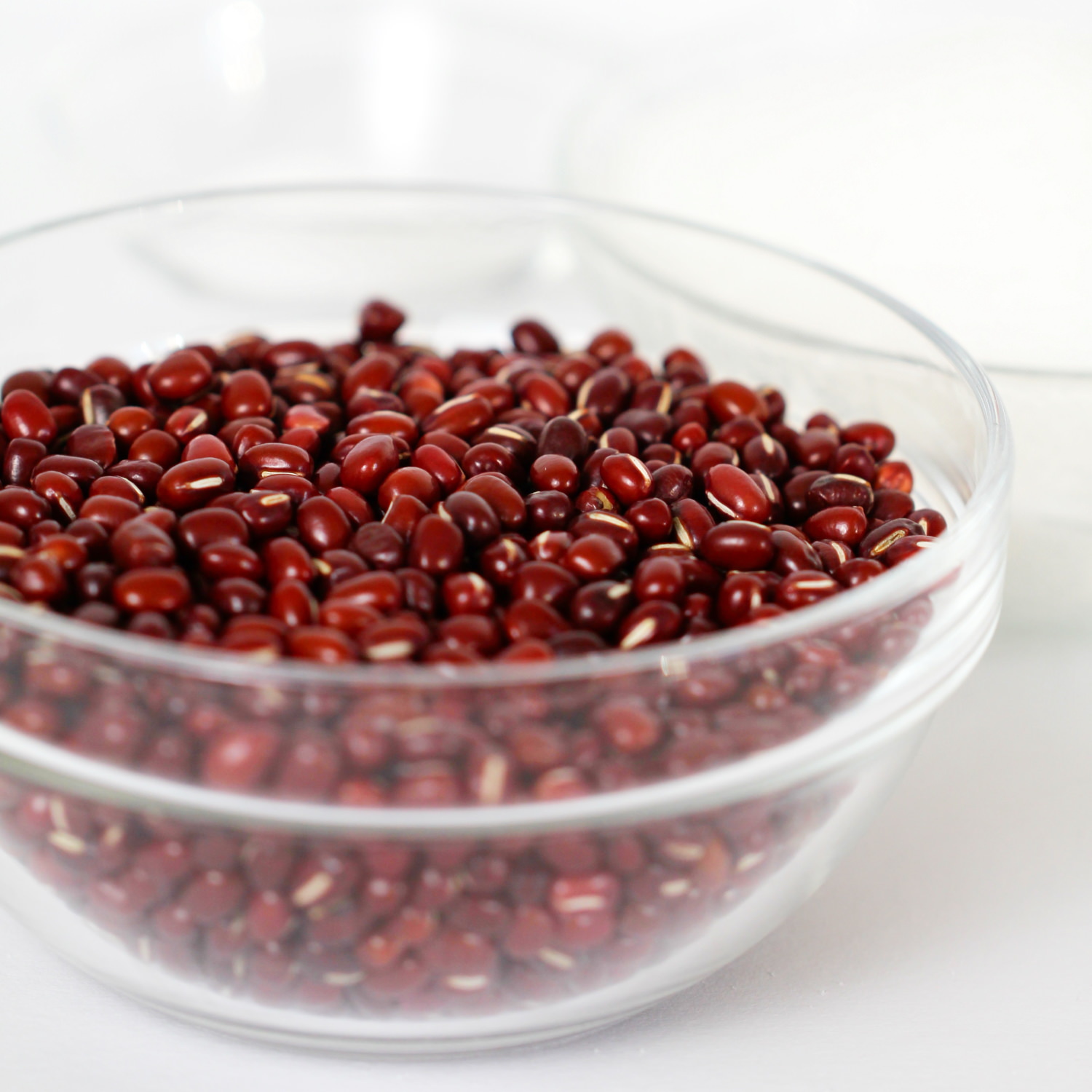
150 g adzuki beans (dried) (im Shop ansehen)
225 g sugar
Preparation (2 hours)
Step 1
Prepare the ingredients for the homemade adzuki bean paste.
Step 2
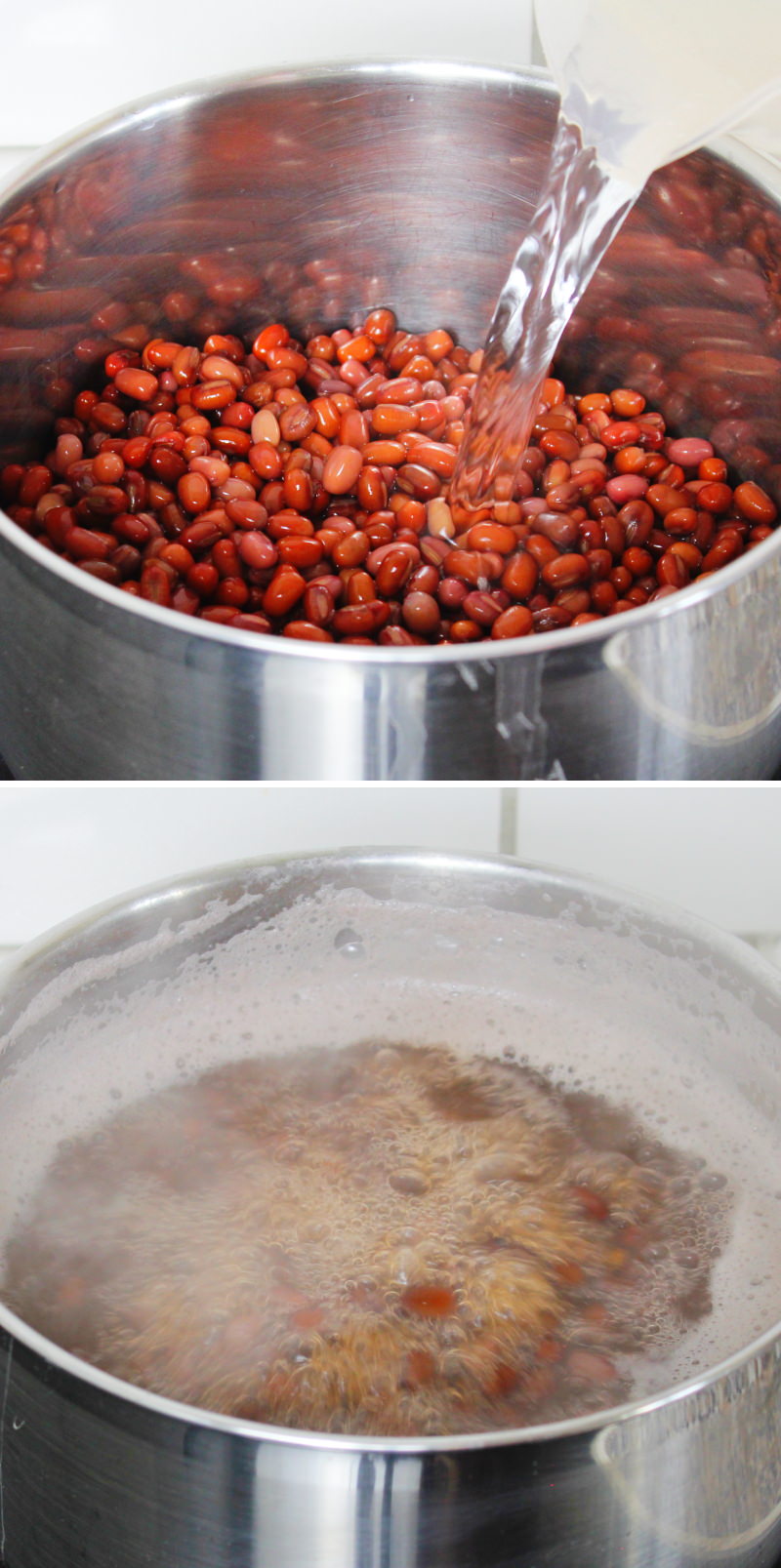
First, prepare the adzuki beans: To do this, place the dried adzuki beans in a large saucepan and pour 750 ml of cold water over them. Bring everything to the boil over a medium heat, then reduce the heat and simmer the beans gently for 5 minutes.
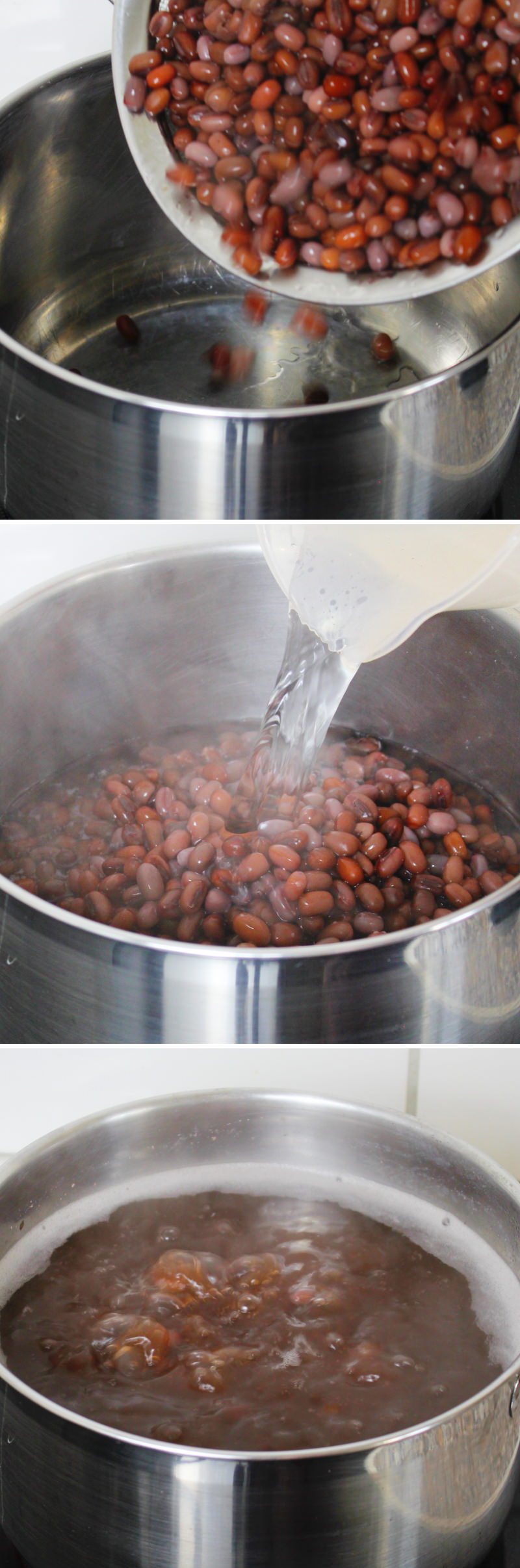
Step 3
After 5 minutes, drain the adzuki beans through a sieve and rinse briefly under running water. Remove any damaged beans. Return the washed beans to the large saucepan. Add another 750 ml of fresh, cold water and bring everything slowly to the boil over a medium heat with the lid on.
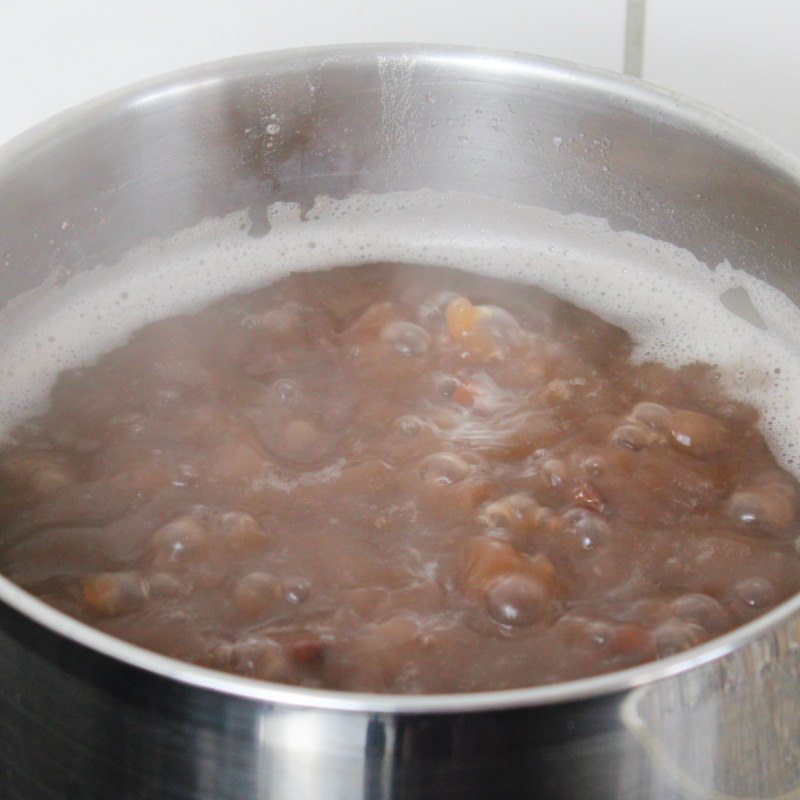
Step 4
Once the beans have come to a vigorous boil, reduce the heat, cover with a lid and leave to simmer gently for 1.5 hours.
Tip: Make sure that there is always enough water covering the beans. It’s best to check every 20 minutes and, if necessary, top up with a generous splash of fresh water so that the water level remains the same.
Once cooked, the beans should be very soft and very easy to mash.
Tip: It’s best to fish one or two beans out of the water and try mashing them with a fork. If this is very easy to do and the inside of the beans is nice and soft, the adzuki beans are cooked through.
Then drain the beans through a sieve; the cooking water is no longer needed.
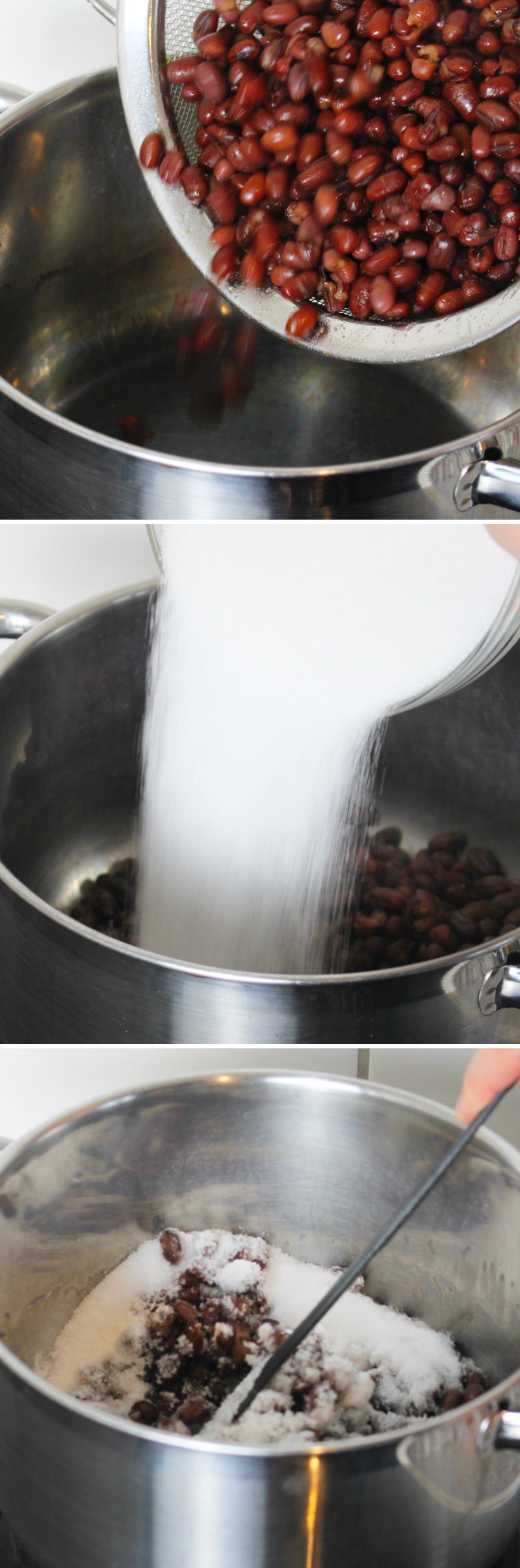
Step 5 – for coarse Tsubu-an
For Tsubu-an, i.e. coarse Anko: Gently return the softened adzuki beans to the saucepan. Add the sugar to the cooked beans in the saucepan. Set the hob to a medium heat and stir the mixture for 10 to 15 minutes continuously but gently (ideally, the beans should not be crushed).
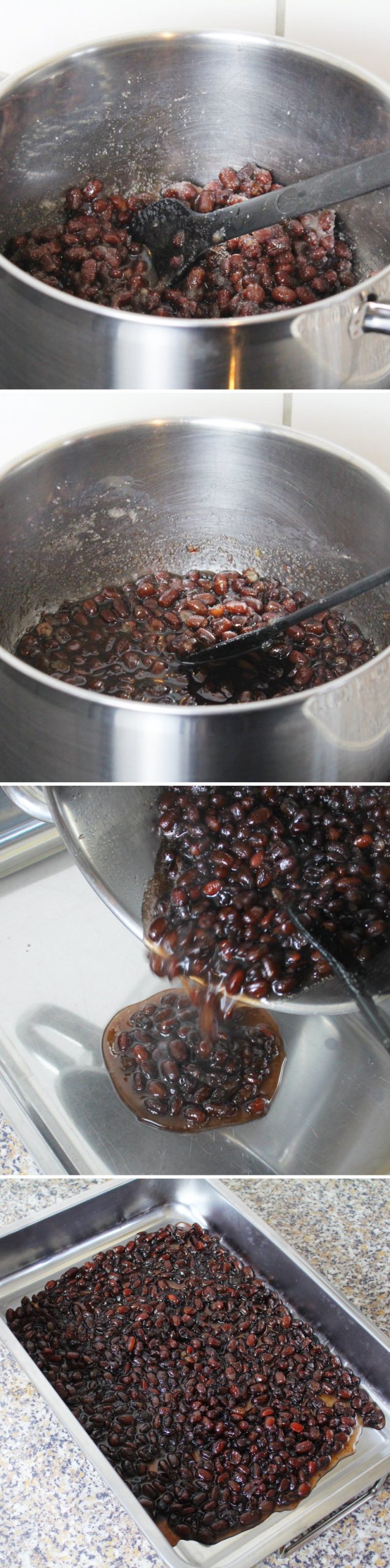
Step 6. Step – for coarse tsubu-an
The sugar will slowly liquefy and then reduce to a syrupy consistency. As soon as the adzuki bean and sugar mixture has a lovely sheen and is slightly thick, the tsubu-an is ready. Spoon the anko into a large, shallow bowl or a baking dish, smooth the surface and leave to cool completely.
Step 7 – for fine koshi-an
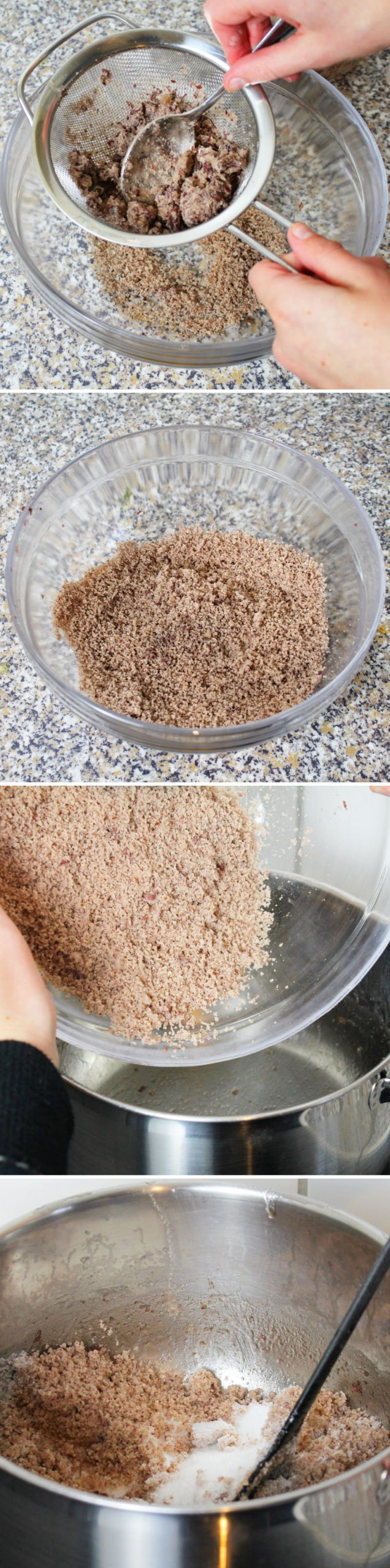
For koshi-an, i.e. fine anko: Spoon the softened adzuki beans into a fine-mesh sieve and carefully press the beans through with a spoon. This separates the skins from the beans, and the skins can be discarded. Return the bean purée to the saucepan and add the sugar. Set the hob to a medium heat and stir the mixture continuously for 10 to 15 minutes continuously to prevent it from burning.

Step 8 – for smooth Koshi-an
The sugar will slowly melt and then reduce to a jam-like consistency. As soon as the mixture has a lovely sheen and is slightly thick, the Koshi-an is ready. Spoon the Anko into a large, shallow bowl or a baking dish, smooth the surface and leave to cool completely.
Step 9
The homemade anko is now ready. However, it’s best to leave it until the next day before using it. To do this, cover it airtight and place it in the fridge overnight so that the sugar can soak into the adzuki beans and the mixture becomes nice and firm.
Would you like to use the anko to make wonderful desserts just like in Japan, which will have you and your guests eating out of your hand? Here are my favourite recipe ideas:
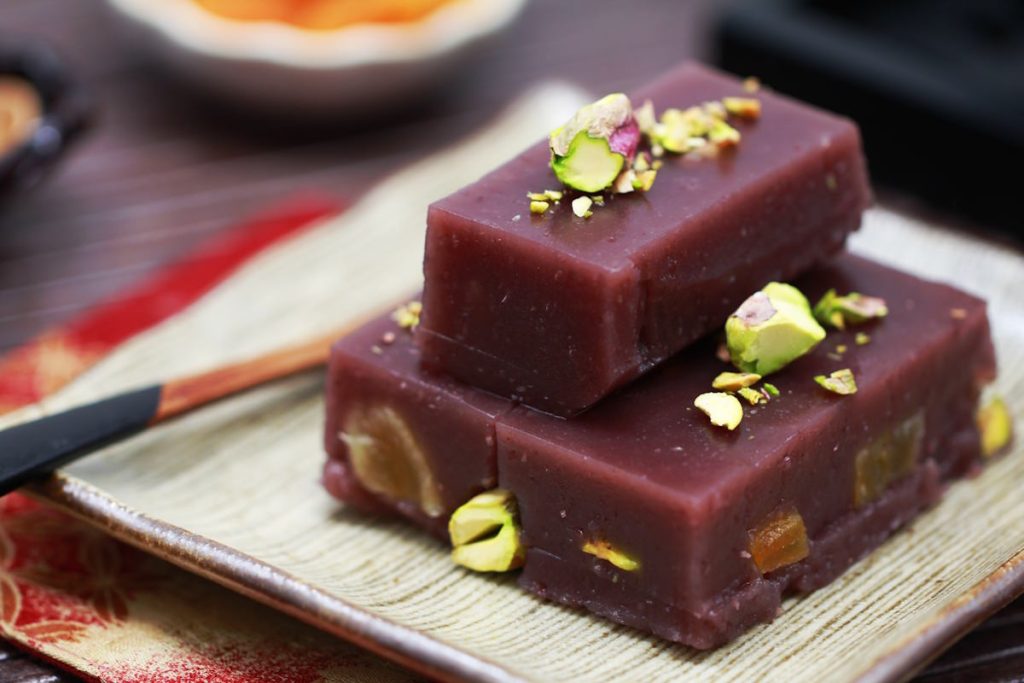
Make your own Yokan: Japanese jelly with red bean paste, apricot & pistachio filling
Yokan is a classic Japanese jelly made from red bean paste and agar-agar, which captivates…
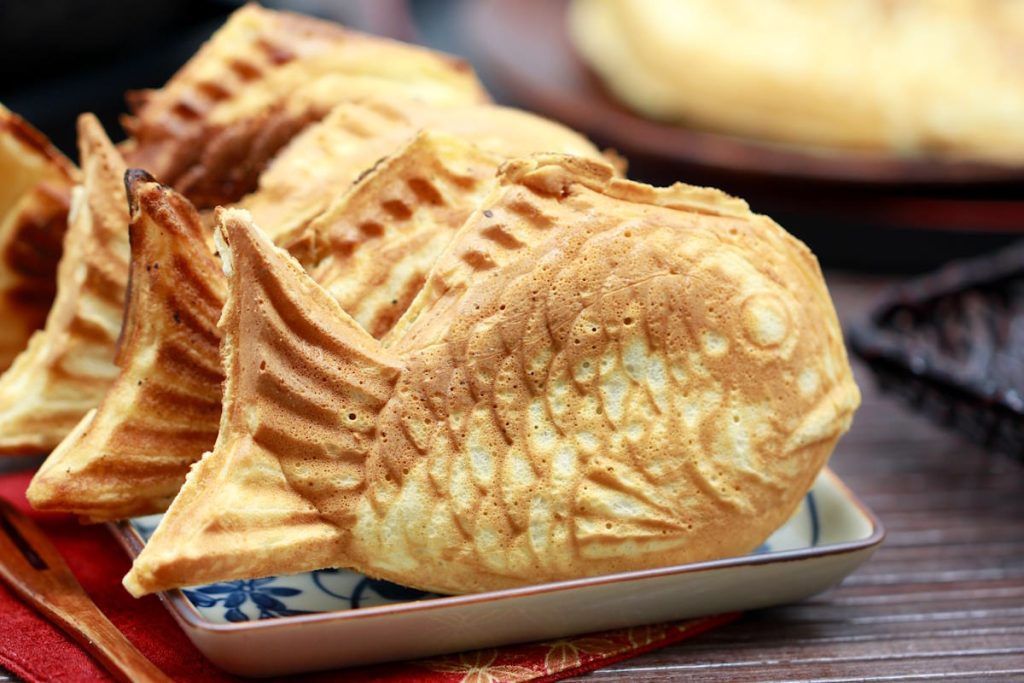
Make your own taiyaki: Japanese fish-shaped waffles with sweet anko filling – easy & so delicious!
Taiyaki is a classic of Japanese street food and delights with its charming fish shape…
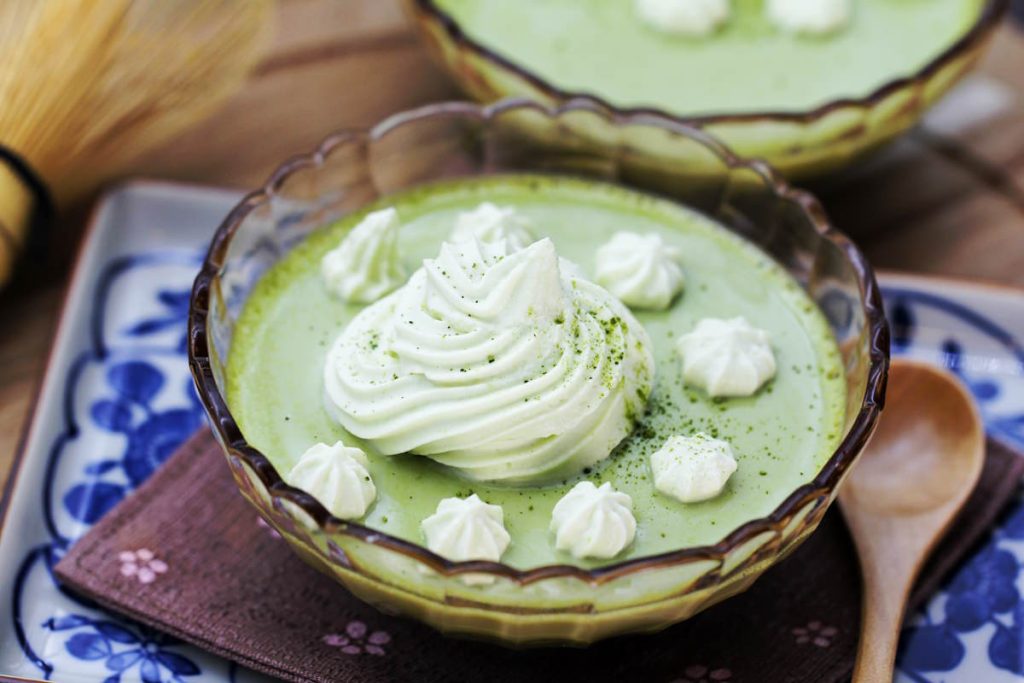
Matcha pudding with anko & matcha cream – a delicious dessert made with Japanese green tea
Today I’m taking you on a sweet journey into the world of Matcha! Together we’ll…

A sweet treat: make your own matcha dorayaki with anko and matcha buttercream!
Are you ready to treat your taste buds to a touch of Japan? Discover the…
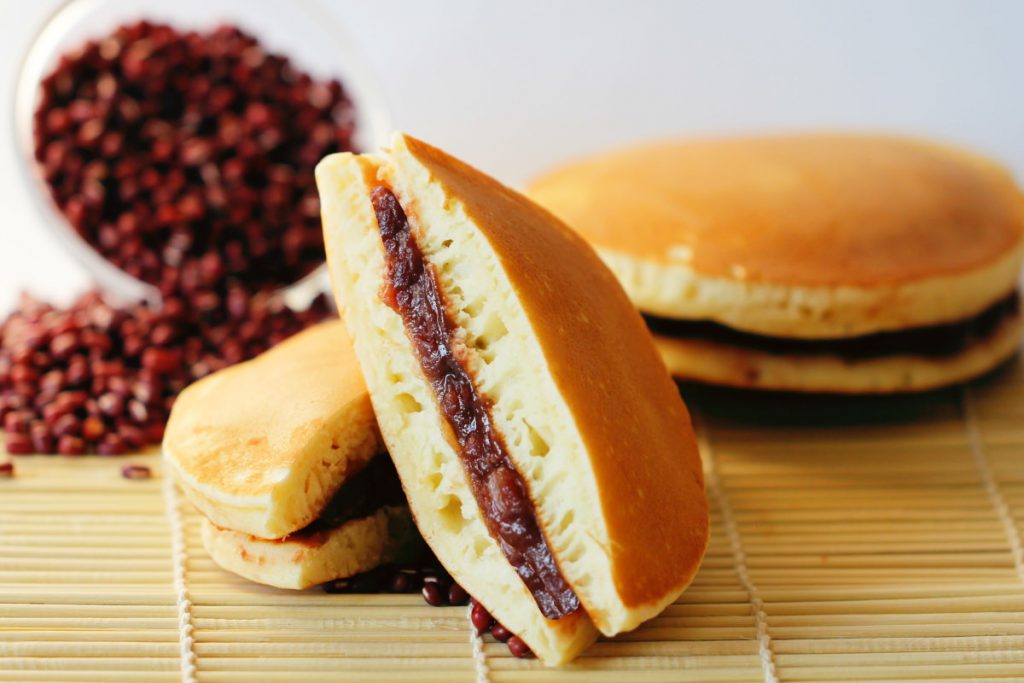
Sweet duo: How to make classic dorayaki with anko filling
Discover the sweet temptation from Japan: Dorayaki! These delicious little pancakes, which became famous in…
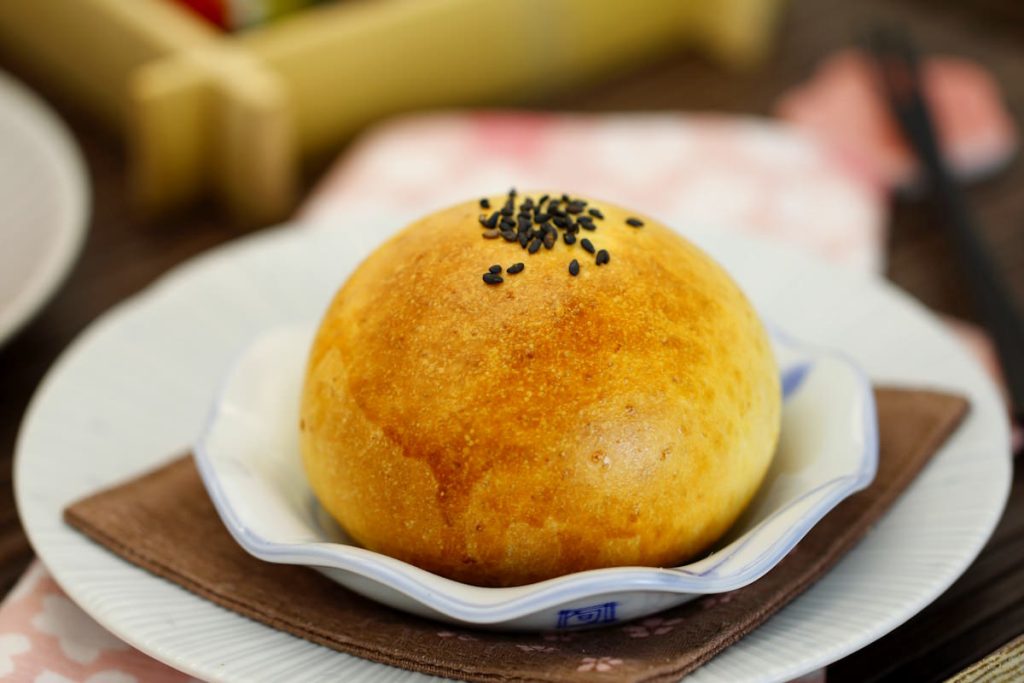
Make your own anpan: bake sweet buns with a delicious bean filling, just like in Japan
Wondering what the secret is behind the popular Japanese anpan buns? Let yourself be tempted…
Have you tried out the recipe? Let me know in the comments – I’m really looking forward to hearing from you.