
Language:


Tamagoyaki is the perfect example of the diversity of Japanese cuisine. This rolled omelette isn’t just an excellent side dish or topping for Sushi, but also a delicious addition to homemade bentos! The unique seasoning with Dashi, soya sauce and Mirin gives this omelette an unmistakable Japanese flavour that takes your taste buds on a culinary journey.
What is tamagoyaki?
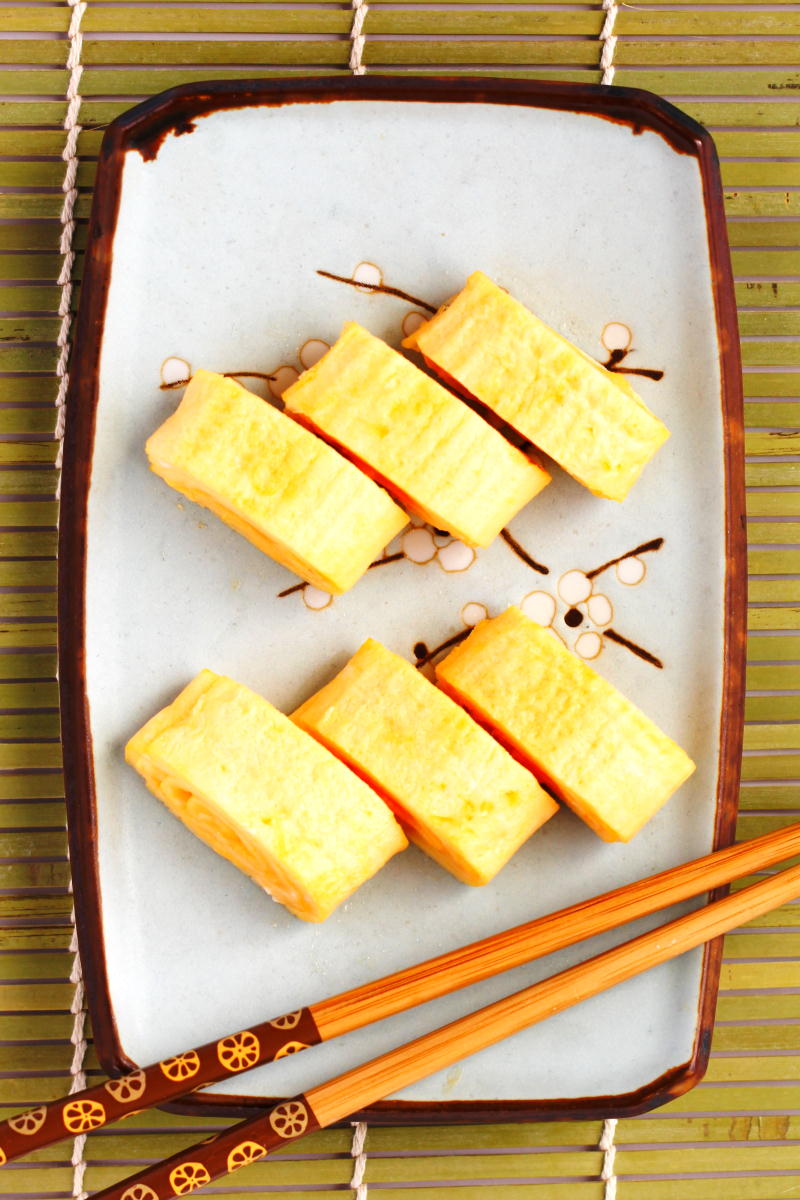
Tamagoyaki, a simple dish with deep roots in Japanese culture, captivates with its simplicity and versatility. This popular dish consists of eggs fried layer by layer in a rectangular pan.
The result is a sweet, savoury egg roll, served cut into thin slices. Tamagoyaki can range from sweet to savoury, depending on the ingredients added.
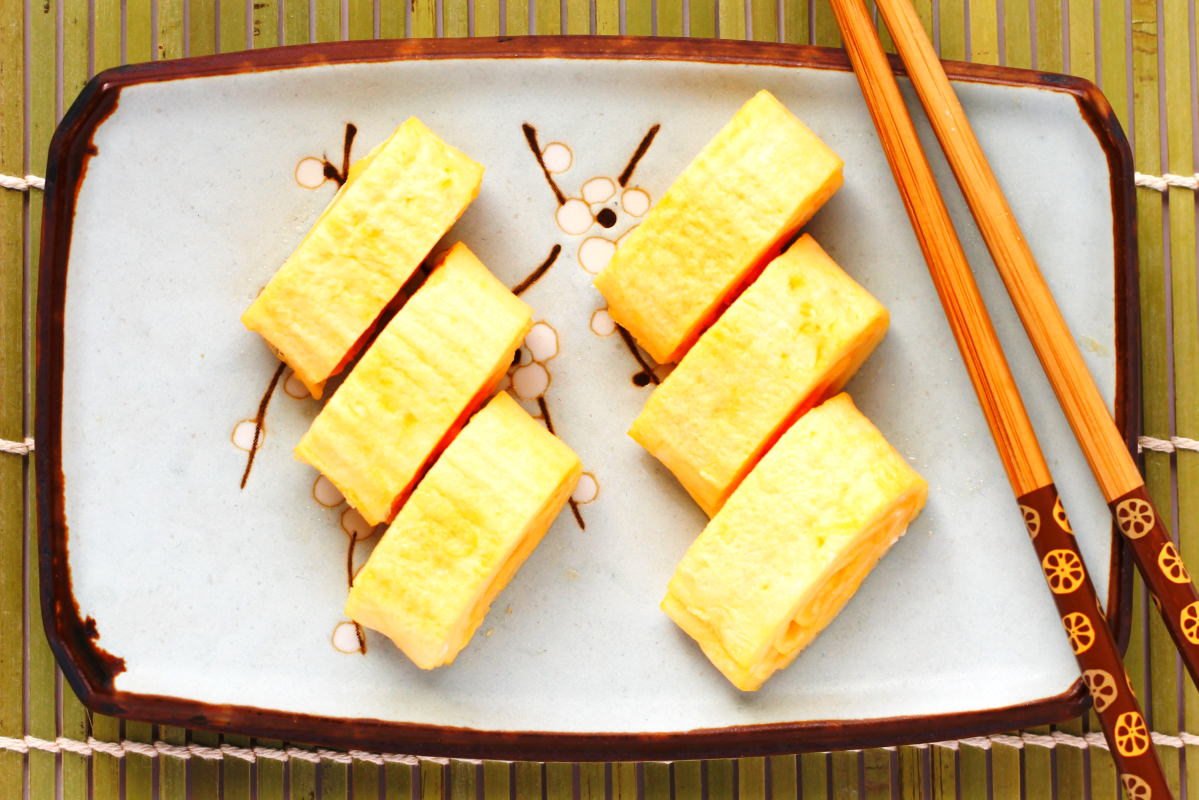
The classic version contains Mirin, soya sauce and often Dashi, which gives the dish a deep, Umami-rich flavour. In some regions of Japan, additional ingredients such as spring onions, carrots or even cheese are incorporated to create different flavours and textures.
This delicious side dish has a long history in Japan and is often found in Bento Boxes, served as part of a traditional Japanese breakfast or offered as an accompaniment to Sushi. It often symbolises good luck and prosperity, as its layered, golden appearance represents wealth and success. In the past, it was a luxury dish served only on special occasions, but today it is an integral part of everyday Japanese cuisine.
Making tamagoyaki yourself
Making tamagoyaki requires patience and practice, particularly when it comes to layering and rolling the eggs into a perfect, even shape. Traditionally, it is cooked in a special, rectangular tamagoyaki pan (makiyakinabe), which helps to achieve its characteristic shape.
CUSTOMER FAVOURITE
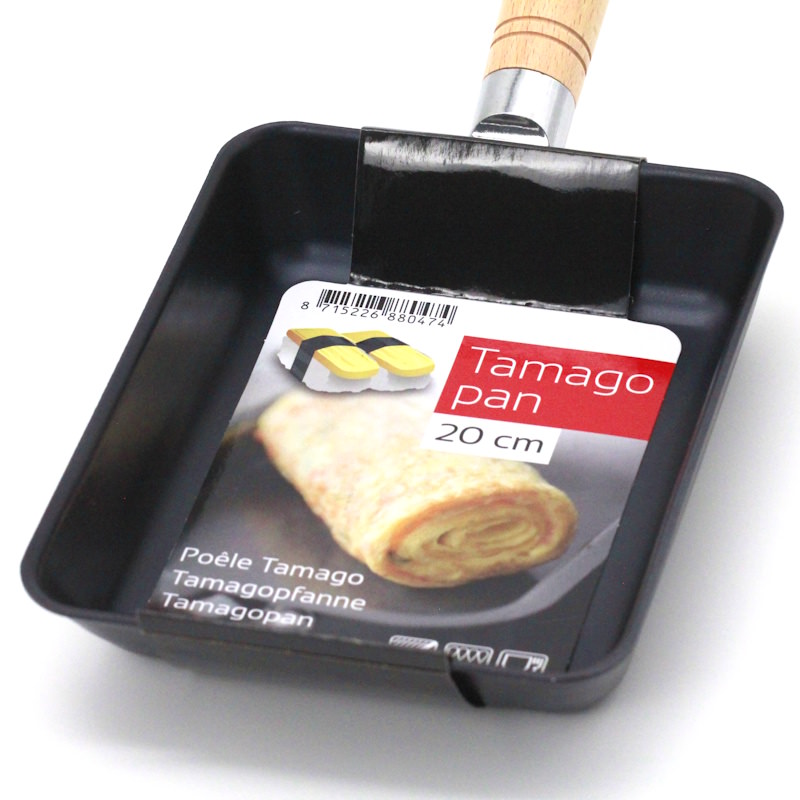
Tamagoyaki Pfanne “Makiyakinabe” 20×15 cm (rechteckige Omelettpfanne, induktionsgeeignet)
Mit dieser rechteckigen Pfanne gelingen dir japanische Omeletts wie Tamagoyaki ganz einfach. Die spezielle Form hilft beim sauberen Rollen, der Holzgriff liegt gut in der…
In stock
The key to a good tamagoyaki lies in the consistency of the egg mixture and the heat of the pan. Too high a heat can cook the eggs too quickly and make them dry, whilst too low a heat can leave the dish mushy!
Unlike Western omelettes, the Japanese version is not seasoned with salt, pepper or chopped chives — but with typical Japanese staple ingredients:
- Shoyu (im Shop ansehen)
- Mirin (im Shop ansehen) and
- Dashi broth (im Shop ansehen).
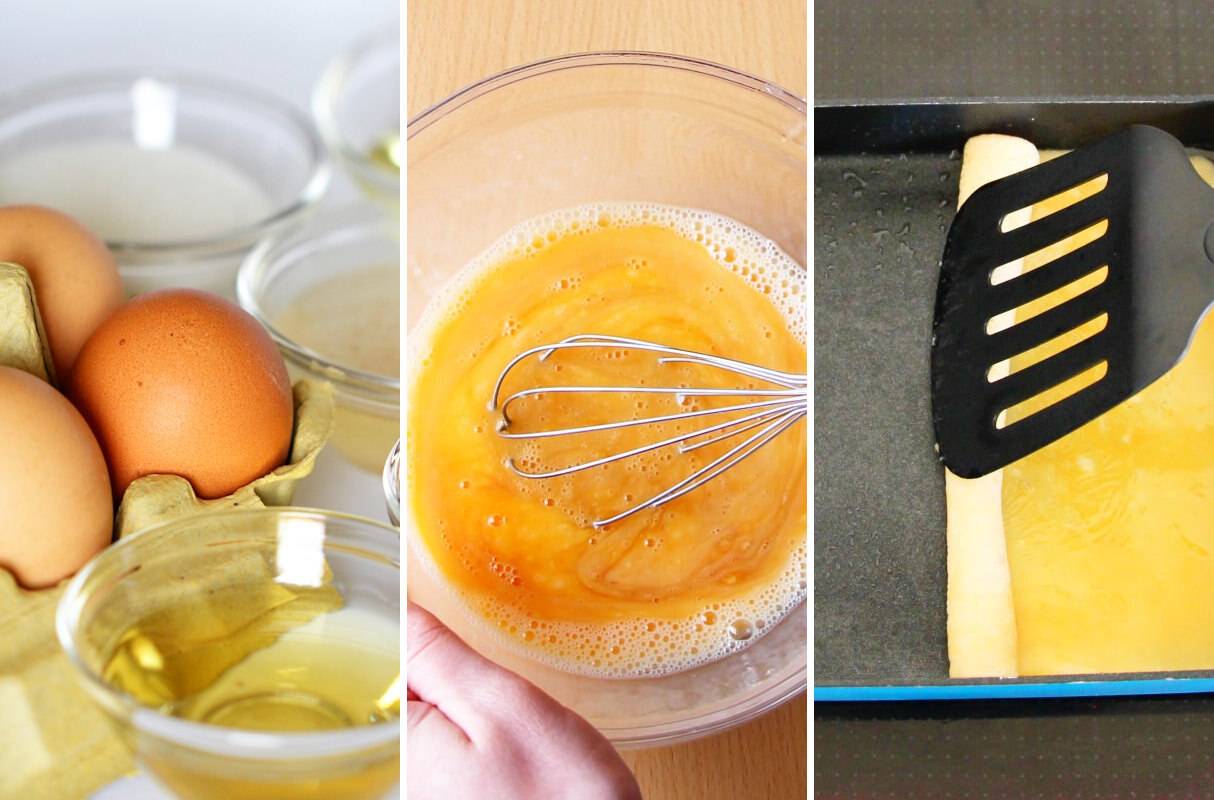
Strictly speaking, the Japanese omelette prepared here is known as ‘dashimaki Tamago’ due to the addition of Dashi broth. To make it, the liquid batter – consisting of beaten and seasoned eggs – is typically fried in a special rectangular cast-iron pan (makiyakinabe). The shape of the tamagoyaki pan, with its curved rim on one side, makes it ideal for rolling the omelette properly and cutting it into traditional slices.
Layer by layer, the egg mixture for tamagoyaki is fried in the pan. In this way, the omelette roll becomes thicker and thicker over several stages.

Tip
Makiyakinabe are usually around 13 × 19 centimetres in size — professionals use aluminium or cast-iron models . Non-stick versions are also suitable for beginners.
Tamagoyaki is more than just a dish – it is a cultural symbol that embodies Japanese tradition and the importance of simplicity and perfection in the kitchen. Its rich, Umami-packed flavour, combined with its soft, layered texture, makes it an unrivalled delight. It is a testament to how simple ingredients, with the right technique and care, can be transformed into something truly unique.
I’ll now show you exactly how the recipe works! I hope you have fun and every success in making the rolled Japanese omelette, tamagoyaki! If you have any questions or would like to share your own experiences, please feel free to leave a comment below the recipe. I hope you enjoy making and eating it!
Tamagoyaki
Serves 4 | 15 minutes | 105 kcal
🖨️ Print PDF 📌 Save this pinTamagoyaki, the traditional Japanese omelette, is a fascinating dish thanks to its versatility as a side dish and as a popular Sushi topping. Dashi, soya sauce and Mirin are mixed into beaten eggs, giving the dish a distinctive Japanese flavour. Ideal for bentos, tamagoyaki adds a delicious and authentically Japanese touch to any meal.
Ingredients (serves 4)
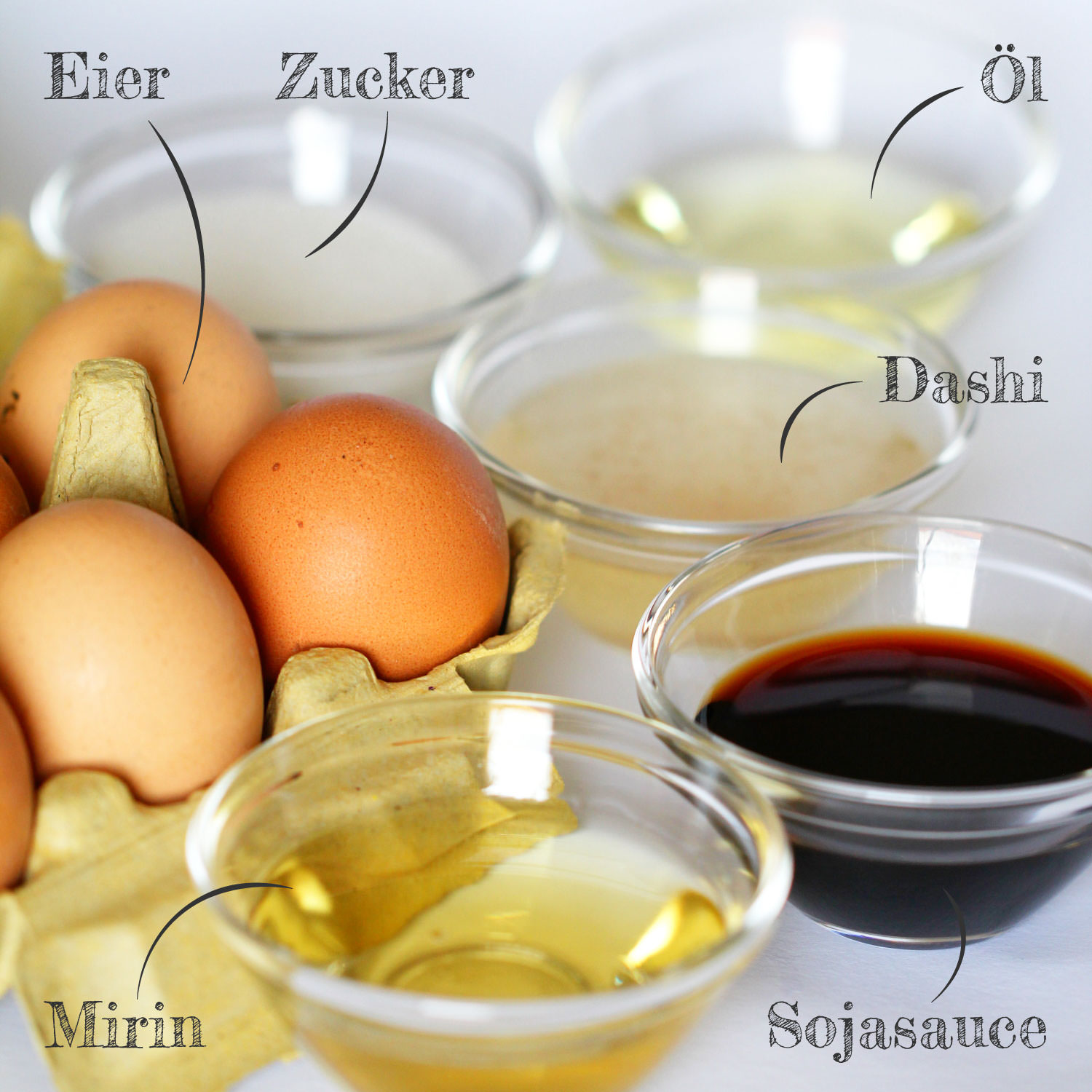
4 eggs
4 tbsp Dashi broth (im Shop ansehen)* (see recipe)
1 tbsp soy sauce (im Shop ansehen)*
1 tbsp Mirin (im Shop ansehen)*
1 tsp sugar
1 tbsp oil (e.g. sunflower or rapeseed oil)
Makiyakinabe – Tamagoyaki pan
Bamboo mat (im Shop ansehen)
Preparation (15 minutes)
Step 1
Get the ingredients ready for the homemade Tamagoyaki and prepare the Dashi broth if needed (here for the recipe for Japanese Dashi broth).
Step 2
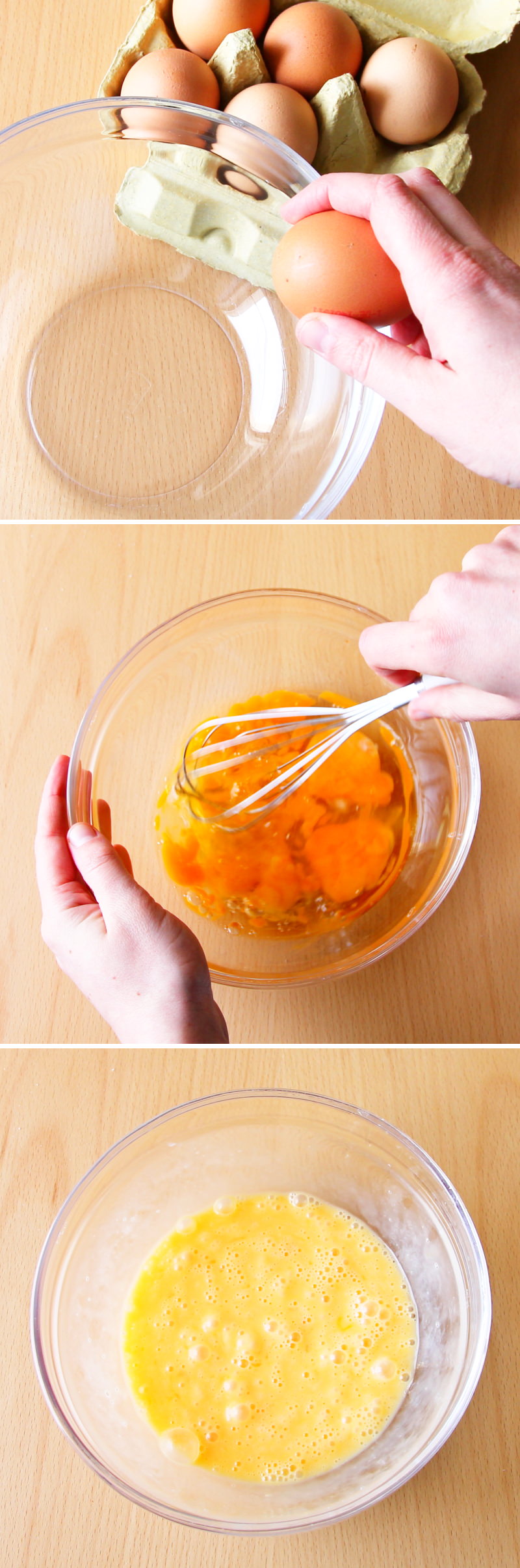
Beat the eggs in a medium-sized bowl using a whisk or a fork.

Step 3
Add Dashi broth, soya sauce, Mirin and sugar to the beaten eggs and mix well.
Step 4
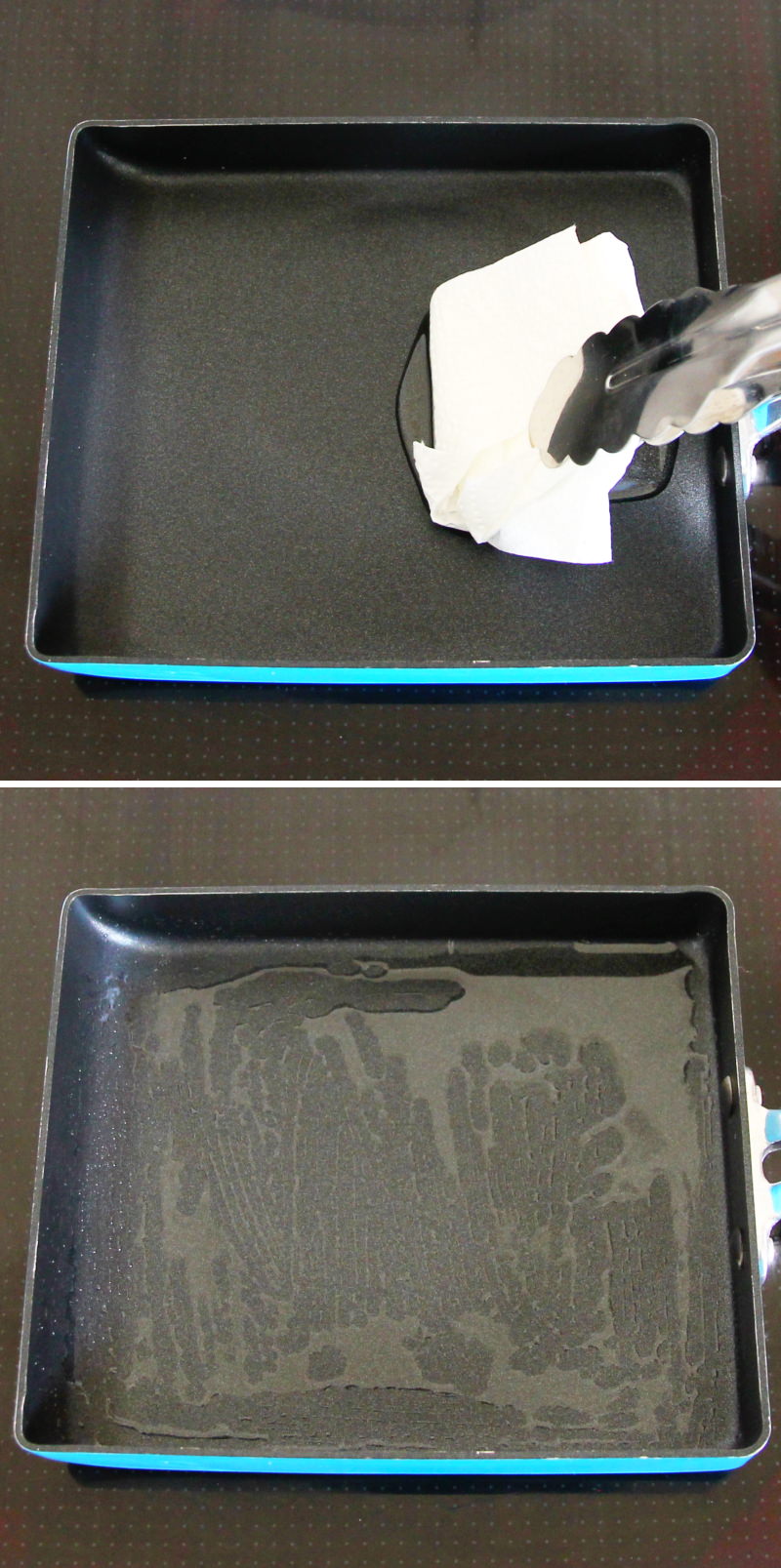
Coat a frying pan (ideally a square tamagoyaki pan) with a little oil using a folded piece of kitchen roll or a pastry brush, so that a light film of oil forms. Heat the pan over a medium heat .
Step 5
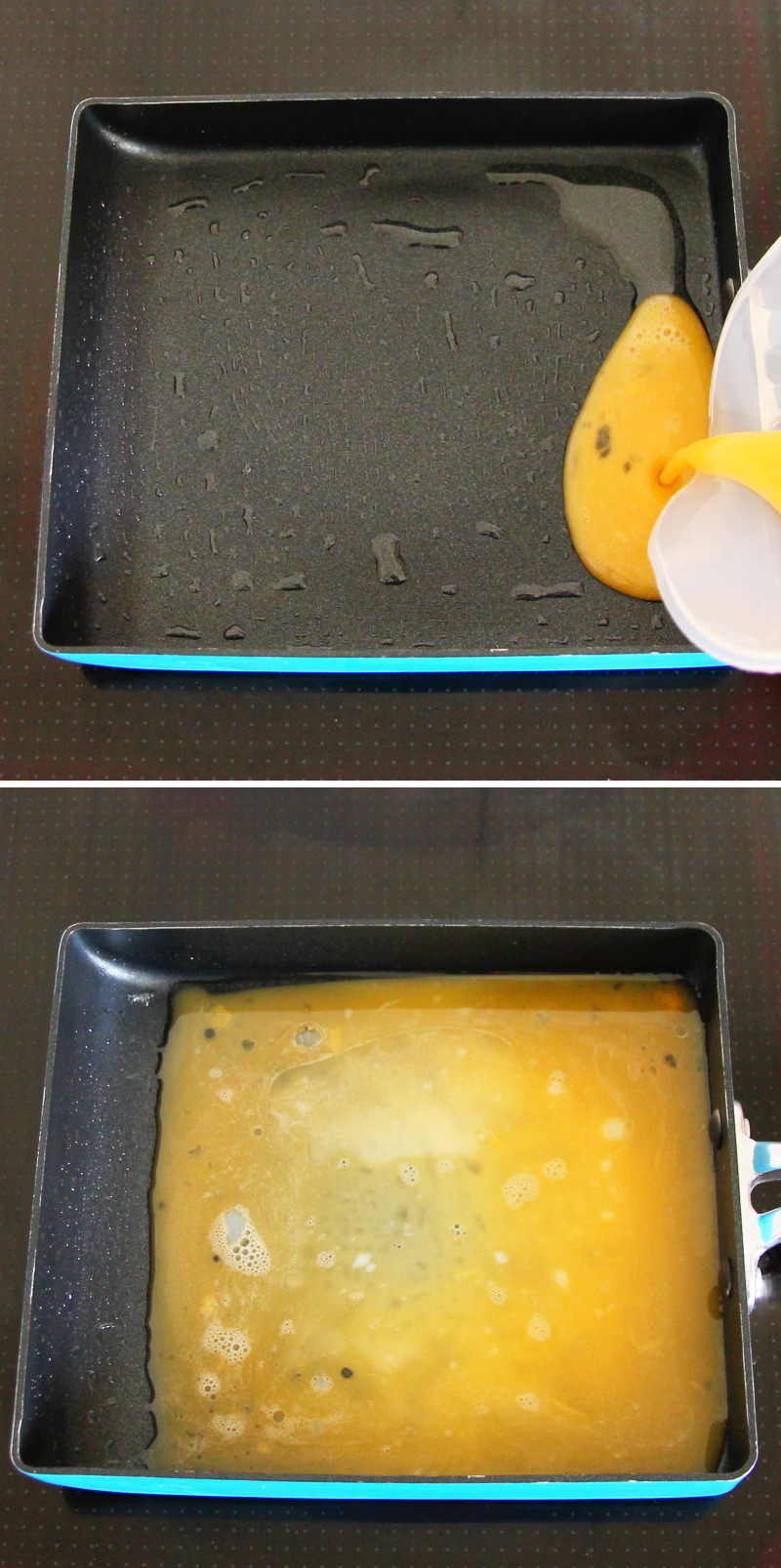
Pour about a quarter of the egg mixture into the pan: pour the eggs in at the top edge (where the pan handle is), then tilt the pan slightly so that the egg mixture spreads evenly across the pan.

Step 6
Carefully roll up the omelette – which is now setting, semi-firm and still moist on the surface – towards the pan handle using a spatula (or, for professionals, chopsticks). Slide the roll to the other end of the pan.
Coat the base of the pan again with oil and pour in another quarter of the egg mixture. Lift the rolled omelette slightly so that the egg mixture can spread out evenly.
As soon as the new omelette is only slightly moist, carefully roll the first roll over the semi-set mixture, so that the tamagoyaki roll becomes thicker and thicker.
Repeat the process two more times until all the egg mixture has been used up.
Step 7
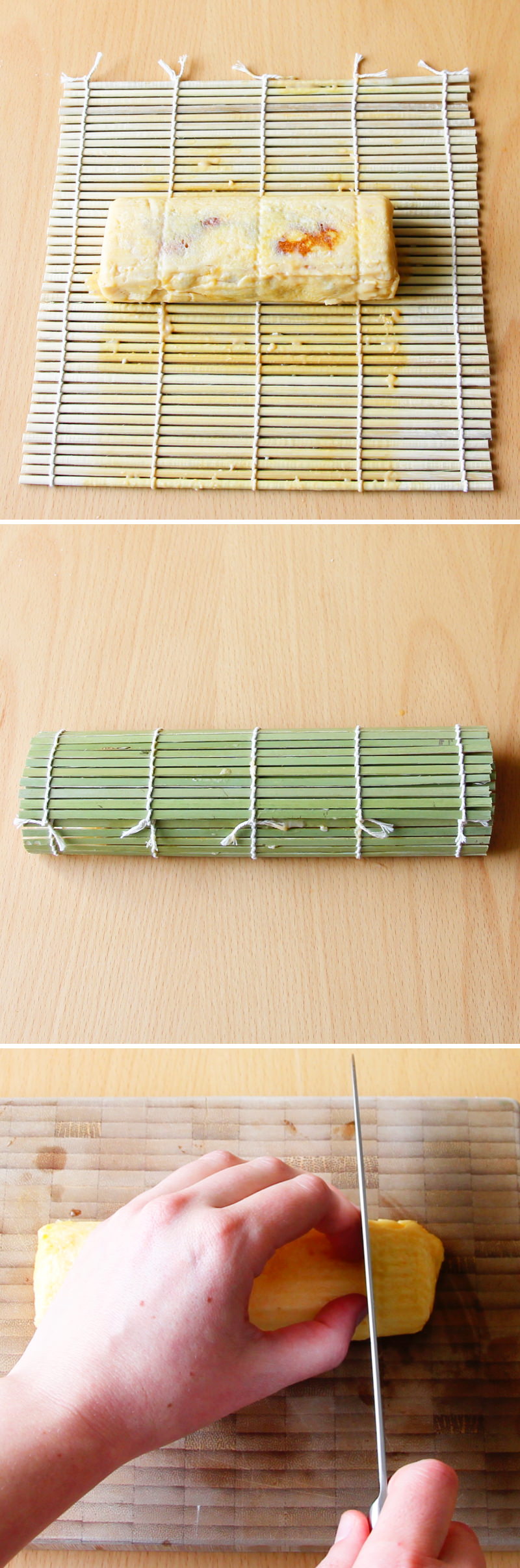
Once the egg has been rolled up for the final time, carefully lift the entire tamagoyaki roll out of the pan onto a sushi mat and roll it up. Leave it to rest like this for 3 minutes.
Then cut the tamagoyaki crosswise into 2 cm thick slices , so that the grain created by frying on one side is visible.
Step 8
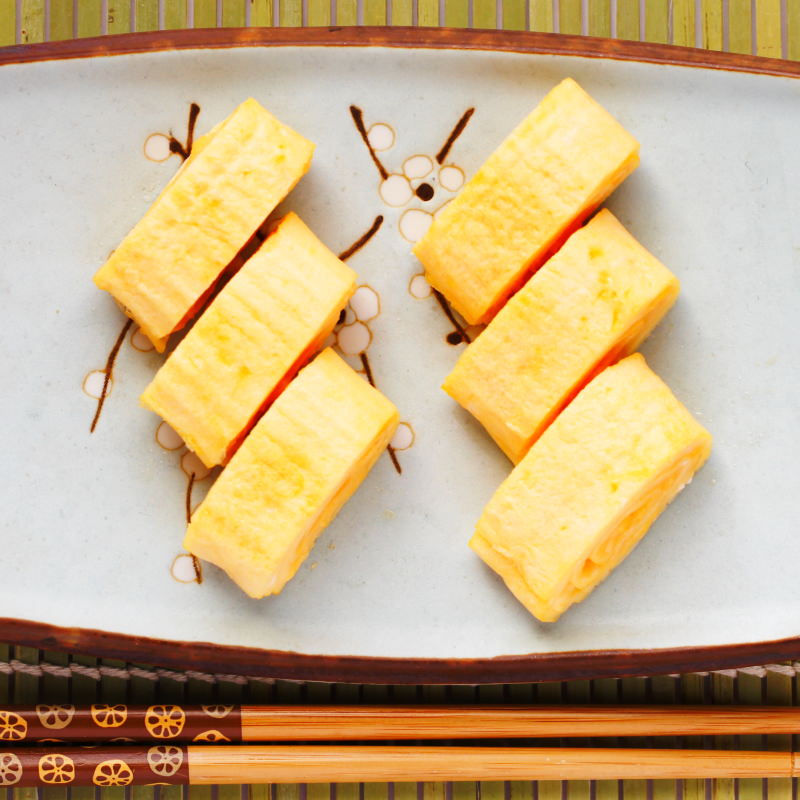
Serve the tamagoyaki or set it aside as a filling for maki sushi. Done – Itadakimasu!
Tamagoyaki is particularly popular as part of a Japanese Sushi menu. Here you’ll find my most popular Sushi recipes:
No post found!