
Language:


Korokke are among the best-known everyday fried dishes in Japanese cuisine. They combine simple ingredients with a straightforward technique and are a prime example of Yōshoku tradition: Western dishes that have been independently developed in Japan. To this day, Korokke remain an integral part of everyday culinary life, from supermarket hot counters and bento boxes to home cooking.
This recipe is based on the classic potato and minced meat version and explains not only the preparation but also the cultural and culinary background. The following sections provide an overview of what makes Korokke special, how they came about, what variations exist and how they are traditionally served.
What is Korokke?
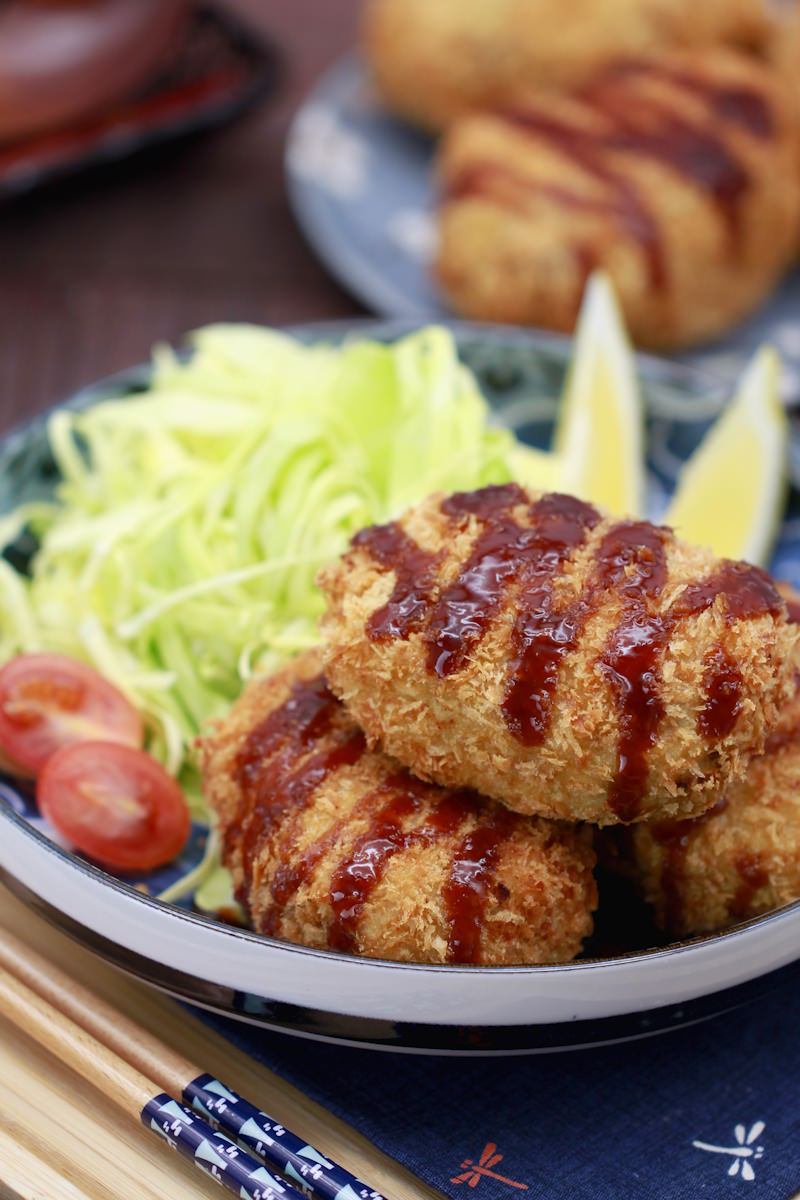
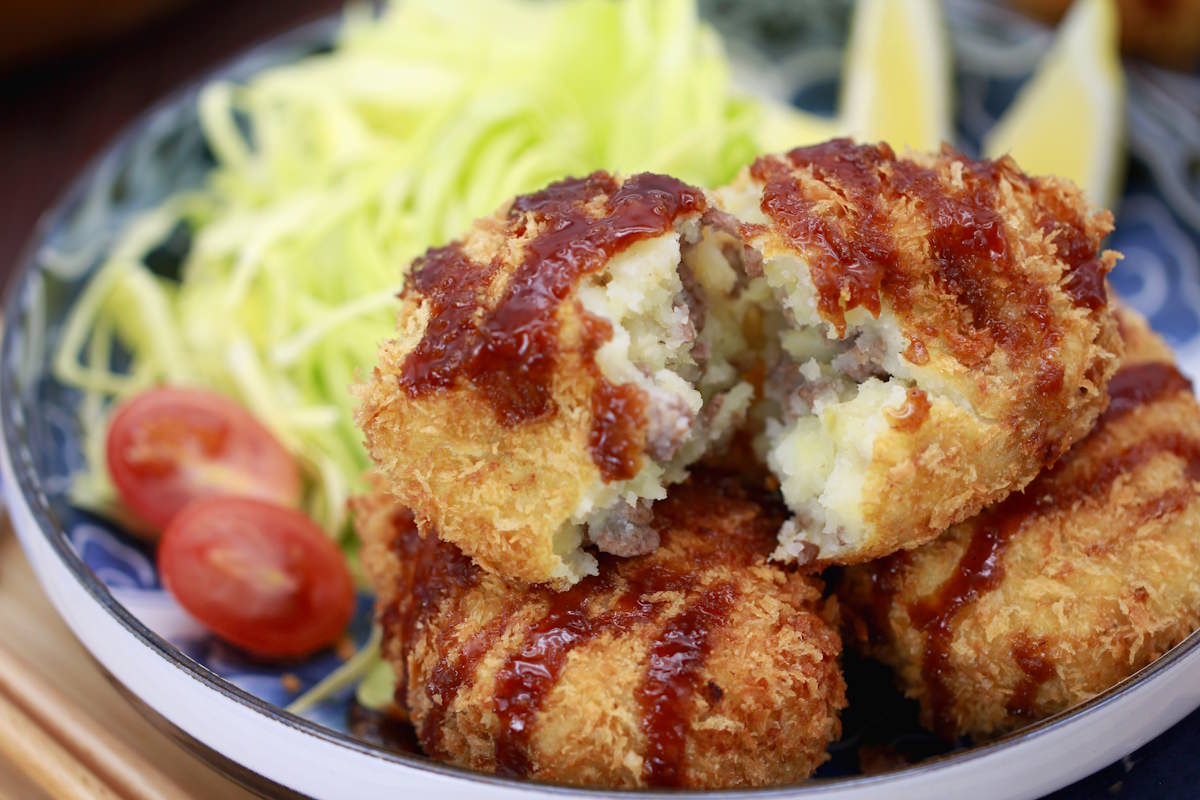
Korokke are Japanese croquettes made from mashed potato, usually combined with onions and minced meat. The shaped portions are traditionally coated in flour, egg and panko, then deep-fried until golden brown. A key characteristic is the texture: Unlike many European croquettes, Korokke are deliberately kept loose and slightly chunky on the inside, rather than being finely mashed or creamy.
In Japan, Korokke are considered a typical everyday dish. They are sold both freshly prepared and pre-fried at hot food counters, find their way into bento boxes, or are served as a simple meal with rice and salad. Thanks to their mild seasoning and crispy coating, they are versatile and appeal to a wide audience.
The history behind Korokke
Culinary-wise, Korokke belong to the category yōshoku, i.e. dishes of Western origin that have been adapted and further developed in Japan. Their roots lie in the French croquette, which arrived in Japan in the late 19th century during the Meiji era. During this period, the country deliberately opened itself up to Western influences, including in the kitchen.
Whilst early versions were still heavily based on the French original with béchamel sauce, the potato version soon became the norm in Japan. Potatoes were inexpensive, filling and readily available, which meant that Korokke quickly became a popular dish outside of upmarket restaurants. Butchers in particular helped to establish Korokke as an affordable, hot meal for everyday life – a development that continues to shape the dish to this day.
Potatoes in Japan (jagaimo)
Japanese table potatoes differ less fundamentally from European varieties, but rather in their typical texture and use. In Japan, a few versatile varieties are usually used, which are moderately starchy and remain soft yet retain their shape. This makes them ideal for stews such as Nikujaga or for Korokke, where the potato mixture needs to hold together without falling apart.
For this recipe, floury or predominantly waxy potatoes are therefore also suitable here, provided they are left to steam off well after cooking and are only roughly mashed.
Differences & Korokke Variations
The best-known form is the classic potato Korokke with minced meat, often inspired by the flavour of Nikujaga, a Japanese potato and meat stew. There are also numerous variations that differ in filling, texture and taste.
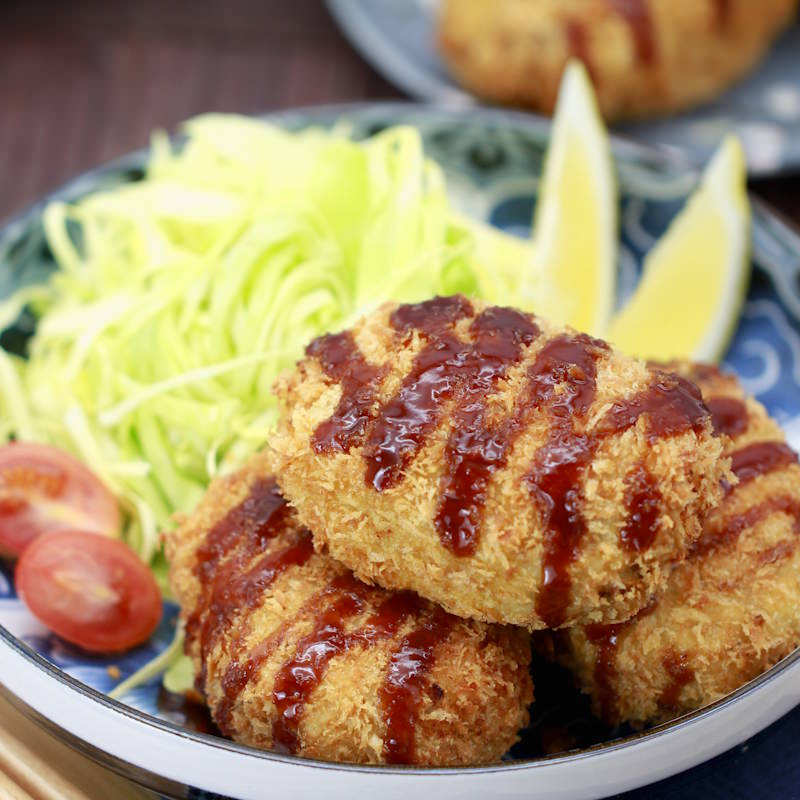
Very common are Cream Korokke, which are based on a thick white sauce – often containing crab or prawns. This variant is softer, creamier and is considered somewhat more luxurious. There are also vegetarian Korokke with vegetables, curry-spiced versions or regional variations that incorporate local ingredients. Despite this variety, the basic principle always remains the same: a mild, mouldable mixture, encased in a crispy panko coating.
Making Korokke yourself: Here’s how
Making Korokke at home is less time-consuming than it first appears. It is not special ingredients that are crucial, but a clean method and the right consistency of the individual components. Once you have grasped the basic principles, you can prepare Korokke reliably and with ease, both as a main course and as a meal prepared in advance for later.
The focus is on the interplay between the potato mixture, mild seasoning and crispy breadcrumb coating. The potatoes are first boiled until soft and then only roughly mashed. This deliberately uneven texture is typical of Japanese Korokke and ensures that they remain light and fluffy on the inside and do not become compact or pasty. The minced meat and onion mixture is fried separately and seasoned sparingly so that it complements the potatoes without overpowering them.
The key ingredients for classic Korokke:
- Potato base: Floury potatoes are particularly suitable as they are easy to mash and produce a mouldable, dry mixture. It is important to let the potatoes steam off briefly after cooking so that excess moisture escapes.
- Filling: Minced meat and onions are fried gently until the onions are soft and slightly sweet and the meat is just cooked through. The mixture should be savoury but not heavily seasoned. Korokke thrive on restraint and balance.
- Breading: The classic breading made from flour, egg and panko provides the characteristic crispiness. The panko is only pressed on gently so that the crust remains light and airy during frying and does not become too dense.
- Frying: A moderate oil temperature is crucial. Oil that is too hot causes the coating to brown quickly whilst the inside remains cold; oil that is too cool makes the Korokke greasy. At around 170–175 °C, they cook evenly and turn a golden brown.
CUSTOMER FAVOURITE
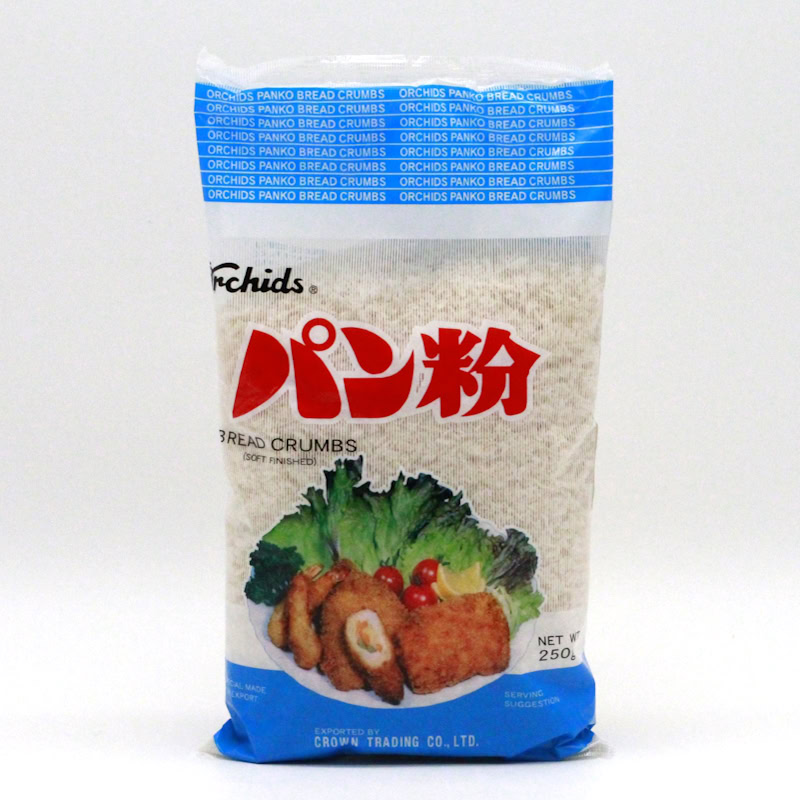
Panko 250g (japanisches Paniermehl, grobe Semmelbrösel), Orchids
Panko ist typisch japanisches Paniermehl. Die hellen, luftigen und groben Pankoflocken werden beim Braten oder Frittieren besonders knusprig, wodurch japanische Gerichte wie Tonkatsu, Kare Pan…
In stock
How it works:
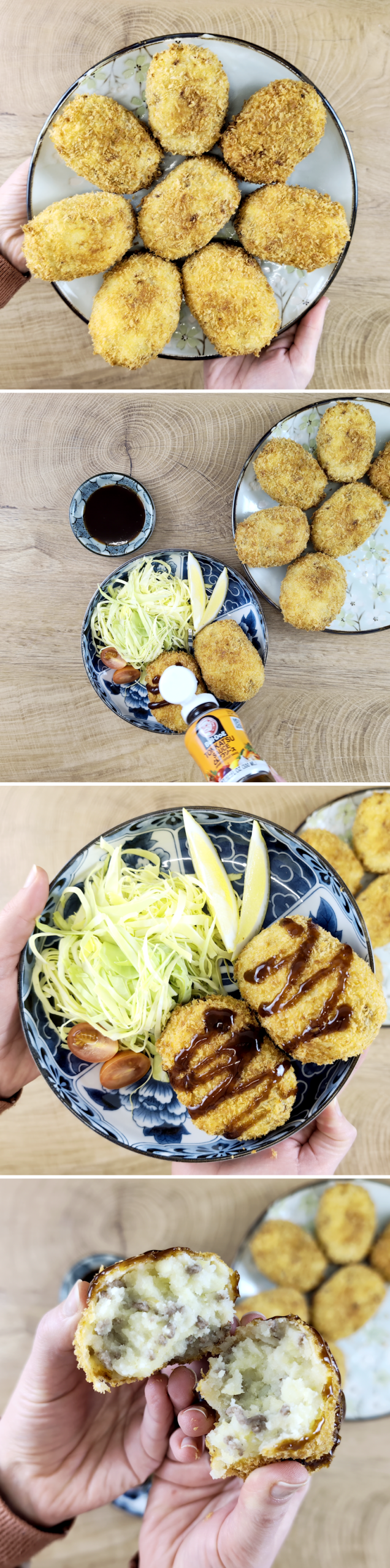
First, the potatoes are boiled, roughly mashed and set aside. At the same time, the onions and minced meat are fried and then folded into the potato mixture. After a short cooling period, the mixture is easy to shape. The shaped Korokke are breaded and deep-fried in batches until they are crispy on the outside and hot on the inside. Served immediately, they show off their typical texture best: crispy on the outside, soft on the inside and mildly seasoned.
What goes well with Korokke?
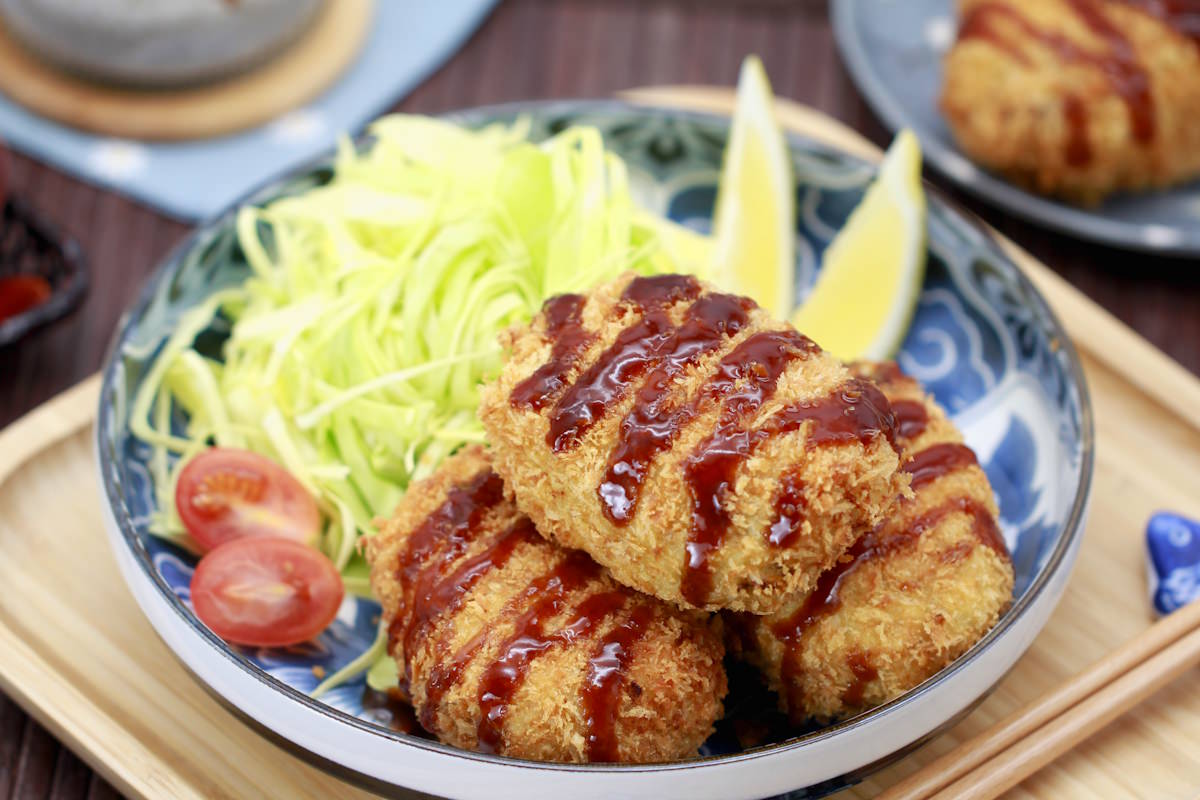
Traditionally, Korokke are served with finely chopped white cabbage salad, which is often only lightly dressed and provides a fresh contrast to the fried coating. Tomatoes, lemon wedges and a sweet-spicy tonkatsu sauce are also typical accompaniments.
As a complete meal, Korokke go well with rice, for example as part of a simple plate or in a bento box. In Japan, they are also popular as Korokke sando (a variation of the tonkatsu sando) – in a bun with sauce and a little salad. This makes them suitable not only as a main course, but also as a snack or a ready-made meal for on the go.
Do you have any questions or would you like to share your experiences? How do you like these Korokke? Did you make them the traditional way with minced meat, or did you try your own variation – perhaps vegetarian or extra crispy? I look forward to your comments and hope you enjoy making and eating them.
Korokke
4 servings | 60 minutes | 525 kcal
🖨️ Print PDF 📌 Save pinKorokke are Japanese croquettes made from coarsely mashed potatoes and minced meat, breaded in panko and deep-fried until golden brown. This recipe shows the classic home-style version and explains passage by passage what matters in terms of texture, seasoning and preparation.
Ingredients (8 pieces, 4 servings)
For the potato mixture:
700 g potatoes (floury)
200 g minced beef
1 onion
a pinch of salt
a pinch of pepper
1 tbsp neutral oil
For the batter:
approx. 100 g panko (im Shop ansehen)
approx. 50 g flour
3 eggs
plenty of oil for deep-frying (e.g. rapeseed or sunflower oil)
a little tonkatsu sauce (im Shop ansehen)
Side dishes:
Cabbage salad (to the recipe)
Tomatoes
Lemon
Useful tools:
Santoku knife (im Shop ansehen)
Yukihiara pot
2-in-1 strainer & skimmer (im Shop ansehen)
Preparation (60 minutes)
Step 1
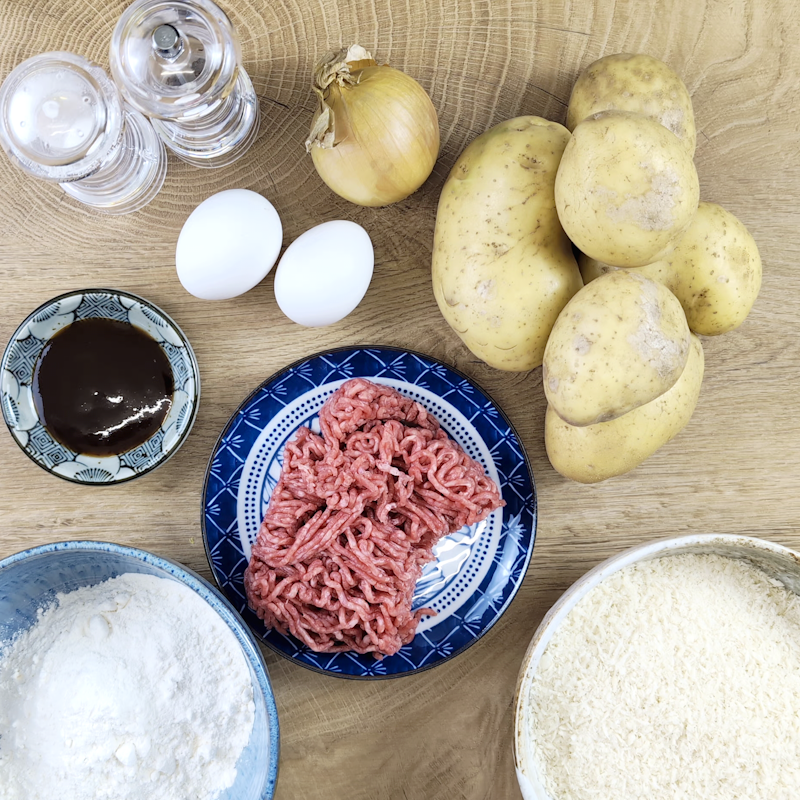
To begin with, prepare all the ingredients for the homemade Korokke.
Step 2
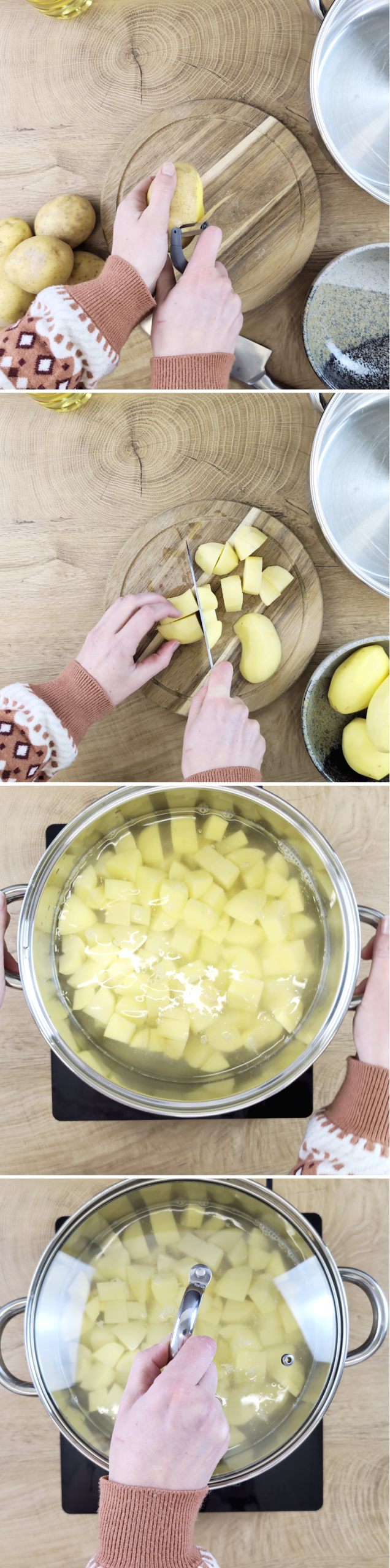
700 g potatoes: peel, cut into large chunks and boil in salted water until soft.
Whilst the potatoes are boiling, you can optionally start preparing the side dishes: chop the white cabbage salad, wash the tomatoes and cut them into wedges, quarter the lemon.
Drain the cooked potatoes and leave them to steam off briefly so that excess moisture can escape.
Step 3
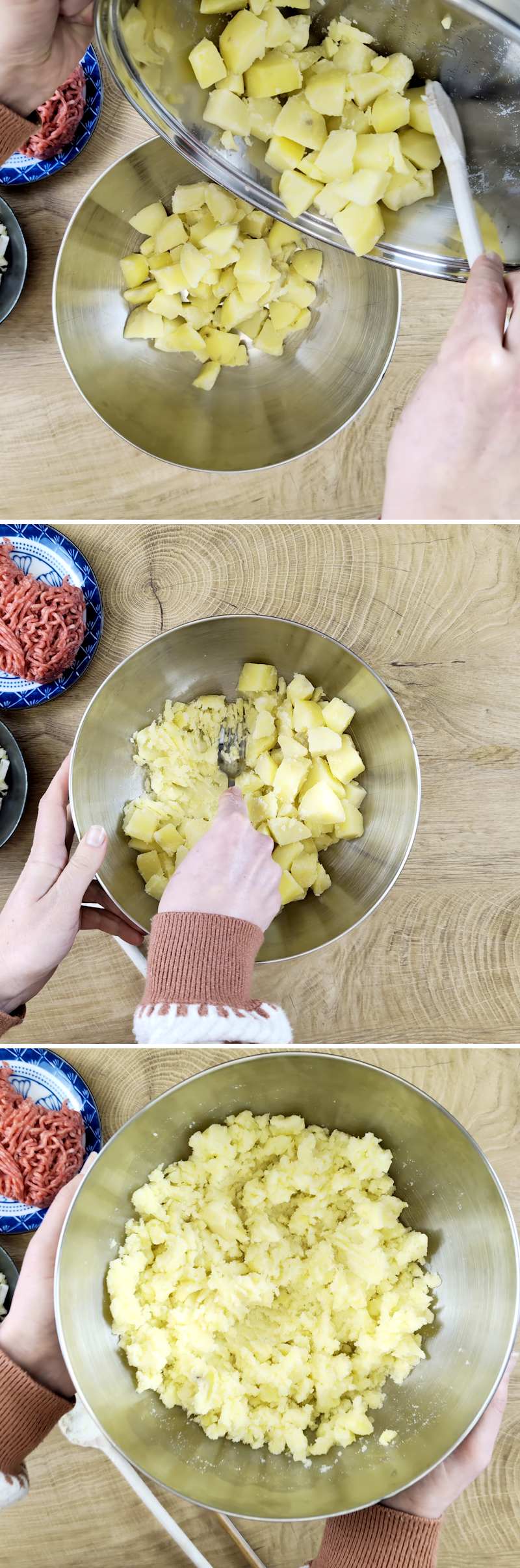
Mash the potatoes with a potato masher only roughly. It is fine if small pieces remain visible; it is precisely this texture that makes Korokke light and typically Japanese. Set the potato mixture aside.
Step 4
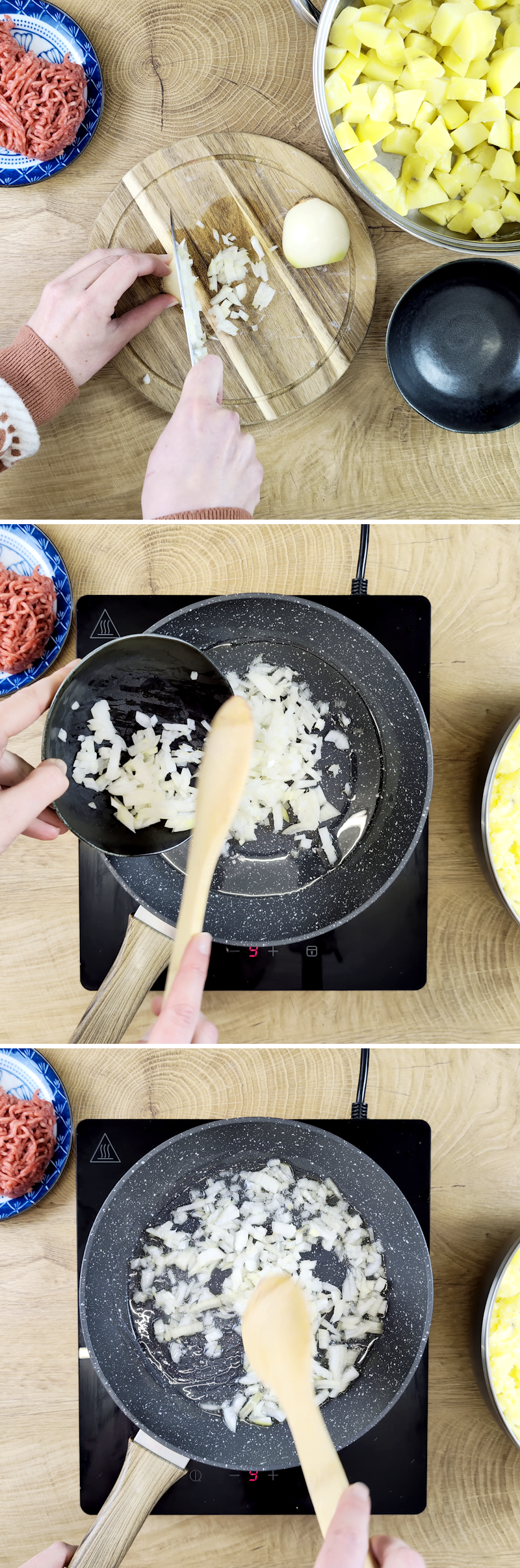
1 large onion peel and finely dice. 1 tbsp neutral oil heat in a frying pan over a medium heat. Gently fry the diced onion until it softens and gives off a slightly sweet aroma.
Step 5
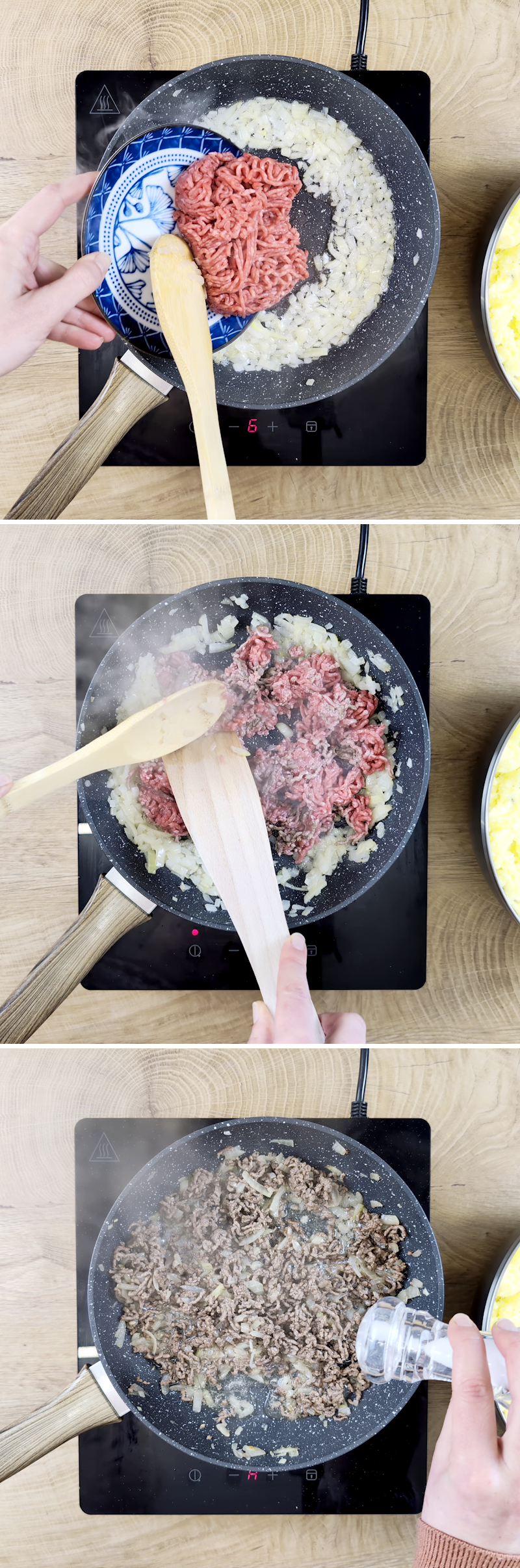
Add 200 g minced meat to the onions and fry until crumbly and just cooked through. Season with salt and pepper. The mixture should be savoury but not overly seasoned.
Step 6 Step
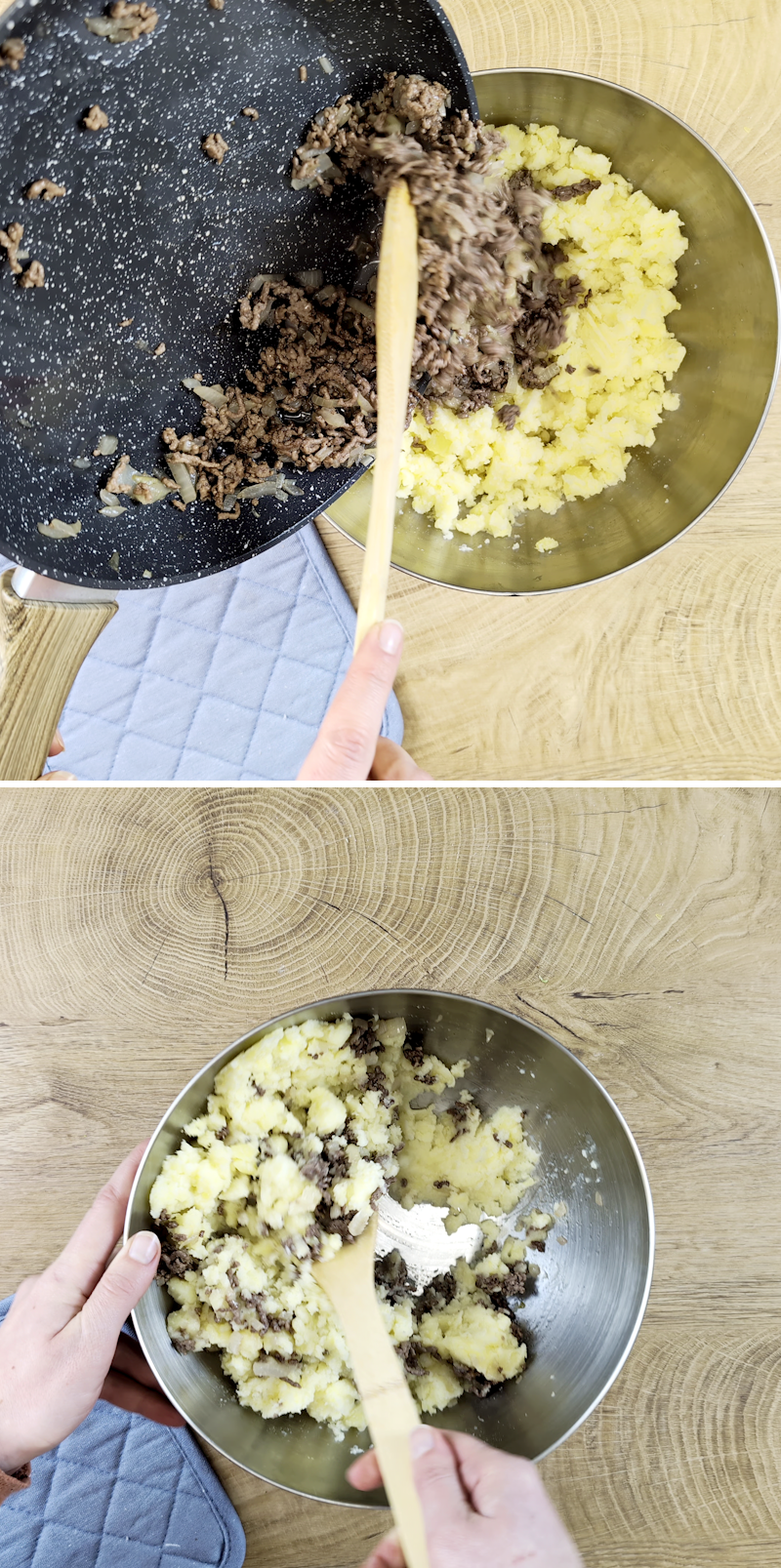
Add the minced onion mixture to the potato mixture and fold everything in carefully. Season the mixture again with salt and pepper. Leave the Korokke mixture to cool briefly so that it can be shaped easily later.
Step 7
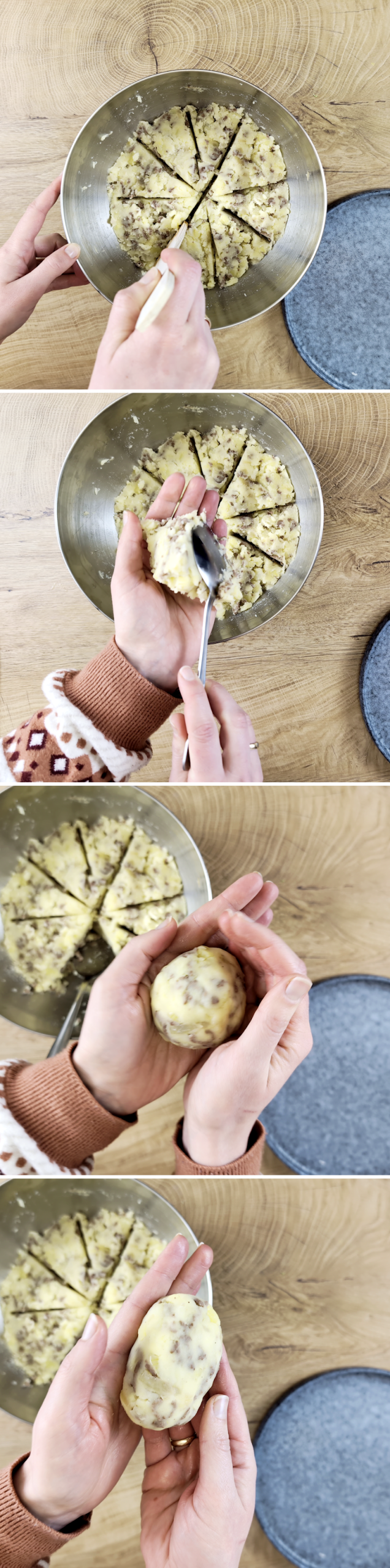
Divide the mixture into roughly 8 equal portions and shape them into oval or flat Korokke. Press down only lightly; they should remain loose.
Step 8
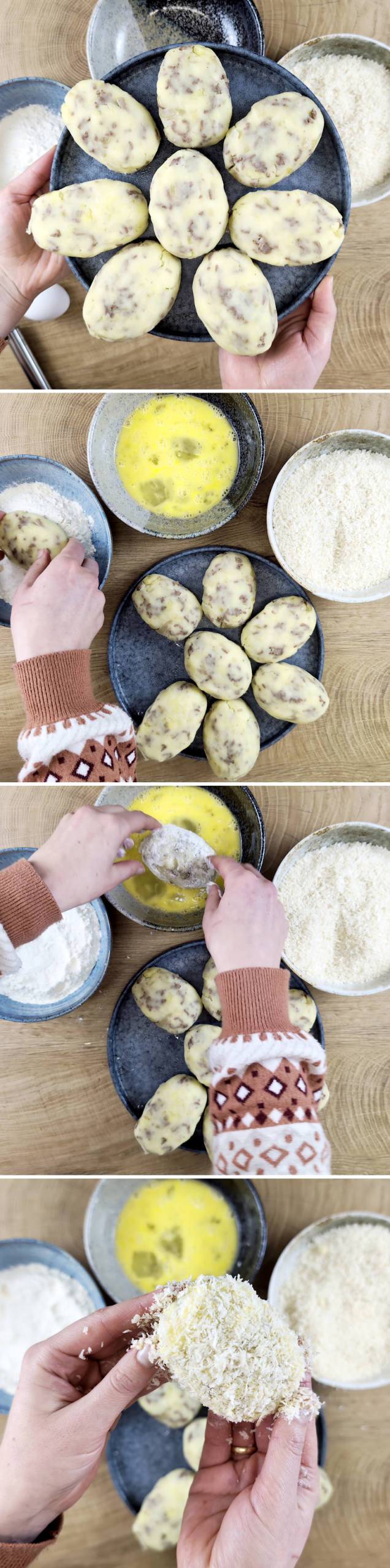
Prepare three bowls: one with approximately 50 g of flour, one with 3 beaten eggs and one with approximately 100 g panko.
First coat each Korokke in the flour, then dip it in the egg and finally coat it generously in the panko. Press the panko down gently.
Step 9
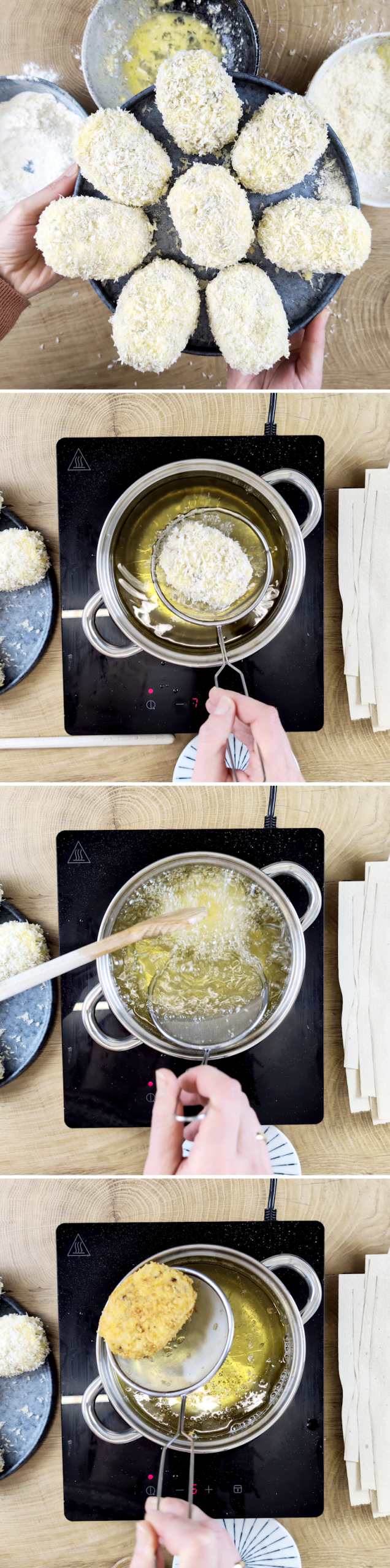
Heat the frying oil to around 170–175 °C. Fry the Korokke in batches until they are golden brown all over. This takes about 3 to 4 minutes per side.
Step 10
Carefully lift the finished korokke out of the oil and drain on kitchen paper. Drizzle with tonkatsu sauce in a zigzag pattern, if desired.
Serve the Korokke hot, traditionally with finely chopped white cabbage salad, tomatoes and a squeeze of lemon. Done. Itadakimasu!
Fancy some more delicious Japanese-inspired ideas that go well with Korokke?
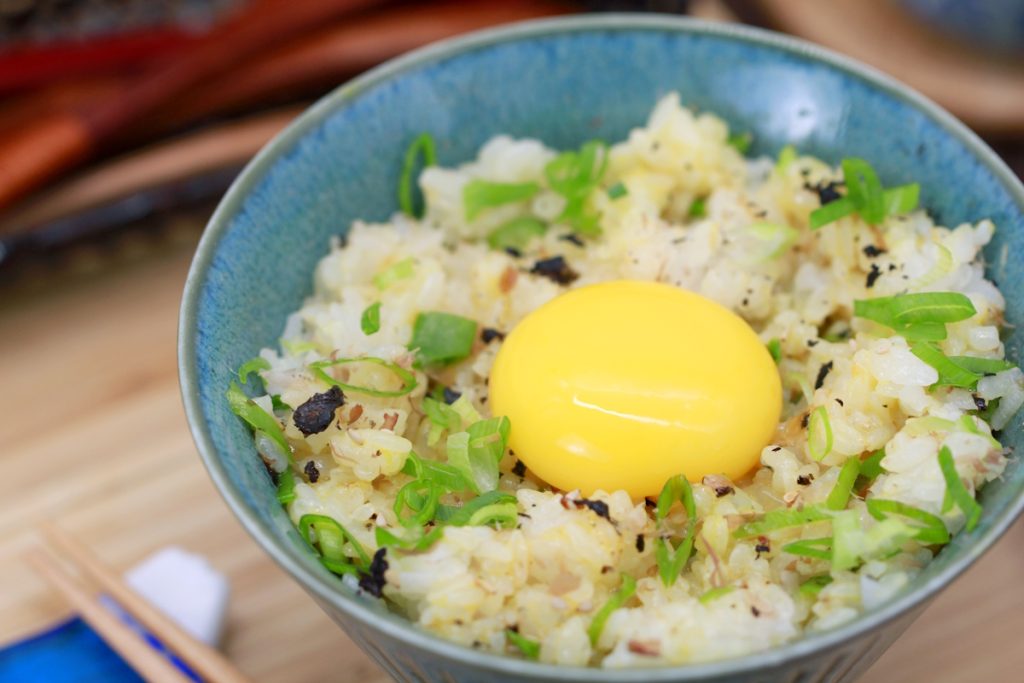
Tamago Kake Gohan: Japanese breakfast rice with egg, Furikake & Katsuobushi | TKG
In this recipe, I’ll show you a particularly flavourful version of Tamago Kake Gohan (TKG)…
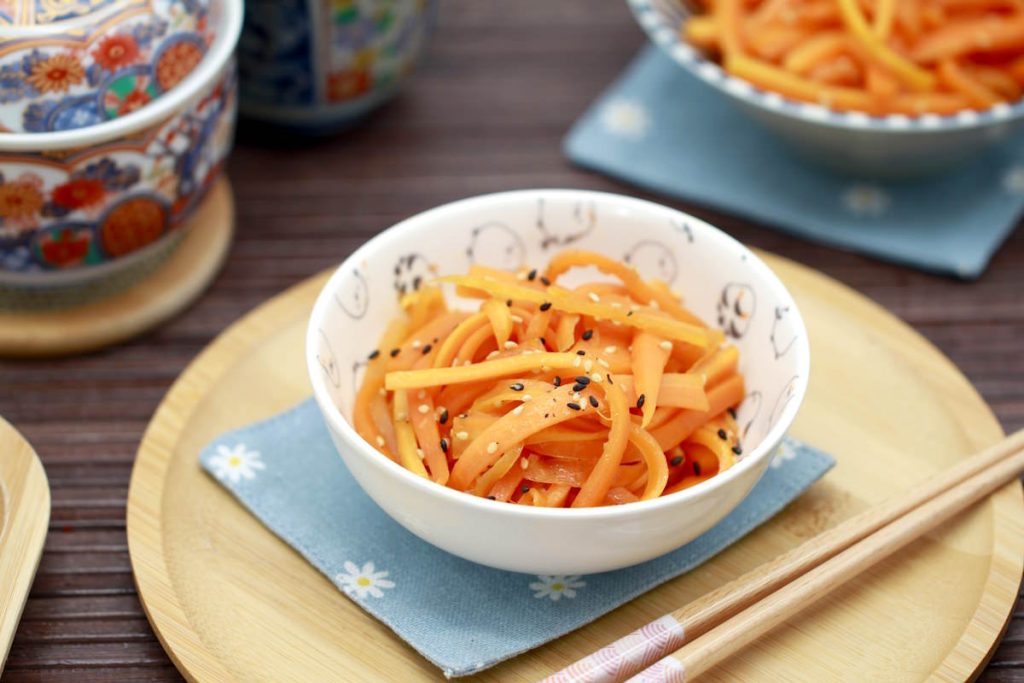
Make your own Ninjin no Kinpira: Japanese carrot side dish in the Kinpira style
Ninjin no Kinpira is a simple Japanese side dish made from finely sliced carrots, which…
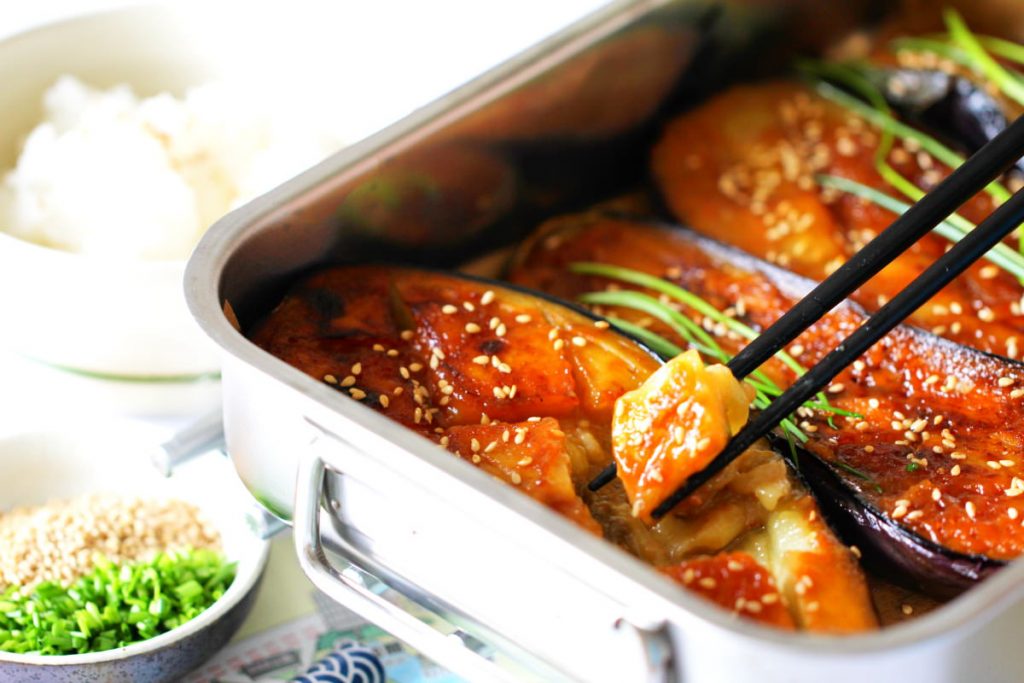
Nasu Dengaku: Oven-baked aubergines glazed with Miso – simple & irresistible
Nasu Dengaku is a true classic of Japanese cuisine and perfect as a side dish…
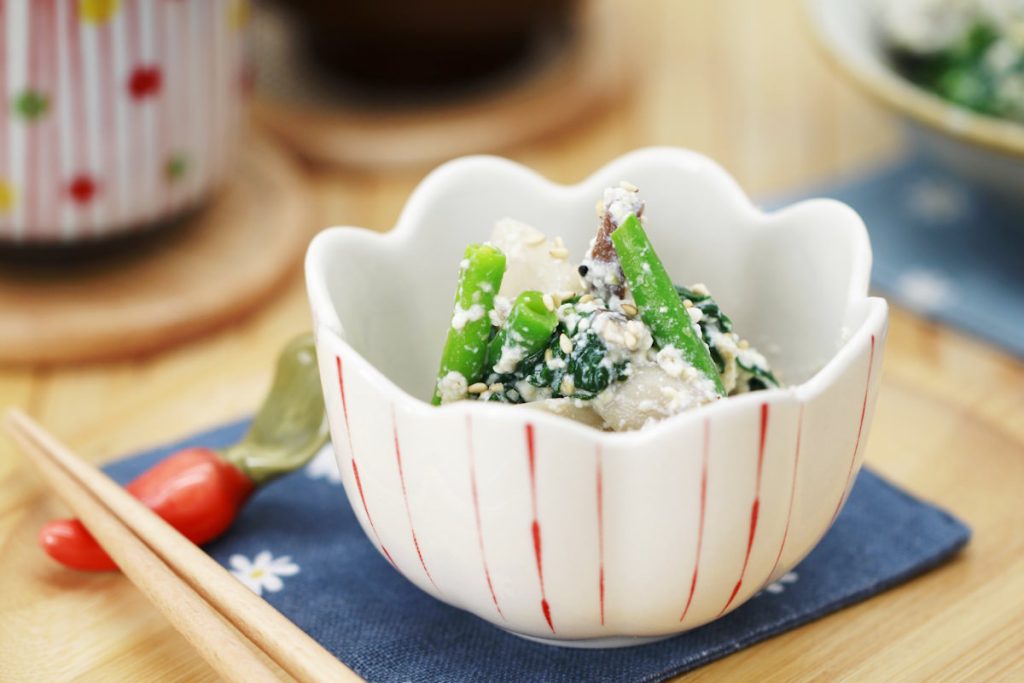
Mushroom and spinach salad with sesame and Tofu dressing: Recipe for Yasai no Shira ae
Mushroom and spinach salad with sesame and Tofu dressing, also known as Yasai no Shira…
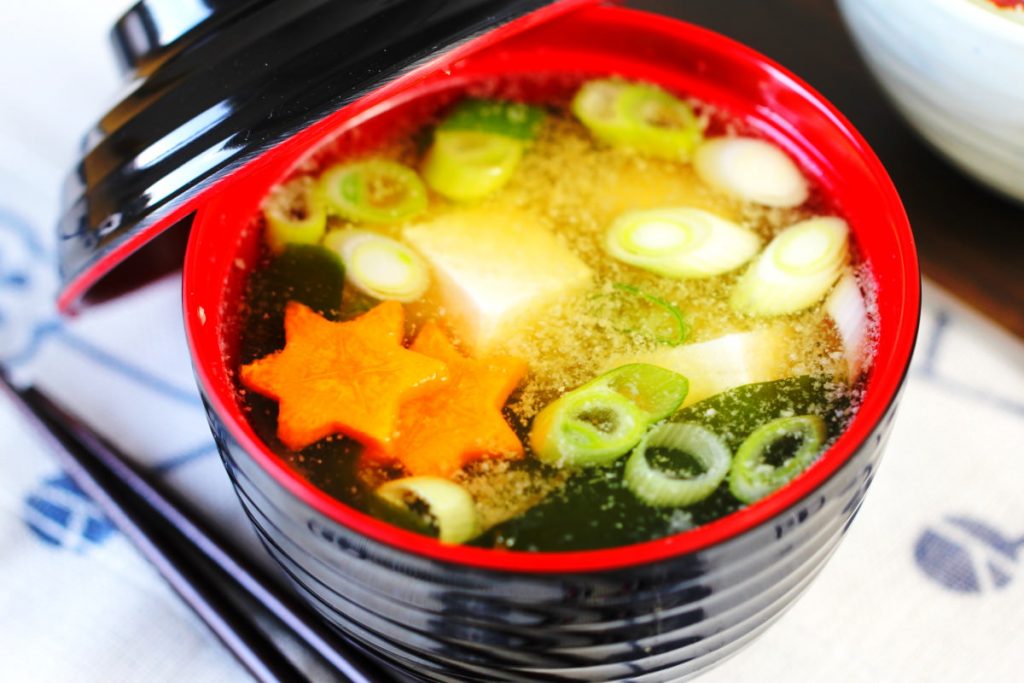
Misoshiru in a flash: basic recipe for miso soup with Wakame & Tofu
Miso soup is much more than just a side dish in Japan – it’s a…
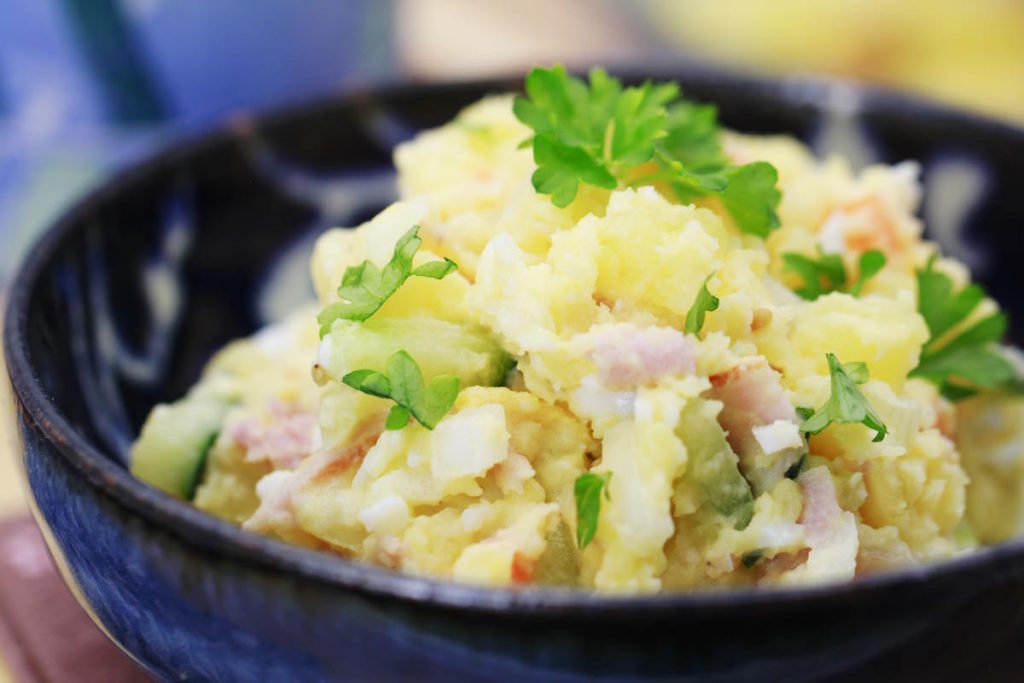
Make your own Japanese potato salad: fresh, creamy and irresistible!
If you’re looking for a delicious side dish that’s both familiar and excitingly new, then…
Have you tried the recipe yet? Let me know in the comments – I can’t wait to hear from you.