
Language:


I ate Nikujaga for the first time at my host family’s house in Fukui. It wasn’t a special occasion, just a perfectly ordinary evening. We’d been trying on kimonos, laughing, taking photos and later watching Japanese television together. Meanwhile, a pot was sitting on the hob in the kitchen, simmering quietly away.
When we finally sat down to eat, the Nikujaga was served. Potatoes, onions, a little meat, a clear, slightly sweet broth. Nothing elaborate, nothing spectacular, and that’s exactly why it was so good. It tasted familiar, even though I was eating it for the first time. Warm, comforting, a bit like feeling like you belong for a moment.
At that moment, I understood why Nikujaga is considered a true home-cooked meal in Japan. It’s not a recipe for guests, but for everyday life. For evenings when you get together, eat, talk and simply be there. Perhaps that is exactly what makes this dish so special: it doesn’t tell a grand story, but is part of one.
What is Nikujaga?
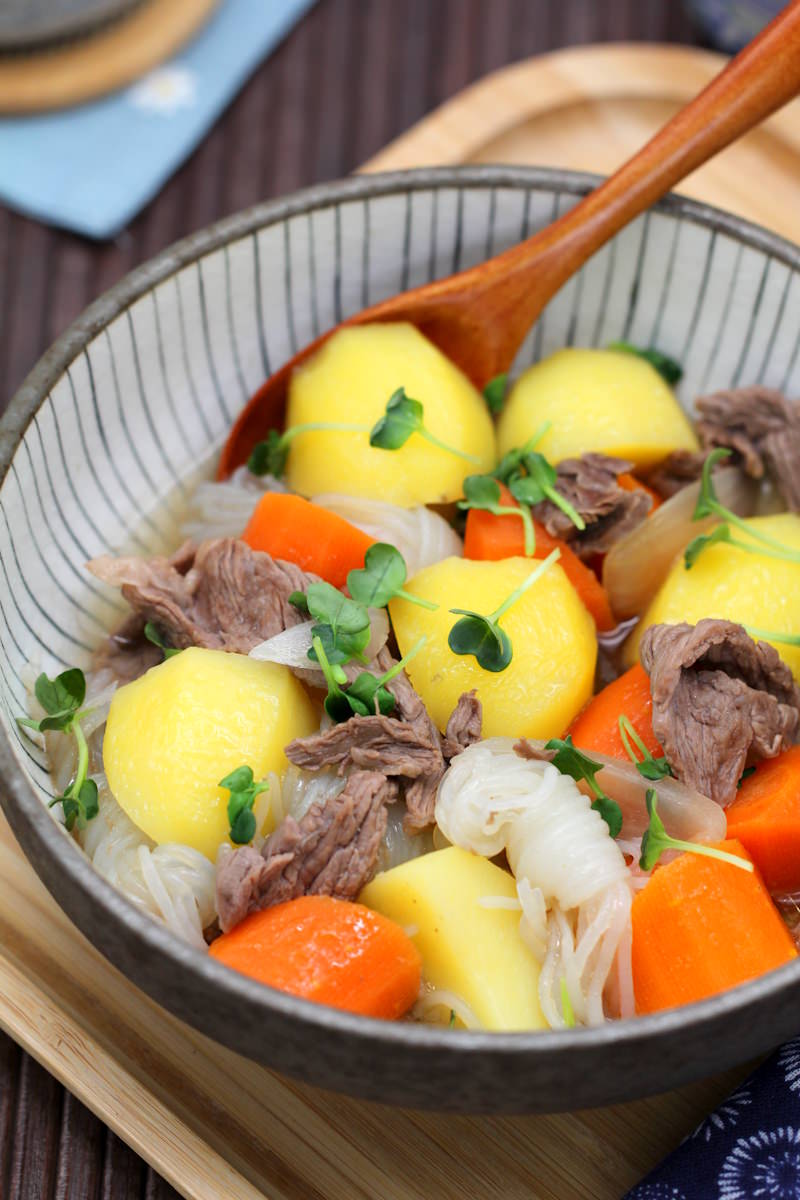
Nikujaga is a classic Japanese stew made with potatoes, meat and vegetables, cooked in a mild, sweet-and-savoury Dashi stock. The name is quite simple: niku means meat, jaga is the short form of jagaimo, the Japanese word for potato. No further explanation is really needed, and that is exactly what suits this dish.
Traditionally, Nikujaga is made with beef, along with onions, carrots and sometimes konjac noodles. It is seasoned with soy sauce, Mirin, Sake and a little sugar. Everything cooks together in a pot until the potatoes are soft and the sauce has reduced slightly. The result is not a hearty stew, but a gentle, balanced dish in which every ingredient retains its own character.
In Japan, Nikujaga is usually served as part of a normal weeknight dinner, often alongside rice and a small soup. It isn’t the star of the show, but a reliable everyday companion.

One pot for all!
Nikujaga is mildly seasoned, cooked until tender and easy to eat. That is precisely why it is popular with children in many Japanese families. The potatoes almost fall apart on their own, the meat remains tender and the sauce is sweetish but not overpowering.
Spicy or very strong flavours are deliberately absent. Instead, the focus is on familiar tastes that are filling and comforting. Many children start eating Nikujaga at an early age and associate it with family meals at home.
What’s more, the dish is highly adaptable. Less meat, more potatoes, smaller pieces: every family finds its own version. It is precisely this flexibility that makes Nikujaga a typical family meal that brings generations together.
The history behind Nikujaga
Nikujaga originated in the late 19th century during the Meiji era, a period in which Japan was strongly influenced by Western models. The dish is considered the Japanese answer to British beef stew and is thus an early example of Yōshoku, or Western-influenced Japanese home cooking.
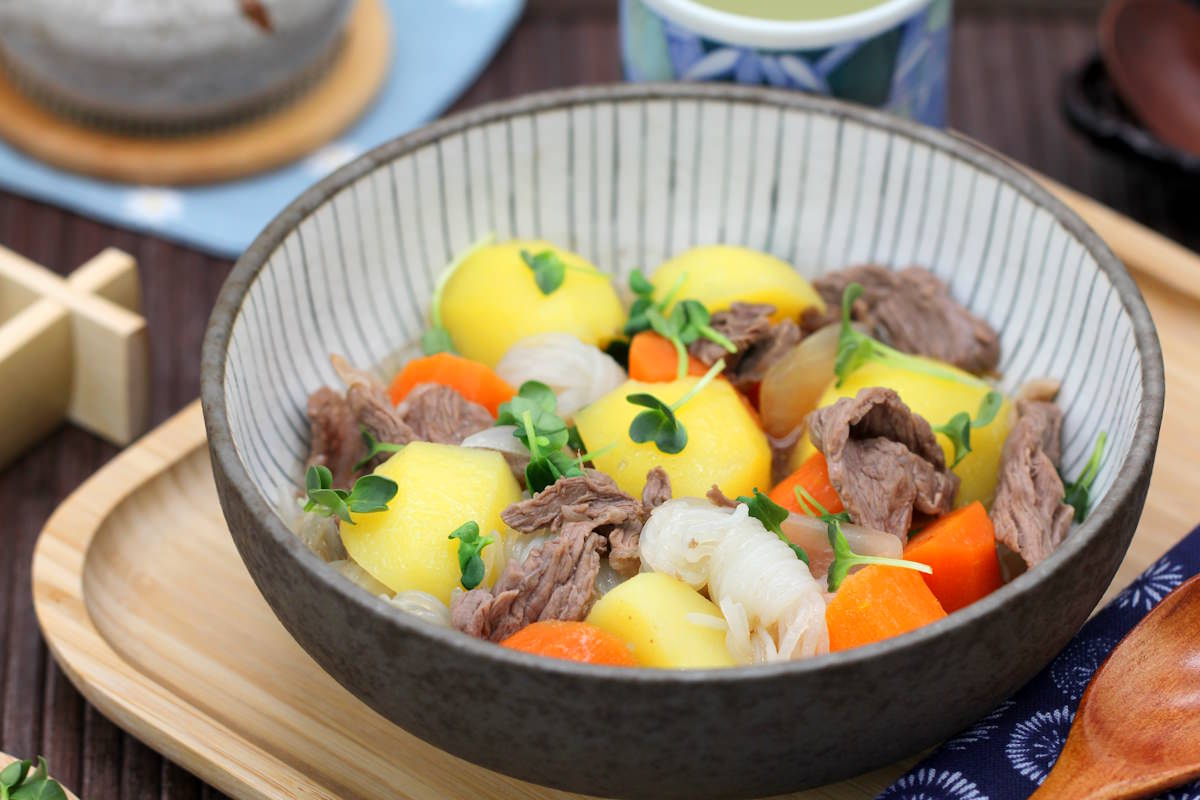
Its origins lie within the Imperial Japanese Navy. According to a well-known legend, Admiral Tōgō Heihachirō commissioned the navy cooks to develop a dish that would resemble the beef stews commonly served in the Royal Navy. However, as the cooks had no precise recipes to go by, they drew on familiar ingredients: thinly sliced meat, potatoes, onions and typical Japanese seasonings such as Dashi, soya sauce, sugar and Mirin. From this mixture, a new dish emerged – familiar, yet different.
To this day, there is a friendly rivalry over the exact place of origin of Nikujaga. Both Maizuru in Kyoto Prefecture and the Kure Naval Base in Hiroshima claim to be its birthplace. Regardless of this, it is clear that Nikujaga is closely linked to naval history and spread from there to the civilian population.
Nikujaga also fits well with the food policies of its time. In the Meiji era, the consumption of meat was promoted by the state to make the population stronger and bring it up to Western standards. Nikujaga combines precisely this idea with Japanese taste principles: a nutritious stew that incorporates Western elements but interprets them in a distinctly Japanese way.
Over the course of the 20th century, Nikujaga evolved from a dish on the naval menu into an integral part of everyday home cooking. By the 1970s at the latest, it had become established in many households and evolved into what is now known as “Ofukuro no aji”, the taste of mother’s cooking. A dish defined less by a fixed recipe than by memories, habit and personal variations.
Differences & Variations of Nikujaga
Nikujaga occupies a special place among Japanese stews. Unlike many classic nabe or soup dishes, the focus here is not on the broth but on the ingredients. Large chunks of potato, thinly sliced meat, onions and often shirataki are braised in relatively little liquid until the sauce has reduced almost completely. The result is more reminiscent of a goulash or a braised dish than a soup.
Nikujaga also differs significantly from other stews in terms of flavour. The seasoning is mild and balanced, characterised by soy sauce, Mirin and sugar, supported by Dashi. This sweet-salty balance is typical of Nikujaga and distinguishes it from stronger, saltier or heavily broth-based dishes such as oden or other nabe variations, which are often eaten seasonally in winter or in izakaya.
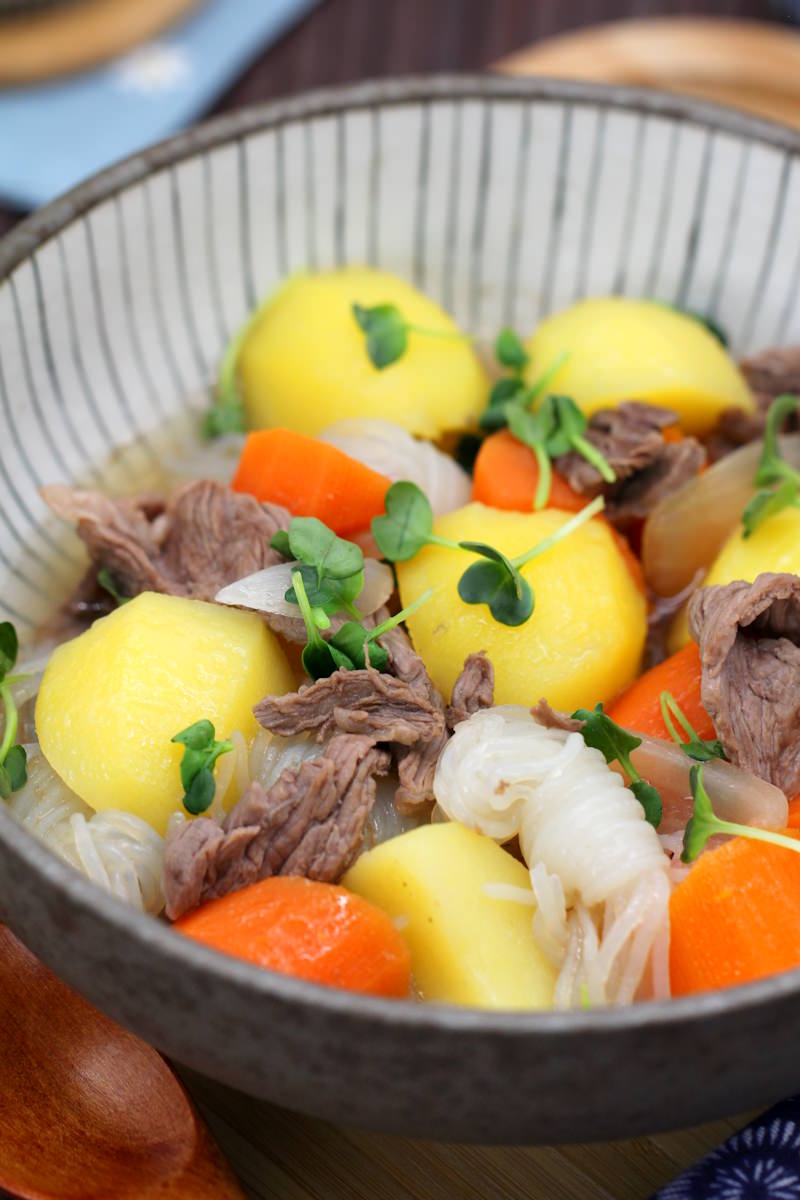
At the same time, Nikujaga is a very versatile dish. Traditionally, it is cooked with beef, but many households also use pork or other types of meat, depending on the region and availability. There is also scope for variation with the vegetables: sweet potatoes, more root vegetables, mushrooms or green beans and sugar snap peas now find their way into the pot just as readily as various types of konjac noodles.
Variations of Nikujaga
Vegetarian or vegan: A now widespread variation omits meat entirely. Instead, potatoes, carrots, onions and shirataki are the main ingredients. If fish Dashi is also omitted and Kombu Dashi is used instead, the dish remains vegan.
Other types of meat: As well as classic beef, Nikujaga is also cooked with pork in many households. Depending on the region or season, you can even find versions with game, such as venison. The flavour varies depending on the meat, but always follows the same sweet-and-salty seasoning profile with soy sauce, Mirin and sugar.
Everyday and pan-fried variations: For a quick everyday meal, Nikujaga is often no longer braised in a traditional pot, but in a deep frying pan. Adjustments to the Dashi, sweetness or saltiness are also common, particularly outside Japan. These variations alter the preparation, but not the basic concept of the dish.
All this background explains why Nikujaga remains so firmly rooted in everyday Japanese cooking to this day. At the same time, it is a dish that is very straightforward to recreate, without any special techniques or many intermediate steps. What matters is not perfection, but the right combination of time, heat and balanced seasoning. This is precisely why Nikujaga is so well suited to home cooking.
Making Nikujaga yourself: Here’s how
Preparing Nikujaga at home may seem unassuming at first glance, but that is exactly why it is so enjoyable. The dish doesn’t rely on special ingredients or complicated techniques, but on a clear sequence of steps and a bit of patience. Once you have understood this, you quickly notice how reliable and relaxed cooking Nikujaga can be.
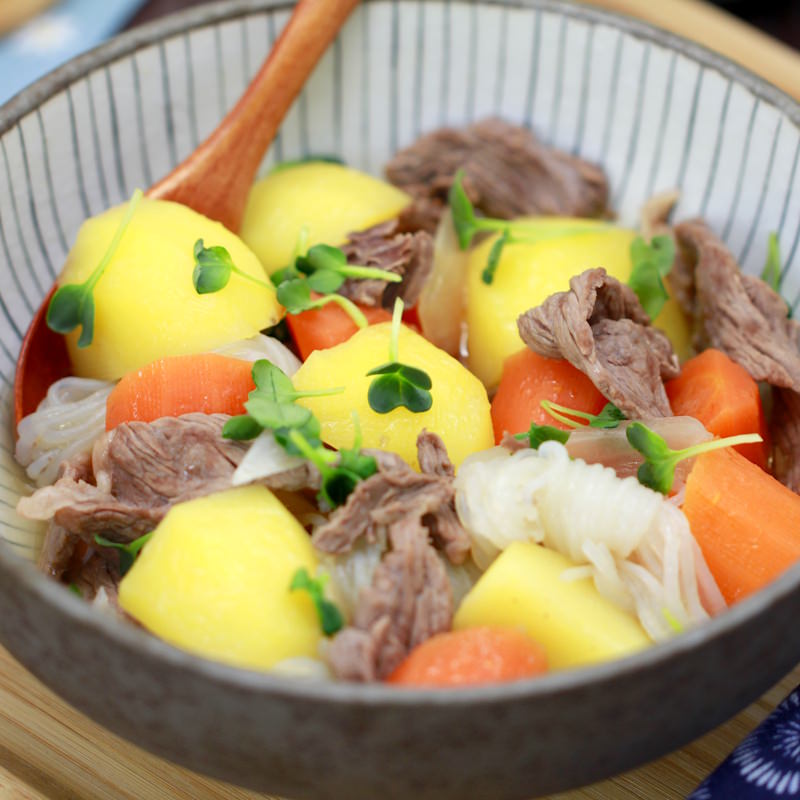
What matters most is the interplay of gentle searing, balanced seasoning and calm simmering. The meat is briefly seared and lightly caramelised before the vegetables and broth are added. After that, time does the work. The potatoes cook slowly, absorb flavour, and the sauce reduces almost by itself.
The most important components of Nikujaga:
- Meat: Traditionally, Nikujaga is made with thinly sliced beef. It is seared only briefly, which keeps it tender. It’s important that it doesn’t brown, but merely loses its raw colour – that way it blends harmoniously with the sauce later on.
- Potatoes & vegetables: Waxy potatoes form the heart of the dish. They are deliberately cut into coarse pieces so they become tender while keeping their shape. Onions and carrots add sweetness and depth, while shirataki provide extra texture.
- Broth: Dashi doesn’t serve as a soup, but as a gentle base. The liquid should just cover the ingredients and reduce while simmering, not dominate the dish.
- Seasoning: Soy sauce, Mirin, sake and sugar create the typical sweet-salty balance. The sugar is especially important, as it’s added to the meat early on and gives the dish its characteristic depth.
How it works:
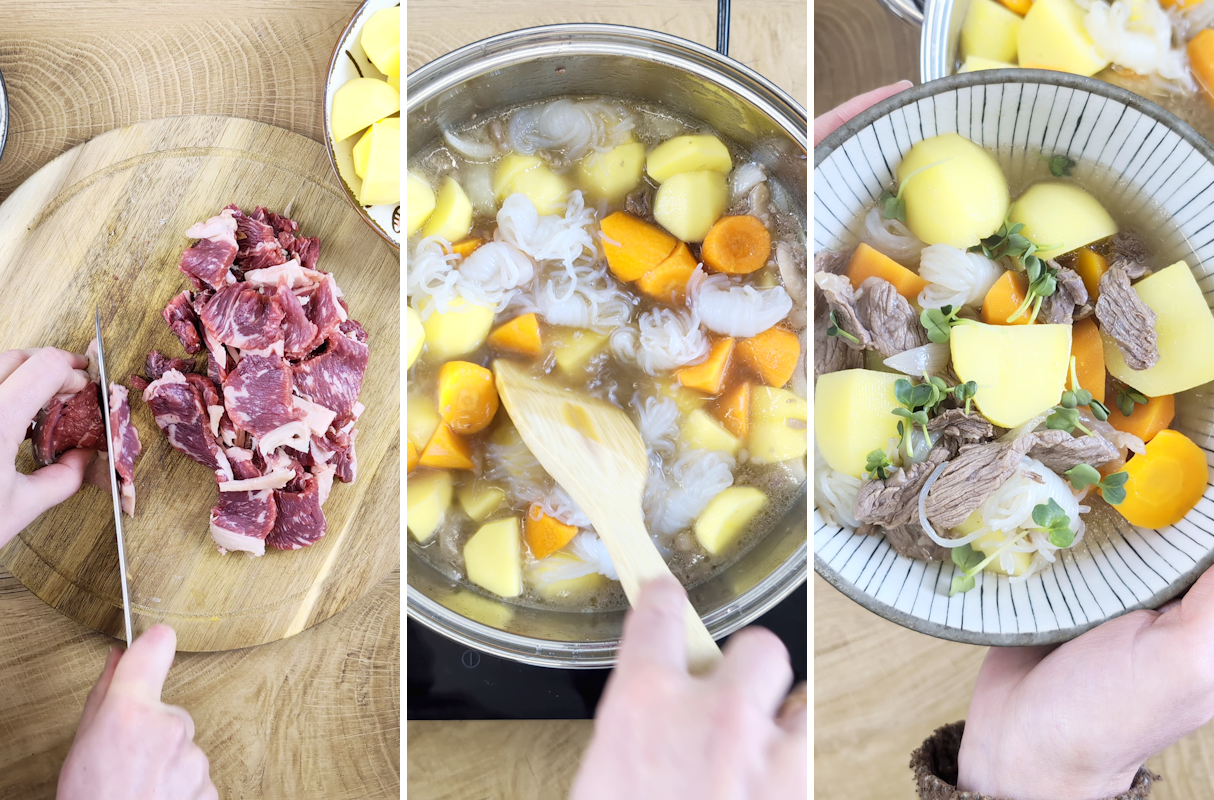
First, the meat is briefly seared and caramelised with sugar. Then add the onions and stock, followed by the potatoes, carrots and shirataki. Everything simmers gently until the potatoes are soft and the sauce has reduced slightly. After a short rest, the Nikujaga is ready – mild, well-balanced and just as you’d expect from traditional Japanese home cooking.
What goes well with Nikujaga?
In Japan, Nikujaga is rarely eaten on its own, but usually as part of a simple, balanced meal. It goes best with a bowl of freshly cooked rice, which soaks up the sweet and spicy sauce and rounds off the dish.
A clear soup makes a light accompaniment, for example a simple miso soup or a mild broth with Tofu and spring onions. It brings a sense of calm to the meal and provides balance without overpowering the flavour of Nikujaga.
Fresh or lightly pickled side dishes also go well with it. A small cucumber salad, pickled radish or some Tsukemono provide contrast and make the meal balanced. This is exactly how Nikujaga is served in many Japanese households: uncomplicated, harmonious and filling, without feeling heavy.
Do you have any questions or would you like to share your experiences? How do you like this Nikujaga recipe? Have you cooked it yet or tried your own variation – perhaps a vegetarian version or with a few more potatoes? I look forward to your comments and hope you enjoy cooking and savouring this dish.
Nikujaga
Serves 4 | 45 minutes | 370 kcal
🖨 ️ Print PDF 📌 Save pinNikujaga is a classic Japanese potato and meat stew that stands for warmth and reliability. Potatoes, tender meat and a mildly sweet and salty seasoning cook together in Dashi to make a dish that doesn’t try to impress, but simply keeps you company. A simple recipe from Japanese family cooking, perfect for quiet evenings and for recreating at home.
Ingredients (4 servings)
500 g potatoes (waxy)
300 g beef (e.g. entrecôte; alternatively, frozen hotpot meat)
200 g shirataki (konjac noodles) (im Shop ansehen)*
1 onion
2 carrots
800 ml Dashi stock (to the recipe) (im Shop ansehen)*
2 tbsp sugar
3 tbsp soy sauce (im Shop ansehen)*
3 tbsp Mirin (im Shop ansehen)*
3 tbsp sake (im Shop ansehen)*
2 tbsp neutral oil
a little spring onion, snow peas or fresh sprouts
Useful kitchen tools:
Santoku knife
Grater
Yukihiara saucepan
2-in-1 strainer & skimmer
Preparation (45 minutes)
Step 1
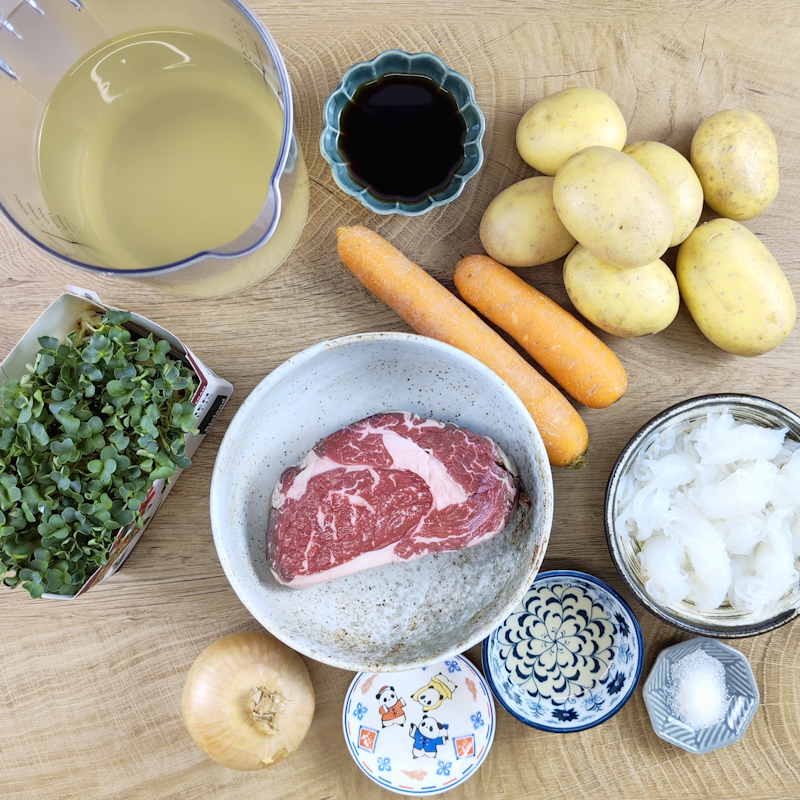
To begin, please gather your ingredients for your homemade Nikujaga. The Dashi stock should already be prepared.
Rinse the 200 g shirataki thoroughly under running water and drain well. If needed, cut them roughly once so they are easier to eat later. Set aside.
Step 2
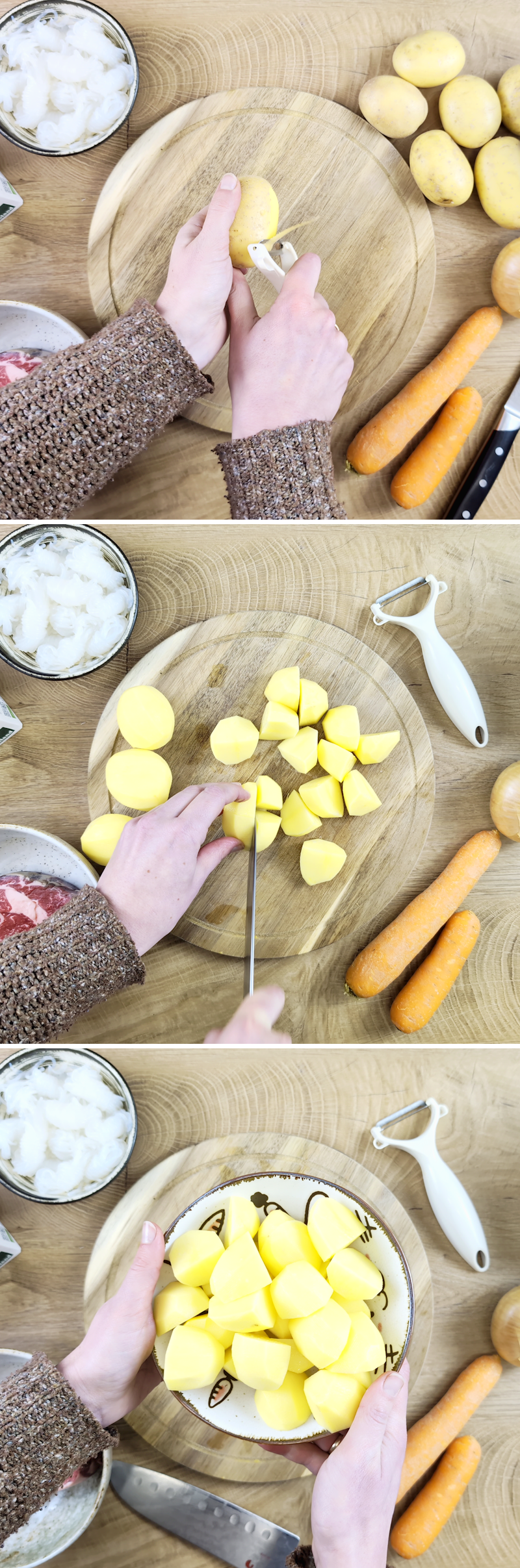
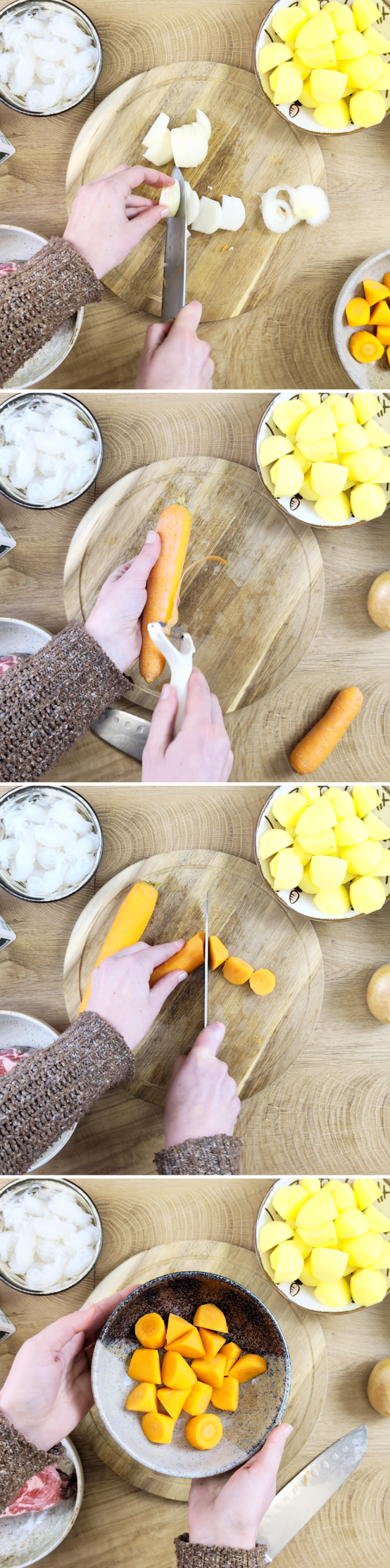
Peel the 500 g potatoes and cut into large, bite-sized pieces. The pieces can deliberately stay a little larger so they become tender while simmering without falling apart.
Step 3
Peel the onion, cut it in half and slice it into wedges. Peel the 2 carrots and cut them into slightly diagonal slices. Have everything ready to hand.
Step 4
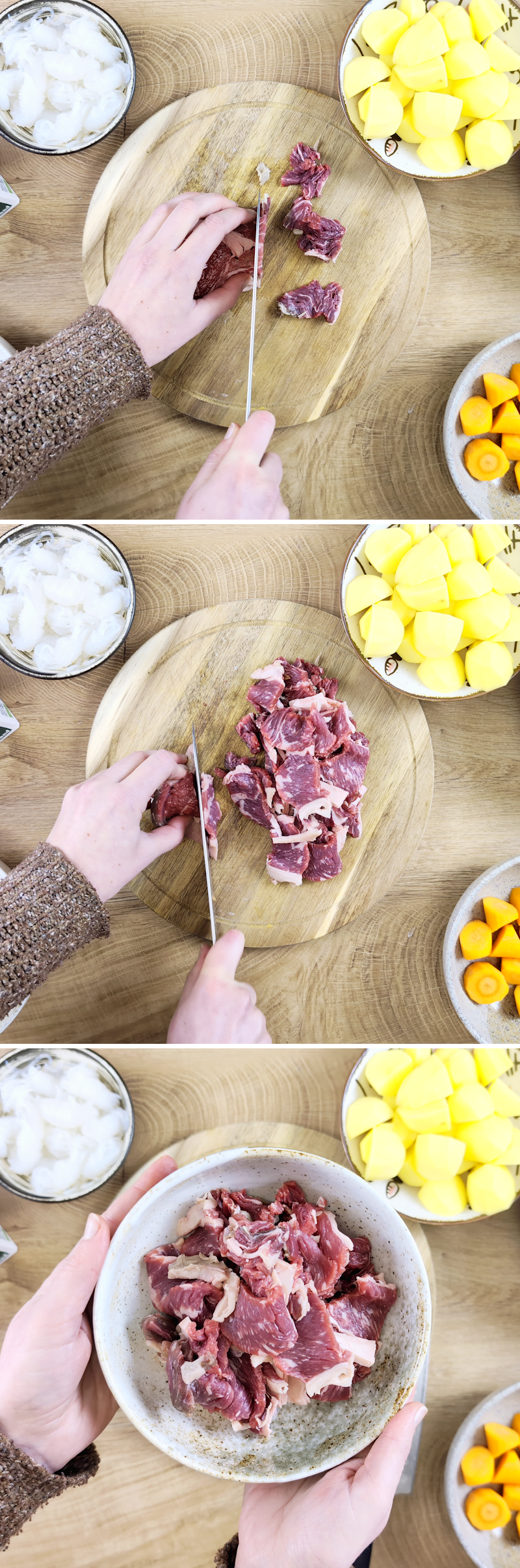
Cut the 300 g beef into very thin slices using a sharp knife. The thinner the meat, the more tender it will be in the stew.
Step 5
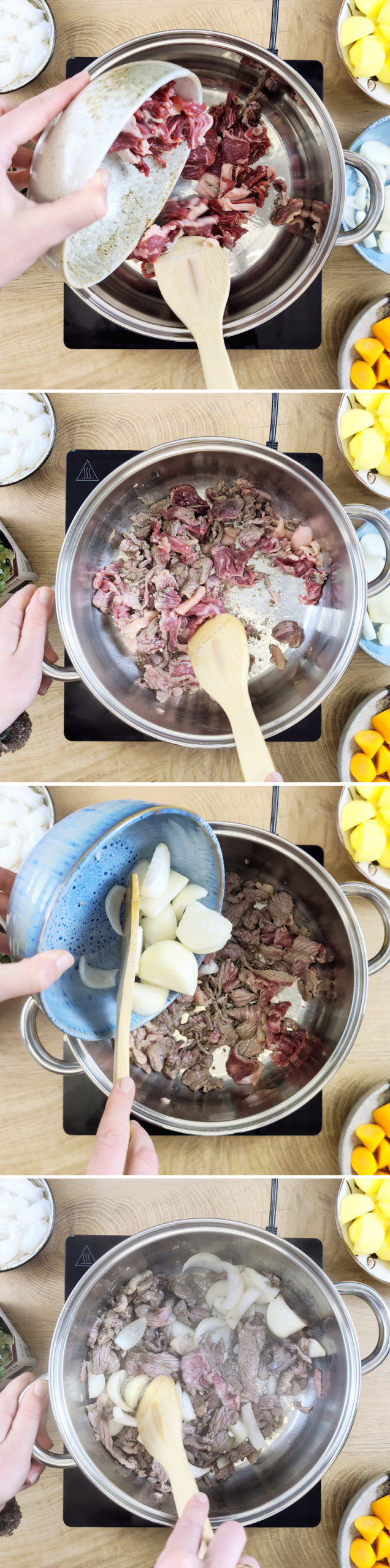
Heat 2 tbsp of neutral oil in a large saucepan over a medium heat. Add the beef and fry briefly until it loses its red colour. It should not brown, but just be cooked through. Add the onions to the meat and fry briefly until they become translucent.
Step 6
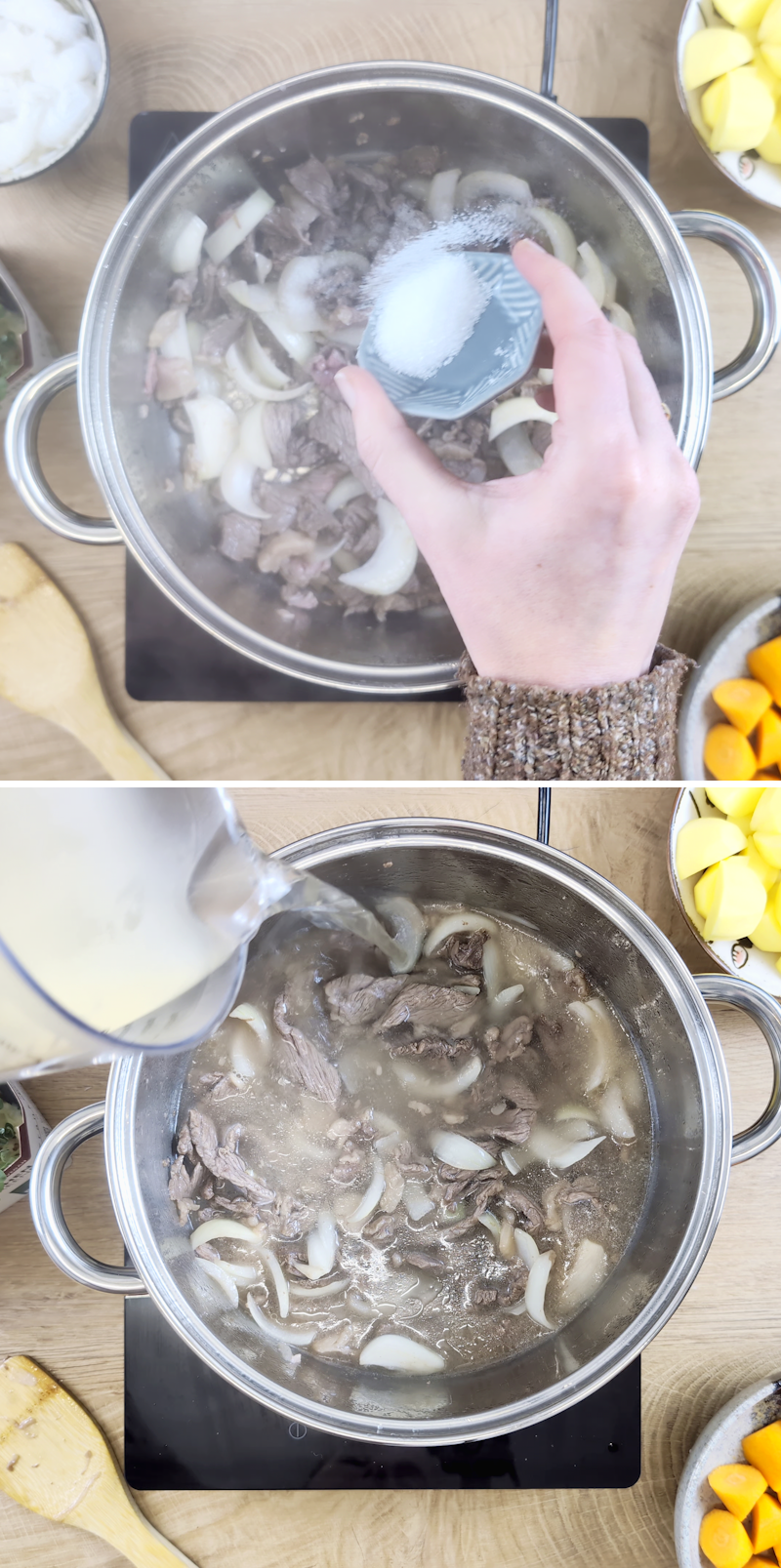
As soon as the meat has changed colour, add 2 tbsp sugar directly to the pan and stir it in. The sugar melts onto the meat, giving it that characteristic, slightly caramelised depth that defines Nikujaga.
Pour in 800 ml Dashi so that the meat and onions are just covered.
Step 7
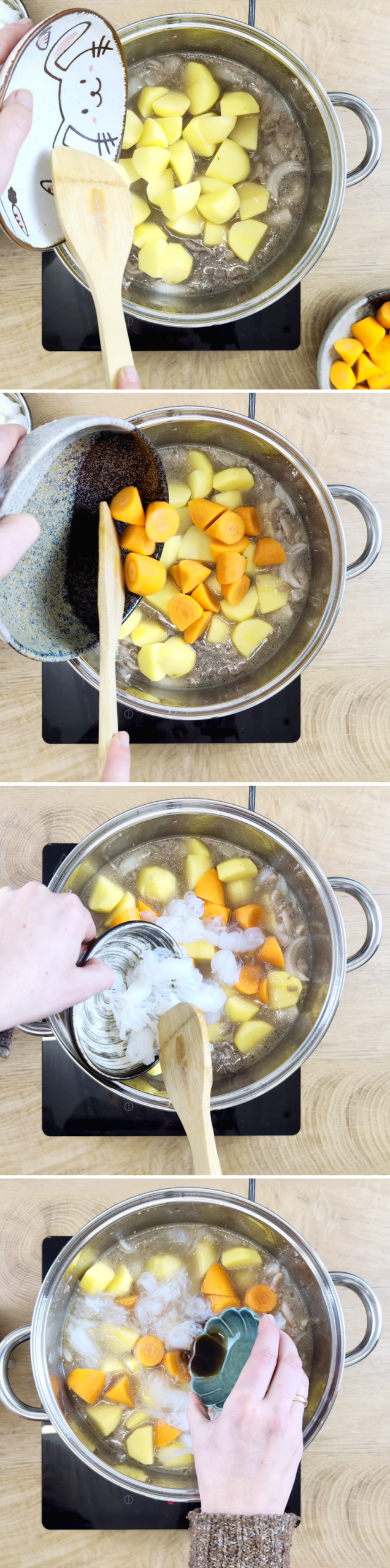
Add the potatoes, carrots and the prepared shirataki to the saucepan. The ingredients should be mostly submerged in the liquid.
Season with 3 tbsp soya sauce, 3 tbsp Mirin and 3 tbsp Sake. Stir gently once to prevent anything from sticking to the bottom of the saucepan.
Step 8
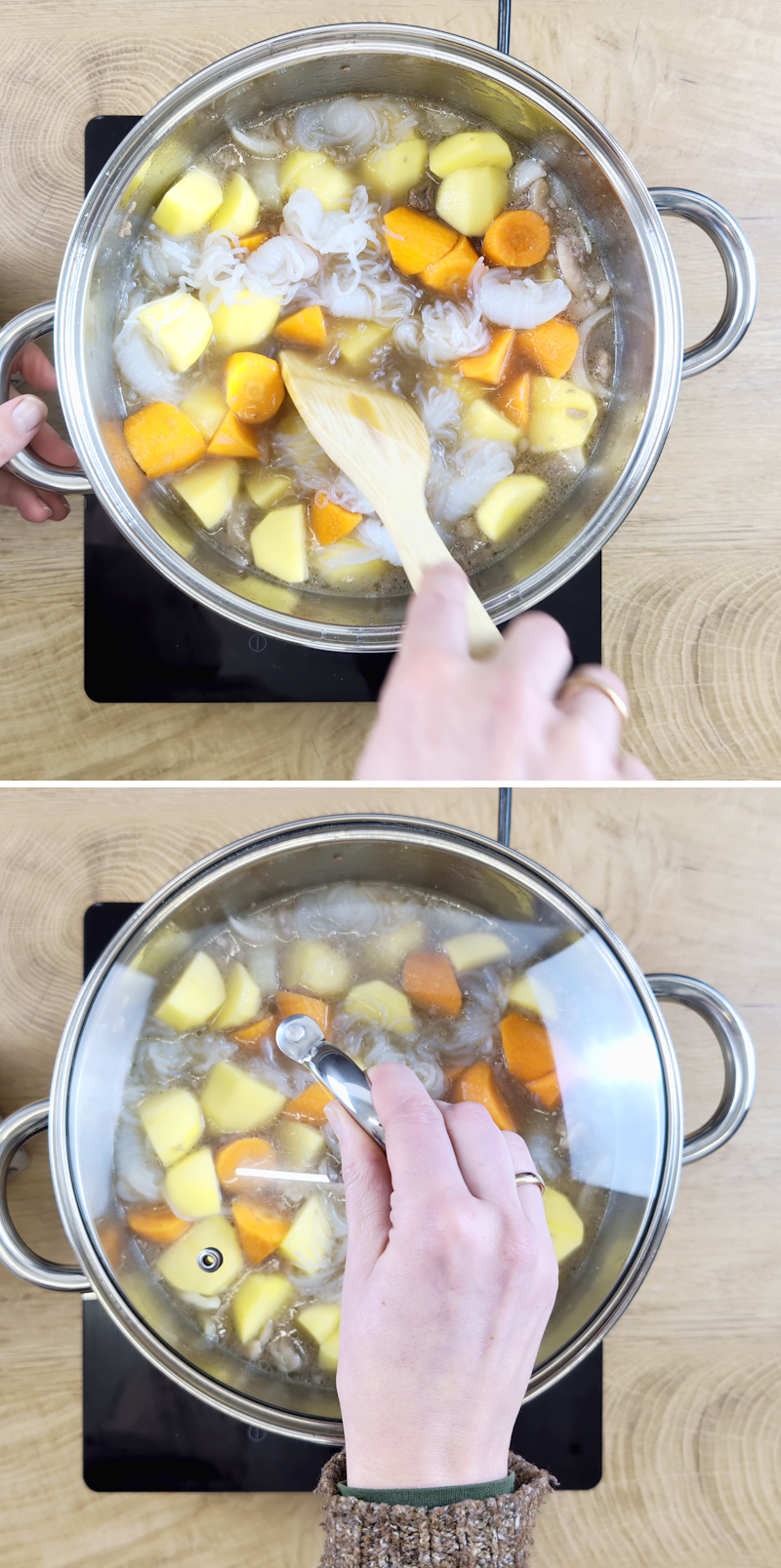
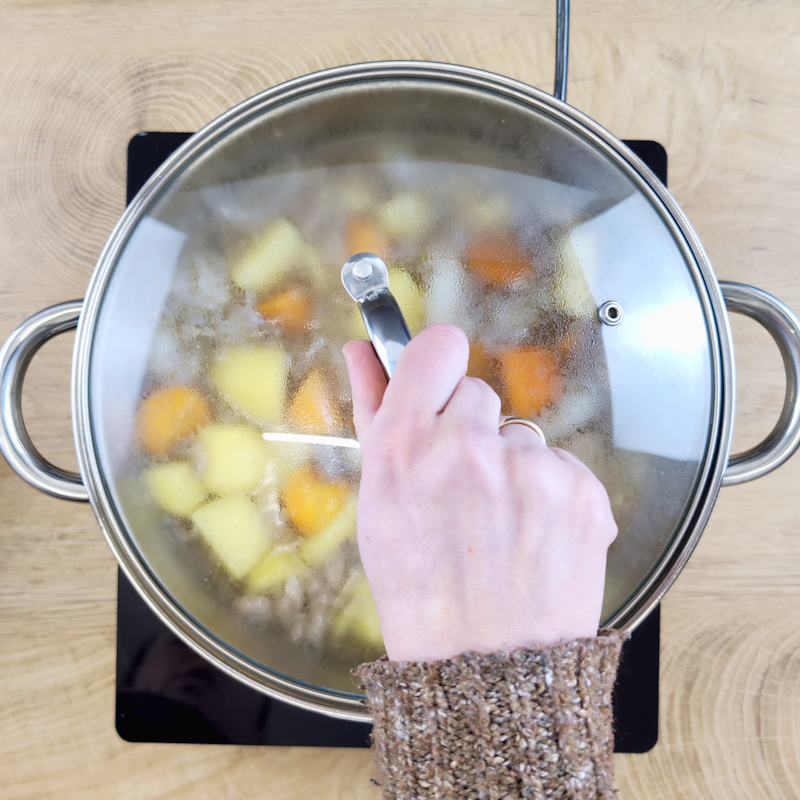
Bring the pan to the boil briefly, then reduce the heat significantly. The liquid should just be simmering gently. Leave the Nikujaga to simmer gently for 20–25 minutes, without stirring too vigorously. During this time, the potatoes will soften and soak up the sweet and savoury sauce.
Step 9
Once the potatoes are cooked and the sauce has reduced slightly, remove the pan from the heat. Leave the Nikujaga to rest for 5–10 minutes. This allows the flavours to blend particularly well. If you wish, you can leave the stew to rest for longer or reheat it later.
Step 10
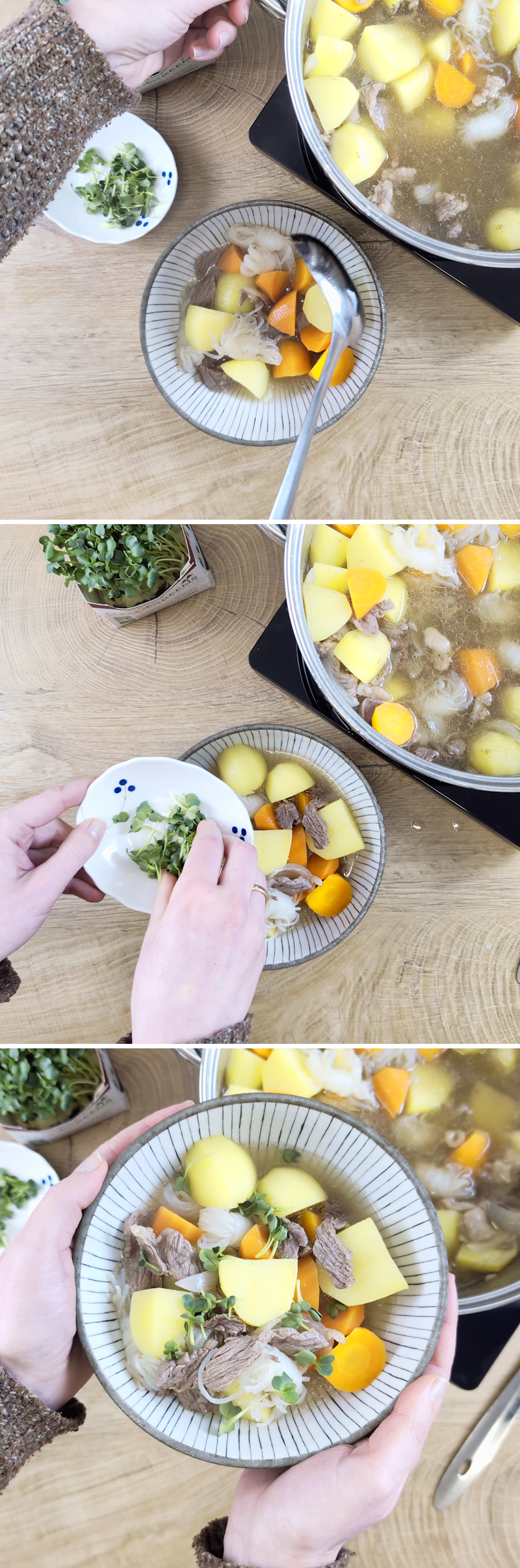
Serve hot, garnished as desired with finely sliced spring onions, snow peas or fresh sprouts. Done. Itadakimasu!
Fancy some more delicious ideas from Japan that go well with Nikujaga?
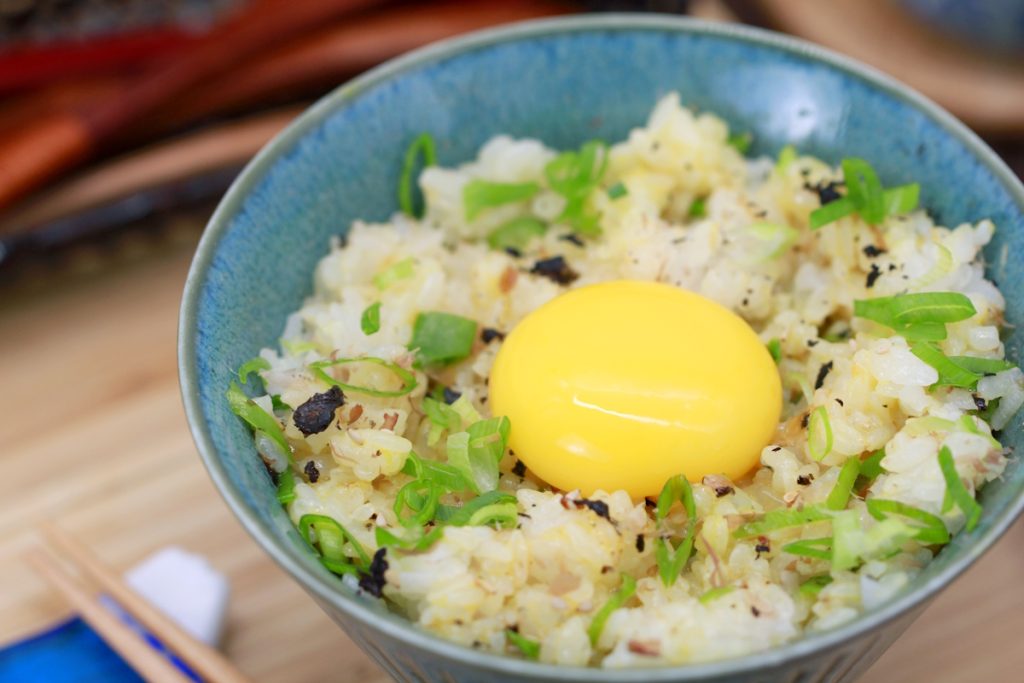
Tamago Kake Gohan: Japanese breakfast rice with egg, Furikake & Katsuobushi | TKG
In this recipe, I’ll show you a particularly flavourful version of Tamago Kake Gohan (TKG)…
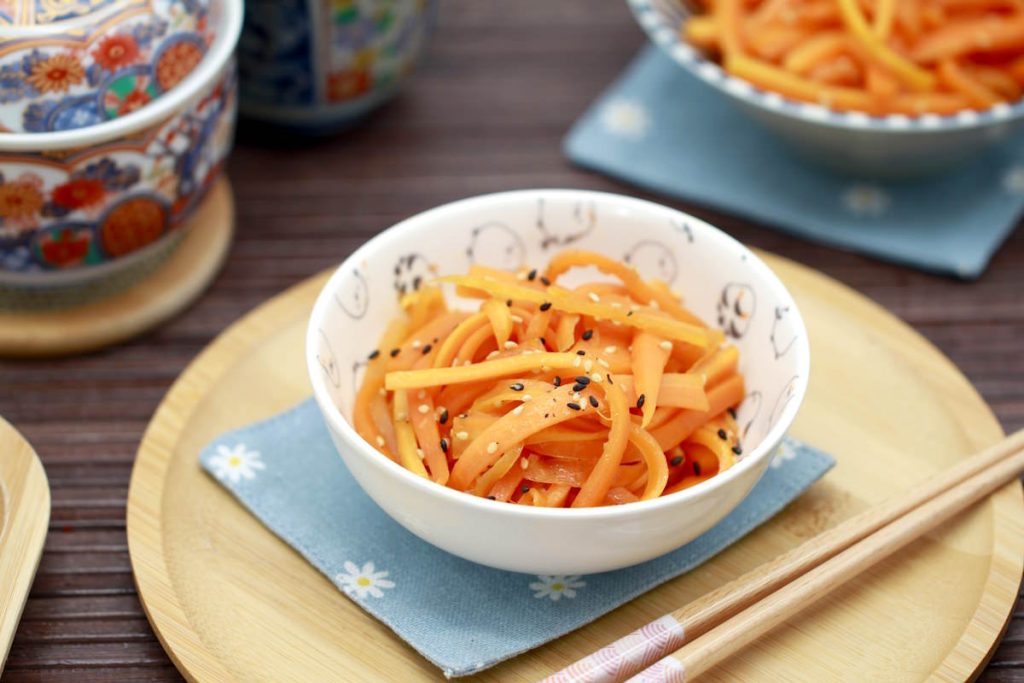
Make your own Ninjin no Kinpira: Japanese carrot side dish in the Kinpira style
Ninjin no Kinpira is a simple Japanese side dish made from finely sliced carrots, which…
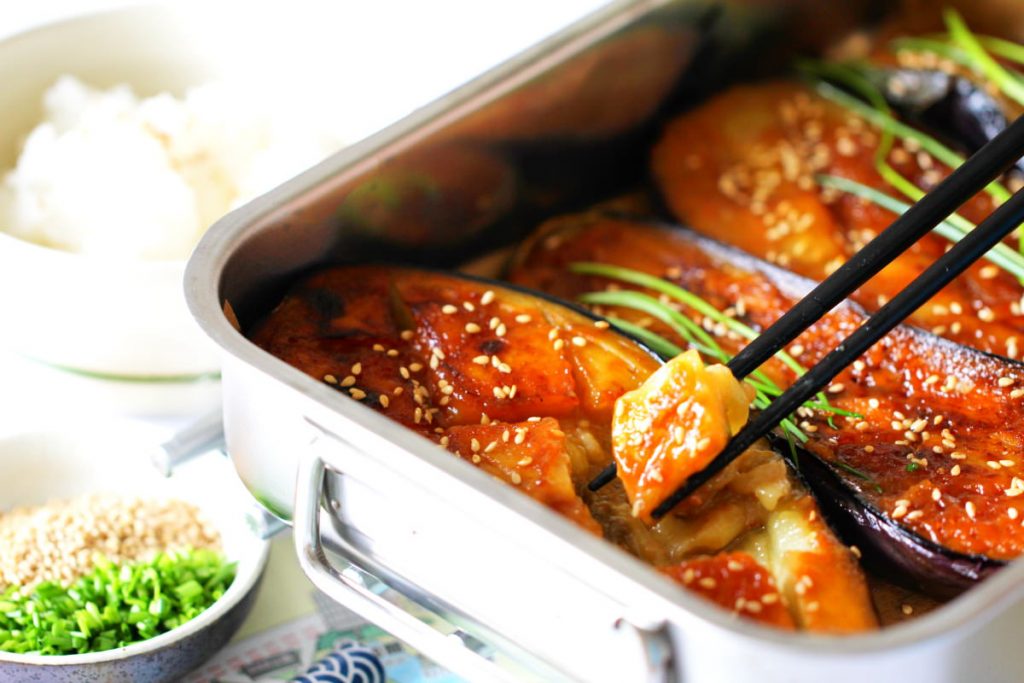
Nasu Dengaku: Oven-baked aubergines glazed with Miso – simple & irresistible
Nasu Dengaku is a true classic of Japanese cuisine and perfect as a side dish…
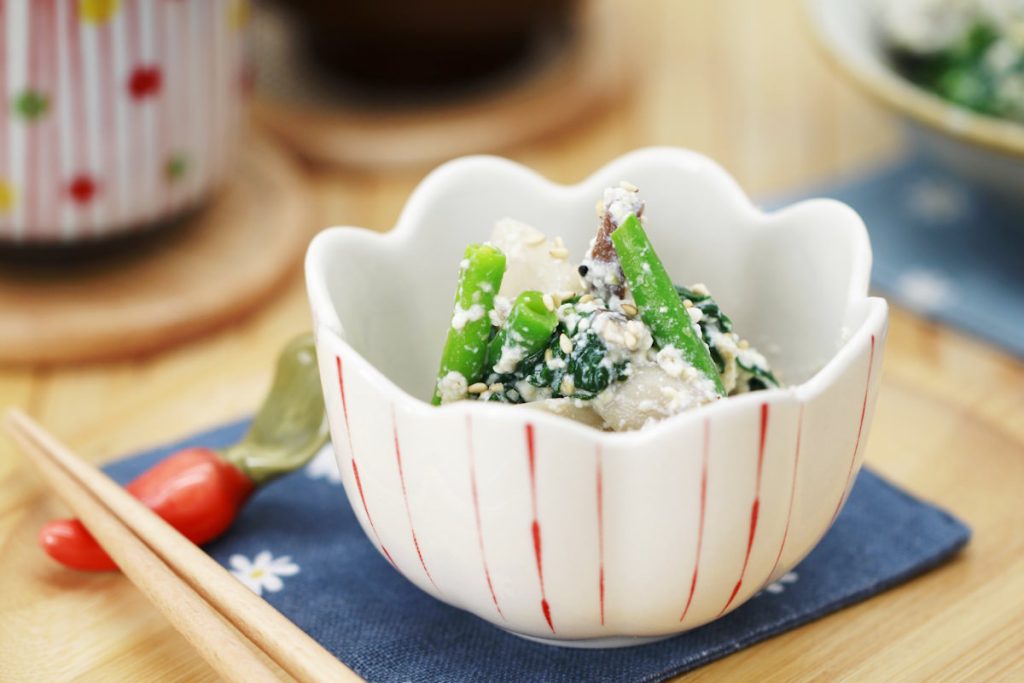
Mushroom and spinach salad with sesame and Tofu dressing: Recipe for Yasai no Shira ae
Mushroom and spinach salad with sesame and Tofu dressing, also known as Yasai no Shira…
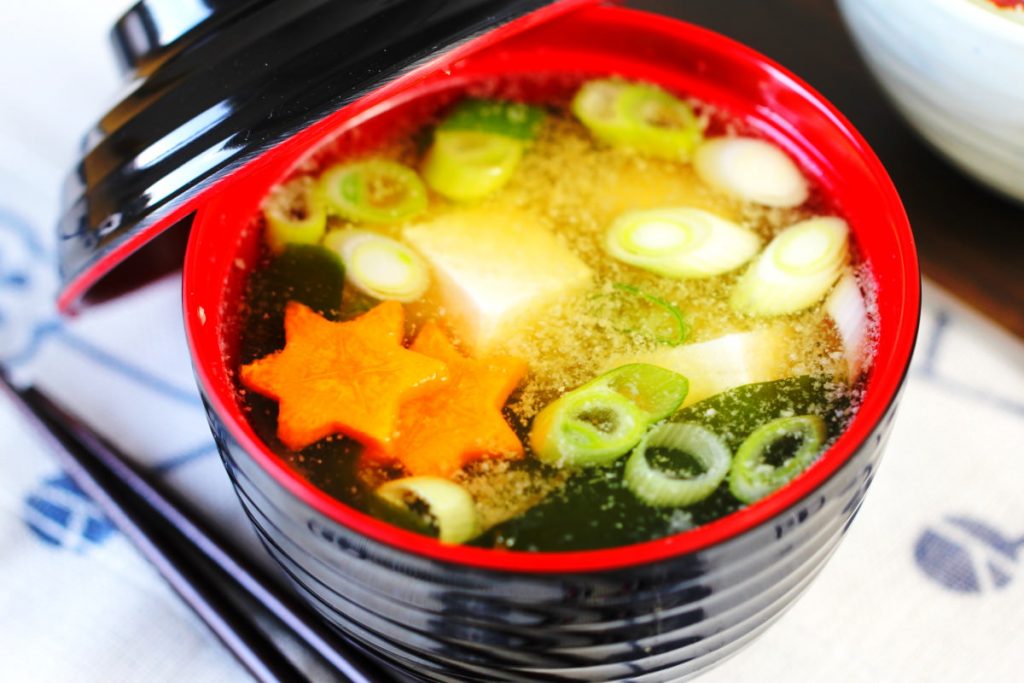
Misoshiru in a flash: basic recipe for miso soup with Wakame & Tofu
Miso soup is much more than just a side dish in Japan – it’s a…
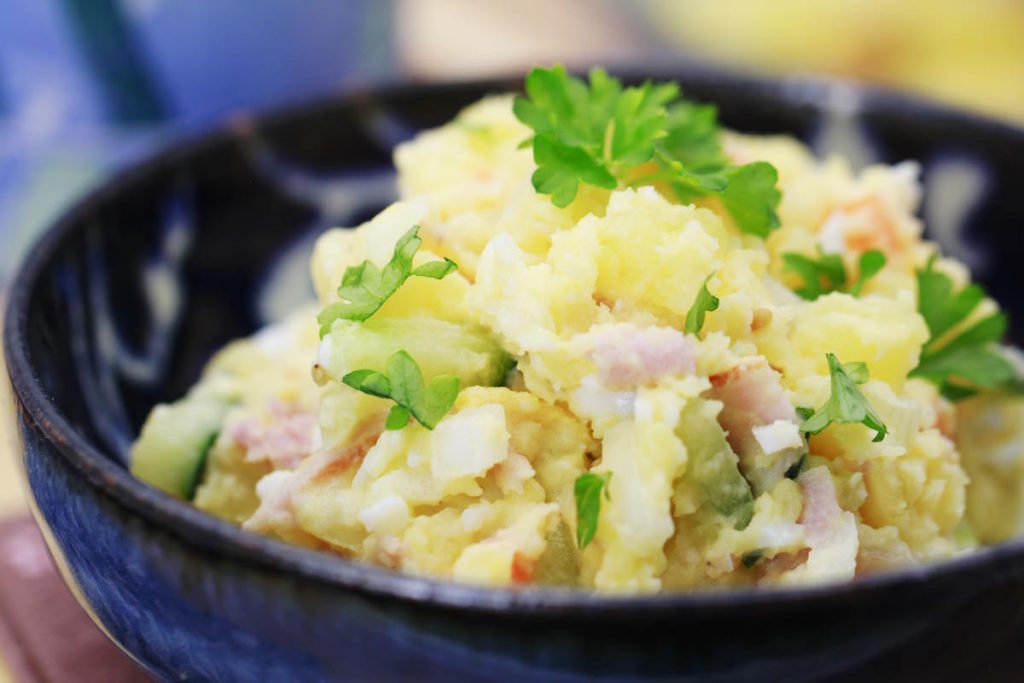
Make your own Japanese potato salad: fresh, creamy and irresistible!
If you’re looking for a delicious side dish that’s both familiar and excitingly new, then…
Have you tried the recipe yet? Let me know in the comments, I’m looking forward to hearing from you.