
Language:


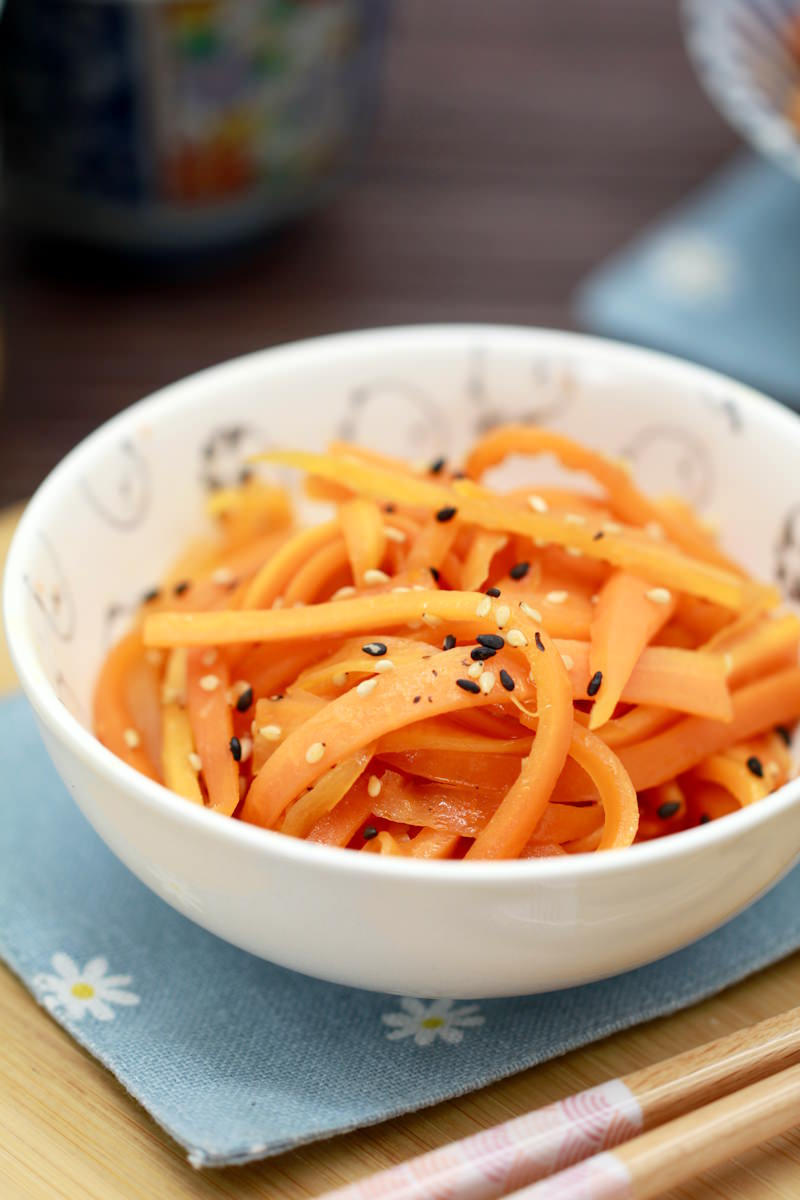
Ninjin no Kinpira is a simple Japanese side dish made from finely sliced carrots, which are briefly stir-fried and then glazed with a sweet and savoury sauce. The dish is quick to prepare, requires only a few ingredients and is ideal for making in advance. It retains its texture and flavour even after a few hours or the following day.
In everyday Japanese cooking, Ninjin no Kinpira is often served with hearty main courses, such as fried meat, fish or stews. Its slight sweetness and the delicate crunch of the carrots provide a good contrast to strong flavours. At the same time, it is a practical alternative to traditional salads, as it does not require fresh leafy greens and works well served either warm or cold.
What is Ninjin no Kinpira?
‘Ninjin no Kinpira’ literally means ‘carrots Kinpira-style’
. Ninjin is the Japanese word for carrot, whilst Kinpira does not refer to a single ingredient but to a specific cooking technique: finely chopped vegetables are first stir-fried in oil and then glazed in a sweet-and-salty mixture of soya sauce, Mirin and sugar until the liquid has almost completely reduced.
Originally, ‘Kinpira’ referred to dishes made with burdock root (gobo), particularly the classic Kinpira gobo. This method of preparation originated in the Edo period and became part of everyday home cooking, particularly in the Edo area (now Tokyo). The name ‘Kinpira’ derives from a character in Japanese folk literature:
Kinpira, the strong and courageous son of the folk hero Kintarō. The firm texture of the vegetable and the slight heat from chilli (depending on taste) were symbolically associated with strength and steadfastness.
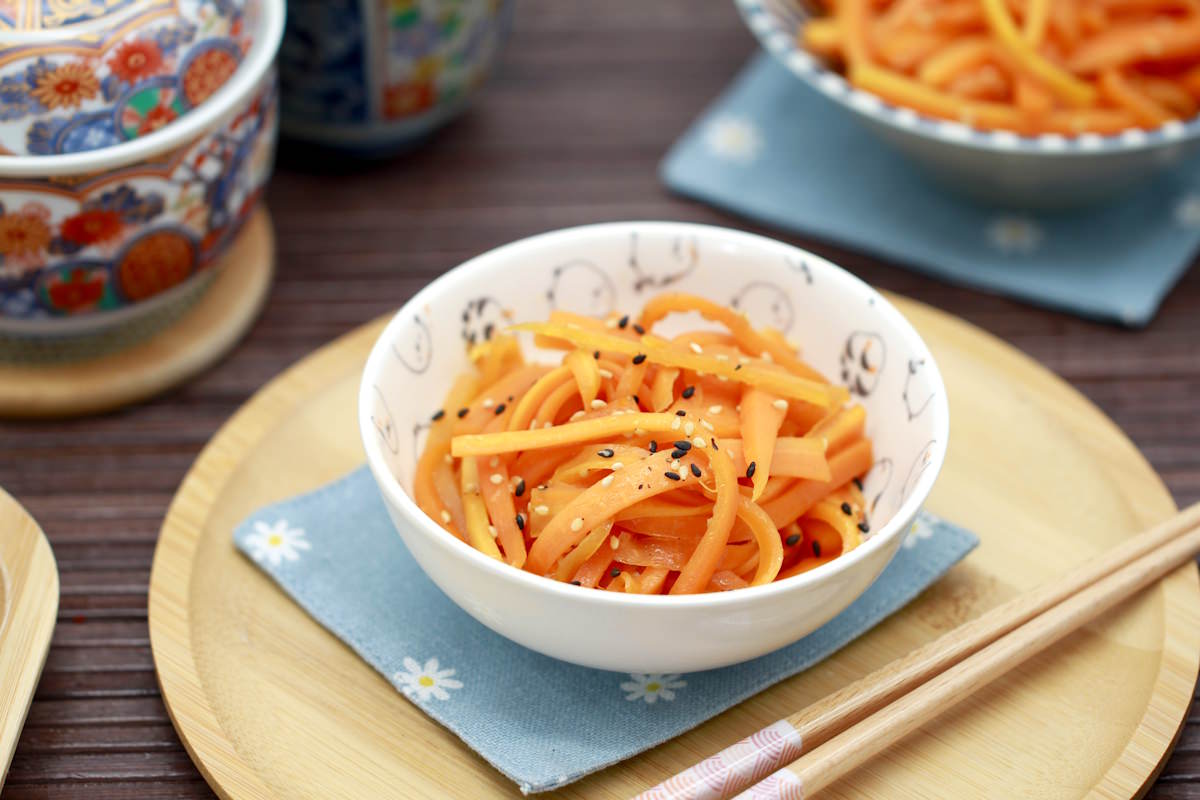
Ninjin no Kinpira is a simplified and more modern variation on this principle. Instead of burdock root, the focus is on carrots, which are more readily available and cook more quickly, whilst the technique, seasoning and character of the dish remain the same. As a result, Ninjin no Kinpira is now a popular everyday side dish that has a firm place particularly in family kitchens, bentos and school canteens.
How to make Ninjin no Kinpira yourself: Here’s how
Ninjin no Kinpira is one of those dishes that seem unremarkable at first glance but impress through technique and timing. It’s quick to prepare and easy to plan; what matters is not so much the list of ingredients as the right balance of heat, cutting technique and seasoning. That’s precisely why Ninjin no Kinpira is ideal as a pre-prepared side dish for everyday meals.
The focus is on the typical Kinpira technique: the vegetables are finely sliced, first seared vigorously and then glazed in a sweet-and-salty seasoning until the liquid has almost completely reduced. The result isn’t a sauce in the traditional sense, but a glossy coating that clings directly to the carrots.
The key ingredients for Ninjin no Kinpira:
- The carrots are cut into very fine strips, ideally julienned.
This ensures they cook quickly whilst remaining al dente. Pieces cut too thick would become soft before any roasted flavours could develop.The seasoning consists of soya sauce, Mirin, Sake and a small amount of sugar. It is only added after the carrots have been stir-fried and is then allowed to reduce almost completely. It is precisely this moment that determines the typical Kinpira texture.Finally, toasted sesame seeds add nutty notes and texture. Optionally, a few drops of sesame oil or a pinch of chilli can enhance the classic flavour without overpowering the dish.https://1mal1japan.de/wp-content/uploads/2026/02/Ninjin no Kinpira-Schritt-fuer-Schritt-selber-machen.pngMake your own Ninjin no Kinpira step by stepHere’s how it works:First, finely chop the carrots and fry them in oil until they are soft but still have a bit of bite. Then stir in the sugar briefly before adding the prepared seasoning mixture to the pan. Now let everything continue to fry until the liquid has almost completely evaporated and the carrots have an even sheen. Finally, fold in the sesame seeds, and the Ninjin no Kinpira is ready to serve – warm, lukewarm or cold.Differences & VariationsImportant to note: ‘Kinpira’ does not refer to the ingredient, but to the method of preparation. It refers to a technique in which finely sliced vegetables are first stir-fried and then glazed in a sweet-and-salty seasoning until hardly any liquid remains. This method originated in the Edo period and is firmly established in everyday Japanese cuisine.The classic version is Kinpira Gobo, made with burdock root, often supplemented with a little carrot. Gobo brings an earthy, slightly bitter flavour and plenty of bite. Its firm texture makes it particularly well-suited to the Kinpira technique, but it is not always readily available outside Japan and requires a little more preparation.Ninjin no Kinpira is a more recent, simplified variation in which carrots take centre stage. The flavour is milder and slightly sweet, whilst the texture remains crisp without being tough. This is precisely why Ninjin no Kinpira is considered particularly suitable for everyday meals: carrots are widely available, quick to chop and much more accessible – even for children. Despite this simplification, the classic Kinpira technique is retained in full.Particularly as a prepared side dish or as an accompaniment to hearty main courses, Ninjin no Kinpira is a practical alternative to salads or pickled vegetables.Kinpira in comparisonKinpira Gobo:burdock root (often with carrot)strong, earthy, very firm to the bitethe most classic form - The seasoning consists of soya sauce, Mirin, Sake and a small amount of sugar. It is only added after the vegetables have been stir-fried and is then allowed to reduce almost completely. It is precisely this moment that determines the typical Kinpira texture.
- Finally, toasted sesame seeds add nutty notes and texture. Optionally, a few drops of sesame oil or a pinch of chilli can enhance the classic flavour without overpowering the dish.
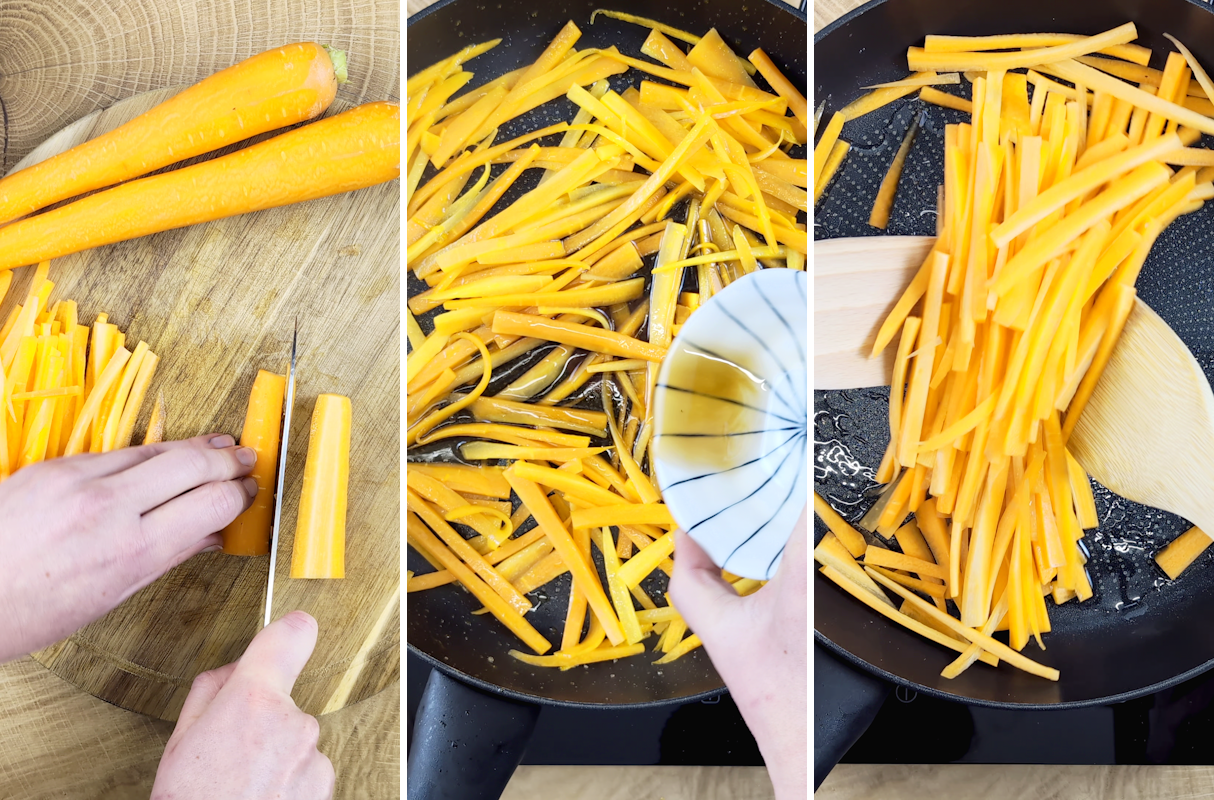
Here’s how it works:
First, finely slice the carrots and fry them in oil until they are soft but still have a bit of bite. Next, stir in the sugar briefly before adding the prepared seasoning mixture to the pan. Now continue to fry everything until the liquid has almost completely evaporated and the carrots have an even sheen. Finally, fold in the sesame seeds, and the Ninjin no Kinpira is ready to serve – warm, lukewarm or cold.
Differences & Variations
Important to note: ‘Kinpira’ does not refer to the ingredient, but to the method of preparation. It refers to a technique in which finely sliced vegetables are first stir-fried and then glazed in a sweet-and-salty seasoning until hardly any liquid remains. This method originated in the Edo period and is firmly established in everyday Japanese cuisine.
The classic version is Kinpira Gobo, made with burdock root, often supplemented with a little carrot. Gobo brings an earthy, slightly bitter flavour and plenty of bite. Its firm texture makes it particularly well-suited to the Kinpira technique, but it is not always readily available outside Japan and requires a little more preparation.
Ninjin no Kinpira is a more recent, simplified variation in which carrots take centre stage. In terms of flavour, it is milder and slightly sweet, whilst the texture remains crisp without being tough. This is precisely why Ninjin no Kinpira is considered particularly suitable for everyday meals: carrots are widely available, quick to chop and much more accessible – even for children. Despite this simplification, the classic Kinpira technique is fully preserved.
Particularly as a prepared side dish or to accompany hearty main courses, Ninjin no Kinpira is a practical alternative to salads or pickled vegetables.
Kinpira in comparison
Kinpira Gobo:
- burdock root (often with carrot)
- robust, earthy, very al dente
- the most classic form
Ninjin no Kinpira:
- Carrots as the main ingredient
- mild, slightly sweet, quick to prepare
- particularly suitable for everyday meals
Other Kinpira variations:
- Kinpira Renkon: lotus root, very crunchy, slightly nutty
- Kinpira Jagaimo: potatoes, a more filling, rustic
- Vegetable Kinpira: e.g. peppers, pumpkin or spinach for colour and variety
Typical variations arise less from new ingredients than from subtle adjustments: a little chilli for heat, toasted sesame seeds for depth, or a few drops of sesame oil at the end. The basic idea always remains the same: thin strips, short cooking time, not a sauce-based dish.
What goes well with Ninjin no Kinpira?
Ninjin no Kinpira is a classic rice accompaniment and goes brilliantly with Donburi, fried fish, tamagoyaki or simple main courses such as karaage.
It’s particularly popular in Bento boxes, as it’s easy to prepare, keeps for 2–3 days in the fridge and tastes great even when cold. Served with rice, a little egg and pickled vegetables, it makes for a typical everyday Japanese meal.
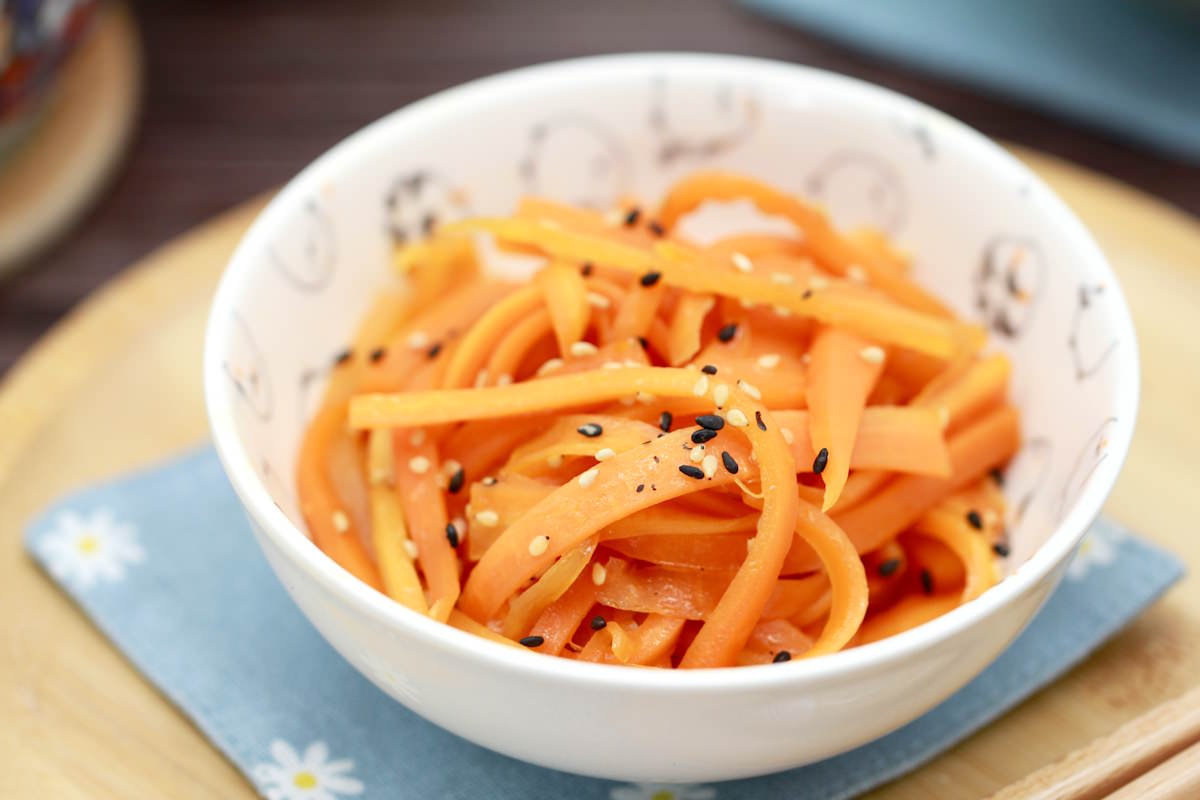
Do you have any questions or would you like to share your experiences? How do you like this Ninjin no Kinpira? Did you prepare it the traditional way, or perhaps try it with a bit of chilli, extra sesame seeds or your own choice of vegetables? I look forward to your comments and hope you enjoy cooking and savouring this dish.
Ninjin no Kinpira
4 servings | 10 minutes | 175 kcal
🖨️ Print PDF 📌 Save to PinterestNinjin no Kinpira is a quick Japanese side dish made from finely sliced carrots, glazed with a sweet and savoury sauce using the classic Kinpira technique. The dish takes just a few minutes to prepare, is easy to make in advance and is ideal with hearty main courses or as an alternative to a traditional salad.
Ingredients (serves 4)
300 g carrots (approx. 3 large ones)
2 tbsp Shoyu (im Shop ansehen)*
2 tbsp Mirin (im Shop ansehen)*
2 tbsp Sake (im Shop ansehen)*
1 tbsp sugar
2 tbsp neutral oil (e.g. rapeseed oil)
1 tbsp white & black sesame seeds (toasted) (im Shop ansehen)*
Optional, but typical:
a pinch of shichimi togarashi (im Shop ansehen)*
1 tbsp sesame oil (im Shop ansehen)*
Useful tools:
Santoku knife (im Shop ansehen)
Yukihiara saucepan
Preparation (10 minutes)
Step 1
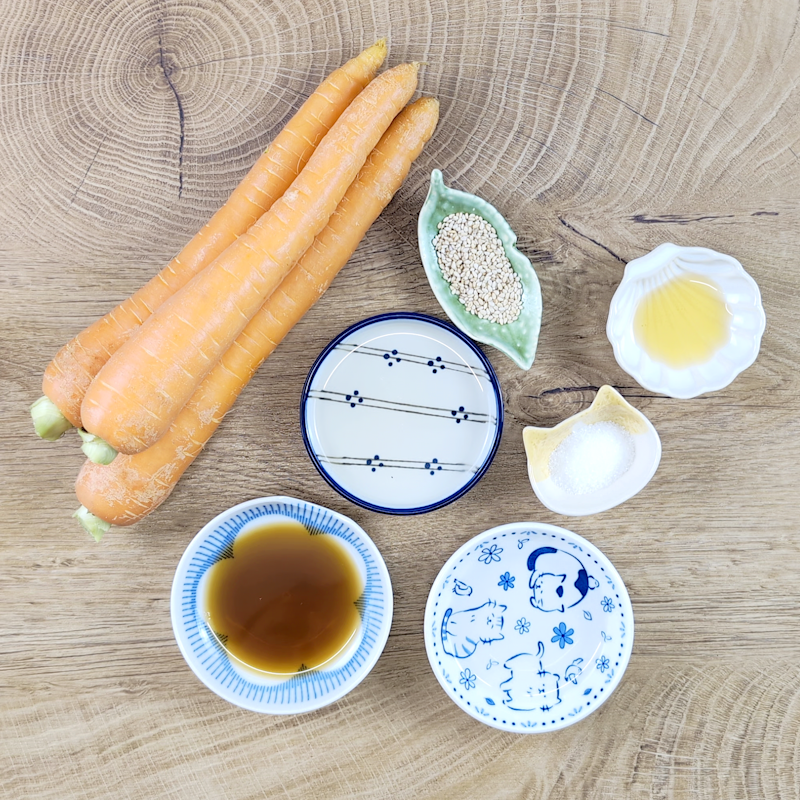
To begin with, lay out all the ingredients for the homemade Ninjin no Kinpira.
Step 2
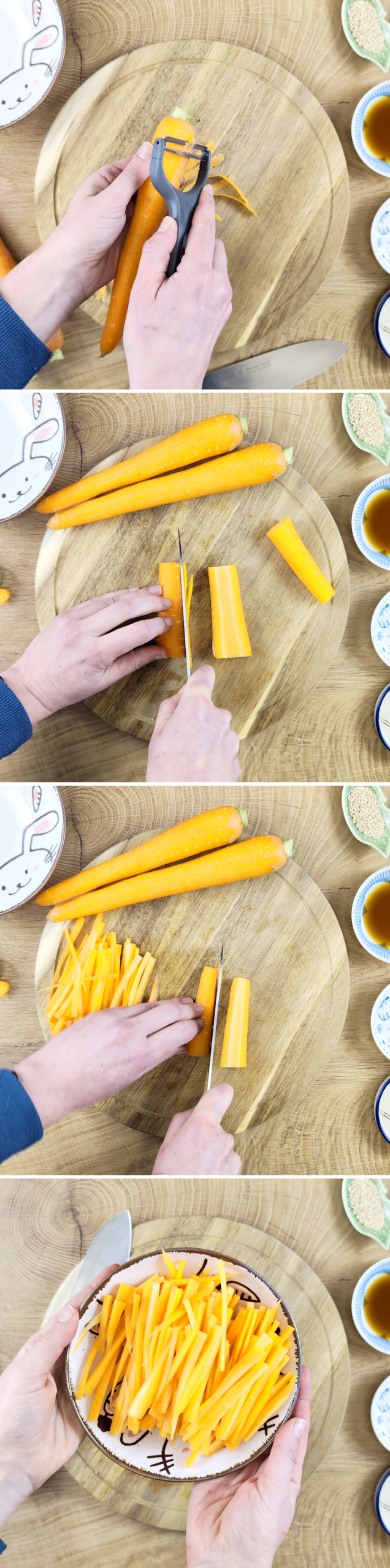
Peel 300 g of carrots and cut them into very fine strips (julienne, i.e. matchstick-sized), so that they cook quickly whilst still retaining some bite.
Step 3
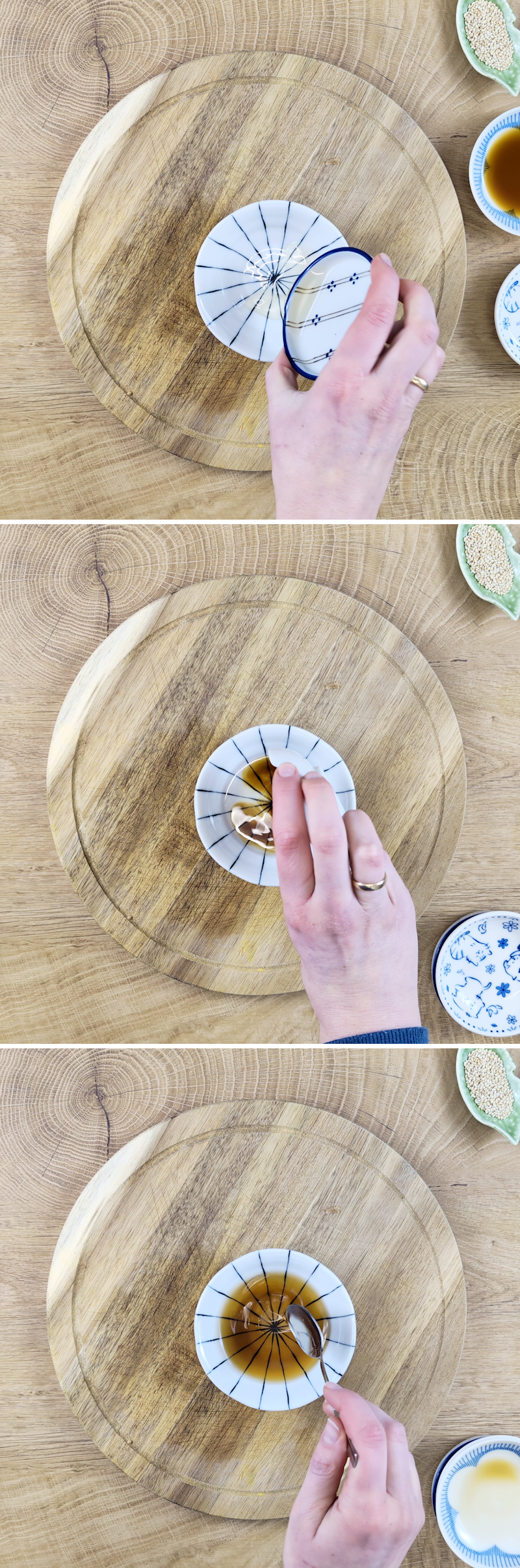
For the sauce, mix 2 tbsp Sake, 2 tbsp Mirin and 2 tbsp soya sauce in a small bowl and place it next to the hob, ready to hand.
Step 4
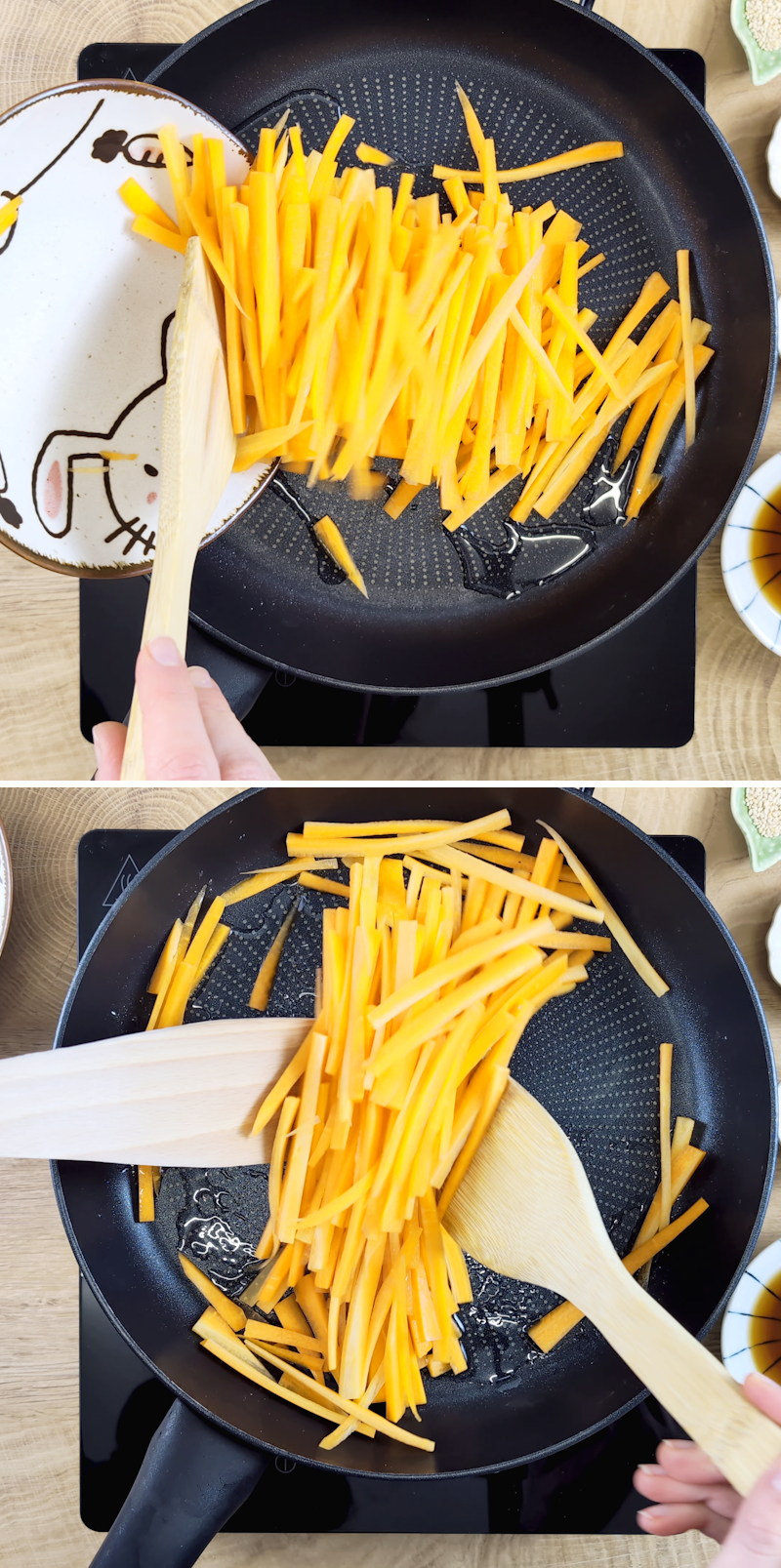
Heat 2 tbsp neutral oil in a frying pan over a medium heat. Add the carrot strips and fry for 2–3 minutes, stirring, until they are slightly softened but still have a distinct bite.
Step 5
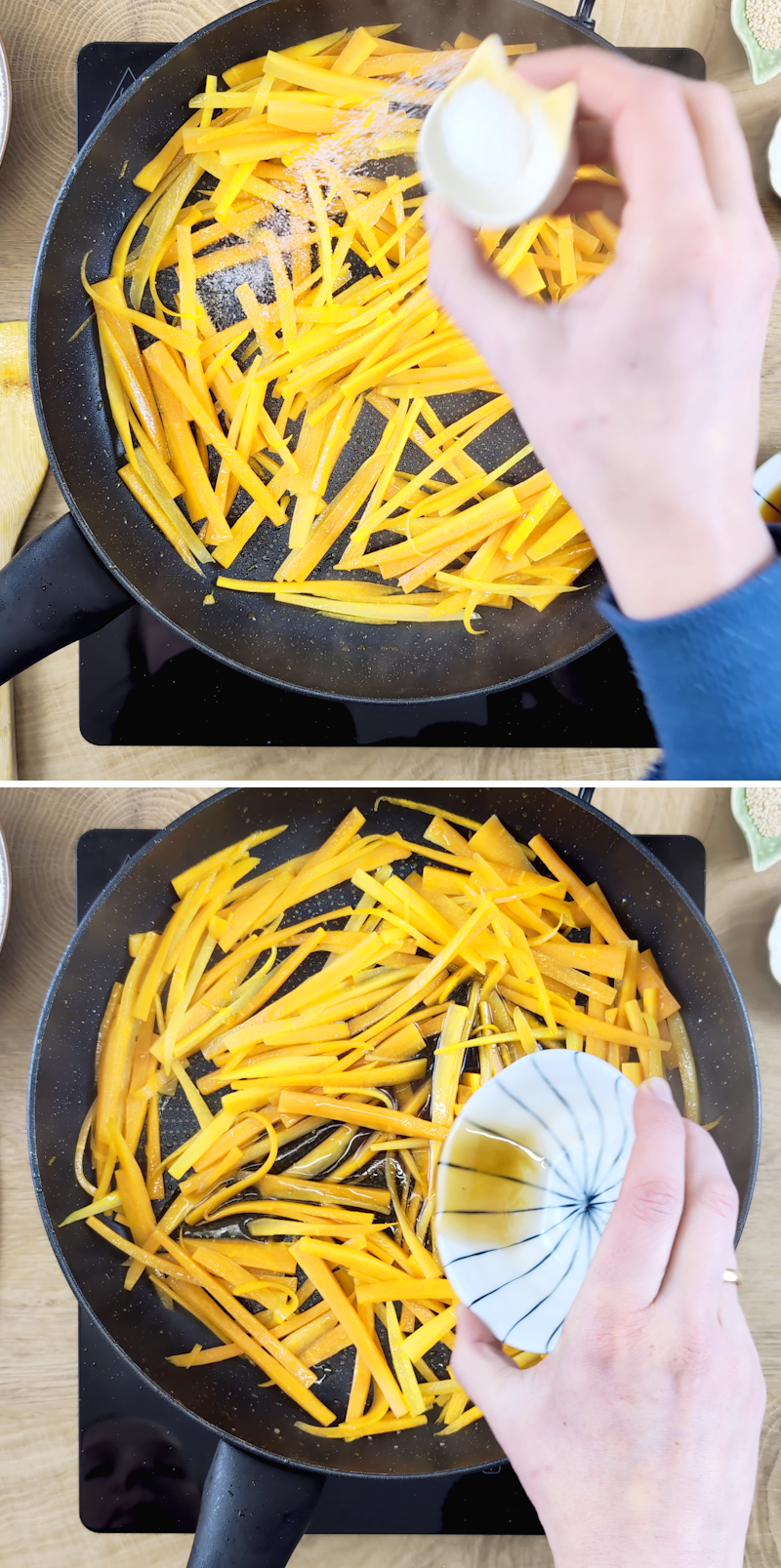
Sprinkle 1 tbsp sugar over the carrots and stir briefly until it has dissolved. Then add the prepared sauce to the pan and mix everything together thoroughly.
Now continue to fry until the liquid has almost completely reduced. There should be no sauce left in the pan, just a glossy coating clinging directly to the carrots.
Step 6
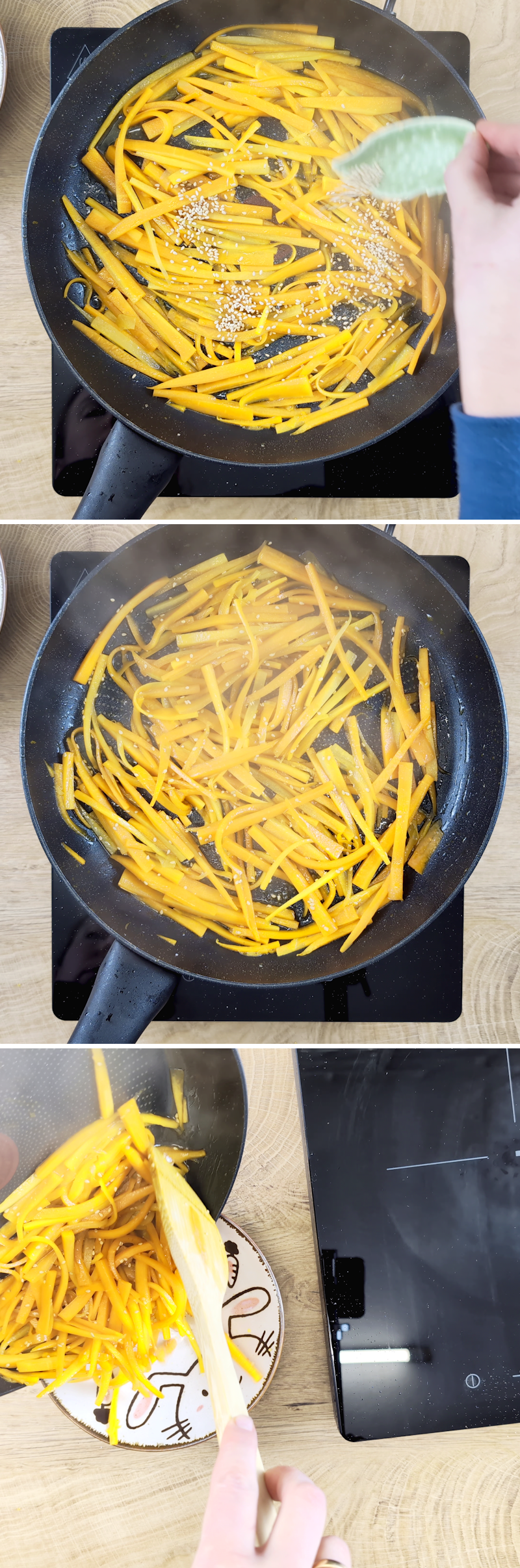
Finally, fold in 1 tbsp of toasted sesame seeds. Optionally, add 1 tbsp of sesame oil and/or a pinch of chilli or ichimi togarashi at this stage. Remove the pan from the heat.
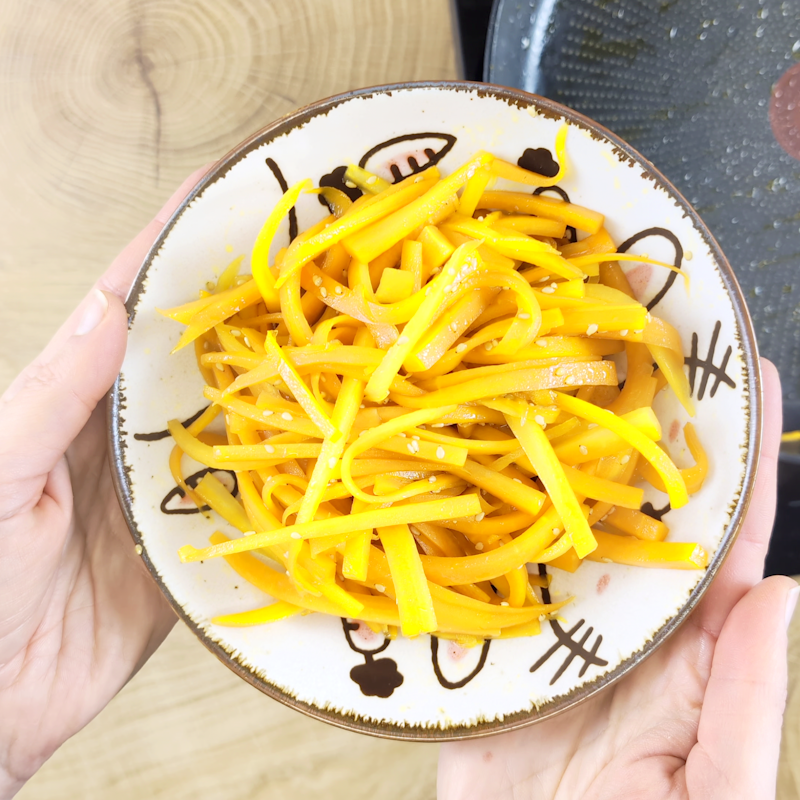
Step 7
Serve the Ninjin no Kinpira straight away. It also tastes really good when served lukewarm or cold – ideal as a side dish or for a Bento. Done. Itadakimasu!
Fancy some more delicious inspiration from Japan that goes well with Ninjin no Kinpira ?
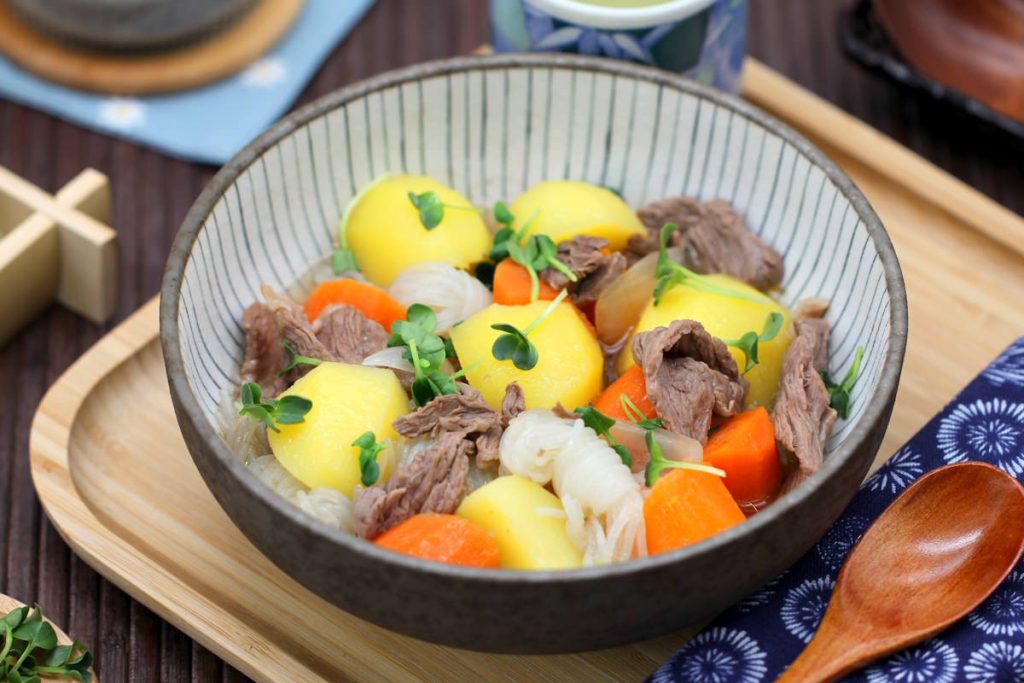
Nikujaga: Japanese potato and beef stew | Recipe for everyday cooking
I ate Nikujaga for the first time at my host family’s house in Fukui. It…
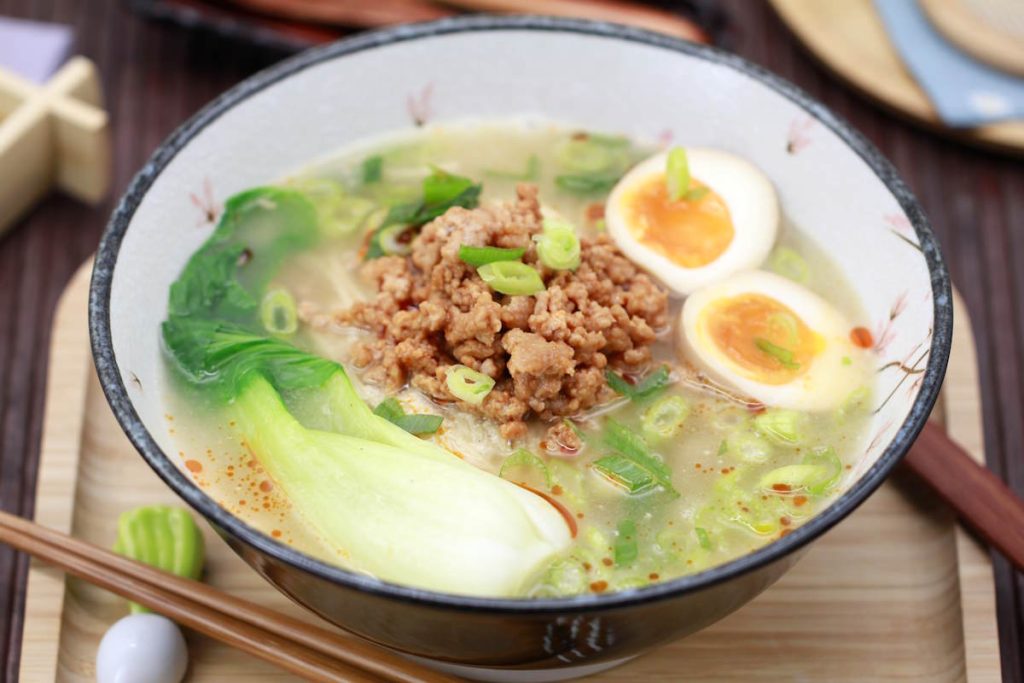
Make your own Tantanmen: creamy sesame Ramen with spicy Miso minced meat, pak choi & ramen eggs
Tantanmen is a Ramen soup for those who like it creamy but not heavy. A…

Make your own Omurice: Japanese omelette with ketchup rice & vegetables | delicious Omuraisu
Omuraisu is one of those dishes that brings an instant smile to almost every Japanese…
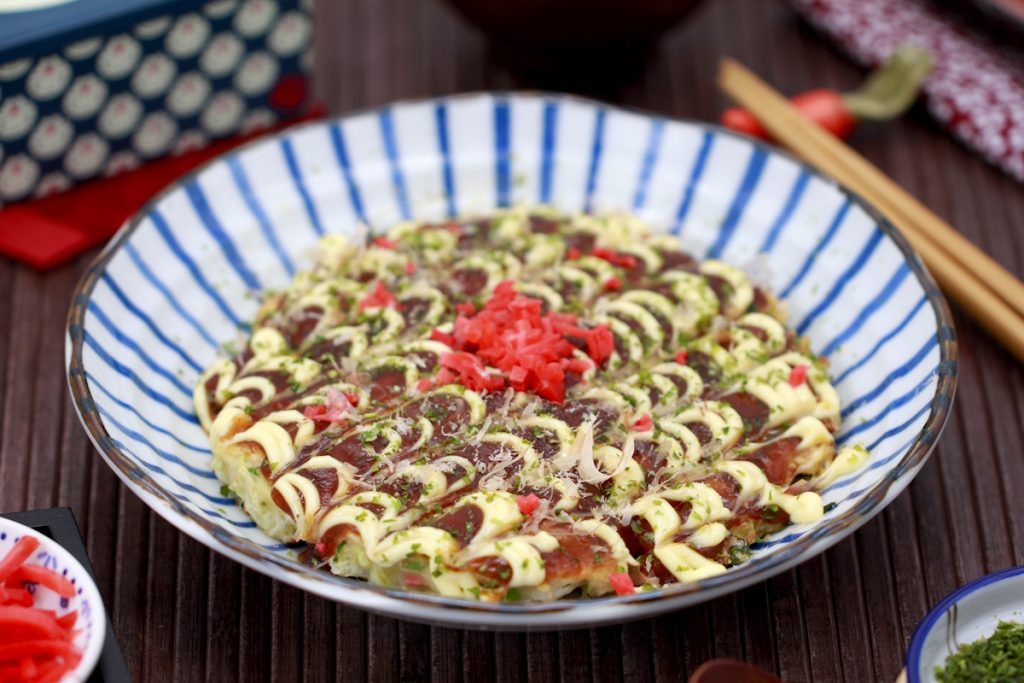
Make the best Okonomiyaki yourself: Basic recipe for Japanese cabbage pancakes, Osaka-style
For me, Okonomiyaki is one of those dishes that instantly puts me in a good…

Make your own crispy Tempura batter: Japanese batter for vegetables & prawns – recipe & tips
When I think of Tempura, I immediately hear that saku saku sound… That delicate crunch…
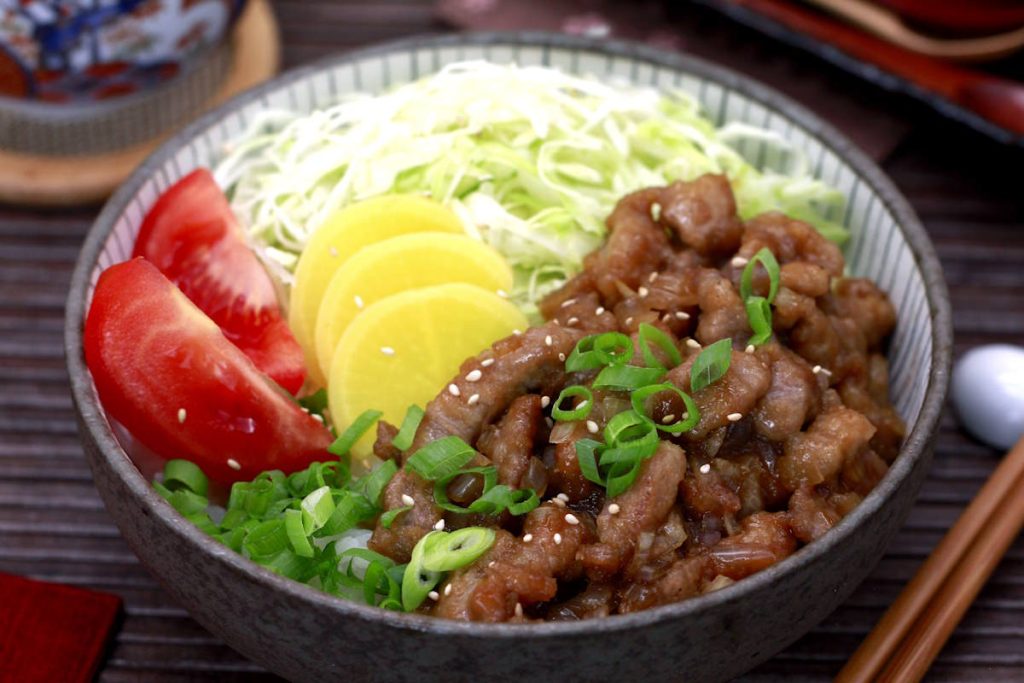
Buta Shogayaki: Make your own Japanese ginger pork with rice, cabbage & Tsukemono
For me, Buta Shogayaki is the perfect Japanese lunch when working from home. It’s quick,…
Have you tried the recipe yet? Let me know in the comments – I’m really looking forward to hearing from you.