

Language:


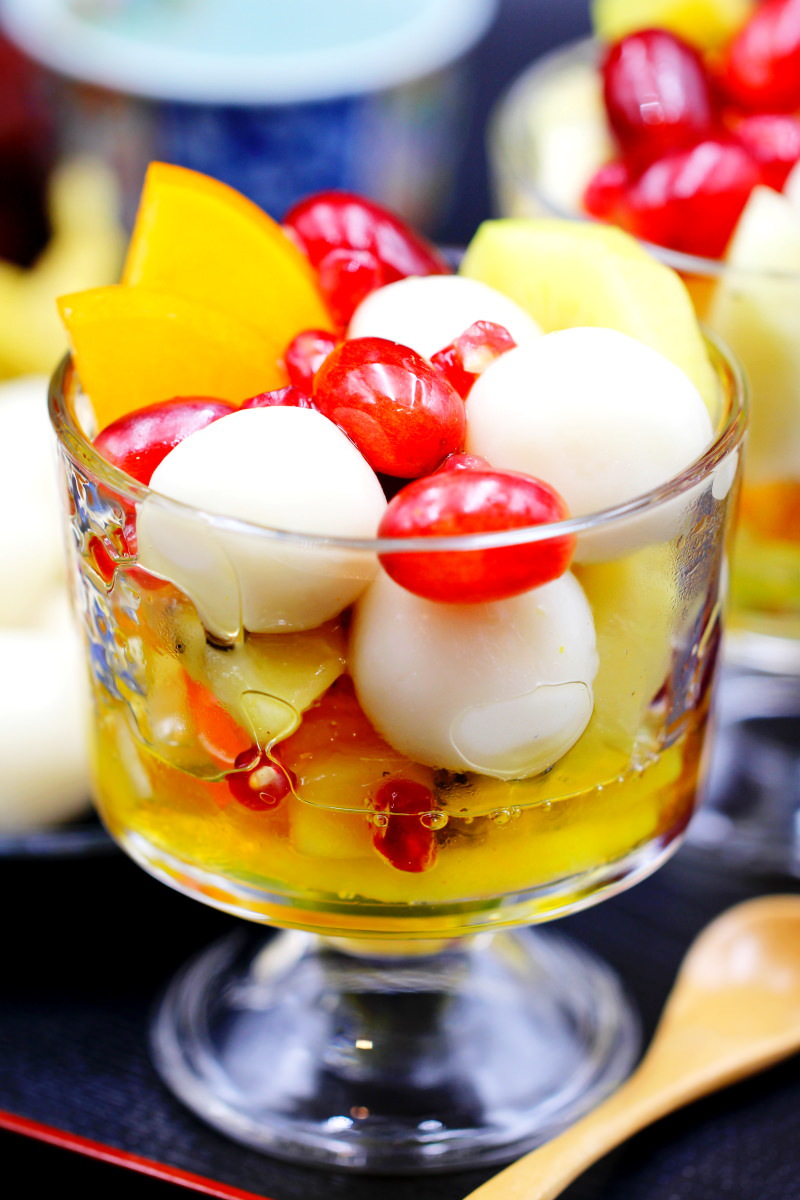
In Japan, you’ll often find a fresh fruit salad on the dessert menu, which is particularly popular served with soft mini Dango. These delicate rice balls go perfectly with crisp, sweet fruit. My favourite part is the warm, slightly tipsy orange syrup! The autumnal flavours transport you to a Japan of bright red maple leaves and little white clouds in the sky – so let’s dream!
I’m sure you’ll agree with me when I say that Japan is famous for its four distinct and breathtaking seasons! Many visitors certainly swear by spring, but for me, autumn takes top spot. After all, my husband and I even spent our honeymoon in Japan during October and November.
Because, as summer gives way to autumn, the weather turns cooler and the leaves begin to change, creating breathtaking views of vibrant red, brown and yellow foliage in the country’s many forests. In Japan, this natural phenomenon is called ‘koyo’ or ‘momiji’ – which roughly translates as ‘red leaves’.
Here’s a photo from our autumnal honeymoon during a trip to Lake Kawaguchi, one of the Five Lakes of Fuji near Mount Fuji:

But the falling temperatures don’t just bring the wonderful colours of autumn foliage; they also signal the return of Japan’s autumnal culinary flavours. Just think of freshly harvested rice and chestnuts, fragrant mushrooms, hearty pumpkins and sweet persimmons!
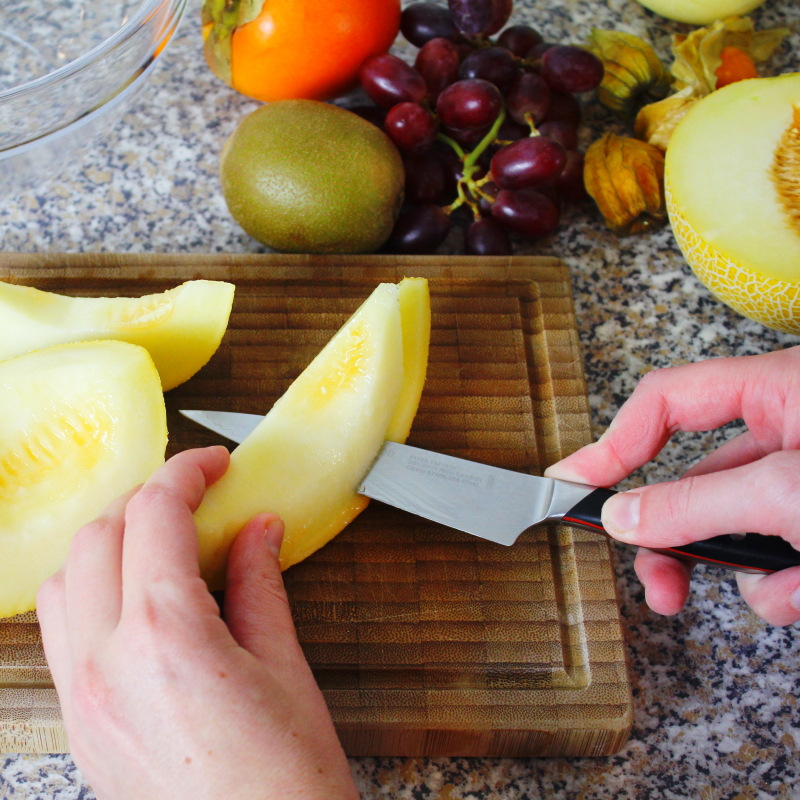
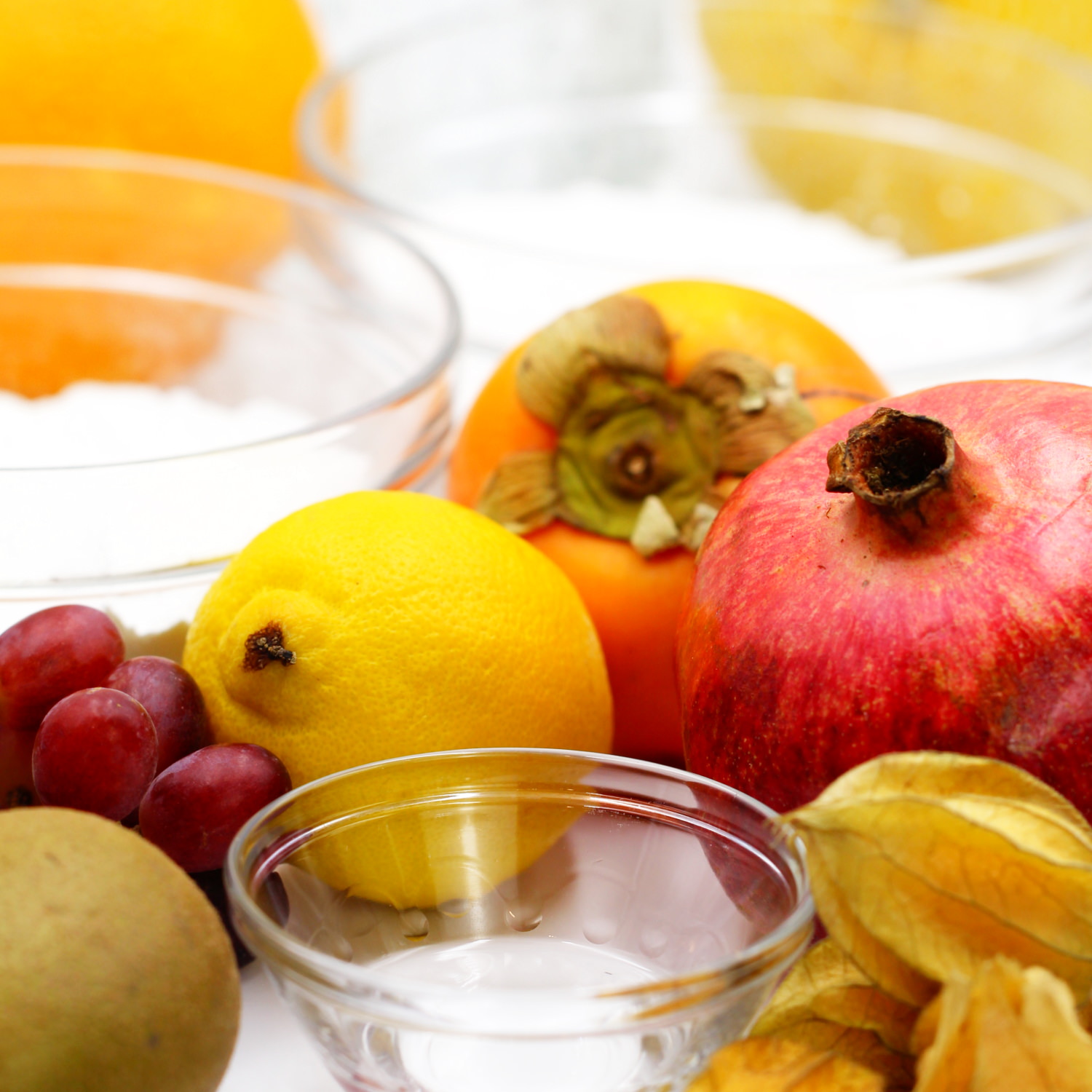
For this autumnal fruit salad, I took my inspiration from the vibrant colours of the seasonal fruit selection. My basket contains apples, golden kiwis, a honeydew melon, plenty of grapes, a lovely pomegranate, persimmons and a few physalis. You can choose entirely according to your own taste and, depending on the season, keep trying out new and even unusual combinations!
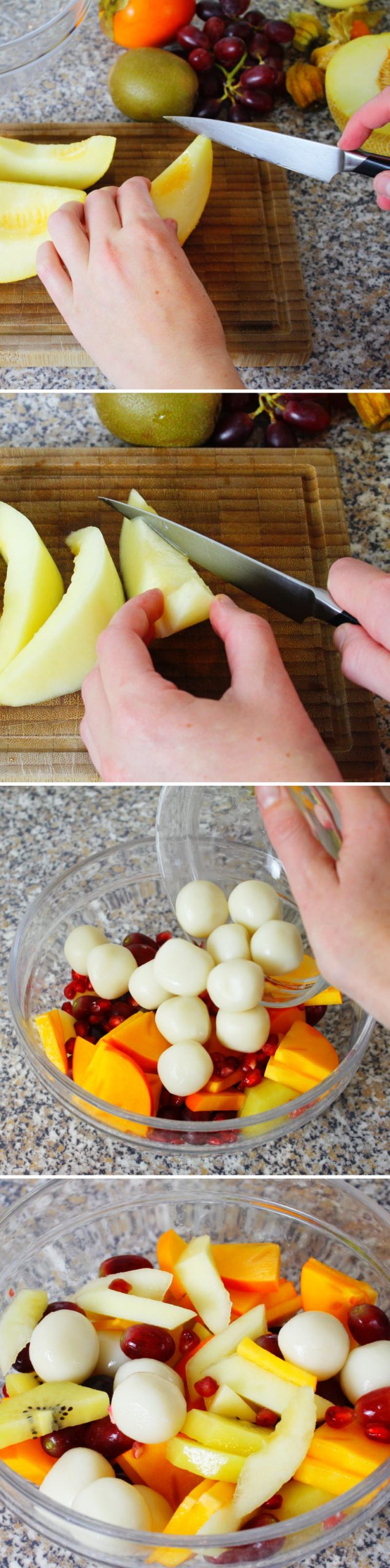
Simply wash or peel the fruit and cut it into small pieces or slices as you like:
To turn this fruit salad into a Japanese fruit salad, today we’re going to make some traditional Japanese Dango balls to mix into the salad! Dango are small, round rice balls that play a key role in traditional Japanese desserts and sweet dishes.
To make Dango, we need both glutinous rice flour and rice flour (im Shop ansehen). For the glutinous rice flour, I’ve used shiratamako, which is Japanese glutinous rice flour.
CUSTOMER FAVOURITE
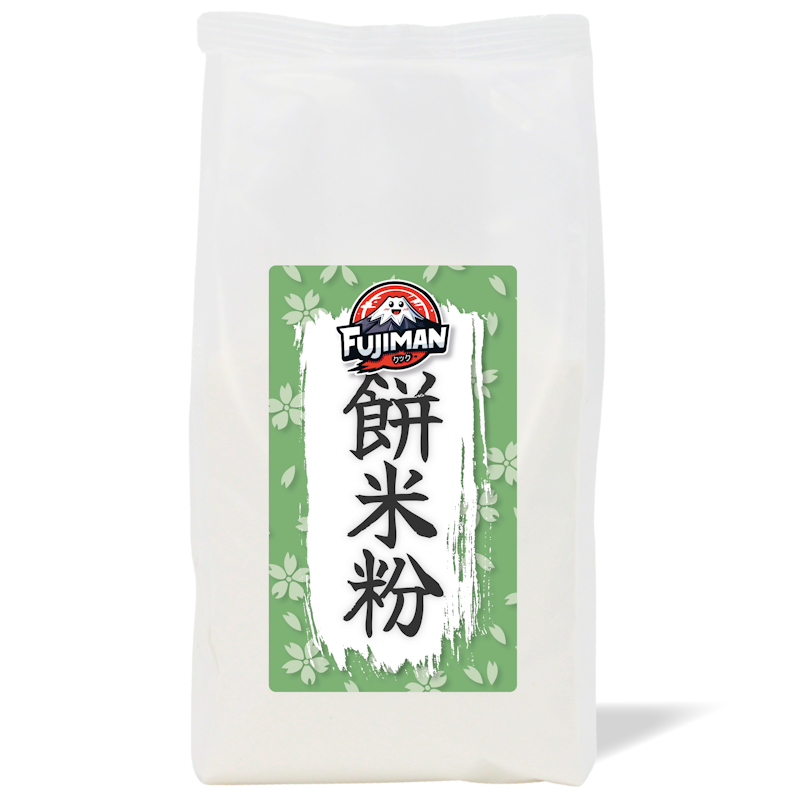
Klebreismehl 940g (glutinous), Fujiman
Klebreismehl für Mochi, Dango & japanische Desserts . Dieses Klebreismehl von Fujiman besteht aus fein gemahlenem Rundkornreis und sorgt für die typische weiche, elastische Textur…
In stock
As well as glutinous rice flour, which is made from sticky Japanese short-grain rice, we also need ‘normal’ rice flour, known as Joshinko, made from ordinary short-grain rice. You can find this in Asian food shops.
Making Dango isn’t difficult and is absolutely essential if you want to make traditional Japanese sweets at home. Here you’ll find even more favourite recipes for homemade Dango desserts: → Make your own Dango: 7 really delicious recipes for sweet rice balls
The recipe should, of course, also work with other types of rice and glutinous rice flour, but be careful – please don’t just use any old rice flour! It absolutely must be glutinous rice flour, not non-glutinous rice flour, for the Dango to turn out right.
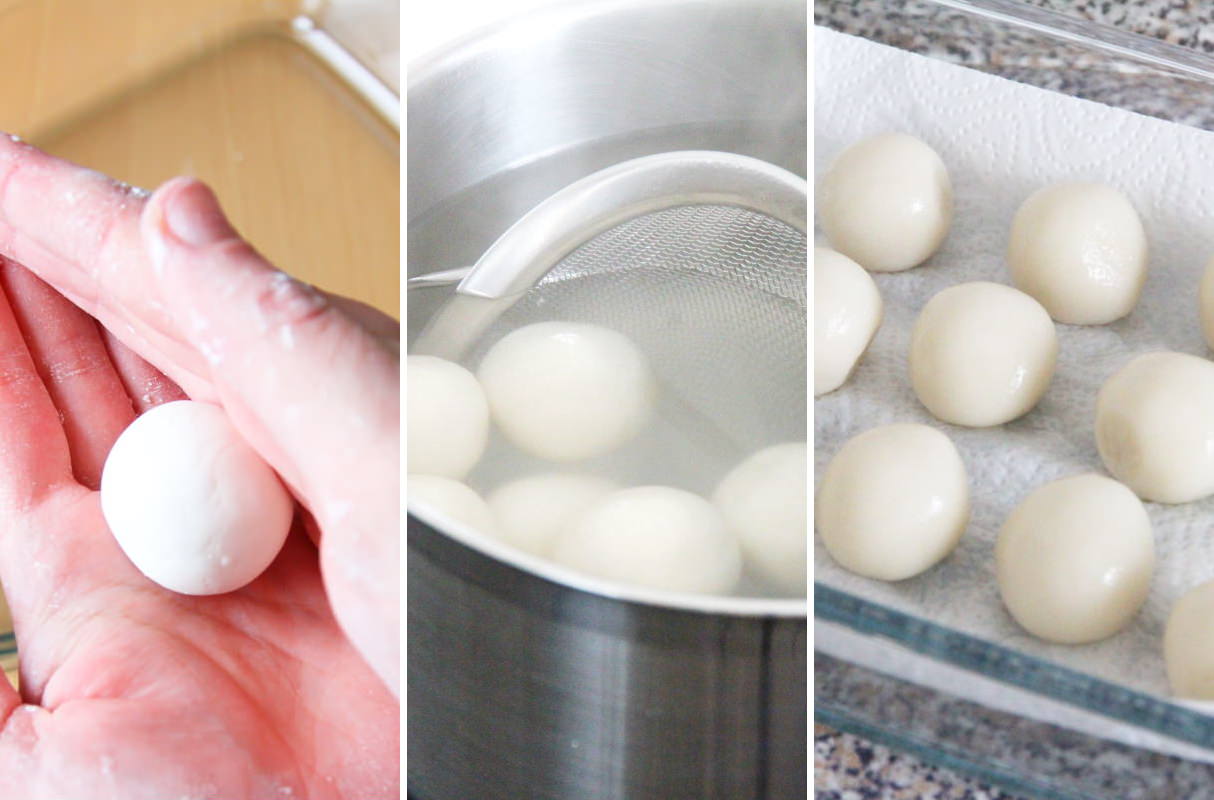
Psst: We won’t go to the trouble of steaming the Dango dough; instead, we’ll simply shape it into small balls and cook them in boiling water for a few minutes.
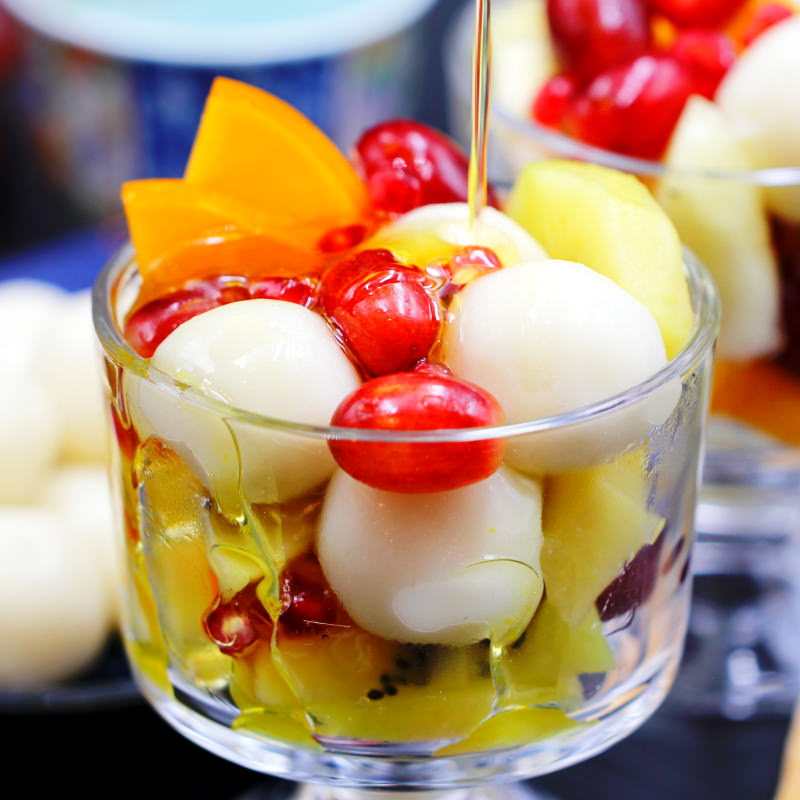
Place the chopped fruit in a large bowl and add the drained Dango. Now mix everything together carefully so that the rice balls are coated in the fruit juice. We can now divide the Dango fruit salad between some pretty dessert bowls and pour warm orange syrup over the top!
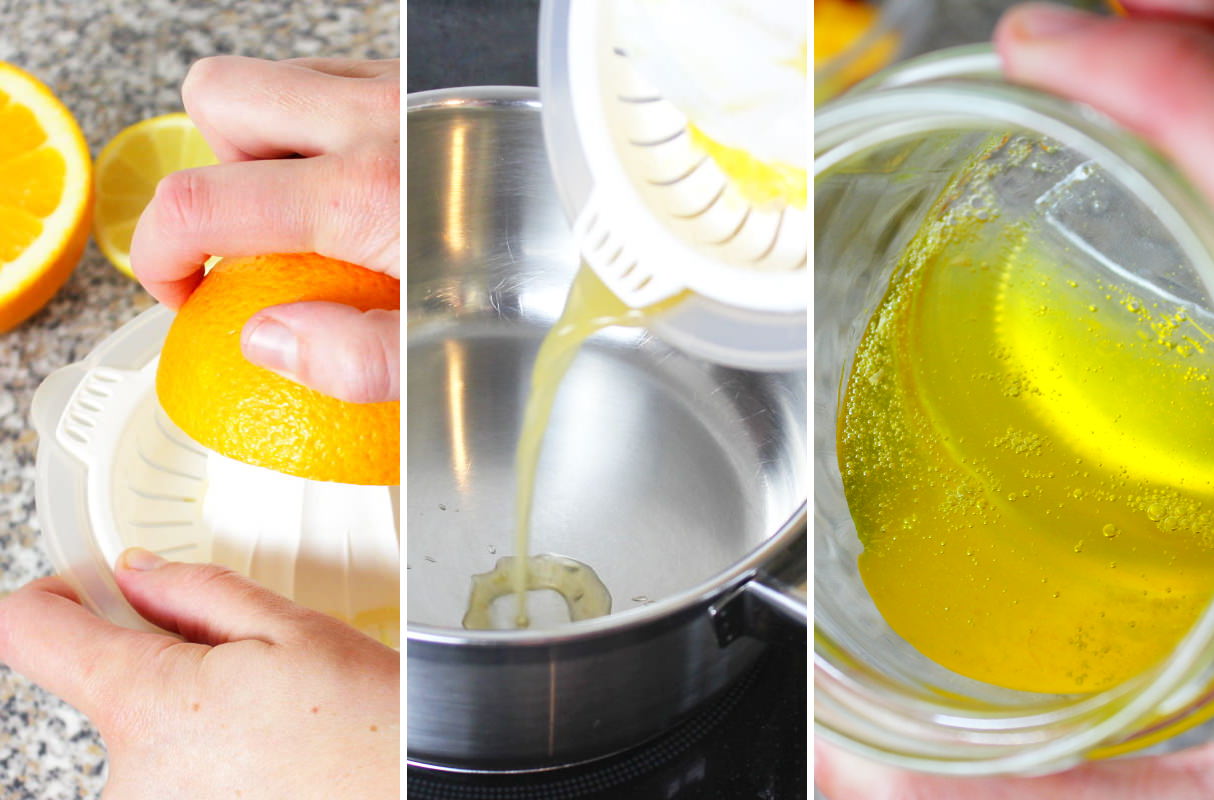
We’ll make the sweet orange syrup ourselves right at the start. To do this, halve an orange and a lemon and squeeze out the juice from each. Pour the juices into a saucepan, mix thoroughly with Cointreau and sugar, and bring to the boil over a high heat. Reduce the heat to medium and simmer gently for 15 minutes, stirring occasionally, until it has reduced to a syrup. Then remove from the heat and set aside until ready to serve.
The warm syrup adds an unexpected depth of flavour and will go wonderfully with the crisp fruit and the tender dango balls. You might realise just how much I love this recipe. The fresh fruit, the warm syrup and then the soft Dango – a treat just like in Japan!
Autumnal Dango fruit salad
Serves 4 | 30 minutes | 333 kcal
🖨️ Print PDF 📌 Save this pinIn Japan, you’ll often find a fresh fruit salad on the dessert menu, which is particularly popular served with soft mini Dango. These delicate rice balls go perfectly with crisp, sweet fruit. My favourite part is the warm, slightly tipsy orange syrup! The autumnal flavours transport you to a Japan of bright red maple leaves and little white clouds in the sky – so let’s dream!
Ingredients (4 portions)
For the mini Dango balls:
100 g glutinous rice flour (im Shop ansehen)
100 g rice flour (im Shop ansehen)
175 ml water
Fruit of your choice, for example apple, kiwi, honeydew melon, grapes, pomegranate, figs and physalis
For the orange syrup:
1 orange or 70 ml orange juice
1 lemon or 10 ml lemon juice
30 ml Cointreau (alternatively, replace with orange juice)
80 g sugar
Method (30 minutes)
Step 1
Prepare the ingredients for the autumnal fruit salad with mini dango balls and orange syrup.
Step 2
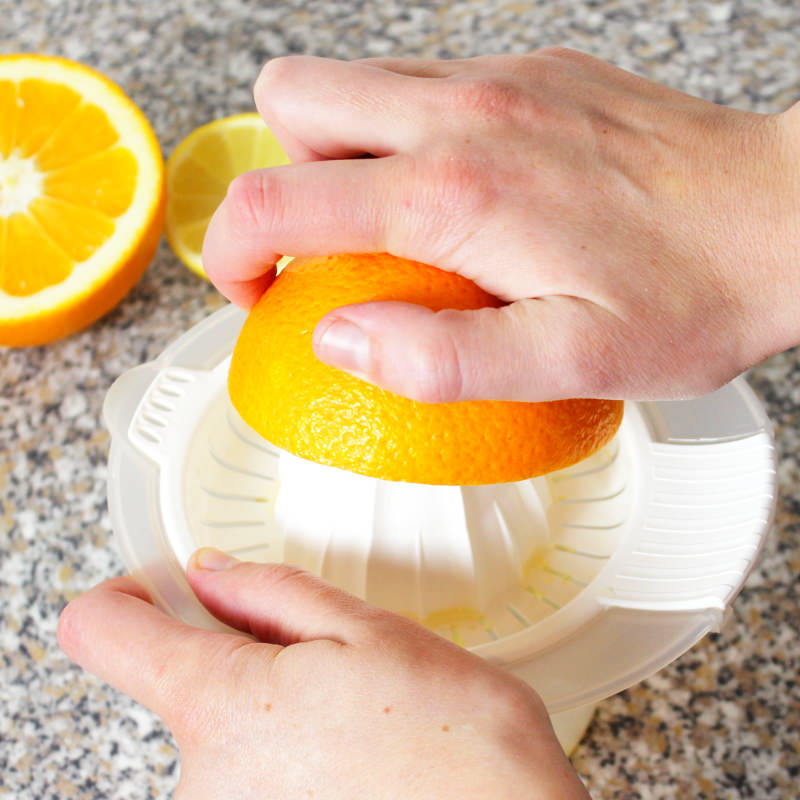
First, we’ll make the homemade orange syrup: To do this, cut the orange and lemon in half and squeeze the juice (about 70 ml of orange juice and 10 ml of lemon juice).
Step 3
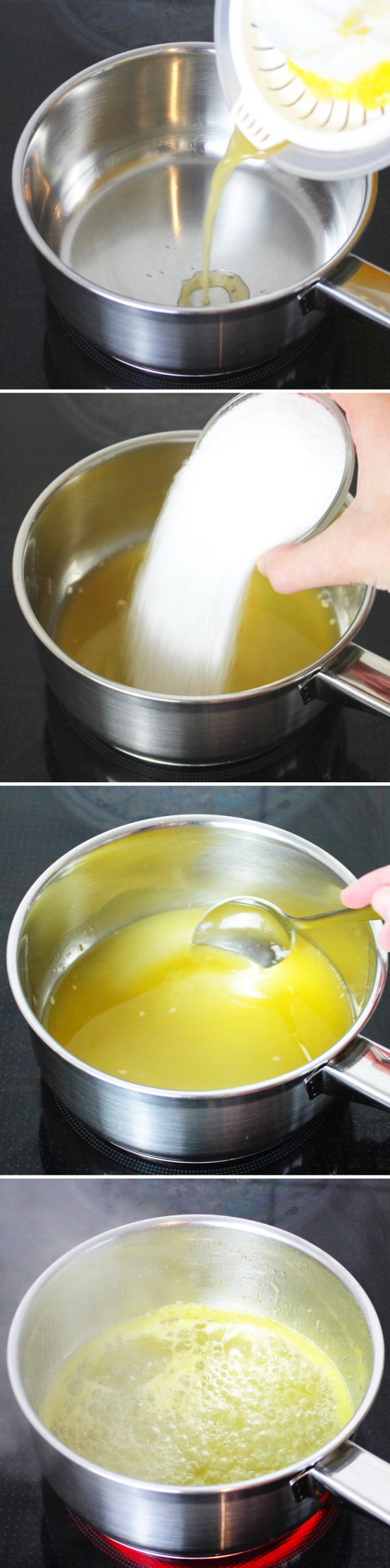
Pour the juices into a saucepan. Also add Cointreau and sugar , stir everything together thoroughly and bring to the boil over a high heat. Reduce the heat to medium and simmer for 15 minutes, stirring occasionally, until it has reduced to a syrup. Then remove from the heat and set aside until ready to serve.
Step 4
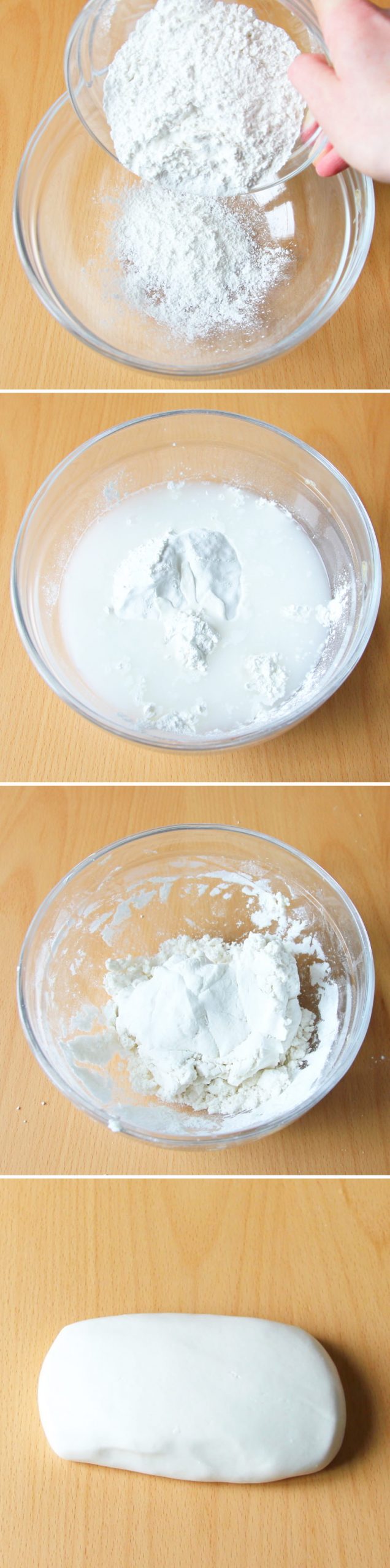
In the meantime, prepare the dango balls: to do this, mix glutinous rice flour and rice flour in a bowl. Gradually add the water to the flour mixture, stir initially with a spoon and then knead with your hands to form a firm dough.
Tip: The dough should feel firm but not dry – it should also be supple without becoming runny. If not, add small amounts (no more than 1 tsp at a time) of glutinous rice flour or water and knead again until you have the ideal dough.
Step 5
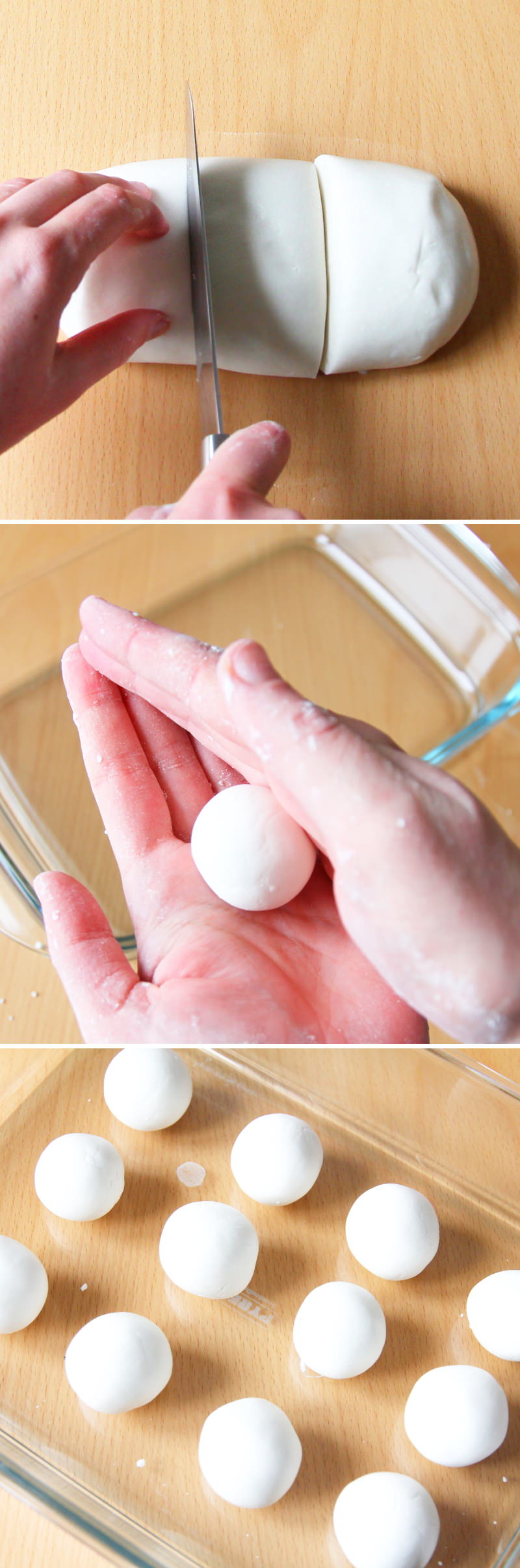
Cut the dough in half with a knife, cut each half in half again, and then cut each of those halves into thirds – thus dividing the dough into 12 equal pieces. Cut each piece of dough in half once more and shape them into neat balls between the palms of your hands. This will give you 24 mini Dango balls of equal size.
Step 6
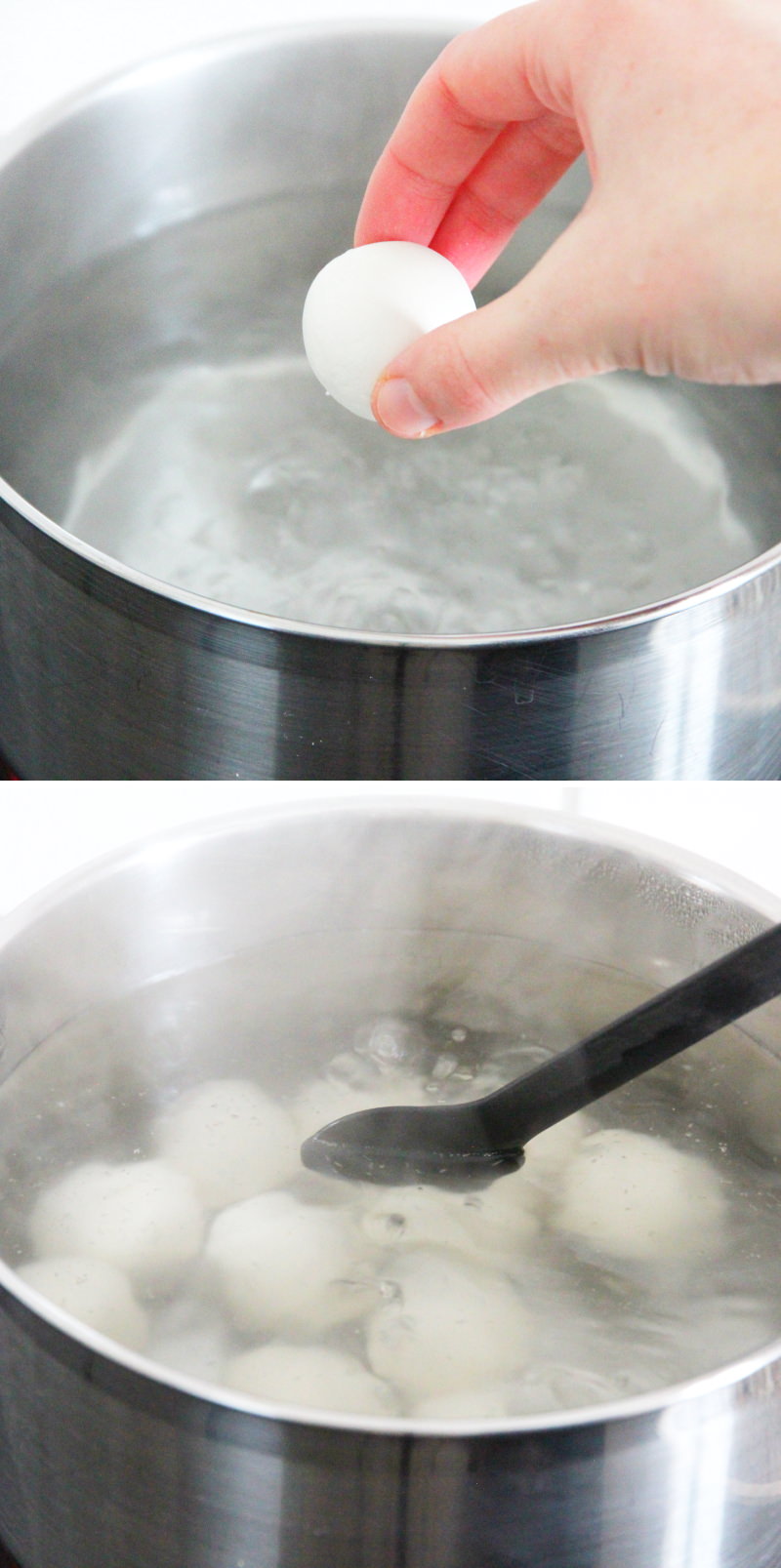
Bring 2 litres of water to the boil in a large saucepan, then reduce the heat to medium. Add 12 balls at a time to the boiling water in two batches, stir gently once (to prevent the balls from sticking to the bottom) and boil for 5 minutes, until each ball has risen to the surface.
Step 7
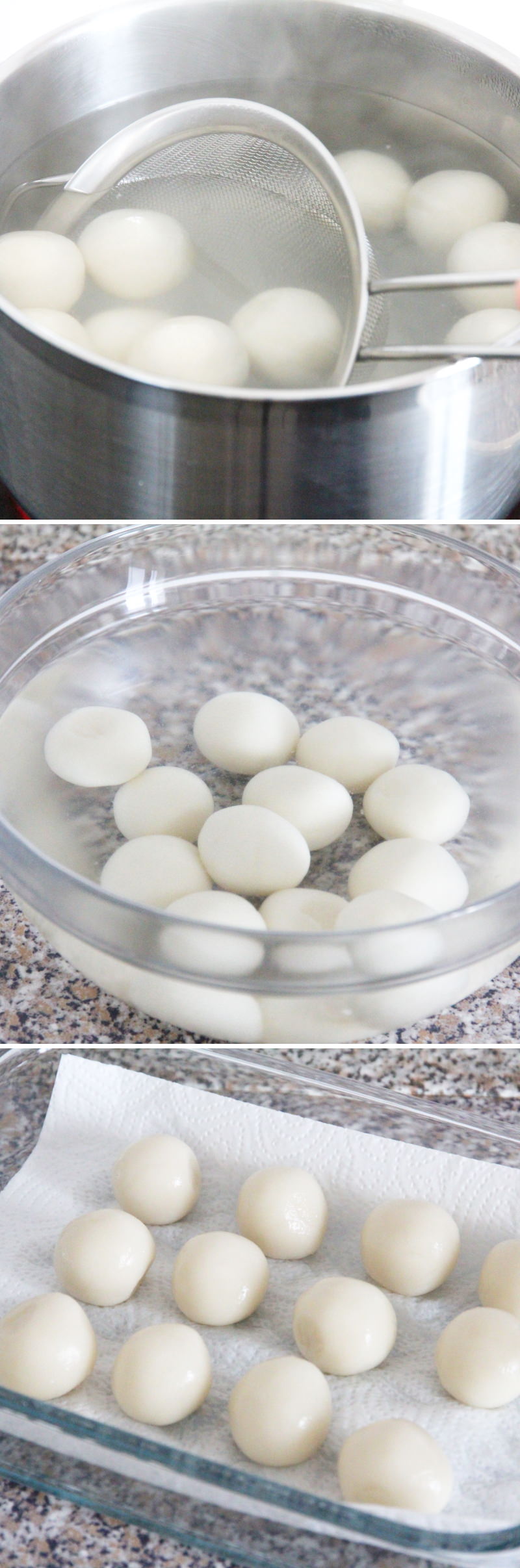
In the meantime, prepare a bowl of ice-cold water. Then lift the balls out of the water using a slotted spoon or a sieve and place them in the prepared cold water. Rinse briefly under cold water and then leave to drain on kitchen paper.
Step 8
Whilst the Dango balls are draining, peel or wash the fruit, remove any stones and cut the flesh, as desired, into small pieces or slices. Place the fruit in a large bowl, add the drained Dango and gently mix everything together so that the rice balls are coated in the fruit juice.
Step 9
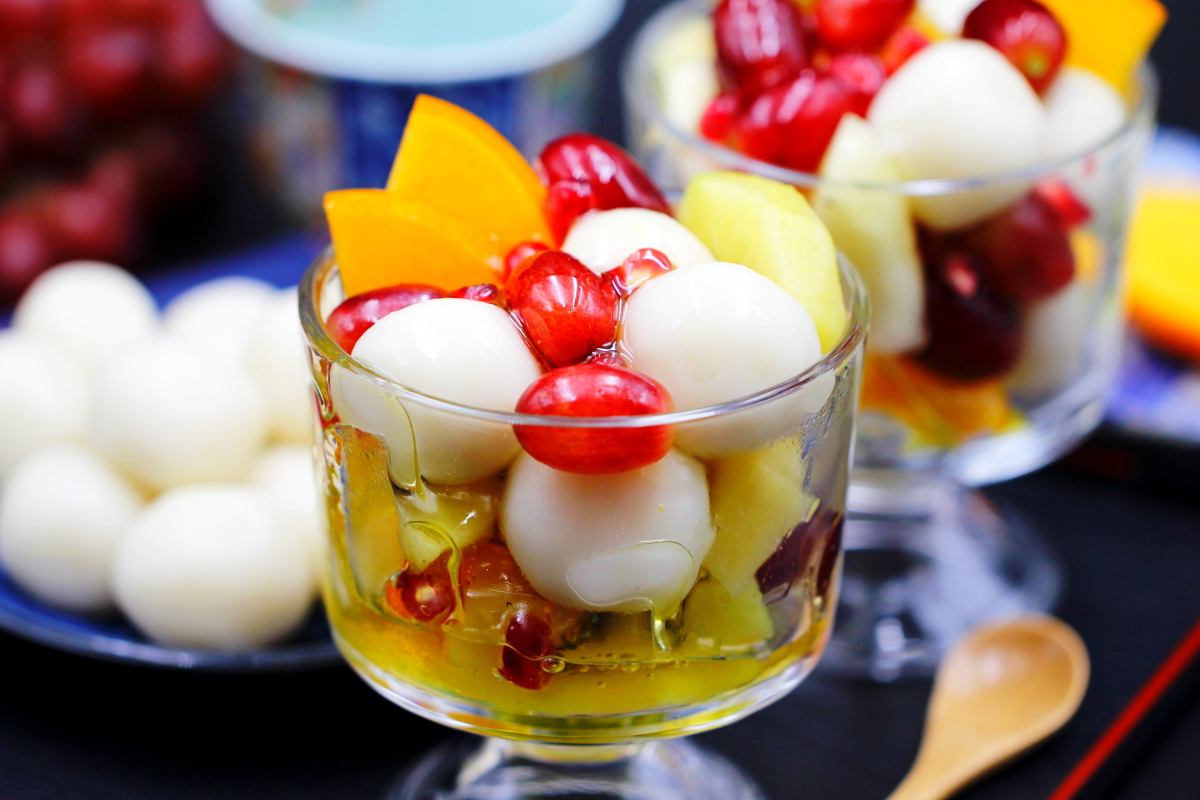
Divide the dango fruit salad between some attractive bowls and pour the warm orange syrup over the top. Ready – Itadakimasu!
This fruit salad is a wonderful way to round off a Japanese meal! Here you’ll find my most popular recipes that go really well with it:
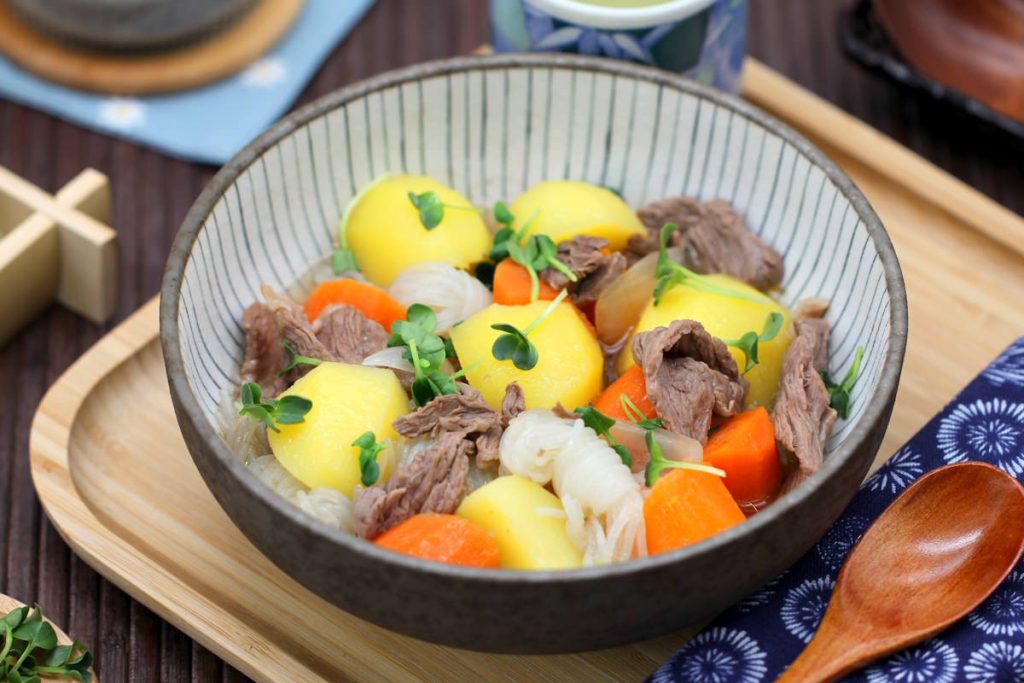
Nikujaga: Japanese potato and beef stew | Recipe for everyday cooking
I ate Nikujaga for the first time at my host family’s house in Fukui. It wasn’t a special occasion, just…
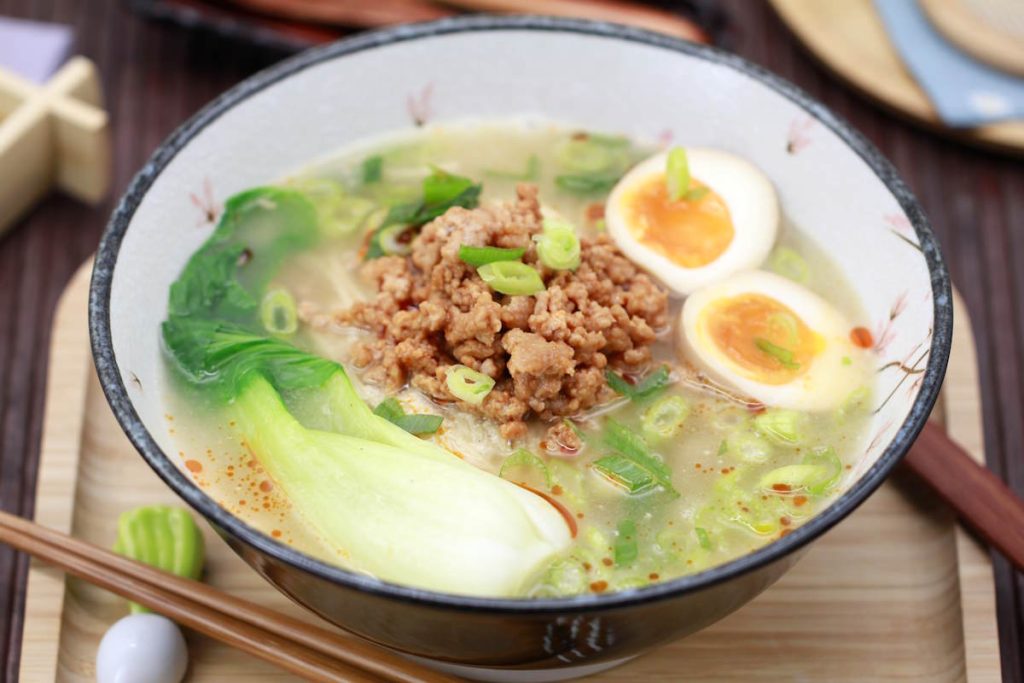
Make your own Tantanmen: creamy sesame Ramen with spicy Miso minced meat, pak choi & ramen eggs
Tantanmen is a Ramen soup for those who like it creamy but not heavy. A sesame-based broth, spicy minced meat,…

Make your own Omurice: Japanese omelette with ketchup rice & vegetables | delicious Omuraisu
Omuraisu is one of those dishes that brings an instant smile to almost every Japanese person’s face. A light, fluffy…
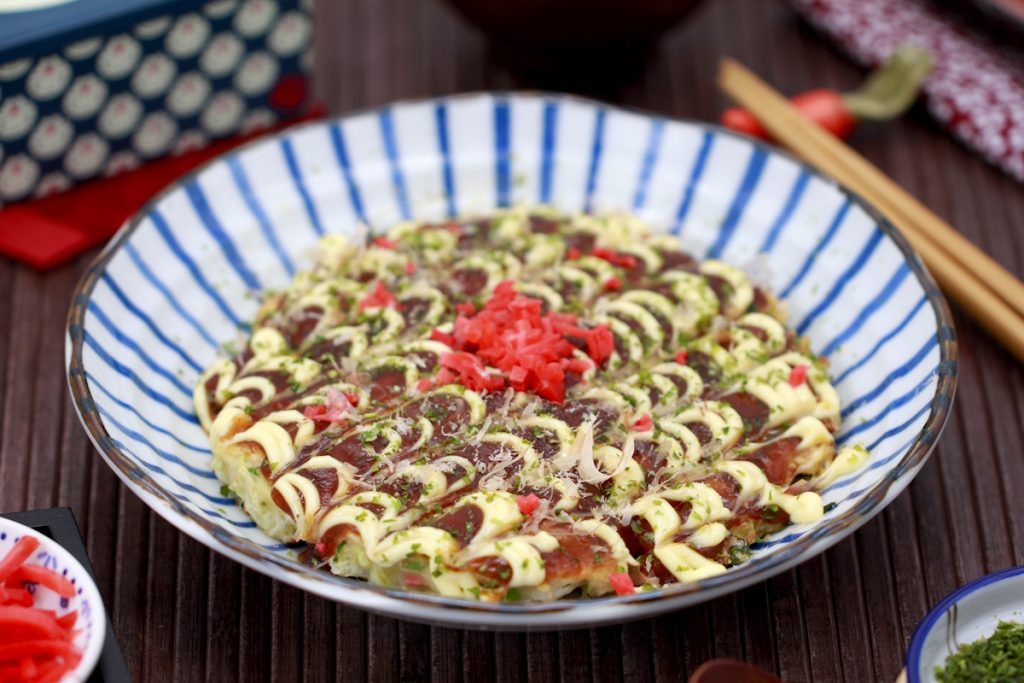
Make the best Okonomiyaki yourself: Basic recipe for Japanese cabbage pancakes, Osaka-style
For me, Okonomiyaki is one of those dishes that instantly puts me in a good mood. A hearty pancake, lots…

Make your own crispy Tempura batter: Japanese batter for vegetables & prawns – recipe & tips
When I think of Tempura, I immediately hear that saku saku sound… That delicate crunch that only a really good…
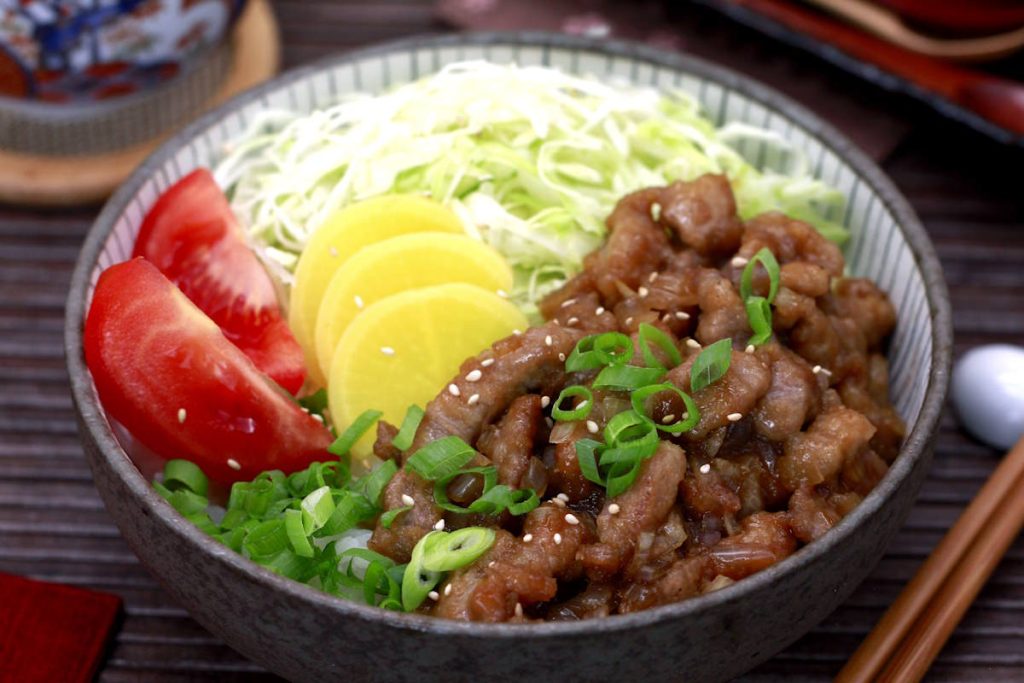
Buta Shogayaki: Make your own Japanese ginger pork with rice, cabbage & Tsukemono
For me, Buta Shogayaki is the perfect Japanese lunch when working from home. It’s quick, incredibly flavourful and requires little…
Have you tried the recipe? Let me know in the comments – I’m really looking forward to hearing from you.