
Language:


Omuraisu is one of those dishes that brings an instant smile to almost every Japanese person’s face. A light, fluffy omelette with spicy ketchup rice underneath: it’s simple, familiar and incredibly comforting. In Japan, omuraisu is one of the classics of so-called Yōshoku cuisine – dishes of Western origin that have become an integral part of everyday Japanese life.
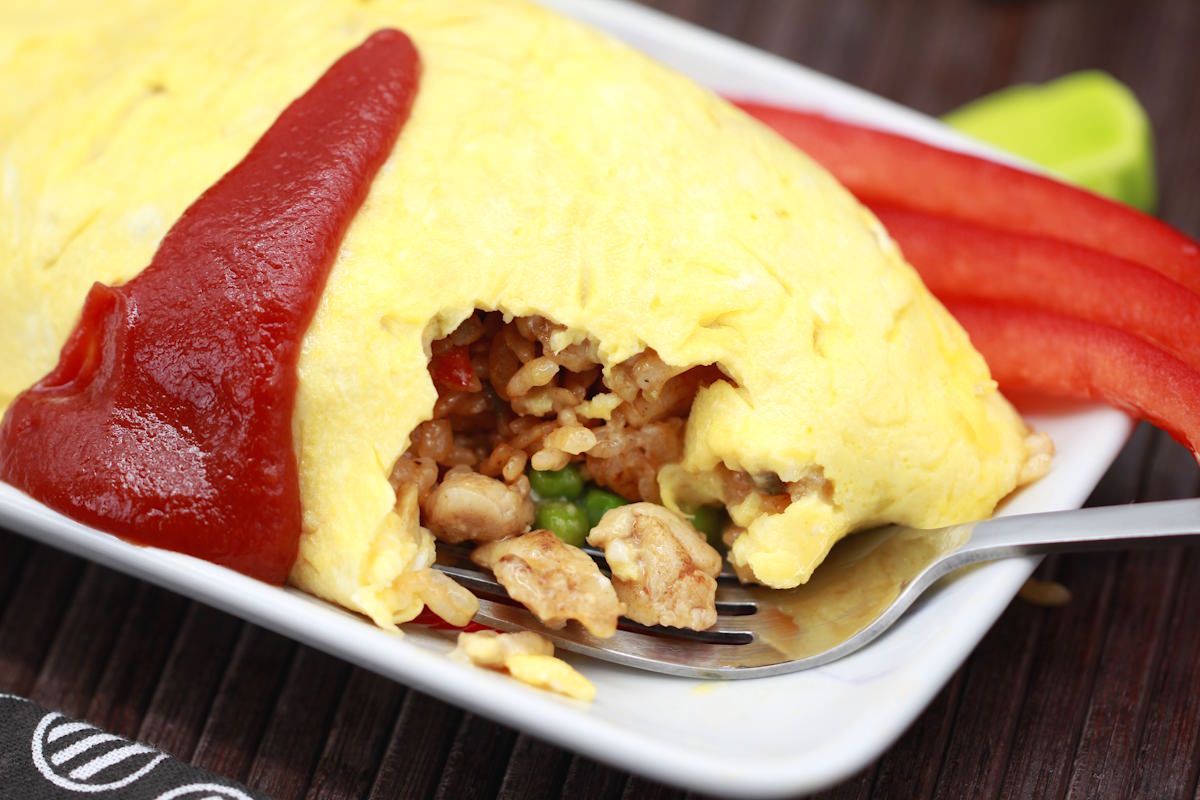
Although omuraisu is often known abroad as Omurice, in Japan the dish is called オムライス (Omuraisu) – an abbreviation of omelette rice. It is served on a plate, eaten with a spoon, and almost always topped with a crown of ketchup.

My personal Omuraisu story
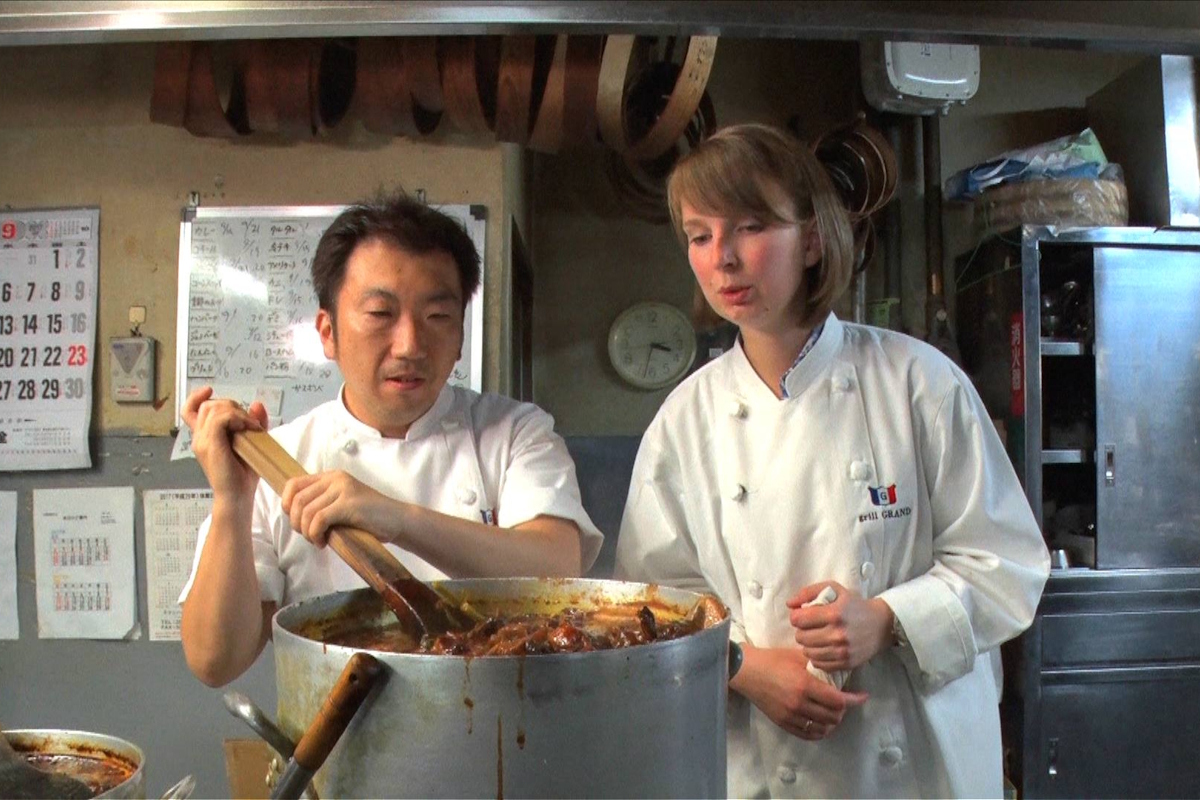
For me, Omuraisu has long been more than just a dish. I’d cooked it countless times, read about it, rediscovered it in manga, and tried time and again to achieve that perfect combination of fluffy ketchup rice and tender omelette. So it felt all the more surreal when, one day, I received an invitation from TV Tokyo – asking if I’d like to travel to Japan for the programme “Who Wants to Come to Japan – 世界ニッポン行きたい人応援団”.
The programme features people from all over the world who have a special passion for Japan. And this time, the focus was on omuraisu.
Right from the very first episode, it became clear to me why this dish holds such emotional significance in Japan. Omuraisu belongs to the Yōshoku cuisine, i.e. Western-inspired dishes that have found their very own place in Japan. In family restaurants, small eateries and cafés, Omuraisu is almost always on the menu – often as part of an ‘okosama lunch’, a children’s set meal. Almost every Japanese person associates Omuraisu with a childhood memory. Yes, really, almost everyone loves it.
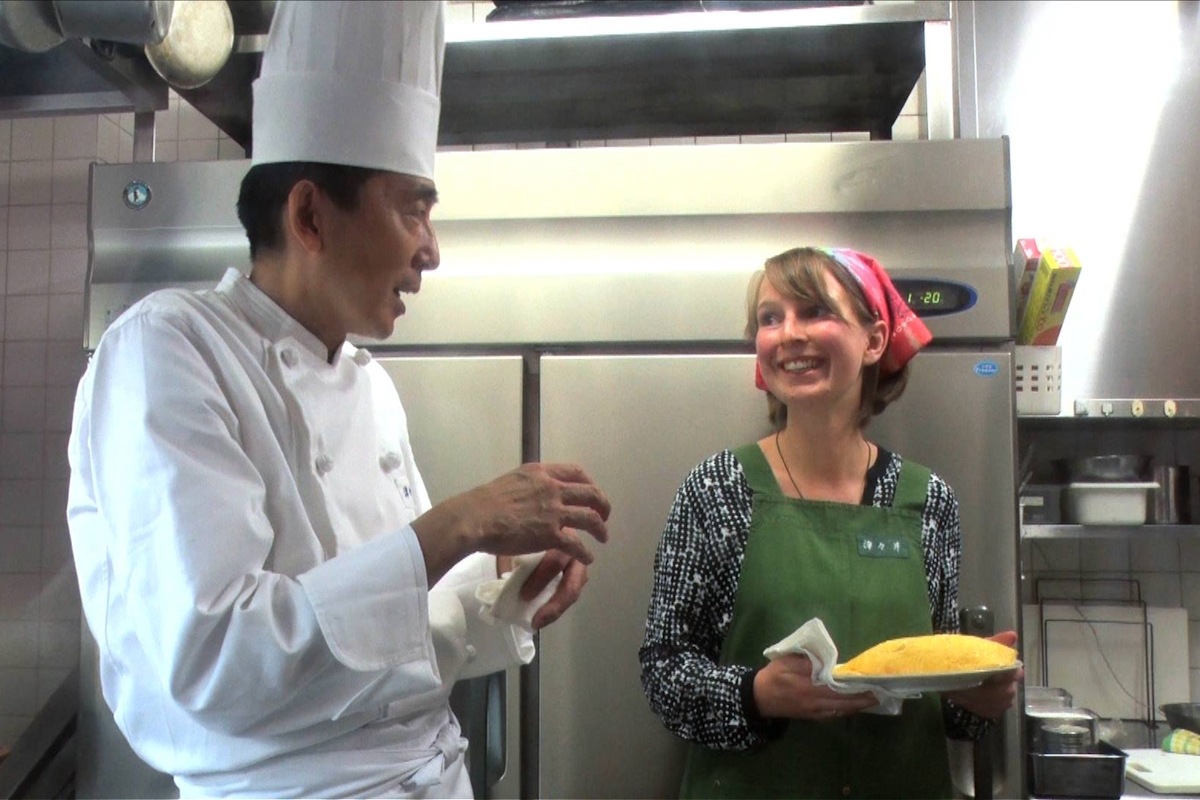
First, I had the chance to visit a traditional Yōshoku restaurant called Tsutsui in the Kayabachō district of Tokyo. There, Omuraisu is the most famous dish on the menu. In the kitchen, the chef showed me what makes a really good omelette: heat, timing, calm – and above all, intuition. It wasn’t about speed, but about attention to detail. How runny should the egg still be? When is the right moment to tilt the pan? Small details that ultimately make all the difference.

Later, my journey took me to Asakusa, where I experienced the famous ‘surprise Omuraisu’ up close for the first time. The rice lies on the plate, topped with a half-cooked omelette. Then comes the moment: a clean cut with the knife – and suddenly the omelette opens up as if by itself and flows gently over the rice. A brief moment of wonder. It is precisely this scene that is also familiar from the film “Tampopo” by Jūzō Itami, who immortalised Omuraisu and Ramen.
For me, this trip was something very special. Not just because I learnt techniques, but because I understood why Omuraisu is so deeply rooted in Japan. It’s not a trendy dish. It’s memory, comfort, childhood and home on a plate. And it’s precisely this feeling I wanted to convey with this recipe.
Why is Omuraisu so deeply rooted in Japan?
After this trip, I saw Omuraisu in a completely different light. What initially seems to many like a simple everyday dish is emotionally charged in Japan. Omuraisu is one of those dishes you know from childhood, from the family restaurant, from the Okosama Lunch, and sometimes from home.
The combination of rice, egg and a mildly sweet seasoning is familiar, uncomplicated and that is precisely why it is so popular. Omuraisu does not overwhelm, but gives a sense of security. It is food that you understand even before you consciously analyse it.
This is why Omuraisu has a firm place in everyday Japanese cuisine – not as something special, but as something reliable.

Yōshoku: Western-inspired, Japanese-style
Omuraisu belongs to what is known as Yōshoku cuisine. These are dishes that, whilst originating in Europe, have evolved over decades in Japan and developed their own distinct character. Alongside omuraisu, Japanese curry and hambāgu also belong to this category.
These dishes are not foreign to Japanese cuisine, but have long been part of it. They are seasoned, served and conceived differently from their European counterparts. Omuraisu is a particularly fine example of this: a Western-style omelette combined with rice, ketchup and Japanese finesse.
Omurice: A dish with many variations
However varied Omuraisu may look, the structure always remains the same:
rice, omelette, sauce.
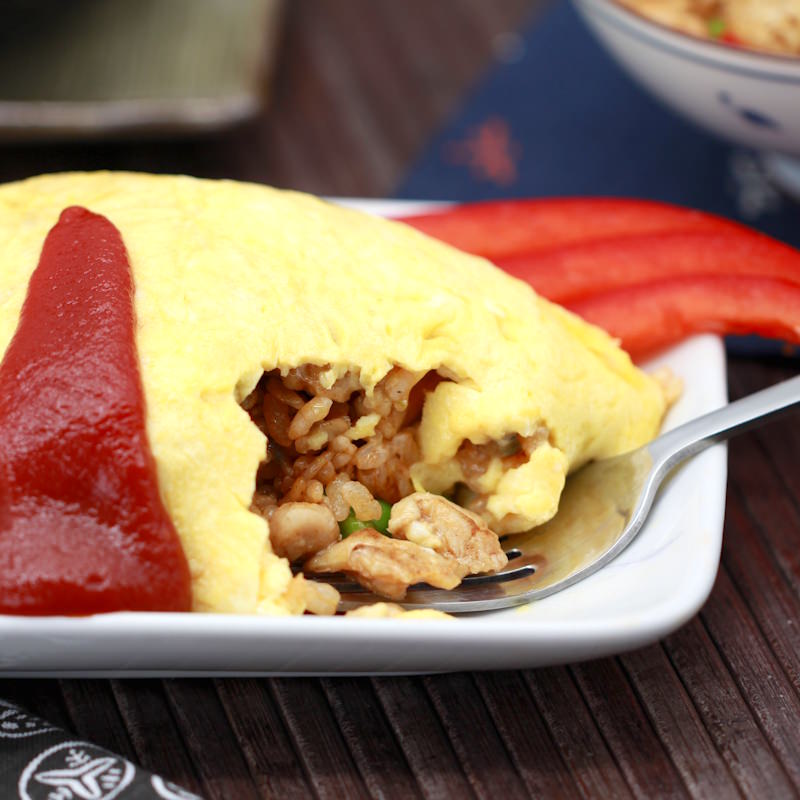
The omelette can be thin and wrapped completely around the rice, as in this recipe. Or soft and almost creamy, so that it drapes over the rice when cut open. This modern variation is called Fuwatoro and is particularly popular in specialist restaurants.
There is also scope for variation with the rice. The classic version is ketchup rice with chicken and a few vegetables. But variations with beef, pork or purely vegetarian options are just as common. Sometimes the rice is even replaced by noodles, in which case it is known as Omusoba.
And the sauce doesn’t always have to be ketchup either. Demi-glace, curry sauce or cheese variations show just how versatile Omuraisu can be.
Is Omuraisu an everyday dish, even for home cooking?
Omuraisu is a real everyday dish. Leftover rice from the day before, a few eggs and some ketchup – that’s all it takes. Anything else you have in the fridge can easily be incorporated. That’s exactly what makes Omuraisu so appealing and accessible.
Making Omuraisu yourself: Here’s how
Cooking Omuraisu at home might seem a bit tricky at first glance, especially because of the omelette. In reality, however, the dish is surprisingly straightforward. It’s not about perfection, but good timing and a calm approach. Once the rice is prepared, everything comes together step by step.
The basic principle is simple: first, you fry some seasoned ketchup rice, then make a thin omelette, and finally bring the two together. That’s all it takes.

The key ingredients for Omuraisu
- Rice: Japanese short-grain or medium-grain rice, which has already been cooked and cooled slightly, works best. Day-old rice is ideal because it is drier and easier to fry (see recipe for Japanese rice).
- Egg: The omelette depends on the right consistency. Several well-beaten eggs ensure an even, thin omelette that can be neatly wrapped around the rice.
- Ketchup: Ketchup is not a substitute, but the heart of Omuraisu. It provides the characteristic colour, mild sweetness and familiar flavour that many know from their childhood.
- Filling: Traditionally, chicken, onions and some vegetables are added to the rice. However, you can be quite flexible with this; Omuraisu is perfect for using up leftovers.
- Butter: Butter adds depth and richness to the flavour, both in the rice and in the omelette. It is a typical ingredient in Yōshoku dishes.
How it works:
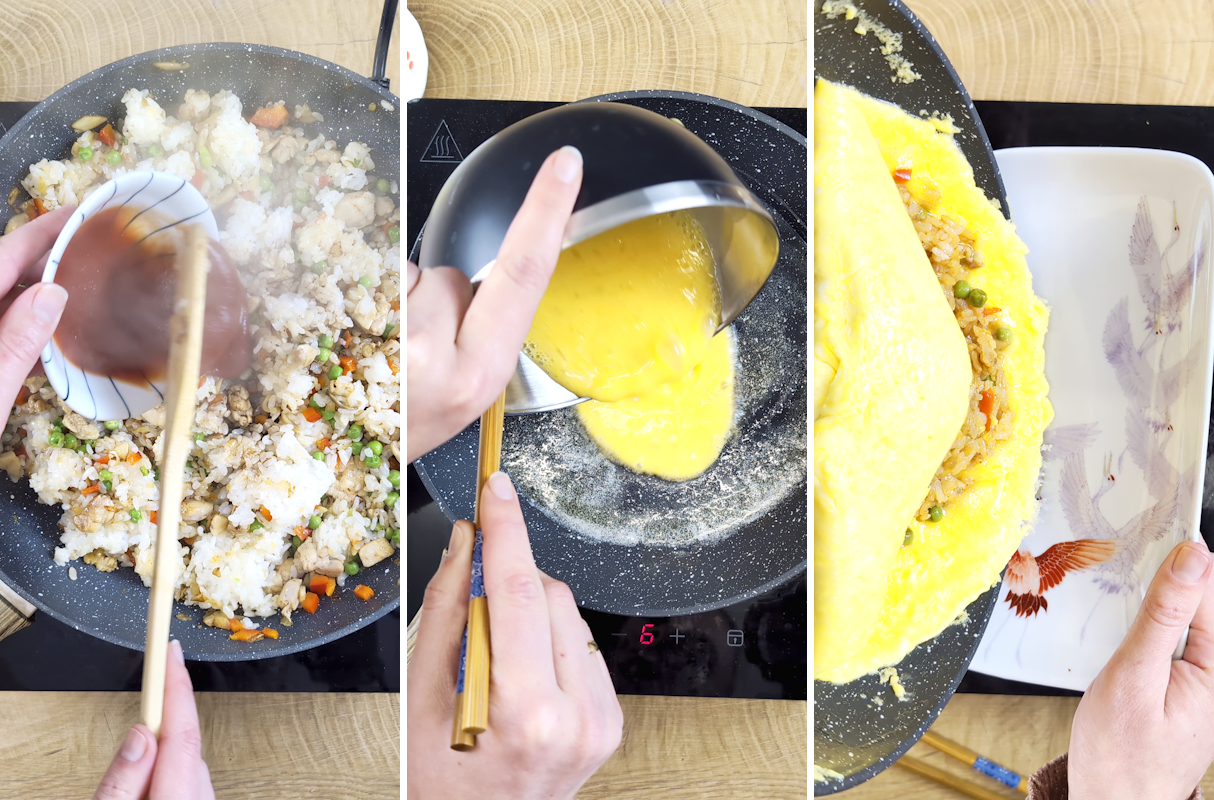
First, prepare the ketchup rice. Fry the chicken, then add the vegetables and rice. It’s important that the rice remains loose and is evenly coated with ketchup and soy sauce. The rice should be flavourful but not mushy.
Next, it’s time for the omelette. Don’t heat the pan too high so that the egg sets evenly. Gently swirling the pan creates a thin omelette, which can remain slightly moist on top. This is the crucial moment.
Finally, place the rice inside the omelette, carefully fold the omelette over it and tip everything onto the plate. A little ketchup on top – and the Omuraisu is ready.
It doesn’t have to look perfect. The key is that the omelette and rice stick together when you cut into it. That is precisely what gives this dish its charm.
What goes well with Omuraisu?
Omuraisu is a complete dish in itself: filling, hearty and well-balanced. That is precisely why simple, light side dishes are best suited to it, complementing the flavour without stealing the limelight.
A very classic choice is miso soup. It brings warmth and a gentle Umami note to the table and rounds off the dish nicely. A clear soup with a little spring onion or Tofu also goes well with it.
For a touch of freshness, a small salad, for example with cucumber, tomato or finely shredded white cabbage, is ideal. A light Japanese dressing made with sesame or rice vinegar provides a lovely contrast to the spicy ketchup rice.
If you’re serving Omuraisu as part of a larger meal, simple side dishes such as pickled vegetables go very well with it. Tsukemono add freshness and a touch of tang to the plate, making the dish even more well-rounded.
Ultimately, the same applies here: Omuraisu is straightforward. Keep the side dishes simple, so the focus remains on the omelette and the rice.
I look forward to your comments: tell me how your Omuraisu turned out and whether you opted for the classic version or prefer your omelette extra soft. Have fun recreating the dish and いただきます, Itadakimasu!
Omurice
Serves 2 | 30 minutes | 758 kcal
🖨️ Print PDF 📌 Save pinOmuraisu is the ultimate Japanese comfort food: lightly fried ketchup rice with chicken and vegetables, wrapped in a delicate omelette and finished with ketchup. This classic recipe shows you step by step how to easily make omuraisu at home – just as it is enjoyed in many Japanese households.
Ingredients (2 servings)
For the filling:
300 g rice (preferably leftover from the day before, click here for the rice recipe) (im Shop ansehen)
150 g boneless chicken thigh (alternatively chicken breast)
½ onion
60 g peas (frozen)
½ red pepper
2 mushrooms
3 tbsp ketchup
1 tsp Shoyu (im Shop ansehen)
2 tbsp butter
salt and pepper
For the omelette:
6 eggs (size M)
2 tbsp butter (1 tbsp per omelette)
To garnish:
Ketchup
Preparation (30 minutes)

Step 1
To begin with, please have the ingredients for the omuraisu ready. Cook the rice and leave it to cool briefly. It should be warm, but not wet. It’s best to use rice from the day before.
step 2 Step
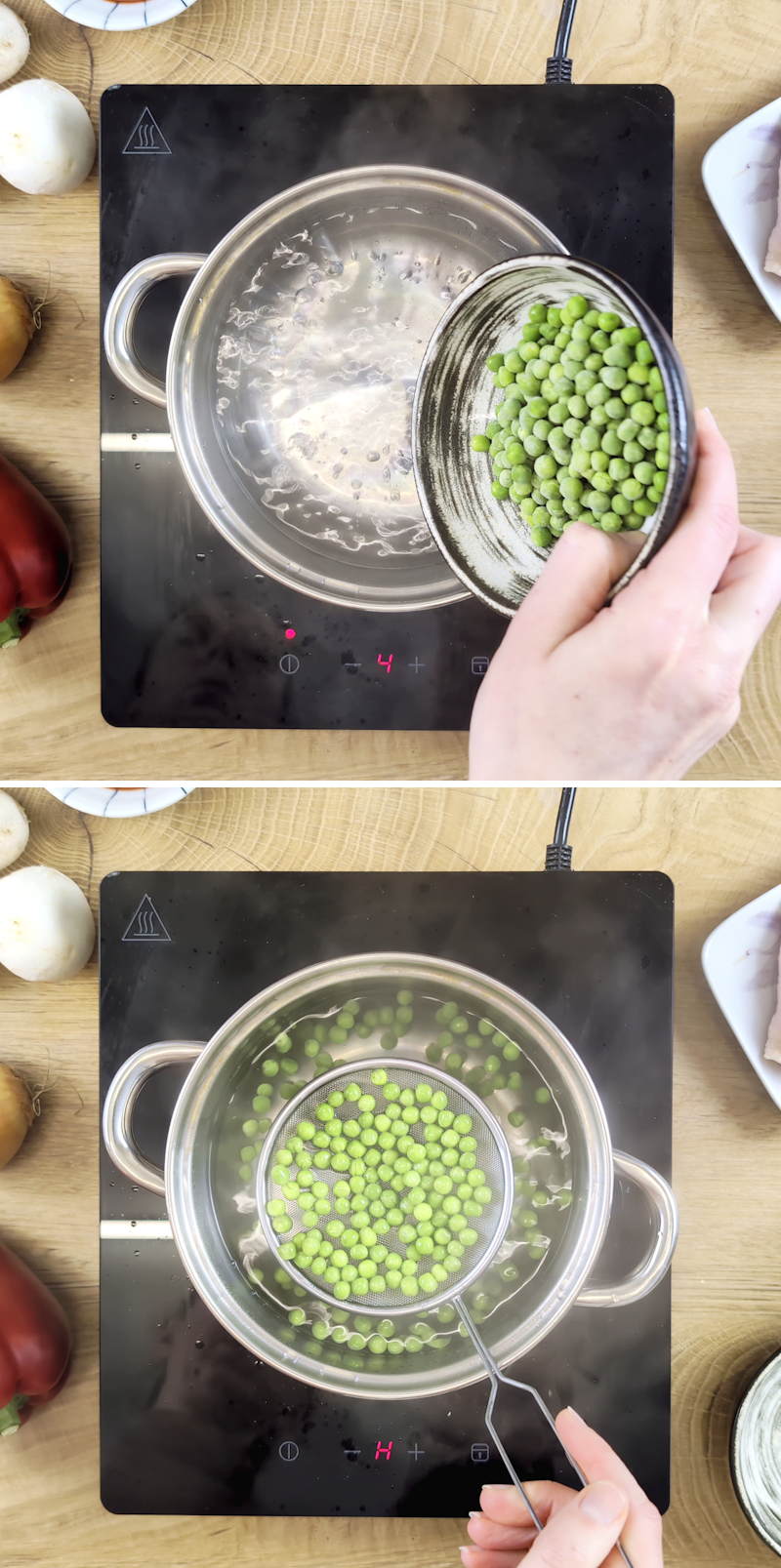
Blanch 60 g of peas in boiling water for 1–2 minutes, then drain and set aside.
Step 3
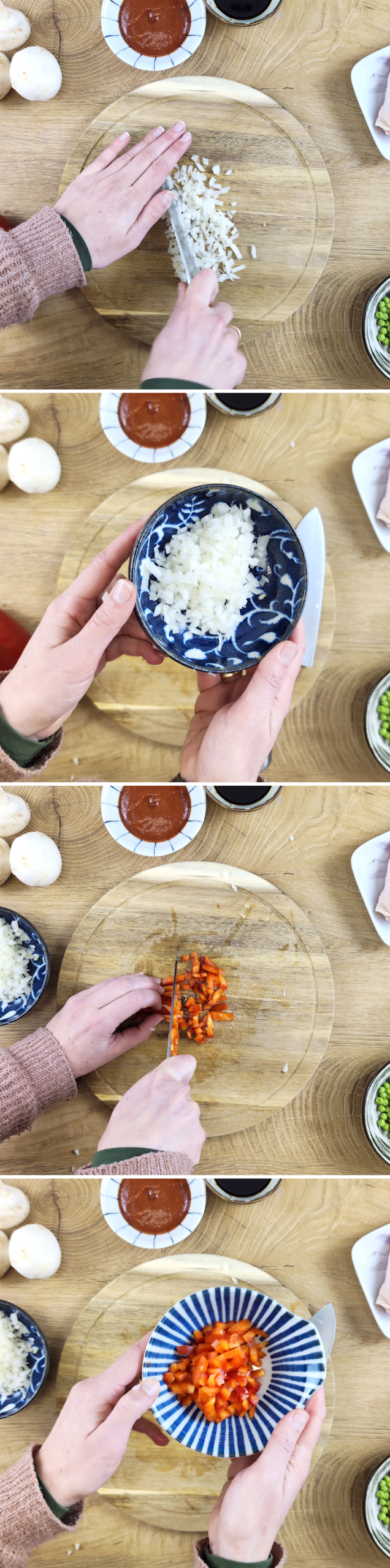
Peel ½ an onion and wash ½ a red pepper, then dice them finely.
Step 4
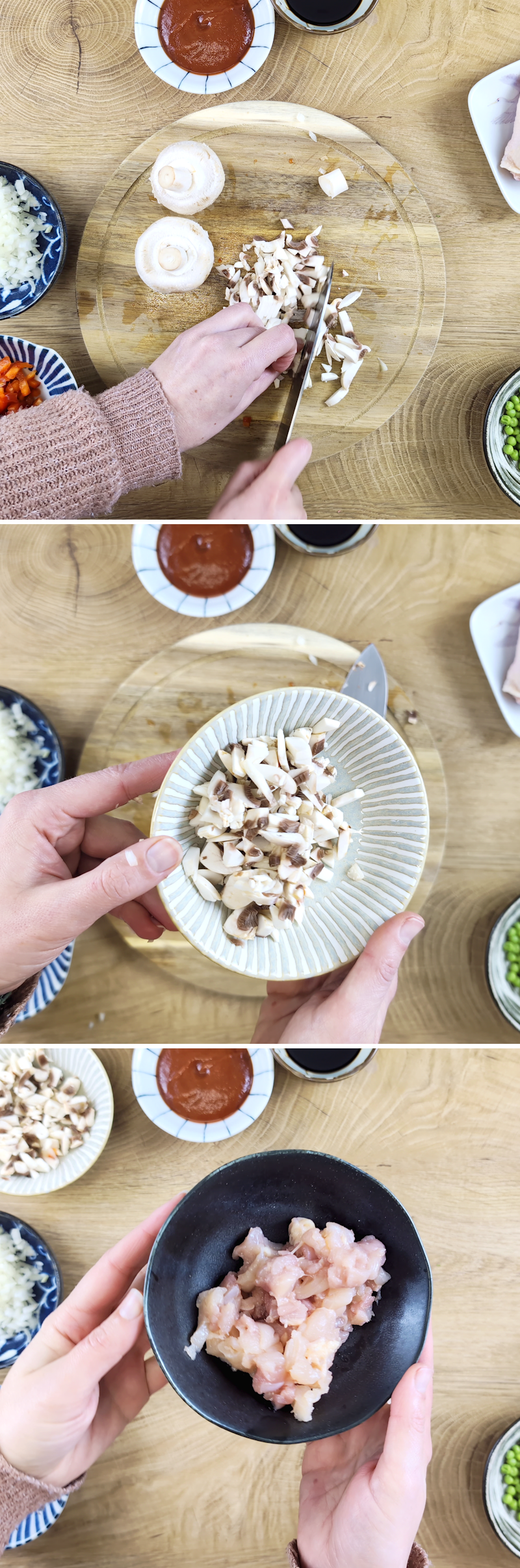
2 mushrooms – clean and finely dice. 150 g chicken – rinse briefly under running water, pat dry and finely dice.
Step 5
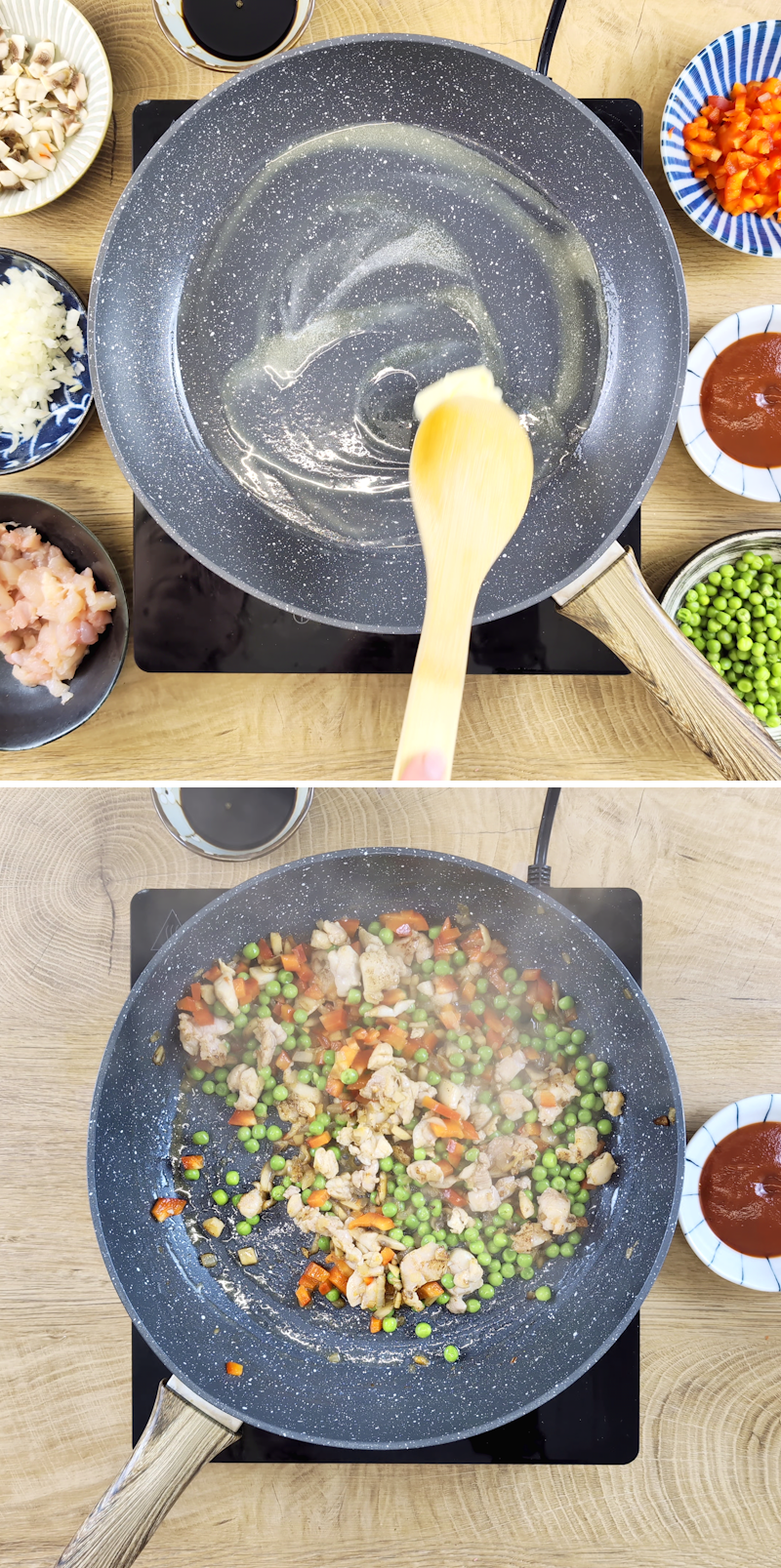
Heat a frying pan over a medium heat and melt 2 tbsp butter . Fry the chicken for 2–3 minutes until lightly browned. Add the diced onion and fry for 2 minutes. Then add the mushrooms, peppers and peas and fry briefly.

Step 6
Add the rice and fry it, stirring often, until it is fluffy.

Step 7
1 tsp soy sauce and 3 tbsp ketchup Add. Mix everything thoroughly until the rice has an even reddish sheen. Finally, season to taste with salt and pepper.
Step 8
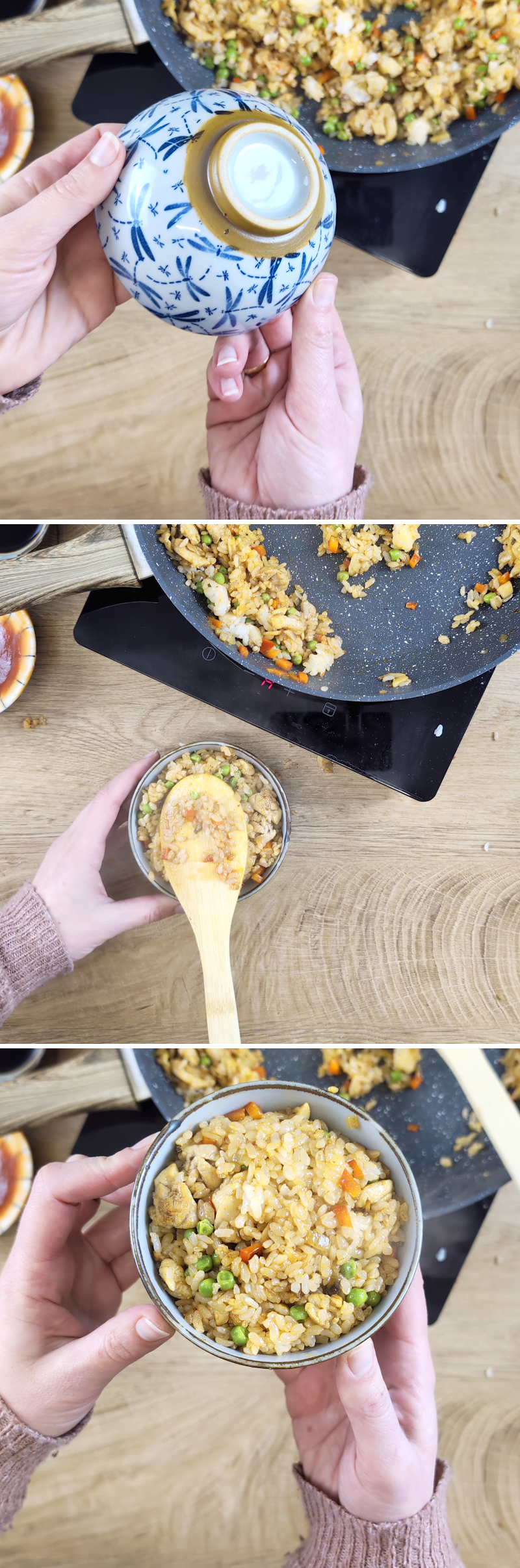
Spoon the rice into two small bowls and set aside.
Step 9
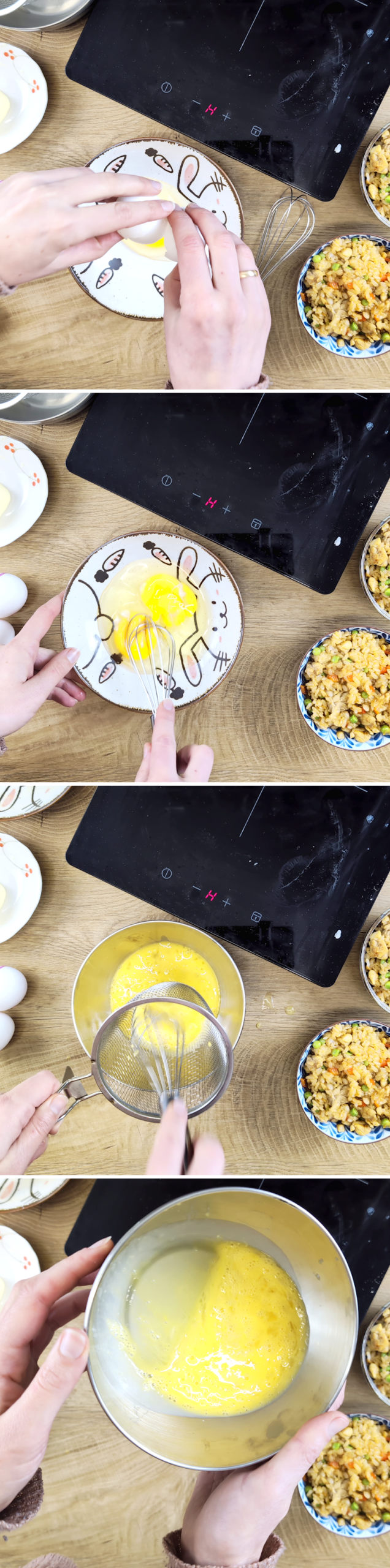
Whisk 3 eggs . If you want a particularly smooth texture, pass the egg mixture through a sieve.
Step 10
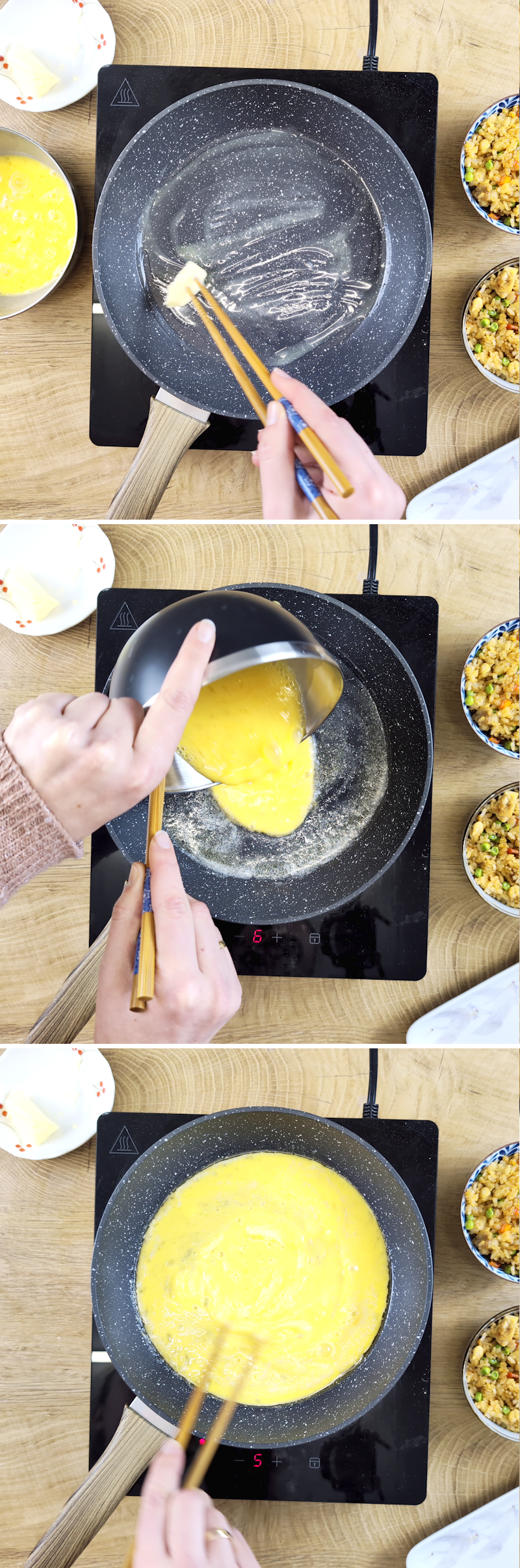
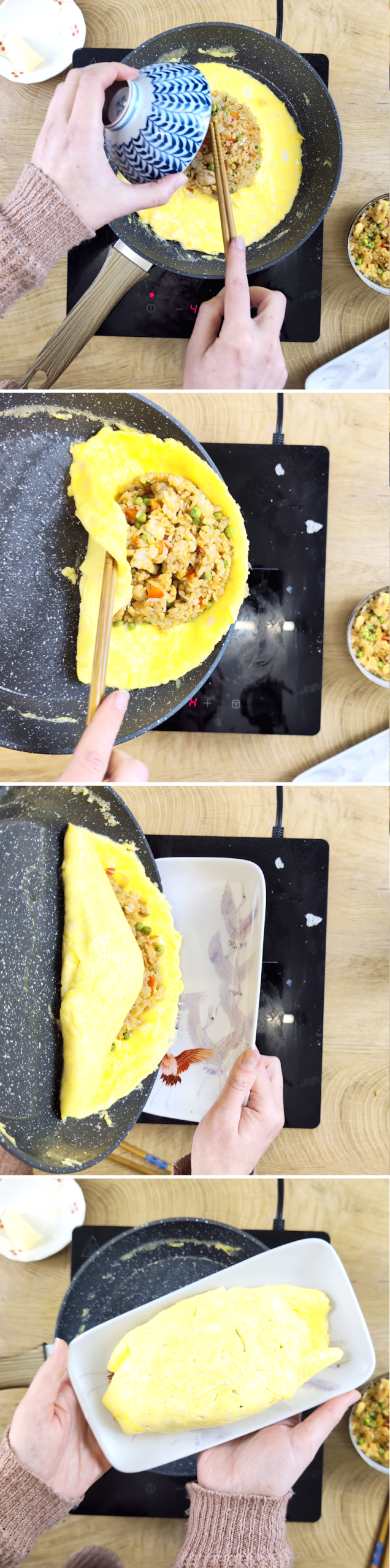
Heat a medium-sized non-stick frying pan over a medium to low heat and melt 1 tbsp butter in it. Pour in the egg mixture and swirl the pan until an even, thin omelette forms. Allow the eggs to set and gently stir any very runny areas with chopsticks. The surface should be even and still look slightly moist.
Step 11
Place a small rice bowl in the centre of the omelette. Fold one side of the omelette over the rice using a spatula or chopsticks and push the Omuraisu to the edge of the pan. Then carefully turn it out onto a plate so that the seam is facing down. If necessary, use kitchen paper or a spatula to shape it into a nice oval.
Step 12
Repeat the process with the remaining 3 eggs and the second bowl of rice.
Garnish with ketchup, for example as a dollop or in zigzag lines, and serve immediately.
Fancy some more delicious inspiration from Japan?
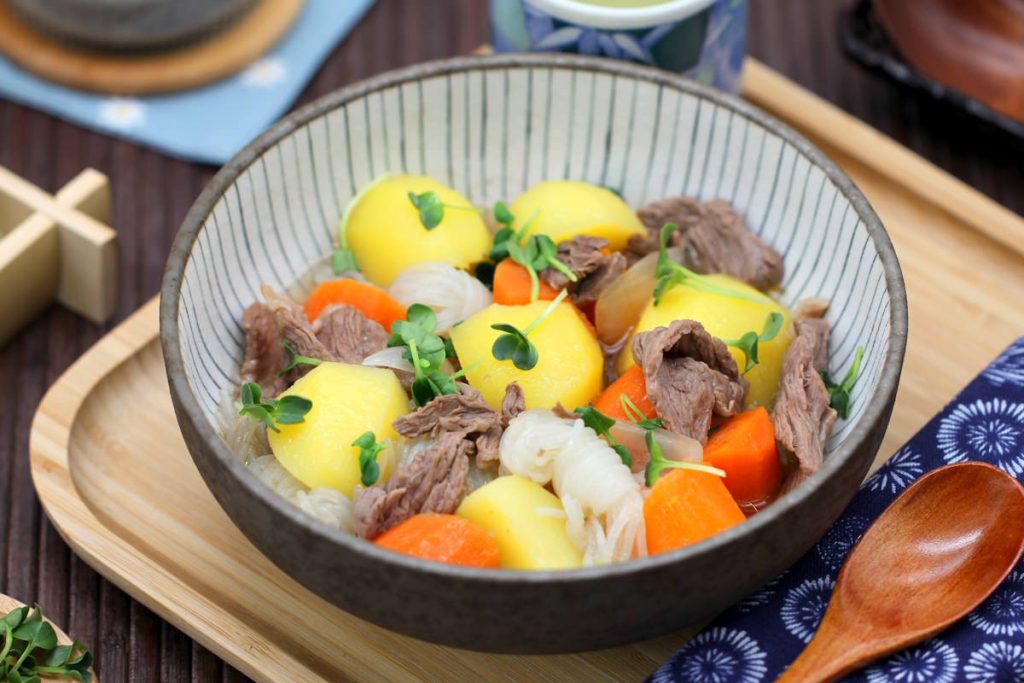
Nikujaga: Japanese potato and beef stew | Recipe for everyday cooking
I ate Nikujaga for the first time at my host family’s house in Fukui. It…
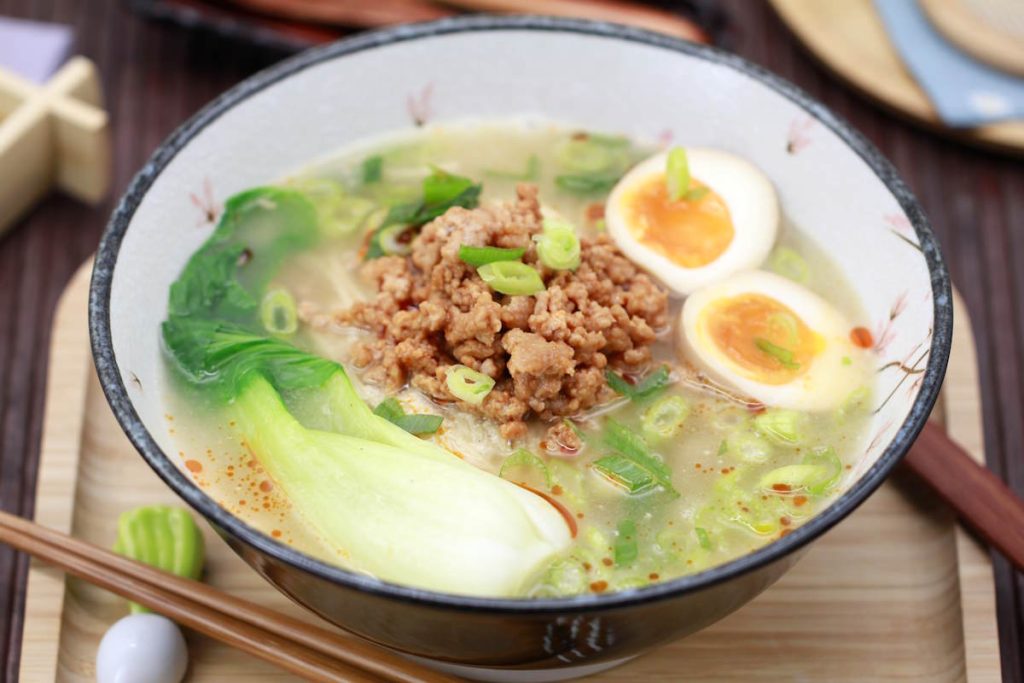
Make your own Tantanmen: creamy sesame Ramen with spicy Miso minced meat, pak choi & ramen eggs
Tantanmen is a Ramen soup for those who like it creamy but not heavy. A…
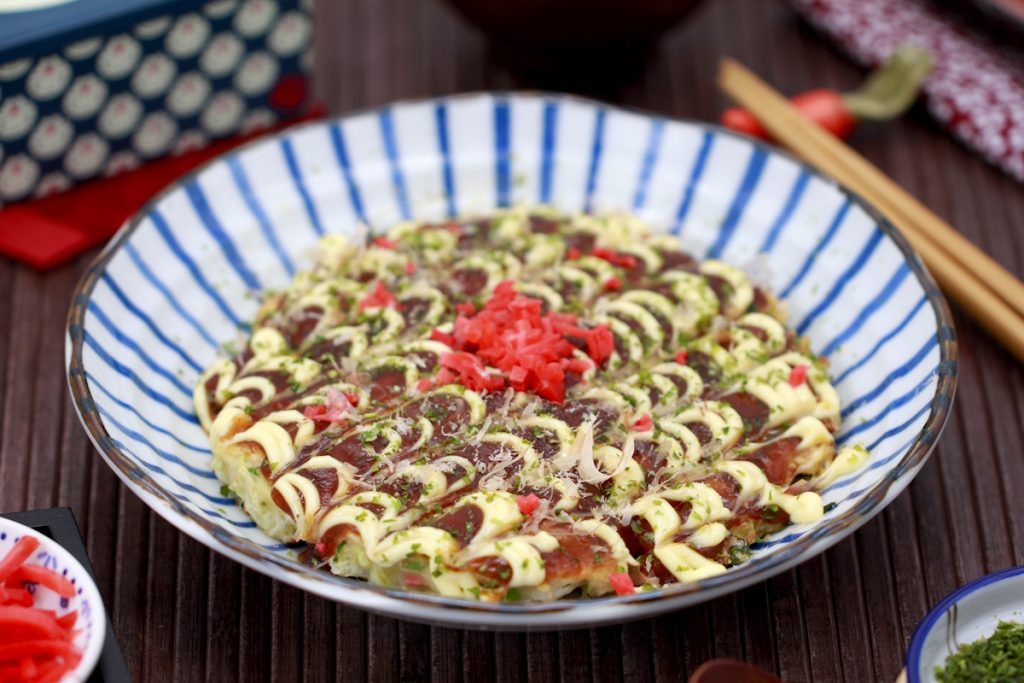
Make the best Okonomiyaki yourself: Basic recipe for Japanese cabbage pancakes, Osaka-style
For me, Okonomiyaki is one of those dishes that instantly puts me in a good…

Make your own crispy Tempura batter: Japanese batter for vegetables & prawns – recipe & tips
When I think of Tempura, I immediately hear that saku saku sound… That delicate crunch…
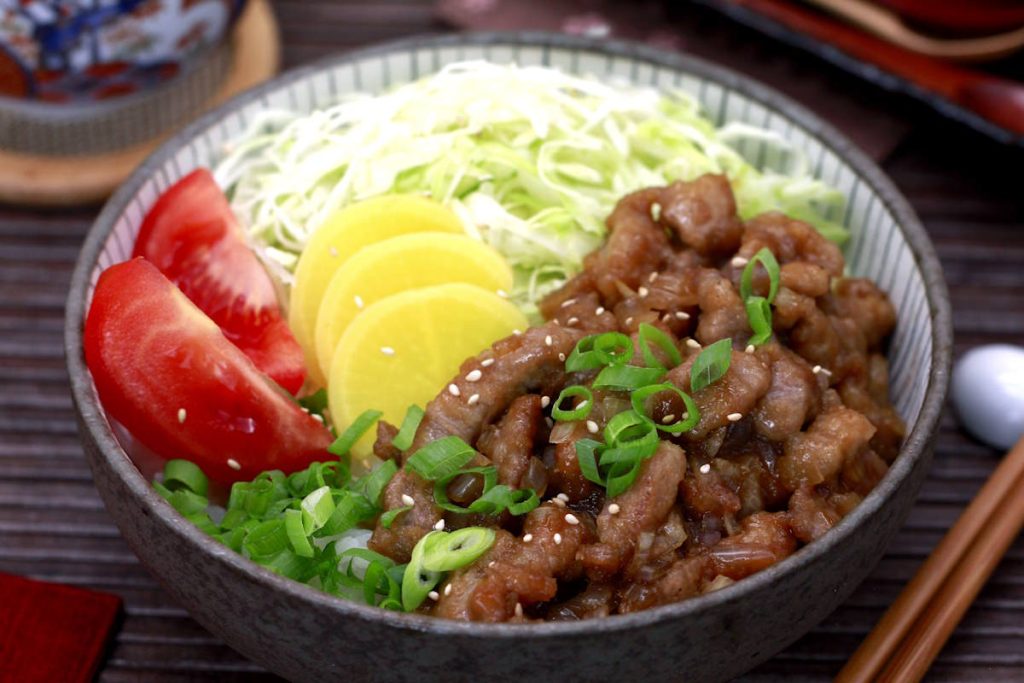
Buta Shogayaki: Make your own Japanese ginger pork with rice, cabbage & Tsukemono
For me, Buta Shogayaki is the perfect Japanese lunch when working from home. It’s quick,…
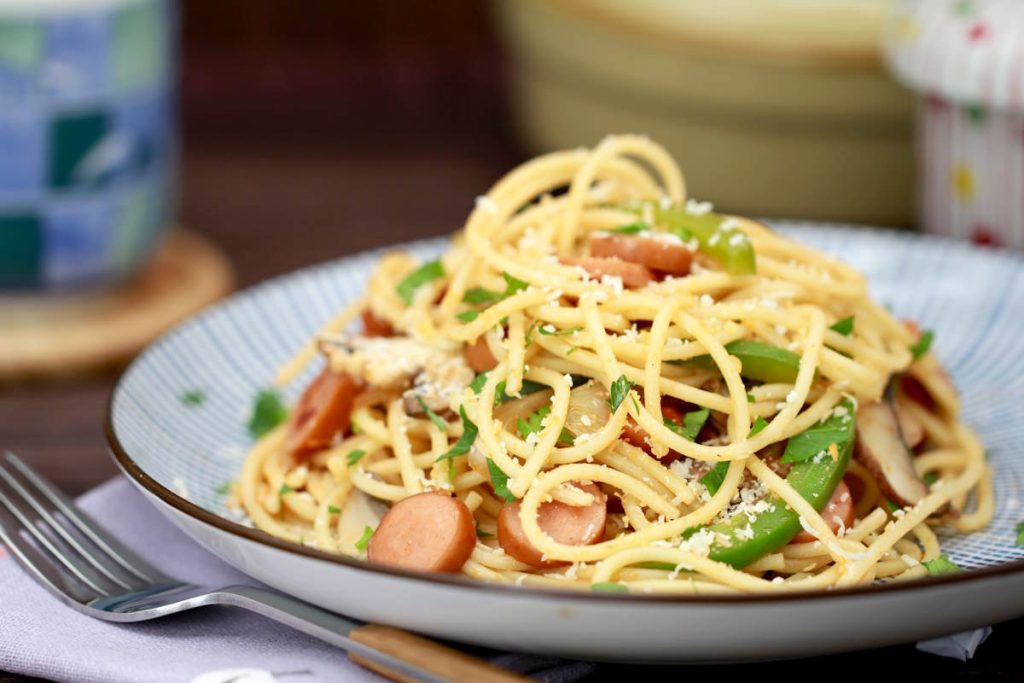
Spaghetti Napolitan with sausages: Japan’s quick everyday ketchup pasta – ready in 20 minutes
Sometimes it doesn’t take much to be happy – just a handful of ingredients, a…
Have you tried the recipe yet? Let me know in the comments – I can’t wait to hear from you.