

Language:


Would you like to make fresh ramen noodles just like a Japanese ramen chef? In this recipe, I’ll show you every step for making homemade ramen noodles following the original Japanese recipe with kansui water! They make a great base for various Japanese noodle soups, as they absorb the flavour of a delicious broth particularly well.
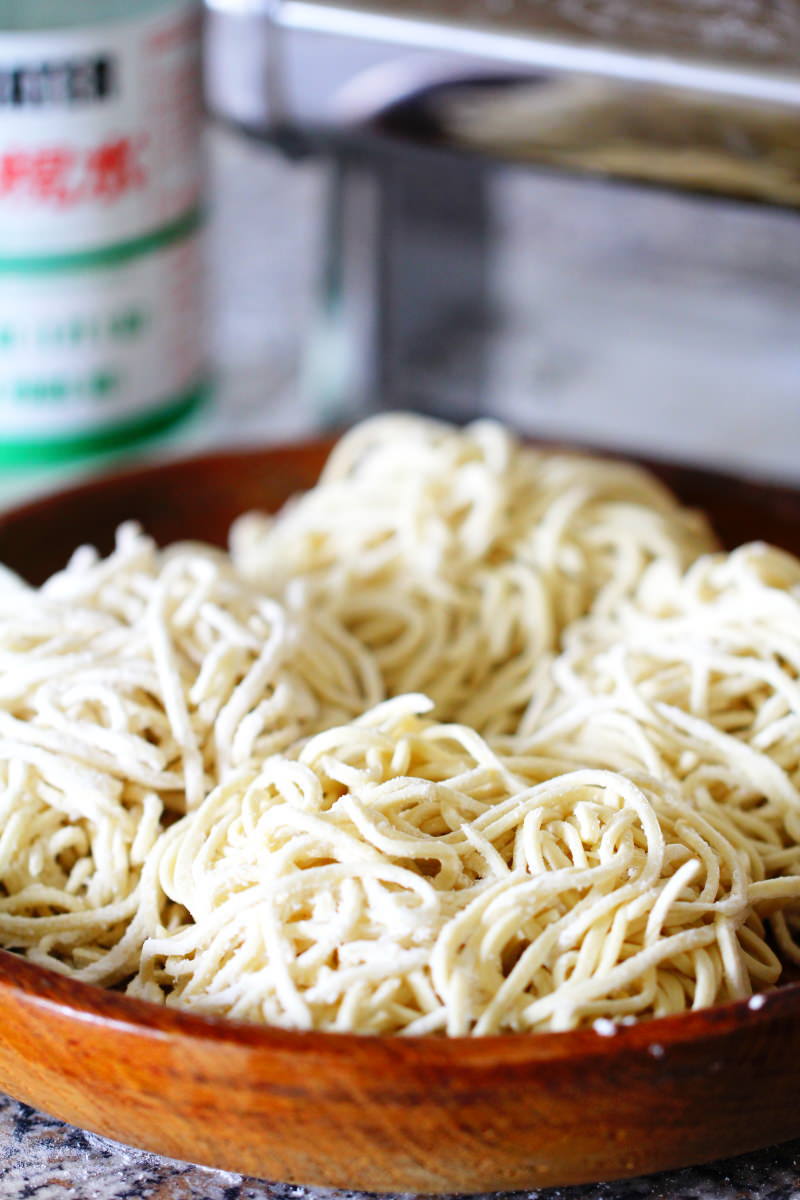
Ramen noodles are yellowish wheat noodles which, in Japan, are a real cult favourite – whether as a fresh noodle soup or as a quick instant meal: they are one of the three traditional noodles of Japanese cuisine and are known for their versatility, ease of preparation and unique flavour!
Japanese ramen noodles originally come from China and traditionally consist of two key ingredients: gluten-rich wheat flour for the structure and kansui water for the texture, colour and elasticity of the noodles.
Kansui refers to the water from Lake Kan in Inner Mongolia. The water has very high levels of potassium and sodium carbonate. Together with traces of phosphoric acid in the kansui, this alkaline solution colours the ramen noodles yellow and gives them their distinctive flavour!
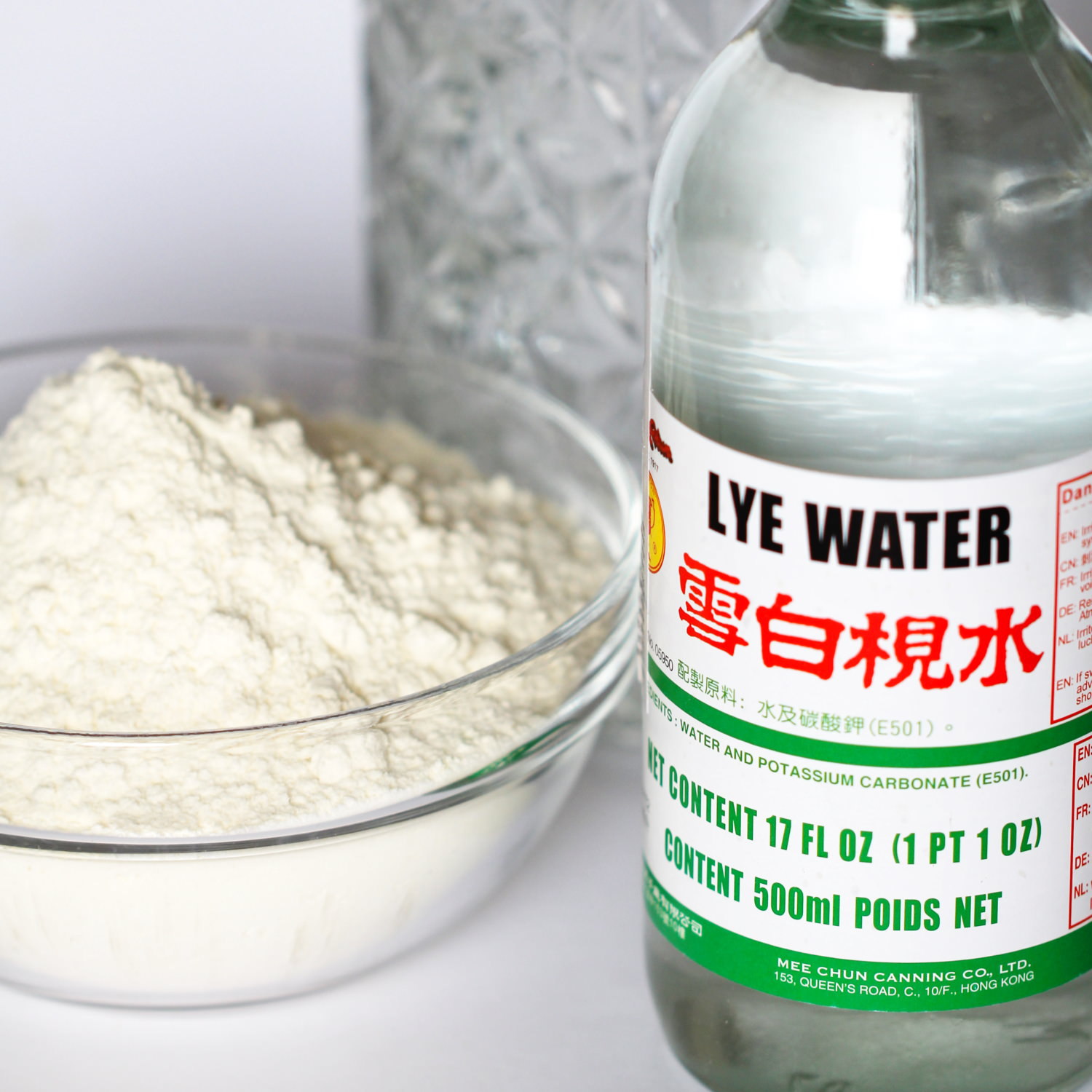
Kansui, sometimes also referred to as lye water or alkaline salt, is an alkaline solution that regulates the acidity during noodle dough production.
It is sold in bottles, although nowadays artificially produced kansui is usually used. This is very mild and intended solely for cooking. To use it, the kansui is stirred into lukewarm water and then added to the flour for the noodle dough.

Tip
As an alternative, baking soda (sodium bicarbonate) or egg is also often used in the preparation. → Here you’ll find my simple recipe for ramen noodles with egg and baking powder!
However, the end result always looks the same: ramen noodles are long, elastic and usually slightly wavy in shape.
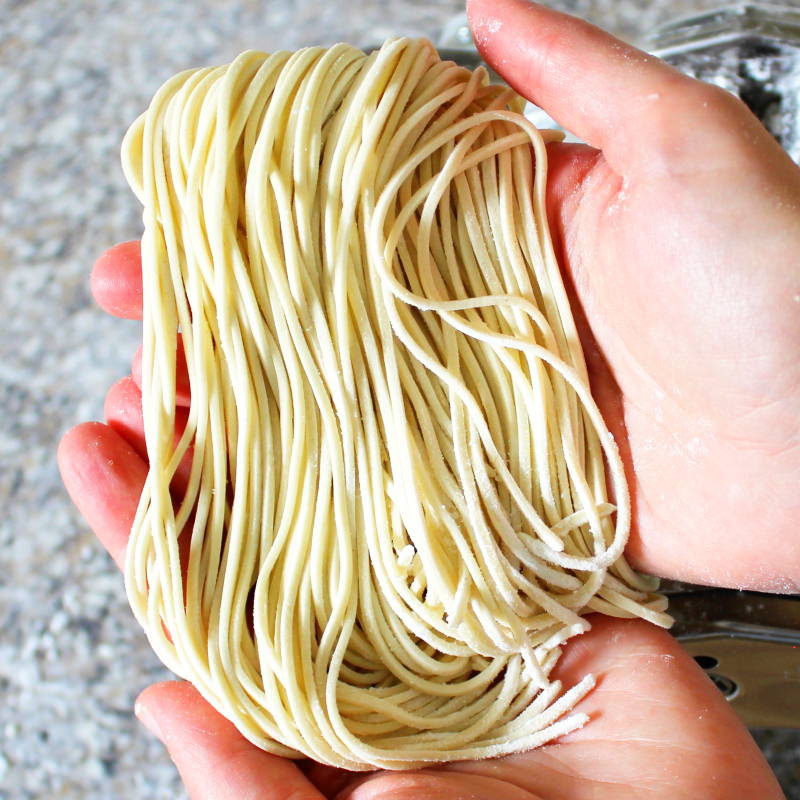
There are significant, particularly regional, differences in the thickness of the noodles (ranging from very thin to thick) and their cooking consistency (medium or firm).
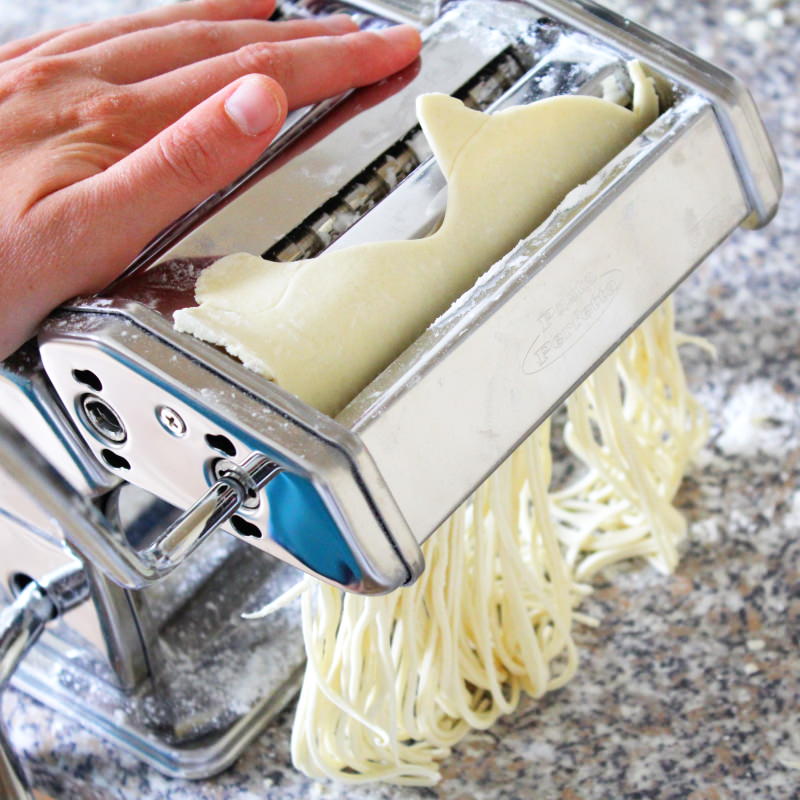
An essential kitchen utensil, which is almost indispensable for this recipe, is a simple pasta machine:
Tip
If you’d like to make your own ramen noodles (or udon or soba noodles) more often, I’d recommend buying a pasta machine (auf Amazon* kaufen). It’s really been worth it for me and my family, as making noodles from scratch is great fun, even for the youngest cooks!
With the pasta machine, homemade ramen noodles are ready in no time at all and the process is much easier. Of course, I realise that not everyone has a pasta machine like this in their cupboard.
Then you need to roll out the pasta dough with plenty of strength and patience, and cut it into fine strips using a large, sharp knife. That’s exactly how I’ve shown it in the recipes for homemade udon noodles and homemade soba noodles
Alternatively, you can of course buy the best Japanese ramen noodles and in no time -cook a delicious bowl of ramen soup at home in no time. Dried Ramen is also ideal for an authentic Japanese ramen soup, as it cooks in just a few moments and, of course, has a very long shelf life . I prefer to use this dried Ramen. Their texture is comparable to homemade ramen noodles and the flavour is simply unbeatable:
CUSTOMER FAVOURITE
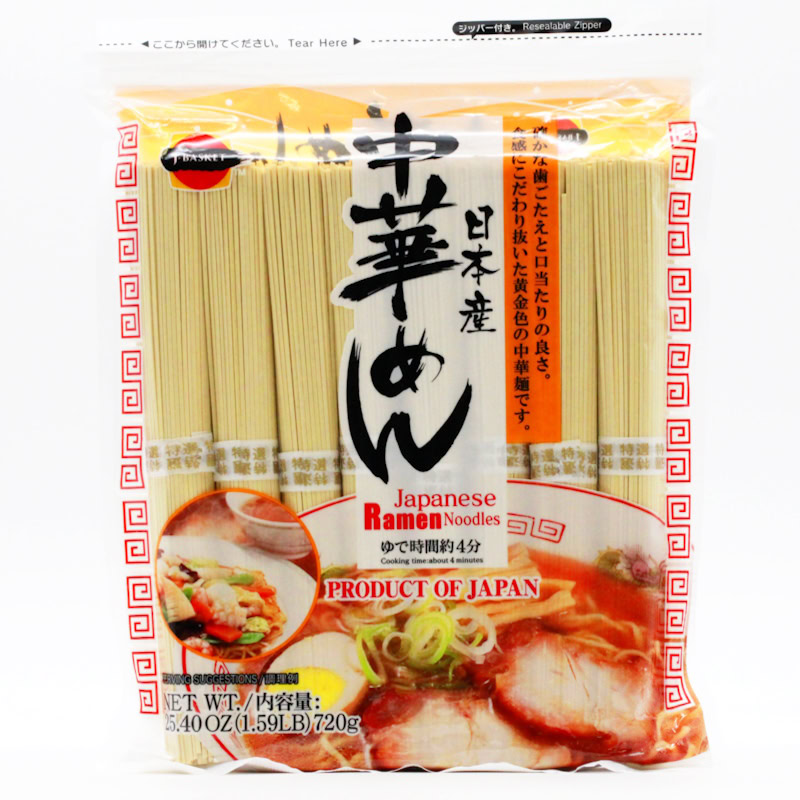
Ramen Nudeln 720g (8 Portionen getrocknete Weizennudeln), J-Basket
Genieße authentische japanische Ramen Nudeln – perfekt für Ramen Nudelsuppe und Yakisoba. Die Nudeln sind schnell zubereitet und nehmen den Geschmack der Brühe optimal auf.…
In stock
Tip
Would you like to know how to cook Ramen properly and what other ingredients you need for a Ramen noodle soup? In this post, I’ll show you in 5 steps how to easily make your own Japanese-style Ramen noodle soup, just like the real thing: → How to cook Ramen: A 5-step plan for Japanese noodle soups [with a basic recipe]
Find out how to make really delicious homemade ramen noodles using wheat flour and kansui in this recipe! Have fun and good luck making your own homemade ramen noodles, just like a Japanese chef:
How to make your own ramen noodles
Serves 2 | 60 minutes | 437 kcal
🖨️ Print PDF 📌 Save this pinWould you like to make fresh ramen noodles just like a Japanese ramen chef? In this recipe, I’ll show you every step for making homemade ramen noodles according to the original Japanese recipe using kansui water!
Ingredients (2 portions)
240 g plain flour
90 ml water (lukewarm)
1 tsp kansui water (auf Amazon* kaufen)
a little Katakuriko potato starch (im Shop ansehen)
Essential equipment:
pasta machine (auf Amazon* kaufen)
Method (60 minutes)
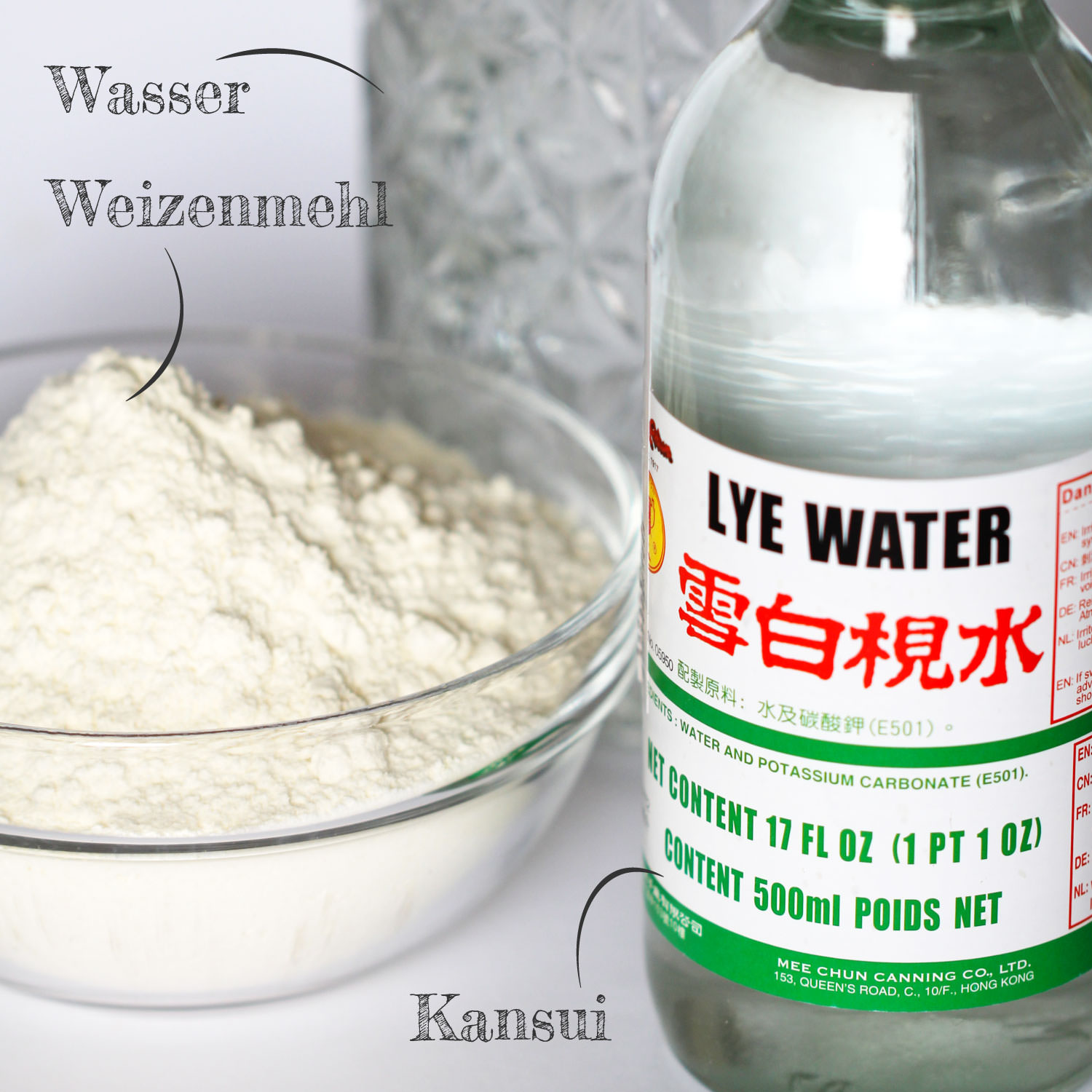
Step 1
Get the ingredients for the homemade ramen noodles ready.
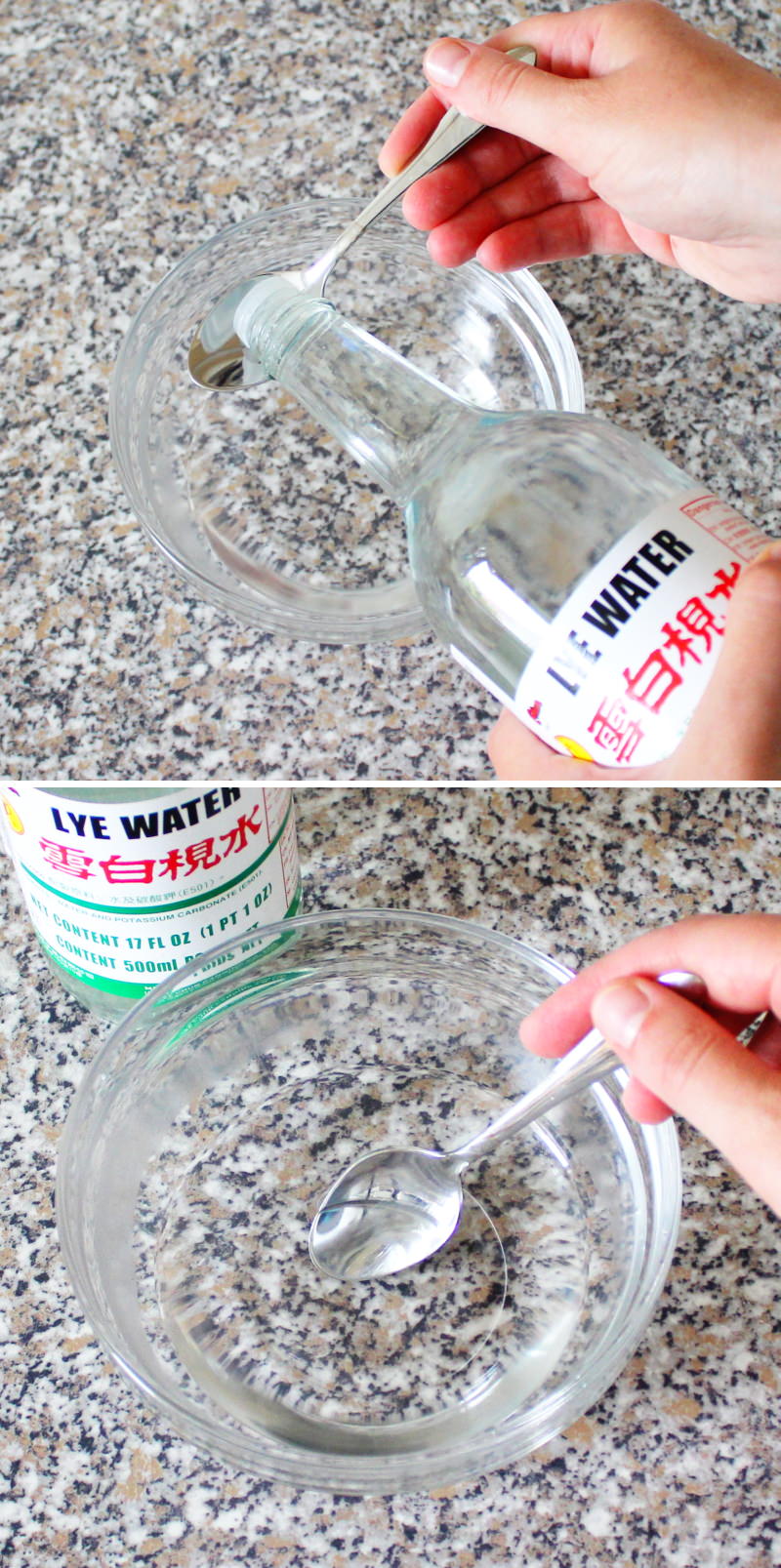
Step 2
First, prepare the alkaline water solution: To do this, mix the lukewarm water in a small bowl thoroughly with the kansui to create an alkaline solution.
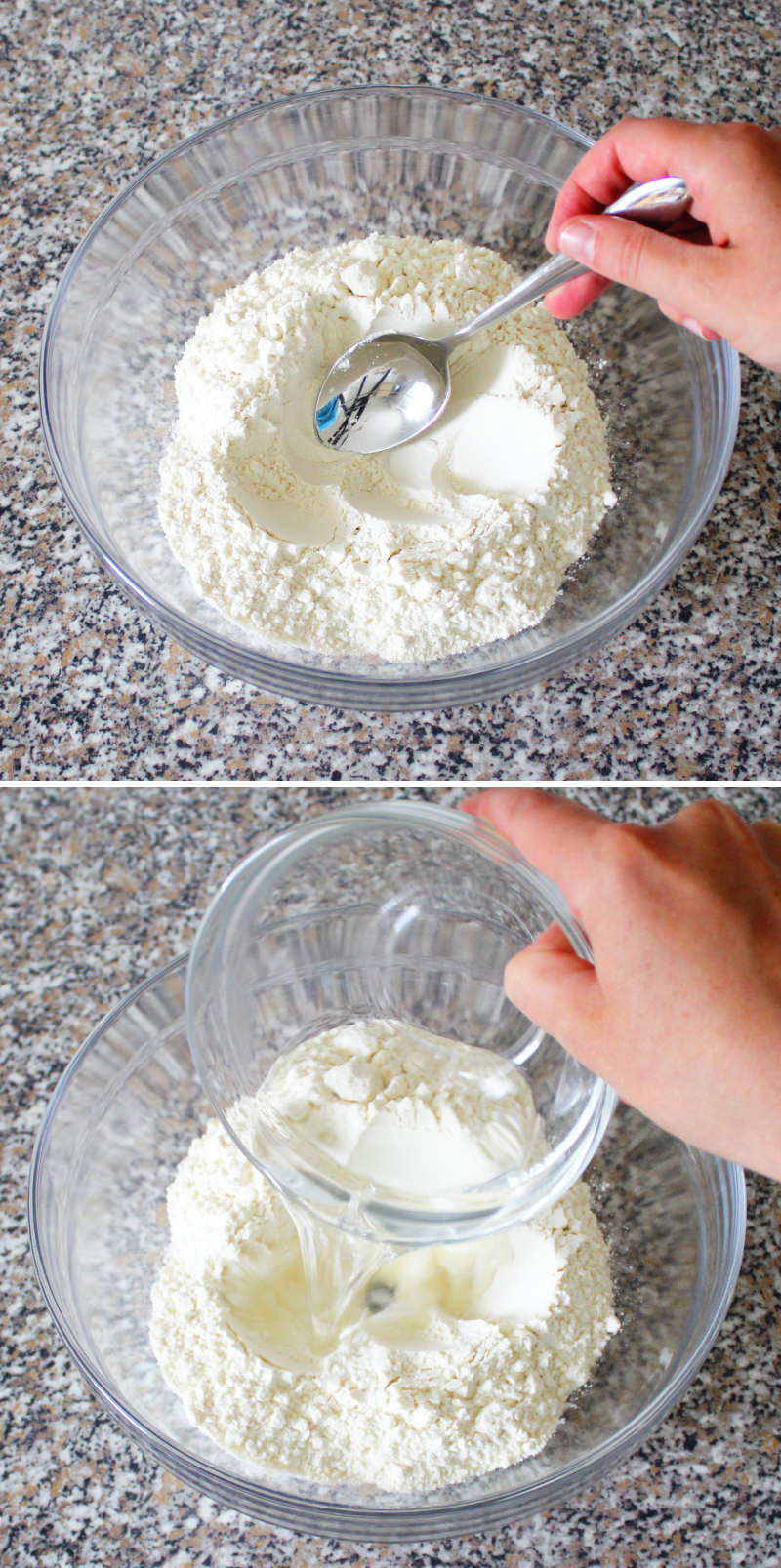
Step 3
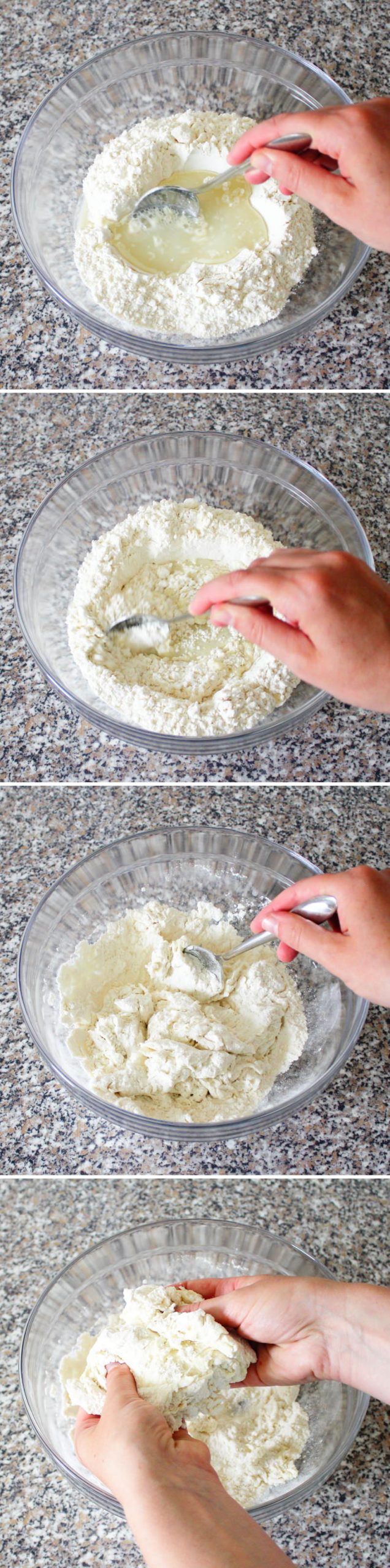
Place the wheat flour in a larger bowl, make a small well in the centre and add the kansui solution you have prepared.
Step 4
Mix the dough in the bowl, first with a spoon and then with your hands, until it forms small lumps, so that the water combines perfectly with the flour.
Step 5
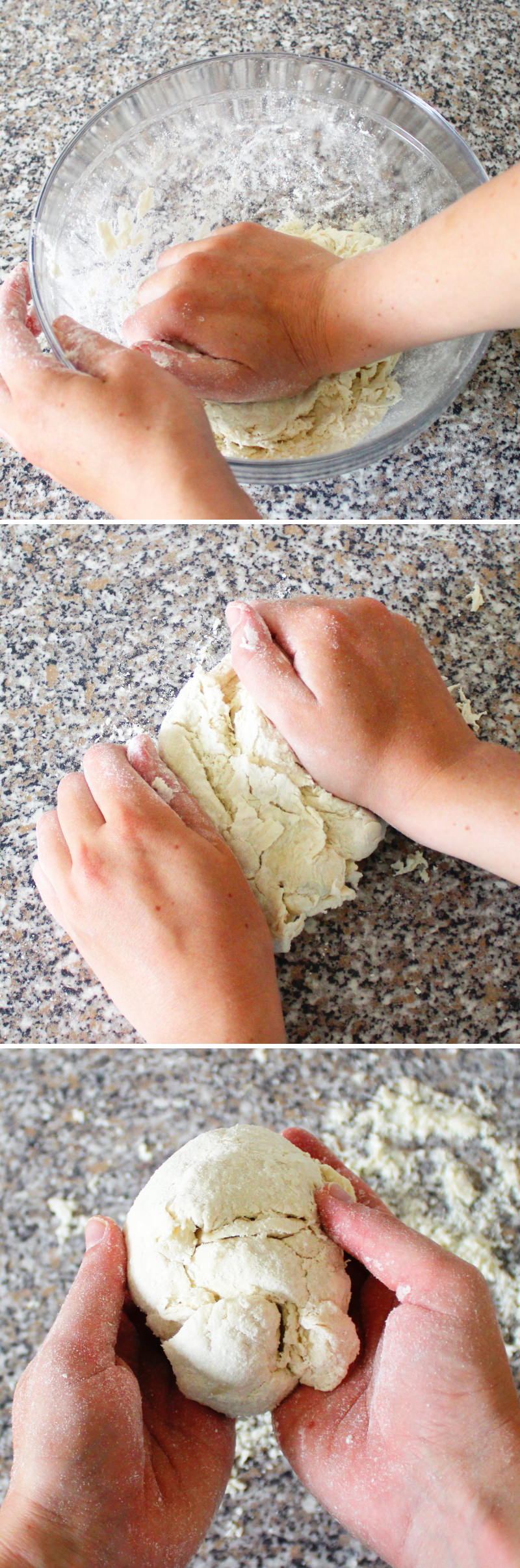
Then knead the dough with your hands for about 5 minutes on the work surface until it forms a firm ball. Please note that the dough for ramen noodles is very brittle – this is necessary to ensure that you end up with delicious, al dente ramen noodles!
Step 6
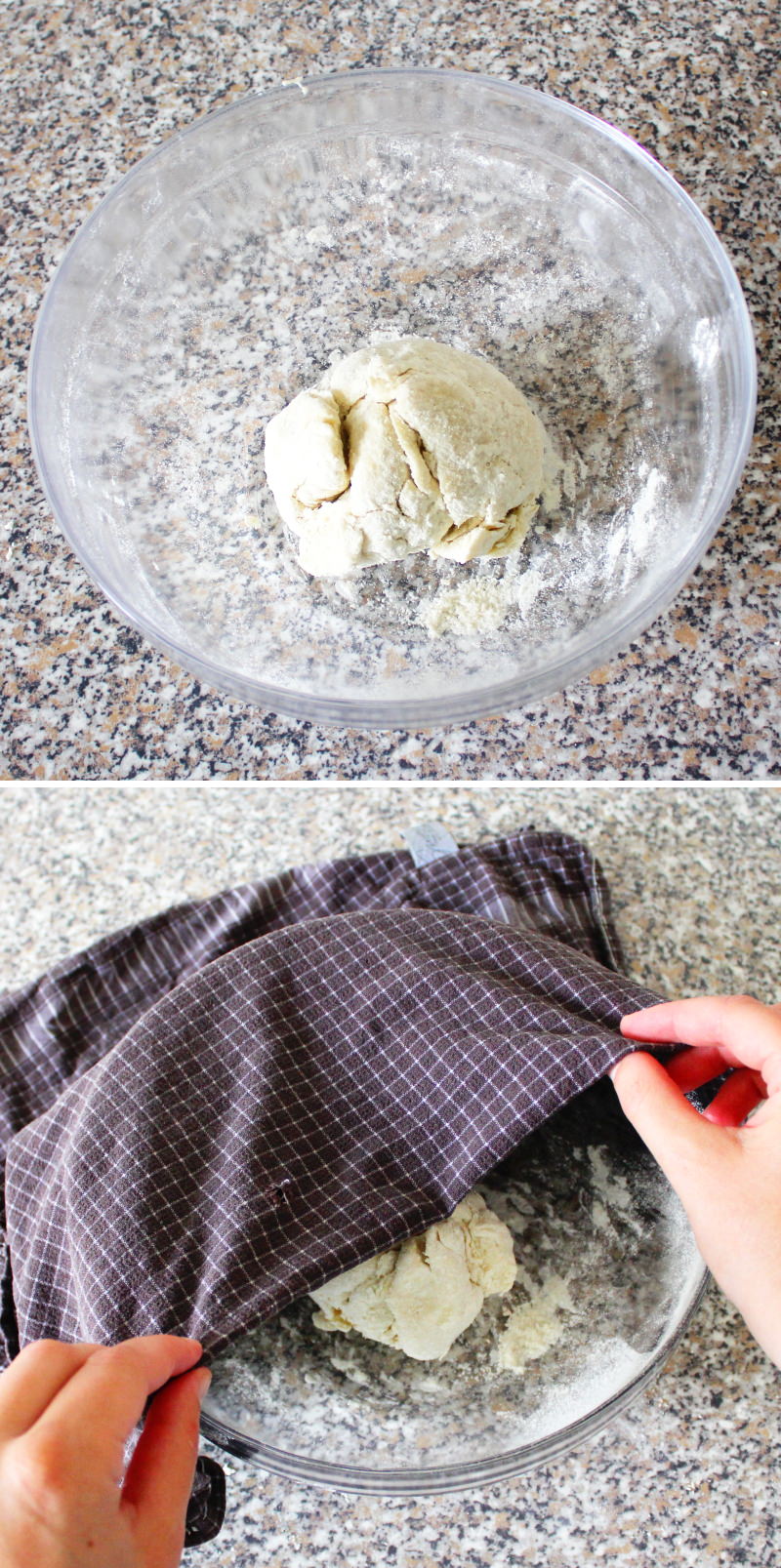
Place the firm ball of dough back into the bowl and cover it with a slightly damp tea towel to prevent the dough from drying out. Leave the noodle dough to rest for 30 minutes at room temperature.
In the meantime, prepare the pasta machine – assemble all the parts, secure it to the worktop and dust the rollers with a little wheat flour.
Step 7
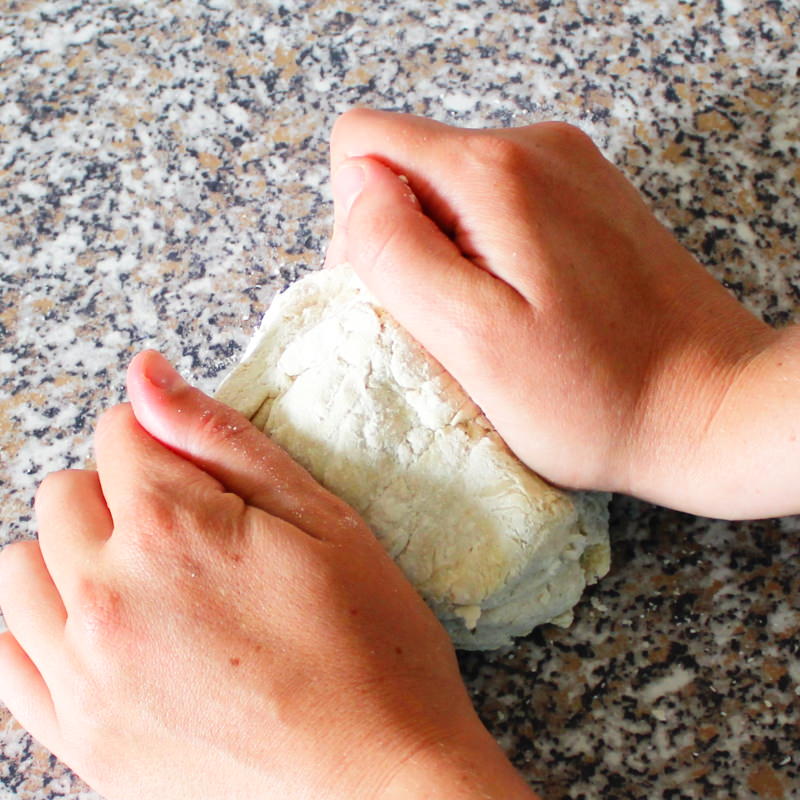
Once the resting time is up, remove the ball of dough from the bowl and press it down firmly with your hands so that it fits through the widest opening of the pasta machine (here, setting 1).
Divide the flattened dough into two halves and place one of the halves back into the bowl, covering it with a damp tea towel.
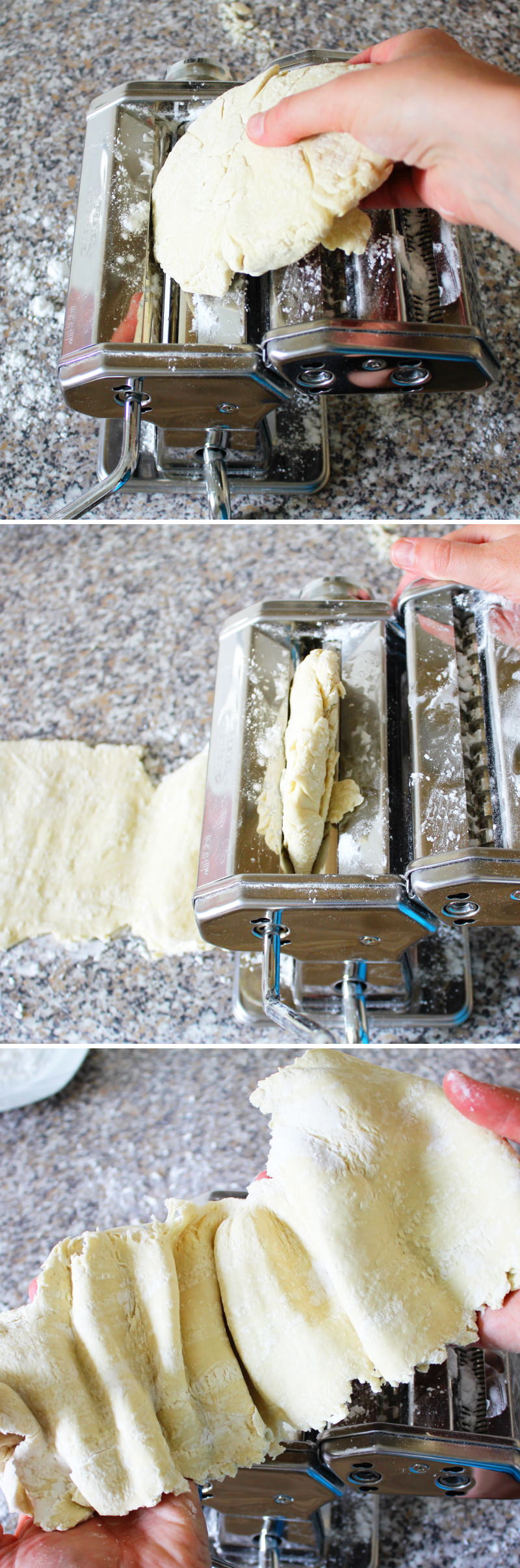
8. Step
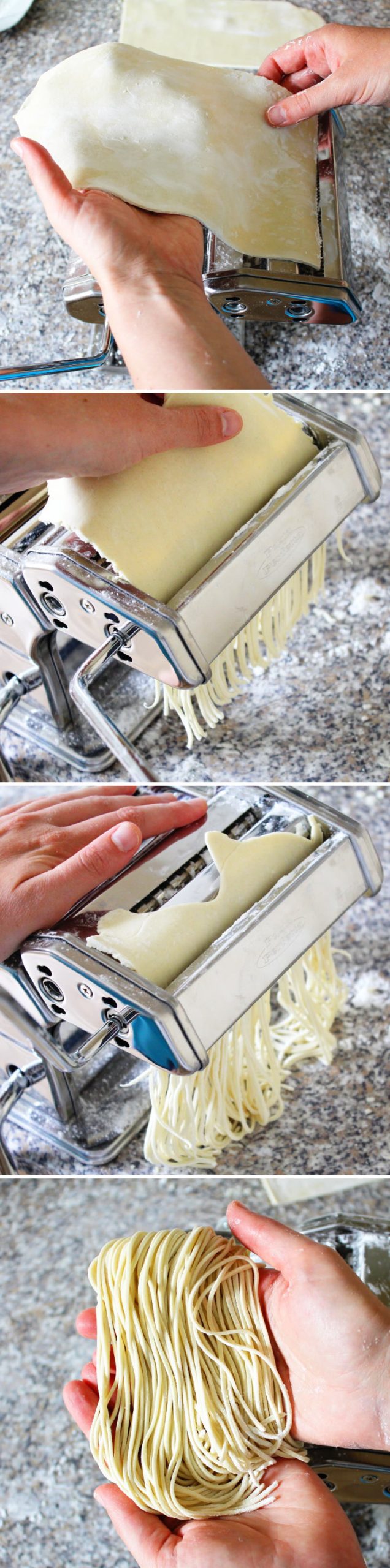
Now it’s time to roll out the noodle dough: First, pass the dough through the widest setting on the pasta machine. Don’t be surprised – the dough will look extremely torn and rough!
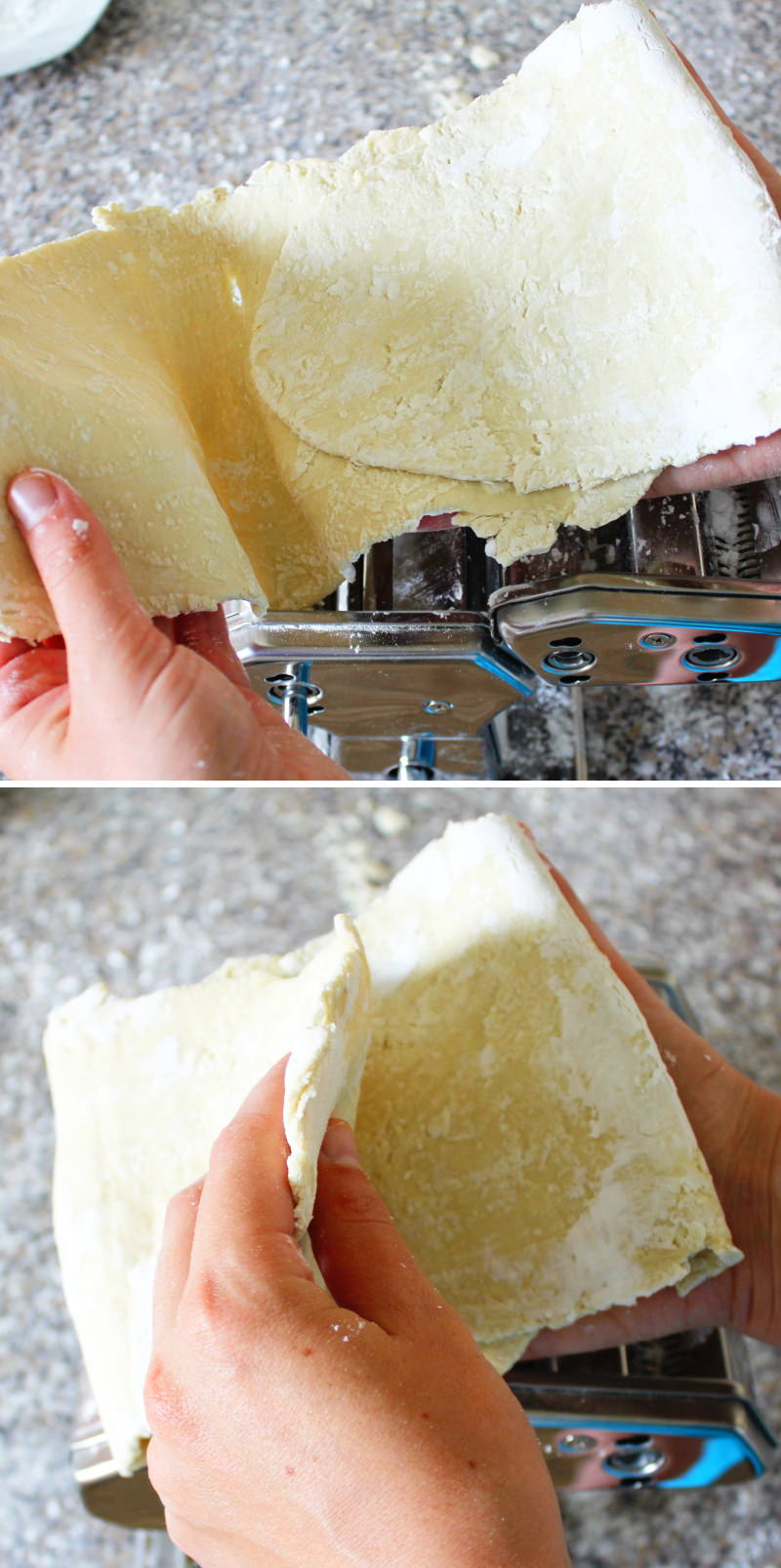
Step 9
Fold this long strip of dough lengthways from both sides into thirds and pass it through the machine again.
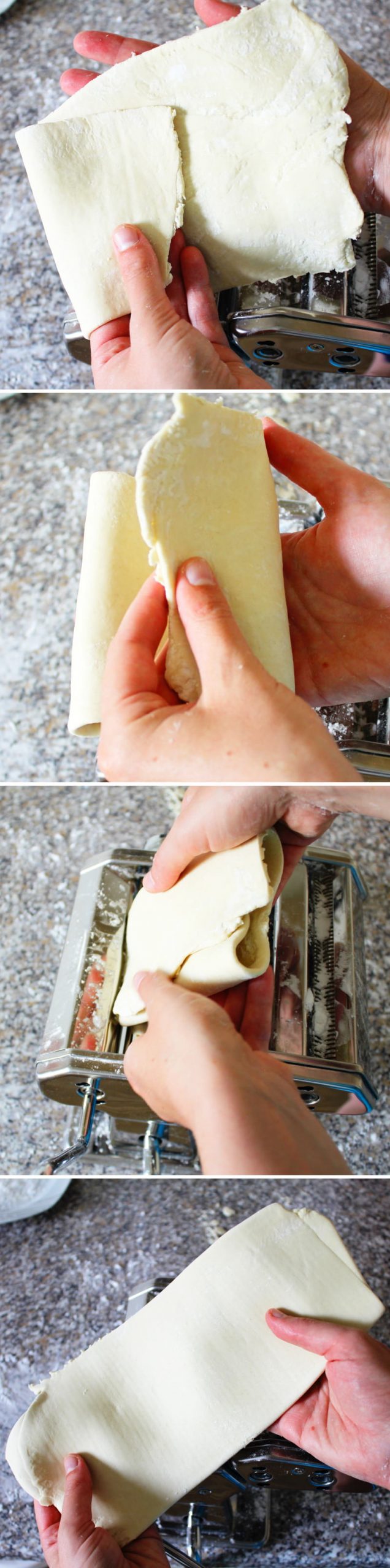
Step 10
Repeat this process 5 more times – this ensures the dough is both kneaded until soft and rolled out.
Once the dough has taken on a smooth texture and has been rolled out into a rectangular sheet, run it through the machine twice more, but in one piece, without folding it into thirds!
Dust both sides of the dough sheet with a little potato starch so that it doesn’t stick to the rollers afterwards.
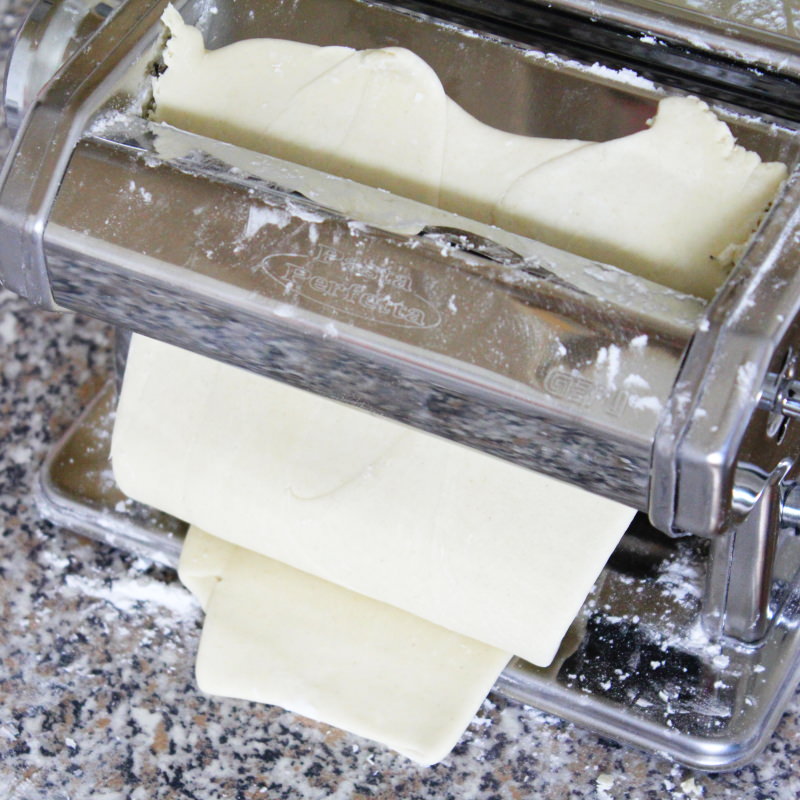
Step 11
Set the pasta machine to the next setting down and pass the dough through the rollers (Note: DO NOT fold it into thirds any more!).
Then roll out the sheet of dough on setting 3 using the pasta machine – depending on the model and your personal preference, you can roll it out further to setting 4 (we prefer slightly thicker ramen noodles).
Step 12
Dust the thin sheet of dough once more with potato starch and cut it in half with a knife. Now pass each sheet of dough through the spaghetti attachment to make lovely thin ramen noodles. Immediately afterwards, toss them in a little starch and arrange them in little nests on a floured surface (plate or platter) to prevent the noodles from sticking together.
Repeat the process shown for the second half of the dough, which is still in the covered bowl, .
Step 13
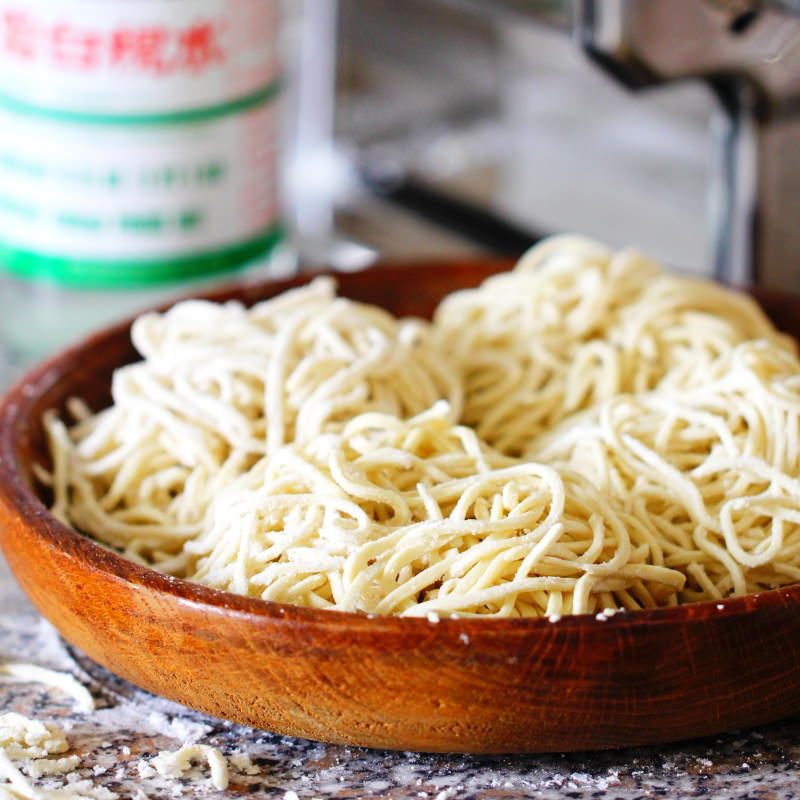
Your homemade ramen noodles are now ready. They can be used straight away to make a delicious bowl of ramen noodle soup (to do this, boil the noodles in a large saucepan for 1 to 2 minutes until bubbling, then drain and rinse well with cold water – this removes the remaining starch, making them easier to slurp).
Alternatively, the noodles can be laid out flat, dusted well with cornflour and stored in a freezer bag (e.g. a Ziploc bag) in the fridge for up to 24 hours.

Your homemade ramen noodles are now ready! Wondering what you can cook with them? Here are my favourite ramen recipes:
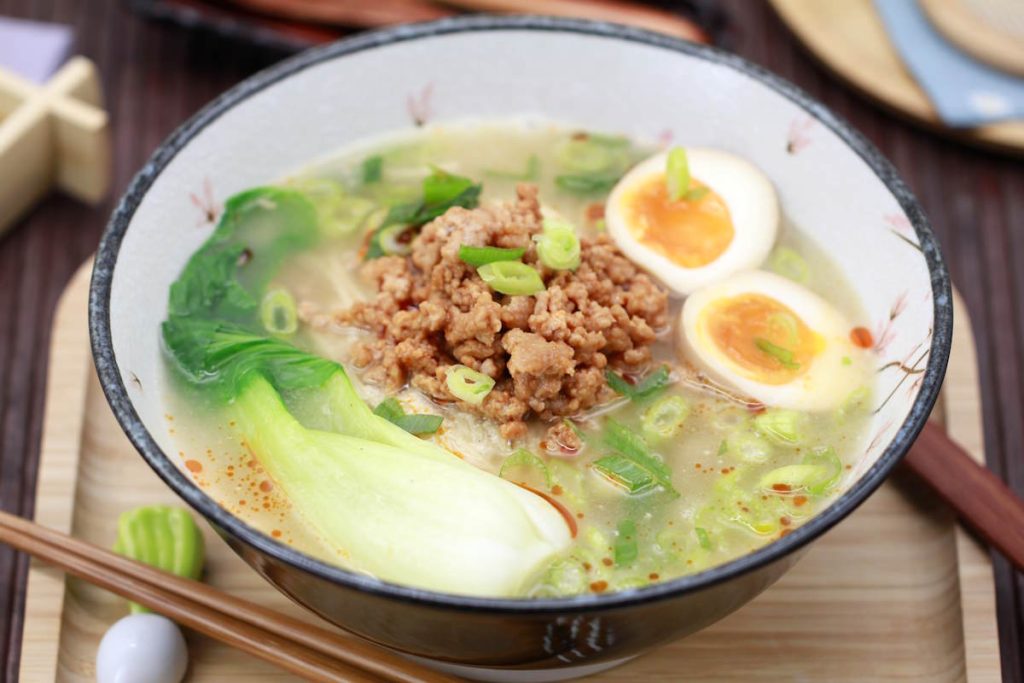
Make your own Tantanmen: creamy sesame Ramen with spicy Miso minced meat, pak choi & ramen eggs
Tantanmen is a Ramen soup for those who like it creamy but not heavy. A…
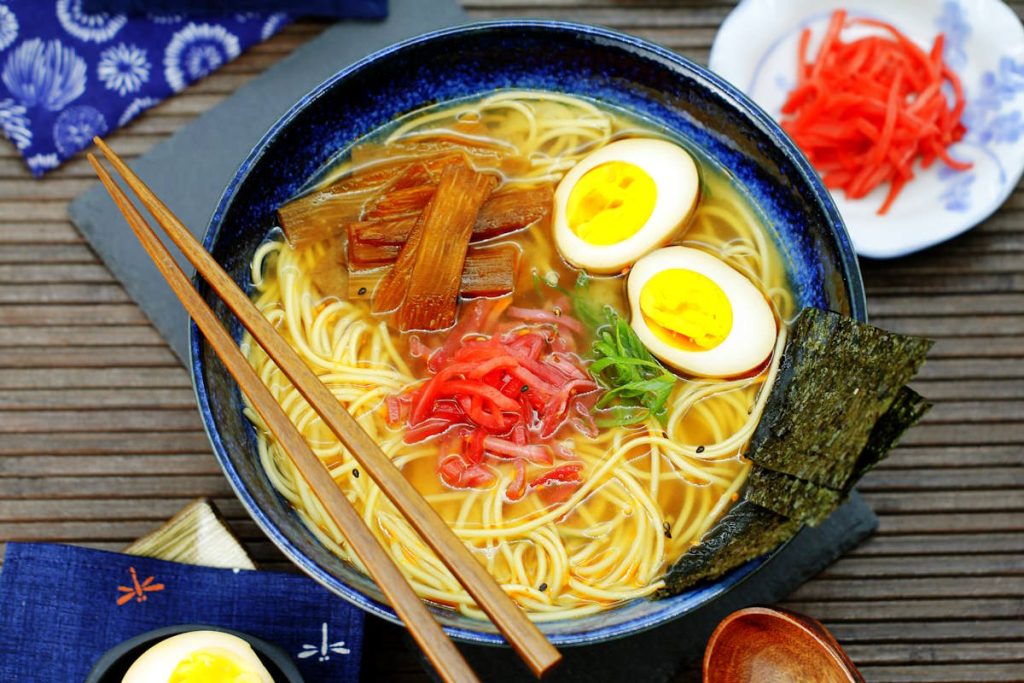
A bowl full of happiness: Miso Ramen with 7 varied toppings – vegetarian, spicy & really easy
Immerse yourself in the world of flavours of Japanese cuisine with our Happiness Bowl! It’s…
10-minute Shoyu Ramen with bamboo shoots & Ramen eggs – for quick meals
My 10-minute Shoyu ramen: Wavy ramen noodles, served in a rich and sinfully delicious tsuyu…
Hiyashi Chuka – cold Ramen salad with yuzu soy sauce & sesame dressing
Hiyashi Chuka is a summery ramen noodle dish packed with fresh garden vegetables. It’s a…
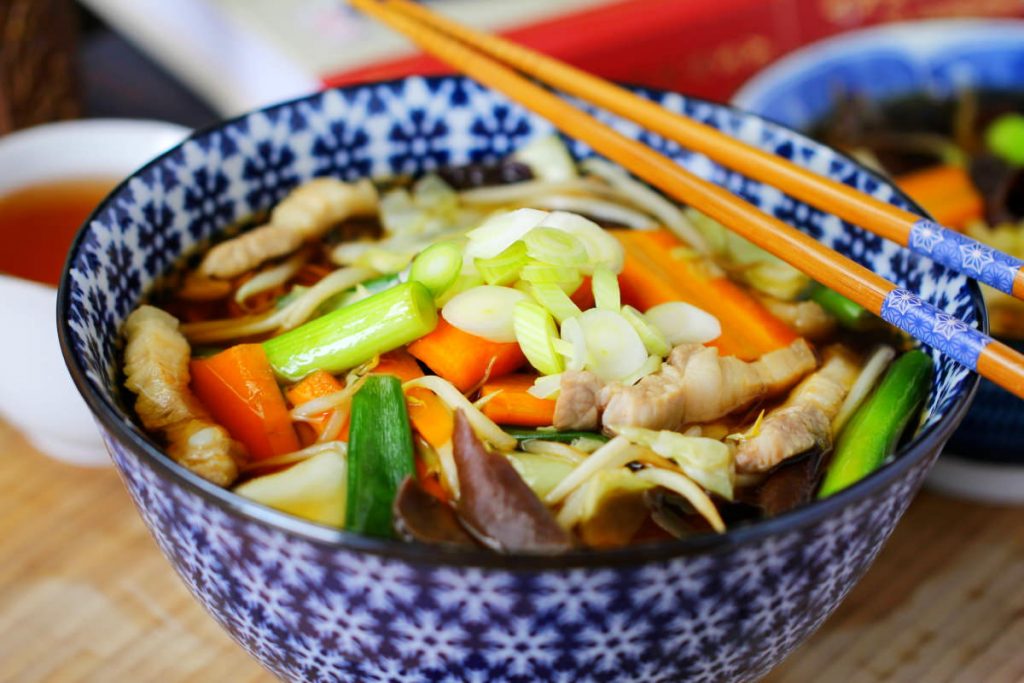
Tan-Men – Ramen noodle soup with stir-fried vegetables & pork belly
Tan-Men is a Japanese Ramen noodle soup with stir-fried pork belly and crisp vegetables. It’s…
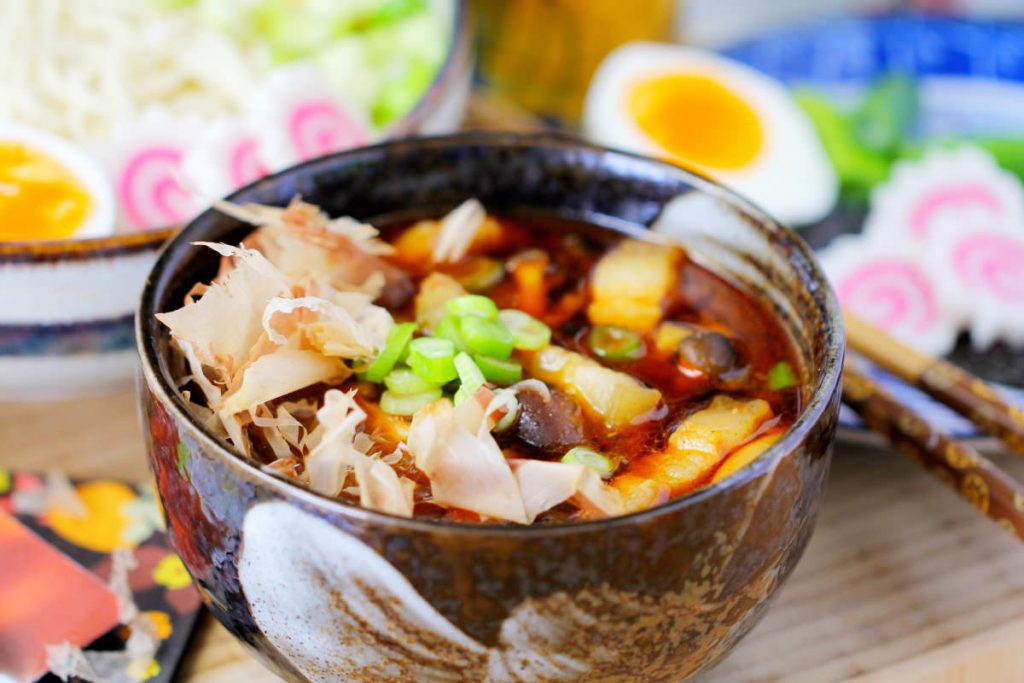
Tsukemen: Make your own cold ramen noodles with hot dipping sauce
Tsukemen is one of the most popular ramen recipes in Japan, particularly during the hot…
Has anyone tried this recipe yet? Let me know in the comments – I’m really looking forward to hearing from you.
* 1mal1japan.de is a participant in the Amazon EU Associates Programme, which is designed to provide a medium for websites to earn advertising fees by placing adverts and links to Amazon.de. The price remains the same for you.