

Language:


Hot, hearty and delicious, the Japanese stew Mille-Feuille Nabe is just the right recipe for winter. The key ingredients – cabbage and pork belly – are easy to find and really fill you up! Added to this is a hearty Dashi broth, in which the ingredients are cooked. The French term translates as meaning that the finished dish looks like a thousand layered sheets. The word actually originates from French pastry-making. The most important kitchen utensil is the hot pot, also known as a ‘hot pot’ in Japan. With this cast-iron casserole, even a complete beginner can be sure to succeed in making this meal for the whole family. Find out more about hot cabbage stew here.
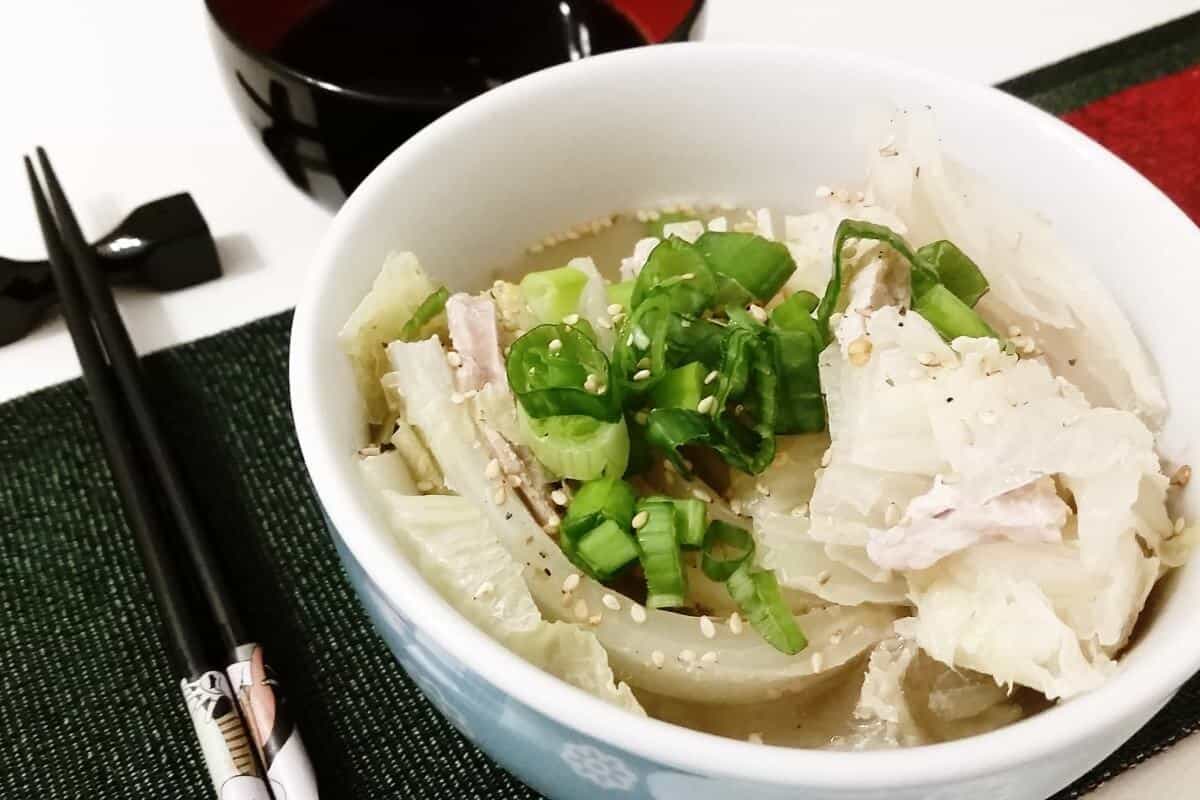
And now I hope you have fun and enjoy making the stew!
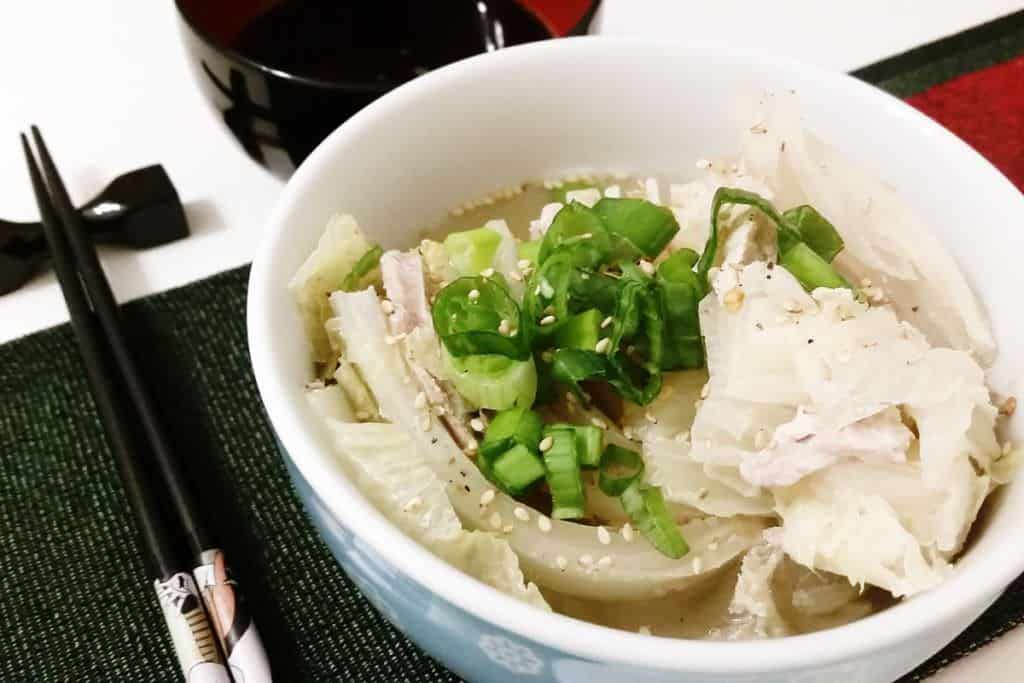
Mille-Feuille Nabe
Serves 4 | 45 minutes
🖨️ Print PDF 📌 Save to PinterestHot, hearty and delicious, the Japanese stew Mille-Feuille Nabe is just the right recipe for winter. The key ingredients – cabbage and pork belly – are easy to find and really fill you up!
Ingredients (serves 4)
40 g ginger (fresh)
1 spring onion
1 cabbage (preferably Chinese cabbage, otherwise whatever’s in season)
700 g pork belly, thinly sliced
1.2 l Dashi broth (see recipe)
2 tbsp Sake (im Shop ansehen)
1 tbsp soy sauce (im Shop ansehen)
1/2 tsp salt
100 ml Ponzu
a little Shichimi Togarashi (im Shop ansehen)
Method (45 minutes)
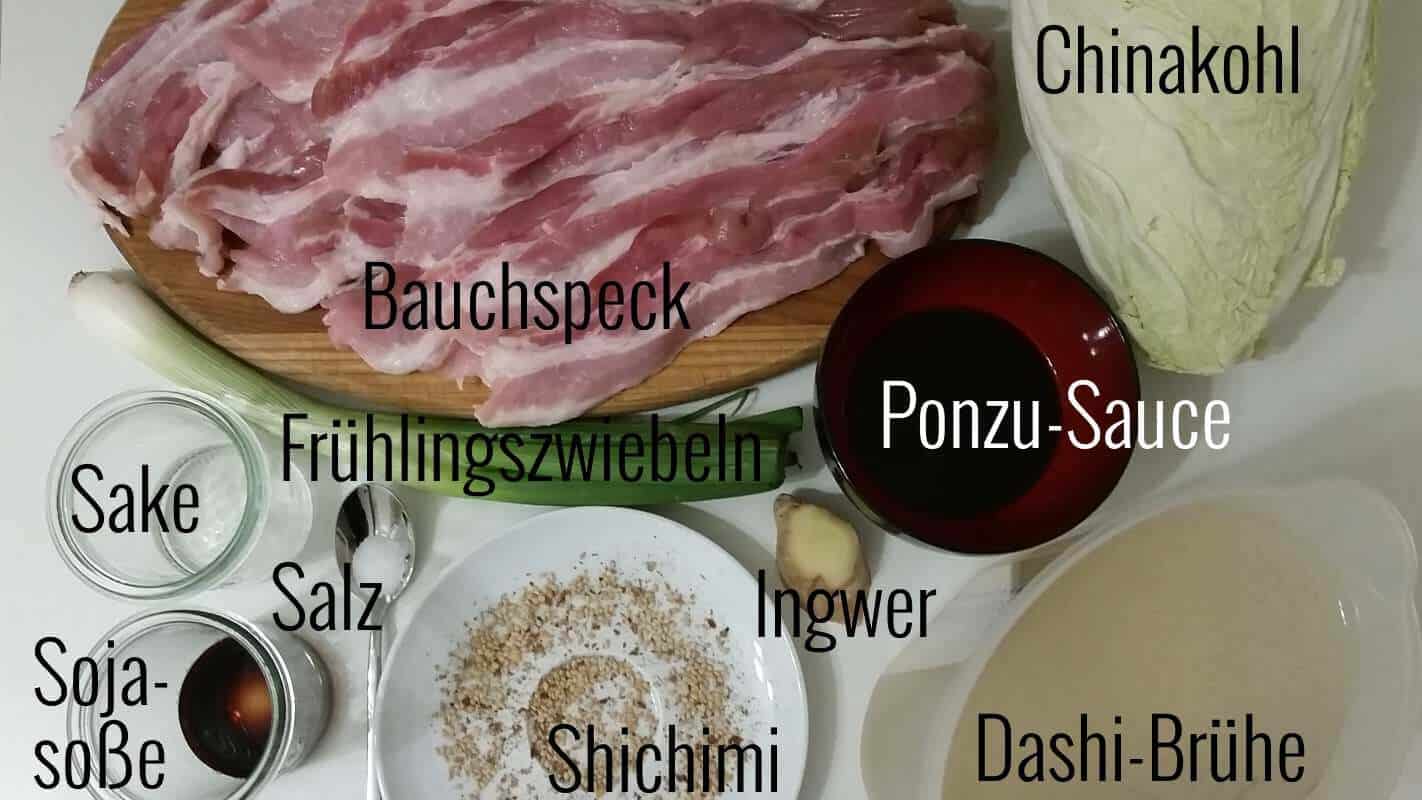
Step 1
Get the ingredients for the Mille-Feuille Nabe ready.
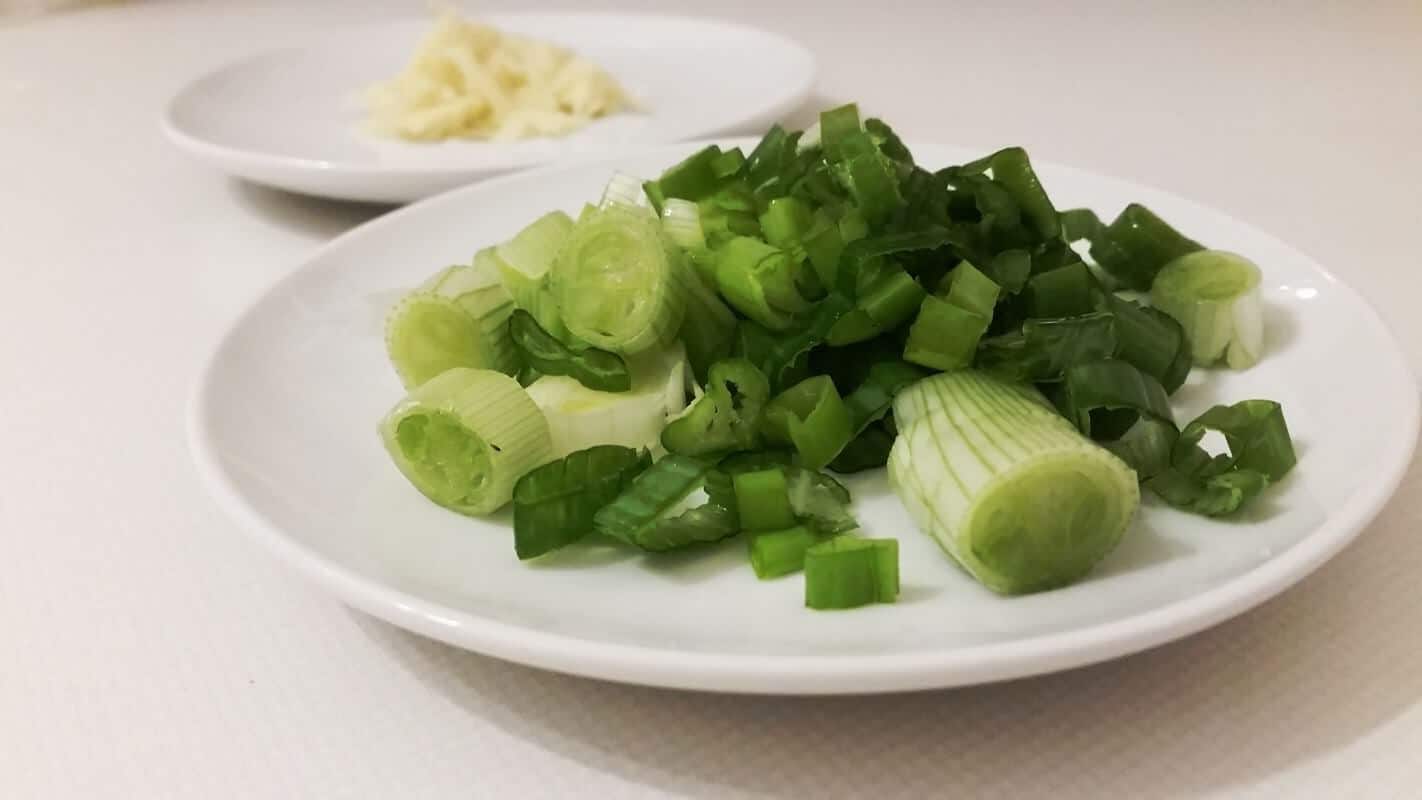
Step 2
Next, chop the ginger and finely slice the spring onions, then set both aside for later use.
Step 3
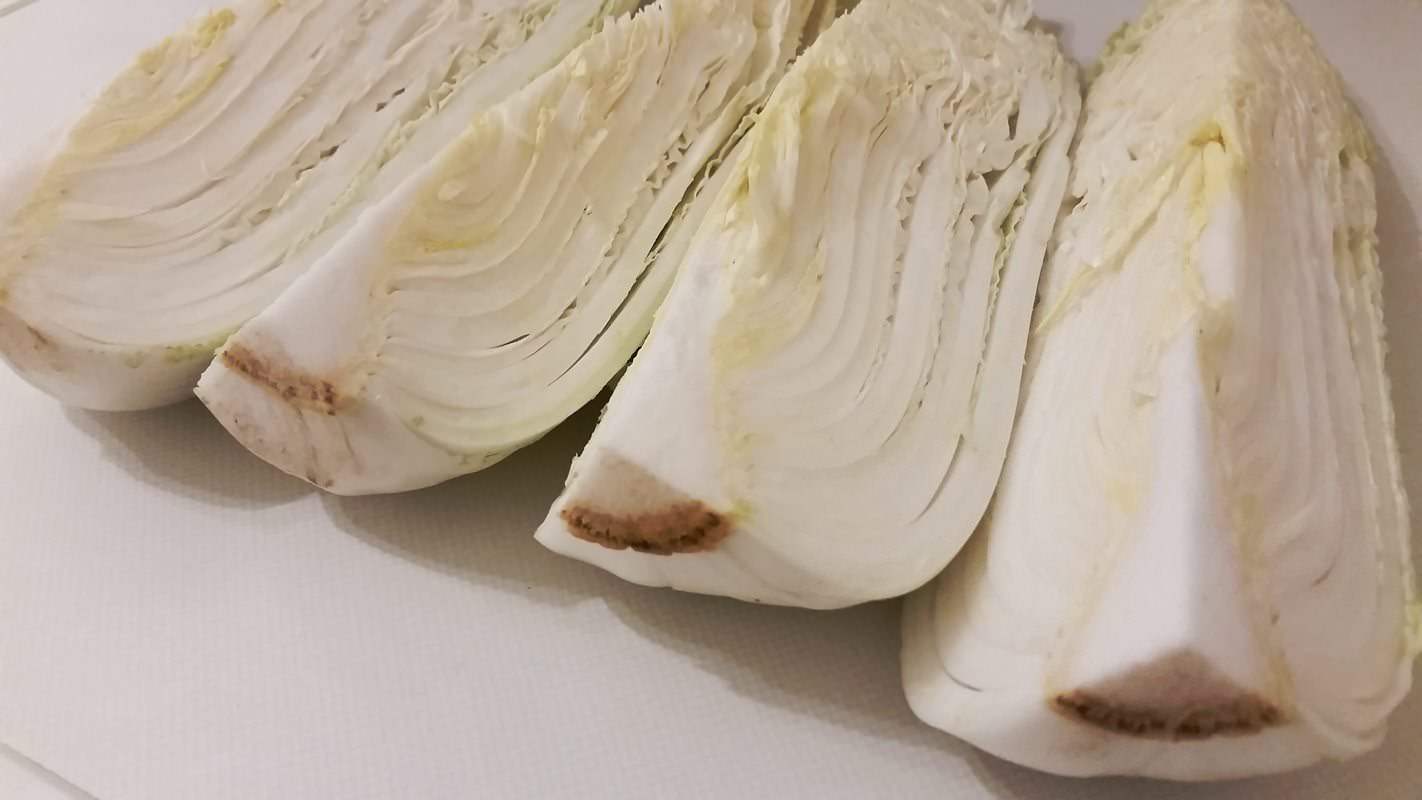
Cut the cabbage lengthways into four pieces using a long knife. Do not cut off the ends or stalks, and do not discard any leaves that may have fallen off; set them aside for later. Now carefully wash the individual leaves of the quarters and drain them well.
Step 4
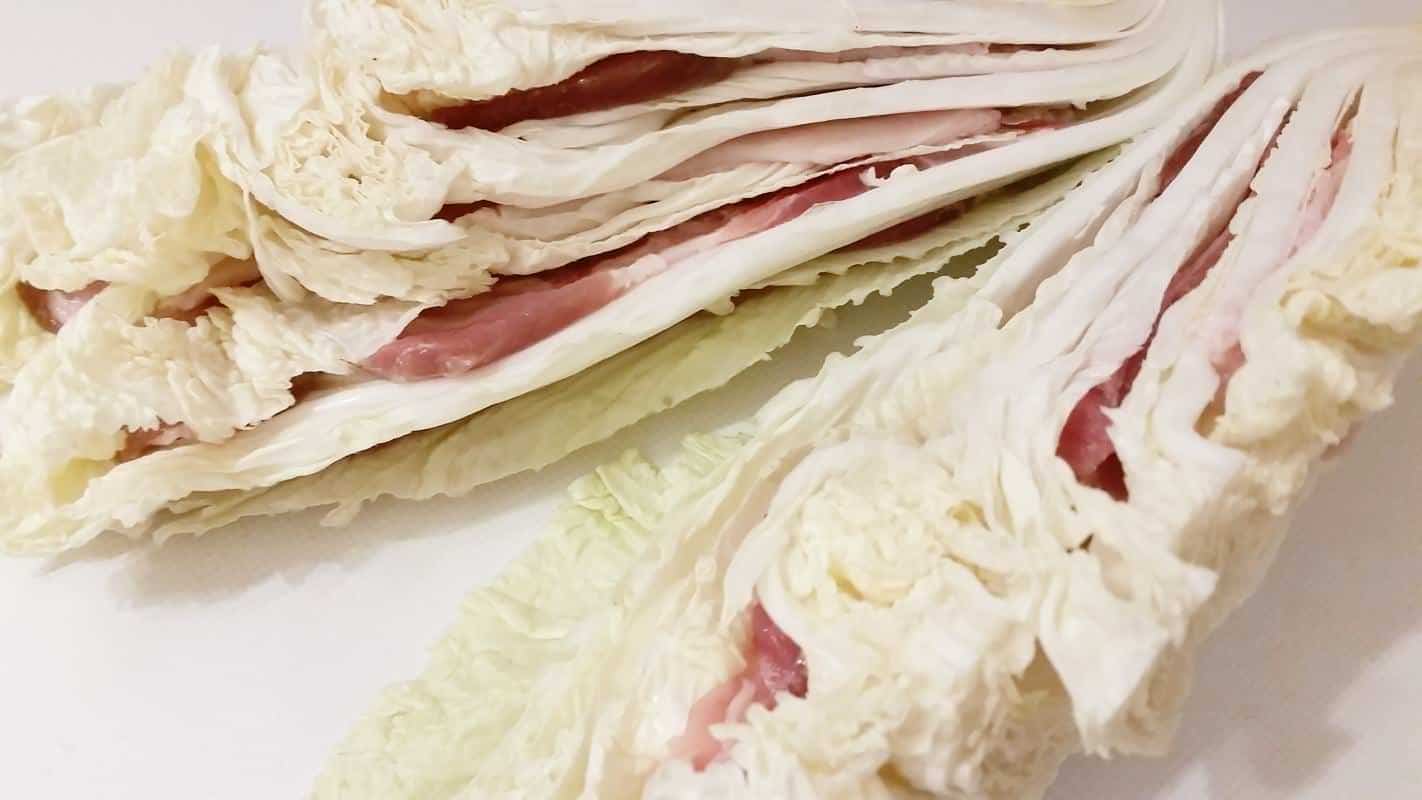
Carefully place a slice of pork belly between the cabbage leaves, which are still held together by the stalk. Simply trim off any pork belly slices that are hanging over the edges and continue arranging them. Once all the slices have been distributed amongst the cabbage quarters, cut each quarter into 3 roughly equal pieces using a sharp knife. Please note: Do not remove the stalks at this stage either; they remain attached until the end and are cooked along with the dish.
Step 5
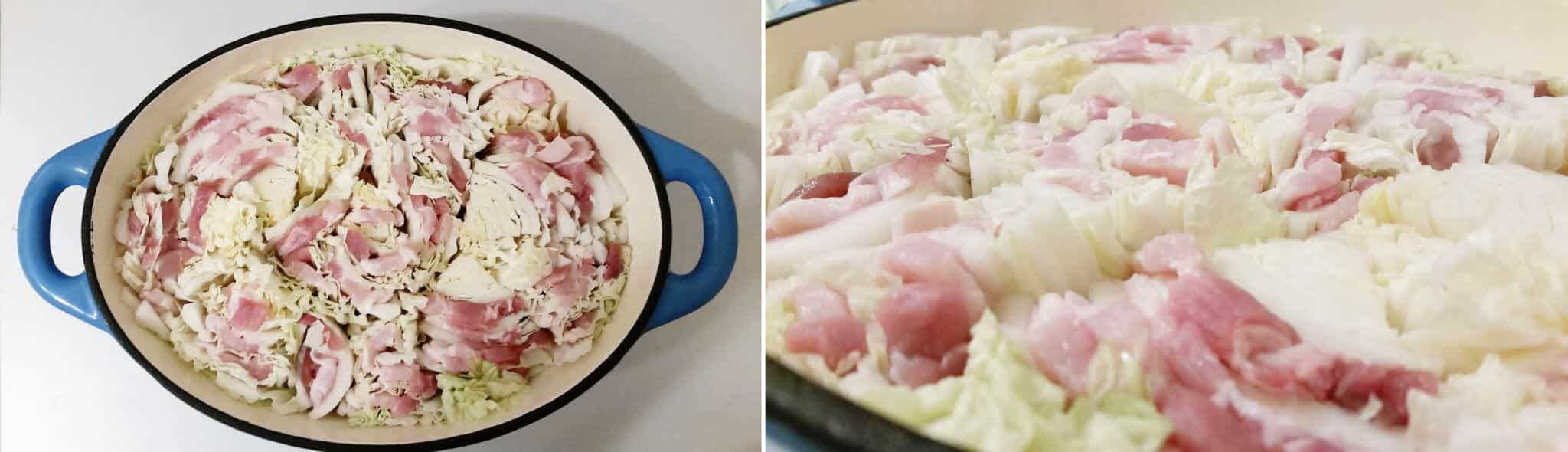
Then arrange the individual parcels in the pot from the outside inwards, following a circle. The pot should be packed quite tightly by the end. If necessary, top up with the cabbage leaves that have fallen off and been set aside.
Step 6
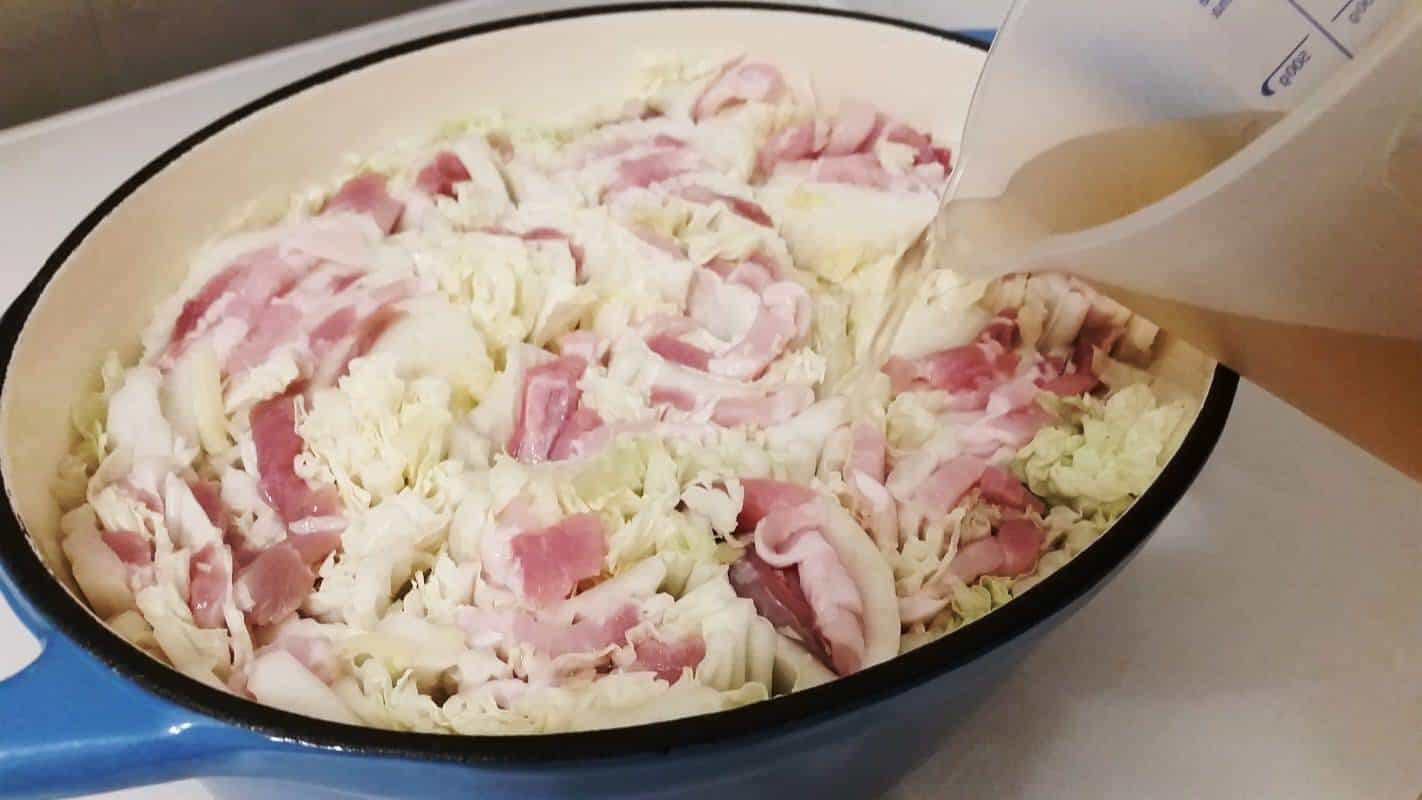
In a bowl, mix the Dashi broth, Sake, soya sauce, salt and ginger together well. Pour the mixture over the layered cabbage in the pot. Bring everything to the boil on the hob over a high heat. As soon as the stew comes to the boil, reduce the heat to medium and leave to simmer until the cabbage and bacon are cooked through.
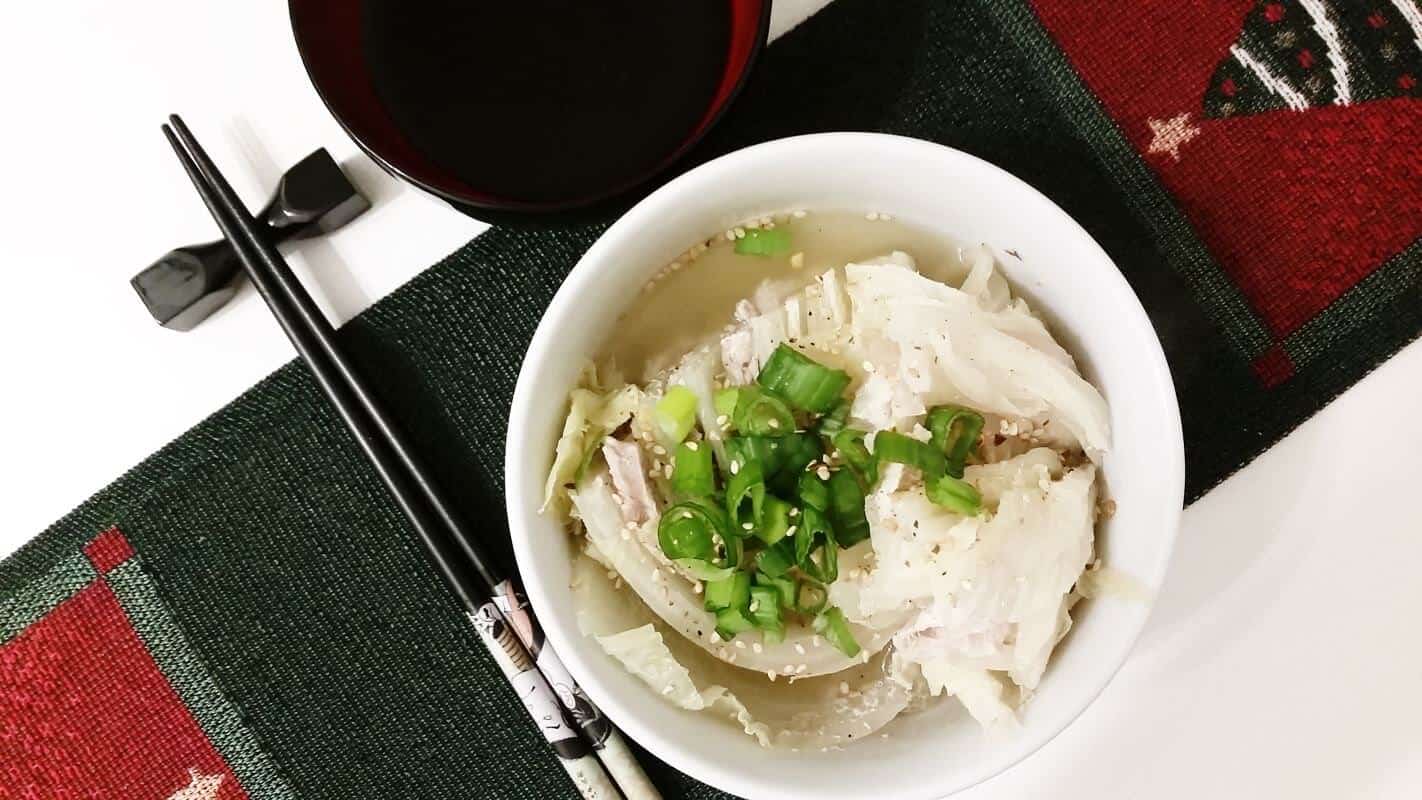
Step 7
To serve, place a cabbage and pork belly parcel from the Mille-Feuille Nabe in a bowl and garnish with the spring onions and a little shichimi. Ponzu sauce is usually served in a small bowl on the side for dipping the cabbage and pork belly. Ready – Itadakimasu!