

Language:


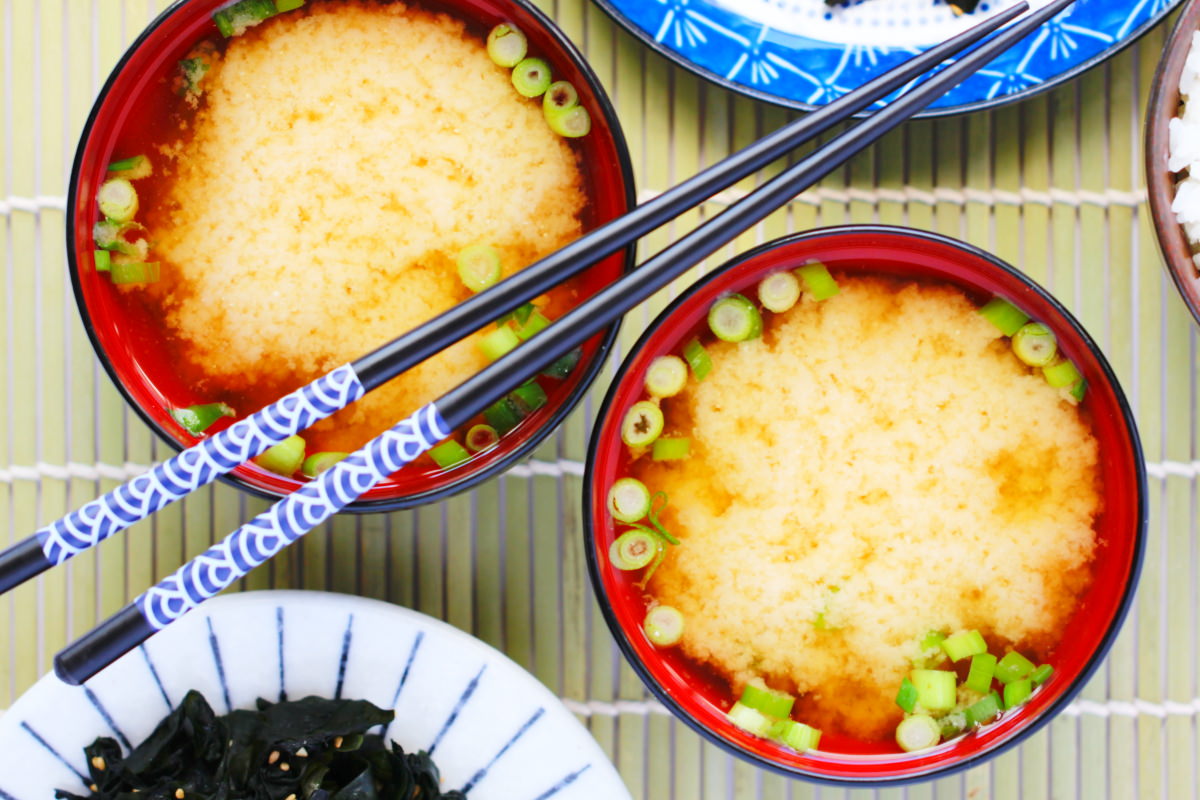
In Japan, a day without miso soup is like a day without… food. Misoshiru is usually made for breakfast, but it’s just as commonly prepared for lunch and dinner. This light and simple three-ingredient miso soup can be utterly satisfying thanks to its rich flavour. This recipe is a must-have for your Japanese cooking repertoire!

Although they are extremely simple to prepare, miso soups offer endless possibilities thanks to the different types of miso pastes and the ingredients that can be added.
Generally speaking, Miso is a fermented soya bean paste used as a base for soups and as a flavouring in sauces, dressings and marinades. There are numerous varieties (white, yellow or red) with different flavours, textures and uses. Depending on the recipe, some types of Miso can be substituted for others, but there is generally no substitute for Miso paste in Japanese cuisine.
For the recipe shown here for a quick and easy Misoshiru, I used this brilliant miso paste, as it is comparatively less salty and works really well in both savoury and sweet dishes:
CUSTOMER FAVOURITE
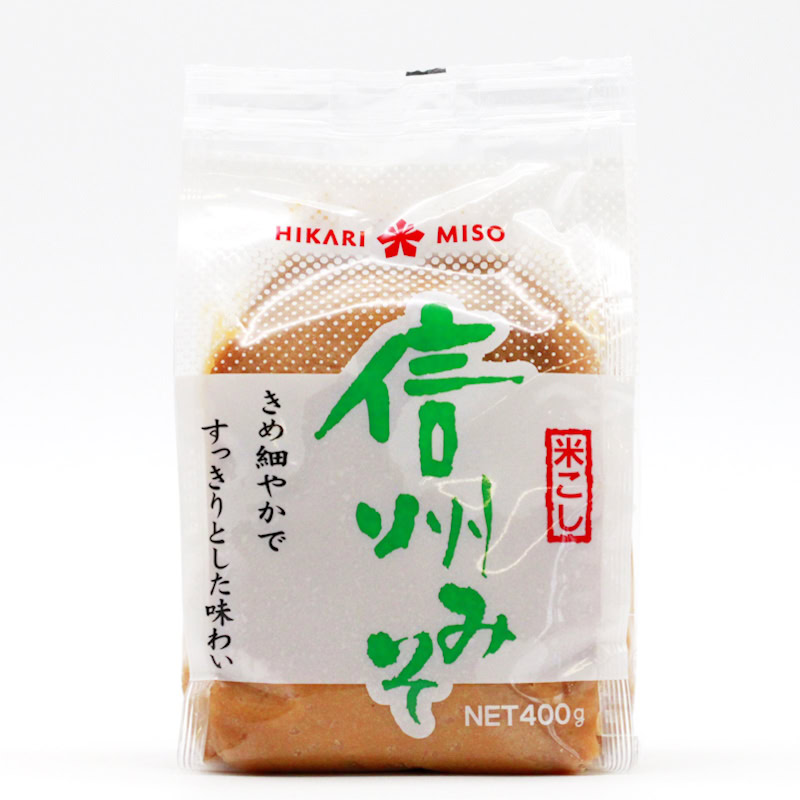
Miso Paste Shinshu Shiro 400 g (aus Japan)
Helle japanische Miso Paste für Suppen, Marinaden & Dressing. Diese Shinshu Shiro Miso Paste von Hikari ist eine helle, mild fermentierte Würzpaste aus Sojabohnen. Sie…
In stock
The most important rule to bear in mind when making miso soup is that the Miso paste should only be added after you’ve turned off the hob – in other words, once the stock has stopped boiling vigorously. This preserves the delicate flavour of the Miso, which would otherwise be destroyed by excessive heat!
Another secret to this irresistible Miso soup with spring onions lies in the homemade Dashi stock! Dashi is a clear broth from Japan that is considered the basis for the Umami flavour (now also referred to as the fifth taste). This broth enhances and brings out the intensity and natural flavour of the ingredients cooked in it.
Unlike Western or even other Asian broths, the ingredients are not simmered for a long time; instead, they release their flavour into the hot water in just a few minutes. Dashi is usually made from Kombu and bonito flakes. But this is by no means the only option! Today I’ll show you how to conjure up a flavour-packed katsuo Dashi broth using only bonito flakes (i.e. Katsuobushi) – it’ll simply blow you away!
I’ve got a great recommendation for you here too: I really love the taste of my homemade stock made with these bonito flakes, so I’d like to recommend this variety of Katsuobushi to you:
CUSTOMER FAVOURITE
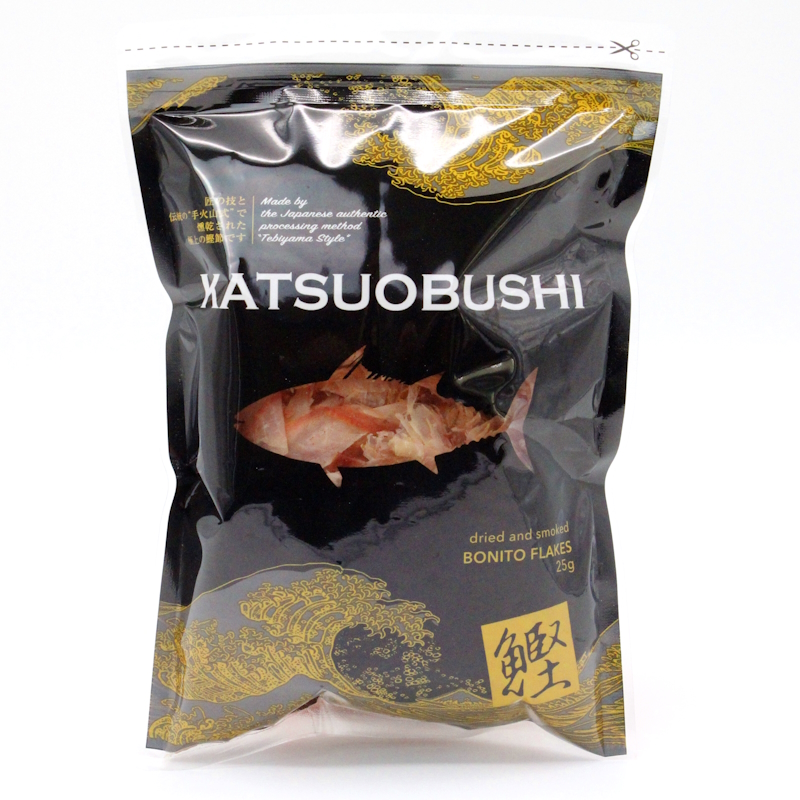
Katsuobushi Bonitoflocken 25g (dünn geschnitten), Echter Bonito, Kohyo
Katsuobushi sind küchenfertige Bonitoflocken, die unverzichtbarer Geschmacksträger für japanische Dashi Brühen, Miso Suppen und Udon Nudelsuppen sind. Doch auch leckere Garnierung für japanische Alltagsrezepte wie…
In stock
Misoshiru really is one of the most versatile soups made from fermented soya beans. This simple recipe is a daily staple in Japan and contains just a few ingredients. Despite the short list of ingredients, this Miso soup is full of flavour and should be served as an accompaniment.
By the way, for a change, you can also briefly cook other vegetables, Tofu or even seafood (such as mussels) in the Dashi broth and add the Miso paste at the end.
For now, I hope you have fun and enjoy making this quick and easy Japanese Miso soup with katsuo Dashi and spring onions:
3-Ingredient Miso Soup
Serves 2 | 10 minutes | 52 kcal
🖨️ Print PDF 📌 Save this pinIn Japan, a day without miso soup is like a day without… food. Misoshiru is usually made for breakfast, but it’s just as commonly served for lunch and dinner. This light and simple miso soup made with just 3 ingredients is incredibly satisfying thanks to its rich flavour. This recipe is a must-have for your Japanese cooking repertoire!
Ingredients (2 servings)
10 g Katsuobushi (bonito flakes) (im Shop ansehen)*
1 tbsp miso paste (im Shop ansehen)*
2 spring onions
500 ml water (fresh, cold tap water)
Useful equipment:
Japanese Yukihiara saucepan
Fine-mesh sieve (im Shop ansehen)
Miso soup bowls (im Shop ansehen)
Preparation (10 minutes)
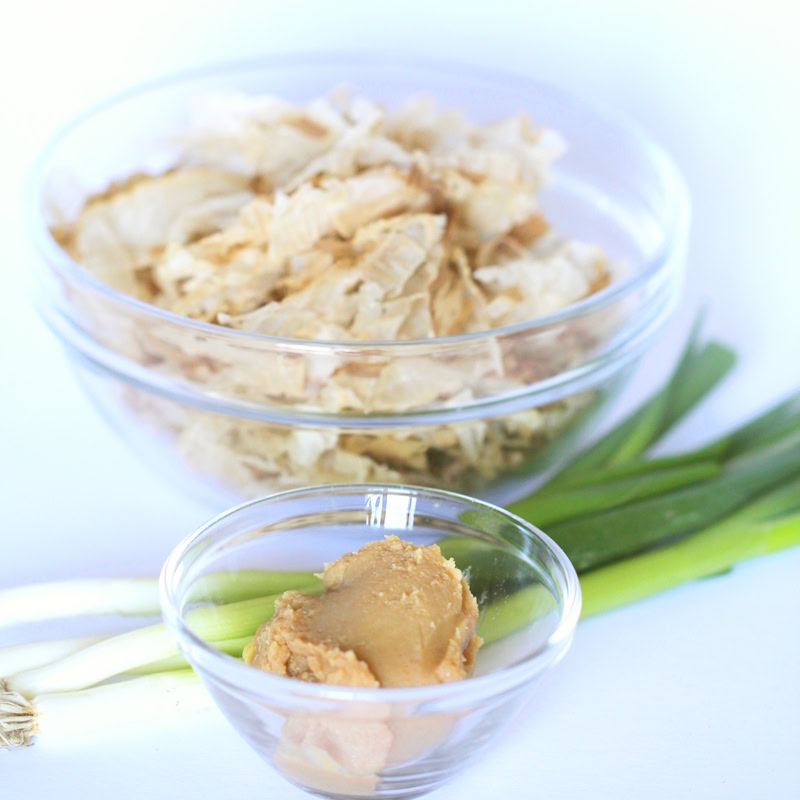
Step 1
Prepare the ingredients for the quick Misoshiru with katsuo Dashi and spring onions.
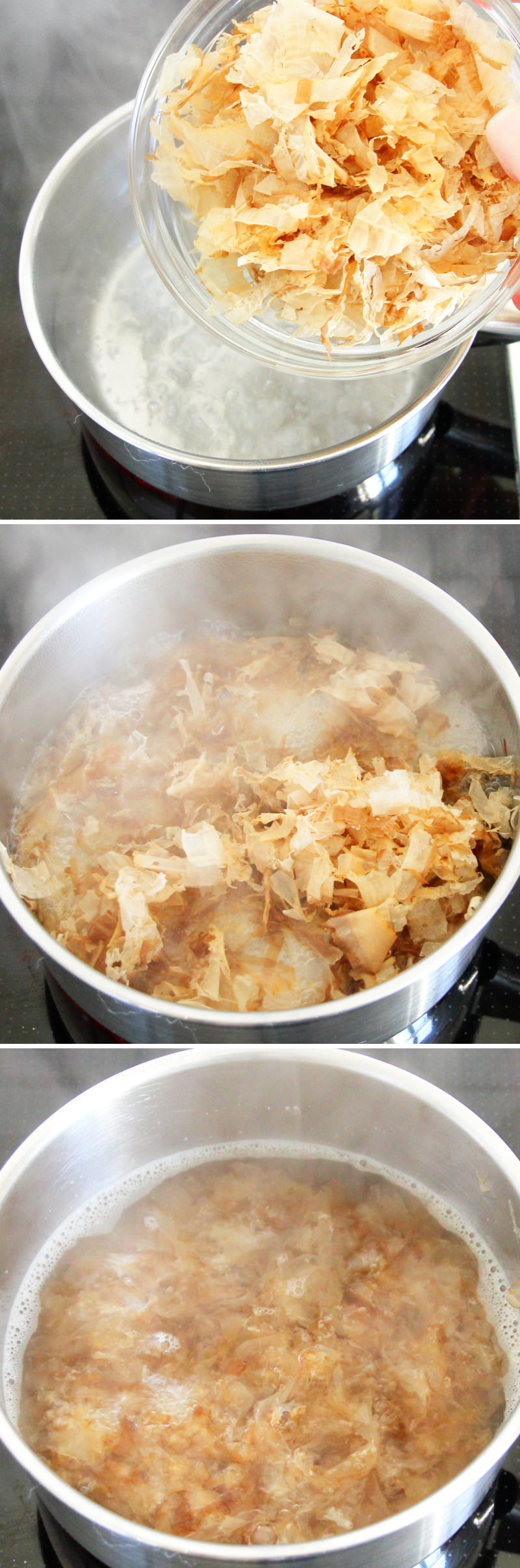
Step 2
In a medium saucepan, bring the water to the boil. Add the Katsuobushi (bonito flakes) to the saucepan, reduce the heat to low to medium and simmer gently for 5 minutes.
Step 3
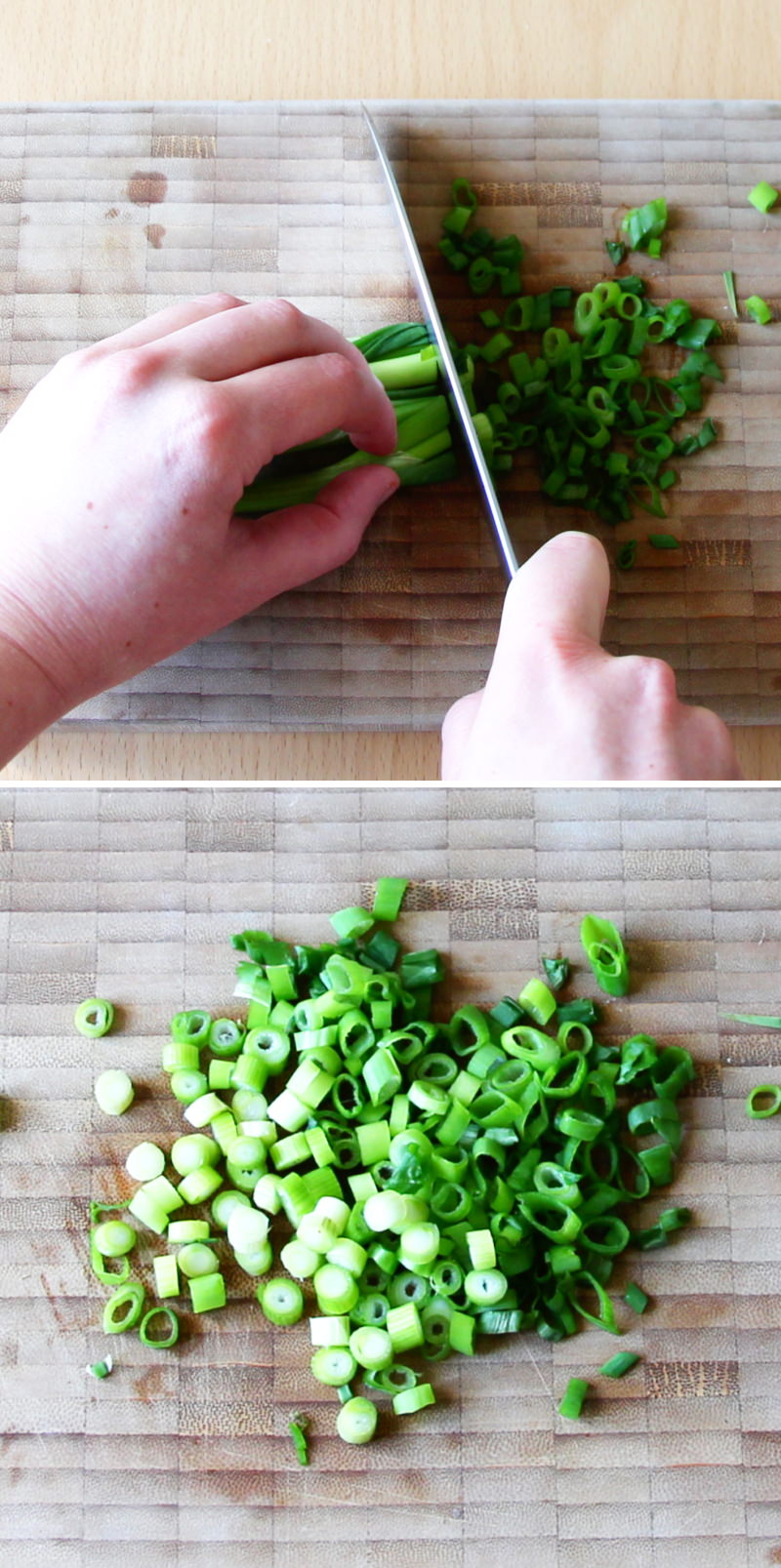
In the meantime, wash the spring onions , pat them dry and slice them into fine rings (ideally, cut them in half lengthways with a large knife, fold them together and slice them into fine rings from the green part downwards, then remove the root end).
Step 4
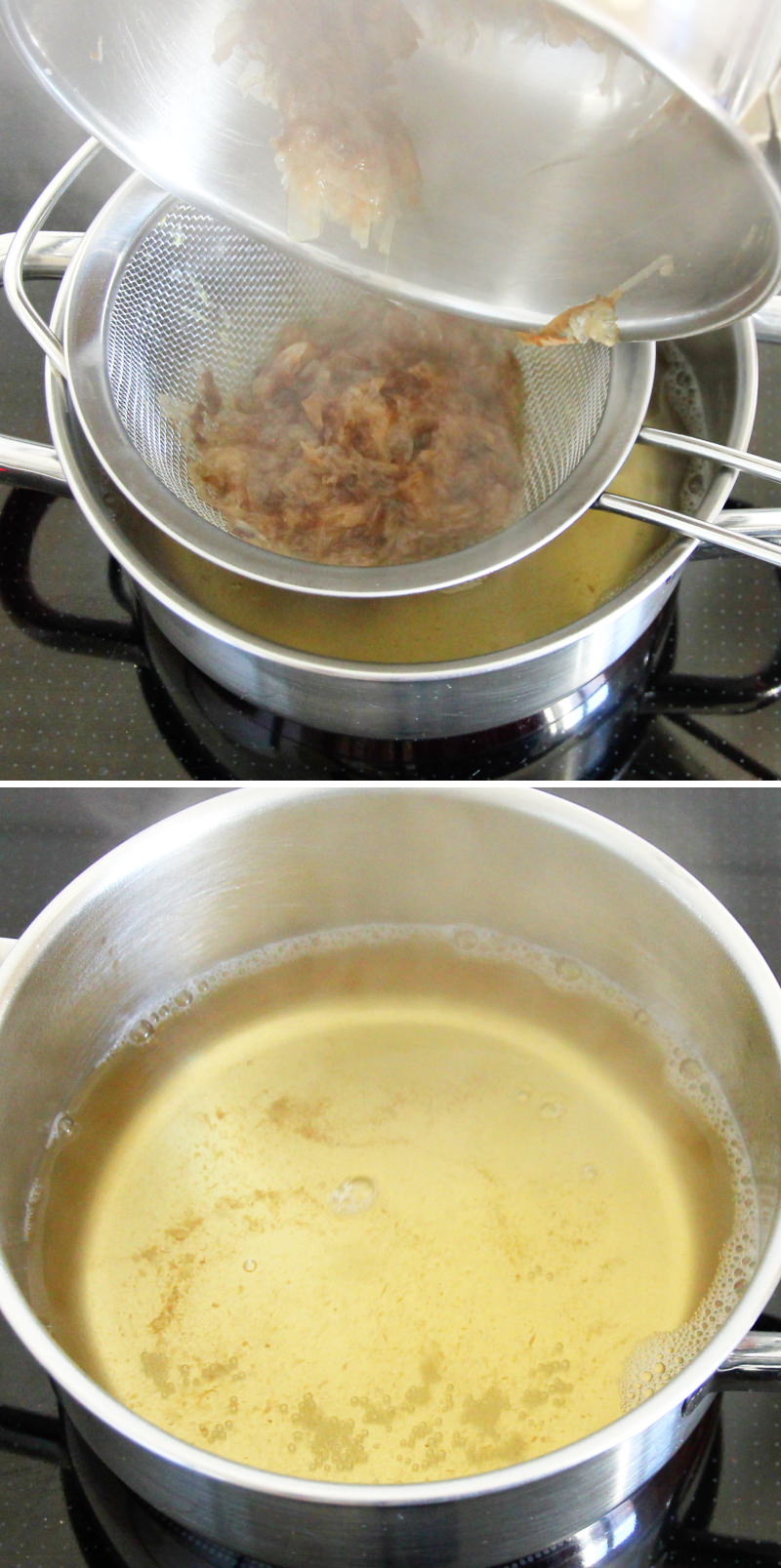
Then turn off the hob. Pour the contents through a sieve or cheesecloth into a second saucepan, thereby removing the boiled Katsuobushi from the stock.
Step 5
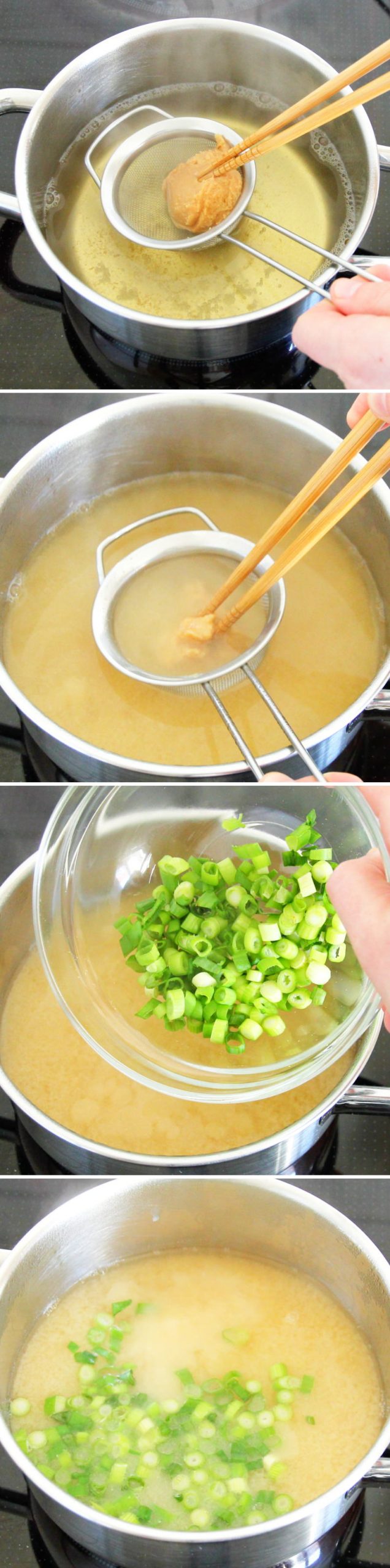
Using another empty sieve (use a fine-mesh metal sieve that is heat-resistant), stir the miso paste into the ready-made katsuo Dashi broth. To do this, place the sieve over the rim of the pan, add the miso paste and stir it into the liquid (using a spoon or chopsticks, for example).
Add the previously prepared spring onion rings .
Step 6
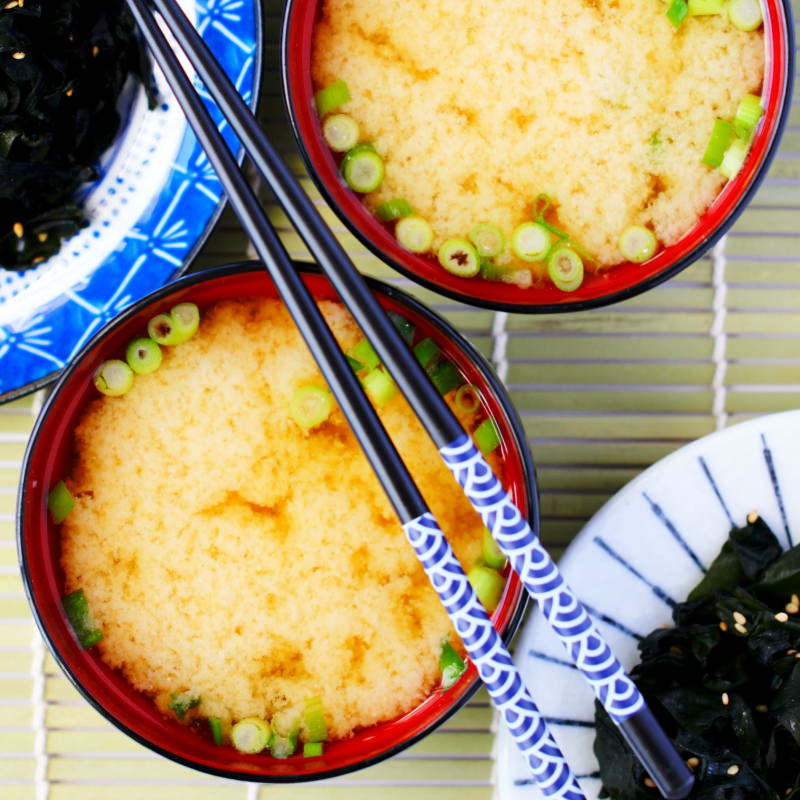
The finished Misoshiru is served hot in small bowls and eaten with chopsticks, with the broth sipped directly from the bowl. Ready – Itadakimasu!
Of course, there are plenty of other side dishes that go really well with this recipe as part of a Japanese meal:
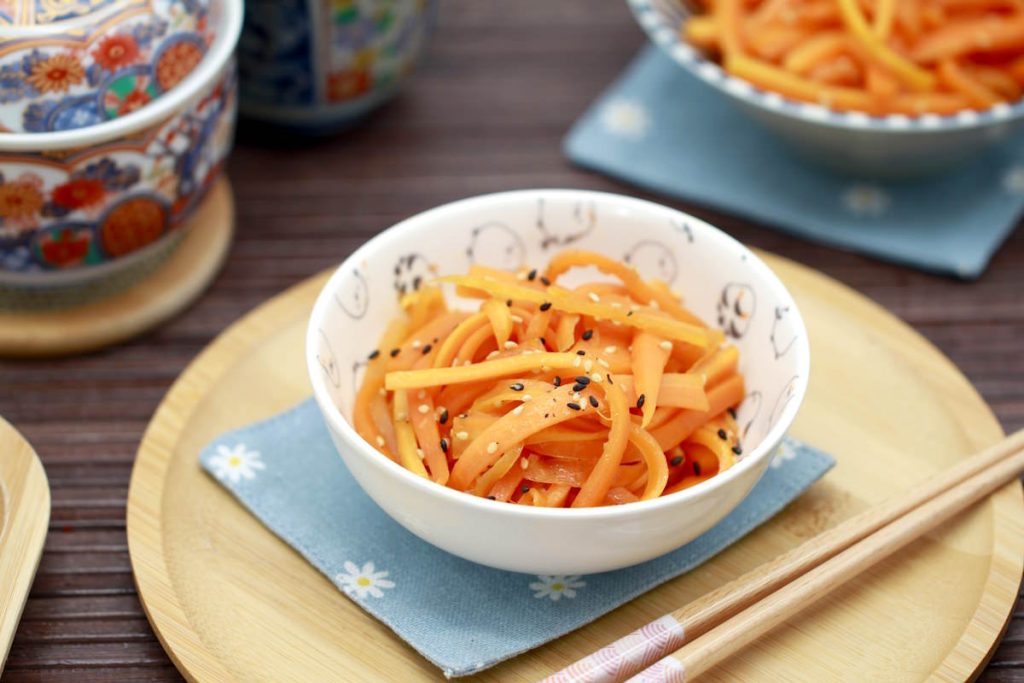
Make your own Ninjin no Kinpira: Japanese carrot side dish in the Kinpira style
Ninjin no Kinpira is a simple Japanese side dish made from finely sliced carrots, which are briefly stir-fried and then…
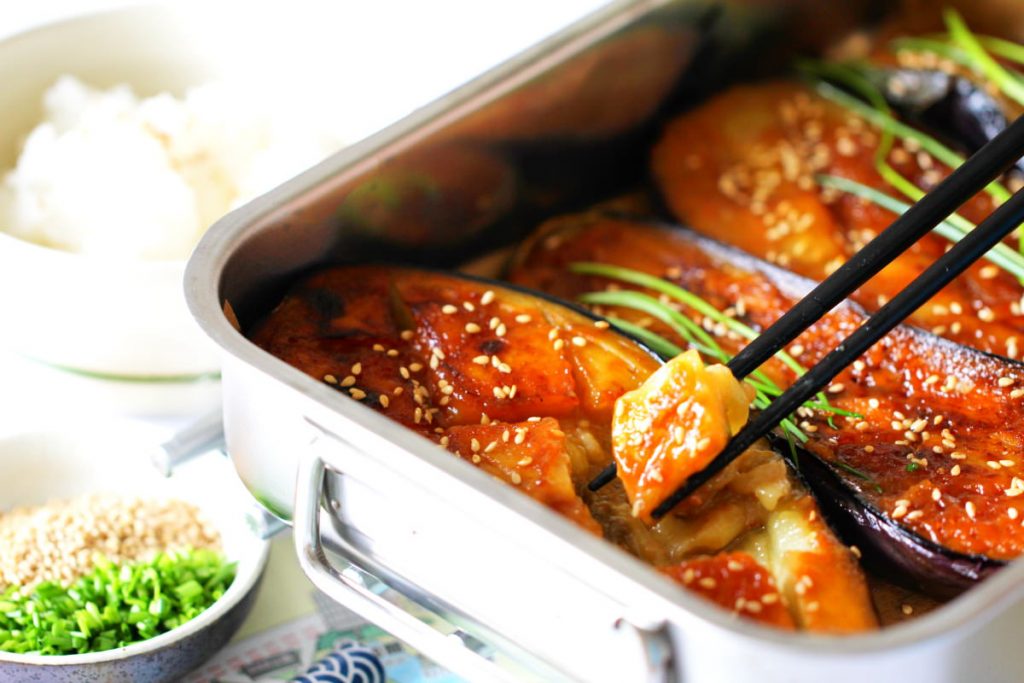
Nasu Dengaku: Oven-baked aubergines glazed with Miso – simple & irresistible
Nasu Dengaku is a true classic of Japanese cuisine and perfect as a side dish or vegetarian main course. The…

Make your own Japanese potato salad: fresh, creamy and irresistible!
If you’re looking for a delicious side dish that’s both familiar and excitingly new, then Japanese potato salad is just…
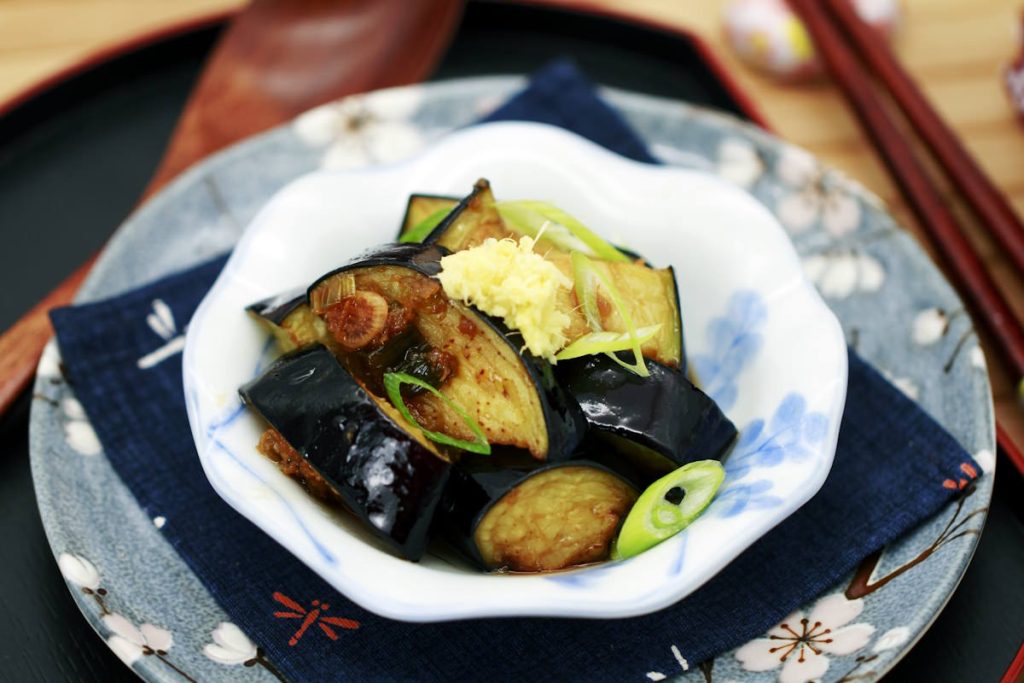
Nasu no Agebitashi: Make your own Japanese-style deep-fried aubergine
Creative cooking starts with simple, fresh ingredients. My recipe for deep-fried aubergine combines the delicious texture of aubergines with a…

Potatoes in soy sauce: crispy-sweet Daigaku Jagaimo, Japanese style
Daigaku Jagaimo are delicious, crispy potato bites glazed in a sweet and savoury marinade. These simple yet impressive soy sauce…

Make your own Gyoza: the best Japanese dumplings – cook, fold & enjoy!
Welcome to the fascinating world of Gyoza! These traditional Japanese dumplings are a culinary feast for all the senses and…