
Language:


Creative cooking starts with simple, fresh ingredients. My recipe for deep-fried aubergine combines the delicious texture of aubergines with a spicy marinade, bringing the authentic flavours of Japan straight to your table. Let yourself be inspired by this unique culinary journey and enrich your menu with a touch of tradition and sophistication.
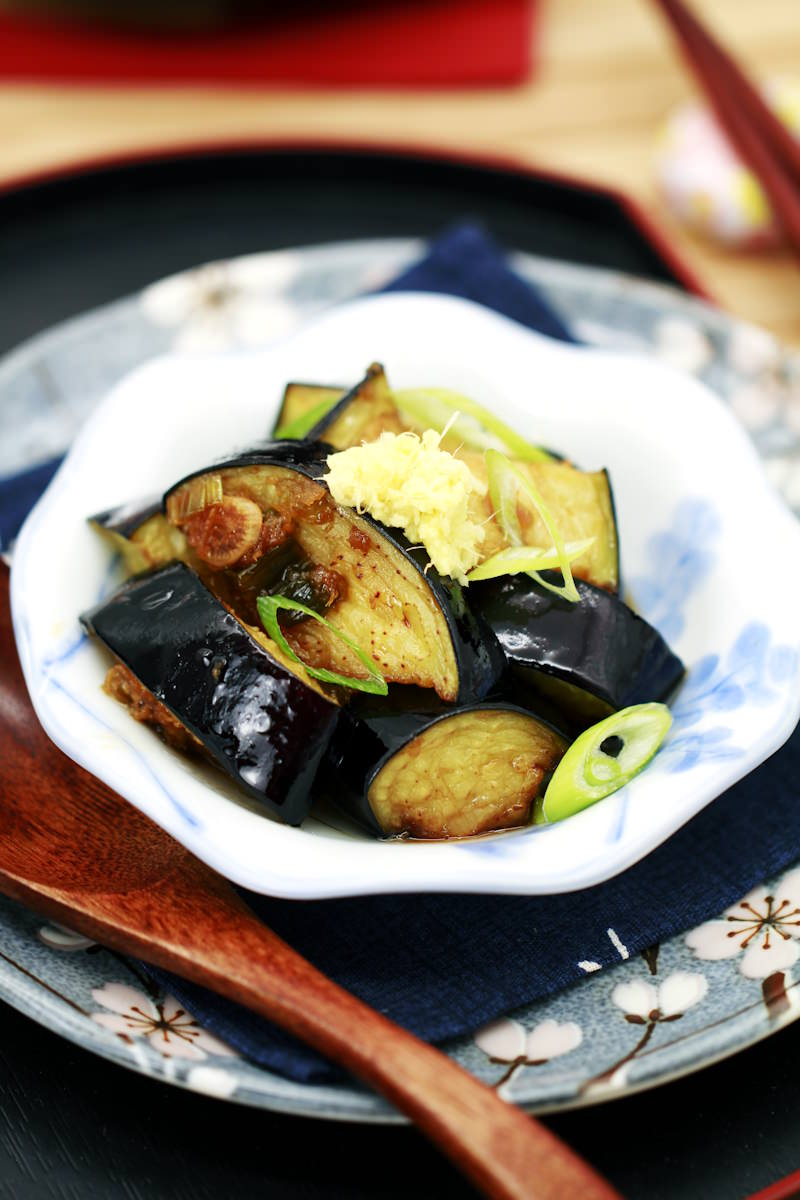
Sometimes it is the simple dishes that leave a lasting impression. Nasu no Agebitashi is one such dish. The combination of crispy deep-fried aubergine and a spicy, slightly sweet-and-sour marinade makes this dish a favourite in Japanese cuisine. Whether as a side dish or a main course, Nasu no Agebitashi brings the diverse flavours of Japan to your table.
What significance does the aubergine hold in Japan?
Aubergines, or ‘Nasu’ in Japanese, have a long tradition in Japan and feature in many dishes. They are particularly popular in the summer and are enjoyed in a variety of ways, from grilled to steamed to deep-fried.
Aubergines are considered a versatile vegetable in Japan, pairing perfectly with various sauces and flavours. They feature not only in traditional dishes but also in modern interpretations.
What makes Nasu no Agebitashi so special?
Nasu no Agebitashi is a classic Japanese dish that embodies the art of simple yet flavourful preparation. Historically, this dish was often served in summer, when aubergines were in abundance.
Deep-fried aubergine in marinade represents the Japanese preference for seasonal ingredients and the ability to conjure up a deeply aromatic dish from just a few ingredients. Culturally, Nasu no Agebitashi is an example of how Japanese cuisine harmonises texture and flavour by deep-frying the aubergine until crispy and then marinating it in a savoury sauce.
Make your own deep-fried aubergine
Here’s how to make it the Japanese way:
Nasu no Agebitashi is a simple yet incredibly delicious dish that can be prepared with just a few ingredients. The combination of crispy fried aubergine and an aromatic marinade makes this recipe a real treat. You will need:
- Aubergine
- Oil (e.g. rapeseed oil)
- Spring onion
- Garlic cloves
- Ginger
- Soy sauce
- Mirin
- Rice vinegar
- Sugar
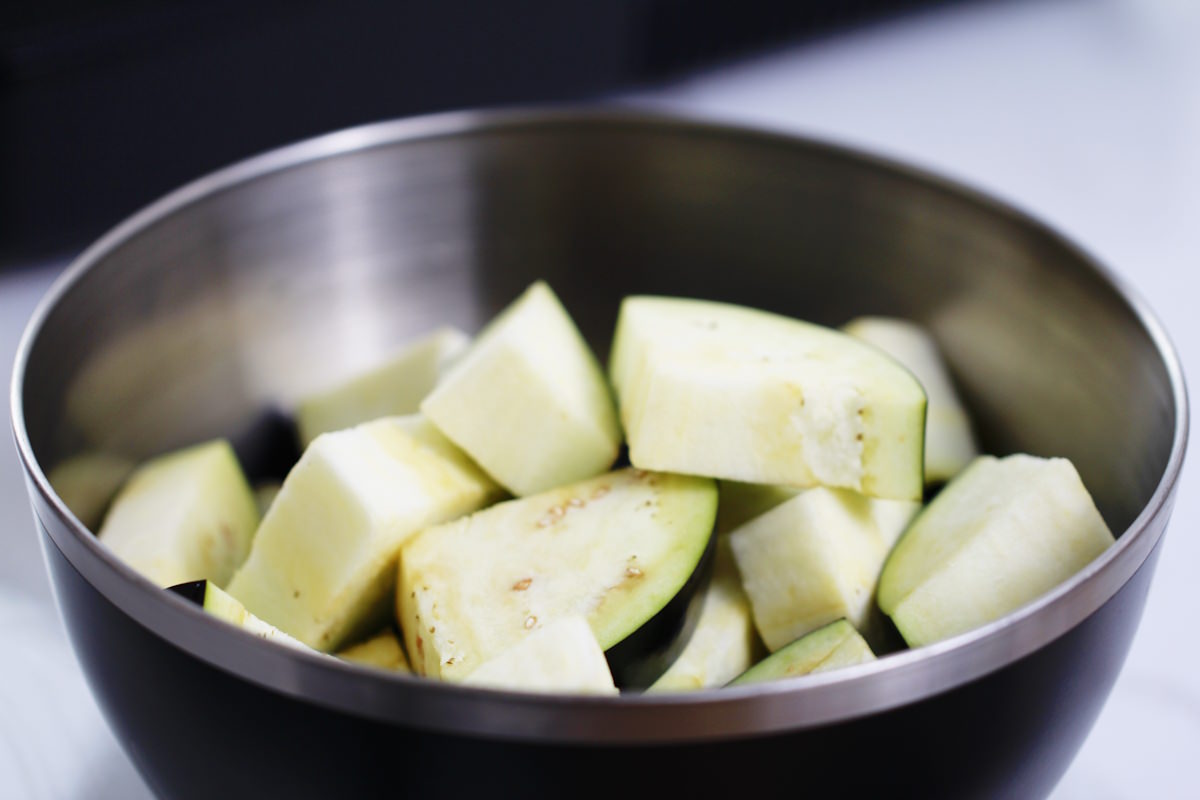
First, wash the aubergine, cut off the green end, quarter it lengthways and slice into pieces about 2 cm wide. Soak the sliced aubergine pieces in water for 10 minutes. Meanwhile, slice the spring onion into fine rings, finely chop the garlic and finely grate the ginger.
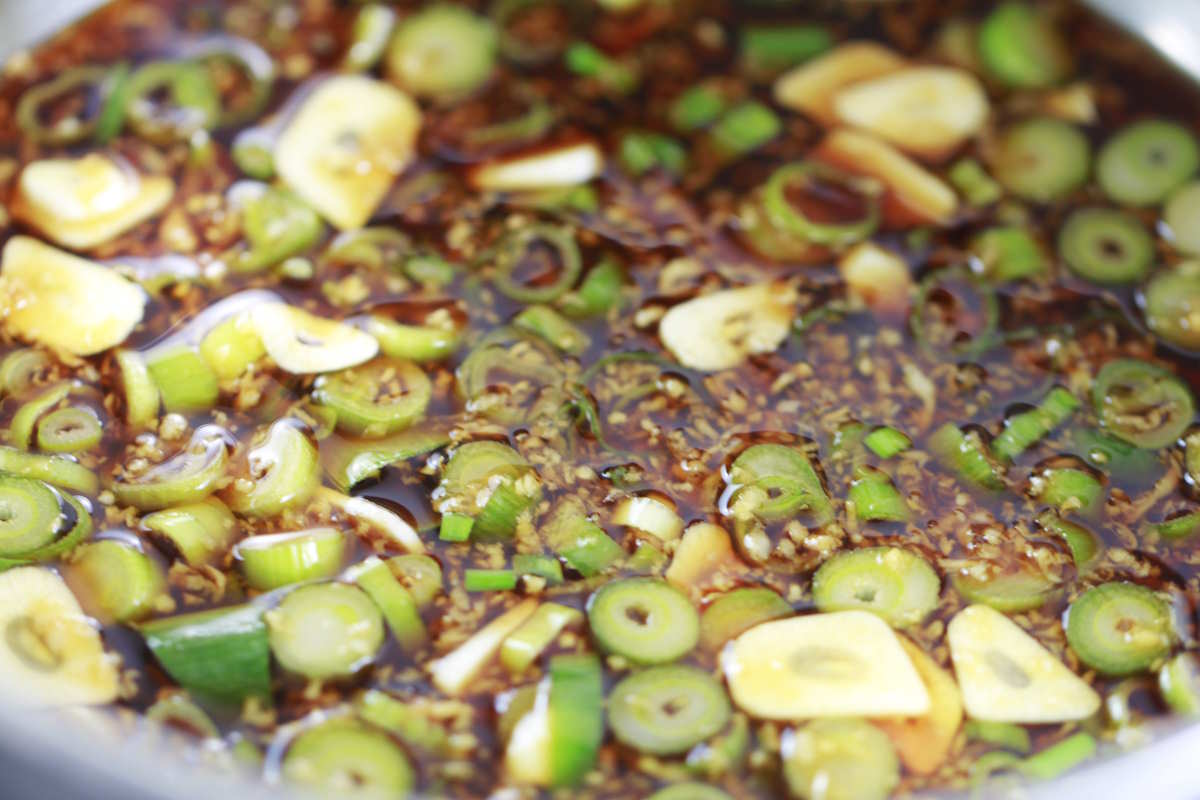
In a saucepan, mix together the soy sauce, Mirin, rice vinegar and sugar, then add the spring onions, garlic and grated ginger and stir everything together well. Leave the mixture to stand for about 10 minutes.
Heat the oil in a deep pan or wok. Fry the patted-dry aubergine pieces in batches until they are soft in the middle and golden brown on the outside (approx. 4 minutes). Drain the fried aubergines on kitchen paper. Bring the marinade to the boil over a medium heat, then reduce the heat and simmer until it has thickened slightly (approx. 5 minutes).
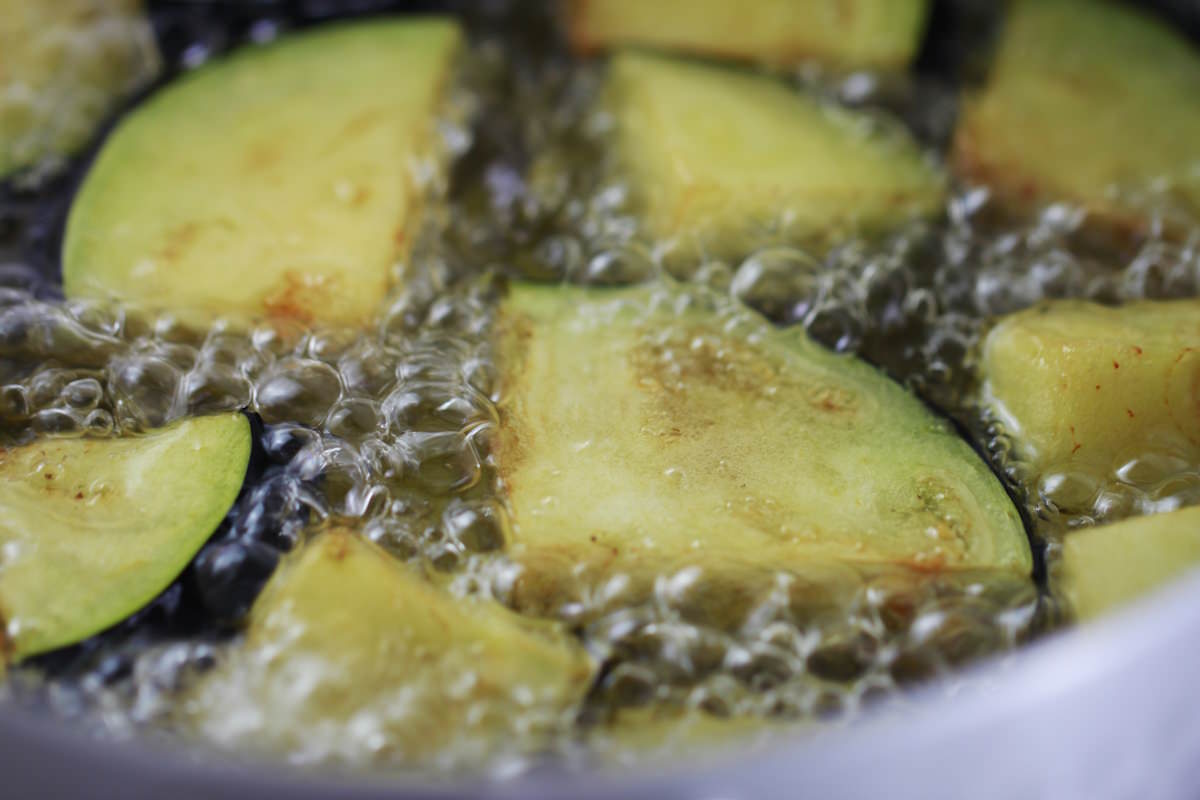
Turn off the heat, add the fried aubergines to the pan with the marinade and toss well so that all the pieces are evenly coated. Remove from the heat and leave to rest for 1 hour (though you can also serve the aubergines straight away).
Arrange the aubergines on a plate, garnish with grated ginger and serve slightly chilled with rice and Miso soup. Done – Itadakimasu!
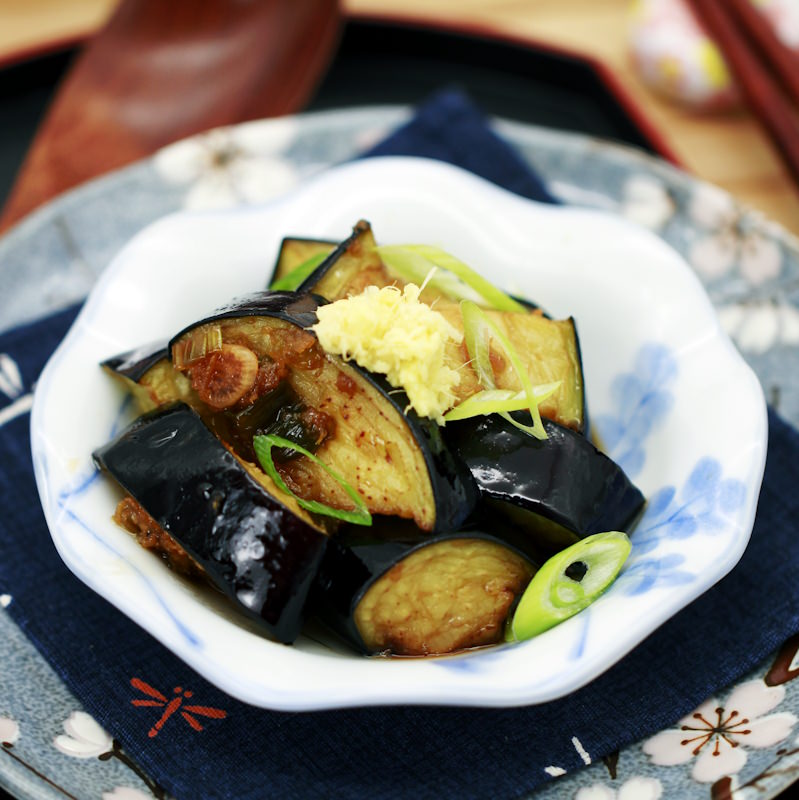
What goes well with this?
Fried aubergine is a perfect addition to a traditional Japanese meal. Served as a side dish with rice and Miso soup, it brings a wonderful combination of texture and flavour to the table. It also comes into its own when paired with other dishes such as grilled fish, Tempura or a bowl of Udon noodles. The slight sweetness and acidity of the marinade complement a variety of flavours and make the meal a real treat.
Do you have any questions about the recipe for fried aubergine, or would you like to share your experiences? Simply leave a comment below this post. Have fun cooking and enjoy your homemade marinated aubergines!
Nasu no Agebitashi
serves 2 | 25 minutes | 181 kcal
🖨️ Print PDF 📌 Save pinCreative cooking starts with simple, fresh ingredients. Nasu no Agebitashi combines the crispy texture of deep-fried aubergines with a spicy marinade, bringing the authentic taste of Japan straight to your table. Be inspired by this unique culinary journey and enrich your menu with a touch of tradition and sophistication.
Ingredients (2 servings)
1 large aubergine (approx. 300 g)
300 ml oil (e.g. rapeseed oil)
For the marinade:
1 spring onion
2 garlic cloves
20 g ginger (fresh)
50 ml Shoyu (im Shop ansehen)*
50 ml Mirin (im Shop ansehen) *
2 tbsp rice vinegar (im Shop ansehen)*
1 tbsp sugar
Optional garnish: 20 g ginger (fresh)
Useful tools:
Santoku knife (im Shop ansehen)
Grater for daikon & vegetables (im Shop ansehen)
Yukihiara pot (im Shop ansehen)
Preparation (25 minutes)
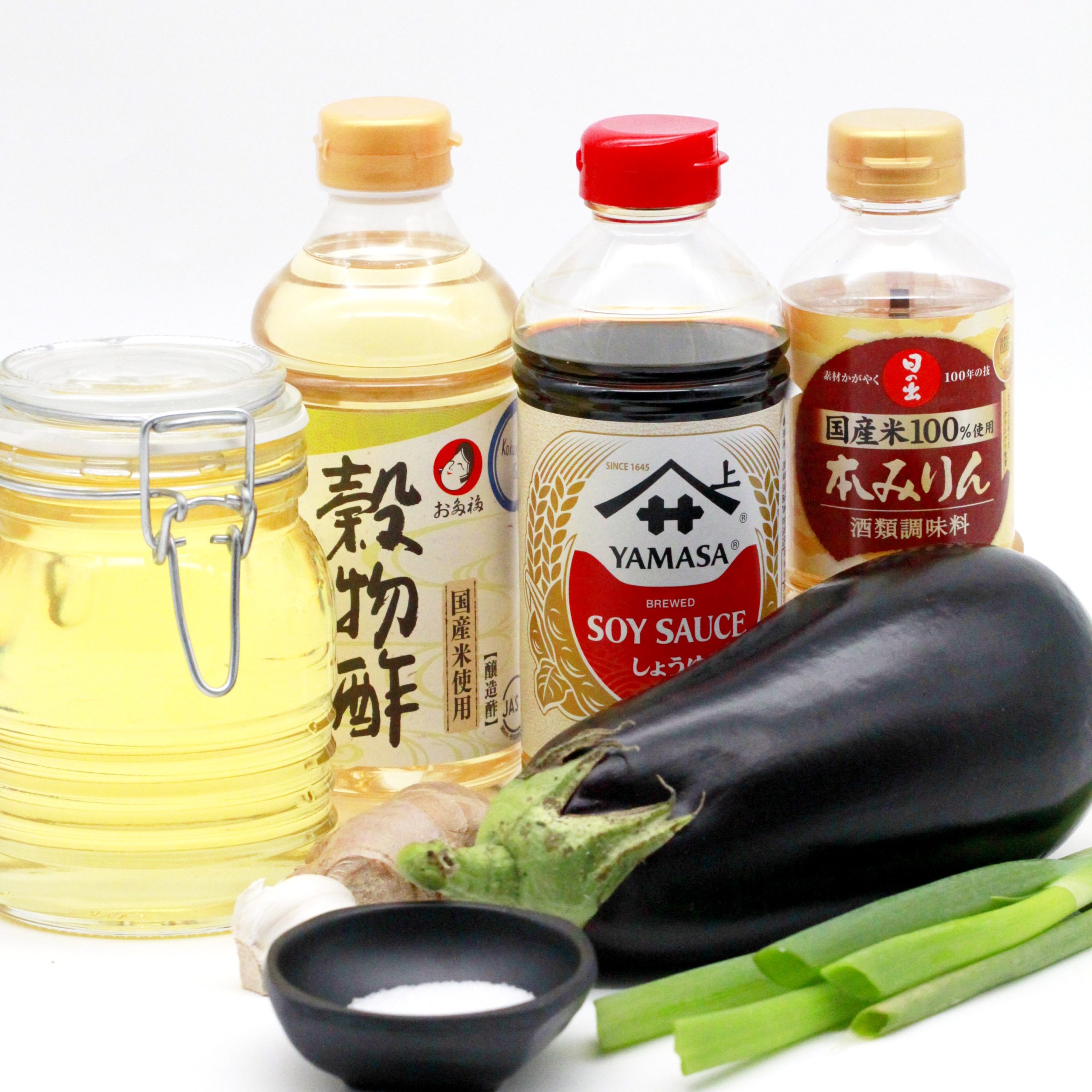
Step 1
Get the ingredients for this delicious aubergine recipe ready.

Step 2
Wash the aubergine , cut off the green end, quarter lengthways and slice into pieces about 2 cm wide.
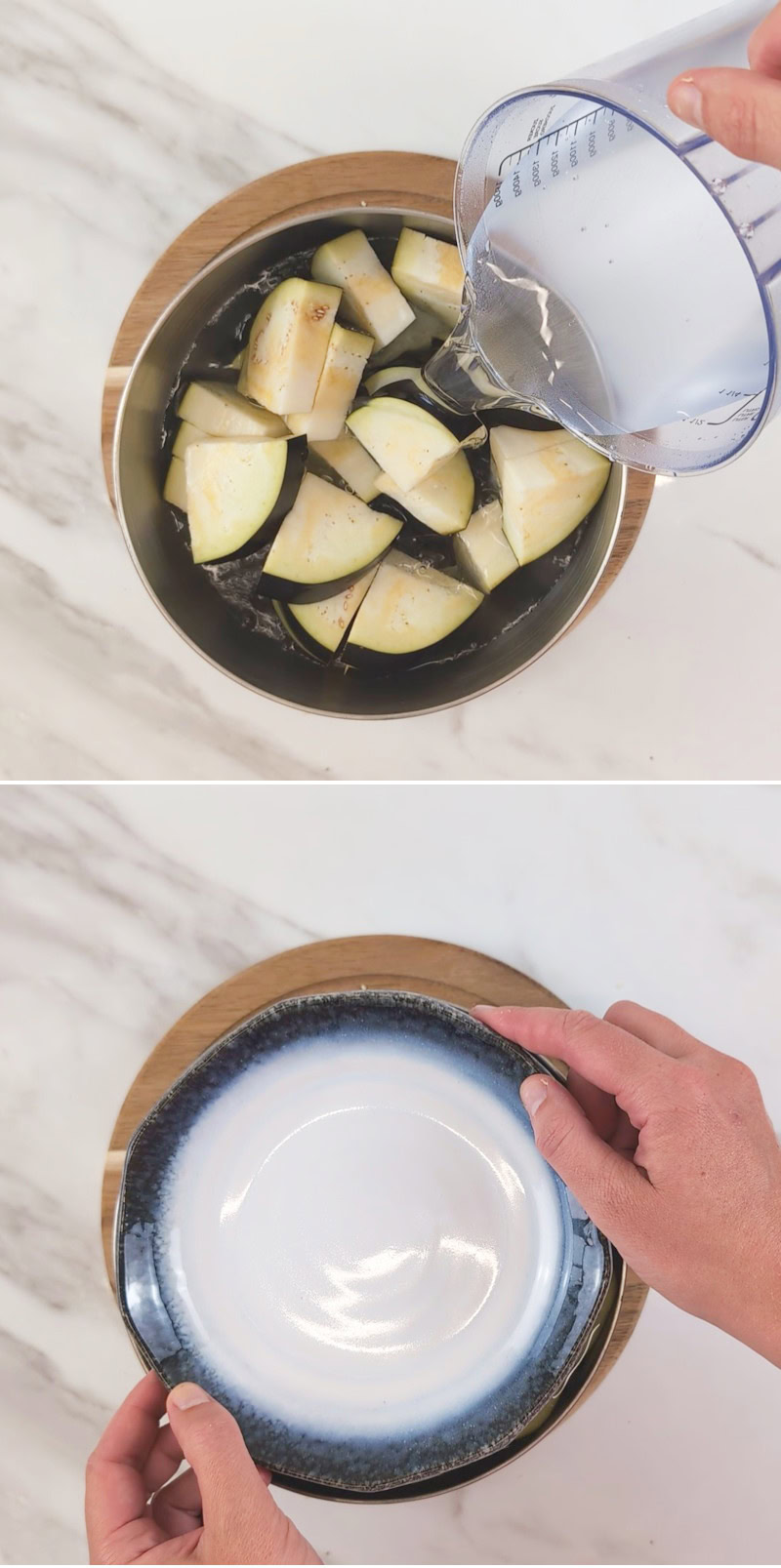
Step 3
Soak the sliced aubergine pieces in water for 10 minutes. Tip: It’s best to place a plate on top so that all the pieces are submerged in the water.
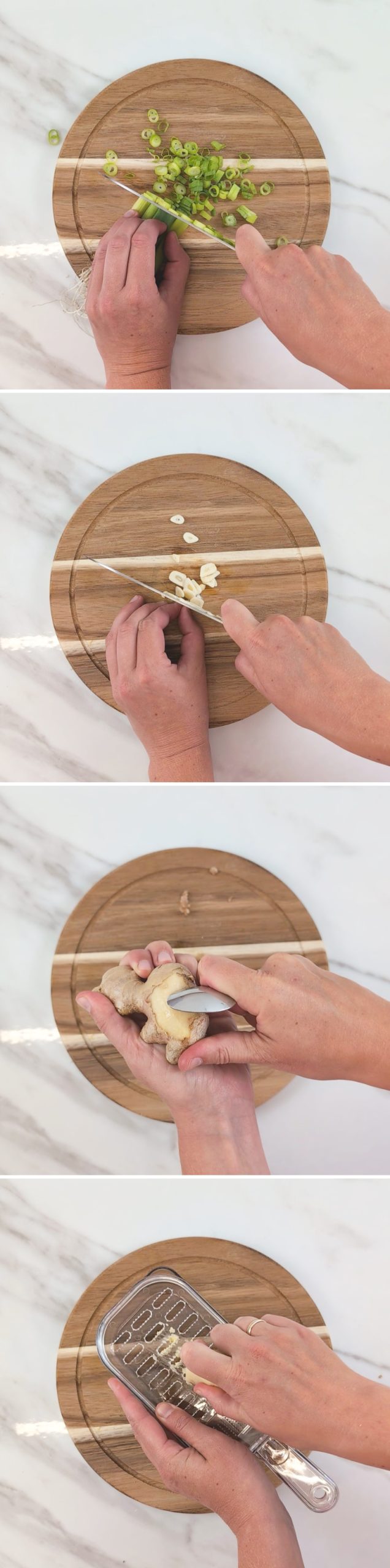
Step 4
Whilst the aubergine pieces are soaking, cut the spring onion into fine rings, finely chop the garlic and finely grate the ginger (Tip: feel free to use a Japanese grater for this – it works best).
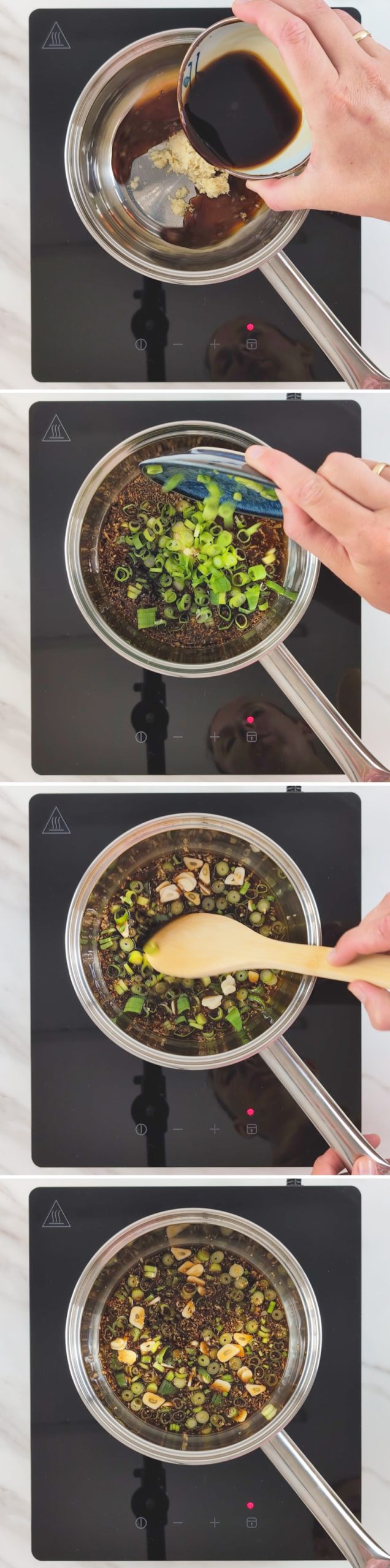
Step 5
In a saucepan, mix together soya sauce, Mirin, rice vinegar and sugar . Add the spring onions, garlic and grated ginger. Stir everything well and leave to stand for about 10 minutes.
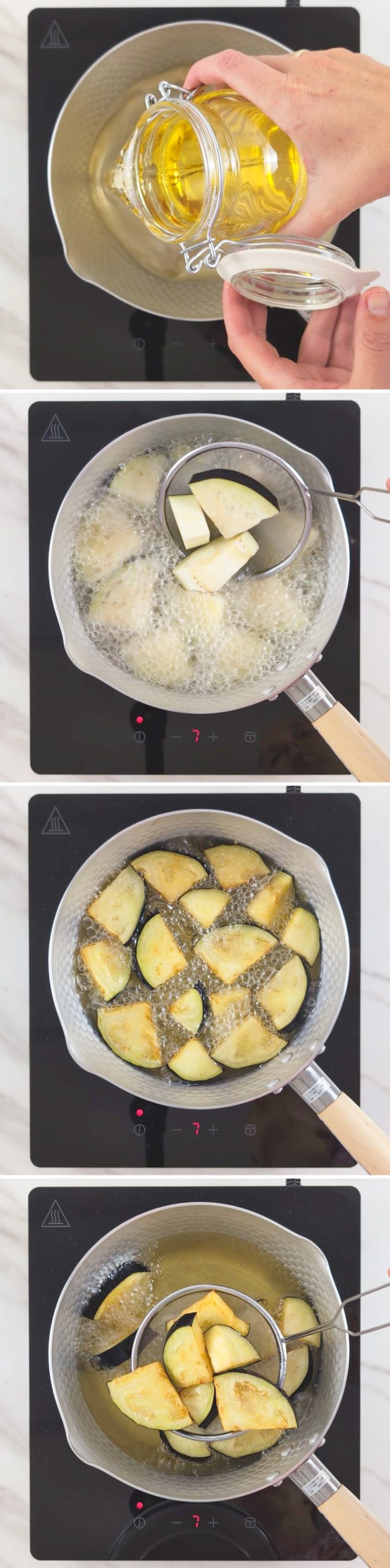
Step 6
Heat the oil in a deep pan or wok. Fry the patted-dry aubergine pieces in batches (for example, using a heatproof sieve) fry until they are soft in the middle and golden brown on the outside (approx. 4 minutes). Drain the fried aubergines on kitchen paper.
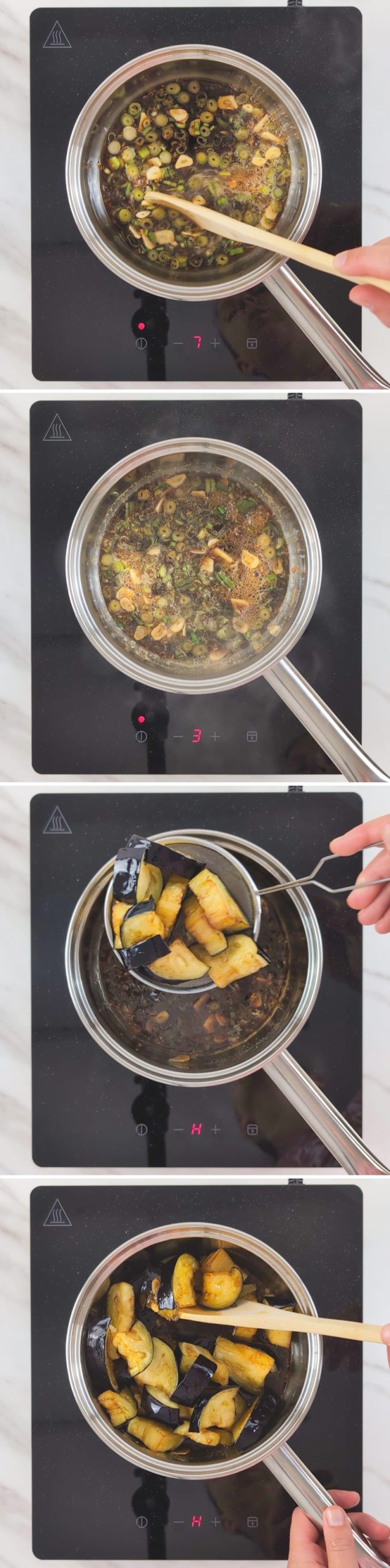
Step 7
Bring the prepared marinade to the boil over a medium heat. Reduce the heat and let the marinade simmer until it has thickened slightly (approx. 5 minutes).
Turn off the heat and add the fried aubergines to the pan with the reduced marinade, then fold in well so that all the pieces are evenly coated. Remove from the heat and leave to rest for 1 hour (but you can also serve the aubergines straight away!).
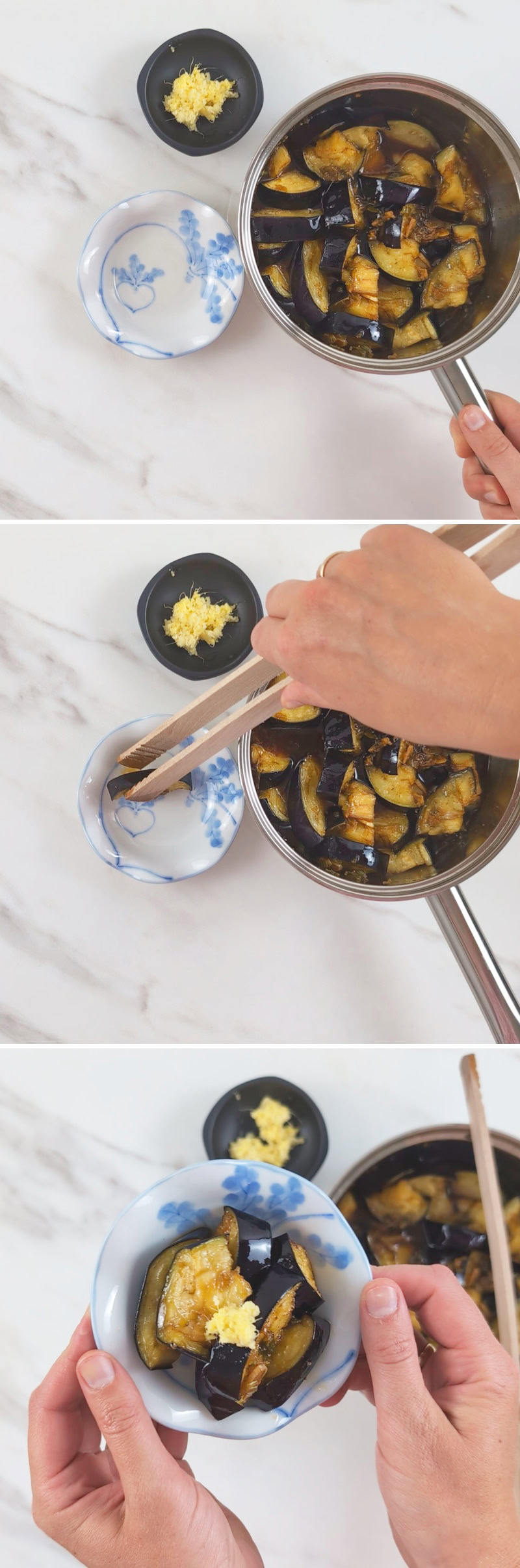
Step 8
Arrange the aubergines on a plate, garnish with grated ginger and serve slightly chilled with rice and Miso Shiru. Done – Itadakimasu!
Fancy some more delicious inspiration from Japan?
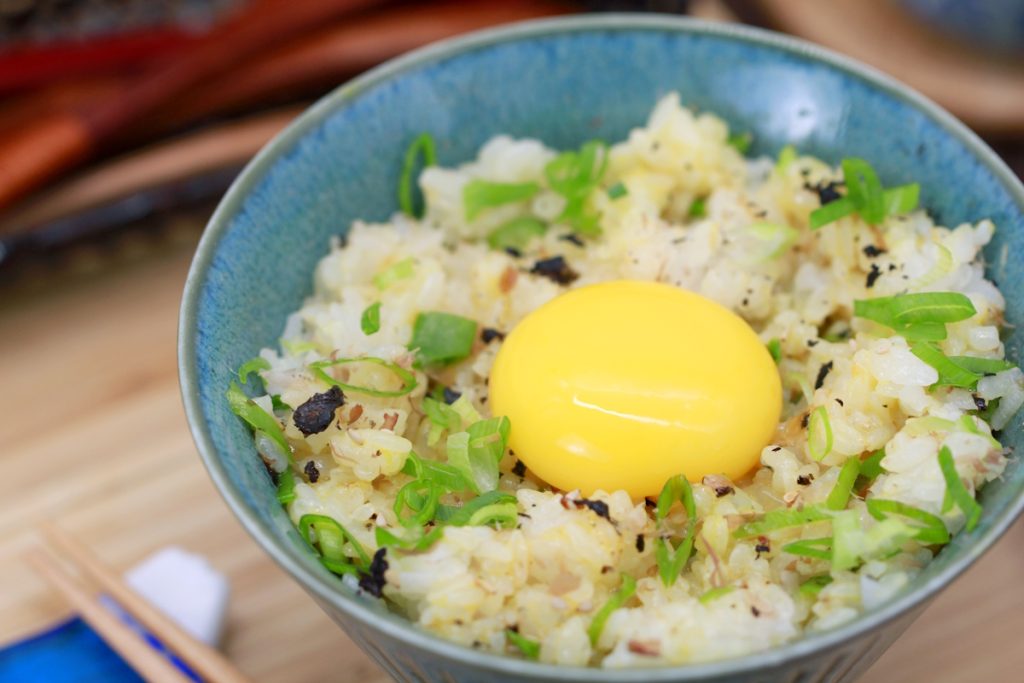
Tamago Kake Gohan: Japanese breakfast rice with egg, Furikake & Katsuobushi | TKG
In this recipe, I’ll show you a particularly flavourful version of Tamago Kake Gohan (TKG)…
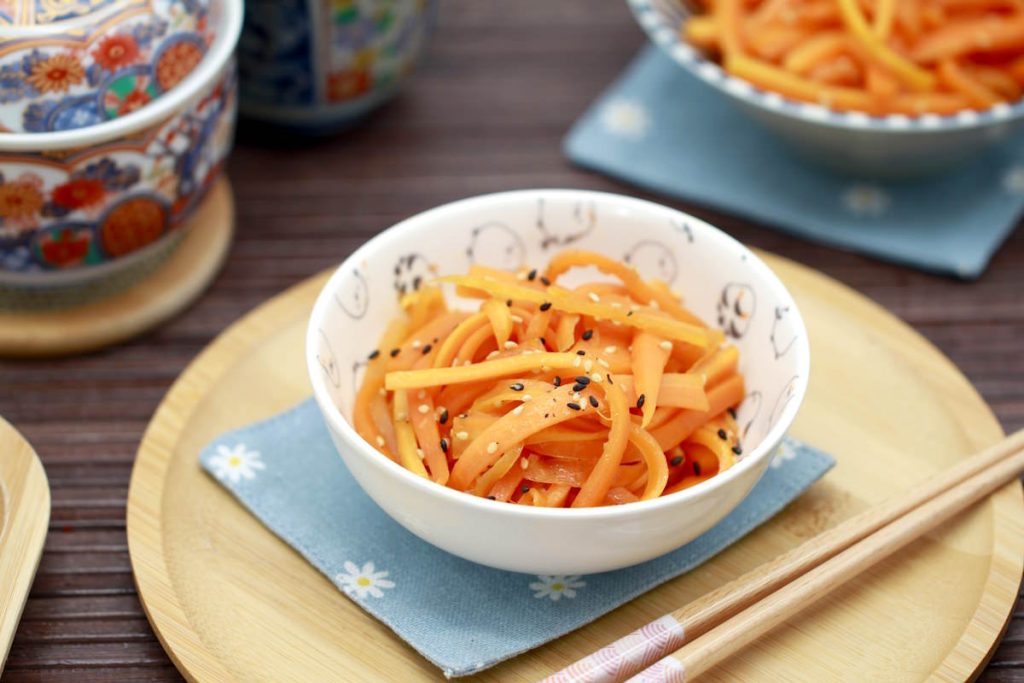
Make your own Ninjin no Kinpira: Japanese carrot side dish in the Kinpira style
Ninjin no Kinpira is a simple Japanese side dish made from finely sliced carrots, which…
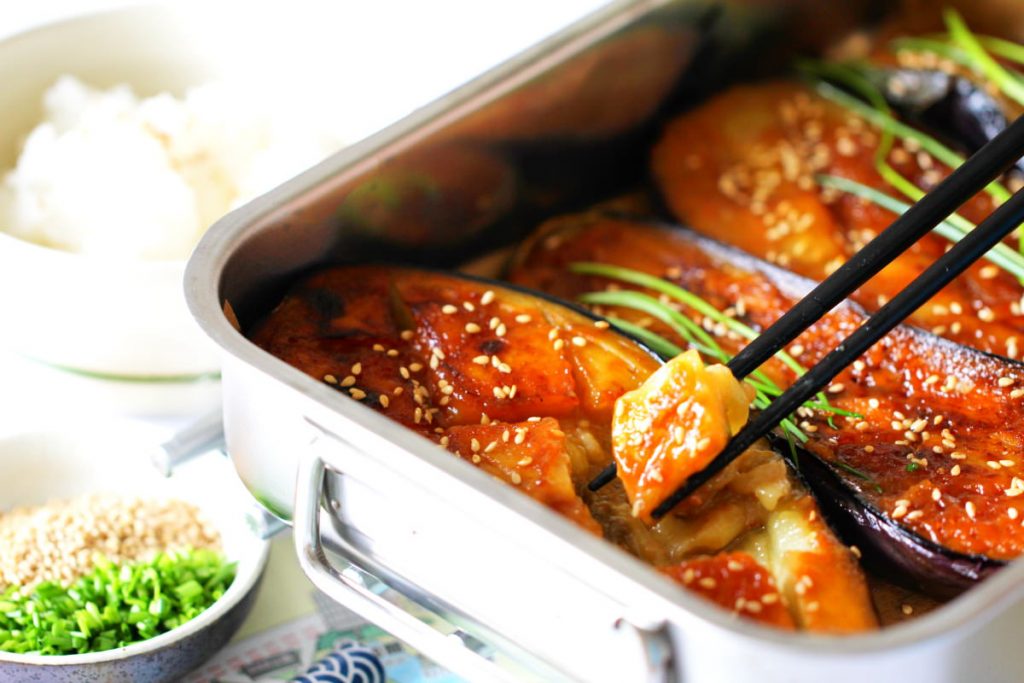
Nasu Dengaku: Oven-baked aubergines glazed with Miso – simple & irresistible
Nasu Dengaku is a true classic of Japanese cuisine and perfect as a side dish…
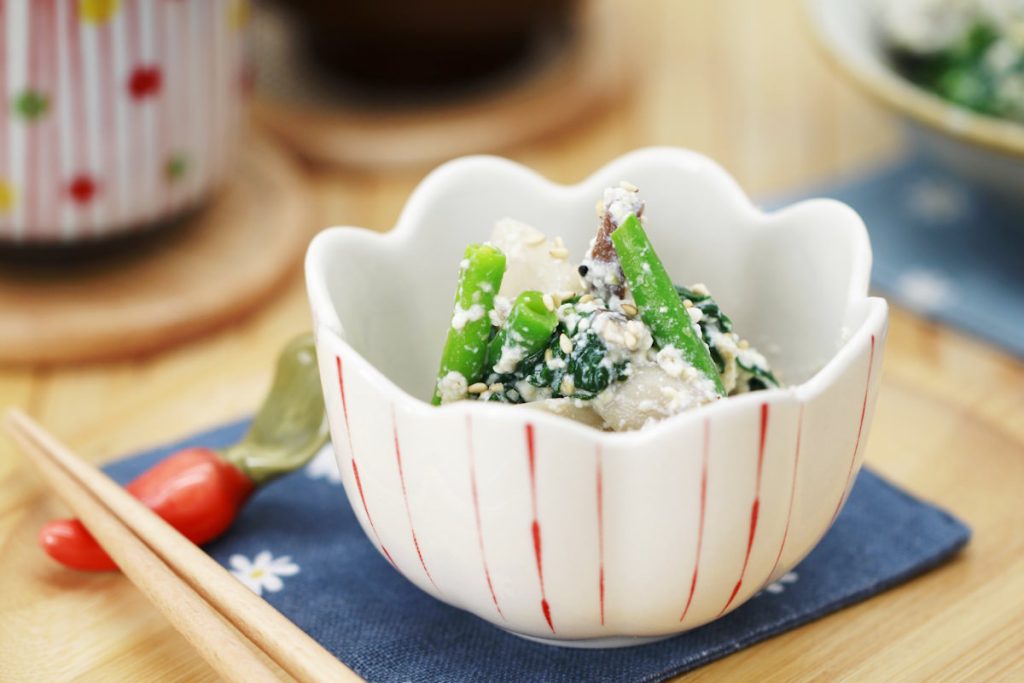
Mushroom and spinach salad with sesame and Tofu dressing: Recipe for Yasai no Shira ae
Mushroom and spinach salad with sesame and Tofu dressing, also known as Yasai no Shira…
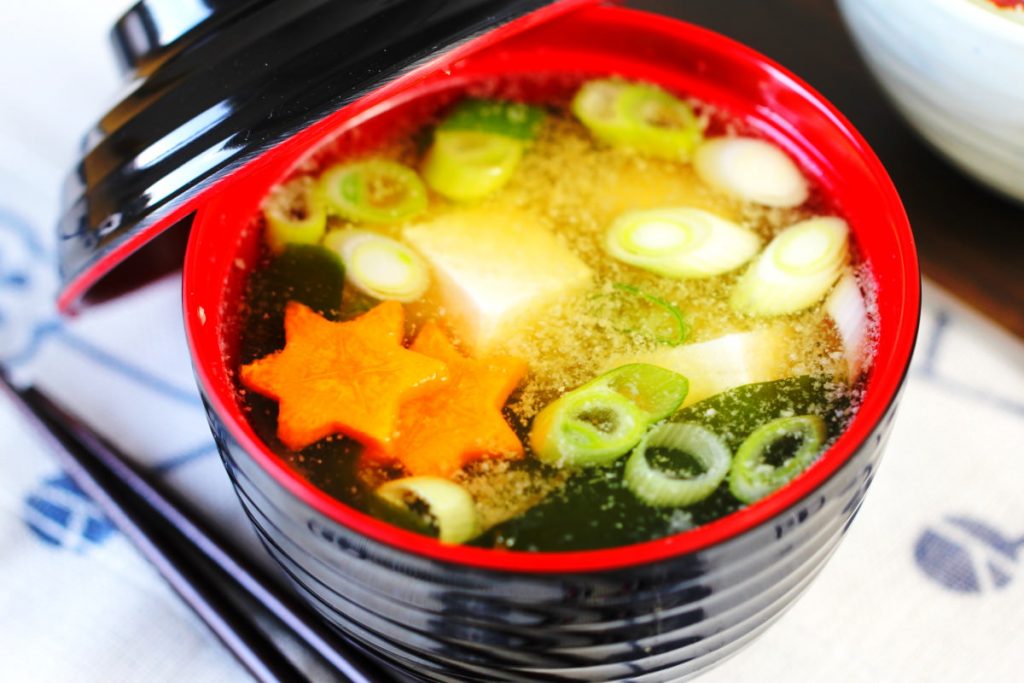
Misoshiru in a flash: basic recipe for miso soup with Wakame & Tofu
Miso soup is much more than just a side dish in Japan – it’s a…

Make your own Japanese potato salad: fresh, creamy and irresistible!
If you’re looking for a delicious side dish that’s both familiar and excitingly new, then…