

Language:


As the days grow shorter and the nights colder, there’s nothing better than a hot, steaming bowl of kimchi jjigae. This hearty Korean stew combines spicy Kimchi with tender pork belly and soft Tofu to create a dish that warms not only the body but also the heart. In today’s recipe, I’ll guide you through each passage of the preparation of this traditional dish, which is a staple in every Korean household.
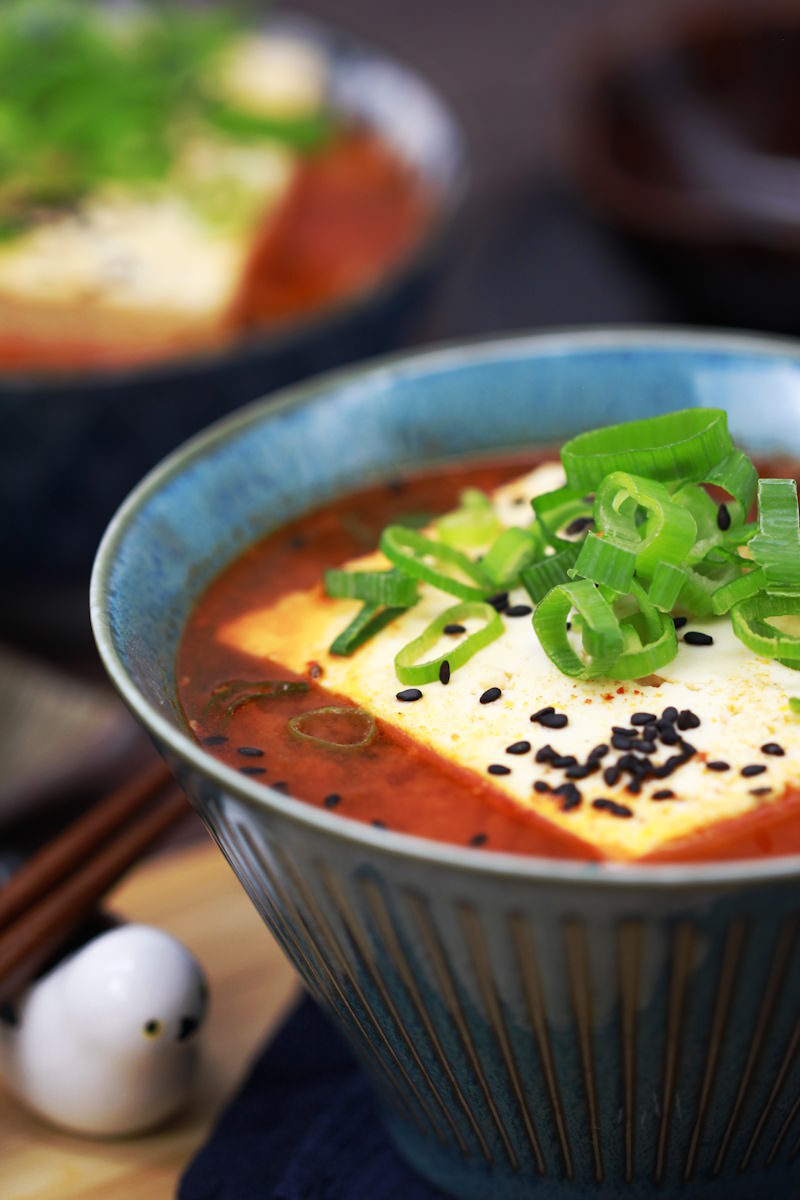
Kimchi Jjigae is more than just a stew – it is a true comfort food, often enjoyed in Korea during times of social gatherings. The base of well-fermented kimchi offers a deep, Umami-rich flavour dimension, perfectly complemented by the heat of the gochujang paste. Add to this the rich texture of the pork belly and the tenderness of the Tofu, which make the dish a true feast for the senses.
What makes the recipe for Kimchi Jjigae so special?
Kimchi Jjigae is not just a dish; it is a cultural symbol deeply rooted in Korean tradition. This stew is traditionally made from aged, more strongly fermented Kimchi, which develops a richer and more intense flavour than fresh Kimchi. It reflects the Korean wisdom of preserving and making use of food , which was particularly important during harsh winters. Kimchi Jjigae is often enjoyed during the cold season because it warms the body from within and nourishes the soul.
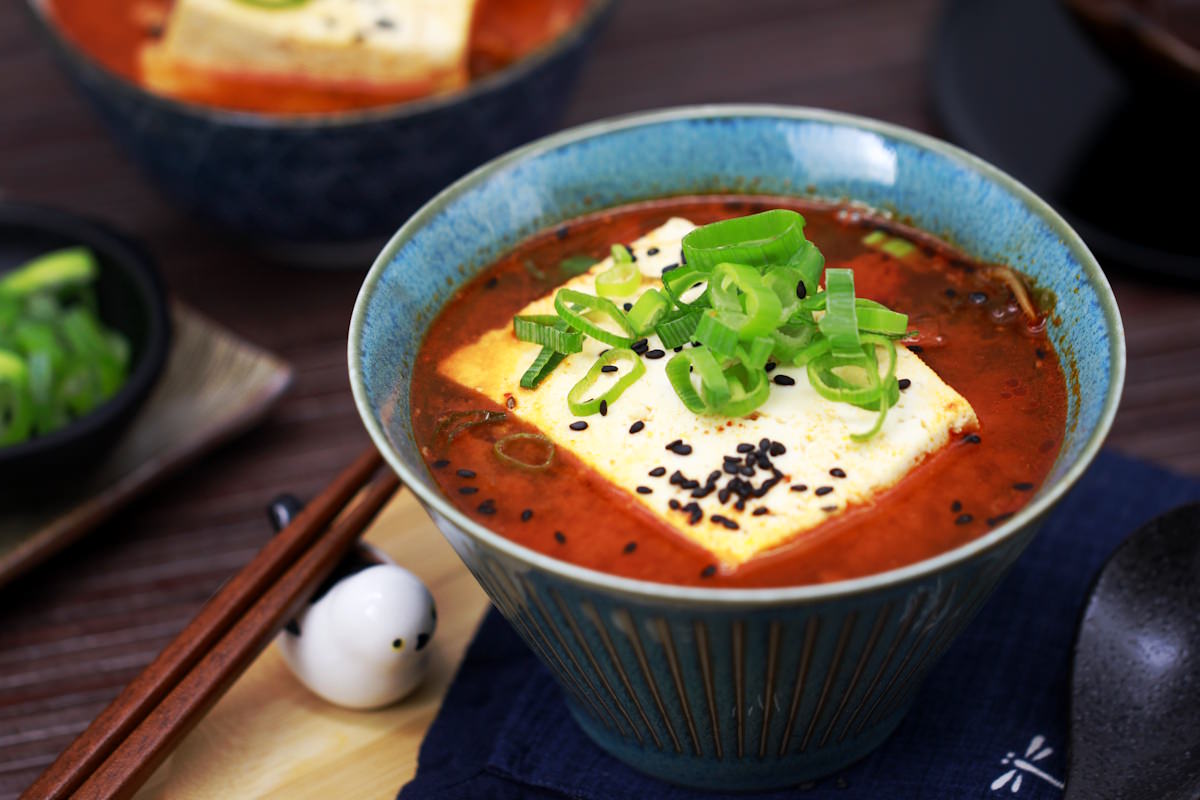
The preparation of this stew in every Korean household tells stories of generations who preserve kimchi as an essential part of their diet and culture. The stew itself is an expression of Jong (정), a concept that symbolises deep emotional bonds and the careful nurturing of relationships within Korean society. Every time Kimchi Jjigae is shared, it strengthens the bonds of family and friendship amongst those eating it.
At 1mal1japan, we focus on Kimchi Jjigae because we share the philosophy that food is more than just sustenance; it is a window into a culture and a bridge connecting different culinary traditions. Korean cuisine, particularly Kimchi Jjigae, and Japanese cuisine share many similarities in terms of their appreciation of Umami and the artful use of fermentation processes. By immersing ourselves in the art of Korean cooking, we broaden our culinary horizons and bring our readers and followers an even greater variety of taste experiences rooted in deep cultural traditions.
How to make Kimchi Jjigae yourself: Here’s how
For anyone looking for a hearty meal with minimal effort, Kimchi Jjigae is the perfect recipe. This delicious Korean stew is ready to serve in about 30 minutes. The process is straightforward: The pork belly is seared quickly, and the Kimchi only needs to be cooked briefly to release its flavours.
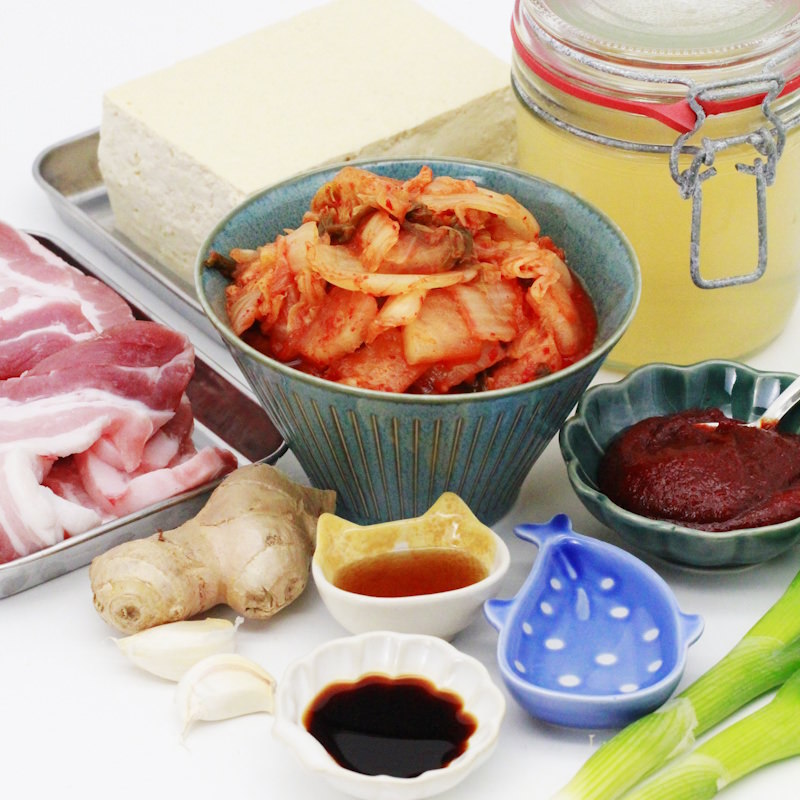
The gochujang paste and ginger are only added towards the end of the cooking process to preserve the intense flavours and ensure that their valuable nutrients are retained. The result is a rich, spicy stew that not only tastes great but is also warming and filling.
Key ingredients for the stew:
- Kimchi (im Shop ansehen)
- Pork belly
- Firm Tofu
- Dashi Stock (im Shop ansehen)
- Gochujang (im Shop ansehen)
- Soy sauce (im Shop ansehen)
- Sesame oil (im Shop ansehen)
- Spring onions
- Fresh ginger and garlic

Tip
Kimchi Jjigae is a versatile dish that leaves room for creativity. Add extra vegetables such as Shiitake mushrooms or spinach to make the stew even more nutritious. For a vegetarian version, you can simply leave out the pork belly or replace it with plant-based alternatives such as seitan.
Start preparing the Kimchi Jjigae by bringing the Dashi stock to the boil in a saucepan. Whilst the stock is heating gently, fry the pork belly in a little sesame oil in a heavy pan (such as a cast-iron one), until it is nicely browned. Once the pork belly is ready, add the Kimchi and the white parts of the spring onions. Let the ingredients fry together for a few minutes to allow the flavours to develop.
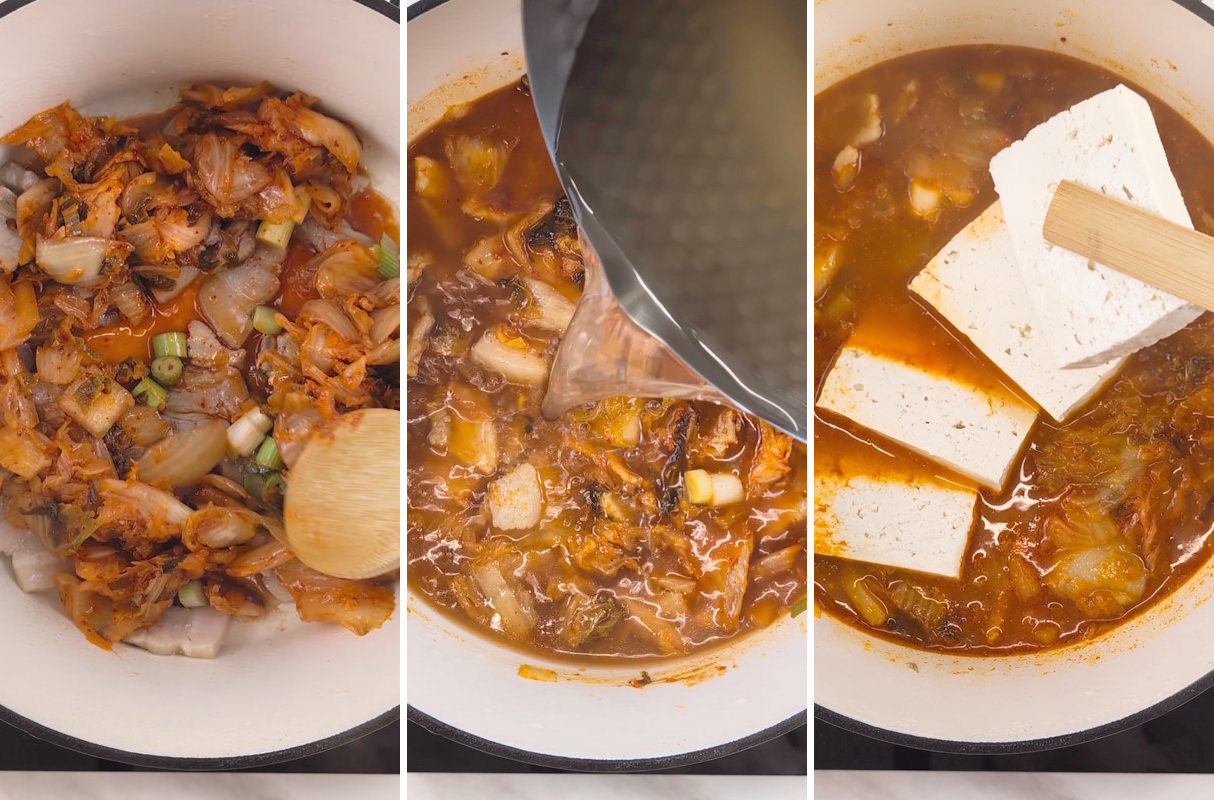
Now it’s time to turn up the heat. Add the gochujang, soy sauce, garlic and freshly grated ginger, and stir before pouring in the remaining Dashi. Bring everything to the boil, then reduce the heat and let the stew simmer for about 10 minutes. This gives the flavours time to blend properly and intensifies the stew’s flavour profile.
Next, add the Tofu and let it simmer in the broth for another 5 minutes. The Tofu absorbs the spicy flavours whilst retaining its soft texture. Make sure the Tofu doesn’t cook for too long, to preserve its tender texture.
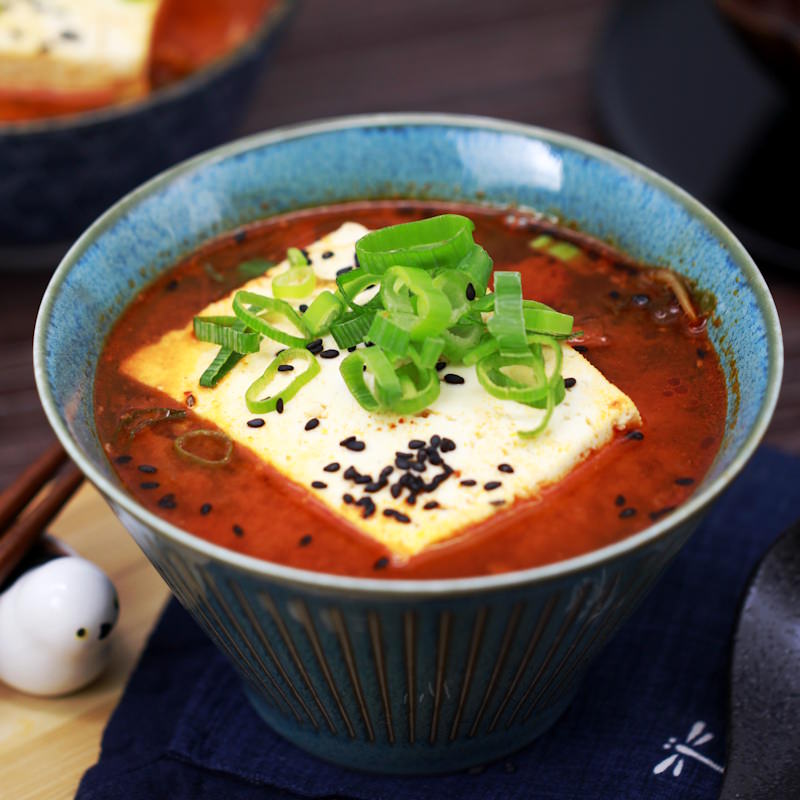
Finally, ladle the Kimchi jjigae into bowls and garnish with the green parts of the spring onions. The stew is served hot and goes wonderfully with a bowl of steaming rice or, for an extra protein component, with Bulgogi or grilled mackerel.
What goes well with Kimchi Jjigae?
Kimchi Jjigae is traditionally served with a bowl of steaming hot rice, which tempers the spiciness of the stew and makes the dish a complete meal. A glass of chilled makgeolli (Korean rice wine) rounds off the culinary experience. For a complete Korean feast, small side dishes such as banchan (Korean side dishes) can be added.
Do you have any questions about the Kimchi Jjigae recipe, or would you like to share your results with the community? Simply leave a comment below this post. I look forward to hearing how you get on with this hearty, warming dish. Have fun cooking and enjoy!

Kimchi Jjigae
serves 4 | 30 minutes | 416 kcal
🖨️ Print PDF 📌 Save pinThis hearty Kimchi Jjigae brings authentic Korean flavours straight to your kitchen. Combining spicy Kimchi, tender pork belly and soft Tofu, this classic Korean stew is the perfect dish to warm you up from the inside on chilly days.
Ingredients (serves 4)
400 g Kimchi (im Shop ansehen)*
300 g pork belly (plain) sliced
300 g firm Tofu
2 spring onions
2 garlic cloves
a little fresh ginger (2 cm long root)
500 ml Dashi (im Shop ansehen)*
2 tbsp gochujang (Korean chilli paste) (im Shop ansehen)*
1 tbsp Shoyu (im Shop ansehen)*
1 tbsp Sake (im Shop ansehen)* (optional)
1 tbsp sesame oil (im Shop ansehen)*
1 tbsp black sesame seeds (im Shop ansehen)*
Useful tools:
Santoku knife (im Shop ansehen)
Grater for daikon & vegetables (im Shop ansehen)
Preparation (30 minutes)
Step 1
Gather the ingredients for the Korean Kimchi stew. If you haven’t prepared any Dashi yet, now is the perfect time (click here for the recipe). Alternatively, you’re welcome to use ready-made Dashi from your cupboard.
Step 2
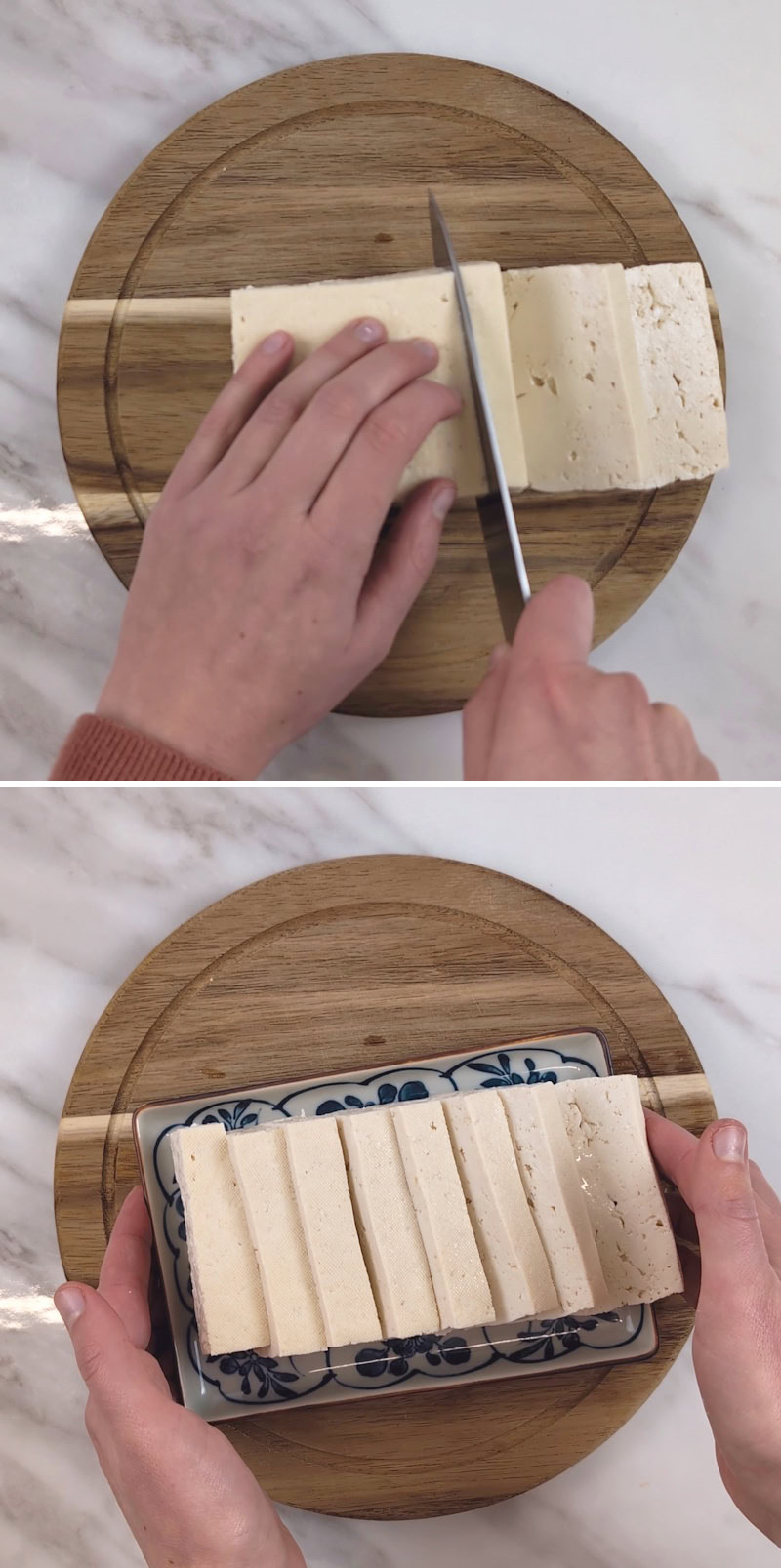
Remove the Tofu from the packaging and drain it; pat dry with a kitchen towel if necessary. Cut the Tofu into 1–2 cm thick slices. This will allow it to absorb the flavours better later on.
Step 3
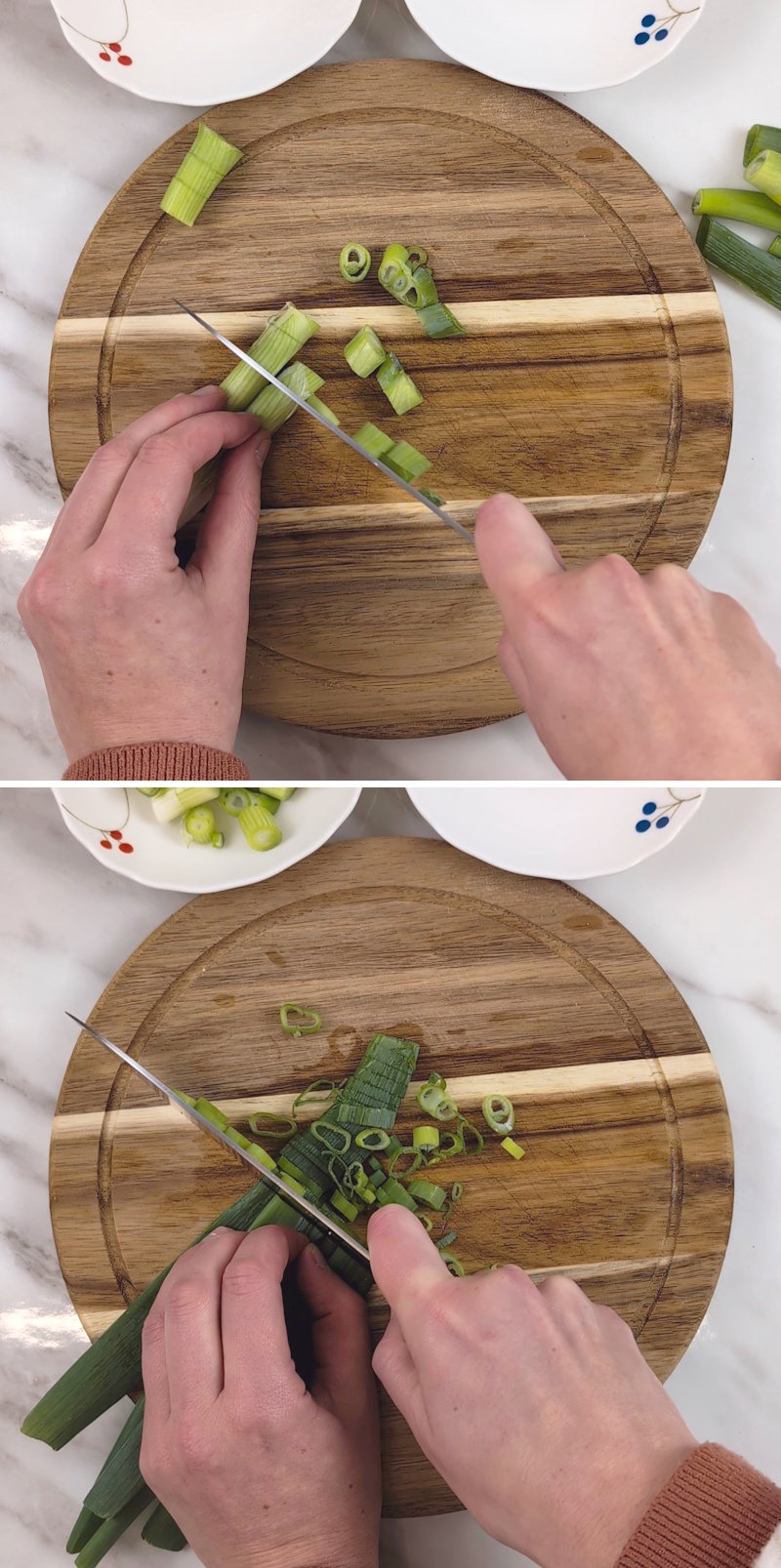
Cut the spring onions into fine rings and separate the white and green parts. The green parts will be used later for garnishing.
Step 4
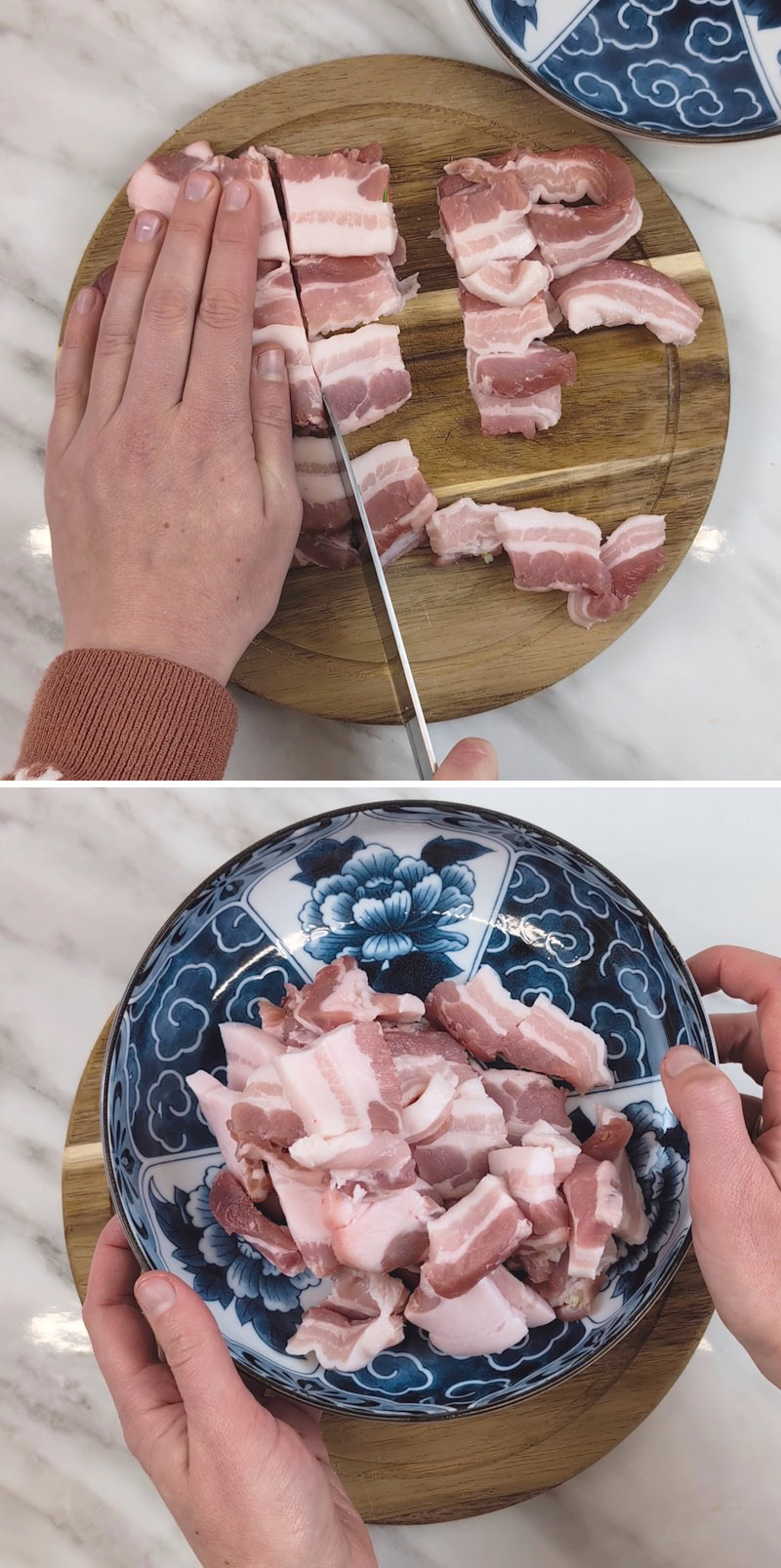
Cut the pork belly into 3–5 cm wide pieces. This size is ideal to ensure the belly remains tender and juicy during cooking.
Step 5
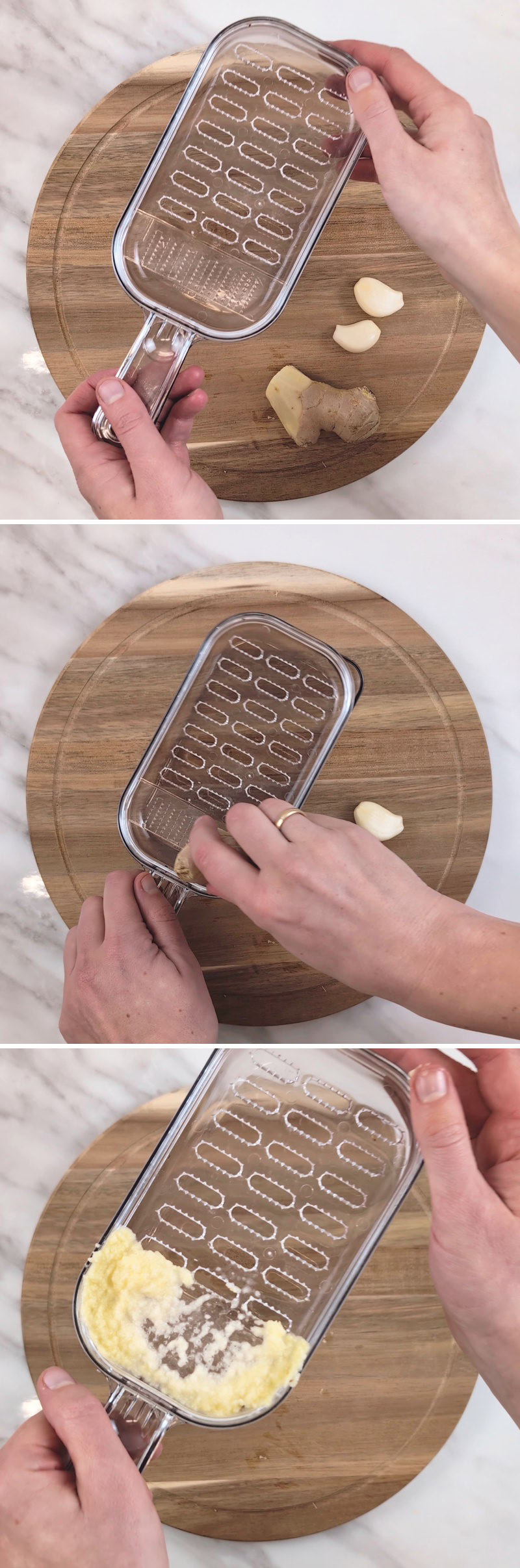
Peel the ginger with a spoon and finely grate it using a Japanese vegetable grater. Peel the garlic in the same way and finely grate it.
Step 6
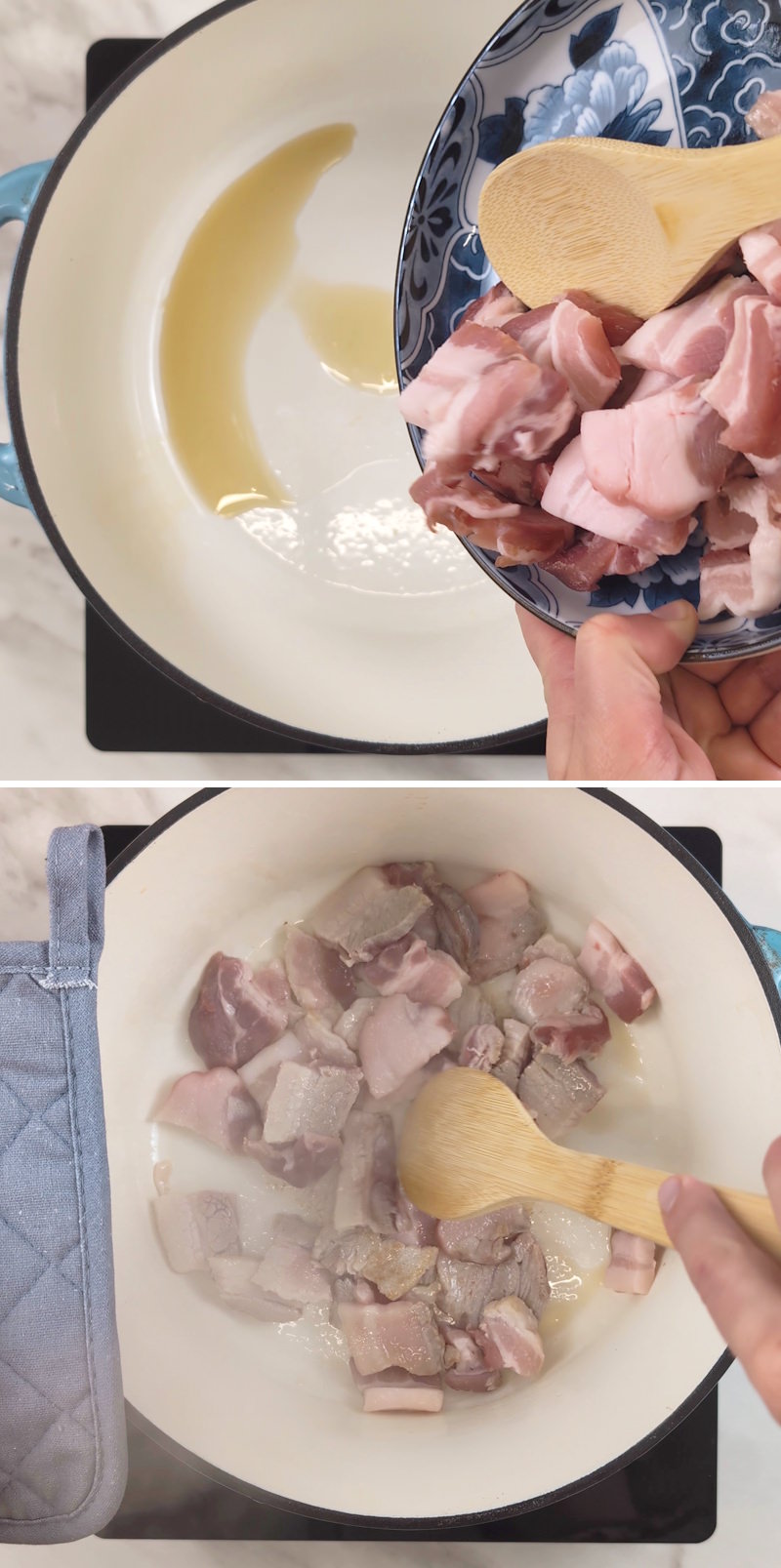
Heat sesame oil in a medium-sized saucepan (preferably one with a heavy base) over a medium heat. Add the pork belly to the saucepan and fry for 2–3 minutes until it is no longer pink.
Step 7
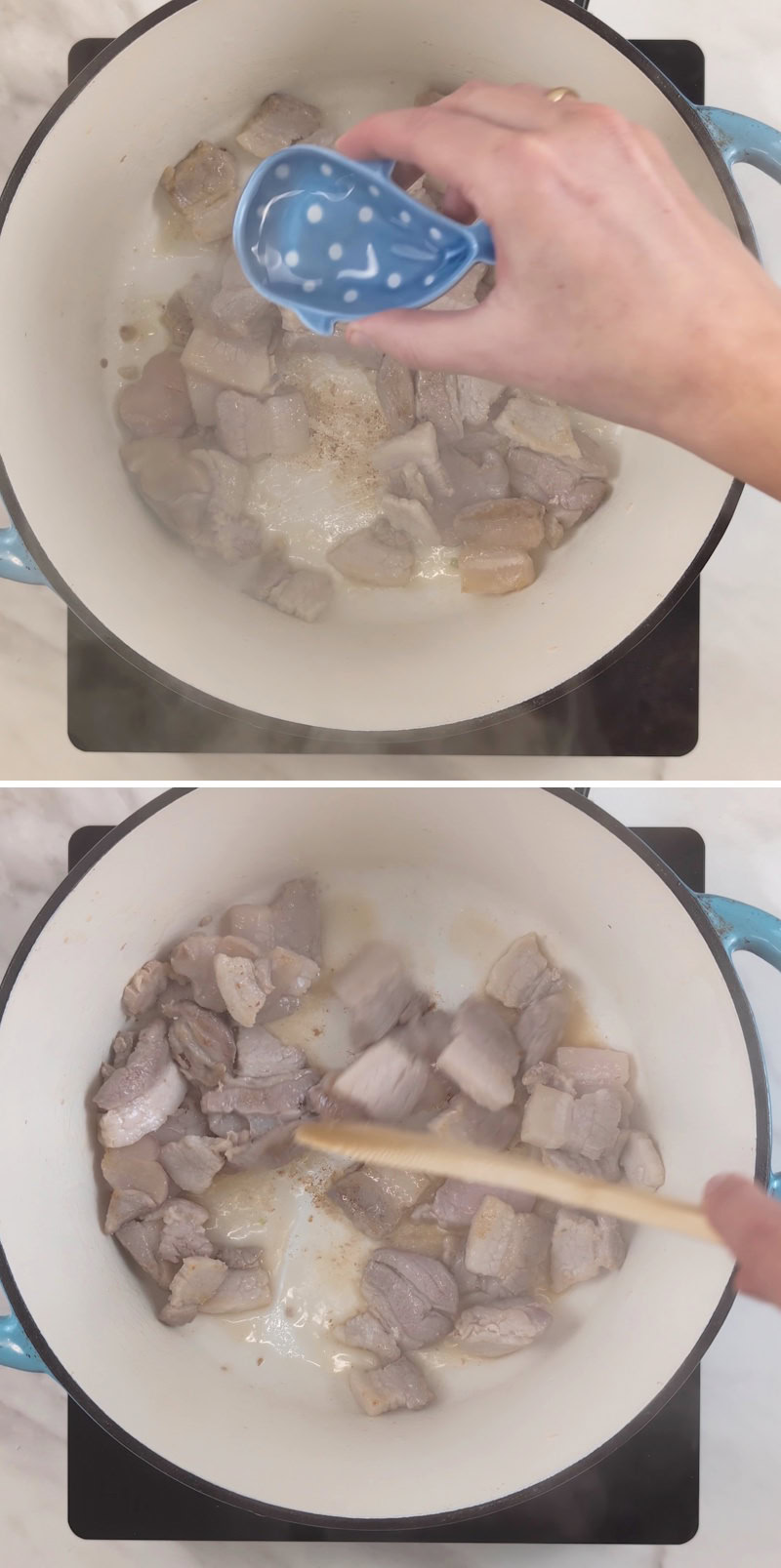
Deglaze with Sake and continue cooking for one minute, stirring constantly.
Step 8
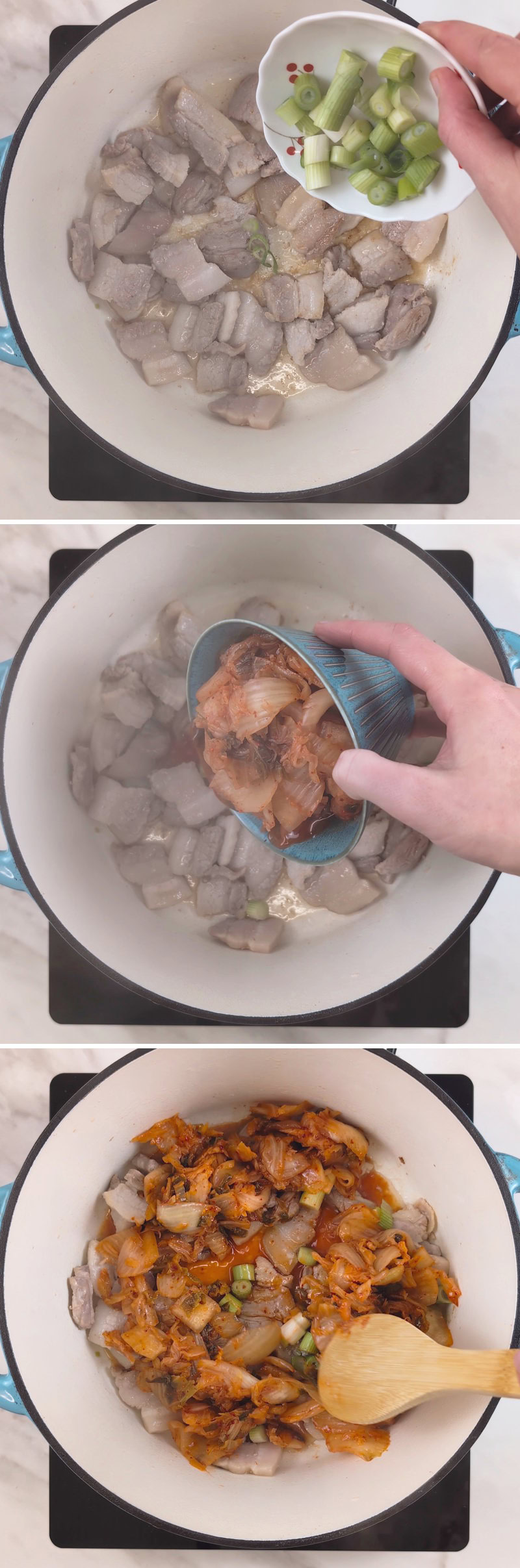
Now add the white part of the spring onions and the Kimchi.
Step 9
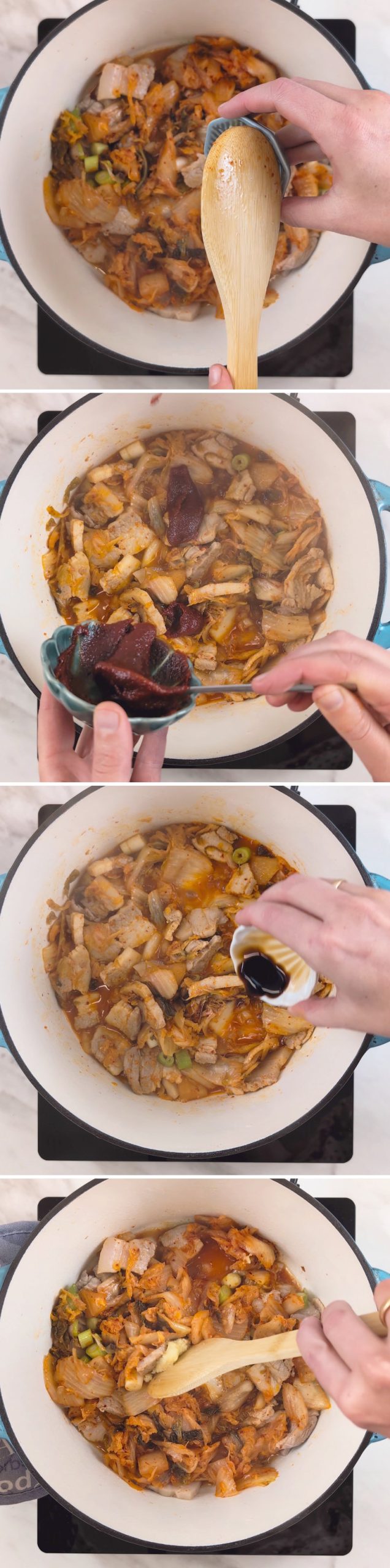
Add the grated garlic and ginger and cook for 2–3 minutes, stirring frequently, until the Kimchi softens. Add the gochujang and soya sauce and stir well.
Step 10
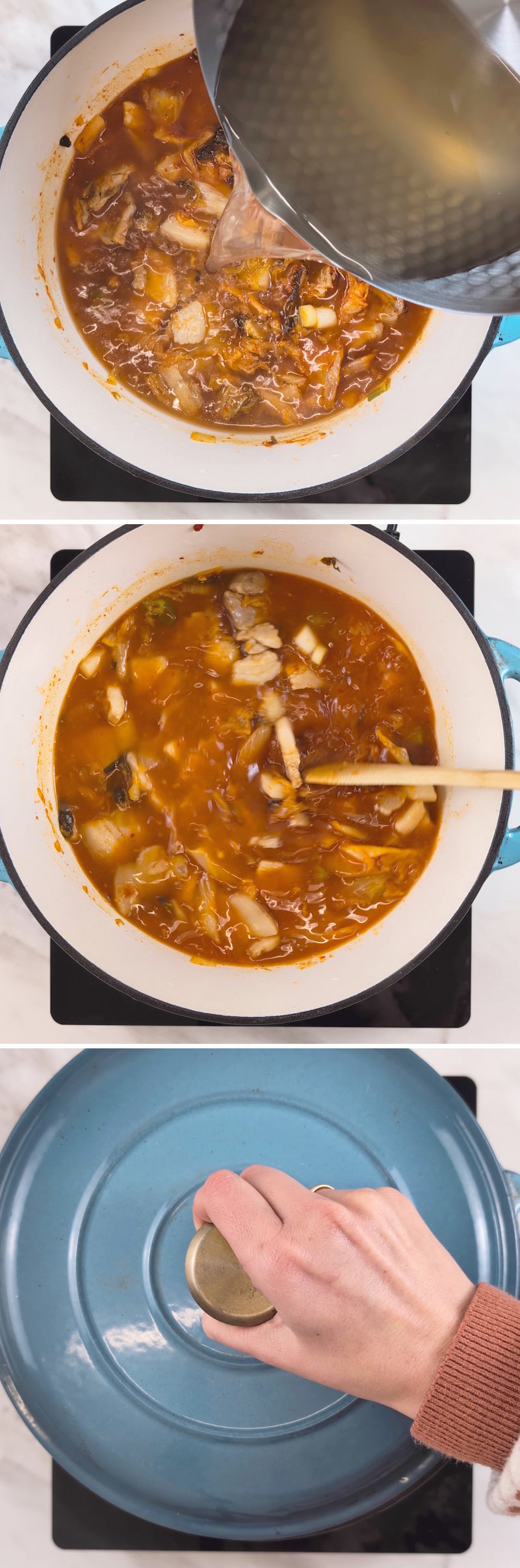
Pour in the Dashi , bring everything to the boil, then reduce the heat and let the stew simmer for 10 minutes.
Step 11
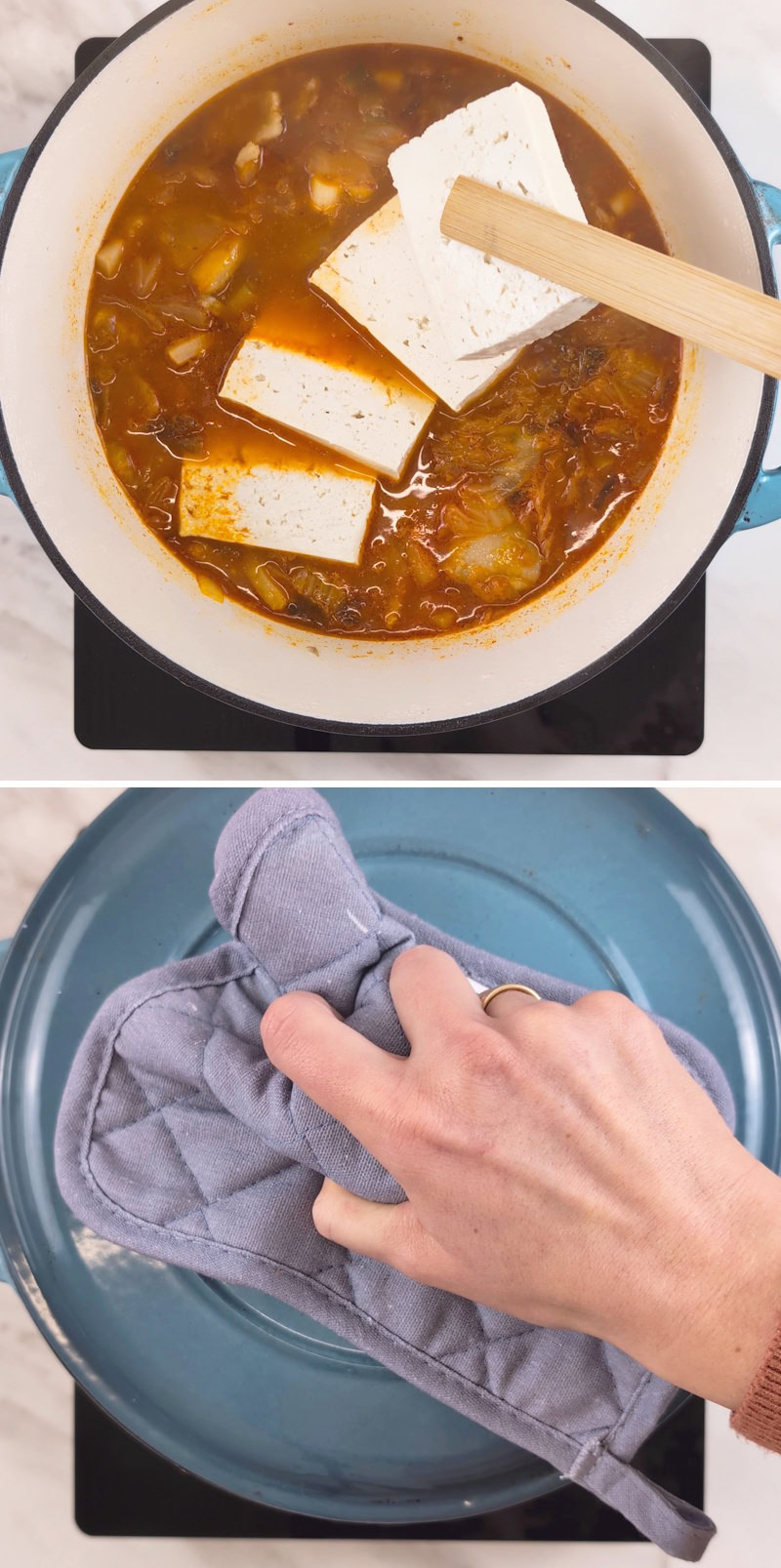
Add the sliced Tofu and simmer for 5 minutes, without stirring too much to keep its shape. Keep the stew warm, covered, until you are ready to serve it.
Step 12
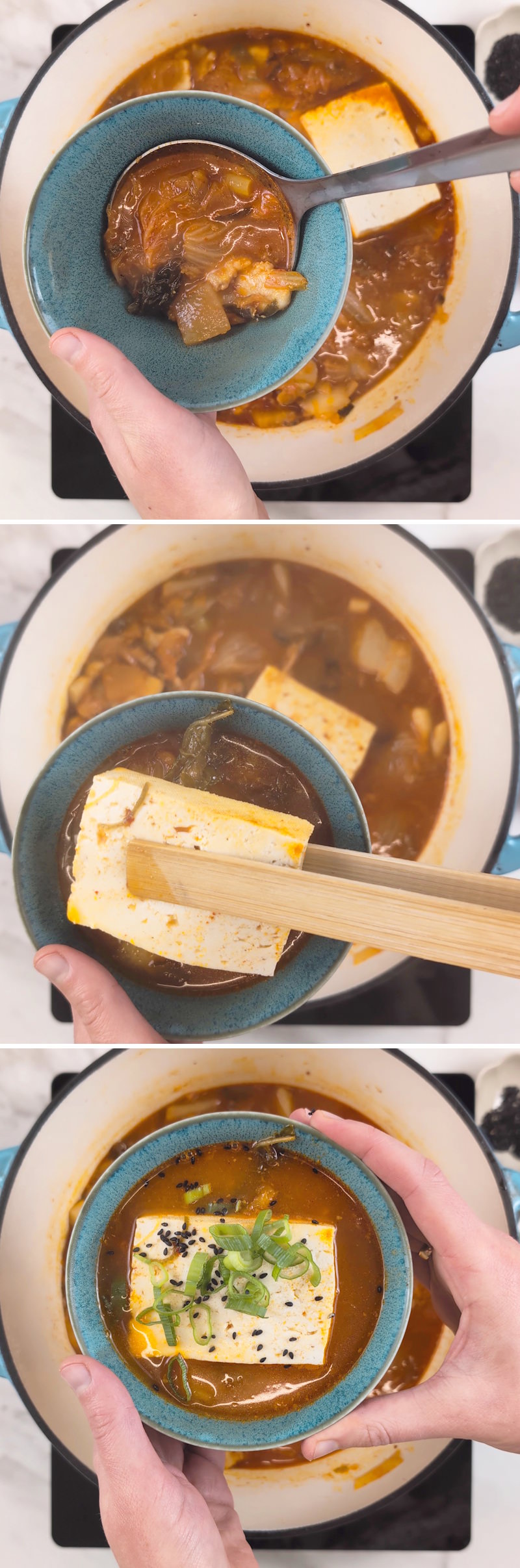
Serve the Kimchi Jjigae hot in individual bowls. Garnish with the green spring onions and a sprinkling of black sesame seeds. A small bowl of hot rice goes wonderfully with it.
Tip: Leftovers can be stored in an airtight container for up to 3 days in the fridge or up to a month in the freezer. Remove the Tofu before freezing and add fresh Tofu when reheating, if required.
These go well with it, delicious side dishes:
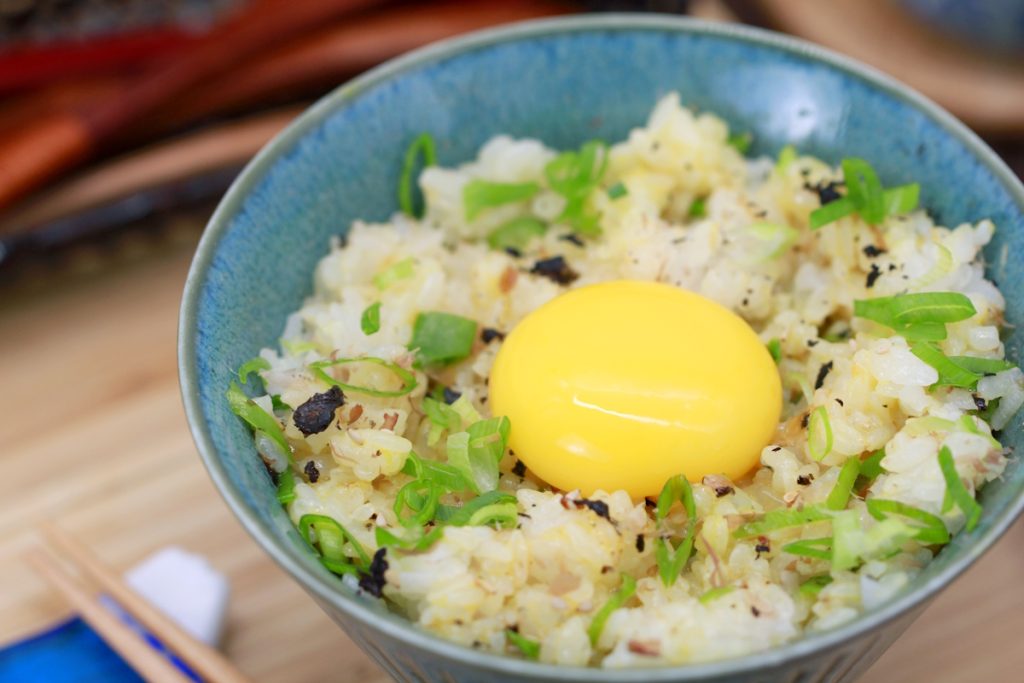
Tamago Kake Gohan: Japanese breakfast rice with egg, Furikake & Katsuobushi | TKG
In this recipe, I’ll show you a particularly flavourful version of Tamago Kake Gohan (TKG)…
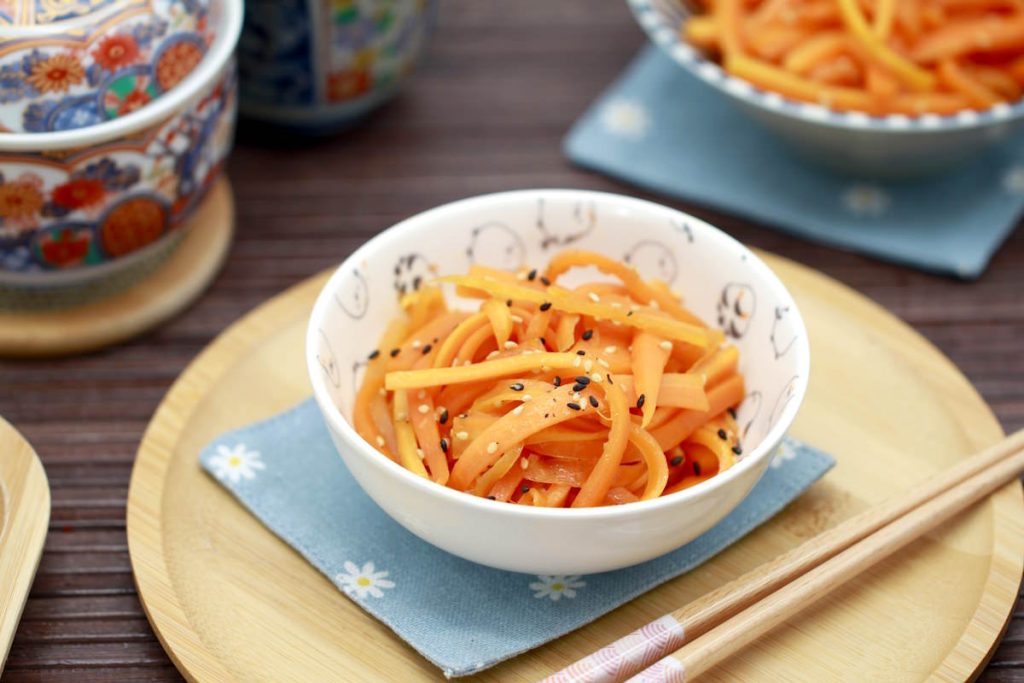
Make your own Ninjin no Kinpira: Japanese carrot side dish in the Kinpira style
Ninjin no Kinpira is a simple Japanese side dish made from finely sliced carrots, which…
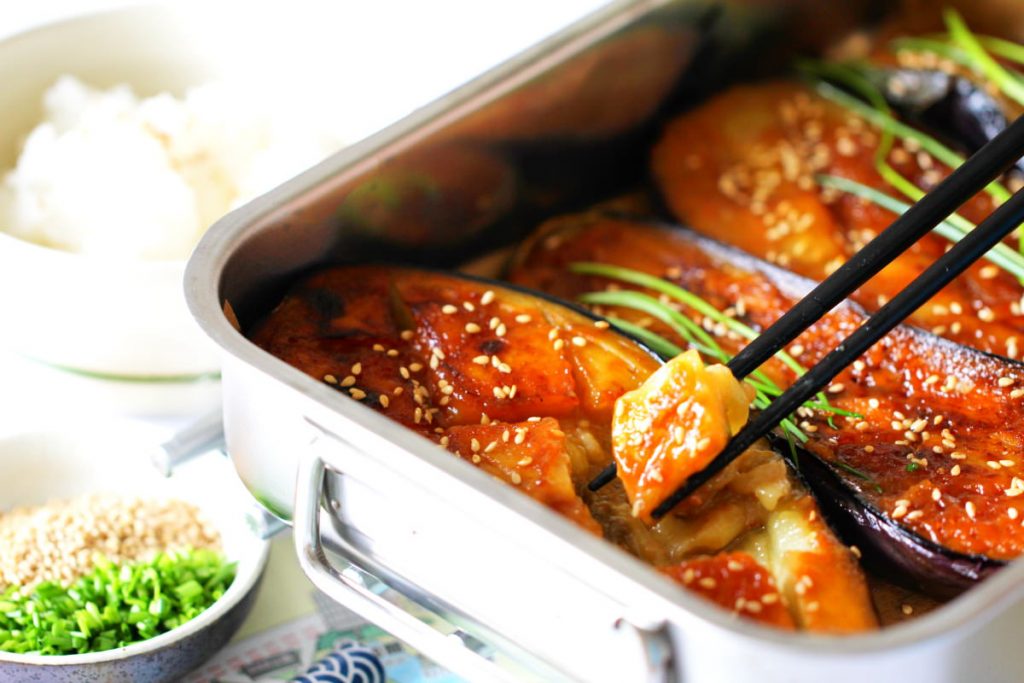
Nasu Dengaku: Oven-baked aubergines glazed with Miso – simple & irresistible
Nasu Dengaku is a true classic of Japanese cuisine and perfect as a side dish…
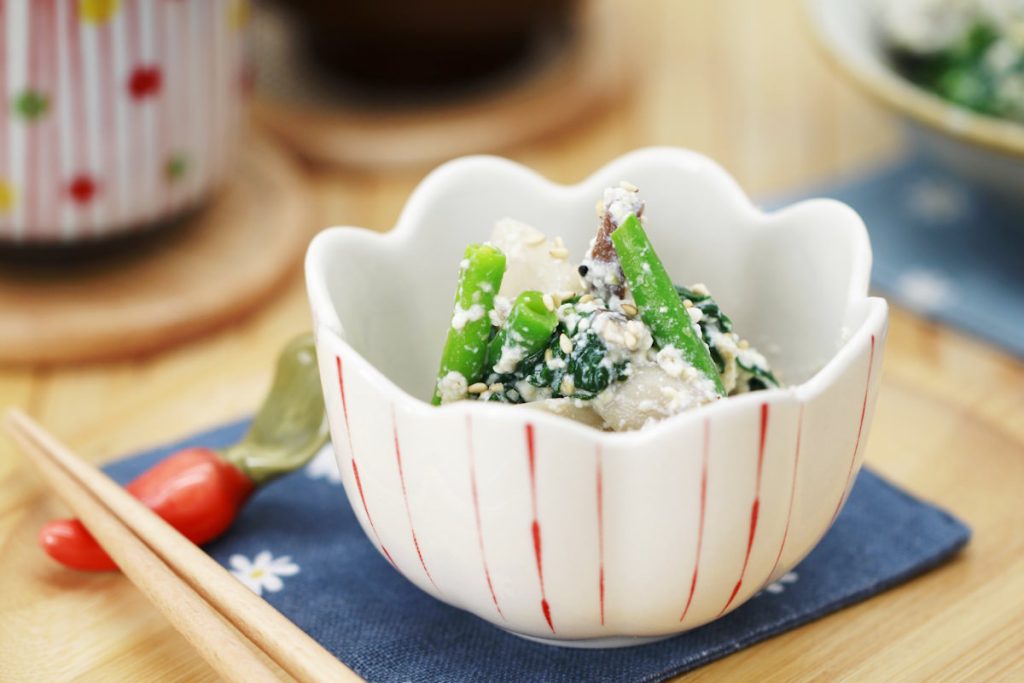
Mushroom and spinach salad with sesame and Tofu dressing: Recipe for Yasai no Shira ae
Mushroom and spinach salad with sesame and Tofu dressing, also known as Yasai no Shira…
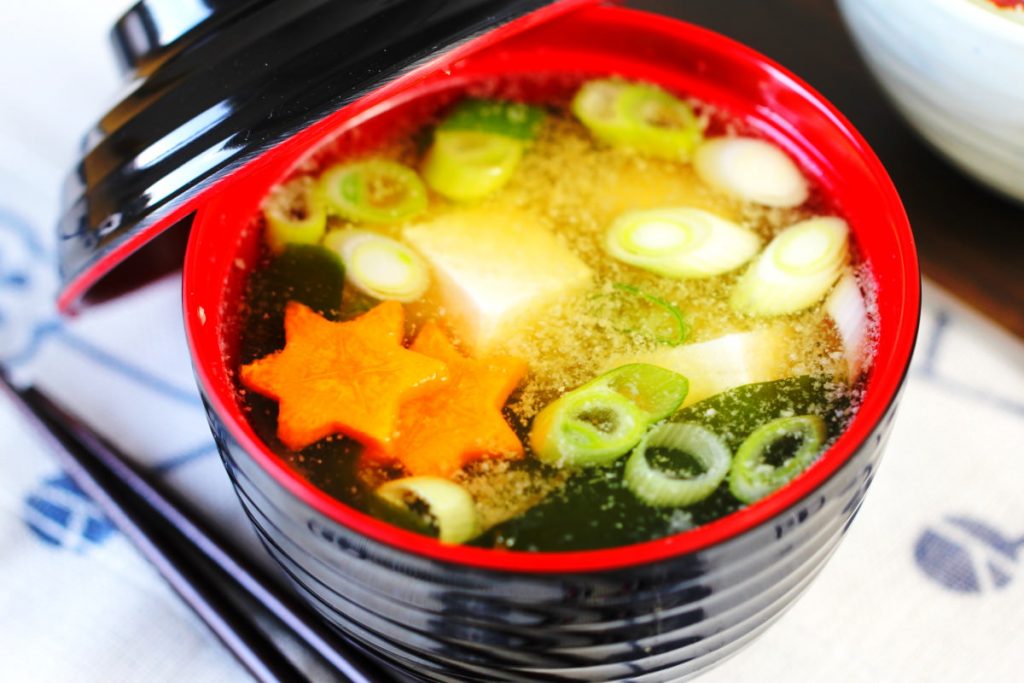
Misoshiru in a flash: basic recipe for miso soup with Wakame & Tofu
Miso soup is much more than just a side dish in Japan – it’s a…

Make your own Japanese potato salad: fresh, creamy and irresistible!
If you’re looking for a delicious side dish that’s both familiar and excitingly new, then…
Have you tried this recipe yet? Let me know in the comments, I’m really looking forward to hearing from you.