
Language:


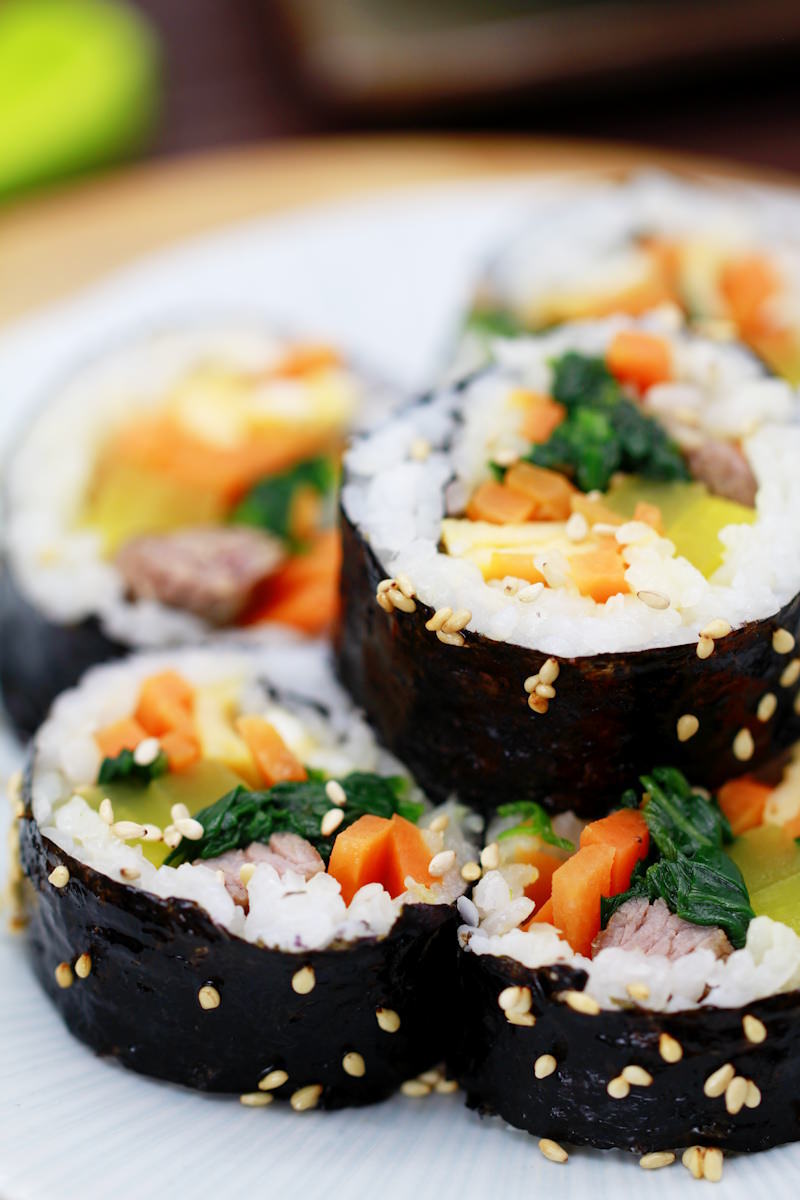
Gimbap, also known as Kimbap, is one of the best-known dishes in Korean cuisine. It combines nutritious rice, crisp vegetables and aromatic fillings in a handy roll – perfect for on the go or as a light lunch.
At first glance, one might mistake Gimbap for Japanese norimaki, but the difference lies in the details: whilst Sushi often contains raw fish and is seasoned with rice vinegar, Gimbap features savoury fillings and sesame oil, which adds an aromatic finish to the rice.
Why are we at 1mal1japan actually focusing on Gimbap? Because the culinary connections between Japan and Korea are deeply rooted in the history of both countries. Rice rolls such as norimaki and Gimbap show how similar ingredients can be used in different ways across different cuisines.
We also love celebrating the diversity of Asia and providing you with recipes that enrich your everyday cooking. Gimbap is not only delicious and versatile, but also a tribute to the creative possibilities that arise when tradition and individuality come together.
What makes the Gimbap recipe so special?
Gimbap is a true all-rounder and offers countless possibilities for customisation. With its various components – fluffy rice, crisp vegetables, savoury meat or Tofu, and the slightly salty Umami note of the nori sheets – Gimbap is a balanced meal in every roll. The best part? It looks complicated, but is surprisingly easy to prepare. All you need is a little patience when cutting the ingredients and some practice when rolling.
TOP RECOMMENDATION
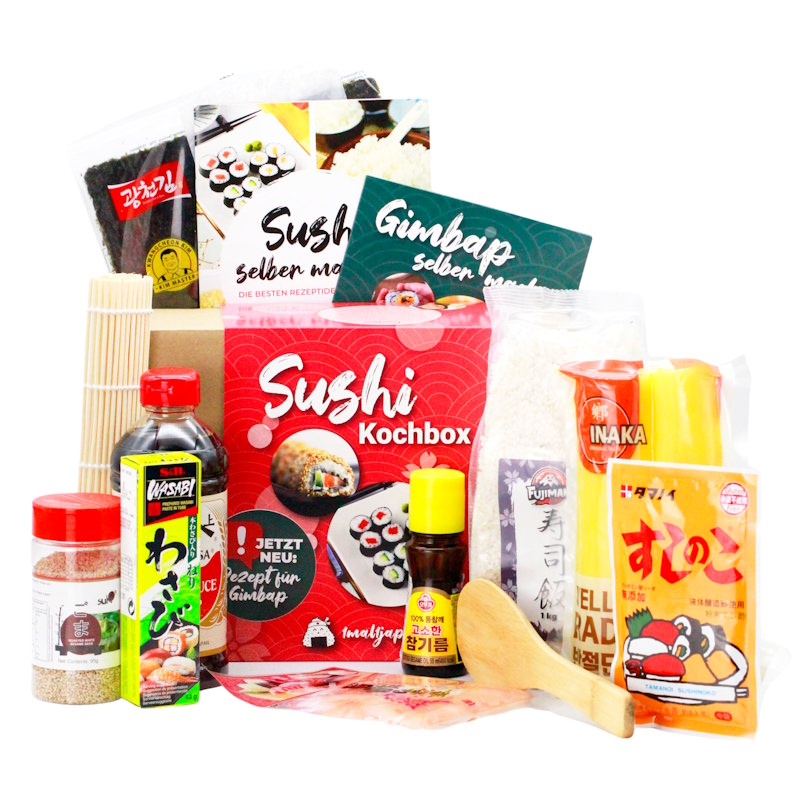
Sushi + Gimbap Kochbox | Reisrollen selber machen
11-tlg. DIY Sushi Set, inkl. Rezepte + Zubehör, für Anfänger & Kenner. Mit der Sushi + Gimbap Kochbox gelingen dir japanische und koreanische Rollen ganz…
In stock
Compared to other rice rolls, such as Japanese Sushi, Gimbap stands out thanks to the variety of its fillings. Whether it’s succulent marinated beef, sautéed spinach, crunchy carrots or pickled radish – the combinations are virtually endless. Traditionally, Gimbap isn’t served with dips or sauces, as the ingredients themselves provide plenty of flavour. For us, this means: every roll is perfect for on the go or as a colourful addition to a larger meal.

Another appeal of Gimbap lies in its versatility. You can adapt the recipe to suit your preferences – with chicken, tuna or completely free from animal products. The choice of vegetables is also up to you: try it with cucumber, peppers or Shiitake mushrooms. This flexibility makes Gimbap not only an ideal dish for any occasion, but also a great treat to take along for picnics, parties or Bento Boxes.
Furthermore, Gimbap is not just a culinary experience, but a cultural one too. In Korea, it is often seen as a symbol of community and hospitality. Families and friends come together to prepare the ingredients, shape the rolls and enjoy the freshly made Gimbap.
This recipe provides a wonderful foundation and plenty of scope for creativity. Whether you’re a fan of traditional Korean cuisine or simply looking for a new challenge – Gimbap will delight you.

Making Gimbap yourself: Here’s how
With the right preparation, Gimbap is easier to roll than it looks. This recipe explains step by step how to prepare the ingredients and conjure up the perfect rolls. You will need:
- Rice: Sticky short-grain rice forms the base and holds everything together.
- Beef: For a savoury flavour, we marinate the meat in soy sauce, sugar and garlic.
- Vegetables: Carrots, spinach and takuan provide crisp freshness and a colourful variety.
- Nori sheets: They give the rolls stability and that typical Umami flavour.
- Spices: Sesame oil and toasted sesame seeds round off the flavour.

No time for fresh beef?
Thinly sliced chicken, pork or even vegan alternatives such as marinated Tofu or tempeh are great options. What about vegetarian Gimbap? Try marinated mushrooms such as Shiitake or portobello as a meat-free alternative.
First, we wash the rice thoroughly and leave it to soak in the rice cooker before cooking. At the same time, we marinate the beef in a mixture of soy sauce, sugar and garlic. Whilst the meat is marinating, we prepare the other ingredients: a thin omelette is fried and cut into strips, carrots are fried in sesame oil and the spinach is lightly sautéed. Finally, we sear the marinated beef briefly over a high heat.
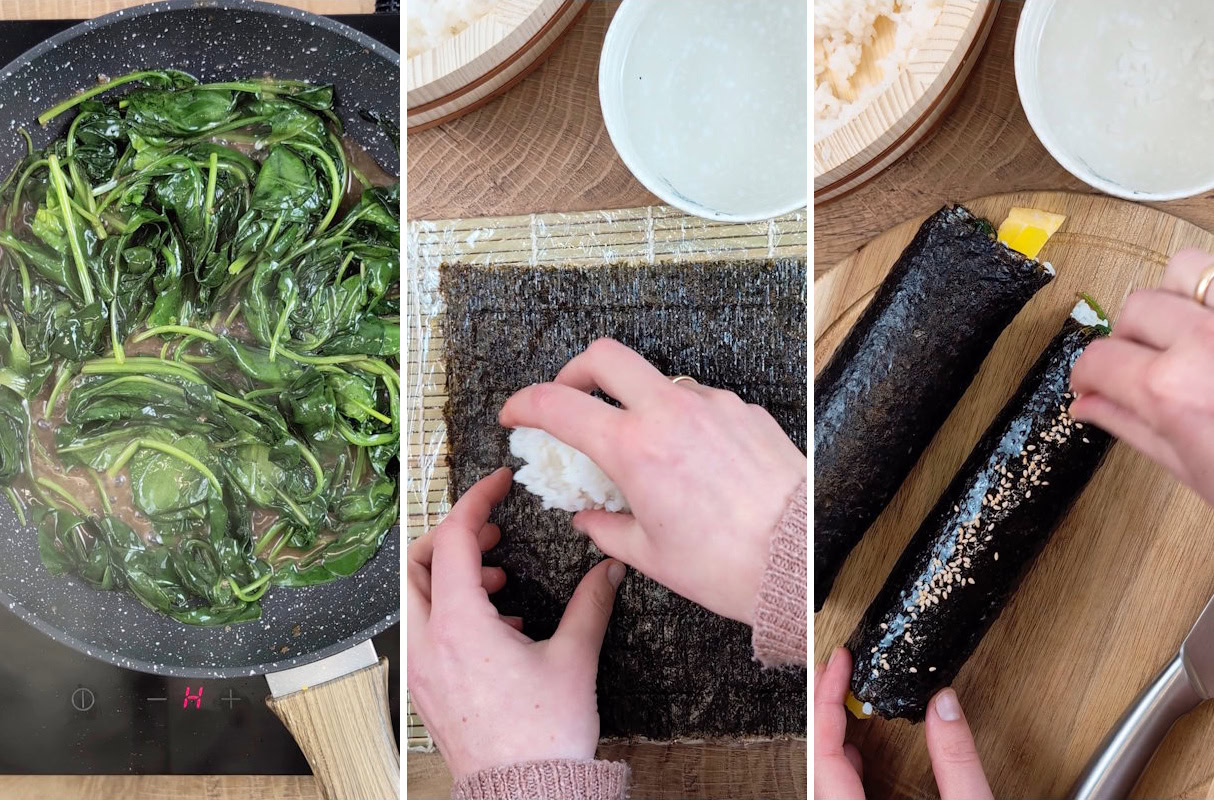
Now it’s time to roll: spread a thin layer of rice onto a nori sheet, arrange the prepared ingredients in the centre and roll everything up tightly using a Sushi mat. Finally, brush the rolls with sesame oil and sprinkle them with toasted sesame seeds before cutting them into bite-sized pieces.
What goes well with it?
Gimbap is a complete meal in itself, but side dishes make it even more interesting. Serve it with a light soy sauce, spicy Kimchi or a clear soup. Tteokbokki (Korean rice cakes in a spicy sauce) also complement the rolls perfectly. For a fresh touch, pickled vegetables or a crisp salad go down a treat.
Creative variations
More vegetables
Add colourful vegetables such as peppers, courgettes, avocado or sweetcorn to jazz up your Gimbap.
Spicy kick
Do you like it hot? A dollop of gochujang (Korean chilli paste) or chilli flakes will make your Gimbap extra spicy.
Simple snacks
Don’t fancy fiddly ingredients? Ready-cooked chicken, surimi or cooked prawns make rolling quicker and easier.
Any leftover stock?
You can save the stock from blanching the ingredients and use it as a base for a light soup. Perfect as a side dish!
Handy for on the go
Roll the Gimbap tightly and wrap it in cling film – ideal for Bento Boxes, picnics or as a snack between meals.
Have you ever made Gimbap yourself? Which fillings are your favourites? Feel free to share your ideas and variations in the comments – I look forward to hearing from you! Have fun rolling and enjoy your meal.

Gimbap
Serves 2 | 60 minutes | 590 kcal
🖨️ Print PDF 📌 Save pinGimbap (or Kimbap), Korean rice rolls, are a delicious snack for on the go or beautifully presented for a tasty dinner. With fresh vegetables, spicy meat and nori sheets, you can whip up a healthy and versatile meal in no time!
Ingredients (2 servings = 4 rolls)
For the rice:
300 g Sushi rice (im Shop ansehen)*
300 ml water
For the filling:
250 g beef(e.g. entrecôte)
2 eggs
1 carrot
100 g spinach(e.g. baby spinach)
½ takuan (pickled radish) (im Shop ansehen)*
2 garlic cloves
2 tbsp Shoyu (im Shop ansehen)*
1 tbsp sugar
a little sesame oil (im Shop ansehen)*
a little oil (e.g. rapeseed oil)
a little salt
For rolling:
4 sheets of Nori (im Shop ansehen)*
2 tbsp sesame oil
2 tbsp sesame seeds, toasted (im Shop ansehen)*
(optional) cling film for Sushi mat
Useful tools:
Santoku knife (im Shop ansehen)
Japanese grater (im Shop ansehen)
Yukihiara pot
Bamboo sushi mat with spoon (im Shop ansehen)
2-in-1 strainer & skimmer (im Shop ansehen)
Preparation (60 minutes)
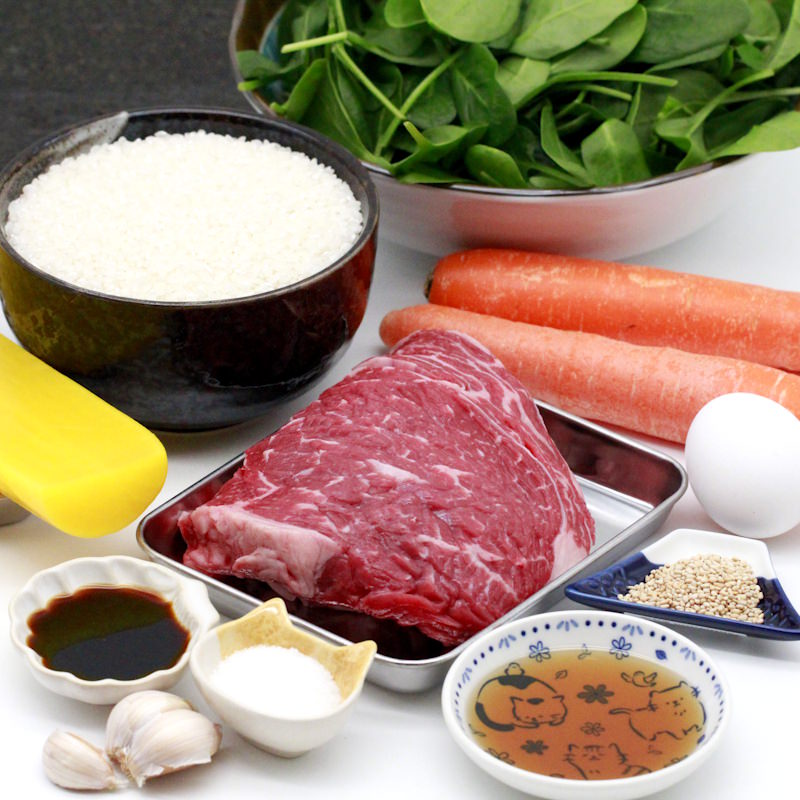
Step 1
Prepare the ingredients for your Korean Gimbap.

Step 2
Start by washing the rice thoroughly. Place it in a large bowl, add plenty of cold water and rinse the rice several times until the water runs almost clear. Add another 500 ml of water to the washed rice and leave it to soak for about 20–3 0 minuti prima di cucinarlo.
Step 3
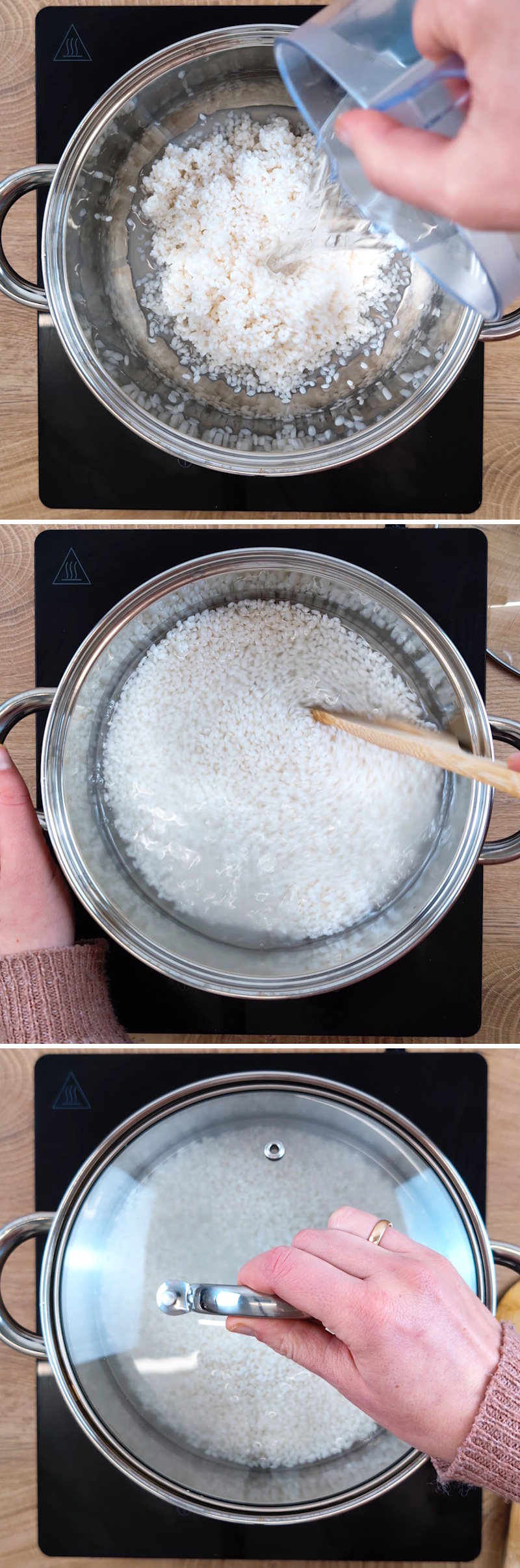
After the resting period, drain the water completely.
Put the rice in a pot (or feel free to also use a rice cooker) and pour in fresh water in a 1:1 ratio (for 300g of rice, this amounts to 300ml of water) and a pinch of salt.
Now place the pot on the hob, put the lid on and bring to the boil over a medium heat. Once the rice has come to the boil, turn the heat down to the lowest setting and let it simmer gently with the lid on for 13 minutes. Do not open the lid during this time!
Step 4
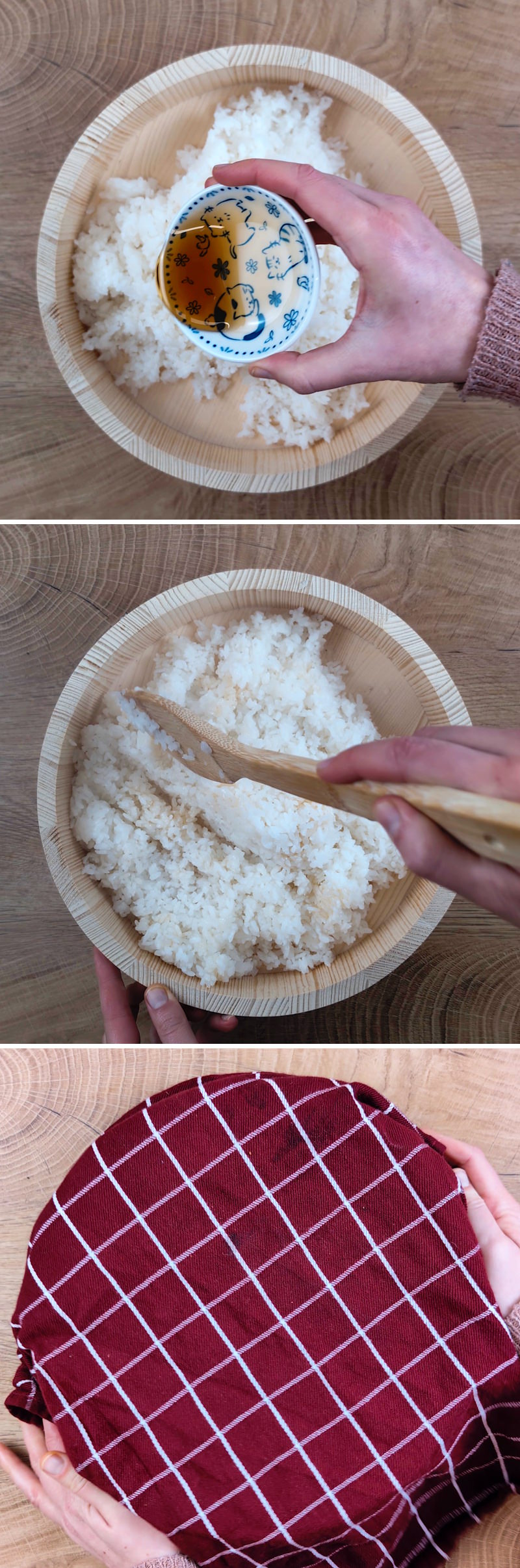
Once the rice is cooked, turn the heat off completely. Leave to rest with the lid on for 10 minutes. Then transfer to a shallow bowl, add 2 tbsp sesame oil and mix using a cutting motion with the spoon (do not stir vigorously, but fold in gently).
Allow the rice to cool to body temperature before use, i.e. to around 40°C – the rice should feel neither hot nor cold to the touch.

Step 5
Meanwhile, let’s get on with the filling! We’ll start with the marinade for the beef: Peel the garlic, finely grate it using a Japanese vegetable grater and place it in a bowl. Add soya sauce and sugar and mix to form a marinade.

Step 6
Cut the beef into thin slices and add it to the marinade. Stir everything well so that the meat can absorb the flavours. Set it aside and leave it to marinate whilst you prepare the remaining ingredients.
Step 7
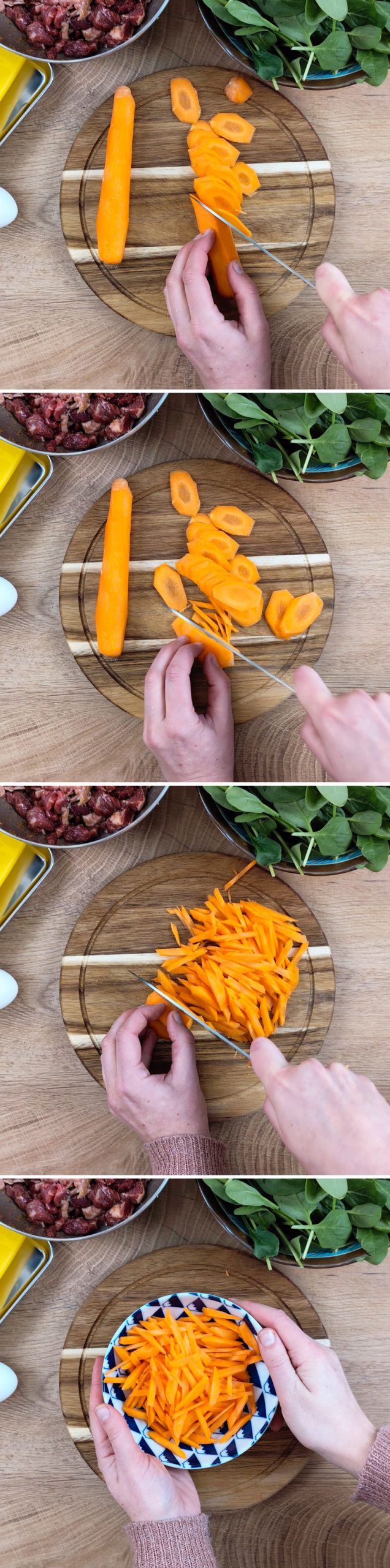
Peel the carrots and cut them into thin strips by first slicing them at a 45-degree angle into flat slices and then cutting each slice into thin strips.
Step 8
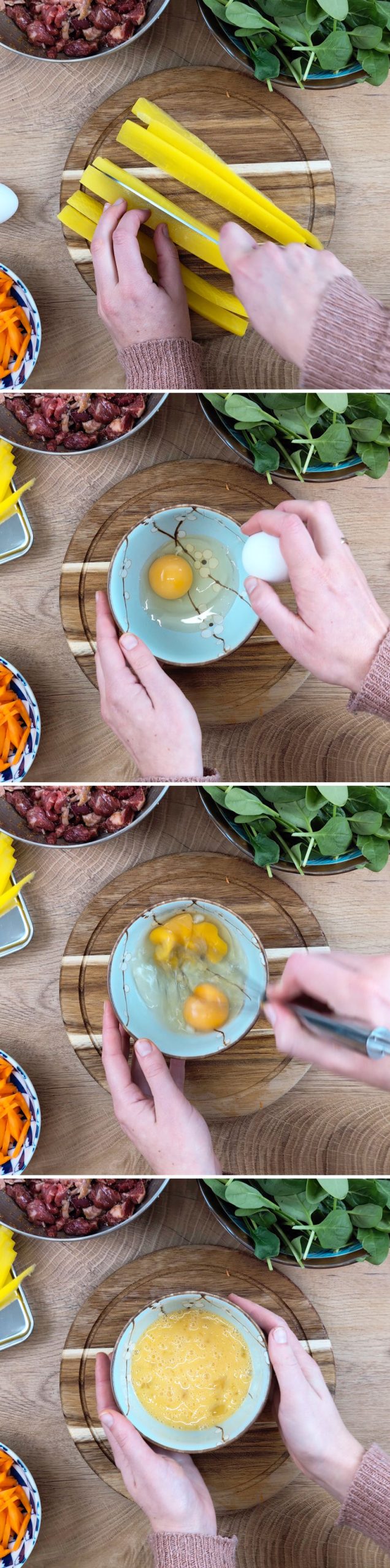
Halva il daikon pickled radish (Takuan) lengthways if necessary, and cut it into evenly thick strips.
Wash the spinach thoroughly and leave it to drain in a colander.
Also whisk 2 eggs with a pinch of salt in a small bowl – set them aside.

Step 9
Heat a frying pan over a medium to high heat and add 3 tbsp oil. Now fry the marinated beef until it is cooked through all over. Make sure it stays juicy and doesn’t dry out. Remove the meat from the pan and leave it to cool.

Step 10
Add 2 tsp of toasted sesame oil to the same pan and fry the washed spinach until it has just wilted. Remove the spinach from the pan and leave it to cool.
Step 11
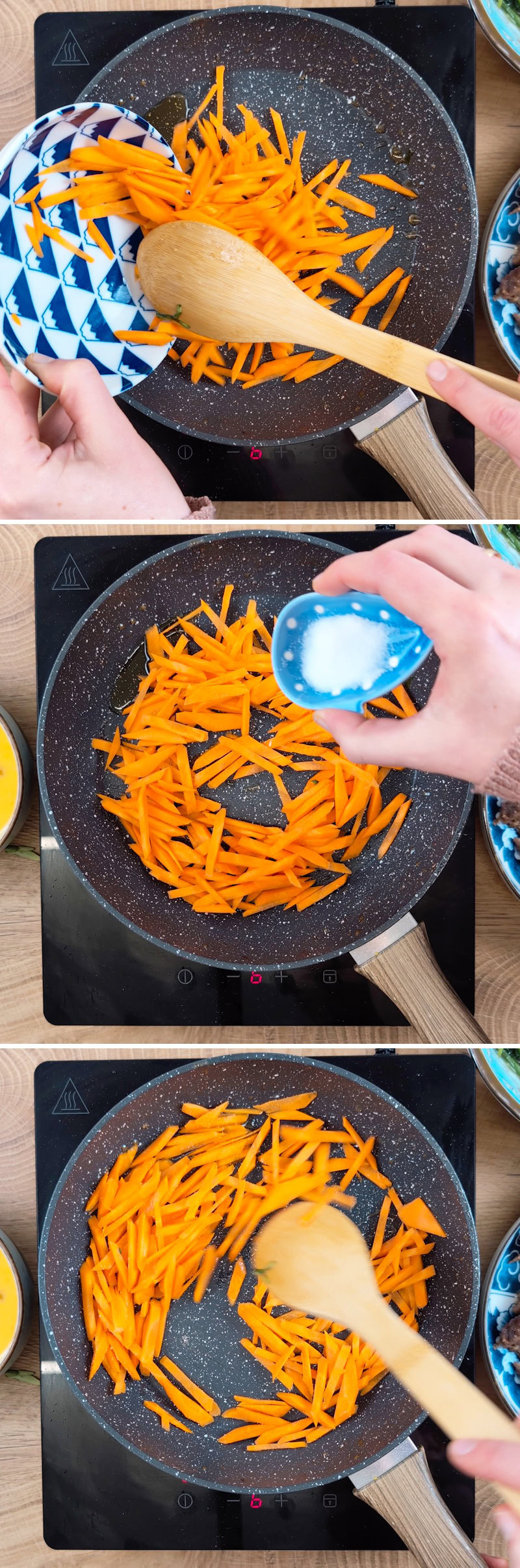
Heat a little toasted sesame oil in the pan again, add the carrot sticks and fry them with a pinch of salt until they are soft. Set them aside and leave them to cool.

Step 12
Set the pan to a low heat and pour the egg mixture into the pan. To begin with, you can gently move and swirl the liquid surface, so that everything cooks evenly. Fry a thin omelette until the top is almost set. Flip it over and remove it from the pan after a moment, leave it to cool and cut it into even strips.
Step 13
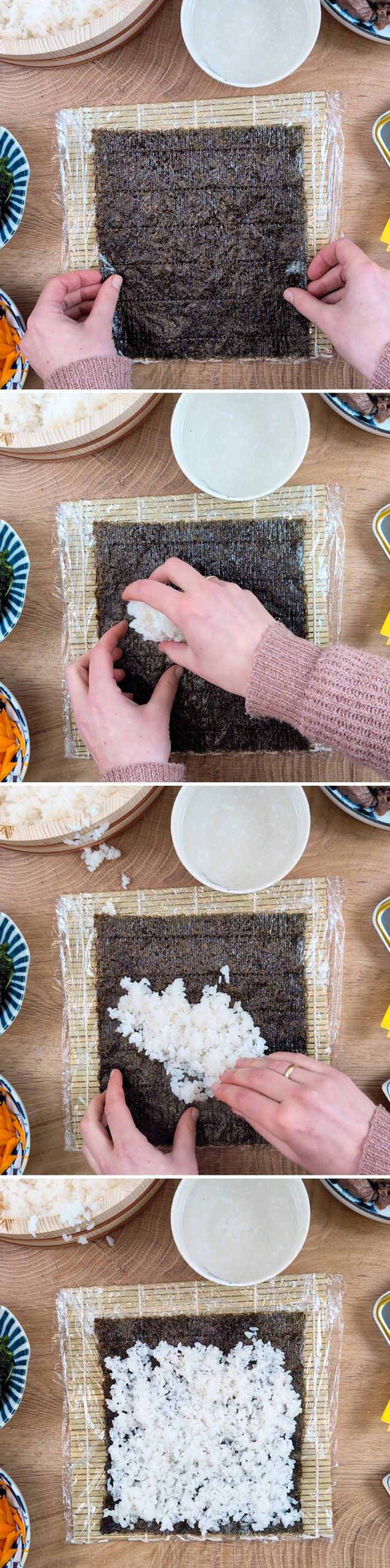
Tip: Wrap your Sushi mat in cling film to prevent the rice from sticking to the bamboo. Also, have a bowl of fresh water ready. Use this to moisten your hands repeatedly whilst spreading the rice – this prevents the rice from becoming mushy as you spread it and keeps it nice and moist.
Place a nori sheet, rough side up, on a Sushi mat, ensuring the bottom edge of the sheet is flush with the mat. Spread a thin layer of cooked rice (about a quarter of the rice) evenly over the Nori, leaving a gap of about 2.5 cm at the top edge. The rice should not be spread too thickly so that the roll remains nice and compact.

Step 14
Place the prepared ingredients – beef, takuan strips, spinach, omelette strips and carrots – in the centre of the rice.
Now to roll it up: Lift the bottom edge of the bamboo mat and the Nori using your thumb and index finger. Hold the filling in place with your other fingers. Lift the Sushi mat up to the exposed top edge and press down gently. Lift the mat slightly again and bring both ends of the nori sheet together to create an overlapping seam. Roll the Sushi roll completely into the mat and shape it into a nice round form.
Repeat this process with all the nori sheets and ingredients to form 4 delicious Gimbap rolls.

Step 15
Place the finished rolls on a chopping board and lightly brush the surface of the finished rolls with toasted sesame oil, then sprinkle with toasted white sesame seeds. Cut the rolls into 8 even pieces using a sharp knife. To ensure a clean cut, wipe the knife with a damp cloth or a little water after each cut.
Arrange the Gimbap pieces in a tower shape on a platter. They taste best at room temperature and make a perfect snack on the go, a light lunch or a colourful addition to a larger meal.
Fancy some more delicious inspiration from Korea? You can find even more quick recipe ideas here:

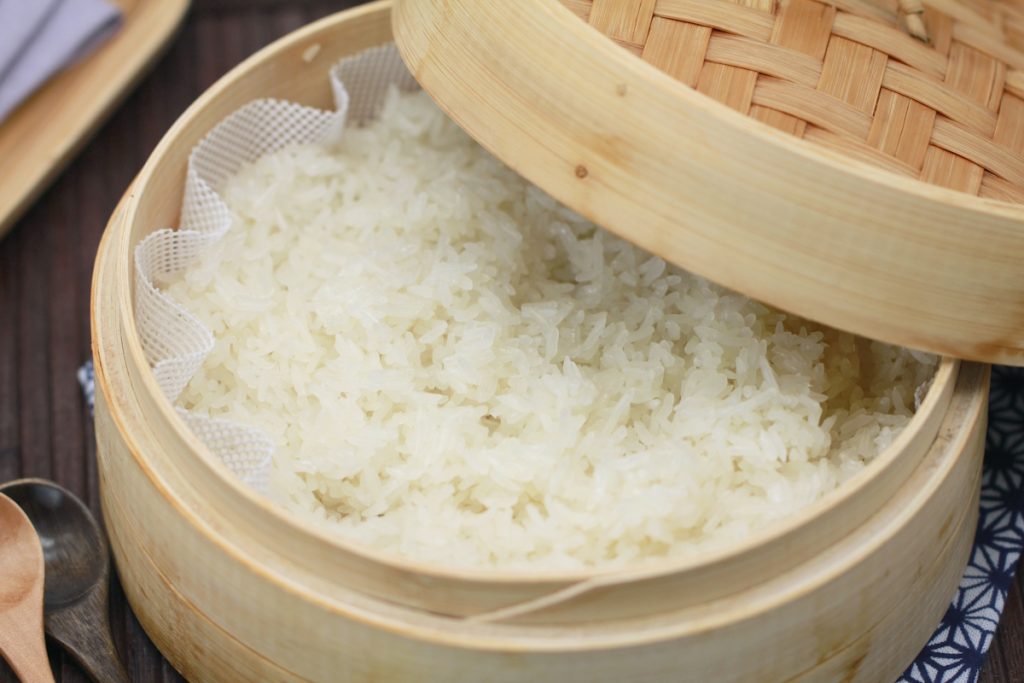
Thai Sticky Rice: How to steam Thai sticky rice (Khao Niao) properly
Thai sticky rice, also known as Khao Niao, is a very simple basic recipe, but…
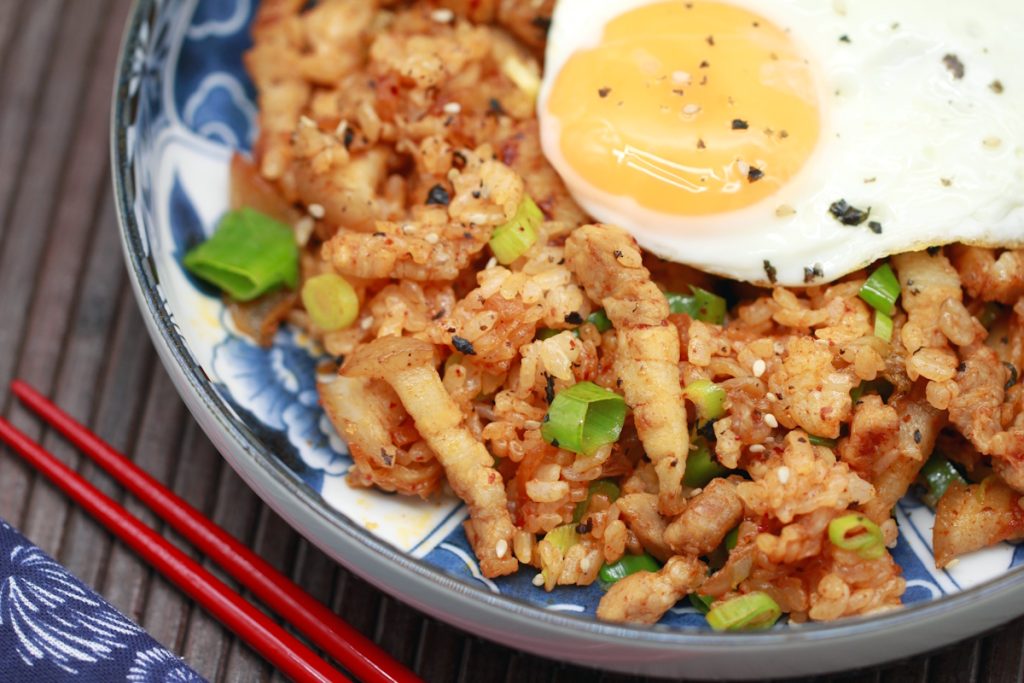
Kimchi Fried Rice: Make your own quick kimchi Bokkeumbap | in 20 minutes
Kimchi Fried Rice, also known as Kimchi Bokkeumbap, is a classic rice dish from everyday…
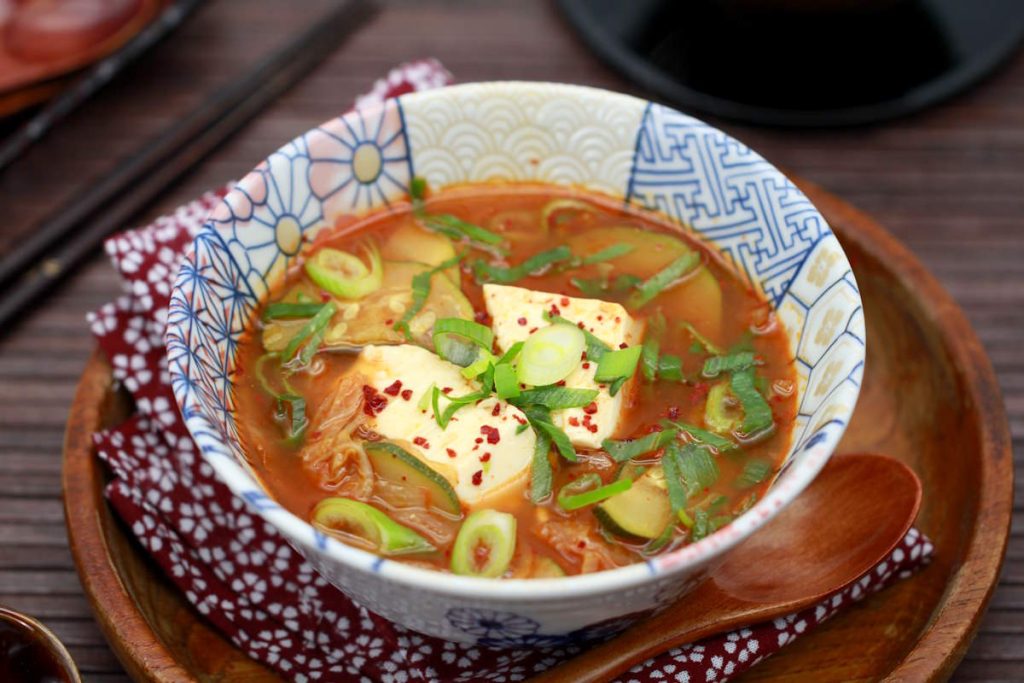
Sundubu Jjigae: Spicy Korean Tofu stew with courgette, Kimchi & Anchovy Dashima
Sundubu Jjigae is one of the best-known Korean stews and is an integral part of…
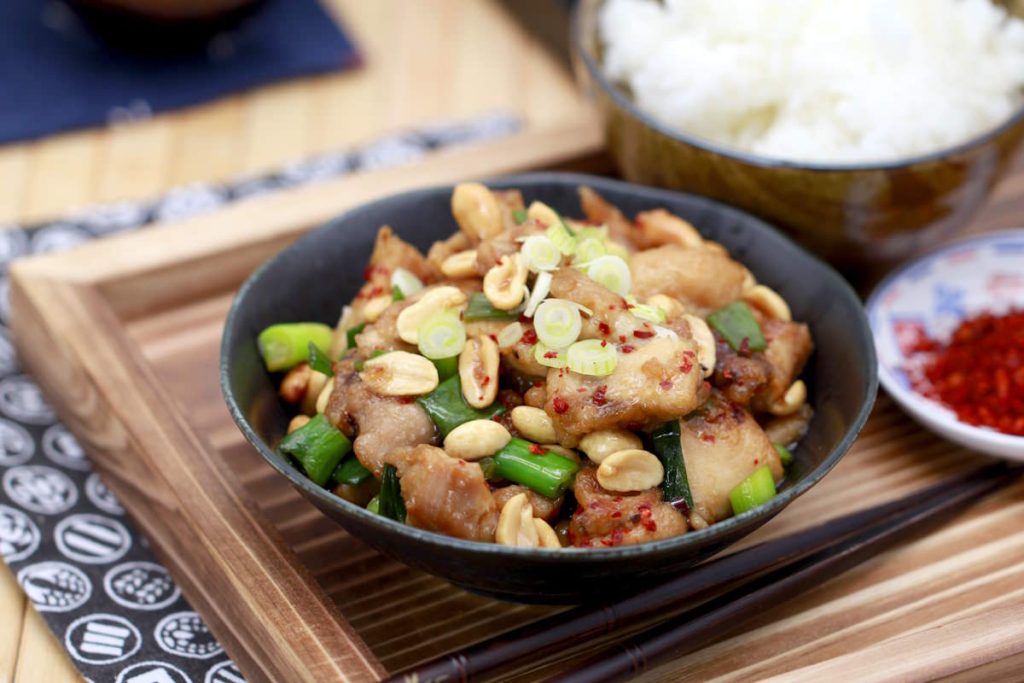
Make your own Gong Bao Chicken: Classic Kung Pao Chicken from Sichuan cuisine with peanuts & chilli
Gong Bao Chicken is a classic stir-fry dish from Sichuan cuisine that requires just a…
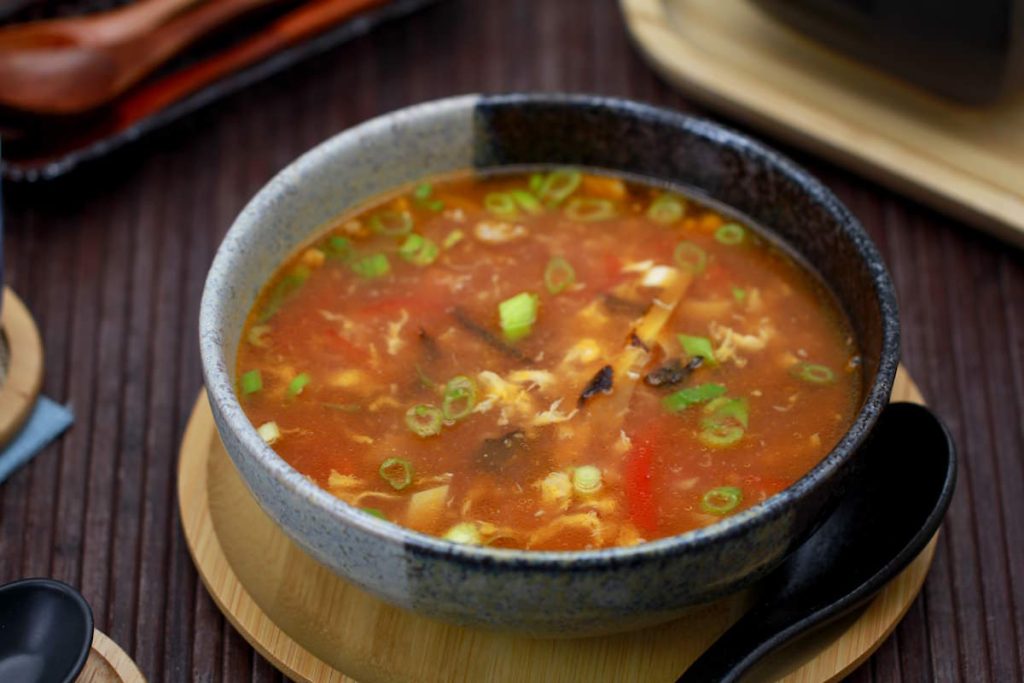
Beijing soup: Make your own Suan La Tang | Chinese hot and sour soup
Beijing Soup (Suan La Tang) is a classic sour and spicy soup from Chinese cuisine….
Have you tried the recipe yet? Let me know in the comments – I can’t wait to hear from you.