

Language:


When I think of Tempura, I immediately hear that saku saku sound… That delicate crunch that only a really good Tempura batter can achieve. In Japan, I came to see Tempura as something quite ordinary, yet at the same time a small celebration of the moment: a piece of pumpkin, a prawn, a shiso leaf, coated in a wafer-thin batter, fried until golden brown, served immediately. That’s exactly what I like: Tempura is simple yet elegant, quick to make and yet full of care.
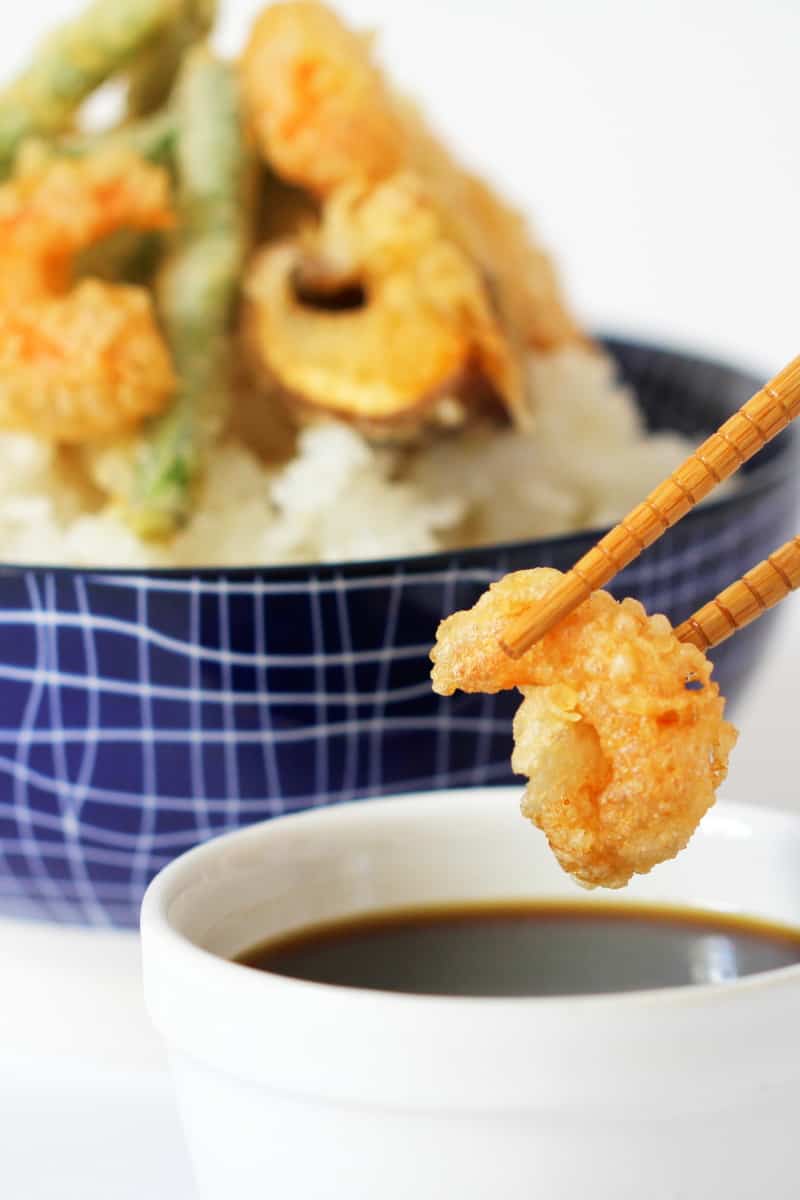
And don’t worry: you don’t need a professional kitchen to make good Tempura. The key is the lightness of the batter and the contrast between ice-cold and hot. In just a few simple steps, simple ingredients are transformed into a crispy coating that doesn’t overpower the vegetables, fish or prawns, but brings out their flavour. Serve with a mild tentsuyu and some freshly grated radish – often, that’s all you need.
In this recipe, we’ll first look at what makes Tempura special, where the technique comes from and how best to enjoy it: from small appetisers to a bowl of Udon with crispy toppings. Right at the end, you’ll find my basic recipe for Tempura batter, just as I make it at home: light, airy and exactly as crispy as you’d like it.
Table of contents
- What is Tempura?
- Tips for perfect Tempura
- Popular Tempura variations
- How to make Tempura yourself: Here’s how
- Extra: Gluten-free tempura batter
- Recipe: Basic tempura batter recipe
What is tempura?
If you’re trying tempura for the first time, you’ll notice: it’s no ordinary deep-fried dish. Instead of a heavy, thick coating, you’ll find a crispy, light batter that gently envelops vegetables, fish or prawns and brings out their natural flavour. That’s precisely where the art lies: a batter that seems almost weightless, and a cooking method that’s spot on.
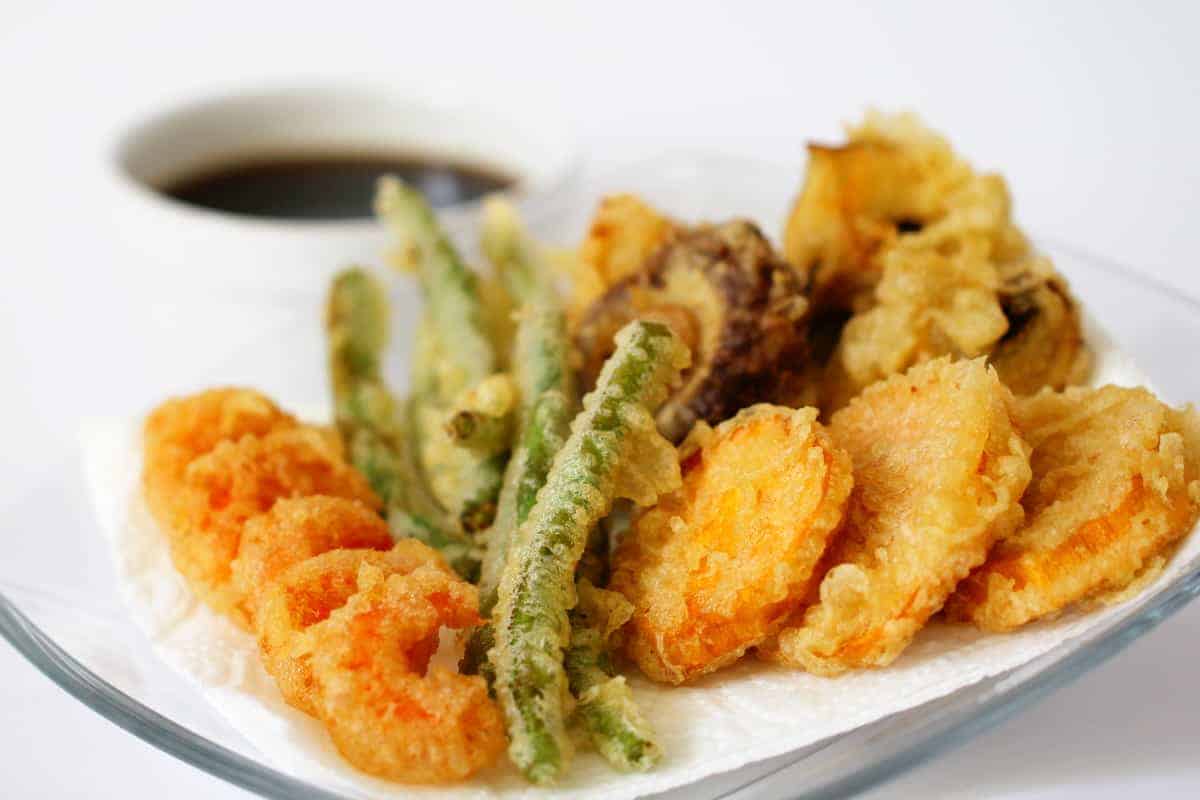
The best way to describe Tempura is as fresh ingredients coated in a light batter made from wheat or rice flour, a little starch, salt and water, and then deep-fried in hot oil. Popular choices include prawns, fish fillets, sweet potatoes, aubergines or courgettes, but you can really use almost any vegetable. It is similar to deep-frying, but the result is finer, more delicate and less oily.
In Japan, you’ll find Tempura everywhere: as a crispy side dish on a bowl of rice (tendon), served with a light Miso soup, or as a main course with a pinch of salt and a classic tentsuyu sauce. This sauce is made by simmering Dashi stock, Mirin and soy sauce, and is often served with freshly grated daikon. There are also numerous variations: ponzu, wasabi, karashi or even a simple Matcha salt.
Whether in a family restaurant, a supermarket or a fine tempura-ya, where you can watch the chef at work, Tempura is an integral part of Japanese food culture. And best of all: even without a flight to Tokyo, you can easily recreate this crispy experience in your own kitchen.

Tips for perfect Tempura
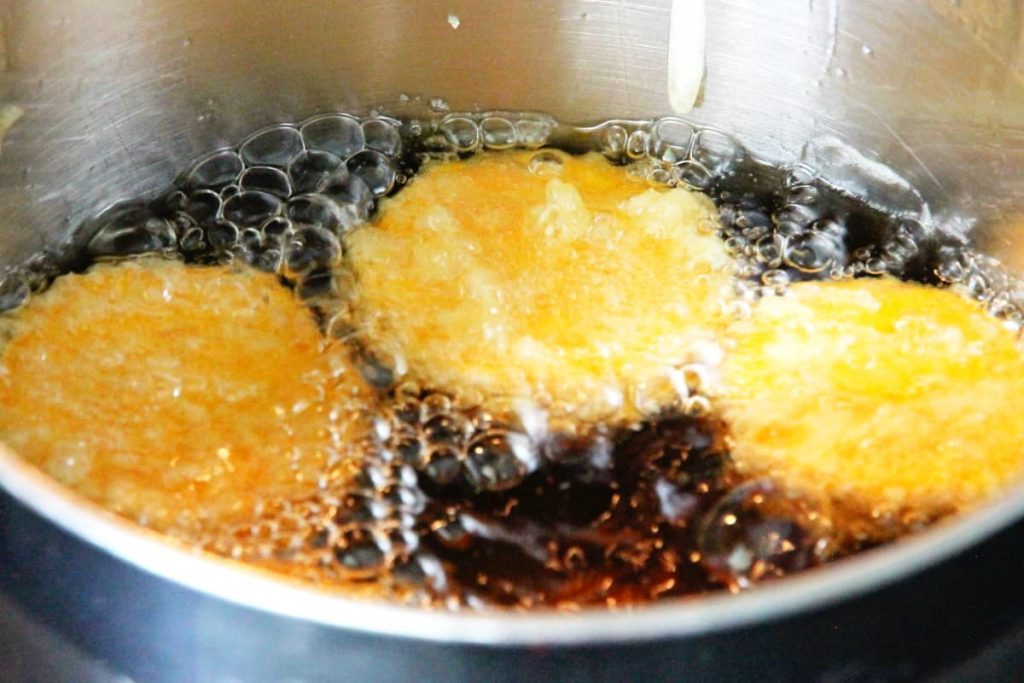
The secret to really good Tempura lies in the small details. Make sure your batter stays ice-cold, ideally mix it just before frying and stir only roughly; small lumps are perfectly fine. The oil should be nice and hot, around 170–180 °C, so that the pieces puff up immediately and don’t soak up too much oil. It’s best to fry in small batches, otherwise the oil will cool down too quickly. And serve the crispy pieces straight away. Tempura is meant to be eaten fresh, whilst it still sounds ‘saku saku’.
A glimpse into history
Tempura seems so typically Japanese today that it is hard to believe how international its roots are. In the 16th century, Portuguese missionaries and traders brought the idea of deep-frying with batter to Japan. The name Tempura is thought to derive from the Latin tempora, the ecclesiastical periods of fasting during which, in Europe, it was traditional not to eat meat, but rather fish and vegetables.
During the Edo period (1603–1868), this developed into a style all of its own. Back then, Tempura was genuine street food: small roadside stalls offered fresh bites that could be enjoyed on the spot. Popular choices included prawns, small fish or seasonal vegetables, always freshly fried and served immediately. Even back then, people appreciated the lightness of the batter and the speed of preparation.
Today, you’ll find Tempura at every level of Japanese culinary culture. There are simple supermarket versions for just a few yen, but also upmarket restaurants, known as Tempura-ya, where the chef prepares each piece right in front of the guests. In such establishments, tempura is treated almost like an art form: each piece is served fresh and individually on the plate, so that the guest can experience the perfect moment of crispiness.
Thus, a Portuguese Lenten snack has become a classic deeply rooted in Japanese cuisine.
Popular Tempura varieties
The classic par excellence is Ebi Tempura, in which prawns are deep-fried with their characteristic curl. But vegetables such as pumpkin, sweet potato or aubergine also go wonderfully well with the light batter. If you fancy a change, try some modern variations: Tempura Sushi, where crispy prawns are rolled up, or even sweet experiments like tempura ice cream. Tempura is surprisingly versatile, and that is precisely what makes it so appealing.
Making Tempura yourself: Here’s how
The batter for Tempura is surprisingly simple, but a little bit of precision makes it perfect. You’ll need:
- Flour
- Katakuriko (potato starch)
- Baking powder
- Salt
Mix all this together with 360 ml of ice-cold water. It’s best to add ten ice cubes straight away so that the batter stays really cold. The cooler it is, the crispier the coating will be later on. You can safely leave any small lumps in; they actually make the result even lighter.
You’re free to choose whatever you like to put in the batter: prawns or tender pieces of fish are popular, but vegetables such as pumpkin, sweet potato, aubergine, green peppers or green beans also work wonderfully. Cut everything into bite-sized pieces; this makes them easy to fry and convenient to eat later.
If you want to make things easier for yourself, there are also ready-made Tempura flour mixes available. These already contain starch and raising agents – handy when you’re in a hurry.
CUSTOMER FAVOURITE
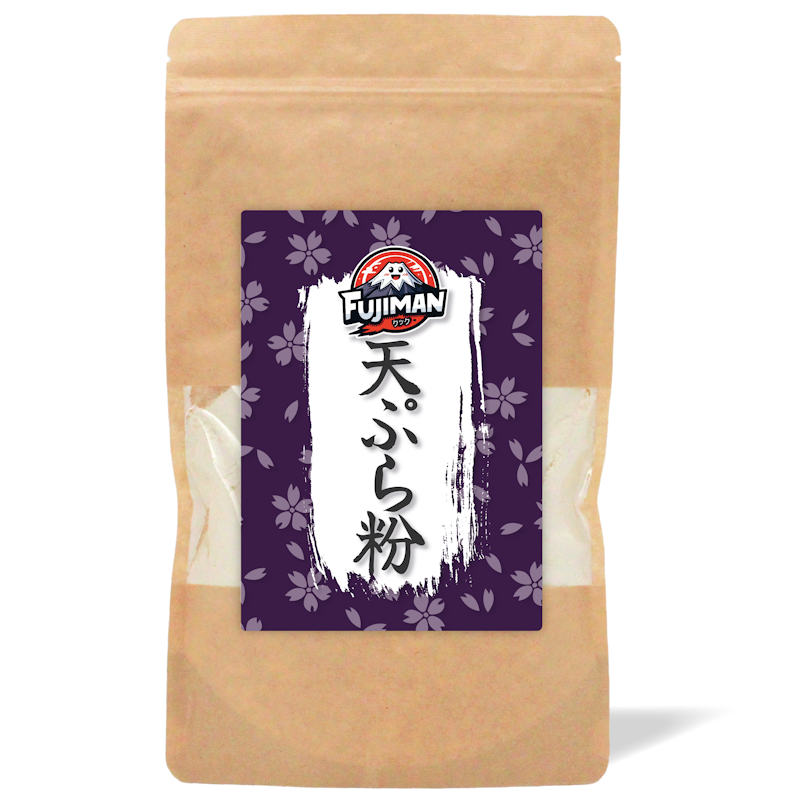
Tempura Teig Mehl 250g (für Gemüse, Garnelen & Sushi, Tempurako), Fujiman
Japanische Tempura Mehlmischung für einen leichten, knusprigen Teig. Mit Fujiman Tempurako bereitest du Tempura unkompliziert zu Hause zu. Die abgestimmte Mischung aus Weizenmehl und Stärke…
In stock
For the dips and sauces, a few Japanese basics will do: soy sauce, Mirin, Dashi or rice vinegar. With that, you’ve got everything you need to enjoy authentic Tempura.
Gluten-free Tempura batter
As described above, Tempura batter generally consists of wheat flour, but there’s also a great alternative for those with gluten intolerance: Rice flour!
To make a gluten-free tempura batter: Crack one large egg into a bowl and add 150 ml cold water. Whisk both together thoroughly. Then add 80 g rice flour and stir the flour into the egg and water mixture until there are no lumps left. It is best to place the finished batter in the fridge until you are ready to fry.
Tip: The gluten-free batter turns out slightly thinner than a wheat flour batter and is less crispy when eaten, as the rice flour tends to sink to the bottom of the bowl. You should therefore give the batter a good stir every now and then whilst coating the food!
Now that you know what makes Tempura so special, how it’s eaten in Japan and what ingredients you need, it’s time to get cooking yourself. The great thing is: the batter is really straightforward and can be mixed up in just a few minutes. The only important thing is to keep it ice-cold and to enjoy the pieces straight after frying.
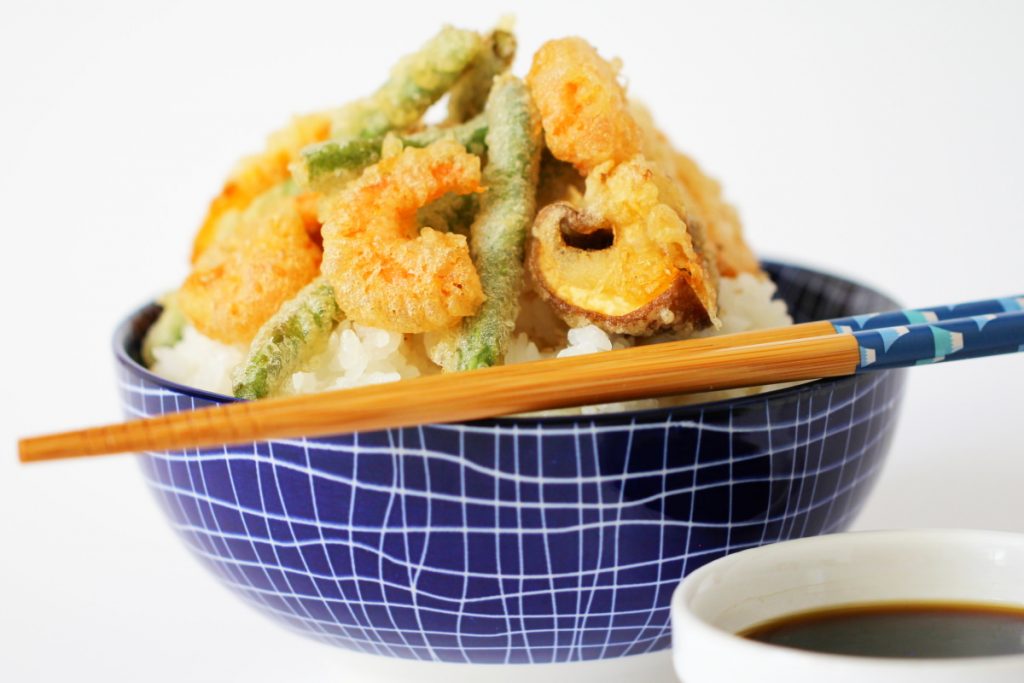
Have you ever made Tempura yourself? Perhaps even with your very own selection of ingredients – a few prawns, crispy pumpkin or something quite unusual like shiso leaves? Feel free to tell me in the comments which version you like best. I hope you enjoy trying it out and I’ll say it now: いただきます Itadakimasu!

Tempura batter
Serves 2 | 30 minutes | 1260 kcal
🖨️ Print PDF 📌 Save pinCrispy, light and surprisingly simple: with this Tempura batter, you can conjure up a real taste of Japan at home. Whether prawns, courgette or aubergine, the light batter lets every piece blossom into a golden brown in the hot oil. Perfect for anyone who loves Tempura just as much as they do in Japan.
Ingredients (2 servings)
For the tempura batter:
160 g flour (e.g. wheat)
30 g katakuriko (potato starch) (im Shop ansehen)*
10 g baking powder
½ tsp salt
360 ml water (with 10 ice cubes)
Ingredients for deep-frying (approx. 350 g per person):
Vegetables(e.g. sweet potatoes, green beans, mushrooms, pumpkin or aubergine)
Fish(e.g. fresh salmon)
Seafood(e.g. fresh or ready-to-cook prawns)
Sushi(e.g. Maki Sushi)
Chicken(preferably breast fillet or thigh, marinated beforehand in 2 tbsp soy sauce, a finely chopped clove of garlic and 40 g ginger)
Fruit (e.g. pineapple or banana; in this case, add ½ tbsp sugar to the batter for every 100 g of flour)
For frying:
100 ml sesame oil (im Shop ansehen)*
400 ml oil (e.g. rapeseed oil)
Side dishes & dips:
Tsuyu (im Shop ansehen)*
Karashi mustard (im Shop ansehen)*
Yellow radish (im Shop ansehen)*
2 portions Rice (im Shop ansehen)* (see recipe in a rice cooker or in a saucepan)
2 portions Misoshiru (to the recipe)
Useful tools:
Kitchen thermometer (auf Amazon* kaufen)
Yukihiara pot (im Shop ansehen)
Santoku knife (im Shop ansehen)
2-in-1 strainer & skimmer (im Shop ansehen)
Preparation (30 minutes)
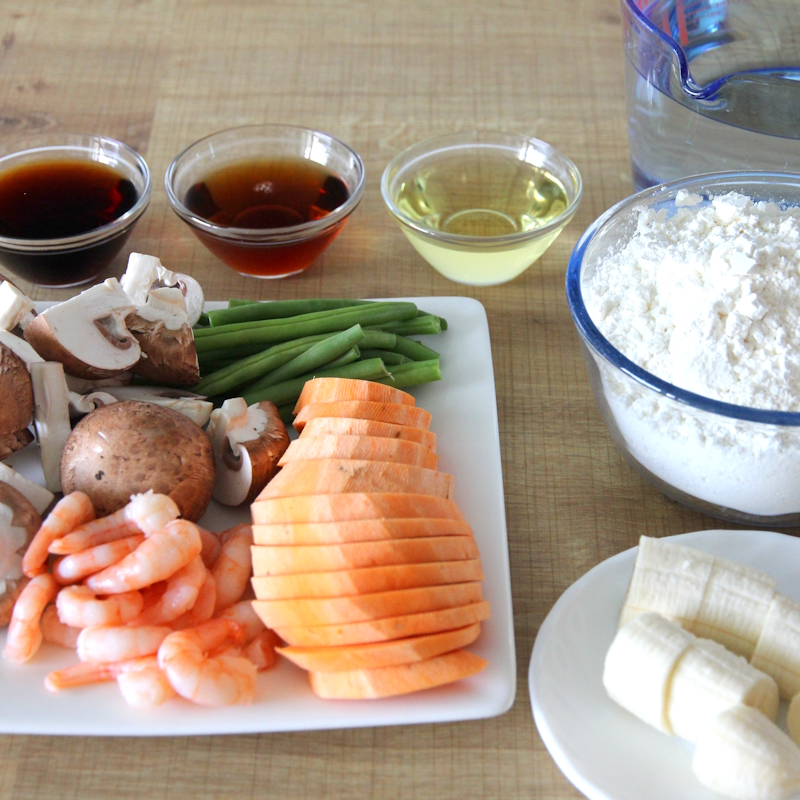
Step 1
Wash, dry and cut your vegetables into bite-sized pieces. Sweet potato, pumpkin and aubergine should be sliced thinly (approx. 5 mm). Simply trim the ends off the green beans; you can halve or quarter the mushrooms. Cut the fish into pieces approx. 2 cm wide, prepare the prawns and, if necessary, make a small cut in them so that the batter sticks better. Marinate the chicken beforehand, peel the fruit and chop it into small pieces.
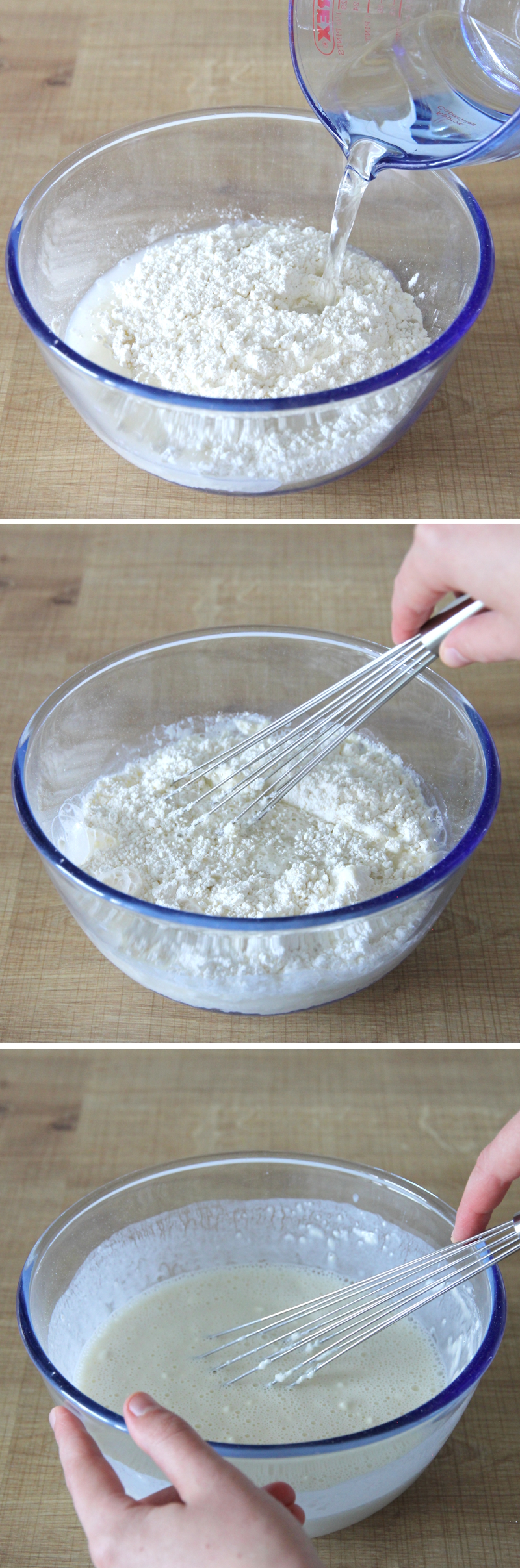
Step 2
Just before frying, mix the flour, potato starch, baking powder and salt in a bowl. Add the ice-cold water with the ice cubes and stir roughly with a whisk – 10–15 seconds is plenty. Small lumps are fine; the batter should remain light and airy.
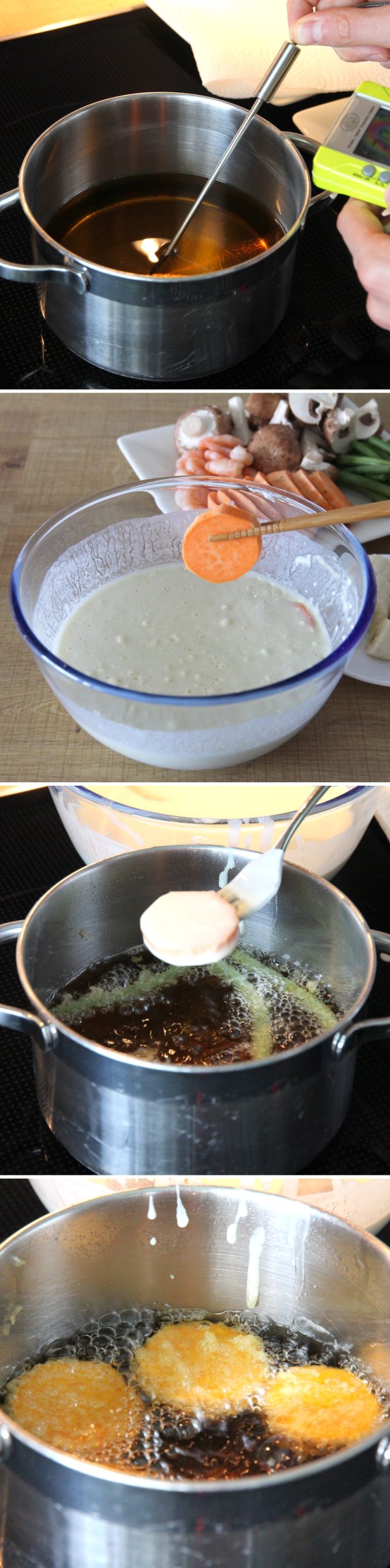
Step 3
Heat the oil in a pan (ratio 1:4 sesame oil to rapeseed oil) to 170–180 °C. Dip the ingredients one by one into the batter and carefully slide them into the hot oil. Please do not drop them in, otherwise it will splash. Only fry small quantities at a time to ensure the oil stays hot. After 2–3 minutes, the pieces should be golden brown and crispy.
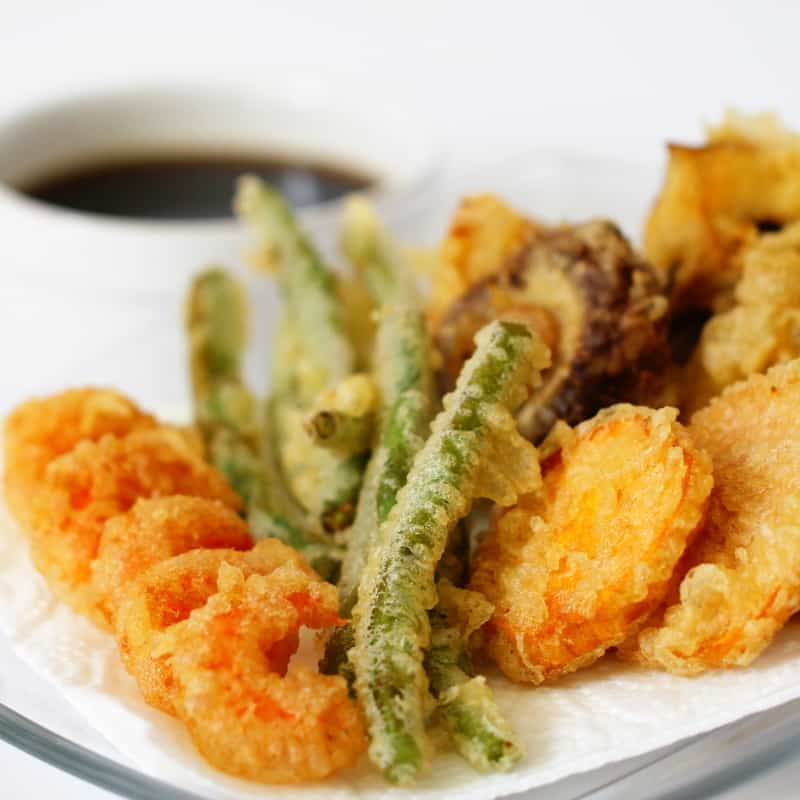
Step 4. Step
Carefully lift the cooked Tempura out with chopsticks or a slotted spoon and leave to drain briefly on kitchen paper.
Tempura is best enjoyed straight away. Serve with tentsuyu sauce in small bowls and serve rice and Miso soup as a side dish. Done – Itadakimasu!
What goes well with Tempura? Here you’ll find delicious side dishes and other recipe ideas from Japan:
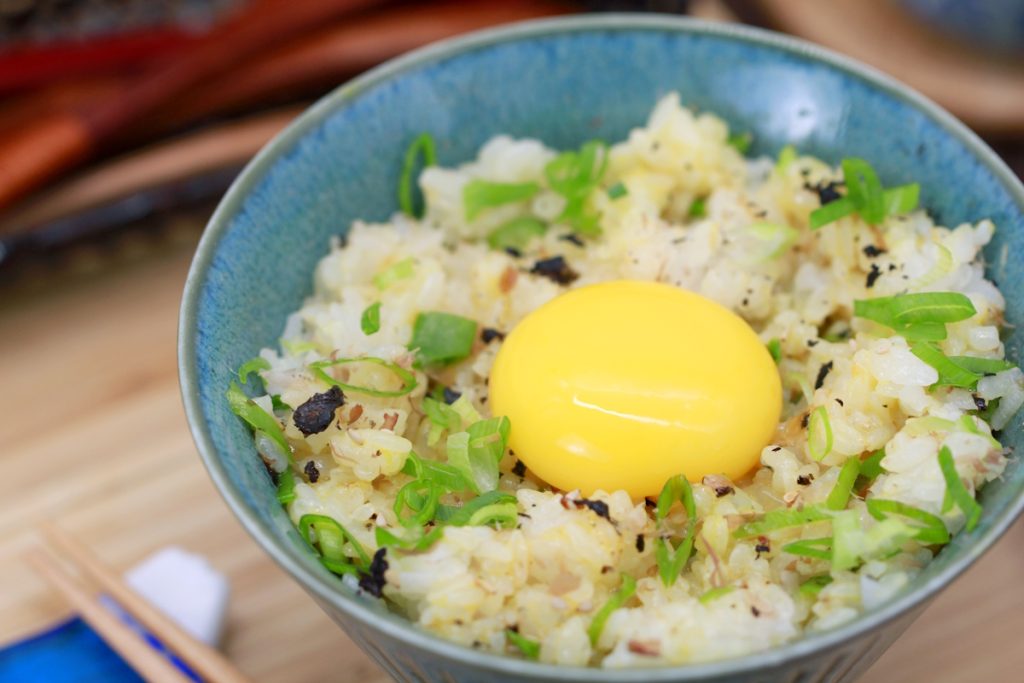
Tamago Kake Gohan: Japanese breakfast rice with egg, Furikake & Katsuobushi | TKG
In this recipe, I’ll show you a particularly flavourful version of Tamago Kake Gohan (TKG)…
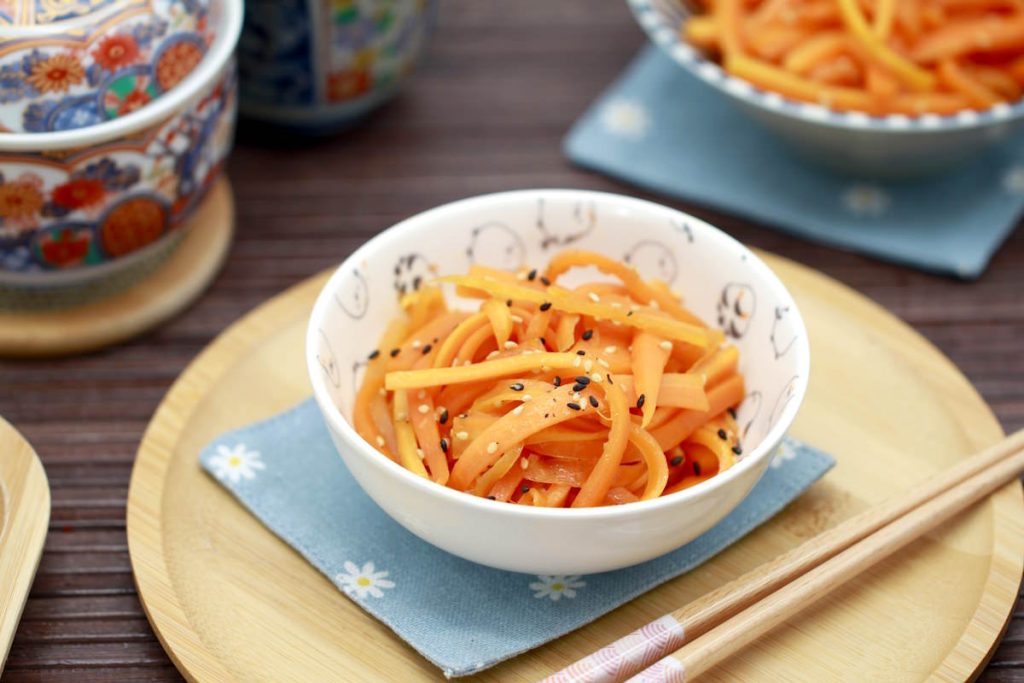
Make your own Ninjin no Kinpira: Japanese carrot side dish in the Kinpira style
Ninjin no Kinpira is a simple Japanese side dish made from finely sliced carrots, which…
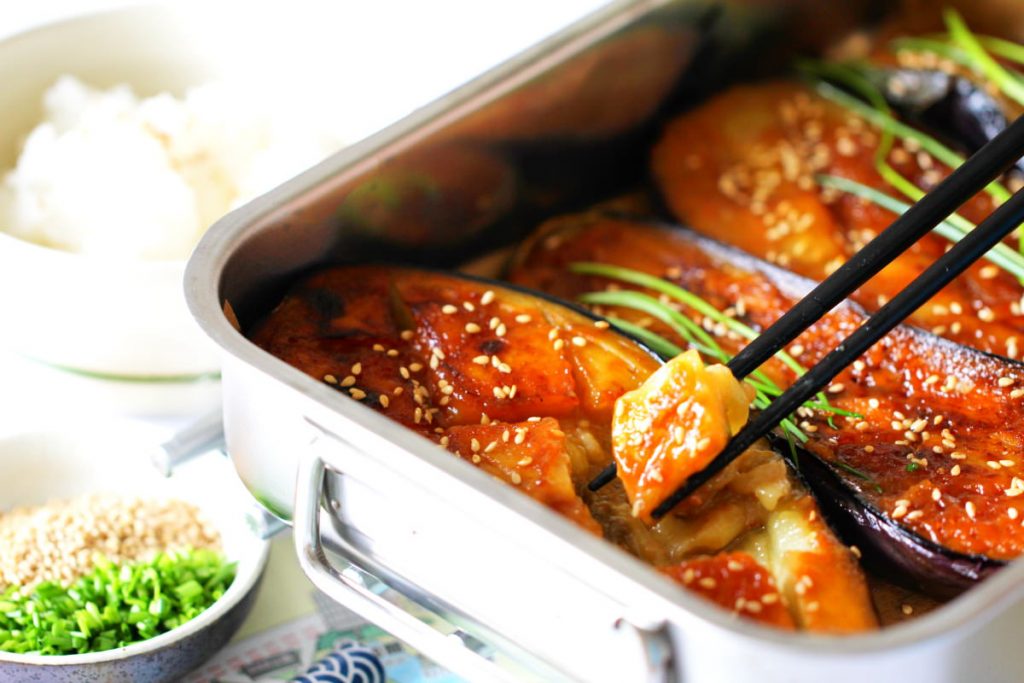
Nasu Dengaku: Oven-baked aubergines glazed with Miso – simple & irresistible
Nasu Dengaku is a true classic of Japanese cuisine and perfect as a side dish…
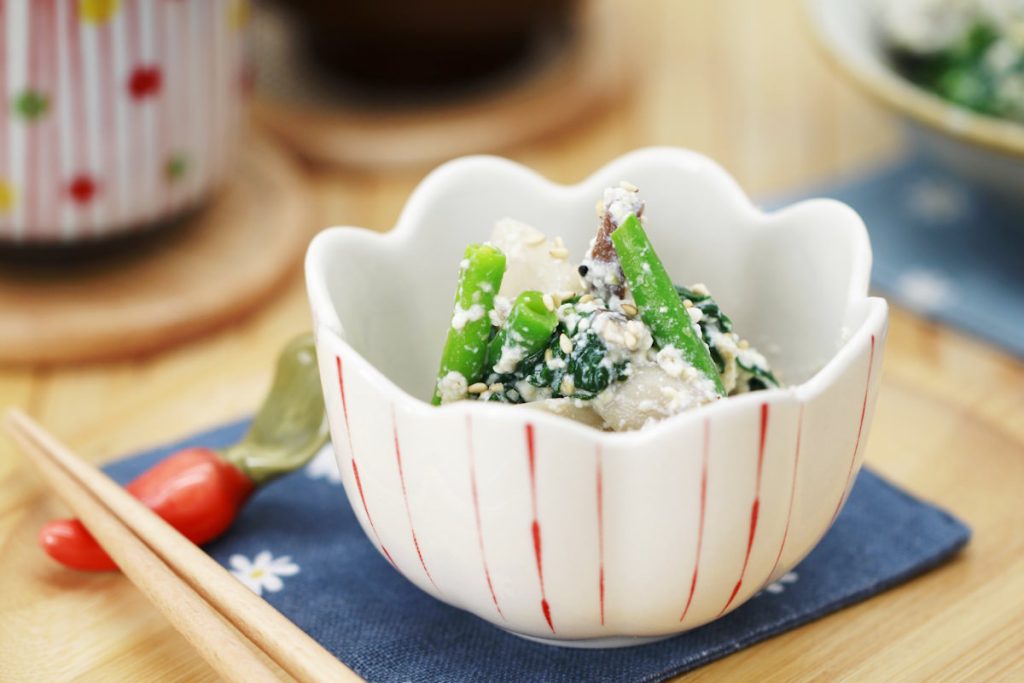
Mushroom and spinach salad with sesame and Tofu dressing: Recipe for Yasai no Shira ae
Mushroom and spinach salad with sesame and Tofu dressing, also known as Yasai no Shira…
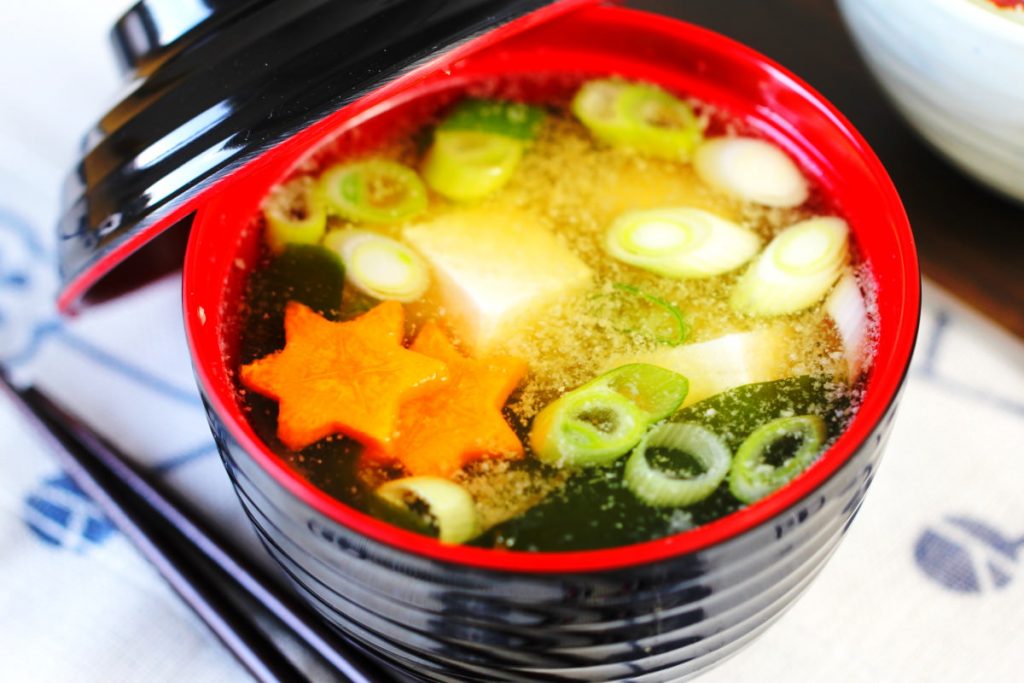
Misoshiru in a flash: basic recipe for miso soup with Wakame & Tofu
Miso soup is much more than just a side dish in Japan – it’s a…
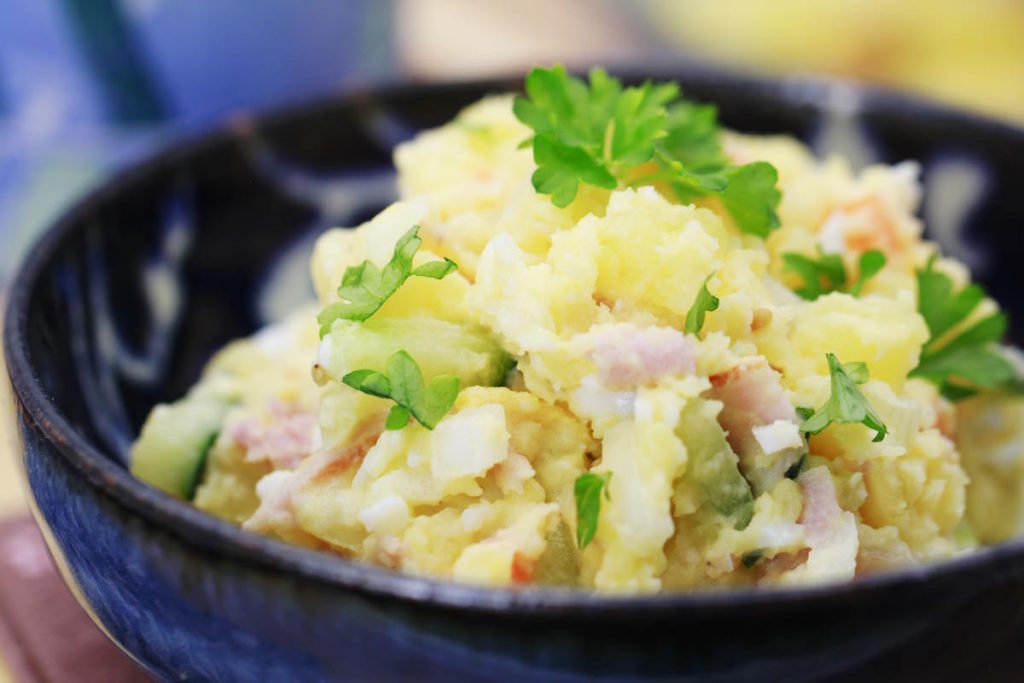
Make your own Japanese potato salad: fresh, creamy and irresistible!
If you’re looking for a delicious side dish that’s both familiar and excitingly new, then…
Have you tried the recipe yet? Let me know in the comments – I can’t wait to hear from you.