
Language:


Nikuman, the Japanese steamed buns with a savoury filling, are one of the absolute favourite snacks there during the colder months. Whether fresh from the convenience shop, at festivals or homemade – as soon as you take your first bite, you’ll understand why they’re so popular: fluffy dough, steaming hot, enveloping a juicy, spicy meat filling with cabbage, Shiitake and ginger.
In this recipe, I’ll show you step by step how you can easily make nikuman yourself – using ingredients that are readily available in Germany. To make them, you’ll need a steamer or a simple steaming insert – but don’t worry: the recipe is designed to be easy even for beginners. And the result is well worth the effort. Once you’ve made nikuman yourself, you’re guaranteed never to want to be without them again.
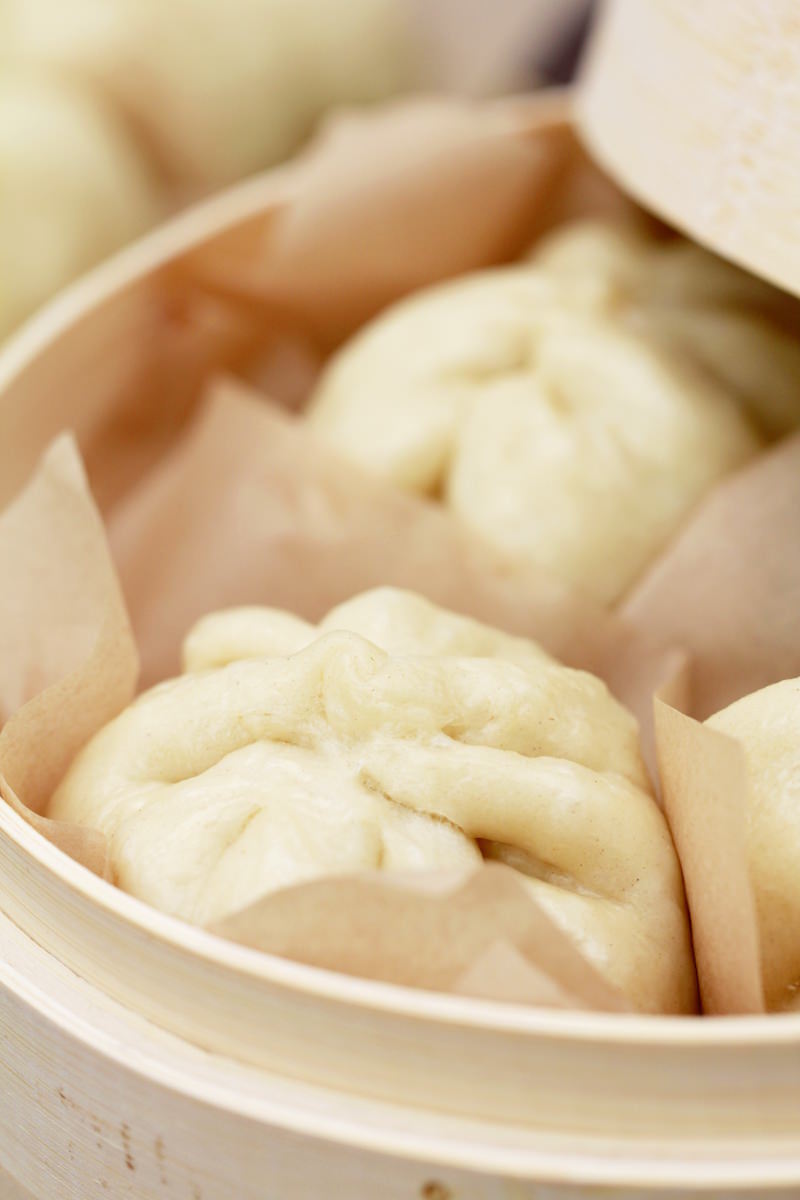
What exactly are nikuman?
Nikuman (肉まん) – literally translated, this simply means ‘meat buns’. But what sounds so simple is a real comfort food in Japan: steamed yeast buns filled with a juicy mixture of minced meat, cabbage, mushrooms, ginger and soya sauce. Fluffy on the outside, flavourful on the inside – and best served warm and steaming.
The idea for steamed buns with a filling originally comes from China, where they are known as baozi. Through trade and cultural exchange, they eventually found their way to Japan – where they quickly became a popular snack. Today, they’re a staple of the street food scene, particularly in autumn and winter – no wonder they’re waiting for you, steaming hot, right next to the entrance of every konbini (Japanese convenience store).
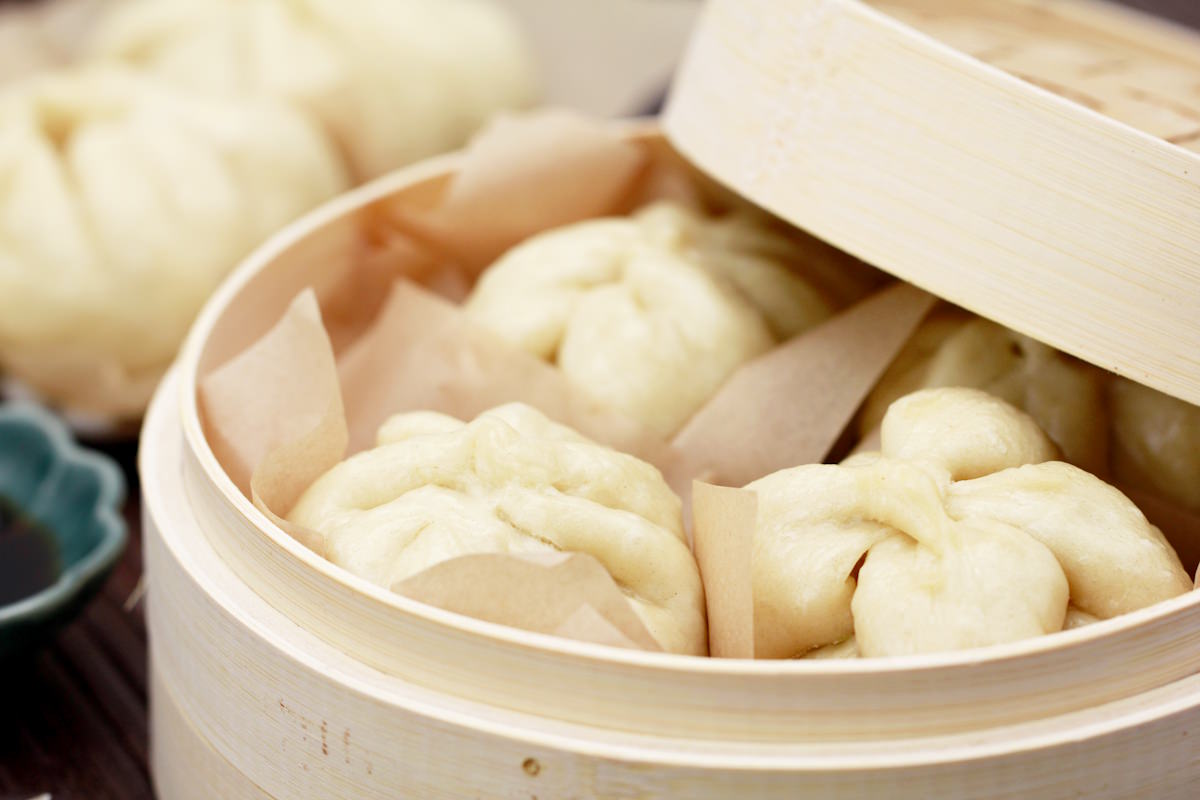
Whether as a quick snack on the go, as part of a cosy evening meal or – as in our home – as a little weekend treat: nikuman are a dish that that brings people together. Hidden between fluffy yeast dough and savoury steam lies a touch of nostalgia, a bit of Japan and a whole lot of enjoyment.

Did you know?
In Japan, nikuman are also known as chukaman or butaman, depending on the region. Chukaman (中華まん) is the collective term for steamed buns of Chinese origin – inspired by the traditional manju from China. Butaman (豚まん) specifically refers to varieties filled with pork and is particularly popular in the Kansai region around Osaka!
Making your own nikuman: Here’s how
Making nikuman at home is easier than you might think – and with the right recipe, they’re guaranteed to turn out well. All you need is a little patience, a steamer insert or bamboo steamer, and a craving for Japanese comfort food.
The key ingredients for Japanese meat buns:
- Yeast dough: Mix wheat flour, dried yeast, a little sugar, baking powder and lukewarm water to create a soft, fluffy dough. A dash of sesame oil adds extra flavour.
- Meat filling: Traditionally, nikuman are filled with a mixture of minced pork or mixed minced meat, cabbage, spring onions, Shiitake mushrooms, ginger and Asian sauces.
- Spices: Soy sauce, oyster sauce, sesame oil and a pinch of shichimi togarashi give the filling depth and a pleasantly spicy note.
- For steaming: A classic steamer insert or bamboo basket works best – this ensures the buns are cooked evenly and stay nice and juicy.
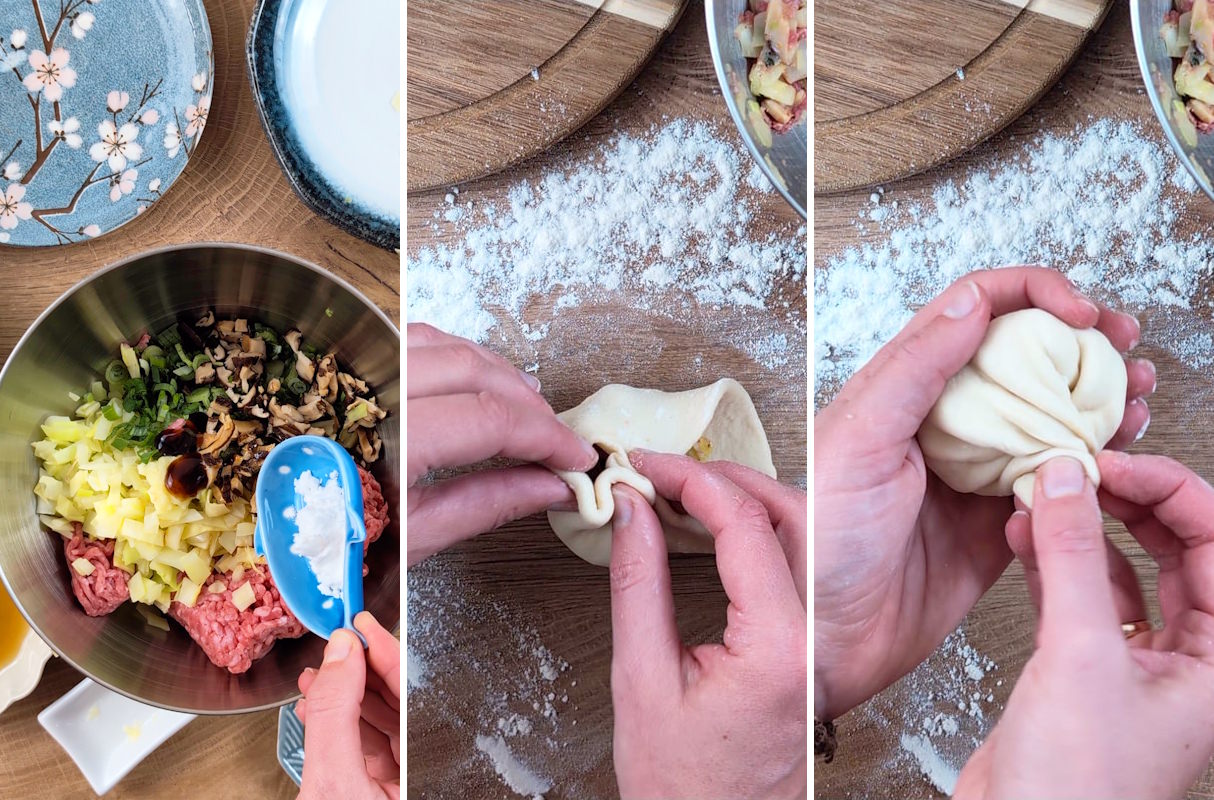
Here’s how it works: First, mix the yeast dough and leave it to rest undisturbed. In the meantime, prepare the filling – chop it finely, mixed well and divided into eight portions. Now it’s time to shape them: roll out the dough balls into small circles, top with the meat filling and fold into neat parcels, applying gentle pressure.
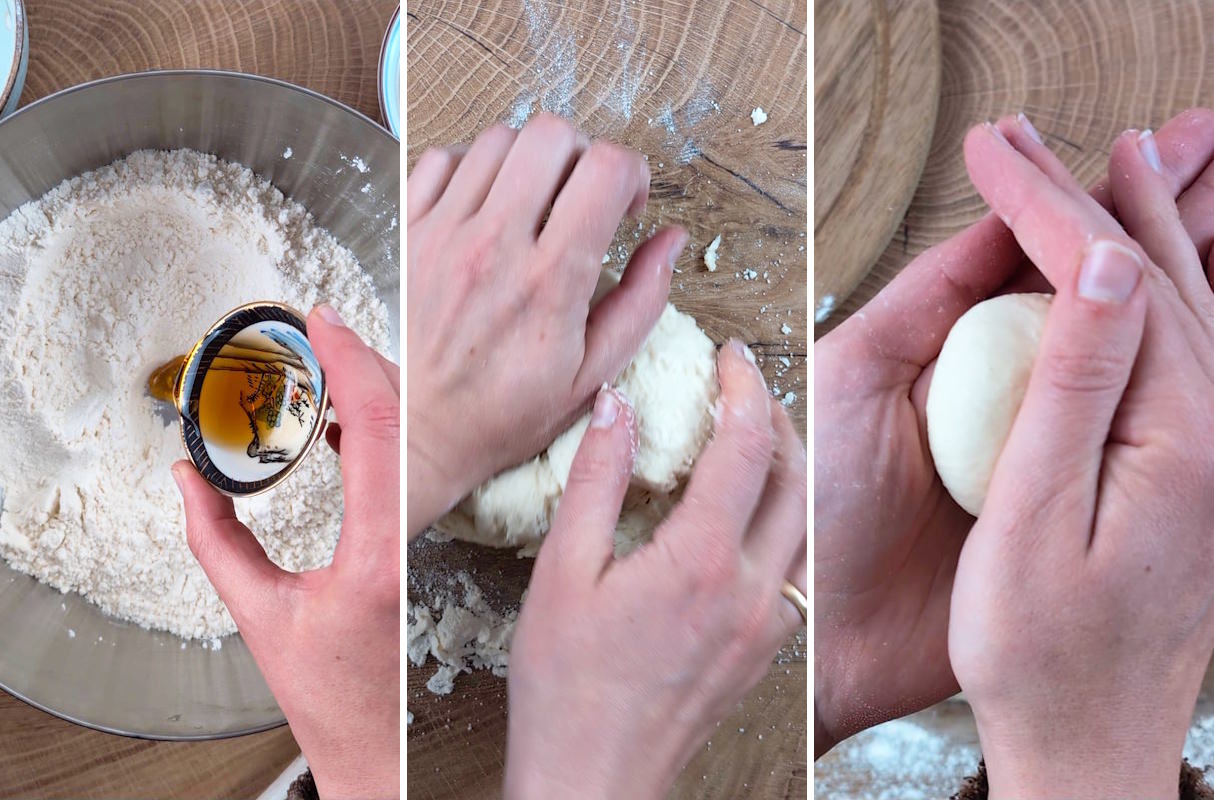
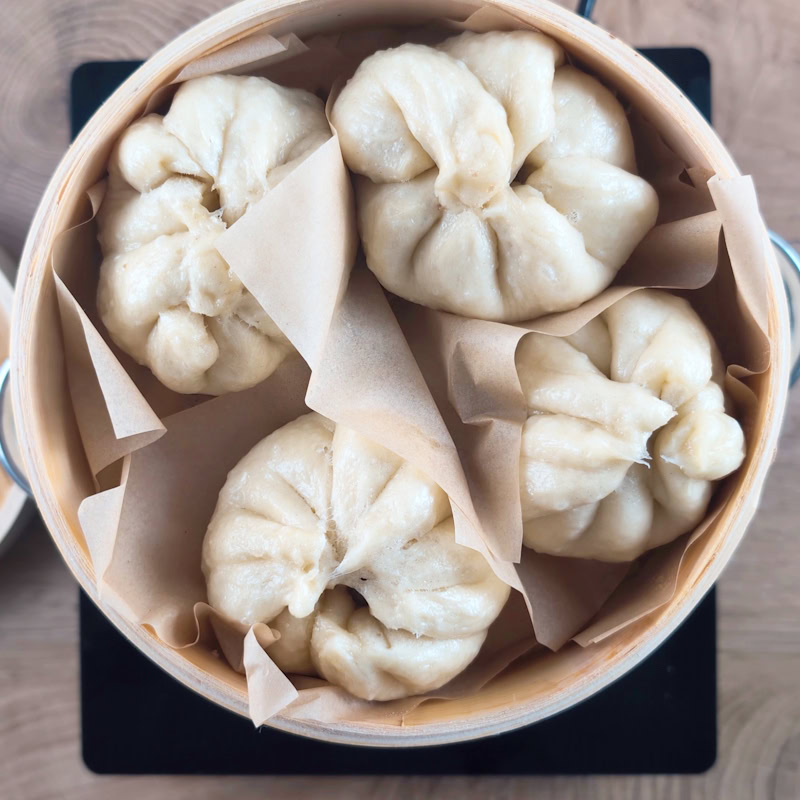
You’ll need a little more patience during the second proving stage – the filled buns are left to rest, covered, and allowed to rise nicely once more. They are then placed in the steamer for about 15 minutes until they are fragrant, glossy and have just the right consistency: soft, springy and simply irresistible.
Tip:
Nikuman taste best fresh from the steamer – but they’re also great for freezing. Simply leave them to cool after steaming, pack them in an airtight container and steam them briefly when needed.
What goes well with nikuman?
Freshly steamed and still slightly steaming from the bamboo basket – nikuman are a real treat all on their own. But with a few small side dishes, they quickly become a Japanese-inspired feel-good meal.
A crisp cucumber salad with a rice vinegar dressing adds freshness and lightness to the hearty buns, whilst a warming Miso Soup complements the Umami flavour wonderfully. If you like, you can also serve it with a few Tsukemono – pickled vegetable strips such as carrots or daikon add a tangy, fruity note that goes perfectly with the soft nikuman.
And if you prefer a classic approach, simply serve some soya sauce or karashi mustard on the side for dipping – spicy, intense and the perfect complement to the mild dough.
Have you ever made nikuman yourself? I’m keen to hear about your version – do let me know in the comments how you combine your fillings! Have fun trying it out and いただきます Itadakimasu!
Nikuman
Makes 8 | 60 minutes | 198 kcal
🖨️ Print PDF 📌 Save this pinWarm, soft dough, a savoury filling and the aroma of freshly steamed buns – nikuman are real comfort food. With this recipe, you can easily make these Japanese steamed buns with a spicy meat and vegetable filling at home. Fluffy on the outside, juicy on the inside – perfect for on the go and guaranteed to be a treat!
Ingredients (8 portions)
For the dough:
250 g plain flour
25 g sugar
1 tsp baking powder
1 tsp dried yeast
1/2 tsp a pinch of salt
1 tbsp sesame oil (im Shop ansehen)*
130 ml lukewarm water (top up with Shiitake soaking water if necessary)
For the filling:
150 g mixed minced meat
100 g white cabbage or Chinese cabbage
1 spring onion
1 tbsp freshly grated ginger
2 Shiitake mushrooms (dried, soak beforehand!) (im Shop ansehen)*
1 tbsp Shoyu (im Shop ansehen)*
1 tbsp oyster sauce
1 tbsp potato starch (im Shop ansehen)*
1 tsp sugar
1 tbsp sesame oil
1/2 tsp salt
a little shichimi togarashi (im Shop ansehen)*
a little pepper
To serve:
1 tsp karashi mustard (im Shop ansehen)*
2 tbsp soya sauce
Useful equipment:
8 small squares baking paper (cut to approx. 5 x 5 cm)
Steamer insert (im Shop ansehen) or bamboo steamer (auf Amazon* kaufen)
Santoku knife (im Shop ansehen)
Yukihiara saucepan
Preparation (60 minutes)
Step 1
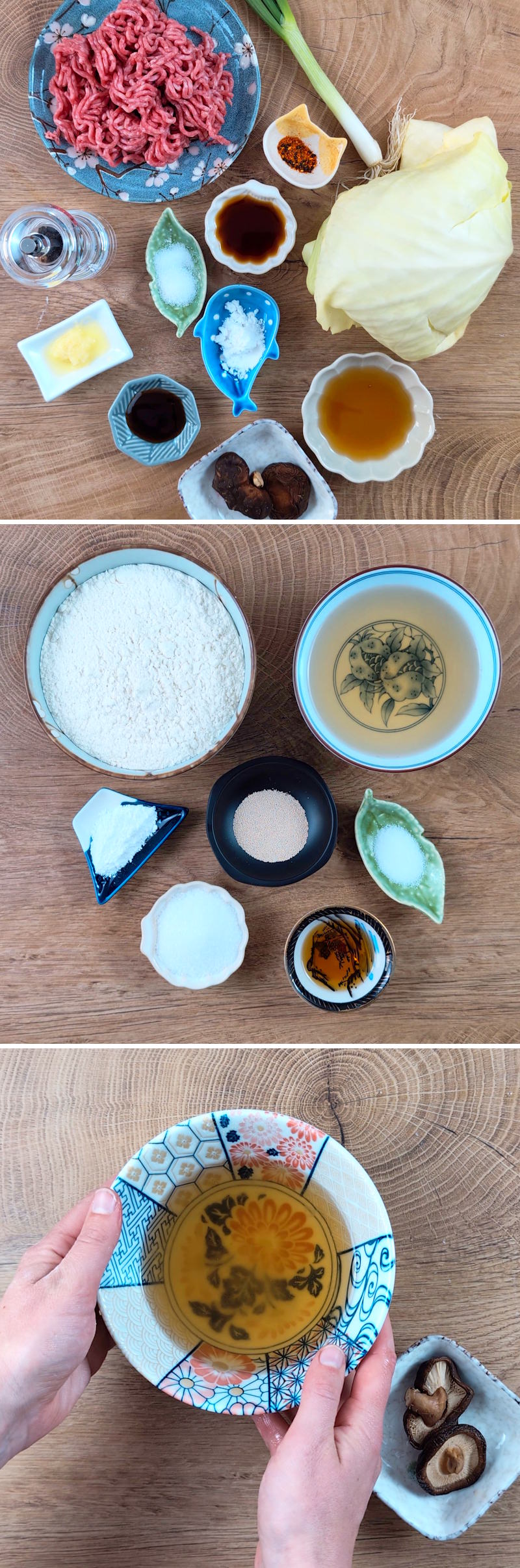
Soak the 2 dried Shiitake mushrooms in warm water for at least 1 hour (preferably overnight). Then squeeze out any excess water, remove the stalks and chop finely. Keep the soaking water – it can be used later for the dough.
On the day you’re making them, check the ingredients for your homemade nikuman.
Step 2
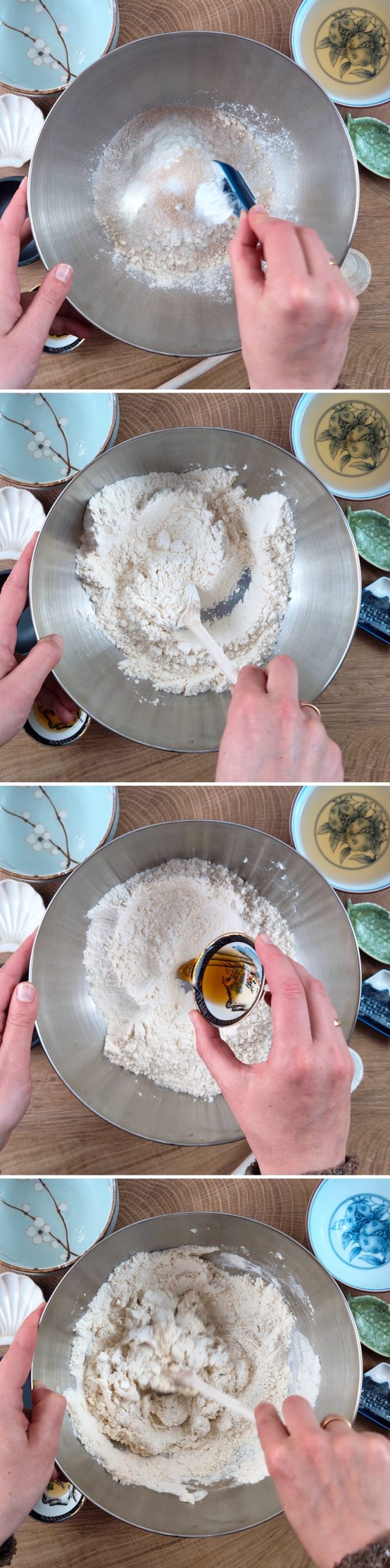
In a bowl, mix together 250 g flour, 1 tsp baking powder, 1 tsp dried yeast, 25 g sugar and ½ tsp salt and mix well.
Then 1 tbsp sesame oil and 130 ml lukewarm water (supplemented with the Shiitake soaking water if necessary) add.
Step 3
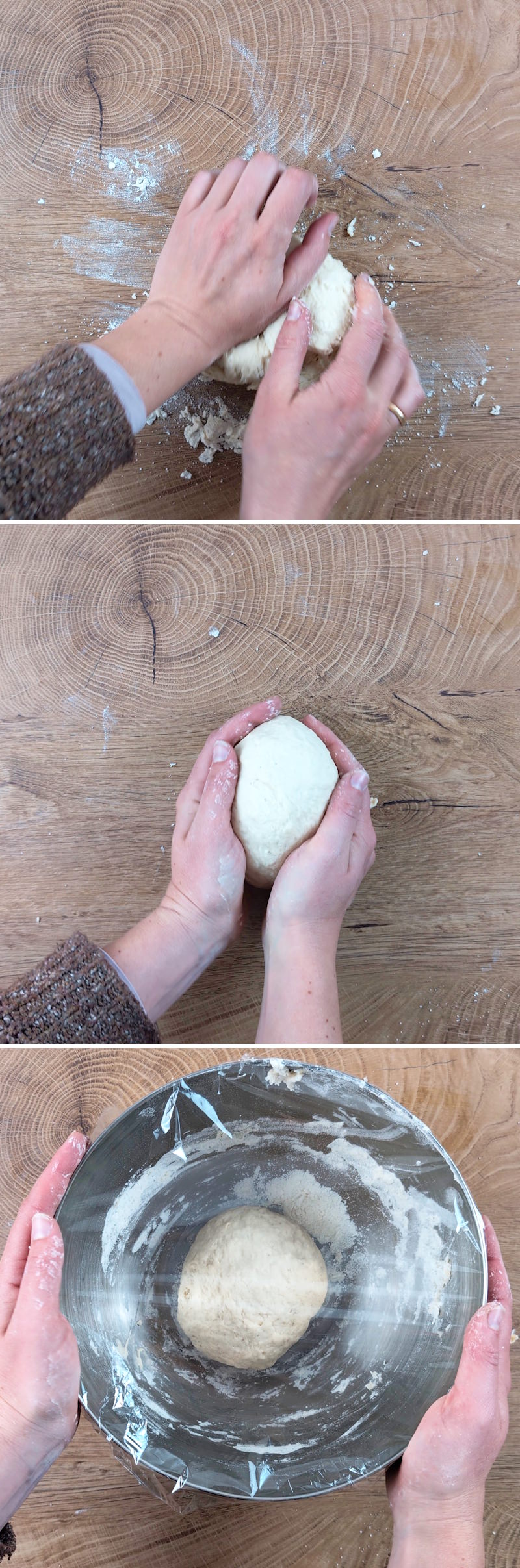
Knead everything into a smooth, supple dough – for about 8–10 minutes by hand or in a food processor. Cover the dough and leave it to rest in a warm place for 30–60 minutes, until it has doubled in volume.
Step 4. Step
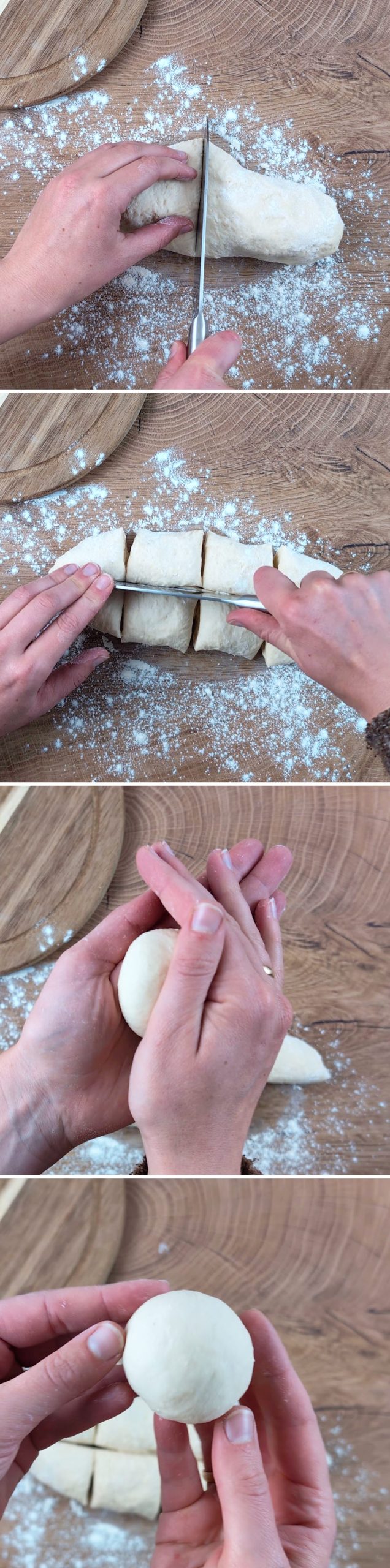
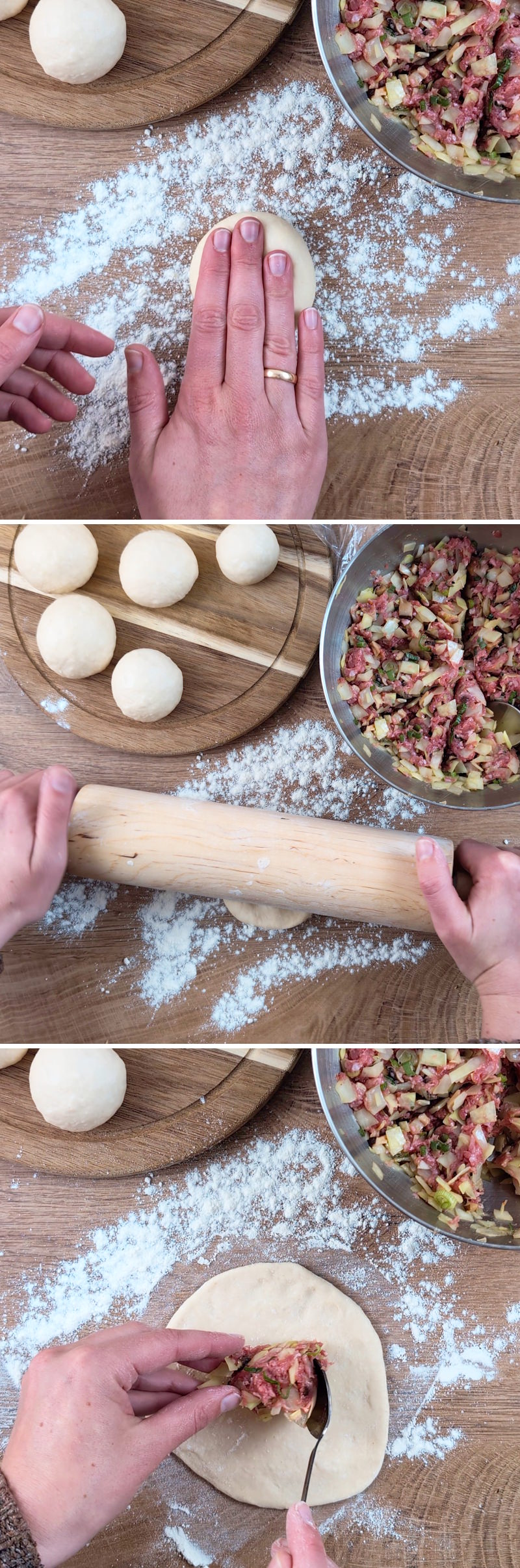
Place the risen dough on a lightly floured surface, shape it into a roll and divide it into 8 equal pieces. Shape each piece into a ball and leave to rest for a further 10 minutes.
Step 5
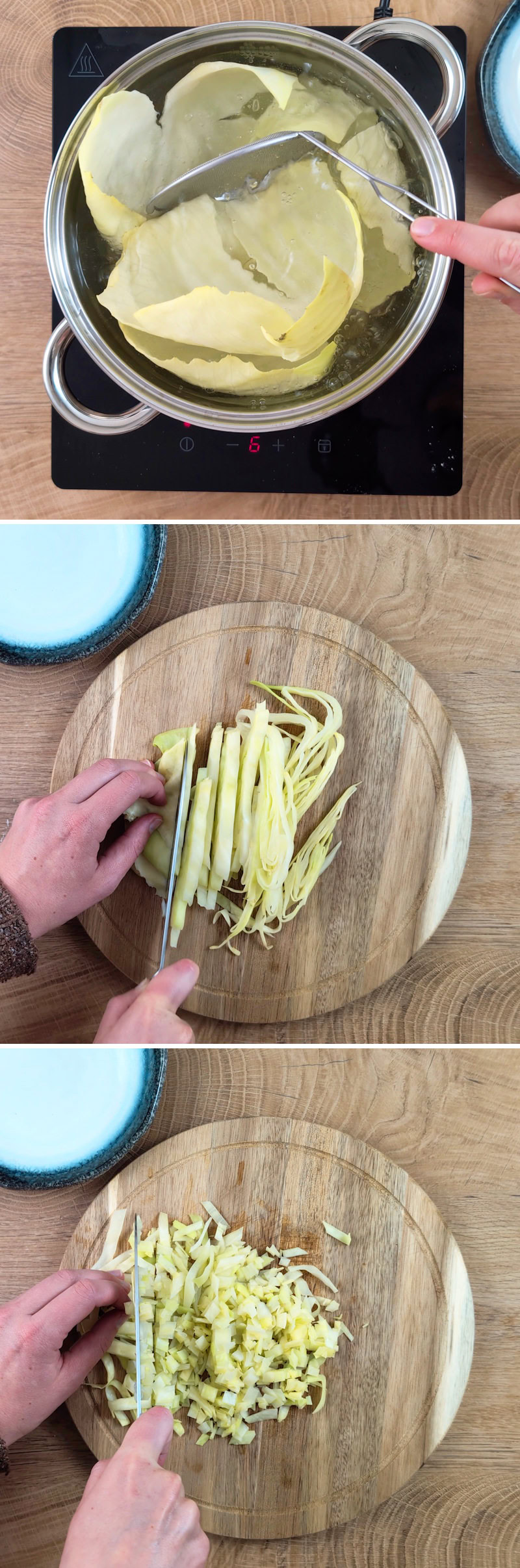
For the filling: Blanch or steam the 100 g of cabbage for 1 minute, then squeeze out any excess water and chop finely. Finely chop the spring onions and 1 tbsp of ginger as well.

Step 6
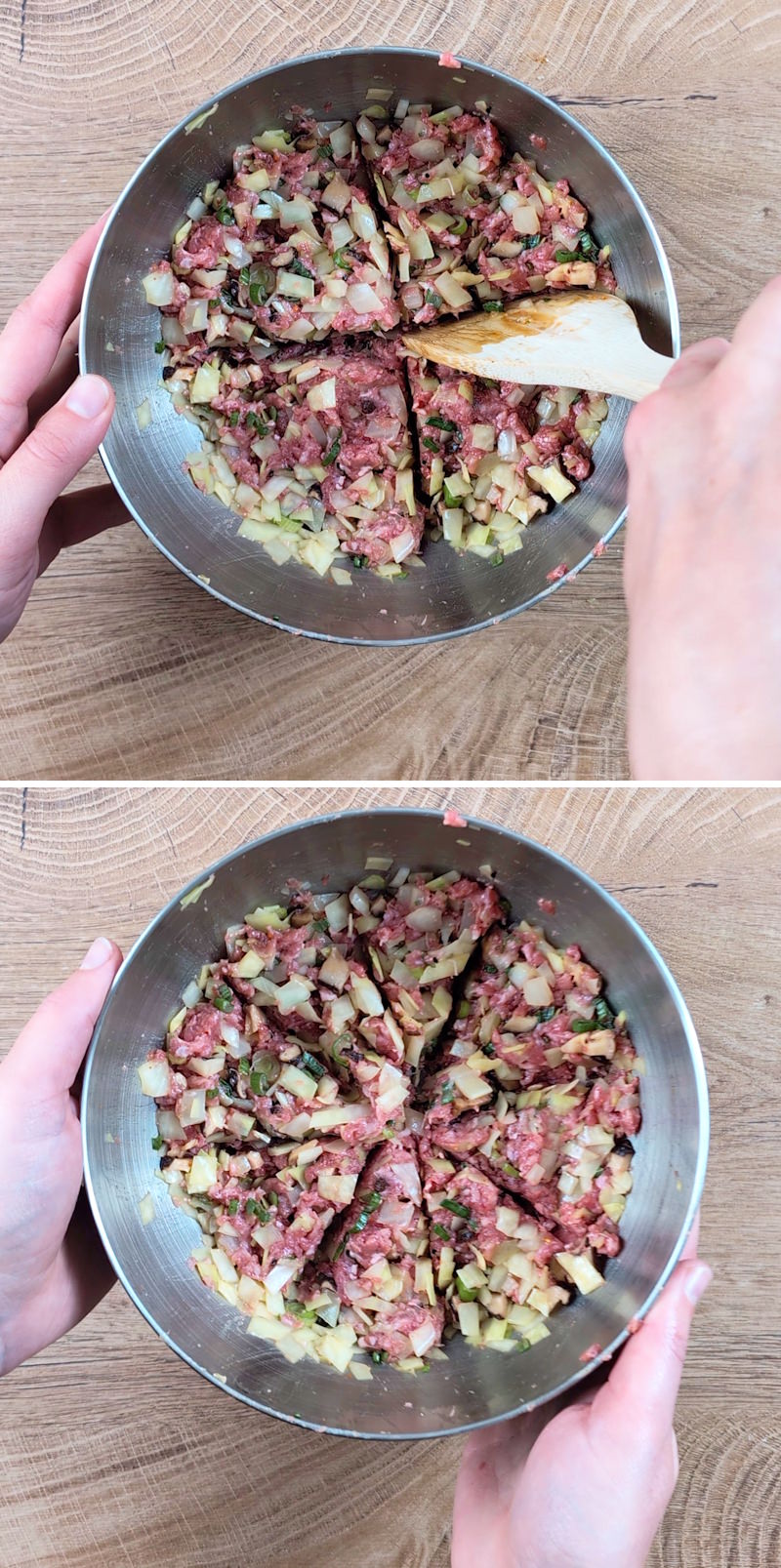
In a bowl, mix together 150 g minced meat, ½ tsp salt, a little pepper, 1 tsp sugar, 1 tbsp soya sauce, 1 tbsp oyster sauce, 1 tbsp sesame oil, 1 tbsp potato starch and, if desired, a little shichimi togarashi.
Then fold in the cabbage, spring onions, Shiitake mushrooms and ginger. Mix everything together well.
Step 7
Divide the mixture into 8 portions.
Step 8
Roll out each ball of dough into circles approx. 10 cm in diameter. Place a portion of the filling in the centre of each circle of dough.
Step 9
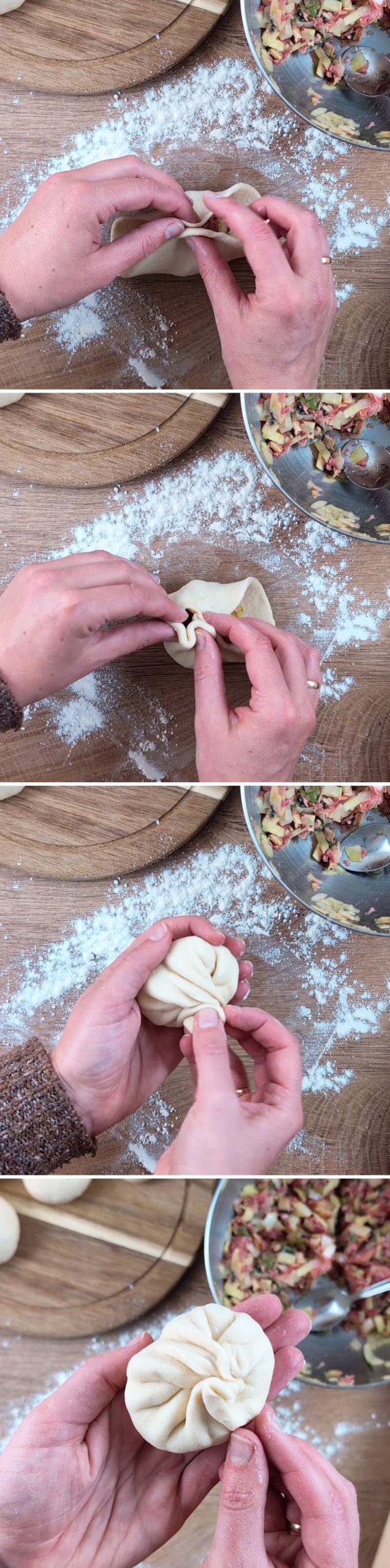
Thin out the edge slightly, pleat it all the way round and seal it well towards the centre, then twist it and press the tip firmly together. This ensures everything stays enclosed inside the nikuman.
Step 10
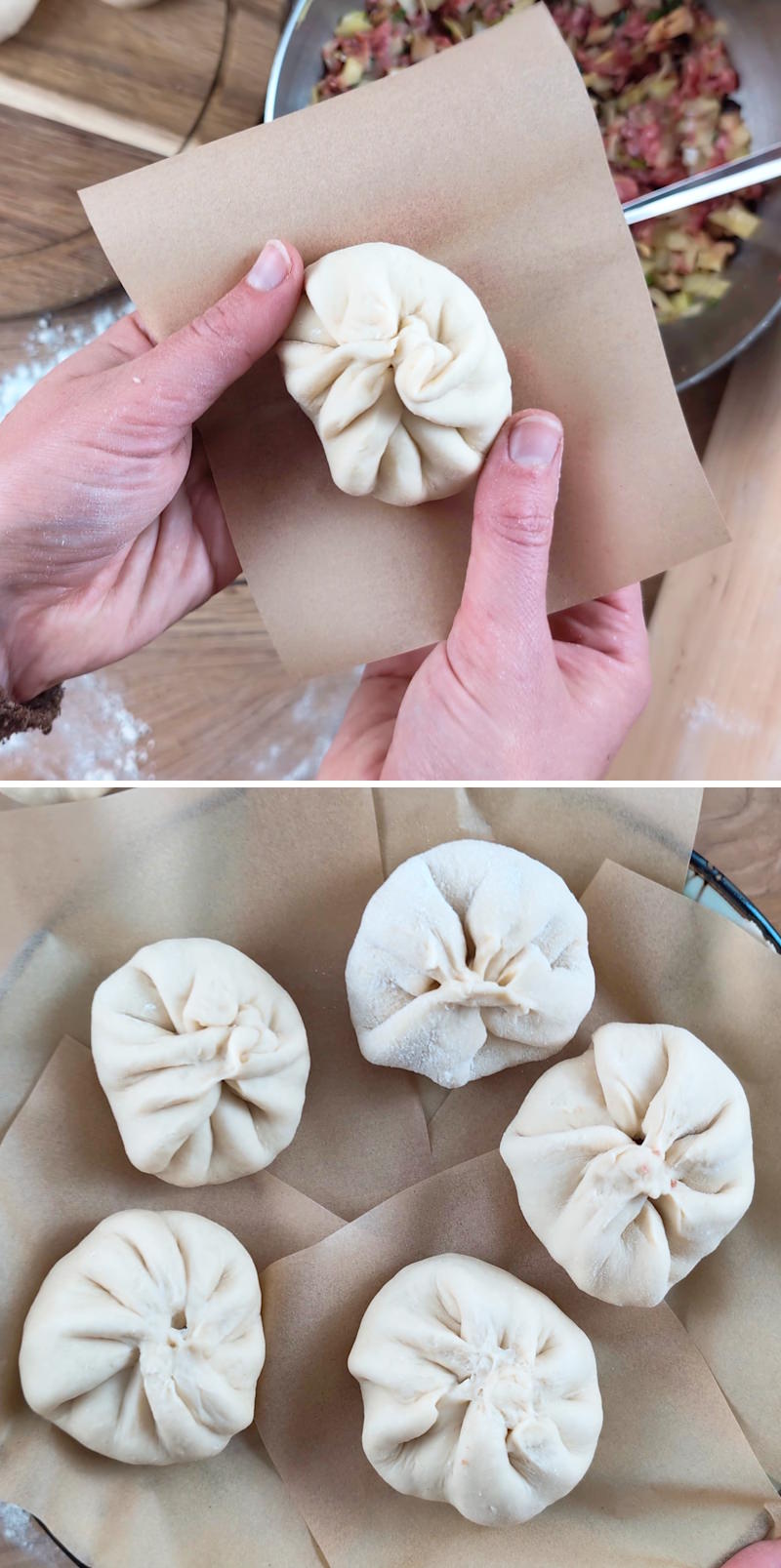
Repeat for all the dough pieces. Place the finished nikuman, with the sealed side facing upwards, onto squares of baking paper (approx. 5×5 cm).
Cover the shaped nikuman and leave them to rest at room temperature for 15–20 minutes until they have visibly risen.
Step 11
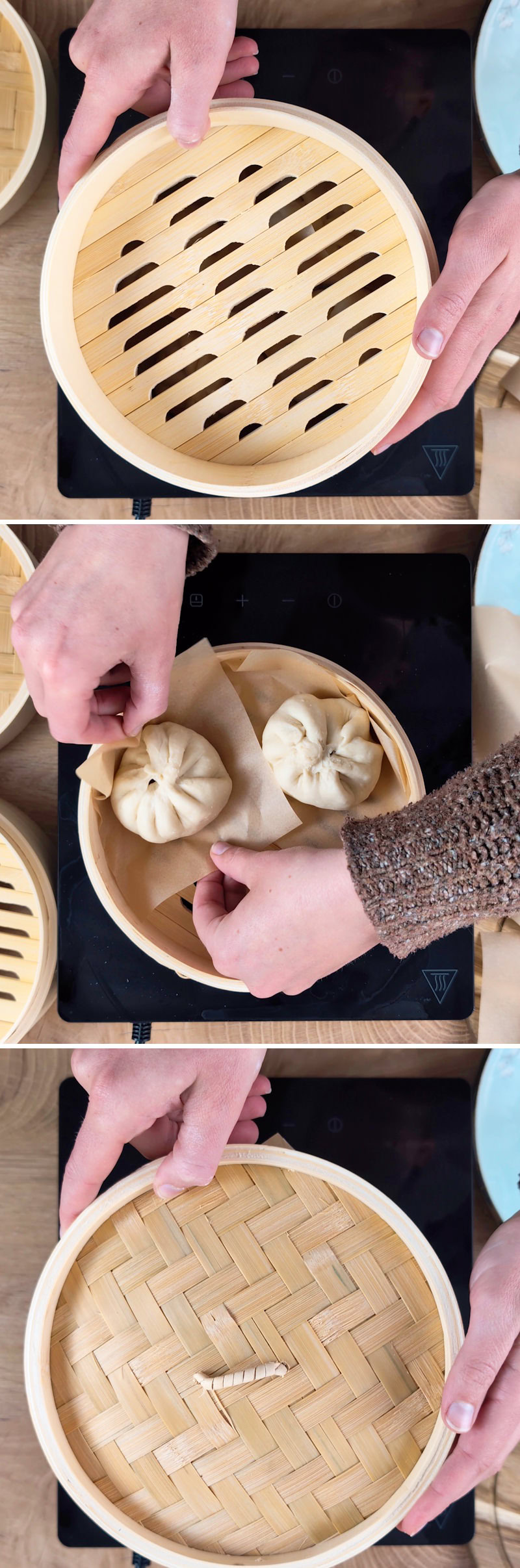
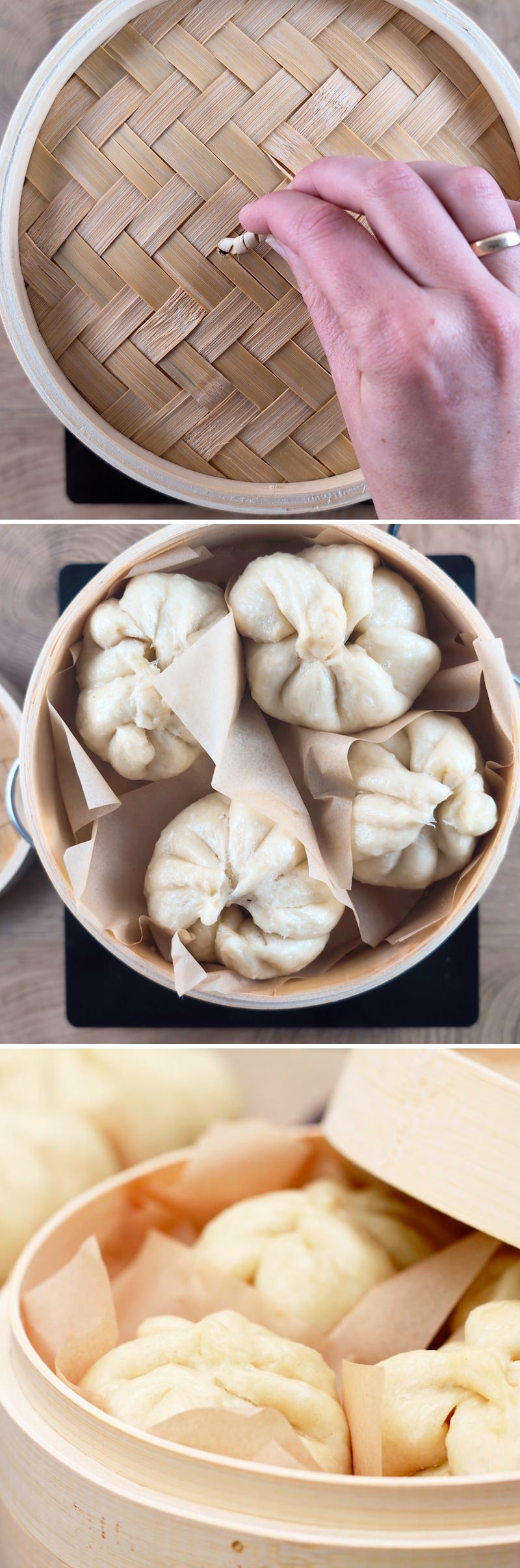
Prepare a steamer basket with water, bring to the boil and reduce the heat to medium. Place the nikuman, along with the baking paper, into the steamer.
Steam for 15 minutes, then leave to rest for a further 2 minutes with the lid on before lifting it – this will keep them nice and fluffy.
Tip: I used a bamboo steamer. If you’re using a saucepan, wrap the lid in a clean tea towel to prevent water from dripping!
Step 12
Nikuman taste best when fresh, but they’re also great chilled or frozen. To reheat, simply steam them briefly again.
Serve them the traditional way with karashi mustard and a little soya sauce – Itadakimasu!
Fancy some more delicious inspiration from Japan? You’ll find even more quick main courses here:
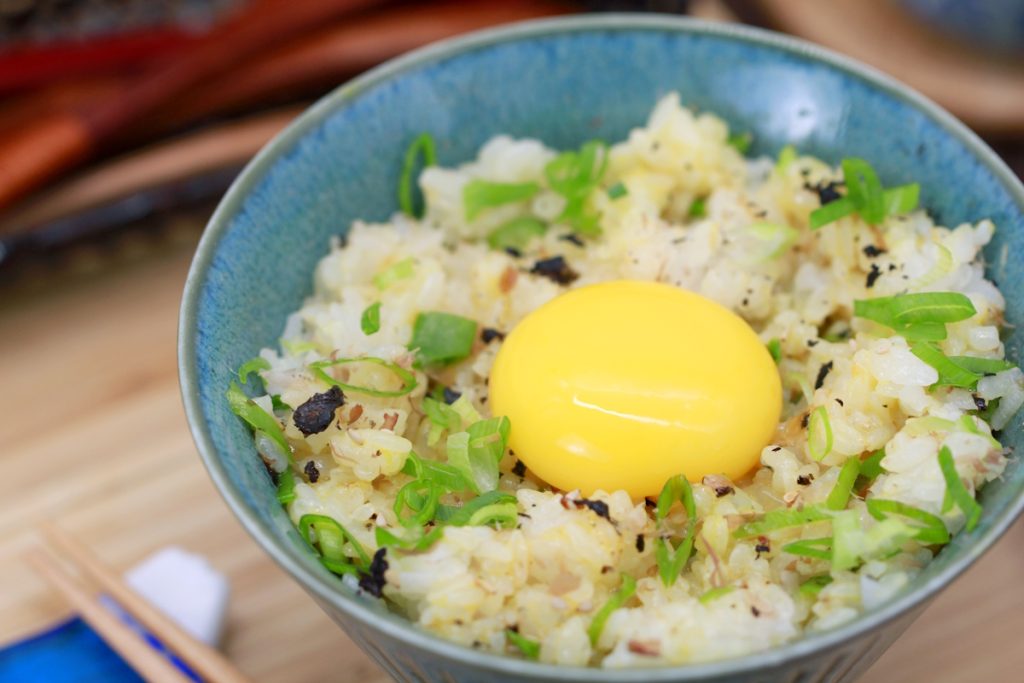
Tamago Kake Gohan: Japanese breakfast rice with egg, Furikake & Katsuobushi | TKG
In this recipe, I’ll show you a particularly flavourful version of Tamago Kake Gohan (TKG)…
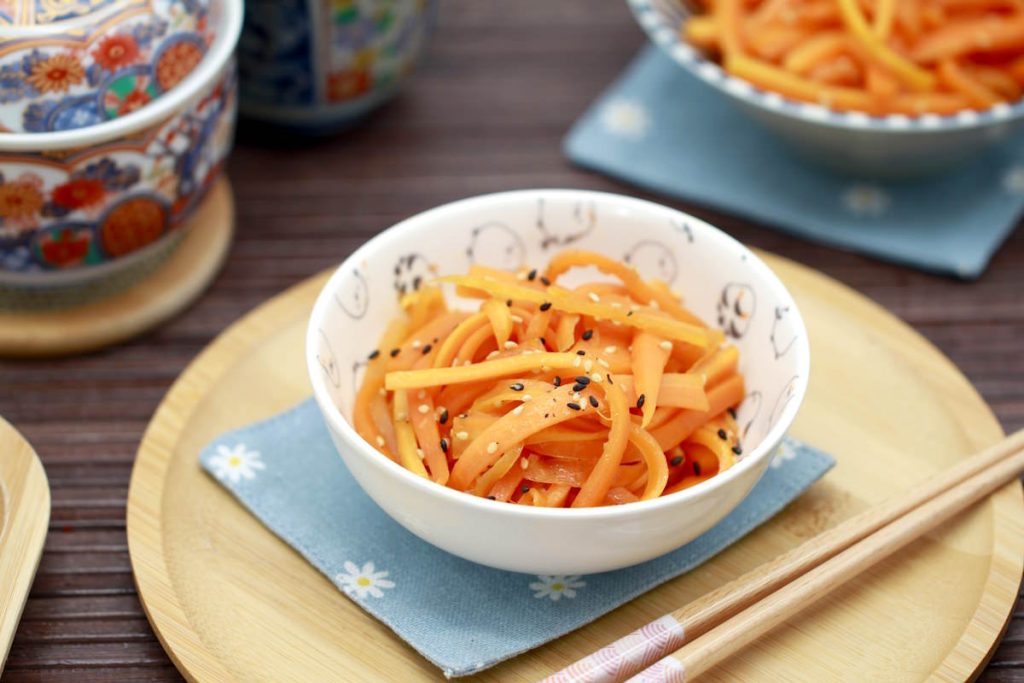
Make your own Ninjin no Kinpira: Japanese carrot side dish in the Kinpira style
Ninjin no Kinpira is a simple Japanese side dish made from finely sliced carrots, which…
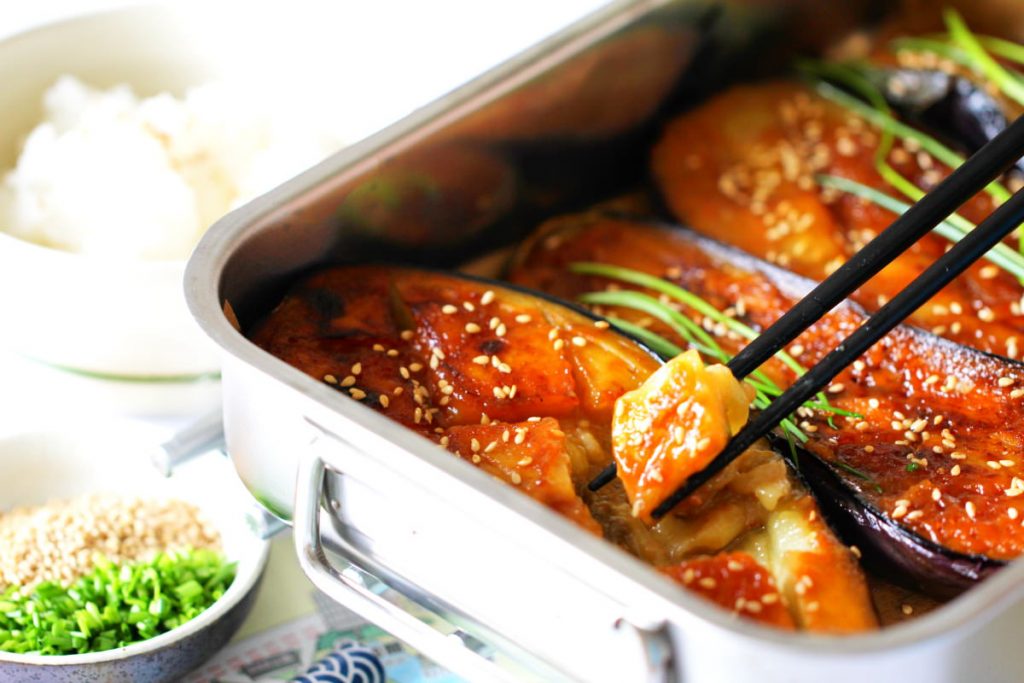
Nasu Dengaku: Oven-baked aubergines glazed with Miso – simple & irresistible
Nasu Dengaku is a true classic of Japanese cuisine and perfect as a side dish…
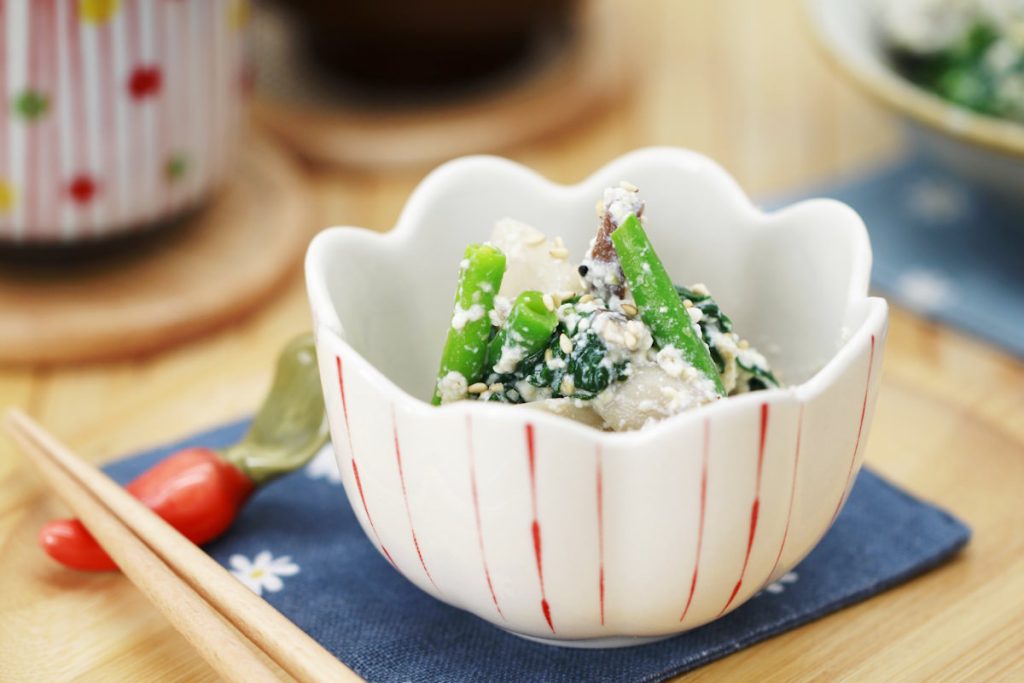
Mushroom and spinach salad with sesame and Tofu dressing: Recipe for Yasai no Shira ae
Mushroom and spinach salad with sesame and Tofu dressing, also known as Yasai no Shira…
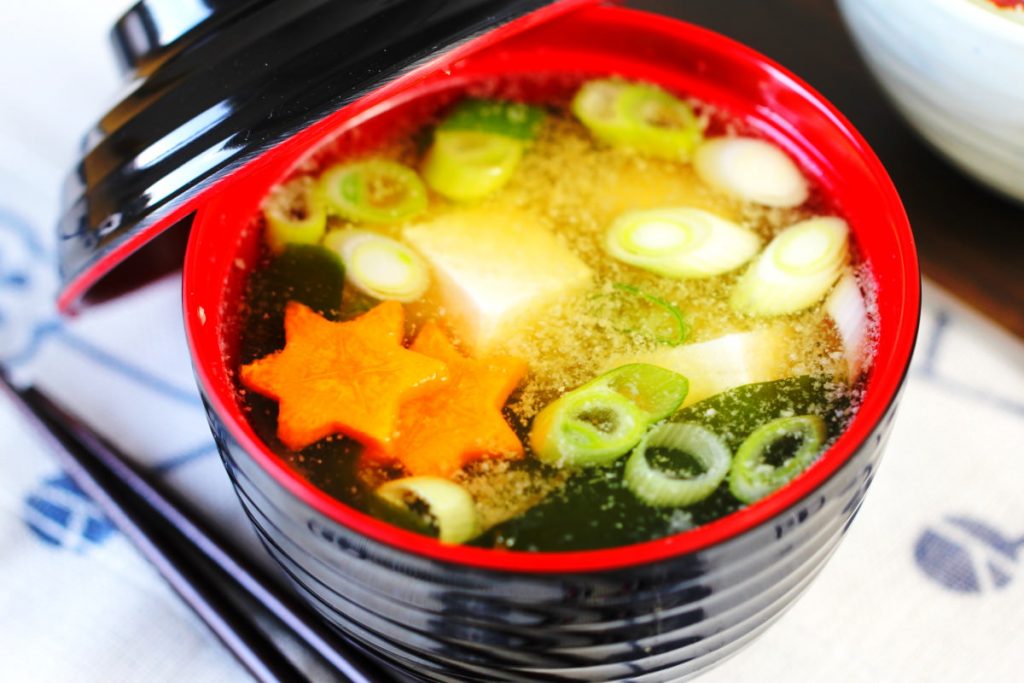
Misoshiru in a flash: basic recipe for miso soup with Wakame & Tofu
Miso soup is much more than just a side dish in Japan – it’s a…
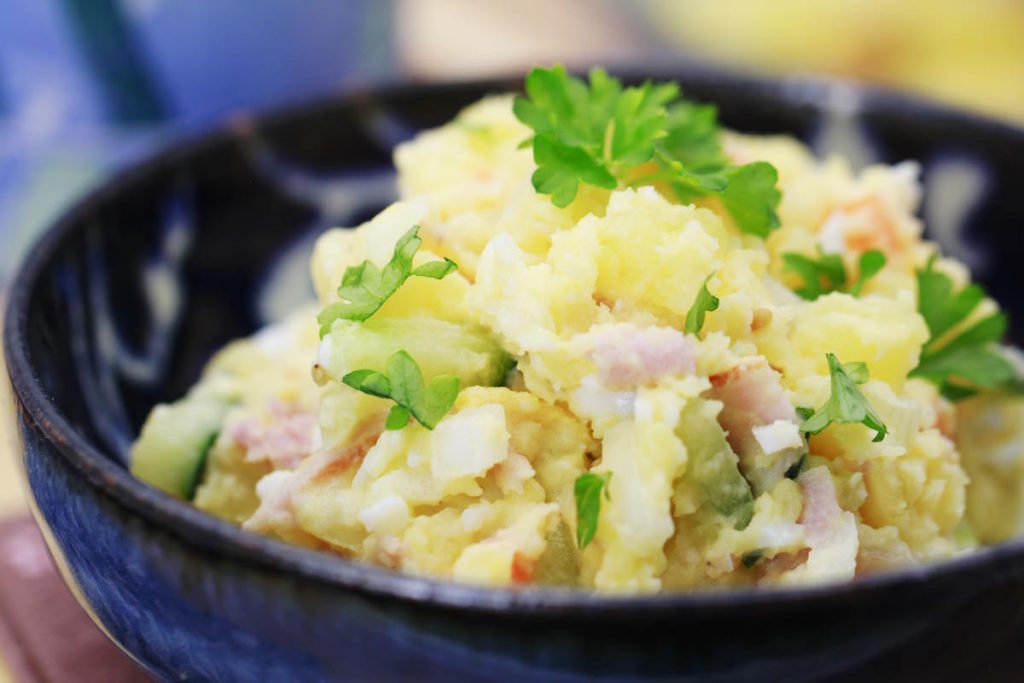
Make your own Japanese potato salad: fresh, creamy and irresistible!
If you’re looking for a delicious side dish that’s both familiar and excitingly new, then…
Have you tried this recipe yet? Let me know in the comments – I can’t wait to hear from you.