
Language:


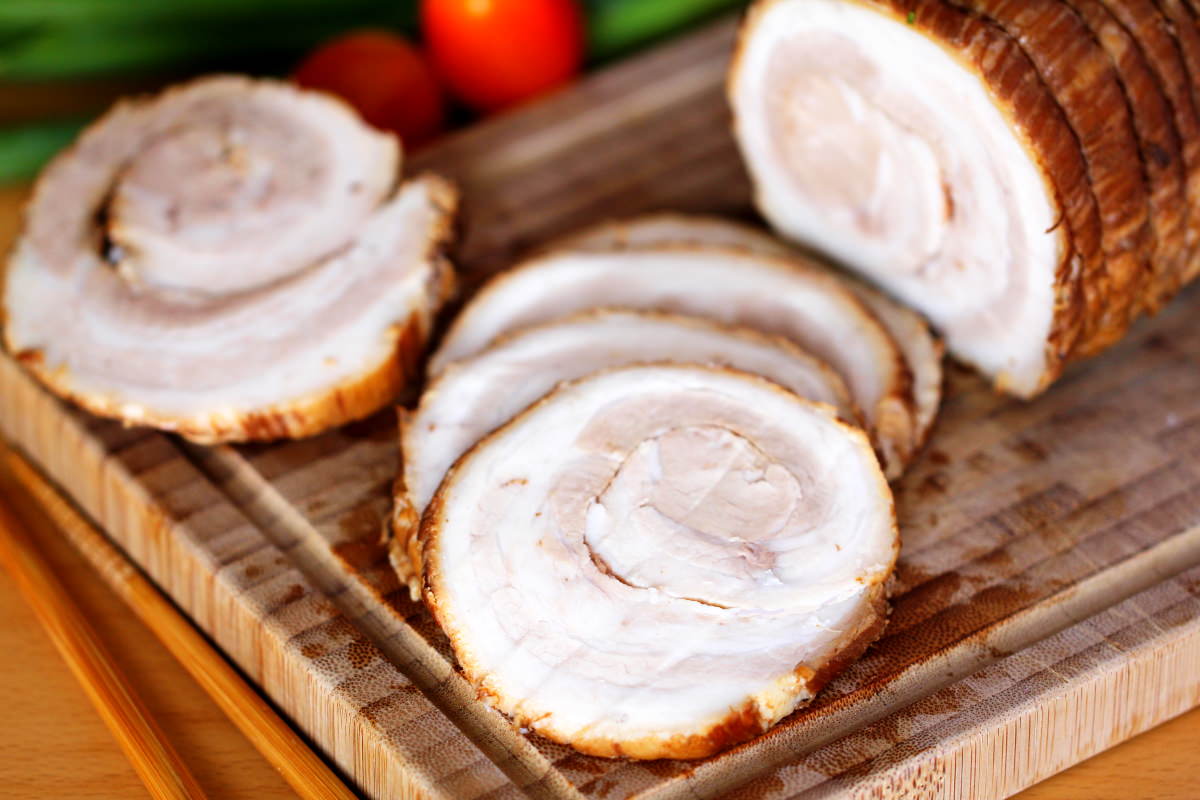
A must-try recipe: Chashu – melt-in-the-mouth Japanese-style braised pork belly! Ordinary rolled pork belly is transformed into the perfect topping for your next bowl of homemade Ramen thanks to a sweet and savoury braising liquid. The melt-in-the-mouth chashu brings pure flavour and a real culinary treat to your menu.
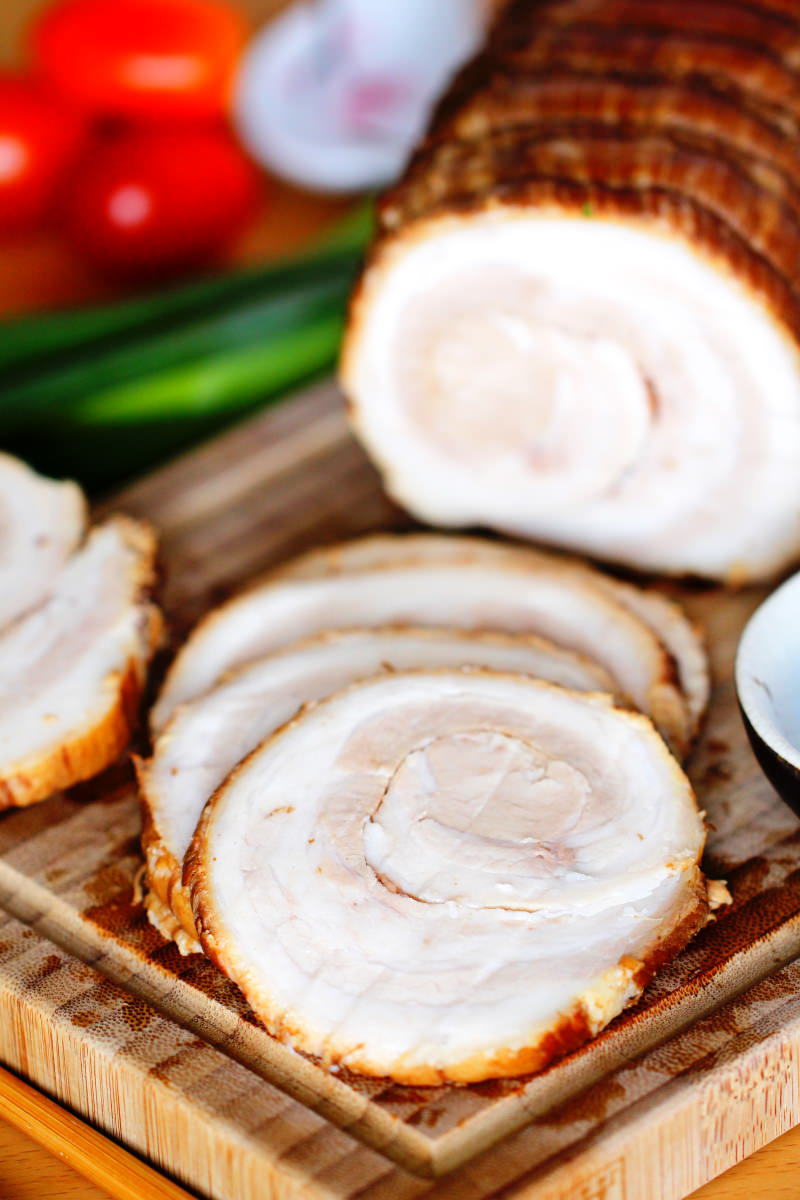
Did you know that a typical Japanese ramen noodle soup usually consists of 5 components? A bowl of ramen consists of ramen noodles, a savoury broth and an aromatic Tare (seasoning sauce), plus rich toppings and, above all, tasty accompaniments.
In my opinion, it is the flavourful side dishes in particular that make a bowl of Ramen a complete meal. There are countless possibilities here, reflecting regional preferences and a wide variety that changes with the seasons. For many Japanese people, it is above all the appealing presentation of the side dishes that accounts for Ramen’s great appeal and popularity!
TOP RECOMMENDATION
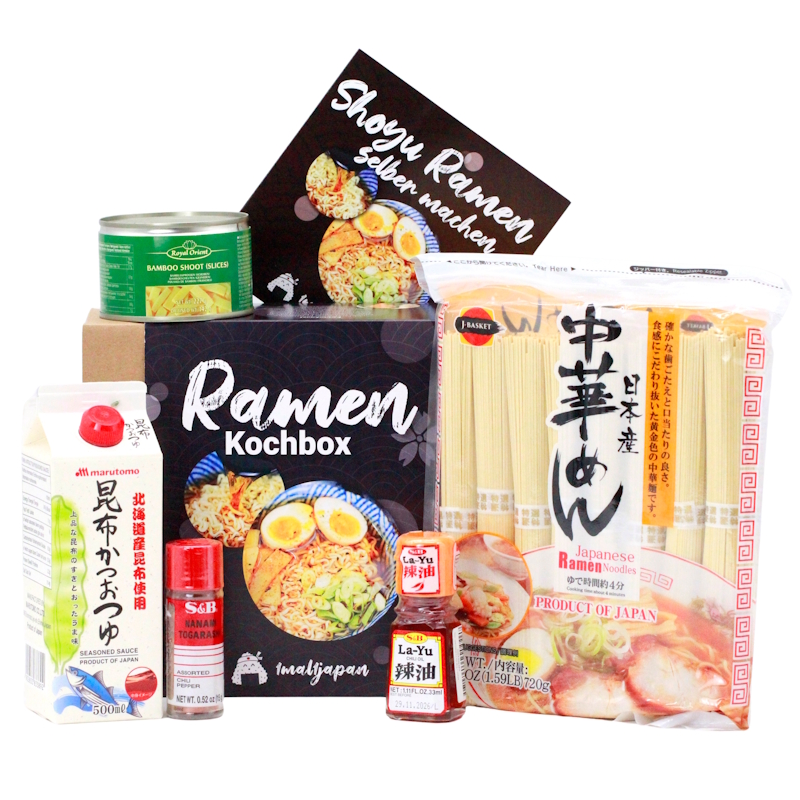
Ramen Kochbox | Shoyu Ramen selber machen
6-tlg. Set für 8 Portionen japanische Nudelsuppe + Rezepte für Shoyu Ramen, auch für Einsteiger. Mit dem Ramen Kochset bereitest du japanische Nudelsuppe ganz einfach…
In stock
A wonderful basis for choosing toppings in Ramen recipes is, without a doubt, a homemade chashu roast made from rolled pork belly, which is cut into thin slices after cooking and served with the soup. Across Japan, this topping is a classic in Ramen restaurants, despite the regional variations in broths and Tare!
To prepare it, ordinary pork belly is rolled into a tight roll, tied with cooking string and simmered in a stock made from Shoyu soya sauce (im Shop ansehen) , Sake (im Shop ansehen), sugar, spring onions and fresh ginger for over two hours.
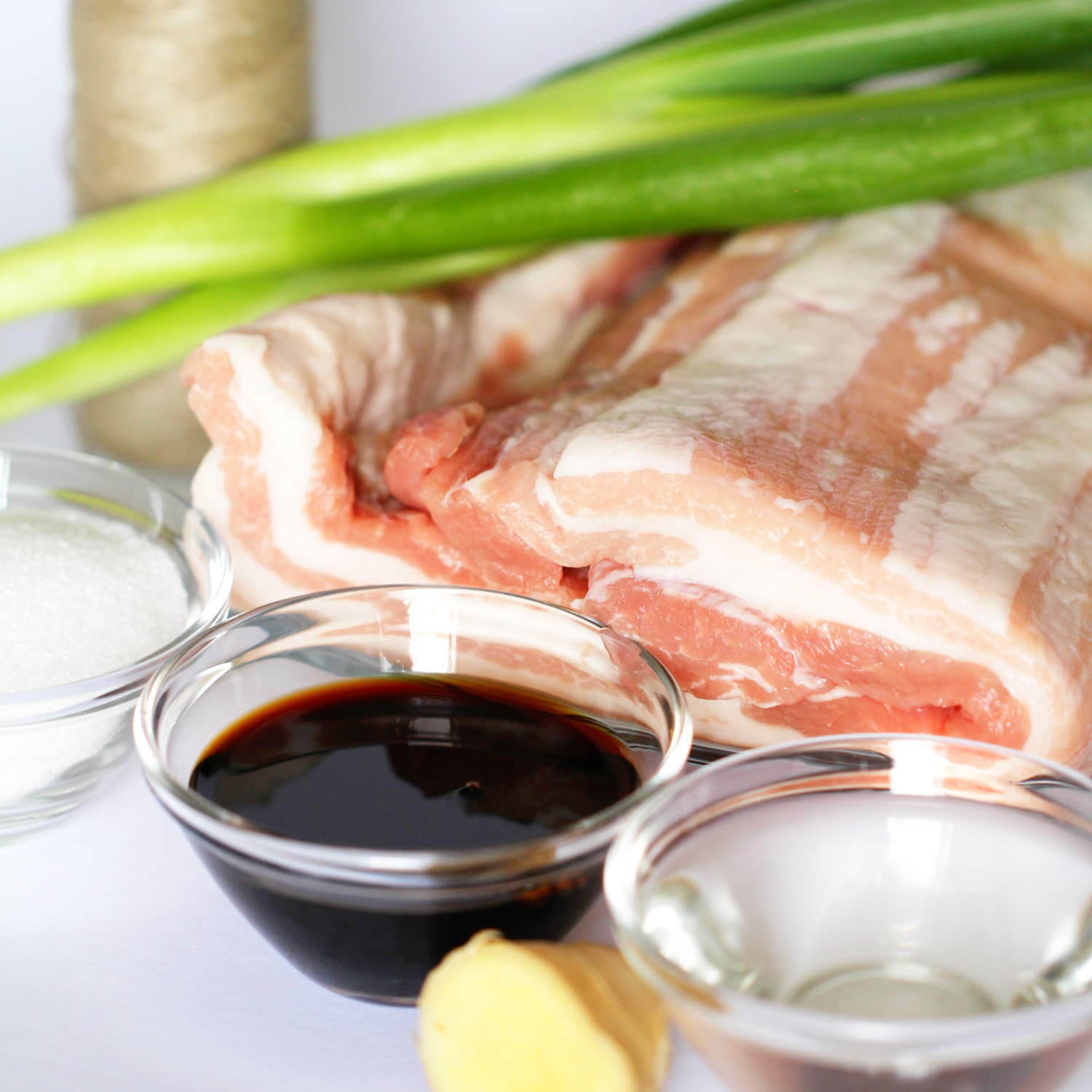
By braising the fatty pork belly very slowly and gently, the meat is transformed into pure flavour…
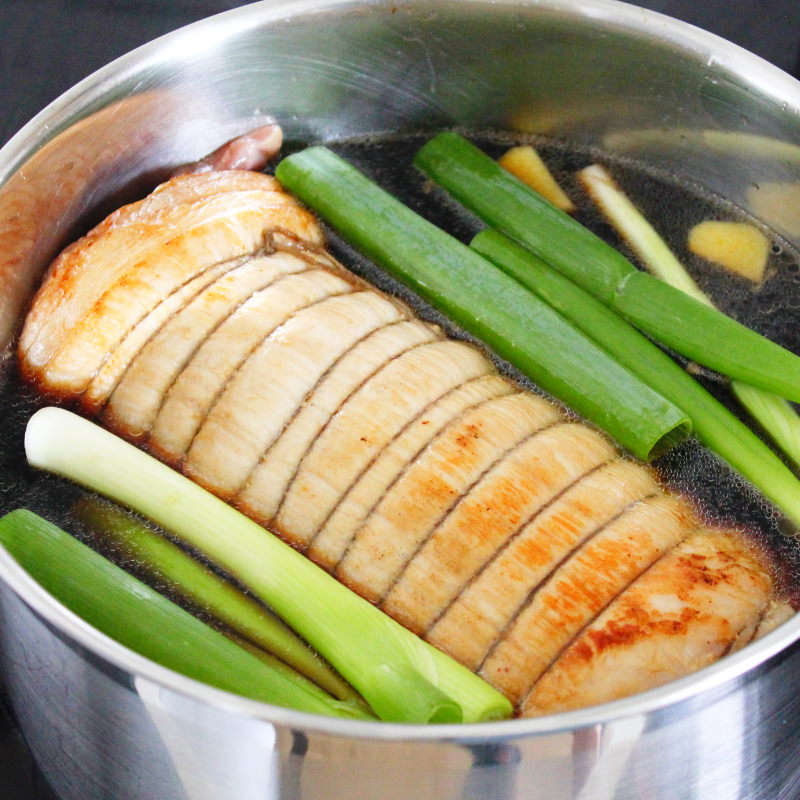
Chashu has its roots in Chinese cuisine, where it is known as char siu. There, unlike the Japanese method, the pork belly is skewered and cooked in an oven or over an open fire. As Ramen also originally came to Japan from Chinese cuisine, it’s no surprise that Ramen and chashu go together so wonderfully!
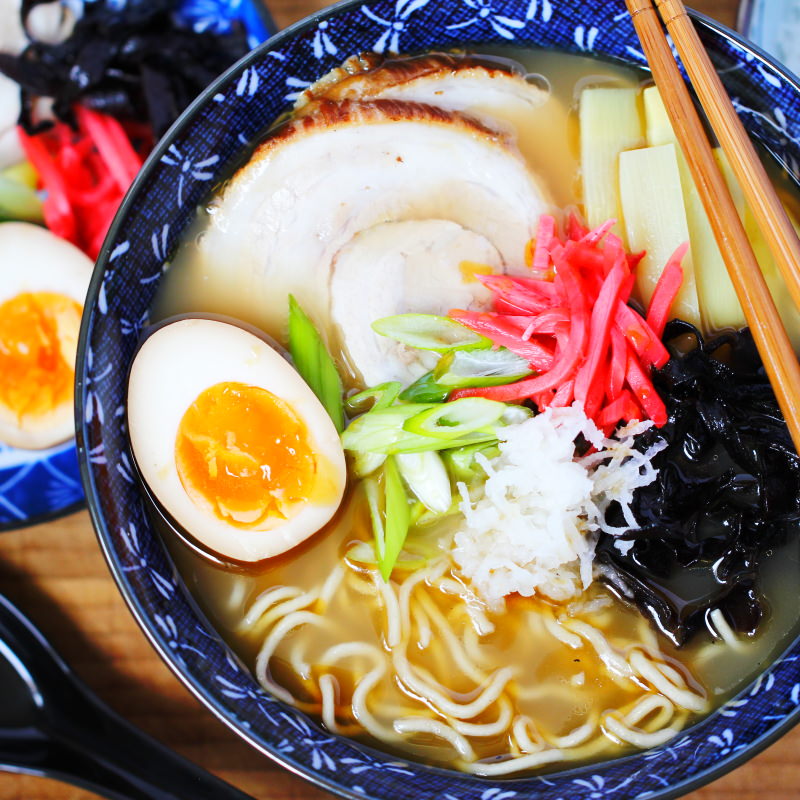
As you’ll also learn in my main post on Ramen, choosing the right toppings and accompaniments for ramen noodle soup is absolutely key. As well as the various flavours such as salty, sweet, sour, spicy and savoury, the colours of the accompaniments should also complement one another. For example, the eye is drawn to a dish when all three traffic light colours are present – green, yellow and red. You can find an example here in the recipe for delicious Hakata Tonkotsu Ramen:
And finally, before we get started with the recipe, here’s a quick tip: Once the cooking time is up, the cooked pork belly should ideally be left to rest overnight in the fridge in an airtight container.
Once well chilled, not only will the meat be easier to slice into fine strips the following day, but the flavour of the stock will also intensify even further in the meat! However, if you’d like to serve the chashu straight away, you can skip this step and move straight on to slicing it.
I hope that this wonderful recipe for braised pork belly chashu provides you with a great base for your next bowl of Ramen! And now I wish you lots of fun and every success with the preparation:
Chashu
Serves 10 | 150 minutes | 404 kcal
🖨️ Print PDF 📌 Save to PinterestA must-try recipe: melt-in-the-mouth Japanese-style braised pork belly! Ordinary rolled pork belly is transformed into the perfect topping for your next bowl of homemade Ramen thanks to a sweet and savoury braising liquid. The melt-in-the-mouth chashu brings pure flavour and a real culinary treat to your menu.
Ingredients (10 portions)
1 kg pork belly
2 spring onions
30 g ginger (fresh)
2 tbsp oil (e.g. sunflower oil)
200 ml Shoyu (im Shop ansehen)*
200 ml Sake (im Shop ansehen)*
100 g sugar
500 ml water
Useful tools:
Santoku knife (im Shop ansehen)
Preparation (2.5 hours + 12 hours chilling time)
Step 1
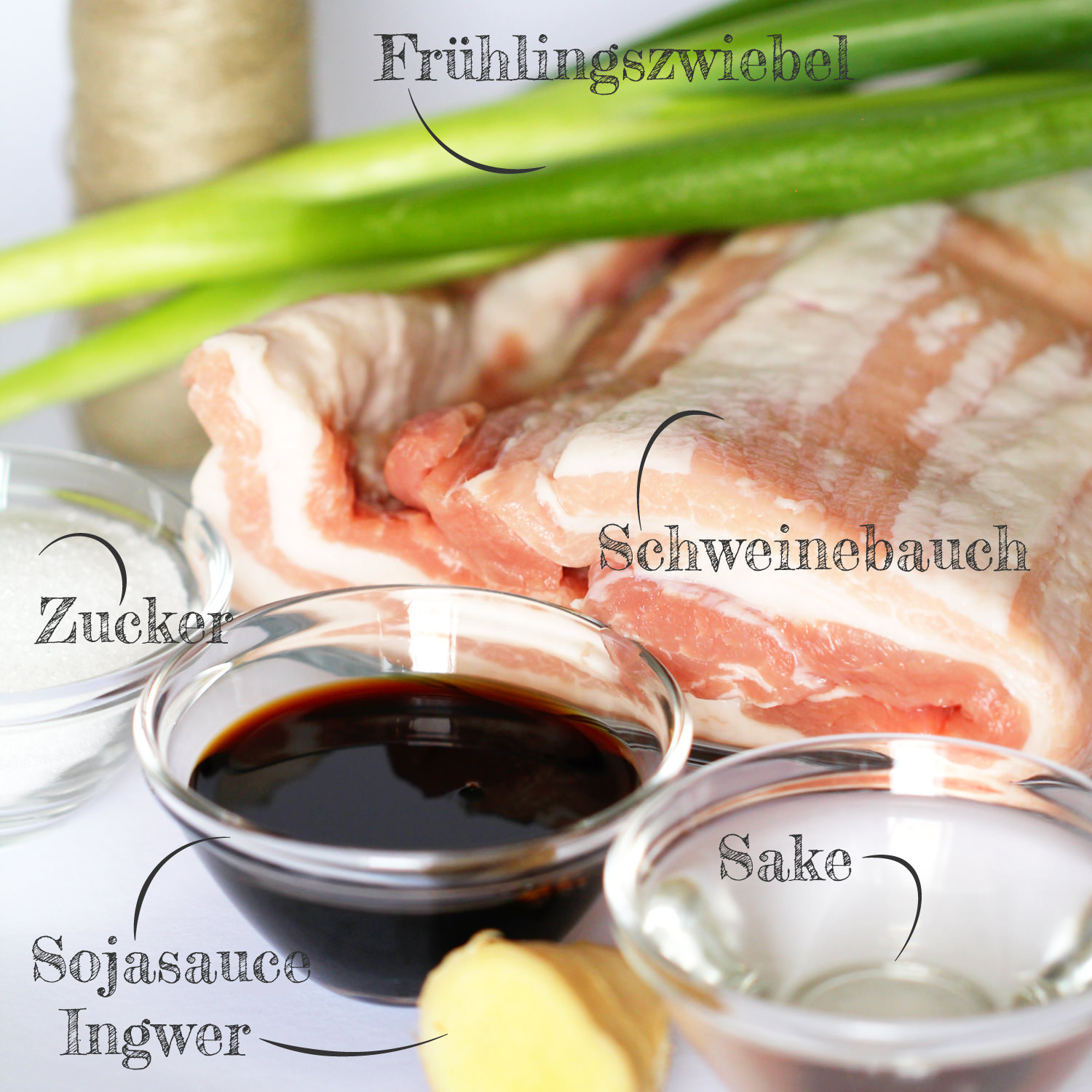
Gather the ingredients for Japanese rolled pork belly chashu.
(Tip: It’s best to prepare chashu from a large piece of pork belly, as shown here in the recipe, slice it and freeze it in portions – then you can defrost it in no time at all and serve it for a spontaneous Ramen party!)
Step 2
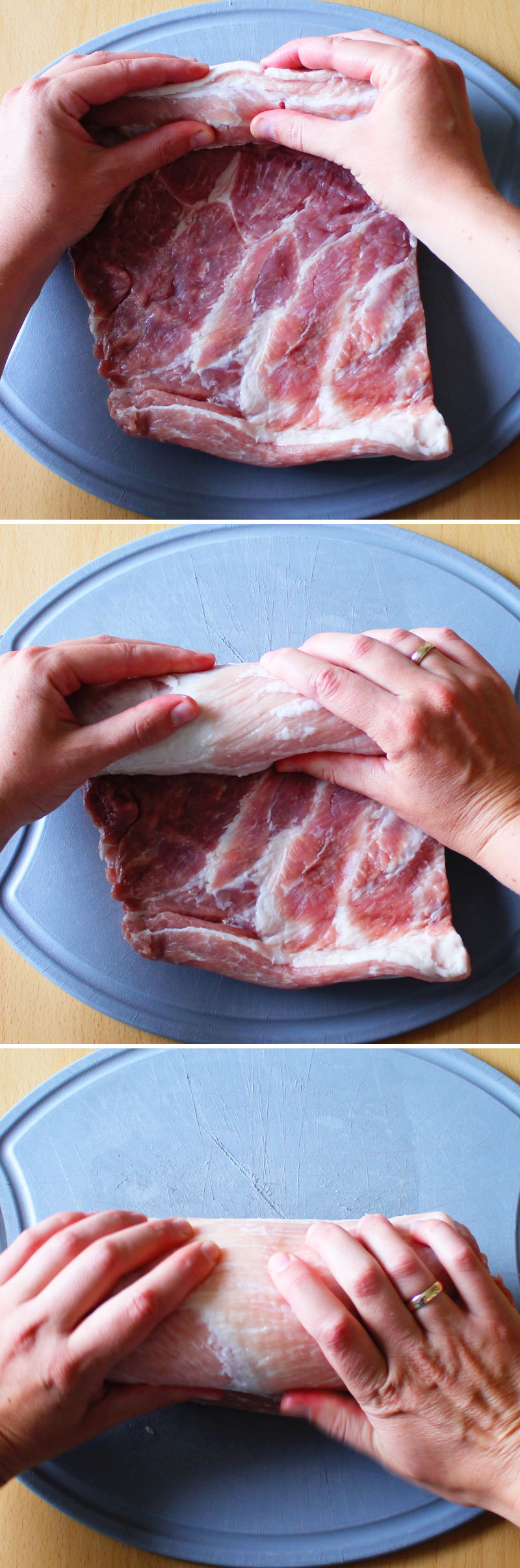
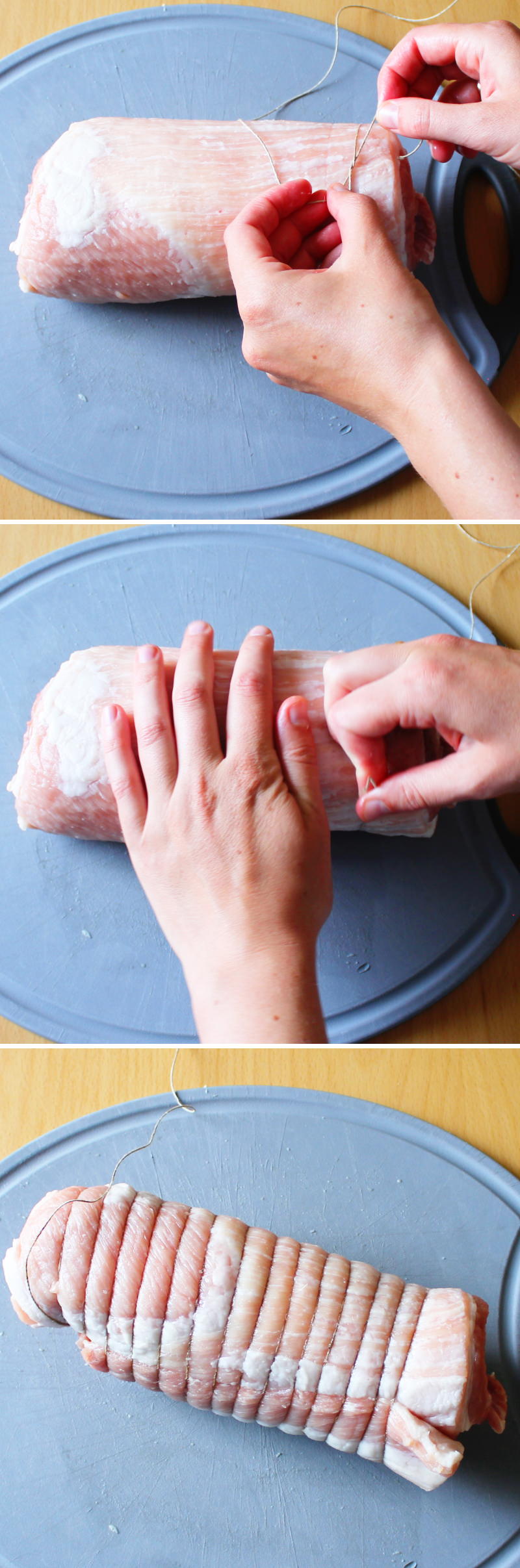
First of all, roll up the pork belly tightly from the long side, with the belly fat on the outside.
Step 3
Tie the rolled-up meat into shape with kitchen string at 1 cm intervals. It’s best to start by wrapping the string tightly around the meat once on one side and tying a knot – then wind it around the rest of the meat as if it were a spool. Tie another knot at the other end and thread the end of the string back to the start under the strands, then knot both ends of the string together (this makes it easy to remove the string later).
Step 4
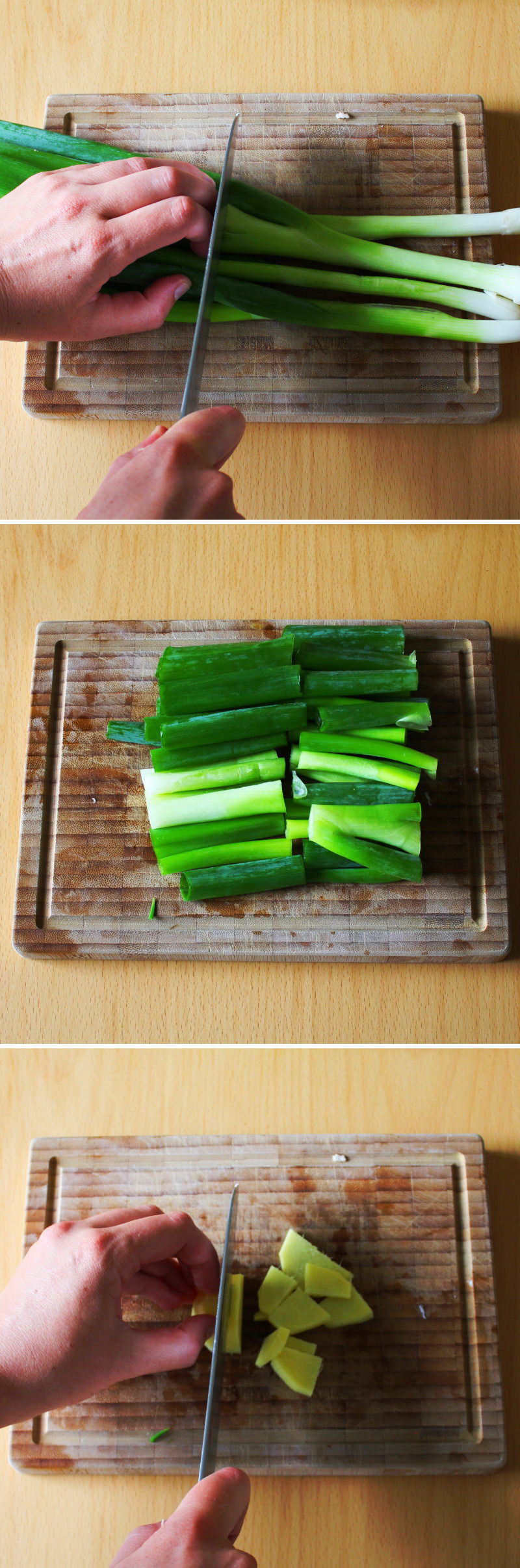
Also, wash the spring onions , pat them dry, trim the ends and cut them in half. Then peel the ginger and cut it into rough chunks as well.
Step 5
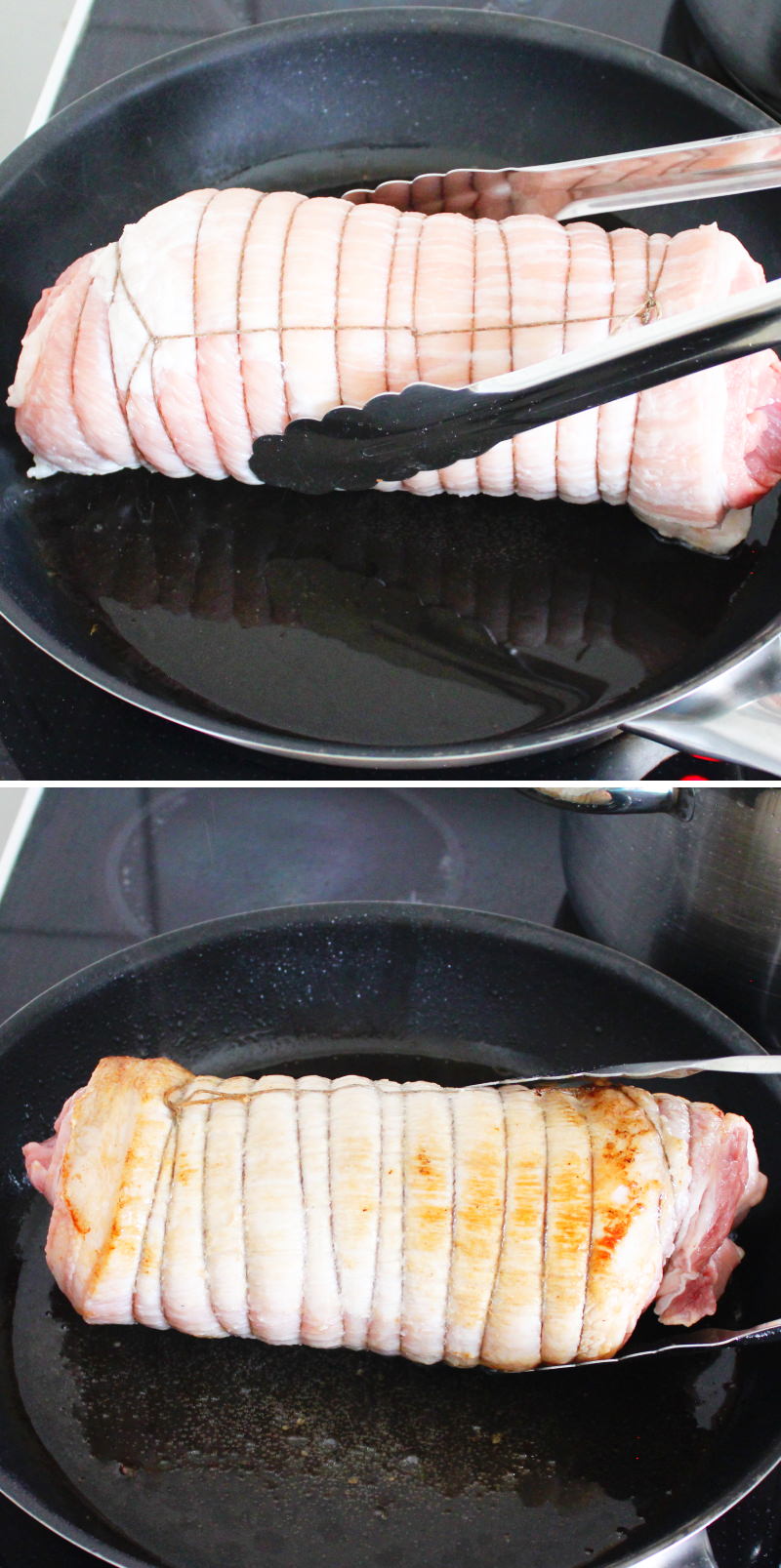
Heat a large, shallow frying pan with the oil over a medium to high heat and place the pork belly, fat side down, into the pan. Brown the meat on all sides until golden, but take care, as the hot fat that spits out can easily cause burns! This step reduces the fat content of the meat and prevents it from falling apart later on.
Step 6
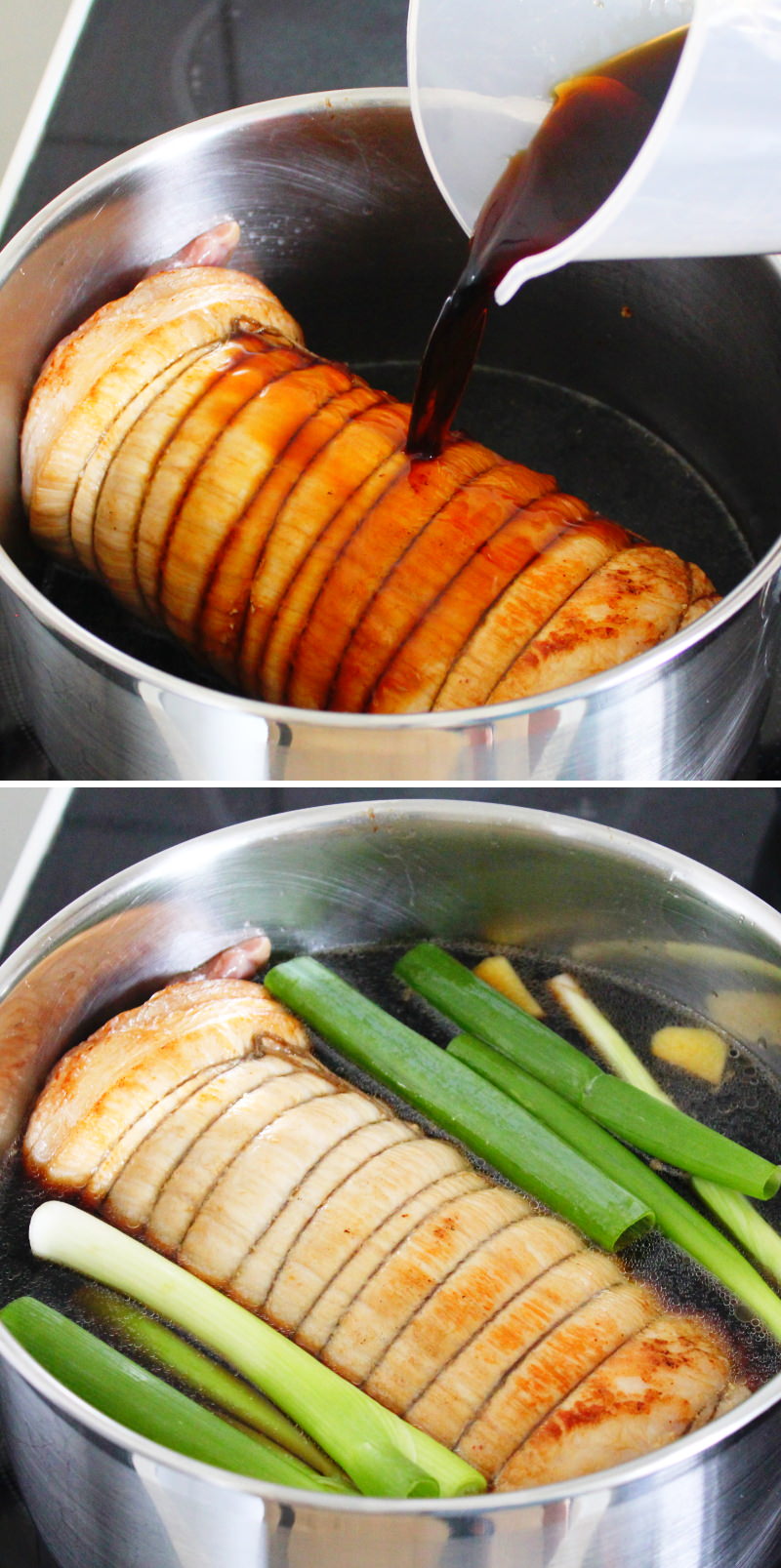
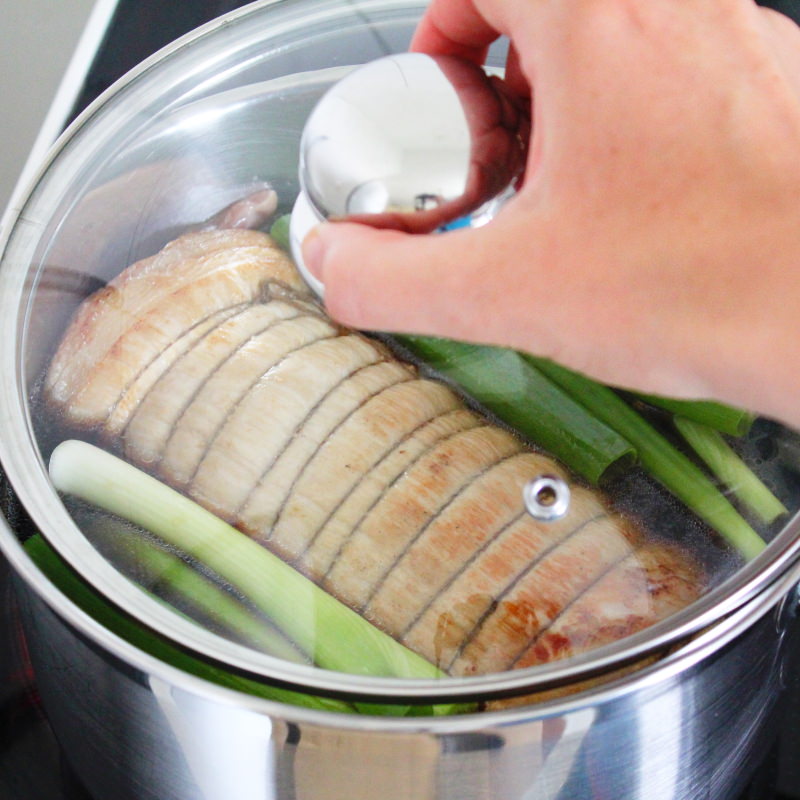
Place the seared pork belly into a large saucepan. Then add soya sauce, Sake, sugar and water as well as spring onions and ginger.
Step 7
Now put the lid on and bring the stock to the boil. Then turn the heat down to the lowest setting and simmer the meat gently for 2 hours with the lid on .
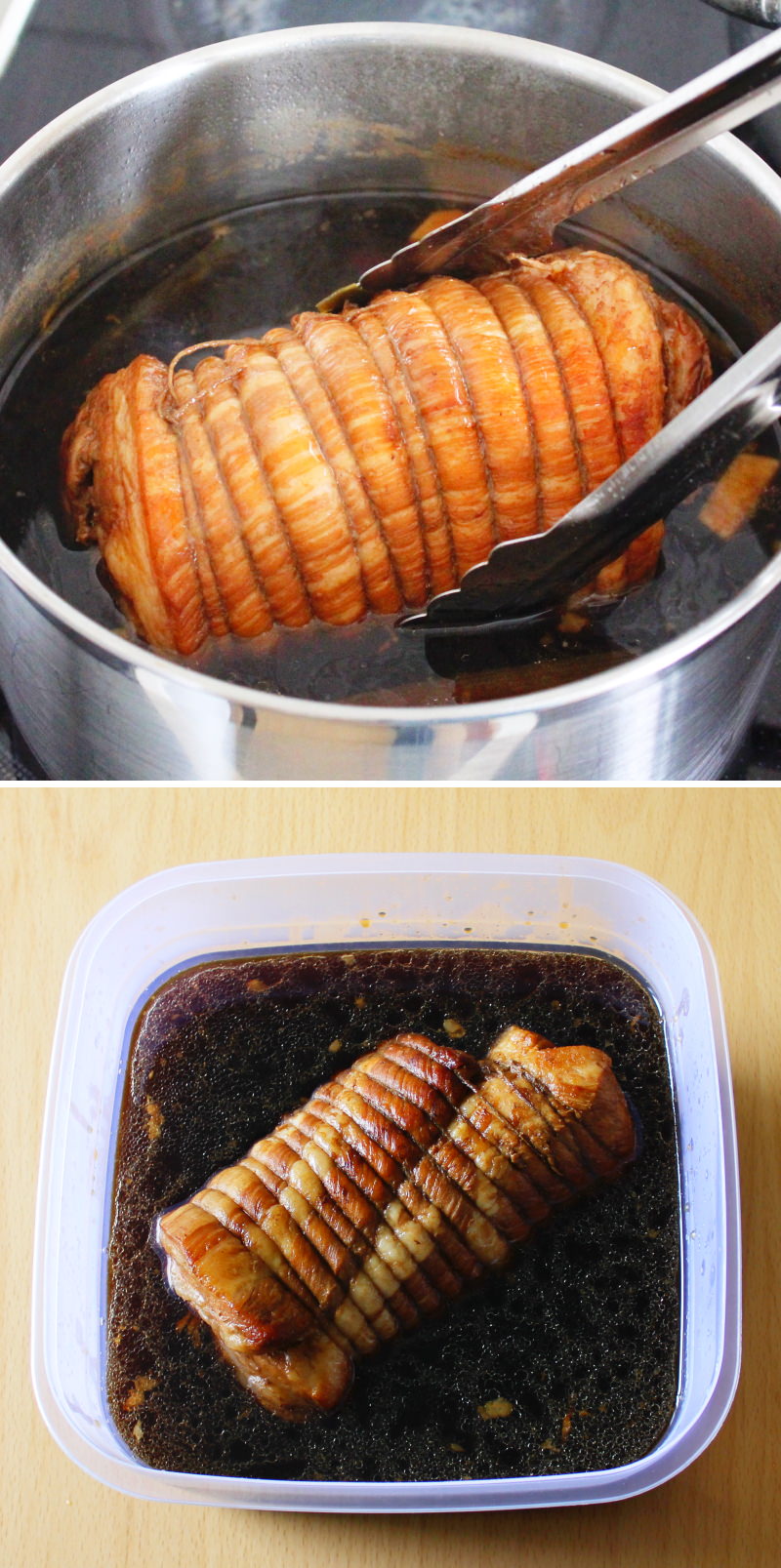
Every 30 minutes, turn the meat 90 degrees clockwise so that, by the end, all sides have been covered by the stock.
Step 8
Once the cooking time is up, carefully lift the meat out of the stock using tongs and place it in an airtight container (for delicious ramen noodles, the meat should be left to infuse overnight in the fridge). Pour the stock over it, seal the container and place it in the fridge overnight (if you want to serve the chashu straight away, simply skip this step and move on to slicing).
Step 9
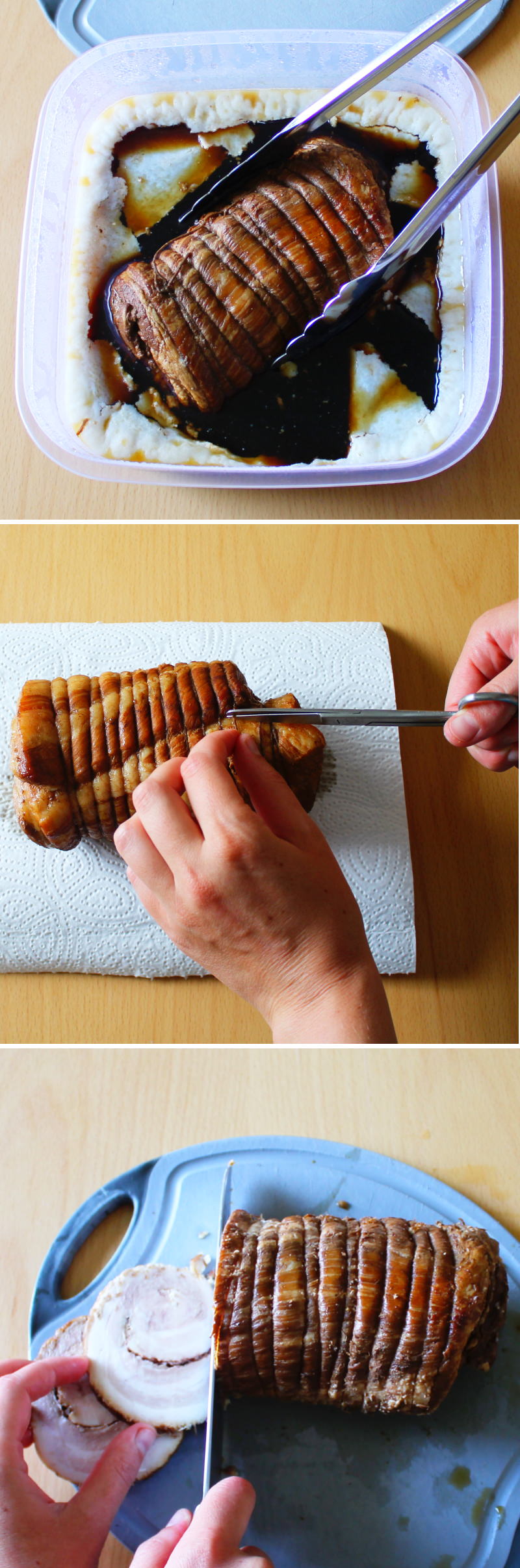
Once well chilled, the meat is easier to slice into thin strips the following day, and the flavour of the stock in the meat is intensified: So lift the meat out of the box again (the white edge is the solidified fat from the pork belly), remove the string with a pair of scissors and cut the pork belly into thin slices with a large, sharp knife.
Step 10
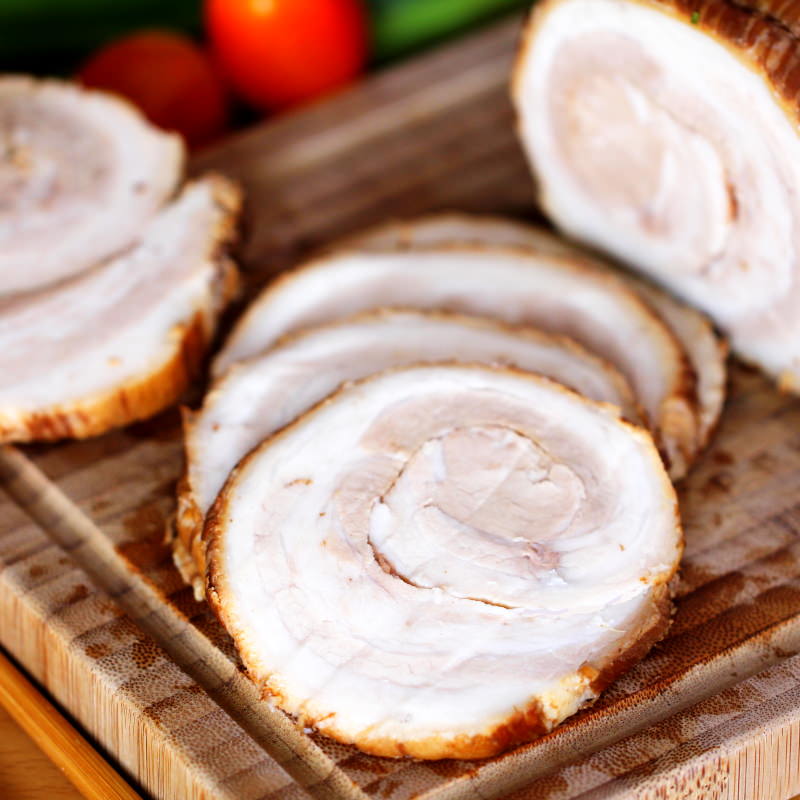
The Japanese braised pork belly is now ready and can be served in slices as a hearty topping for Ramen or other noodle soups. Ready – Itadakimasu!
Would you like to use the braised pork belly (chashu) as a topping for a delicious homemade noodle soup? Here you’ll find my favourite recipes for Japanese noodle soups:
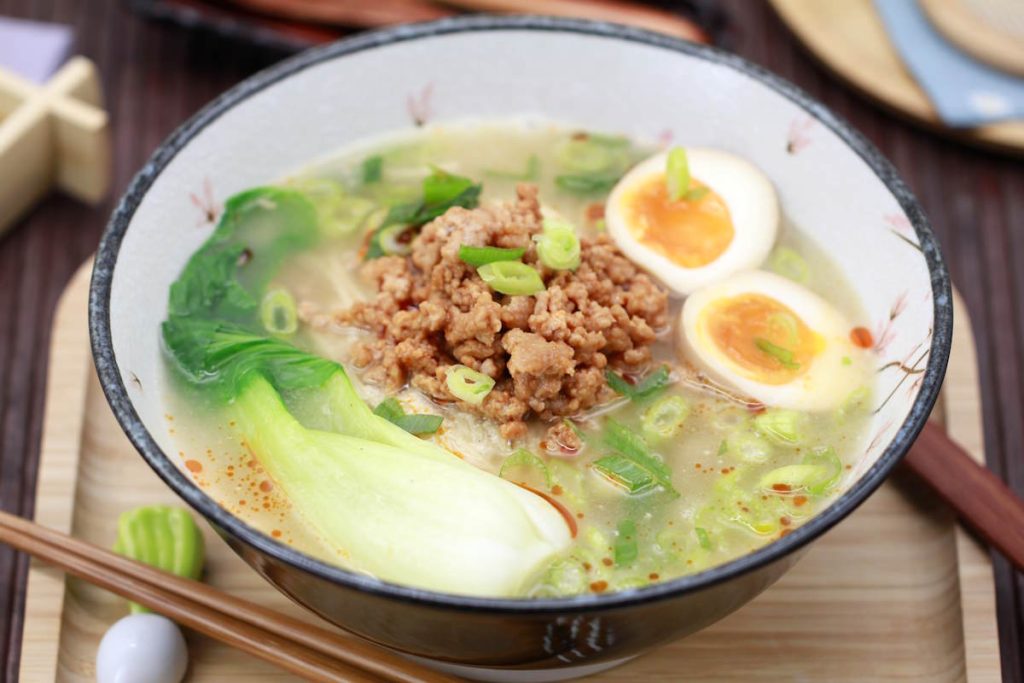
Make your own Tantanmen: creamy sesame Ramen with spicy Miso minced meat, pak choi & ramen eggs
Tantanmen is a Ramen soup for those who like it creamy but not heavy. A sesame-based broth, spicy minced meat,…
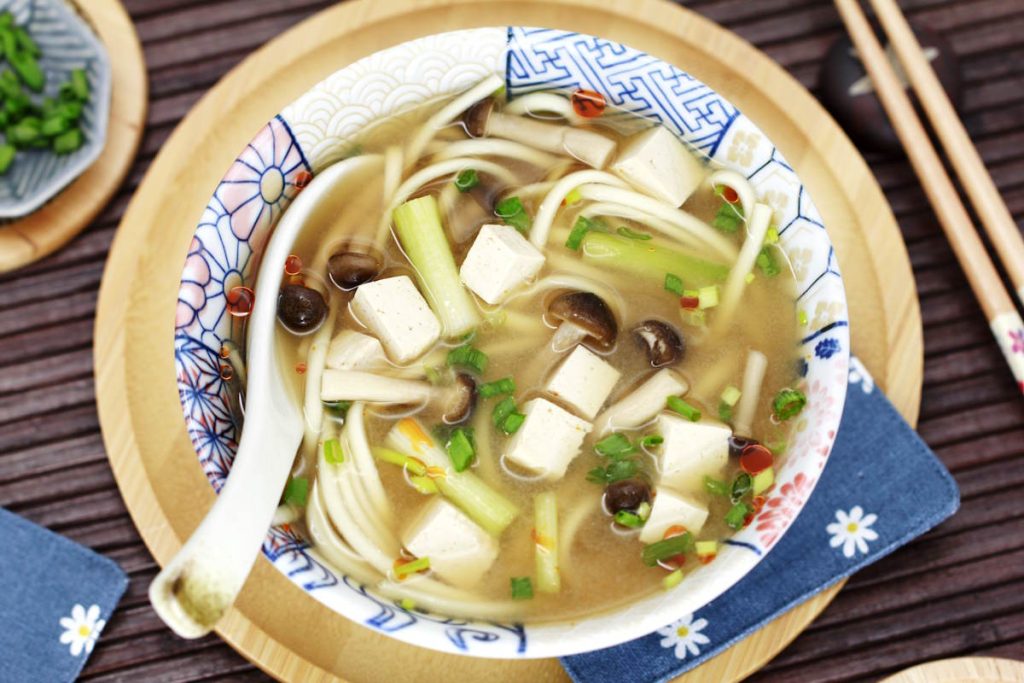
Quick Miso Udon: Spicy noodle soup with Miso, Tofu & Shimeji mushrooms
If you’re looking for a quick, comforting meal that’s both easy to prepare and incredibly tasty, then this Miso udon…
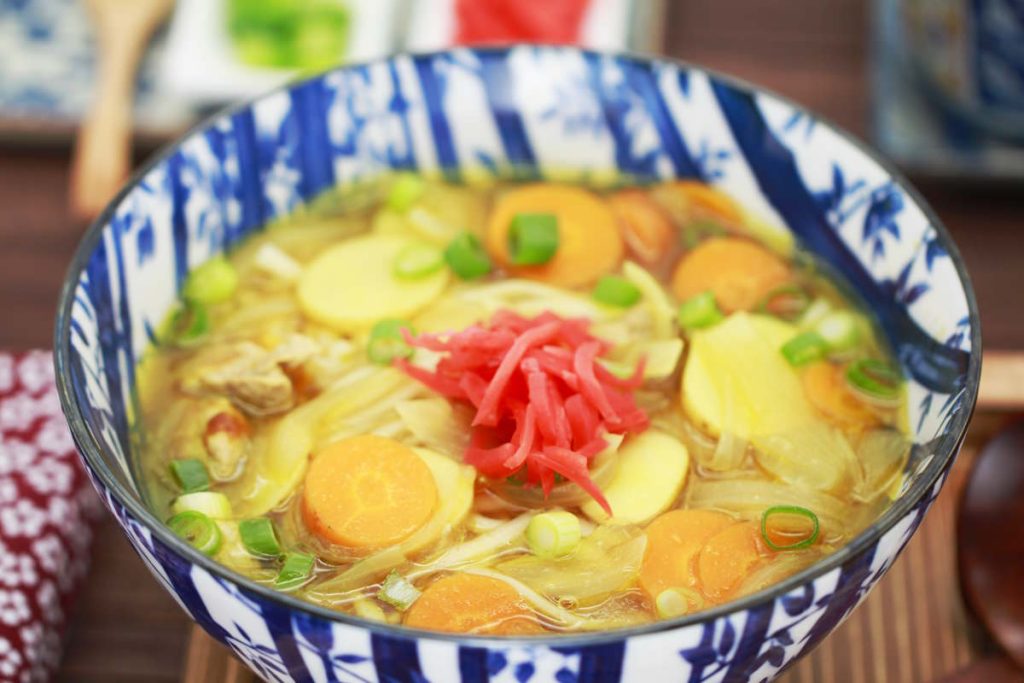
Curry Udon soup: A classic Japanese home-cooked meal – warming, traditional & delicious
Curry Udon combines the depth of Japanese Dashi broth with the spicy flavor of curry. This hot noodle dish is…
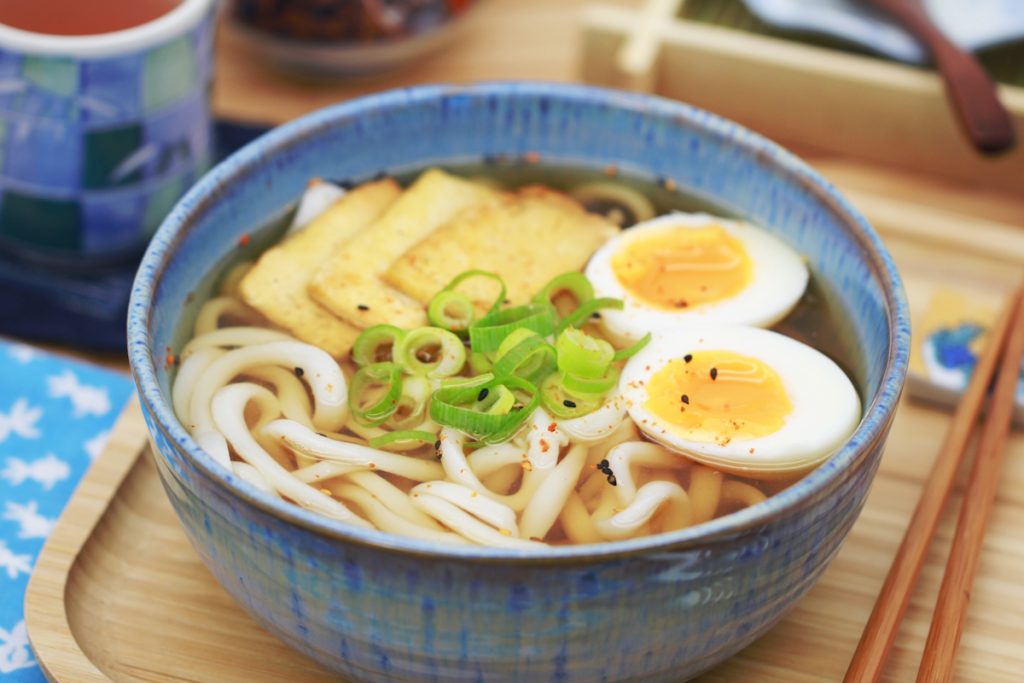
Delicious Kake Udon Noodle Soup: A classic of Japanese cuisine
Sometimes you just need a quick yet hearty meal that warms you up and satisfies your appetite. Kake Udon noodle…

A bowl full of happiness: Miso Ramen with 7 varied toppings – vegetarian, spicy & really easy
Immerse yourself in the world of flavours of Japanese cuisine with our Happiness Bowl! It’s all about Miso Ramen –…
10-minute Shoyu Ramen with bamboo shoots & Ramen eggs – for quick meals
My 10-minute Shoyu ramen: Wavy ramen noodles, served in a rich and sinfully delicious tsuyu broth made from Dashi, soy…
Has anyone tried this recipe yet? Let me know in the comments – I’m really looking forward to hearing from you.