

Language:


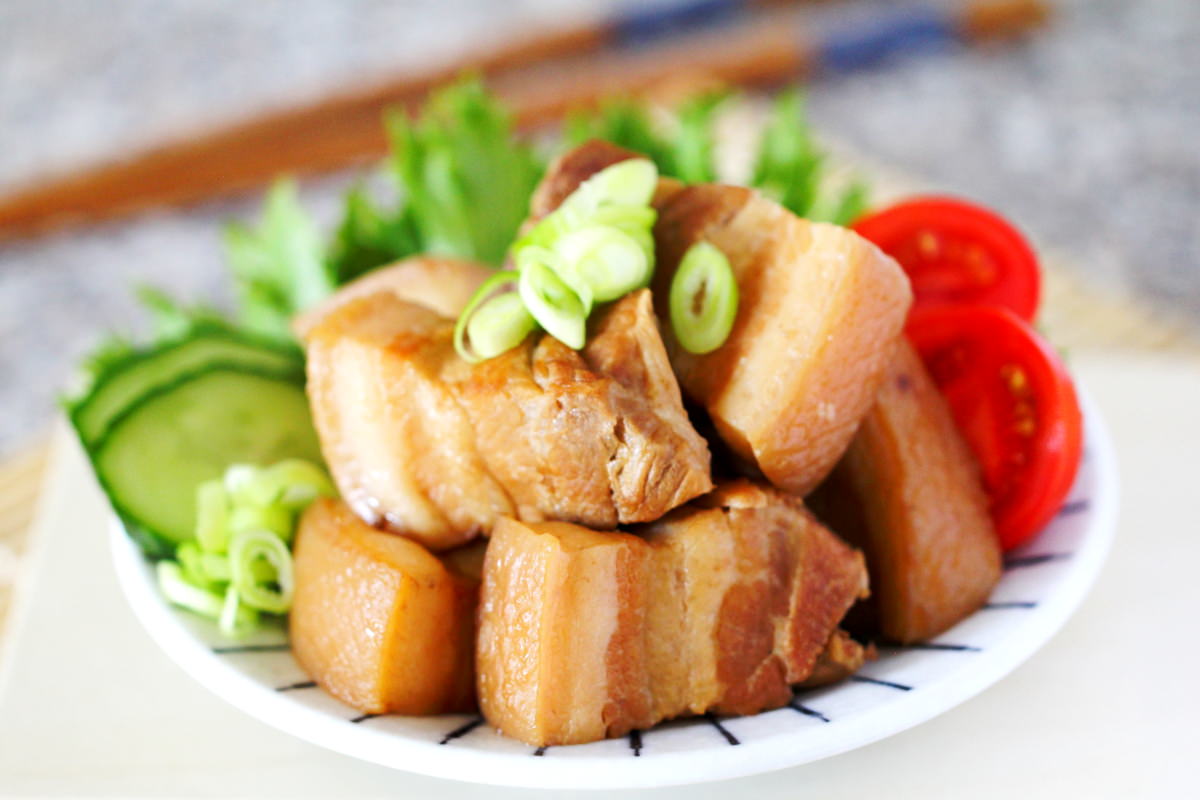
Kakuni, or Japanese braised pork belly, is cooked very slowly and gently along with aromatic vegetables, Dashi and soya sauce. The tender result literally melts in the mouth and tastes simply delicious as a topping for Ramen or as a side dish with rice dishes!
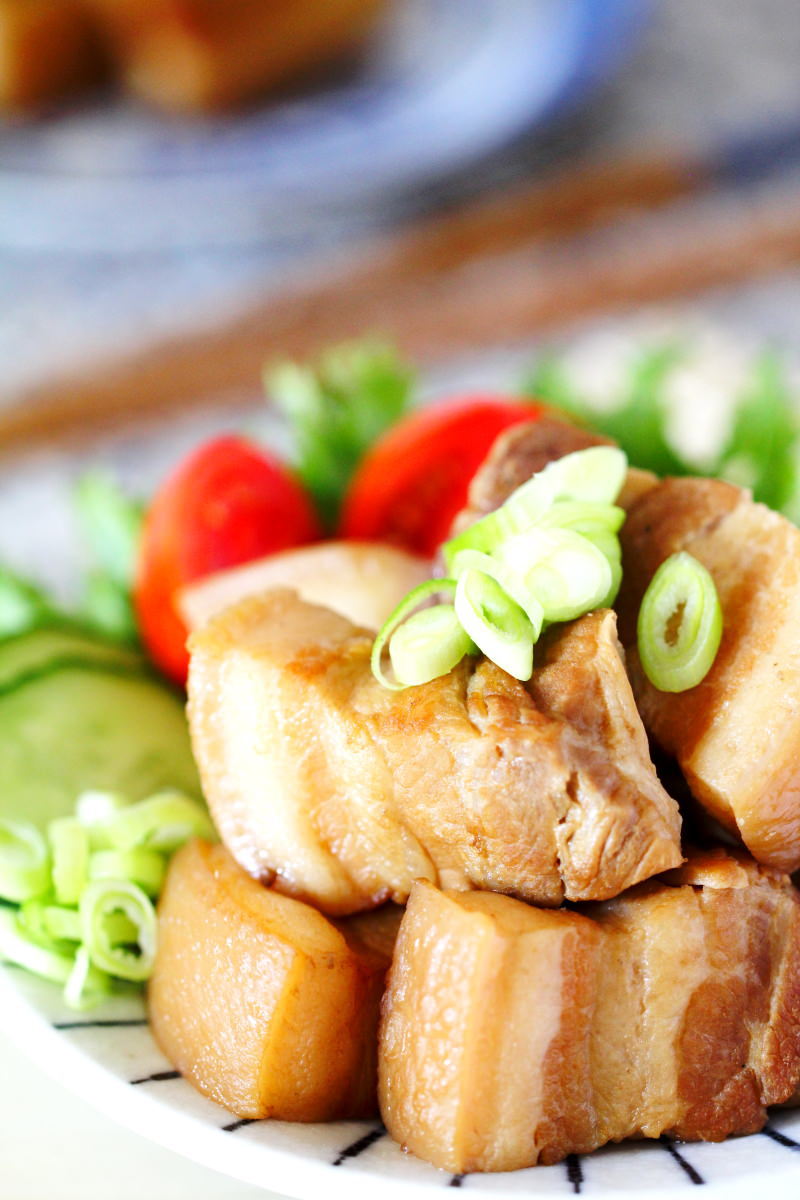
To be honest: I’d always thought that there was only one really good way to cook fatty meat – and that was on the barbecue, for example as a teppanyaki steak. After trying kakuni for the first time, I was able to put that idea to rest!
By braising the fatty pork belly very slowly and gently, the fat transforms into pure flavour… which makes this dish absolutely irresistible. That’s why you can actually use really nice, fatty pork belly for this recipe.
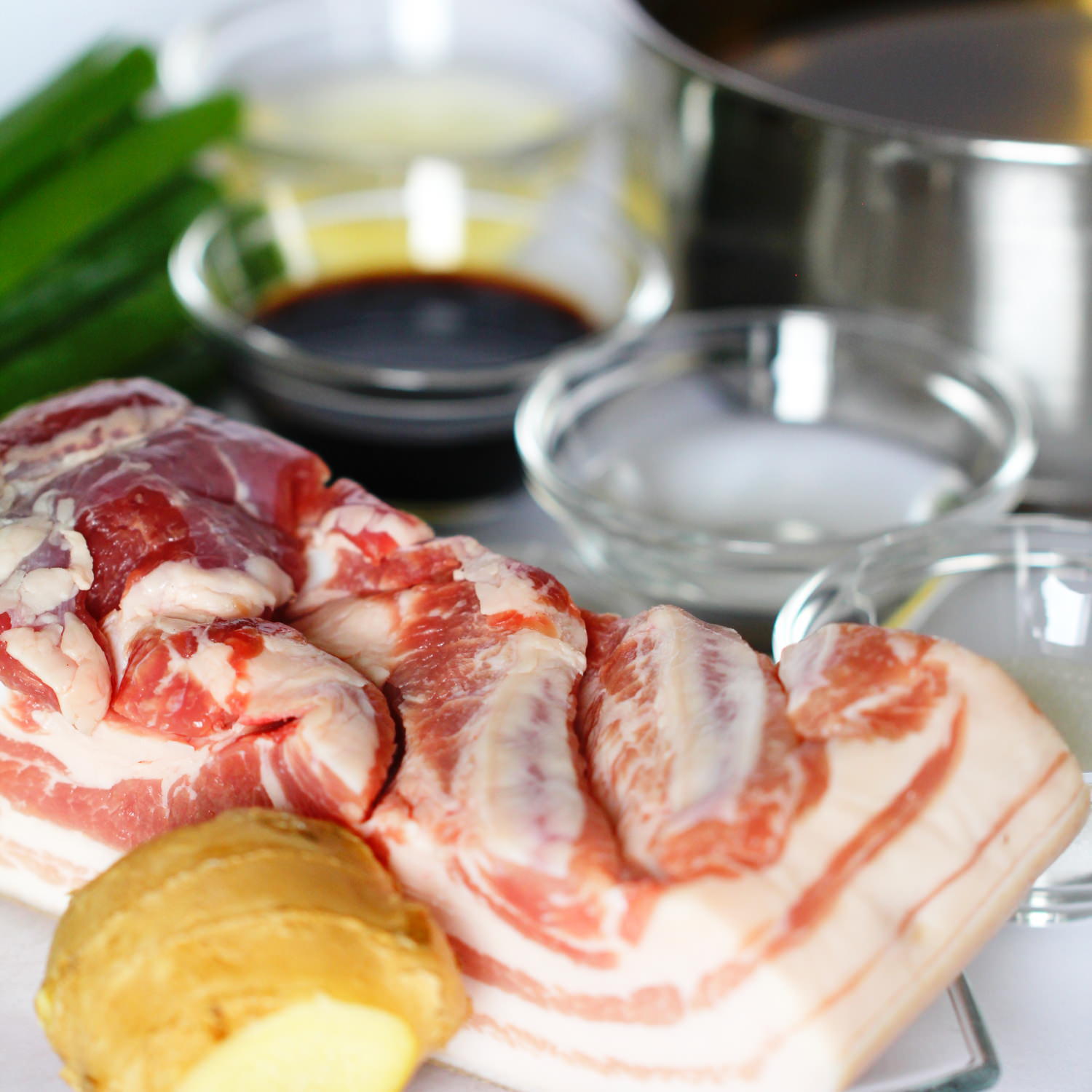
Incidentally, ‘kakuni’ literally translates as ‘square-shaped braised’, which essentially refers to the shape of this dish. Unlike, for example, chashu – rolled pork belly – the meat for kakuni is simply cut into handy cubes and cooked. So there’s no need to roll anything up with string or anything like that. This also makes this Japanese delicacy a super-simple dish that can just simmer away ‘on the side’ without causing much hassle.
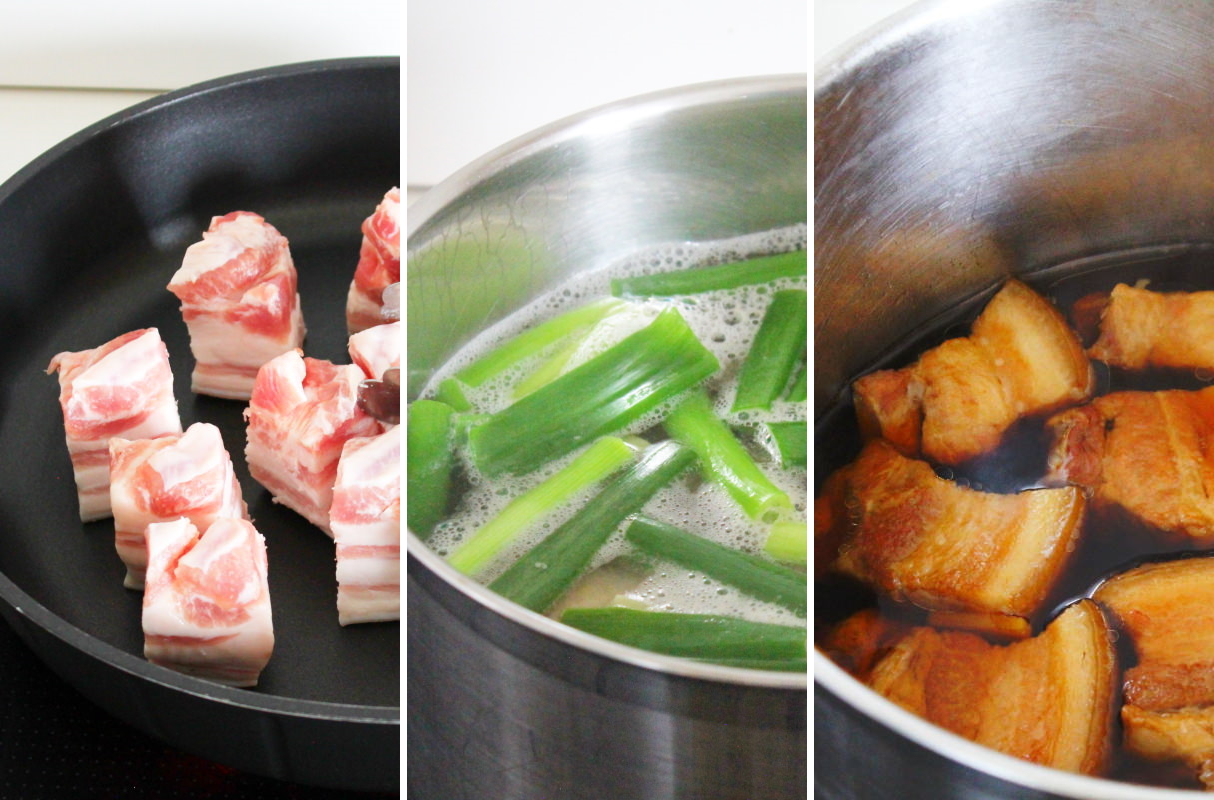
The wonderful aroma of the braised pork belly is brought into the meat through three key steps: First, the diced pork belly is seared thoroughly all over in its own fat, so the crust prevents it from falling apart later and stops the meat juices from escaping.
TOP RECOMMENDATION
Ramen Kochbox | Shoyu Ramen selber machen
6-tlg. Set für 8 Portionen japanische Nudelsuppe + Rezepte für Shoyu Ramen, auch für Einsteiger. Mit dem Ramen Kochset bereitest du japanische Nudelsuppe ganz einfach…
In stock
Then the meat is cooked together with plenty of ginger and green spring onions for two hours – after that, the meat is already buttery tender! But that’s not all, because it’s followed by another hour of cooking in a broth made from homemade Dashi broth, soy sauce (im Shop ansehen), mirin (im Shop ansehen), sake (im Shop ansehen) and sugar.
Kakuni is served in Japan on all sorts of occasions; it’s almost part of everyday Japanese cuisine. For example, Kakuni is highly recommended as a complete meal, served piping hot straight from the pot alongside Japanese sticky rice and a dollop of spicy karashi mustard. However, it can also be served in smaller portions as a delicious starter.
As kakuni originally comes from China, it also makes sense to serve the braised pork belly, cut into thin slices, as a topping for Ramen noodle soups. To serve as an accompaniment to delicious ramen noodles, the meat should be left to marinate overnight in the fridge after cooking. To do this, place the cubes of meat in an airtight container and pour the cooking liquid over them until they are half submerged. Once well chilled, the meat is easier to cut into thin strips the following day, ready to be served as a hearty topping.
In my opinion, this delicious pork belly goes best with a hearty bowl of Tokyo Shoyu Ramen (click here for the recipe):
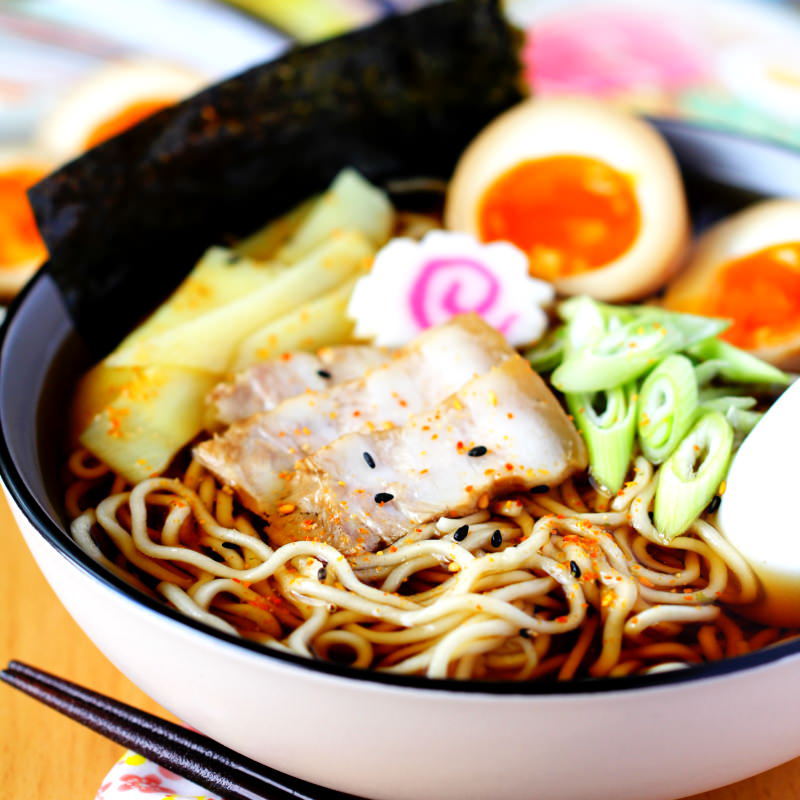
As a reminder: Ramen noodles are slightly wavy, yellowish wheat noodles of Chinese origin and are considered a delicious noodle soup and a true cult dish in Japan. A bowl of ramen consists of ramen noodles, the broth plus Tare (seasoning sauce), hearty accompaniments and aromatic toppings. You can find out even more about ramen noodles and discover further delicious recipe ideas here in the main article on Ramen!
I hope that with this irresistible recipe for braised pork belly (kakuni), I can conjure up a little piece of Japan right into your home! And now I hope you have fun and enjoy making it:
Kakuni
serves 2 | 3.5 hours | 1171 kcal
🖨️ Print PDF 📌 Save to PinterestKakuni, or Japanese braised pork belly, is cooked very slowly and gently with aromatic vegetables, Dashi and soya sauce. The tender result literally melts in the mouth and tastes simply delicious as a topping for Ramen or as a side dish with rice dishes!
Ingredients (2 portions)
500 g pork belly
30 g ginger (fresh)
4 spring onions
2 L water
1 L Dashi broth (im Shop ansehen)* (to the recipe)
4 tbsp soya sauce (im Shop ansehen)*
4 tbsp Mirin (im Shop ansehen)*
4 tbsp Sake (im Shop ansehen)*
4 tbsp sugar
Useful tools:
Santoku knife (im Shop ansehen)
Preparation (3.5 hours)
Step 1
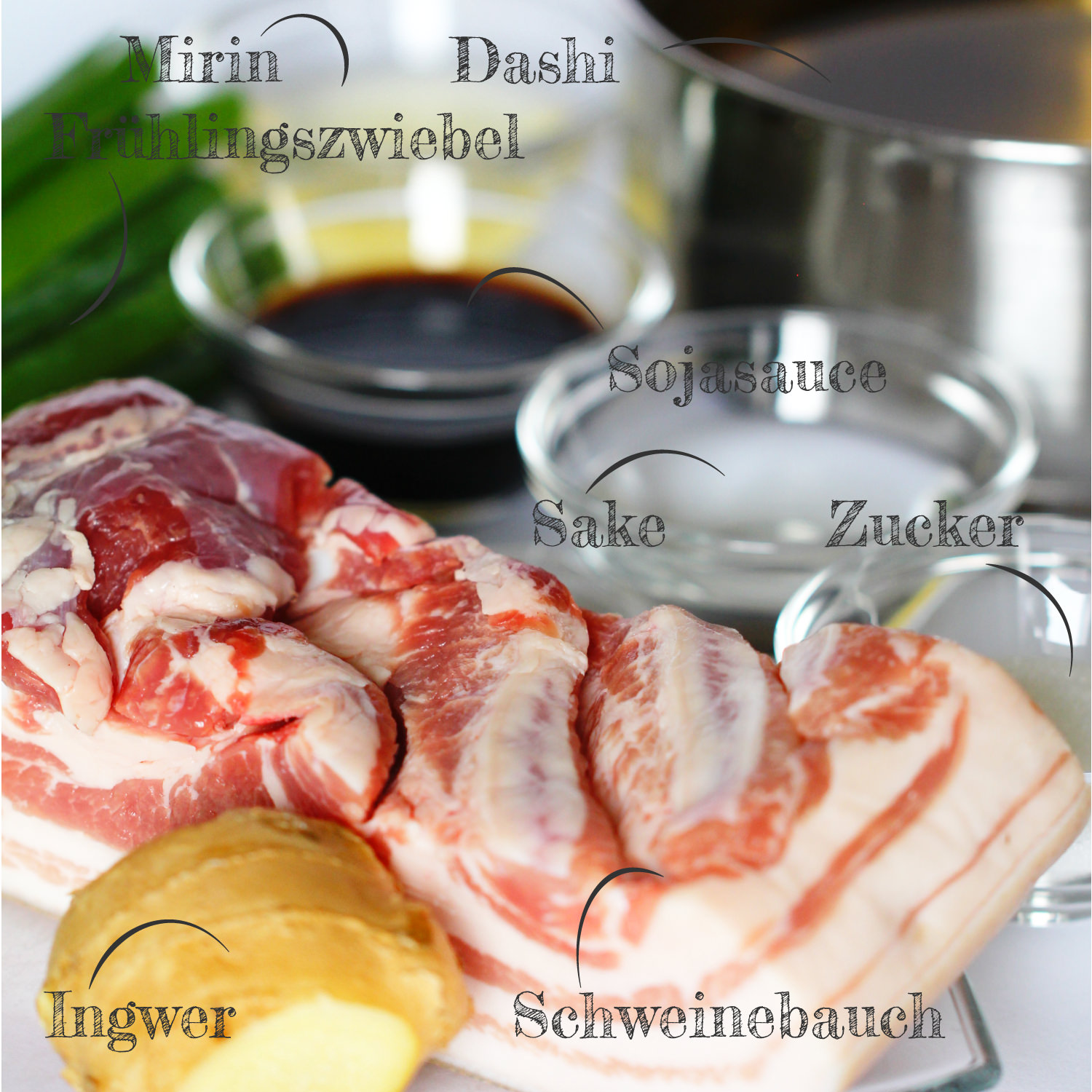
Ingredients for the tender Japanese pork belly kakuni, and prepare the Dashi broth made from Kombu and Shiitake (click here for the recipe).
Step 2
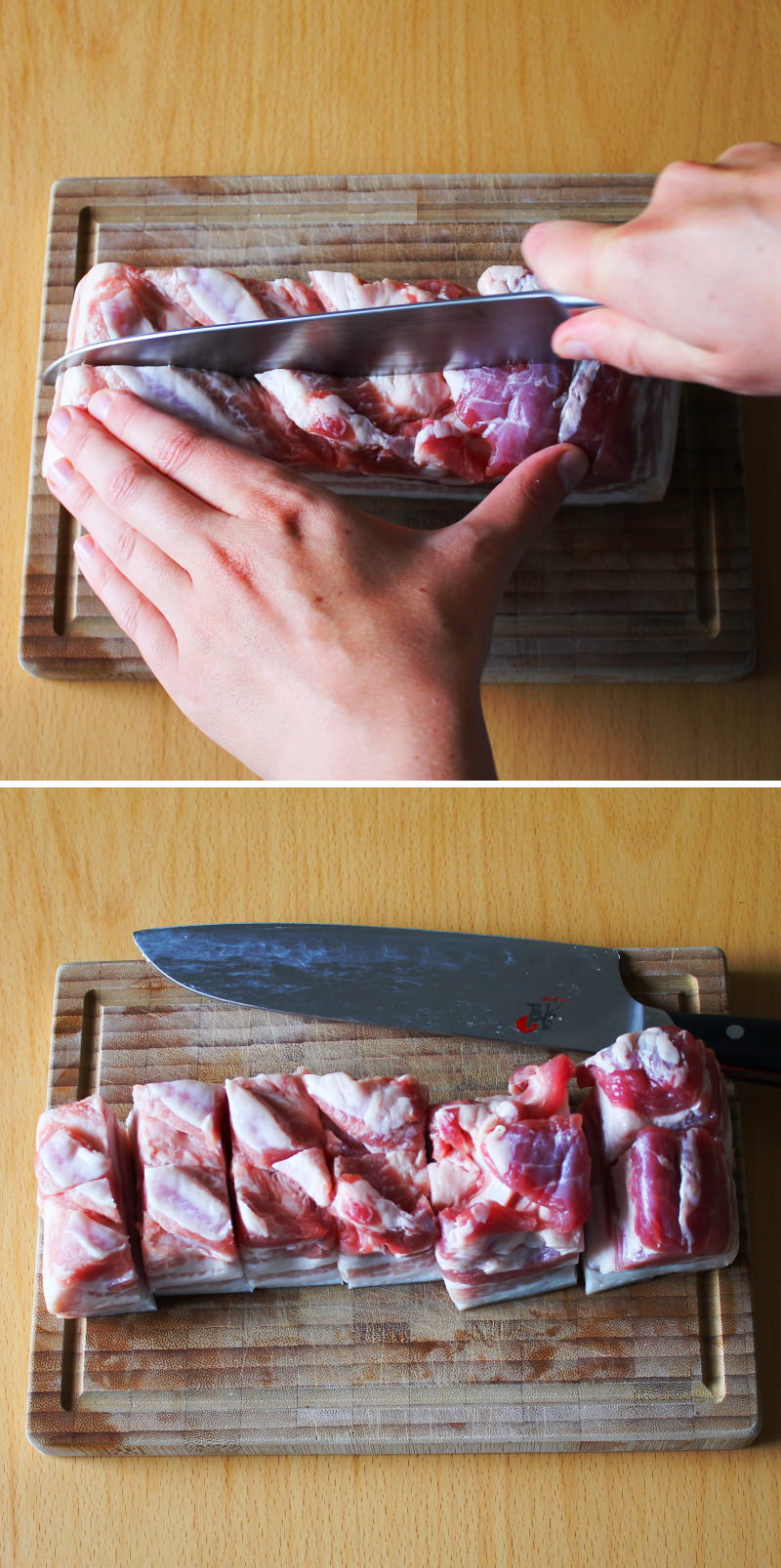
First of all, cut the pork belly into 5 cm cubes as evenly as possible using a large, sharp knife.
Step 3
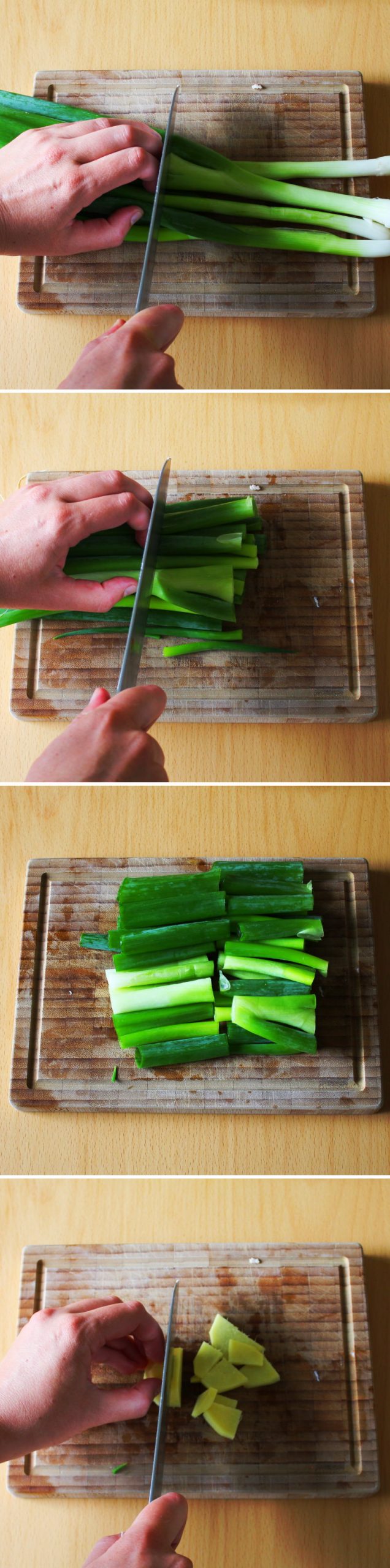
Also, wash the spring onions , pat them dry and cut them into larger pieces. Then peel the ginger and cut it into rough pieces as well.
Step 4
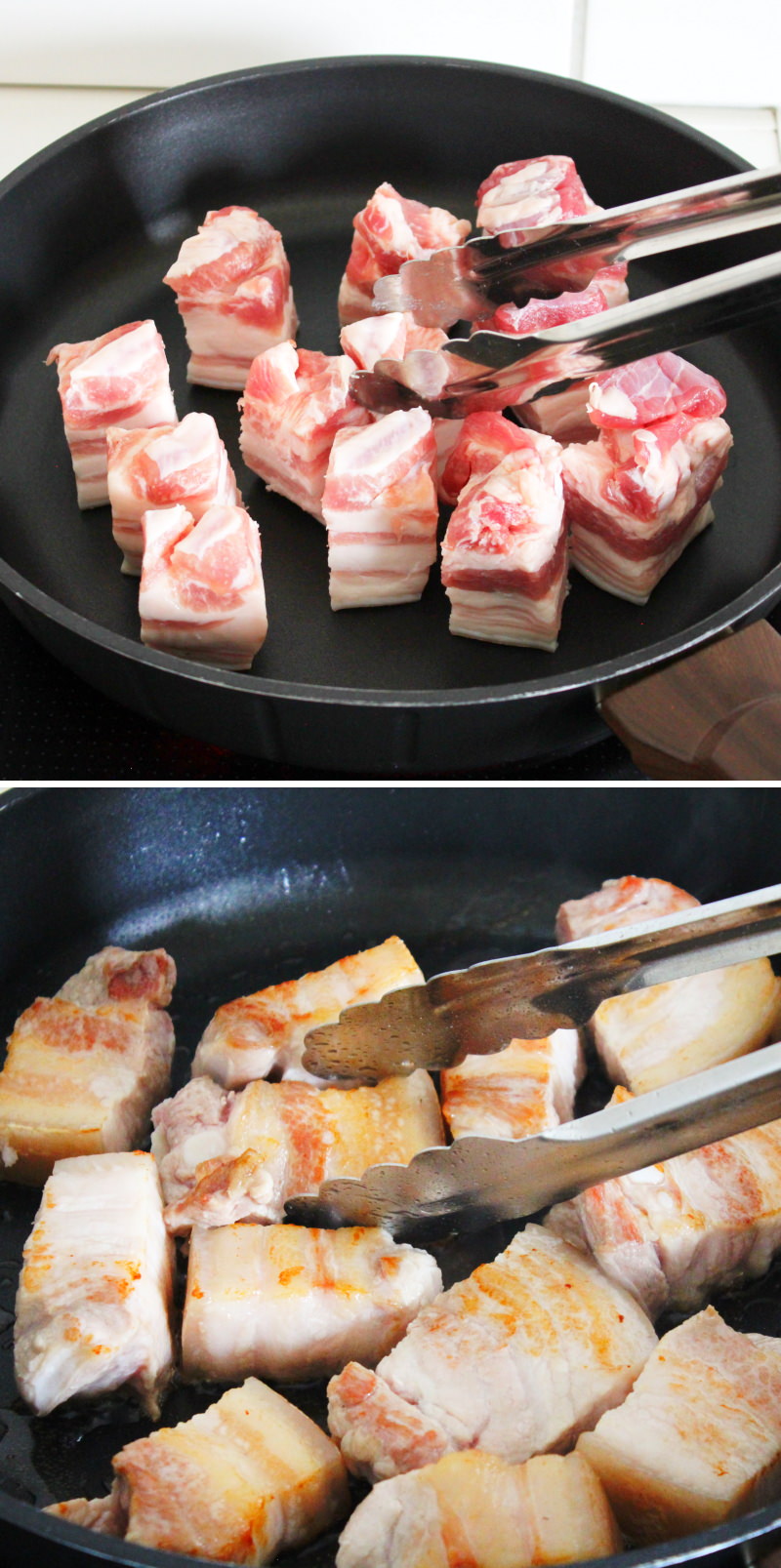
Heat a large, shallow frying pan over a medium to high heat and place the pork belly, fat side down, into the pan – ideally without any oil. Brown the meat on all sides until golden brown, but be careful, as the hot fat that spurts out can easily cause burns! This step reduces the fat content of the meat and prevents it from falling apart later on.
Step 5
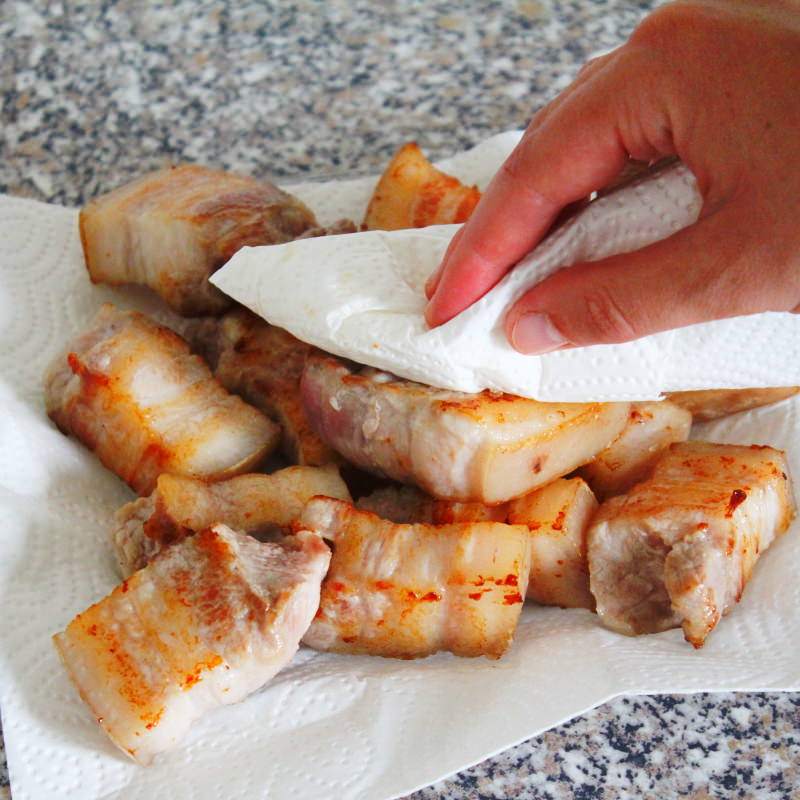
Once the meat is nicely browned, lift it out of the pan onto a kitchen towel and pat off the excess fat.
Step 6
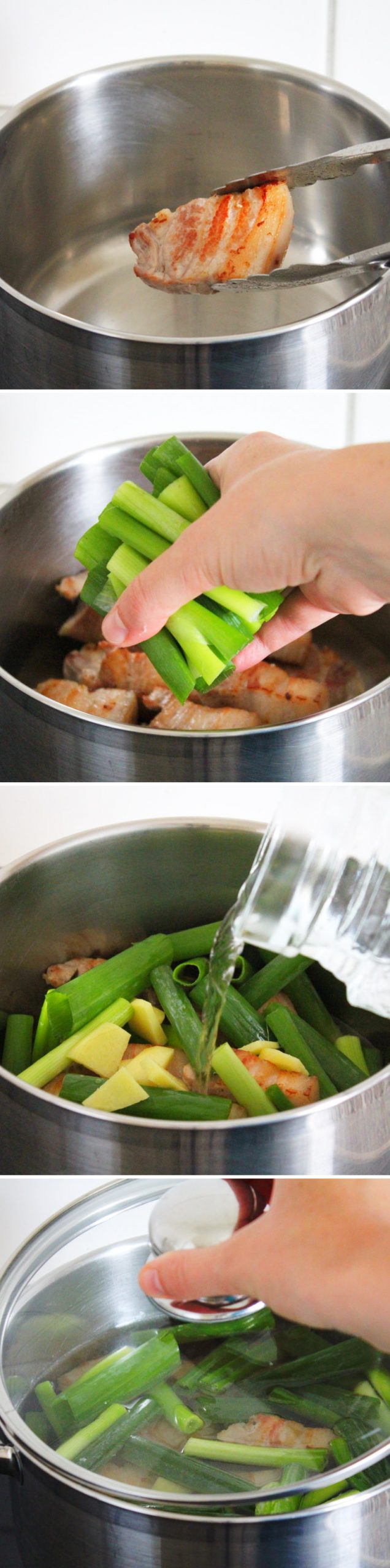
Place the fried pork belly, the spring onions and half the ginger into a large saucepan and fill with water. Put the lid on and bring the stock to the boil.
Step 7
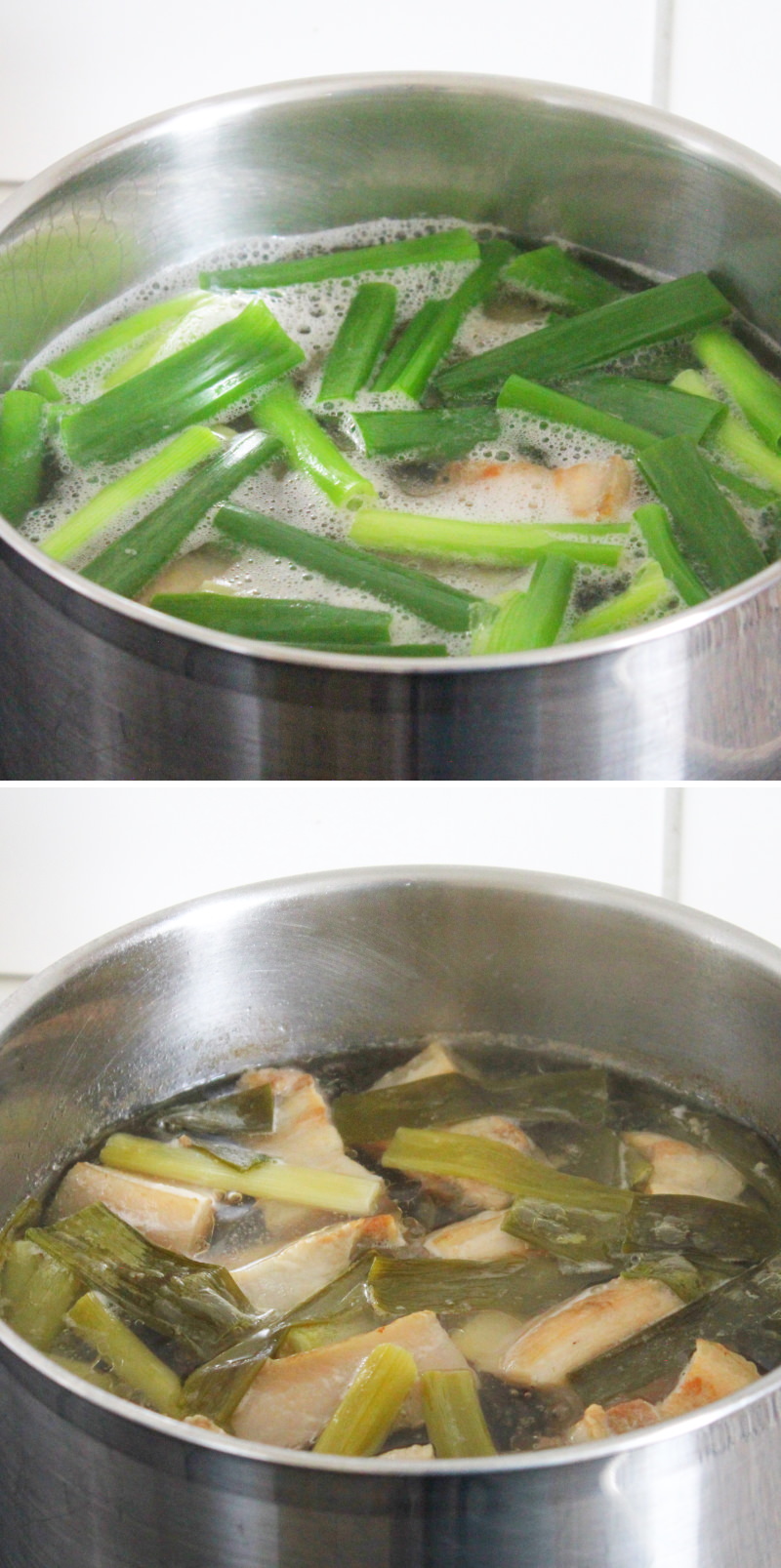
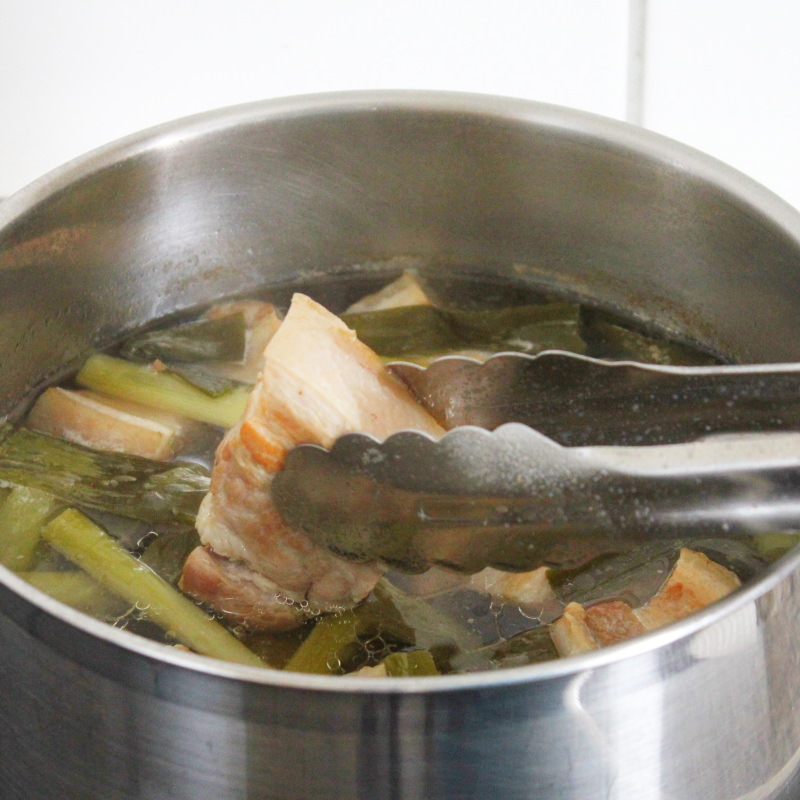
Then remove the lid, turn the heat down to the lowest setting and let the meat simmer gently for 2 hours without the lid .
Stir carefully from time to time. As soon as the water has reduced too much, add more lukewarm water so that the pork is always covered with boiling water.
Step 8
Once the cooking time is up, carefully lift the meat out of the stock using tongs, as the pork belly is now melt-in-the-mouth tender. Strain the remaining stock through a sieve – it can then be used as a pork stock base for a delicious noodle soup or frozen for later use.
Step 9
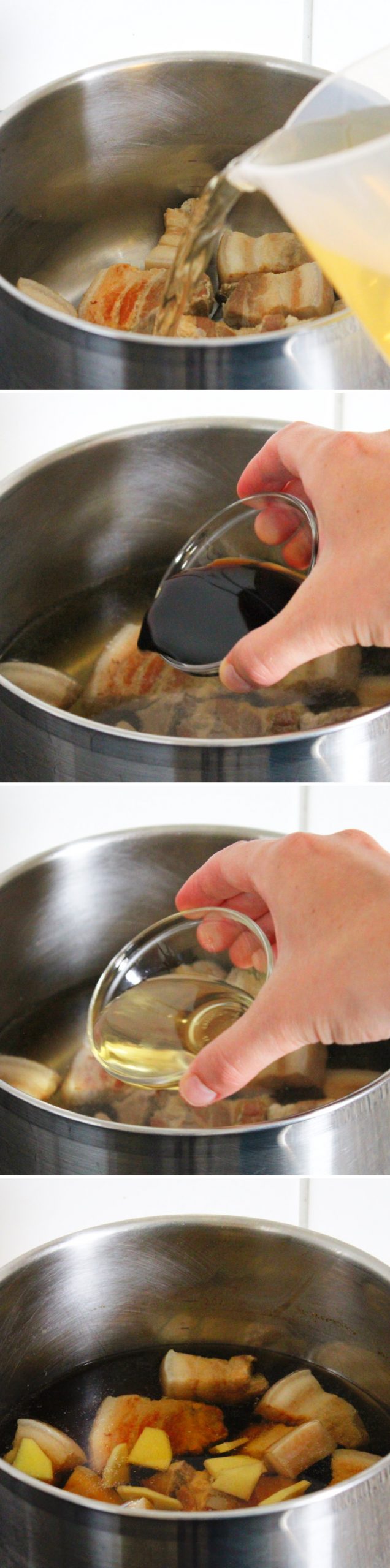
Rinse the pot briefly with clean water and place it back on the hob. Return the cubes of meat to the pot and pour the prepared Dashi broth over them. Also add the second half of the ginger, soy sauce, Mirin, Sake and sugar , then stir gently.
Step 10
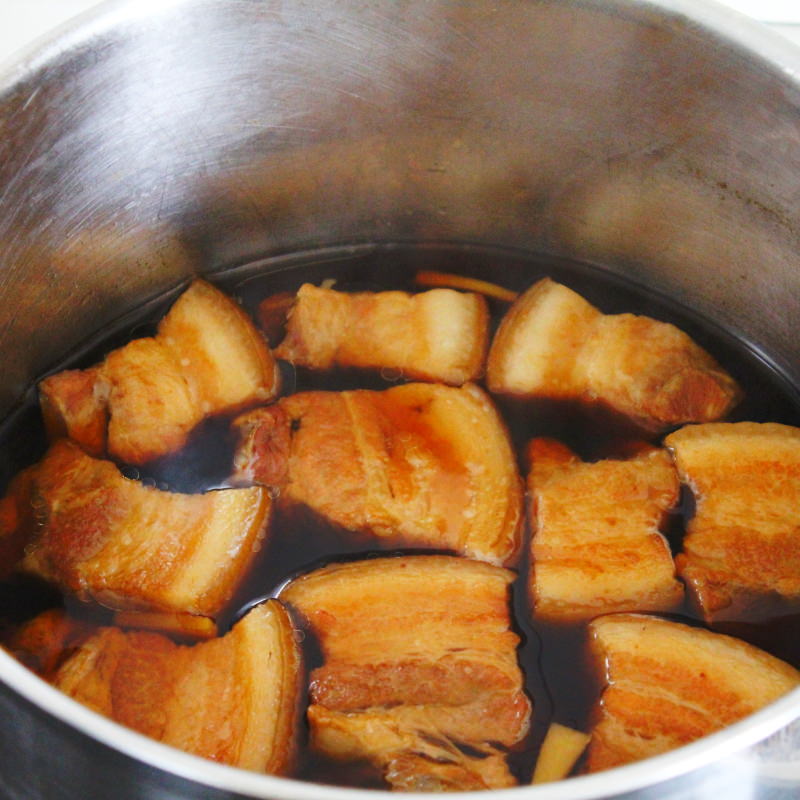
Bring to the boil again over a high heat, then simmer uncovered for 1 hour over the lowest heat. Keep basting the meat with the stock and turn it gently. Once the meat has taken on a lovely sheen – after about an hour – it is ready.
Step 11
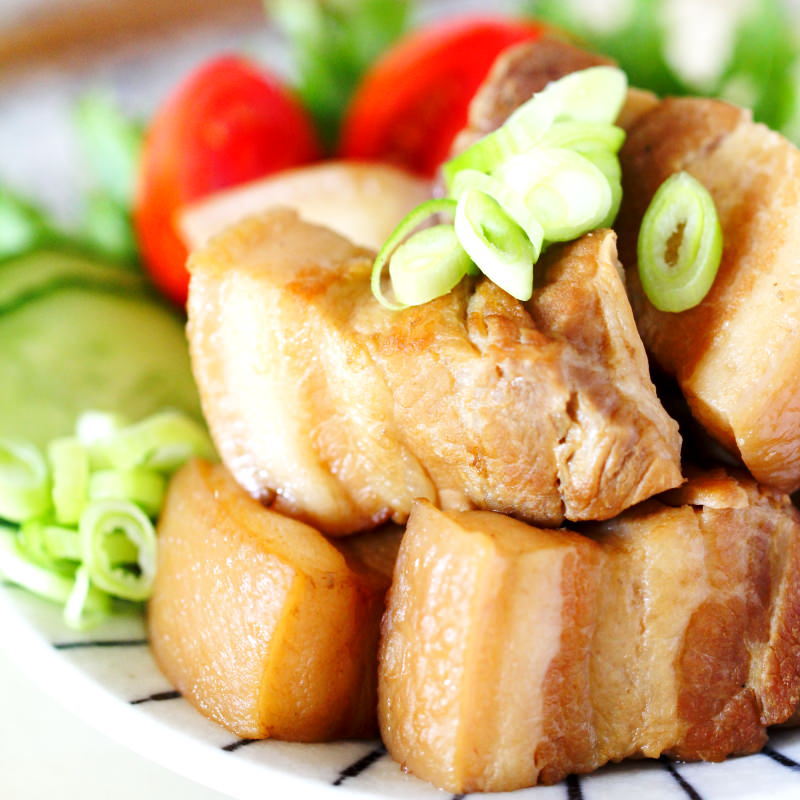
The Japanese braised pork belly is now ready. The meat can, for example, be served straight away as a side dish with rice, garnished with a little mustard. If using it as a topping for delicious ramen noodles, the meat should be left to marinate overnight in the fridge. To do this, place the cubes of meat in an airtight container and pour the cooking liquid over them until they are half submerged. Once well chilled, the meat will be easier to cut into fine strips the following day, to be served as a hearty topping. Any leftovers can then easily be frozen. Ready – Itadakimasu!
Would you like to use the braised pork belly (Kakuni) as a topping for a delicious homemade noodle soup? Here you’ll find my favourite recipes for Japanese noodle soups:
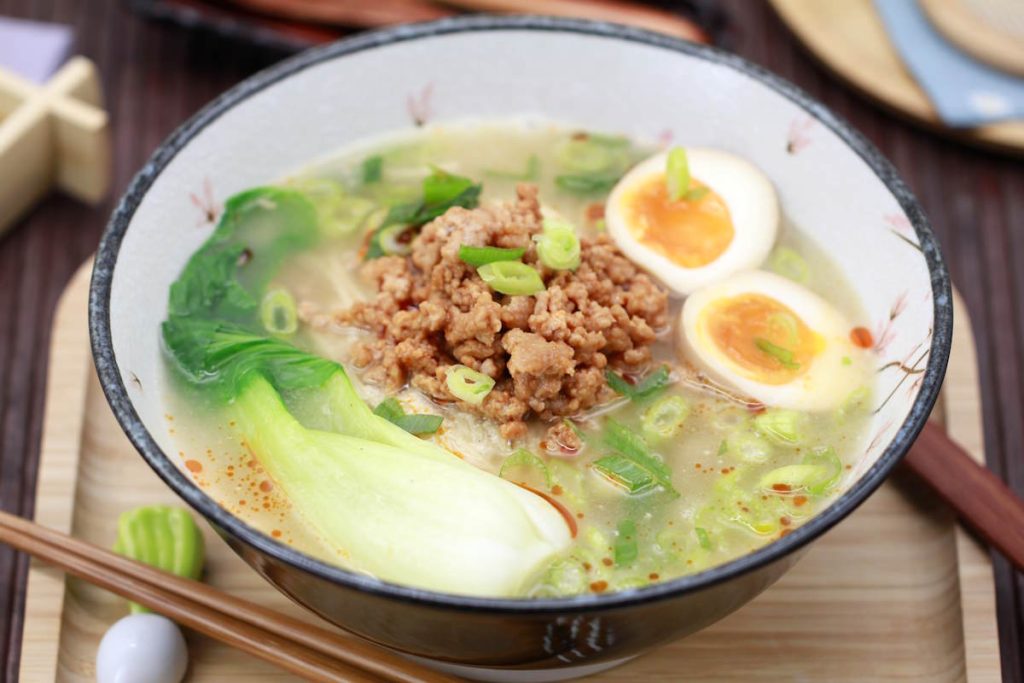
Make your own Tantanmen: creamy sesame Ramen with spicy Miso minced meat, pak choi & ramen eggs
Tantanmen is a Ramen soup for those who like it creamy but not heavy. A sesame-based broth, spicy minced meat,…
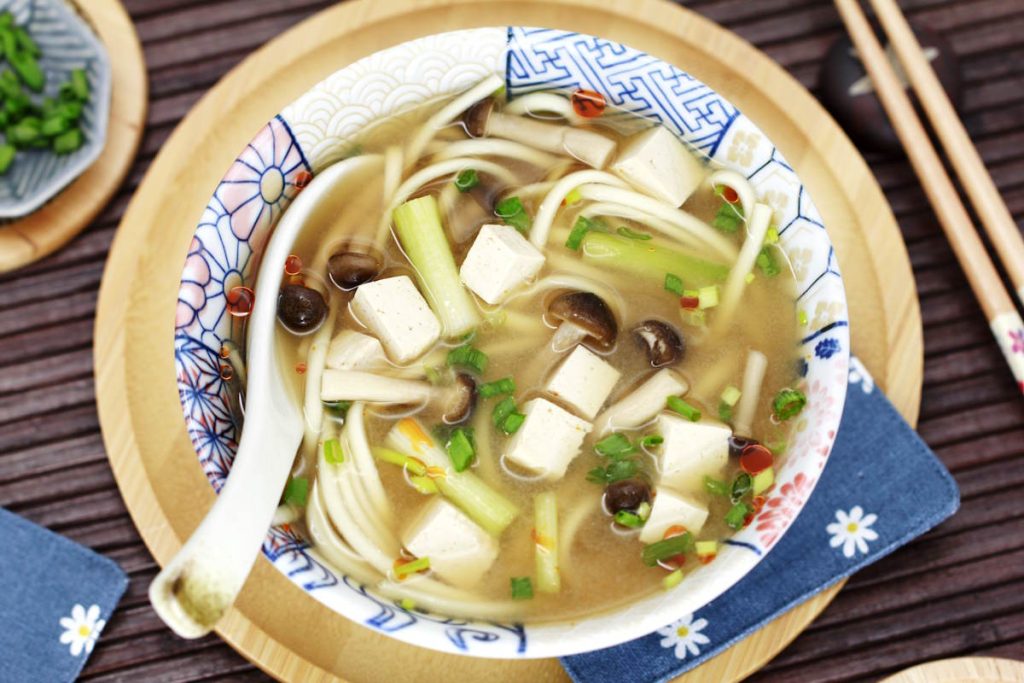
Quick Miso Udon: Spicy noodle soup with Miso, Tofu & Shimeji mushrooms
If you’re looking for a quick, comforting meal that’s both easy to prepare and incredibly tasty, then this Miso udon…
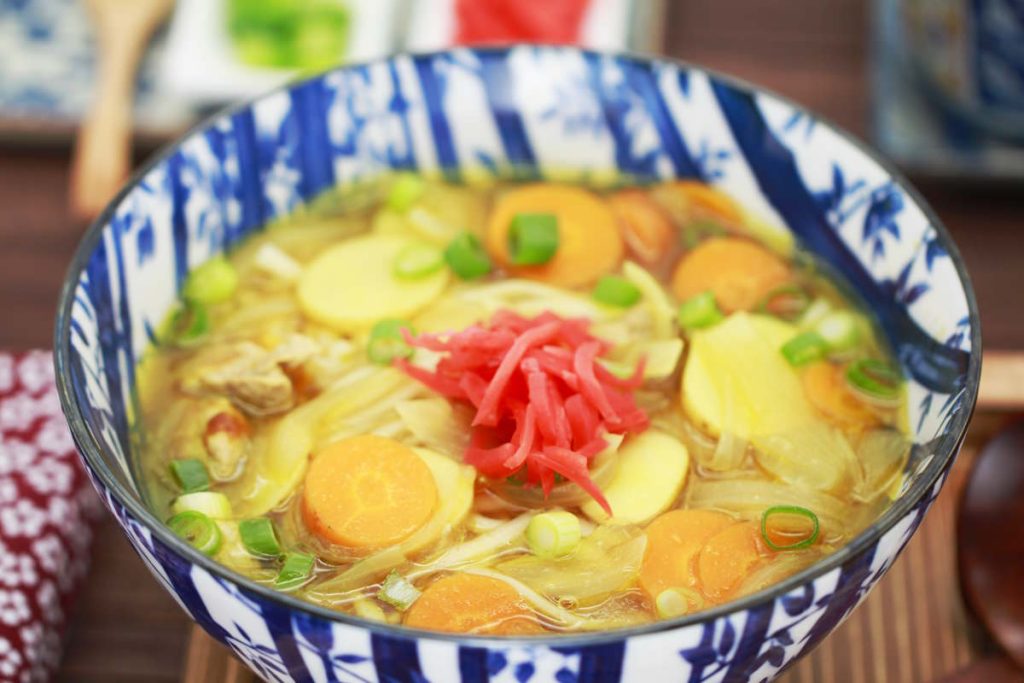
Curry Udon soup: A classic Japanese home-cooked meal – warming, traditional & delicious
Curry Udon combines the depth of Japanese Dashi broth with the spicy flavor of curry. This hot noodle dish is…
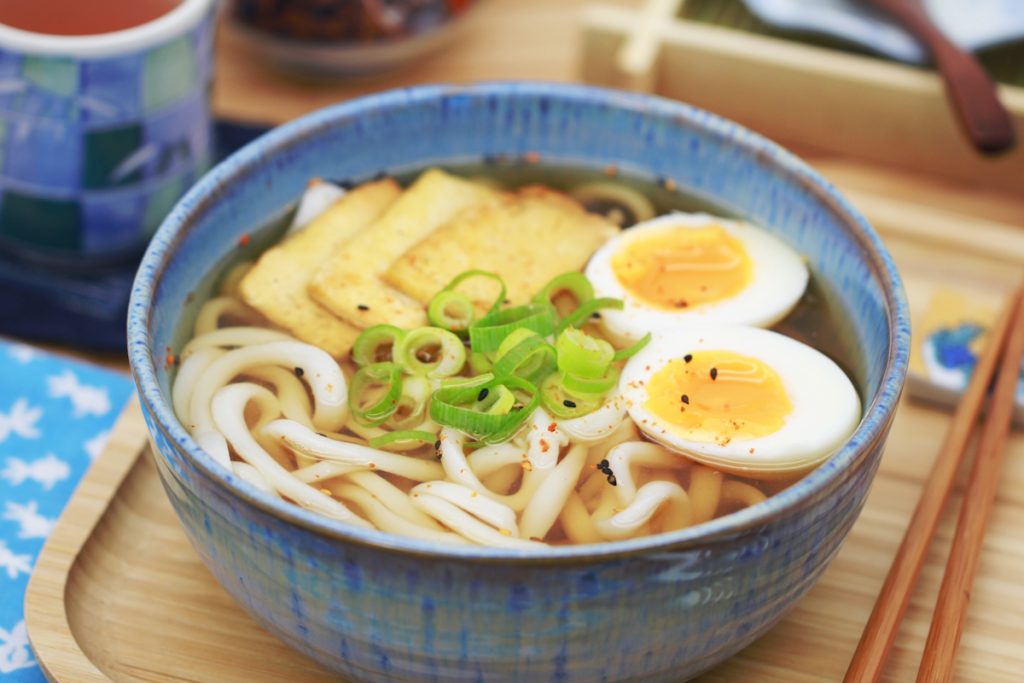
Delicious Kake Udon Noodle Soup: A classic of Japanese cuisine
Sometimes you just need a quick yet hearty meal that warms you up and satisfies your appetite. Kake Udon noodle…
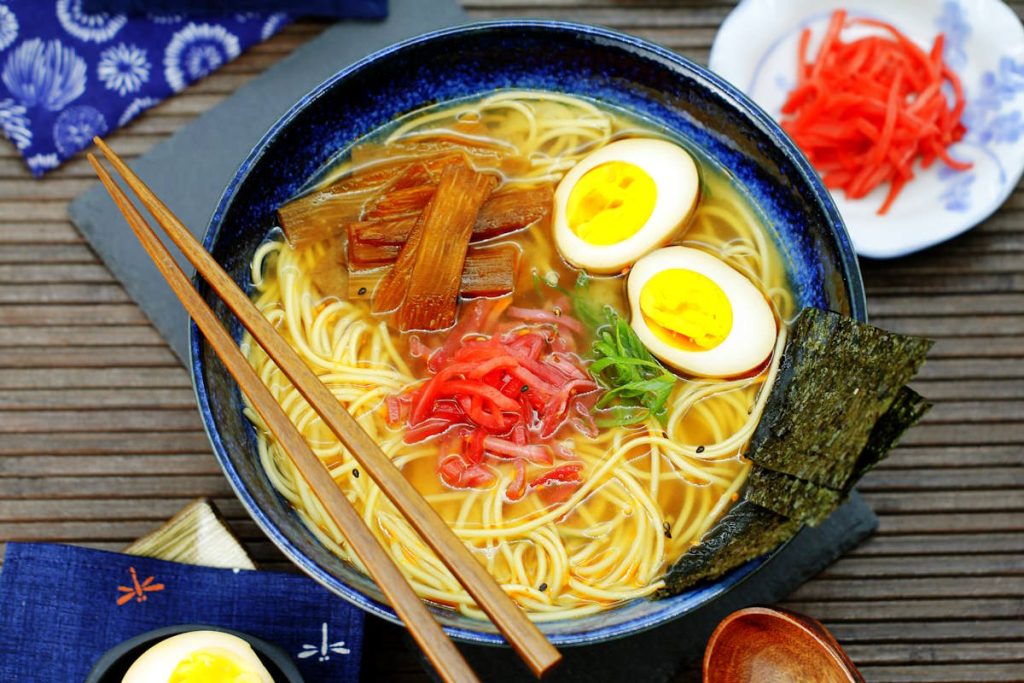
A bowl full of happiness: Miso Ramen with 7 varied toppings – vegetarian, spicy & really easy
Immerse yourself in the world of flavours of Japanese cuisine with our Happiness Bowl! It’s all about Miso Ramen –…
10-minute Shoyu Ramen with bamboo shoots & Ramen eggs – for quick meals
My 10-minute Shoyu ramen: Wavy ramen noodles, served in a rich and sinfully delicious tsuyu broth made from Dashi, soy…
Has anyone tried this recipe yet? Let me know in the comments – I’m really looking forward to hearing from you.