
Language:


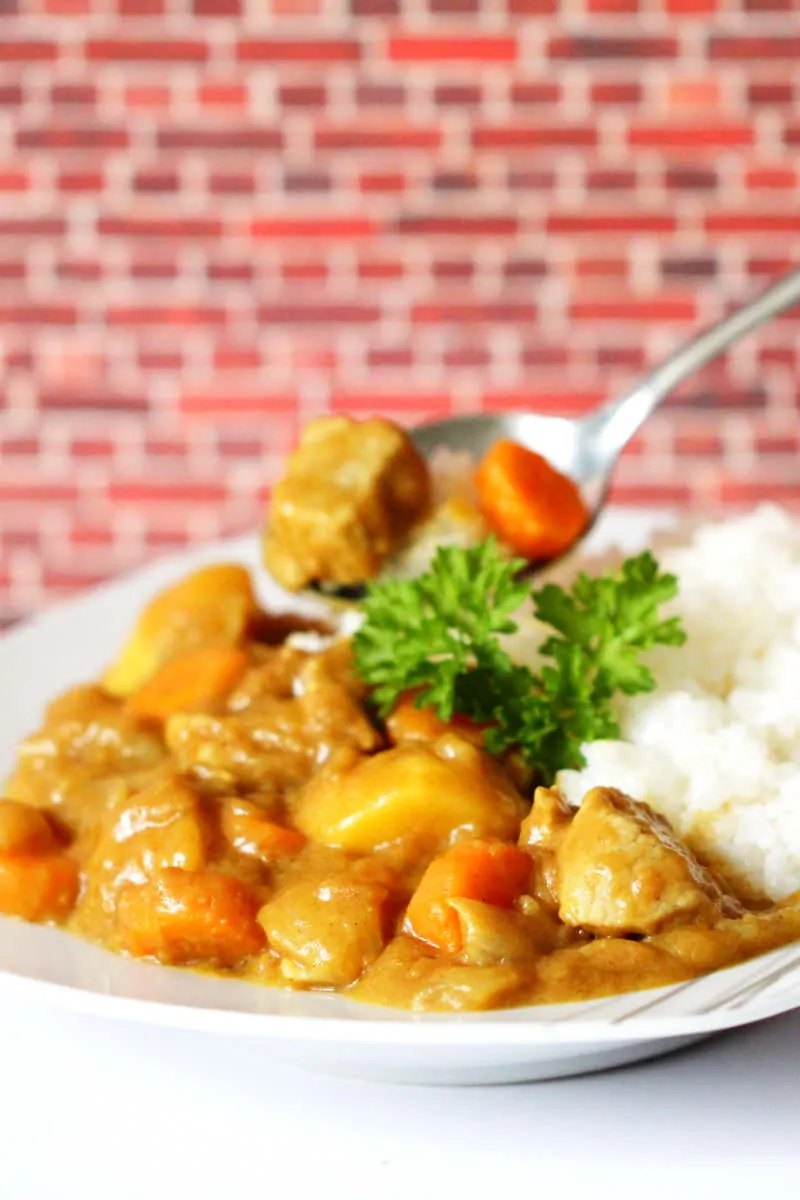
Japanese curry is one of the most popular dishes in Japan and is a staple of home cooking. With its hearty curry sauce coating vegetables, meat or Tofu, and a portion of steaming white rice, this dish is a real comfort food. Whether as a quick family dinner or as a meal prep for on the go – Kare Raisu impresses with its flavour, versatility and ease of preparation.
In this recipe, I’ll show you step by step how you can easily recreate Kare Raisu at home. I’ll explain the different types of curry available, how to use them correctly and what variations you can try.
What makes Japanese curry so special?
Japanese curry has a fascinating history that is closely linked to Japan’s cultural influences. Curry originally comes from India, but reached Japan via Britain in the 19th century. During the Meiji period (1868–1912), Japan opened up to Western influences after a long period of isolation, and with the establishment of a navy modelled on the British, curry also found its way into Japanese cuisine.
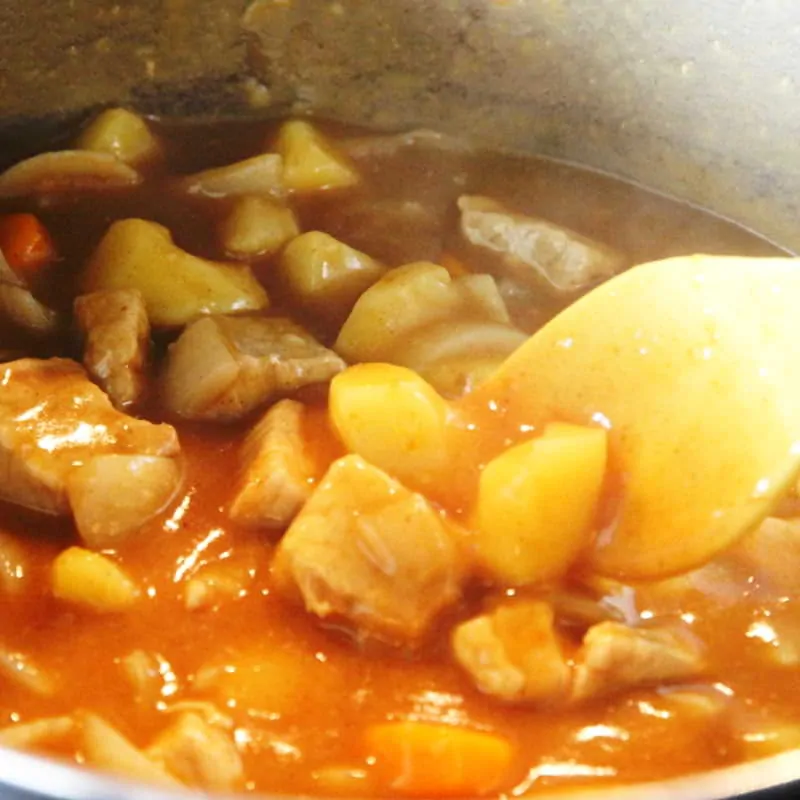
British sailors had brought with them a simple and nutritious curry dish, characterised by the addition of meat, potatoes, carrots and onions. This “Western” curry was adopted by Japanese chefs and adapted over time to local tastes. The first written mention of curry in a Japanese cookbook dates from 1872, and by 1910 the version of kare raisu that is typical today had developed in Yokosuka, a naval base.
The breakthrough into domestic kitchens came in the 1950s, when companies such as S&B and House Foods launched the first curry cubes. This innovation made preparation quick, easy and accessible to everyone.
Today, curry is one of the most popular dishes in Japan and symbolises how international influences can blend with local traditions to create something unique. Kare Raisu is therefore not only a delicious dish, but also a piece of culinary history..
Making Japanese curry yourself: Here’s how!
For this recipe, we use classic curry cubes, which you can find in any well-stocked Asian supermarket. This makes preparing the curry sauce quick and easy:
- Vegetables: Onions, carrots, potatoes – the basic ingredients for any Japanese curry.
- Protein: Pork, beef, chicken or Tofu – whatever takes your fancy.
- Curry cubes: The basis for the aromatic sauce. (im Shop ansehen)
- Rice: Freshly cooked, short-grain Japanese rice as a side dish. (im Shop ansehen)
Cut the vegetables into bite-sized pieces and fry them together with your protein in a large saucepan. Add water and leave everything to simmer until the vegetables are cooked. Crumble the curry cubes and stir them in until they have completely dissolved. Leave the sauce to simmer briefly once more so that it thickens nicely.
Meanwhile, cook the rice according to the packet instructions until it is fluffy. Serve the curry with the rice on a plate, garnish as desired with pickled ginger or spring onions – done!
What types of Japanese curry are there?
Japanese curry comes in various forms, each with its own particular merits. Every variety is suited to specific preparation methods and offers its own unique flavour nuances. Here is an overview of the most common varieties:
1. Curry roux (Kare Roux):
By far the most popular form of Japanese curry is curry cubes, also known as Kare Roux. These consist of a combination of spices, flour and fats, which together form a thick curry sauce as soon as they are dissolved in hot water. Curry cubes are particularly handy as they already contain all the necessary spices and thickening agents. They are available in various levels of heat, from mild to extra hot, and are ideal for classic dishes such as Kare Raisu or Katsu Curry.
CUSTOMER FAVOURITE

S&B Golden Curry mild 92g (aus Japan)
Japanische Curry Paste für Kare Raisu, Curry Udon & Wokgerichte. Golden Curry mild von S&B ist eine klassische japanische Currywürzmischung für die Zubereitung von Kare…
In stock
2. Curry powder (Kare Ko):
Curry powder is the original form of Japanese curry and consists of a blend of finely balanced spices such as turmeric, coriander, cumin and cinnamon. This version takes a little longer to prepare, as you also need to make a roux or another base to thicken the sauce. However, curry powder offers maximum flexibility and is suitable for experimental variations as well as for lighter, thinner curries.
3. Ready-made curry sauces:
For those in a hurry, ready-to-use curry sauces in vacuum-sealed bags are available in Japan. These pre-cooked sauces often already contain meat or vegetables and simply need to be heated in a hot water bath. They are ideal for a quick dinner or as a meal on the go. In Japan, they are also valued as emergency rations and are even used on special occasions such as space missions.
4. Homemade curry:
As well as shop-bought products, you can also make Japanese curry entirely from scratch. This involves combining individual spices and herbs to create your own unique blend. With homemade curry, you can tailor the flavours to your personal taste – from sweet and mild to intensely spicy.

Which variety suits your dish?
For purists: Homemade curry is the ultimate challenge and offers maximum control over flavour and ingredients.
For beginners: Curry cubes are ideal as they are easy to use and always turn out well.
For those who like to experiment: Curry powder allows you to play with flavours and textures.
For quick meals: Ready-made curry sauces are perfect for busy days or when you’re on the go.
What goes well with kare raisu?
Kare raisu is a main course in its own right that doesn’t need much accompaniment. Nevertheless, you can complement it with pickled red ginger (beni shoga), a fresh green salad or a simple Miso soup. A cool glass of Japanese green tea also goes down a treat with it.
For a special twist, you can also serve it with a crispy tonkatsu (Japanese pork cutlet) to turn it into a katsu curry – a real crowd-pleaser in Japan!
What to do with leftover curry?
Japanese curry often tastes even better the next day, as the flavours become more intense. If you have any leftovers, there are plenty of ways to use them up:
- Kare Udon: Turn the curry sauce into a warming noodle soup. Dilute the sauce with Dashi broth, add Udon noodles and garnish with spring onions. Perfect for a quick, hearty meal.
- Kare Pan: Fill the curry sauce into yeast dough, roll the dumplings in panko breadcrumbs and deep-fry until golden brown. A crispy snack that’s ideal for on the go or as a snack.
- Curry Don: Serve the curry sauce over freshly cooked rice and garnish with a fried egg or herbs. A simple and filling meal.
- Curry Omurice: Combine the curry sauce with fried rice and wrap it in a fluffy omelette. A classic that’s quick to make and always a hit.
Have you ever cooked Kare Raisu or tried another variation? Share your ideas and experiences in the comments – I look forward to reading how this recipe turns out for you. Have fun cooking and enjoy! 😊
Japanese curry
Serves 5 | 30 minutes | 442 kcal
🖨️ Print PDF 📌 Save pinKare Raisu is a classic Japanese home-cooked dish. This hearty curry with rice combines aromatic curry sauce, fresh vegetables and tender meat or Tofu – easy to prepare and irresistibly delicious.
Ingredients (5 servings)
450 g pork (preferably pork goulash)
370 g onions
140 g potatoes
90 g carrots
1 tbsp oil (e.g. rapeseed oil)
540 ml water
1 packet curry cubes (im Shop ansehen)*
5 portions Rice (im Shop ansehen)*
Preparation (30 minutes)
Step 1
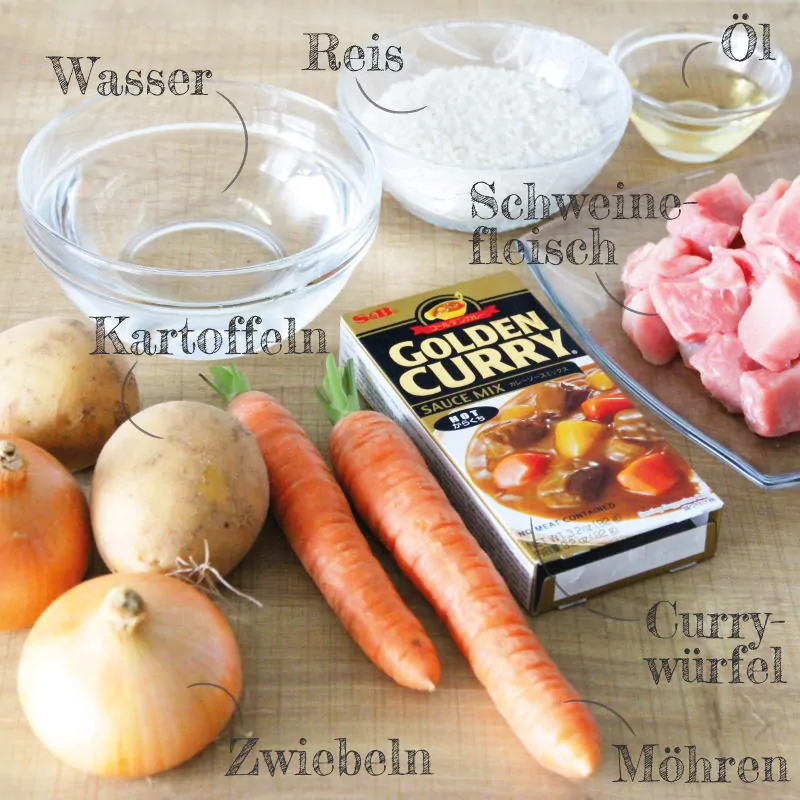
Gather the ingredients for the homemade Kare Raisu and prepare or cook the rice (see the recipe in a rice cooker or in a pan).

Step 2
Peel the carrots, potatoes and onions and cut them into bite-sized pieces. Cut the carrots into 1 cm thick rounds. Roughly dice the potatoes. Halve the onions and cut them into wedges.
Step 3
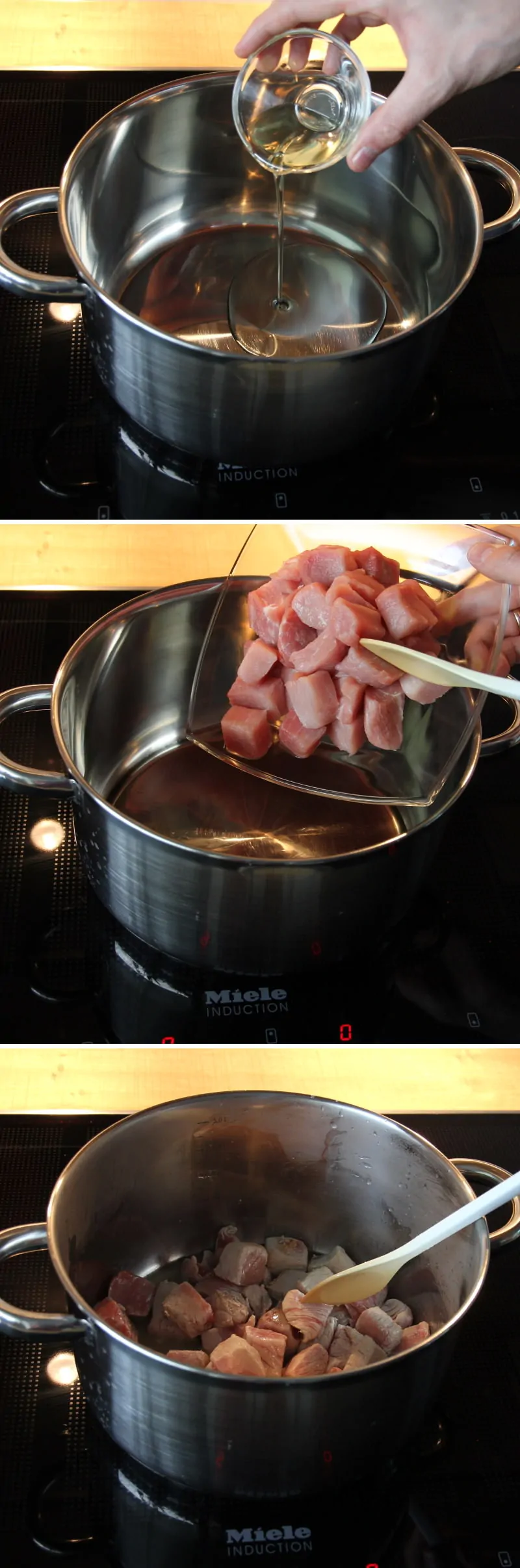
Heat the oil in a large saucepan and add the diced pork goulash . Brown the meat vigorously on all sides for about 5 minutes .
Step 4
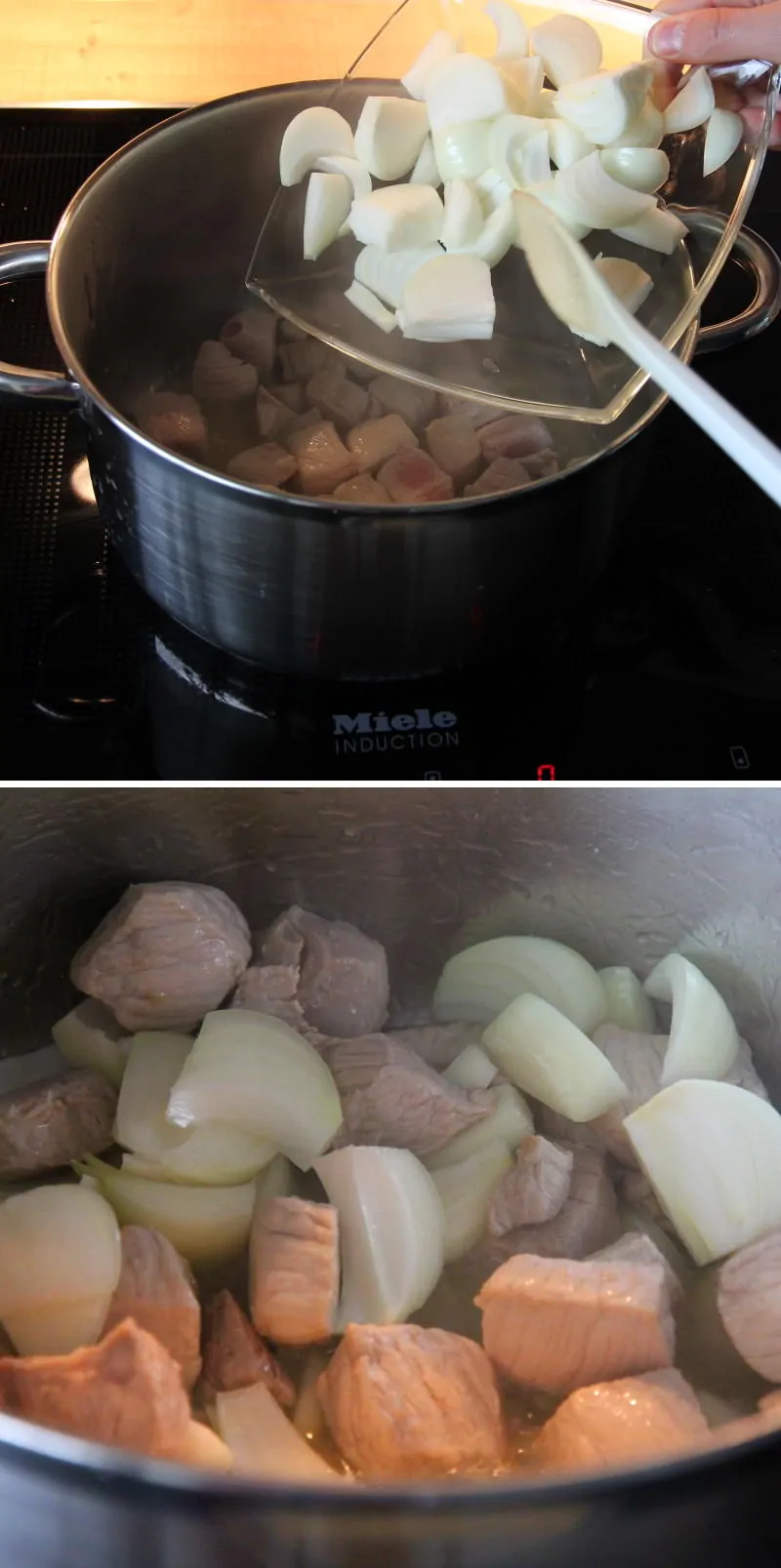
Add the finely chopped onions to the pan with the browned meat and fry briefly (for about 1 minute).
Step 5
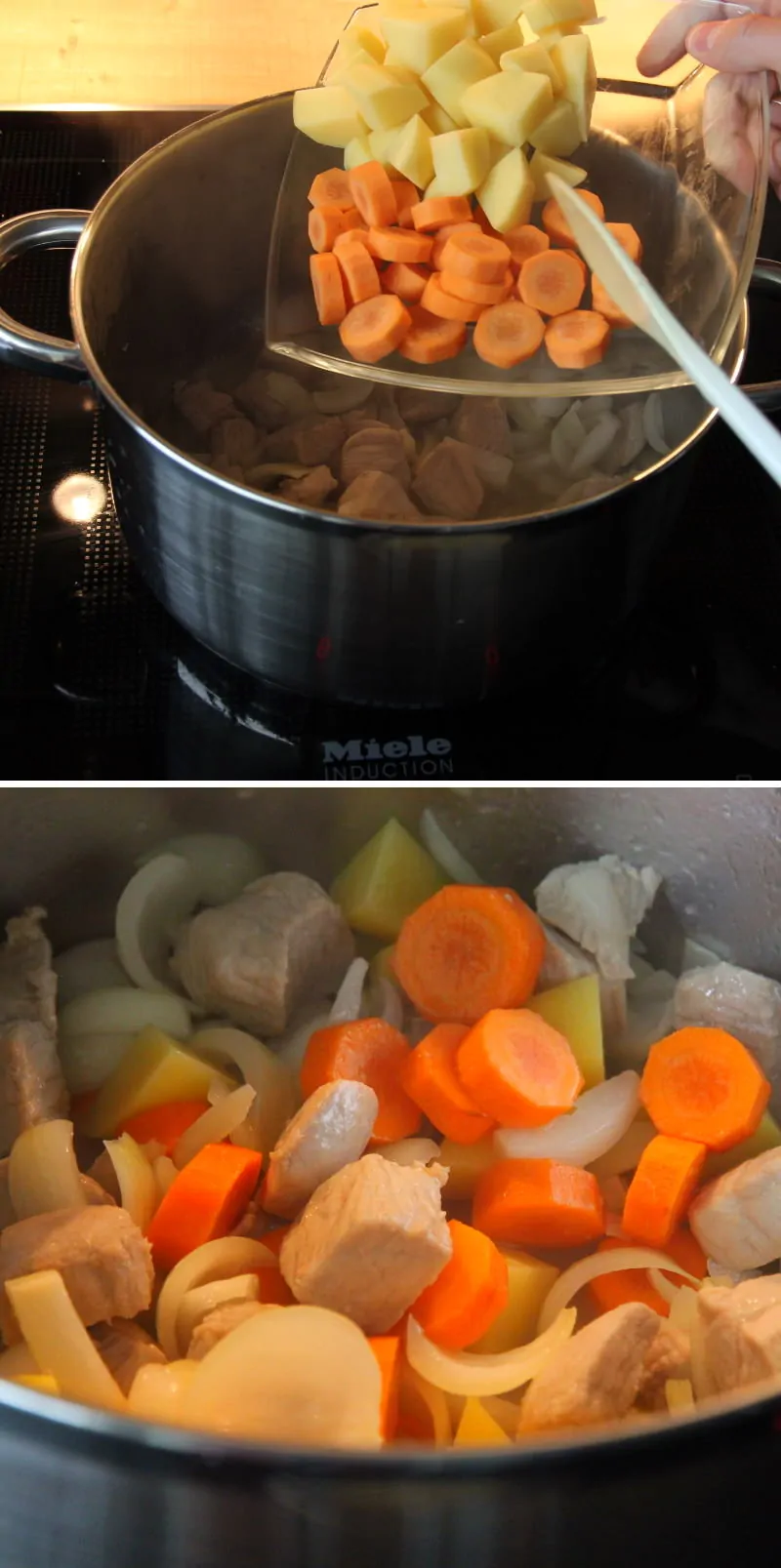
Add the remaining vegetables, i.e. potatoes and carrots, to the pan. Fry everything vigorously for a further 5 minutes, stirring occasionally.
Step 6
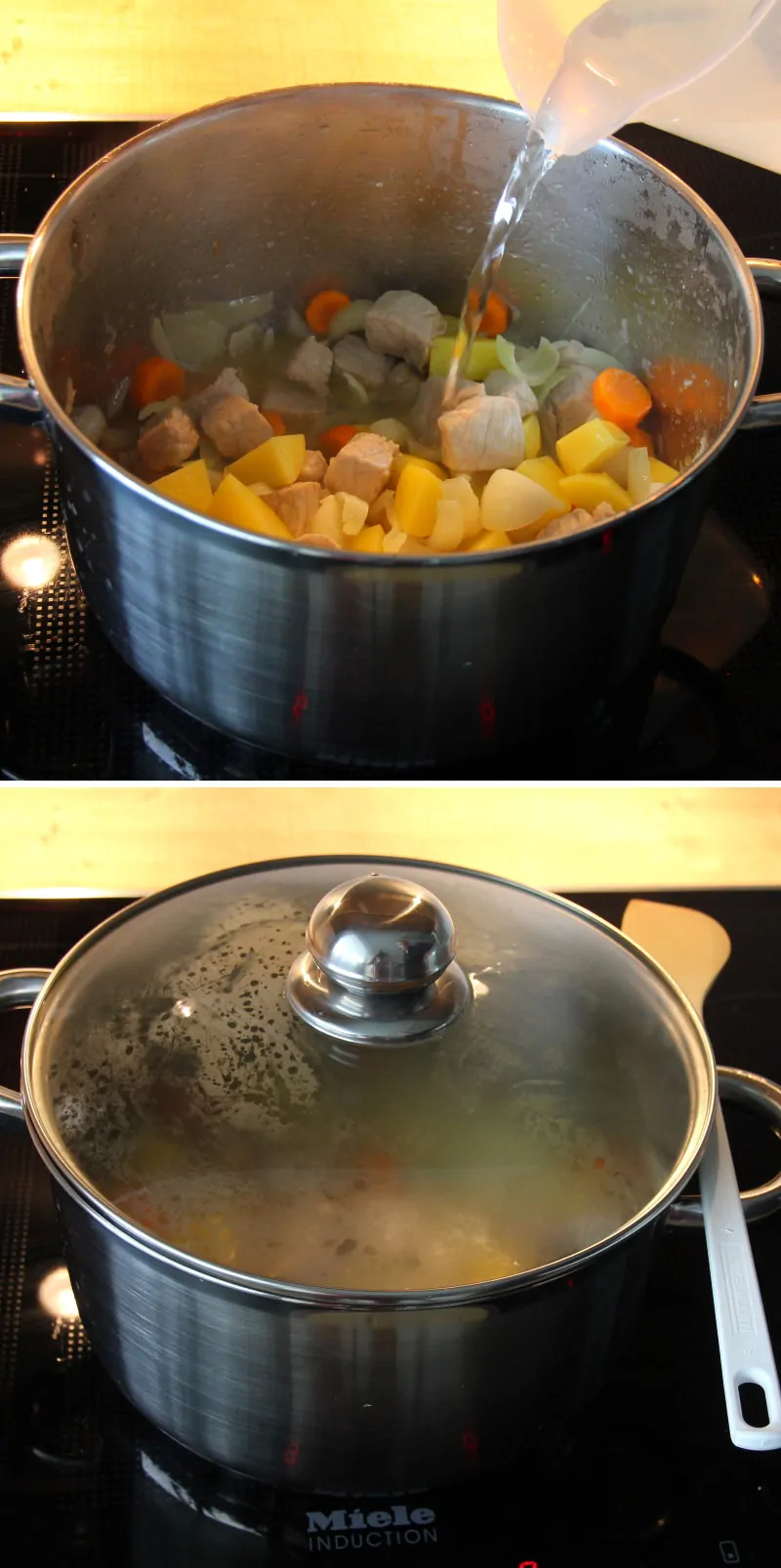
Then pour water over and stir well. Close the lid and reduce the heat so that the water in the pan simmers gently. Cook for about 15 minutes until the potatoes are tender.

Step 7
Once the vegetables are cooked, turn off the heat and add the unwrapped and crumbled Golden Curry. Stir in the curry cubes until they have dissolved.
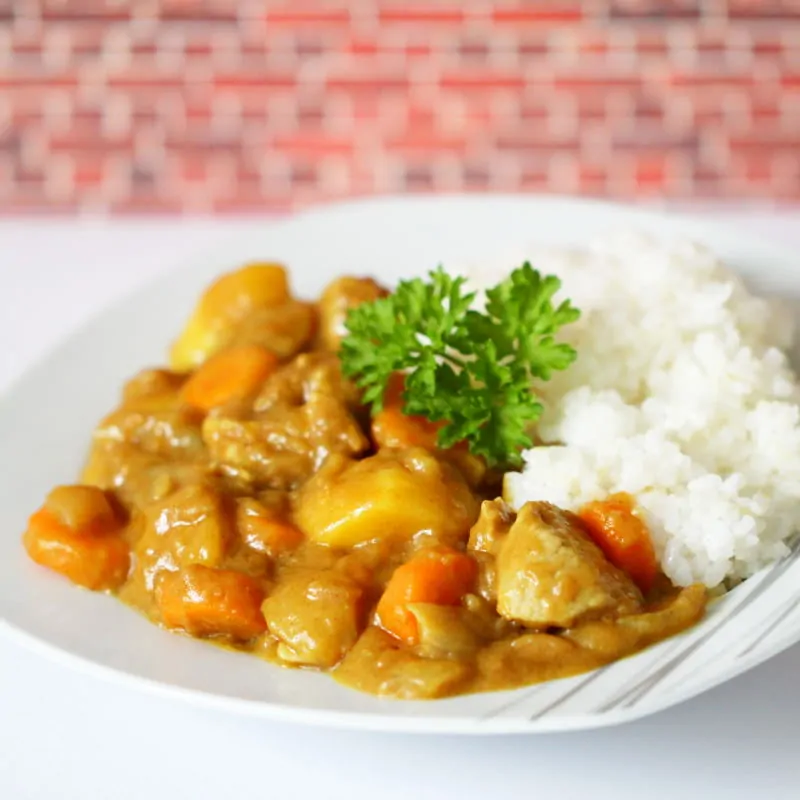
Step 8
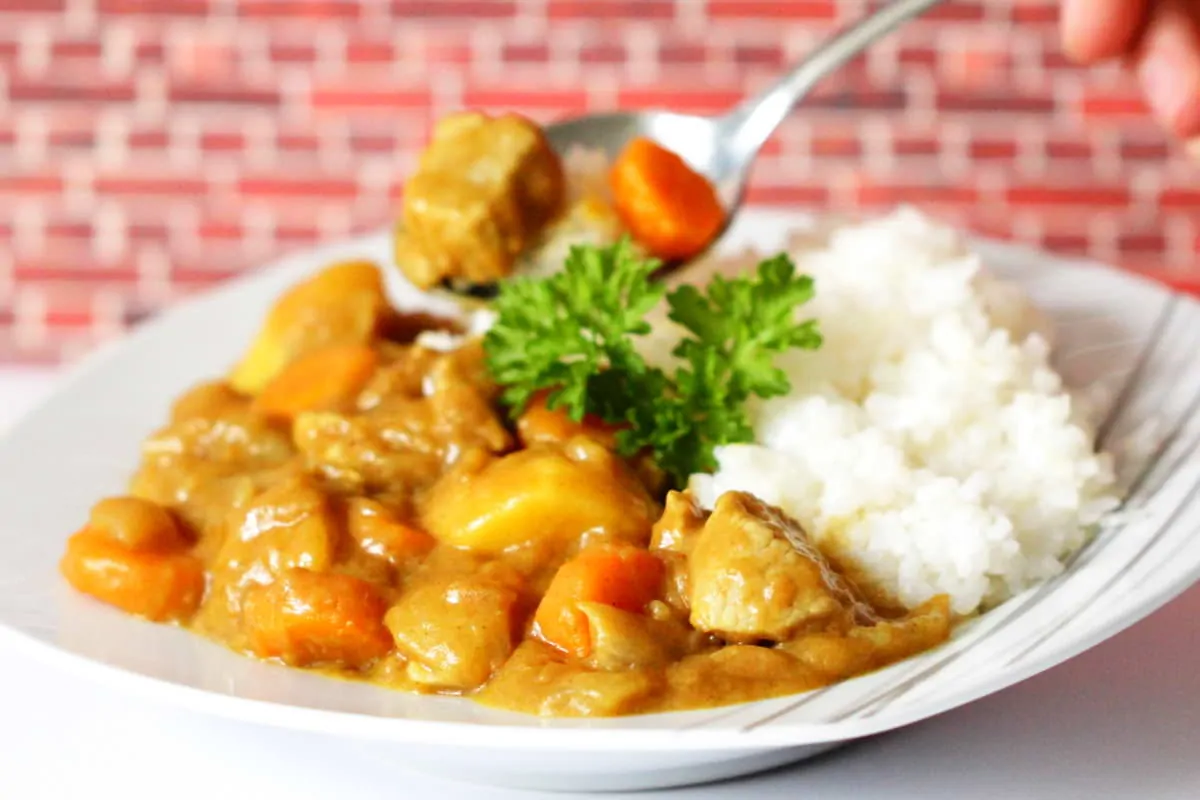
Finally, bring everything to a gentle boil again for 5 minutes while stirring. Serve the finished curry hot with the rice you prepared earlier. Ready – Itadakimasu!
Fancy some more delicious inspiration from Japan? You can find our best recipes here:
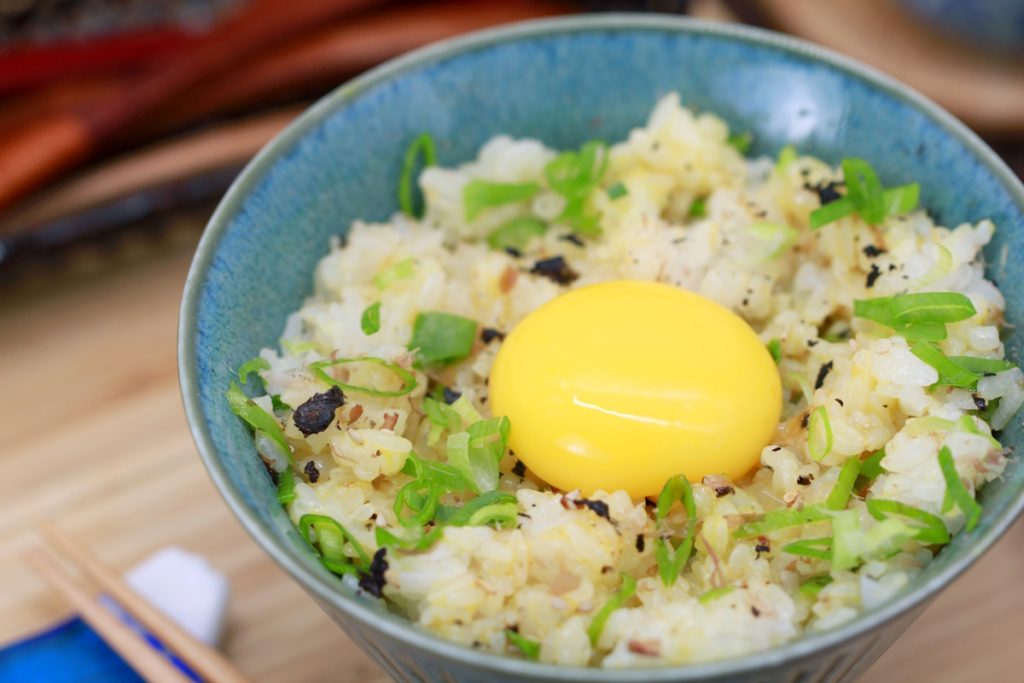
Tamago Kake Gohan: Japanese breakfast rice with egg, Furikake & Katsuobushi | TKG
In this recipe, I’ll show you a particularly flavourful version of Tamago Kake Gohan (TKG)…
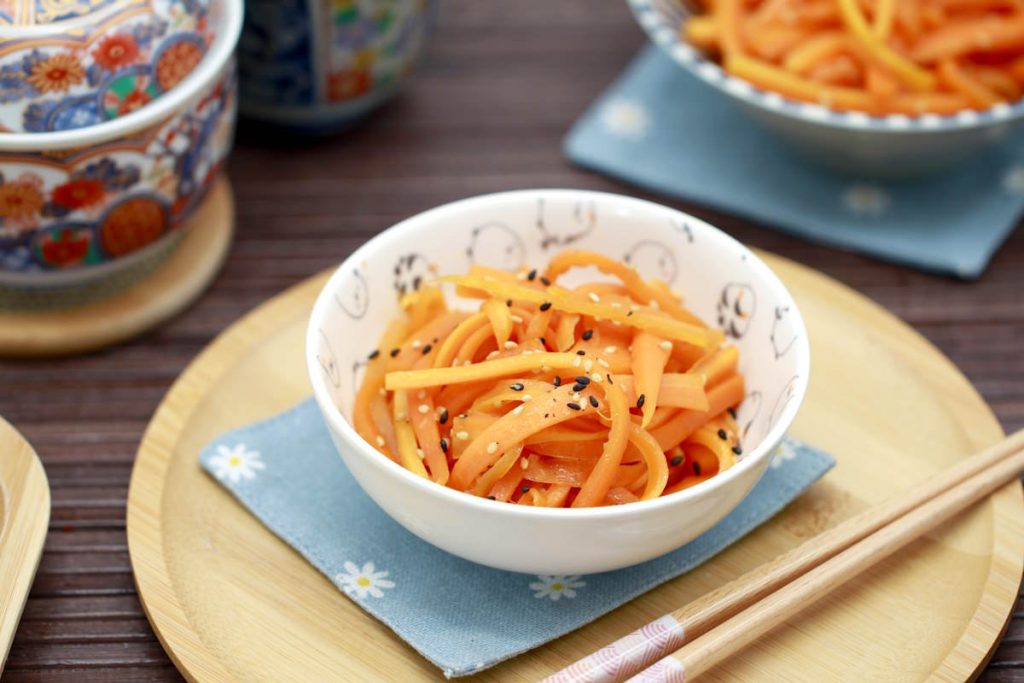
Make your own Ninjin no Kinpira: Japanese carrot side dish in the Kinpira style
Ninjin no Kinpira is a simple Japanese side dish made from finely sliced carrots, which…
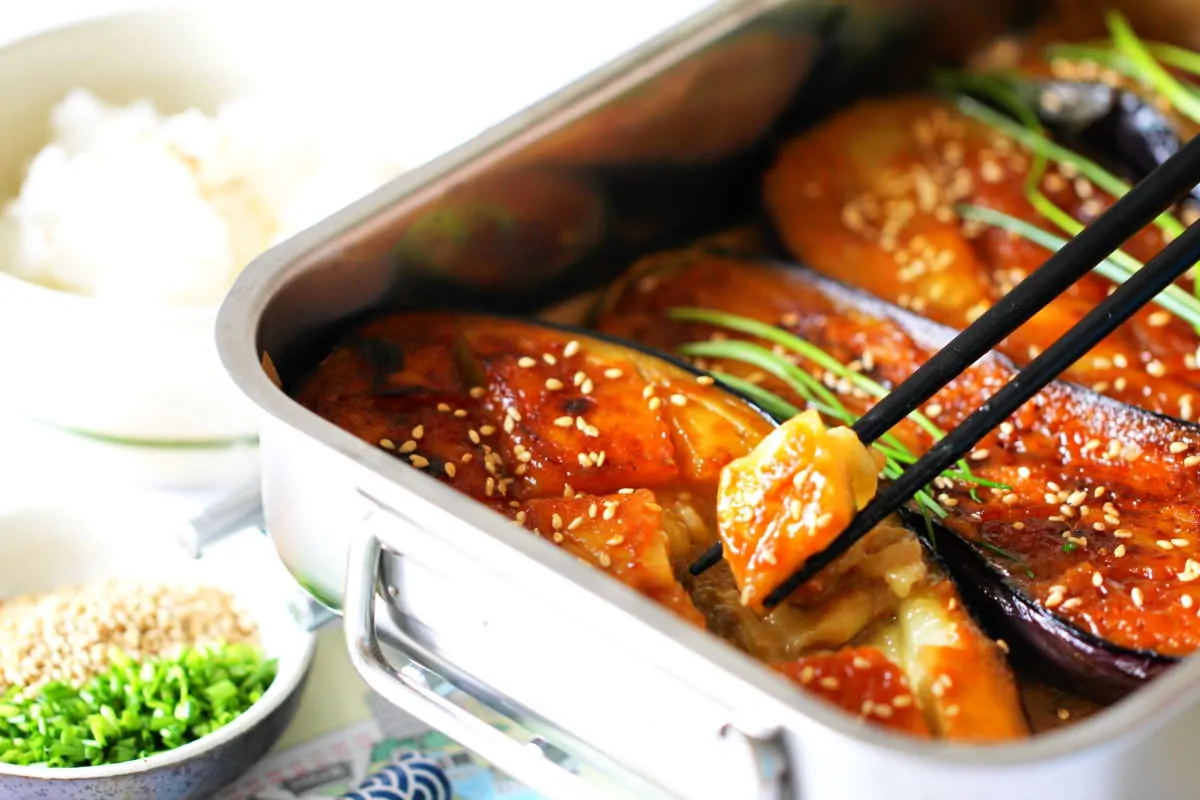
Nasu Dengaku: Oven-baked aubergines glazed with Miso – simple & irresistible
Nasu Dengaku is a true classic of Japanese cuisine and perfect as a side dish…

Mushroom and spinach salad with sesame and Tofu dressing: Recipe for Yasai no Shira ae
Mushroom and spinach salad with sesame and Tofu dressing, also known as Yasai no Shira…
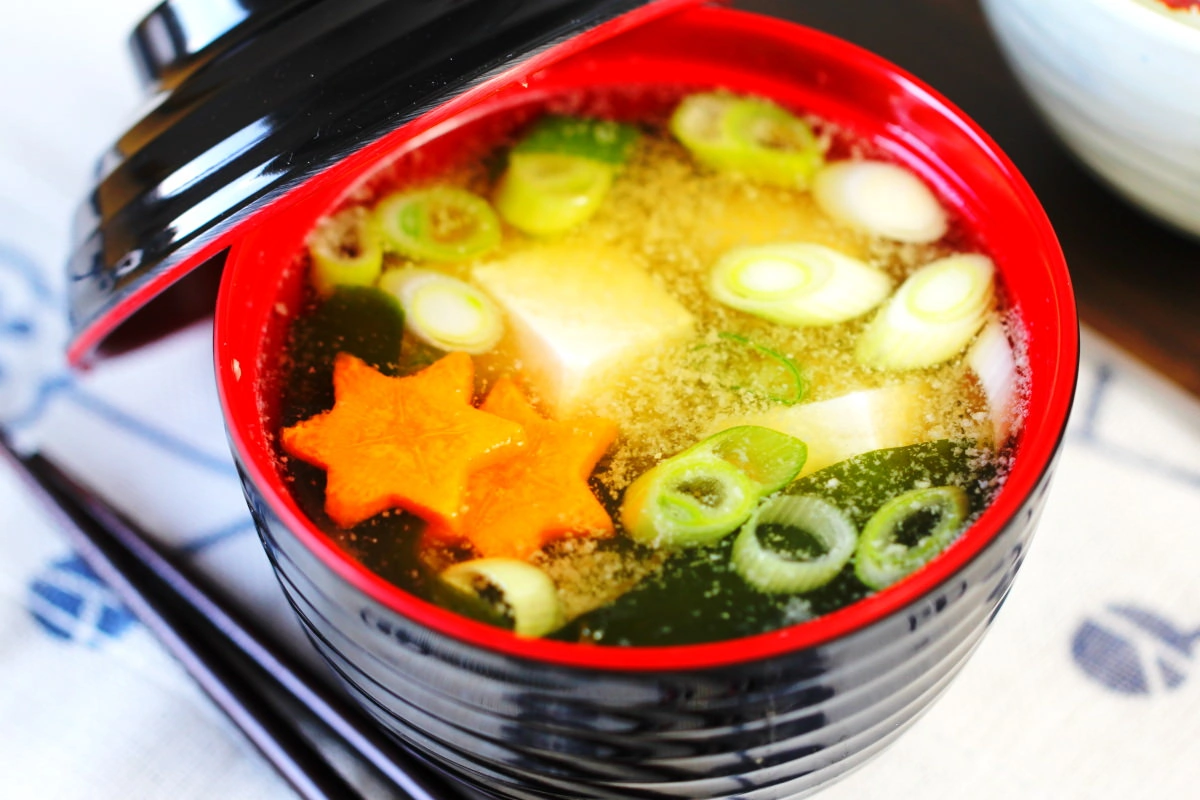
Misoshiru in a flash: basic recipe for miso soup with Wakame & Tofu
Miso soup is much more than just a side dish in Japan – it’s a…

Make your own Japanese potato salad: fresh, creamy and irresistible!
If you’re looking for a delicious side dish that’s both familiar and excitingly new, then…
Have you tried the recipe yet? Let me know in the comments, I’m really looking forward to hearing from you.