

Discover the secret of a Japanese breakfast with a natto bowl – a hearty mix of fermented soya beans on rice, expertly rounded off with soya sauce and Japanese karashi mustard. Despite its exotic flair and unusual texture, natto is a nutritional powerhouse that turns every morning into a culinary adventure and provides you with energy for the whole day! Read more about this power breakfast here:
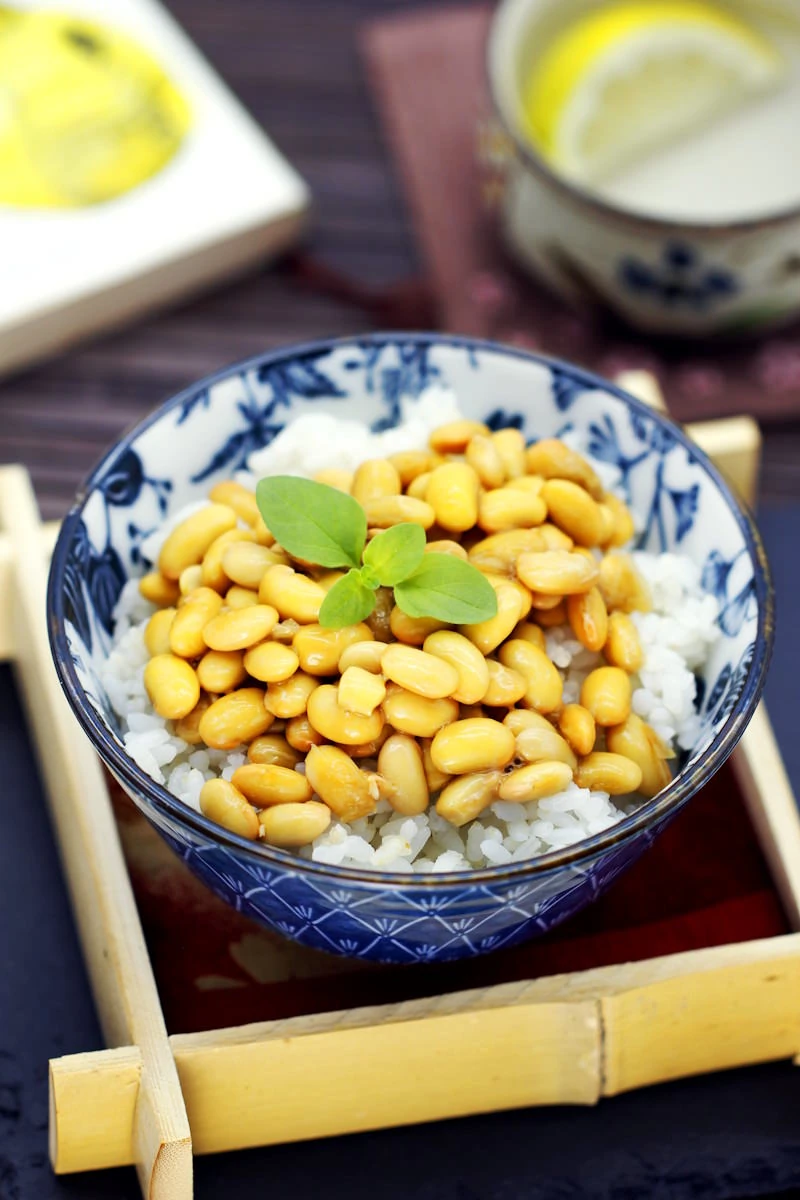
From the invigorating Matcha tea ceremony to perfectly arranged Sushi rolls, there are countless facets of Japanese cuisine that capture our attention. Today, however, I want to whisk you away into the simple yet equally fascinating world of the Natto Rice Bowl – or as the Japanese say: “Nattodon”.
Nattodon is a traditional breakfast frequently enjoyed in Japanese households. It consists of natto, fermented soya beans, which are placed over a bowl of steaming rice and seasoned with soya sauce and Japanese karashi mustard. For many Westerners, the dish may seem unusual at first, but it is a veritable treasure trove of nutrients that will keep you energised throughout the day.
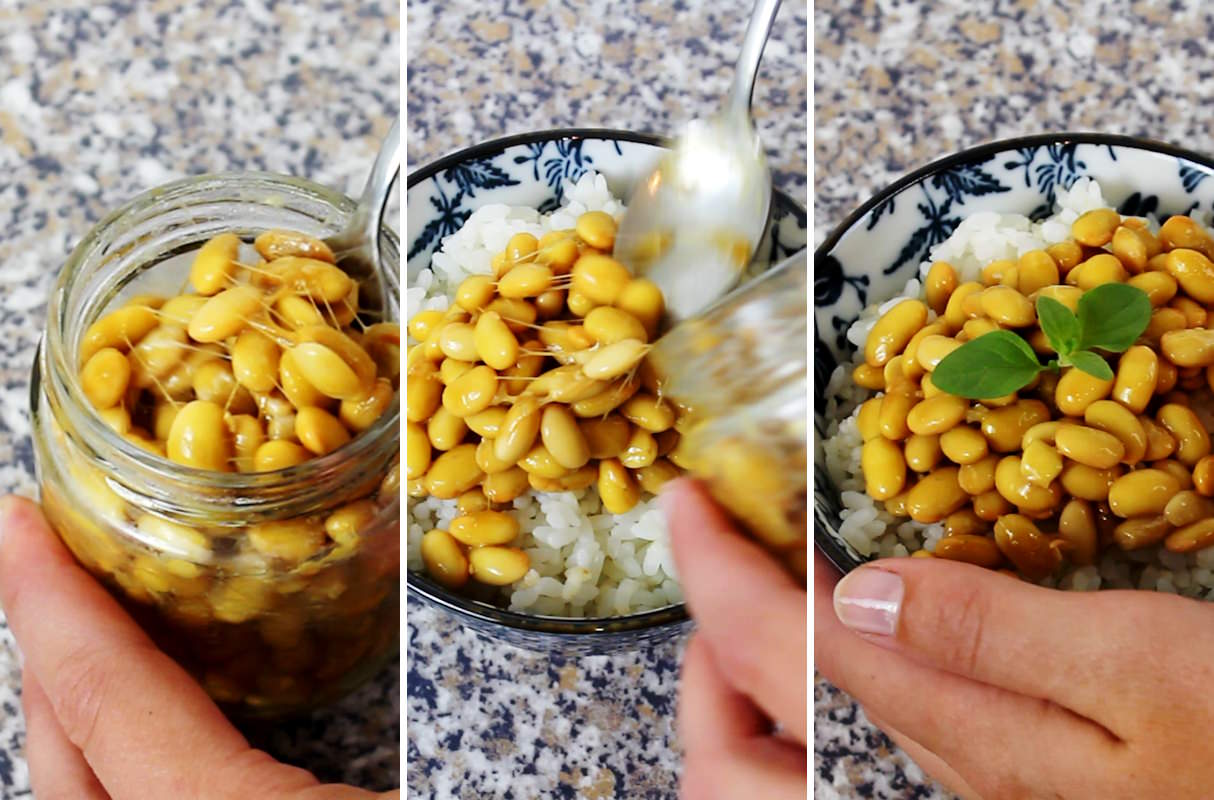
The basis of the dish is natto, a true speciality of Japanese cuisine. It is made by cooking soya beans and then fermenting them with bacteria, which produce a sticky “slime” and create a distinctive flavour. Natto is rich in protein, vitamin K, and enzymes that aid digestion, and is therefore considered particularly beneficial to health.

Tip: Fancy making natto yourself? Here you can learn how to make fermented natto soya beans at home !
The Natto Rice Bowl is traditionally served with soy sauce and karashi mustard, with the mustard adding a pleasant heat and the deep Umami flavour of the soy sauce bringing out the flavours of the fermented beans.
The dish is complemented by a portion of rice – ideally short-grain Japanese rice – which provides the perfect textural contrast to the sticky beans.
Although the Nattodon breakfast is traditionally kept simple, you can customise it with a range of side dishes and toppings. Chopped spring onions, bonito flakes, dried seaweed strips or even a raw egg are popular additions that add extra layers of flavour and transform the Natto Rice Bowl into a truly satisfying dish.
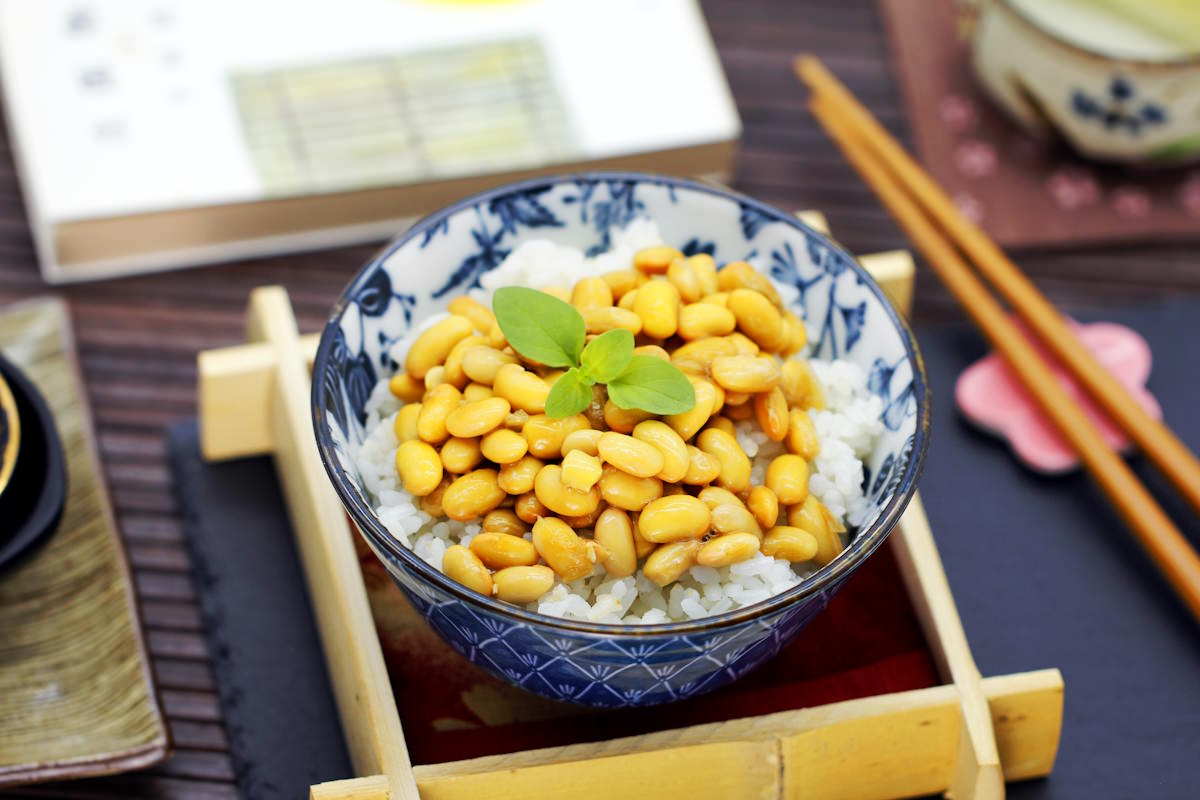
You might be wondering: “Can I make this at home?” Absolutely! It just takes a little time and patience, but with a few key ingredients found in any well-stocked Asian supermarket, you can easily recreate this traditional Japanese breakfast at home.
And the best part is: once you’ve prepared the natto, you can keep it in the fridge for up to a week, allowing you to whip up a healthy and nutritious breakfast in just a few minutes. Piqued your interest? Then I’ve got just the thing for you!
With this authentic recipe for a Natto Rice Bowl, you can easily prepare your own Japanese breakfast bowl at home. Immerse yourself in Japanese cuisine and discover how this simple yet incredibly satisfying dish can enrich your morning routine.
Let’s start the day together with a bowl of Nattodon – if you have any questions or suggestions, please feel free to use the comments section below the recipe 😊. Let’s get started:
Natto Bowl
Serves 2 | 60 minutes | 382 kcal
🖨️ Print PDF 📌 Save pinDiscover the secret of a Japanese breakfast with nattodon – a hearty dish of fermented soya beans on rice, expertly seasoned with soya sauce and Japanese karashi mustard. Despite its exotic appeal and unusual texture, natto is a nutritional powerhouse that turns every morning into a culinary adventure and provides you with energy for the whole day! Ingredients (2 servings)
Ingredients (2 portions)
2 portions Natto (frozen or homemade > to the Natto recipe)
✔ Soya beans (dried) (bei Amazon* kaufen)
✔ Natto starter (bei Amazon* kaufen)
1 tsp mustard
2 tbsp Shoyu (im Shop ansehen)
2 portions rice (see recipe in a pan or in a rice cooker):
✔ 200 g rice (im Shop ansehen)
✔ 200 ml water (fresh, cold tap water)
✔ 1 pinch salt
Alternative recommendations:
✔ Fresh natto (auf Amazon* kaufen)
✔ Freeze-dried natto (auf Amazon* kaufen)
Preparation (60 minutes)

Step 1
Gather the ingredients for the delicious Nattodon.
The natto may need to be defrosted before preparation; for example, place it in the fridge the night before.
So prepare the rice, i.e. wash and cook the rice in a saucepan or in a rice cooker.
Step 2
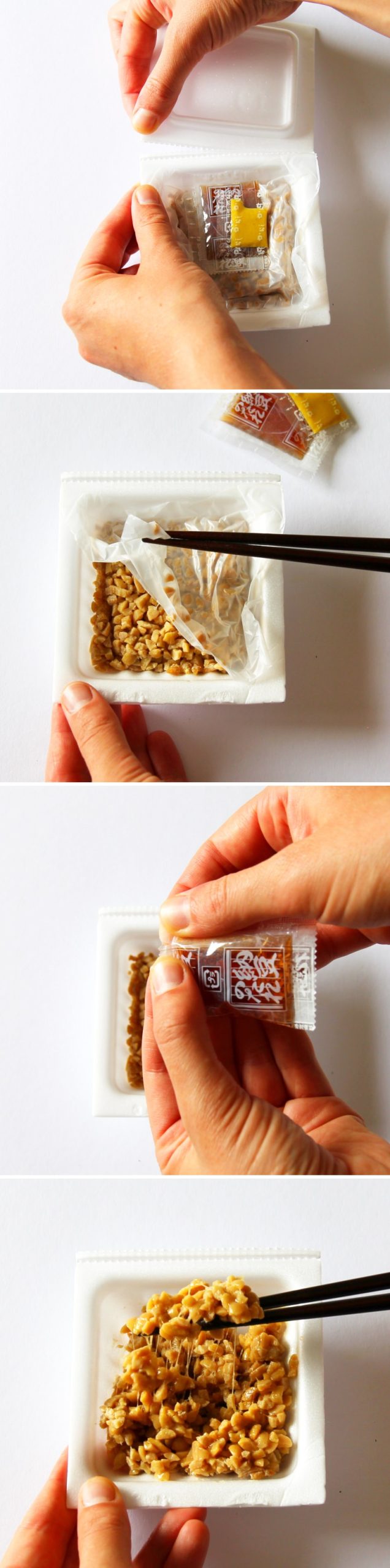
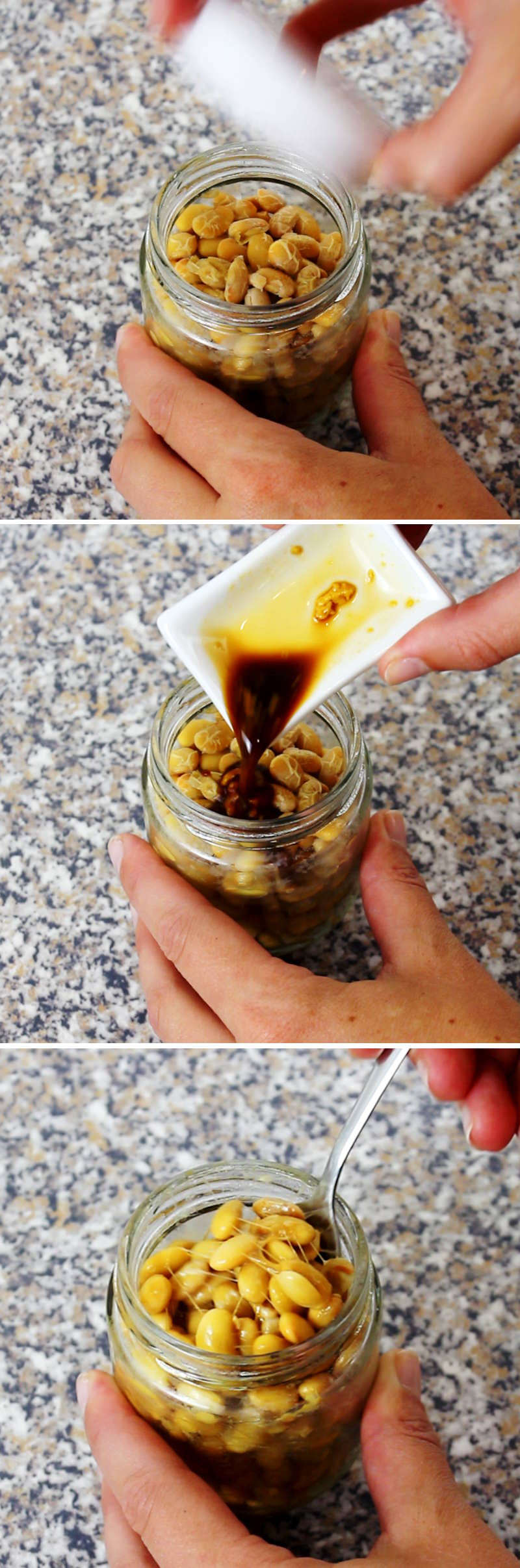
If using shop-bought natto: First, open the white polystyrene packaging and tear off the lid along the perforated line. The packaging usually contains two small foil sachets. These contain a special Dashi soy sauce and Japanese karashi mustard for seasoning the natto. Set the two seasonings aside and peel the protective film off the natto. Now open the seasonings and pour them over the natto in the packaging. Mix the natto vigorously with the seasonings using chopsticks in a circular motion until the soya beans form strings.
Step 3
For homemade natto: Add half a teaspoon of mustard and 1 tbsp of soy sauce per portion to the homemade natto and stir vigorously until the soybeans form strings.
Step 4
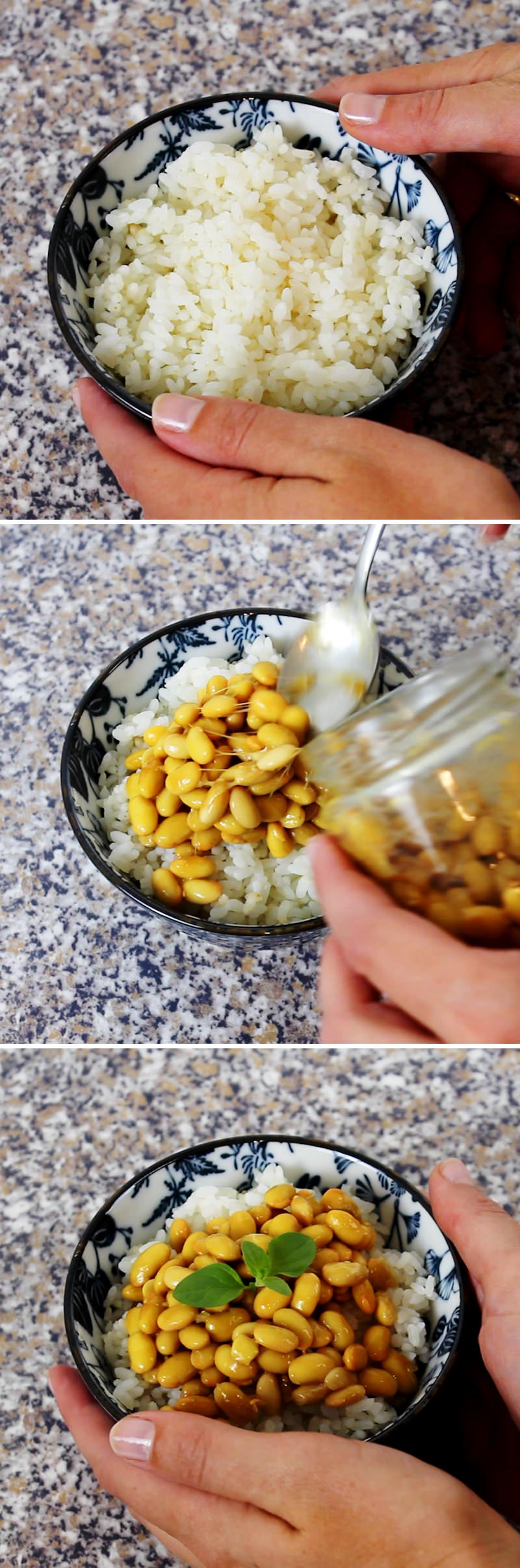
Spoon the prepared rice into bowls and spread the natto over each one, garnishing with spring onion rings if desired. Done – Itadakimasu!
Looking for even more delicious rice recipes? Here are a few ideas from Japan:
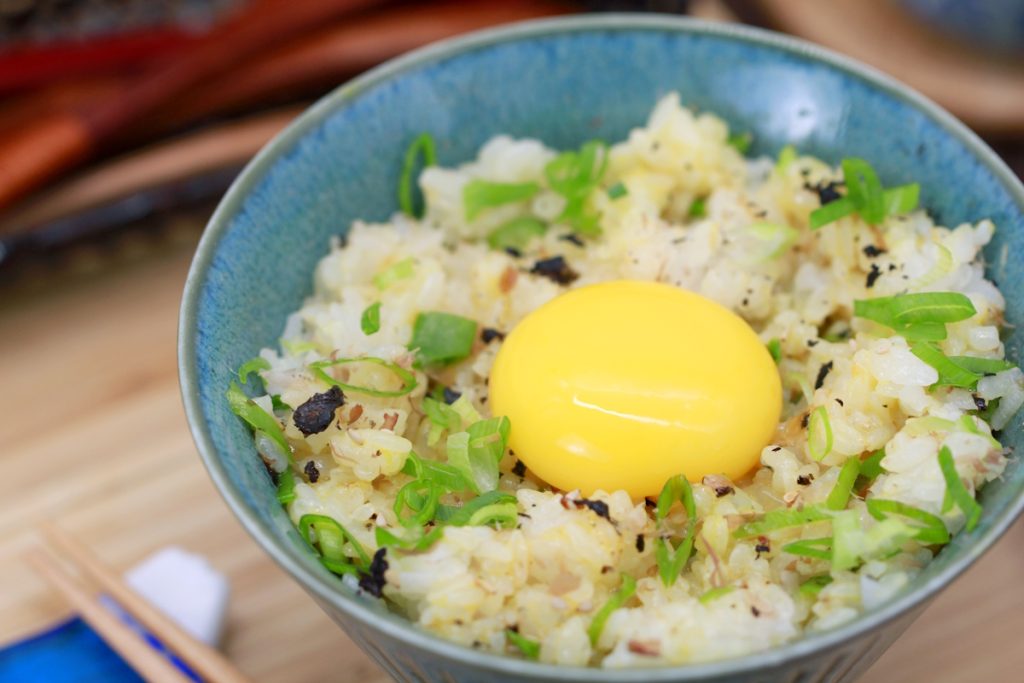
Tamago Kake Gohan: Japanese breakfast rice with egg, Furikake & Katsuobushi | TKG
In this recipe, I’ll show you a particularly flavourful version of Tamago Kake Gohan (TKG) with Katsuobushi. Freshly cooked, piping…
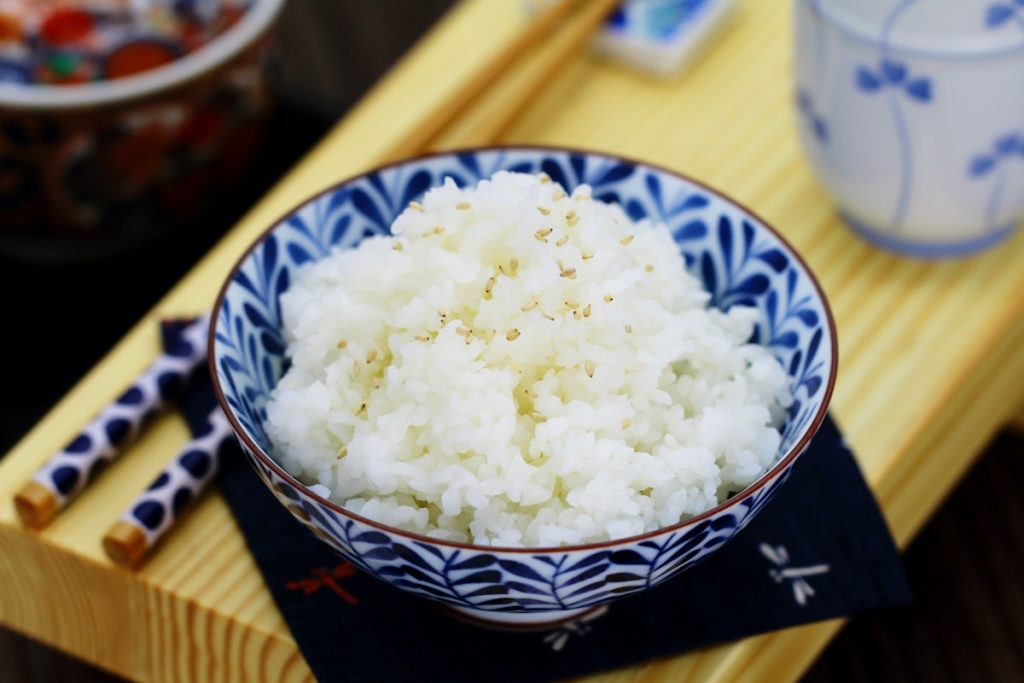
Simply perfect: cooking Japanese rice in a rice cooker – a recipe for every day!
Surely you’re looking for a recipe for perfectly cooked Japanese rice that turns every meal into a feast? With our…
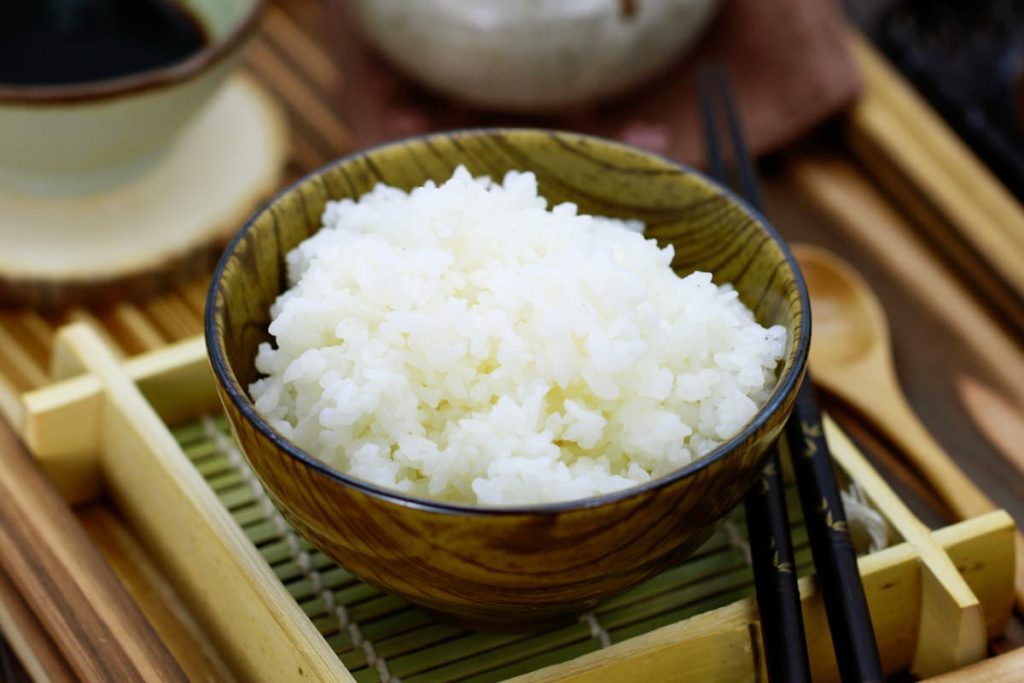
Cooking Japanese rice in a saucepan: A simple recipe for at home!
Cooking Japanese rice 🍚🫶 – without it sticking or boiling over? In this recipe, you’ll learn how to cook Japanese…
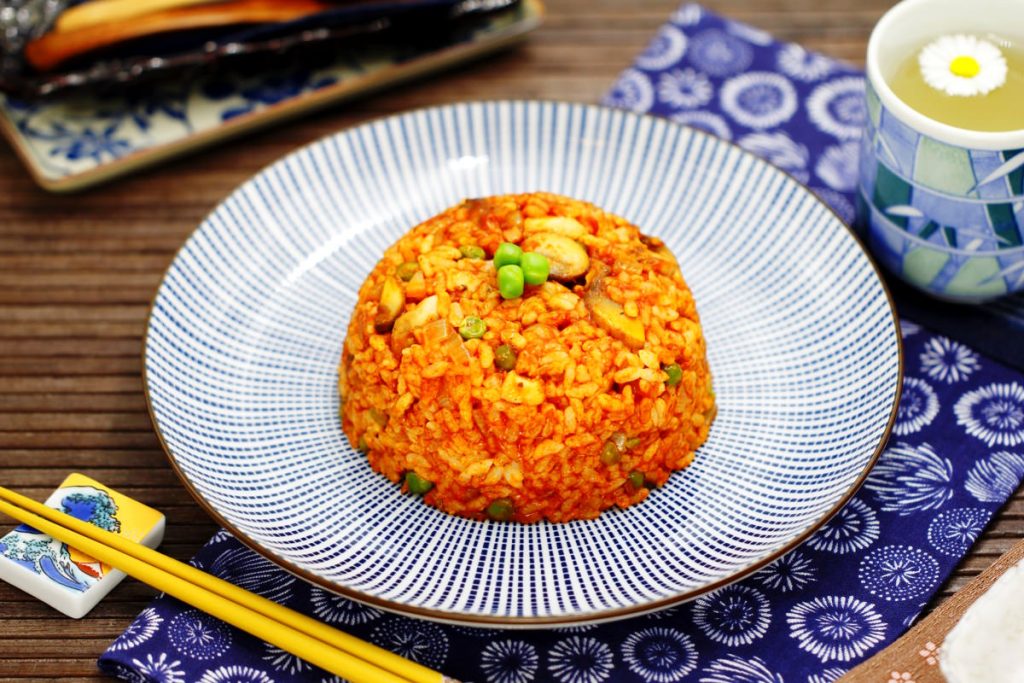
Chicken Rice: Delicious fried chicken rice in a fruity tomato sauce
Fancy a culinary journey to Japan, for once without too much effort? Then try this Chicken Fried Rice! Here, tender…
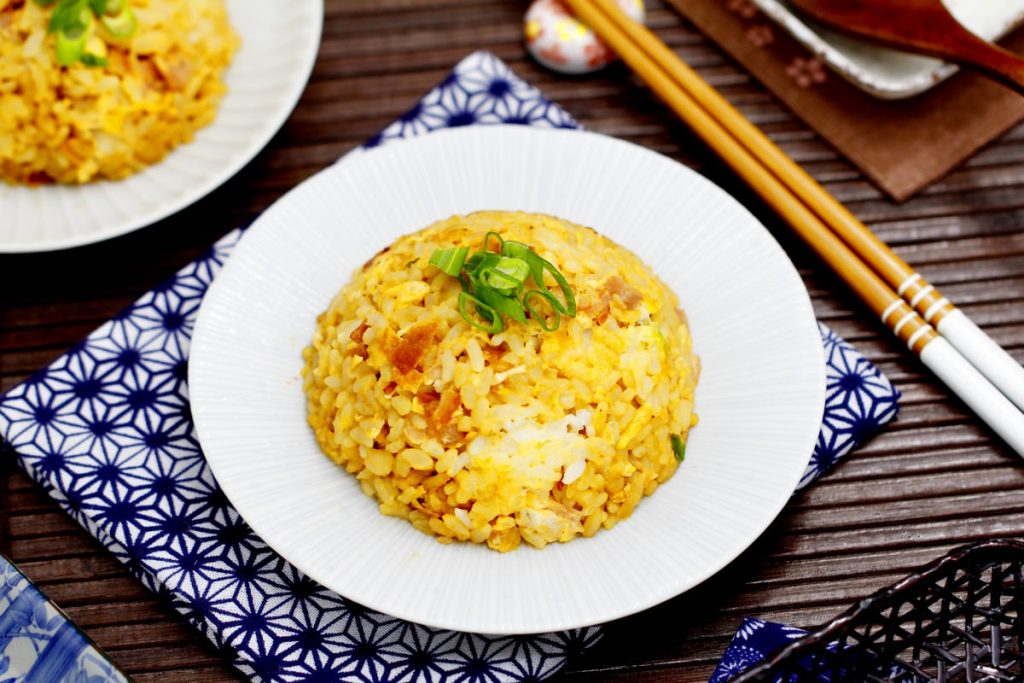
Delicious Yakimeshi: Perfectly fried rice in just a few steps!
Fancy a delicious Japanese dish? With my simple Yakimeshi recipe, you can whip up perfectly fried rice in no time….
Have you tried the recipe? Let me know in the comments, I can’t wait to hear from you!


