
Language:


Cooking Japanese rice 🍚🫶 – without it sticking or boiling over? In this recipe, you’ll learn how to cook Japanese short-grain rice to perfection in a saucepan, without a rice cooker, in the traditional way on the hob.
In Japan, rice is not only a staple food but also an important part of the culture and daily diet. Even though many households use a rice cooker, I’ll show you how to cook tasty rice on the hob in a few simple passages.
Ideal for anyone who doesn’t own a rice cooker or simply wants to try the traditional method. Learn how to measure, wash and cook rice correctly to achieve perfect results every time.
What exactly is Japanese rice?
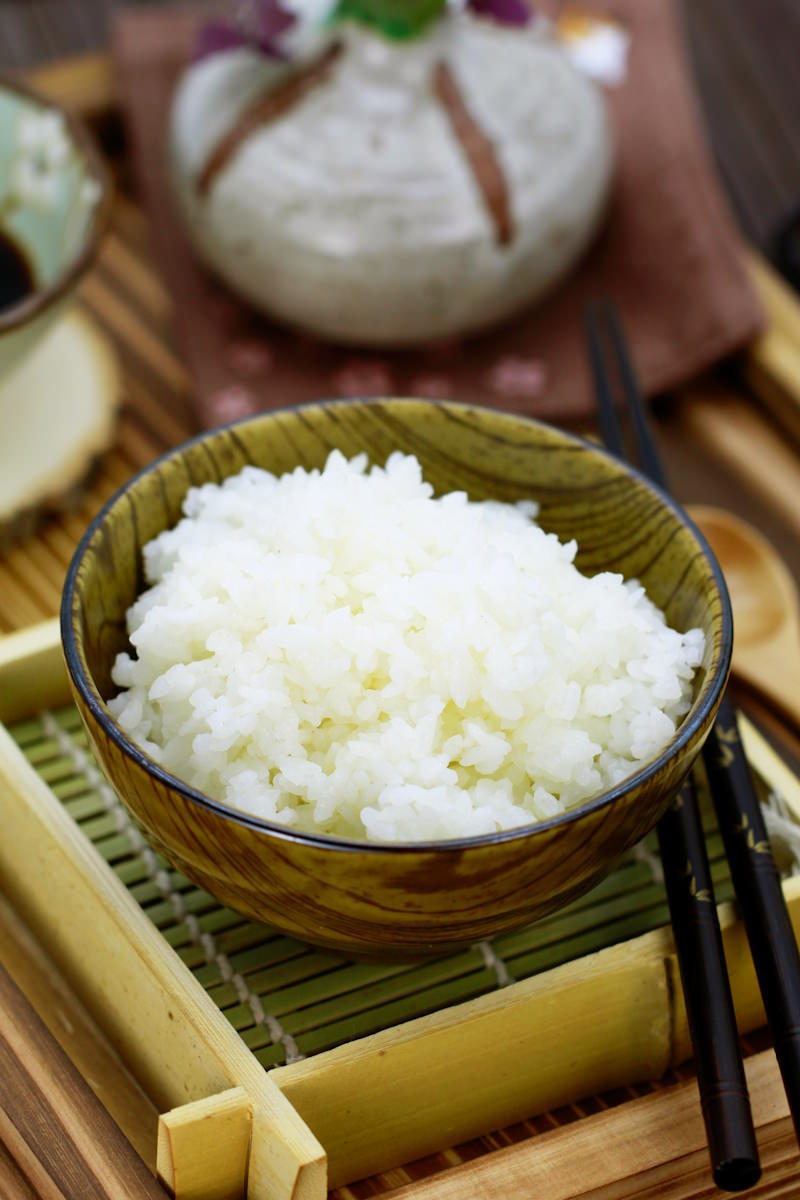
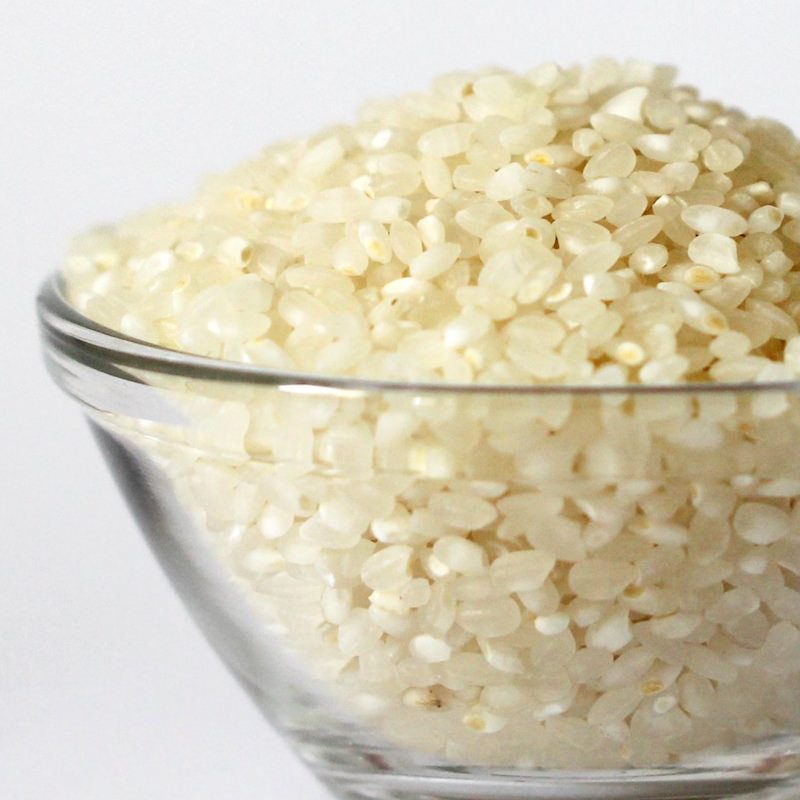
Japanese rice, often known as “Sushi rice”, comes from the Japonica family of rice and is famous for its unique characteristics. This variety is characterised by small, round and slightly sticky grains that develop a soft and slightly cohesive texture when cooked. This texture is crucial for preparing Sushi and Onigiri, as it allows the rice grains to stick together without falling apart.
Unlike long-grain rice varieties such as basmati or jasmine, which remain loose and fluffy when cooked, Japanese rice tends to take on a stickier consistency during cooking. This characteristic is achieved through the lower amylose content in the rice, resulting in a chewier and moister texture that is ideal for traditional Japanese dishes.
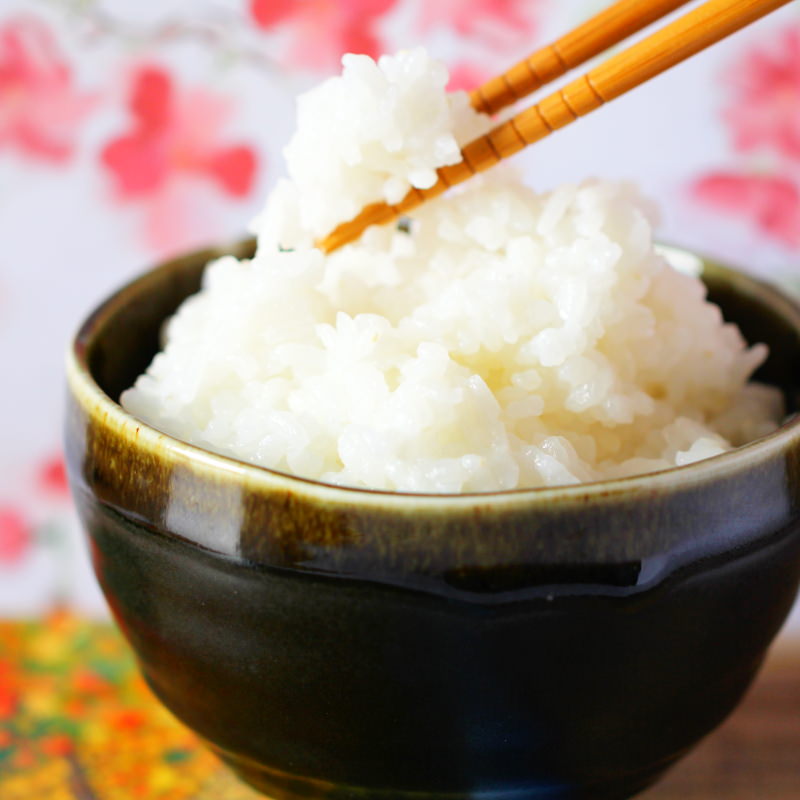
In Japan, great importance is attached to the quality and method of preparation of rice. The way the rice is washed, soaked and cooked can have a significant impact on the final result. Careful preparation not only ensures the best flavour and ideal consistency, but also highlights the importance of rice as a staple food in Japanese culture.

Note!
Sushi rice, known for its perfect consistency and mild flavour, is not only the ideal choice for sushi, but also for other Japanese dishes. This versatile Japanese short-grain rice is excellent as a side dish to various main courses, as it absorbs flavours well and is easy to handle with chopsticks when eating. So don’t just use sushi rice for sushi – try it as a side dish with your favourite meals too!
Furthermore, it is important to note that Japanese rice is often mistakenly referred to as ‘sticky rice’, which can lead to confusion. In fact, ‘sticky rice’ refers to a different type of rice used for desserts and special dishes such as Mochi.
Japanese rice, on the other hand, is highly versatile and forms the basis for a wide variety of everyday dishes in Japanese cuisine.
Which rice should I use?
The use of Japanese short-grain rice is almost essential for many traditional Japanese dishes. Its unique texture and mild, sweet aroma are crucial for achieving an authentic culinary experience.
CUSTOMER FAVOURITE
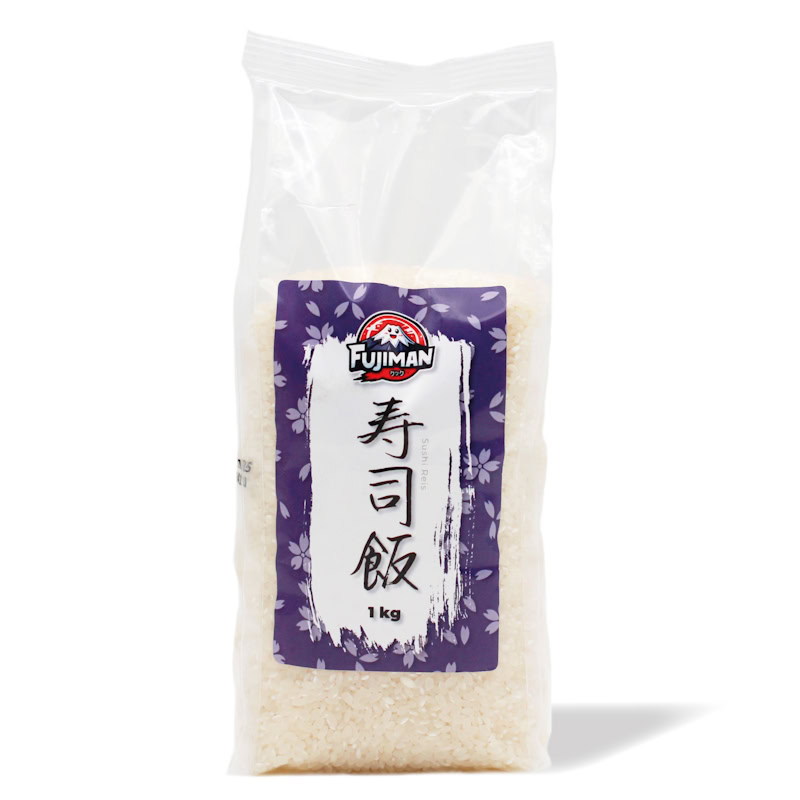
Sushi Reis 1kg (kurzer Rundkornreis), Fujiman
Rundkornreis für Sushi, Onigiri & japanische Reisgerichte. Dieser Sushi Reis von Fujiman ist ein kurzrunder Rundkornreis mit ausgewogener Klebrigkeit und feinem Aroma. Er eignet sich…
In stock
Japanese rice is particularly important for Sushi, Onigiri and similar dishes where the rice needs to be sticky to hold its shape. However, there are alternatives: If authentic Japanese rice is unavailable, the rice pudding available in many supermarkets can be used; it has a similar consistency when cooked in water rather than milk. Despite these alternatives, the use of specific Japanese rice is often irreplaceable for the full culinary experience.
How do I cook Japanese rice?
In Japan, where rice is an indispensable staple food, cooking rice is not only a basic but also an extremely important kitchen task!
Whilst a rice cooker with all the bells and whistles seems to be an indispensable kitchen appliance in most Asian kitchens, I know that not everyone eats rice every day and may not own a rice cooker, or perhaps theirs has simply given up the ghost.
So, below I’ll explain my recipe for delicious rice cooked in a saucepan! If you’re actually looking for a recipe for cooking rice in a rice cooker, then click here for the recipe.
Water-to-rice ratio
To prepare, wash the loose rice in cold water so that the starch is released from the husk and the grains stick together well later on. The rice grains sticking together is typical and very important for Japanese rice: it makes it easier to pick up the rice with chopsticks and shape it into perfect Onigiri !
Determining the ideal amount of cooking water is key to achieving this stickiness – always check the specific cooking instructions for the rice first! As a general rule, however, you should use the same amount of water as rice. So for 100g of rice, use 100ml of water!
Water : Rice
The golden rule for the rice-to-water ratio is 1:1. This means: for 1 rice cooker cup (100 g) of rice, use 1 rice cooker cup (100 ml) of water. Tip: To cook Japanese rice correctly, measuring the rice and water precisely is crucial. It is therefore best to use a special rice measuring cup to measure out the correct amount of rice.
How is the rice washed?
Washing the rice is an essential step in preparing perfect Japanese rice, and everyone has their own method. Personally, I prefer to wash the rice under cold running water, never under warm water, so as not to soften the grains prematurely. Instead of a sieve, I use my hands to gently wash the rice grains in a bowl with a little water. I repeat this until the water is almost clear.
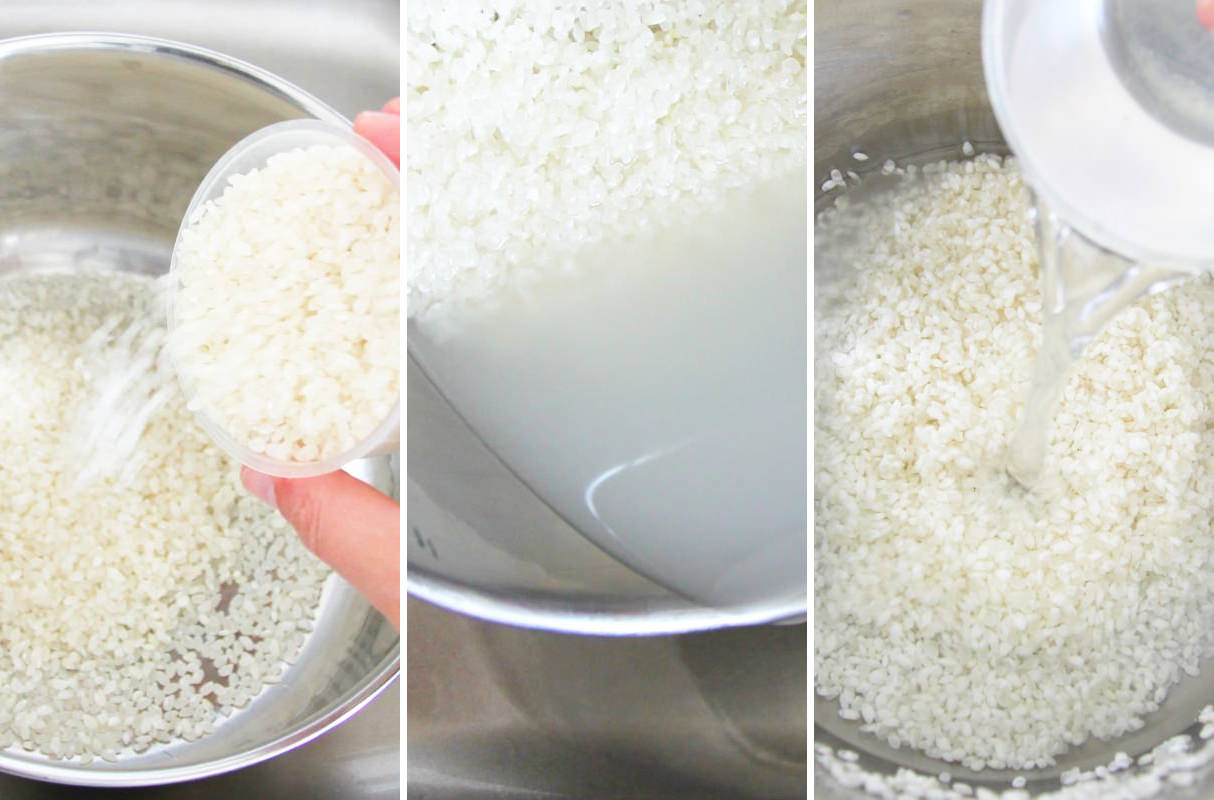
Another crucial step is soaking the rice, especially with short-grain Japanese rice. Unlike other types of rice, which are cooked without soaking, Japanese rice takes longer to absorb moisture right through to the core.
That is why I always soak the rice for at least 20–30 minutes before cooking. This ensures that the rice becomes soft right through when cooked and that the centre does not remain hard. It is a small step that makes a big difference to the quality of the cooked rice.
Cooking Japanese rice – here’s how:
Once the rice has been soaked for 20 to 30 minutes, you can start cooking. Cover the pan, leaving a small gap open, and heat it over a medium heat until the water begins to boil.
A quick peek under the lid will tell you if it’s ready. As soon as the water boils, reduce the heat to low and leave the rice to cook, covered, for 12 to 13 minutes. After the cooking time, check whether the water has been completely absorbed; if not, leave the rice to cook for a little longer.
Then remove the pan from the heat and leave the rice to steam for a further 10 minutes with the lid on. After this time, lift the lid and fluff up the rice with a rice spoon. The rice is now perfectly cooked and ready to serve. This method ensures that the rice achieves its ideal consistency and is cooked through completely.

Cooking Japanese rice is not only a fundamental skill in Japanese cuisine, but also a great opportunity to get to know the country better. Try out different washing and cooking methods and discover how these small adjustments can influence the taste and texture of the rice. Whether as a side dish or the base for Sushi, perfectly cooked rice brings authenticity and elegance to any dish.
I look forward to hearing about your experiences with cooking rice. Share your tips and discoveries with us! We’re curious to see which techniques you perfect and what advice you have for other rice lovers.
Do you have any questions about preparation or would you like to share your successes with the community? Simply leave a comment below this post. Have fun trying out and enjoying your homemade Japanese rice!
Rice in a pot
serves 2 (400 g) | 60 minutes | 257 kcal
🖨️ Print PDF 📌 Save pinWith this simple recipe, you’re sure to cook rice in a saucepan just like in Japan quickly and easily – without it burning or boiling over! So let’s get back to basics today and take a look at how to cook Japanese short-grain rice on the hob.
Ingredients (2 portions = 400 g)
200 g rice (im Shop ansehen)
200 ml water (fresh, cold tap water)
1 pinch salt
Preparation (60 minutes)
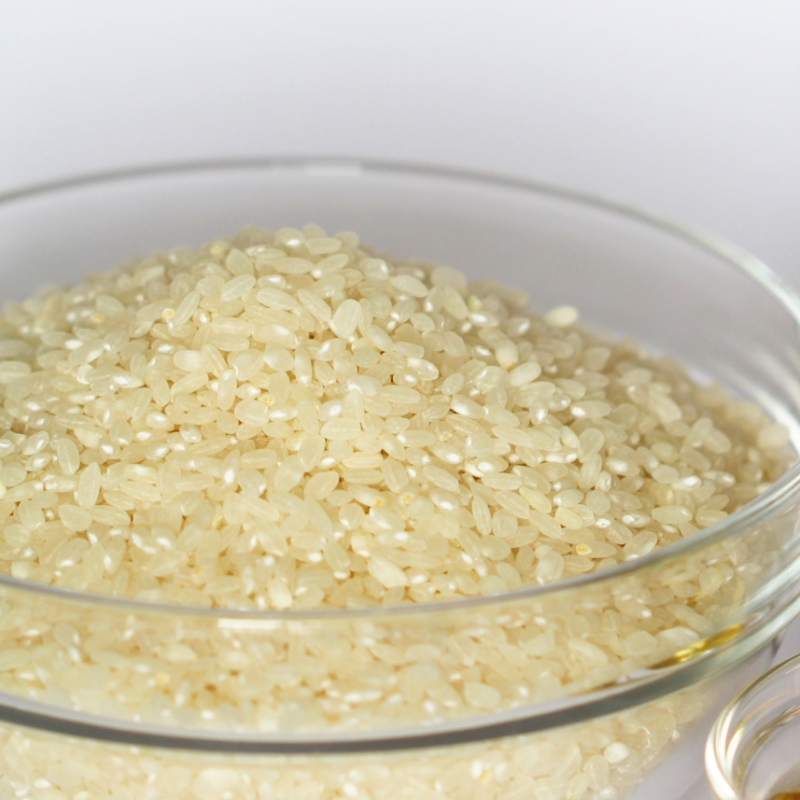
Step 1
Prepare the ingredients needed for making homemade rice in the pot.
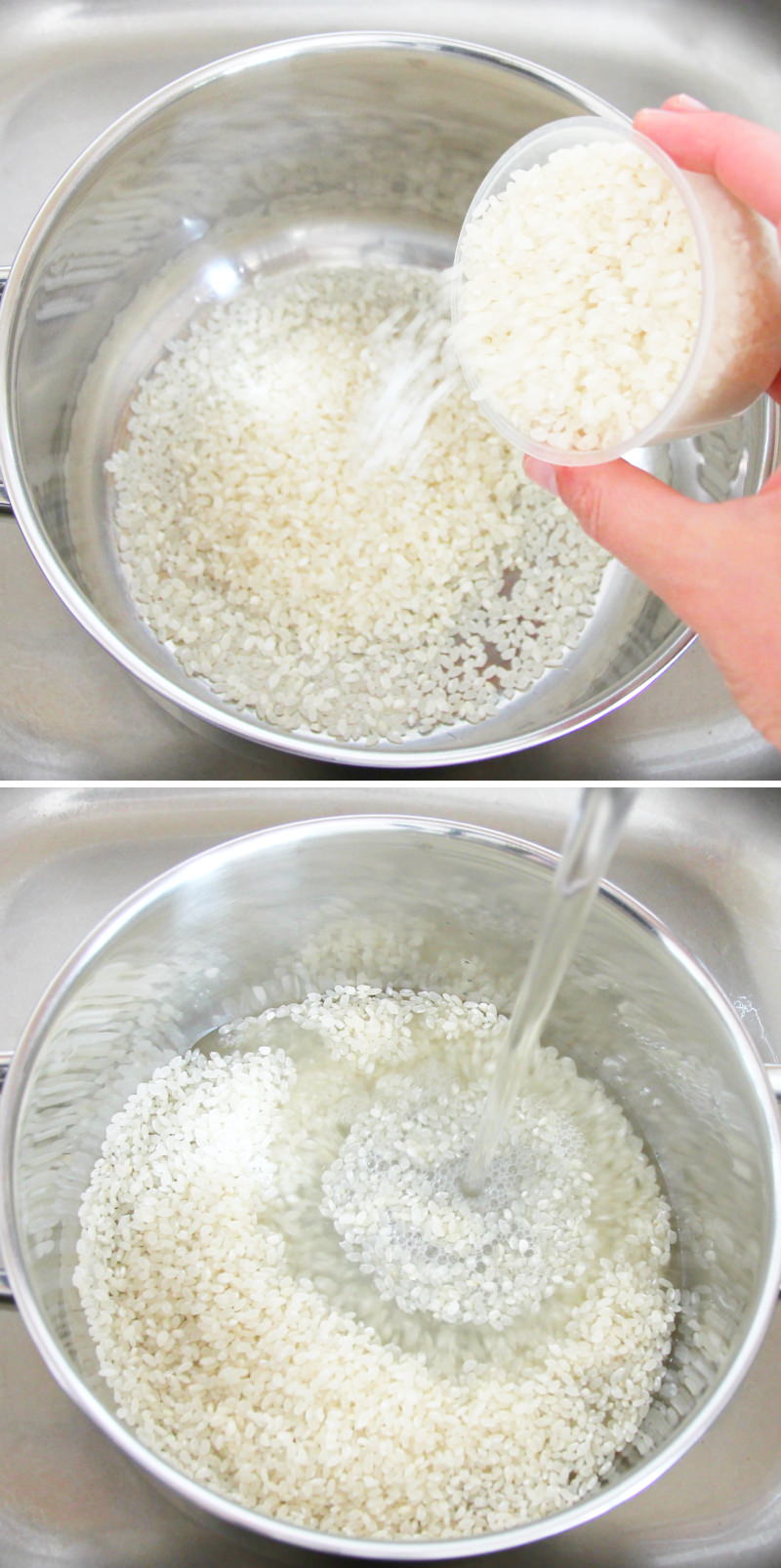
Step 2
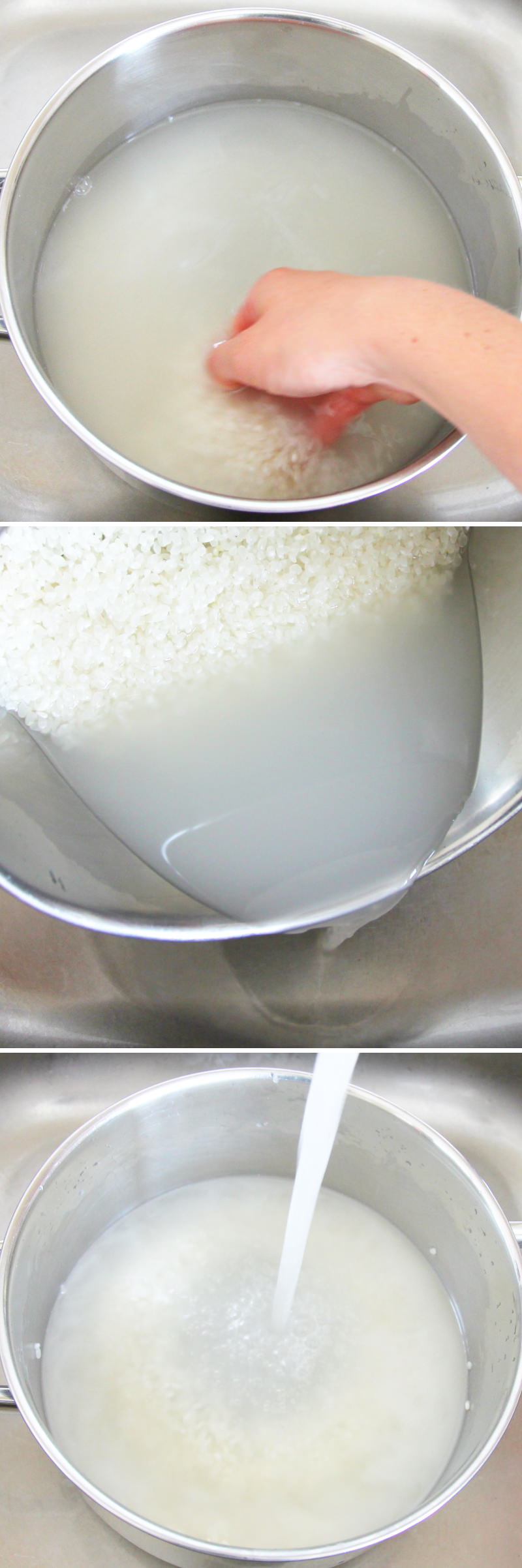
Place the rice in a pot (or a large bowl) and fill with a generous amount of cold water.
Step 3
Now carefully wash the rice with your hands using circular movements and gentle rubbing between the grains.
Slowly drain off almost all the water (using a sieve) and rinse the rice thoroughly in the remaining water in the pot.
Now refill with fresh cold water and wash carefully using circular movements.
Step 4
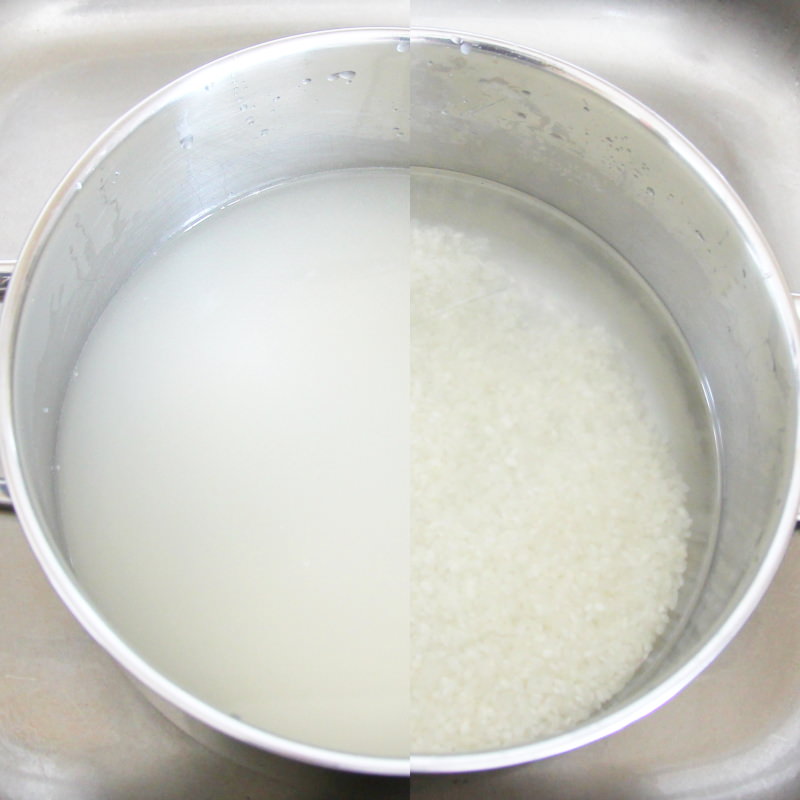
Repeat the washing and draining of the rice grains at least three times until the water remains clear (you can see the difference in the before-and-after comparison) .
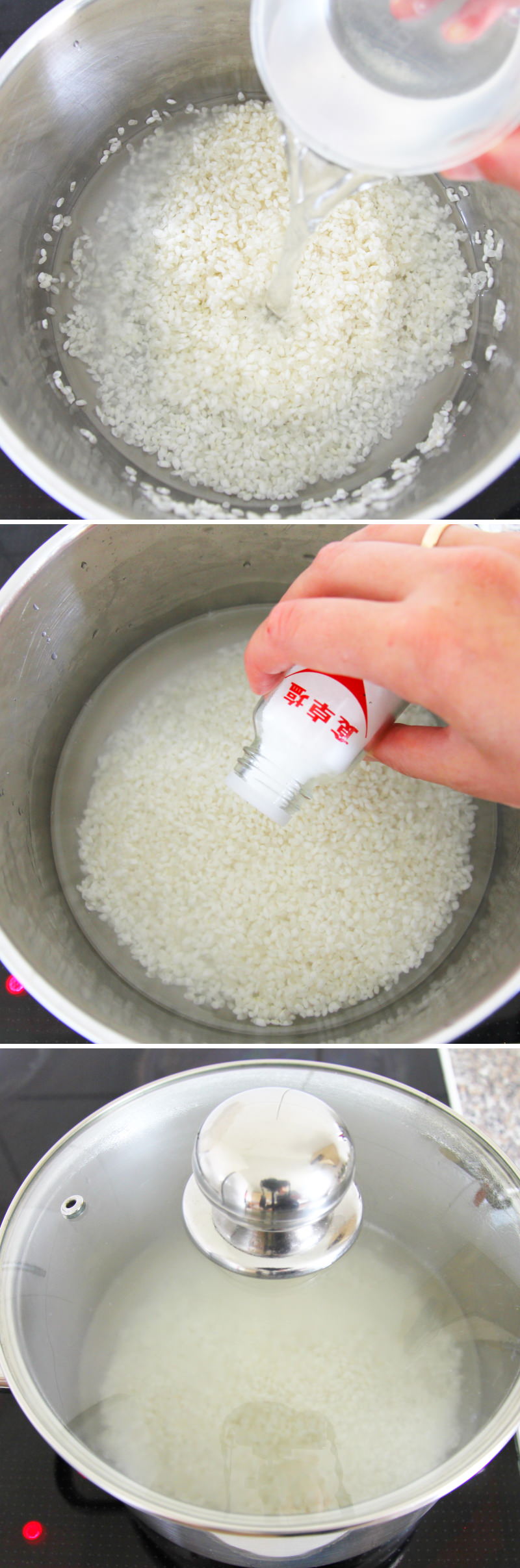
Then leave the rice, completely covered with water , to rest for 30 minutes so that it absorbs the water well and develops flavour (this step must not be skipped!).
Step 5
After the resting time, drain the water completely (through the sieve again if necessary) .
Pour fresh water into the saucepan in a 1:1 ratio (for 200g of rice, this amounts to 200ml of water) and a pinch of salt .
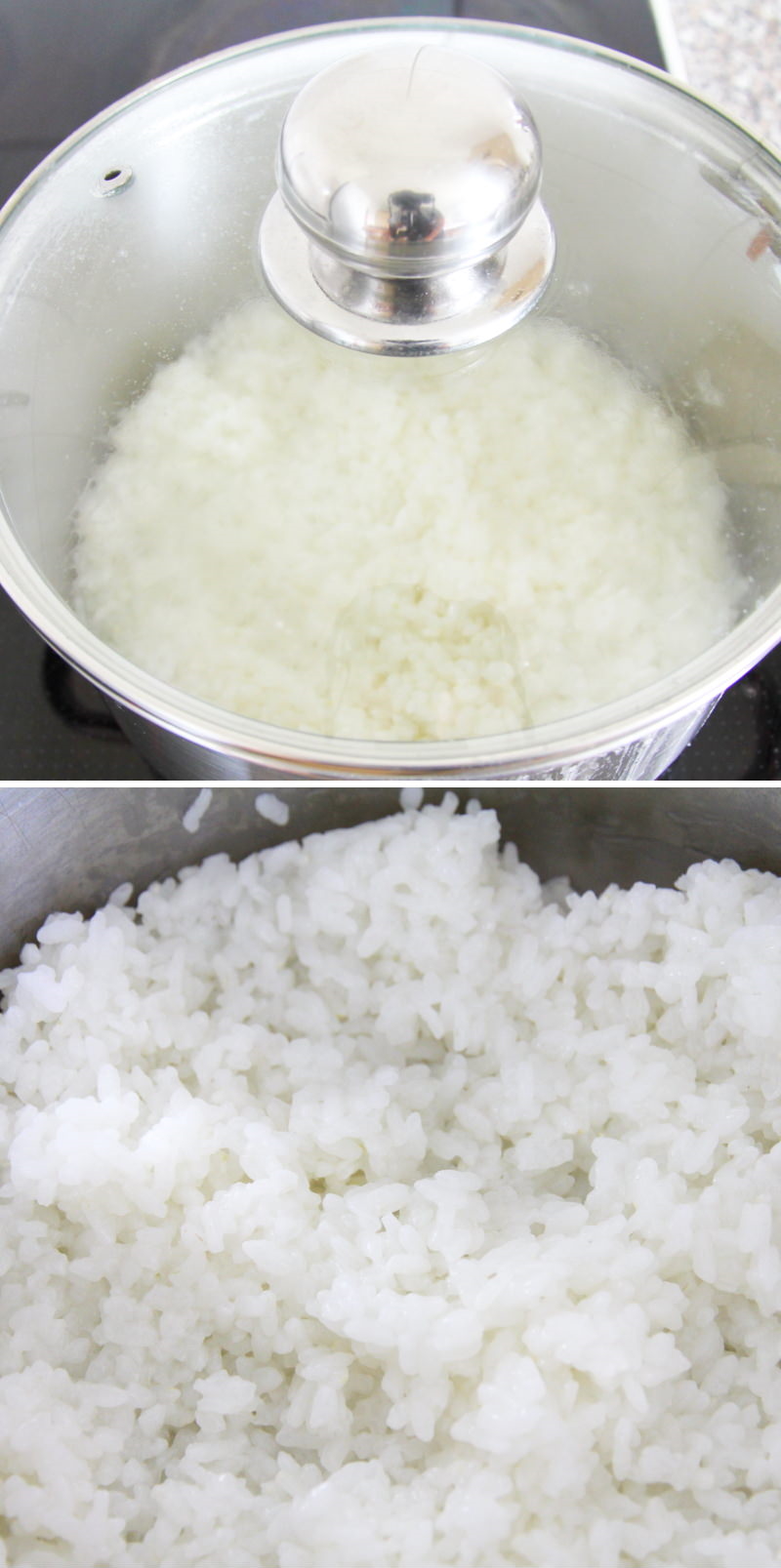
Now place the pot containing the rice and salted water on the hob, put the lid on and bring to the boil over a medium heat. As soon as the rice comes to the boil, turn the heat down to the lowest setting and leave to simmer gently with the lid on for 13 minutes. Do not open the lid during this time!
Step 6
Once the rice is cooked, turn the heat off completely. Leave to soak on the hob with the lid on for 10 minutes.
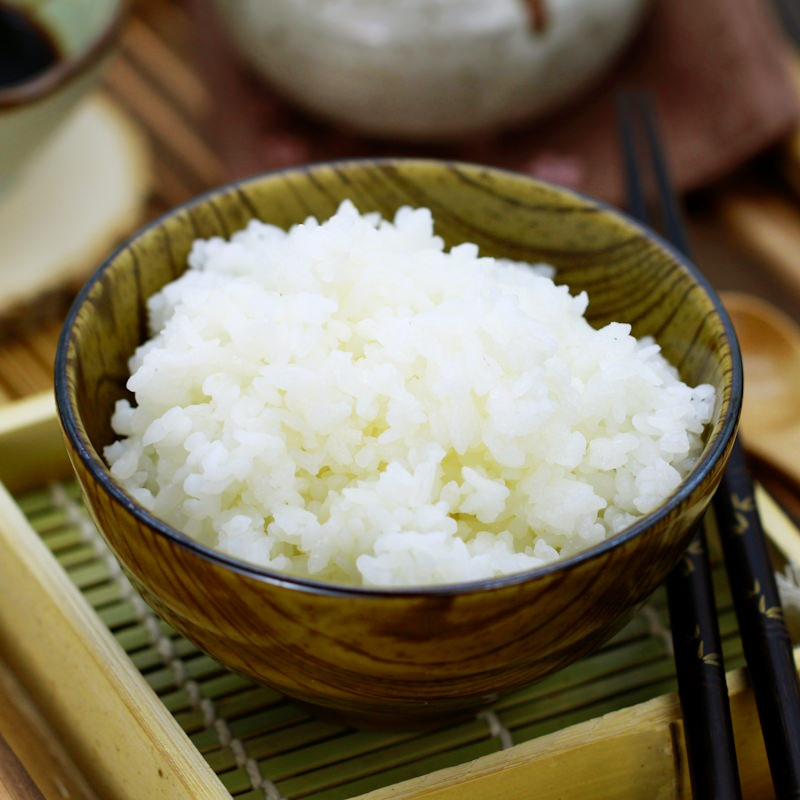
Step 7
Once the rice is ready, serve in rice bowls or use immediately. Done – Itadakimasu!
Japanese rice is, of course, the perfect start to a Japanese meal. It’s best to serve it with a small but delicious selection of side dishes and main courses. I’ve put together a small selection of our best recipes that go well with Japanese rice for you here:
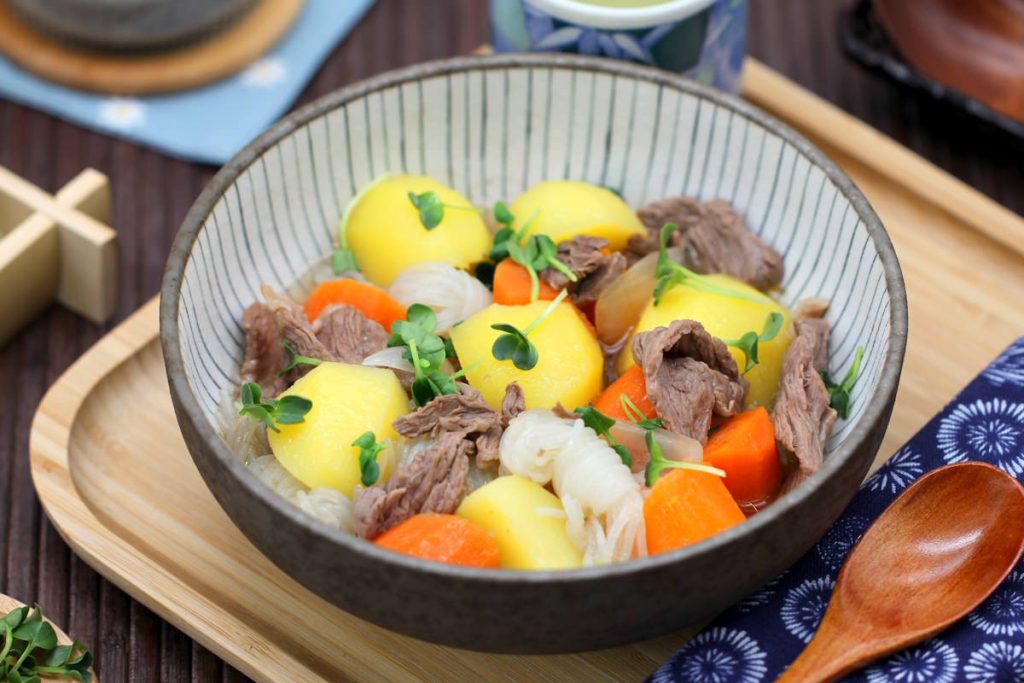
Nikujaga: Japanese potato and beef stew | Recipe for everyday cooking
I ate Nikujaga for the first time at my host family’s house in Fukui. It…
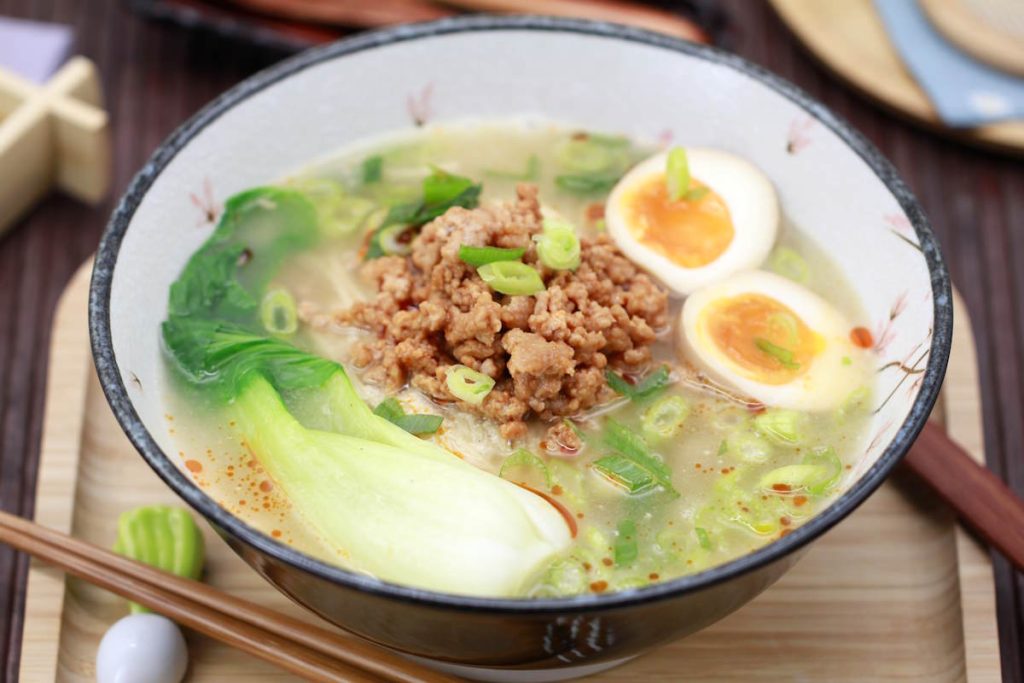
Make your own Tantanmen: creamy sesame Ramen with spicy Miso minced meat, pak choi & ramen eggs
Tantanmen is a Ramen soup for those who like it creamy but not heavy. A…

Make your own Omurice: Japanese omelette with ketchup rice & vegetables | delicious Omuraisu
Omuraisu is one of those dishes that brings an instant smile to almost every Japanese…
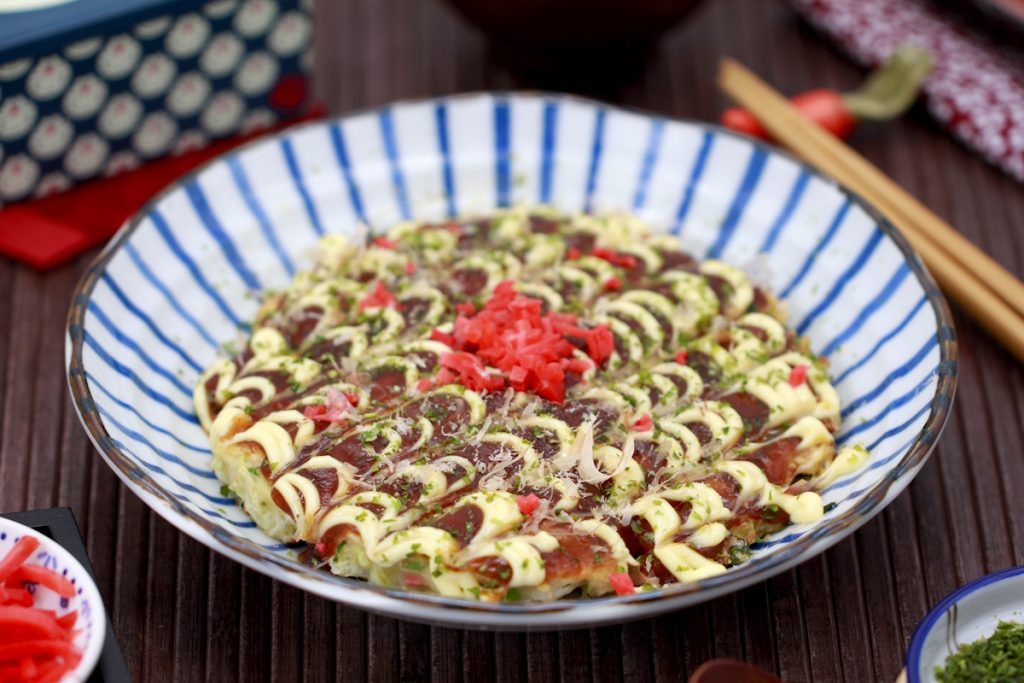
Make the best Okonomiyaki yourself: Basic recipe for Japanese cabbage pancakes, Osaka-style
For me, Okonomiyaki is one of those dishes that instantly puts me in a good…

Make your own crispy Tempura batter: Japanese batter for vegetables & prawns – recipe & tips
When I think of Tempura, I immediately hear that saku saku sound… That delicate crunch…
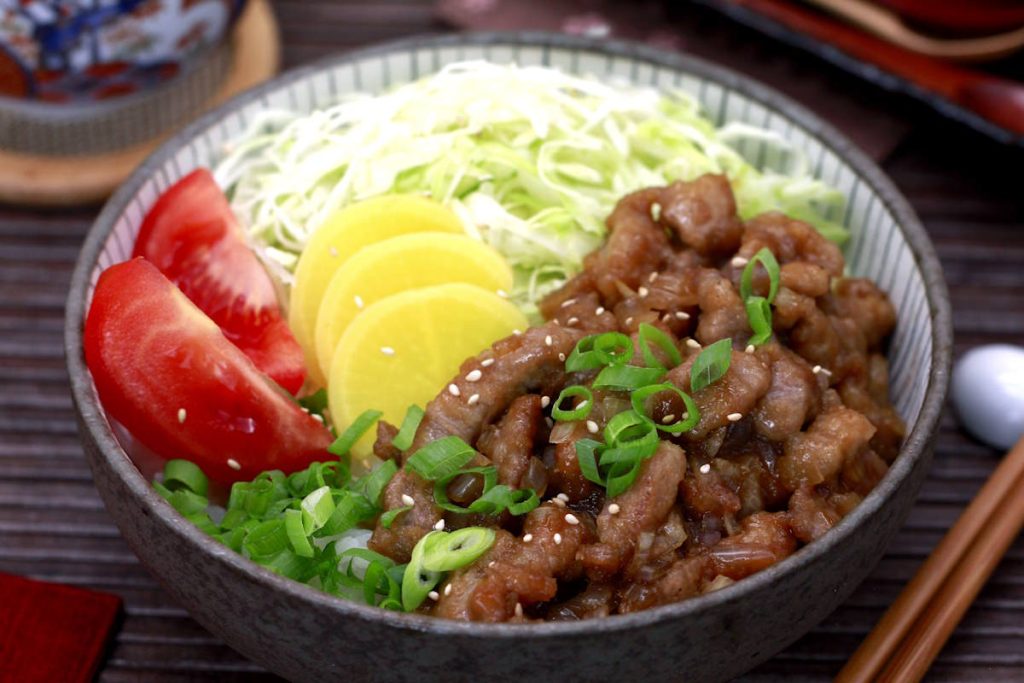
Buta Shogayaki: Make your own Japanese ginger pork with rice, cabbage & Tsukemono
For me, Buta Shogayaki is the perfect Japanese lunch when working from home. It’s quick,…