

Language:


Join me in discovering the fascinating world of Japanese pickling through our Amazuzuke recipe, which transforms daikon radish into a refreshing side dish. This traditional recipe combines the crisp texture of daikon with a sweet-and-sour marinade that adds a touch of authenticity to your meal.
Learn how, with just four simple ingredients and a little patience, you can prepare your own Tsukemono – pickled daikon radish. Ideal for cleansing and refreshing your taste buds between courses of a sumptuous Japanese meal.
Be enchanted by the simplicity and depth of this Japanese art of pickling, which has been delighting people for generations. Discover how this technique takes not only the daikon radish, but also your culinary repertoire, to a whole new level.
Whether as a refreshing contrast to savoury dishes or as a crisp side dish – this Tsukemono recipe promises unique taste experiences and brings the essence of Japan straight to your plate.
What does Tsukemono mean?
Tsukemono, Japan’s colourful pickled vegetable specialities, are an integral part of traditional cuisine. They add a refreshing touch to any meal and are known for their crisp texture and diverse flavours. From sweet and salty to sour and sometimes even slightly bitter – Tsukemono is as diverse as Japan itself.
One of the best-known examples is umeboshi, a Japanese plum pickled in salt and known for its sour and salty flavour. Gari, pickled ginger, which is often served with Sushi, is another popular variety.
Tsukemono, particularly Amazuzuke, has a long history in Japan. For hundreds of years, various vegetables have been pickled to preserve them and to enrich the flavour of meals. Traditionally, natural fermentation processes were used, which enhanced not only the taste but also the nutritional value of the food.
Today, Tsukemono is an indispensable part of everyday Japanese dining. It serves not only as a side dish but also as a flavour enhancer that broadens the flavour profile of a meal. Its presence on the Japanese dining table is a testament to the deep appreciation the Japanese have for the seasons and the fresh ingredients they yield. Tsukemono combines tradition with modern food culture and is a living example of Japan’s culinary diversity.
The best-known Tsukemono methods are:
- Shiozuke – salt,
- Misozuke – Miso and
- Amazuzuke – sugar and vinegar.
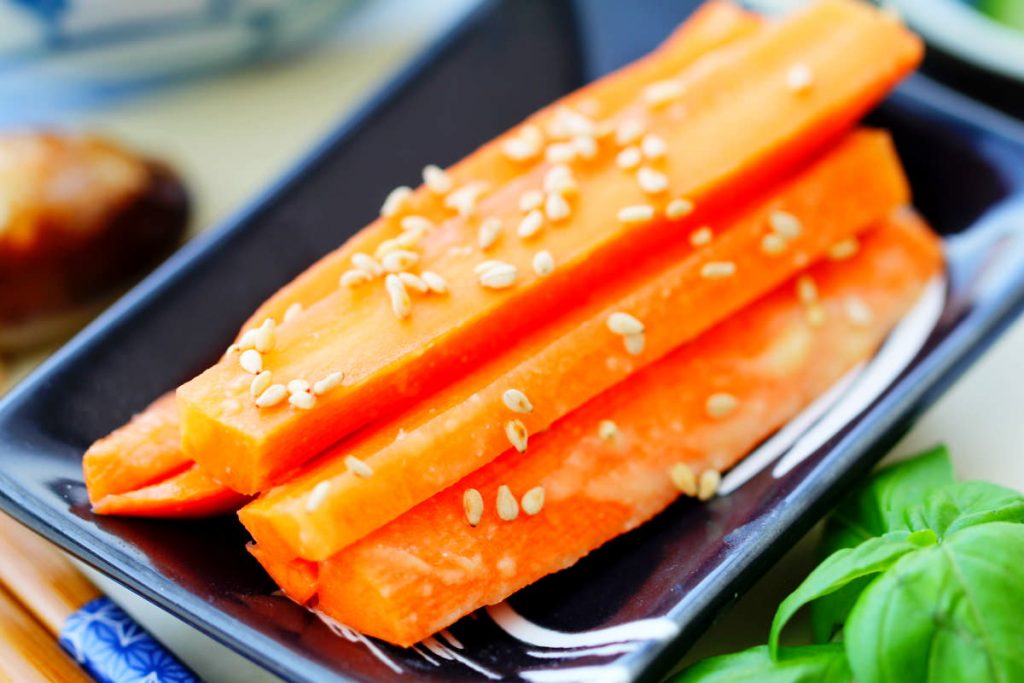
Tsukemono – pickled carrots (Misozuke)
Did you know that you can pickle fresh vegetables using miso paste and Mirin? This…
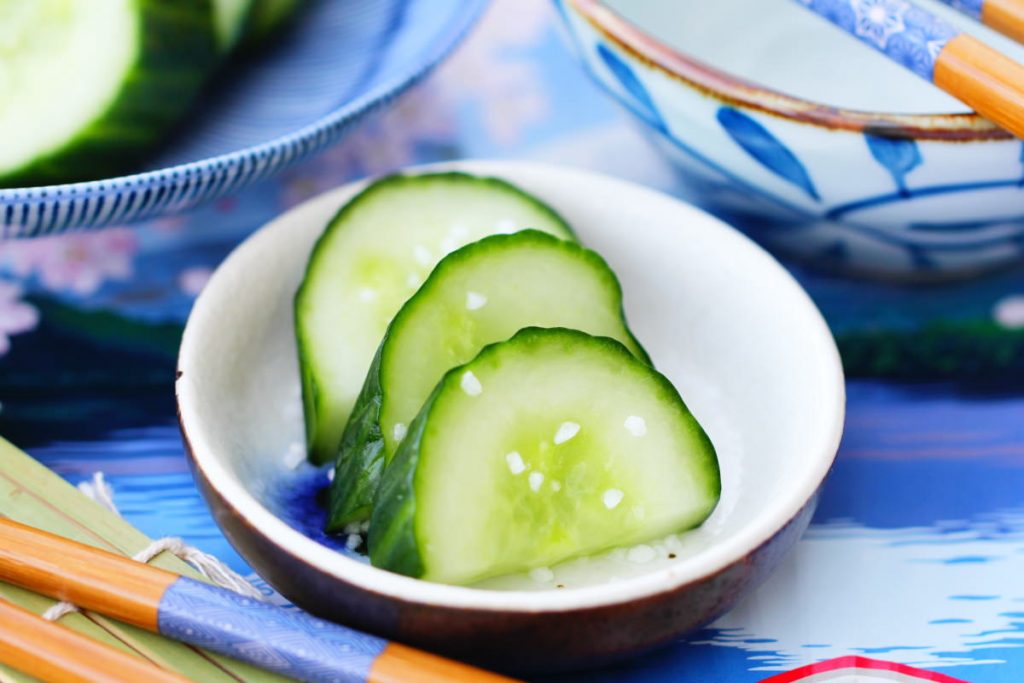
Tsukemono – pickled cucumber (Shiozuke)
The recipe for Shiozuke with cucumber is the simplest type of Japanese Tsukemono (pickled vegetables)….
Amazuzuke, also known as sweet pickling, uses a harmonious blend of sugar and rice vinegar to give the vegetables a pleasant sweetness and tang.
This method, perfect for daikon radish, is not only simple but also brings out the mild spiciness of the vegetable. Discover the variety of Tsukemono and add an authentic Japanese touch to your dishes with homemade pickled delicacies. And here’s how to make amazuzuke:
How do you make pickled daikon?
Pickled daikon is a delicious and simple way to enjoy this versatile root vegetable, adding fresh flavours to any meal. The pickling process begins with selecting a fresh daikon radish, ideally one that is crisp and has smooth skin. First, the daikon is cut into thin slices or strips, depending on your personal preference and the desired end result.
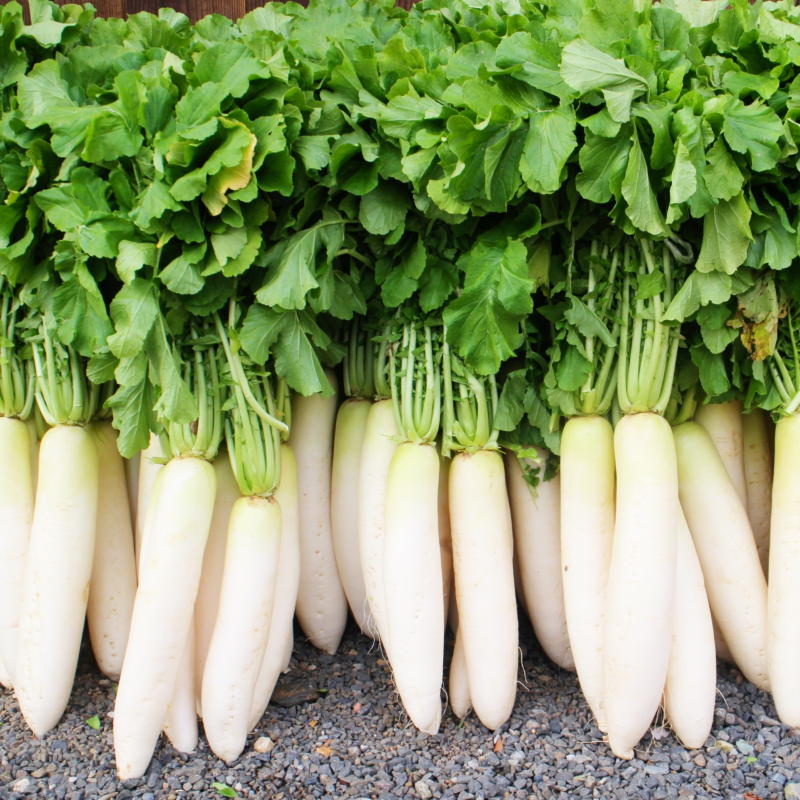
The basic pickling mixture consists of rice vinegar, water, sugar and salt, which are combined to make a sweet-and-sour Amazuzuke Lake. Sometimes Sake or Mirin is added for an extra flavour boost. The daikon pieces are marinated in this mixture, with the pickling time varying: from a few hours for a light, fresh taste to several days to develop more intense flavours.
Once the daikon has been pickled, it can be served as a crunchy side dish, in a salad or even as a snack. This pickling method is not only an excellent way to preserve daikon, but also to mellow its natural sharpness and give it a pleasant sweetness.
Pickled daikon is not only a valuable addition to Japanese cuisine, but can also be wonderfully incorporated into many other dishes to give them a fresh, tangy note. Give it a go and discover the delicious variety of pickled daikon!
I hope you have lots of fun making the pickled daikon. Please feel free to share your experiences and creations with us. We can’t wait to see your masterpieces!
If you have any questions or would like to share your own experiences, please leave a comment below the recipe. I hope you have great fun preparing and enjoying it!
Amazuzuke
serves 6 | 10 minutes | 61 kcal
🖨️ Print PDF 📌 Save pinJoin me in discovering the fascinating world of Japanese pickling with our Tsukemono recipe, which transforms daikon radish into a refreshing side dish. This traditional recipe combines the crisp texture of daikon with a sweet-and-sour marinade that adds a touch of authenticity to your meal.
Ingredients (6 servings)
500 g daikon radish (or other vegetables such as gherkins, carrots, kohlrabi or radishes)
1 tbsp rice vinegar (im Shop ansehen)
1 tbsp Sake (im Shop ansehen)
1/2 tsp salt
5 tbsp sugar
Preparation (10 minutes + 2 days in the fridge)
Step 1
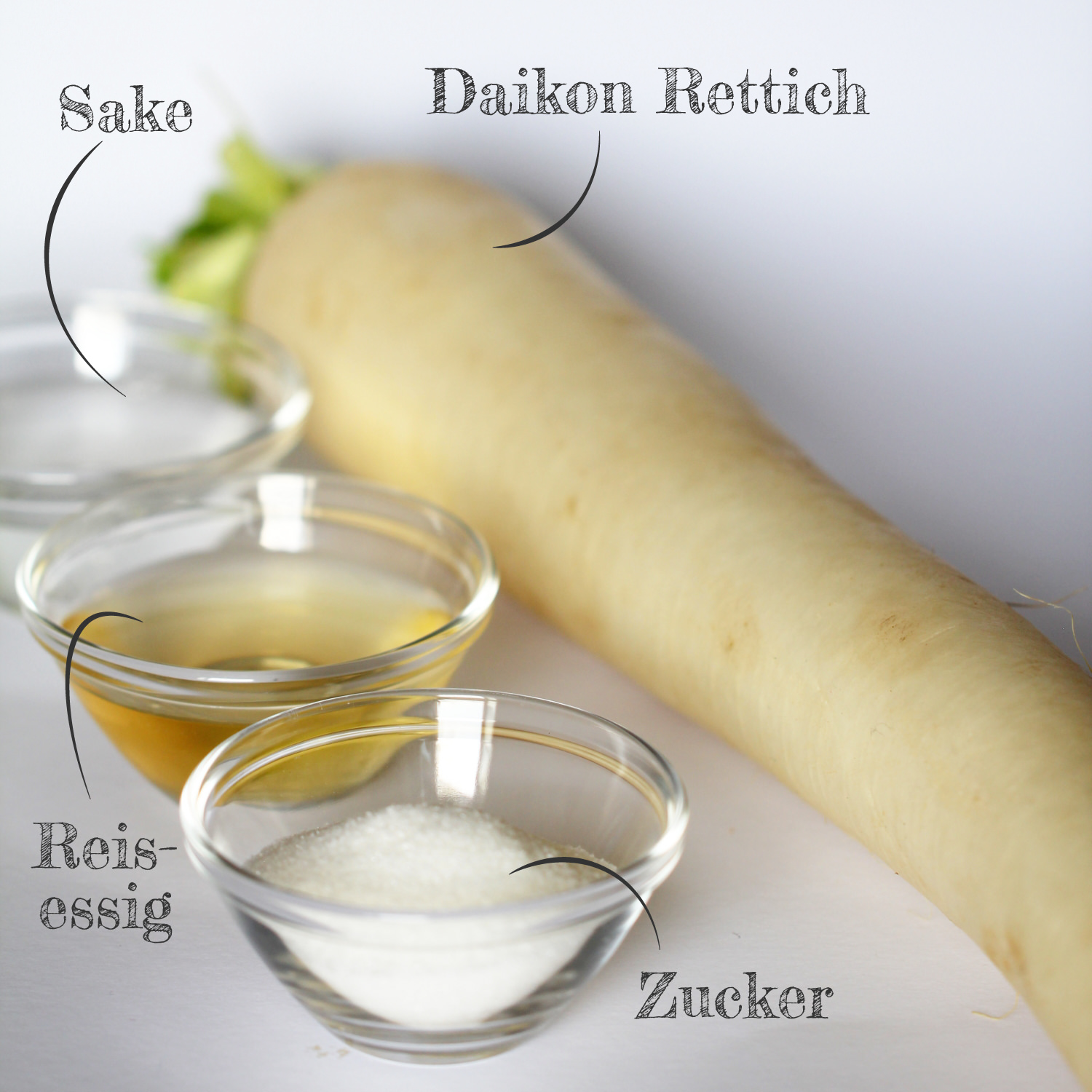
Prepare the necessary ingredients for making pickled daikon radish according to the Amazuzuke recipe.
Step 2
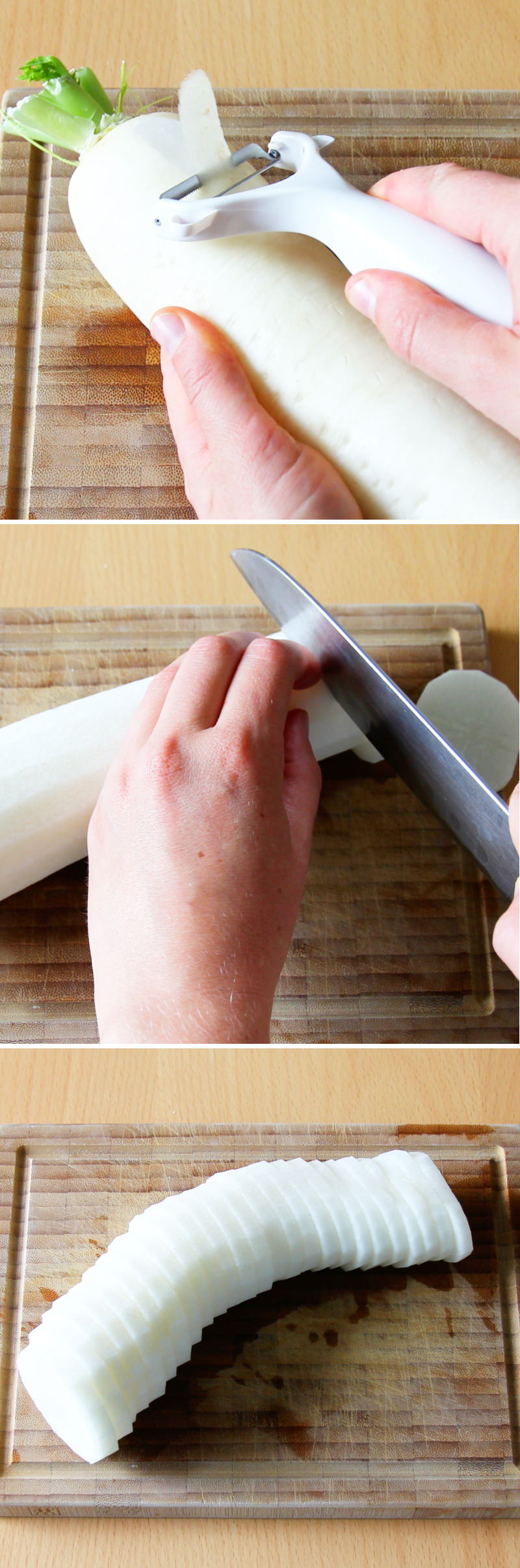
To begin with, peel the daikon radish and cut it into 1 cm thick slices using a large sharp knife. The green part is not needed here.
Step 3
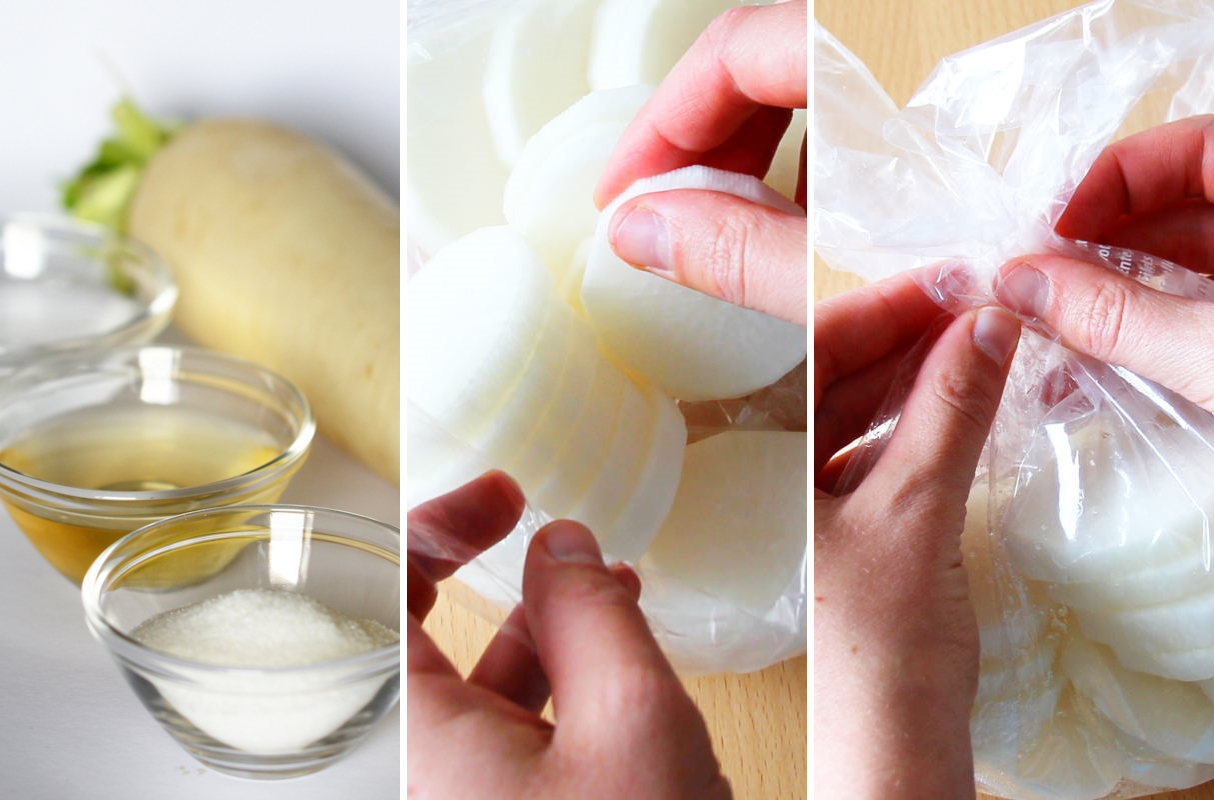
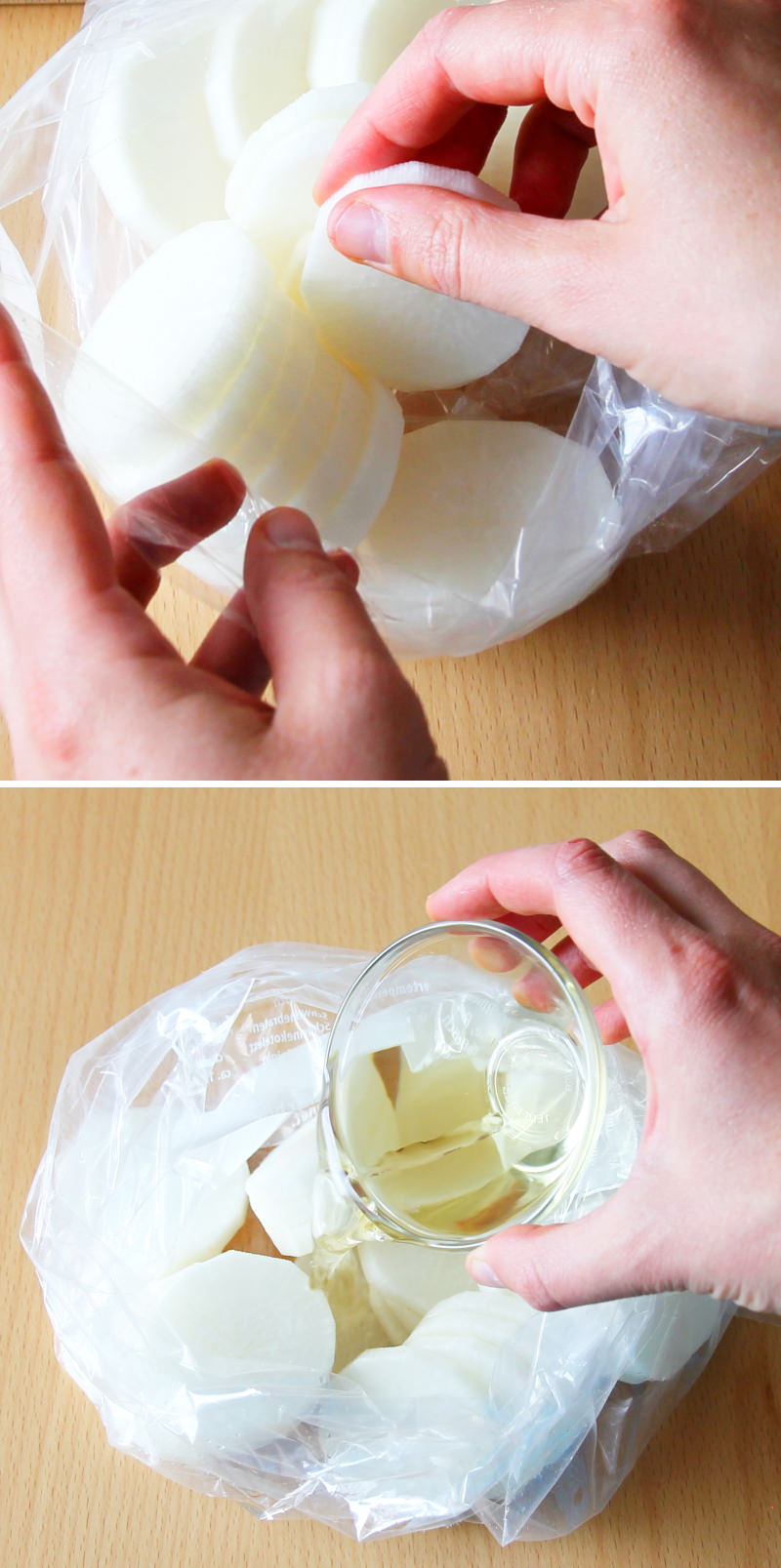
Place the daikon slices in a resealable plastic bag (e.g. a freezer bag) and add the seasonings (rice vinegar, Sake, salt and sugar).
Step 4
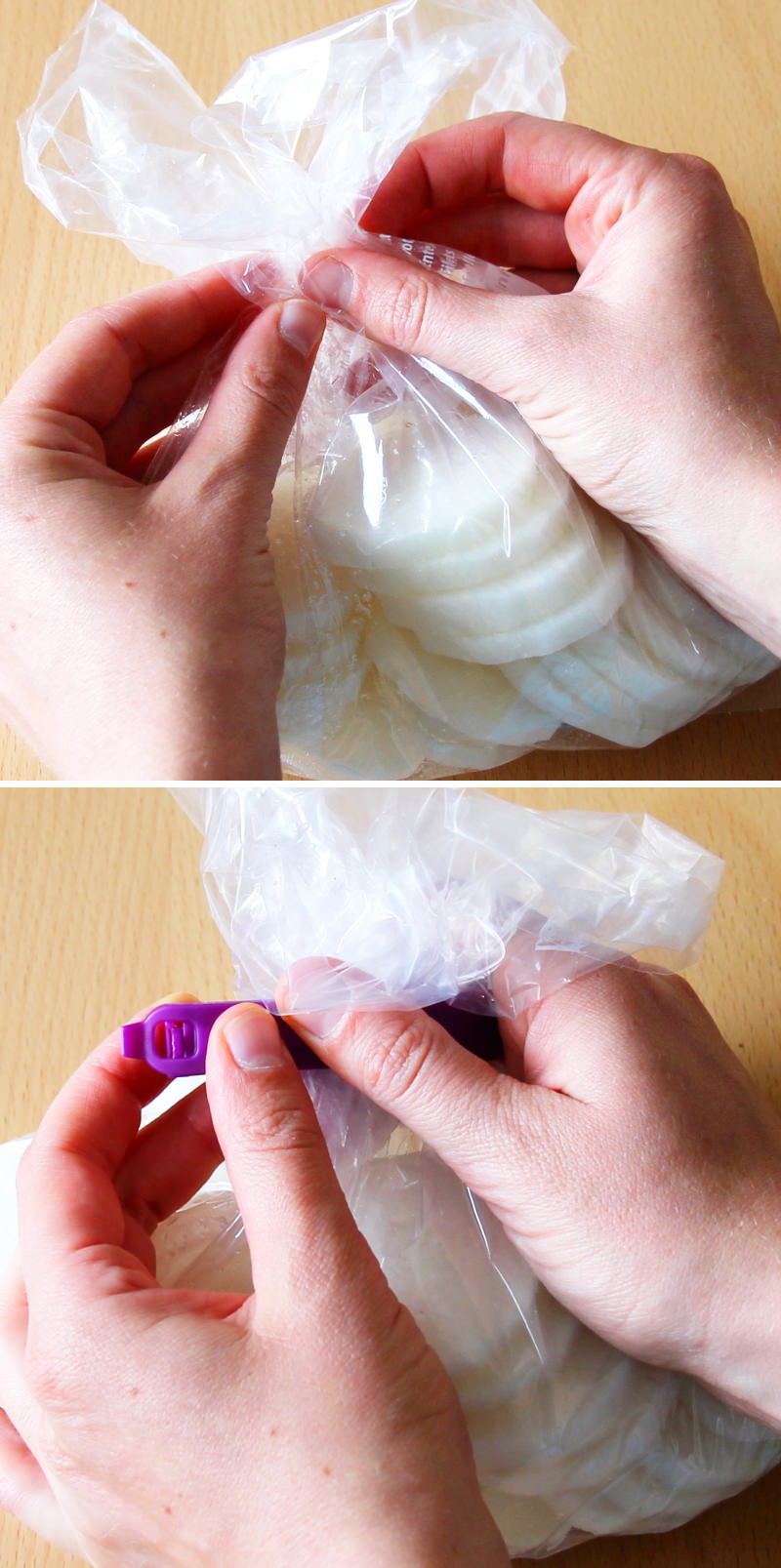
Squeeze the air out of the bag, seal the top and shake vigorously with both hands, massaging the contents, so that everything is well mixed.
Step 5
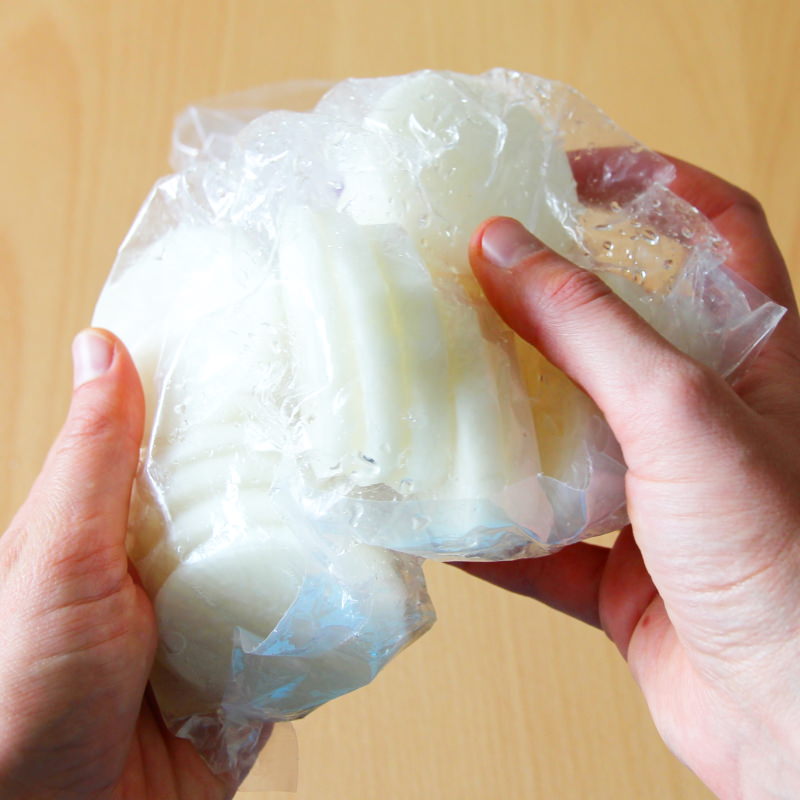
Place the tightly sealed bag in the fridge for 2 days and (ideally in the morning and evening) give the contents a shake every now and then.

Step 6
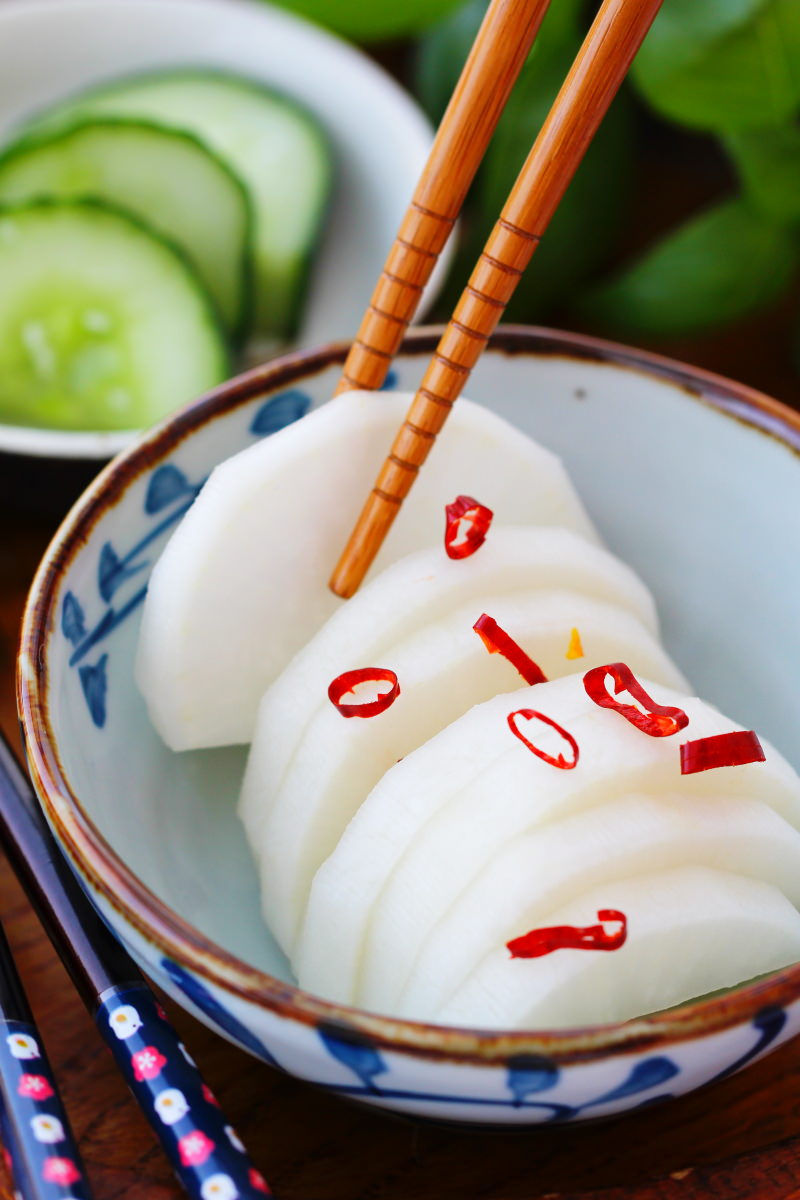
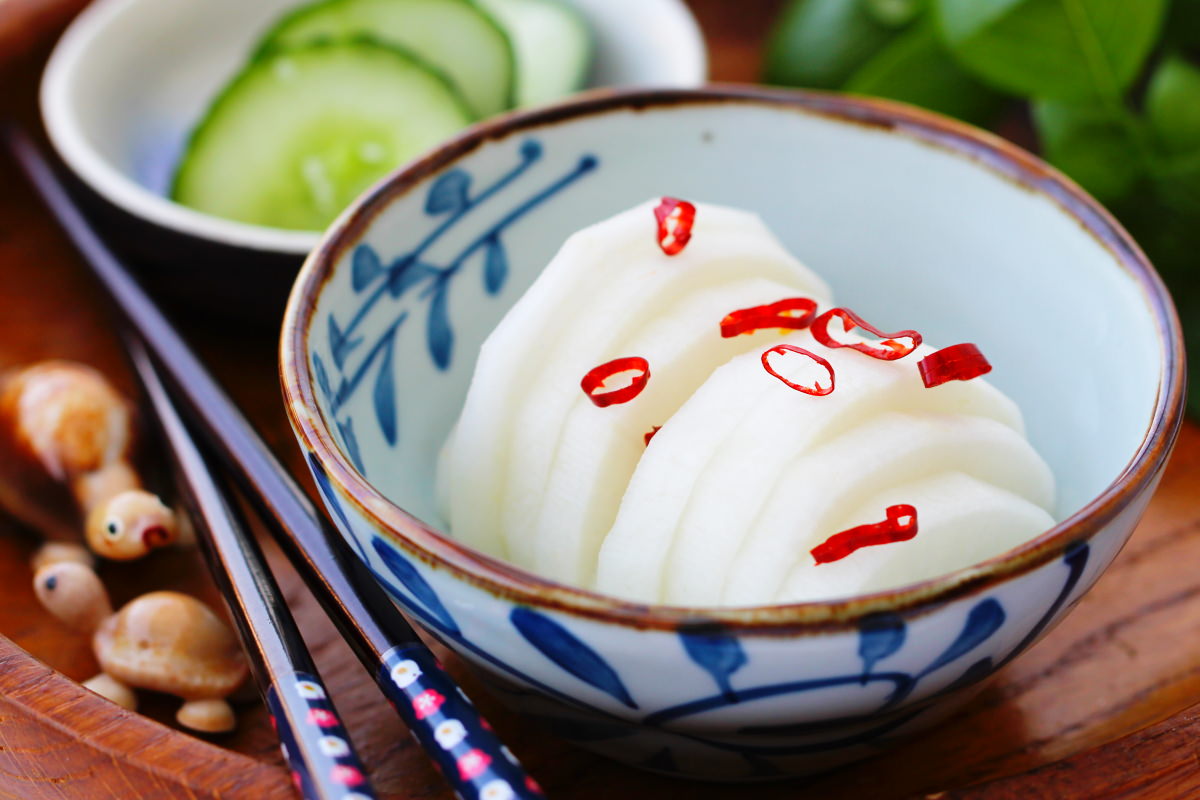
After two days, your homemade pickled daikon radish is ready and will keep in the fridge for a further 5 days. To serve, remove individual slices from the bag and serve in a small bowl (feel free to use a few dried chilli rings as a garnish). Ready – Itadakimasu!
Marinated in rice vinegar, Sake, sugar and salt, this simple Japanese pickled daikon recipe pairs perfectly with many of our best main courses. It is tangy, slightly sweet and refreshingly crunchy. A small selection of our best main courses that go well with it are:
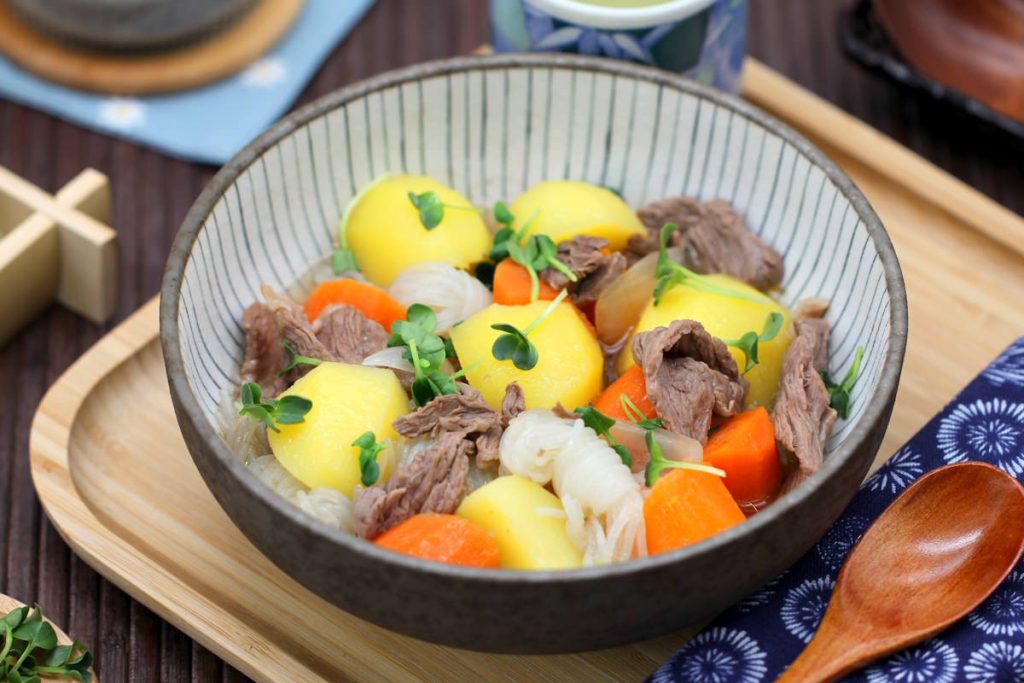
Nikujaga: Japanese potato and beef stew | Recipe for everyday cooking
I ate Nikujaga for the first time at my host family’s house in Fukui. It…
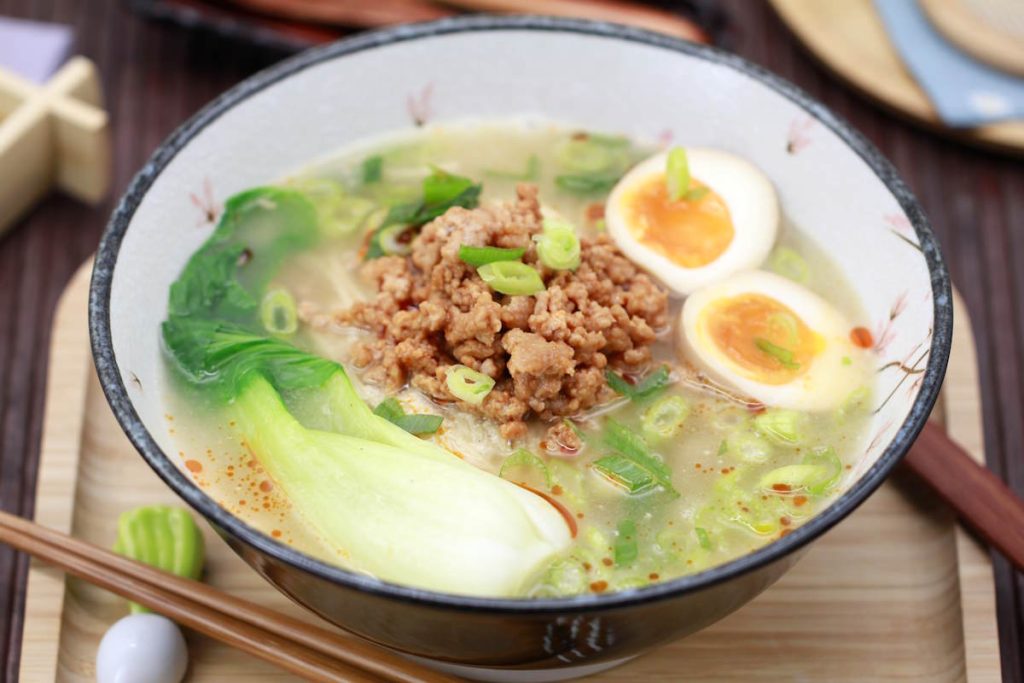
Make your own Tantanmen: creamy sesame Ramen with spicy Miso minced meat, pak choi & ramen eggs
Tantanmen is a Ramen soup for those who like it creamy but not heavy. A…

Make your own Omurice: Japanese omelette with ketchup rice & vegetables | delicious Omuraisu
Omuraisu is one of those dishes that brings an instant smile to almost every Japanese…
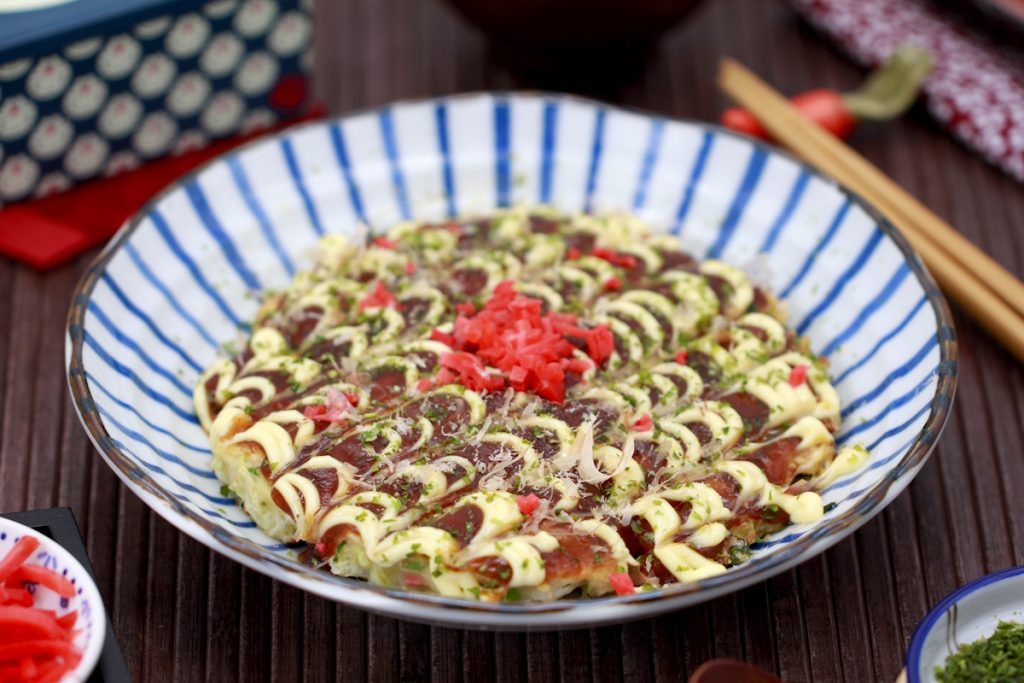
Make the best Okonomiyaki yourself: Basic recipe for Japanese cabbage pancakes, Osaka-style
For me, Okonomiyaki is one of those dishes that instantly puts me in a good…

Make your own crispy Tempura batter: Japanese batter for vegetables & prawns – recipe & tips
When I think of Tempura, I immediately hear that saku saku sound… That delicate crunch…
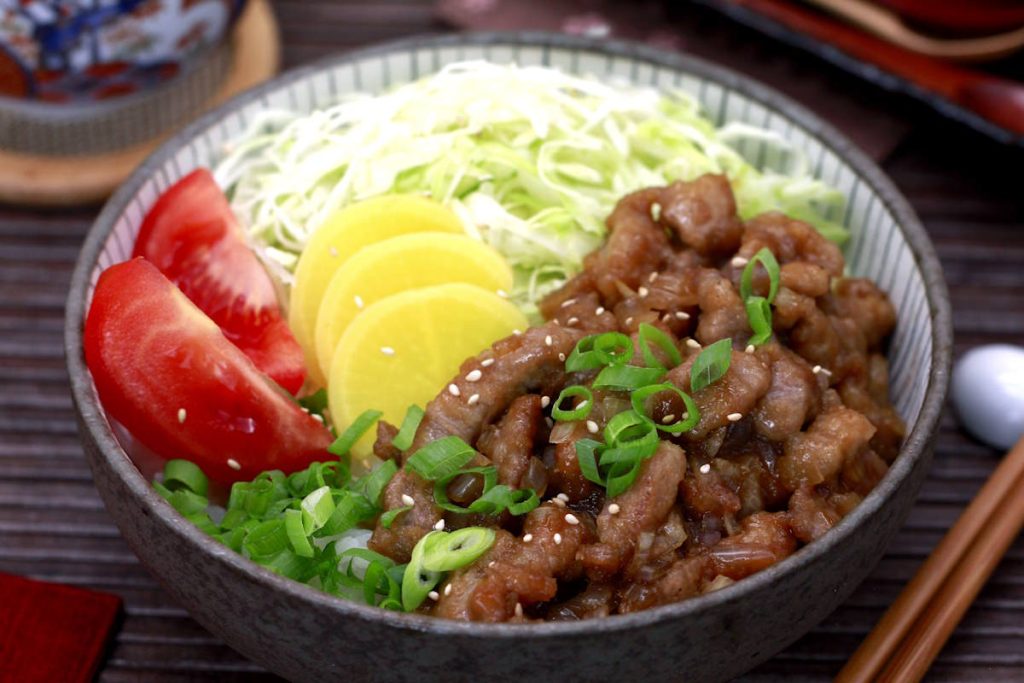
Buta Shogayaki: Make your own Japanese ginger pork with rice, cabbage & Tsukemono
For me, Buta Shogayaki is the perfect Japanese lunch when working from home. It’s quick,…