
Language:


Yakisoba is one of those dishes that shows just how straightforward everyday Japanese cooking can be. Stir-fried noodles, fresh vegetables, a hearty sauce – that’s all it takes to put a filling and really tasty meal on the table in no time at all. That’s exactly why Yakisoba is a classic in Japan – whether for home-cooked meals, parties or a quick bite between meals.
This recipe is a perennial favourite here too. It’s versatile, quick to make and easy to adapt depending on what you’ve got in the fridge. Pork belly adds depth and toasty flavours, crunchy vegetables bring freshness, and the typical sweet-savoury Yakisoba sauce brings it all together into a well-rounded dish.
What is Yakisoba?
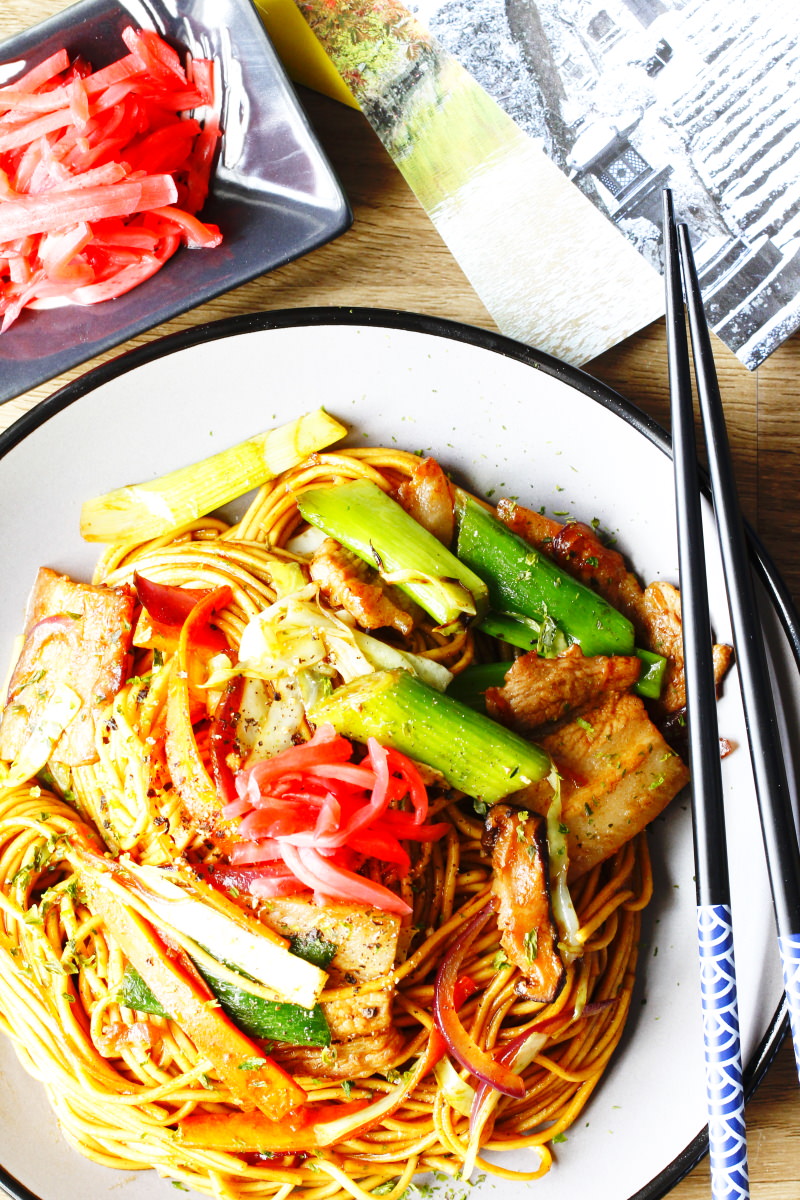
Yakisoba is a classic Japanese stir-fry dish made with fried noodles, vegetables and a savoury-sweet sauce. Despite its name, it doesn’t use buckwheat noodles, but rather yellowish wheat noodles, which are also used in Ramen. Stir-fried over a high heat, with rich, toasty flavours and a spicy sauce, Yakisoba is one of the most popular everyday dishes in Japanese cuisine.
The dish is quick to make, filling and very versatile. That is precisely why Yakisoba is not only found at street food festivals, but also regularly on the dinner table at home.
TOP RECOMMENDATION
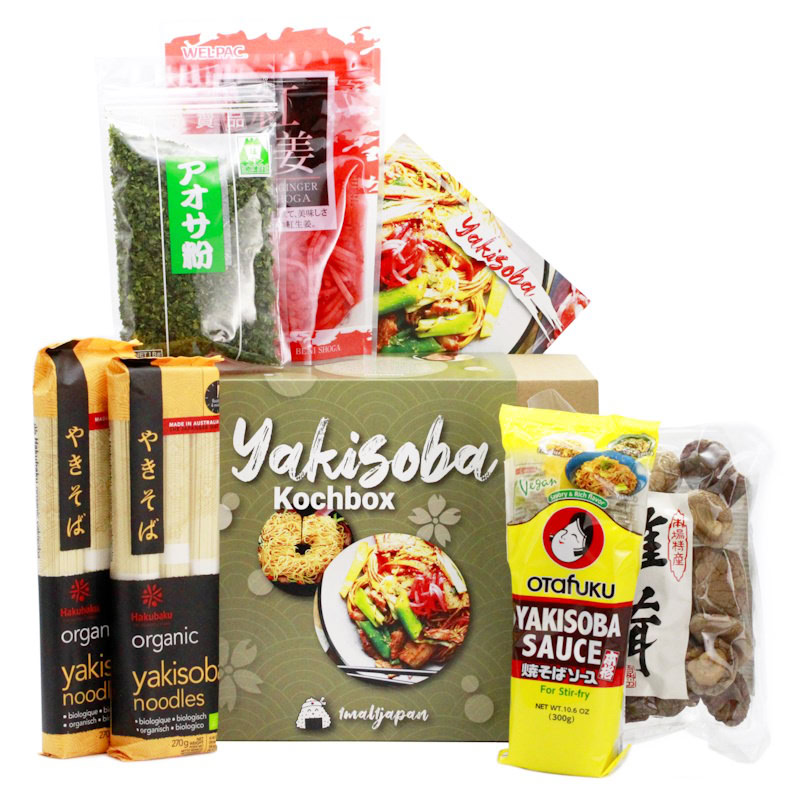
Yakisoba Kochbox | für japanische Bratnudeln, vegan
6-tlg. Set für 6 Portionen japanische Bratnudeln + Anleitung, perfekt für Einsteiger, vegan. Mit dem Yakisoba Kochset gelingen dir japanische Bratnudeln wie vom Streetfood-Markt ganz…
In stock
The history behind Yakisoba
Yakisoba originated in Japan in the early 20th century, around the 1930s, and is closely linked to the development of Japanese street food culture. The dish was inspired by Chinese stir-fried noodles but was quickly adapted to Japanese ingredients and tastes.
Yakisoba became particularly popular after the Second World War because it required few, inexpensive ingredients and was well suited to large quantities. To this day, it remains a staple at summer festivals, matsuri stalls and school events, freshly stir-fried on large iron griddles, often right in front of the guests.
Making Yakisoba yourself: Here’s how
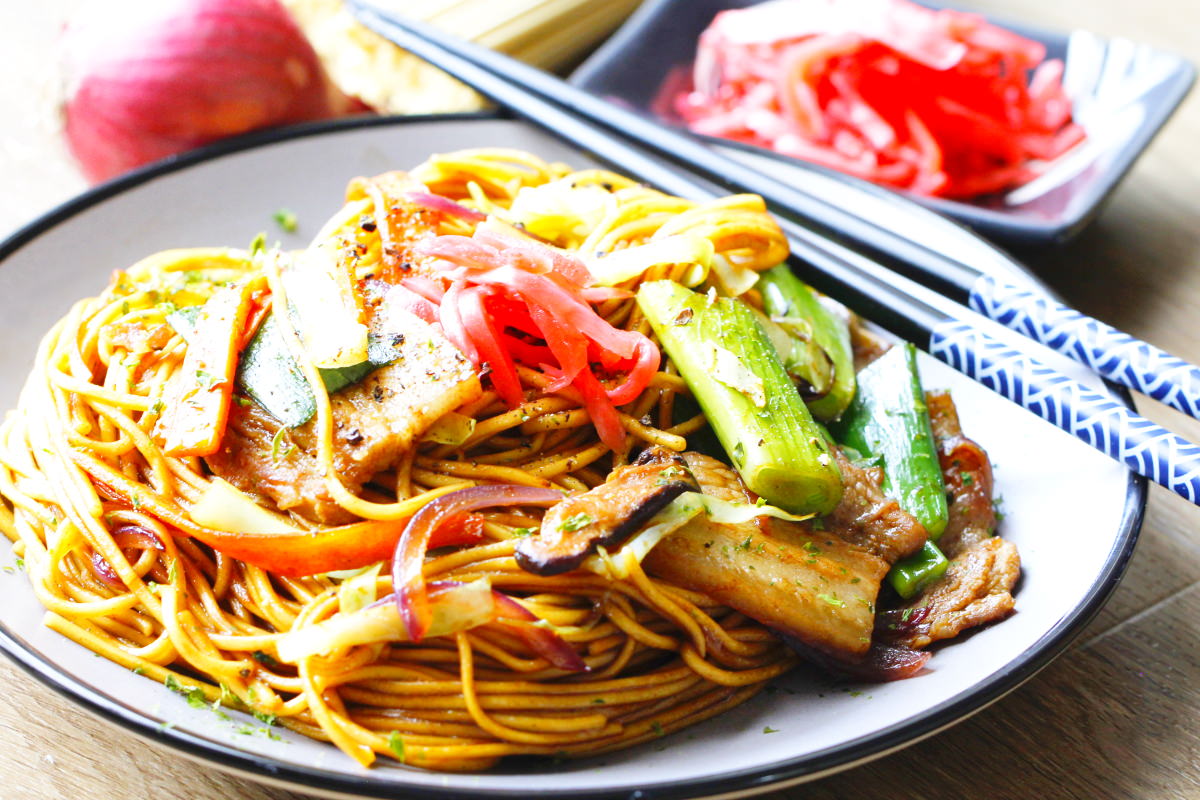
Making Yakisoba at home is straightforward and quick. The most important thing is the order: first prepare the noodles and ingredients, then fry over a high heat, and only stir in the sauce at the very end.
The key ingredients for Yakisoba:
- Ramen noodles: These form the base and should be cooked al dente so that they retain their texture when stir-fried.
- Vegetables: Cabbage, carrots, onions and spring onions add freshness and a crunchy bite.
- Meat: Traditionally, pork belly is used, which becomes particularly flavourful when stir-fried.
- Yakisoba sauce: Its sweet and savoury flavour brings all the ingredients together.
Here’s a quick summary of how it works:
First, the meat and vegetables are fried over a high heat so that they develop roasted flavours and retain their texture. The meat browns, whilst the vegetables remain al dente. Next, the pre-cooked noodles are added to the pan and carefully folded in. Finally, everything is mixed with the Yakisoba sauce and fried briefly until the sauce is evenly distributed, the noodles have a slight sheen and all the flavours have blended together.

What sort of noodles are actually used in Yakisoba?
Traditionally, wheat ramen noodles (mushi chūkamen) are used for Yakisoba. They are yellowish, slightly wavy and are perfect for stir-frying because they absorb the sauce without becoming soft.
Alternatively, fresh Chinese egg noodles work well too. Udon noodles also work, but make the dish significantly softer and more filling. For quick everyday meals, some people even use spaghetti – the important thing is to cook them very al dente.
Classic buckwheat soba, on the other hand, are less suitable as they break easily when stir-fried and do not complement the flavour.
For an authentic result, ramen noodles remain the best choice, but the alternatives are perfectly suitable for everyday cooking.
Yakisoba Variations and Differences
In its basic form, Yakisoba always follows the same principle: stir-fried wheat noodles, a little meat, vegetables and a sweet and savoury sauce. Within this framework, however, there are numerous variations that differ depending on the region and everyday customs.
The classic version consists of ramen noodles (mushi chūkamen), pork, cabbage, carrot and onion, and is served with Aonori, Katsuobushi and pickled ginger. Gomoku Yakisoba is a heartier variation with several ingredients, usually a mixture of meat or seafood and various vegetables.
In Katayakisoba, the noodles are fried until crispy and then topped with a creamy sauce. In coastal regions, seafood Yakisoba with prawns or squid is common. In Okinawa, simpler versions emerged after the war, some using tinned meat, which remain popular to this day.
There are also regional differences: Fujinomiya Yakisoba is fried in meat fat using thicker noodles and topped with Katsuobushi, whilst in Tokyo, Yakisoba has historically been closely associated with street food and Okonomiyaki stalls.
In everyday life, Yakisoba is constantly being adapted, with more vegetables, different meats, vegetarian options, a fried egg or Japanese mayonnaise. It is precisely this flexibility that makes the dish so popular to this day.
No post found!
What goes well with Yakisoba?
Yakisoba is already a complete meal in itself, but it can easily be complemented. Suitable side dishes include a simple cucumber salad, Tsukemono or a light Misoshiru. Edamame or a small coleslaw round off the meal. Green tea, a cold beer or a light Japanese soft drink go well with it – just as you’d find Yakisoba at Japanese street festivals.
Do you have any questions or would you like to share your experiences? What do you think of this Yakisoba recipe? Have you tried it yet, or made your own version – perhaps with more vegetables, seafood or extra sauce? I look forward to your comments and hope you enjoy cooking and eating this dish.
Yakisoba
serves 2 | 20 minutes | 912 kcal
🖨️ Print PDF 📌 Save to PinterestYakisoba is a dish of stir-fried Japanese ramen noodles with crisp vegetables, succulent meat and a savoury-sweet sauce. This recipe shows you how to make yakisoba quickly and easily at home – perfect for everyday Japanese cooking and always adaptable to your taste.
Ingredients (2 portions)
2 portions Yakisoba noodles (im Shop ansehen)*
2 Shiitake mushrooms (dried or fresh) (im Shop ansehen)*
1 carrot
1 red onion
2 spring onions
4 leaves white cabbage (alternatively Chinese cabbage or pointed cabbage)
250 g pork belly
2 tbsp oil (e.g. rapeseed oil)
100 ml Yakisoba sauce (im Shop ansehen)*
For the topping (optional):
2 tsp Aonori (im Shop ansehen)*
2 tsp Beni Shoga *
a little pepper
Useful equipment:
Japanese Santoku knife (im Shop ansehen)
Teppanyaki tabletop grill (auf Amazon* kaufen)
Preparation (20 minutes)
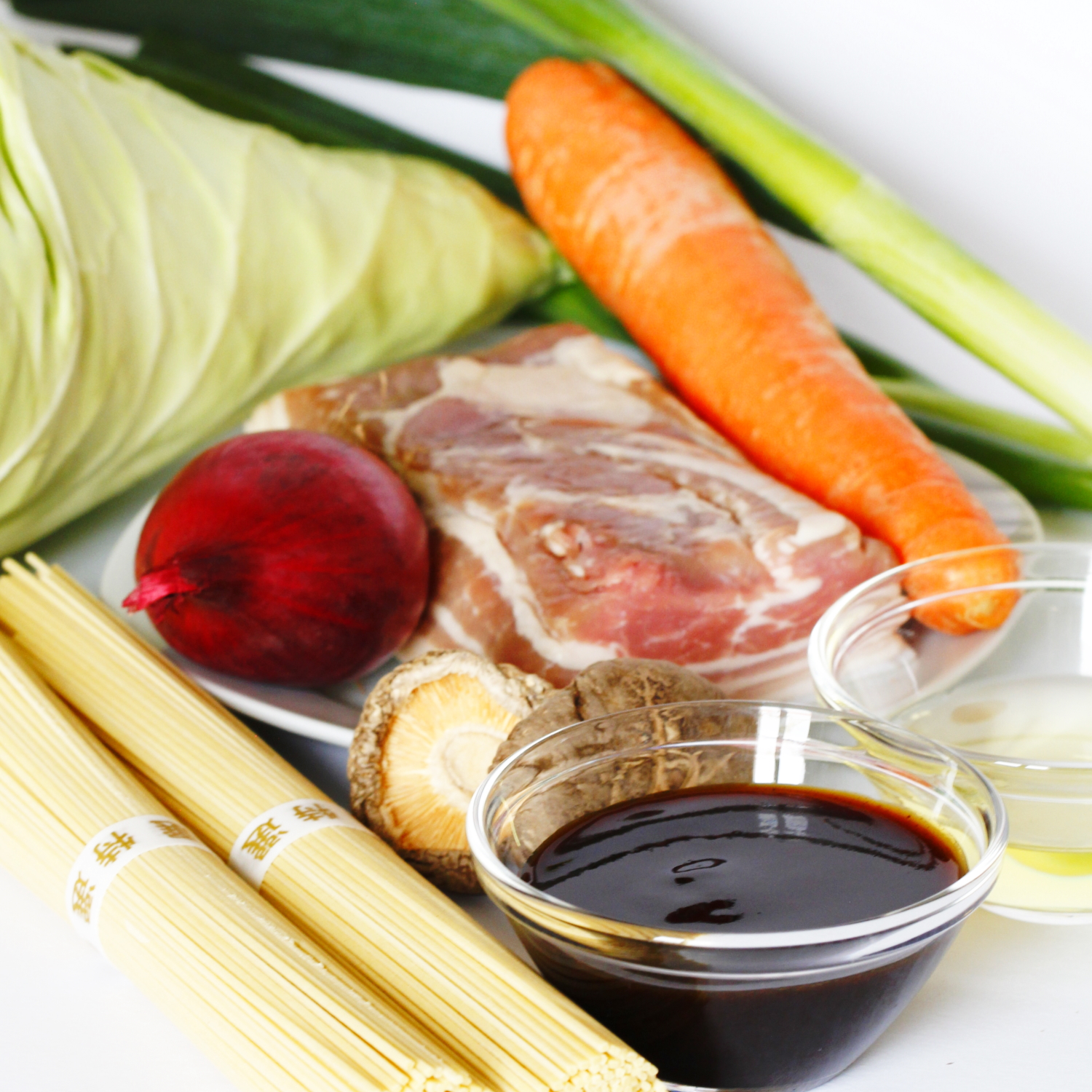
Step 1
Prepare all the ingredients for the yakisoba. For the noodles, bring about 2 litres of water to the boil in a large saucepan.
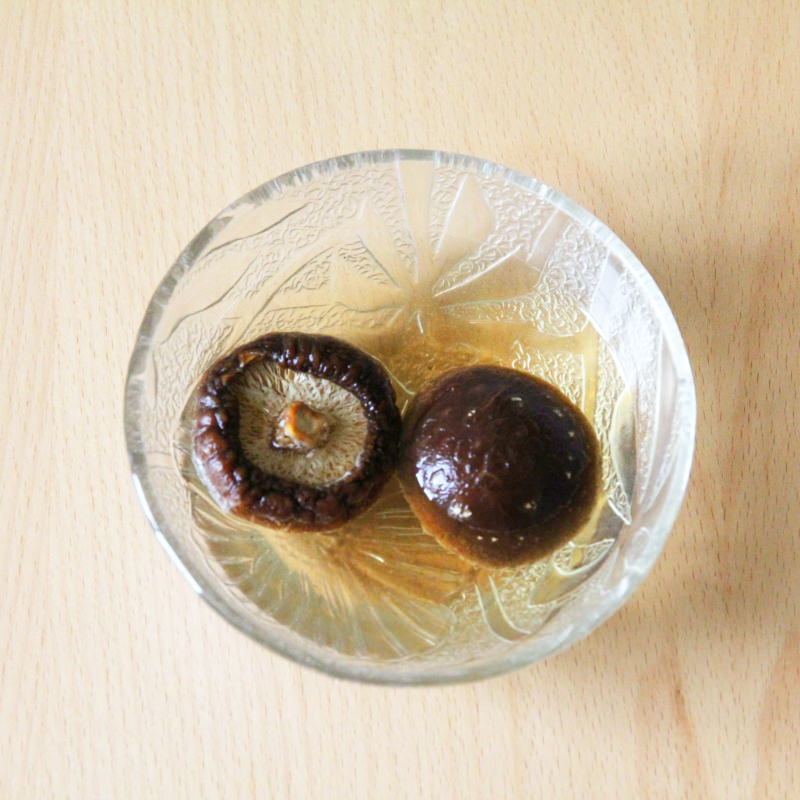
Step 2
If using 2 dried Shiitake mushrooms, soak them in a small bowl of warm water and set aside. Fresh Shiitake mushrooms can be used straight away.

Step 3
Peel or wash the 1 carrot thoroughly, cut it in half lengthways and slice into 5 cm long strips.
Peel the 1 red onion, halve it and cut it into fine wedges. Wash the 2 spring onions, pat them dry, remove the root ends and cut them diagonally into pieces about 3 cm long.
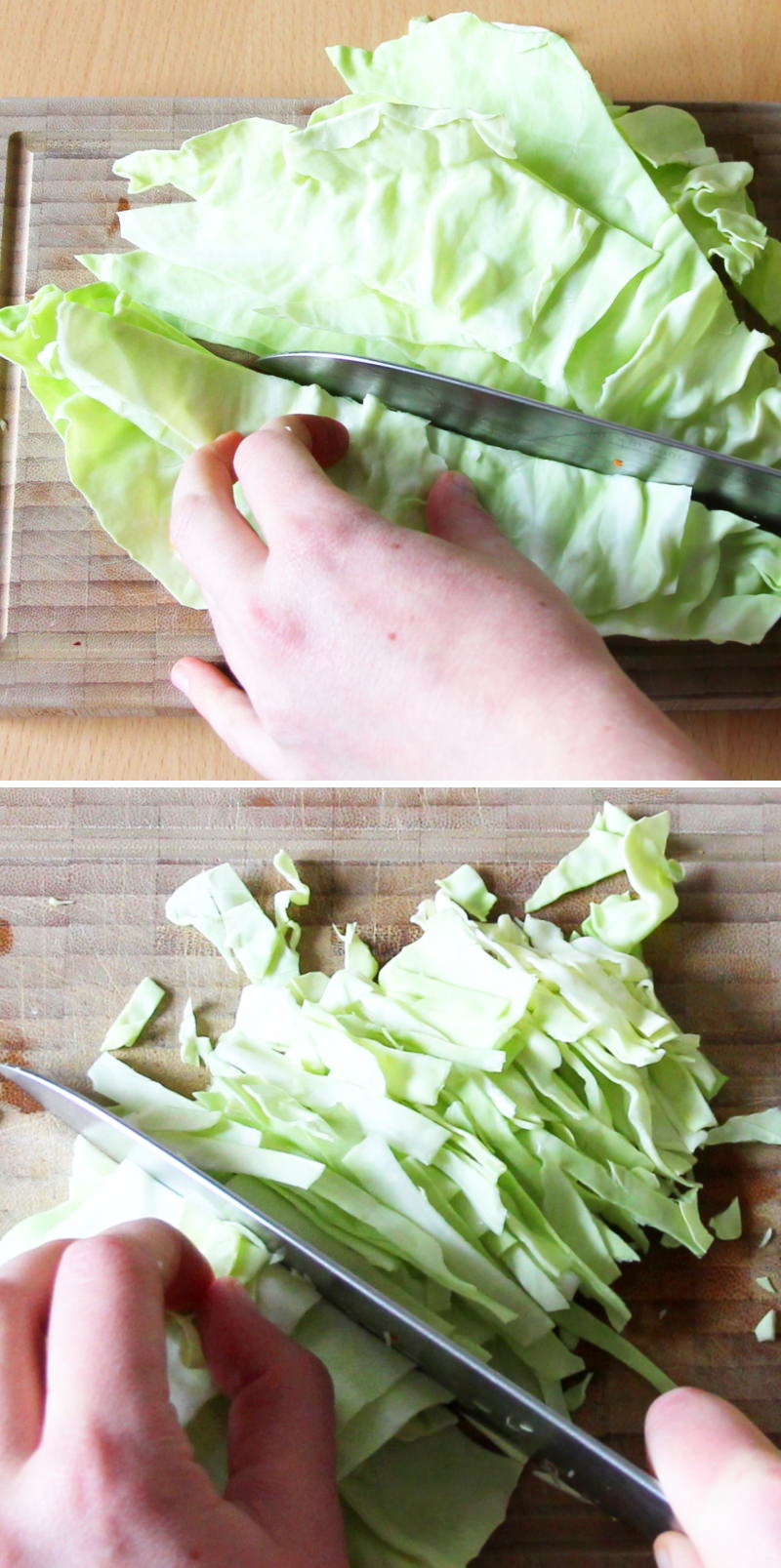
Step 4
Carefully remove the 4 white cabbage leaves from the stalk. Stack the leaves on top of each other, halve them once, and then cut them lengthways into fine strips.
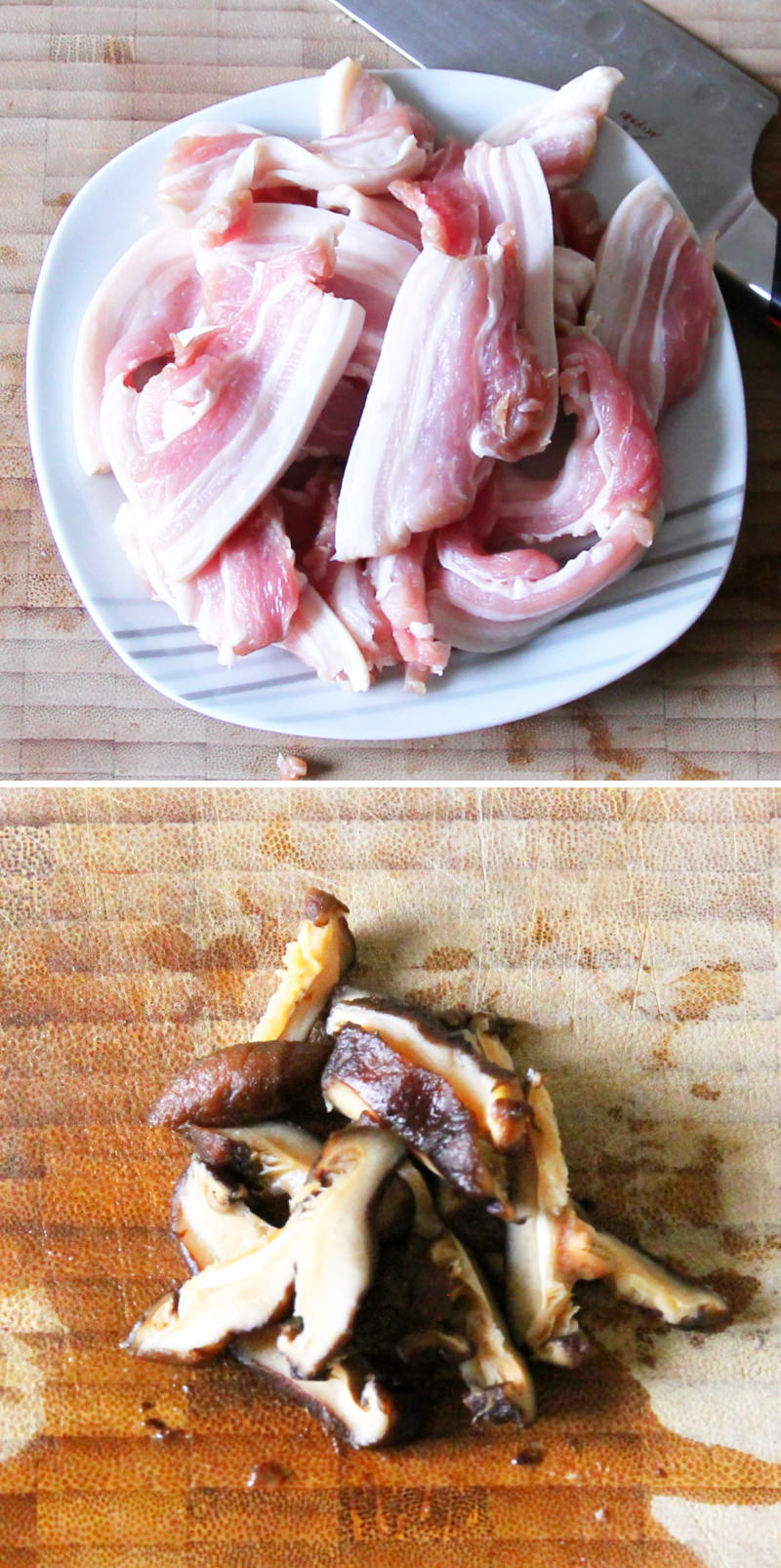
Step 5
Cut the 250 g pork belly into slices approximately 0.5 cm thick. Squeeze out the soaked Shiitake mushrooms and cut them into 0.5 cm thin strips as well.
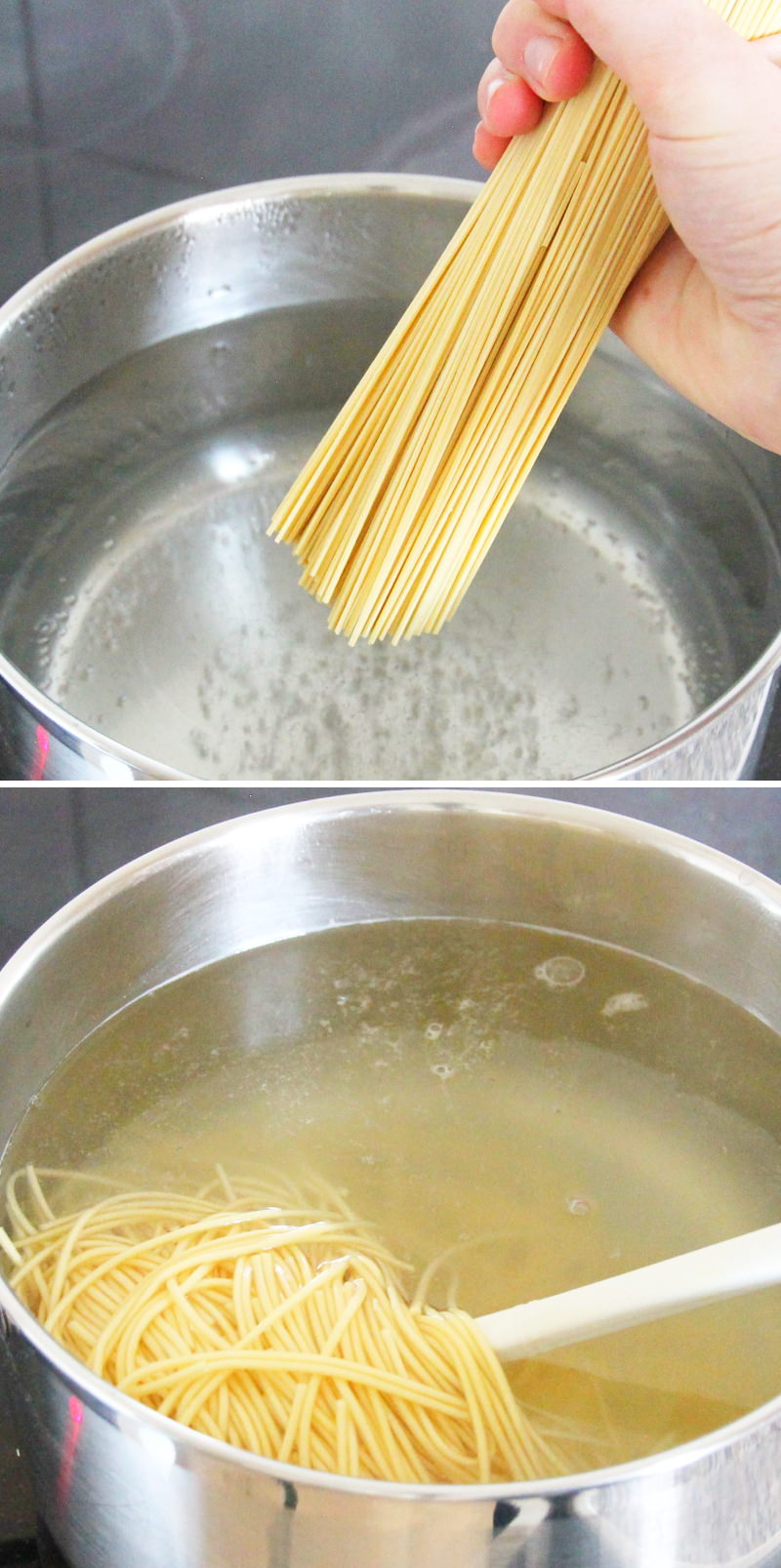
Step 6
Cook the 2 portions of Yakisoba noodles in boiling water according to the instructions on the packet. Then drain in a colander, rinse briefly under cold water and set aside until needed.
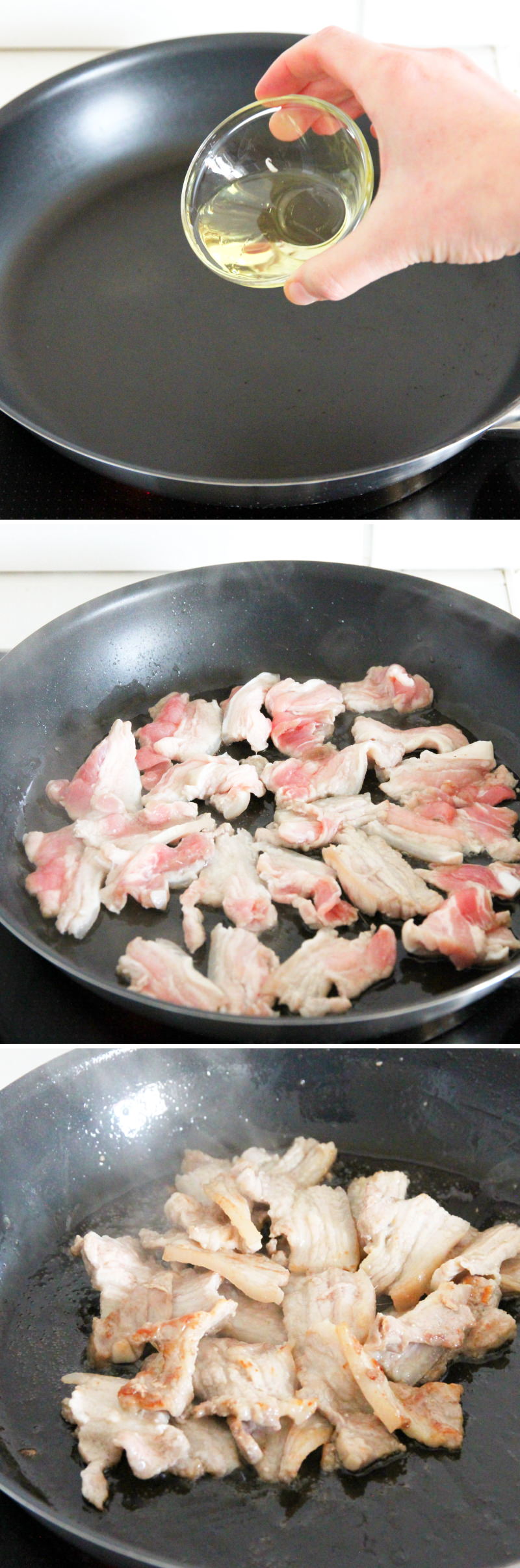
Step 7
Heat 2 tbsp oil in a large frying pan until very hot. Add the pork belly and sear vigorously on both sides over a high heat until lightly browned.
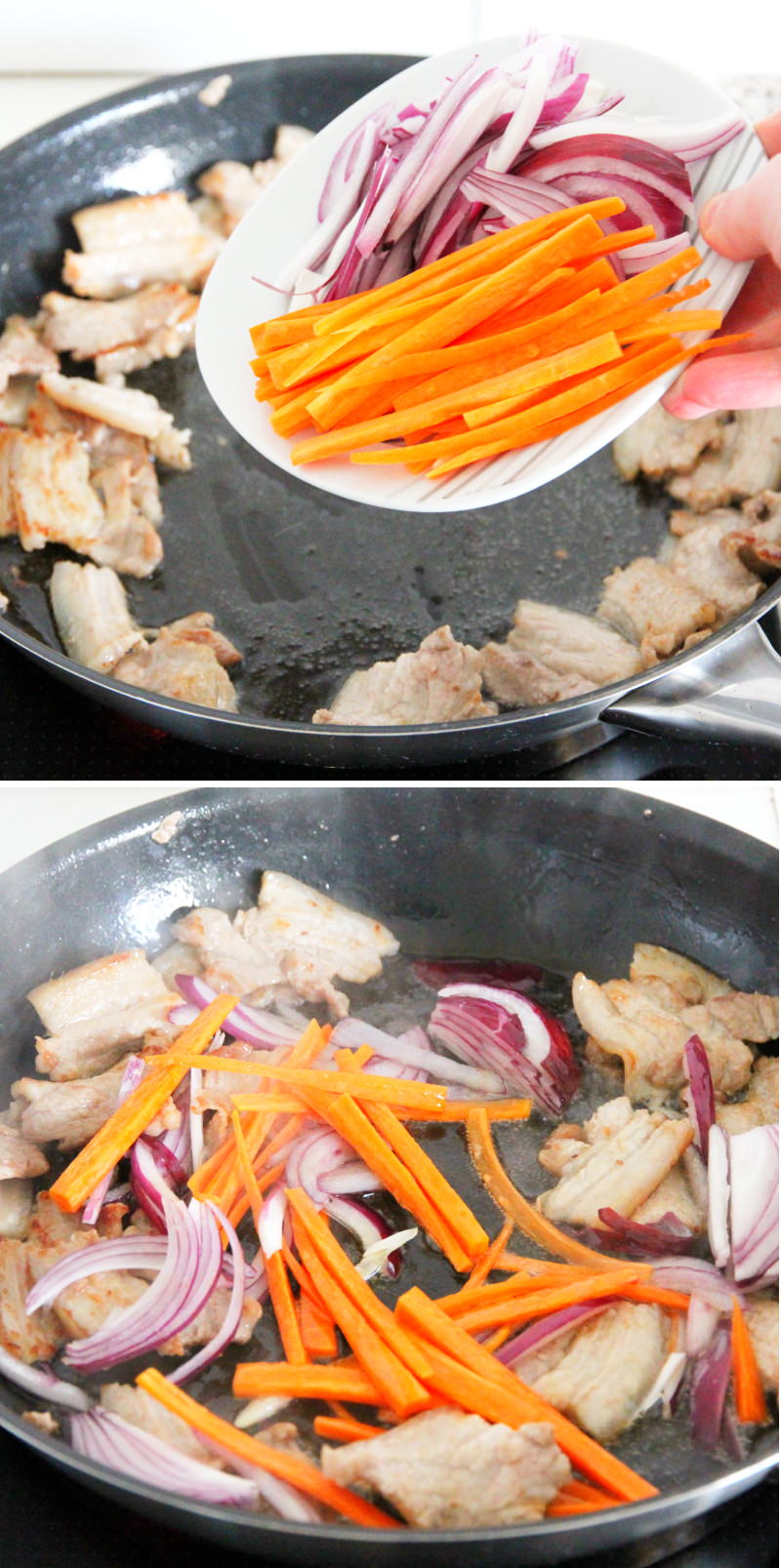
Step 8
Push the meat to the edge of the pan. Add the carrot sticks and onion wedges to the pan and fry briefly and vigorously over a high heat.

Step 9
Add the cabbage strips and Shiitake mushrooms and fry everything briefly, stirring constantly.
Then add the cooked Yakisoba noodles and the sliced spring onions, and mix everything together with 100 ml of Yakisoba sauce.
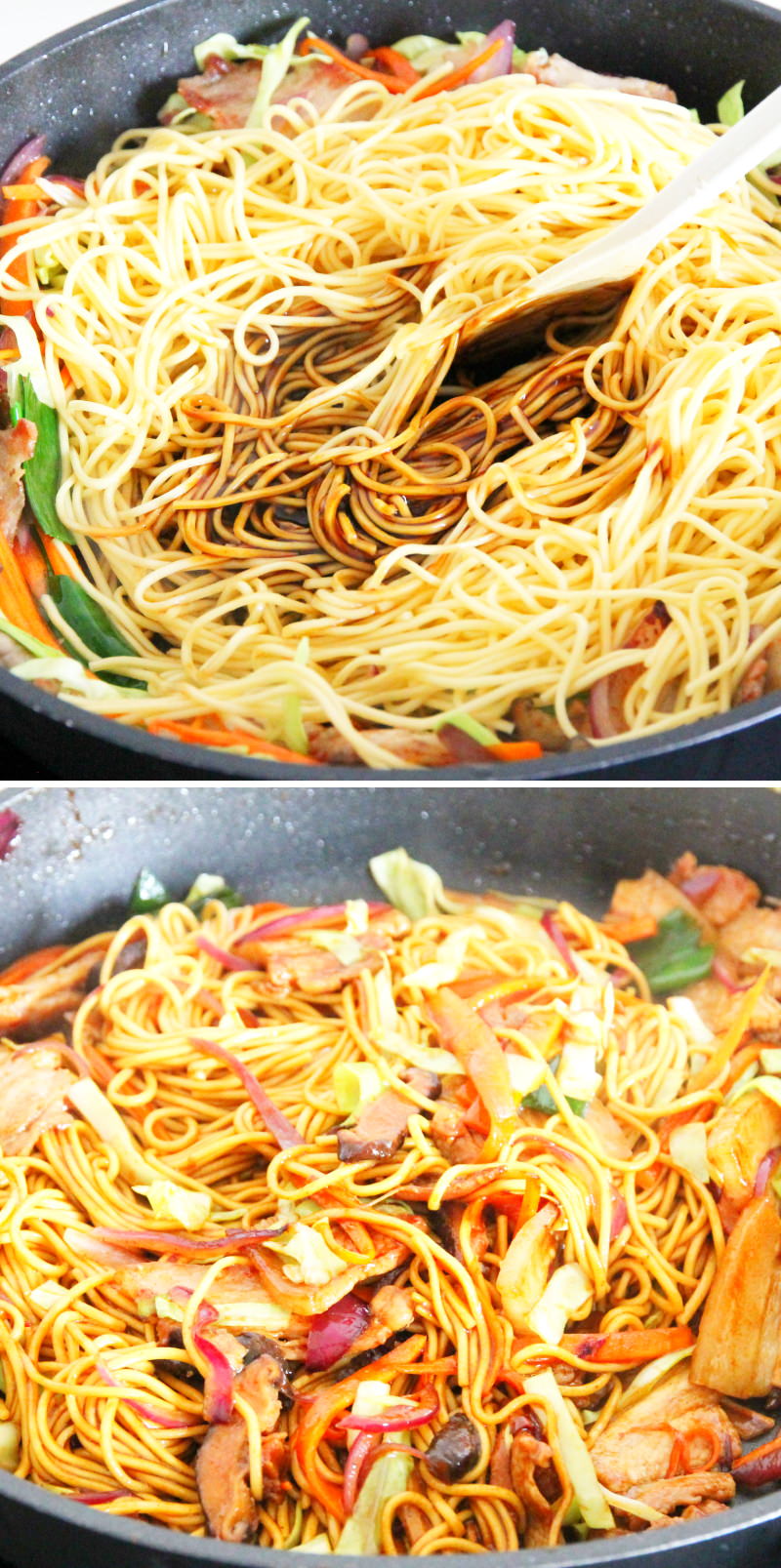
Step 10
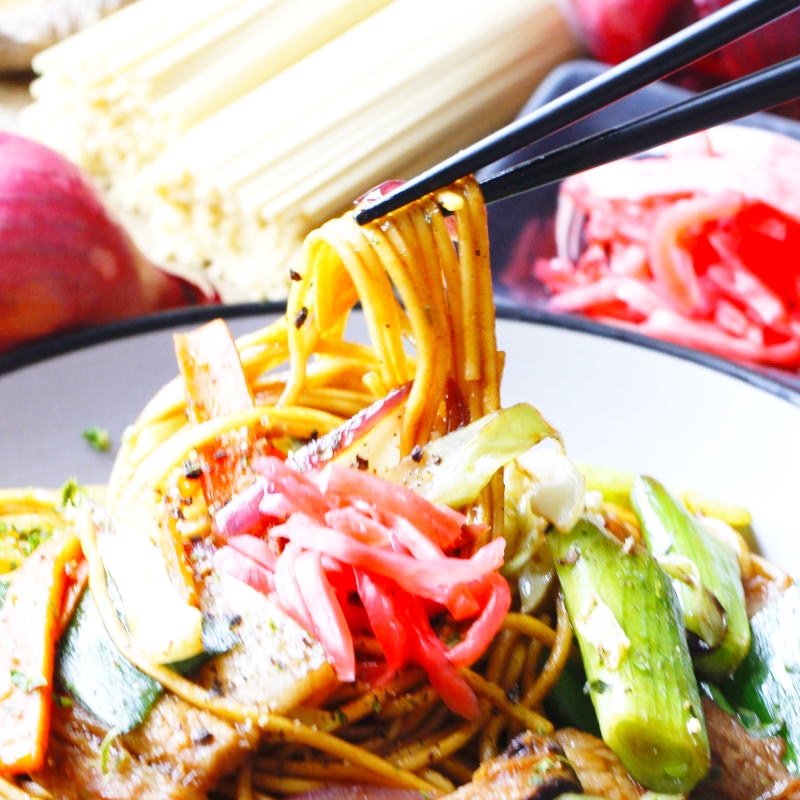
Mix all the ingredients thoroughly and leave the Yakisoba on the heat for about 1 minute to allow the sauce and flavours to blend well.
Step 11
Serve the finished Yakisoba in bowls and garnish to taste with Aonori, beni shoga and a little freshly ground pepper.
Serve hot – Itadakimasu!
Fancy making even more delicious Japanese stir-fries? Here are our best recipe ideas:
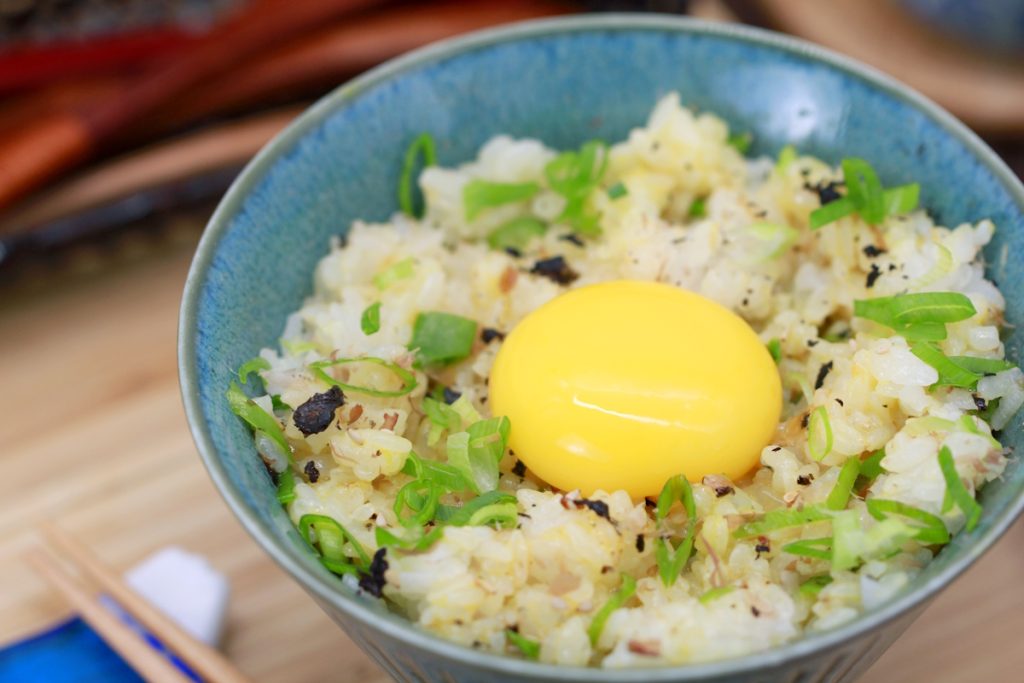
Tamago Kake Gohan: Japanese breakfast rice with egg, Furikake & Katsuobushi | TKG
In this recipe, I’ll show you a particularly flavourful version of Tamago Kake Gohan (TKG)…
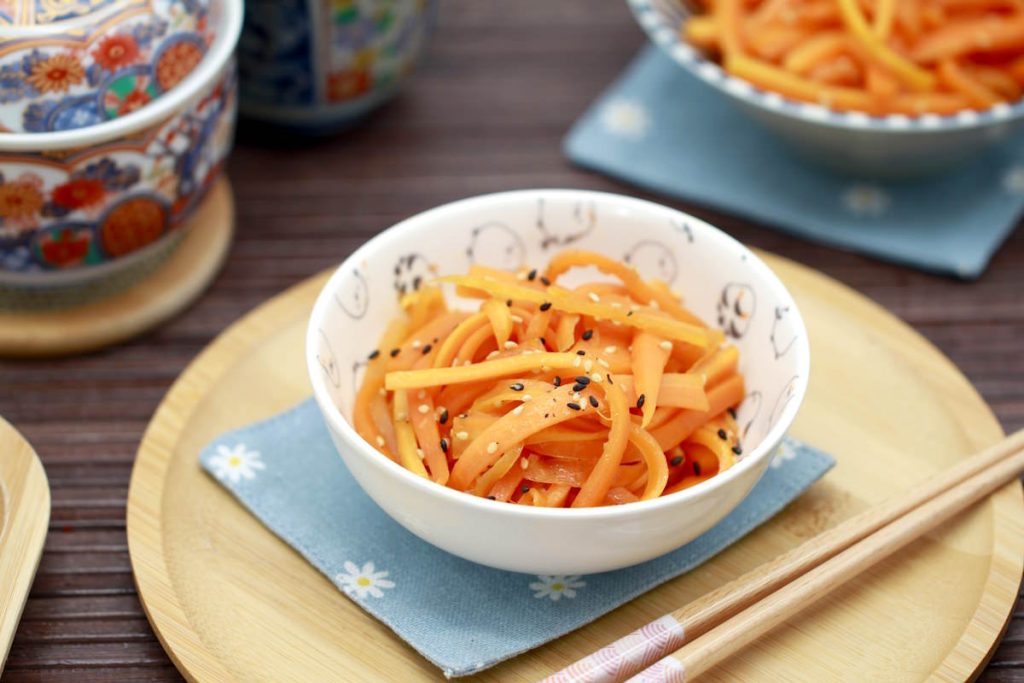
Make your own Ninjin no Kinpira: Japanese carrot side dish in the Kinpira style
Ninjin no Kinpira is a simple Japanese side dish made from finely sliced carrots, which…
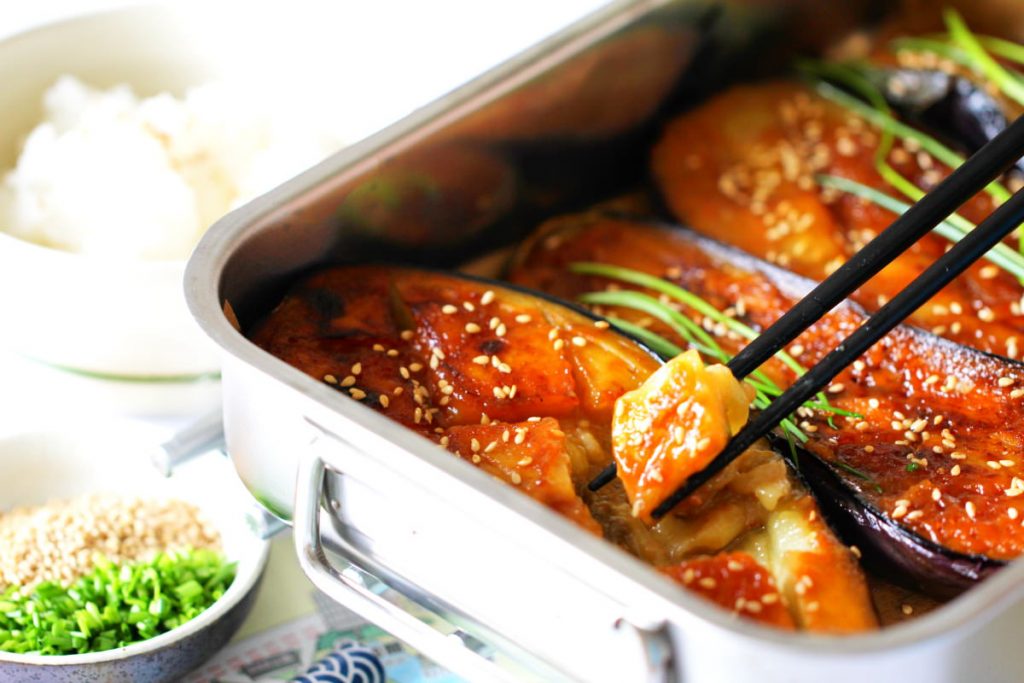
Nasu Dengaku: Oven-baked aubergines glazed with Miso – simple & irresistible
Nasu Dengaku is a true classic of Japanese cuisine and perfect as a side dish…
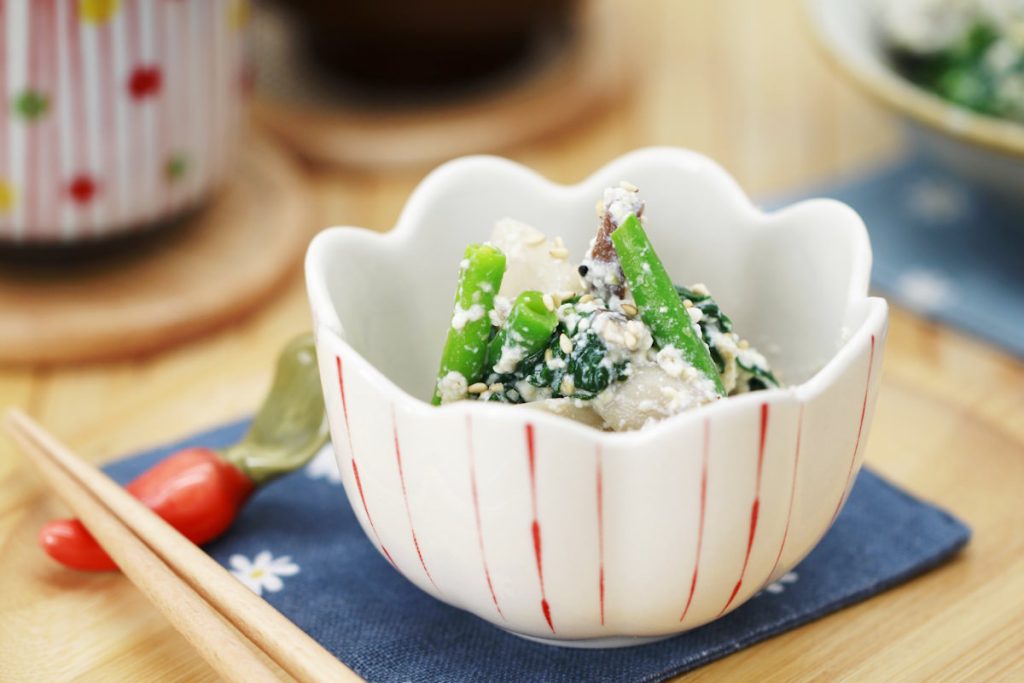
Mushroom and spinach salad with sesame and Tofu dressing: Recipe for Yasai no Shira ae
Mushroom and spinach salad with sesame and Tofu dressing, also known as Yasai no Shira…
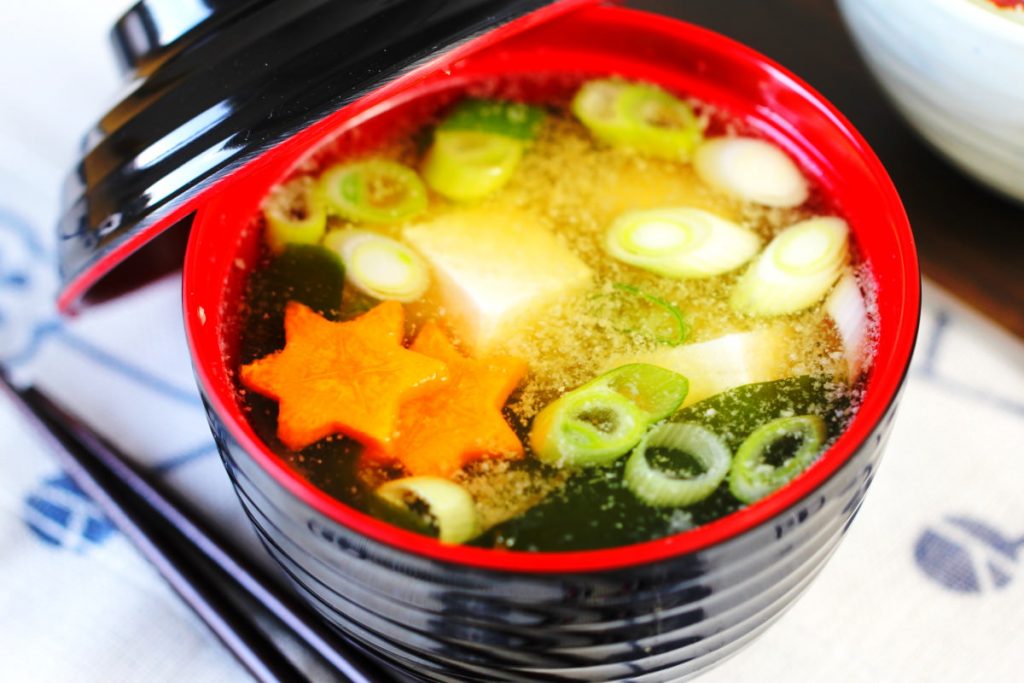
Misoshiru in a flash: basic recipe for miso soup with Wakame & Tofu
Miso soup is much more than just a side dish in Japan – it’s a…
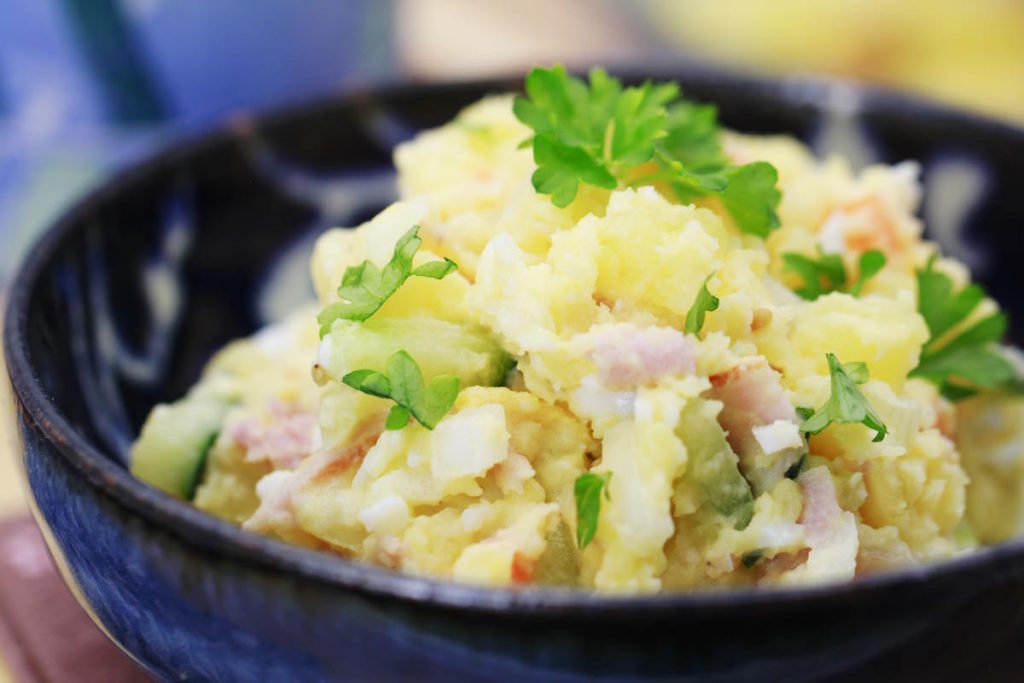
Make your own Japanese potato salad: fresh, creamy and irresistible!
If you’re looking for a delicious side dish that’s both familiar and excitingly new, then…