

Language:


Ready for an extraordinary taste experience? Immerse yourself in the fascinating world of Japanese cuisine with a unique yakitori recipe that will captivate you. But here’s the highlight: we’re going to conjure up our very own, homemade Teriyaki-style yakitori sauce. The intense, sweet-and-salty flavour of this sauce gives the tender chicken skewers an irresistible touch.
But that’s not all – we won’t be grilling the skewers in the traditional way, but frying them in a pan. This method not only saves time, but also allows anyone to prepare this delicious speciality, even without a barbecue to hand.
Are you ready to heat up the pan and experience the irresistible aroma of yakitori in your kitchen? Then join me on this unforgettable culinary journey and discover a new way to enjoy yakitori!
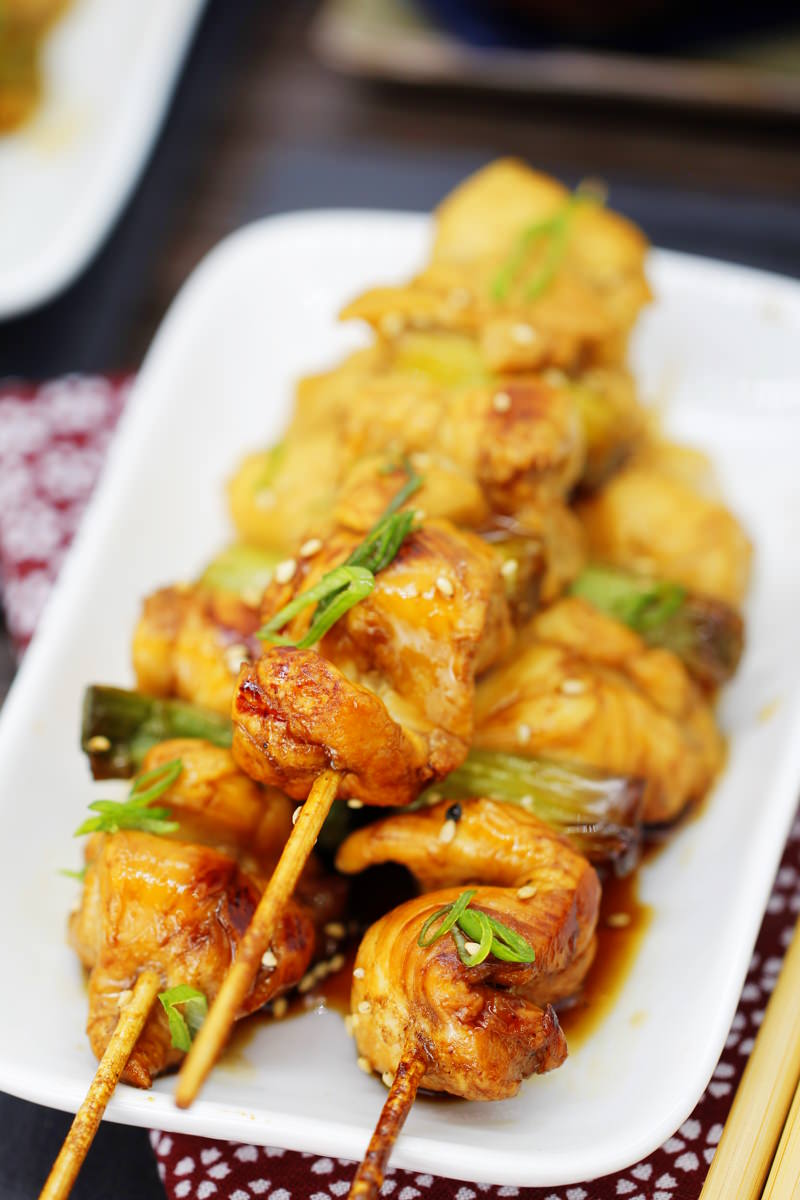
Discover the exciting world of yakitori, the delicious grilled chicken skewers, which are seasoned with a sweet -spicy sauce or savoury salt. They are not only a sophisticated dish but also a quick snack that goes perfectly with a refreshing drink. Yakitori are usually grilled over an open charcoal fire, which gives them a smoky flavour and a crispy texture.
In Japan, yakitori are hugely popular and are often enjoyed after work in pubs or other bars. They are simple, yet come in a wide variety of forms.

Tip
It’s incredible what can be grilled on a skewer! From chicken breast, chicken fillet and chicken breast cartilage to thighs and wings. Of course, beef and pork can also be used, for example. Added to this are the countless vegetarian options such as peppers, mushrooms and tomatoes.
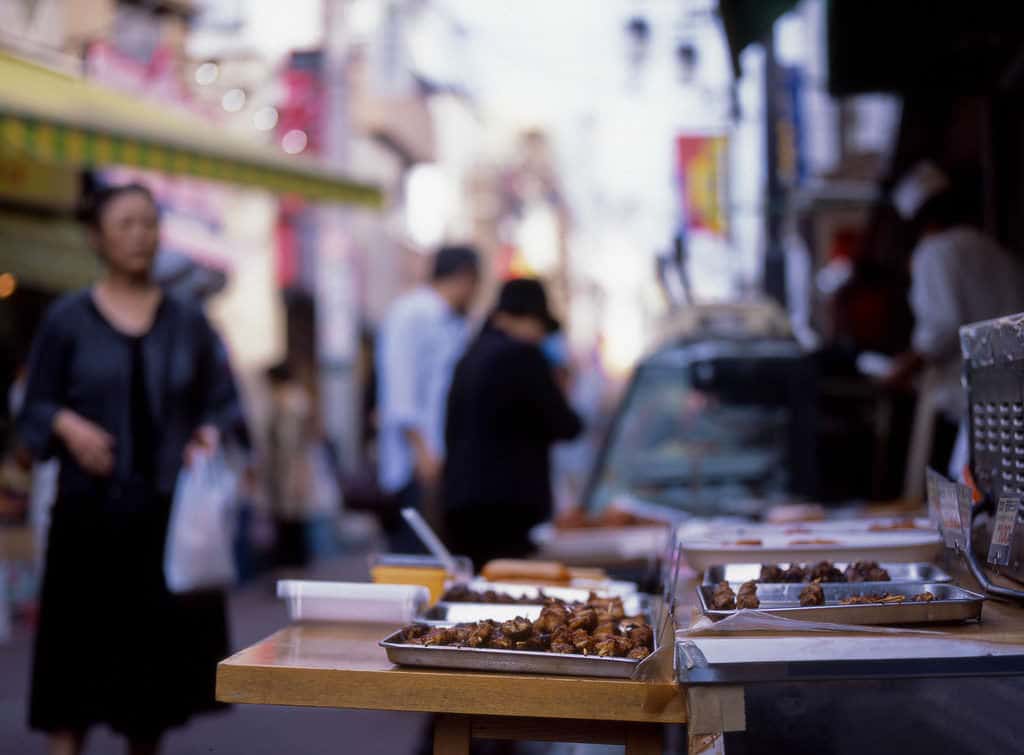
Although yakitori is considered a traditional Japanese dish, its history only dates back to the Meiji period from 1868 to 1912, when the yakitori tradition developed from small food stalls known as yatai. These stalls were mainly found in large cities near shrines, bridges and public events. The hot meat skewers were served on simple sticks that were easy to take away and enjoy without chopsticks – a perfect snack!
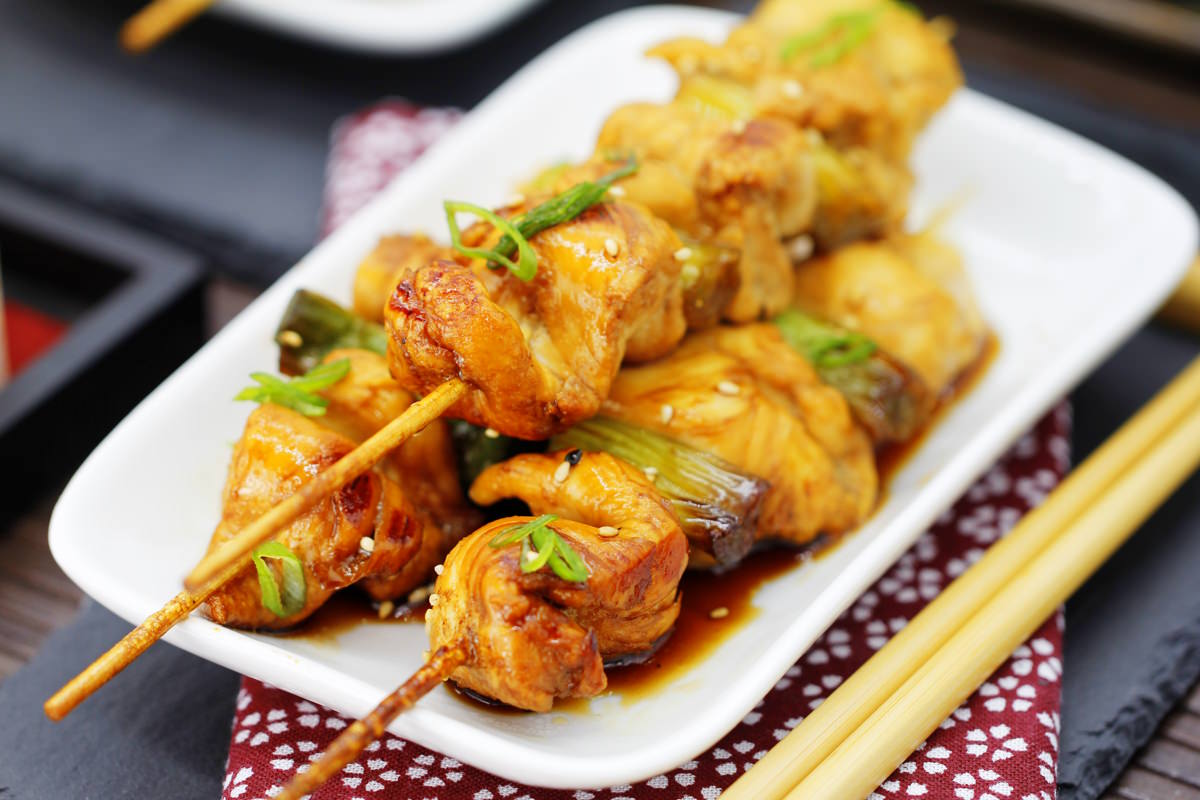
What varieties of yakitori are there?
Nowadays, yakitori-ya – establishments serving grilled chicken skewers – are everywhere. They are particularly popular with tired office workers, the salarymen, who are looking for refreshment and a quick snack after work. Yakitori is enjoying increasing international popularity and could become one of the next big trends!
If you’ve ever had the pleasure of visit Japan and dine in a traditional yakitoriya, you’ll know that creating the perfect yakitori skewer is a labour of love for many chefs there. Unlike many restaurants in Germany, which offer a wide-ranging menu, authentic yakitoriya in Japan specialise in one thing: excellent grilled skewers.
Imagine strolling through the streets of Tokyo, the scent of freshly grilled chicken drawing you in, and you step into an authentic yakitoriya. Here, you won’t find dozens of different dishes, but rather the art of skewer variations. A little tip on the side: It’s best to bring friends who are just as crazy about these delicacies as you are!
OUR RECOMMENDATION
Cookbook ‘Dashi to Dango’
Discover the fascinating world of Japanese cuisine with my cookbook “Dashi to Dango” – simple and enjoyable in your own kitchen.
With loving attention to detail and exquisite recipes, you’ll become a master of traditional dishes that will enchant your palate. Don’t wait any longer – start your culinary adventure and bring the magic of Japan into your kitchen!
You might be wondering how many different skewers a place like this actually serves? The answer might surprise you, as it goes far beyond simple grilled chicken fillet. From juicy chicken breast to crunchy cartilage and tender wing pieces – the variety is impressive. And although most yakitoriya stick to one or two special seasonings, the possible combinations are almost limitless.
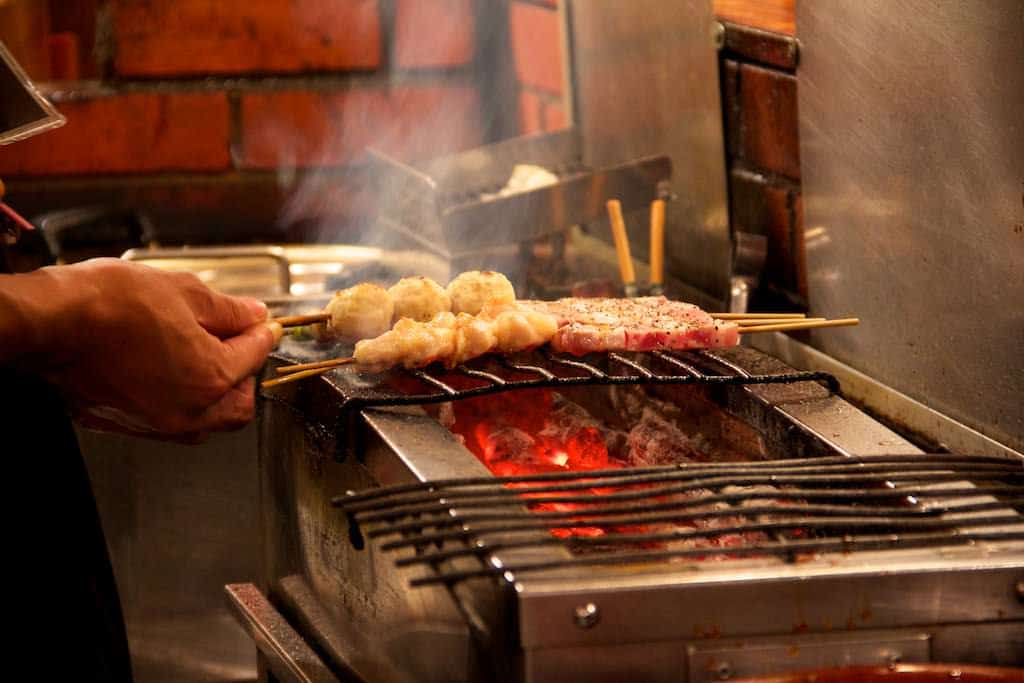
But it’s not just chicken that gets skewered here. Beef, pork and even vegetarian delicacies such as peppers, mushrooms and tomatoes find their place on the grill. Let our overview inspire you and discover the world of classic yakitori, which you can also prepare at home using our recipe below.
The most popular yakitori varieties:
- Negima – chicken thigh and leek
- Tsukune – meatballs
- Torikawa – crispy skin
- Tebasaki – chicken wings
- Reba – liver
- Nankotsu – cartilage
- Negima – chicken thigh and leek
The most popular vegetarian yakitori options are a combination of:
- Shishito – peppers or chillies
- Shiitake or enoki mushrooms
- Cherry tomatoes
- green asparagus
Make your own yakitori
Yakitori are not only delicious snacks, but also easy to make. At the heart of every variation is the skewer, known in Japan as kushi . Kushi are not merely decorative, but functional and ideal for on the go.
Depending on their intended use, they are made of stainless steel, bamboo or wood. Whilst stainless steel and wooden skewers are reused in restaurants, bamboo skewers are often disposable items at mobile food stalls.
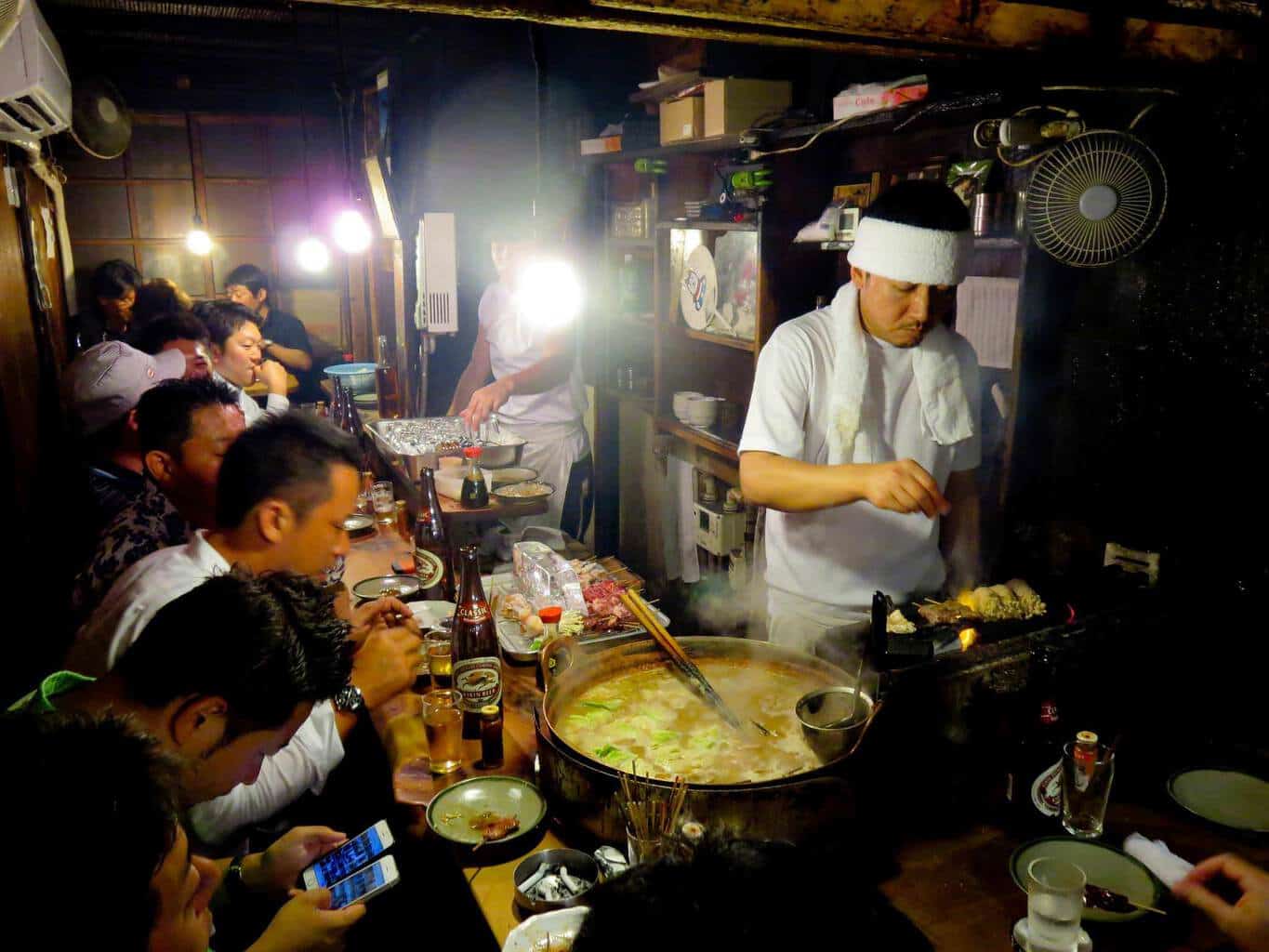
The traditional grill for these delicacies is a portable charcoal grill, which grills meat and vegetables to juicy perfection in no time at all, giving them a crispy crust. Restaurants often use high-quality binchotan charcoal, made from Ubame oak. With its hard surface and low-smoke embers, it ensures that distinctive grilled flavour without the smoke nuisance.
For home use, there are handy tabletop grills, also known as Takujo konro or Yakitoriki. Small, electric and fitted with heating elements, they are perfect for a cosy get-together with friends. So let’s dive into the wonderful world of yakitori and enjoy a culinary feast!
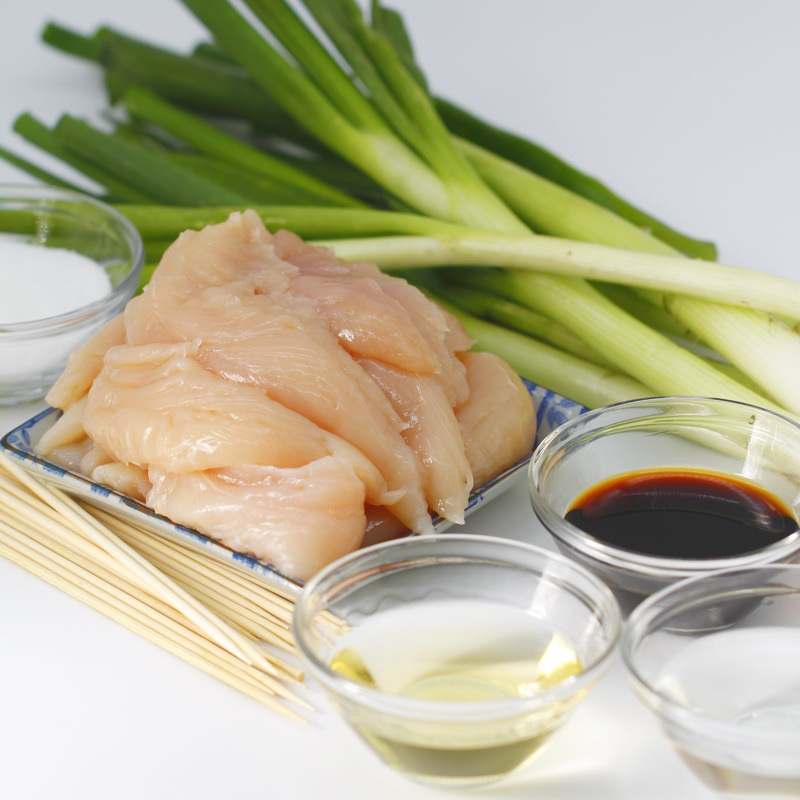
For our yakitori recipe, you’ll need a few ingredients. Let’s start with the chicken. It’s best to use 500 g of boneless thighs or inner breast fillets. Don’t forget to pick up a bunch of spring onions too! Wash them thoroughly and then cut them into pieces about 3 cm wide.
For the yakitori sauce, you’ll need 120 ml soya sauce for a savoury touch. Add 120 ml of Mirin, a sweet rice wine that gives the sauce a pleasant mildness. For more flavour, add 60 ml Sake , a Japanese rice wine. Mix the sauce with 60 ml water to thin it slightly, then add 2 tbsp sugar to achieve a delicious sweet-and-spicy flavour.
For the yakitori skewers, you will also need 12 bamboo skewers. Soak them in water for about 30 minutes beforehand to prevent them from burning in the pan. And don’t forget: use 5 tbsp of oil, such as rapeseed oil, to fry the skewers in the pan.
With these ingredients, you’re all set to prepare delicious yakitori skewers and enjoy the unique flavours of Japan. I wish you every success and hope you enjoy cooking – if you have any questions or suggestions, please feel free to use the comments section below the recipe 😊. Let’s get started:
Yakitori
serves 4 | 40 minutes | 347 kcal
🖨️ Print PDF 📌 Save pinDiscover the fascinating world of Japanese cuisine with a special yakitori recipe. This recipe uses a homemade Teriyaki-style yakitori sauce. The skewers are not grilled, but pan-fried, which is quick and easy. Enjoy the intense, sweet-and-salty flavour of the sauce and experience a new way of preparing yakitori.
Ingredients (serves 4 = 12 skewers)
500 g chicken(preferably boneless thighs or inner breast fillet)
1 bunch spring onions
5 tbsp oil (e.g. rapeseed oil)
For the yakitori sauce:
120 ml soya sauce (im Shop ansehen)*
120 ml Mirin (im Shop ansehen)*
60 ml Sake (im Shop ansehen)*
60 ml water
2 tbsp sugar
12 bamboo skewers
Useful tools:
Japanese Yukihiara saucepan
Japanese Santoku knife (im Shop ansehen)
Preparation (40 minutes)
Step 1
Prepare the necessary ingredients for yakitori.
Step 2
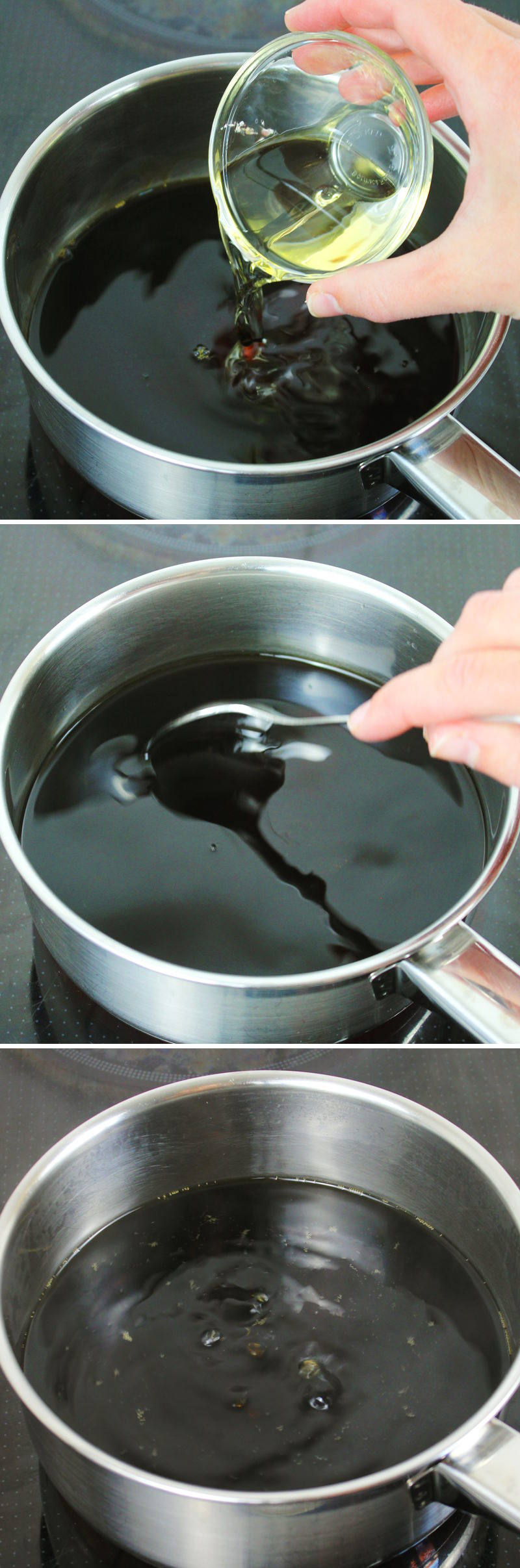
First, we’ll make the yakitori sauce: To do this, mix soya sauce, Mirin, Sake, sugar and water in a small saucepan. Bring to the boil over a high heat.
Step 3
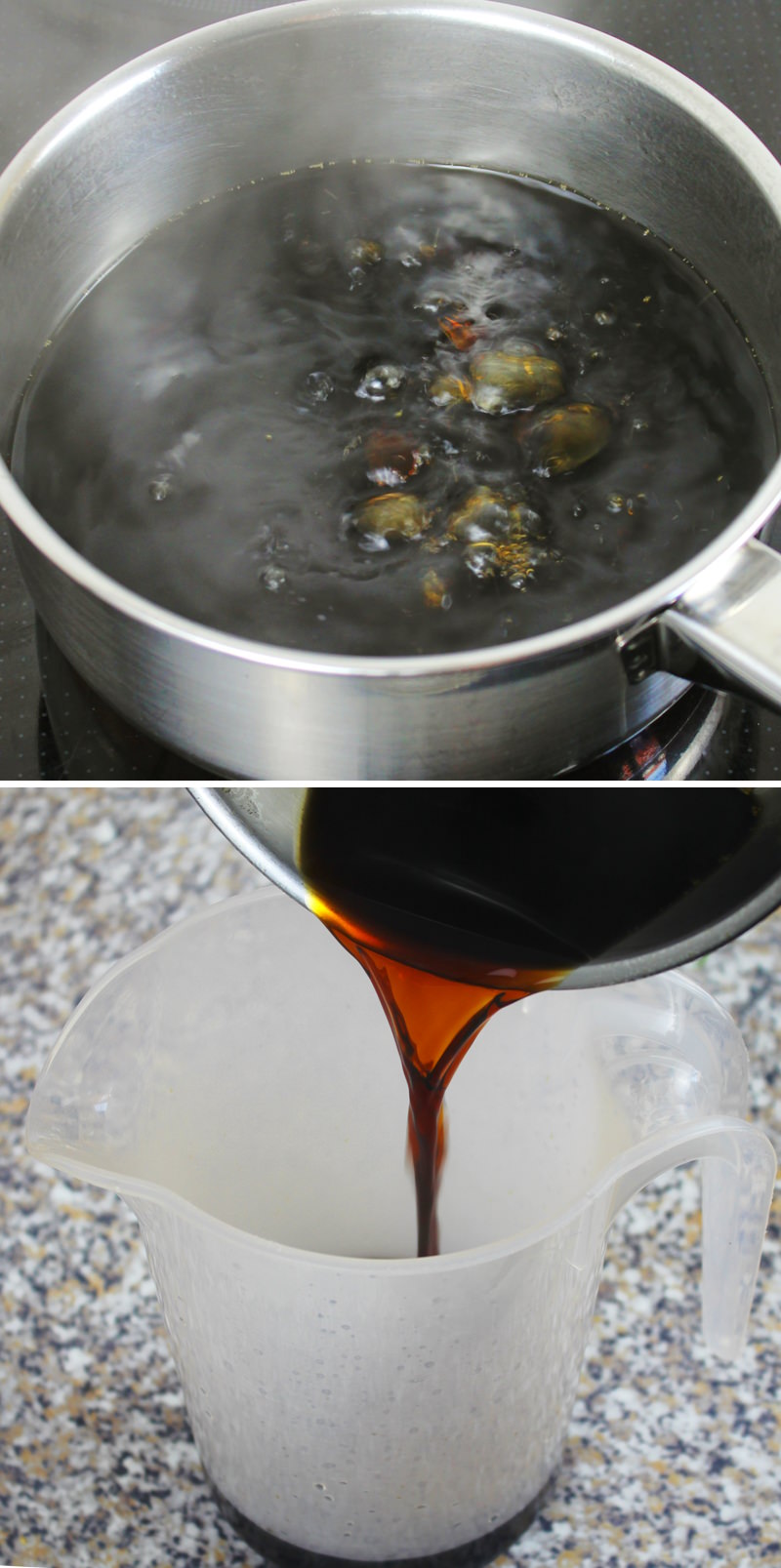
Once it has come to the boil, reduce the heat to low, cover and simmer until the liquid has reduced to about a third of its original volume. This takes about 30 minutes.
Then transfer to a tall, narrow container and allow to cool to room temperature before use.
Tip: You can also prepare the sauce in advance. To do this, pour the sauce into a clean preserving jar. Store in the fridge for up to 2–3 months.
Step 4
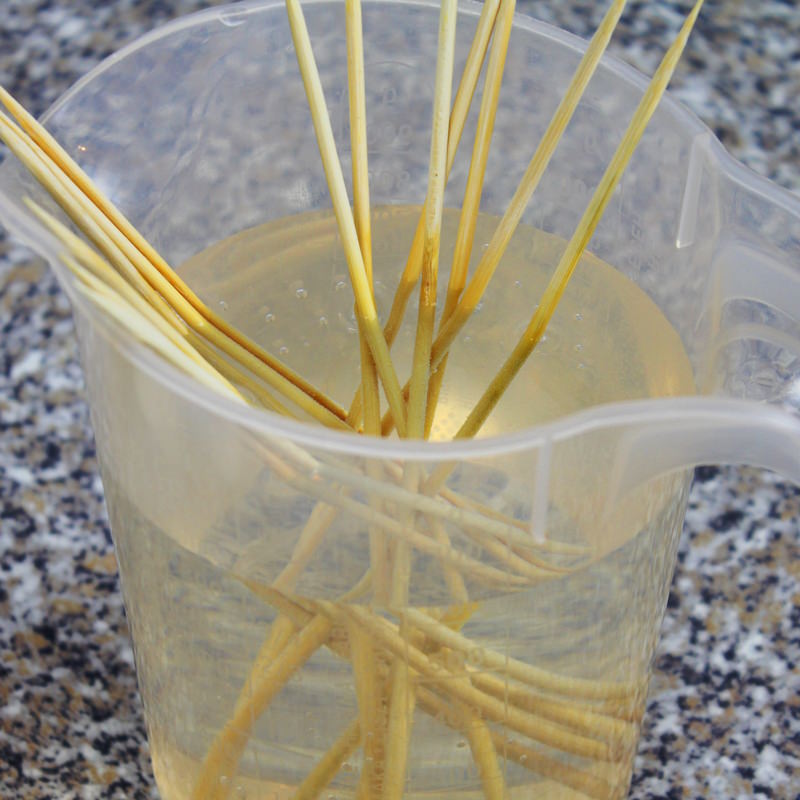
Now soak 12 bamboo skewers in water for 30 minutes so that they do not burn in the pan later.
Step 5
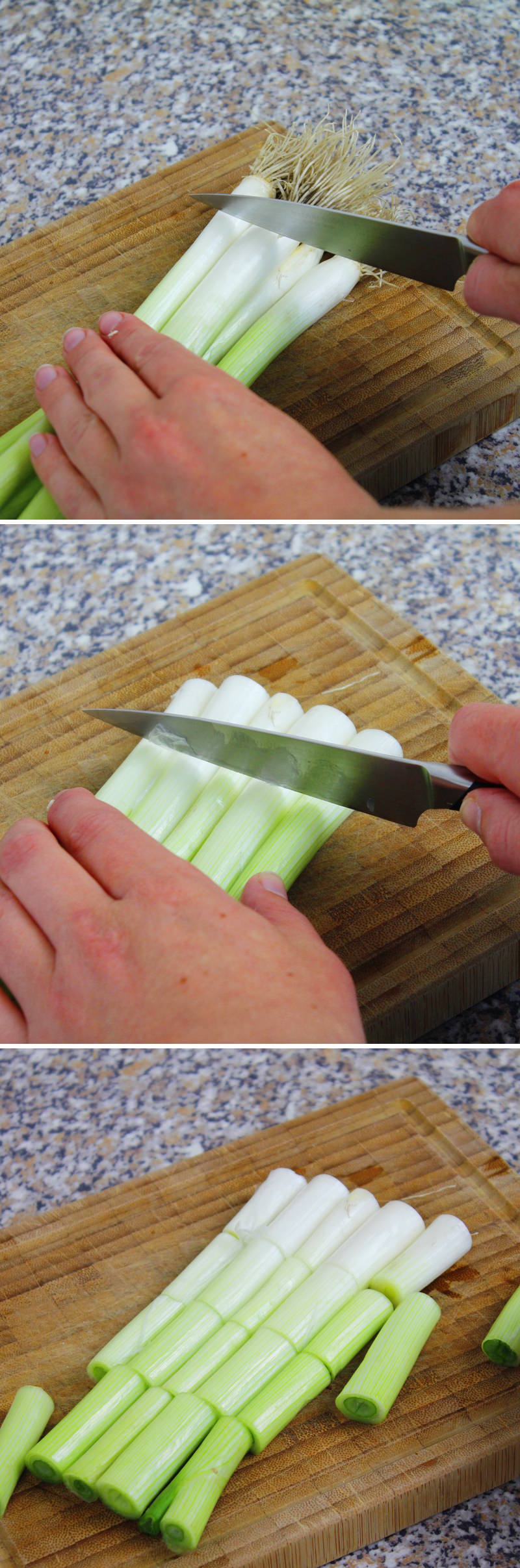
So, wash the spring onions under running water, drain them and cut them into 3 cm wide pieces – remove the root ends.
Step 6
The sauce should now be cold and the bamboo skewers fully soaked.
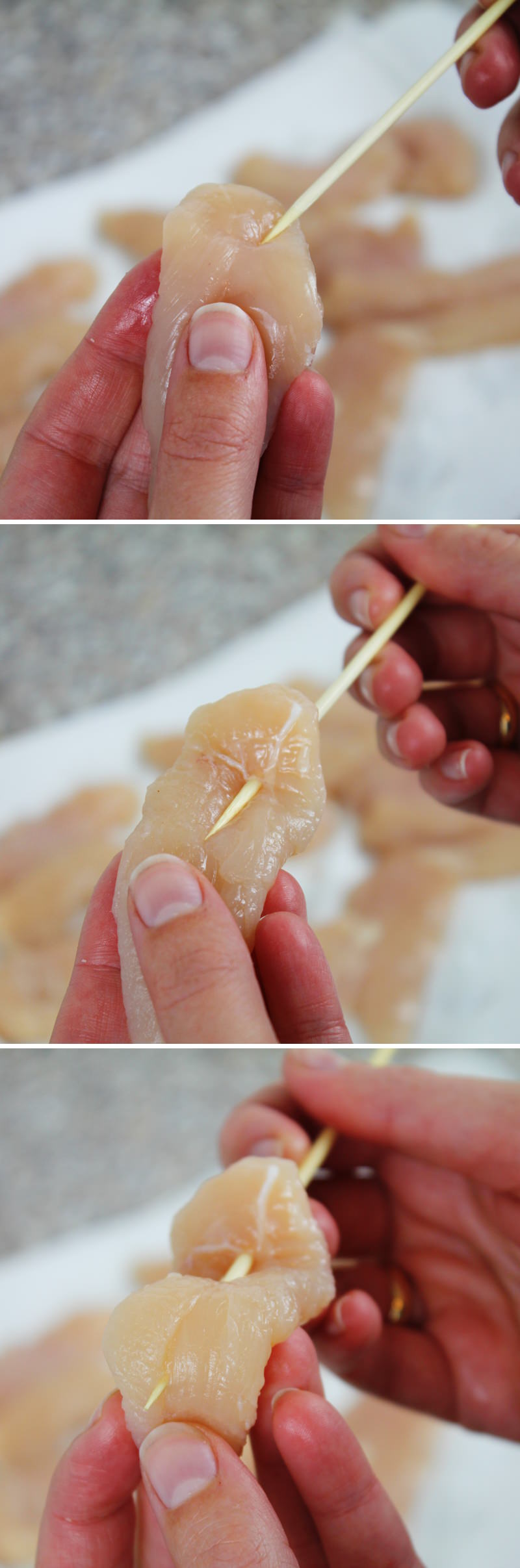
Wash the chicken under running water and pat dry with kitchen paper. Note: Depending on which meat you choose, cut it into bite-sized pieces if necessary.
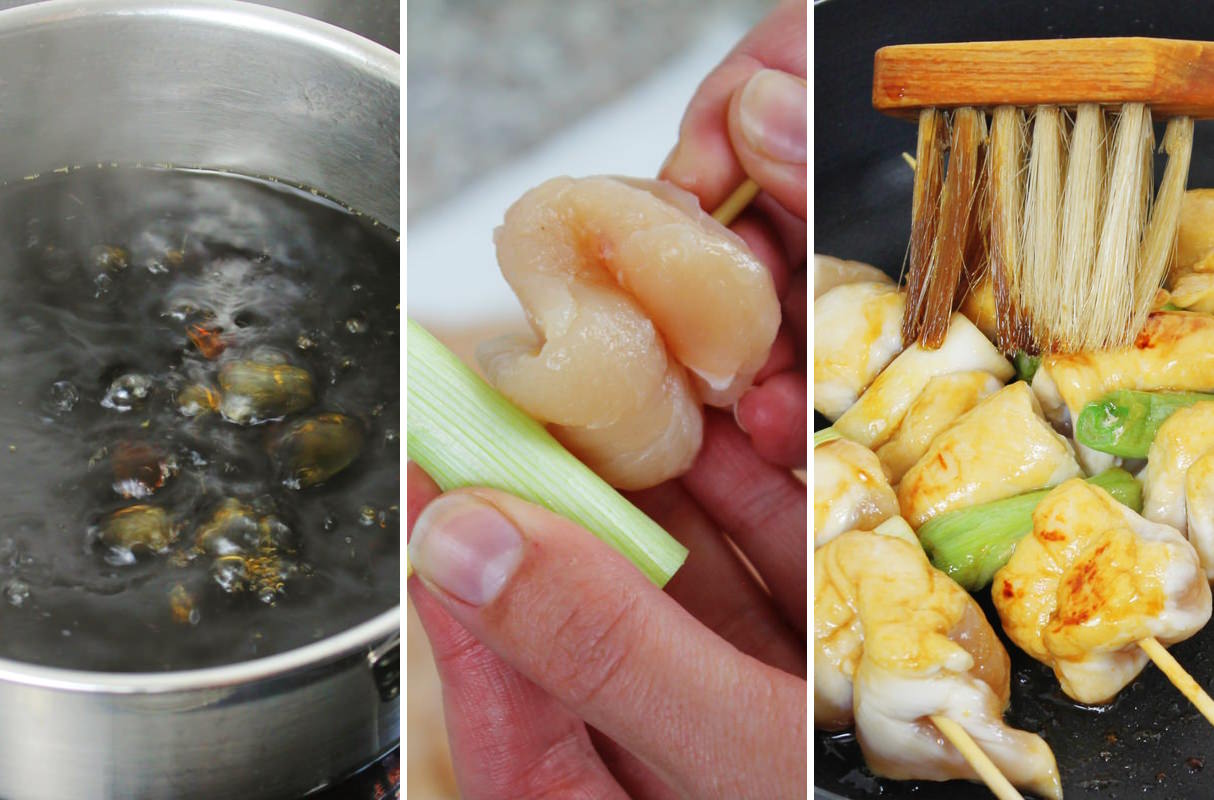
Next, thread a piece of chicken onto a skewer. To do this, fold the meat slightly and pierce the skewer through the middle.
Step 7
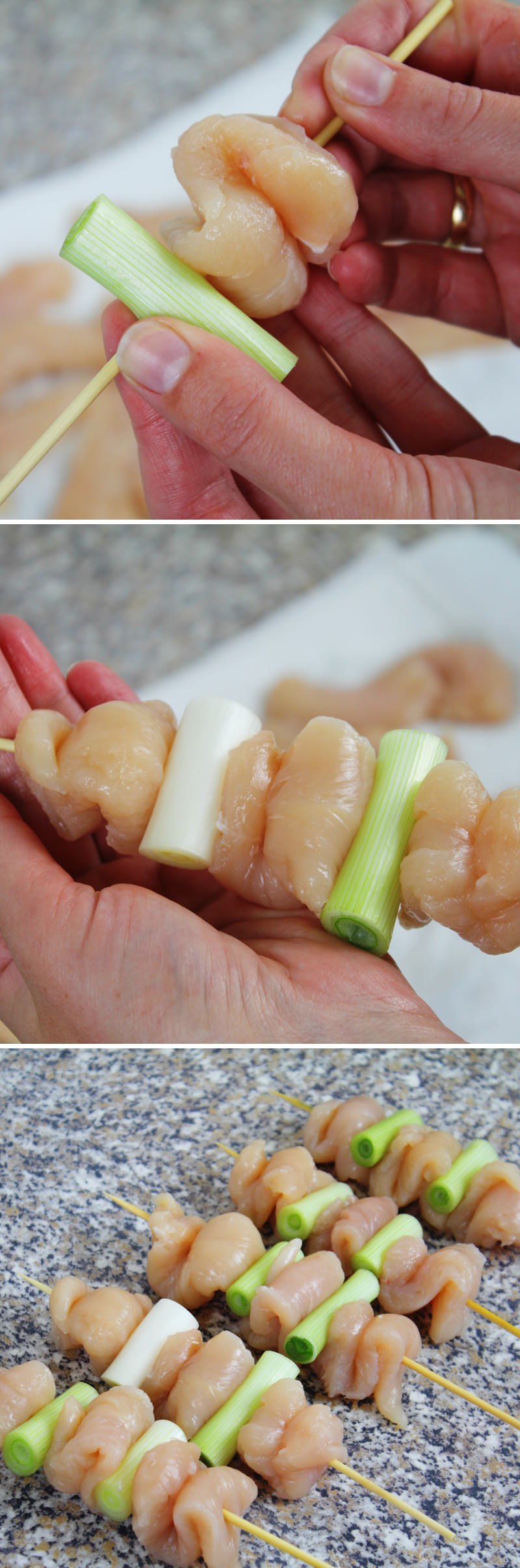
Next, add a piece of spring onion perpendicularly to the skewer. Continue by alternately skewering slices of chicken and pieces of spring onion, finishing with a piece of chicken. Each skewer holds about 3 large slices of chicken and 2 pieces of spring onion.
Continue doing this until all the chicken and spring onions have been used up. Note: The number of skewers you end up with also depends on the size of the meat pieces
Step 8
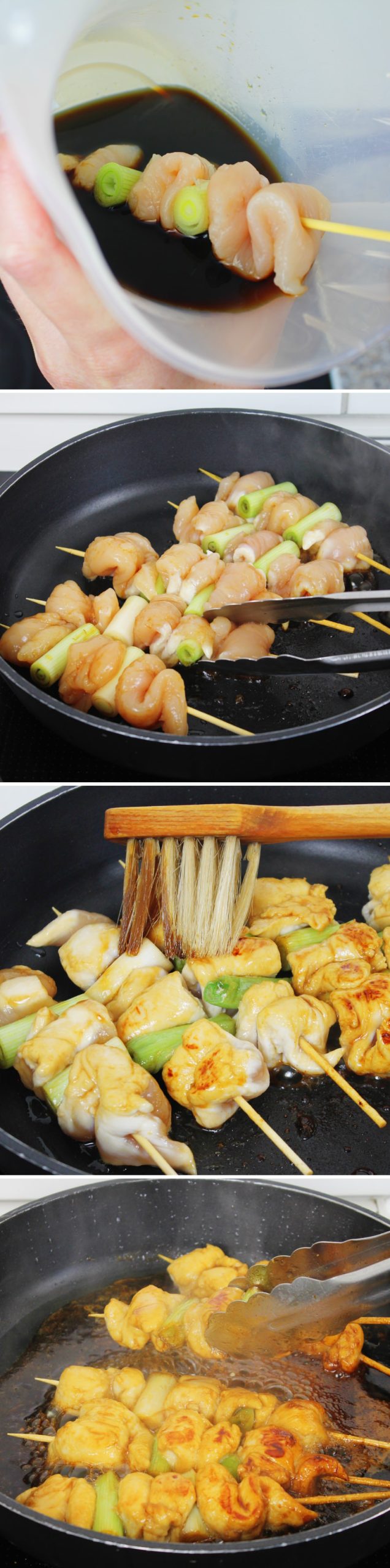
Now heat the oil in a frying pan over a high heat, large enough to fit the skewers lengthways. Dip all the skewers into the sauce and fry them in oil on all sides – turn the heat down slightly. Feel free to use a brush to brush more sauce onto the skewers from time to time so that the sauce caramelises. Then remove them from the pan.
Step 9
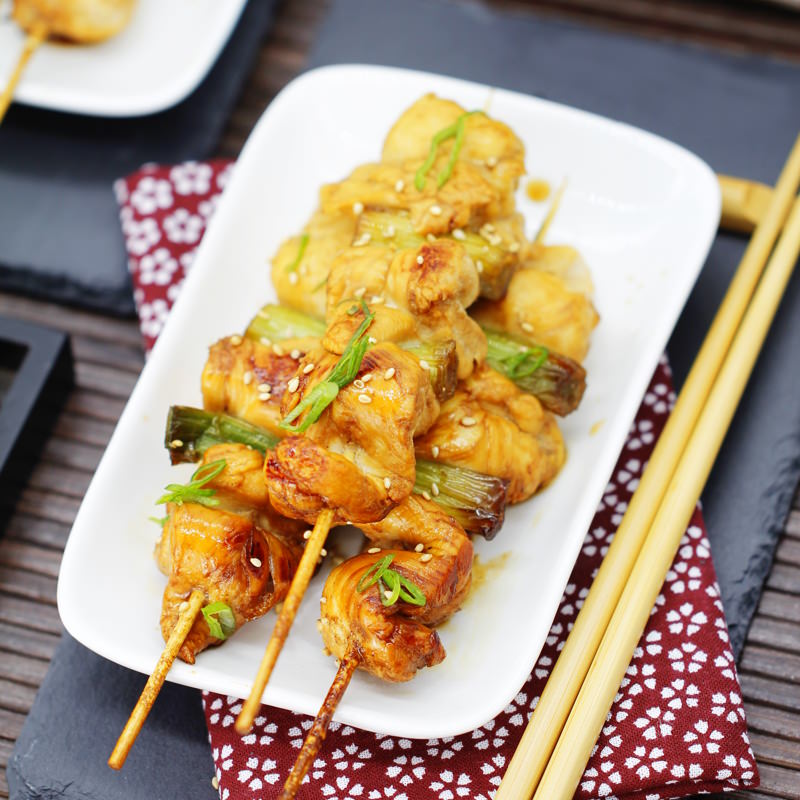
The delicious yakitori skewers are now ready. To serve, arrange them on a small plate, coat with a little of the remaining sauce, then garnish as desired with spring onion rings and some toasted sesame seeds. Ready – Itadakimasu!
Are you looking for even more delicious recipes that go really well with yakitori? Here are a few inspirations from Japan:
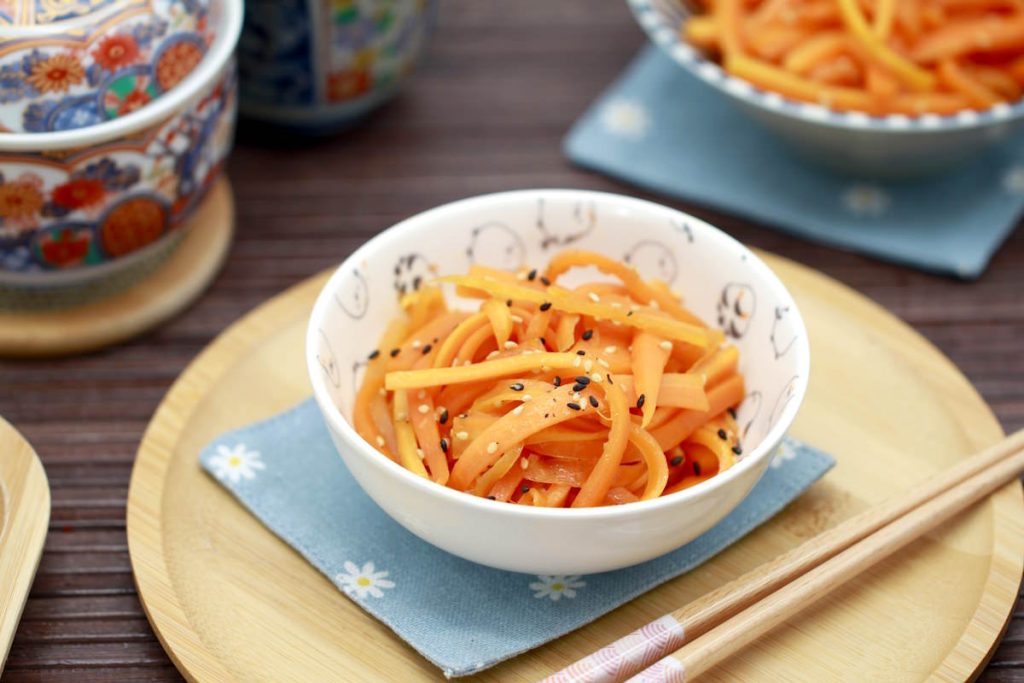
Make your own Ninjin no Kinpira: Japanese carrot side dish in the Kinpira style
Ninjin no Kinpira is a simple Japanese side dish made from finely sliced carrots, which…
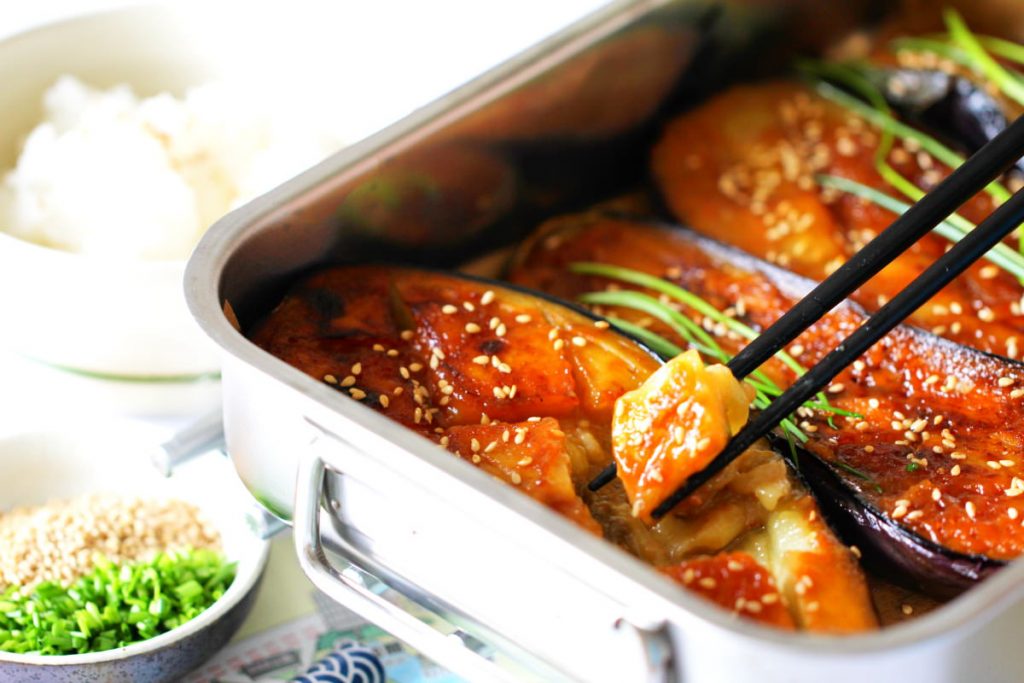
Nasu Dengaku: Oven-baked aubergines glazed with Miso – simple & irresistible
Nasu Dengaku is a true classic of Japanese cuisine and perfect as a side dish…
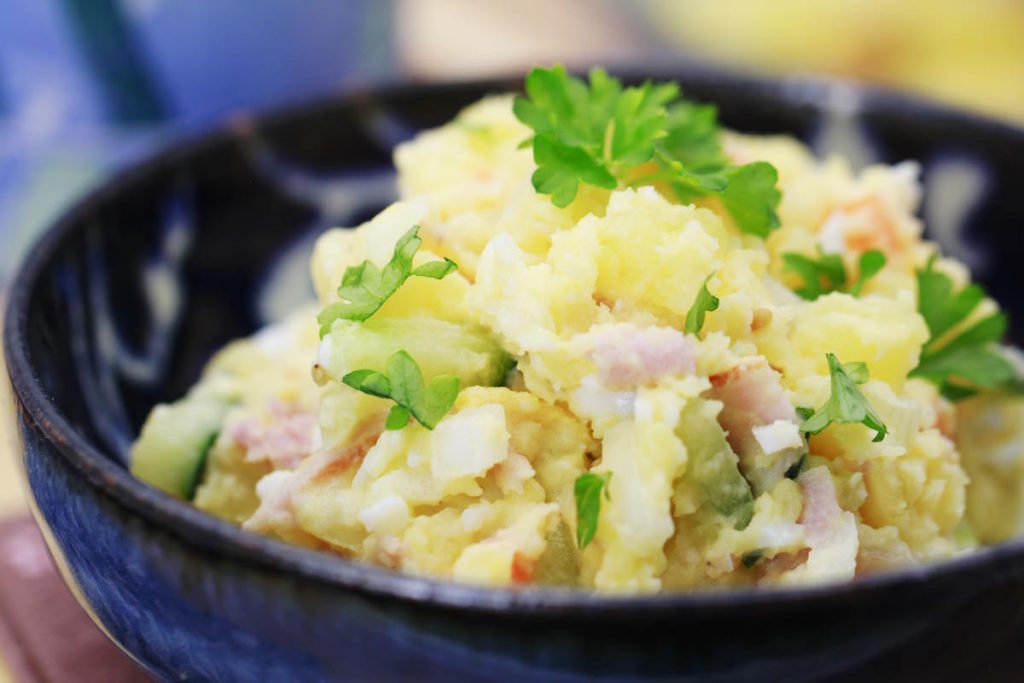
Make your own Japanese potato salad: fresh, creamy and irresistible!
If you’re looking for a delicious side dish that’s both familiar and excitingly new, then…
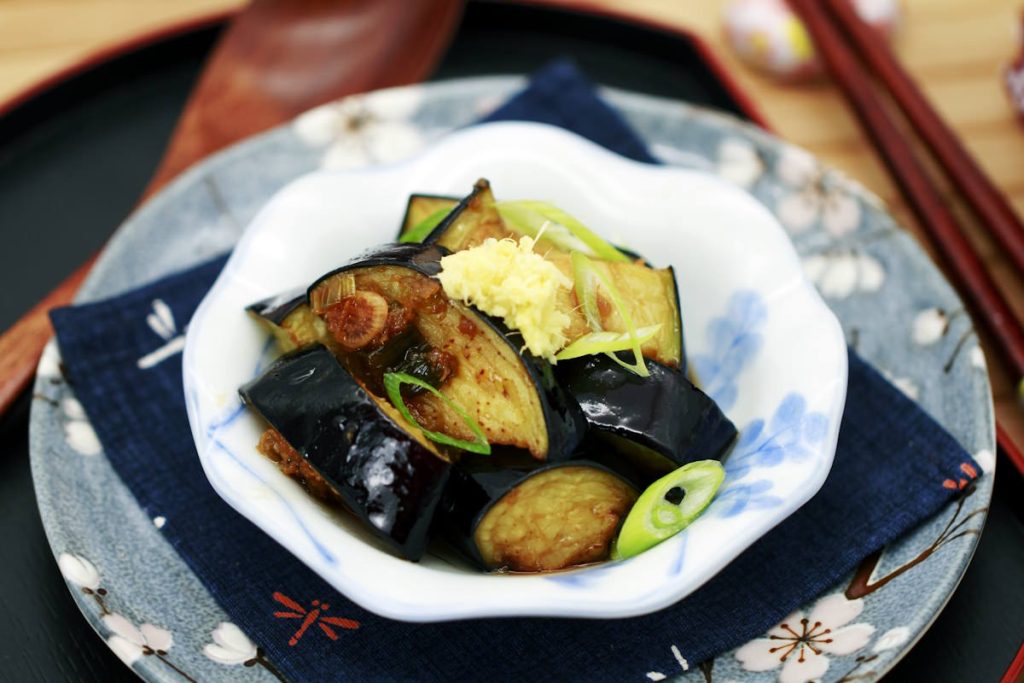
Nasu no Agebitashi: Make your own Japanese-style deep-fried aubergine
Creative cooking starts with simple, fresh ingredients. My recipe for deep-fried aubergine combines the delicious…
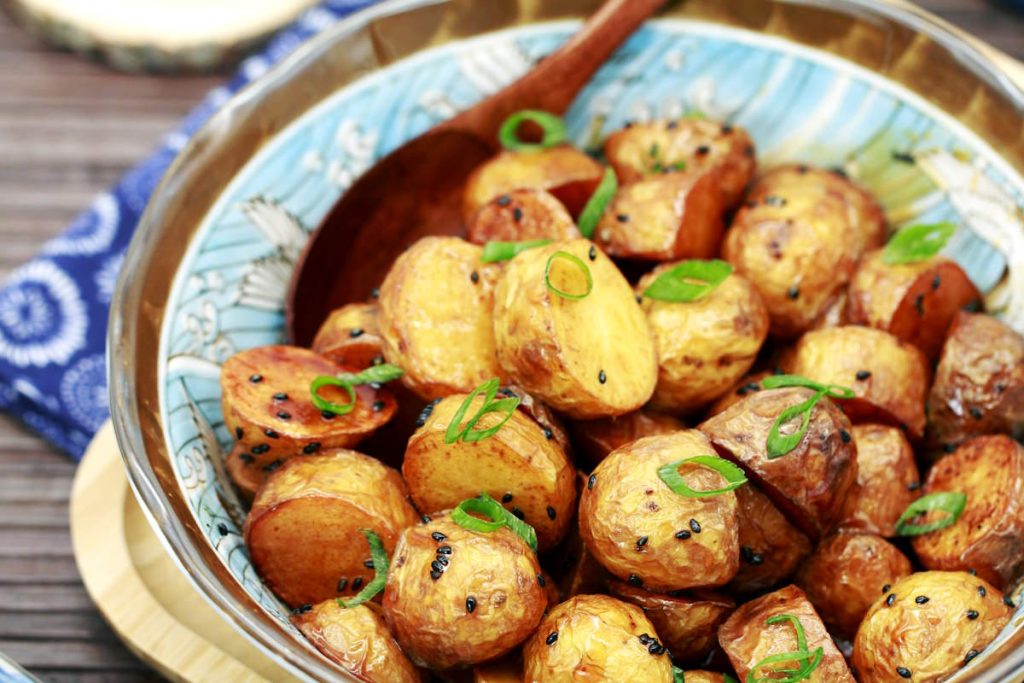
Potatoes in soy sauce: crispy-sweet Daigaku Jagaimo, Japanese style
Daigaku Jagaimo are delicious, crispy potato bites glazed in a sweet and savoury marinade. These…
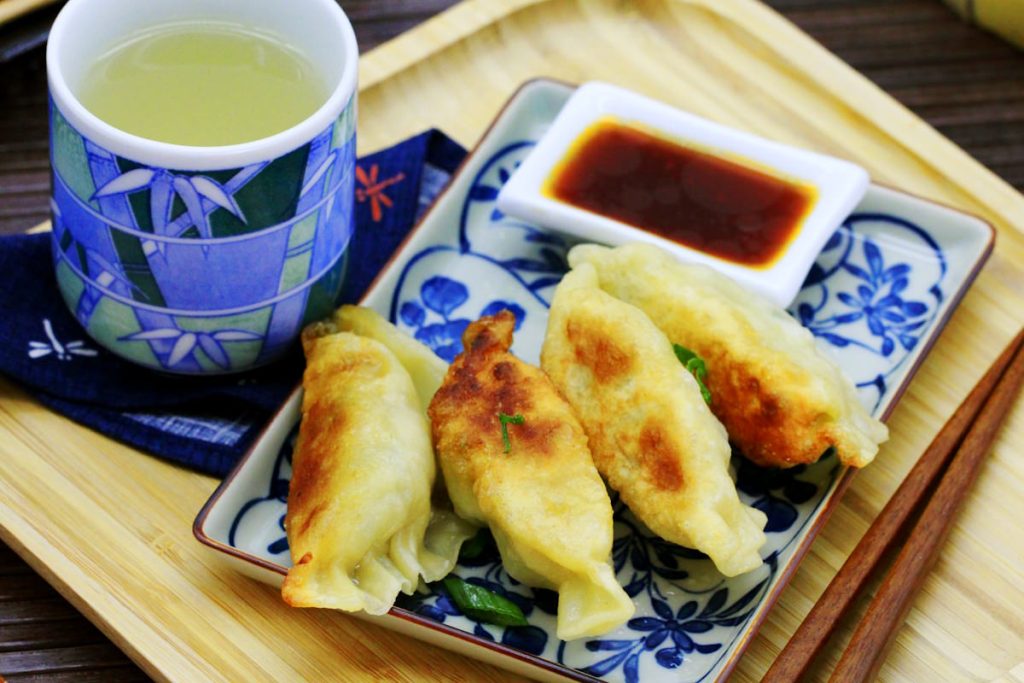
Make your own Gyoza: the best Japanese dumplings – cook, fold & enjoy!
Welcome to the fascinating world of Gyoza! These traditional Japanese dumplings are a culinary feast…
Have you tried the recipe? Let me know in the comments, I can’t wait to hear from you!