
Language:


In this recipe, I’ll show you a particularly flavourful version of Tamago Kake Gohan (TKG) with Katsuobushi. Freshly cooked, piping hot rice is mixed with a raw egg and a little soy sauce, resulting in a surprisingly creamy, hearty meal.
The bonito flakes add extra Umami and, when stirred into the egg and rice, create a particularly smooth texture. Tamago Kake Gohan is quick to make and demonstrates how a typical everyday Japanese dish can be created from just a few ingredients.
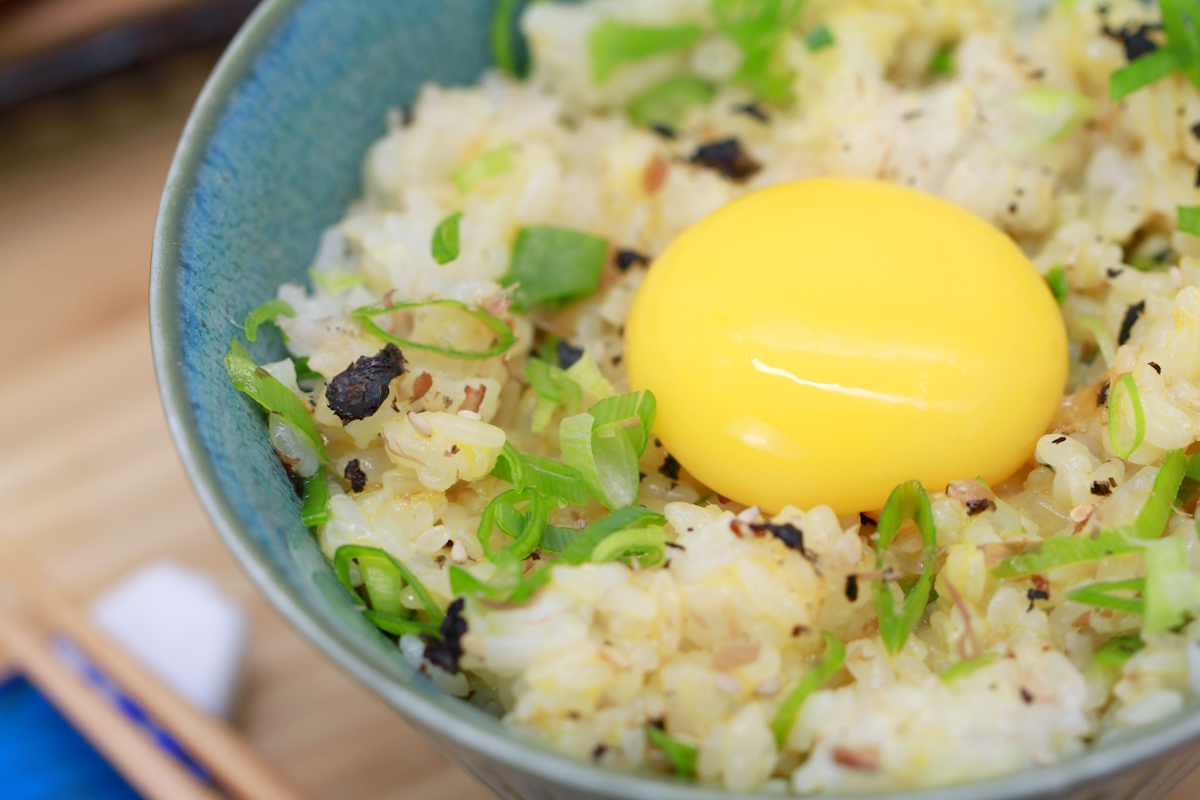
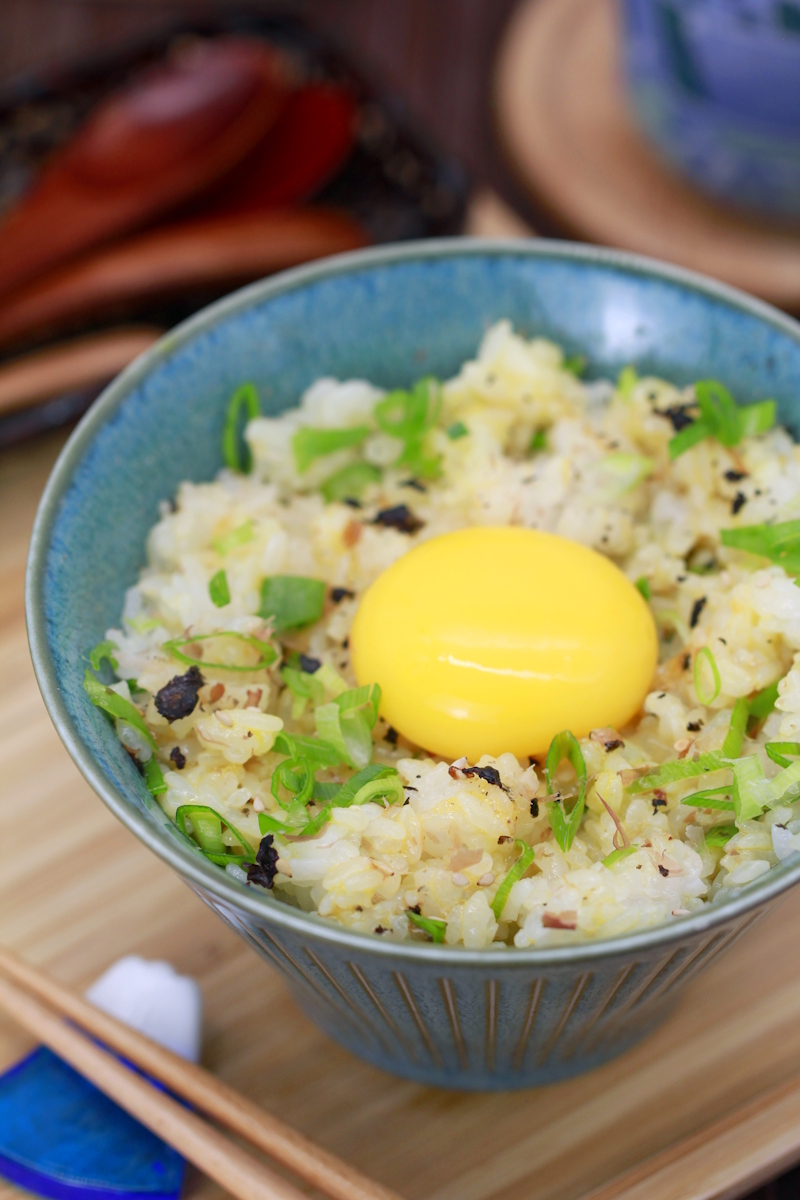
Tamago Kake Gohan is one of the simplest yet best-known dishes in everyday Japanese cuisine. The combination of freshly cooked rice, raw egg and a little soy sauce seems very simple at first, but together it creates a surprisingly creamy and aromatic meal. It is precisely this reduction to just a few ingredients that gives the dish its special appeal.
In Japan, Tamago Kake Gohan is usually simply called TKG. It is particularly common at breakfast, as it is quick to prepare and filling at the same time. Many Japanese people are familiar with the dish from their childhood, as it is a regular feature on the table in many households. When stirred, the egg blends easily with the rice grains due to the heat of the rice, creating the typical creamy texture.
In addition to the classic version with egg and soy sauce, small ingredients are often added, such as Katsuobushi, spring onions, Nori or Furikake. These provide additional Umami notes and add more texture to the dish.
In addition to the classic version with egg and soy sauce, small ingredients are often added, for example katsuobushi, spring onions, nori or furikake. These add extra umami notes and bring more texture to the dish.
Precisely because Tamago Kake Gohan is so simple, the quality of the ingredients plays a major role. Good Japanese short-grain rice, a flavourful soy sauce and very fresh eggs make all the difference here.
What is Tamago Kake Gohan?
Tamago Kake Gohan (卵かけご飯) literally means ‘egg over rice’. The name therefore describes very precisely what this dish is all about.
- Tamago (卵) means egg
- Kake (かけ) can be translated as ‘to pour over’ or ‘to put on top of’
- Gohan (ご飯) refers to cooked rice or, more generally, a meal
Traditionally, Tamago Kake Gohan consists of just three ingredients: freshly cooked rice, a raw egg and a little soy sauce. The egg is placed directly onto the hot rice and then stirred with chopsticks or a spoon. The heat of the rice causes the egg whites to start to set slightly without completely coagulating. This creates a soft, creamy consistency that reminds many people of a very loose risotto.
The flavour is surprisingly well-balanced. The soy sauce adds salty Umami notes, the rice provides a light natural sweetness, and the egg gives the dish a pleasant creaminess.
Although the basic idea is extremely simple, Tamago Kake Gohan is often slightly varied. Popular additions include Katsuobushi, Nori, Furikake or spring onions, which add extra Umami flavours and a bit of texture to the dish.
The history of Tamago Kake Gohan
Although rice and eggs have been eaten in Japan for centuries, Tamago Kake Gohan only developed as a dish in its own right relatively late. Its current form emerged towards the end of the 19th century during the Meiji era, a period of great social change and modernisation in Japan.
One of the central figures in the history of the dish is said to be the journalist Ginkō Kishida. He is often credited as being one of the first people to pour a raw egg directly over a bowl of hot rice and make this combination popular. From there, the dish quickly spread to many households.
With the modernisation of agriculture and stricter food controls, eggs in Japan were increasingly produced and traded under safe conditions. As a result, it became common to eat eggs raw as well. In addition to Tamago Kake Gohan, raw eggs are therefore also found in other dishes such as Sukiyaki or Gyudon.
Today, the town of Misaki in Okayama Prefecture is regarded as the symbolic birthplace of Tamago Kake Gohan. Every year, thousands of people visit restaurants there that specialise in various versions of the dish.
A small cultural detail shows just how popular the dish has become: in Japan, ‘Tamago Kake Gohan Day’ is celebrated every year on 30 October.
Is it safe to eat raw eggs?
In Japan, raw eggs are frequently used in dishes such as sukiyaki, Gyudon or Tamago Kake Gohan. This is possible because very strict hygiene and quality standards apply to eggs there.
Eggs intended to be eaten raw are subject to special checks. They are carefully inspected, cleaned and packaged under safe conditions.
However, standards may vary in other countries. It is therefore advisable to:
- to use eggs that are as fresh as possible
- to buy organic or free-range eggs from a trusted source
- to use pasteurised eggs if in doubt
If you do not wish to use a raw egg, you can also use an Onsen Tamago (soft-boiled egg). This allows you to achieve a similar creamy consistency.
How to make Tamago Kake Gohan yourself: Here’s how
Tamago Kake Gohan is one of the simplest rice dishes in Japanese cuisine. That is precisely why it depends less on lots of ingredients than on a few basic details. The most important factors are the temperature of the rice, the freshness of the eggs and the right balance of seasoning. If these three points are right, a surprisingly creamy and aromatic dish emerges from just a few ingredients.
The focus is on the interplay between hot rice and raw egg. The freshly cooked rice provides enough heat to lightly set the egg as it is stirred. This does not create a firm mass, but rather a soft, glossy texture in which each grain of rice is enveloped in a thin, creamy layer. Soy sauce provides the salty Umami flavour and binds the egg and rice together.
The key ingredients for Tamago Kake Gohan:
- The rice: Freshly cooked Japanese short-grain rice is crucial for the right consistency. The grains of rice are slightly sticky and absorb the egg and seasoning particularly well. It is important that the rice is still very hot when served. Only then does the typical creamy texture develop.
- The egg: Very fresh eggs are used for Tamago Kake Gohan. In many variations, the egg white is first stirred into the rice, whilst the yolk is added on top later. This creates a particularly creamy base, whilst the yolk provides additional flavour and colour when eaten.
- The seasoning: A small amount of soya sauce is usually enough to balance the dish. It adds salty Umami notes and enhances the mild flavour of the rice and egg. Additional ingredients such as Katsuobushi, Furikake or spring onions give the dish more depth and texture.
CUSTOMER FAVOURITE
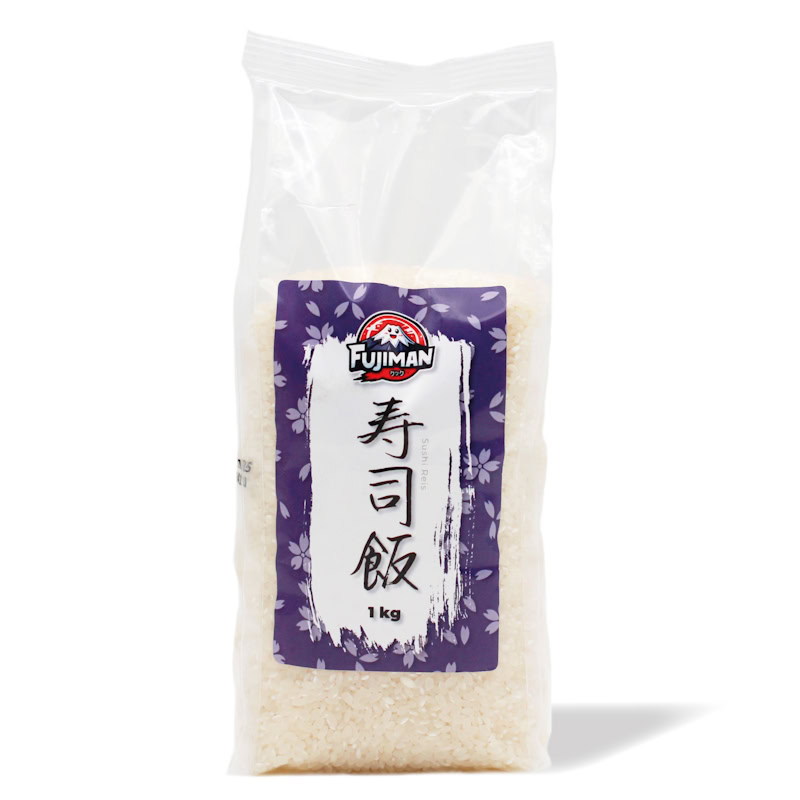
Sushi Reis 1kg (kurzer Rundkornreis), Fujiman
Rundkornreis für Sushi, Onigiri & japanische Reisgerichte. Dieser Sushi Reis von Fujiman ist ein kurzrunder Rundkornreis mit ausgewogener Klebrigkeit und feinem Aroma. Er eignet sich…
In stock
Here’s how it works:
First, place freshly cooked rice in a bowl and fluff it up slightly. While the rice is still hot, whisk the egg white with a little soy sauce and mix it directly into the rice. This creates a creamy base.
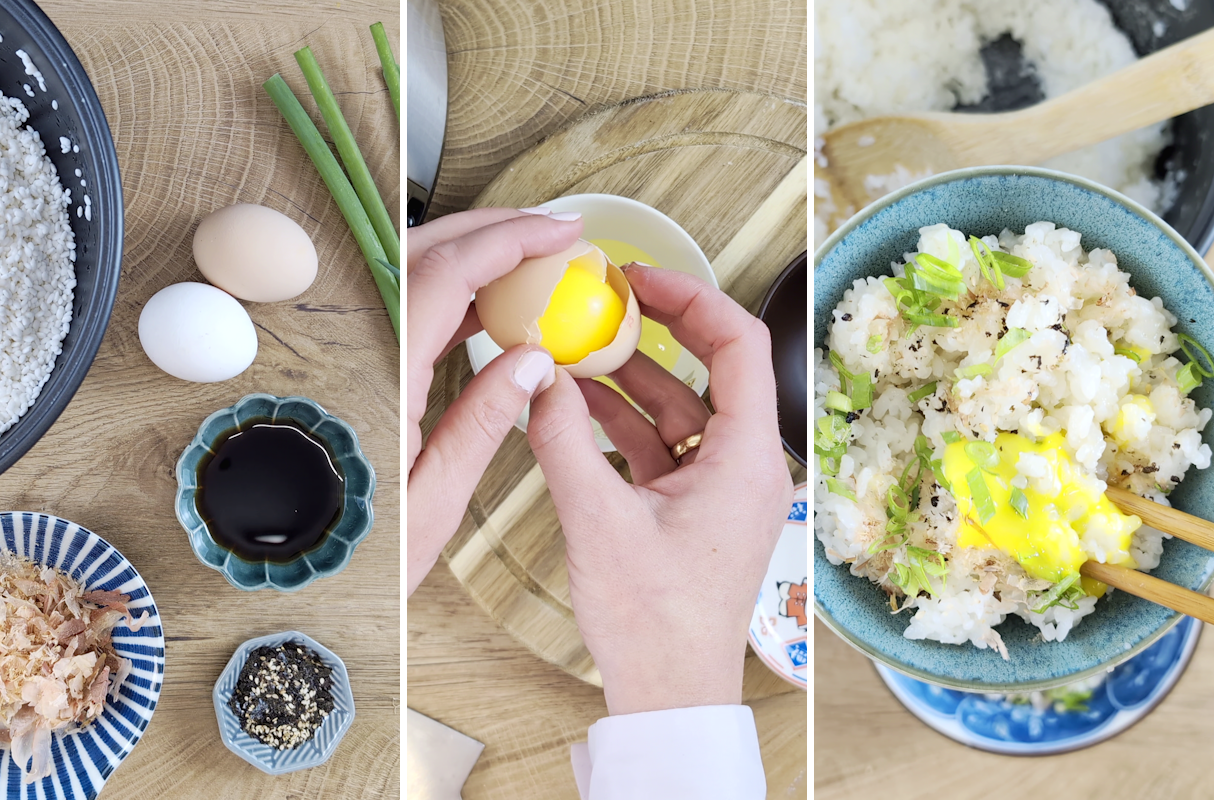
Next, sprinkle bonito flakes and, optionally, spring onions or Furikake over the top. Finally, carefully place the egg yolk on top of the rice. When eating, everything is quickly stirred together with chopsticks or a spoon so that the egg, rice and seasoning combine fully, creating a creamy, glossy texture.
Popular toppings for Tamago Kake Gohan
Tamago Kake Gohan is traditionally made with just rice, egg and soy sauce. However, many Japanese households add small extras that bring additional umami notes, texture or freshness to the dish.
Classic additions
- Katsuobushi: Dried bonito flakes with an intense umami and smoky note
- Nori: Finely cut seaweed strips with a light maritime aroma
- Spring onions: Add freshness and a mild heat
- Furikake: A seasoning blend of sesame, nori and fish flakes
Savoury options
- Natto: Fermented soybeans with a strong umami flavour
- Butter + soy sauce: Surprisingly creamy and very popular
- Tenkasu (tempura crumbs): Adds a crunchy texture
Modern combinations
- Avocado + wasabi: Creamy and mildly spicy
- Chilli oil or rayu: For a spicy, aromatic kick
- Sesame oil + salt: A nutty flavour instead of traditional soya sauce
The basic idea always stays the same: hot rice, egg and a small savoury addition that rounds off the dish’s flavour.
What goes well with Tamago Kake Gohan?
Tamago Kake Gohan is often served in Japan as part of a simple breakfast. Together with a few small side dishes, it makes a balanced meal.
Typical accompaniments are:
- Misoshiru (Miso soup)
- grilled fish, for example salted salmon
- Tsukemono (pickled vegetables)
- Nori sheets
- small vegetable side dishes such as Kinpira or Gomaae
This combination creates a classic Japanese breakfast: warm, light yet filling.
Do you have any questions or would you like to share your experiences? How do you like this Tamago Kake Gohan? Did you prepare it in the classic way with just egg and soy sauce, or perhaps add Katsuobushi, spring onions or your own topping idea? I look forward to your comments and hope you enjoy trying it out and savouring it.
Tamago Kake Gohan
2 servings | 30 minutes | 289 kcal
🖨️ Print PDF 📌 Save pinTamago Kake Gohan (TKG) is one of Japan’s simplest and most popular rice dishes. Freshly cooked, hot rice is mixed with raw egg and a little soy sauce, resulting in a surprisingly creamy, aromatic meal.Ingredients (2 servings)* Add ingredients to basket 🪄https://1mal1japan.de/warenkorb/?add-to-cart=11776,11756,11752,11710200 g Rice (im Shop ansehen) 2 very fresh eggs (preferably organic, from a reliable source) 2 spring onions 8 g Katsuobushi (im Shop ansehen) 2 tbsp Shoyu (im Shop ansehen) 2 tsp Furikake (im Shop ansehen)Useful tools: Santoku knife (im Shop ansehen) Yukihiara pot Preparation (30 minutes)https://1mal1japan.de/wp-content/uploads/2026/03/Tamago-Kake-Gohan-Schritt-1-Zutaten-und-Reis-kochen.pngTamago Kake Gohan step 1: Ingredients and cooking the riceStep 1To begin with, gather all the ingredients for the homemade Tamago Kake Gohan. Cook the rice fresh (click here for the full recipe) or reheat thoroughly until it is piping hot again. Tamago Kake Gohan only works with really hot rice, as the heat ensures the egg binds to it in a creamy way later on.Tamago Kake Gohan (TKG) is one of Japan’s simplest and most popular rice dishes. Freshly cooked, hot rice is stirred together with a raw egg and a little soy sauce, resulting in a surprisingly creamy, flavourful meal.
Ingredients (2 servings)
200 g Rice (im Shop ansehen)
2 very fresh eggs (preferably organic, from a reliable source)
2 spring onions
8 g Katsuobushi (im Shop ansehen)
2 tbsp soy sauce (im Shop ansehen)
2 tsp Furikake (im Shop ansehen)
Useful tools:
Santoku knife
Yukihiara saucepan
Preparation (30 minutes)
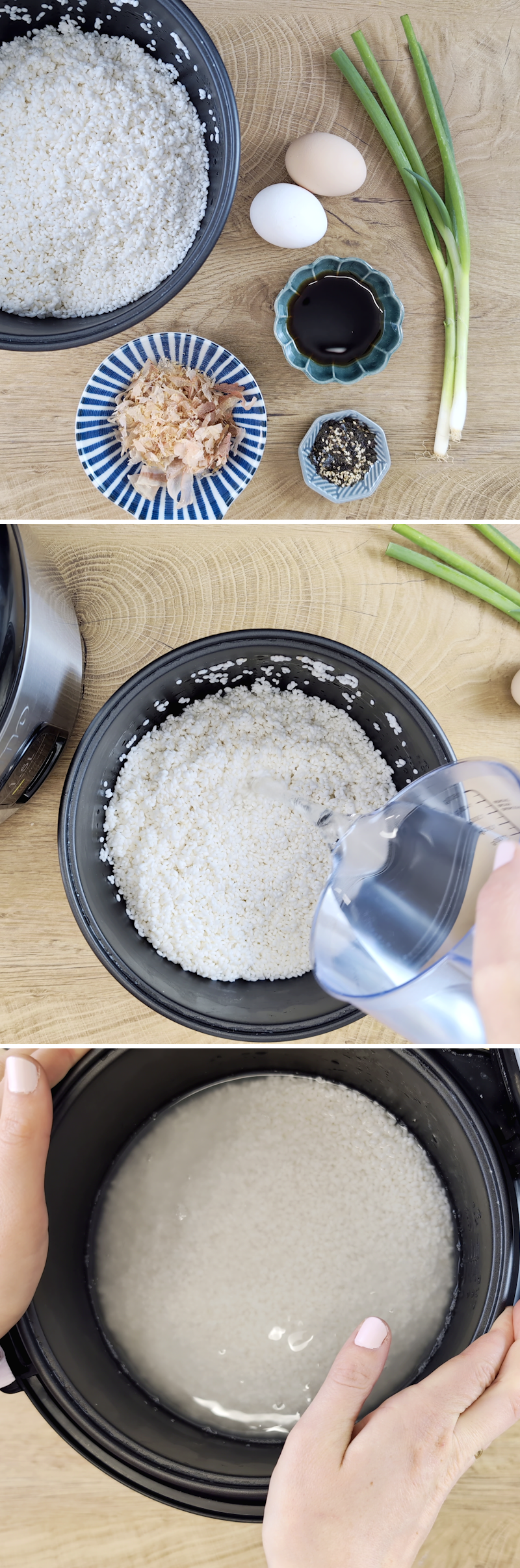
Step 1
First, get all the ingredients ready for your homemade Tamago Kake Gohan. Cook the rice fresh (click here for the full recipe) or reheat it thoroughly until it’s steaming hot again. Tamago Kake Gohan only works with really hot rice, because the heat is what creates the creamy binding with the egg later on.
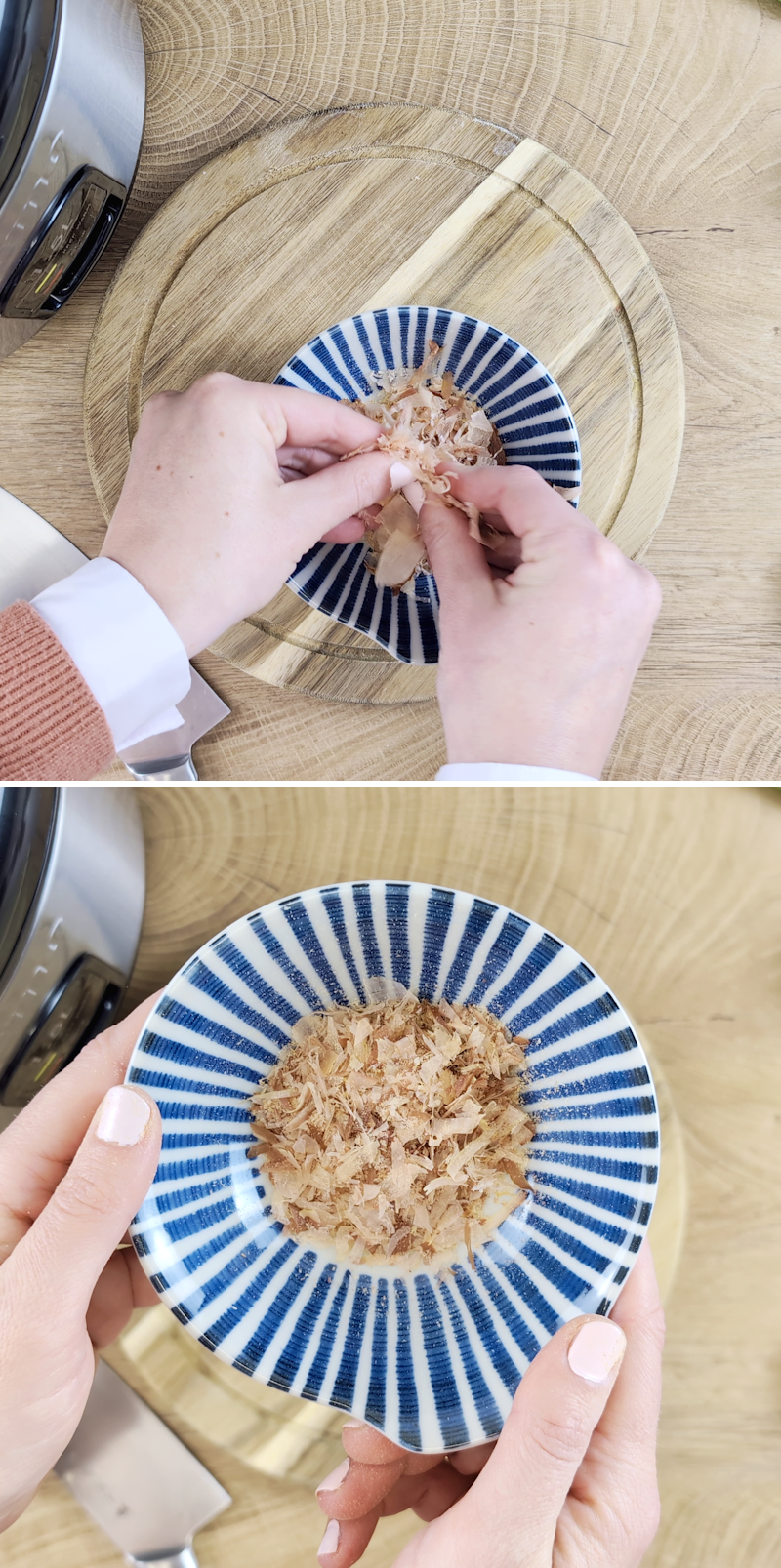
Step 2
Meanwhile, crumble the Katsuobushi slightly between your fingers before using. This ensures they are distributed more finely and bind better with the egg later on.
Step 3
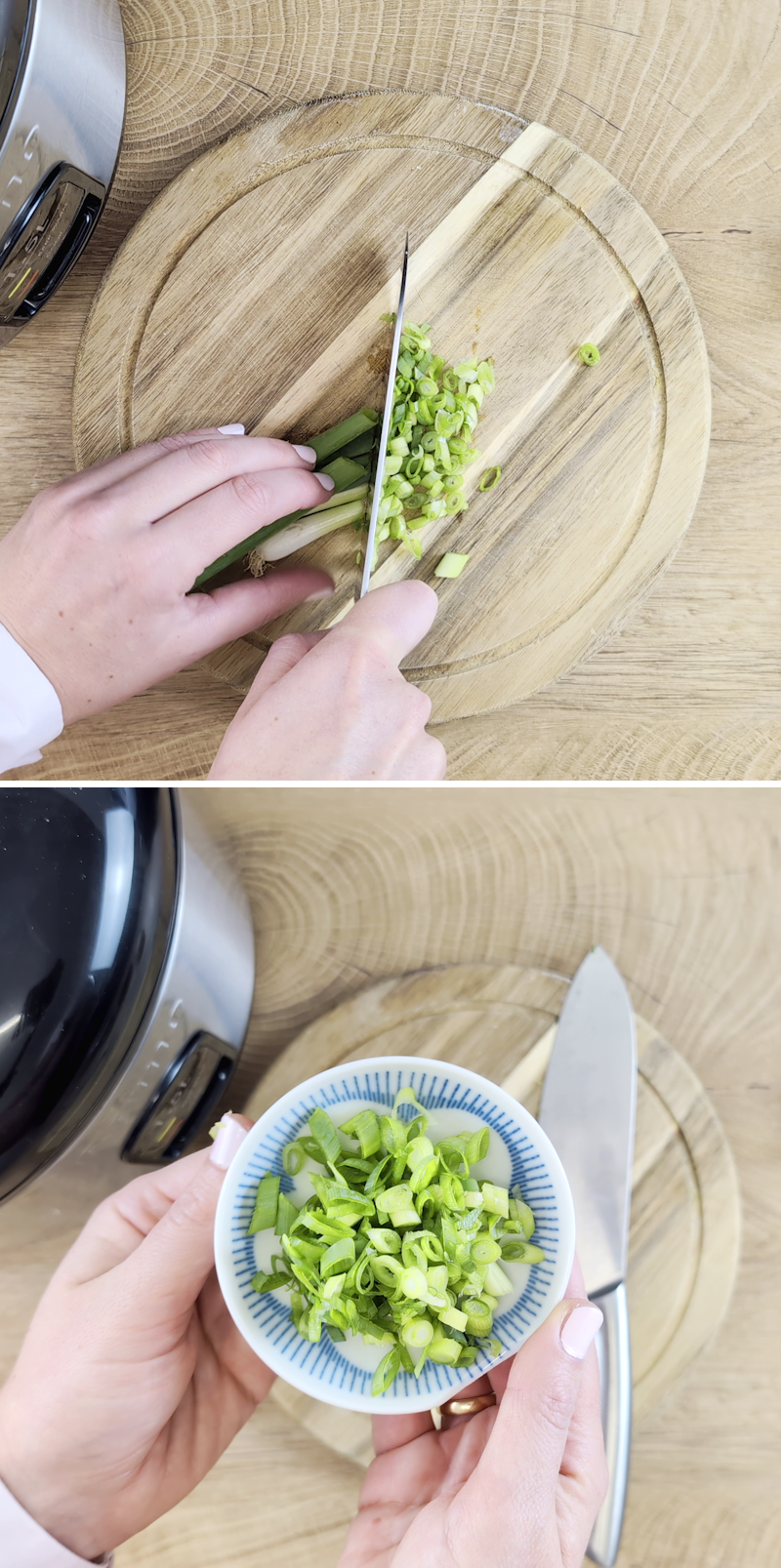
Wash the spring onions , cut them in half lengthways and slice into fine rings.
Step 4
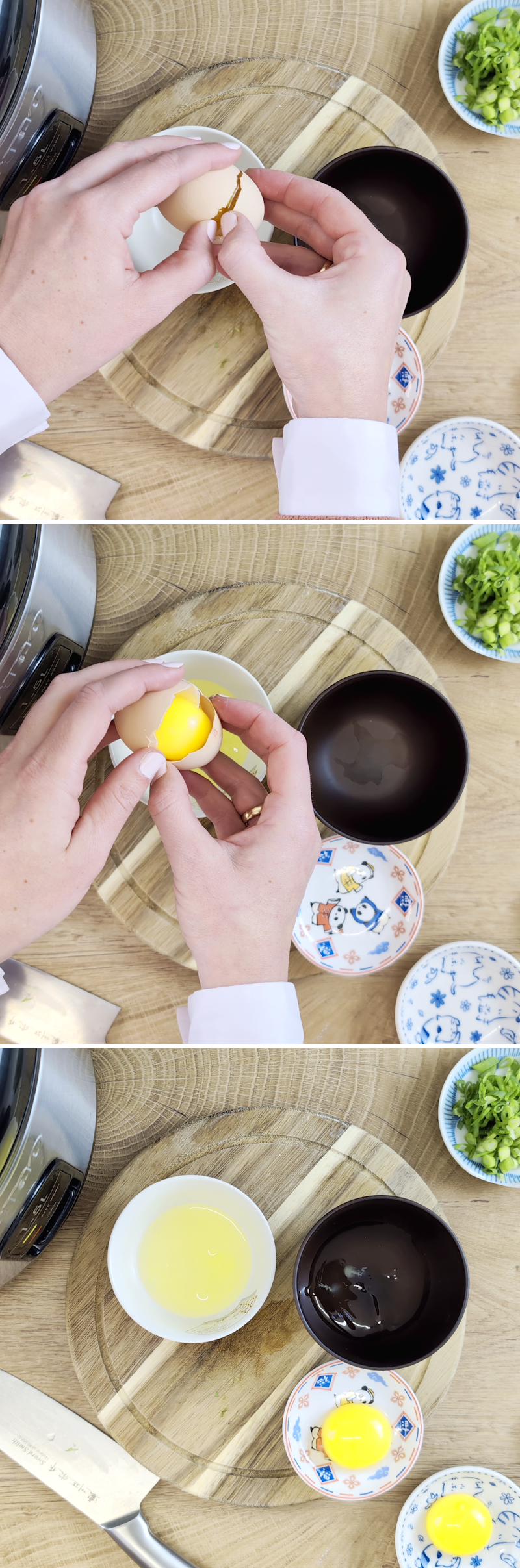
Carefully crack the eggs and separate the yolks from the whites. Set each aside separately.
Step 5
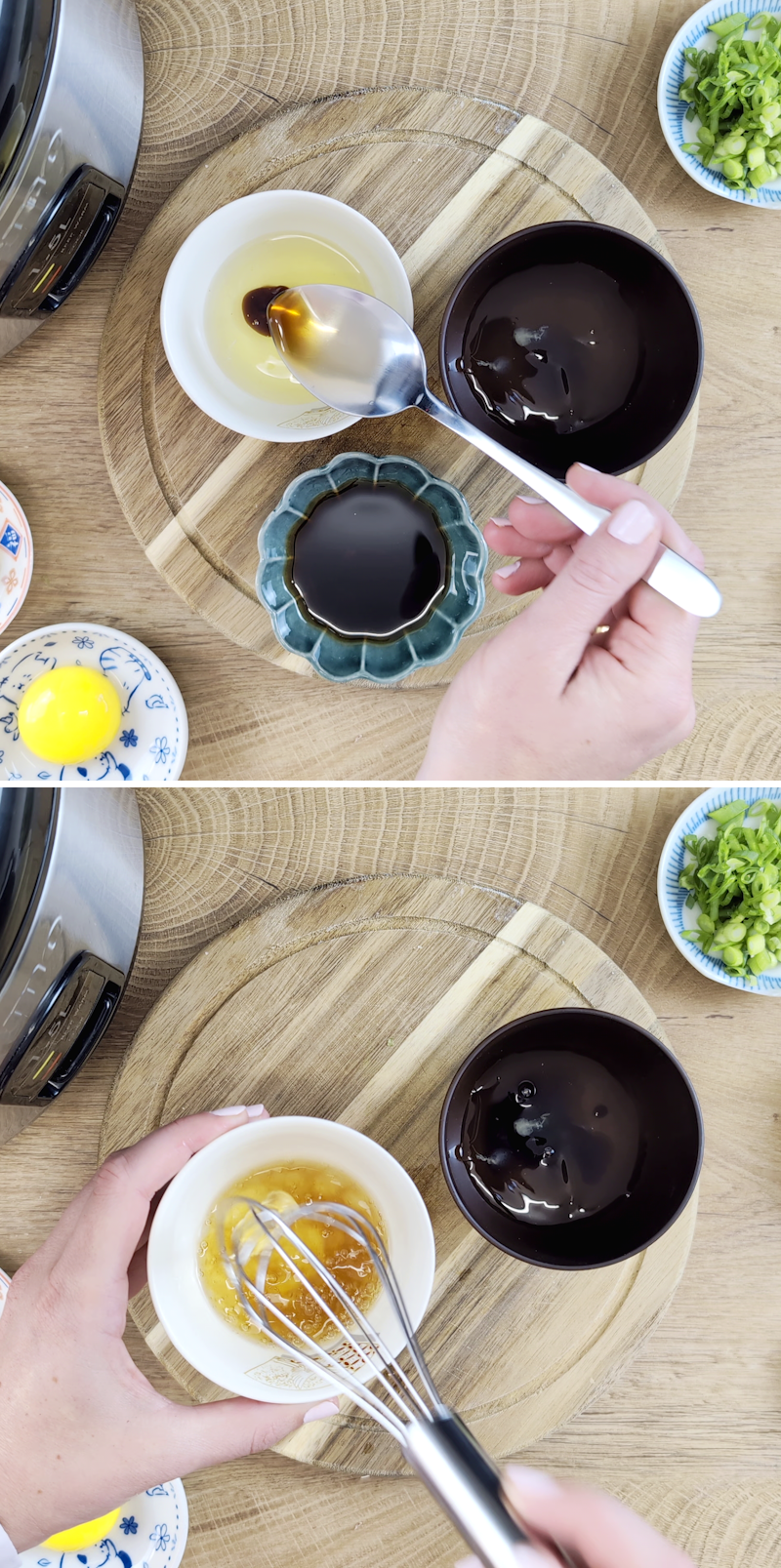
Whisk each egg white with about 1 tbsp soy sauce. Tip: It’s better to start with a small amount and add more seasoning later if needed.
Step 6
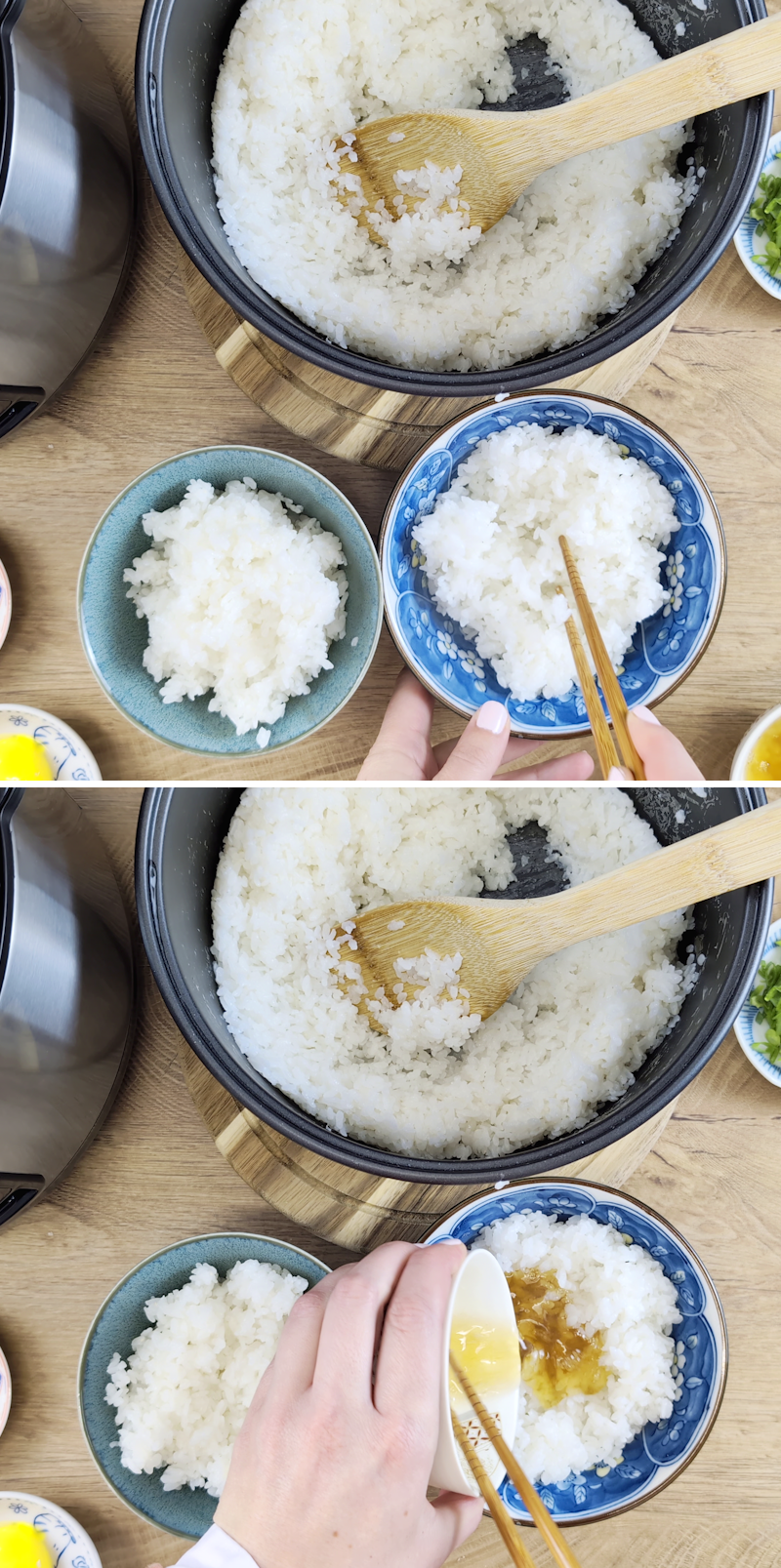
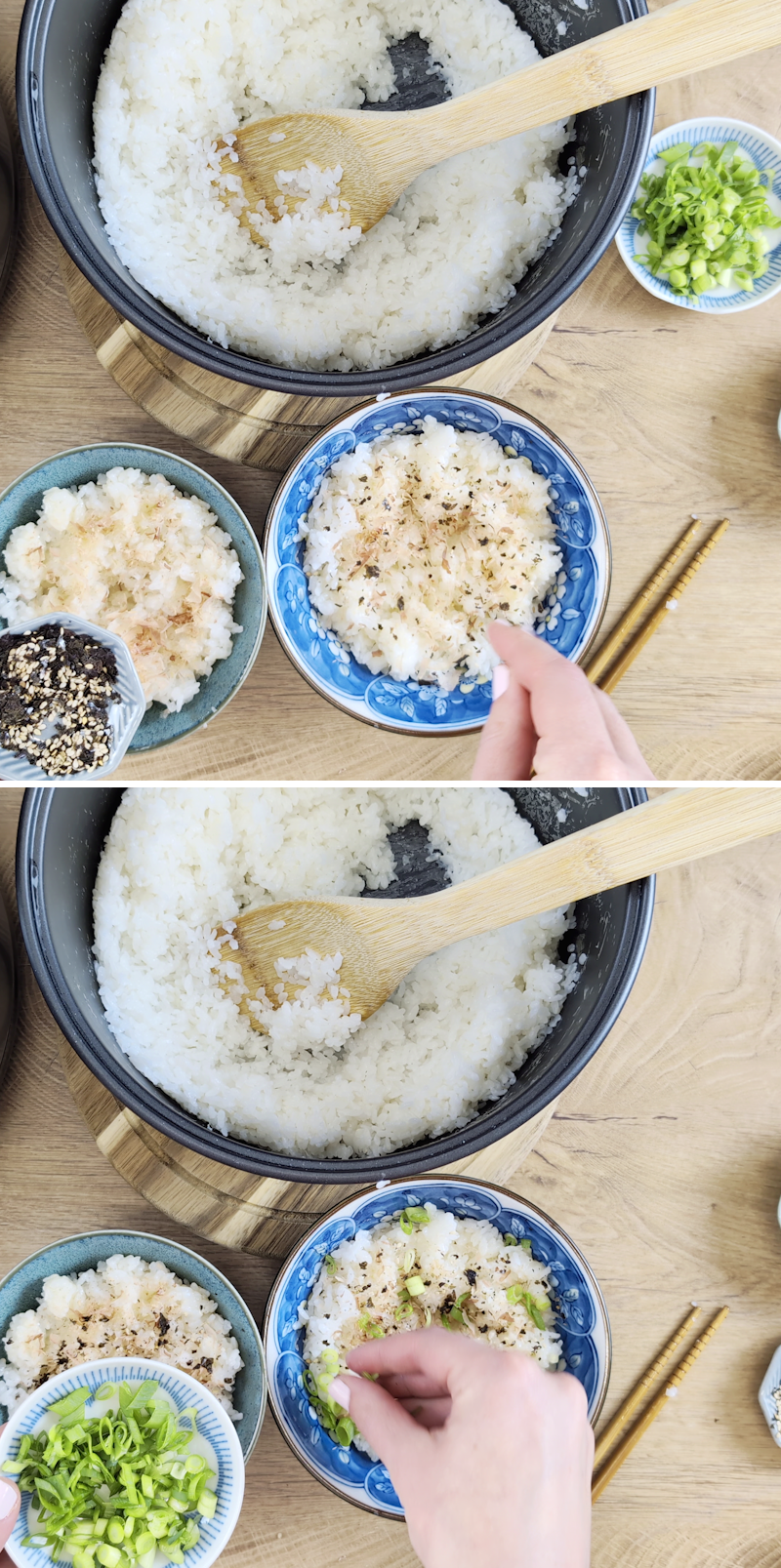
Divide the hot rice lightly between two bowls and fluff it slightly. Thoroughly mix the egg white with the rice to form a slightly creamy base.
Step 7
Sprinkle the crumbled bonito flakes evenly over both portions. Now add the spring onions and a little Furikake made from sesame and Nori. This adds freshness, a slight crunch and extra Umami notes.
Step 8
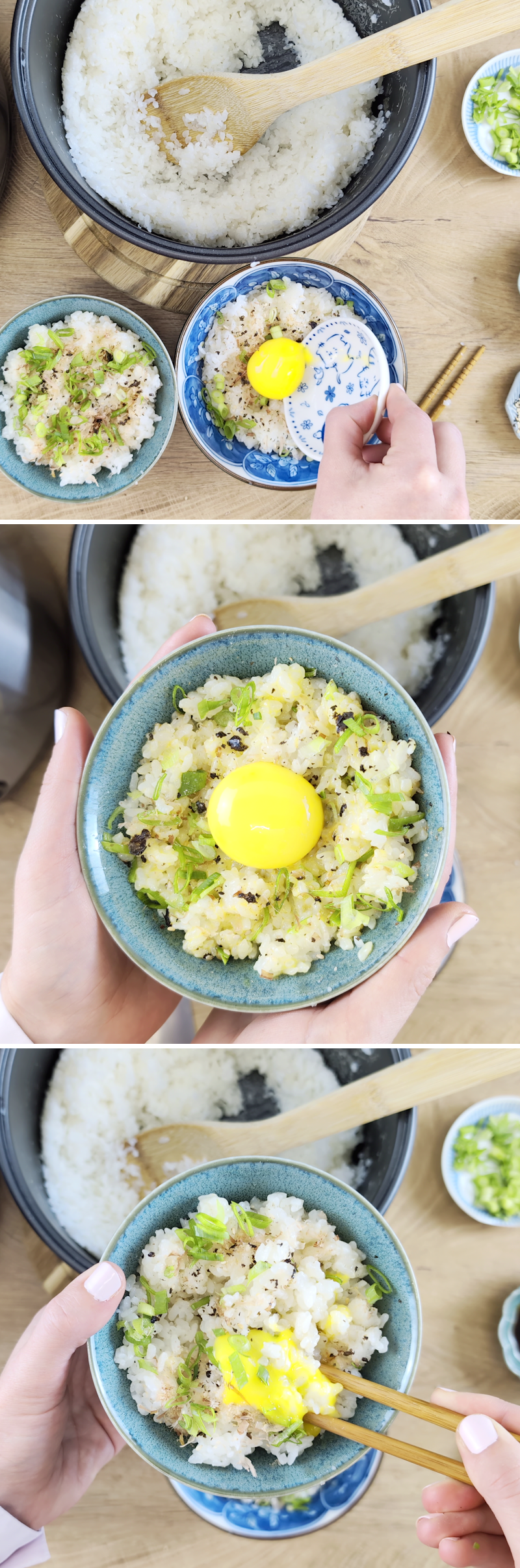
Now carefully place one egg yolk on top of each portion of rice.
(If you want a particularly smooth, creamy consistency, you can also whisk the eggs thoroughly beforehand and then divide them between the two bowls.)
Step 9 Step
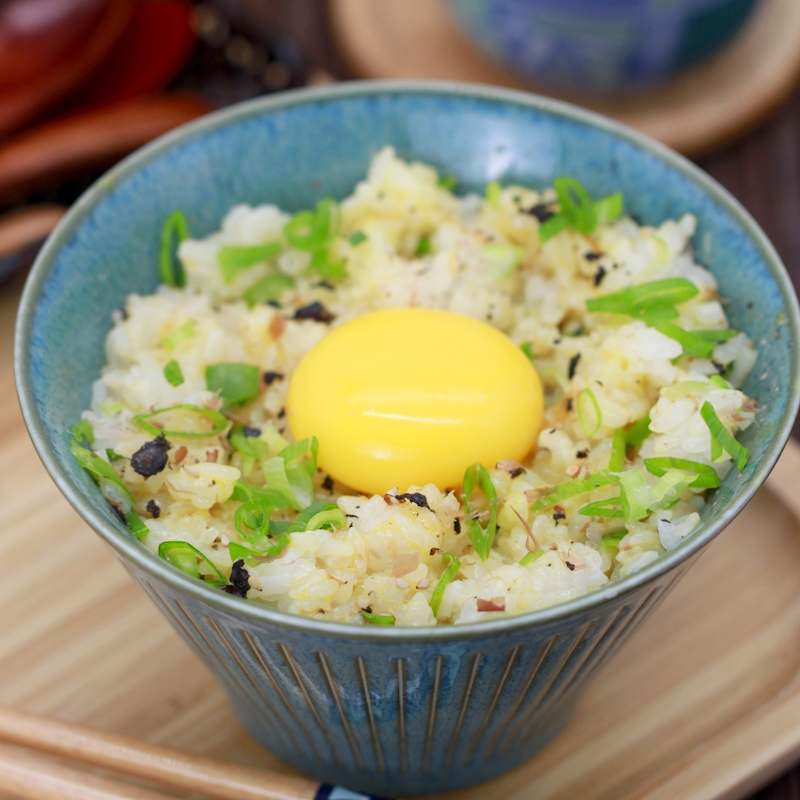
Serve immediately and enjoy whilst the rice is still hot. When eating, mix everything together quickly with chopsticks or a spoon. The hot rice absorbs the egg, and the egg yolk and Katsuobushi combine to form a creamy, glossy texture.
Fancy some more delicious Japanese-inspired ideas that go well with Tamago Kake Gohan?
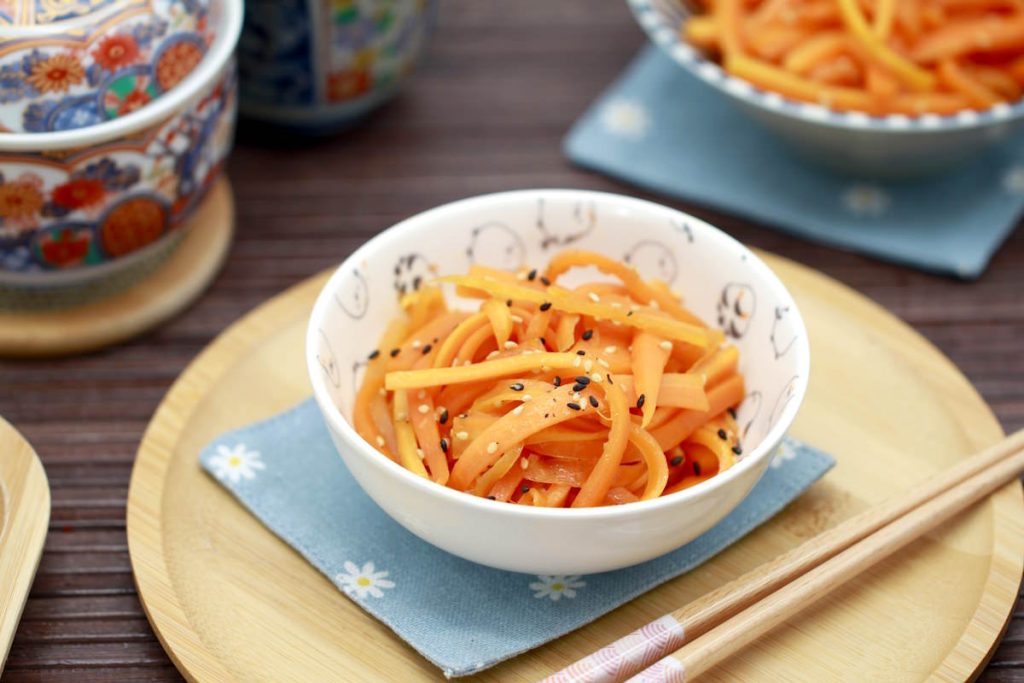
Make your own Ninjin no Kinpira: Japanese carrot side dish in the Kinpira style
Ninjin no Kinpira is a simple Japanese side dish made from finely sliced carrots, which…
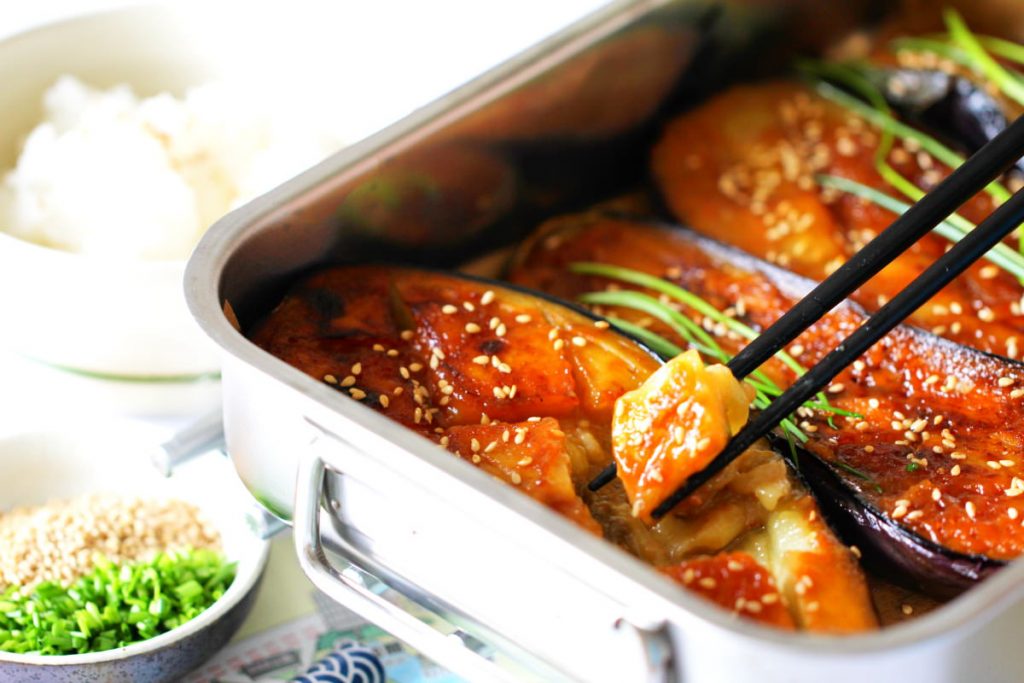
Nasu Dengaku: Oven-baked aubergines glazed with Miso – simple & irresistible
Nasu Dengaku is a true classic of Japanese cuisine and perfect as a side dish…
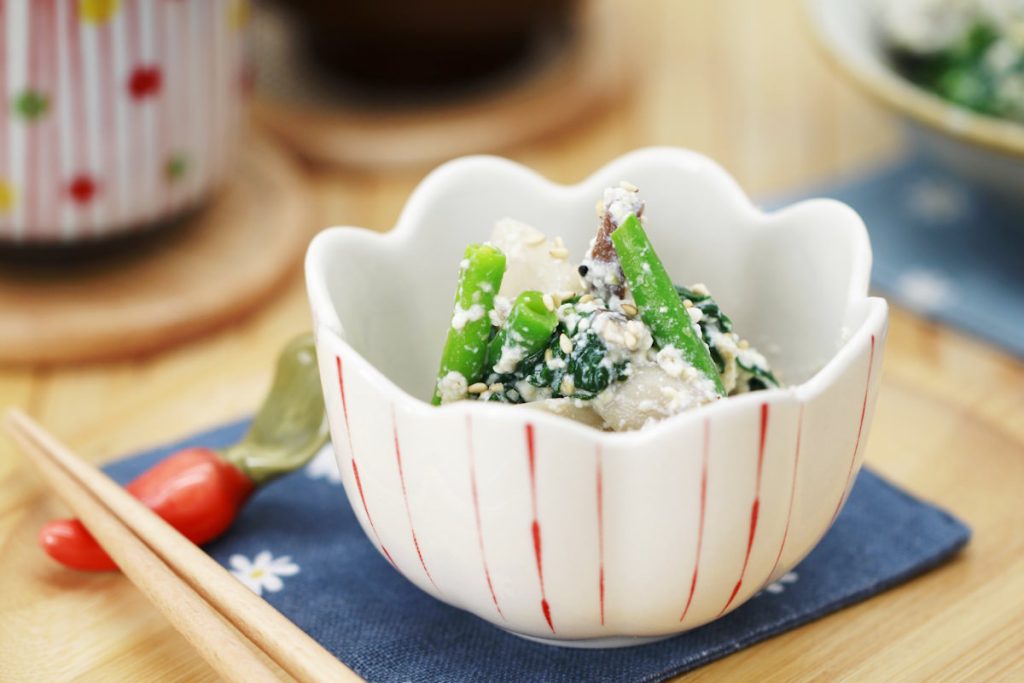
Mushroom and spinach salad with sesame and Tofu dressing: Recipe for Yasai no Shira ae
Mushroom and spinach salad with sesame and Tofu dressing, also known as Yasai no Shira…
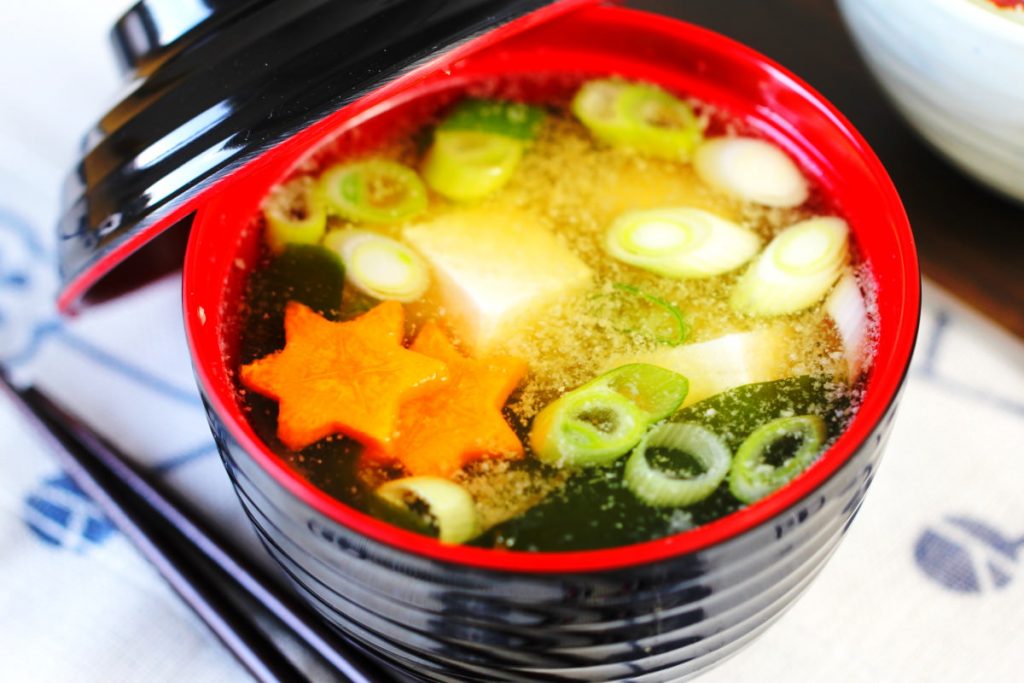
Misoshiru in a flash: basic recipe for miso soup with Wakame & Tofu
Miso soup is much more than just a side dish in Japan – it’s a…
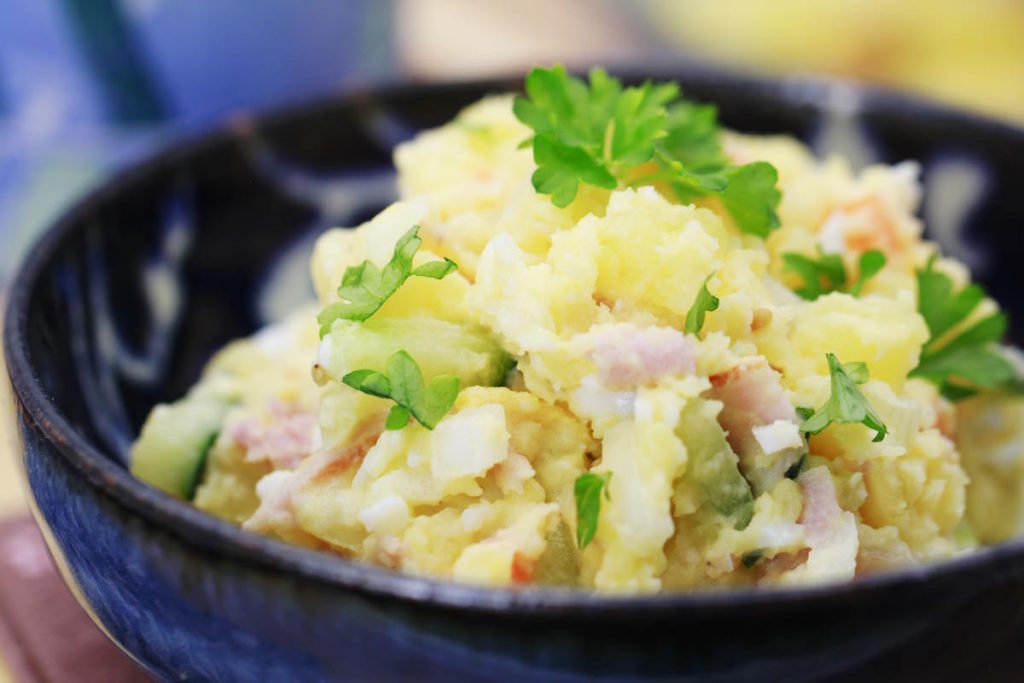
Make your own Japanese potato salad: fresh, creamy and irresistible!
If you’re looking for a delicious side dish that’s both familiar and excitingly new, then…
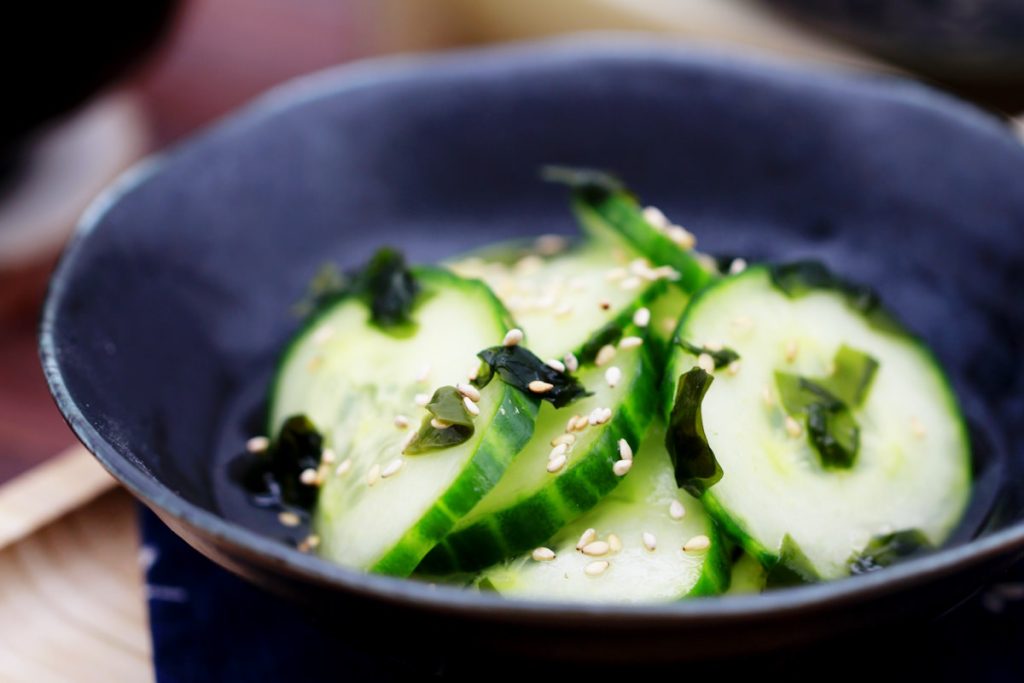
Quick Japanese cucumber salad with Wakame: Kyuri no Sunomono – light & refreshing
A simple yet flavourful cucumber salad with Wakame and a tangy dressing – Kyuri no…
Have you tried the recipe yet? Let me know in the comments – I can’t wait to hear from you.