
Language:


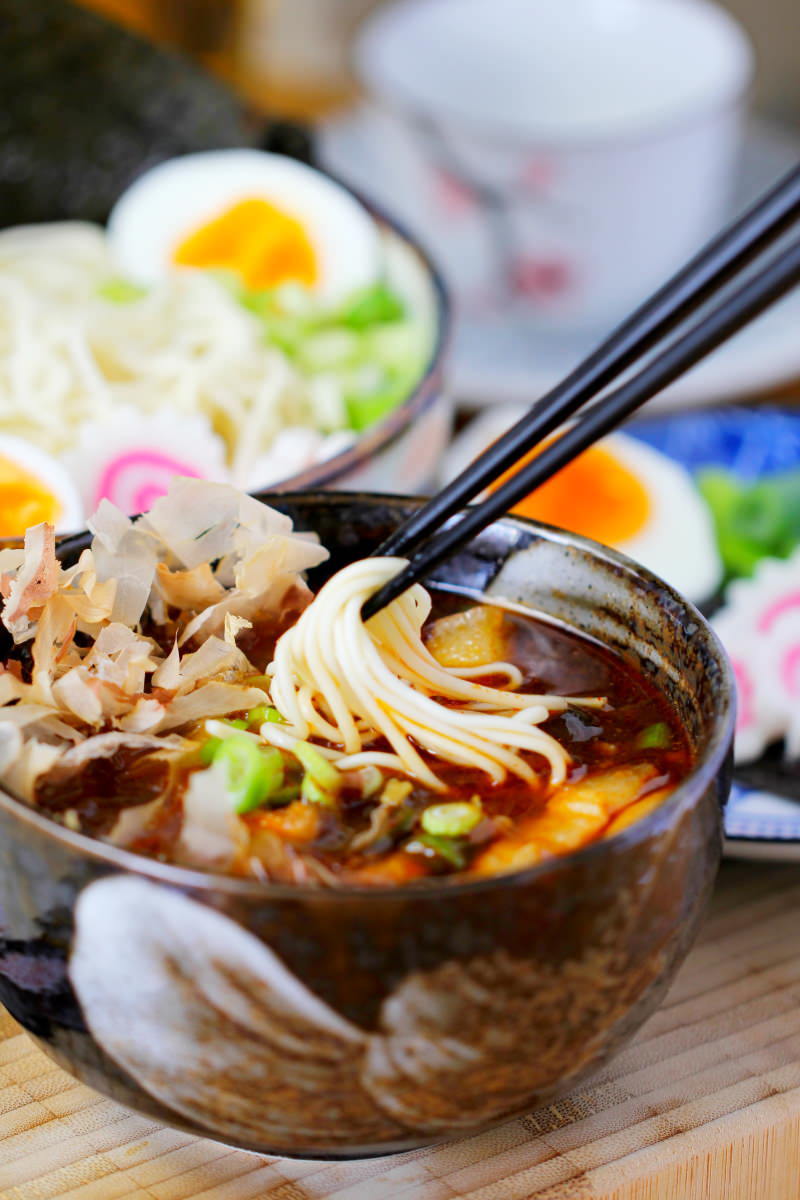
Tsukemen is one of the most popular ramen recipes in Japan, particularly during the hot summer months, but it’s also a real treat on warm days in late autumn! Cold ramen noodles are served alongside a bowl of hot, hearty broth and light toppings. The contrast between the cold noodles and the hot broth tastes absolutely stunning!
Could there be anything better than a classic bowl of Ramen? The answer is quite clear: YES!
Because tsukemen is absolute soul food! The broth – or hearty dipping sauce – has a rich depth of flavour thanks to the red Miso paste and the slight heat of the Korean chilli paste. The pan-fried pork belly, together with the Shiitake and Shimeji mushrooms, complement each other wonderfully in flavour and are really filling!
TOP RECOMMENDATION
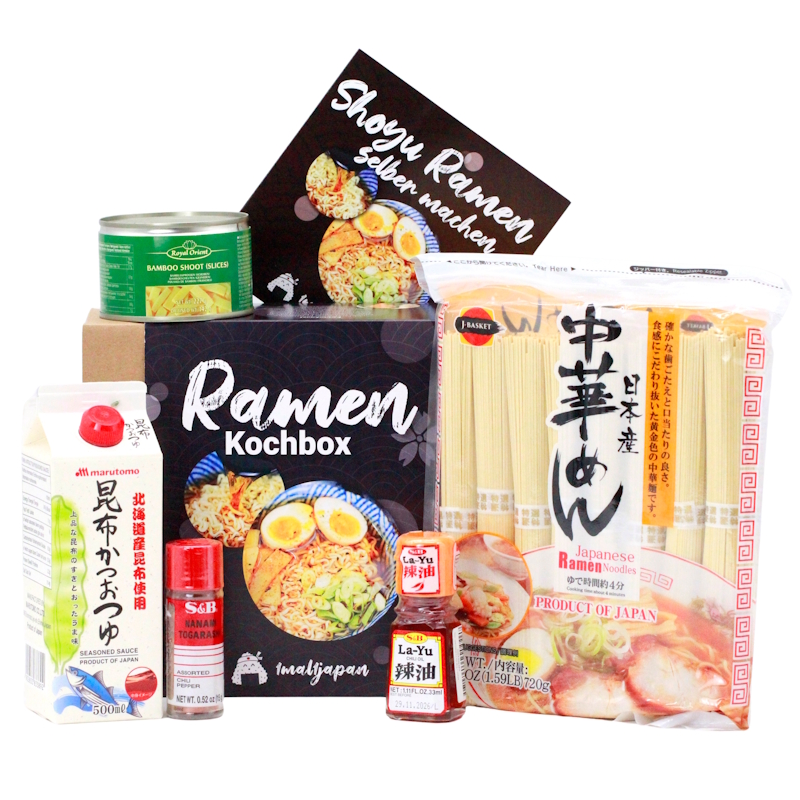
Ramen Kochbox | Shoyu Ramen selber machen
6-tlg. Set für 8 Portionen japanische Nudelsuppe + Rezepte für Shoyu Ramen, auch für Einsteiger. Mit dem Ramen Kochset bereitest du japanische Nudelsuppe ganz einfach…
In stock
The origins of this dish can be traced back to the Japanese metropolis of Tokyo. In the late 1950s, on hot summer’s days, the staff at a famous Tokyo ramen restaurant reportedly ate the cold ramen noodles left over from preparing meals for guests, served with a simple hot soup made from a soya sauce . This kept the ramen noodles nice and cold and provided the staff with a quick, easy (and, of course, inexpensive) pick-me-up.
A few curious customers noticed this unconventional combination, and one thing led to another. By the 1970s, the dish was already well known throughout Japan – and today, tsukemen has become an indispensable part of restaurant menus.
The main difference between a standard bowl of ramen and tsukemen is that, in the latter, the noodles and the soup are served separately. The noodles, which are best served ice-cold, don’t soak up too much of the broth and retain their pleasant firmness. The broth, in turn, stays very hot, ensuring the flavour remains truly intense. This also means that with this Ramen dish, it’s not the broth that takes centre stage, but the noodles!
Fresh, homemade ramen noodles are my first choice for this – you can find my recipe here: → Make your own ramen noodles – traditional recipe with kansui
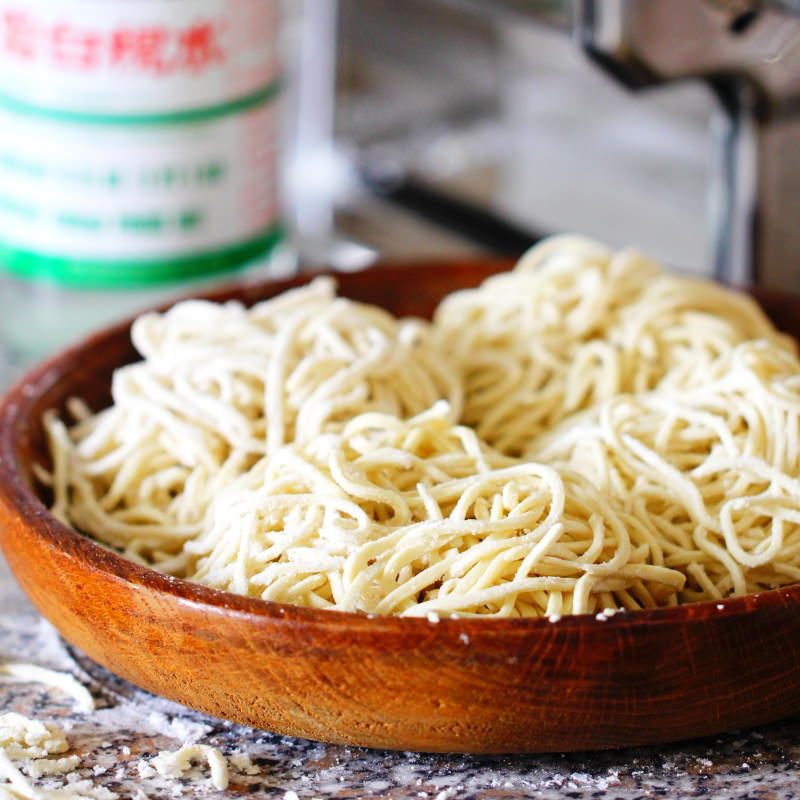
Alternatively, you can buy Japanese ramen noodles (im Shop ansehen) and prepare tsukemen in no time at all!
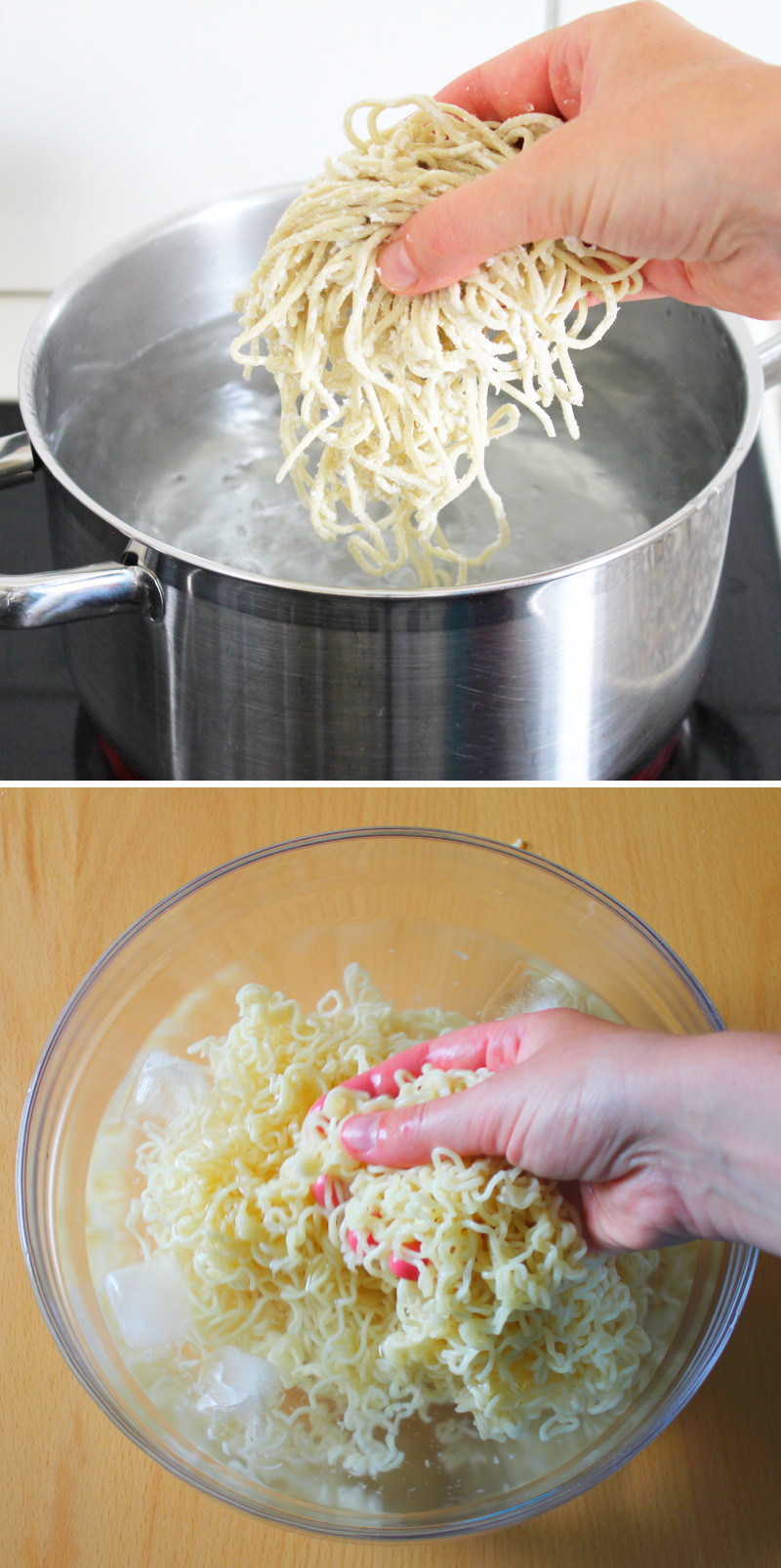
Once the noodles have been cooked, they are immediately rinsed in a bowl of plenty of ice-cold water and then thoroughly drained. This preserves their texture, prevents them from sticking together and ensures they absorb the soup very well when added.
Finish it off with a few toppings that delight both the eye and the palate, such as finely chopped spring onions, soft-boiled eggs, Katsuobushi (bonito flakes), a little narutomaki (from the frozen food aisle) and chopped nori sheets:

To enjoy this summery tsukemen, pick up a few strands of ramen noodles with your chopsticks, dip them into the soup and then slurp them up! So, have fun and good luck preparing this delicious tsukemen with its savoury dipping soup:
Tsukemen
Serves 2 | 20 minutes | 775 kcal
🖨️ Print PDF 📌 Save pinTsukemen is one of the most popular ramen recipes in Japan, particularly during the hot summer months, but it’s also a real treat on warm days in late autumn! Cold ramen noodles are served alongside a bowl of hot, hearty soup and light toppings. The contrast between the cold noodles and the hot broth tastes absolutely stunning!
Ingredients (2 portions)
2 portions Ramen noodles (im Shop ansehen)* or make your own (to the recipe)
100 g pork belly
20 g ginger (fresh)
3 garlic cloves
4 Shiitake mushrooms (fresh or dried (im Shop ansehen)*)
1/2 packet Shimeji mushrooms
2 spring onions
1 tbsp sesame oil (im Shop ansehen)*
For the dipping soup:
120 ml mentsuyu (see recipe) or buy (im Shop ansehen)*
1 tbsp Miso paste (im Shop ansehen)*
1 tbsp gochujang (im Shop ansehen)*
1 tbsp soya sauce (im Shop ansehen)*
1 tsp rice vinegar (im Shop ansehen)*
For the topping:
2 eggs (soft-boiled)
5 g Katsuobushi (bonito flakes) (im Shop ansehen)*
a little narutomaki (from the frozen food section)
1 nori sheet (im Shop ansehen)*
Useful equipment:
Japanese Yukihiara saucepan
Santoku knife (im Shop ansehen)
Ramen bowl from Japan (im Shop ansehen)
Preparation (20 minutes)
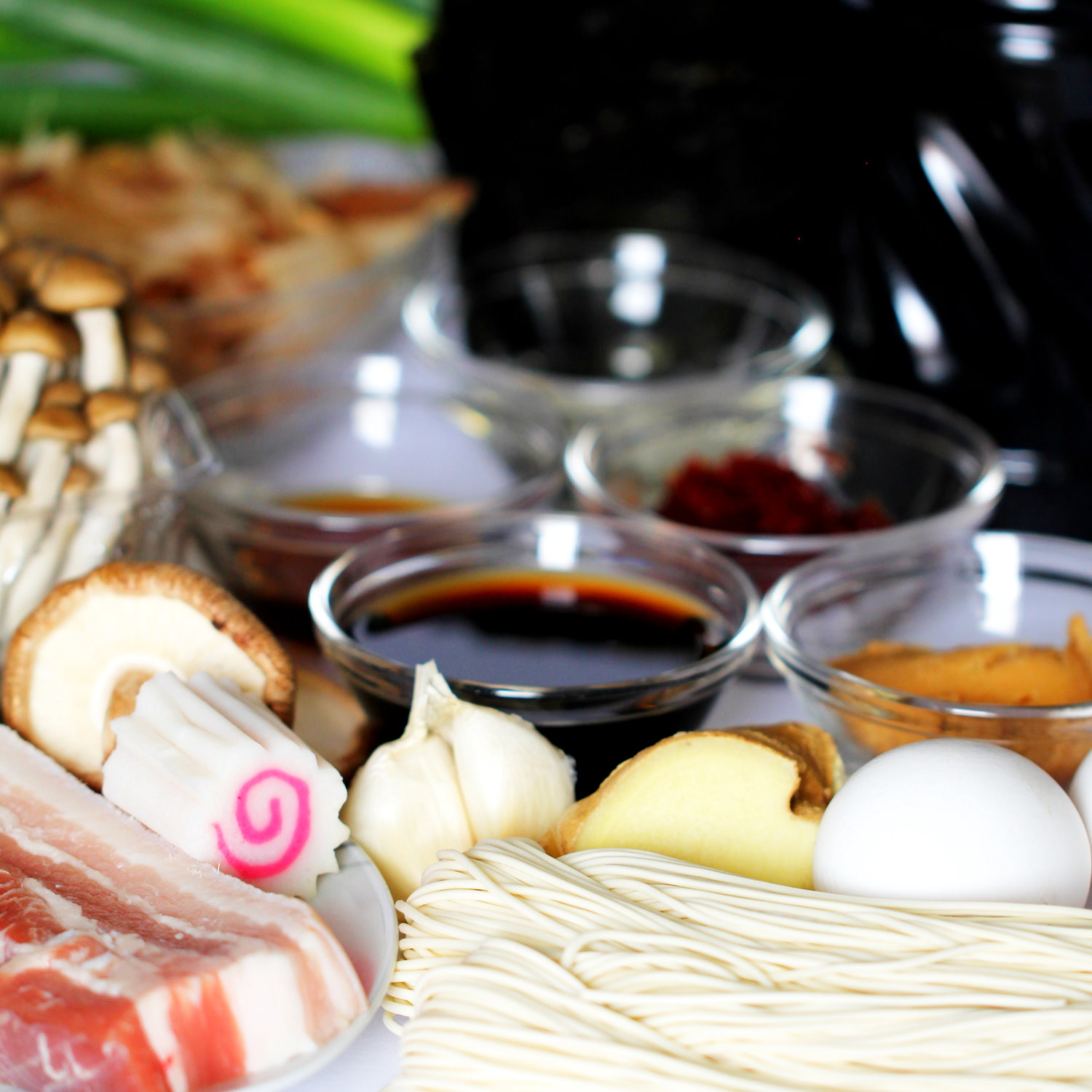
Step 1
Prepare the ingredients for the homemade tsukemen and soft-boil the eggs depending on their size, peel them and cut them in half.
Defrost a piece of about 5 cm from the narutomaki ; the rest can go back in the freezer. Cut into thin slices using a large knife.
If using dried Shiitake mushrooms, soak them in cold, fresh water for about 1 hour beforehand.
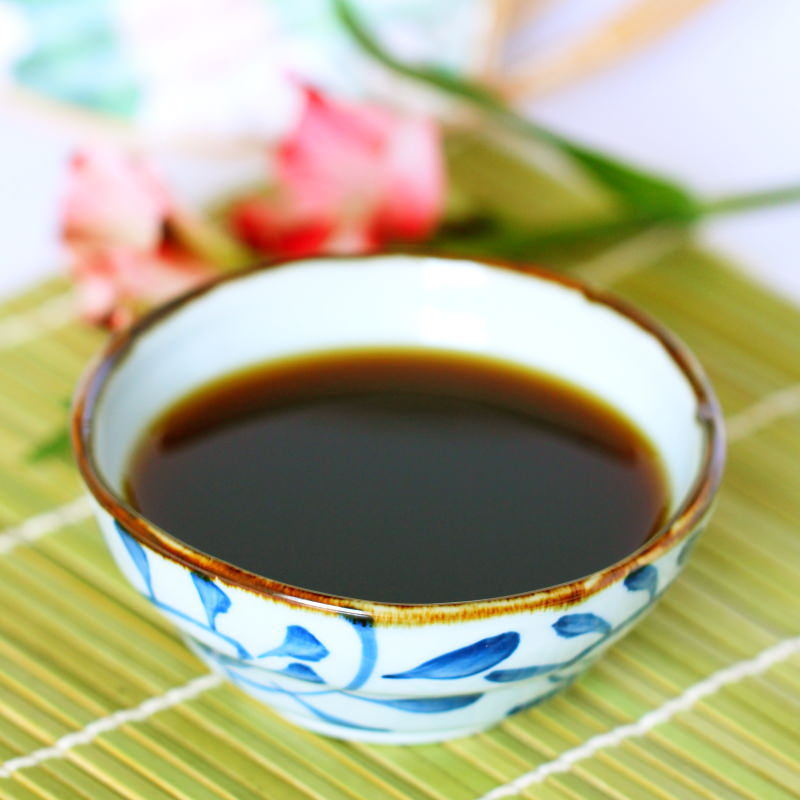
Step 2
Also, the Mentsuyu (click here for the recipe) should now be ready. If using store-bought Mentsuyu, please remember to dilute it 1:4, as it is a concentrate (for 120ml Mentsuyu, use 30ml concentrate to 90ml fresh water)!
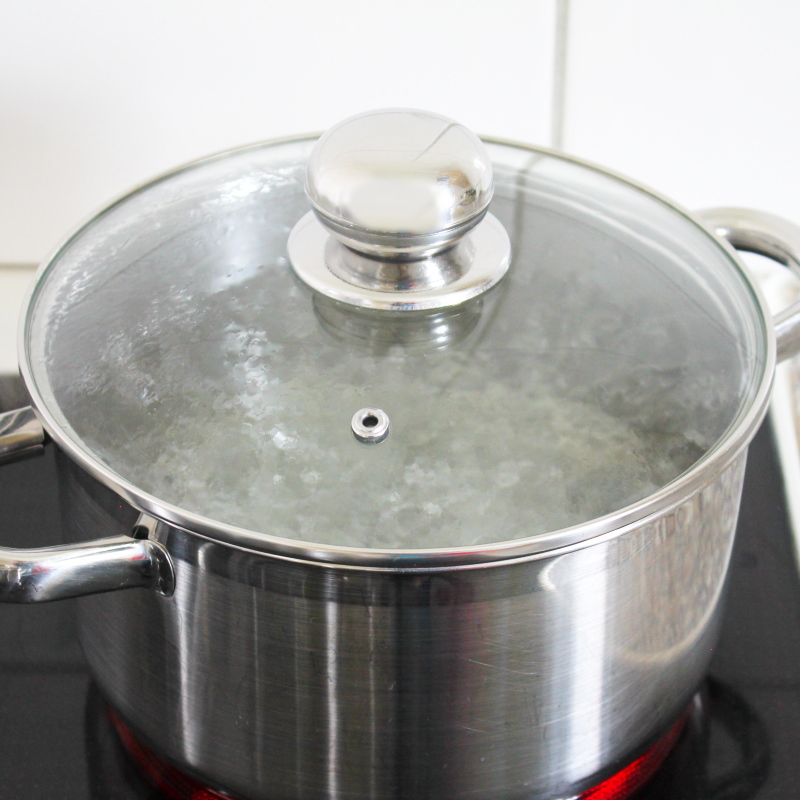
Step 3
In a large pot, bring water for the ramen noodles (one litre of water per portion of noodles) to the boil.
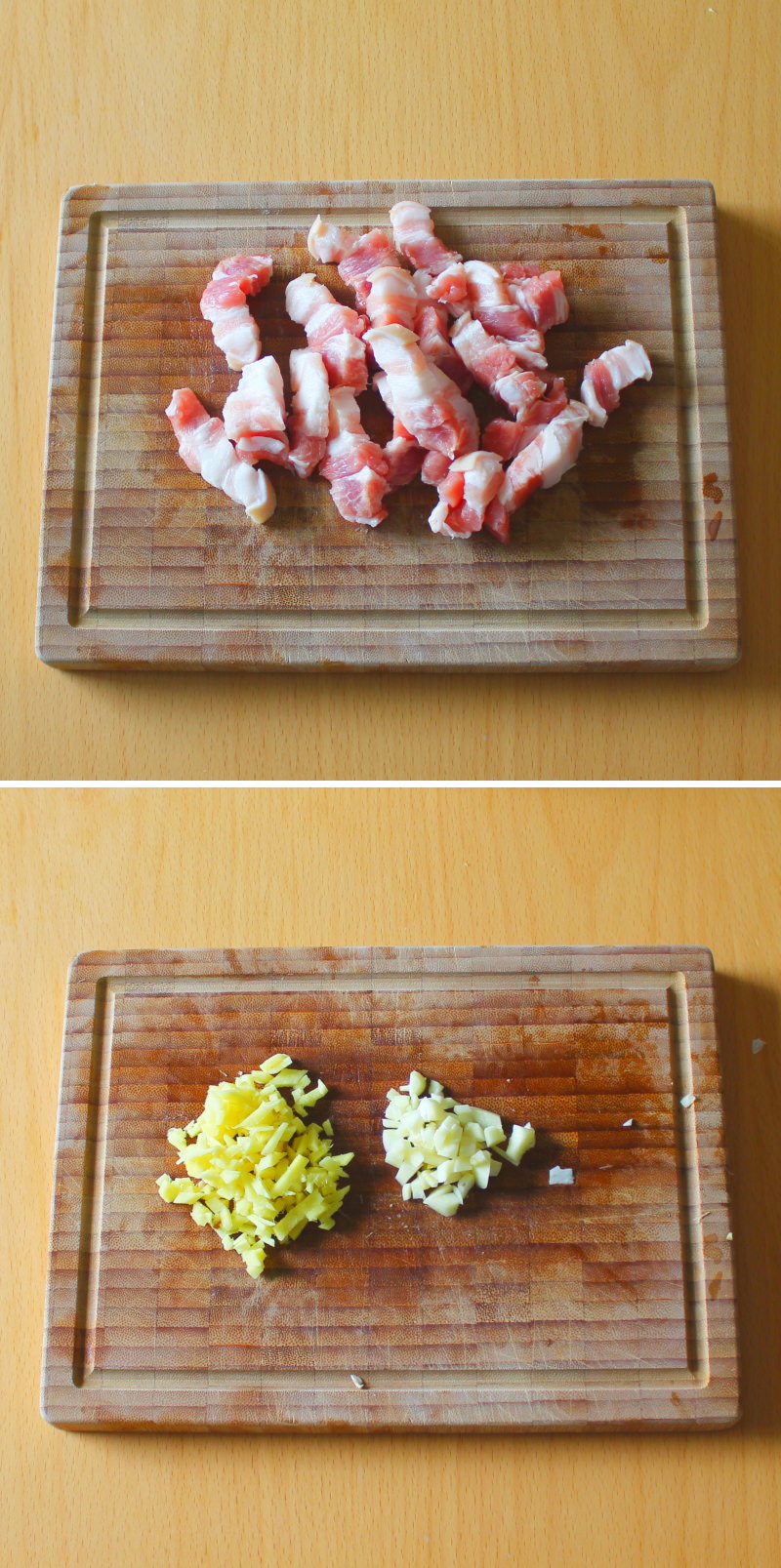
Step 4
At the same time, prepare the hot dipping sauce: Cut the pork belly into strips about 1cm wide.
Lightly crush the garlic with the back of a knife, then remove the skin. Peel the ginger. Then finely chop both.
Step 5
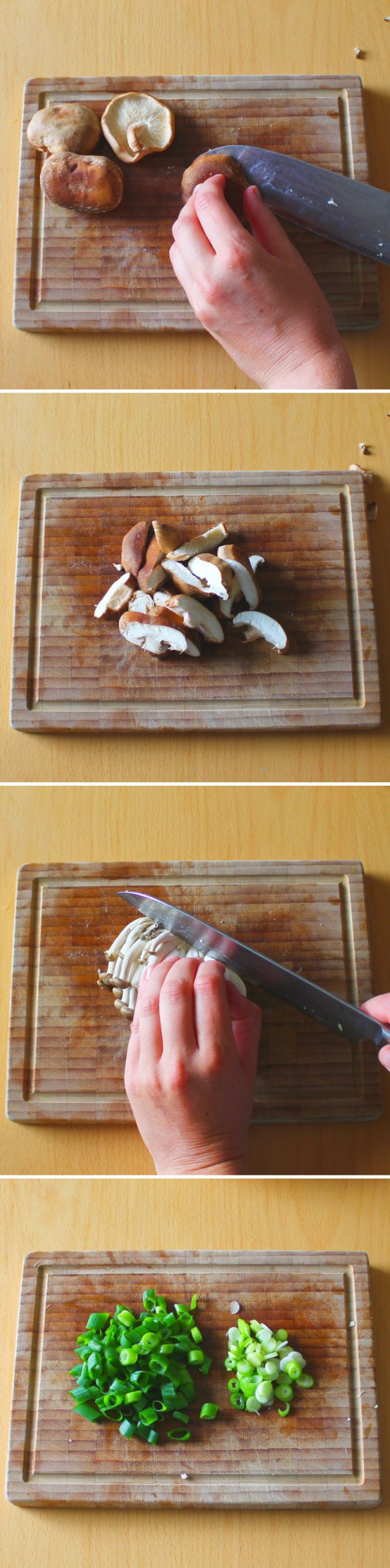
Remove the stems of the shiitake mushrooms and cut the caps into 1cm wide slices. Remove the root cluster of the shimeji mushrooms and loosely separate the mushrooms.
Wash the spring onions, pat dry and cut into fine rings. Keep the white and green parts separate.
Step 6
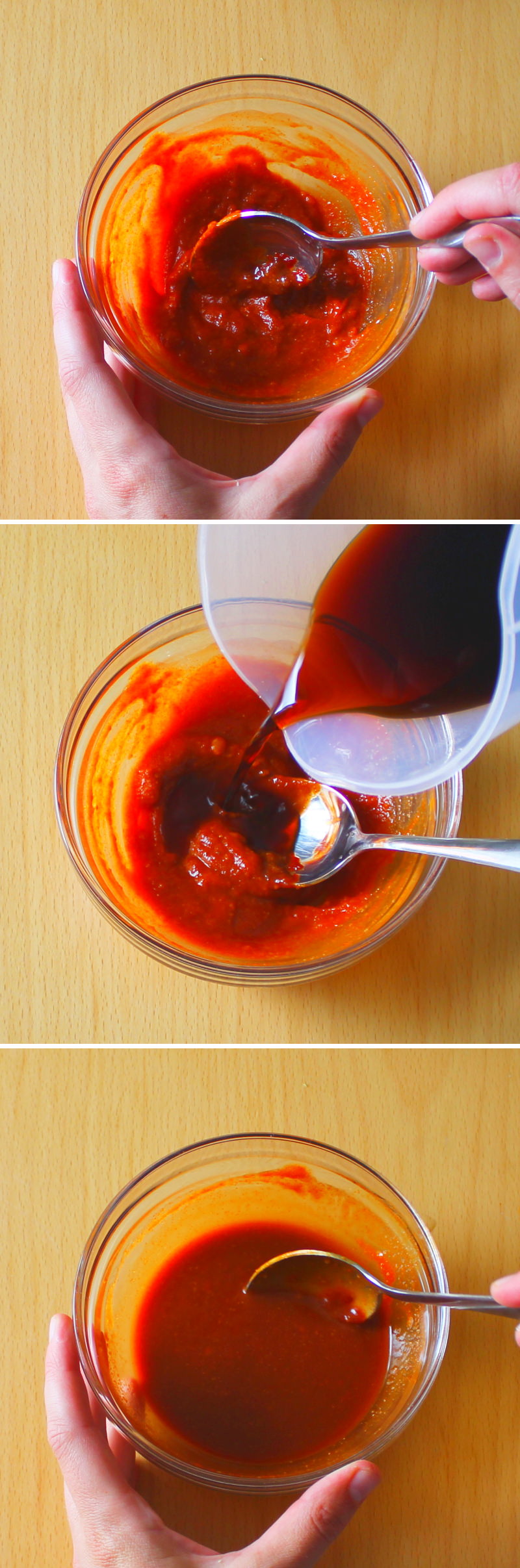
In a bowl, mix red miso paste, gochujang, soy sauce and rice vinegar. Then add a little (about 5 tbsp) of the Mentsuyu and stir again (this makes it easier to stir the paste in during the next step).
Step 7
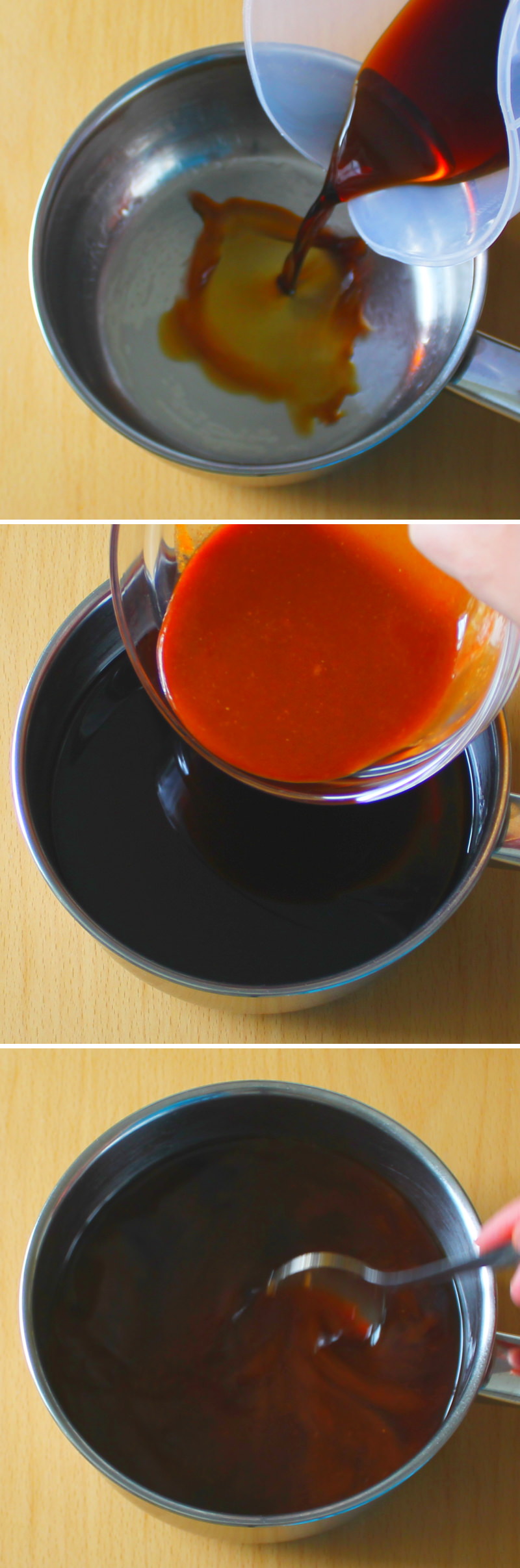
Now pour the remaining Mentsuyu and the mixed miso-gochujang paste into a pot, stir and set aside.
Step 8
Add the ramen noodles to the boiling water and cook for 2 minutes (or according to the cooking instructions on the packet). Then drain in a colander and rinse thoroughly with ice-cold water. The noodles must be completely cooled.
Divide the well-drained Ramen between two plates or shallow bowls and arrange with the halved eggs, finely chopped nori sheets, a few slices of narutomaki and the white parts of the spring onion.
Step 9
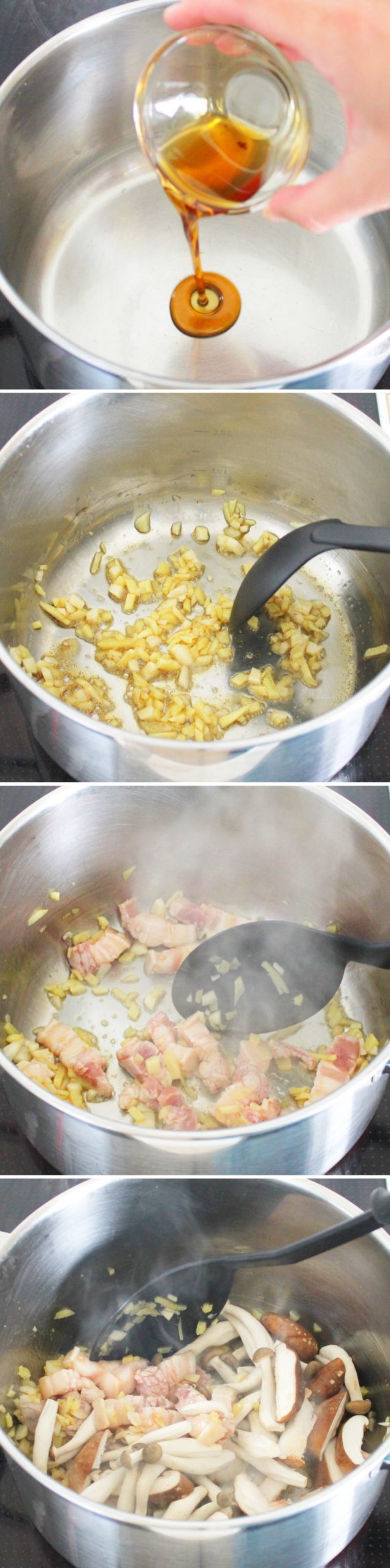
Then heat the sesame oil over high heat in another medium-sized pot and briefly fry the chopped ginger and garlic. Add the pork belly and mix everything together. As soon as the pork belly is no longer pink, add the mushrooms and fry them as well.
Step 10
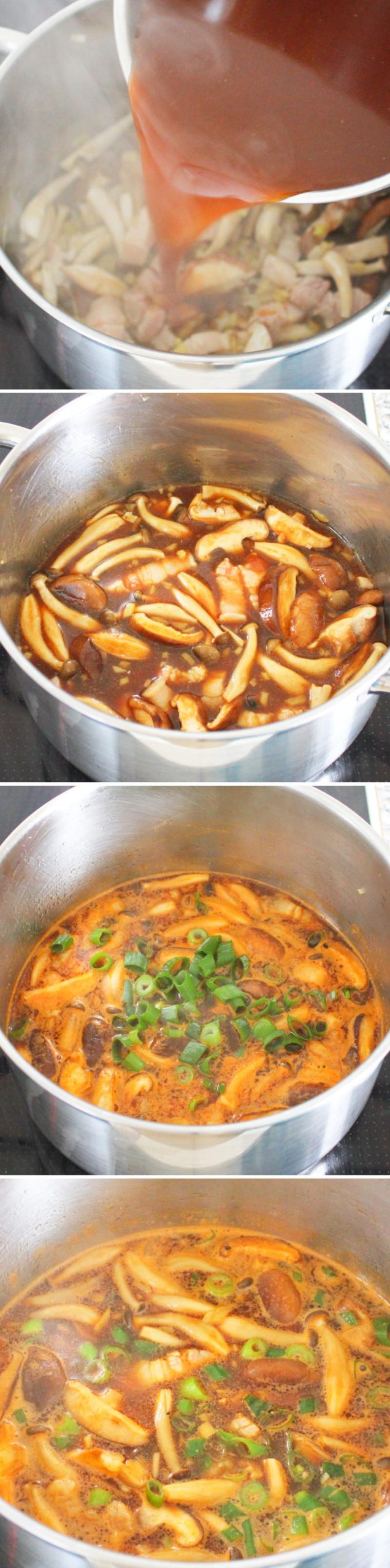
Now stir in the mentsuyu-Miso sauce and let everything simmer gently over a medium heat for 5 minutes.
Turn off the heat and add the green parts of the spring onion , then stir them in.
Step 11
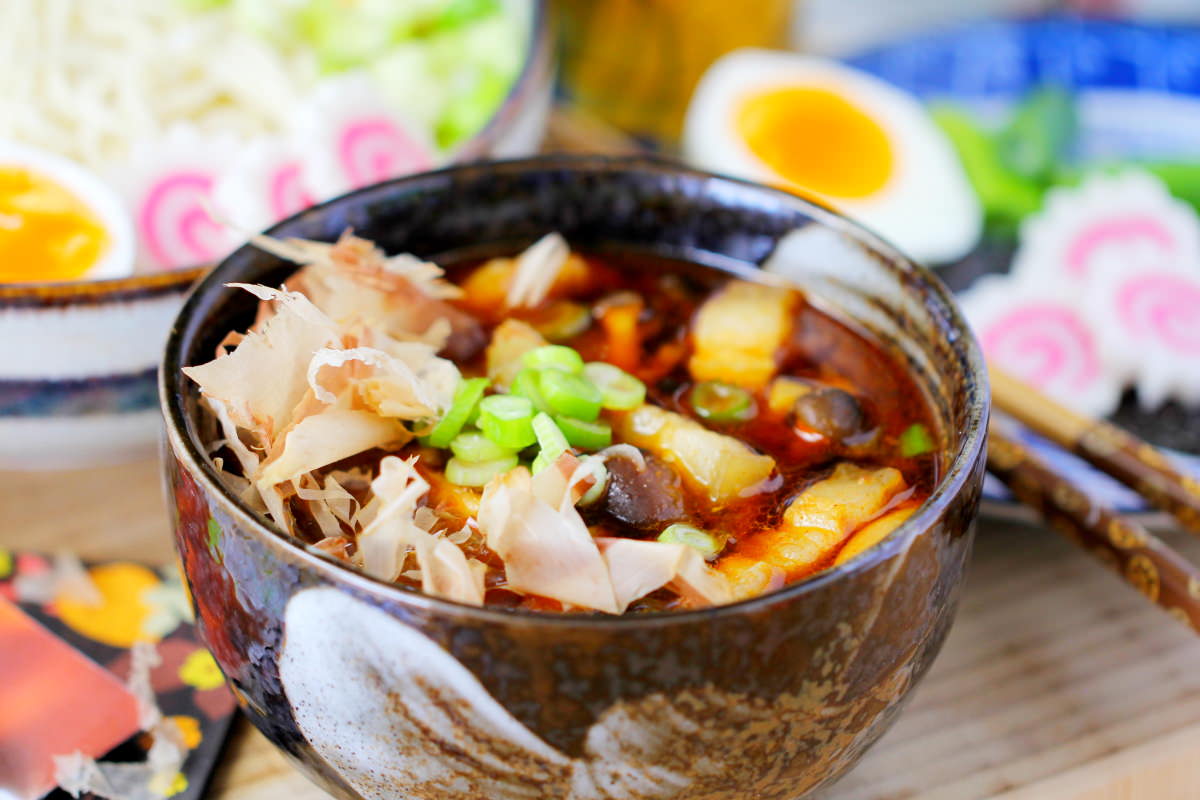
Pour the finished dipping soup into two bowls and garnish with Katsuobushi. Serve hot alongside the cold ramen noodles.
Using chopsticks, pick up some ramen or toppings, dip them into the hot broth and enjoy. Done – Itadakimasu!
Are you looking for even more wonderful Ramen creations from Japan? Here you’ll find my most popular Ramen recipes:
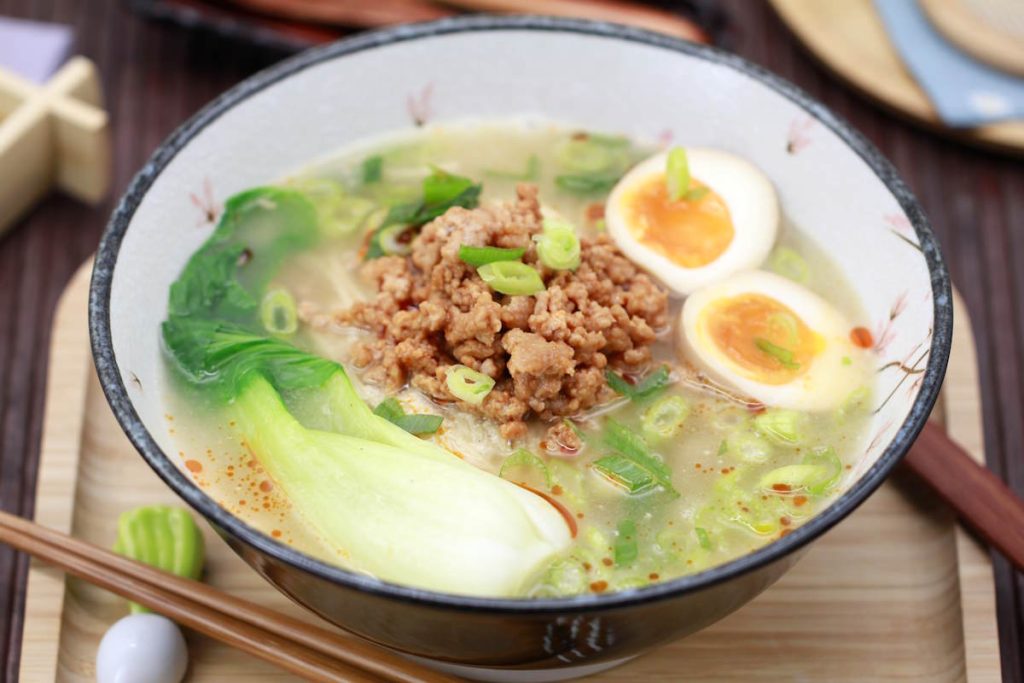
Make your own Tantanmen: creamy sesame Ramen with spicy Miso minced meat, pak choi & ramen eggs
Tantanmen is a Ramen soup for those who like it creamy but not heavy. A…
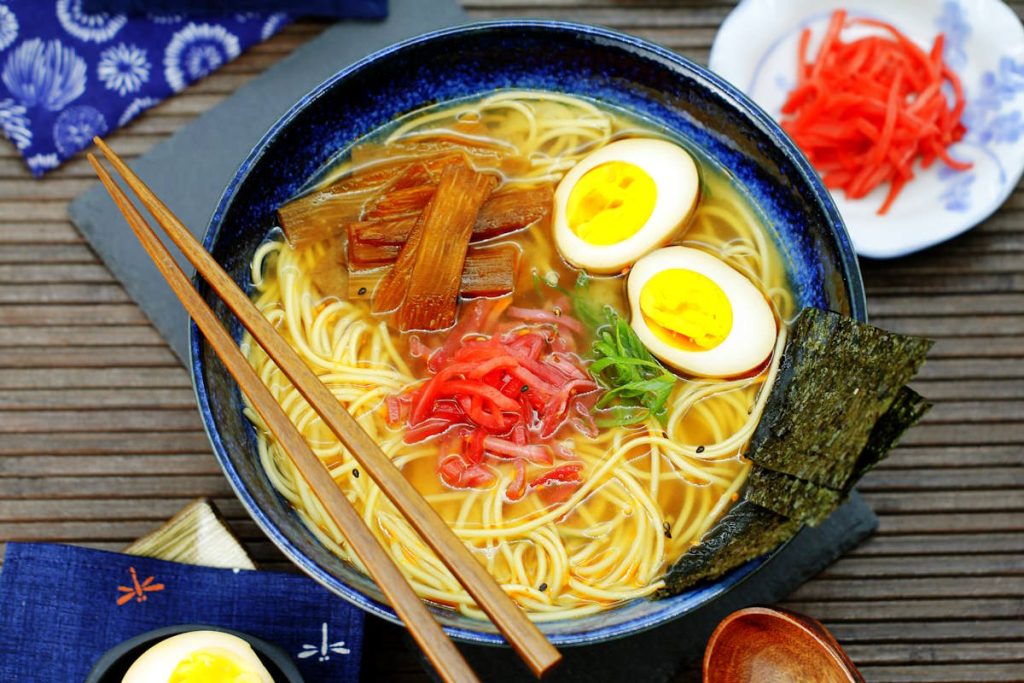
A bowl full of happiness: Miso Ramen with 7 varied toppings – vegetarian, spicy & really easy
Immerse yourself in the world of flavours of Japanese cuisine with our Happiness Bowl! It’s…
10-minute Shoyu Ramen with bamboo shoots & Ramen eggs – for quick meals
My 10-minute Shoyu ramen: Wavy ramen noodles, served in a rich and sinfully delicious tsuyu…
Hiyashi Chuka – cold Ramen salad with yuzu soy sauce & sesame dressing
Hiyashi Chuka is a summery ramen noodle dish packed with fresh garden vegetables. It’s a…
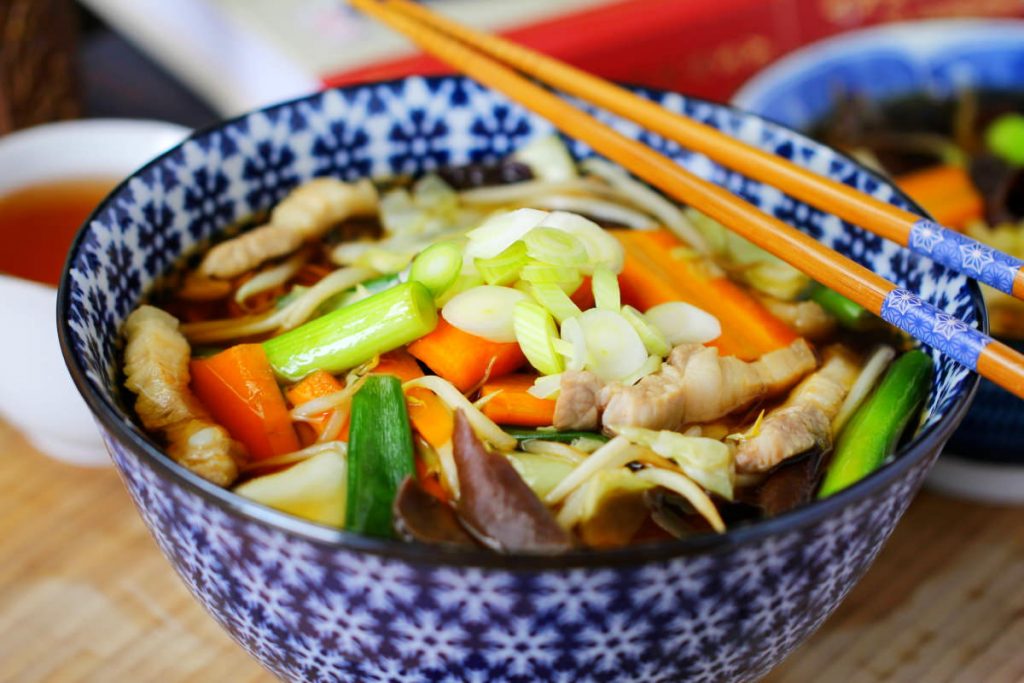
Tan-Men – Ramen noodle soup with stir-fried vegetables & pork belly
Tan-Men is a Japanese Ramen noodle soup with stir-fried pork belly and crisp vegetables. It’s…
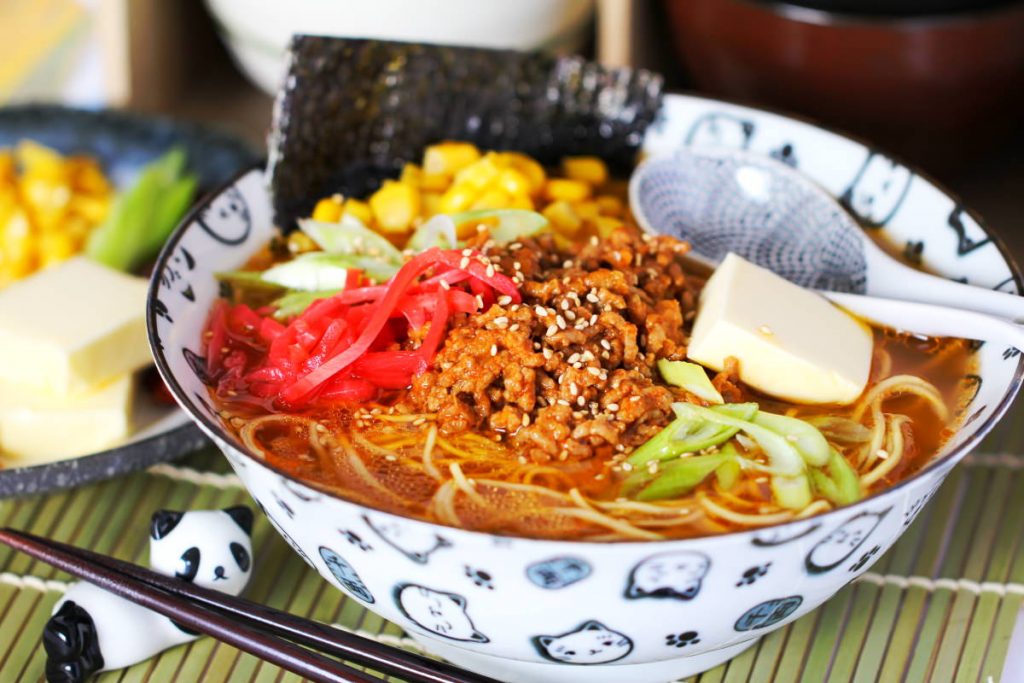
Enjoy northern Japan: Hokkaido Miso Ramen to warm cold feet – with nikumiso and sweetcorn!
Hokkaido Miso Ramen – the birthplace of Japanese noodle soups in northern Japan. The icy…
Has anyone tried this recipe yet? Let me know in the comments – I’m really looking forward to hearing from you.