
Language:


Sundubu Jjigae is one of the best-known Korean stews and is an integral part of many restaurants and households. This spicy Tofu stew combines a clear, aromatic broth with extra-soft Tofu, chilli and just a few carefully chosen ingredients. Despite its bold seasoning, Sundubu Jjigae doesn’t feel heavy, but rather balanced and warming. It’s a dish that works in any season, especially when you fancy something hearty that’s still light.
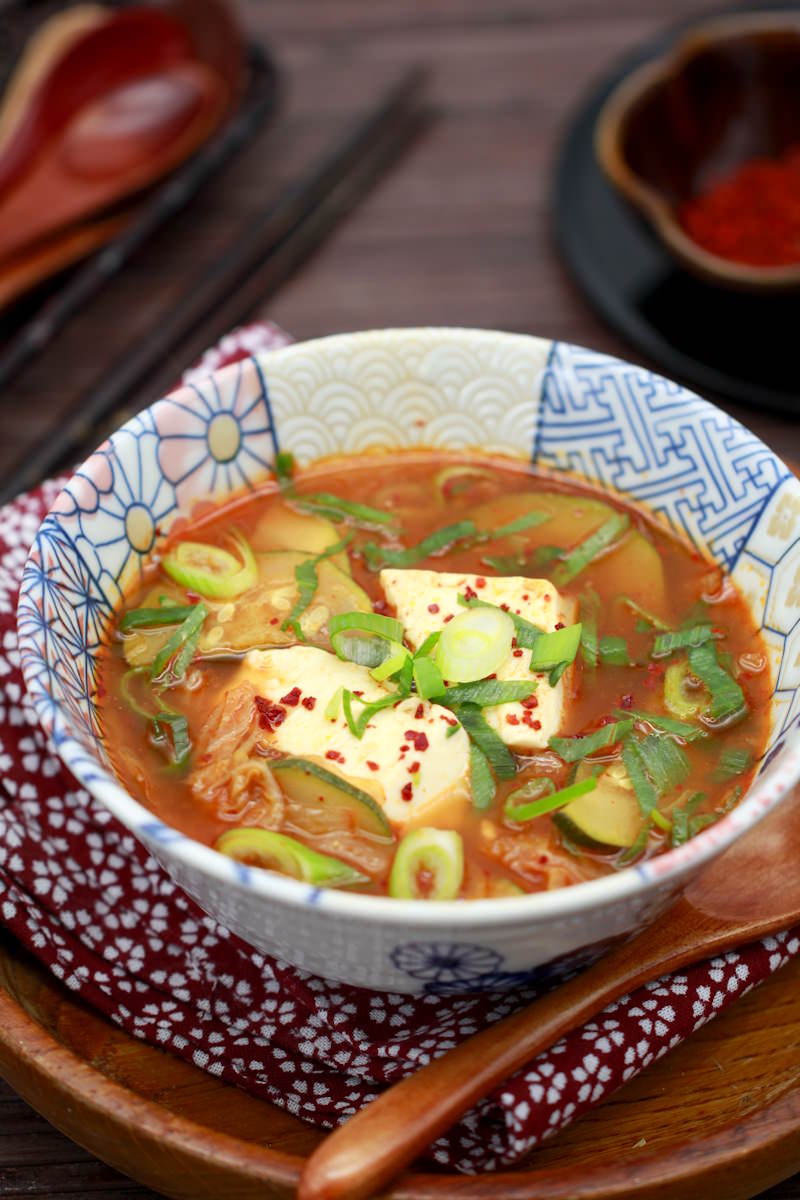
I didn’t discover Sundubu Jjigae straight away. For a long time, I thought it was simply ‘just spicy’. It was only with time that I realised it’s less about the heat and more about balance: a clear broth, depth from fermented ingredients, and the distinctive contrast between soft Tofu and robust seasoning. It is precisely this balance that makes Sundubu Jjigae so special, and that is exactly what this recipe aims to achieve.
What exactly is Sundubu Jjigae?
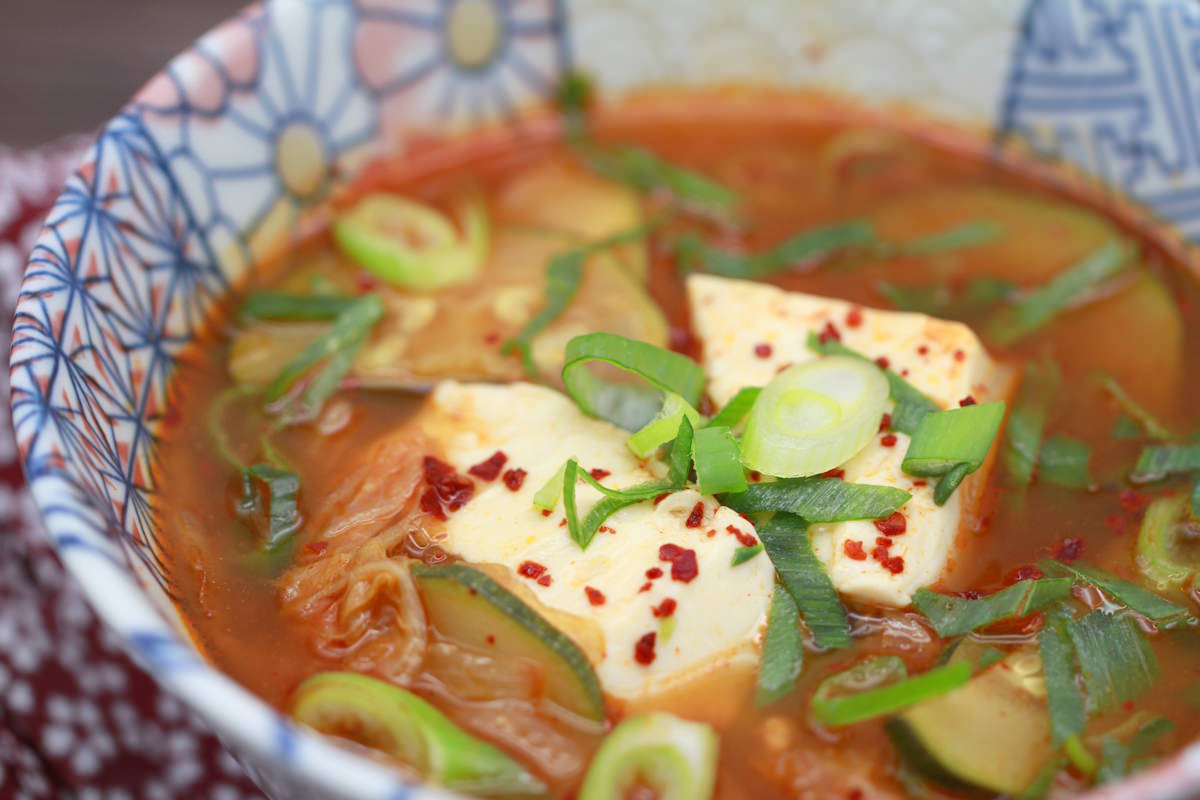
Sundubu Jjigae is a Korean stew in which Sundubu, i.e. unpressed, particularly soft Tofu, takes centre stage. Unlike firmer Tofu, Sundubu is not cut, but added directly to the broth in rough, irregular pieces. It breaks up easily, yet remains creamy and blends with the soup.
It is typically characterised by a red, slightly thickened broth based on an anchovy and Dashima stock or – depending on the variation – Kimchi, meat or seafood. The heat comes mainly from Gochugaru, Korean chilli flakes. The stew is often served with an egg at the end, which sets directly in the hot soup and provides additional thickness.
Sundubu Jjigae originates from everyday Korean cuisine, in which fresh Tofu has played a central role for centuries. Particularly in regions with traditional Tofu production, sundubu proved to be an ideal base for soups and stews, as it could be prepared quickly and was very filling.
Sundubu Jjigae originates from everyday Korean cuisine, in which fresh Tofu has played a central role for centuries. Particularly in regions with traditional Tofu production, sundubu proved to be an ideal base for soups and stews, as it could be prepared quickly and was very filling.

Delicious variations
In Korea, there are countless variations of Sundubu Jjigae. A very common version is Haemul Sundubu Jjigae with seafood such as prawns, mussels or squid. This version has a particularly clear and light flavour.
Also popular is Kimchi Sundubu Jjigae, often combined with pork belly. The tanginess of the kimchi makes the stew more robust and hearty.
Vegetarian or vegan versions omit anchovies and meat, relying instead on Kombu stock, mushrooms and vegetables. Even so, the dish retains its character as long as the heat, sesame oil and the typical seasoning base are just right.
Making Sundubu Jjigae yourself: Here’s how
Making Sundubu Jjigae at home sounds more complicated than it actually is. The key isn’t a long list of ingredients, but the correct order: prepare the stock, make the seasoned oil, gently cook the other ingredients, and only add the Tofu right at the very end.
The key components:
- Stock: The classic version is an anchovy-Dashima stock made from dried anchovies and Kombu. It adds depth and Umami without being heavy.
- Seasoning base: Gochugaru, a little sesame oil and, optionally, gochujang provide colour, heat and depth.
- Ingredients: Onions, courgettes and Kimchi add texture and flavour without overpowering the Tofu.
- Sundubu: Extra-soft Tofu, which is only roughly chopped and melts into the soup.
TOP RECOMMENDATION
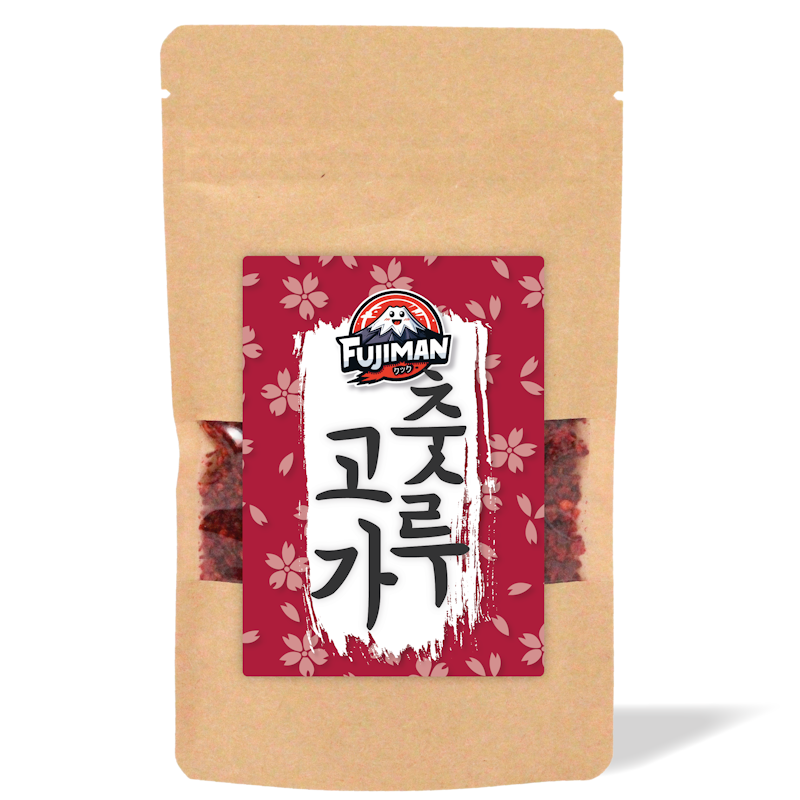
Gochugaru Chiliflocken 50g, Fujiman
Koreanische Chiliflocken für Kimchi, Dips & würzige Alltagsküche. Diese Gochugaru Chiliflocken von Fujiman sind grob gemahlen, fruchtig im Aroma und angenehm scharf. Die 50 g-Packung…
In stock
How it works:
To make Sundubu Jjigae, you first lay the foundation: a clear anchovy and Dashima broth. To do this, slowly heat 500 ml of cold water with dried anchovies and a piece of Kombu, without bringing it to the boil. After a short steeping time, the Kombu is removed, the stock is gently brought to the boil once more and then strained. Meanwhile, the onion, garlic, courgette, spring onions and Kimchi are prepared.
In a saucepan, the onion and garlic are sautéed in neutral oil until translucent. Gochugaru is stirred directly into the hot oil – optionally supplemented with a little gochujang – until an aromatic red spice paste forms. This is then poured over the prepared stock. Add the courgette and Kimchi, and season with soya sauce and a small amount of sugar.
After a short cooking time, the sundubu is roughly broken up and carefully added to the stew. It should remain in large, soft pieces. Finally, sesame oil, spring onions and, optionally, an egg are added. The stew is served immediately, piping hot, ideally with rice.
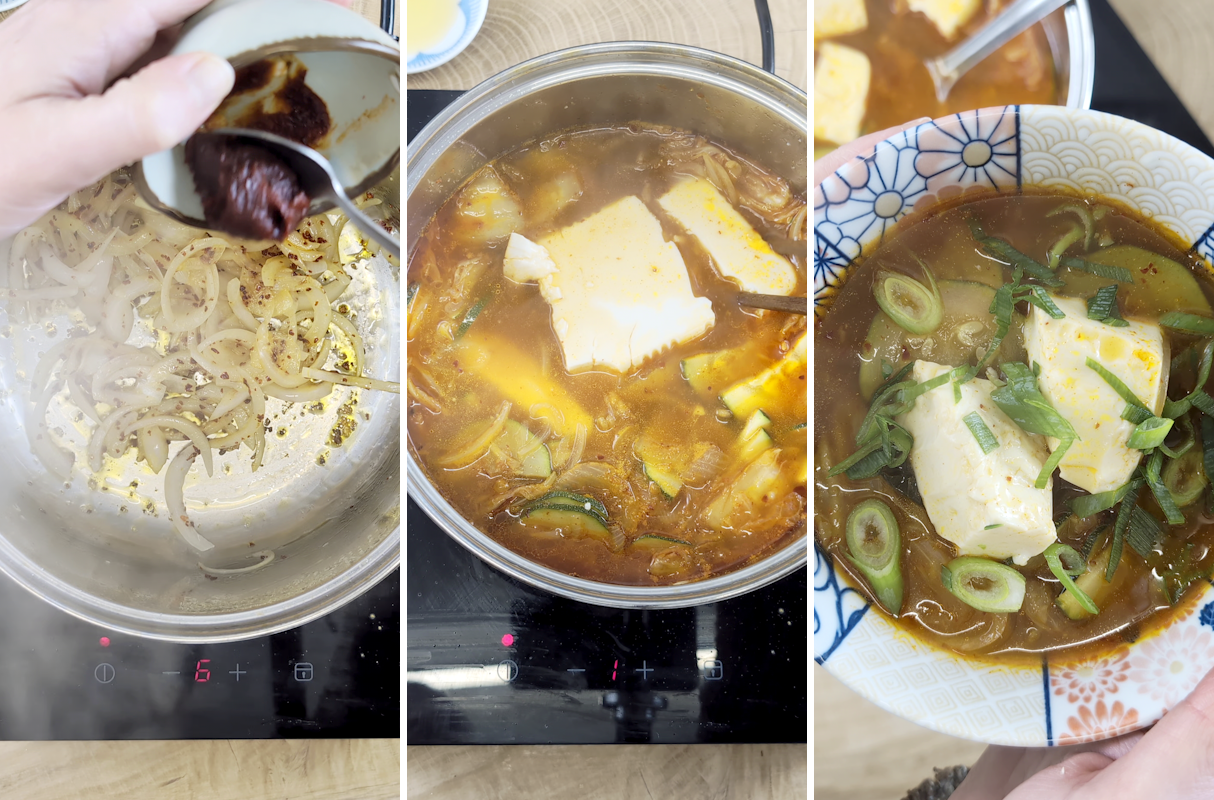
What goes well with Sundubu Jjigae?
Sundubu Jjigae is almost always served with plain white rice. The rice soaks up the broth and balances out the heat. Small side dishes such as pickled vegetables or Kimchi go well with it. In Korea, water or barley tea is often served as a drink – anything that doesn’t overpower the stew.
Whether as a warming evening meal, a hearty lunch or part of a Korean set menu: Sundubu Jjigae is versatile, filling and yet light. If you like, you can experiment with the level of heat, the ingredients or the broth to create your own favourite version.
I look forward to your comments: Have you cooked Sundubu Jjigae yet? Which version do you prefer – classic, with Kimchi or with seafood? Have fun cooking and enjoy your meal. 맛있게 드세요 – massitge deuseyo!

Sundubu Jjigae
Serves 2 | 45 minutes | 320 kcal
🖨️ Print PDF 📌 Save to PinterestSundubu Jjigae is a classic Korean tofu stew with a clear, aromatic broth and a pleasant heat. Extra-soft Tofu, chilli and a few carefully selected ingredients combine to create a dish that is warming, well-balanced and perfect for everyday meals. Ideal for anyone who wants to recreate authentic Korean cuisine at home.
Ingredients (2 portions)
For the stew:
300 g silken Tofu (im Shop ansehen)* (even better: sundubu, extra-soft Tofu)
3 tbsp Kimchi (im Shop ansehen)*
1 onion
2 cloves of garlic
1 courgette
1 spring onion
2 tbsp neutral oil(e.g. rapeseed oil)
For the stock:
500 ml water
6 dried anchovies (heads & guts removed, not in oil) (auf Amazon* kaufen)
1 piece Kombu (approx. 5 × 5 cm) (im Shop ansehen)*
For the seasoning:
1 tsp sugar
1 tbsp sesame oil (im Shop ansehen)*
1 tbsp Gochugaru (im Shop ansehen)*
1 tbsp gochujang (im Shop ansehen)*
1 tbsp soy sauce (im Shop ansehen)*
Useful tools:
Santoku knife (im Shop ansehen)
Grater (im Shop ansehen)
Yukihiara saucepan (im Shop ansehen)
Preparation (45 minutes)
Step 1
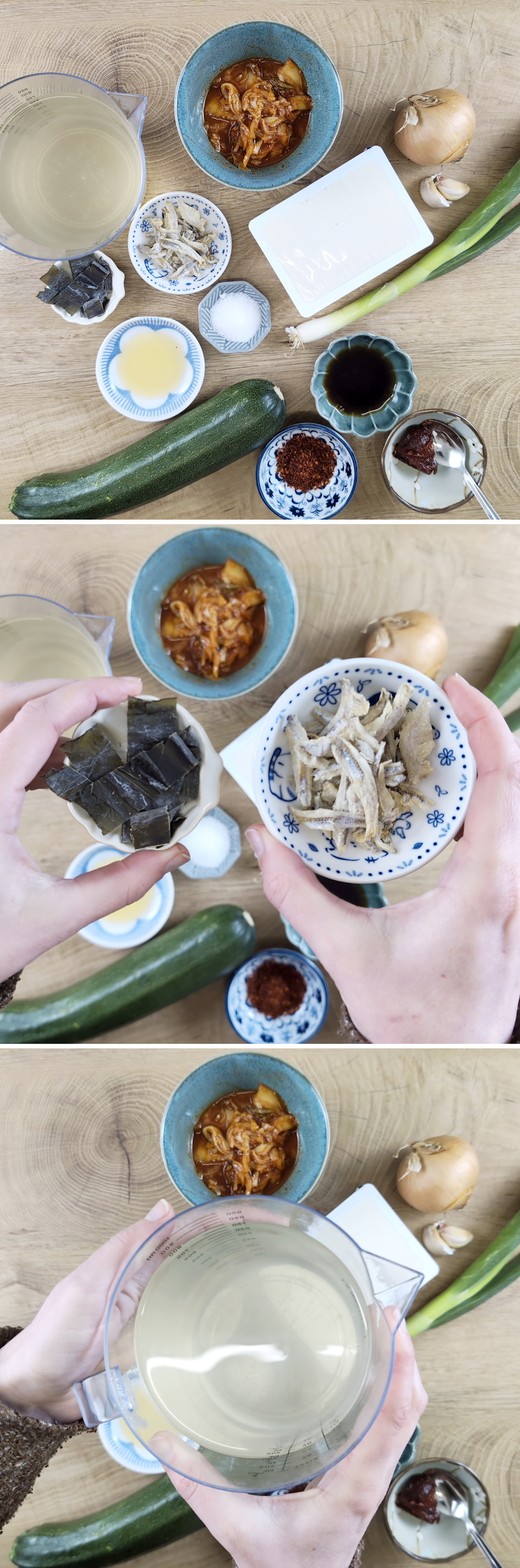
First, we’ll check that we have all the ingredients for the Korean Sundubu Jjigae.
Prepare the anchovy and Dashima broth: To do this, pour 500 ml of cold water into a saucepan along with 6 dried anchovies and the Kombu . Gently heat the liquid to around 60 °C, then turn off the heat. Leave the stock to infuse for 30 minutes with the lid on.
Next, remove the Kombu, bring the stock with the anchovies to the boil and simmer gently for 10 minutes. Strain through a sieve and set aside. This stock forms the hearty base of the stew.
Step 2
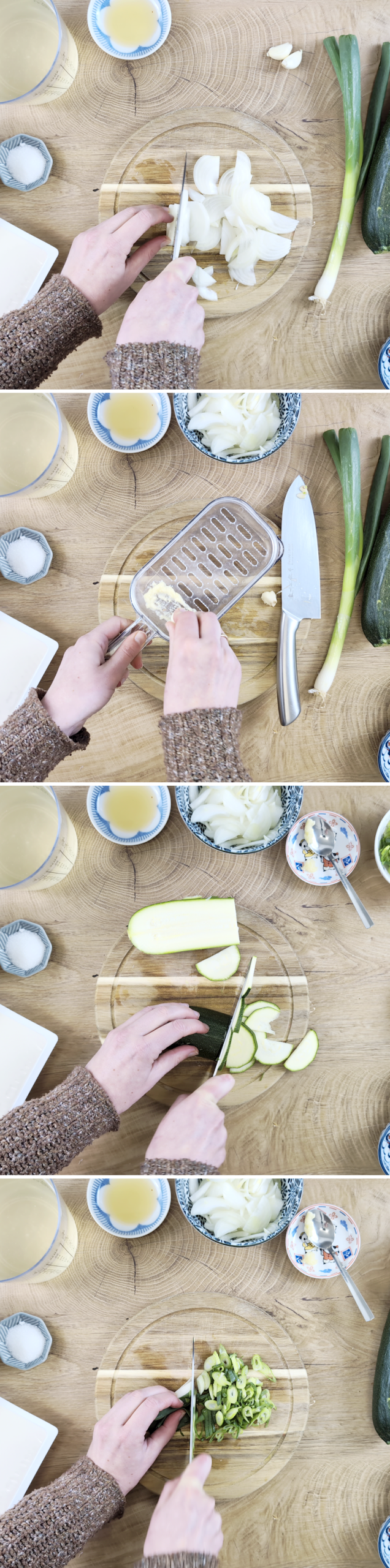
Peel the onion and cut it into thin wedges. Peel the 2 garlic cloves and chop them finely. Wash the courgette and cut it into thin slices or half-moons.
Cut the spring onion into fine rings and set aside separately. Chop the Kimchi finely if necessary.
Step 3
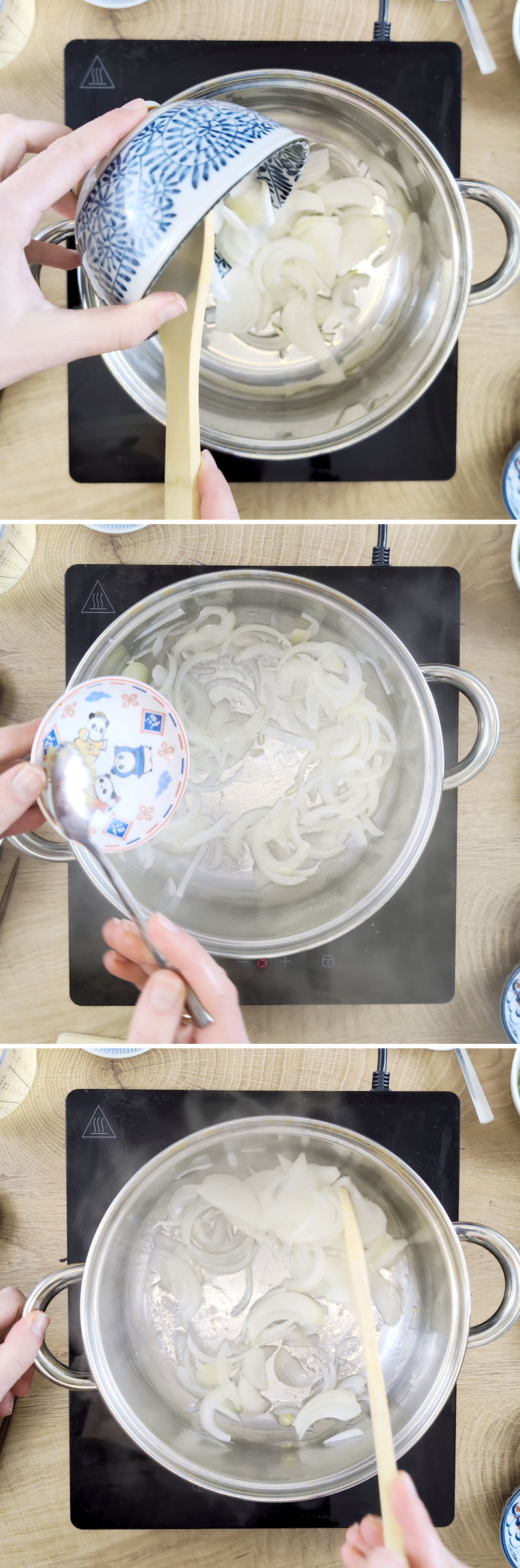
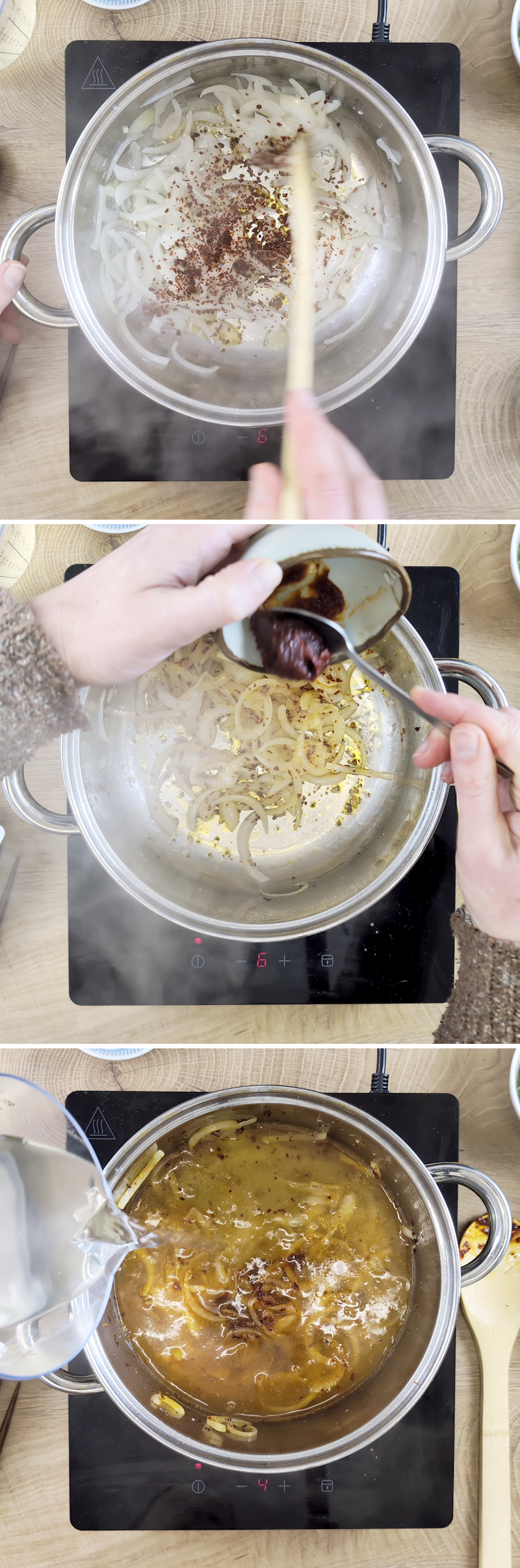
Heat 1 tbsp neutral oil in a saucepan over a medium heat. Add the onions and garlic and fry until translucent, taking care not to let them brown.
Step 4
2 tbsp Gochugaru sprinkle into the hot oil and stir immediately. Do not let the chilli burn. Immediately afterwards, optionally 1 tbsp gochujang stir in until a red, aromatic paste forms.
Pour in the prepared anchovy and Dashima stock and stir everything well.
Step 5
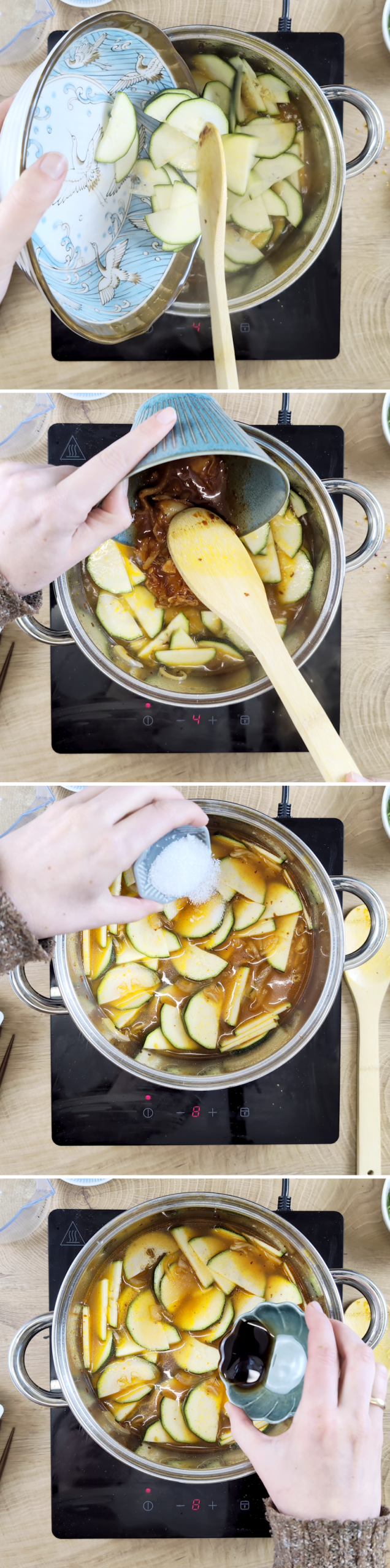
Add the courgette and 3 tbsp Kimchi to the pot and fold in thoroughly.
Season with 1 tbsp soya sauce and 1 tsp sugar. Leave the stew to simmer gently for 5 minutes to allow the flavours to blend.
Step 6
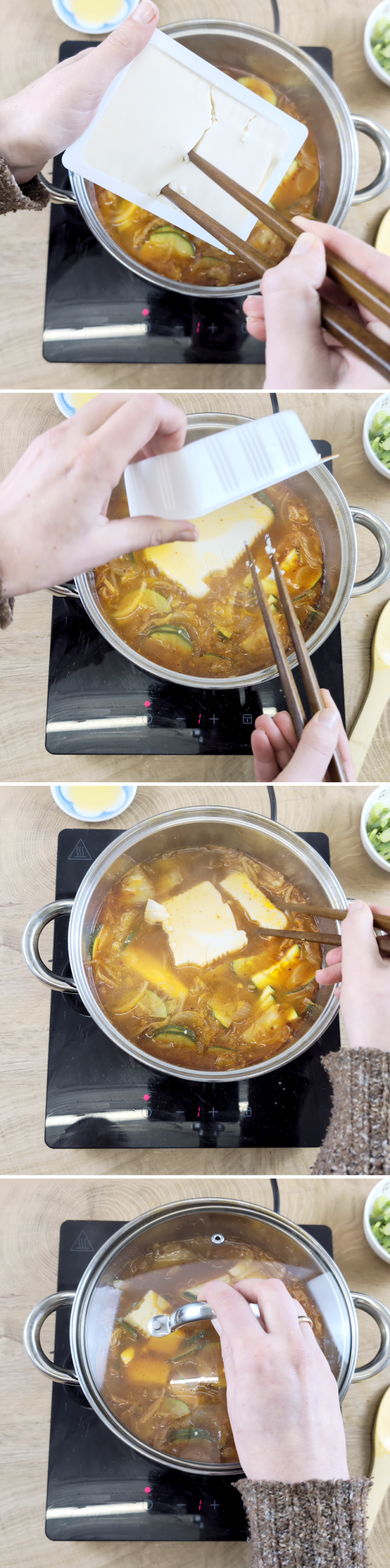
Break up the Sundubu tofu roughly with a spoon or two chopsticks and let it slide straight into the pot. The Tofu is deliberately left in large, soft pieces. Do not stir vigorously. Season the stew with a little sesame oil and leave to simmer gently for a further 5 minutes so that the Tofu warms through and absorbs the flavours.
Step 7
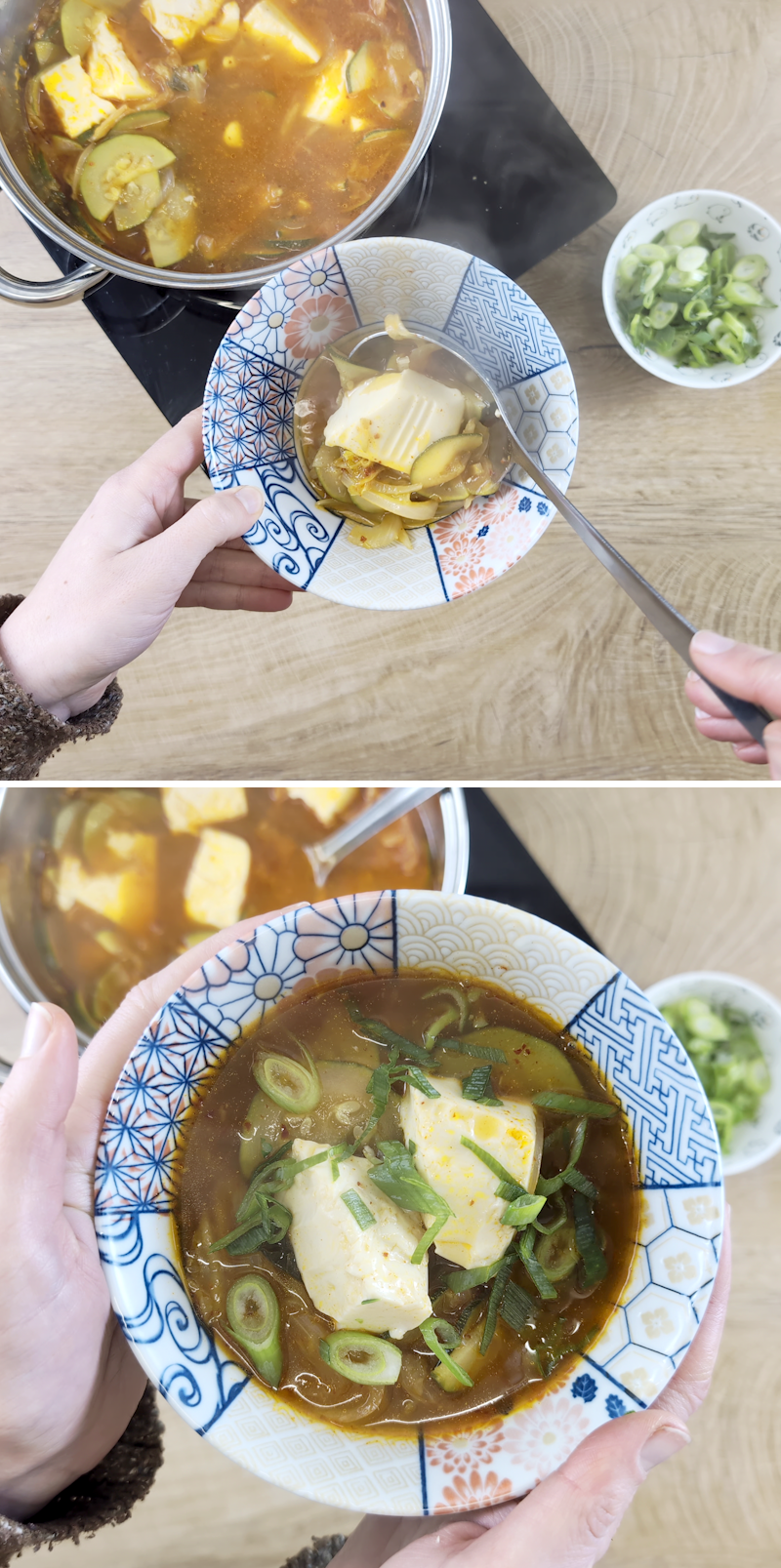
Finally, sprinkle the spring onions over the top. Optionally, gently slide an egg into the hot soup and let it set briefly. Serve the Sundubu Jjigae immediately, piping hot, ideally with rice.
Fancy some more delicious inspiration from Korea? You’ll find even more quick recipe ideas here:

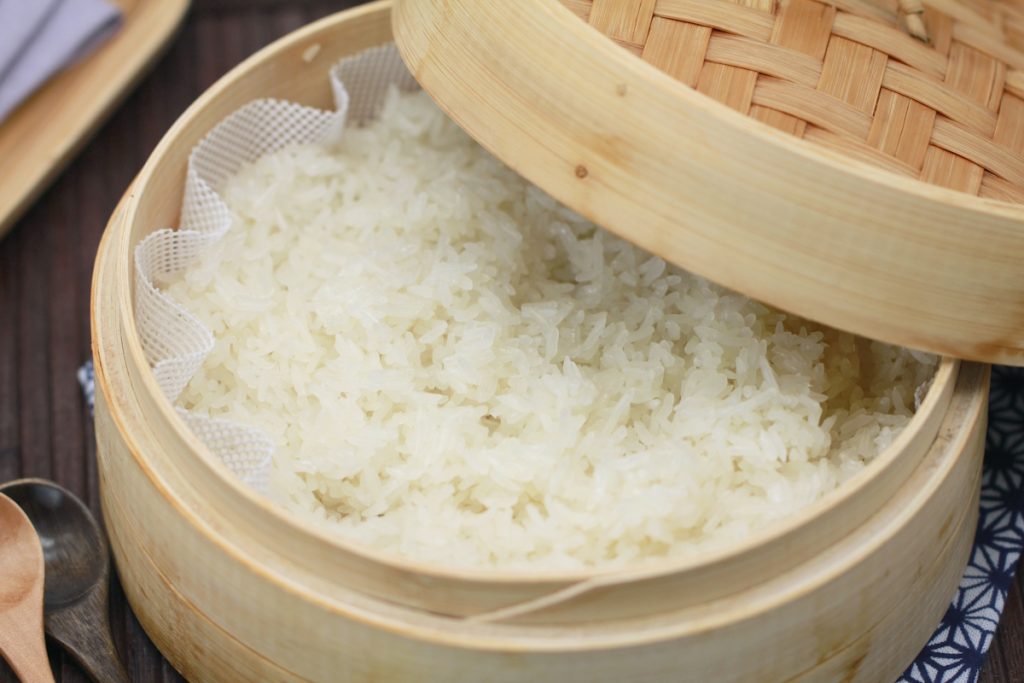
Thai Sticky Rice: How to steam Thai sticky rice (Khao Niao) properly
Thai sticky rice, also known as Khao Niao, is a very simple basic recipe, but…
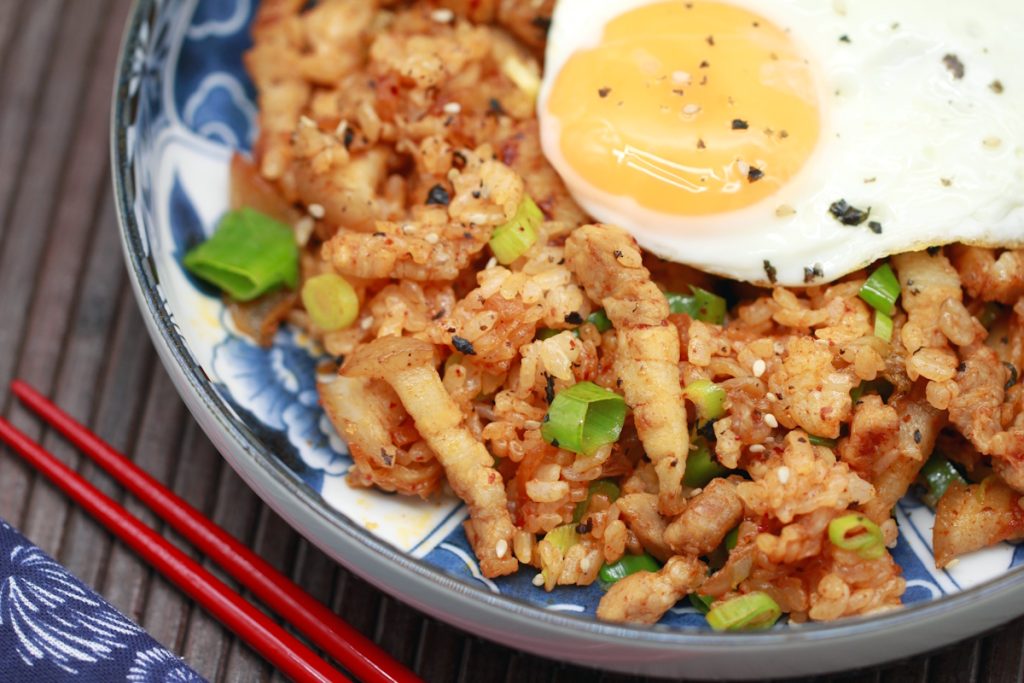
Kimchi Fried Rice: Make your own quick kimchi Bokkeumbap | in 20 minutes
Kimchi Fried Rice, also known as Kimchi Bokkeumbap, is a classic rice dish from everyday…
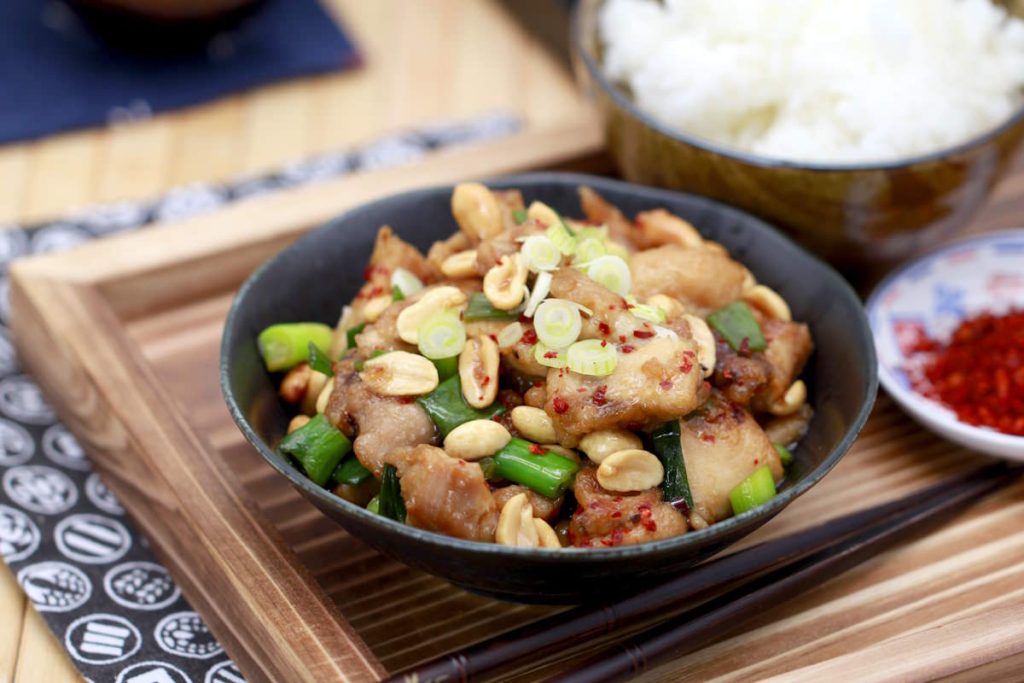
Make your own Gong Bao Chicken: Classic Kung Pao Chicken from Sichuan cuisine with peanuts & chilli
Gong Bao Chicken is a classic stir-fry dish from Sichuan cuisine that requires just a…
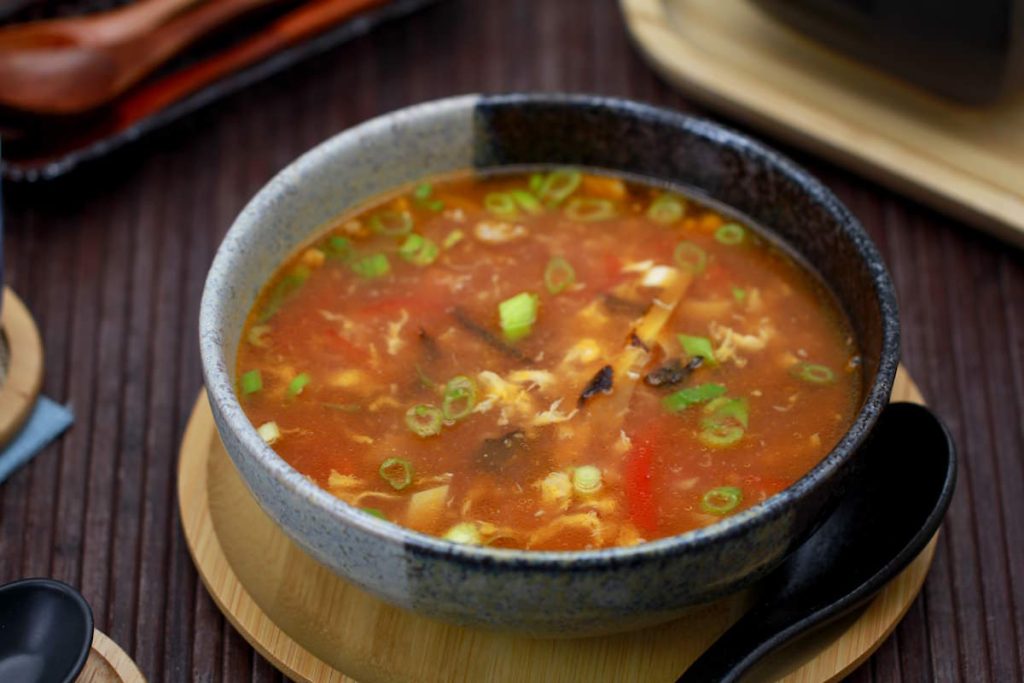
Beijing soup: Make your own Suan La Tang | Chinese hot and sour soup
Beijing Soup (Suan La Tang) is a classic sour and spicy soup from Chinese cuisine….
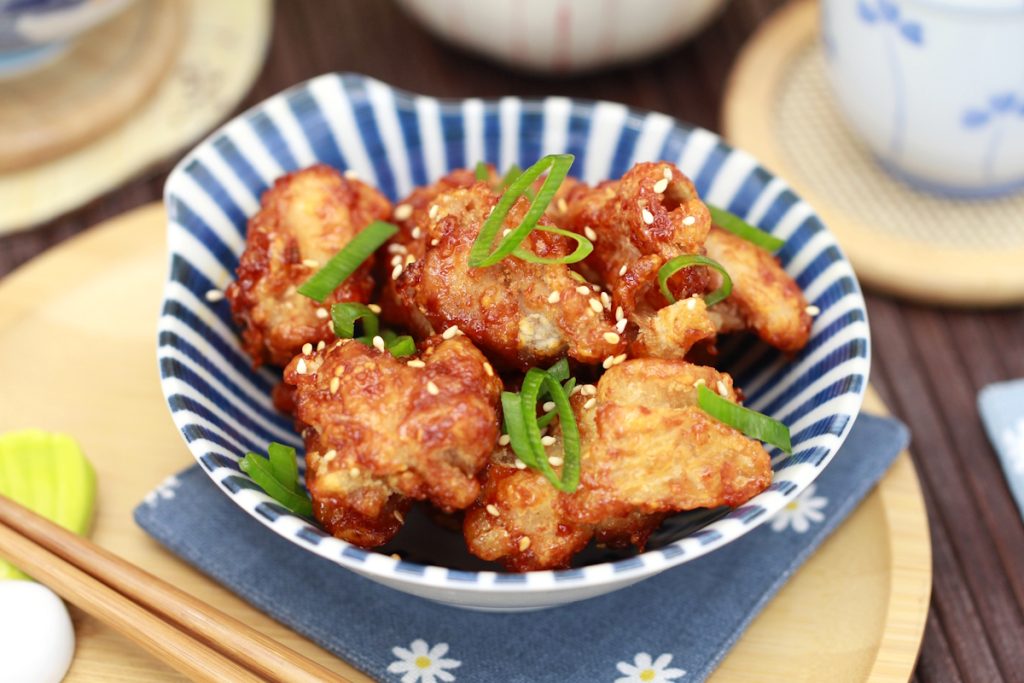
Dakgangjeong: Make your own Korean crispy chicken with a sweet and spicy marinade
I didn’t discover Dakgangjeong for the first time whilst travelling, but rather quite inconspicuously in…
Have you tried this recipe yet? Let me know in the comments – I can’t wait to hear from you.