Language:


For this classic Japanese recipe, Kabocha no Nimono, fresh Hokkaido pumpkin is simmered in a savoury Dashi broth together with soya sauce, Sake and Mirin. It’s a wonderful, healthy side dish that brings autumnal flavours to the table and is packed with essential nutrients!
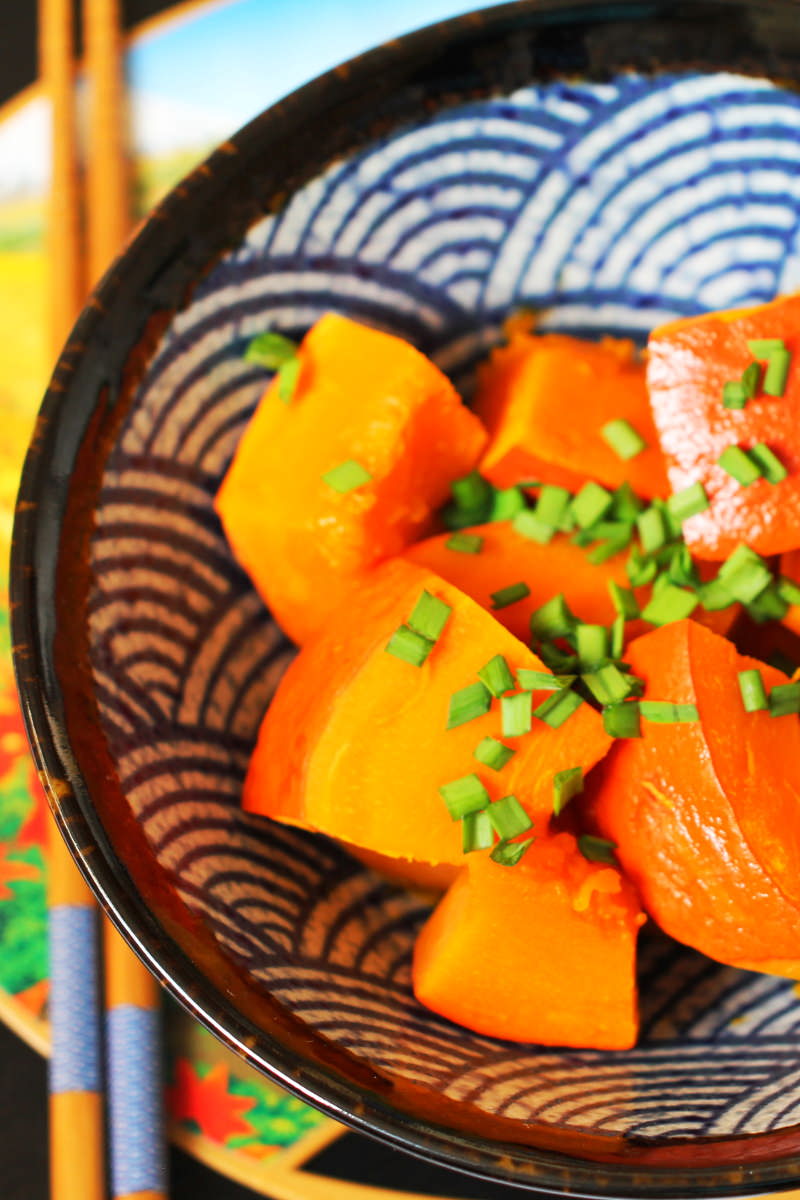
Cooked pumpkin (known as ‘kabocha’ in Japanese) is one of the most aromatic and popular nimono dishes (i.e. simmered dishes) in Japan. In Japan, you’ll find this side dish everywhere: It’s included in packed Bento Boxes sold at places like railway stations – but cooked pumpkin is also served as a hearty side dish for lunch or breakfast.
The secret behind this recipe lies in the four basic ingredients for the stock used to cook the pumpkin: soy sauce, Mirin, Sake and Dashi broth!
Soy sauce (also known as Shoyu) is one of the cornerstones and basic ingredients of Japanese cuisine and the most widely consumed product made from soya beans in the world! Shoyu (im Shop ansehen) is traditionally made through fermentation using soya beans, wheat and salt. Thanks to its rich Umami flavour, it is ideal for seasoning and enhancing a wide variety of Japanese dishes – such as noodle soups, broths, marinades and, of course, Sushi – making it a true all-rounder.
Mirin, on the other hand, is a sweet rice wine that is widely used in Japanese cuisine. This sweet seasoning sauce, brewed from fermented rice, harmonises with every conceivable ingredient and intensifies the flavour of many Japanese dishes: Mirin (im Shop ansehen) lends sauces, dressings and marinades a delicious sweetness and ensures a balanced, aromatic smoothness.
Sake (also known as Nihonshu) is an alcoholic drink and Japanese cooking ingredient made from rice and water. Although sake is referred to as rice wine, it is not produced by fermentation but by brewing (as with beer). In the production of Sake (im Shop ansehen), rice starch is converted into sugar, which is then converted into alcohol by yeast.
And last but not least: Dashi broth is one of the most important components of Japanese cuisine. This broth, which is made from bonito flakes (also known as Katsuobushi), Kombu (seaweed) and water, intensifies the flavour and aroma of every Japanese dish and brings out the natural flavours of the ingredients. Dashi broth, which is ready in just a few minutes, is most commonly used as a basic ingredient for soups and stews. But it also works very well in sauces and stir-fries! You can find the recipe and the best ingredients for homemade Dashi broth here:
No post found!
Typically, Dashi broth is made from Katsuobushi (also known as bonito flakes), Kombu (dried seaweed) and water. However, many Japanese people – especially when they need to get a meal on the table quickly – turn to Dashi no Moto, a ready-made instant Dashi stock (im Shop ansehen).
With these handy ingredients, you’ll be well equipped for Japanese cuisine and especially for this recipe for simmered pumpkin. And now I hope you have fun and enjoy making this delicious Kabocha no Nimono!
Kabocha no Nimono
serves 2 | 20 minutes | 201 kcal
🖨️ Print PDF 📌 Save to PinterestFor this classic Japanese recipe, Kabocha no Nimono, fresh Hokkaido pumpkin is simmered in a savoury Dashi broth together with soya sauce, Sake and Mirin. It’s a brilliant, healthy side dish that brings autumnal flavours to the table and is packed with essential nutrients!
Ingredients (2 portions)
500 g Hokkaido pumpkin
300 ml Dashi broth (homemade (see recipe) or 300 ml water + 1 sachet of instant Dashi (im Shop ansehen))
1 tbsp Sake (im Shop ansehen)
1 tbsp Mirin (im Shop ansehen)
1 tbsp soya sauce (im Shop ansehen)
1 tbsp sugar
(optional) 1 bunch Nira (garlic chives, or normal chives)
Preparation (20 minutes)

Step 1
Prepare the ingredients for the boiled Hokkaido pumpkin and (if you wish to use homemade Dashi broth) prepare the Dashi broth.
If desired, wash the nira (garlic chives) or normal chives under running water, drain and cut into fine rings (ideally, split them in half with a large knife, fold them together and cut into fine rings).
Step 2
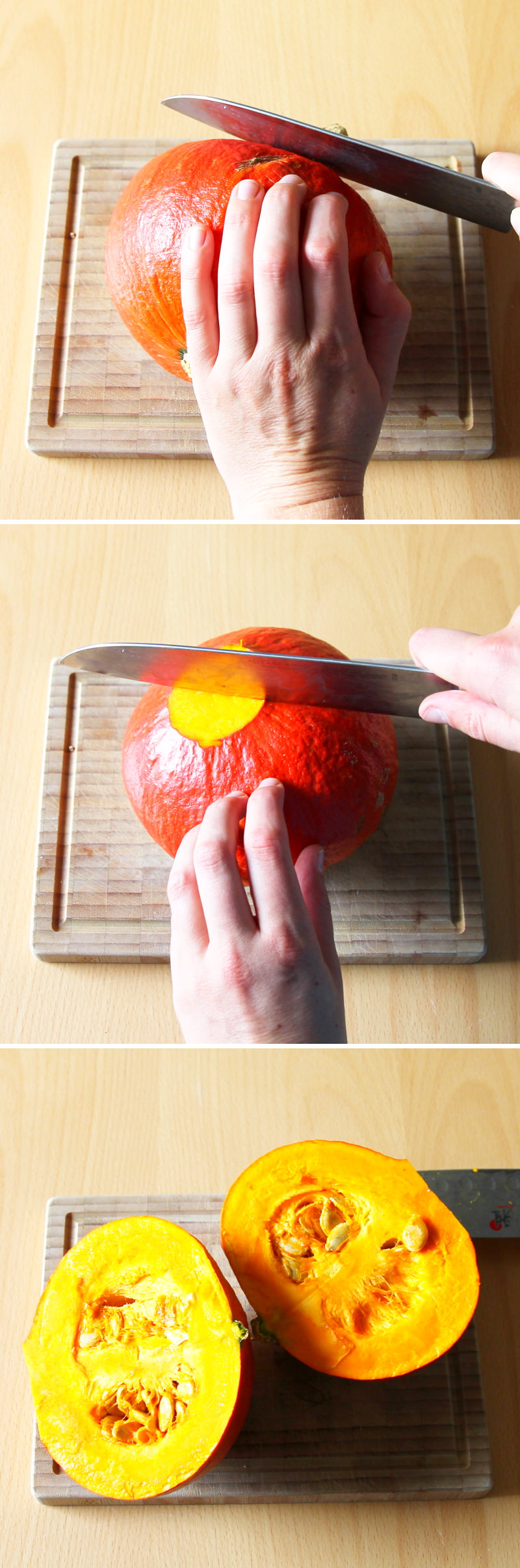
First, wash the pumpkin under running water and remove the stalk with a large, sharp knife. Then cut the pumpkin in half.
Step 3
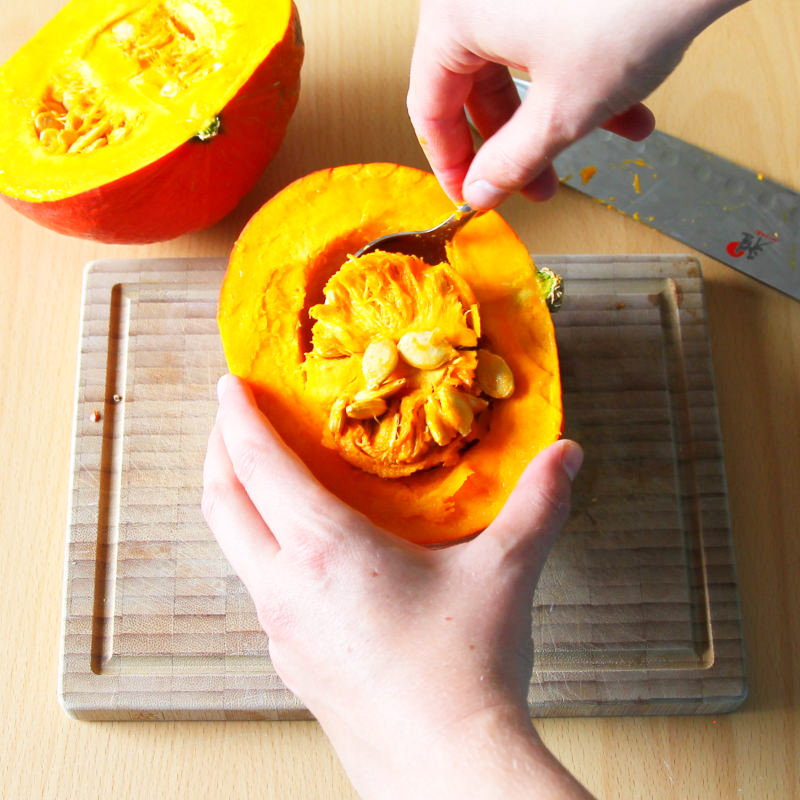
Use a tablespoon to remove the pumpkin seeds, including the fibrous flesh.
Step 4
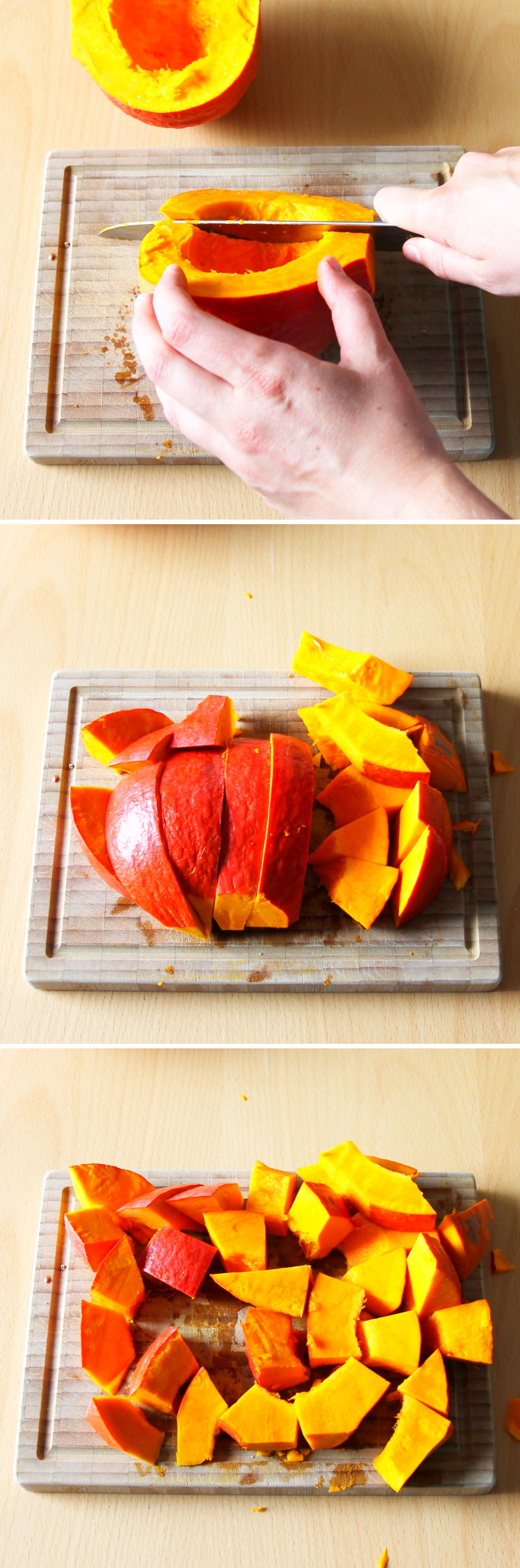
Cut each pumpkin half into wedges, then cut each wedge into about four pieces (bite-sized).
Step 5
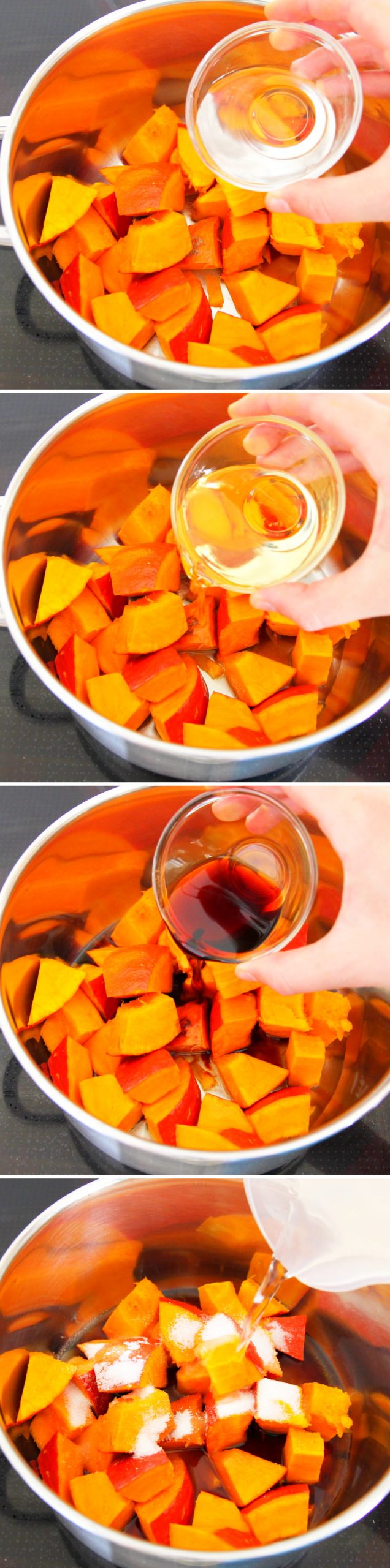
Place the chopped pumpkin into a medium-sized saucepan. Also add the seasonings: Sake, Mirin, soya sauce and sugar . If you have prepared some homemade Dashi broth , add that now as well – otherwise, pour 300 ml of fresh water and 1 sachet of Dashi powder into the saucepan and stir everything well.
Step 6
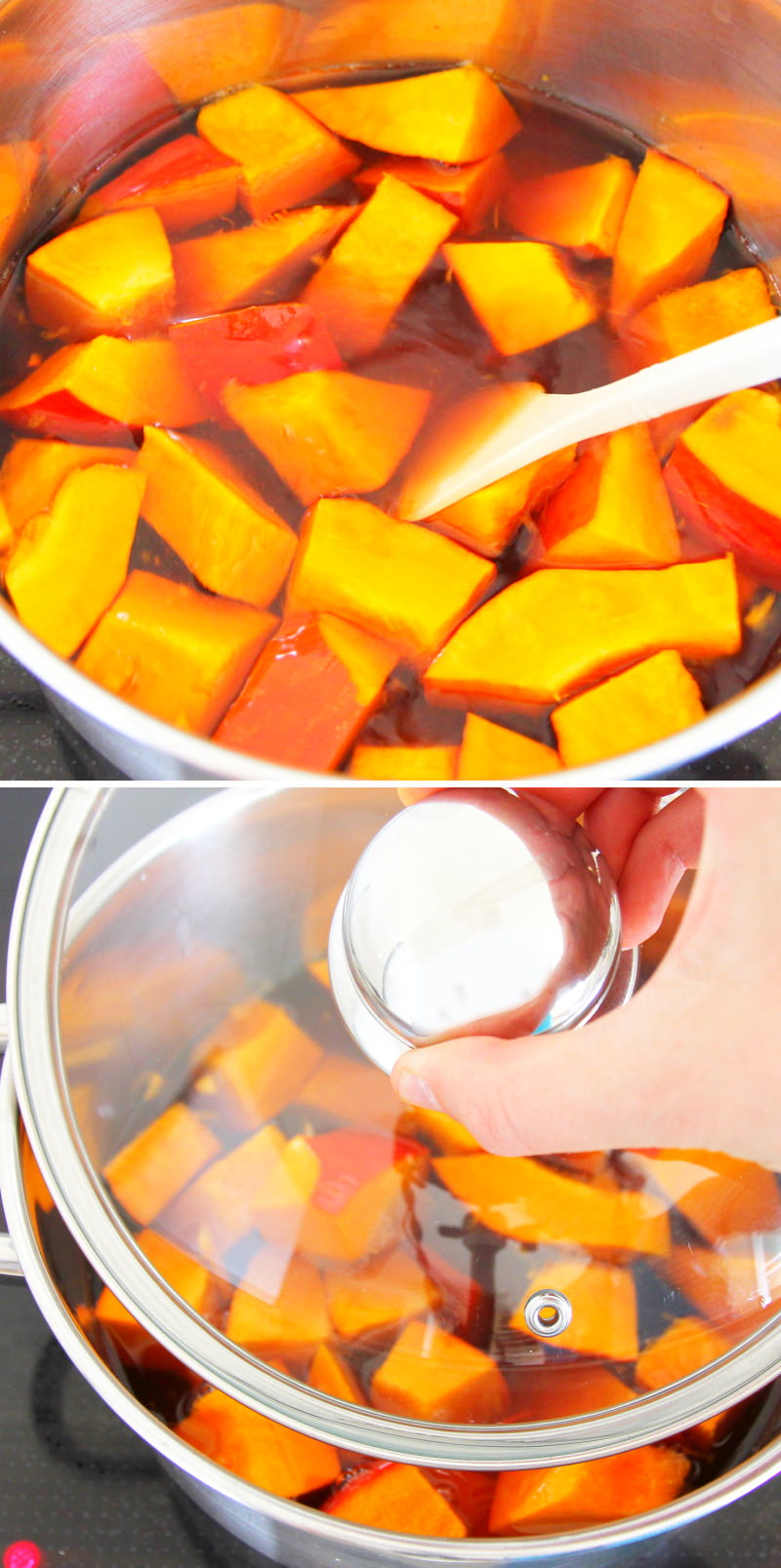
Bring all the ingredients to the boil on the highest heat. Then give it a gentle stir (the pumpkin is now quite delicate and should be handled with care from this point onwards to prevent the flesh from falling apart) and, with the lid on, simmer on a low heat for 10 minutes.
Step 7
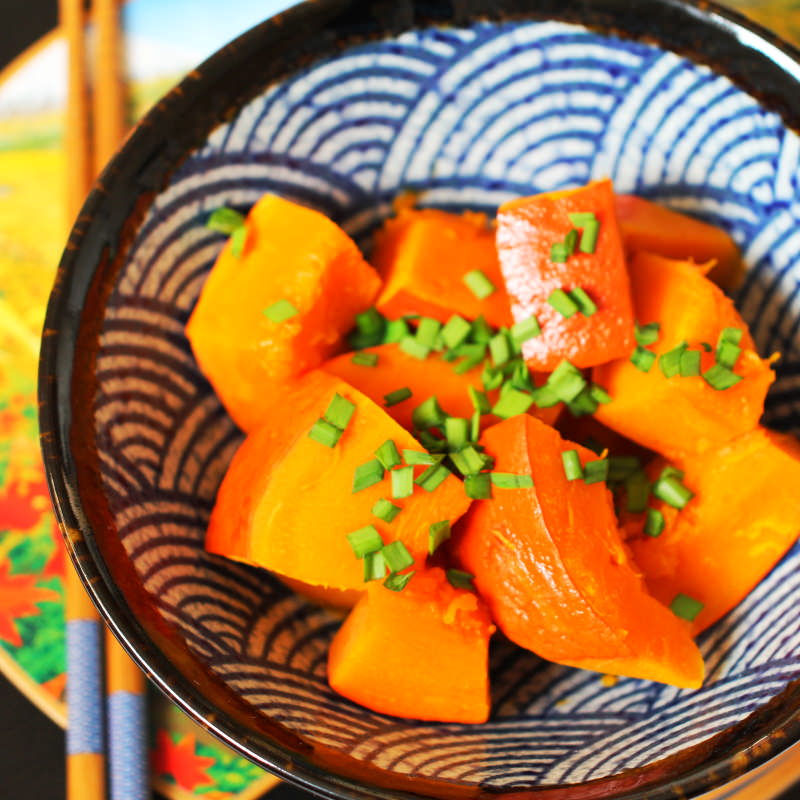
Carefully lift the cooked pumpkin out of the stock with a slotted spoon, arrange on a plate and serve hot with the chive rings. Done – Itadakimasu!
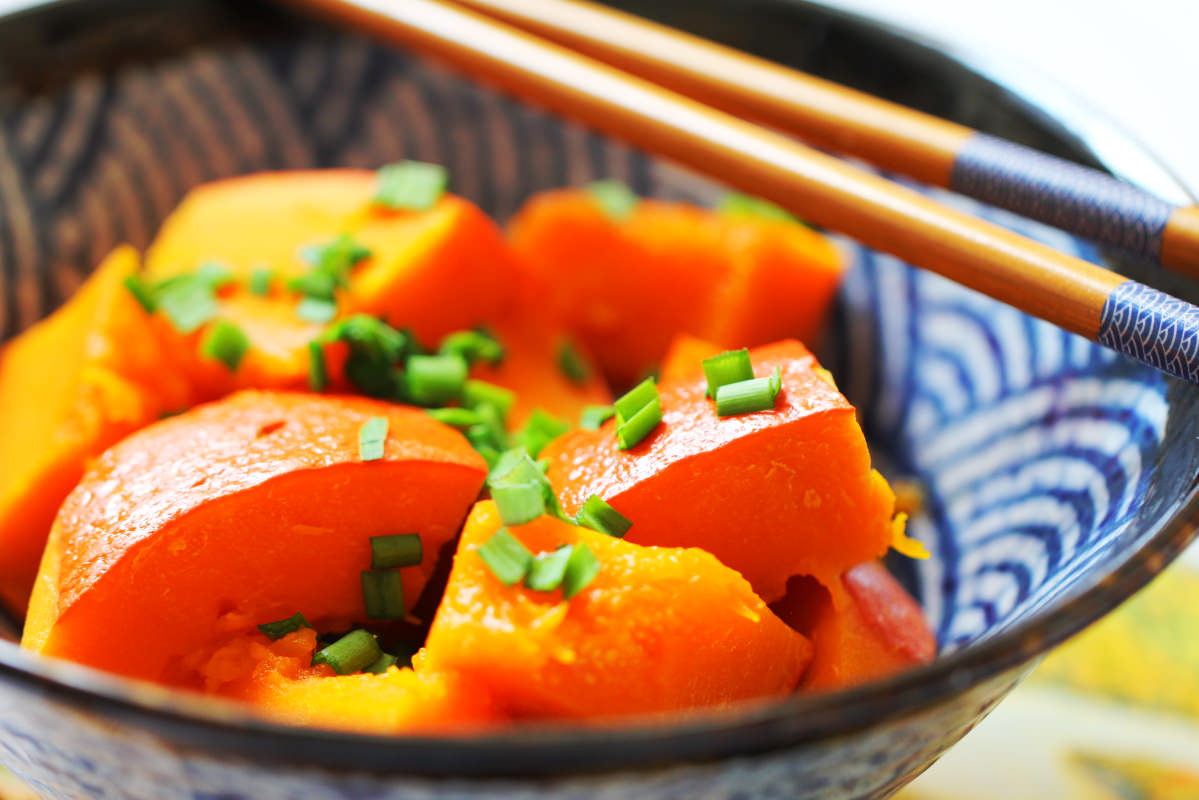
Really simple and rustic…! I hope you enjoy making this recipe for simmered kabocha squash, especially in autumn and winter. This recipe also makes a wonderful addition to a Japanese meal! A small selection of our best main courses that go well with it are: