
Language:


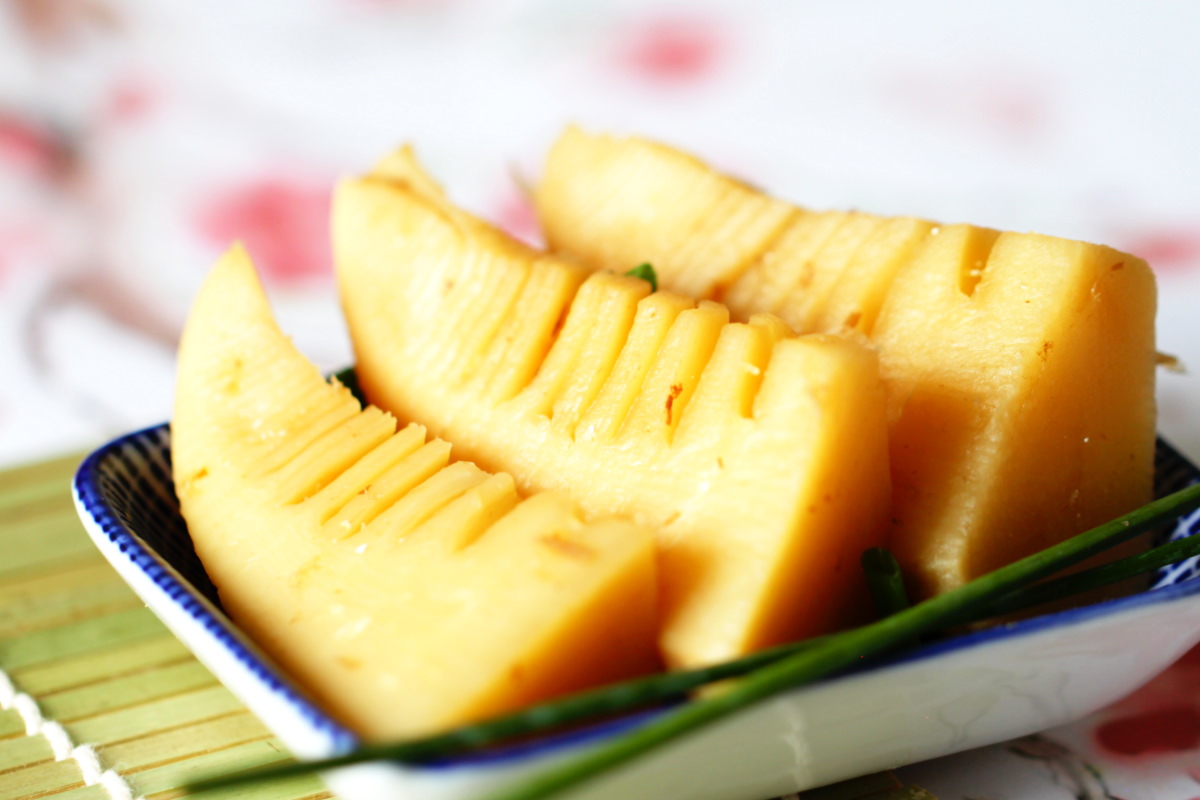
For this classic Japanese recipe, Takenoko no Tosani, bamboo shoots are simmered in a savoury Dashi broth together with soy sauce, Sake and Mirin. It is a spring-like side dish that brings elegant and unfamiliar flavours – the smoky flavour of the dried Katsuobushi also provides deep and complex Umami flavours!
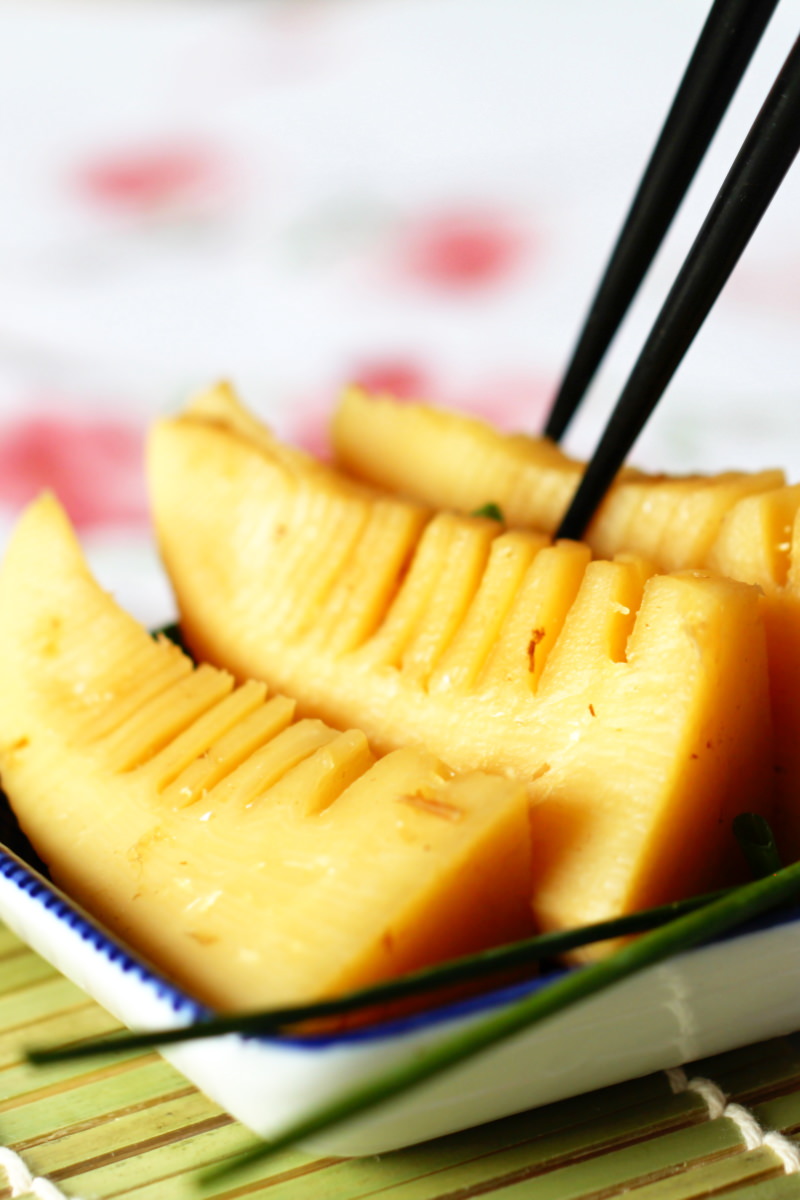
After a long winter, we eagerly await the arrival of spring. In Japan, the start of this beautiful season is heralded by the sprouting of young bamboo shoots, one of the first signs of spring.
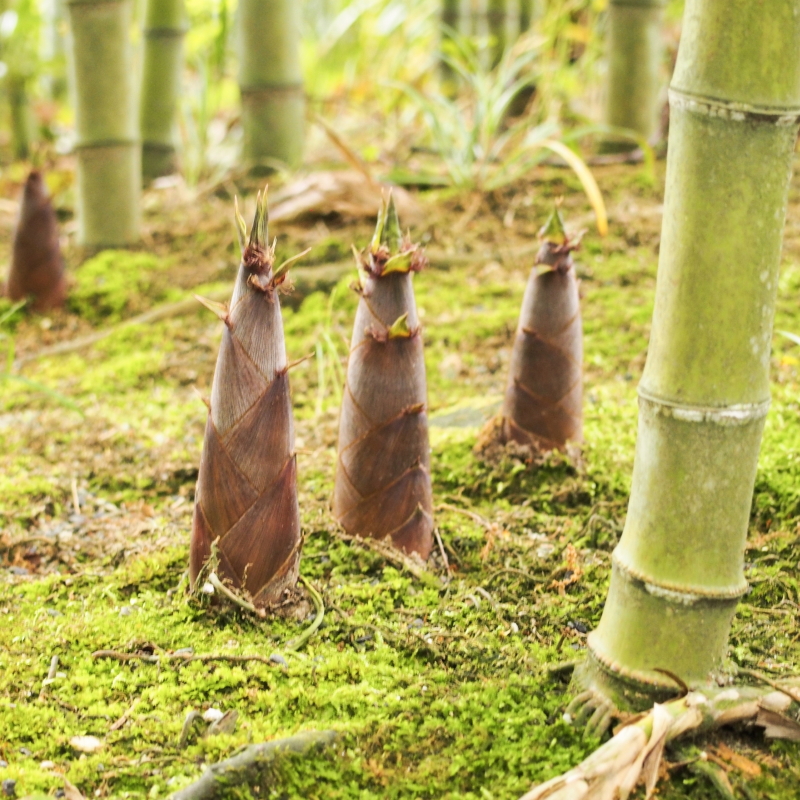
Fresh bamboo shoots are in season in Japan in spring, from March to May. They’re hard to find in Germany, so it’s best to use pre-cooked, vacuum-packed bamboo shoots.
Bamboo shoots (or takenoko in Japanese) are a vegetable frequently used in Japanese cuisine. With their nutty and slightly sweet flavour, these tender shoots can be prepared in many different ways. Today I’ll show you how to make the very popular spring recipe for braised bamboo shoots called Takenoko no Tosani.
This traditional Japanese side dish is very easy to make! It involves simmering bamboo shoots in a broth with the typical Japanese seasonings soya sauce, Sake and Mirin , then mixed with Katsuobushi (shaved bonito flakes) and served as a side dish with any Japanese main meal. When Katsuobushi or dried bonito flakes are added to a soy-sauce-based simmered dish (nimono), the dish is called tosani. Incidentally, the name of this cooking style comes from Tosa, a former province of Japan which is now known as Kochi Prefecture and is situated in the south-west of the island of Shikoku. This region is famous for its top-quality katsuo (bonito) and the delicious Katsuobushi made from it!And now I hope you have fun and enjoy making these delicious Japanese-style braised bamboo shoots!
When Katsuobushi or dried bonito flakes are added to a soy sauce-based simmered dish (Nimono), the dish is called Tosani. The name of this cooking style comes from Tosa, a former province of Japan known today as Kochi Prefecture, located in the southwest of the island of Shikoku. This region is famous for its first-class Katsuo fish (bonito) and the delicious Katsuobushi made from it!
CUSTOMER FAVOURITE
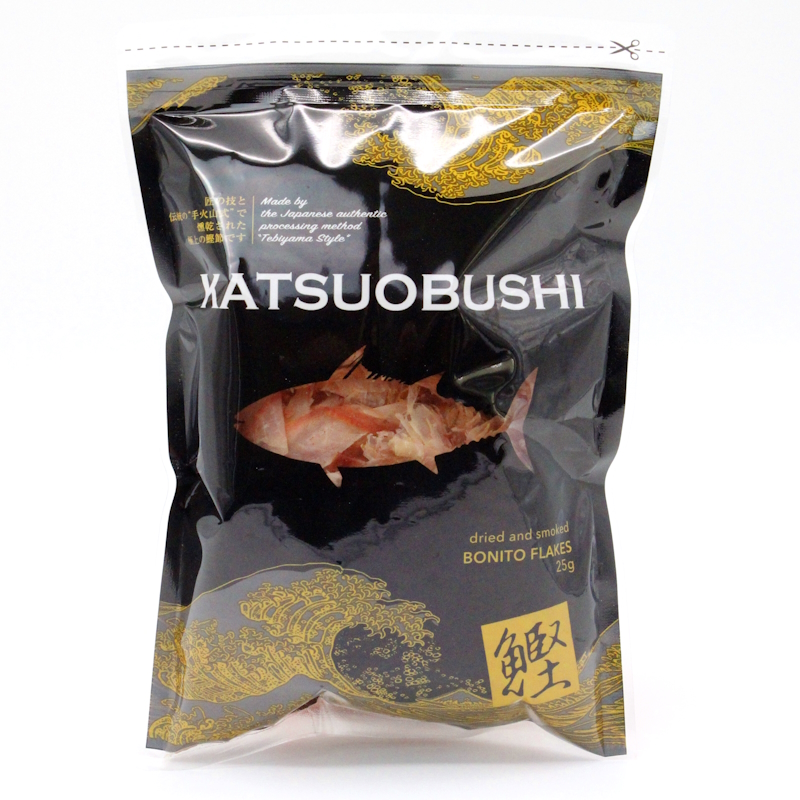
Katsuobushi Bonitoflocken 25g (dünn geschnitten), Echter Bonito, Kohyo
Katsuobushi sind küchenfertige Bonitoflocken, die unverzichtbarer Geschmacksträger für japanische Dashi Brühen, Miso Suppen und Udon Nudelsuppen sind. Doch auch leckere Garnierung für japanische Alltagsrezepte wie…
In stock
And now I wish you lots of fun and good luck preparing these delicious Japanese-style braised bamboo shoots!
Takenoko no Tosani
serves 2 | 20 minutes | 82 kcal
🖨️ PDF drucken 📌 Pin merkenFor this classic Japanese recipe, Takenoko no Tosani, bamboo shoots are simmered in a savoury Dashi broth together with soya sauce, Sake and Mirin. It is a spring-like side dish that offers elegant and unfamiliar flavours – the smokiness of the dried Katsuobushi also adds deep and complex Umami flavours!
Ingredients (2 portions)
1 bamboo shoots (pre-cooked and vacuum-sealed here)
50 ml Dashi broth (im Shop ansehen) (see recipe)
2 tbsp Sake (im Shop ansehen)
2 tbsp Mirin (im Shop ansehen)
2 tbsp Shoyu (im Shop ansehen)
1 tbsp sugar
10 g Katsuobushi (bonito flakes) (im Shop ansehen)
(optional) a little chives
Method (20 minutes)
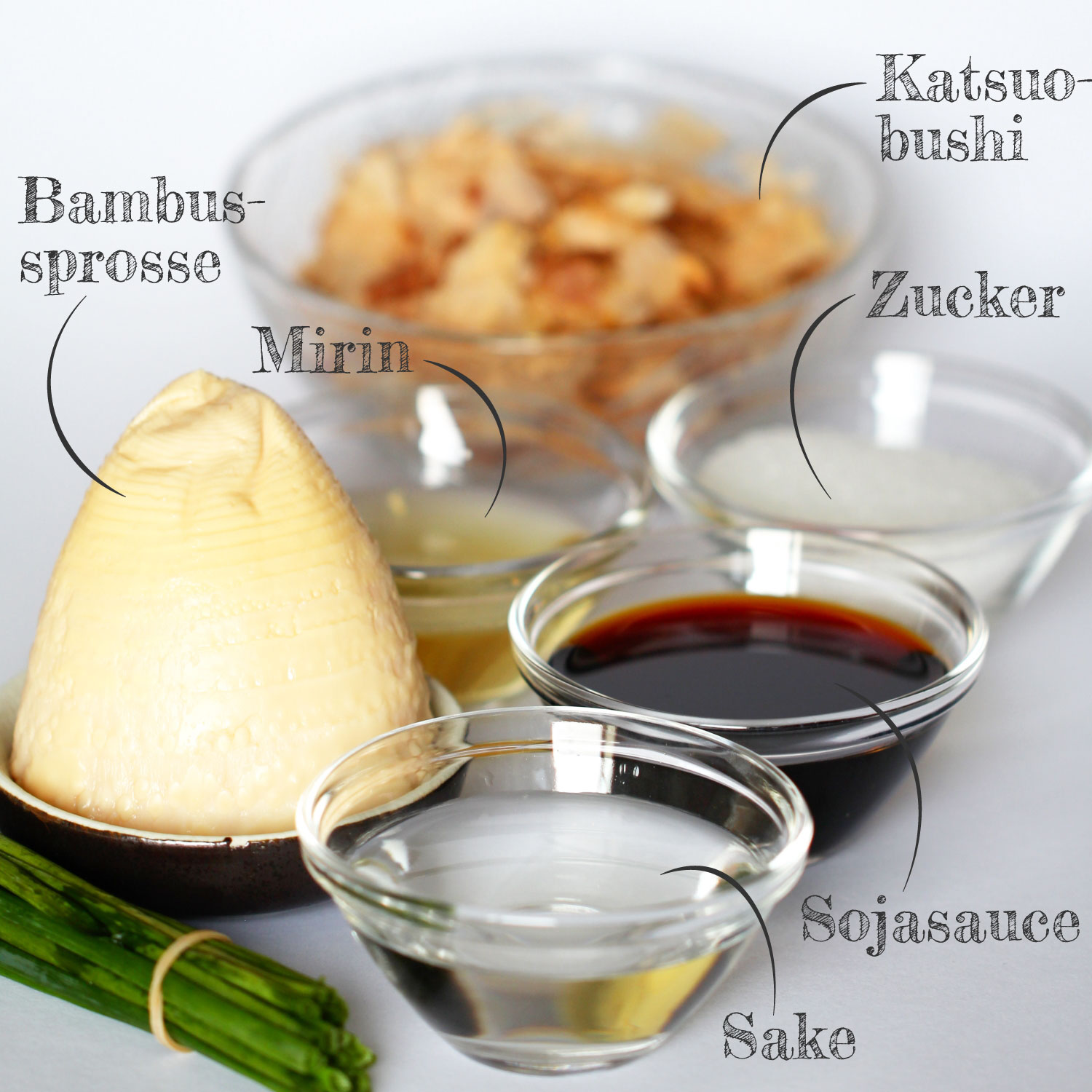
Step 1
Prepare the ingredients for the braised bamboo shoots and (if you wish to use homemade Dashi broth) prepare the Dashi broth.
If desired, wash the chives for the garnish under running water, drain and cut into fine rings (ideally, split them down the middle with a large knife, fold them together and cut into fine rings).
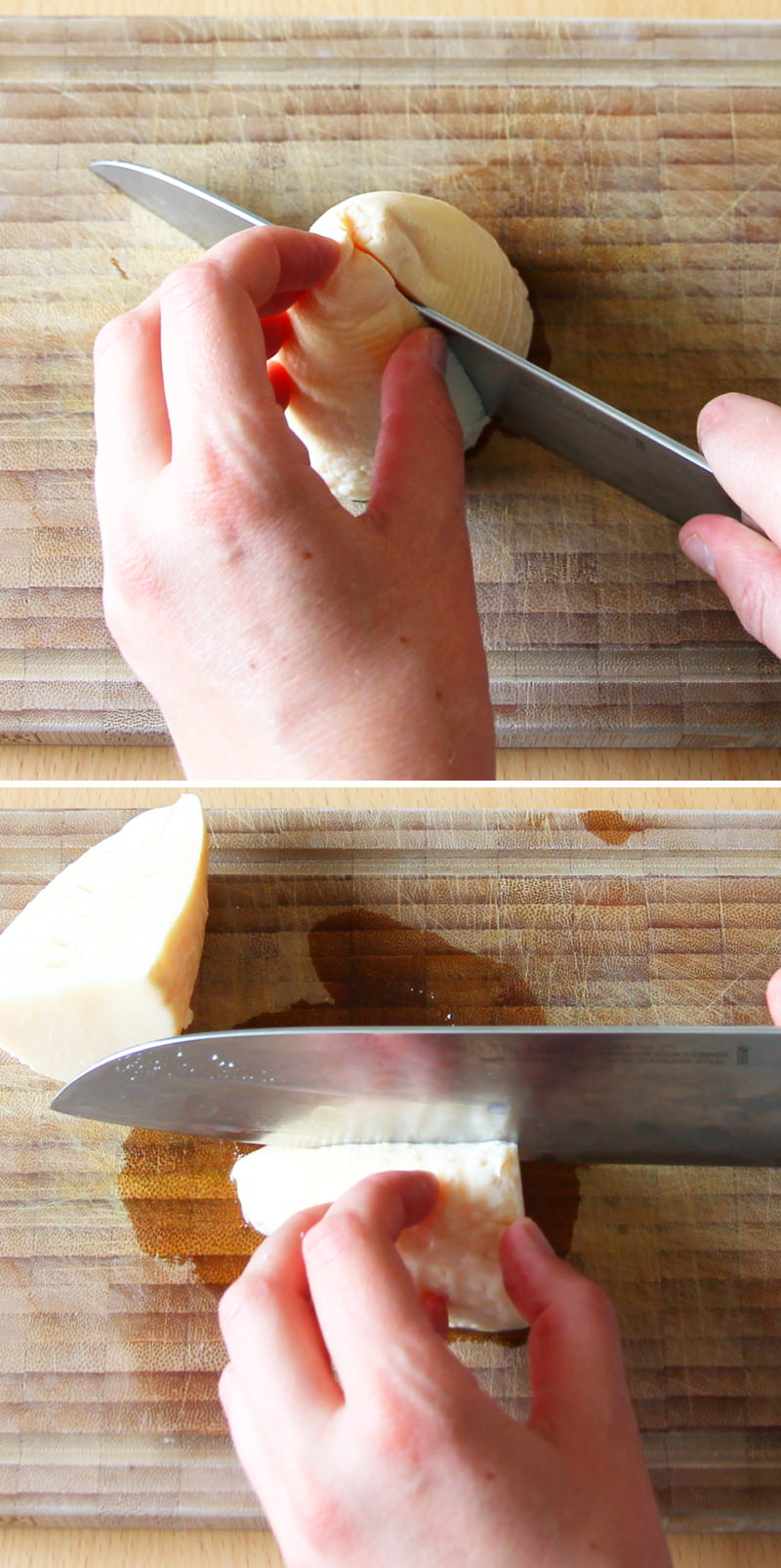
Step 2
First, wash the bamboo shoots under running water, drain them and cut them in half with a large, sharp knife. Then cut each half into thirds.
Step 3
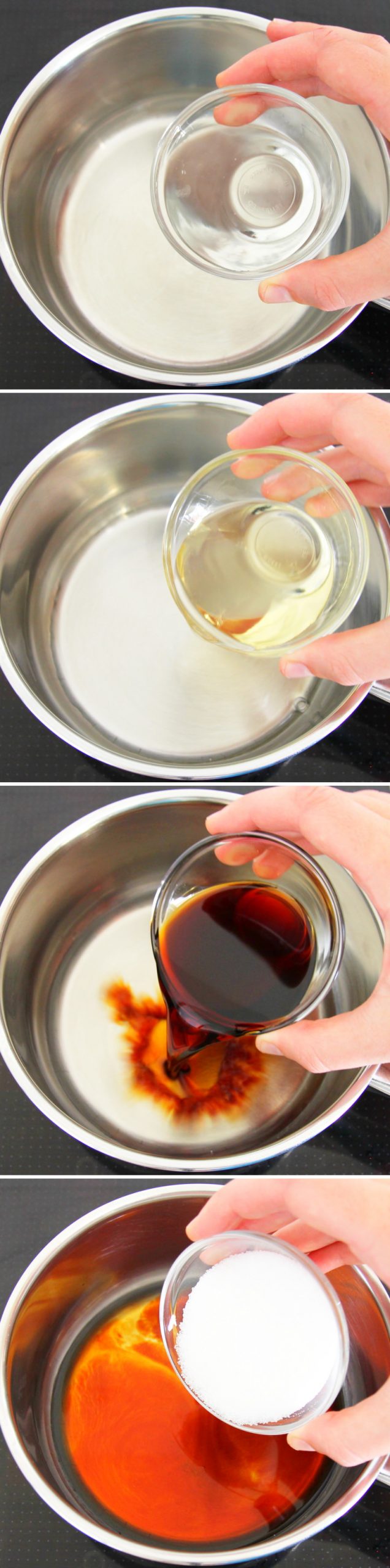
Place the sauces and spices for the stock – namely Sake, Mirin, soy sauce and sugar – into a small saucepan. If you’ve made your own Dashi broth , add that now too – otherwise, pour 50 ml of fresh water and half a sachet of Dashi powder into the saucepan and stir everything well.
Step 4
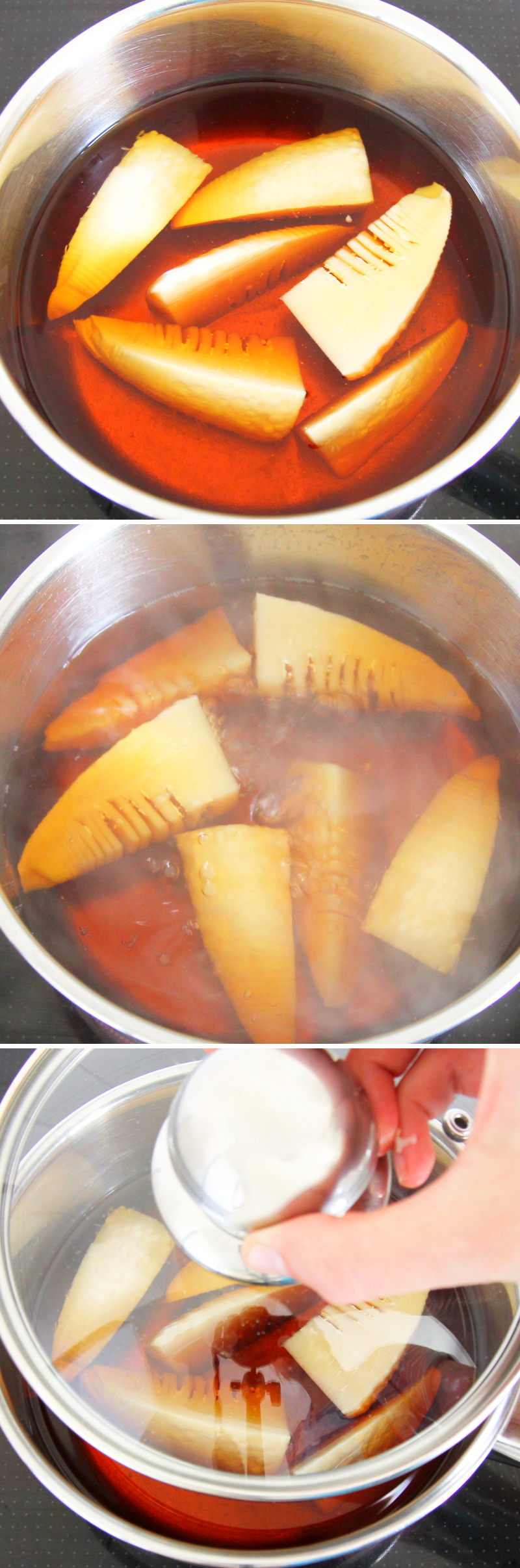
Now add the bamboo shoots, cut into strips, to the pan and bring everything to the boil over a high heat. Then give it a gentle stir and, with the lid on, simmer over a low heat for 10 to 15 minutes.
Step 5
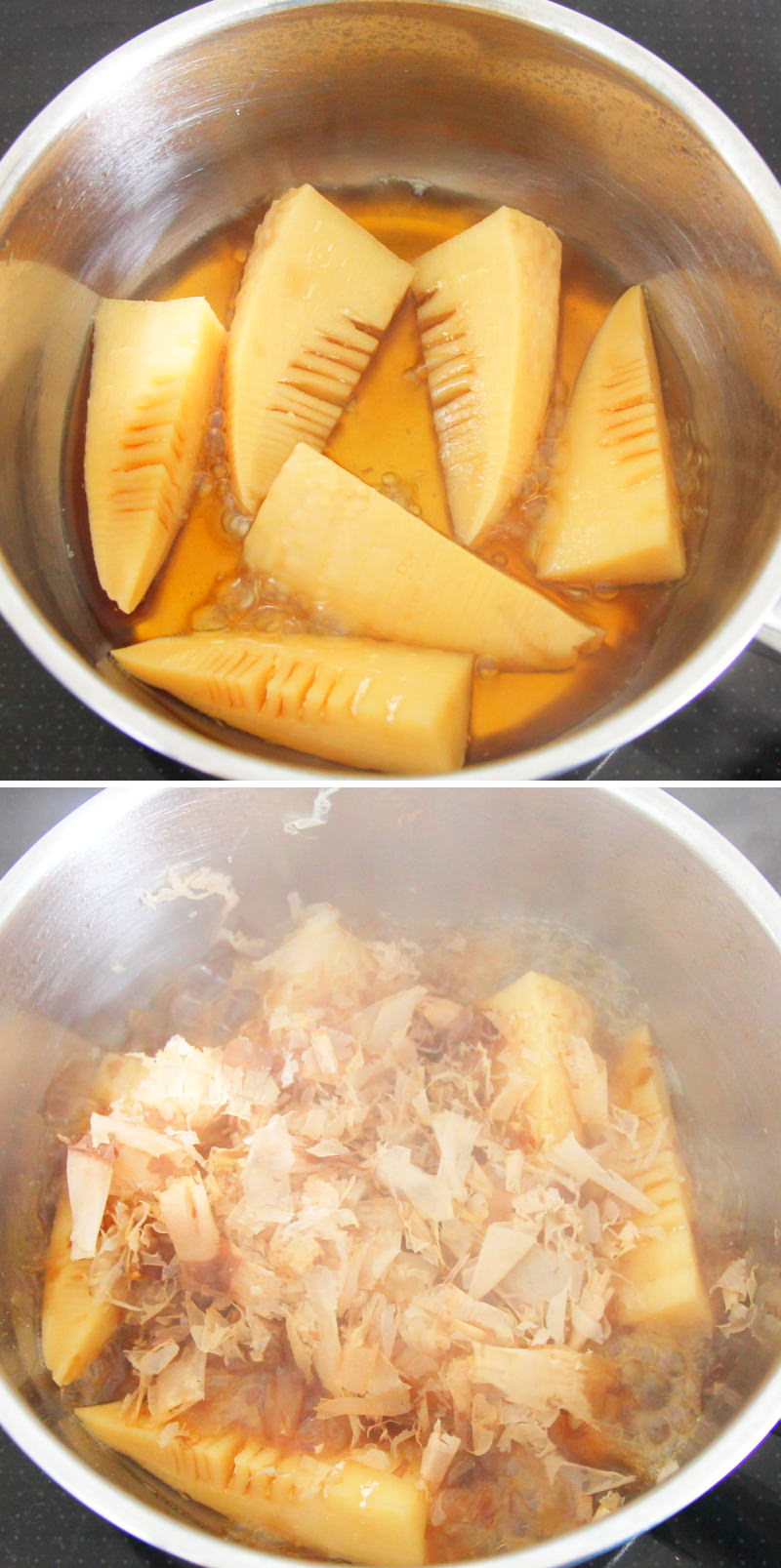
Finally, stir in the bonito flakes and mix with the remaining cooking liquid. Turn off the heat.
Step 6
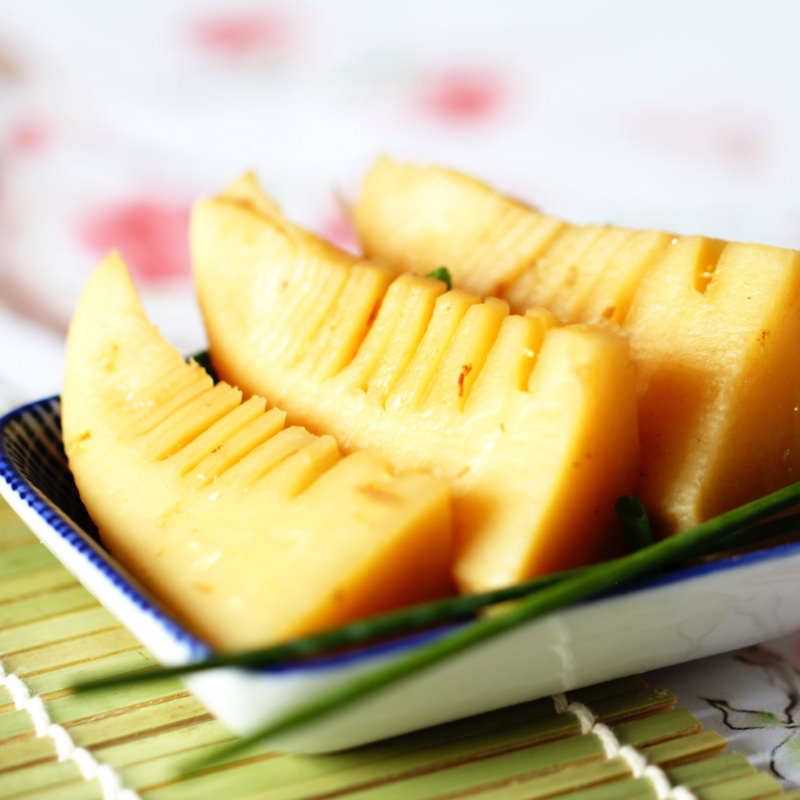
Arrange the braised bamboo shoots on a plate and serve warm, garnished with the spring onion rings. Done – Itadakimasu!
Really simple and authentically Japanese! This recipe also makes a wonderful addition to a Japanese meal! Here’s a small selection of our best main courses that go well with it: