

Language:


Ozoni is a delicious and hearty Mochi soup traditionally served during the Japanese New Year celebrations. But even outside the festive season, it’s a real treat for the palate! This light, Dashi-based soup contains tender chicken and seasonal vegetables, which harmonise perfectly to create a soothing taste experience. With its delicate flavours, this soup is a wonderful addition to any festive meal.
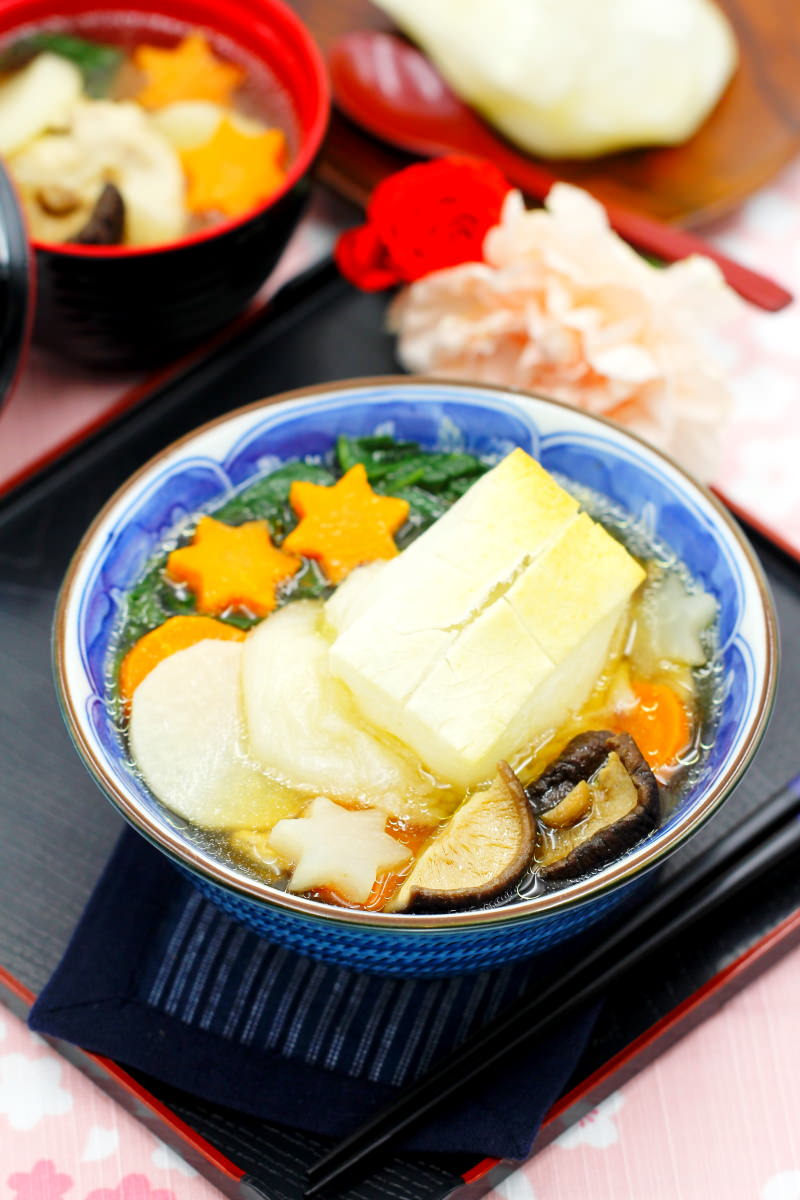
With Akemashite omedetō gozaimasu , the New Year is welcomed in Japanese! Oshogatsu, the Japanese New Year, is one of the most important celebrations in Japan and is celebrated quite differently from how we do it here in Europe. While in Germany the start of the year is celebrated with a grand fireworks display and a tipsy ‘Cheers, Happy New Year!’, in Europe it tends to rank second or third among family celebrations after Christmas.
This is in stark contrast to Japan: there, New Year’s Eve marks the start of the actual New Year celebrations. In Japan, the New Year does not begin with spectacular fireworks, but with the sound of Buddhist temple bells. The large bell at every temple is struck 108 times; with each chime, one of the 108 worldly sins leaves the earth, allowing everyone to welcome the New Year with a clean slate.
The New Year celebrations, however, bear more resemblance to the Christmas celebrations we are familiar with. It is the most important family celebration of the year, as children receive presents and, above all, there is plenty of food and drink – which is rather unusual in the Japanese diet.
Did you know that the food for New Year’s Day is prepared before the turn of the year, so that nobody in Japan has to cook on the first day of the new year!
Part of the traditional New Year’s customs is the preparation of various delicacies, all of which carry special significance. These specialities are known as Osechi Ryori and symbolise hope, happiness and prosperity in the new year. For example, a lavishly filled Bento is served, with a sea bream fried in salt symbolising good luck, herring roe ensuring healthy offspring, and black soya beans bringing good health.
An integral part of these culinary rituals is serving homemade ozoni with baked mochi rice cakes on the morning of the first day of the New Year. This is because eating mochi at New Year, thanks to the chewy texture of the rice cakes, symbolises longevity, stamina and good health!
Would you like to find out more about Japanese Mochi? Then let yourself be enchanted by the world of Japanese rice cakes here: → Make Mochi yourself: 7 recipes that really work!
The basis for ozoni (or simply zoni) is a light Dashi broth made with Kombu and shiitake. In Japan, Dashi is often made with Katsuobushi instead of shiitake. However, I prefer to use dried shiitake mushrooms for my ozoni, as I can then use them directly as a garnish for the soup, which means less waste.
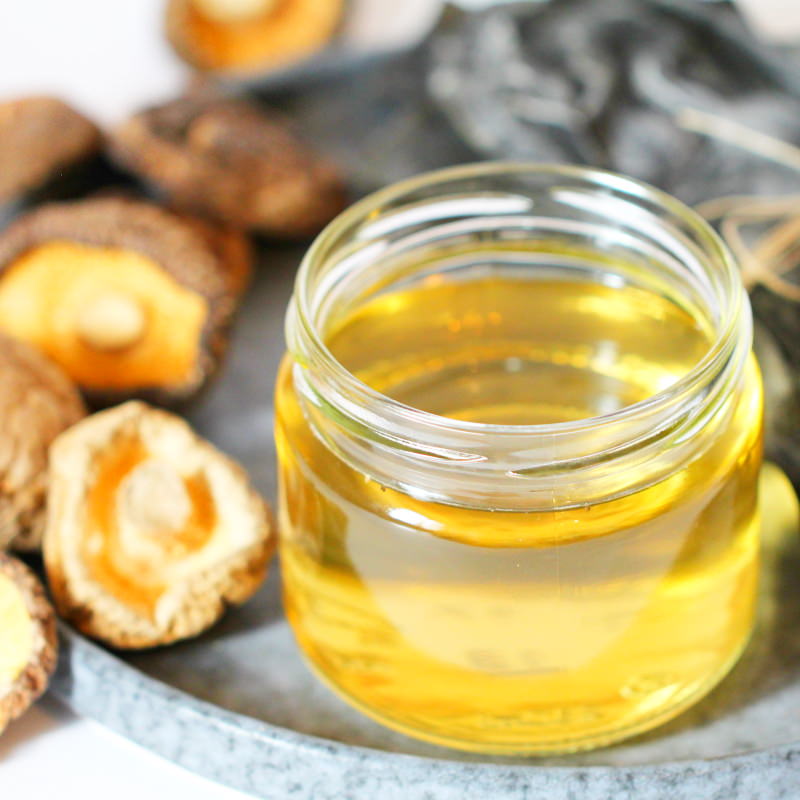
In Japan, there are two different versions of the festive New Year’s soup: In the Kanto-style Ozoni, which is prepared in eastern Japan, seasonal vegetables – such as carrots, radish and taro (satoimo) – as well as chicken are cooked in a homemade Dashi broth and then seasoned with a dash of soya sauce (im Shop ansehen) to taste. The Kansai-style Ozoni (from the area around Osaka and Kyoto) is finished with Miso paste instead of soya sauce, resulting in a cloudier and earthier soup.
In the Kanto region, a rectangular kirimochi is also served with the soup, which for me is the absolute highlight of this recipe. Kirimochi are dried blocks of mochi made from pounded glutinous rice. When kirimochi are grilled in the oven – as here for Kanto-style ozoni – the inside becomes very soft and the outside turns crispy. Yum, yum, yum!
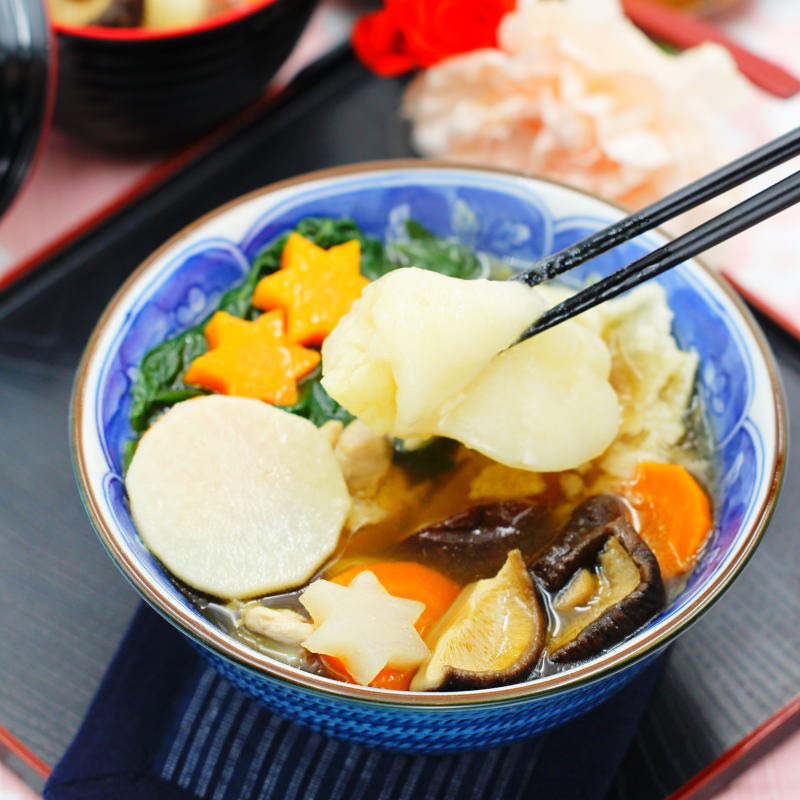
Kirimochi should be a staple in your kitchen from now on. In my post on savoury Mochi recipes , I’ll show you even more delicious recipe ideas for kirimochi!
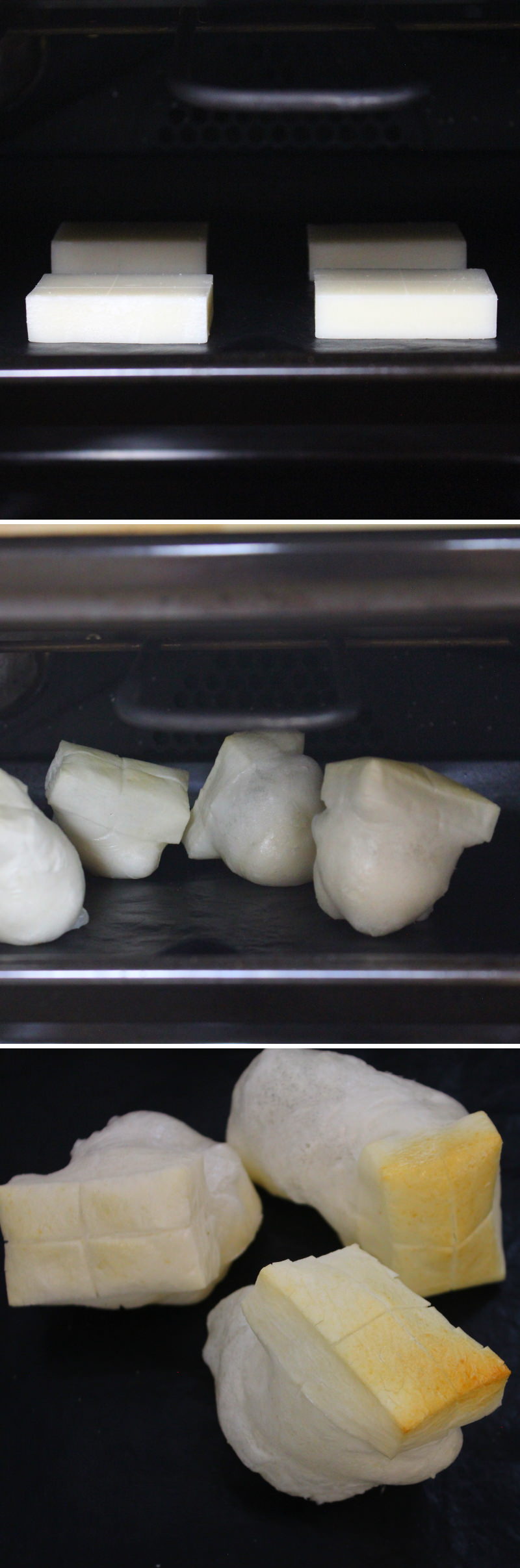
To make them, arrange the kirimochi on a baking tray lined with baking paper, leaving a little space between them, and bake in the oven at 180°C (ideally using the fan and grill functions, if available) on the middle shelf for 15 to 20 minutes. Don’t be surprised: at first, nothing happens for quite a while, then the Mochi puff up and finally turn golden brown on the outside.
KUNDENLIEBLING
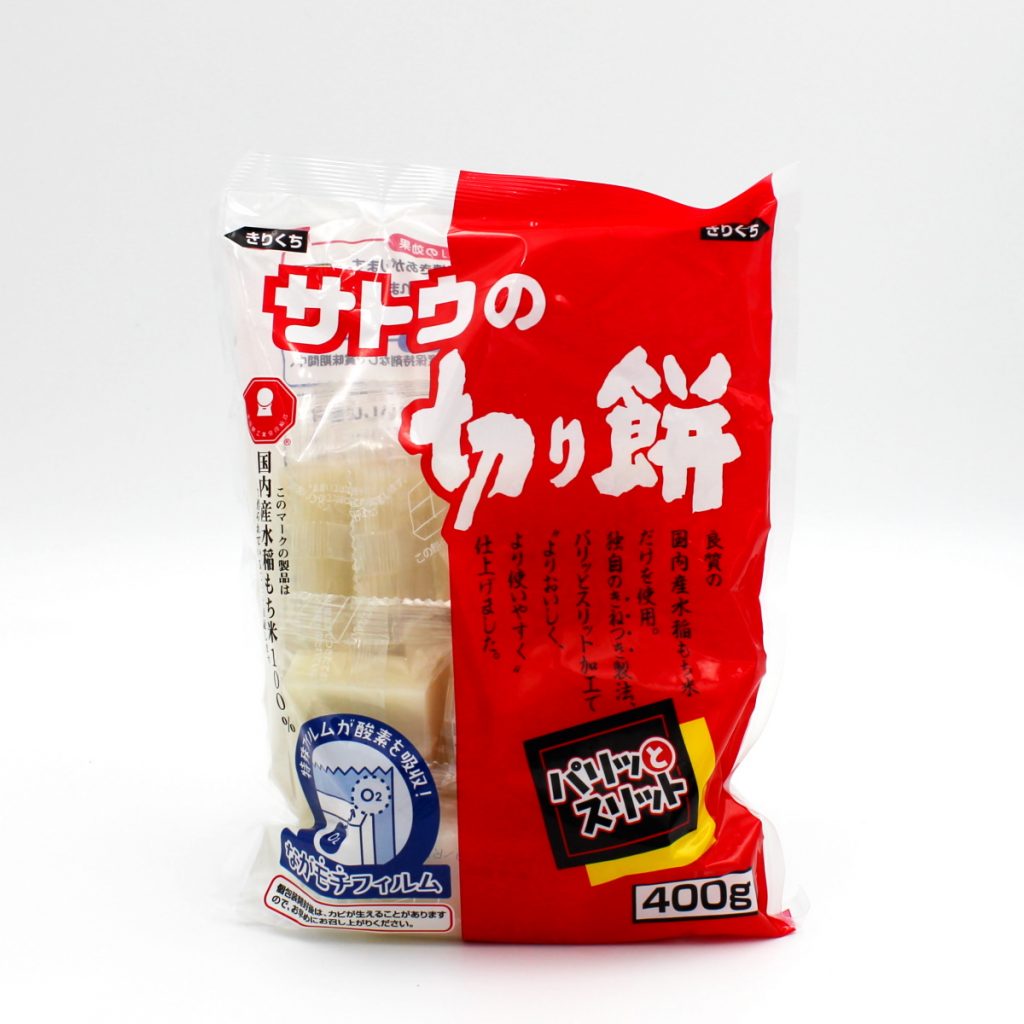
Kiri Mochi 400g (quadratische, getrocknete Mochi Reiskuchen), Sato
Kiri Mochi ist die wichtigste Zutat für herzhafte Mochi Rezepte. Sie werden gegrillt, gekocht oder gebraten und sind eins der vielseitigsten Lebensmittel der japanischen Küche.…
In stock
Tip: Kirimochi usually have delicate perforations. This means each block of kirimochi rice can be halved or quartered again using a large, sharp knife!
In Japan, of course, no compromises are made when it comes to soup ingredients. Fresh carrots, radish, taro and komatsuna are absolutely essential. Taro is known as satoimo in Japan and is a slightly sweet-tasting root vegetable that bears a strong resemblance to potatoes. So if you don’t have a well-stocked Asian shop nearby, you’re welcome to simply replace the taro with a waxy potato – I think it’s fine if we allow a few compromises here 😉 I’ve also replaced komatsuna, also known as Japanese mustard spinach, with ordinary baby spinach!
The same goes for the chicken. Usually, a little chicken is used for ozoni – if you’d prefer to make a vegan or vegetarian version of ozoni, feel free to use tender silken tofu instead! Ideally, wrap the Tofu carefully in kitchen paper and leave it to drain for about 10 minutes – simply set it aside, still wrapped. Then carefully unwrap the Tofu from the kitchen paper and cut it into bite-sized pieces with a large, sharp knife.
This Japanese New Year’s soup takes less than 45 minutes to prepare, including all the prep work. It is served in small or medium-sized bowls, each topped with a piece of baked kirimochi. Incidentally, the ingredients in this hearty ozoni Mochi soup are eaten with chopsticks, whilst the soup itself is sipped straight from the bowl.
Ozoni is a soup served as part of a Japanese meal. It’s not meant to be a meal in itself! I therefore recommend serving a few hearty, filling dishes alongside it, for example:
- Japanese sticky rice
- Hiyayakko – silken tofu in a light sauce
- Kakuni – braised Japanese pork belly
- Tamagoyaki – rolled Japanese omelette
- Tsukemono – pickled daikon radish (Amasuzuke)
Did you know? The history of ozoni dates back to the time of the samurai, as they, too, greatly appreciated a warm soup during cold, hard times!
I’m really delighted to be able to share this recipe with you. I hope you’ll enjoy this warming and well-balanced soup just as much as I do :). Have fun and good luck with the cooking!
Ozoni Mochi Soup
Serves 4 | 45 minutes | 274 kcal
🖨️ Print PDF 📌 Save to PinterestOzoni is a savoury Mochi soup that tastes absolutely delicious, and not just for the Japanese New Year celebrations. This light, Dashi-based soup with tender chicken and seasonal vegetables is a comforting, soul-warming dish, and its delicate flavours perfectly complement any festive meal!
Ingredients (serves 4)
4 Kirimochi – square Mochi blocks (im Shop ansehen)
100 g chicken (e.g. wings, thighs or breast; vegetarian alternative: soft silken tofu )
1 round radish (spring radish)
1 large carrot (with a large diameter for decoration)
1 taro (alternatively, waxy potato)
100 g komatsuna (Japanese mustard spinach; alternatively, baby spinach)
For the stock:
4 strips of Kombu (seaweed) (each 2 x 10 cm) (im Shop ansehen)
6 Shiitake (dried) (im Shop ansehen)
1 l water (fresh, cold tap water)
1 tbsp soya sauce (im Shop ansehen)
Preparation (45 minutes)
Step 1
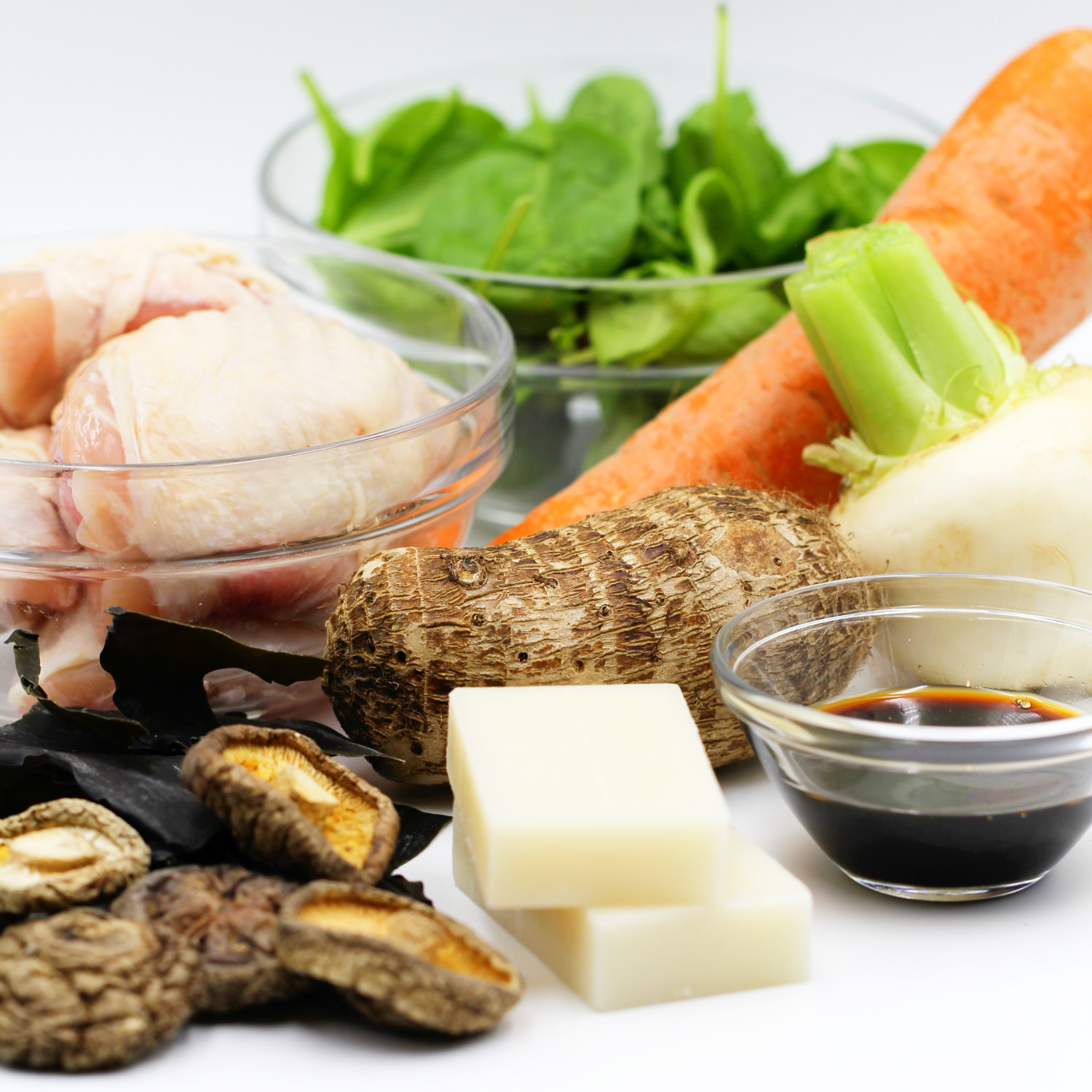
Get the ingredients ready for the Japanese New Year’s soup Ozoni. Also preheat the oven to 180°C (ideally fan-assisted plus grill function or just top heat) and line a baking tray with baking paper.
Step 2
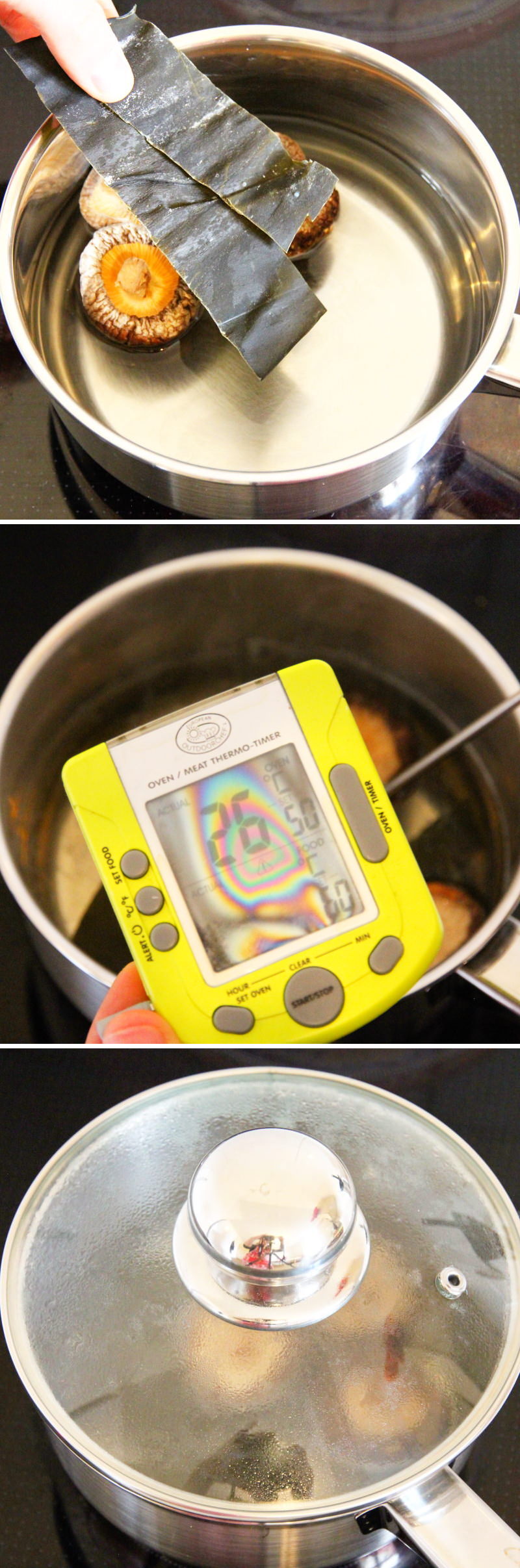
First, the Dashi broth is prepared: Fill a pot with the cold water and add the dried shiitake mushrooms and kombu strips. Slowly heat the water to 60°C (roughly when the water starts to steam lightly – best checked with a kitchen thermometer) and once the temperature is reached, turn off the heat and remove the pot from the stove. Let the stock steep with the lid closed for 30 minutes.
Step 3
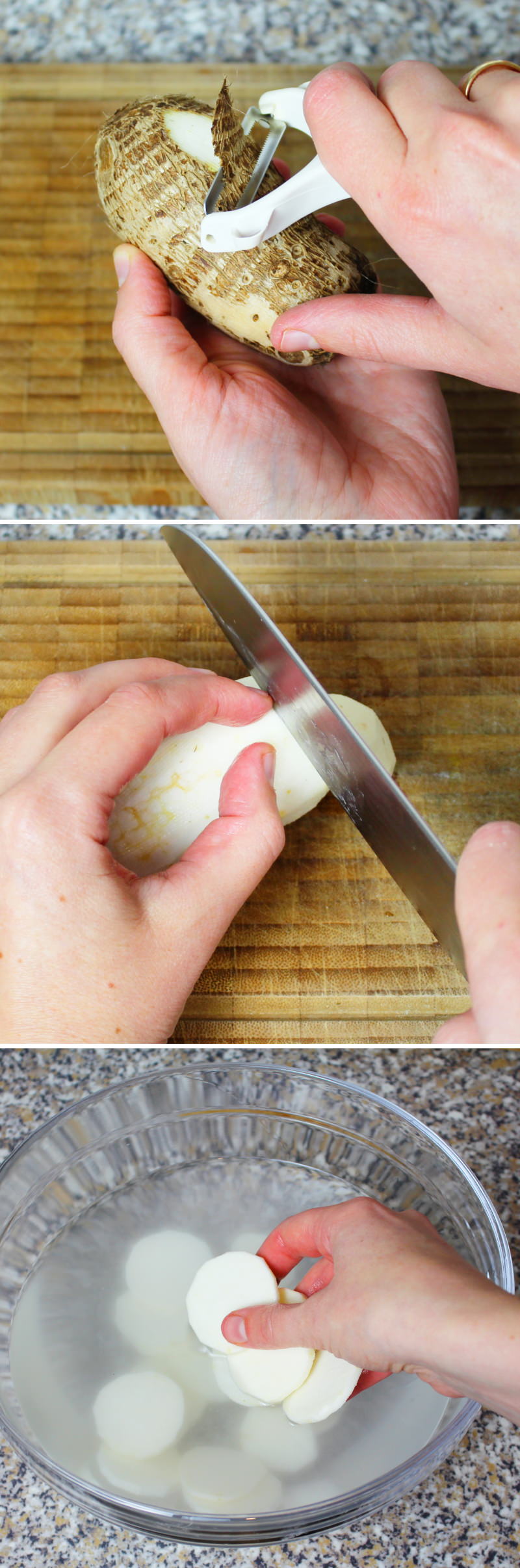
Next, peel the taro and cut it into 5mm wide slices. Soak it together with cold water in a bowl for 30 minutes so the root loses its slimy texture (otherwise the mochi soup would turn cloudy).
Step 4
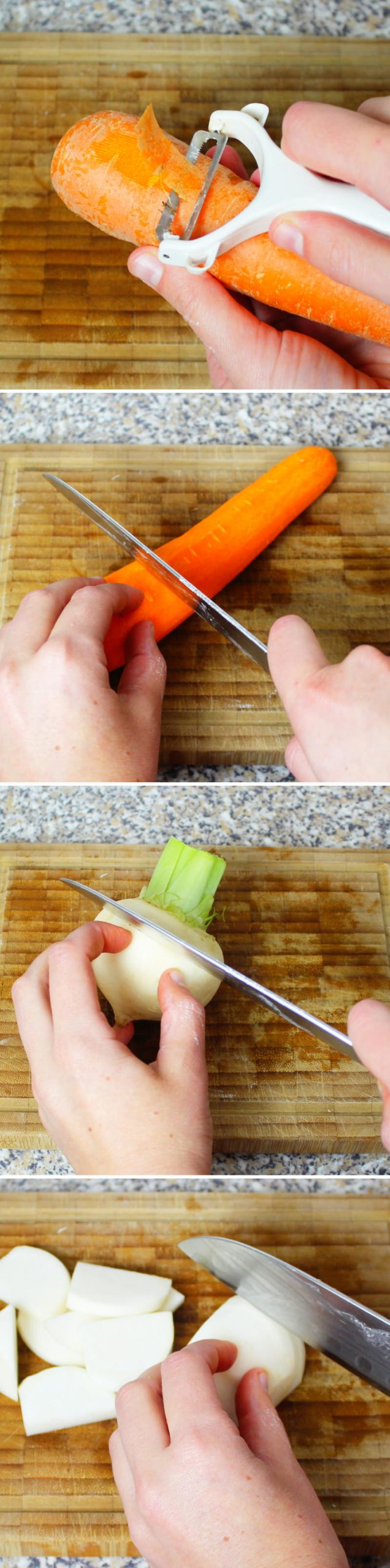
Meanwhile, peel the remaining vegetables, i.e. the carrot and the round radish and cut them into 5 mm wide slices as well. Halve the round radish slices if necessary, so that everything is roughly the same size. Also wash the baby spinach and let it drain.
Step 5
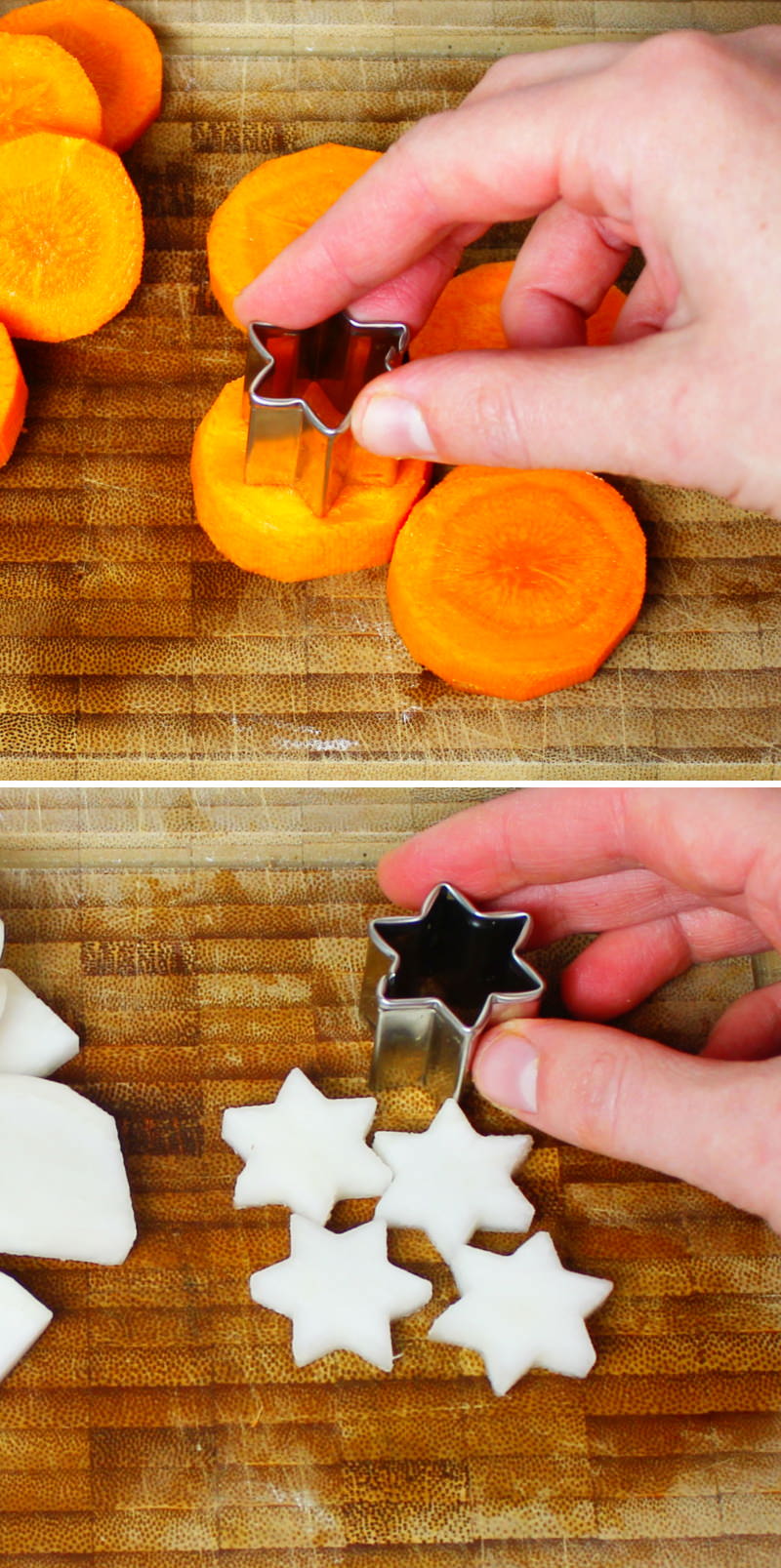
Optional: Feel free to cut out some of the vegetable slices into small flower shapes as well. This time I felt like small stars and chose that shape. The vegetable cutouts are only added to the soup shortly before the actual cooking time ends, so they keep their nice shape and a bit more bite.
Step 6
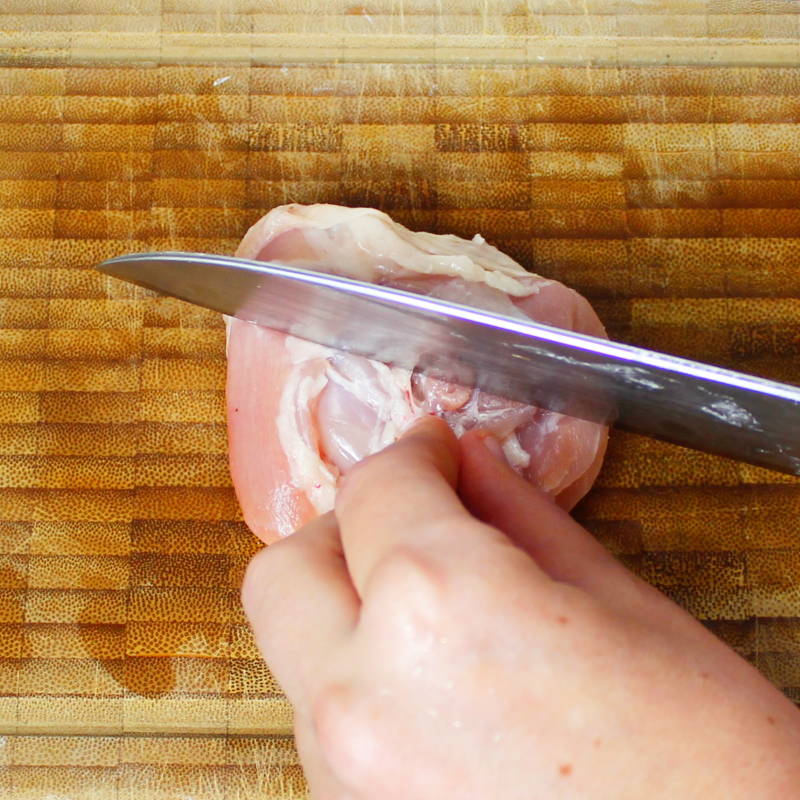
Now, if needed, remove the chicken from the bone and cut it into bite-sized pieces.
Alternative: If you’d like to use silken tofu instead, take the silken tofu out of the packaging and wrap it carefully in kitchen paper. Let it drain for about 10 minutes this way (simply set it aside wrapped up). Afterwards, carefully unwrap the tofu from the kitchen paper and cut it into bite-sized pieces with a large sharp knife.
Step 7
The oven should now be hot. Now take the kirimochi out of the packaging (you can also quarter them if you like) and spread them out with a little space between each other on the baking tray lined with baking paper. Bake the kirimochi on the middle rack in the oven for 15 to 20 minutes (nothing will happen for a while at first, then they’ll puff up and finally turn golden brown on the outside). As soon as the kirimochi have a nice golden colour, take them out and let them cool.
Step 8
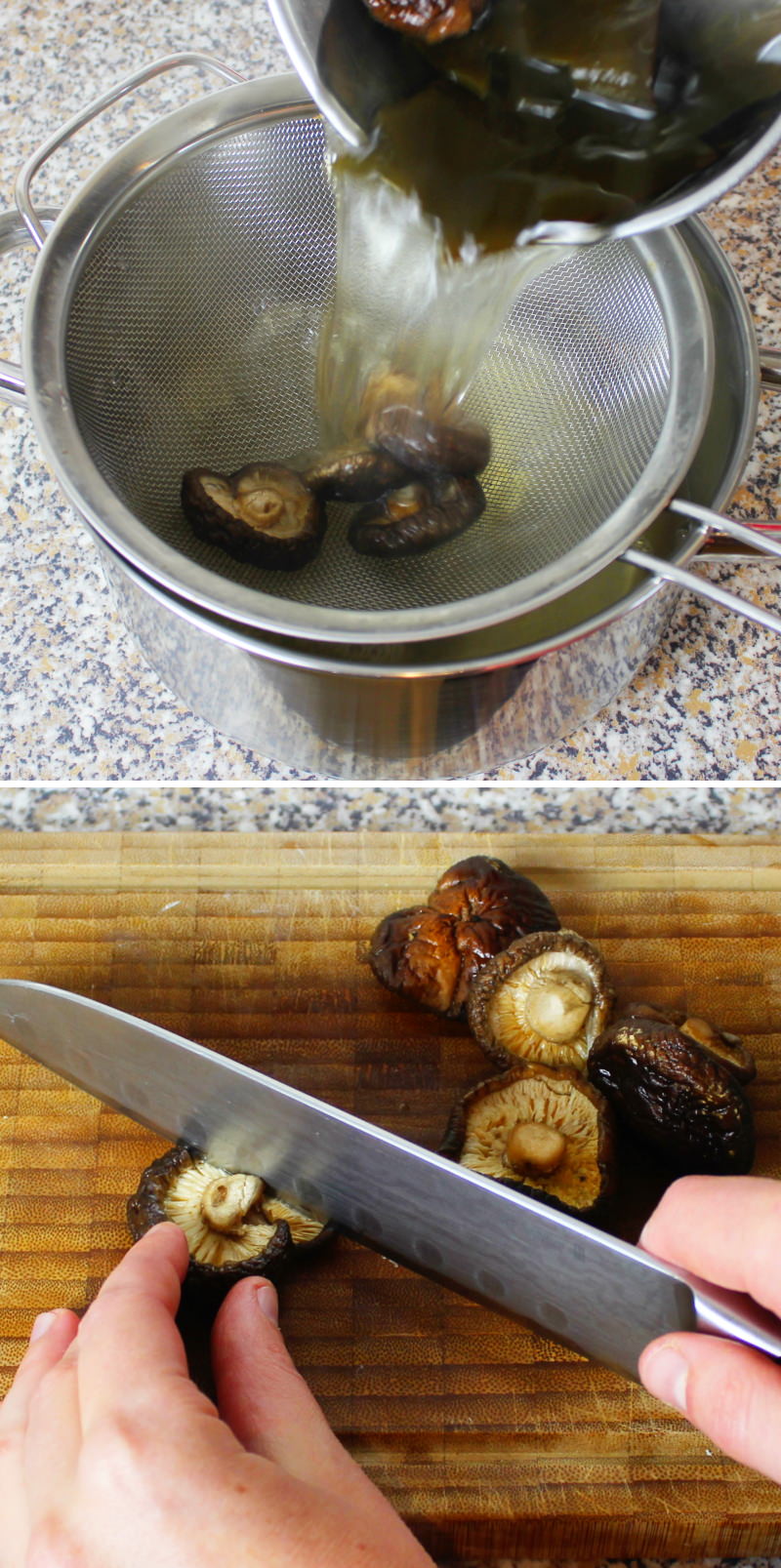
In the meantime, the Dashi broth should have finished infusing. Therefore, pour the broth through a fine sieve into a second saucepan to obtain a clear broth (the Kombu can be kept to flavour a salad, otherwise discard it). Cut the Shiitake mushrooms into fine strips.
Step 9
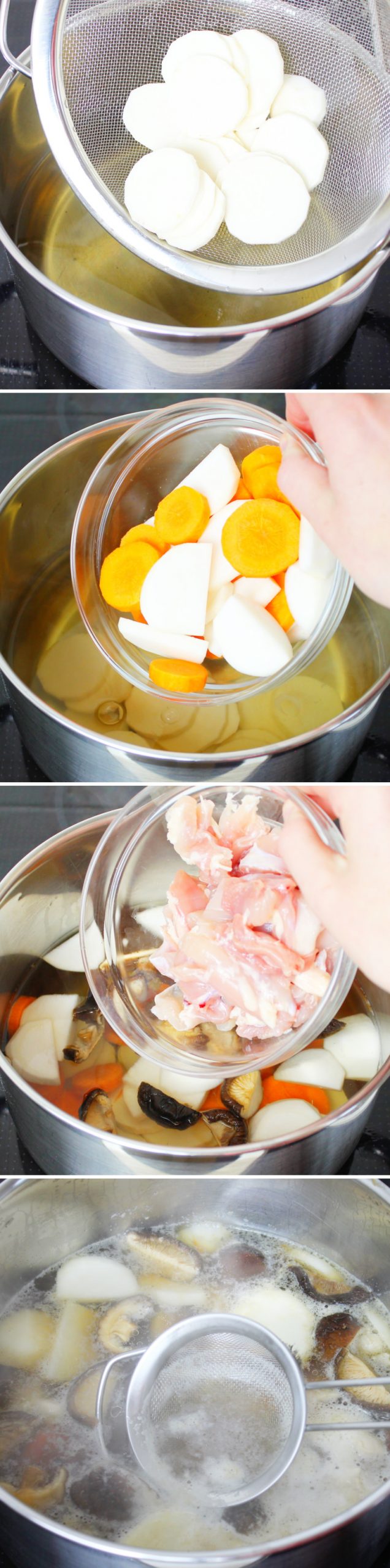
Use the sieve to drain the soaked taro. Add the taro, carrots, round radish, Shiitake and chicken to the Dashi broth and bring everything to the boil over a high heat. Then reduce the heat to a lower setting and cook everything uncovered for about 7 minutes. A little brownish scum will rise to the surface – skim this off with the fine metal sieve and discard it (until only white scum remains).
IMPORTANT: Don’t forget the kirimochi in the oven!
Step 10
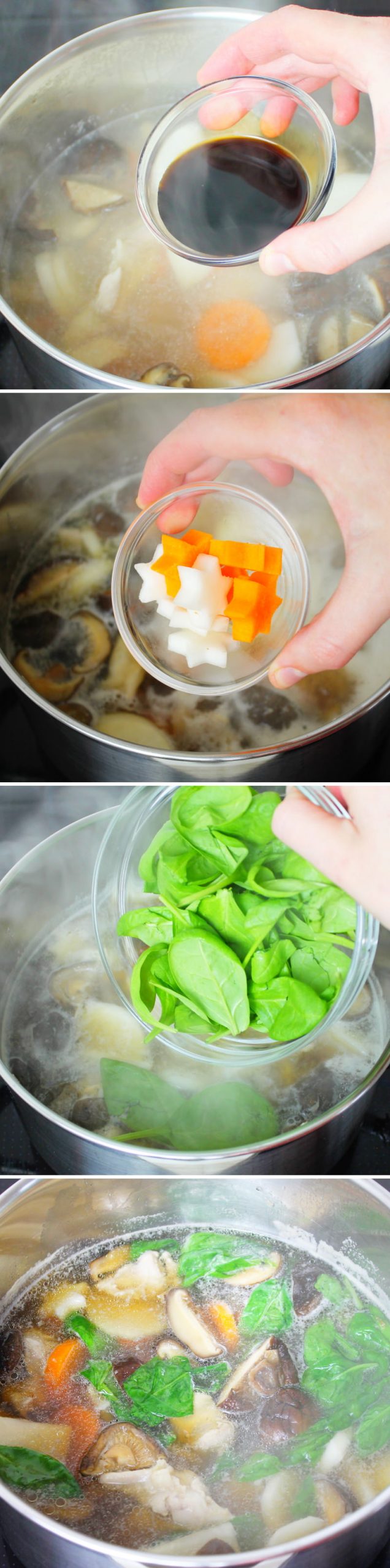
After 5 minutes, add the soya sauce, the vegetable moulds and the baby spinach . Leave to simmer for a further 2 minutes, then turn off the hob.
Step 11
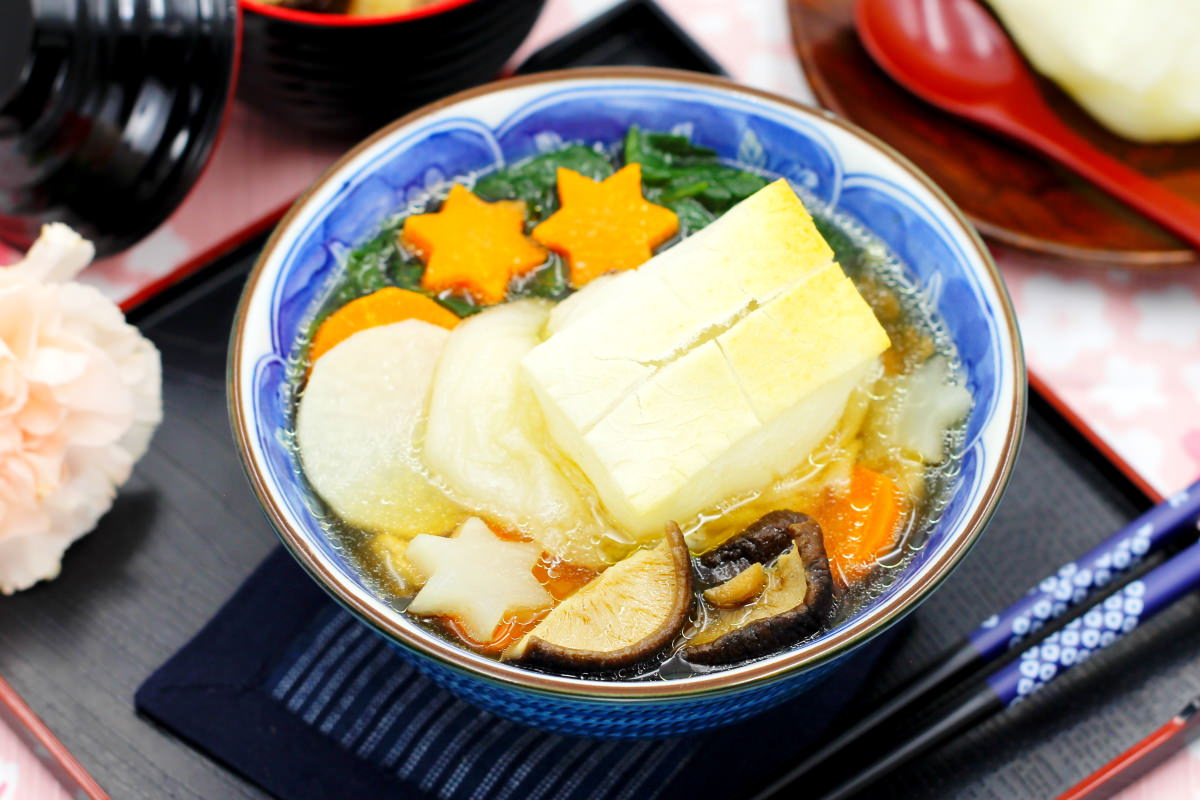
Now it’s time to serve. Ladle the soup into small or medium-sized bowls and serve each with a baked kirimochi. The ingredients in this hearty Ozoni Mochi soup are eaten with chopsticks, whilst the soup is sipped straight from the bowl. Done – Itadakimasu!
Are you looking for even more wonderful soups from Japan? You can find my most popular recipes here:
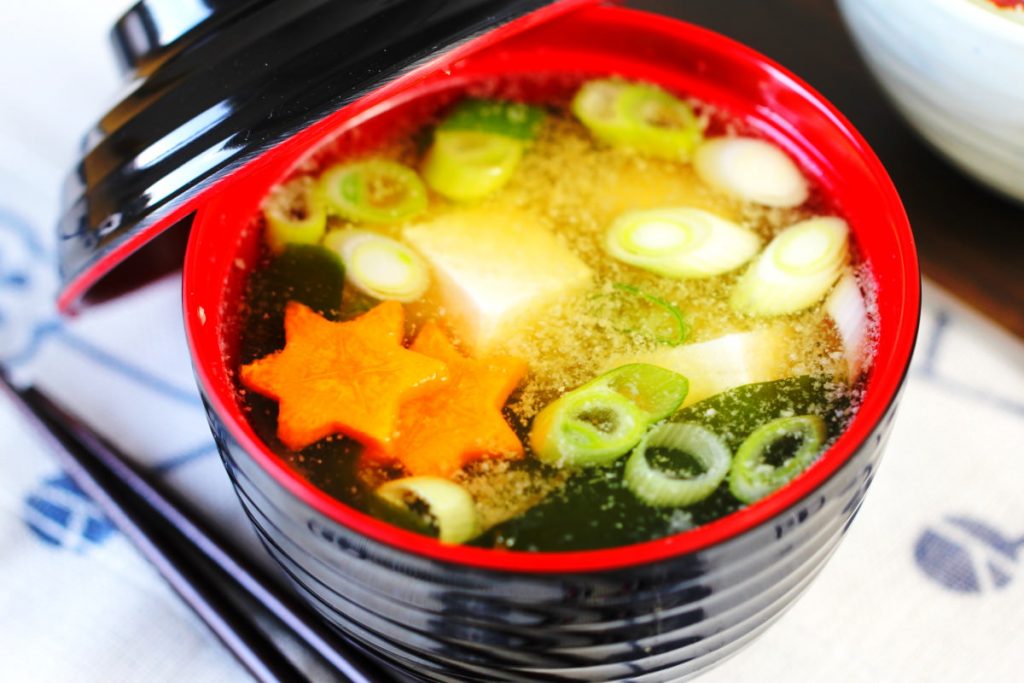
Misoshiru in a flash: basic recipe for miso soup with Wakame & Tofu
Miso soup is much more than just a side dish in Japan – it’s a warm embrace in a bowl!…
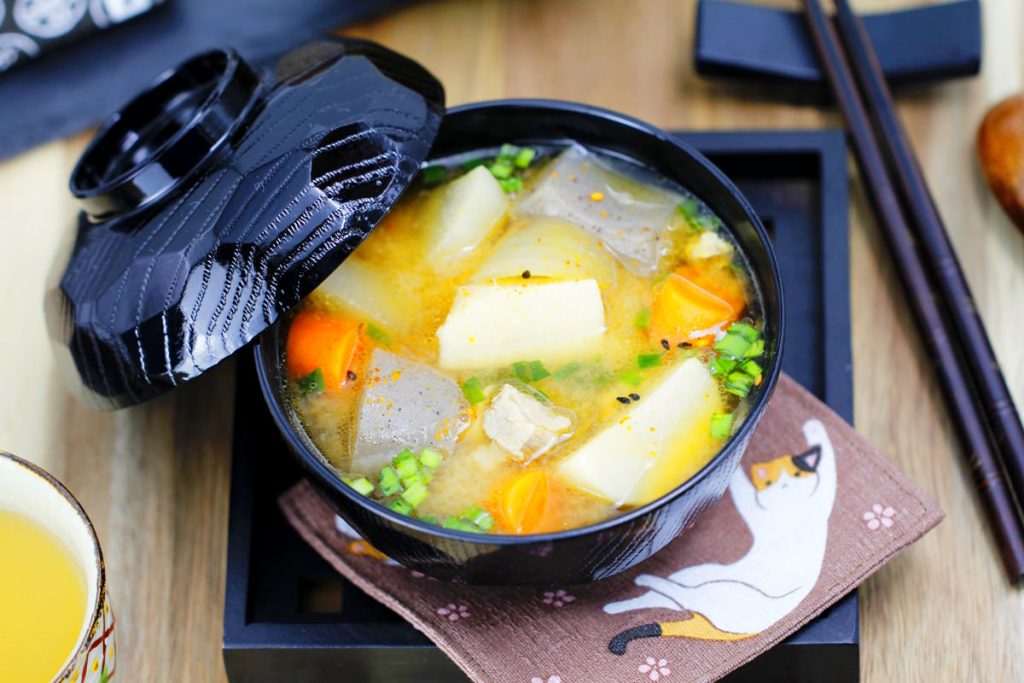
Make your own tonjiru: quick Miso soup with pork & root vegetables – hearty & warming
When the days get cooler and I need something to warm me from the inside, I love to make myself…
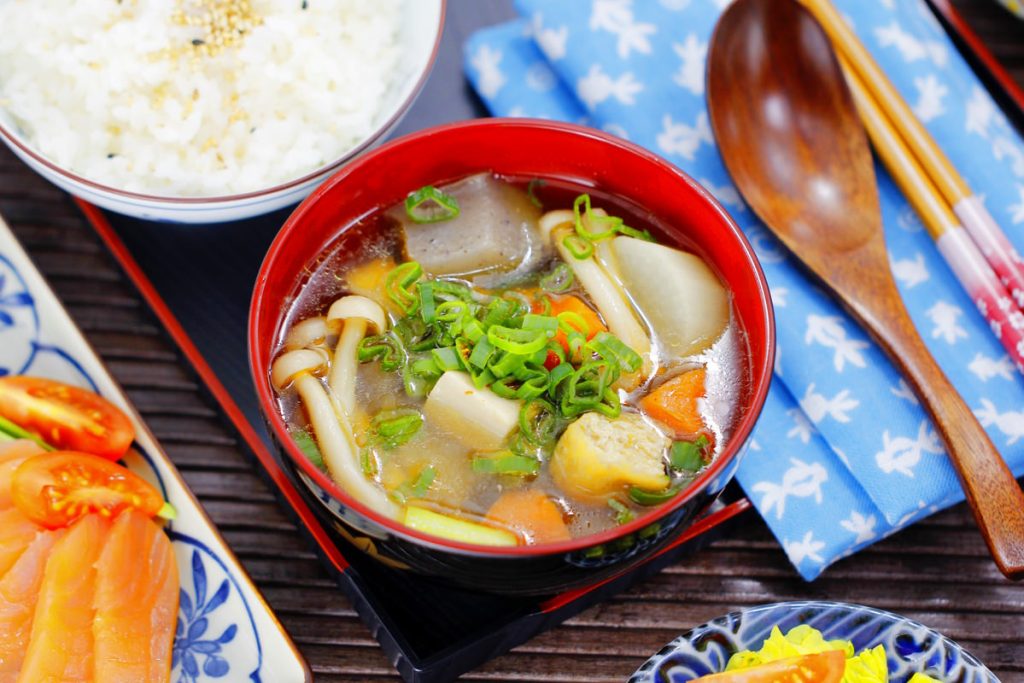
The ultimate stew: Kenchinjiru – Japanese vegetable soup with Tofu, konnyaku and mushrooms!
Kenchinjiru is a vegan, really filling and nutritious side dish soup made from Tofu and various vegetables, served in a…
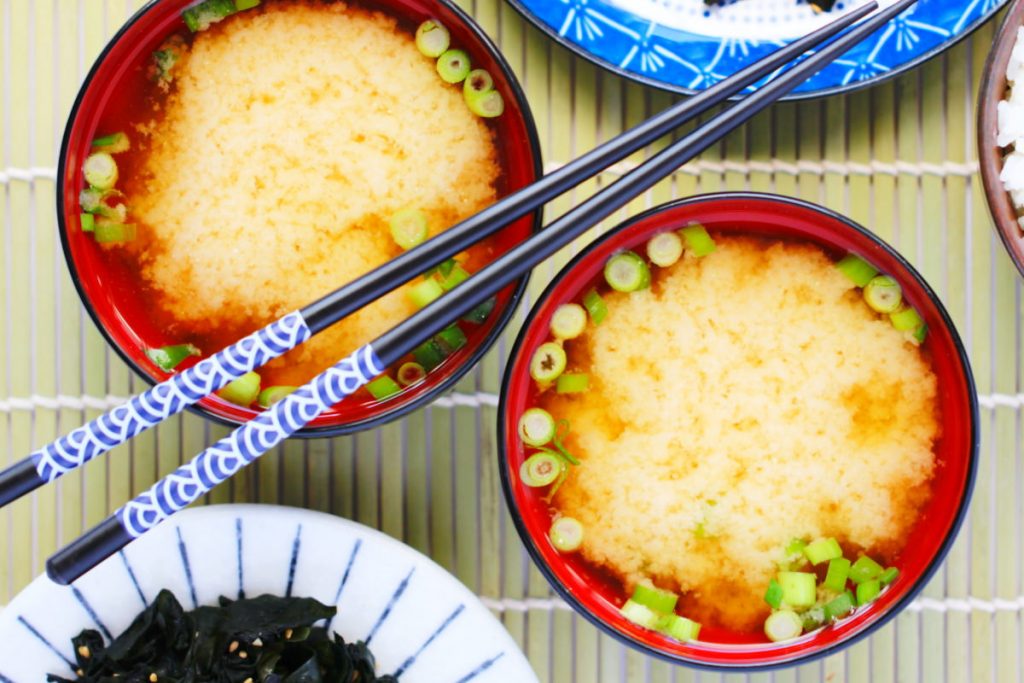
Simple, quick & delicious: Make your own Miso soup with just 3 ingredients!
In Japan, a day without miso soup is like a day without… food. Misoshiru is usually made for breakfast, but…
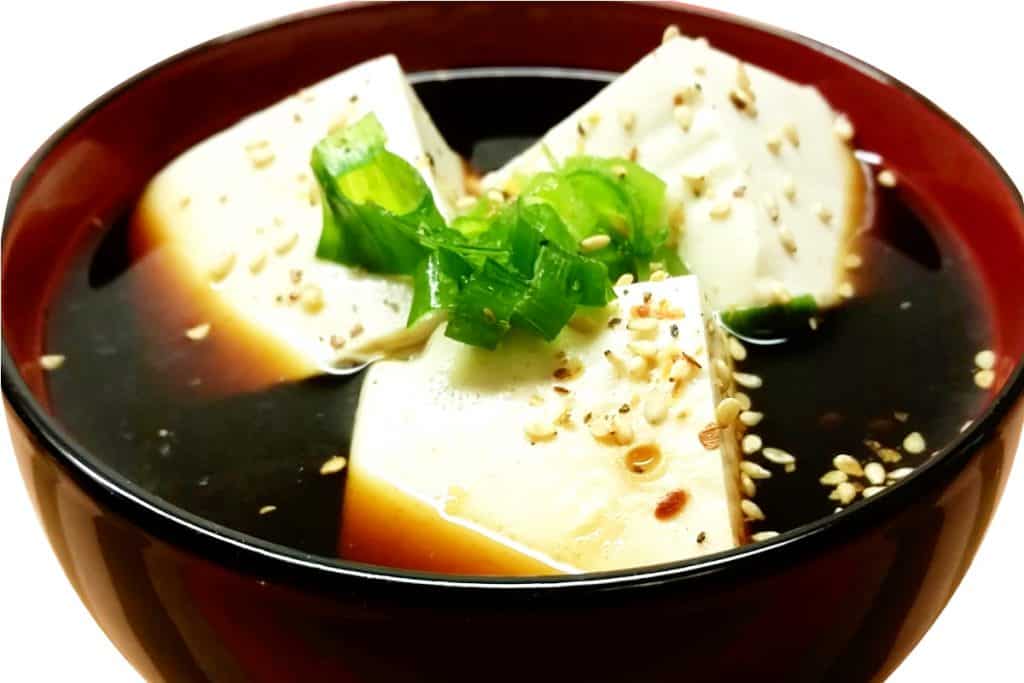
Yudofu – hot Tofu in lemon and Kombu
Yudofu is a simple vegetarian stew made with soft Japanese Tofu. It is cooked in a hot and flavourful Kombu…
Have you tried out the recipe? Let me know in the comments – I can’t wait to hear from you.