
Language:


I didn’t discover Dakgangjeong for the first time whilst travelling, but rather quite inconspicuously in a recipe book. Something about this sweet-and-spicy, crispy chicken immediately piqued my curiosity and I was desperate to give it a go. On one of those hectic days when lunch at the office has to be quick, I finally gave it a go. The result? Crispy, aromatic and so satisfying, it kept me going all afternoon. Since then, Dakgangjeong has been a dish that shows me just how much joy can be found in a small bowl of chicken pieces.
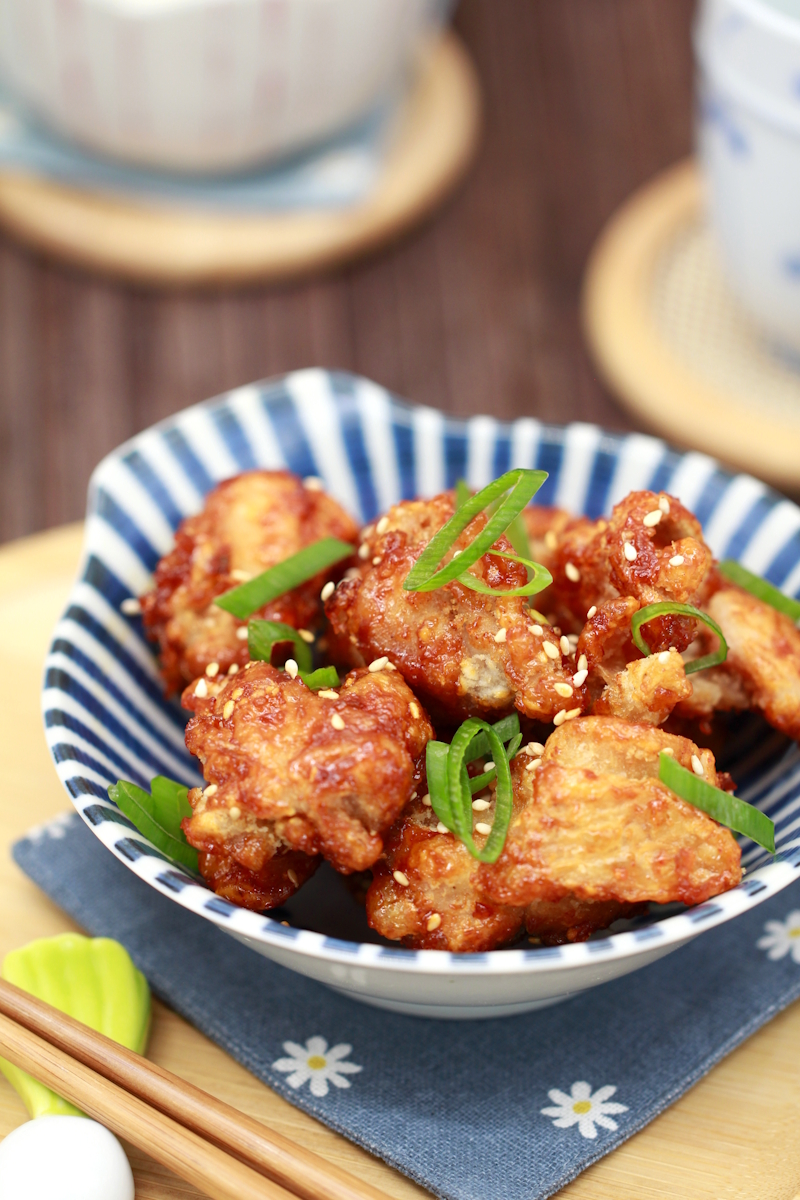
Since then, I’ve tried making Dakgangjeong time and again – sometimes with wings, sometimes with extra sauce, and sometimes in a milder version. Over time, this has evolved into my very own favourite version: not too spicy, beautifully crispy and with just the right balance between sweet and savoury. And it’s precisely this recipe that I’ve written down for you here, so you can make it yourself whenever you like.
What exactly is Dakgangjeong?
If you ever walk through the streets of Seoul, you’ll spot little stalls on every corner selling this dish: Dakgangjeong. The name might sound complicated, but it’s easily explained: ‘Dak’ means chicken, and ‘Gangjeong’ refers to a crispy sweet treat that is traditionally deep-fried and coated in syrup. This very idea has been applied to chicken pieces, resulting in a kind of Korean caramel chicken that is crispy on the outside, juicy on the inside and glistening with a sweet and spicy flavour all round.
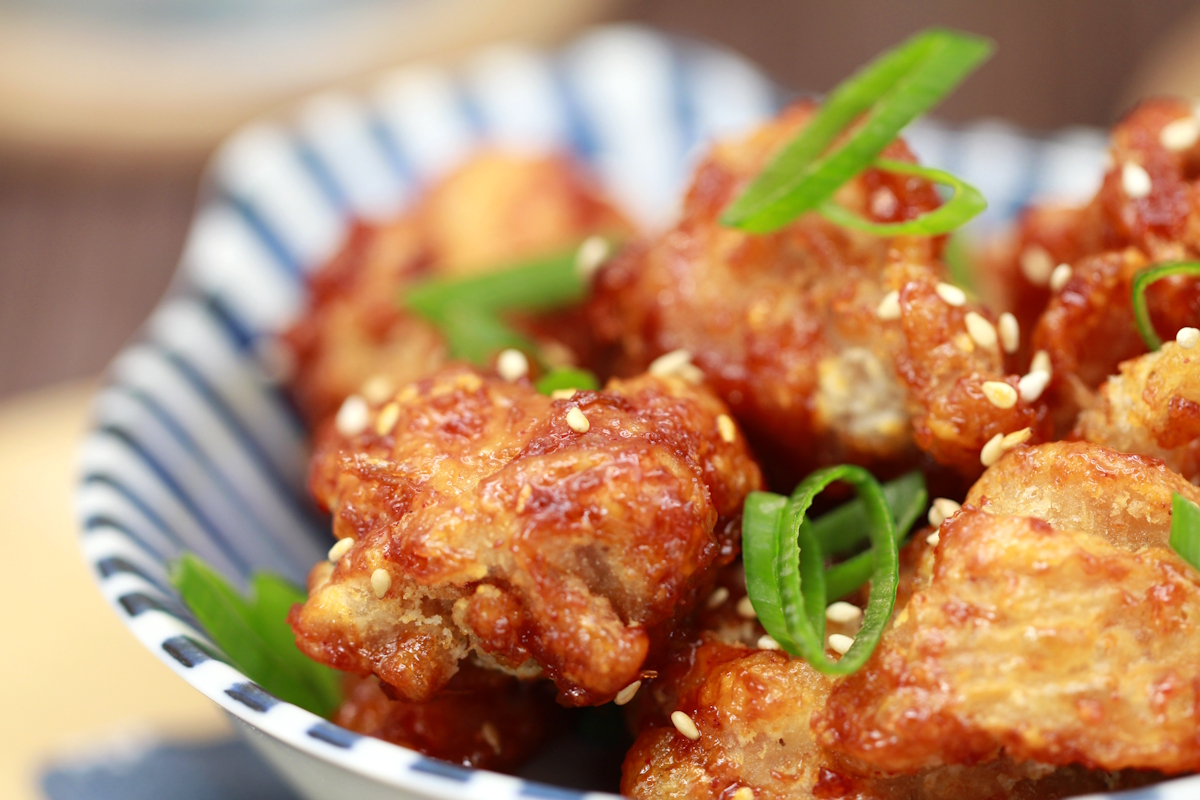
Originally, Dakgangjeong was primarily a popular snack at markets and street festivals. Today, however, it has long been part of Korean anju culture. These are small dishes that people enjoy with beer or soju. No wonder, as the combination of crispy meat, spicy sauce and a hint of heat goes perfectly with a cold drink.
Incidentally, Dakgangjeong differs slightly from the better-known Korean Fried Chicken, which you may already be familiar with. Instead of a thick, flour-coated batter, here a thin layer of starch provides the crispiness, which remains particularly firm thanks to double-frying. The result: even when the sauce is already glistening on the meat, the bite remains crispy and light.
In Korea, there are many variations: some stalls use wings or small drumettes, others mix peanuts or almonds into the sauce for even more crunch. The heat level also varies from mild and sweet to really fiery. My recipe strikes a balance: enough heat from gochujang, but rounded off with honey and sugar so that almost everyone likes it.
Delicious Dakgangjeong variations
- Choice of meat: Instead of chicken thighs, you can also use wings, drumsticks or small fillet pieces.
- Heat level: Less gochujang and more honey or sugar make the sauce milder.
- Extra crunch: Sprinkled with chopped peanuts or almonds, it becomes even crunchier.
- New flavours: A few drops of chilli oil for more heat or a splash of orange juice for a fruity note add an exciting twist to the dish.
Making Dakgangjeong yourself: Here’s how
Making Dakgangjeong at home might sound like a big challenge, but it’s actually not complicated at all. The secret lies not in exotic ingredients, but in the correct order: seasoning, double-frying, reducing the sauce. With a little patience and hot oil, you can make this Korean crispy chicken in your own kitchen, even without a street food stall.
The key ingredients for Dakgangjeong:
- Chicken: Boneless chicken thighs work best as they stay particularly juicy. Wings or drumsticks also work well.
- Starch: Potato or cornflour creates the thin, crispy coating. It must adhere well to the meat for the double-frying to work.
- Oil: A heat-resistant, neutral oil such as rapeseed oil is ideal. It is important that the temperature remains at 170–180 °C.
- Sauce: The mixture of soy sauce, gochujang, honey, sugar, rice vinegar, garlic, ginger and sesame oil is the centrepiece – sweet, spicy and aromatic.
- Topping: Toasted sesame seeds not only add a nutty flavour but also provide the finishing touch visually.
TOP RECOMMENDATION
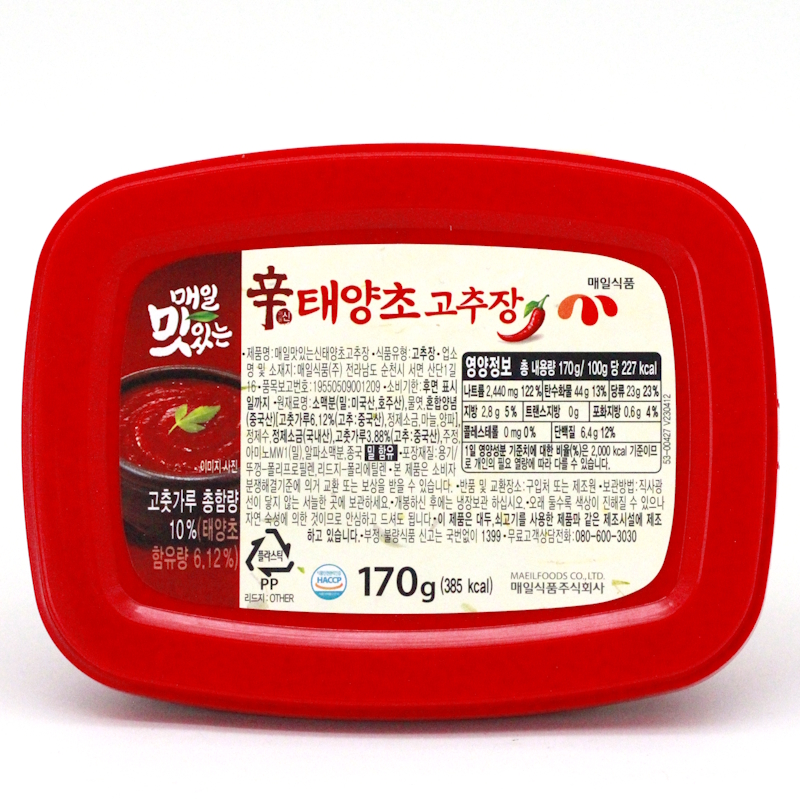
Gochujang 170 g koreanische Chilipaste (aus Korea)
Koreanische Chilipaste für Bibimbap, Tteokbokki & Marinaden. Diese Gochujang Chilipaste von Maeilfoods ist eine fermentierte, süß-scharfe Würzpaste aus Korea. Sie eignet sich ideal für klassische…
In stock
Here’s how it works:
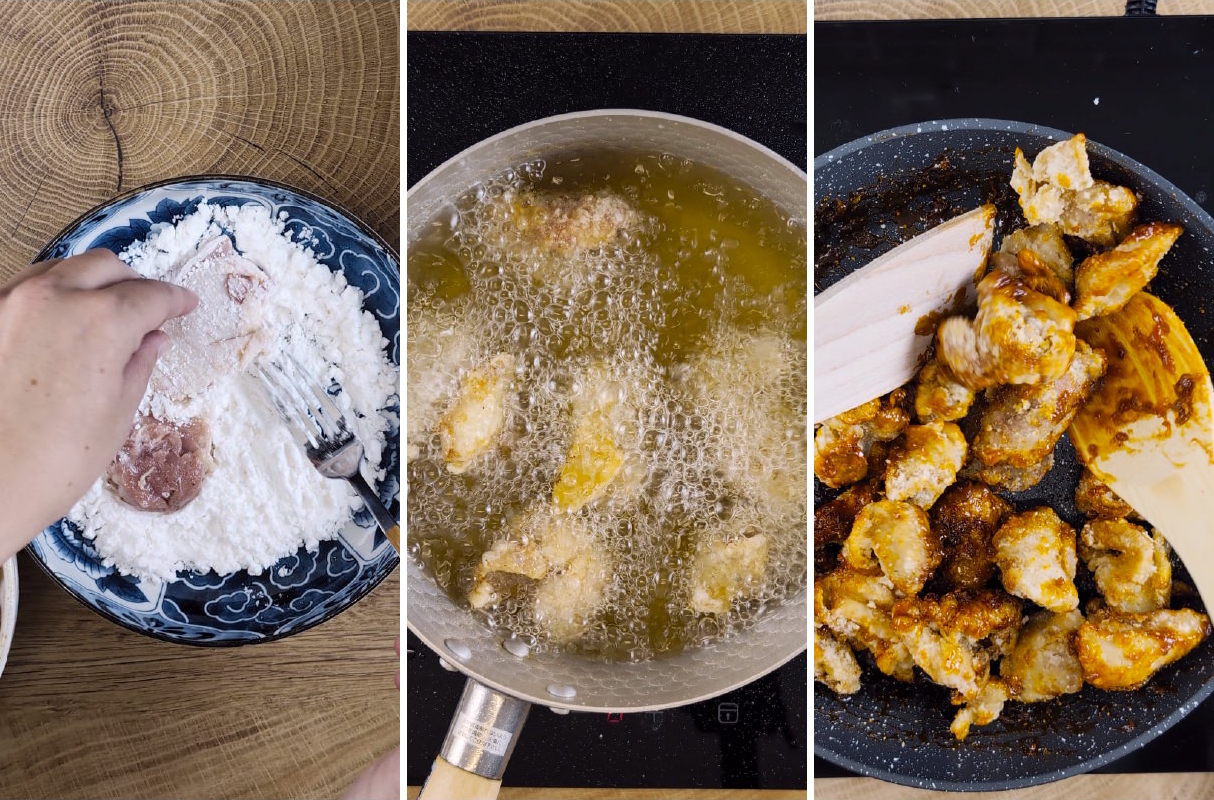
First, season the chicken with salt, pepper and a little ginger, then coat it thoroughly in cornflour. Next, it’s time to deep-fry it – twice: the first time cooks the meat, the second time develops the perfect crispiness, which doesn’t lose its crunch even when coated in sauce.
At the same time, reduce the sauce until it thickens slightly and takes on that glossy look. When you then add the hot chicken pieces, each one is immediately coated in the sweet -spicy glaze. Finally, sprinkle with sesame seeds and your homemade Dakgangjeong is ready.
What goes well with Dakgangjeong?
Dakgangjeong has such an intense flavour that it’s best served with simple, balancing side dishes. In Korea, this crispy chicken is often enjoyed as part of an ‘Anju’ evening with beer or soju, but it also works wonderfully in everyday life when paired with a few classic accompaniments.
- Steamed rice: Plain white rice is the perfect partner. It soaks up the sauce whilst also tempering the heat.
- Pickled vegetables: Pickles such as yellow radish (Danmuji) or Kimchi add freshness and a crunchy contrast.
- Salads: A simple cucumber or coleslaw with sesame dressing complements Dakgangjeong with a light, crunchy touch.
- Drinks: In Korea, a cold beer or a glass of soju is almost a traditional accompaniment. Those who prefer non-alcoholic options can opt for cold barley tea (Mugicha) or mineral water.
This creates a small menu that perfectly balances the sweetness, spiciness and crispiness of the chicken.
Whether as a crispy evening snack, a highlight on a buffet or served with rice and a few side dishes, Dakgangjeong is always a hit and instantly lifts your spirits. Why not try out different variations, experiment with the heat or add some crunchy nuts?
I look forward to your comments: tell me how your Dakgangjeong turned out and whether you prefer it sweeter, spicier or prepared in the classic style. Have fun cooking it and 맛있게 드세요 – massitge deuseyo!

Dakgangjeong
Serves 2 | 30 minutes | 1060 kcal
🖨️ Print PDF 📌 Save pinCrispy, glossy and full of flavour: Dakgangjeong is Korean fried chicken with a sweet and spicy twist. Double-frying ensures the chicken stays extra crispy, even when coated in sauce. Here I’ll show you my favourite version: simple, foolproof and ideal for a quick, special treat.
Ingredients (2 servings)
500 g boneless chicken thighs (or chicken wings, approx. 12–14 pieces)
70 g potato starch (im Shop ansehen)* (or cornflour)
1 tsp ginger (freshly grated)
½ tsp salt
½ tsp black pepper
approx. 500 ml oil for deep-frying (e.g. rapeseed oil)
For the sauce:
2 tbsp soya sauce (im Shop ansehen)*
2 tbsp Gochujang (im Shop ansehen)*
3 tbsp honey
1 tbsp sugar
2 tbsp rice vinegar (im Shop ansehen)*
2 garlic cloves (freshly grated)
1 tsp ginger (freshly grated)
2 tbsp sesame oil (im Shop ansehen)*
For sprinkling:
1 spring onion
2 tbsp toasted sesame seeds (im Shop ansehen)*
Useful tools:
Santoku knife (im Shop ansehen)
Grater (im Shop ansehen)
Yukihiara pot
2-in-1 strainer & Skimmer (im Shop ansehen)
Preparation (30 minutes)
Step 1
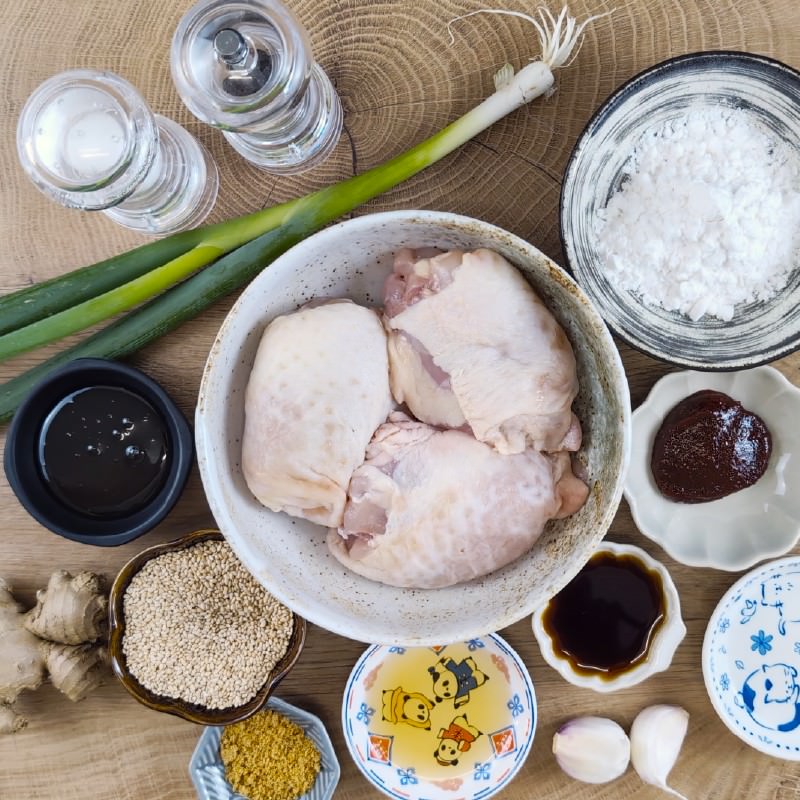
First, we check that all the ingredients for the Korean Dakgangjeong are to hand.
Step 2
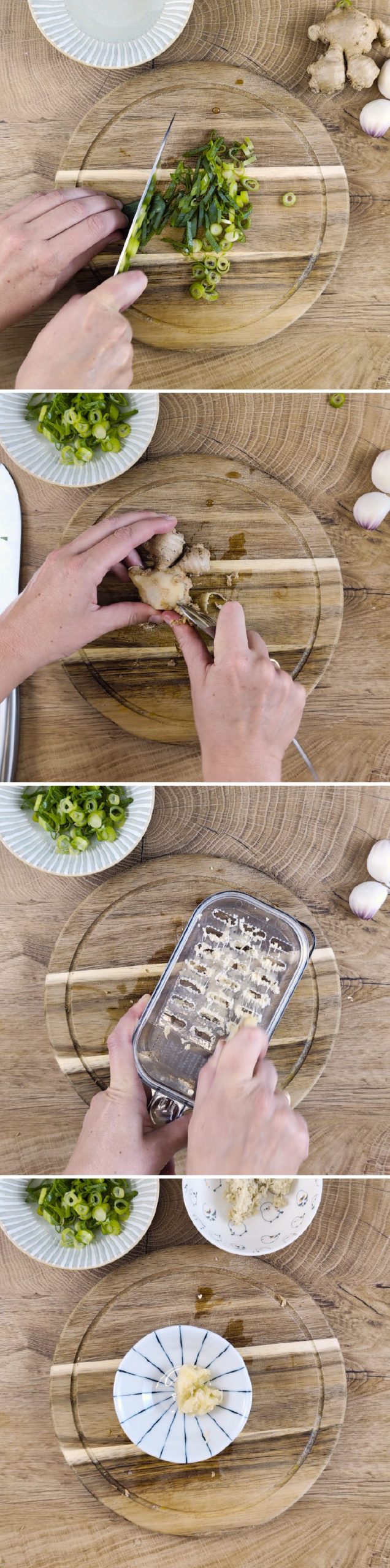
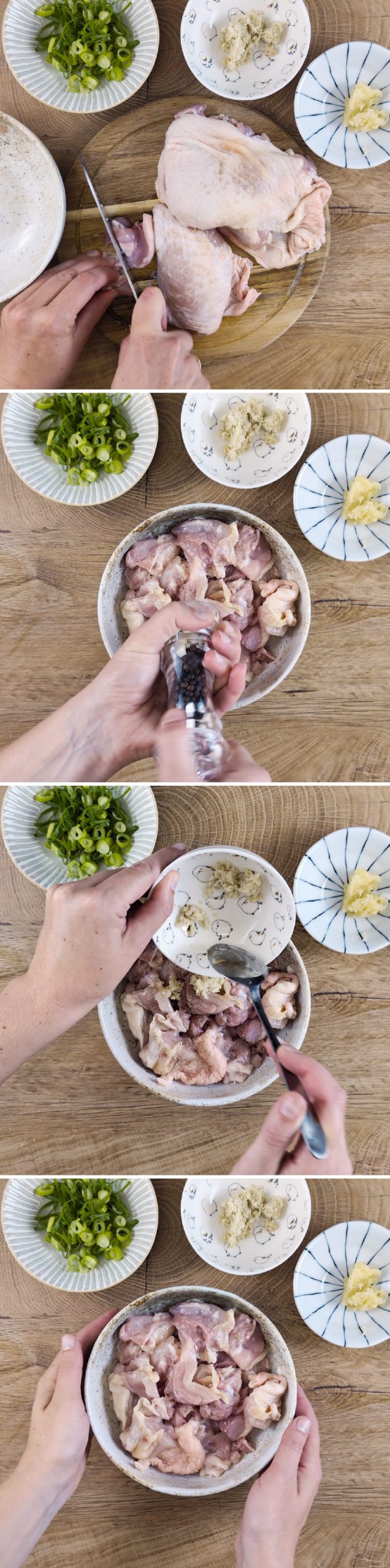
Peel 2 garlic cloves and grate them finely. Do the same with a total of 2 tsp ginger (1 tsp for the marinade, 1 tsp for the sauce). Also cut 1 spring onion into fine rings, which will later be used as garnish.
Step 3
Wash 500 g chicken thighs and pat them dry. Cut everything into bite-sized pieces. Season with ½ tsp salt, ½ tsp black pepper and 1 tsp freshly grated ginger. Mix well and leave to rest for 15 minutes.
Step 4
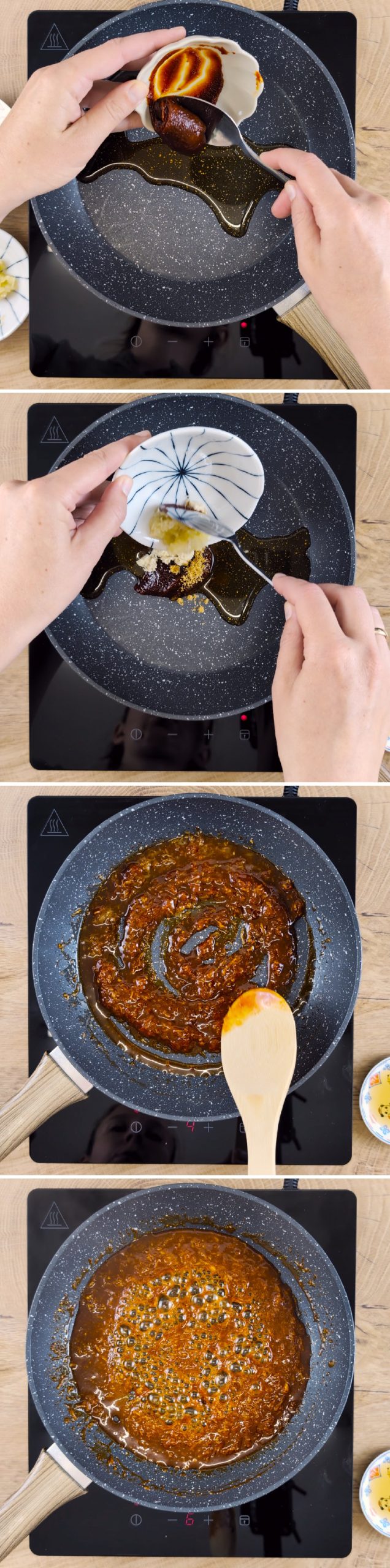
In a small pan, mix together 2 tbsp soy sauce, 2 tbsp gochujang, 3 tbsp honey, 1 tbsp brown sugar, 2 tbsp rice vinegar, the prepared garlic and the remaining ginger. Simmer gently over a medium heat for 3 minutes until the sauce thickens slightly. Leave in the pan and set aside.
Step 5
Heat neutral oil (e.g. rapeseed oil) in a saucepan or deep frying pan to 170–180 °C.
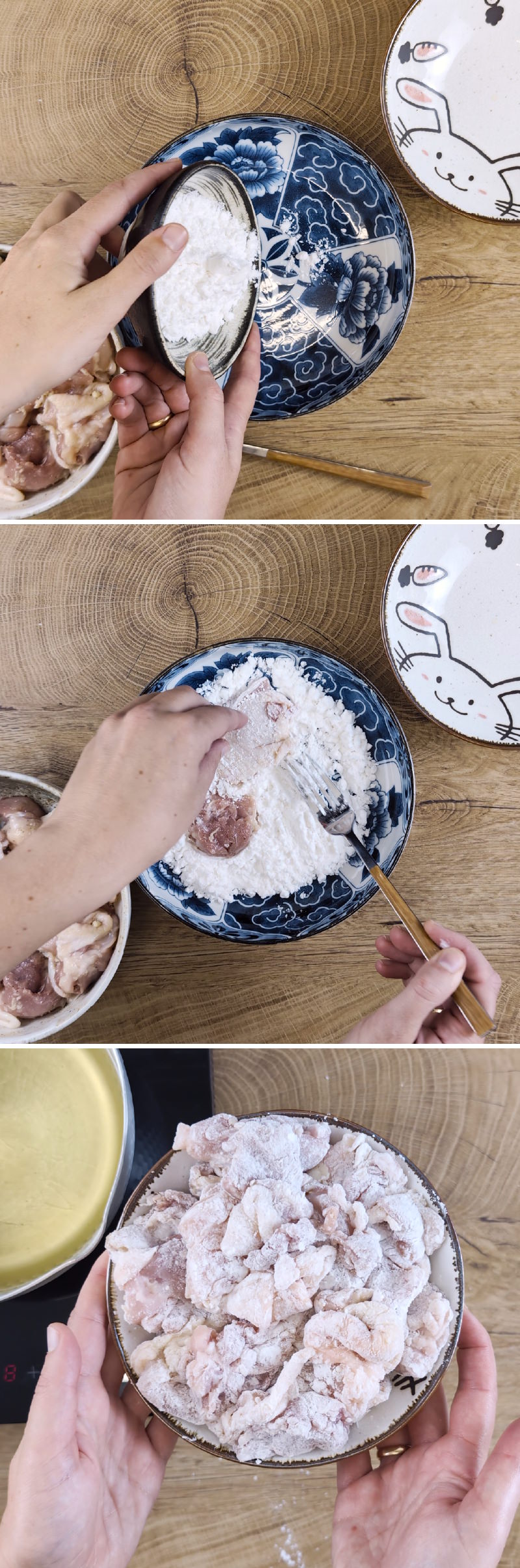
Place 70 g of potato starch (or cornflour) in a bowl and coat the chicken pieces thoroughly in it. Press the starch down lightly so that it adheres well and the coating becomes nice and crispy later on. The coating should be even, but not too thick!
Step 6
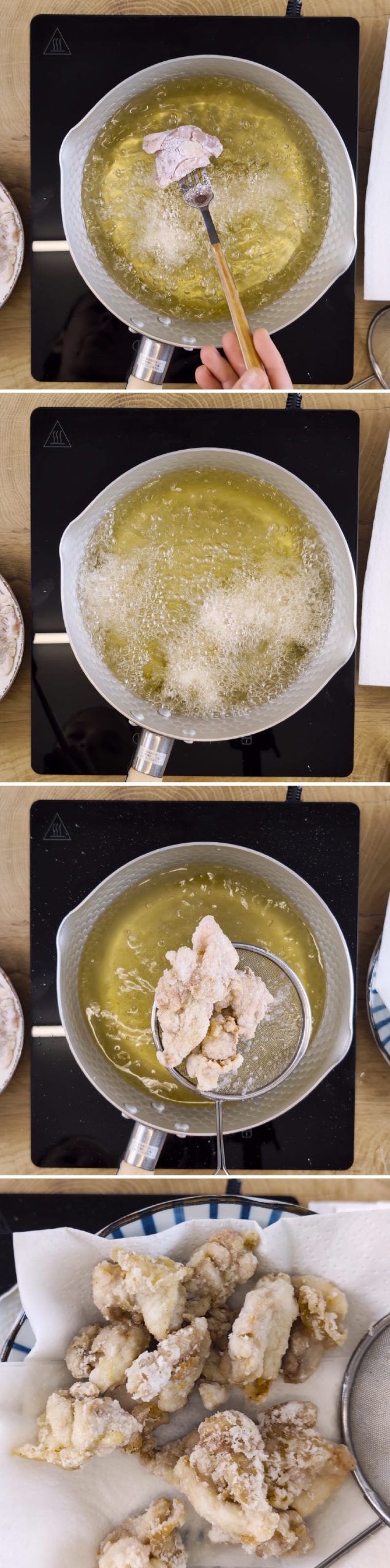
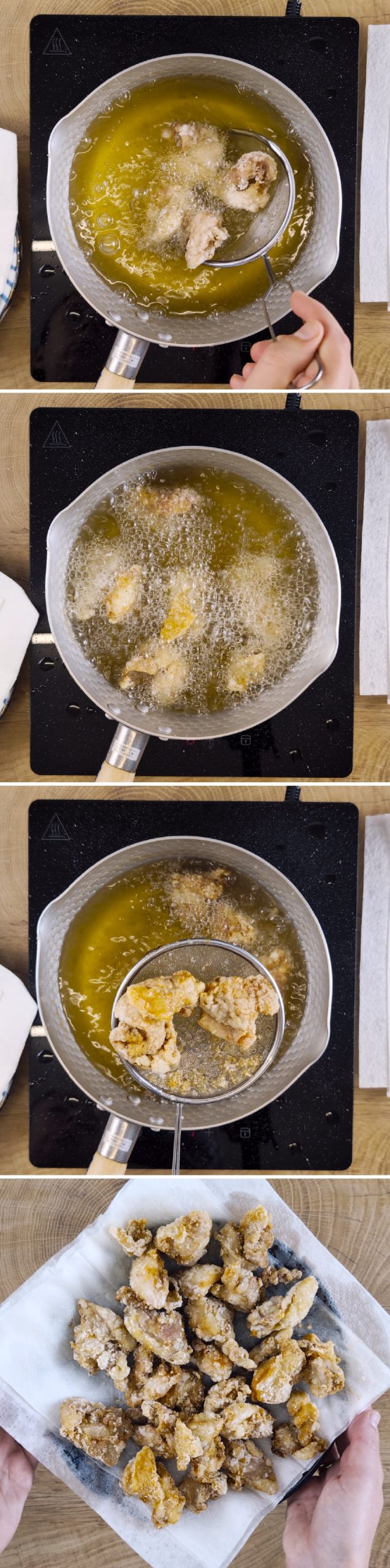
Fry the chicken in batches for 4–5 minutes until the pieces are light golden brown. Feel free to turn and move them occasionally so that they cook evenly all over. Remove them and leave them to drain on kitchen paper or a wire rack.
Step 7
Increase the oil temperature slightly to 180–185 °C and fry the pieces again for 4–5 minutes until they are golden brown and really crispy. Drain again on fresh kitchen paper or a wire rack.
Step 8
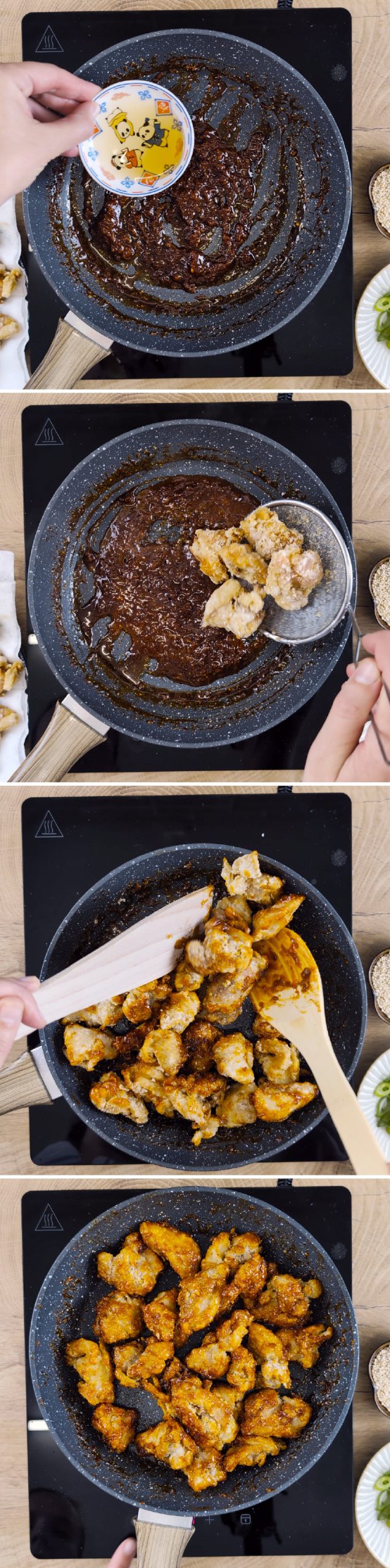
Now take the prepared sauce out of the pan again. Heat the sauce once more and stir in 2 tbsp sesame oil. Place the twice-fried chicken pieces directly into the hot sauce and toss them until each piece is evenly coated.
Step 9
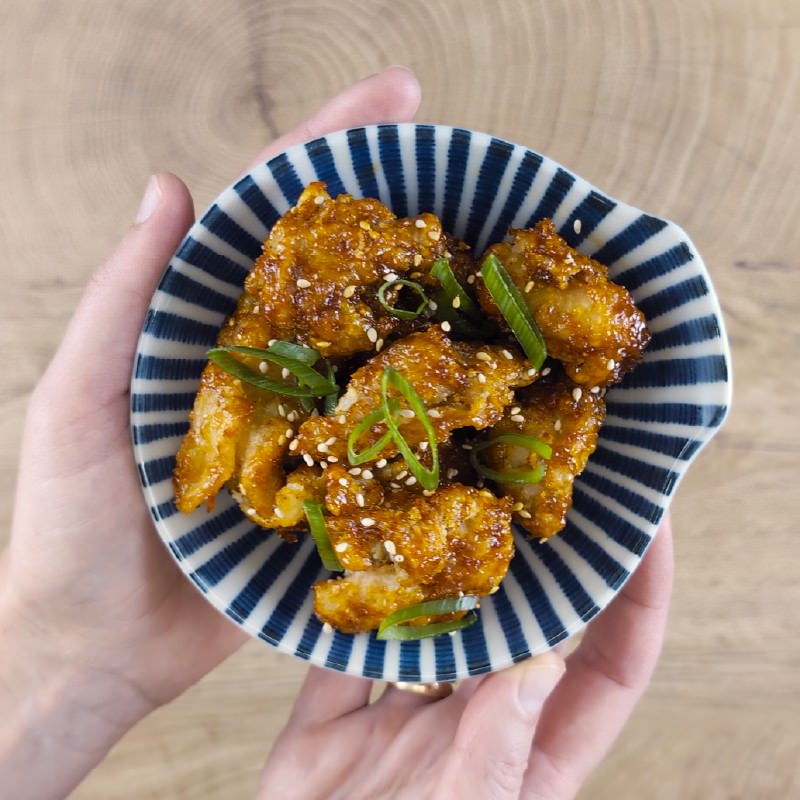
Sprinkle with 2 tbsp of toasted sesame seeds and the prepared spring onion rings. Enjoy immediately – traditionally with rice or a crisp salad.
Fancy some more delicious inspiration from Korea? You can find even more quick recipe ideas here:

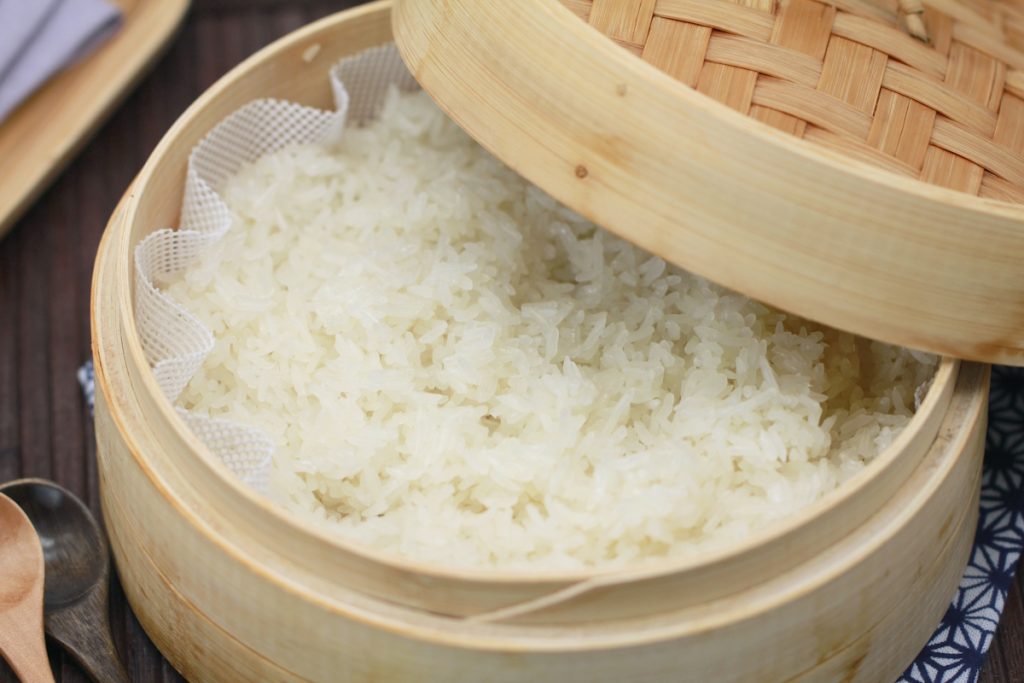
Thai Sticky Rice: How to steam Thai sticky rice (Khao Niao) properly
Thai sticky rice, also known as Khao Niao, is a very simple basic recipe, but…
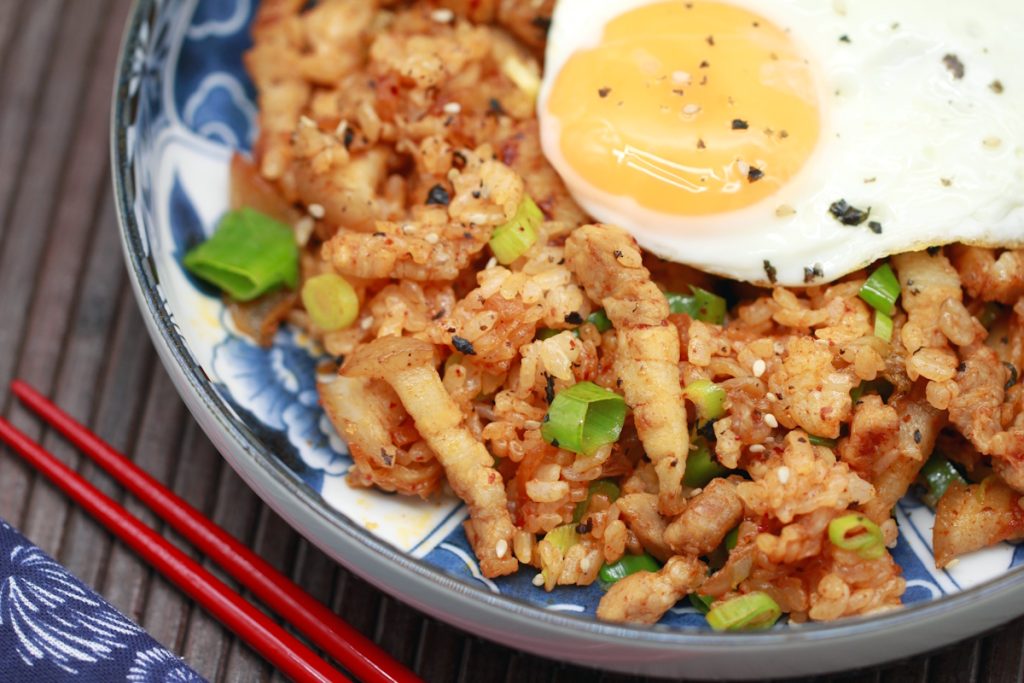
Kimchi Fried Rice: Make your own quick kimchi Bokkeumbap | in 20 minutes
Kimchi Fried Rice, also known as Kimchi Bokkeumbap, is a classic rice dish from everyday…
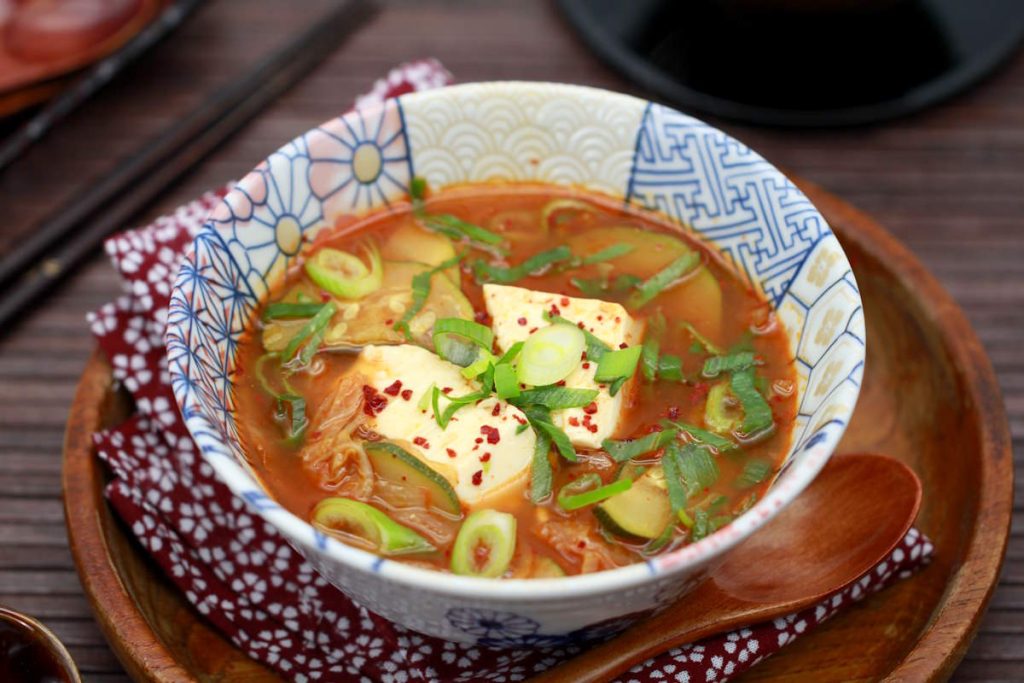
Sundubu Jjigae: Spicy Korean Tofu stew with courgette, Kimchi & Anchovy Dashima
Sundubu Jjigae is one of the best-known Korean stews and is an integral part of…
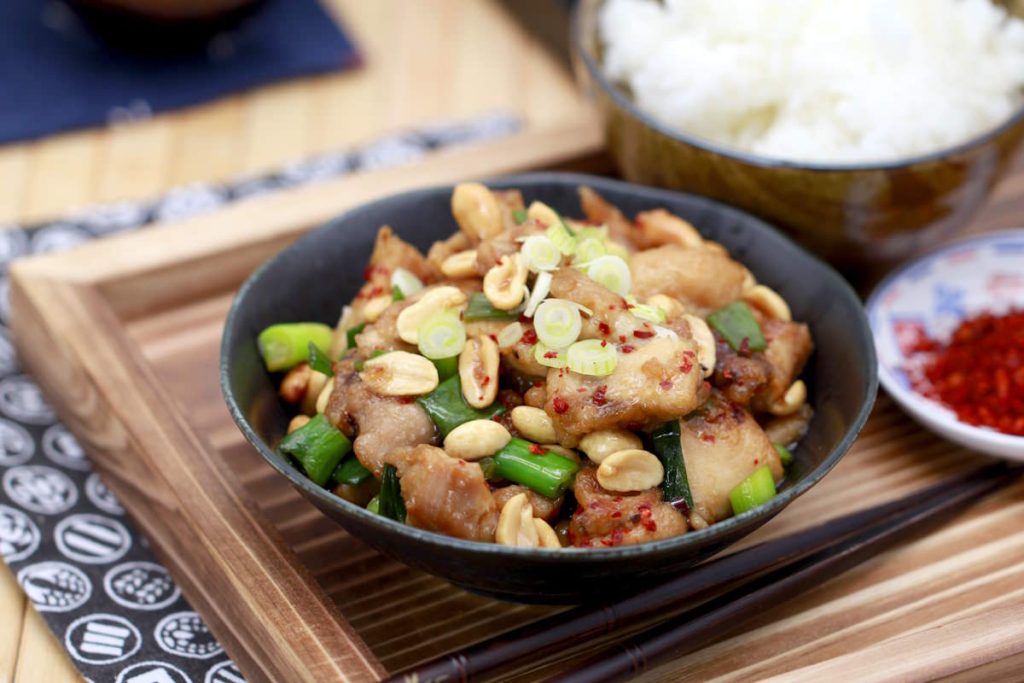
Make your own Gong Bao Chicken: Classic Kung Pao Chicken from Sichuan cuisine with peanuts & chilli
Gong Bao Chicken is a classic stir-fry dish from Sichuan cuisine that requires just a…
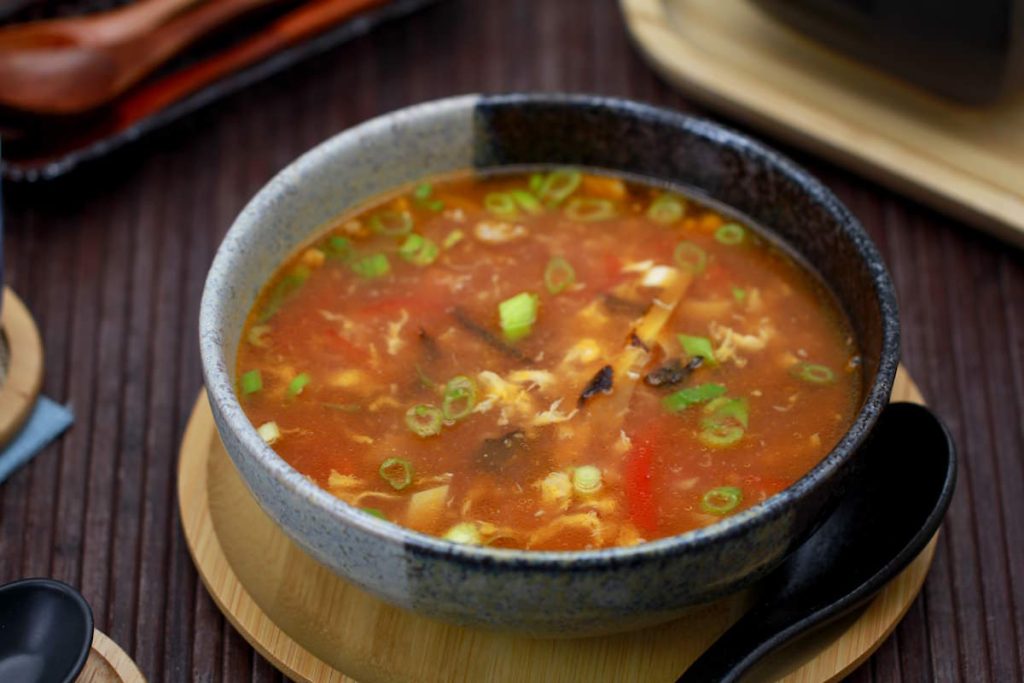
Beijing soup: Make your own Suan La Tang | Chinese hot and sour soup
Beijing Soup (Suan La Tang) is a classic sour and spicy soup from Chinese cuisine….
Have you tried the recipe yet? Let me know in the comments – I can’t wait to hear from you.