
Language:


Kimchi Fried Rice, also known as Kimchi Bokkeumbap, is a classic rice dish from everyday Korean cuisine. The basic method is simple: cooked rice is stir-fried in a pan with Kimchi and a few other ingredients until rich, toasty flavours develop.
The dish is quick to prepare, easy to plan for and is particularly well-suited to making good use of leftover rice. At the same time, it demonstrates very well how fermentation and heat can transform simple ingredients into a complex flavour.
Although Kimchi Fried Rice originally comes from Korea, it fits perfectly into the everyday routine I’m showing here: straightforward, filling and with a clear structure – these are exactly the sort of dishes that are easy to prepare in advance and adapt flexibly.
What is Kimchi Fried Rice?
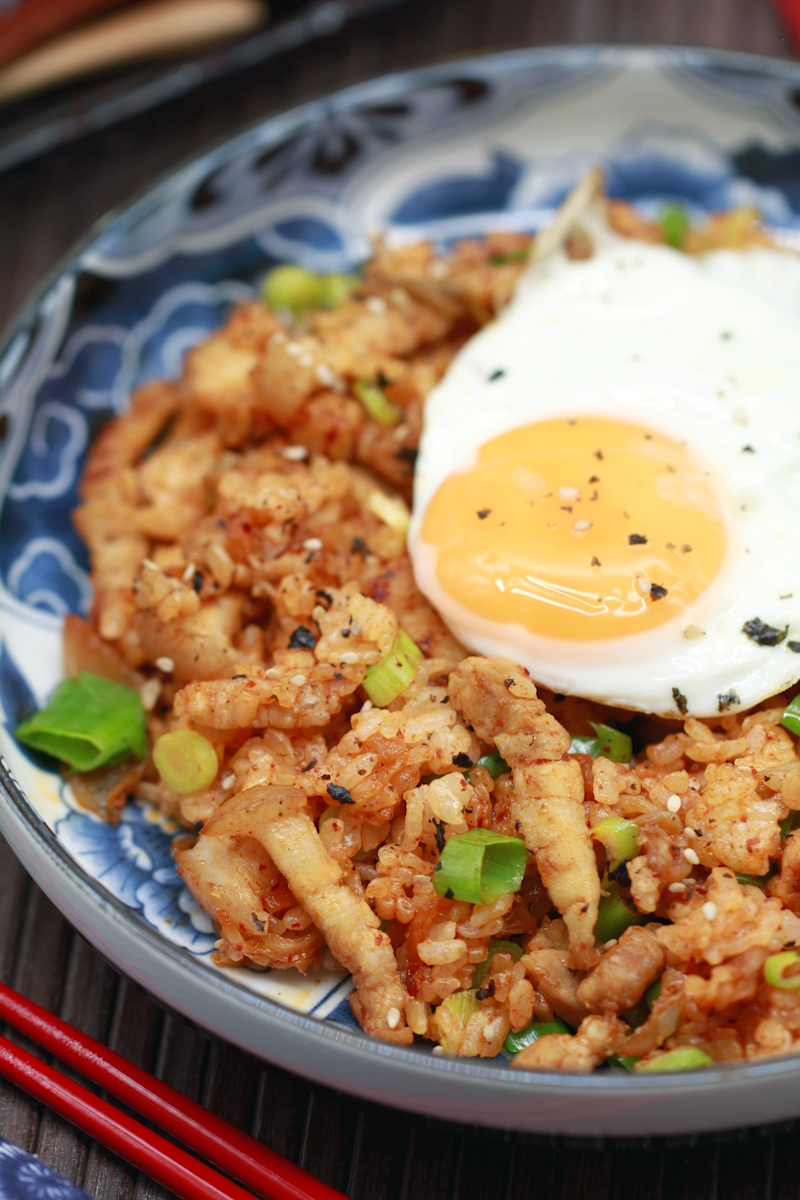
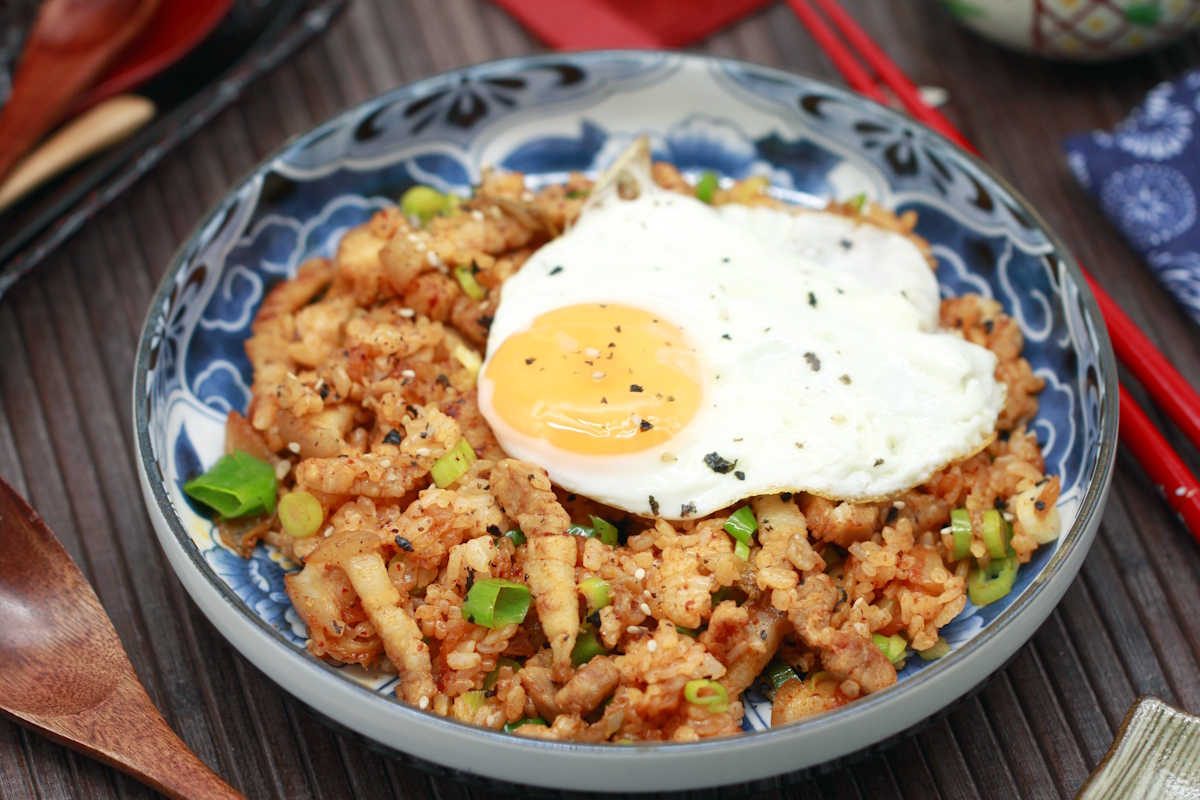
Kimchi Fried Rice, known in Korean as Kimchi Bokkeumbap (김치볶음밥), is a type of fried rice in which kimchi forms the flavour base. The name is a combination of Kimchi and bokkeum-bap, which literally means ‘fried rice’.
At its core, the dish consists of:
- cooked rice
- fermented Kimchi
- a little fat for frying
- and a savoury ingredient such as gochujang or soya sauce.
When stir-fried, these ingredients combine to create an intense blend of savoury, slightly spicy, salty and pleasantly tangy flavours.
Kimchi fried rice is a classic dish for using up leftovers. In many Korean households, it is made with leftover rice from the previous day and Kimchi, which is always on hand anyway. Whatever else is to hand is added: meat, vegetables, Tofu or even simple ingredients such as sausage or bacon. That’s why there’s no fixed, standard recipe. Each variation reflects the household in question and the ingredients available.
This approach is closely linked to Korean food culture. Kimchi is traditionally made in large quantities and fermented over a long period. Ripe, more strongly fermented kimchi is particularly well-suited to stir-frying, as it has a more intense flavour and develops additional depth when heated.
In this sense, kimchi Bokkeumbap is less a strictly defined dish than a cooking technique: rice and kimchi are stir-fried together and supplemented flexibly. It is precisely this simplicity and adaptability that have made it one of the best-known everyday dishes in Korean cuisine today.

The role of Kimchi
Kimchi is the central ingredient in kimchi fried rice and determines the overall flavour of the dish. It consists of fermented, usually spicy Chinese cabbage, which develops a complex aroma through lactic acid fermentation.
For Kimchi Fried Rice, it is best to use well-fermented, slightly matured Kimchi. Fresh Kimchi is often still mild and crunchy, whilst matured Kimchi is significantly more intense, tangier and more aromatic. It is precisely these characteristics that are important, as they are further enhanced during frying.
The Kimchi juice also plays a special role. It contains concentrated flavours from the fermentation process and infuses the rice directly with acidity, heat and Umami. That is why it is often used specifically for seasoning, rather than simply adding extra sauces.
When stir-fried, the Kimchi changes significantly. The acidity becomes more rounded, the heat integrates more fully and subtle roasted flavours develop. This makes the dish more harmonious overall and less sharp in flavour.
TOP RECOMMENDATION
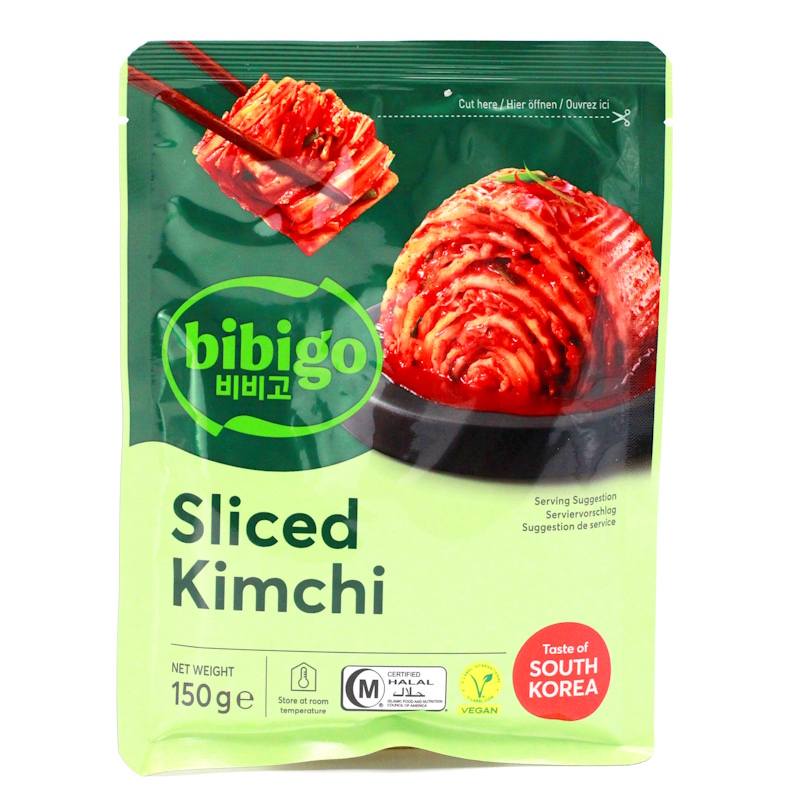
Kimchi 150g (fermentierter Chinakohl, vegan)
Fermentierter Chinakohl für Beilagen, Bowls & koreanische Gerichte. Dieses Kimchi von Bibigo besteht aus fermentiertem Chinakohl und überzeugt mit seinem typisch würzig-säuerlichen Geschmack. Es ist…
In stock
How to make your own Kimchi fried rice: Here’s how
Kimchi fried rice is a classic example of a dish where it is not the list of ingredients that is crucial, but the order of preparation and the handling of heat and moisture. The individual components are simple, but their interaction ultimately determines the texture and flavour.
The key is to fry the Kimchi and rice at the same time. Whilst many rice dishes are prepared rather gently, here the exact opposite is required: high heat and deliberate toasting. This brings out the characteristic flavours that define the dish.
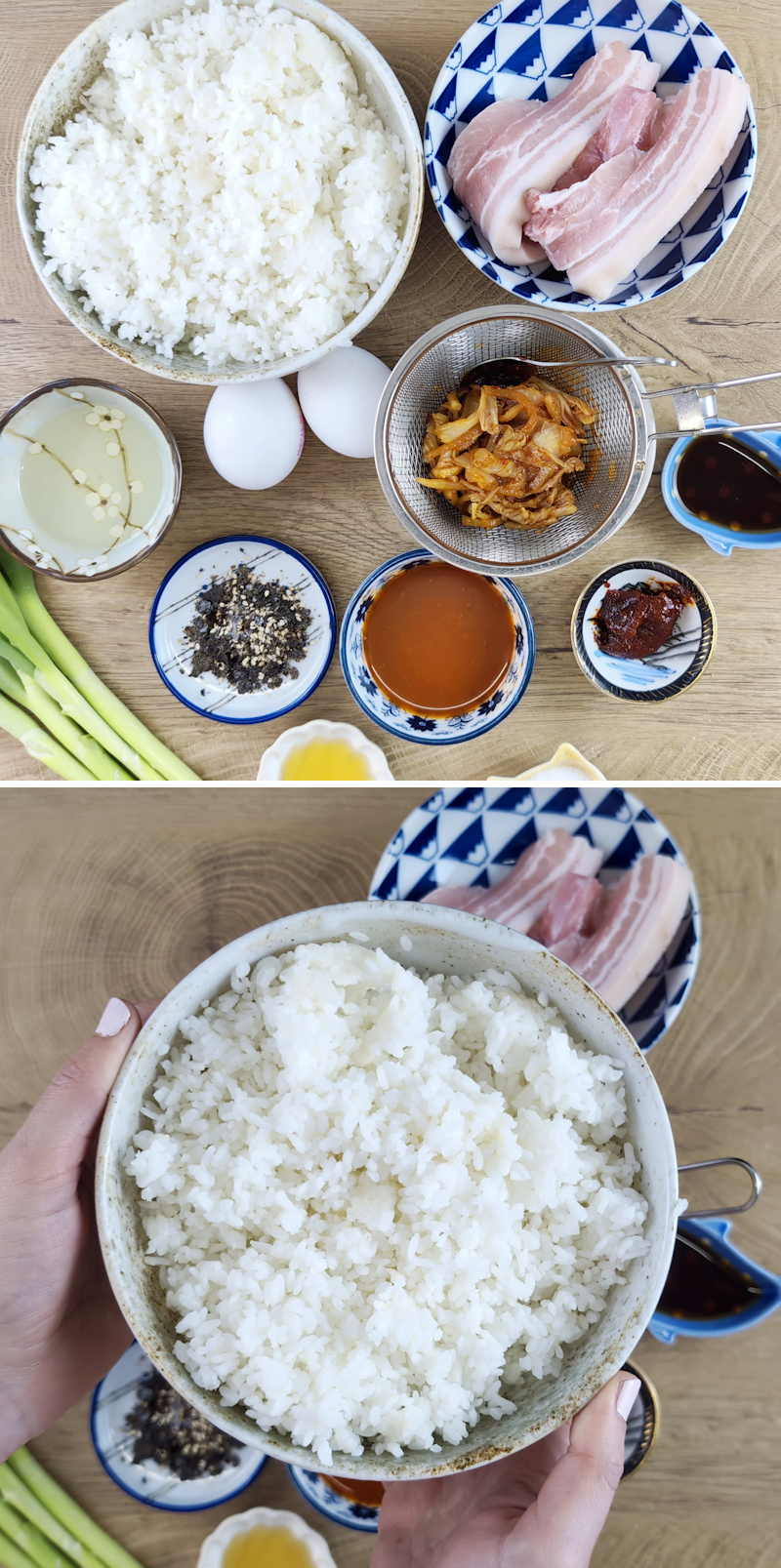
The key ingredients for Kimchi Fried Rice:
- The rice: Ideally, use rice left over from the previous day. As it cools, it loses moisture and separates more easily when fried. This keeps the grains loose and prevents them from sticking together. Fresh rice will generally work too, but should be cooked slightly drier or left to steam off briefly.
No post found!
- The Kimchi: Well-fermented Kimchi (im Shop ansehen) is crucial for the flavour. It adds acidity, heat and Umami to the dish. It’s important not just to warm the Kimchi, but to really fry it. It’s only through this frying stage that it develops its full depth of flavour.
- The fat and meat: Pork belly or bacon provide additional fat and roasted flavours. This fat forms the basis for the entire dish and binds the individual components together in terms of flavour.
- The seasoning: Gochujang (im Shop ansehen), Kimchi juice and a little sugar ensure a balance of heat, acidity and a hint of sweetness. Soy sauce is used sparingly, as the kimchi already contains sufficient salt.
Here’s how it works:
First, the meat is seared in a hot pan until it is lightly browned and the fat has rendered. This fat serves as the base for the rest of the flavour. Next, the chopped Kimchi is added and stir-fried vigorously until it darkens slightly and begins to develop toasty aromas.
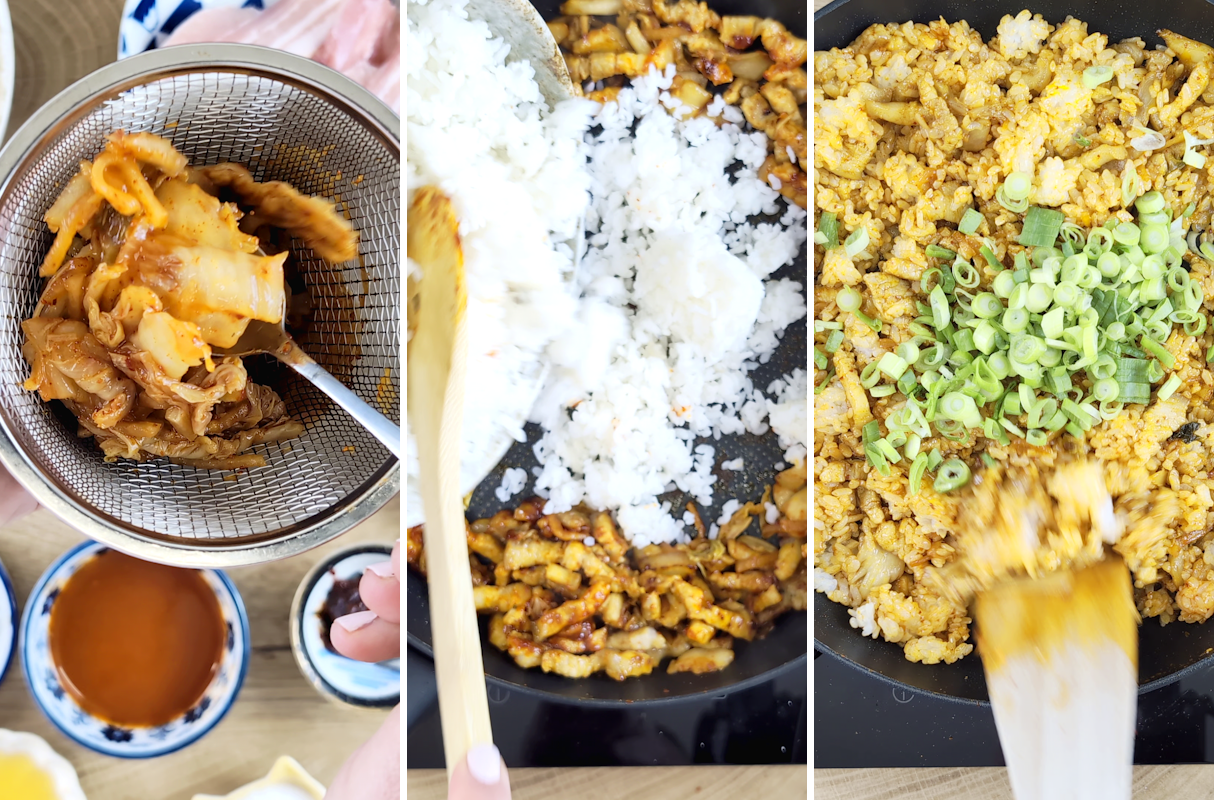
Now add the gochujang and sugar. Fry both briefly so that the flavour is distributed evenly and they caramelise slightly. Next, add the prepared rice to the pan and fold it in thoroughly so that all the ingredients are evenly combined.
The Kimchi juice is then stirred in, adding extra depth to the dish. Now leave the rice to sit in patches for a short while and press it down gently to develop toasty flavours. It’s important not to stir the rice constantly, but to give it a little time in the pan.
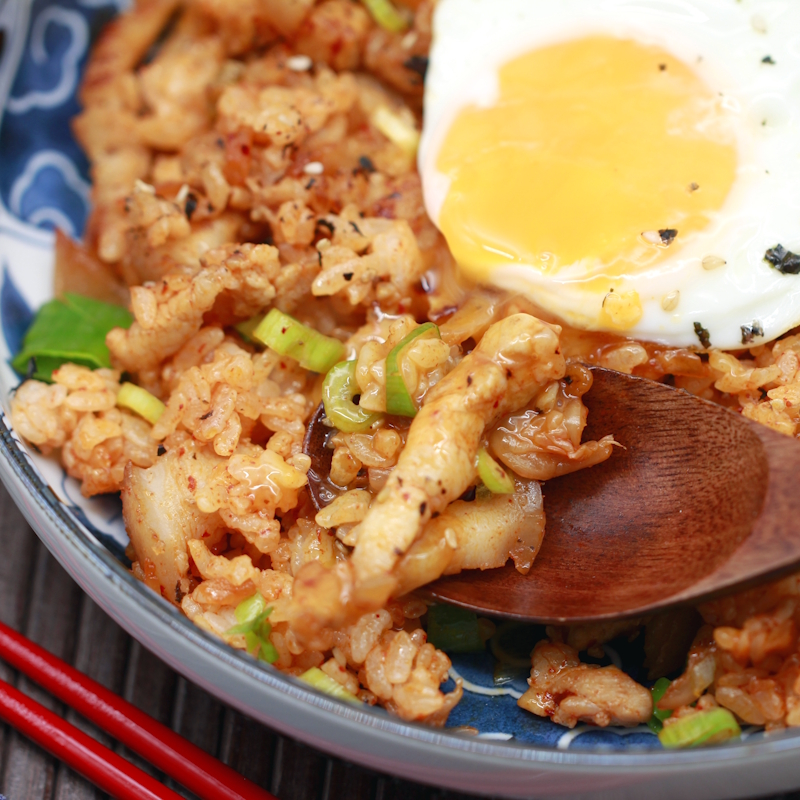
Finally, the dish is carefully tasted and seasoned slightly if necessary. Sesame oil and spring onions are only stirred in right at the end to preserve their flavour. Optionally, a fried egg can be placed on top, which is mixed into the rice when serving and adds extra creaminess.
Variations
Kimchi fried rice is a very versatile dish that can easily be adapted. The basic idea always remains the same: the rice and kimchi are fried vigorously and supplemented depending on what you have to hand.
| Classic | Pork belly, bacon, fried egg |
| Vegetarian | Tofu, mushrooms, Kimchi only |
| Leftover dish | Vegetables, leftover rice, leftovers from the fridge |
| Modern | Cheese, butter, other fusion ingredients |
| Spicier | Gochujang, chilli, Gochugaru |
What goes well with Kimchi fried rice?
Kimchi fried rice is already a complete meal in its own right, but it can be easily complemented. A fried egg is a particularly typical accompaniment, adding extra creaminess when mixed in. Pickled vegetables or a simple cucumber salad also add freshness and balance out the strong flavour. If you’d like to make the meal a bit more well-rounded, combine it with a light soup or add some grilled meat or Tofu. Do you have any questions or would you like to share your experiences? How do you like this kimchi fried rice? Did you prepare it the classic way with kimchi and meat, or perhaps try your own variation: vegetarian, extra spicy or with extra ingredients from your fridge?
Do you have questions or want to share your experience? How do you like this kimchi fried rice? Did you make it the classic way with kimchi and meat, or maybe tried your own variation: vegetarian, extra spicy, or with additional ingredients from your fridge?
I look forward to your comments and hope you enjoy making and eating this dish.

Kimchi Fried Rice
serves 2 | 20 minutes | 595 kcal
🖨️ Print PDF 📌 Save this pinKimchi Fried Rice (Bokkeumbap) is a spicy Korean rice dish that’s perfect for using up leftovers. Cooked rice is stir-fried in a pan with fermented kimchi, meat and aromatic ingredients until intense toasty flavours develop. The combination of heat, Sourness and Umami creates a simple yet surprisingly complex dish that’s quick to prepare and easy to adapt.
Ingredients (2 servings)
300 g cooked, cold short-grain rice (ideally from the day before) (im Shop ansehen)*
150 g Kimchi (im Shop ansehen)*
100 g pork belly (or diced bacon)
3 spring onions
2 tbsp oil (e.g. rapeseed oil)
1 tbsp gochujang (im Shop ansehen)*
1 tbsp sugar
1 tbsp soy sauce (im Shop ansehen)*
1 tsp sesame oil (im Shop ansehen)*
2 eggs (fried)
1 tsp Furikake with Nori (im Shop ansehen) *
Useful tools:
Santoku knife (im Shop ansehen)
2-in-1 strainer & skimmer (im Shop ansehen)
Preparation (20 minutes)
Step 1
To begin with, gather all the ingredients for the Kimchi Bokkeumbap.
Fluff up 300 g of cooked, cold rice from the previous day with a fork so that there are no lumps left. This is important to ensure that the rice mixes evenly with the other ingredients later on.
Step 2
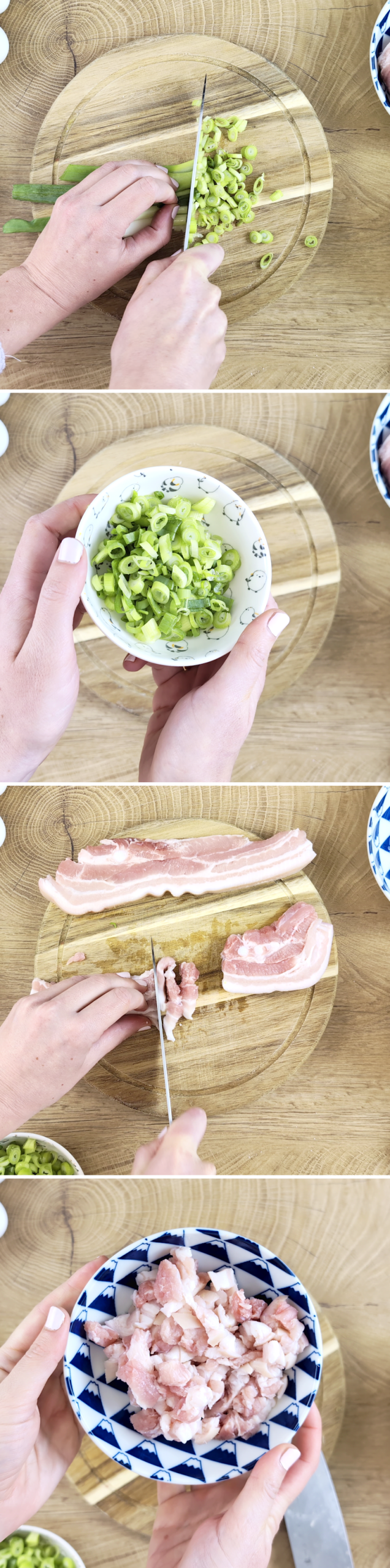
Cut the 3 spring onions into fine rings and 100 g of pork into slices or small cubes, if required.
Step 3
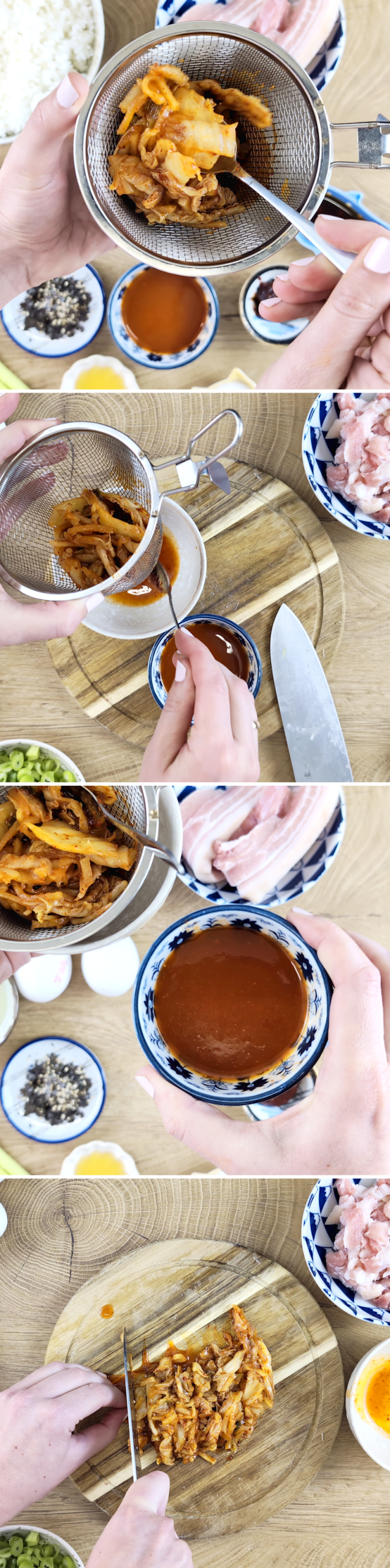
Drain 150 g of Kimchi in a sieve to collect the kimchi juice. Roughly chop the remaining Kimchi.
Step 4
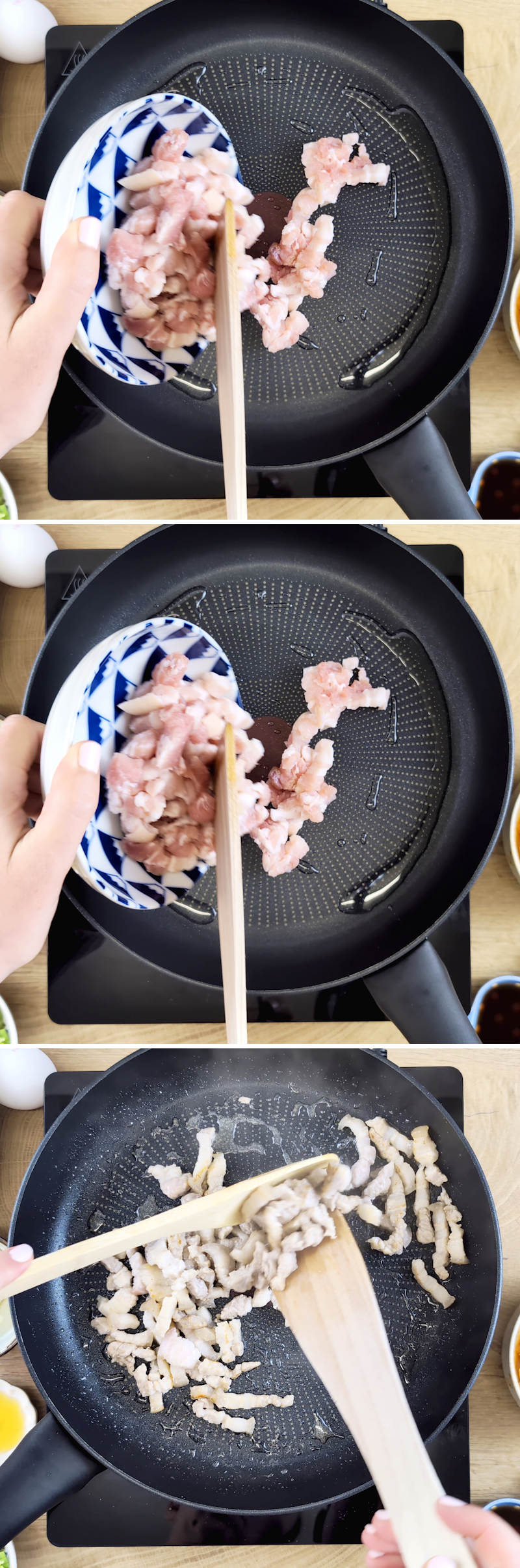
Heat a large frying pan over a medium to slightly higher heat and add 2 tbsp of neutral oil.
Add the meat and fry for several minutes until it is lightly browned and some fat has rendered. This fat forms the flavour base for the dish.
Step 5
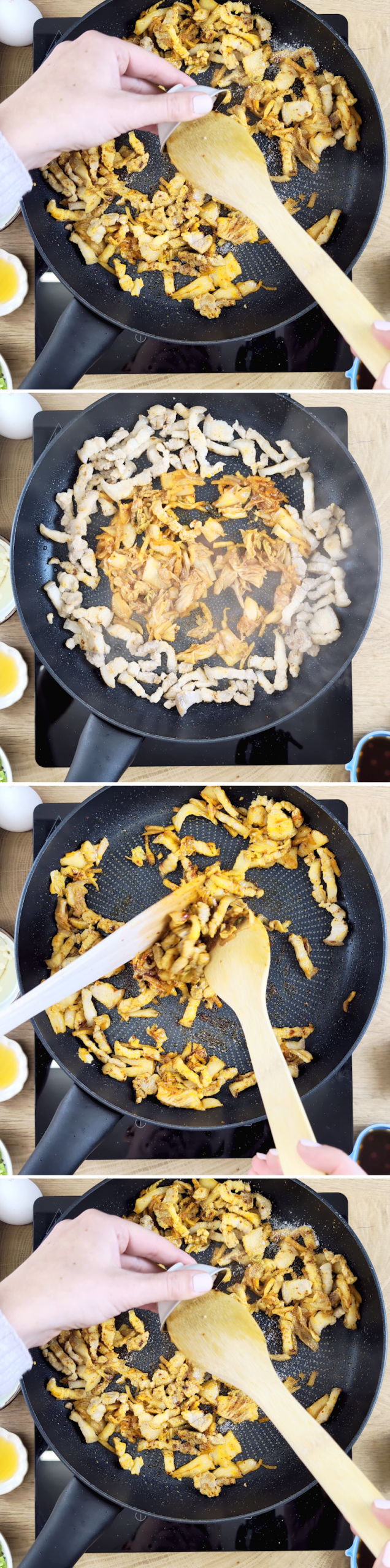
Now move the meat to the side and add the chopped kimchi to the food, then fry vigorously for 2–3 minutes. The kimchi should become slightly darker and develop roasted flavors, not just be warmed.
Add 1 tbsp gochujang and 1 tbsp sugar , then stir in well. Continue frying briefly so that the chilli paste is distributed evenly and caramelises slightly.
Step 6
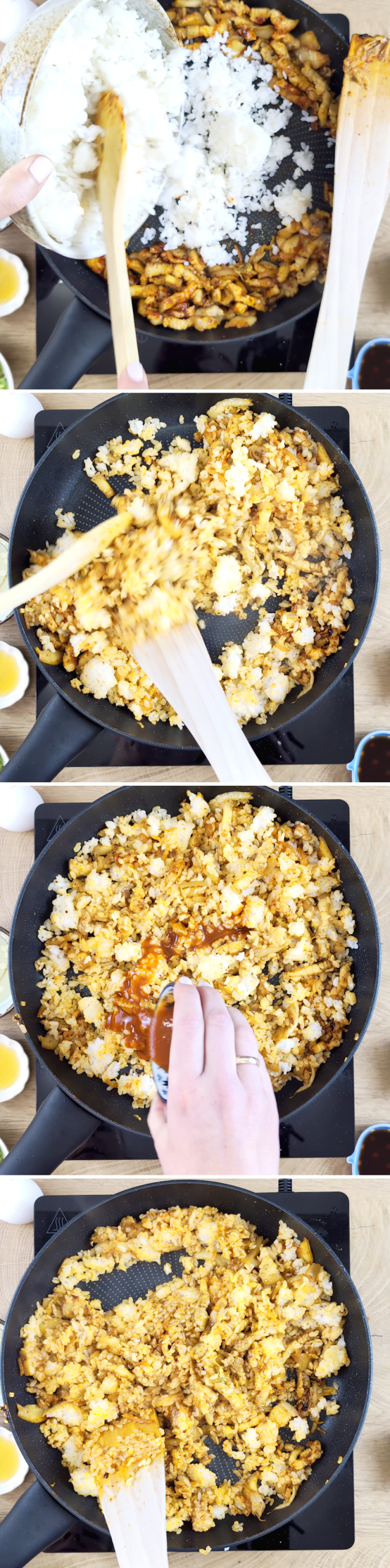
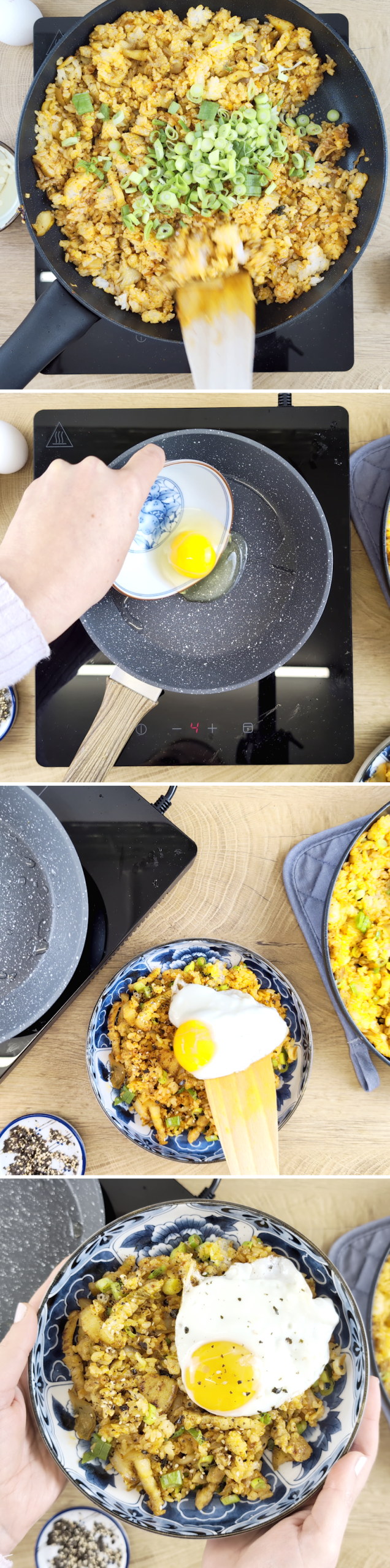
Add the prepared rice to the pan and fold in thoroughly. Then add the Kimchi juice and 1 tbsp soya sauce and mix everything together evenly. Press the rice down lightly with a spatula from time to time and leave it for a moment to allow to develop a toasty flavour at the bottom of the pan.
Step 7
Finally, fold in 1 tbsp sesame oil and the spring onion rings , then remove the pan from the heat.
At the same time, fry two fried eggs in a second pan and place them on top of the rice.
If desired, sprinkle with 1 tsp Furikake and serve the Kimchi fried rice straight away whilst still hot.
Fancy some more delicious inspiration from Korea? You’ll find even more quick recipe ideas here:
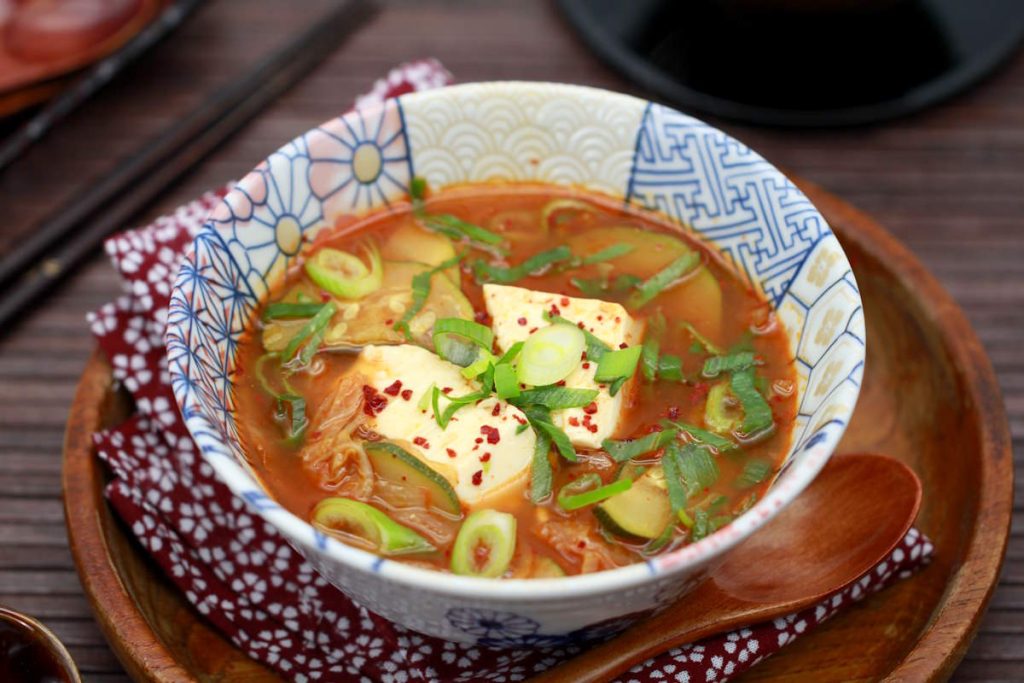
Sundubu Jjigae: Spicy Korean Tofu stew with courgette, Kimchi & Anchovy Dashima
Sundubu Jjigae is one of the best-known Korean stews and is an integral part of…
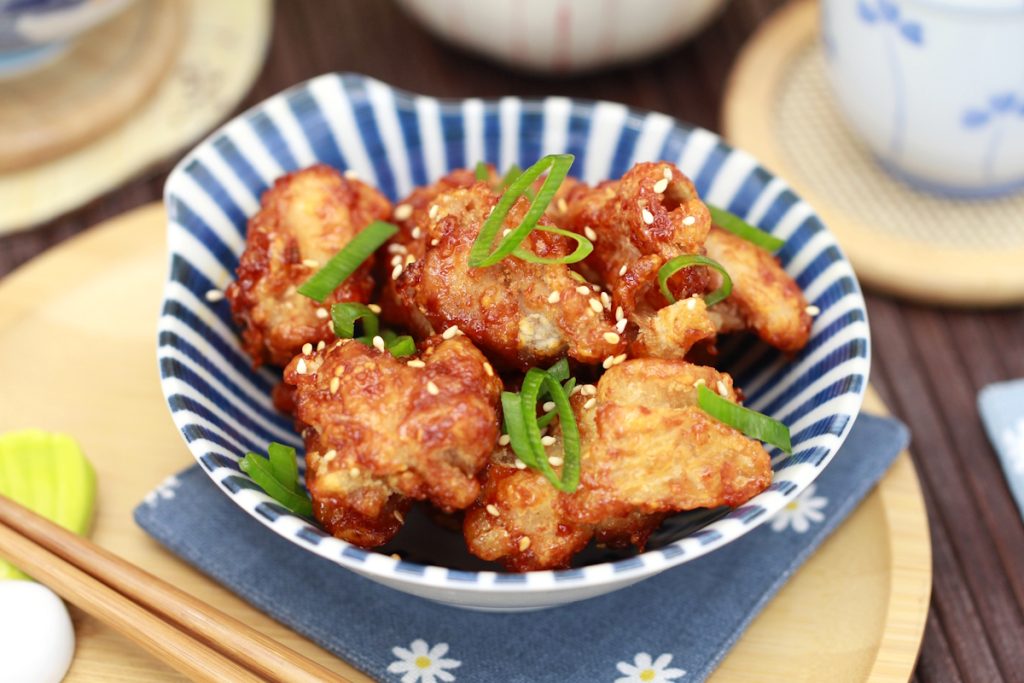
Dakgangjeong: Make your own Korean crispy chicken with a sweet and spicy marinade
I didn’t discover Dakgangjeong for the first time whilst travelling, but rather quite inconspicuously in…
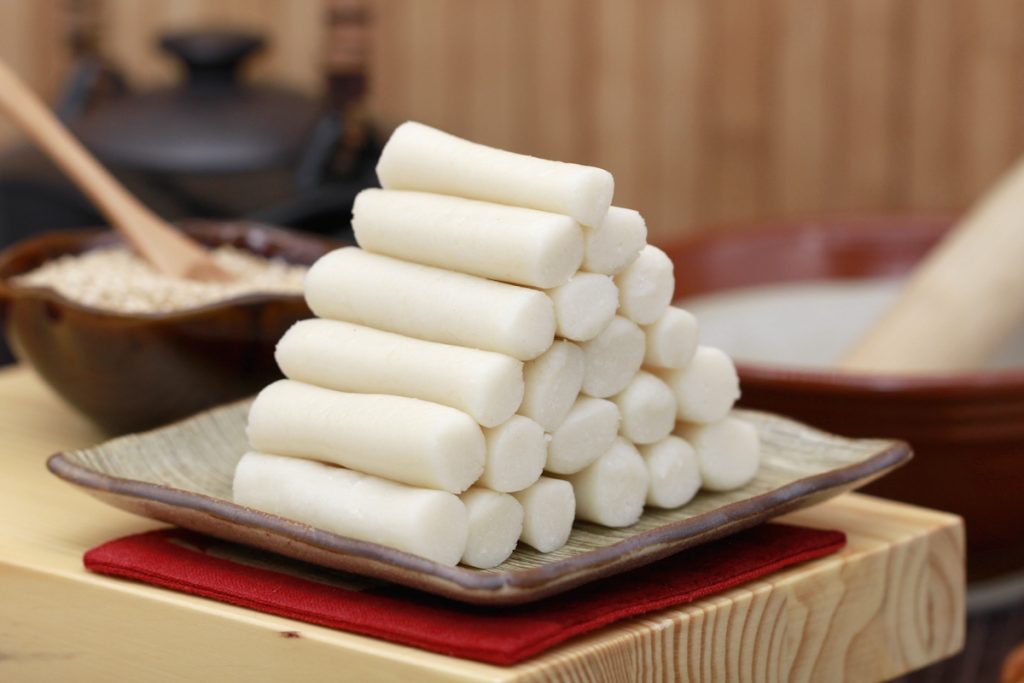
Make your own garaetteok: Recipe for Korean rice cakes – the basis for Tteokbokki & tteokguk
I struggled with garaetteok for a long time. The dough simply never wanted to become…
Make your own Tteokbokki – the best recipe from Korea for spicy rice cakes with cabbage & egg
If I could only choose one Korean street food that really works every time, it…
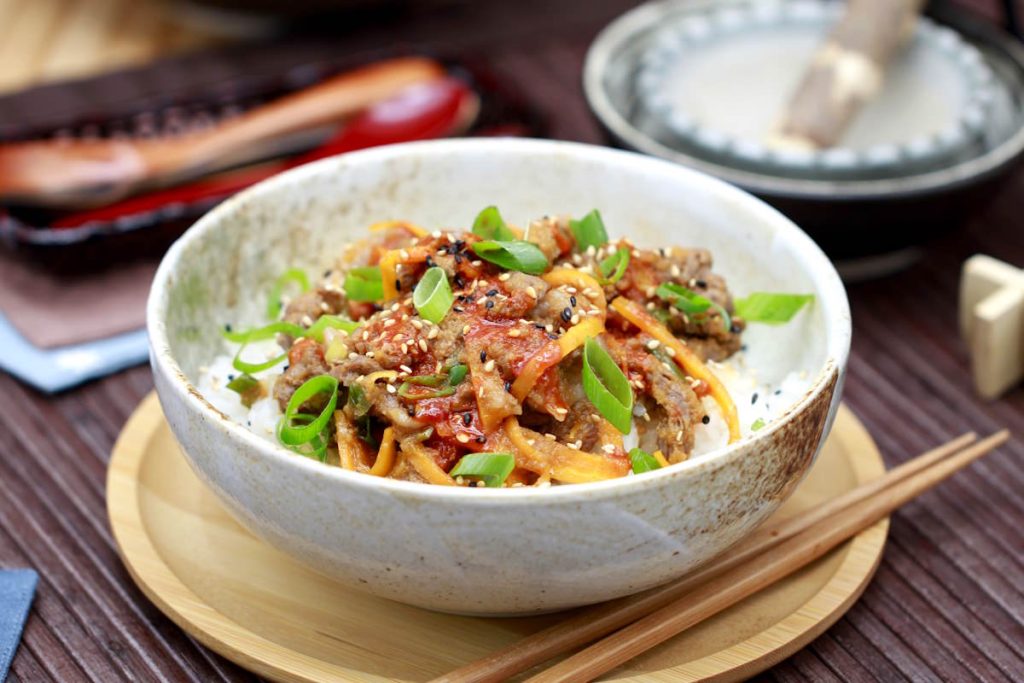
Make your own Bulgogi: Korean fire meat with a spicy marinade
When I think of Korean food, Bulgogi is always right at the top of the…
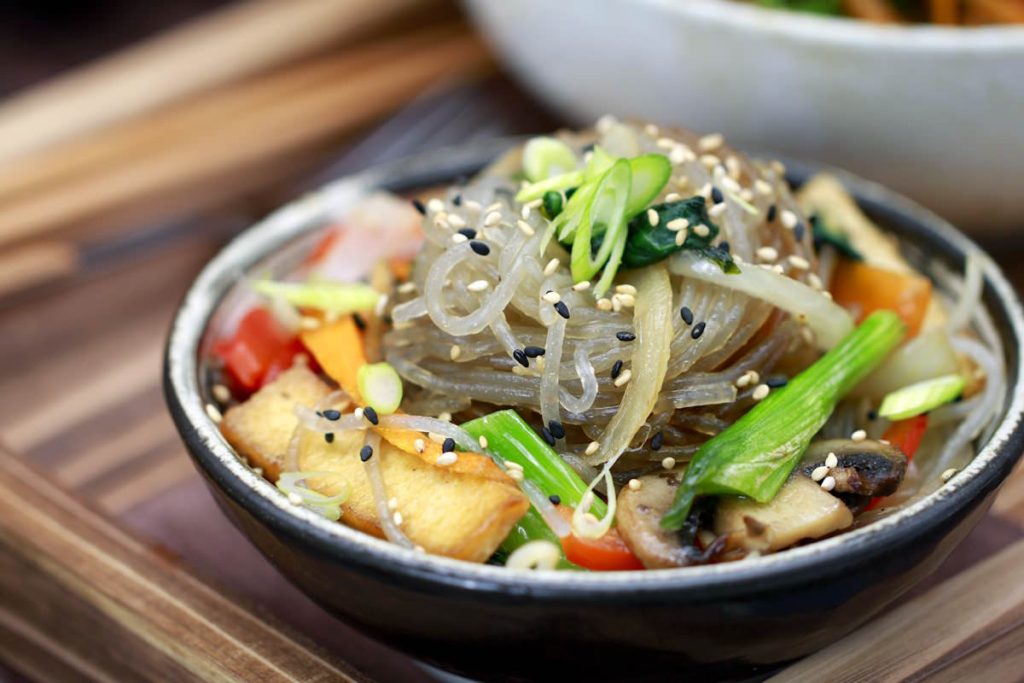
Make your own Japchae: Korean glass noodle salad with vegetables & Tofu
If you’re looking for a vegetarian dish that’s not only filling but also packed with…
Have you tried this recipe yet? Let me know in the comments – I can’t wait to hear from you.