
Language:


For me, Buta Shogayaki is the perfect Japanese lunch when working from home. It’s quick, incredibly flavourful and requires little more than a handful of ingredients. Whilst the rice simmers away, there’s plenty of time to mix the sauce and fry the meat – and less than half an hour later, a steaming hot dish is on the table that tastes of more than just everyday life.
I first tried Buta Shogayaki myself in Japan. It was in a small lunchbox I’d picked up from a konbini that morning. It wasn’t warm anymore, but the meat was so flavourful that I immediately thought: I want to make this at home. And it’s well worth it! Because the recipe is straightforward, a joy to prepare and tastes really good even when cold: perfect not only for your lunch break, but also for on the go or as a Bento.
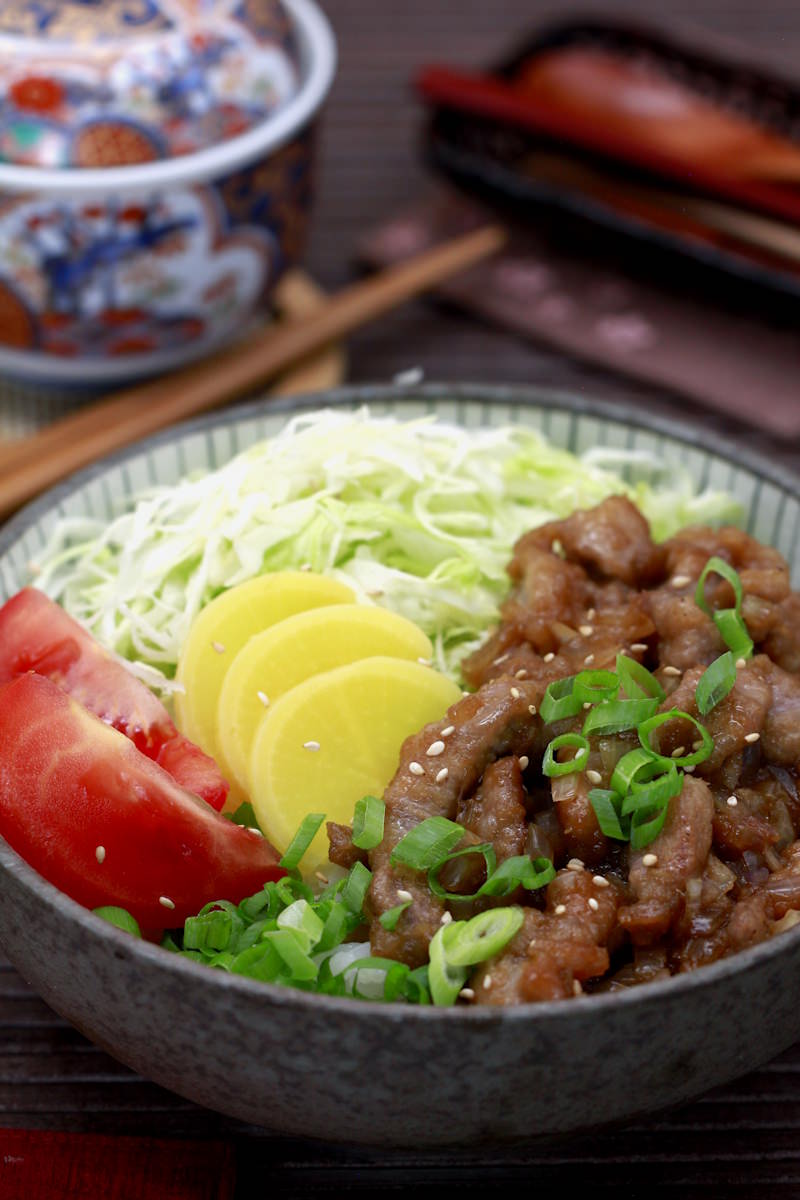
What exactly is Buta Shogayaki?
‘Buta’ means pork, ‘Shoga’ stands for ginger and ‘Yaki’ means something like frying or grilling. Put together, that makes: fried pork with ginger – a dish that is an integral part of everyday Japanese cuisine. Buta Shogayaki is one of the most popular teishoku dishes (set menus) in Japan, served at lunchtime in restaurants, canteens and small eateries; often served with rice, Miso soup and pickled vegetables.
The dish probably originated in the post-war period, when pork gradually became more affordable and ginger – already highly valued in Japanese cuisine – became the perfect counterpart to the hearty meat. The spicy sauce, made with soy sauce, Mirin, Sake and sugar, combines classic elements of Washoku cuisine: sweet, salty and full of Umami.
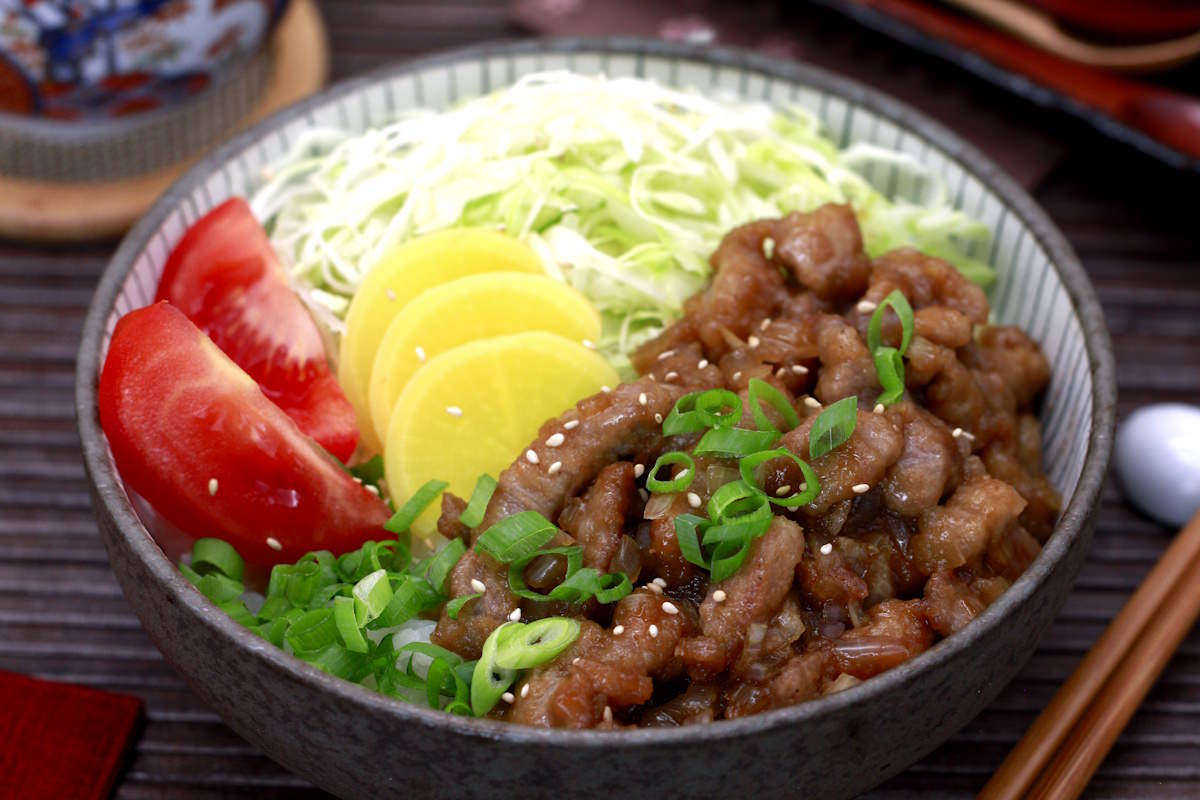
Buta Shogayaki remains a typical home-cooked meal to this day: simple, filling and versatile. Many families have their own variations: sometimes with more onions, sometimes with less sauce, sometimes sweeter, sometimes spicier. It is precisely these small differences that make the dish so charming and invite you to try it out.
Regional variations of Buta Shogayaki
Although Buta Shogayaki is popular throughout Japan, there are subtle differences depending on the region:
– Kansai (e.g. Osaka, Kyoto): Here, the flavour is often made slightly sweeter by adding more sugar or even honey to the sauce. Sometimes finely chopped cabbage is added directly to the pan.
– Kanto (e.g. Tokyo, Yokohama): In this region, a heartier, spicier version with extra ginger is preferred. Grated onion is also often stirred into the sauce.
– Tohoku (Northern Japan): Here, it is customary to marinate the meat in Sake first to make it particularly tender.
– Hokkaido: In Japan’s northernmost prefecture, you’ll sometimes find a winter version with butter in the sauce – this adds warmth and depth of flavour.
Feel free to try out different variations – with more or less sugar, extra onion or even a splash of yuzu juice for freshness. That way, you’ll find your very own favourite version.
Making Buta Shogayaki yourself: Here’s how
Making Buta Shogayaki at home is easier than you might think, and with the right sauce, it turns into a proper Japanese comfort food in no time. All you need is a good cut of pork, fresh ginger and a few typical staple ingredients from Japanese cuisine.
The key ingredients for Buta Shogayaki:
- Meat: Pork neck is best – it stays juicy when fried and absorbs the sauce particularly well. When sliced thinly, the meat also cooks quickly and evenly.
- Ginger sauce: This characteristic sauce is made from soy sauce, Mirin, Sake, sugar and freshly grated ginger. Optionally, you can add a little garlic and finely chopped onion – this adds depth and a touch of heat.
- Side dishes: Traditionally, Buta Shogayaki is served with steamed rice, finely sliced cabbage and Tsukemono (pickled vegetables). A dollop of Japanese mayonnaise or some toasted sesame seeds also go wonderfully with it.
- For frying: Sesame oil adds flavour, rapeseed oil ensures even heat – a good combination for the pan.
How it works: First, prepare the rice, then slice the cabbage and season with salt. While the rice is cooking, mix the sauce and slice the meat into thin strips. Now it’s all quick: briefly fry the meat, deglaze with the sauce and finish cooking in it. Finally, arrange everything nicely on a plate – and there you have a hearty Japanese lunch, which you could just as easily imagine in an izakaya or bento shop.
Tip
If you prepare Buta Shogayaki the day before, it’s also perfect for a Bento or as a quick lunch whilst working from home. In Japan, this spicy ginger pork is a real classic in lunchboxes – not only because it’s filling, but also because it retains its full flavour even when cold. In a Bento Box, combine it with rice, a few classic edamame, spinach goma-ae and a tamagoyaki , it makes for a balanced meal that’s not only practical but also really tasty.
Have you ever made your own Buta Shogayaki? Perhaps even with your own personal twist – a bit spicier, with chicken or even vegan? I’d love to hear in the comments how you like to prepare your Shogayaki. Have fun trying it out and いただきます Itadakimasu!
Buta Shogayaki
serves 2 | 30 minutes | 1124 kcal
🖨️ Print PDF 📌 Save pinSpicy, quick to make and perfect for working from home: Buta Shogayaki is fried pork in a savoury sauce with ginger, soy sauce, Mirin and Sake – a true classic of everyday Japanese cuisine. Served with rice, white cabbage and Tsukemono, it makes a complete lunch that’s also ideal for a Bento box.
Ingredients (2 servings)
For the meat:
300 g pork neck
3 tbsp sesame oil (im Shop ansehen)*
3 tbsp frying oil (e.g. rapeseed oil)
a little flour (e.g. wheat flour)
a little salt & pepper
For the ginger sauce:
1 tbsp ginger, freshly grated
3 garlic cloves, finely grated (optional)
1 onion
6 tbsp soya sauce (im Shop ansehen)*
6 tbsp Mirin (im Shop ansehen)*
4 tbsp Sake (im Shop ansehen)*
1 tbsp sugar
Side dishes:
2 portions rice (to the recipe) (im Shop ansehen)*
2 portions Japanese white cabbage salad (to the recipe)
some Tsukemono (pickled vegetables, e.g. takuan) (im Shop ansehen)*
(optional as a garnish) spring onions, tomatoes, toasted sesame seeds (im Shop ansehen)*
Useful tools:
Santoku knife (im Shop ansehen)
Japanese grater (im Shop ansehen)
Rice cooker (im Shop ansehen)
Preparation (30 minutes)
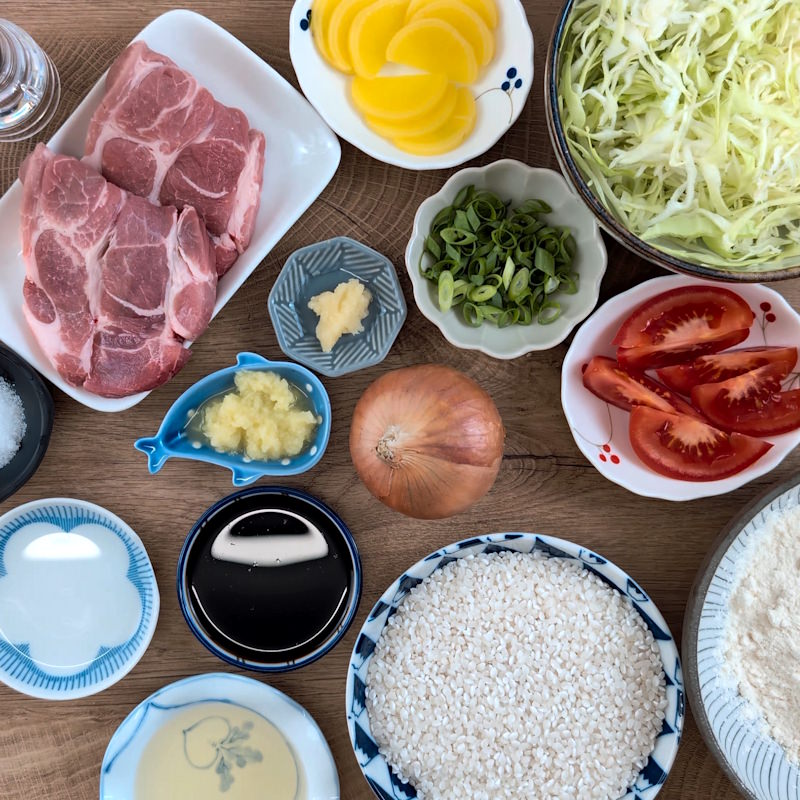
Step 1
First, we’ll check that we have all the ingredients for the delicious Buta Shogayaki.
To make sure everything goes smoothly later on, we’ll prepare a few things here: First, take care of the rice (you can find the full recipe here). Wash 200 g of short-grain rice thoroughly in cold water until the water runs clear. Then place it in the rice cooker or saucepan with 1.5 times the amount of water and cook according to the instructions on the packet. Leave it to rest for 10–20 minutes before serving.
For the fresh side-dish cabbage, cut 100 g white cabbage into fine strips, mix it with a pinch of salt or Japanese dressing (you can find the full coleslaw recipe here) and set it aside briefly. Also take the Tsukemono (e.g. takuan or amazuzuke) out of the fridge and slice them if necessary.
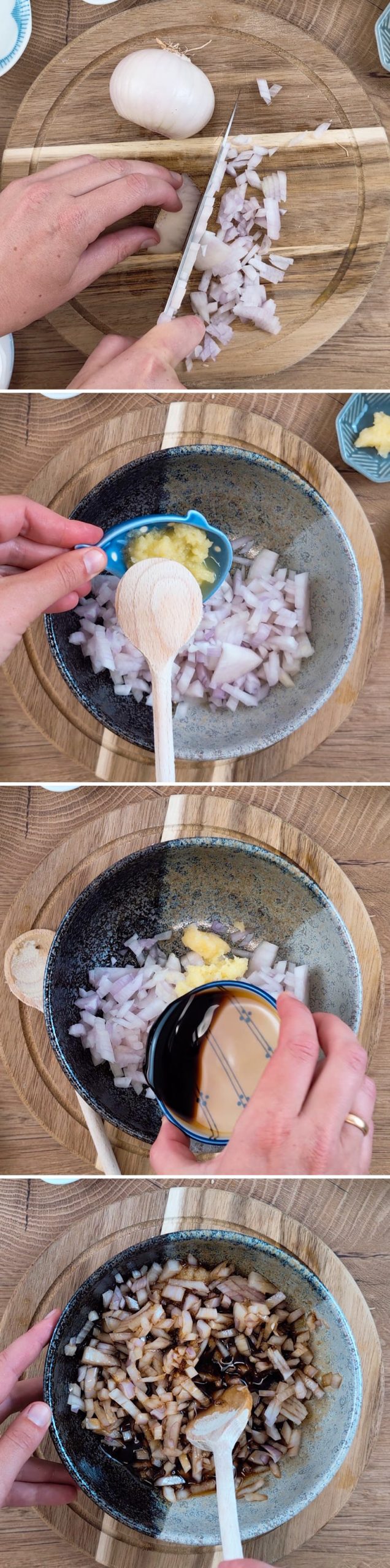
Step 2
Now for the sauce: Grate 1 tbsp fresh ginger and, if you like, 3 small garlic cloves. Also finely chop one onion . Then mix together in a bowl 6 tbsp soy sauce, 6 tbsp Mirin, 4 tbsp Sake, 1 tbsp sugar and the grated ginger, garlic and onion. The mixture should have a strong aroma, as this will later form the aromatic heart of your Buta Shogayaki.
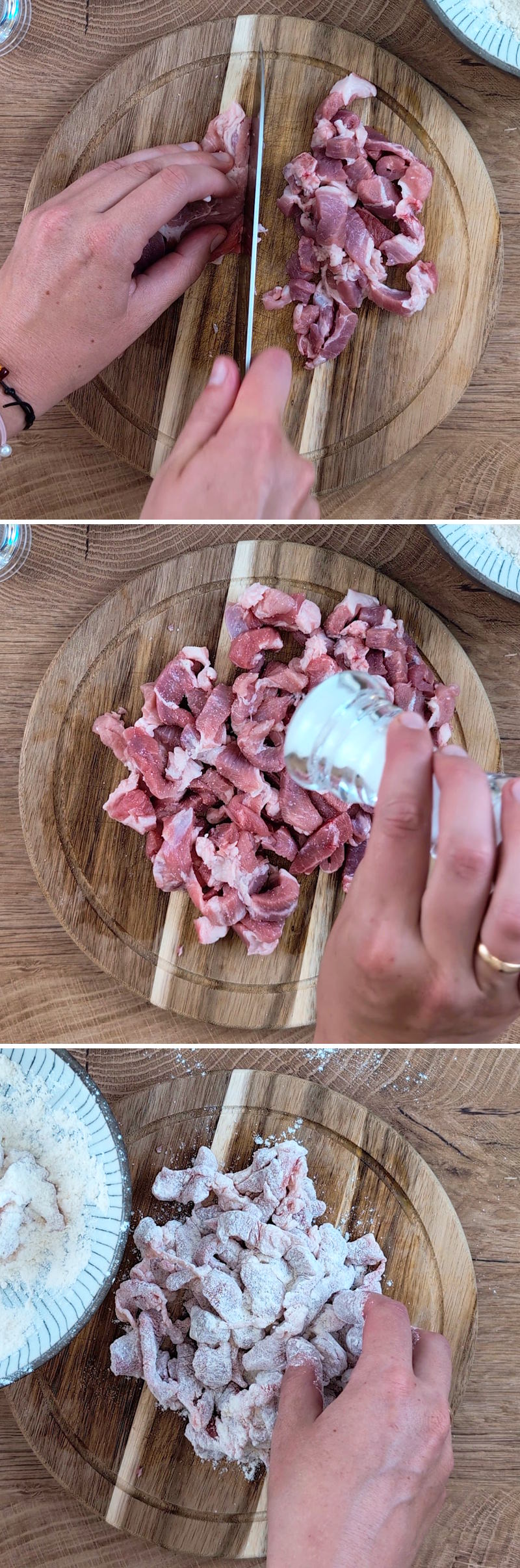
Step 3
Cut 300g pork neck into slices as thin as possible. Season with a little salt and pepper. Then dust very lightly with a little flour – this helps the sauce stick to the meat better later on (it’s best to put the flour in a bowl and toss the meat in it, then take it out and tap off any excess).
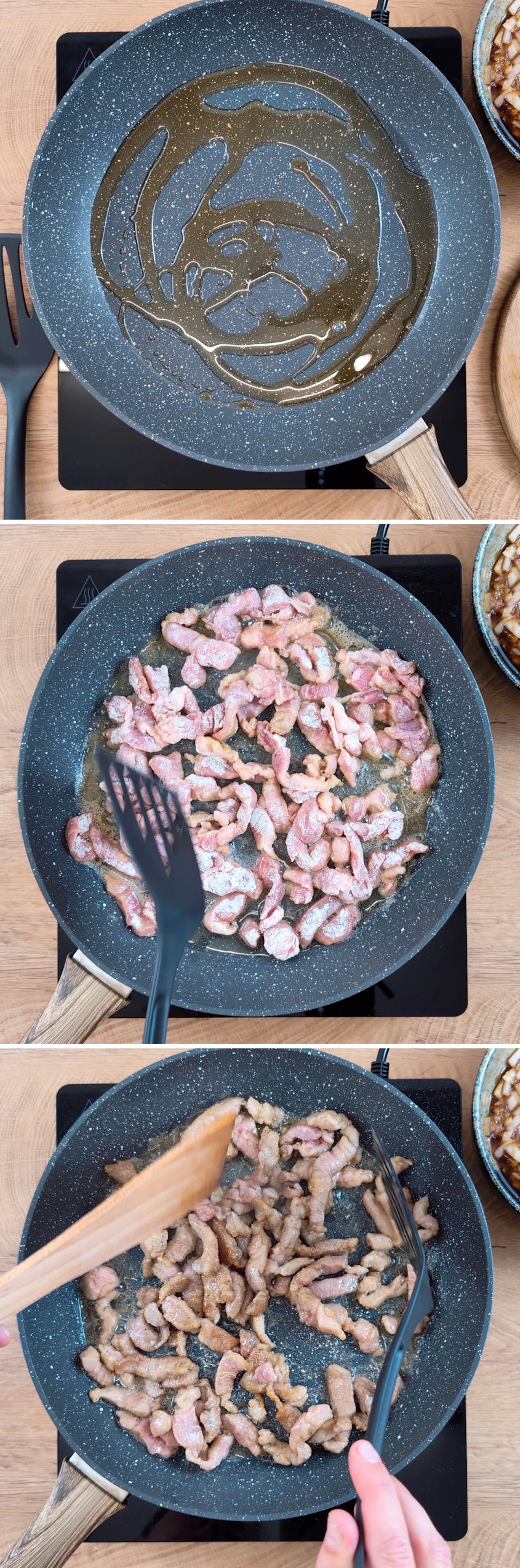
Step 4
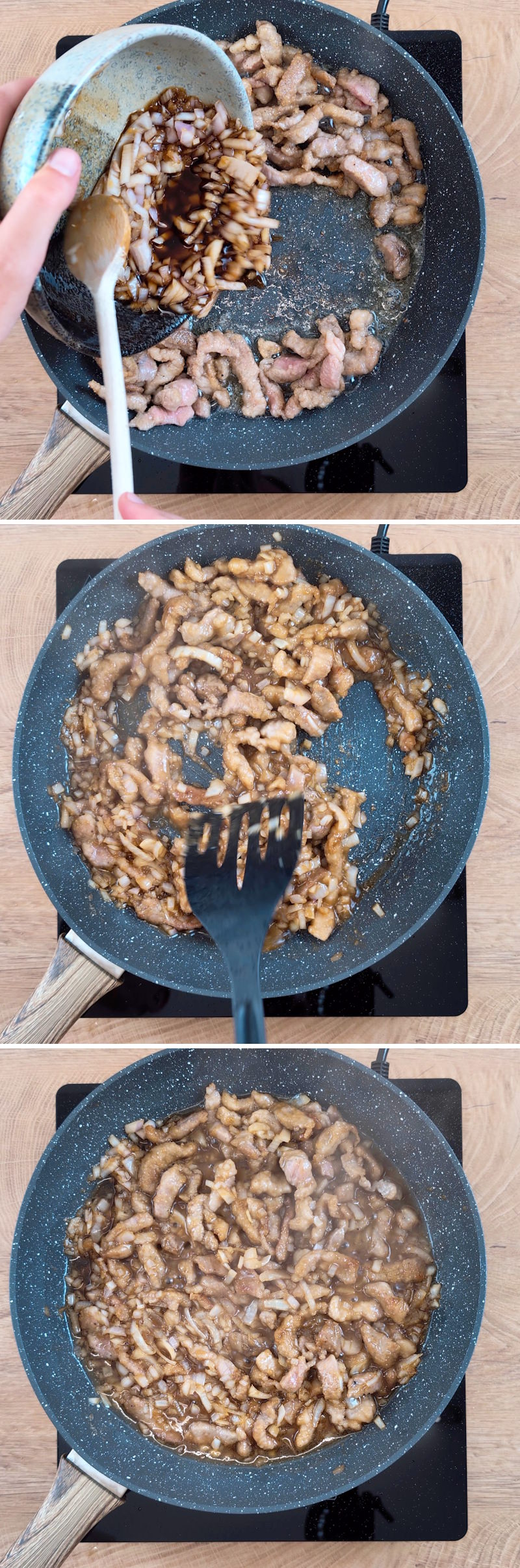
Heat a little oil (e.g. 3 tbsp sesame oil and 3 tbsp rapeseed oil) in a frying pan. Briefly fry the slices of meat over a medium to high heat until they are lightly browned – they do not need to be cooked through, as this will happen later in the sauce.
Step 5
Push the meat in the pan slightly to one side and pour the prepared ginger sauce straight into it. Bring it to the boil briefly and then mix it with the meat. After a few minutes, the meat is cooked through and coated in a glossy, slightly thickened sauce – done!
Step 6
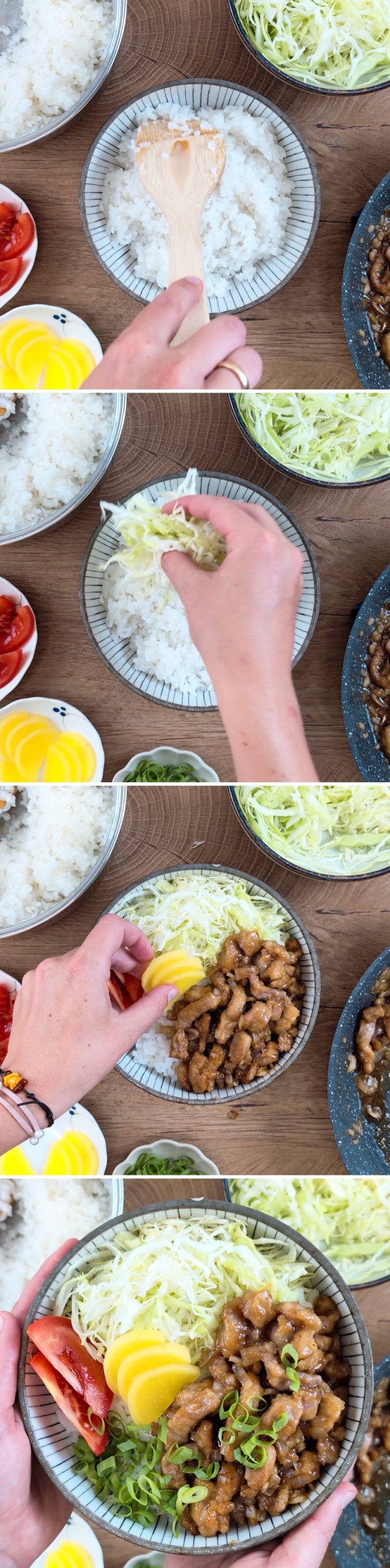
Arrange the warm rice in a bowl or on a plate, add the ginger pork and place some of the finely sliced cabbage alongside it. A few pieces of Tsukemono complete the dish and add a touch of freshness. If there is any sauce left over, drizzle it over the meat and rice – this makes it particularly flavourful. Finely sliced tomato, a few spring onion rings and toasted sesame seeds.
Fancy some more delicious inspiration from Japan? Here you’ll find even more quick main courses with rice:

Make your own Omurice: Japanese omelette with ketchup rice & vegetables | delicious Omuraisu
Omuraisu is one of those dishes that brings an instant smile to almost every Japanese…
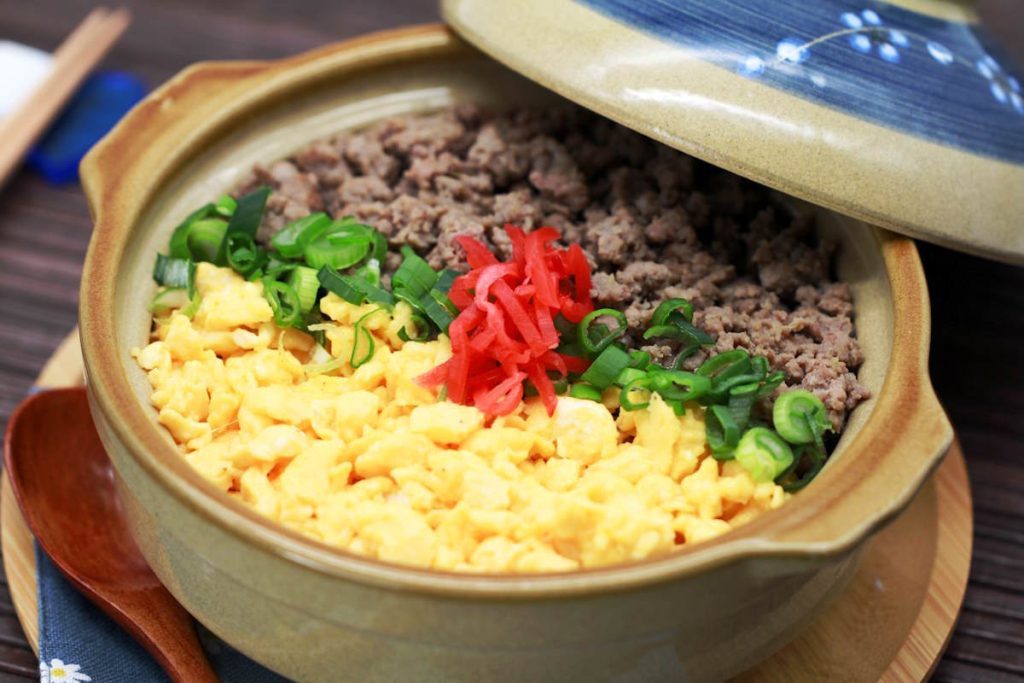
Soboro Don: How to make a simple Donburi at home – quick, hearty, Japanese
Soboro Donburi is one of those dishes that requires just a few ingredients – yet…
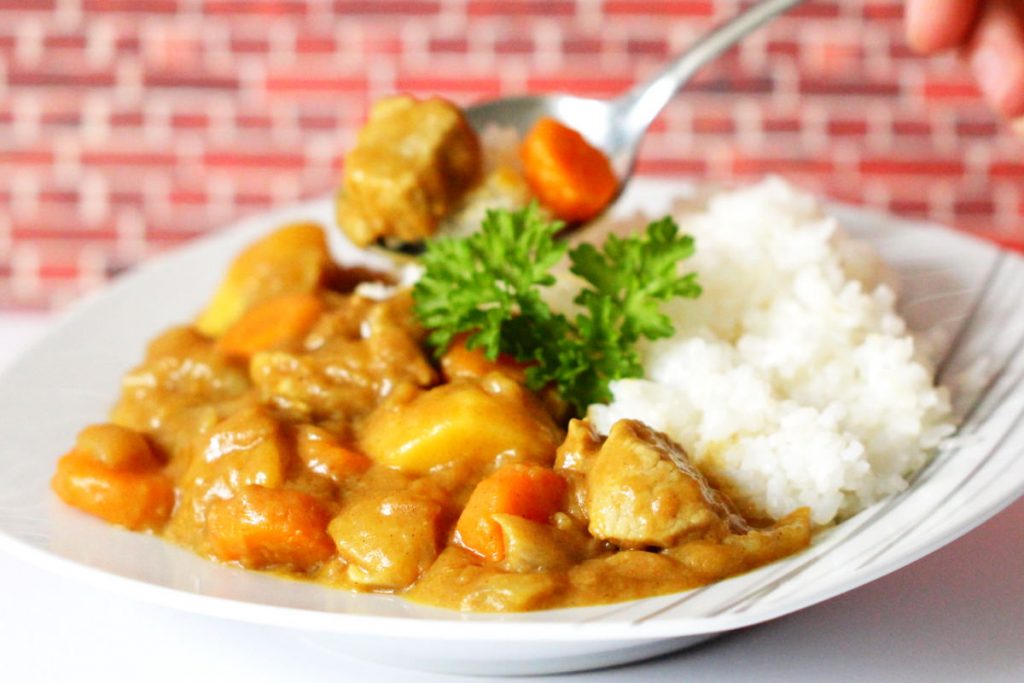
Kare Raisu: Make your own Japanese curry with rice – simple, hearty and full of Umami
Japanese curry is one of the most popular dishes in Japan and is a staple…
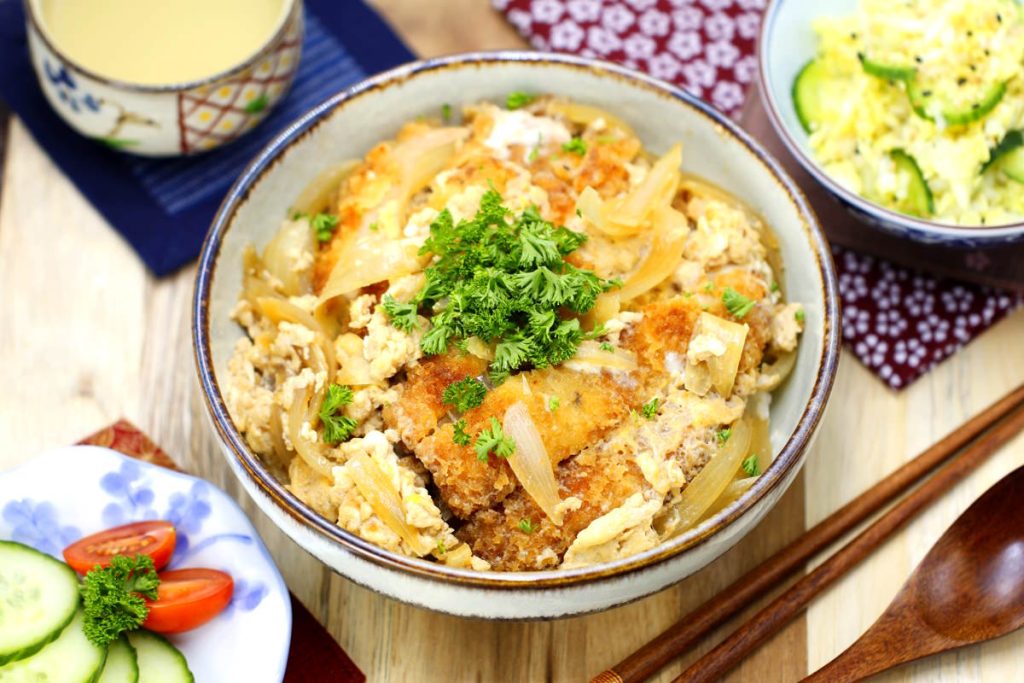
Make your own katsudon: No. 1 Donburi rice bowl with Japanese pork cutlet and Umami sauce ♡
Katsudon is the perfect rice bowl and the queen of all Donburi recipes! Juicy tonkatsu…
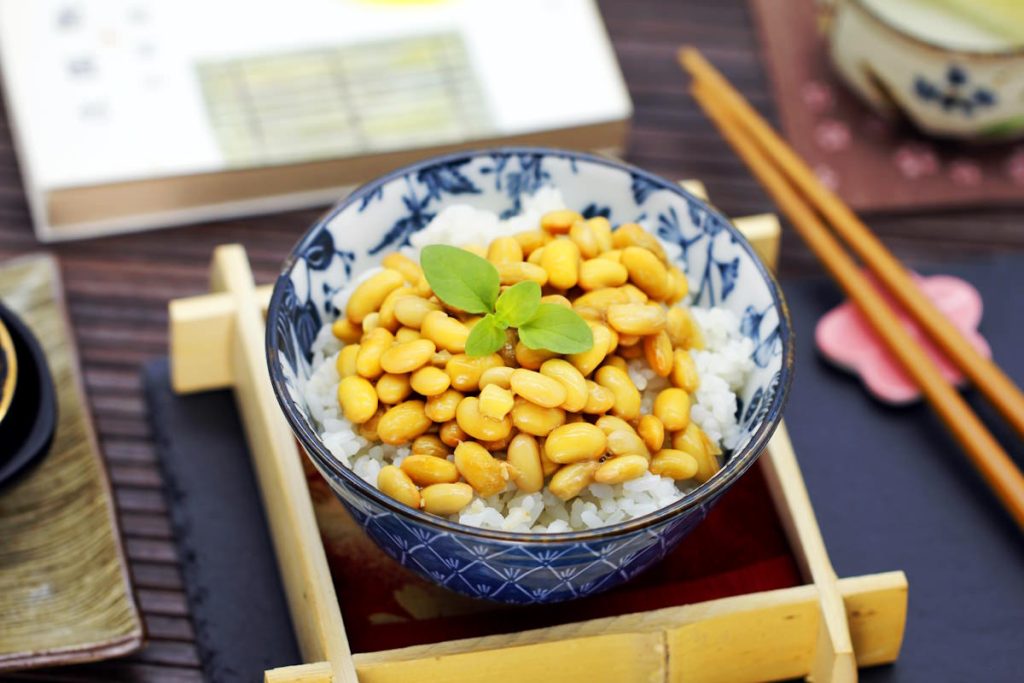
Natto Bowl: Start your day with this power breakfast from Japan!
to the recipe ↓ to the video ↓ Discover the secret of a Japanese breakfast…

Butadon – Hokkaido pork bowl with juicy pork in ginger
Juicy slices of pork, fried in a typically Japanese savoury-sweet sauce and served on steamed…
Have you tried the recipe yet? Let me know in the comments – I’m really looking forward to hearing from you.