
Language:


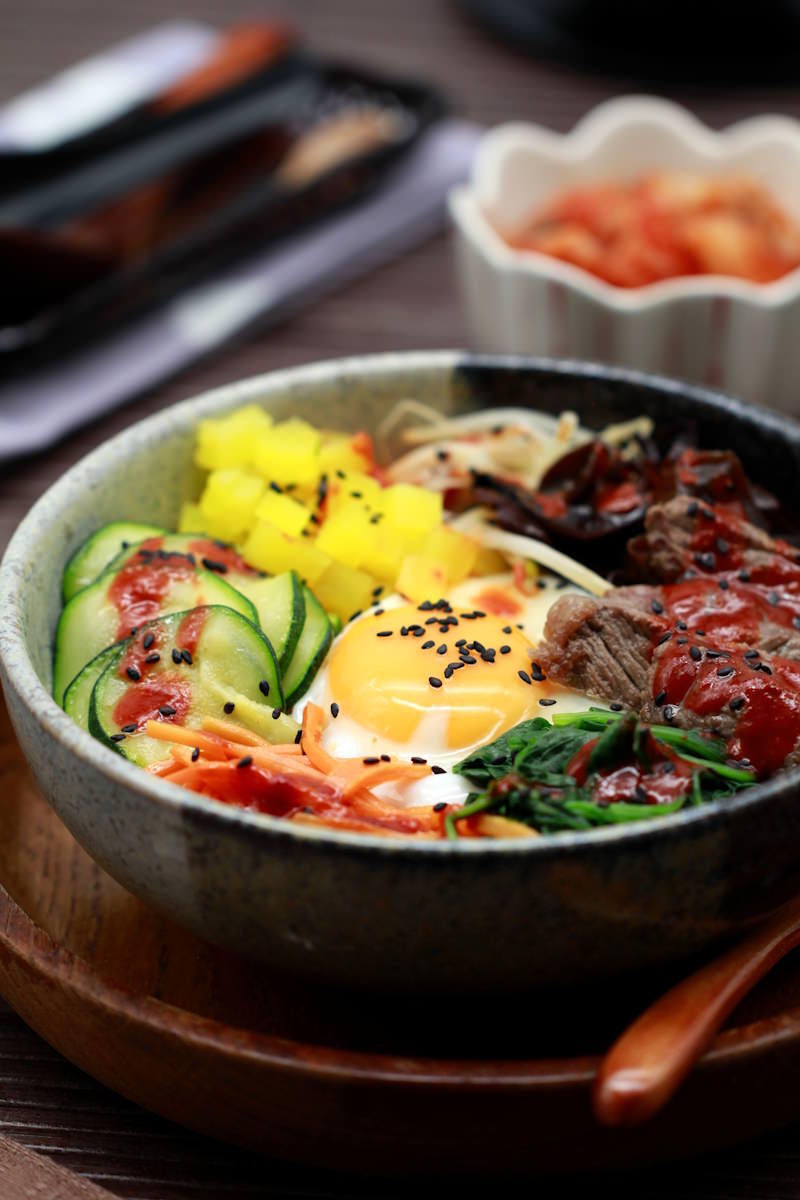
Bibimbap is not only one of the best-known dishes in Korean cuisine, but also one of the most versatile. A large bowl of steaming rice, topped with colourful vegetables, heartily seasoned meat or Tofu and a perfectly fried egg – crowned with a spoonful of spicy gochujang sauce. What makes Bibimbap so special? Everything is thoroughly mixed together before eating, so that the flavours blend perfectly. The result: a harmonious taste with plenty of Umami!
With this recipe, you can easily make classic Bibimbap at home. Whether with meat or as a vegetarian version – you can adapt the ingredients flexibly and vary the dish to suit your taste.
What exactly is Bibimbap?
Bibimbap has a long history and has been eaten in Korea for centuries. The first mentions date back to the Joseon Dynasty (15th century), when it was known as Goldongban. There are various theories about its origins: some believe that the dish originated from ritual ancestral ceremonies, during which various foods were served together and mixed. Another hypothesis suggests that Bibimbap emerged as a practical meal for farmers in the rice fields – a quick, nutritious and uncomplicated way to eat.
TOP RECOMMENDATION
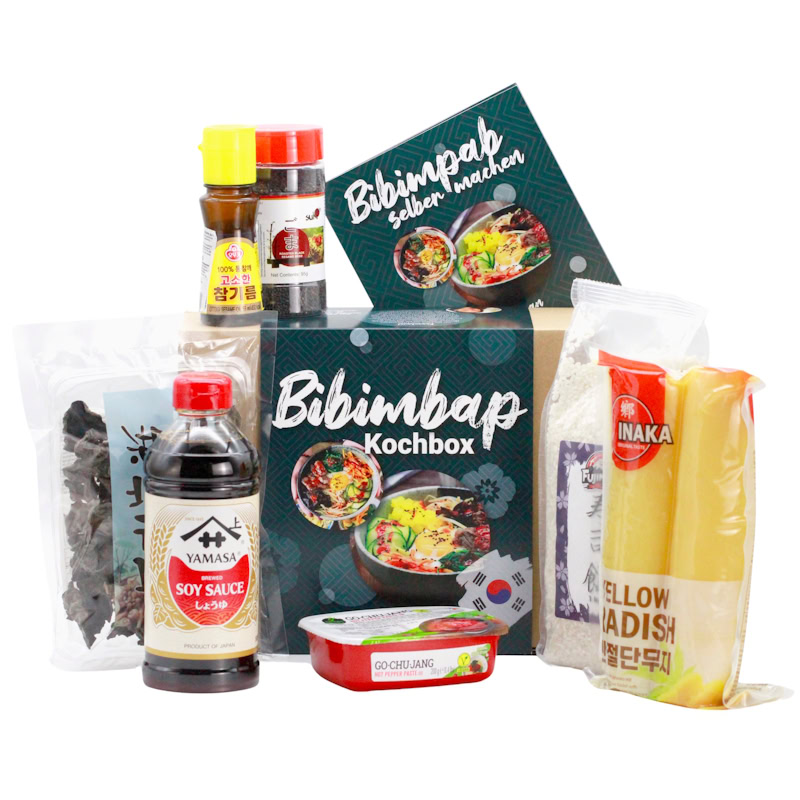
Bibimbap Kochbox | für koreanische Rice Bowl
8-tlg. Set für 6 Portionen koreanische Reisschale, inkl. Anleitung, auch für Anfänger. Mit der Bibimbap Kochbox bereitest du ganz einfach bis zu 6 Portionen koreanische…
In stock
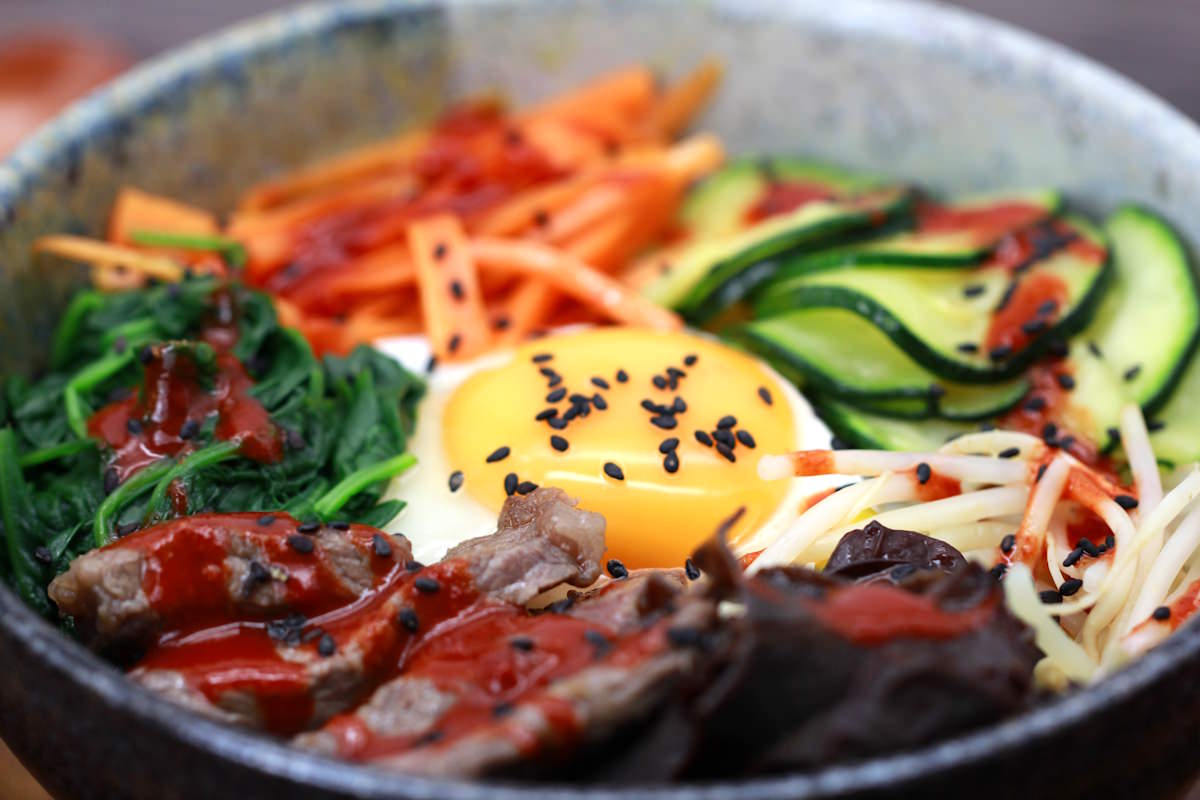
As well as its practical benefits, Bibimbap also carries a deeper symbolic meaning. The colours of the ingredients represent the five elements and cardinal directions of Korean philosophy and are said to promote a balanced diet: black (e.g. mu-err mushrooms) for the kidneys, red (e.g. carrots) for the heart, green (e.g. spinach) for the liver, white (e.g. rice) for the lungs and yellow (e.g. egg) for the stomach.
Today, there are countless variations of Bibimbap. The famous Jeonju Bibimbap from the city of the same name is particularly elaborate and is prepared with up to 30 ingredients. In the port city of Tongyeong, on the other hand, seafood is used, whilst in Andong a milder soy sauce version is common. A particularly popular variation is Dolsot Bibimbap, in which the dish is served in a hot stone bowl – the rice forms a crispy crust at the bottom, which is particularly aromatic.
What makes the Bibimbap recipe so special?
Bibimbap impresses not only with its harmonious interplay of colours, flavours and textures, but also with its versatility. The ingredients can be varied according to taste, making the dish perfect for using up leftovers – a quality that is also valued in Japanese cuisine, for example in dishes such as Donburi or chahan (fried rice).
Thanks to the combination of rice, fresh vegetables, egg and a hearty source of protein such as beef or Tofu, Bibimbap is a balanced, wholesome, colourful meal. It becomes particularly sophisticated when served as Dolsot Bibimbap: baked in a hot stone bowl, a crispy rice crust forms at the bottom, similar to Kamameshi, the Japanese rice dish prepared in a special metal pot.
Bibimbap gets its characteristic flavour from gochujang, the fermented Korean chilli paste. It gives the dish a pleasant heat and depth – a parallel to Miso in Japanese cuisine, which is also prized for its Umami-rich, fermented notes. Those who prefer a milder taste can simply adjust the amount of gochujang to tailor the flavour to their own taste.
Make your own bibimbap: Here’s how
With the right preparation, bibimbap is very easy to make. This recipe shows you step by step how to prepare the ingredients and put together the perfect combination of rice and spicy toppings. The variety of colours and flavours not only makes for a visually appealing dish, but also a taste experience that appeals to all the senses.
The dish’s ingredients are often categorised according to the five elements, which are said to bring body and mind into harmony. These are:
- Wood (Green) represents growth and renewal – spinach and courgette bring freshness and vitality to the plate.
- Fire (Red) symbolises energy and dynamism – carrots and the spicy gochujang chilli paste add colour and a pleasant heat.
- Earth (Yellow) conveys stability and balance – eggs and radish provide filling and harmonising elements.
- Metal (White) represents purity and structure – rice forms the neutral, balancing base of the dish.
- Water (Black) represents calm and balance – Mu-Err mushrooms add a savoury depth and a slightly crunchy texture

The 5 elements of Korean medicine
In traditional Korean medicine, the five elements Wood, Fire, Earth, Metal and Water play a central role. They represent various processes in nature and within the body that should be in balance. Each element influences specific organs, emotions and even foods. In Bibimbap, the ingredients reflect this harmony – a perfect interplay of colours, flavours and nutrients!
With the right ingredients and a little preparation, you can easily make an authentic Bibimbap. The base is cooked short-grain rice, which has a slightly sticky consistency and blends perfectly with the other ingredients.
For the vegetables, we cut carrots, courgettes, spinach and sprouts into fine strips and fry or blanch them briefly to retain their crisp freshness. The meat – usually beef – is marinated in a mixture of soy sauce, sesame oil and garlic before being seared over a high heat. If you prefer a vegetarian version, you can fry Tofu until crispy instead.
To serve, divide the rice between bowls and arrange the vegetables, meat or Tofu on top. Place a fried egg in the centre, and a spoonful of gochujang sauce adds the characteristic spice. Before you enjoy your Bibimbap, you should mix all the ingredients thoroughly – only then does the full flavour unfold and the harmonious balance of the flavours come into its own.
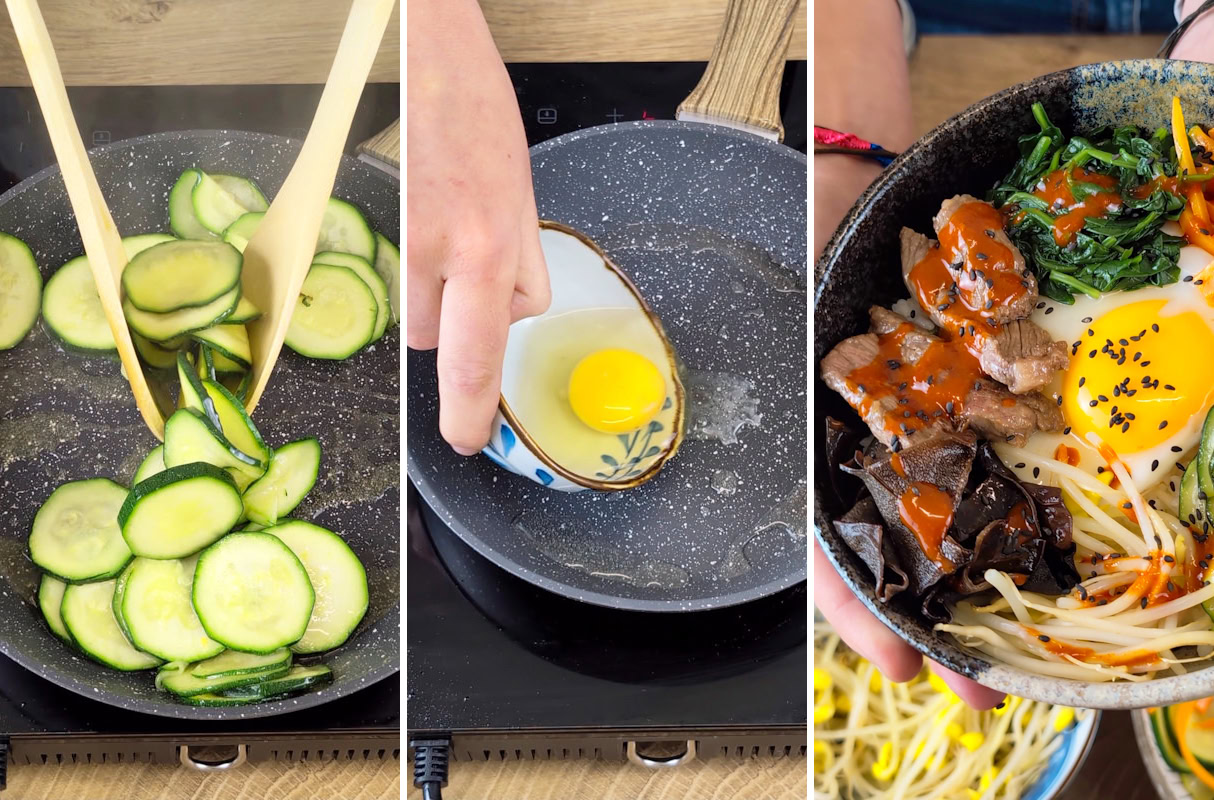
Whether classic with meat, vegetarian or with Tofu – Bibimbap is an incredibly versatile dish that you can rediscover time and time again. Give it a go and enjoy a taste of Korean culinary culture at home!
Have you ever made Bibimbap yourself? Which toppings are your favourites? Feel free to share your ideas and variations in the comments – I look forward to hearing from you! Have fun cooking and bon appétit.
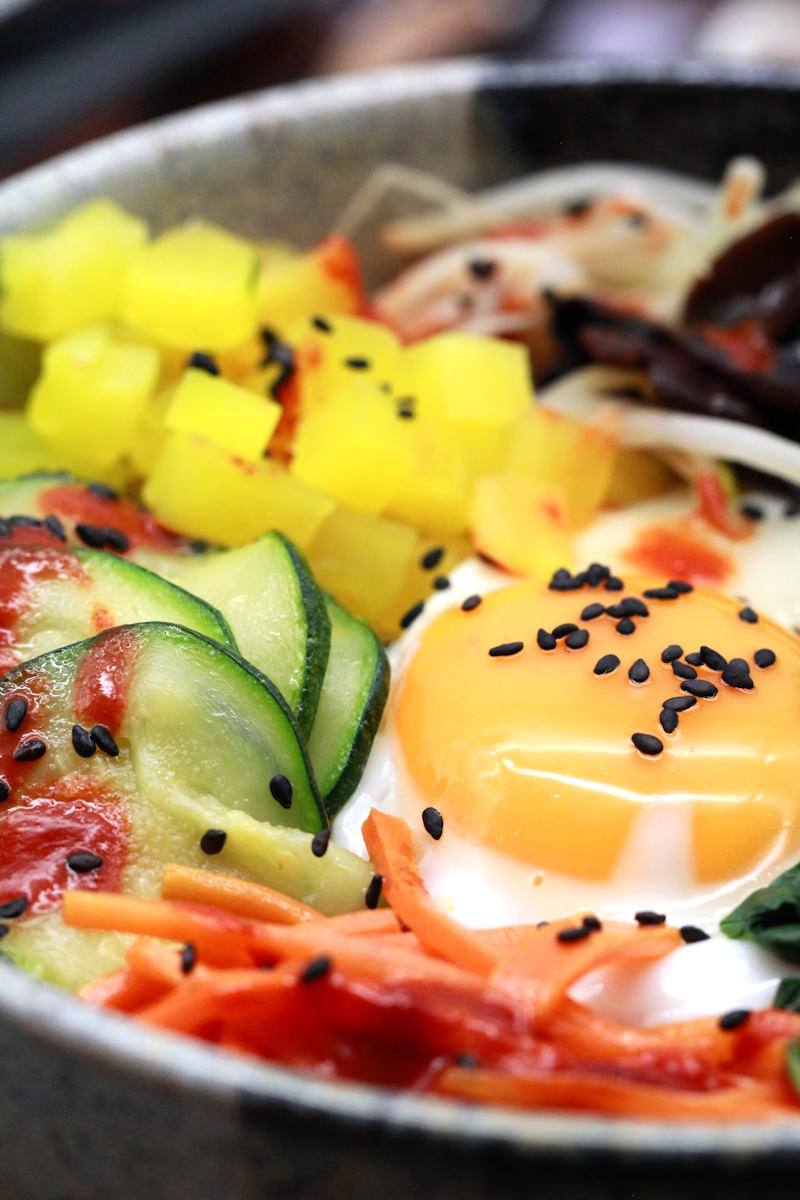

Bibimbap
Serves 2 | 60 minutes | 940 kcal
🖨️ Print PDF 📌 Save pinColourful, aromatic and full of flavour! Bibimbap combines rice, spicy vegetables, a fried egg and gochujang sauce into a perfect blend. Simple, healthy and incredibly delicious!
Ingredients (2 servings)
For the rice:
300 g sushi rice (im Shop ansehen)*
300 ml water
For the meat topping:
200 g beef (e.g. entrecôte)
2 cloves of garlic
2 tbsp Shoyu (im Shop ansehen)*
1 tbsp sugar
1 tbsp sesame oil (im Shop ansehen)*
1 tbsp rice vinegar (im Shop ansehen)
For the vegetable topping:
1 carrot
1 courgette
80 g spinach (e.g. baby spinach)
1 handful mu-err mushrooms (im Shop ansehen) *
80 g sprouts (e.g. soya or mung bean sprouts)
½ takuan (pickled radish) (im Shop ansehen)*
a little sesame oil
a little oil (e.g. rapeseed oil)
a little salt
Additional toppings:
2 eggs
2 tbsp gochujang (im Shop ansehen)*
1 tbsp black sesame seeds, toasted (im Shop ansehen)*
Useful tools:
Santoku knife (im Shop ansehen)
Japanese grater (im Shop ansehen)
Yukihiara pot (im Shop ansehen)
Rice cooker (im Shop ansehen)
Preparation (60 minutes)
Step 1
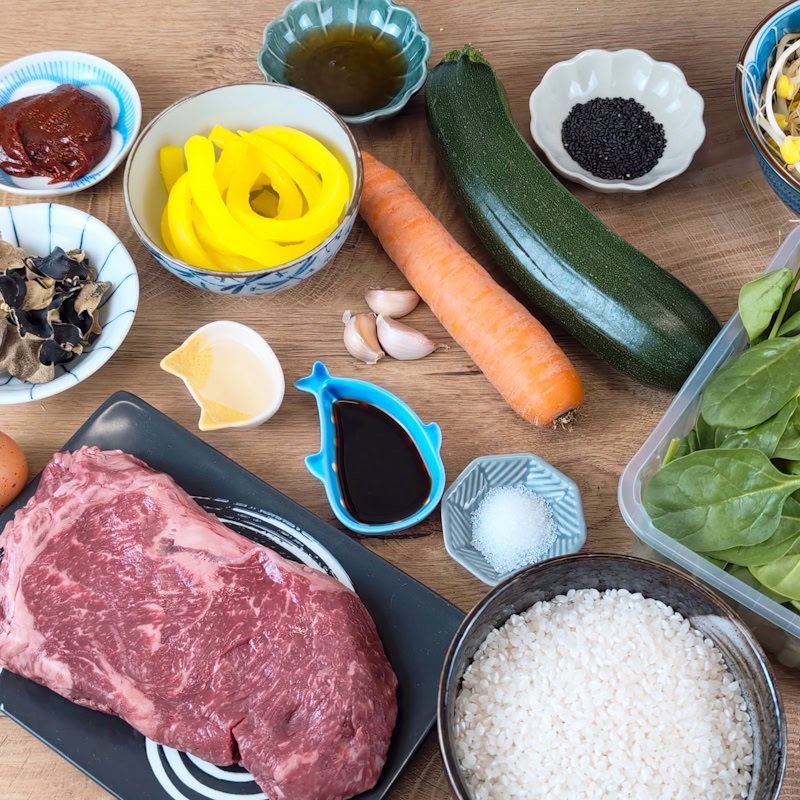
Prepare the ingredients for your Korean Bibimbap.
Step 2
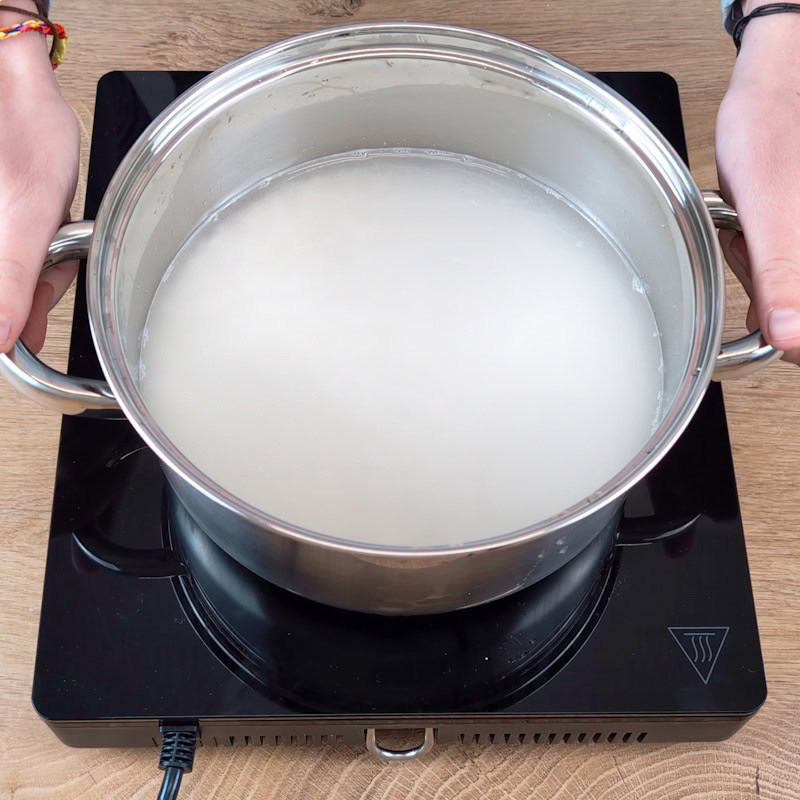
Start by washing the rice thoroughly. Place it in a large bowl, add plenty of cold water and rinse the rice several times until the water runs almost clear. Add another 500 ml of water to the washed rice and leave it to soak for about 20 – 30 minutes before cooking it.
After the soaking time, drain the water completely.
Place the rice in a saucepan (or, if you prefer, a rice cooker) with fresh water in a 1:1 ratio (for 300g of rice, this amounts to 300ml of water) and a pinch of salt .
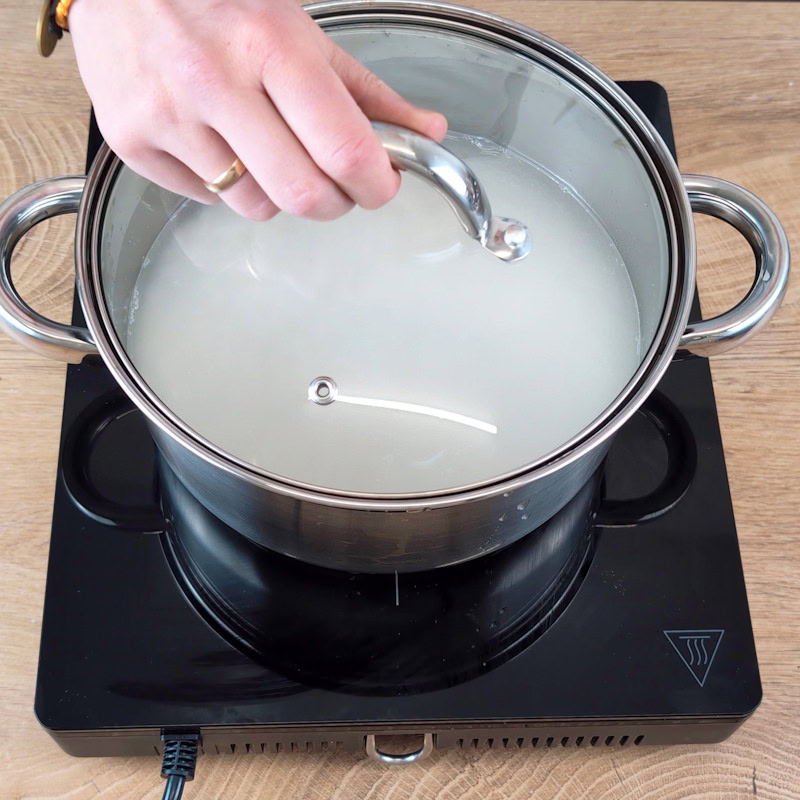
Now place the saucepan on the hob, put the lid on and bring to the boil over a medium heat. As soon as the rice has come to the boil, turn the heat down to the lowest setting and leave to simmer gently with the lid on for 13 minutes. Do not open the lid during this time!
Step 3
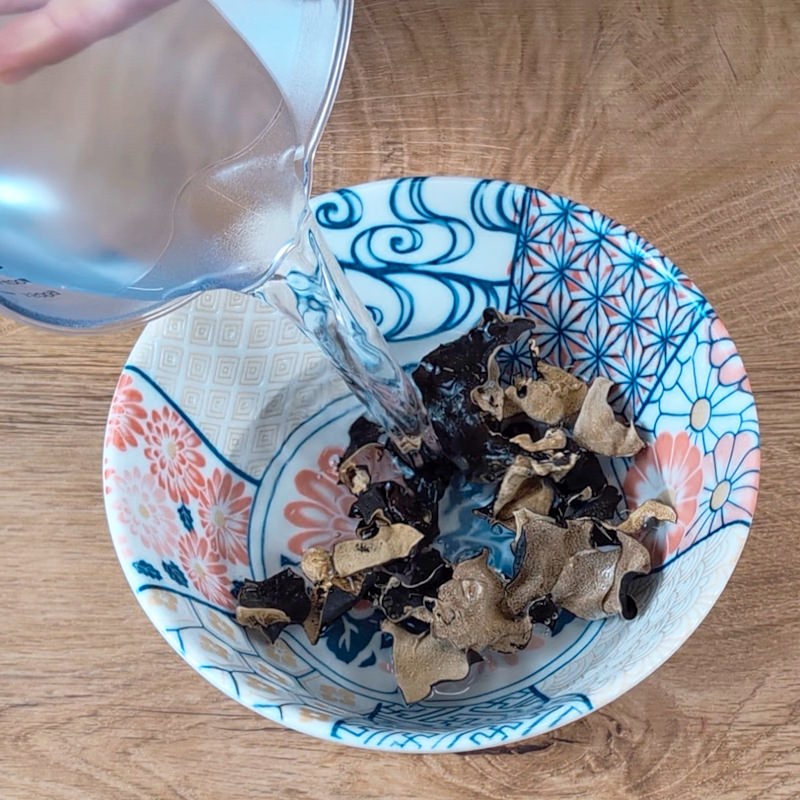
In the meantime, soak the mu-err mushrooms in lukewarm water and leave to soak for about 15 minutes.
Step 4
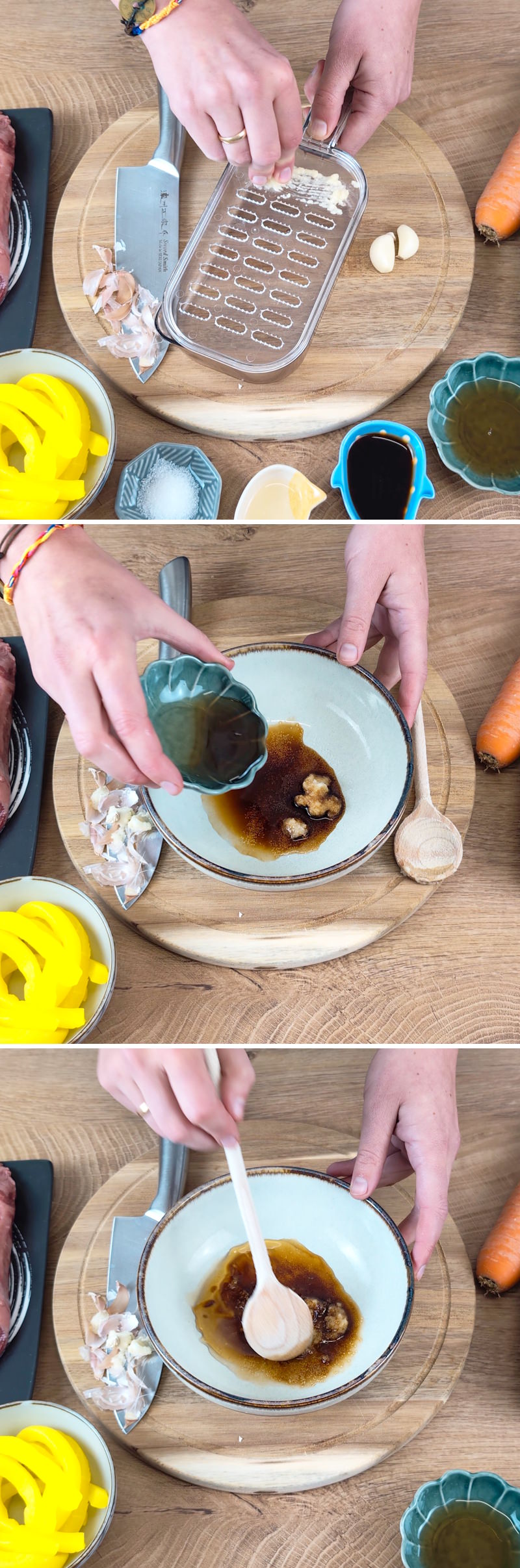
Meanwhile, let’s prepare the toppings! We’ll start with the marinade for the beef: Peel the garlic , finely grate it using a Japanese vegetable grater and place it in a bowl. Add soya sauce, rice vinegar, sesame oil and sugar and mix to form a marinade.
Step 5
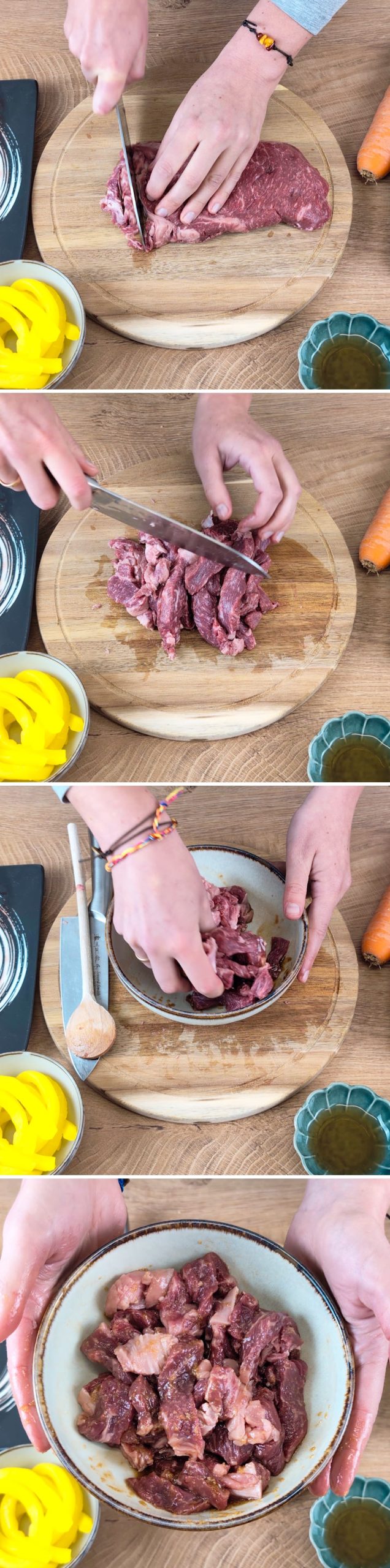
Cut the beef into thin slices and add it to the marinade. Stir everything well so that the meat can absorb the flavours. Set it aside and leave it to marinate for 15 minutes whilst you prepare the remaining ingredients.
Step 6
Next: once the rice is fully cooked, turn off the heat completely. Cover with the lid and leave it to steam for 10 minutes.
Step 6
Next: Once the rice is cooked, turn the heat off completely. Leave it to stand with the lid on for 10 minutes.
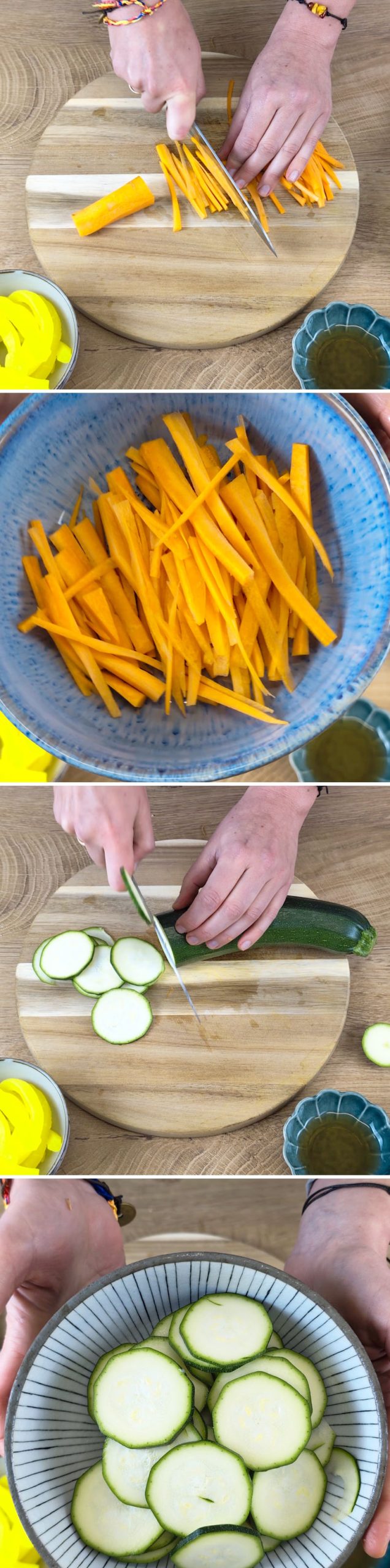
Step 7
Peel the carrots and cut them into thin strips. Wash the courgette and slice it thinly.
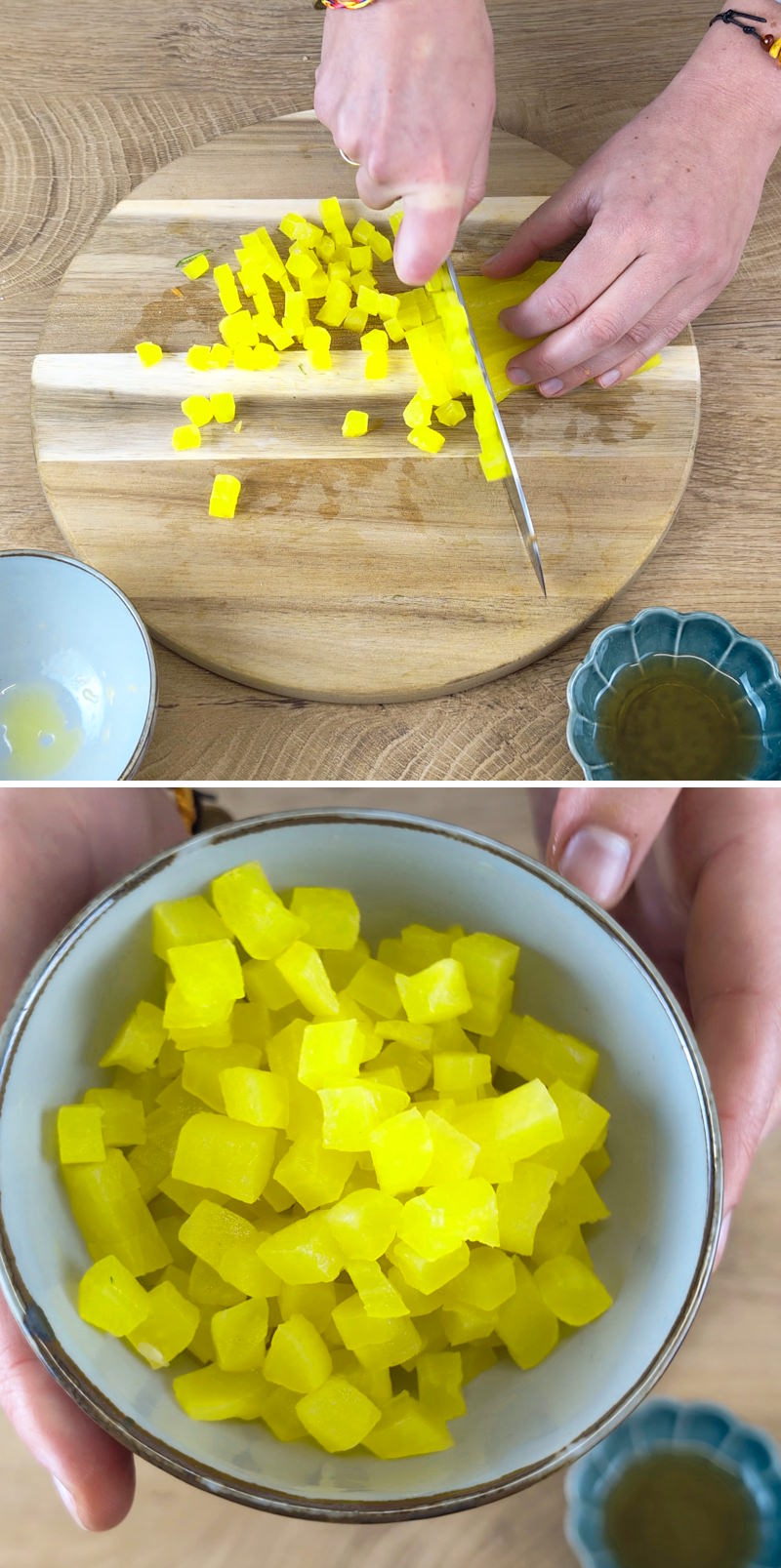
Step 8
Halve the pickled daikon radish (Takuan), lengthways if necessary, and cut it into small cubes.
Spinach and sprouts well. Squeeze the soaked mushrooms well and, if necessary, cut them into fine strips.
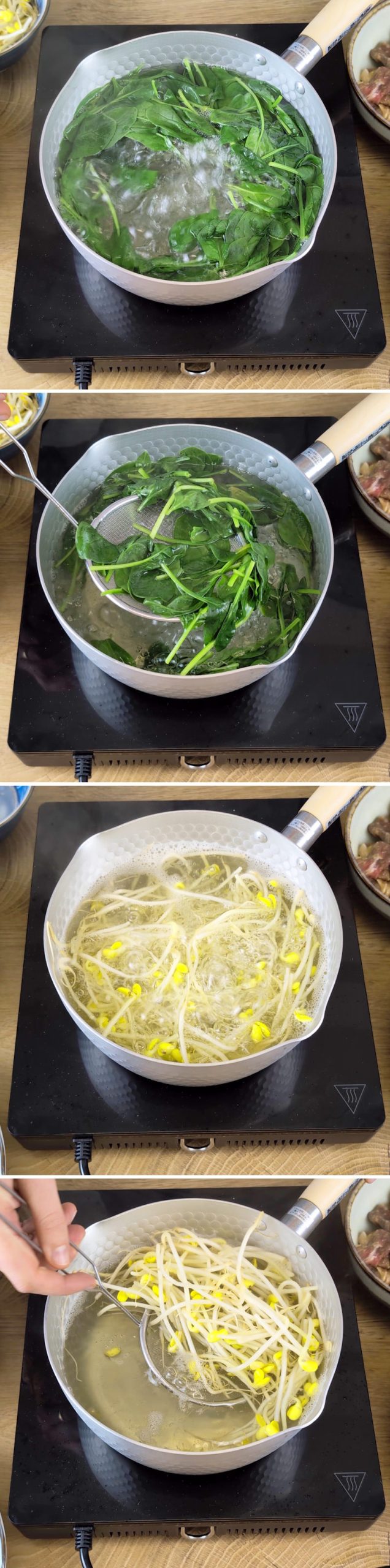
Step 9
Bring a pan of water to the boil. First, blanch the spinach for a few seconds, then drain and leave to dry. Next, briefly blanch the mung bean sprouts as well, then drain and leave to dry.
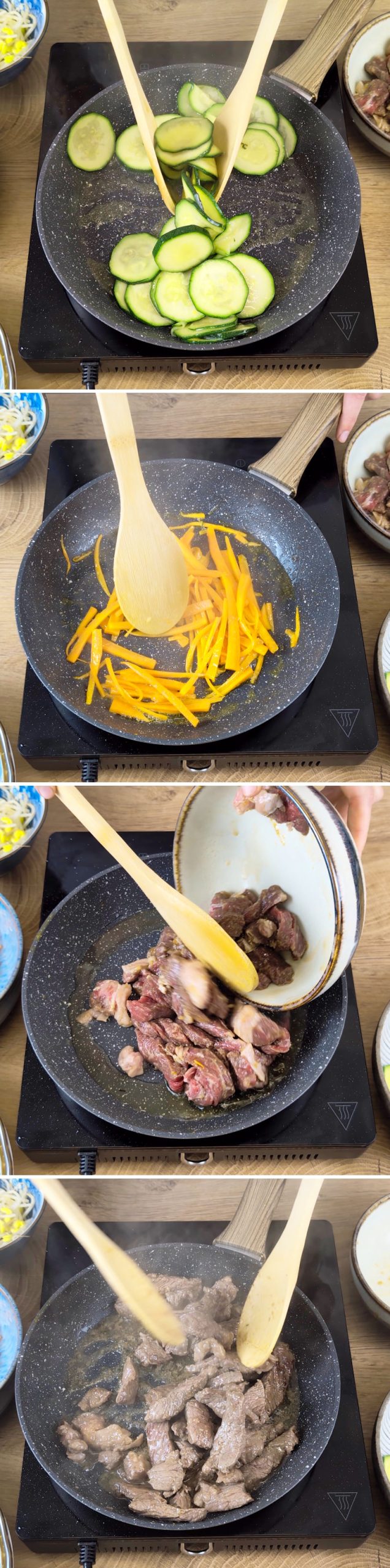
Step 10
Heat a frying pan with a little oil. Briefly fry the courgette over a high heat, season with a little salt after a minute and set aside. Then fry the carrots in the same way and season them.
Add the marinated meat to the hot pan and fry vigorously, stirring, until cooked through. Then remove from the pan and set aside.
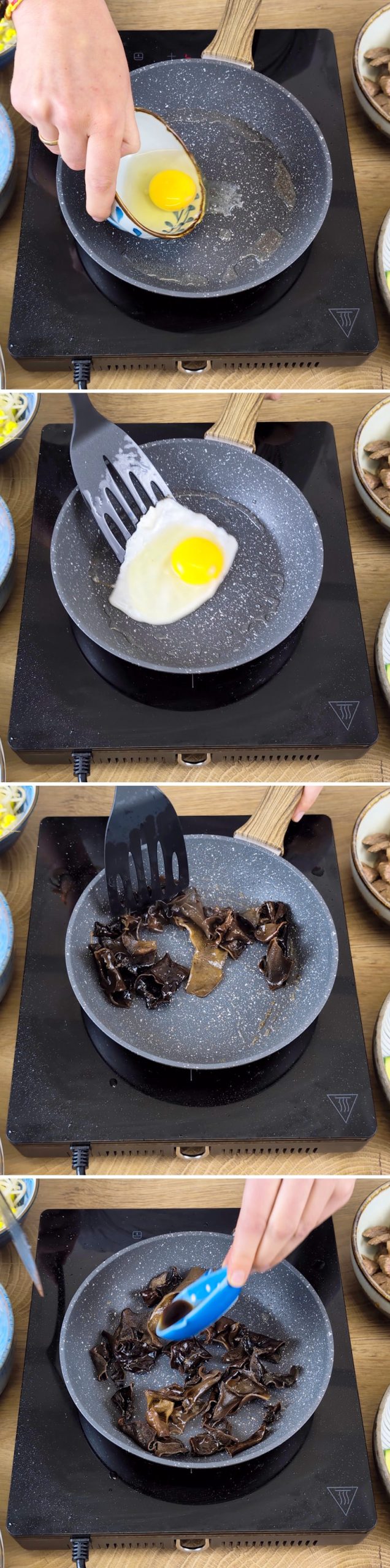
Step 11
Heat a little more oil in the pan and fry the eggs as fried eggs, if desired. Season with a pinch of salt.
Fry the prepared mushrooms in the pan with a little oil. After a minute, deglaze with soy sauce.
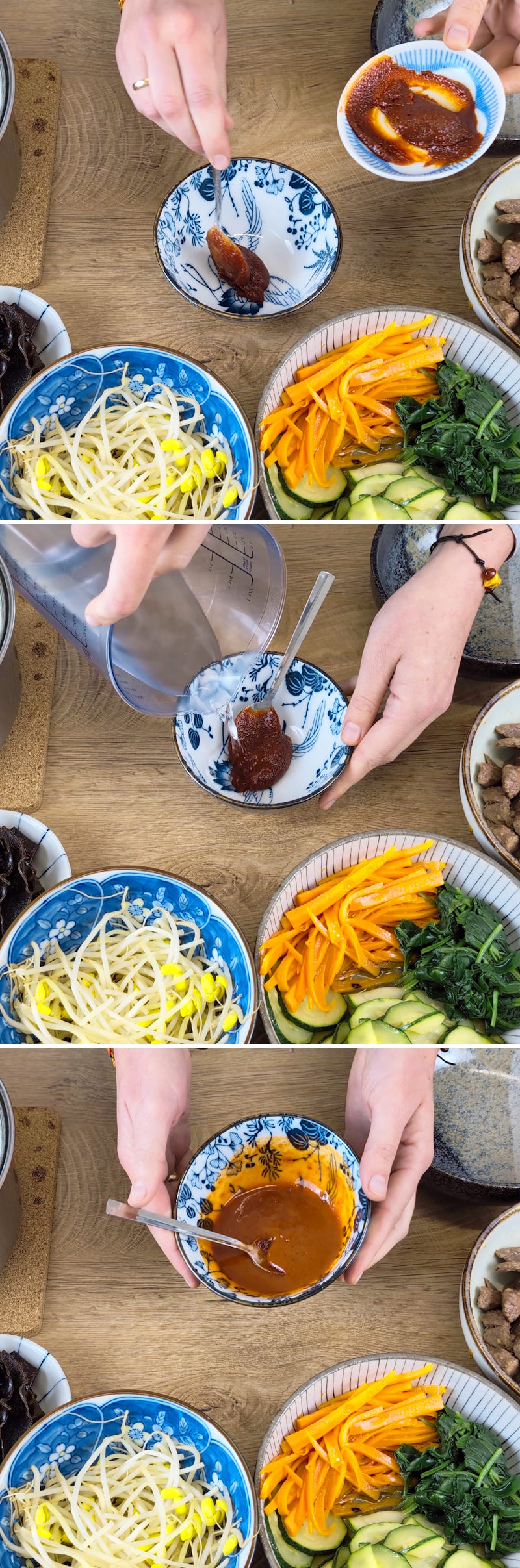
Step 12
To make the sauce, mix the gochujang with 2 tbsp water until you have a creamy sauce. The heat level can be adjusted to taste.
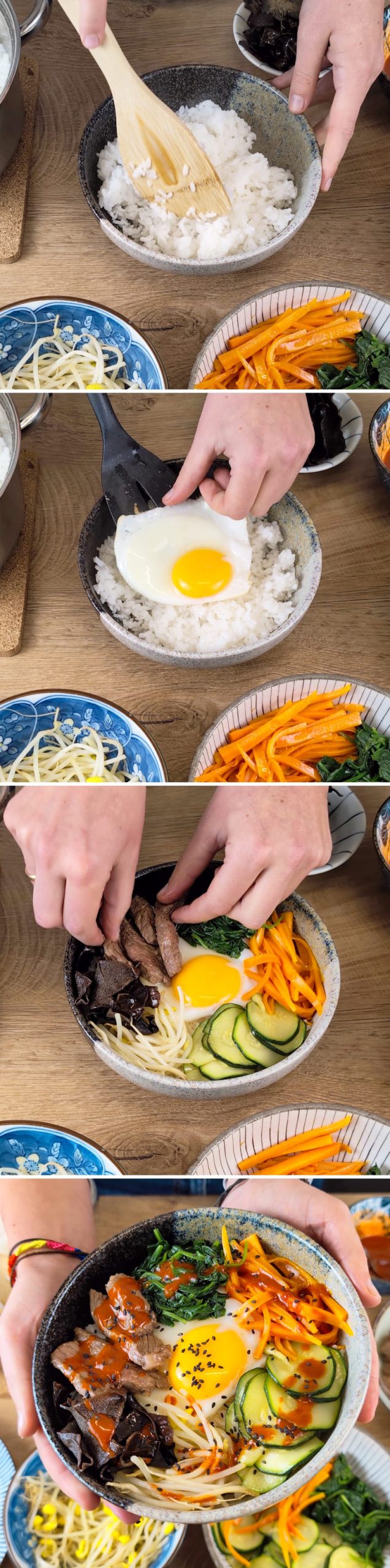
Step 13
Divide the rice between two bowls and place a fried egg in the centre of each. Arrange the prepared vegetables, the meat and the remaining ingredients in a circle on top of the rice. Drizzle with the gochujang sauce and sprinkle with toasted sesame seeds.
Tip: Mix all the ingredients well before eating so that the flavours blend perfectly. Add more gochujang sauce to taste and enjoy!
Fancy some more delicious inspiration from Korea? Here you’ll find even more quick recipe ideas:

Thai Sticky Rice: How to steam Thai sticky rice (Khao Niao) properly
Thai sticky rice, also known as Khao Niao, is a very simple basic recipe, but…
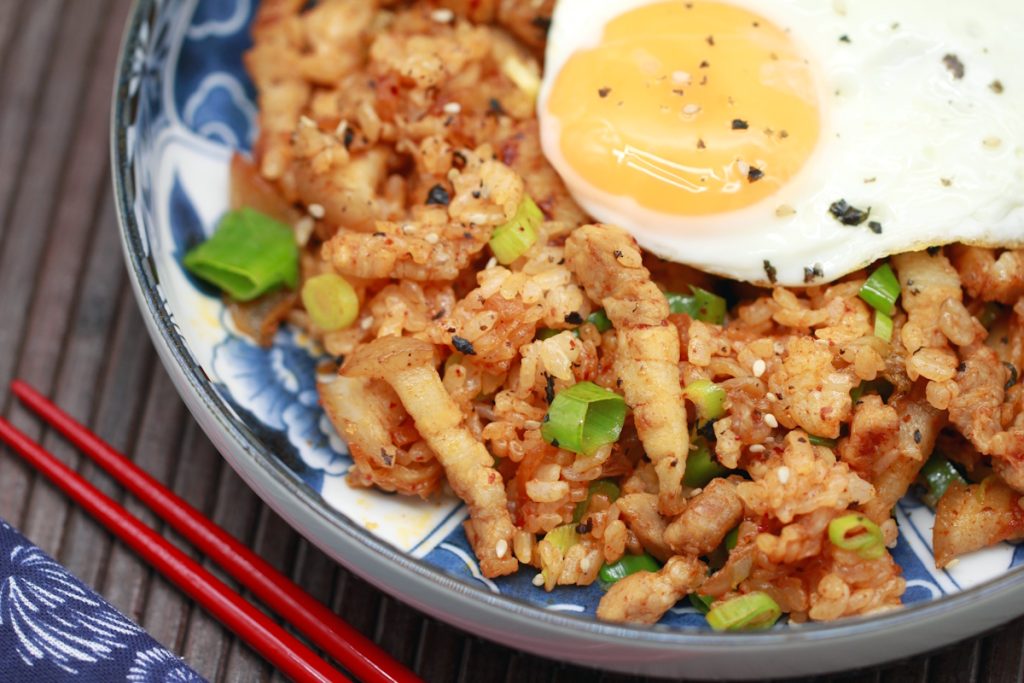
Kimchi Fried Rice: Make your own quick kimchi Bokkeumbap | in 20 minutes
Kimchi Fried Rice, also known as Kimchi Bokkeumbap, is a classic rice dish from everyday…
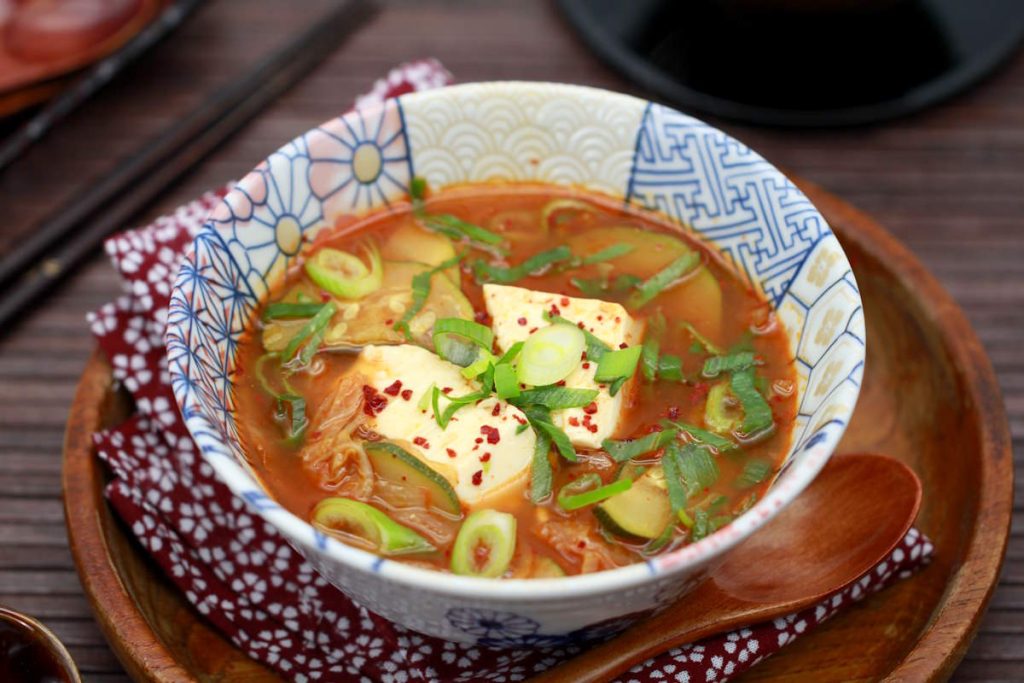
Sundubu Jjigae: Spicy Korean Tofu stew with courgette, Kimchi & Anchovy Dashima
Sundubu Jjigae is one of the best-known Korean stews and is an integral part of…
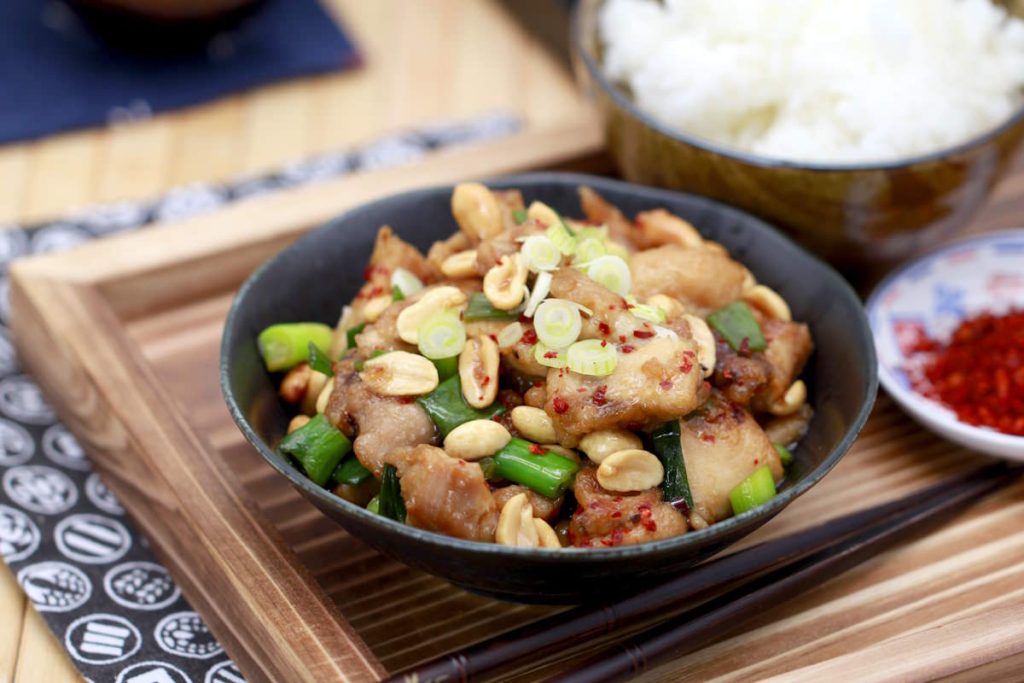
Make your own Gong Bao Chicken: Classic Kung Pao Chicken from Sichuan cuisine with peanuts & chilli
Gong Bao Chicken is a classic stir-fry dish from Sichuan cuisine that requires just a…
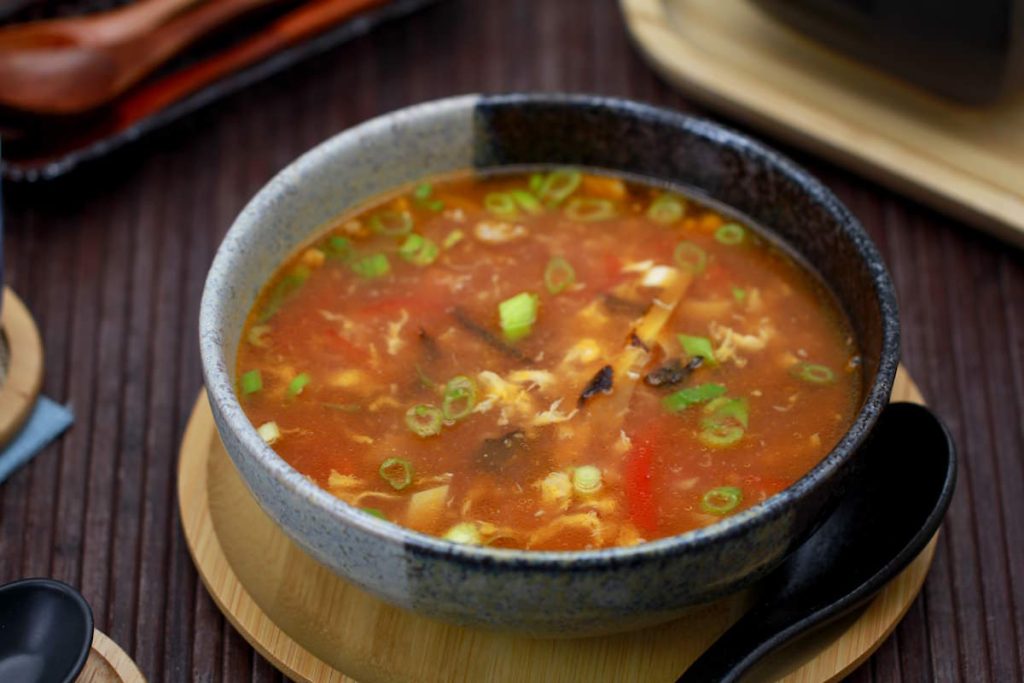
Beijing soup: Make your own Suan La Tang | Chinese hot and sour soup
Beijing Soup (Suan La Tang) is a classic sour and spicy soup from Chinese cuisine….
Have you tried the recipe yet? Let me know in the comments – I’m really looking forward to hearing from you.