

Language:


Experience the culinary diversity of Japan with Chawanmushi. This steamed egg custard with tender chicken and seafood is a true treat for the palate and will transport you to another world.
Let yourself be enchanted by the harmonious combination of different flavours and enjoy a unique taste experience. I’ll show you how you can make this recipe yourself at home in just a few passaggi!
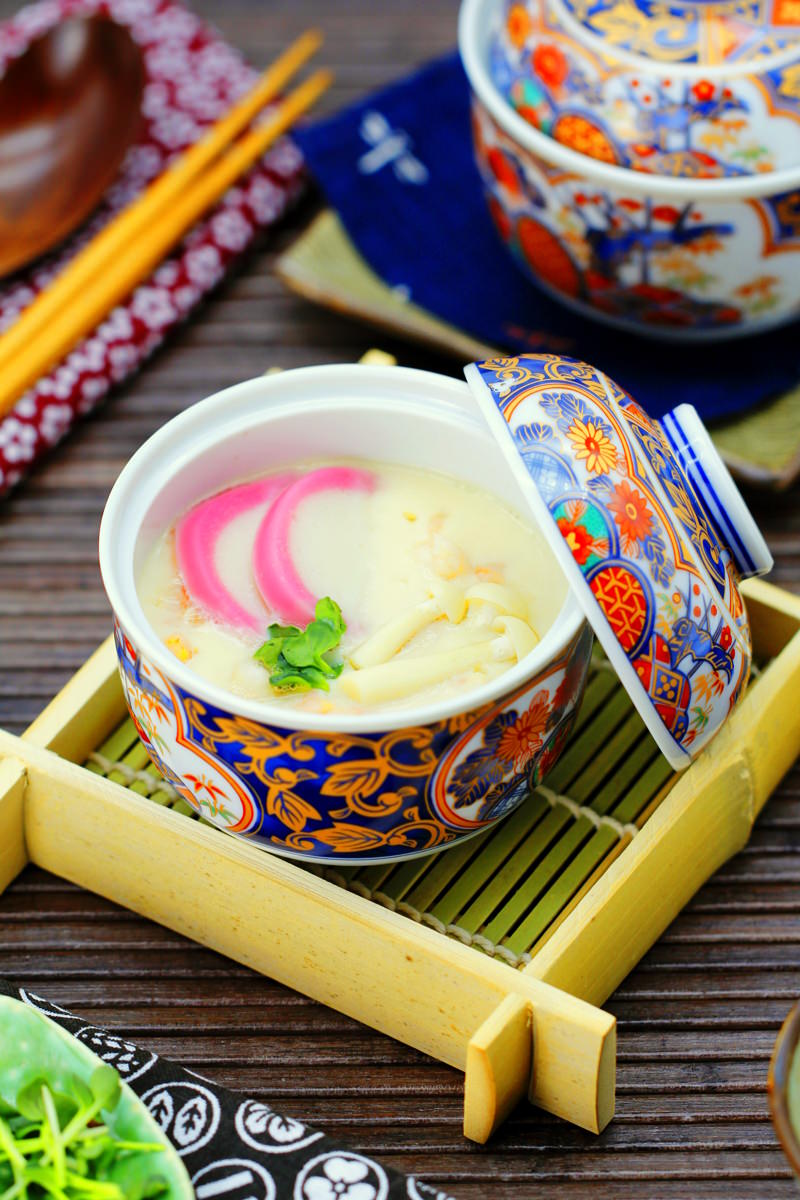
Chawanmushi is a classic Japanese, slightly savoury steamed egg custard, served in a small cup. Tender pieces of chicken, colourful kamaboko fish cakes and Shimeji mushrooms are nestled in a smooth and silky cream seasoned with Dashi stock. Join me in learning how to prepare this for a genuine Japanese cooking experience . Your guests will be impressed!

Tip: In Japanese cuisine, chawanmushi is treated like a soup and served as a starter or side dish.
Chawanmushi is served in a dainty little teacup (auf Amazon* kaufen) and is a classic starter on the menu of many Japanese restaurants.
The word chawan means teacup or bowl, and mushi means to steam. Together, it means steamed teacup 😉 and refers to both the vessel and the cooking method used for the dish.
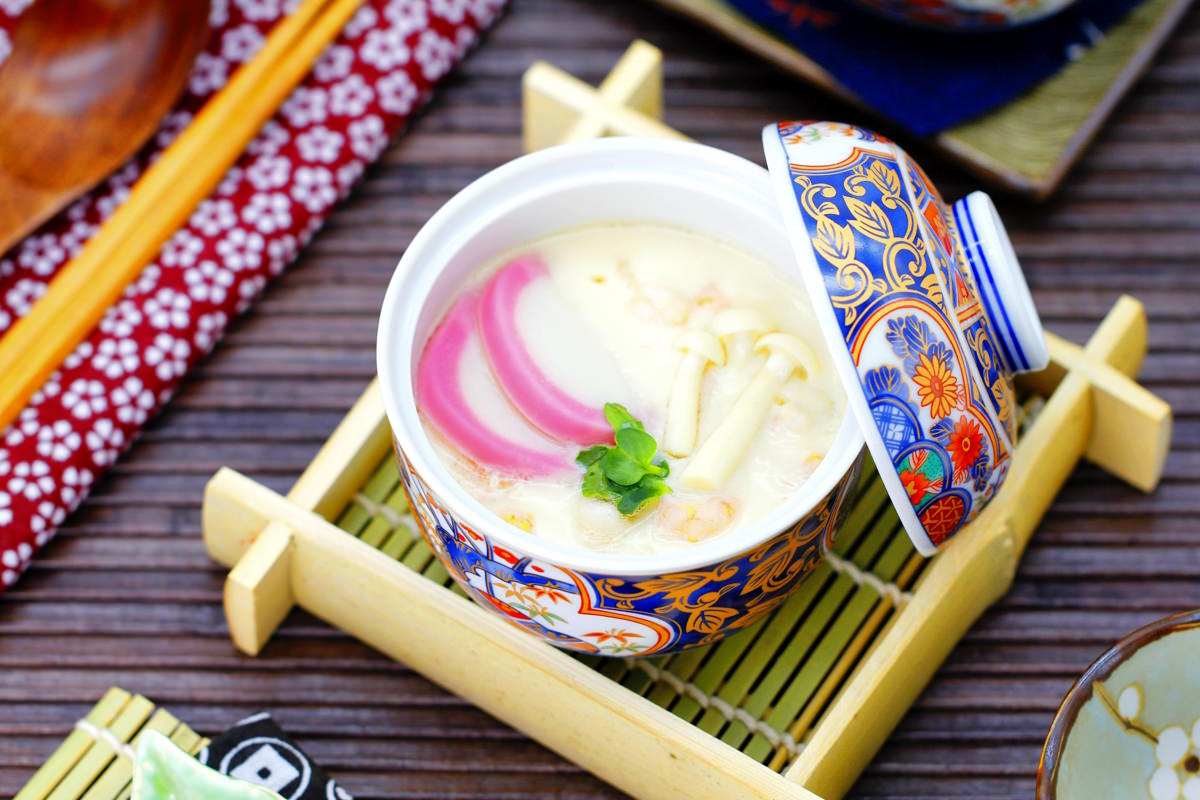
It is said that chawanmushi originated in Nagasaki in 1689. At that time, Japan was isolated from the outside world and generally did not trade with foreign countries, but Nagasaki maintained exclusive trade with China.
It is said that Chinese traders staying there prepared a Chinese version of steamed eggs, and this became the origin of the Japanese chawanmushi.
Later, Nobutake Yoshida Sokichi, a civil servant from Ehime Prefecture, visited the city of Nagasaki, tasted chawanmushi for the first time and fell in love with this dish! In 1866, he opened Yossou, a restaurant specialising in chawanmushi 😊.
Yossou is still run today, over 150 years later, by the seventh generation in Nagasaki and continues to serve chawanmushi.
There are many variations using seasonal ingredients, but the most common include prawns, fish and vegetables. Depending on the ingredients used, it can have a very traditional or modern flavour.
To start with, I’ll introduce you to a basic recipe for chawanmushi with chicken and show you a few suggestions for a vegetarian version below.
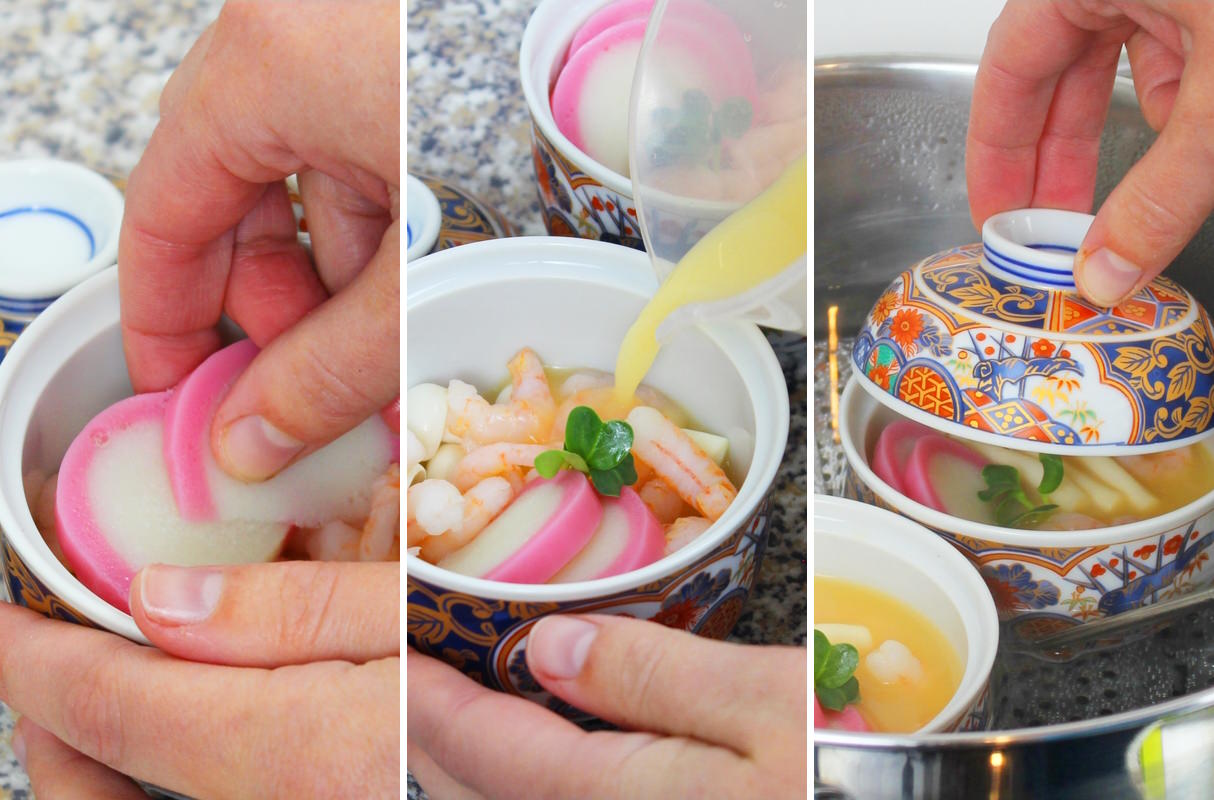
To prepare, whisk eggs with plenty of Dashi broth (in a 1:3 ratio) and a few Japanese seasonings, then steam in a pot with the solid ingredients at 80–90°C for 20 minutes.
With its resulting ivory colour and colourful toppings, chawanmushi tastes as delicious as it looks.
Tip: Each of my chawanmushi cups holds up to 200 ml. Please note that the size of the cups is crucial for the cooking time.
You are welcome to use other heat-resistant cups, but please do not choose cups that are too thick, as the heat will not penetrate them as easily.
If you do not have a lid, you can also cover the cups with aluminium foil.
The finished steamed egg custard is smooth and silky, whilst the sweet and savoury meat and vegetables give the dish a contrasting mouthfeel.
Added to this is the broth, which makes every bite a surprising taste sensation. And the seasonings – soy sauce, Mirin and Sake – provide a rich Umami flavour!
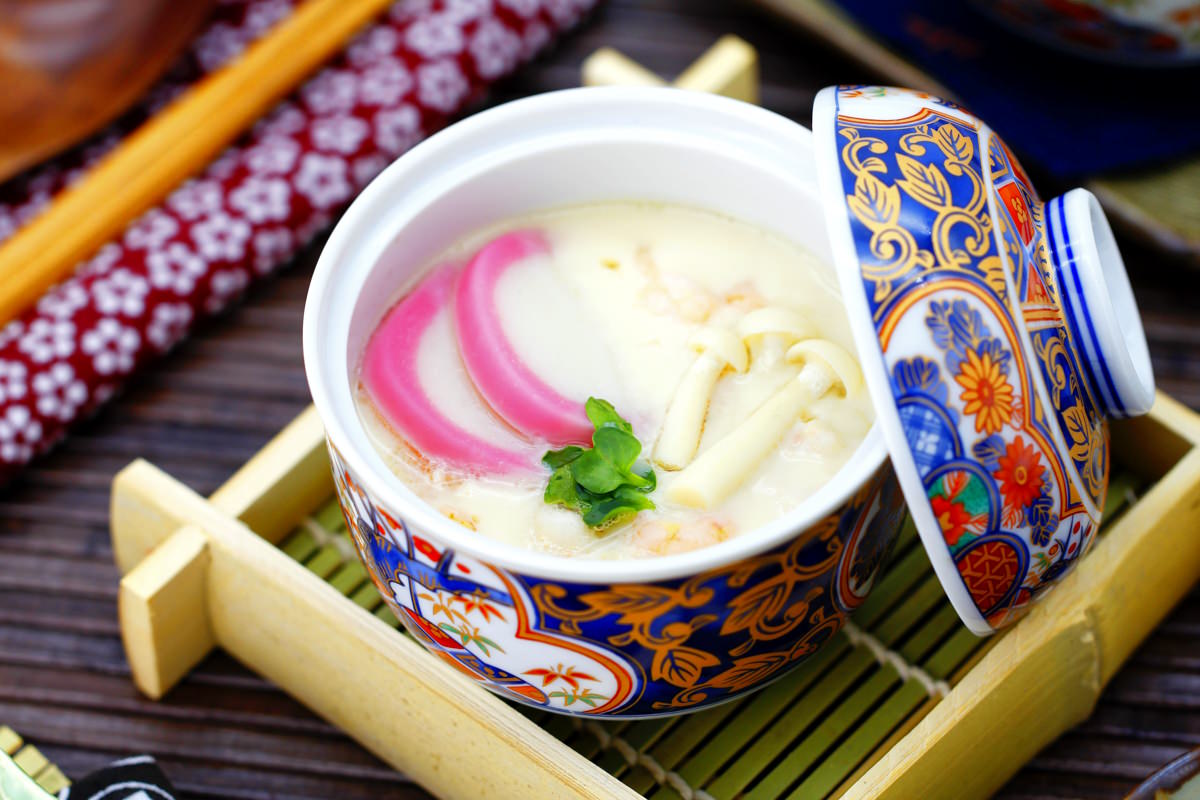
Having enjoyed the classic version of chawanmushi with chicken and seafood, you can look forward to a delicious vegetarian option! With a variety of toppings such as vegetables and mushrooms, you can personalise your steamed egg custard and enjoy it to the full:
- Mushrooms (Shimeji, Shiitake, enoki, oyster mushrooms)
- fresh vegetables (leeks, carrots, potatoes)
- silken tofu (im Shop ansehen)
- Chestnuts or ginkgo nuts
Tip: Depending on what you’re using, you may need to blanch the vegetables beforehand or cook them until al dente (e.g. carrots or potatoes).
I wish you every success and hope you enjoy cooking – if you have any questions or suggestions, please feel free to use the comments section below the recipe 😊. Let’s get started:
Chawanmushi
Serves 2 | 40 minutes | 259 kcal
🖨️ Print PDF 📌 Save pinExperience the culinary diversity of Japan with Chawanmushi! This steamed egg custard with tender chicken and seafood is a true treat for the palate and will transport you to another world. Let yourself be enchanted by the harmonious combination of different flavours and enjoy a unique taste experience. I’ll show you how it works here in the recipe!
Ingredients (serves 2)
100 g chicken (e.g. boneless thighs or breast fillet)
2 tbsp Sake (im Shop ansehen)*
4 slices kamaboko (steamed fish cake, frozen)
100 g prawns (pre-cooked, or fresh if preferred)
50 g Shimeji mushrooms
a few fresh sprouts (here radish sprouts)
2 eggs (S)
200 ml Dashi broth (im Shop ansehen)* (to the recipe)
1 tbsp Shoyu (im Shop ansehen)*
1 tbsp Mirin (im Shop ansehen)*
1/2 tsp salt
Useful tools:
Chawanmushi cups (200 ml) with lids (auf Amazon* kaufen)
Steamer insert (im Shop ansehen)
Japanese Santoku knife (im Shop ansehen)
Preparation (40 minutes)
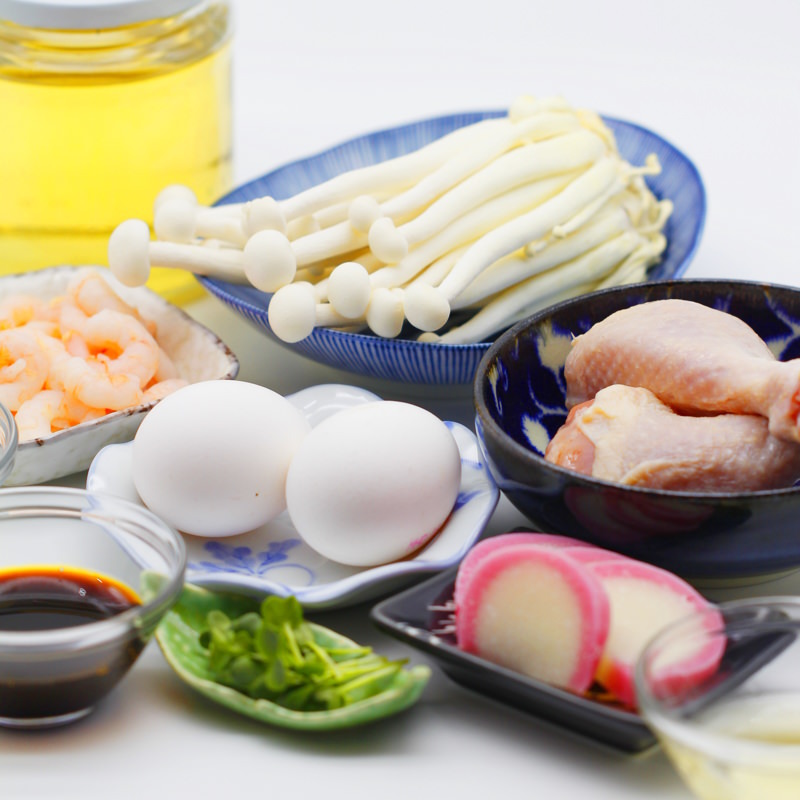
Step 1
Prepare the ingredients for Chawanmushi. The Dashi stock made from Kombu and Shiitake should now be ready (click here for the recipe) .
Defrost a 2 cm piece of kamaboko fish cake.
Step 2
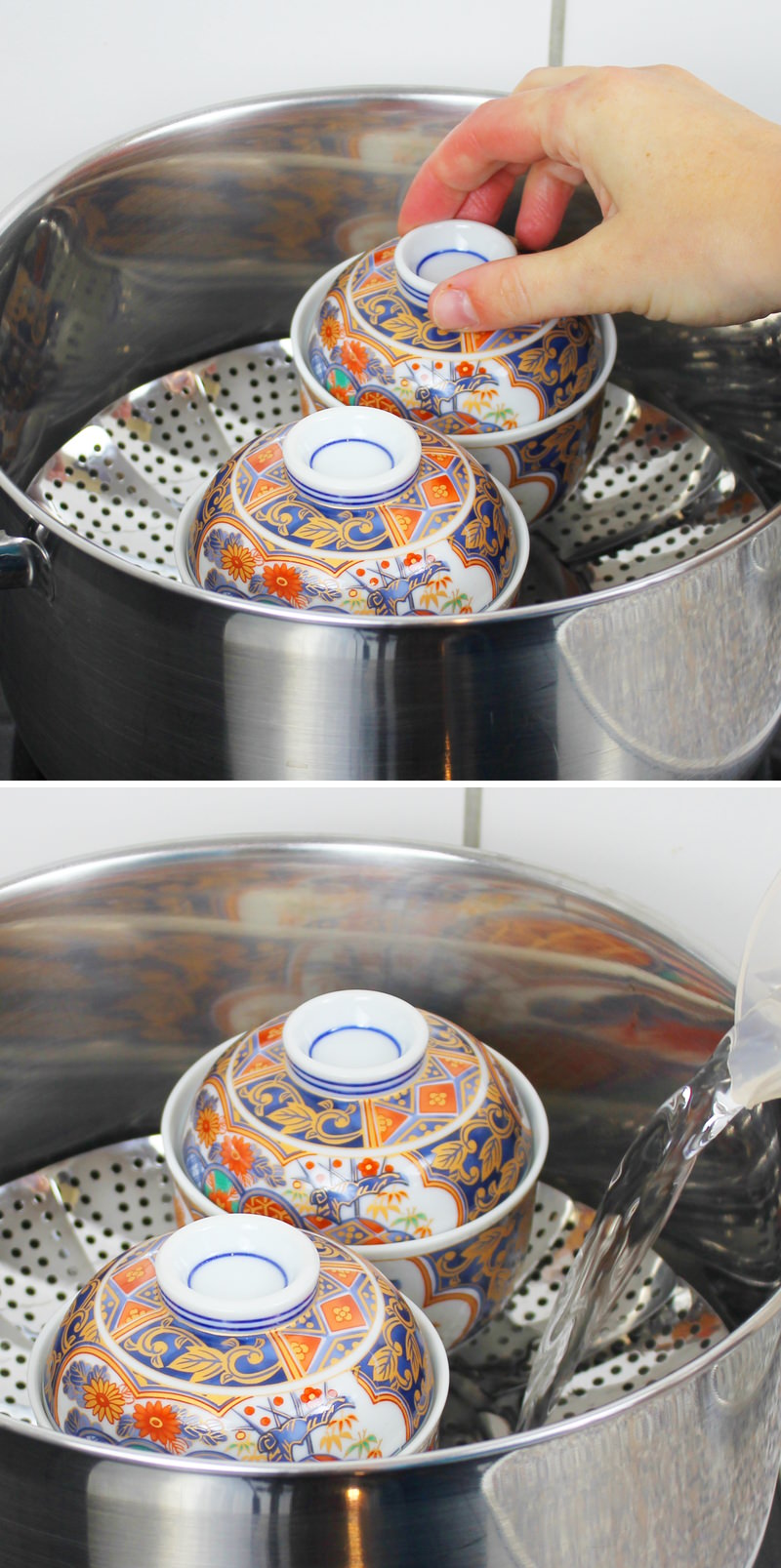
Place the Chawanmushi cups (with their lids) into a large saucepan with a steamer insert to check that they fit in well. Then pour in enough water so that the Chawanmushi cups are half-submerged in the water. Remove the cups.
Step 3
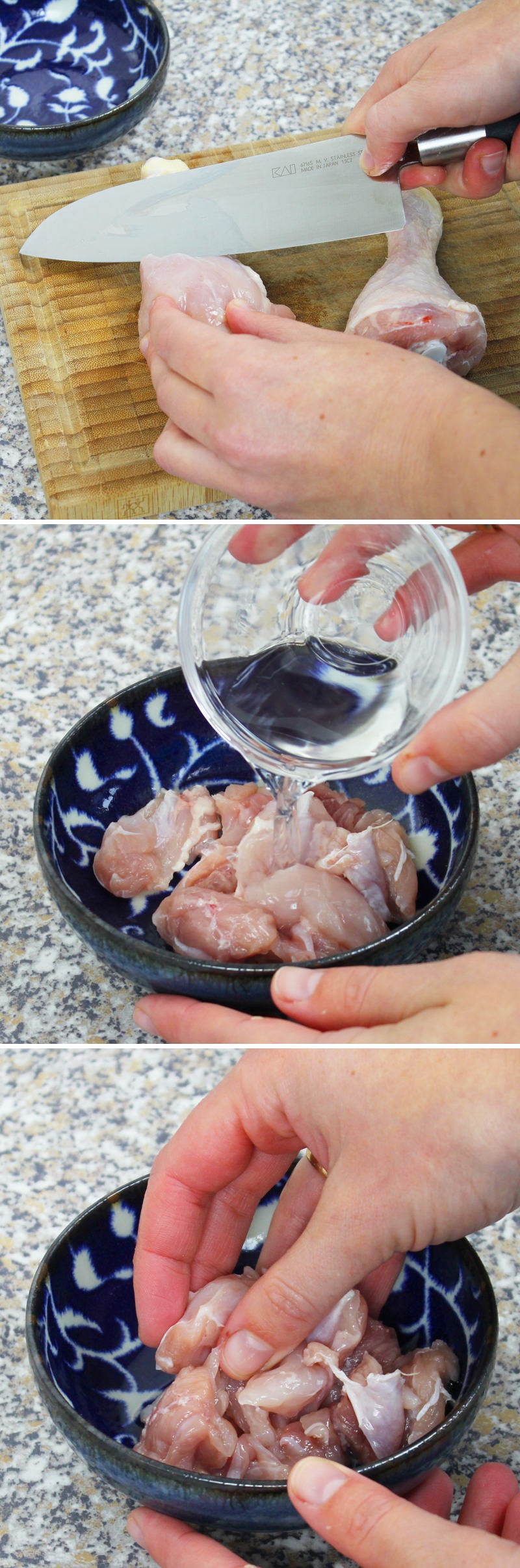
Cut the chicken into 1 cm pieces and place in a bowl. Add the Sake , rub it in and leave to marinate for 10 minutes.
Step 4
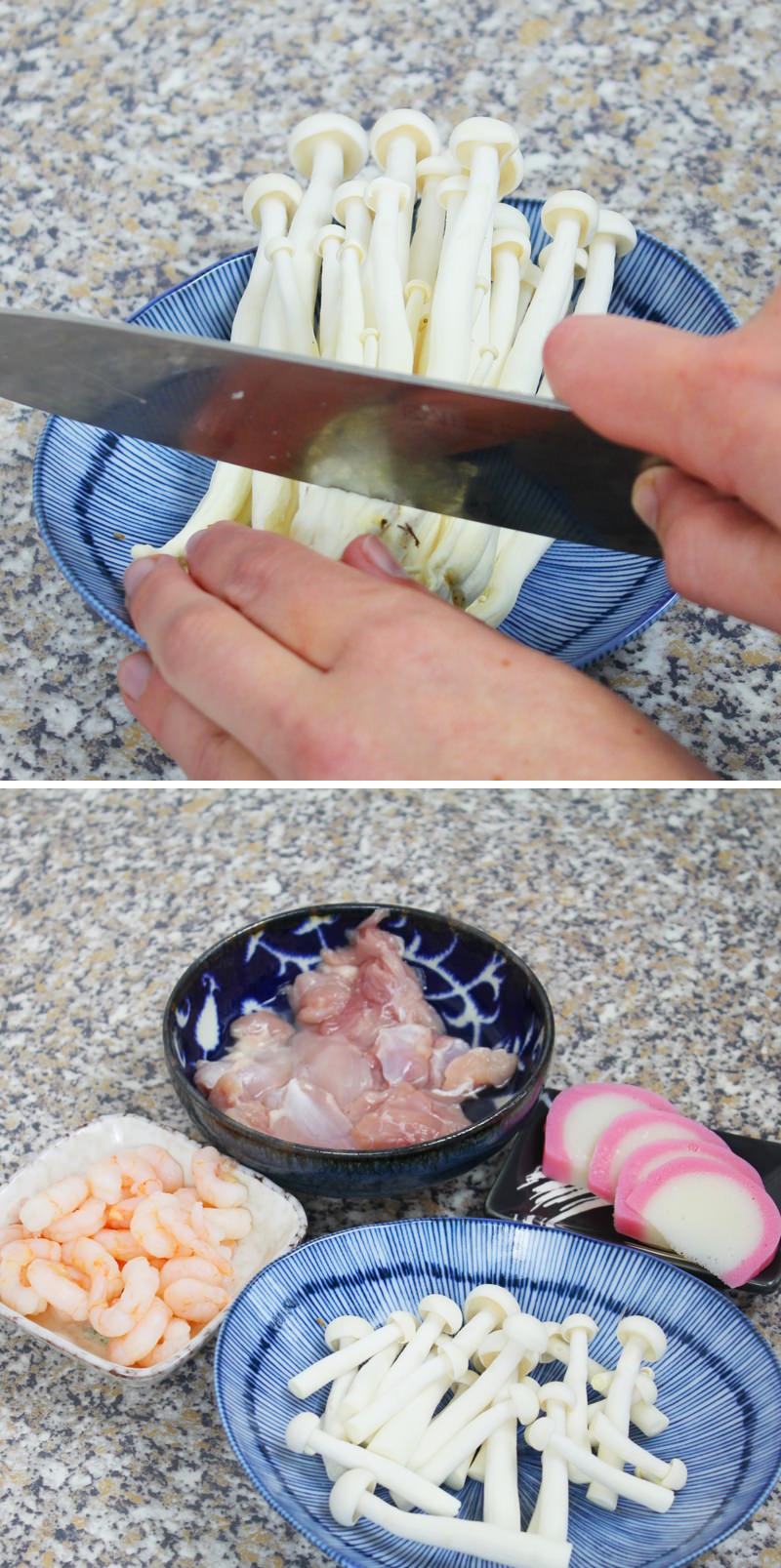
In the meantime, cut the kamaboko fish cake into 4 thin slices. Wash the shrimps and sprouts . Cut off the base of the Shimeji mushrooms generously and separate them into small clusters.
Now bring the water in the saucepan to the boil slowly.
Step 5
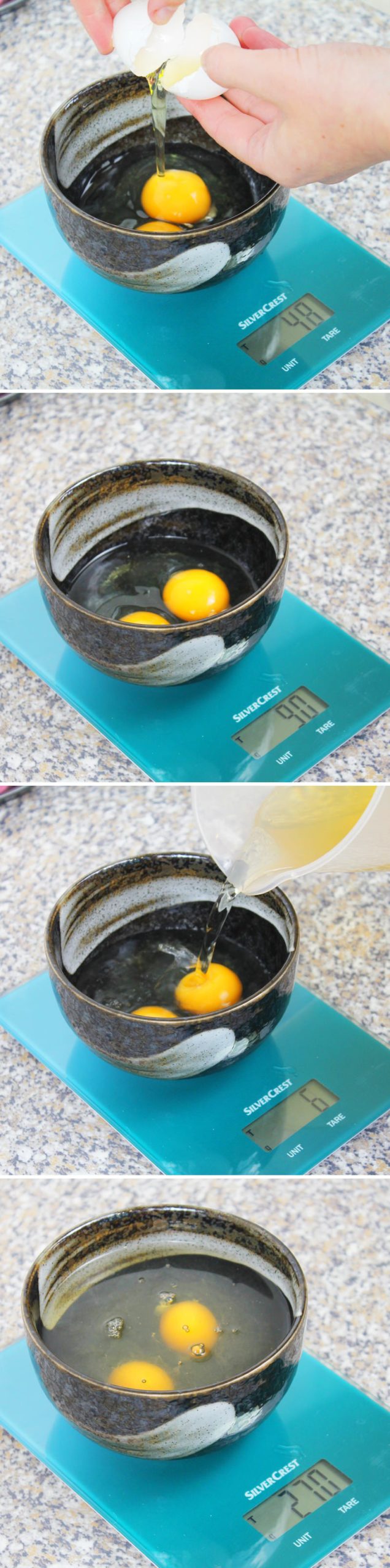
Place a bowl on a kitchen scale. Then crack the eggs into the bowl. Weigh the eggs and multiply the weight by 3 to get the required amount of Dashi (in my case it was: 90 g eggs x 3 = 270 ml Dashi). Then add the calculated Dashi amount to the eggs.
Step 6
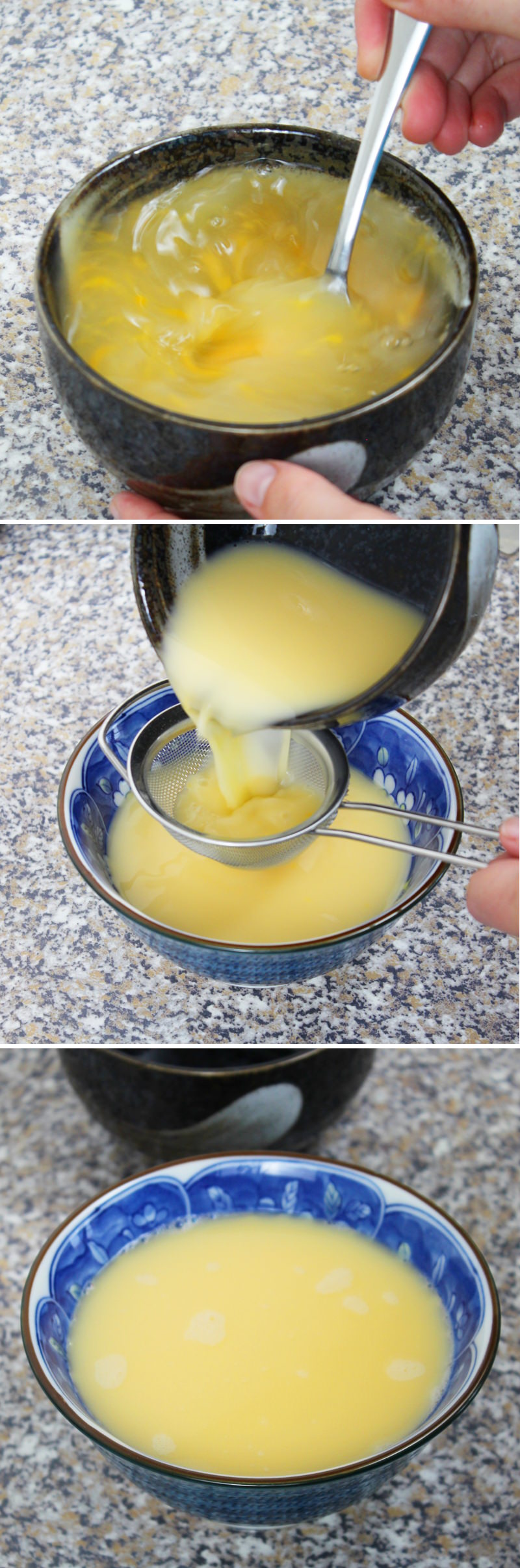
Now add Mirin, soy sauce and salt into the cup containing the eggs and Dashi. Whisk everything together.
Then strain the egg mixture through a fine-mesh sieve into another bowl. This will give you a fine, silky texture.
Step 7
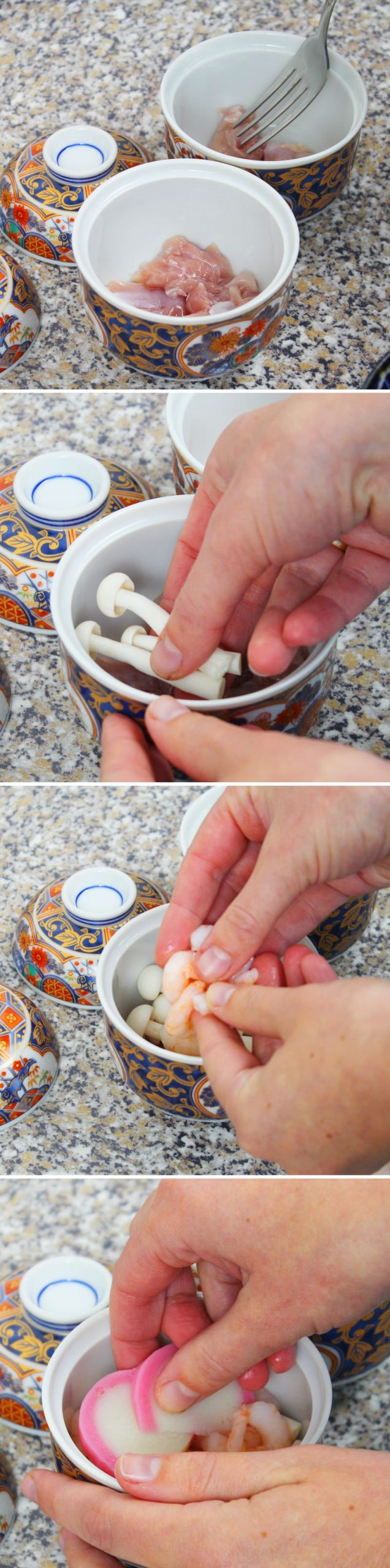
Now we will distribute all the ingredients evenly into the chawanmushi cups: First the chicken (in a single layer), then the Shimeji mushrooms and finally the prawns. Then scatter the colourful ingredients such as kamaboko and sprouts on top.
Step 8
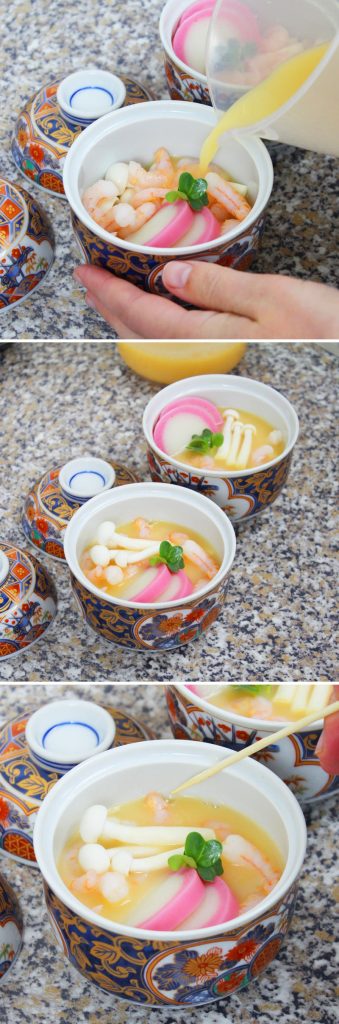
Now carefully pour the egg mixture into the cups, filling them to about 80% capacity, so that some of the toppings are not covered by the egg mixture. Pop any air bubbles on the surface with a bamboo skewer.
Please note: Depending on the size of the chawanmushi cup and the amount of ingredients you have added to the cup, you may not be able to use up all of the egg mixture.
Step 9
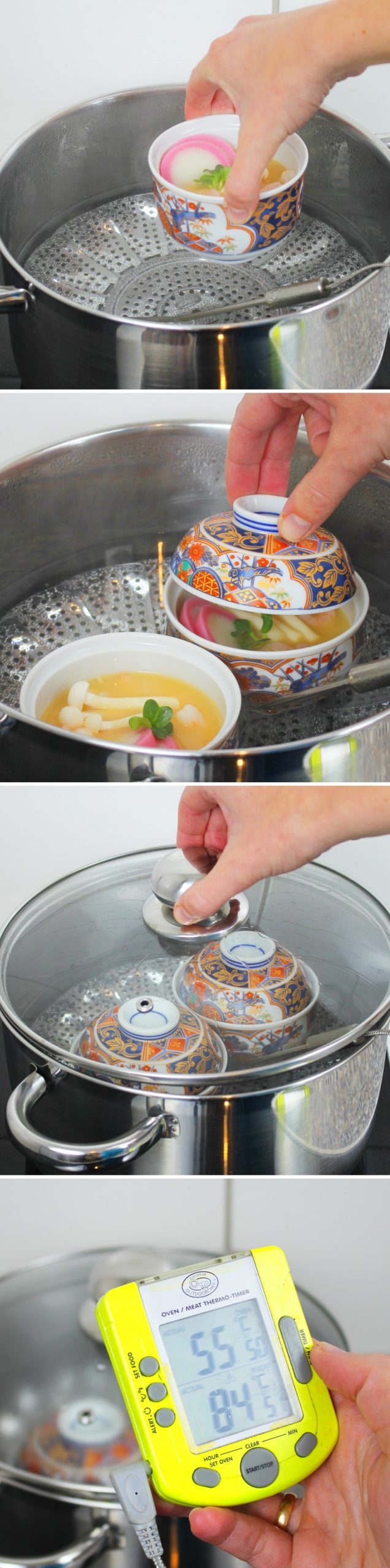
As soon as the water comes to the boil, reduce the heat to the lowest setting. Carefully place the filled cups into the hot water, place the lids on the cups and cover the pan, leaving the lid slightly ajar.
On the lowest heat, simmer gently for 20 minutes . >Tip: The boiling water should be at a temperature of 80–90 ºC. It’s best to check this with a kitchen thermometer!
Step 10
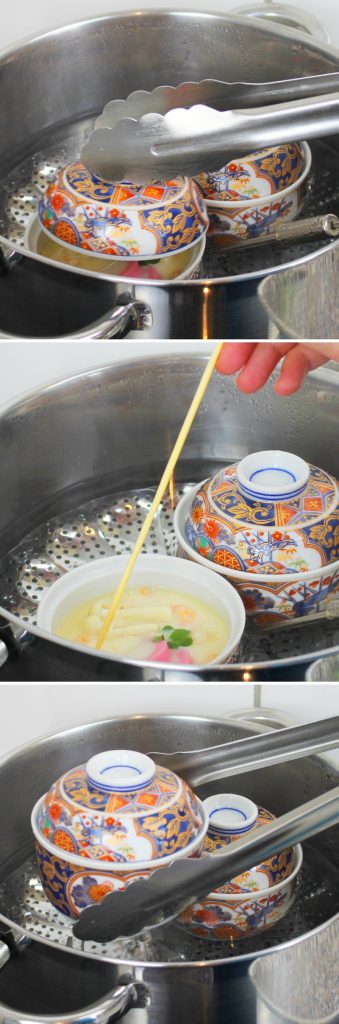
To check if the chawanmushi is ready, insert a skewer into the centre of the steamed custard – if clear liquid runs out, it is ready.
Carefully remove the cups from the hot water.
Step 10
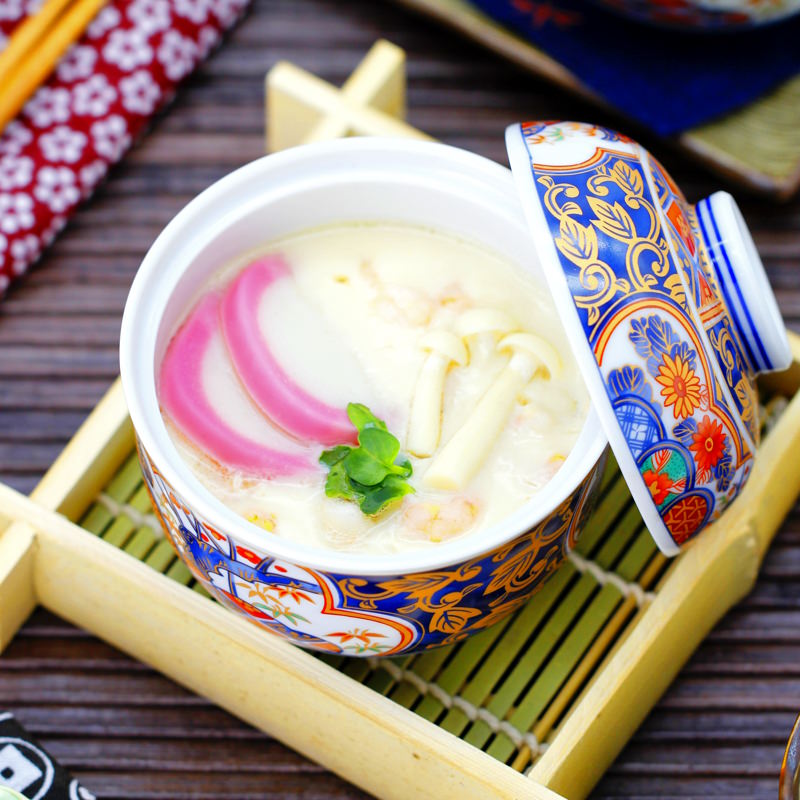
Serve the cups with their lids whilst still warm. Ready – Itadakimasu!
Are you looking for delicious Japanese recipes that go well with chawanmushi? Here are a few ideas:
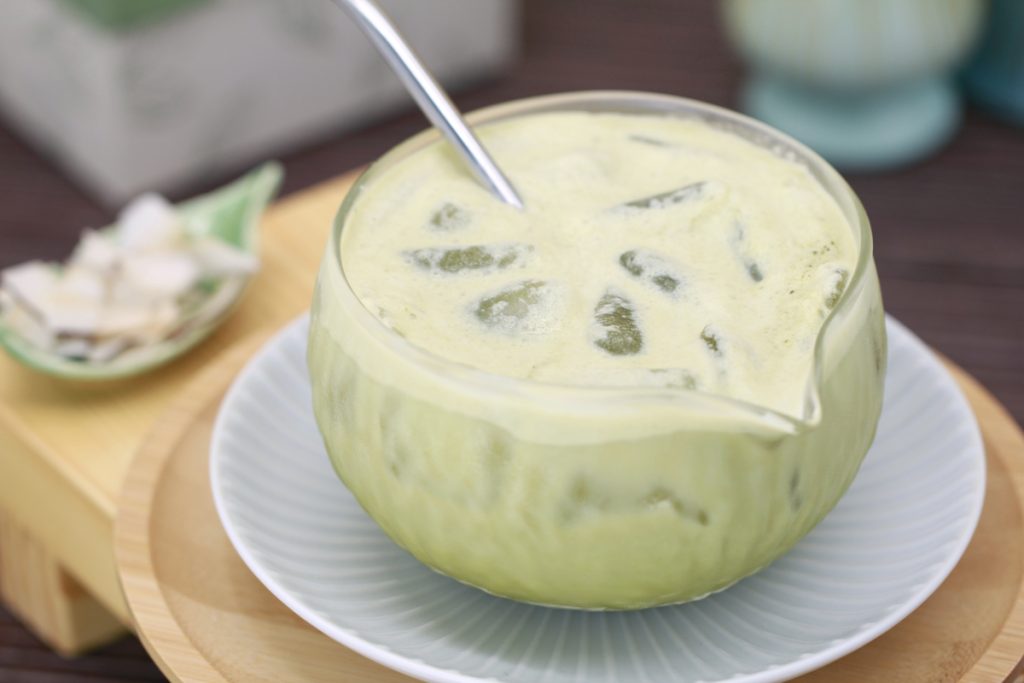
Make your own Coconut Matcha Cloud: A creamy Matcha latte with ice-cold coconut water
I couldn’t get away from the Coconut Matcha Cloud on social media this summer, and to be honest, I was…
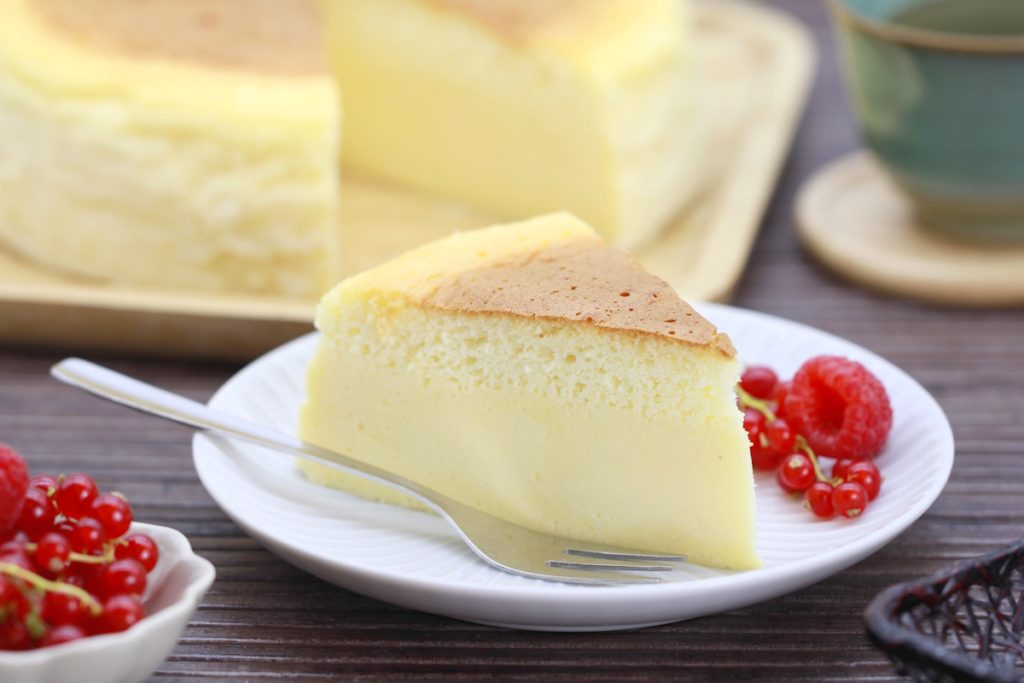
Japanese cheesecake: The best recipe for a fluffy soufflé-style cheesecake just like in Japan
Japanese cheesecake is one of Japan’s most popular desserts and delights with its exceptionally light and airy texture. Unlike classic…
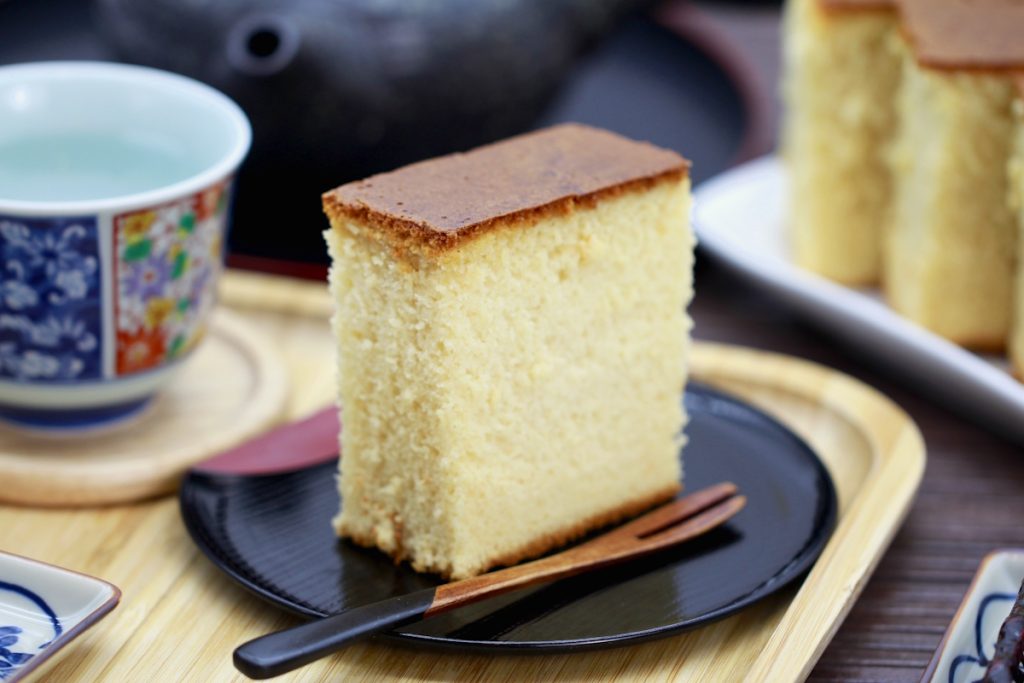
How to make Castella (Kasutera) yourself: How to make this Japanese honey cake
Why is Castella often described as Japan’s moistenest cake? Although Kasutera consists of just a few ingredients, the special preparation…
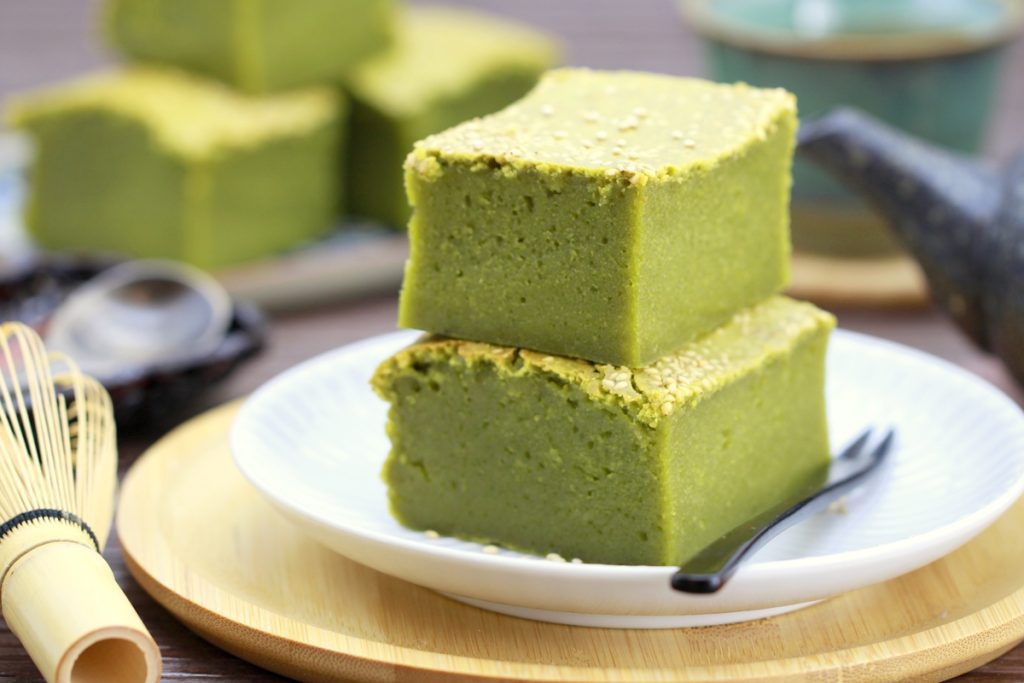
Make your own Matcha butter Mochi: Hawaiian Mochi cake with green tea
If you drink Matcha regularly, you might be familiar with this: at some point, you end up with more Matcha…
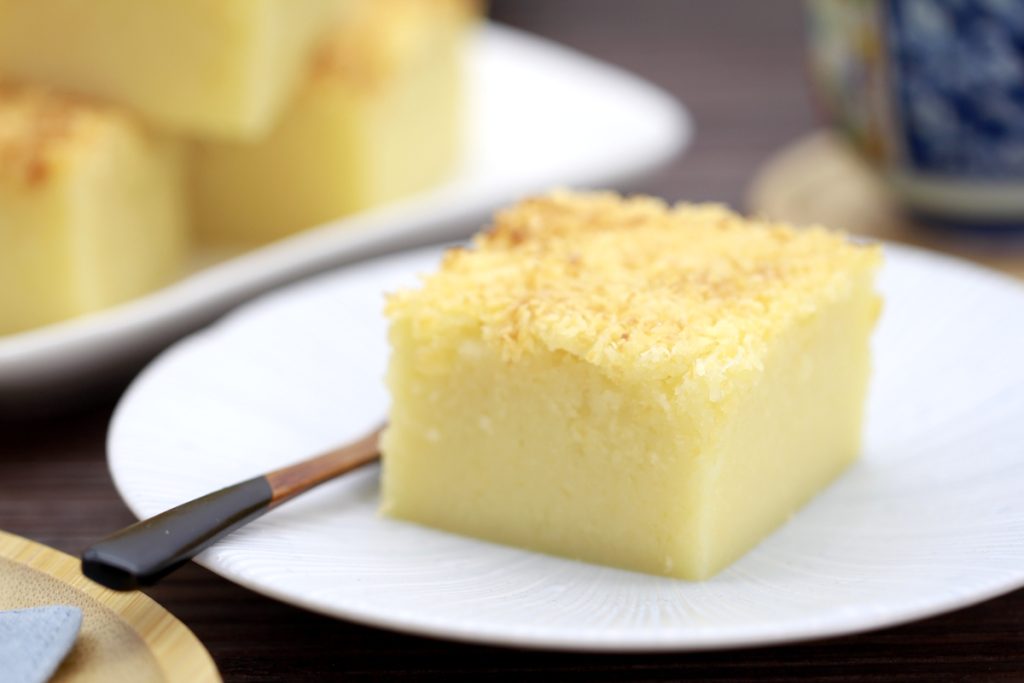
Butter Mochi (Hawaiian Mochi Cake – gluten-free)
Butter Mochi is one of those recipes that’s hard to pigeonhole. It looks like a simple tray bake, but has…
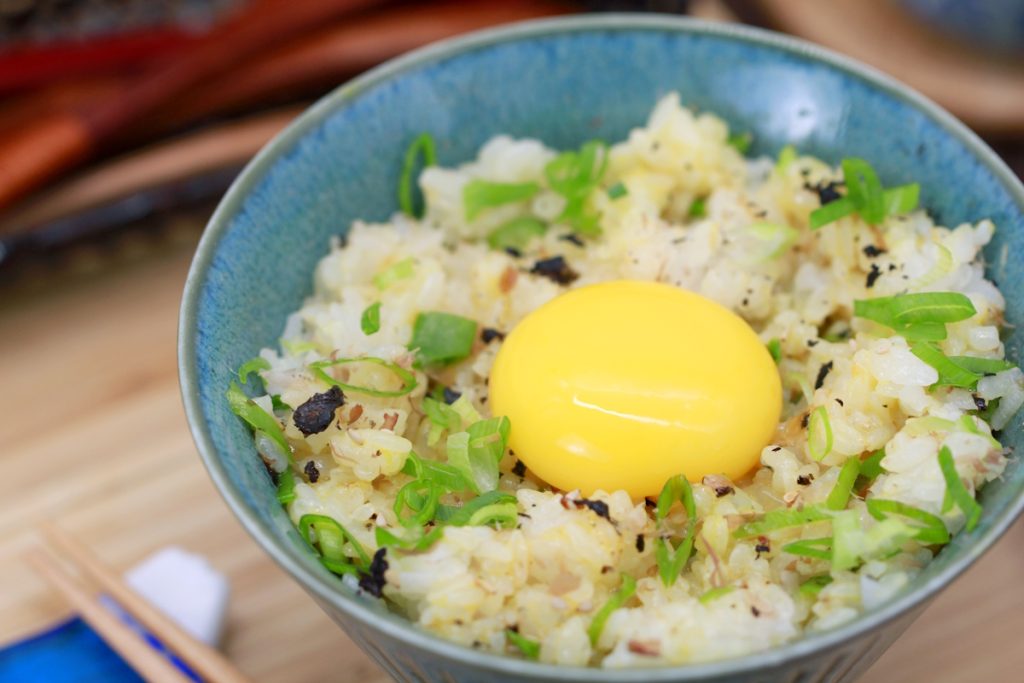
Tamago Kake Gohan: Japanese breakfast rice with egg, Furikake & Katsuobushi | TKG
In this recipe, I’ll show you a particularly flavourful version of Tamago Kake Gohan (TKG) with Katsuobushi. Freshly cooked, piping…
Have you tried the recipe? Let me know in the comments – I’m really looking forward to hearing from you.