
Language:


If you’re looking for a vegetarian dish that’s not only filling but also packed with flavour, then you’ll love Japchae. I like to make it when I fancy something hearty but not too heavy, and when I’ve got a few leftover vegetables in the fridge waiting to be used up. Whether served warm or cold, straight from the pan or as a Bento on the go: Japchae is simply always a hit. And don’t worry, even if the ingredient list looks long, it’s absolutely straightforward to prepare.
What exactly is Japchae?
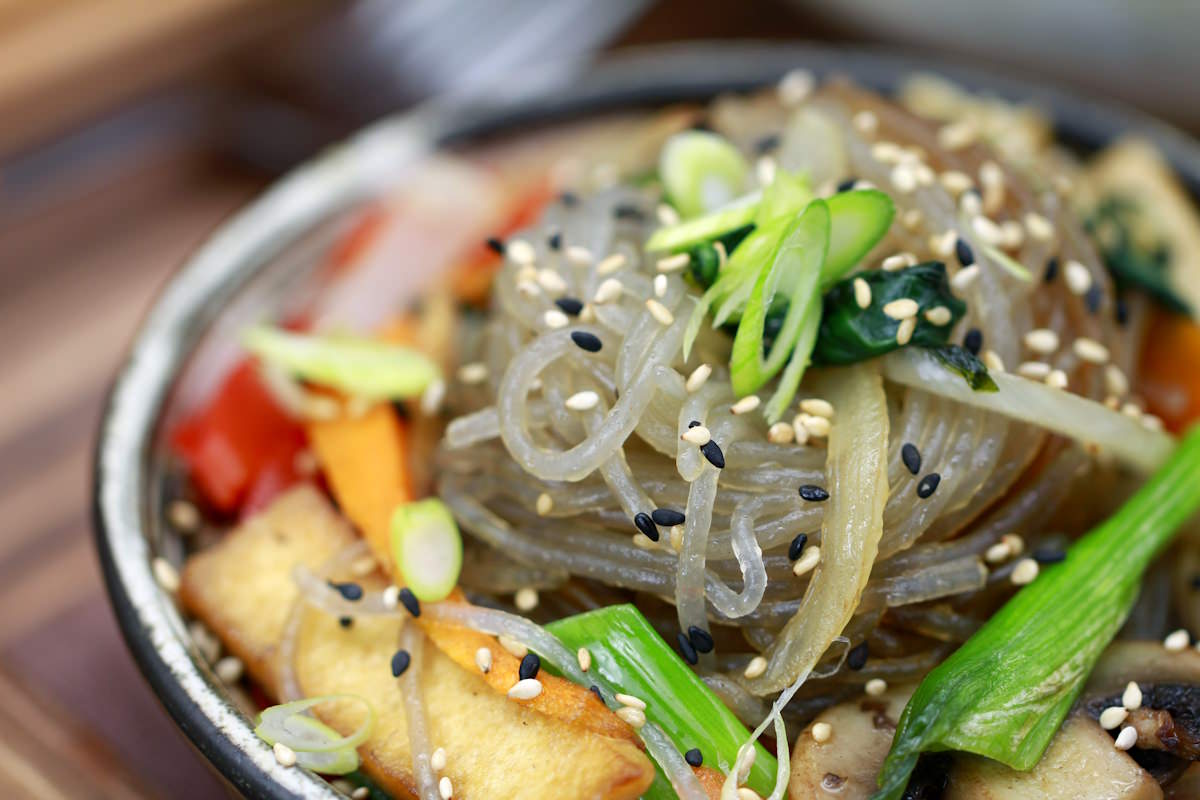
Japchae (잡채) is an integral part of Korean cuisine, not only because it is so delicious, but also because it has a long history. The name literally means ‘mixed vegetable dish’, and in fact, Japchae was originally a dish prepared entirely without noodles: it originated at the royal court of the Joseon Dynasty and consisted at that time of artfully arranged, stir-fried vegetables, but without any dangmyeon.
The translucent sweet potato glass noodles as we know them today were only added in the 20th century. They have since become the centrepiece of Japchae: wonderfully soft, springy and with that characteristic glossy surface.
Traditionally, the dish is served with marinated beef, but in Korea there are countless variations: sometimes with egg, sometimes entirely vegetarian, sometimes with mushrooms and spinach, or colourfully mixed with peppers, carrots and spring onions. The preparation is also special: all the ingredients are fried separately and only mixed together at the very end. This ensures that the flavour, colour and texture are wonderfully preserved.
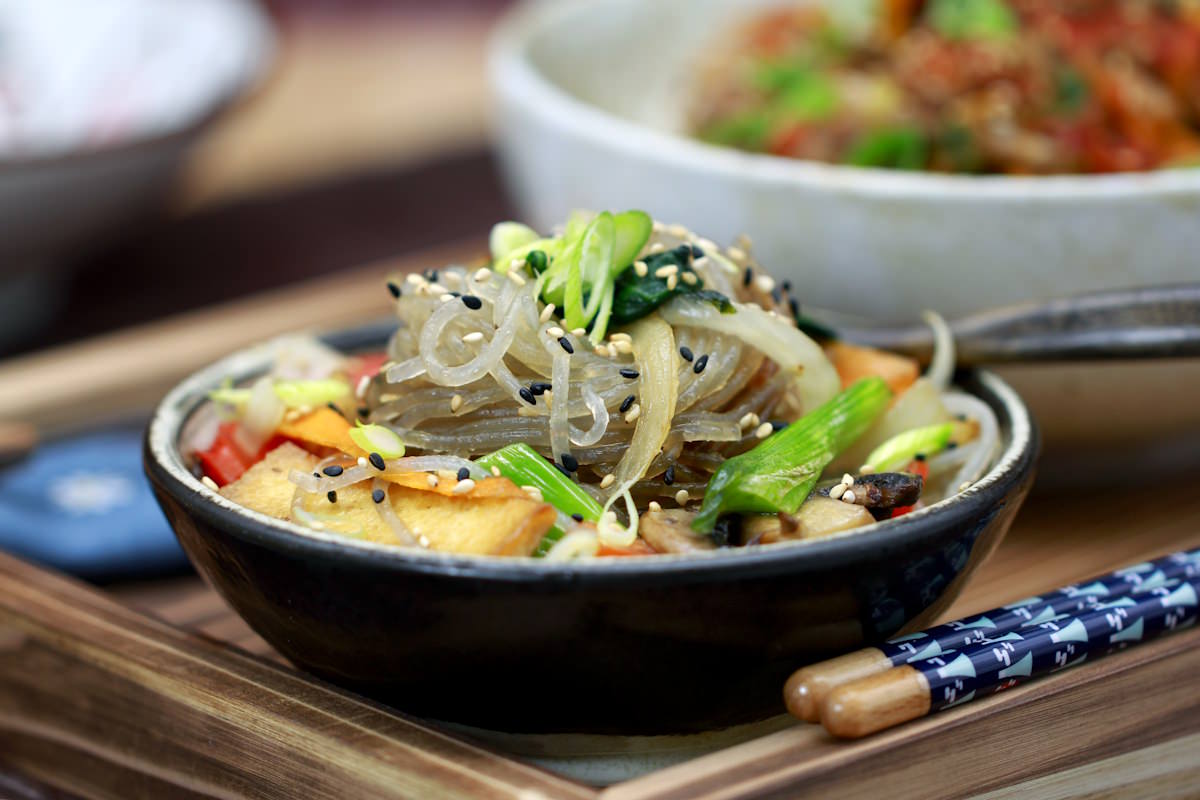
No wonder, then, that Japchae is now a symbol of hospitality and is a staple on festive tables during holidays such as Chuseok (the Korean harvest festival) or Seollal (Lunar New Year). Whether as a side dish or a main course, Japchae represents diversity, balance and a touch of festive splendour in everyday life in Korea.

When is Japchae eaten in Korea?
Japchae is a real festive dish in Korea. It is often served at birthdays, family gatherings or traditional holidays such as Lunar New Year (Seollal) and Chuseok. However, it has now become just as much a part of everyday life; as a side dish, a main course or in a lunchbox.
What I particularly like about it: Japchae not only tastes great fresh from the pan, but is still really tasty the next day. So it’s brilliant to prepare in advance – perfect for busy weeks or to take to the office.
How to make Japchae at home
Making Japchae at home is easier than you might think, and with the right ingredients, this Korean classic turns into a wonderfully aromatic stir-fry. Glassy sweet potato noodles meet colourful vegetables, toasted sesame seeds and a slightly sweet soy sauce – perfect for any time of year.
The key ingredients for Japchae:
- Glass noodles: Dangmyeon is the name given to the typical Korean glass noodles made from sweet potato starch. Once cooked, they become wonderfully springy and absorb the sauce particularly well. A little tip: cut them with scissors after cooking; this makes mixing and portioning easier.
- Vegetables: A colourful mix of carrots, peppers, onions, spinach and spring onions adds colour and crunch. Each variety is sautéed briefly and separately to best preserve flavour and texture.
- Mushrooms & Tofu: Firm button mushrooms add a savoury note, whilst fresh or rehydrated Shiitake mushrooms provide extra Umami. Tofu provides extra protein; it’s best to use firm Tofu and pat it dry thoroughly before frying.
- Seasoning sauce: A mixture of soy sauce, sesame oil, honey (or rice syrup for the vegan version), salt and pepper gives the dish its characteristic sweet and savoury depth. A hint of garlic rounds it all off.
- To sprinkle on top: Toasted sesame seeds add flavour and crunch: don’t forget them!
TOP RECOMMENDATION
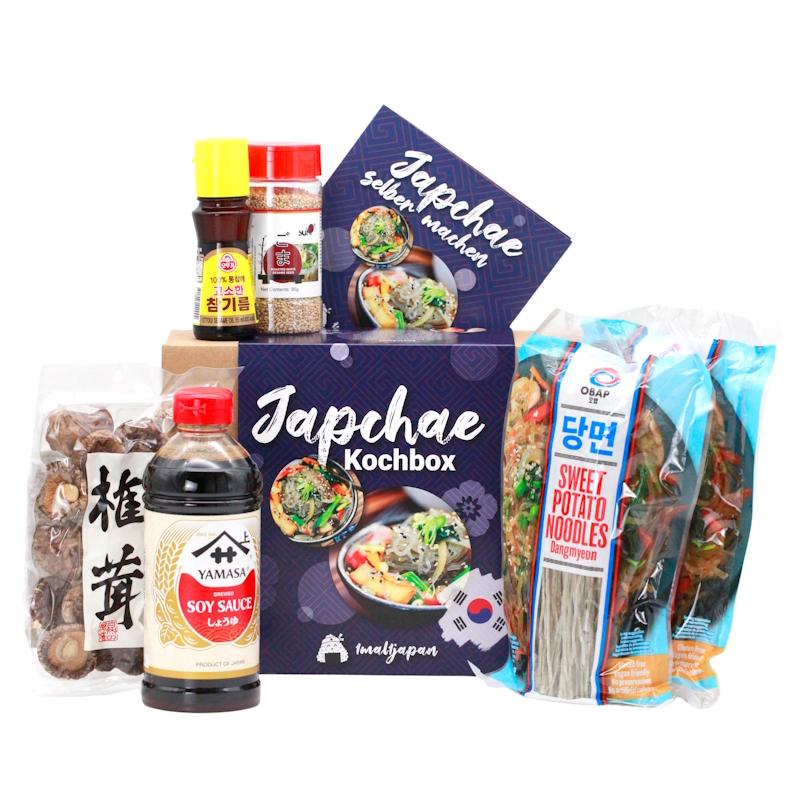
Japchae Kochbox | für koreanischer Glasnudelsalat, vegetarisch
7-tlg. Set für 2 Portionen koreanischer Glasnudelsalat, inkl. Anleitung, einfach & vegetarisch. Koreanischer Klassiker für zuhause: Mit unserer Japchae Kochbox zauberst du dir im Handumdrehen…
In stock
Here’s how it works:
First, soak the glass noodles or cook them according to the packet instructions, rinse them under cold water and cut them into bite-sized pieces with scissors. In the meantime, prepare the vegetables: carrots, peppers, onions, mushrooms and spring onions are cut into fine strips or slices, and the spinach is blanched and squeezed dry. Cut the Tofu into strips and pat dry.
Then it’s time to fry: add each type of vegetable to the pan one at a time, so everything stays nice and crisp and retains its own flavour. Meanwhile, you can fry the Tofu in a second pan with a little oil until crispy.
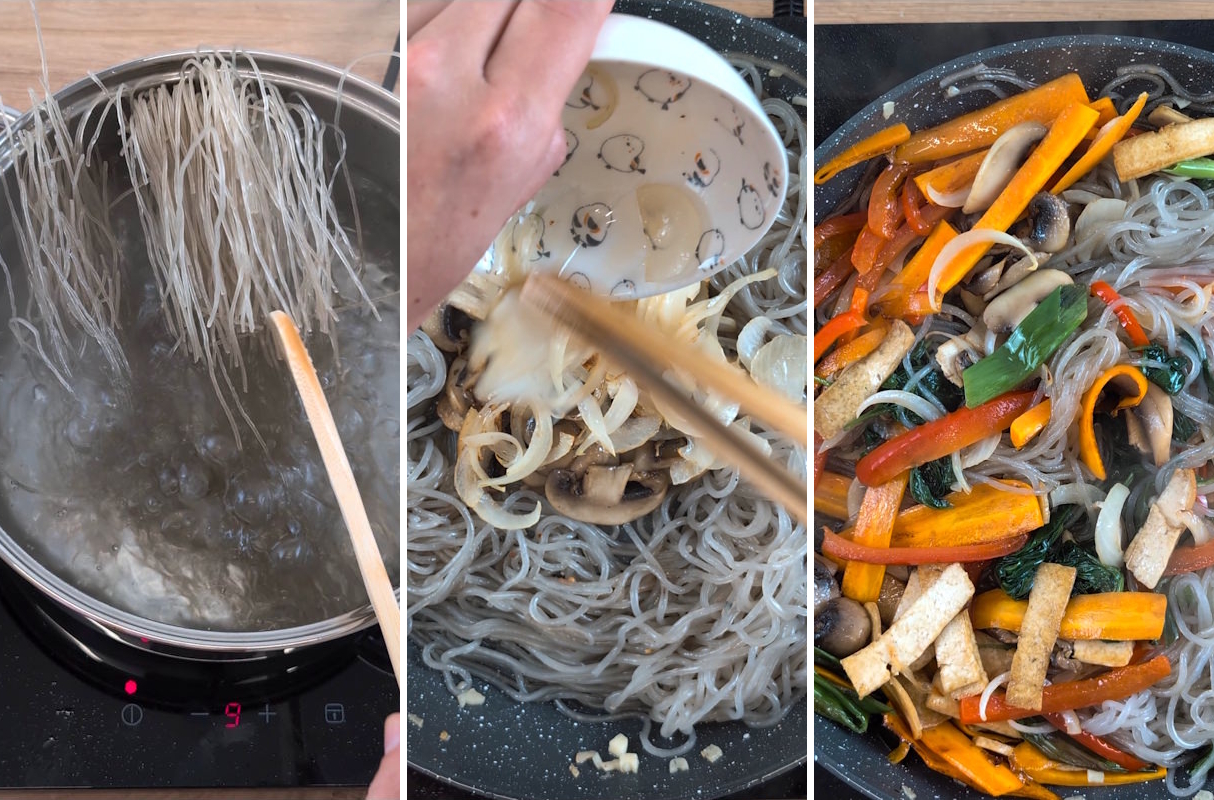
Finally, combine everything in a large frying pan or wok: glass noodles, vegetables, Tofu and mushrooms. Season to taste with soy sauce, sesame oil, honey, salt and pepper, mix everything well and leave to simmer together for a few more minutes. Sprinkle a little toasted sesame over the top – and your Japchae is ready!
Three variations for your Japchae
Whether classic or creative: Japchae can be adapted to suit your taste. Here are a few popular variations:
- 1. Traditional with beef: Thinly sliced beef (e.g. rump or fillet) is marinated with a little soy sauce, sesame oil, sugar and pepper and briefly stir-fried; this is probably the best-known form of Japchae.
- 2. With egg as a topping: Fry an egg yolk thinly in a pan, cut into fine strips and sprinkle over the finished Japchae as a garnish. It looks lovely and adds a gentle, silky touch to the dish.
- 3. With mung bean glass noodles: Instead of dangmyeon made from sweet potato starch, you can also use mung bean glass noodles; they are slightly more delicate but just as tasty and available in many Asian shops.
Perhaps the classic version with beef? Or vegetarian, as here, with Tofu, colourful vegetables and plenty of sesame? I’m curious to know how you prefer to make your Japchae. Do let me know in the comments! Have fun trying it out – and 맛있게 드세요 (Masitge Deuseyo), bon appétit!
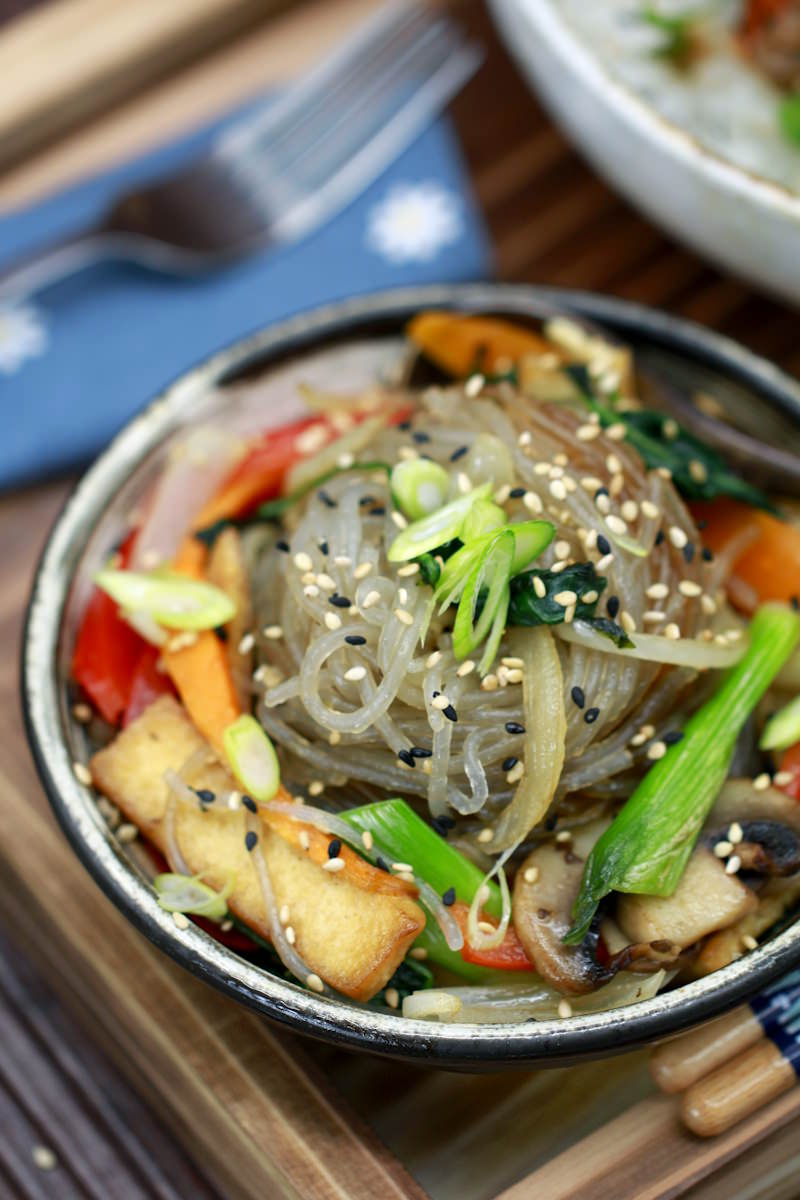

Japchae
Serves 2 | 20 minutes | 609 kcal
🖨️ Print PDF 📌 Save pinGlass noodles, colourful vegetables, aromatic sauce… Japchae is a Korean classic that’s delicious served hot or cold. Here’s a simple, vegetarian recipe that’s also perfect for preparing in advance.
Ingredients (2 servings)
150g sweet potato glass noodles (Dangmyeon) (im Shop ansehen)*
Vegetables & Tofu:
1 carrot
1 red pepper
1 onion
4 large button mushrooms (or 6 dried, rehydrated Shiitake (im Shop ansehen)*)
1 spring onion
1 clove of garlic
80 g fresh spinach leaves
100 g firm Tofu (optional; chicken or omelette cut into strips also work well)
a little oil for frying (e. g. rapeseed oil)
1 tbsp sesame oil (im Shop ansehen)*
2 tbsp Shoyu (im Shop ansehen)*
1 tbsp honey
1 tbsp toasted sesame seeds (im Shop ansehen)*
a pinch of salt & pepper
Useful tools:
Santoku knife (im Shop ansehen)
Yukihiara pot
Preparation (30 minutes)
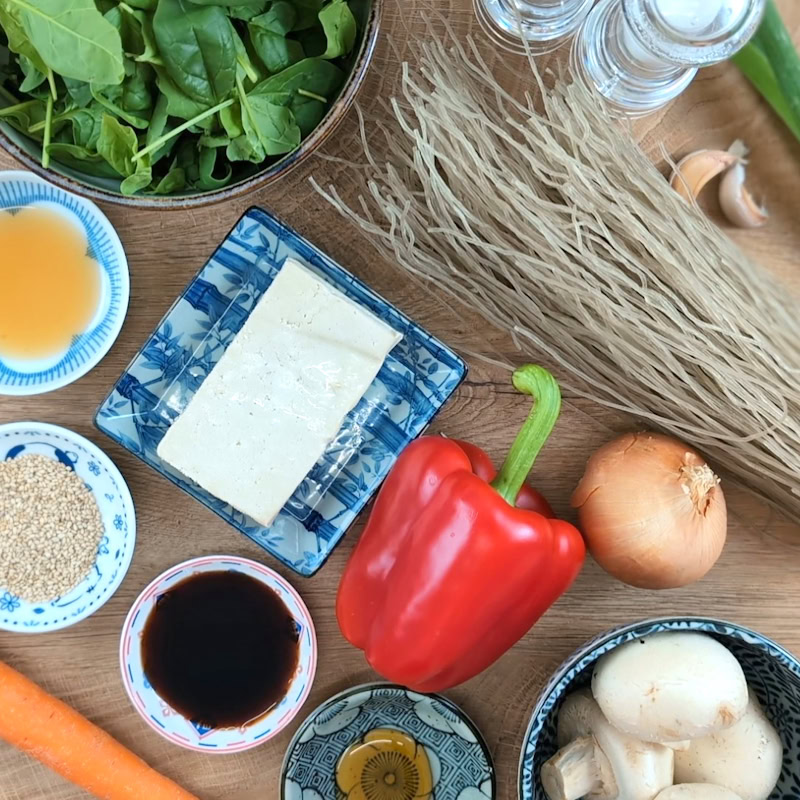
Step 1
First, we check that we have all the ingredients for Korean Japchae.
Tip: If you are using dried Shiitake mushrooms, soak them in warm water now and leave them to soak for about 15–20 minutes. Then squeeze them out well, remove the hard stalk and slice them finely – you will fry them later in exactly the same way as the button mushrooms.
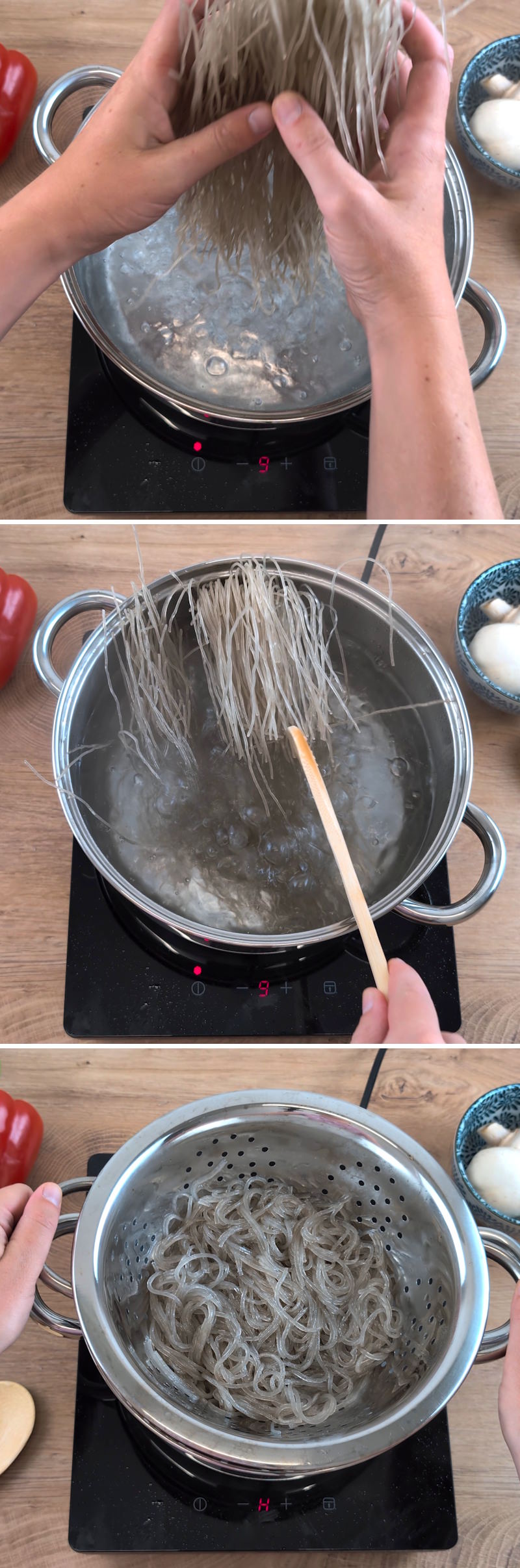
Step 2
Now prepare the glass noodles: Cook 150g Dangmyeon according to the instructions on the packet (usually 6–7 minutes), drain them, rinse them under cold water and cut them into shorter pieces with scissors. This makes them easier to fold in later.
Step 3
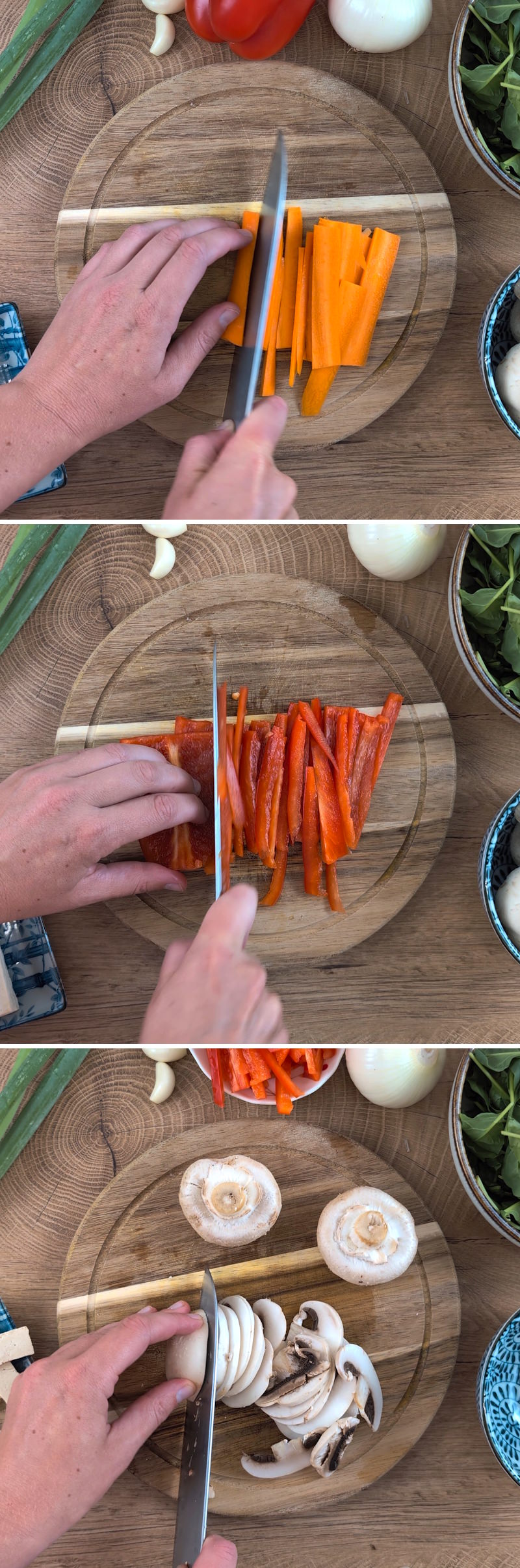
Now for the vegetables: Peel 1 carrot and cut it into thin strips. Halve 1 red pepper, remove the seeds and cut it into thin strips too. Slice 4 button mushrooms (or 6 Shiitake).
Step 4
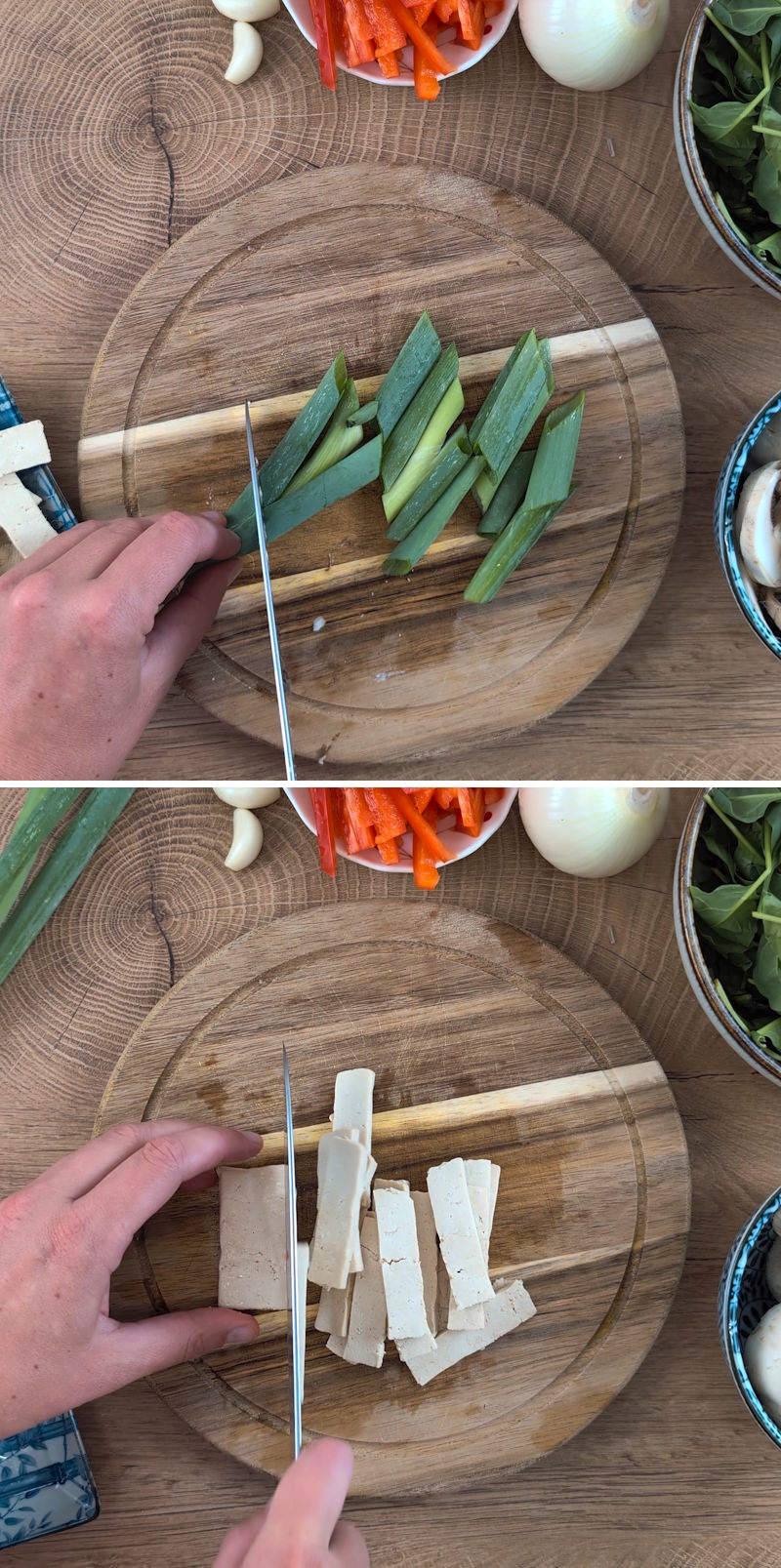
Next, cut 1 spring onion into pieces and 1 onion into thin rings. Finely chop 1 clove of garlic and wash the spinach thoroughly. If you are using Tofu , cut 100g of it into strips (or prepare an alternative protein side dish).
Step 5
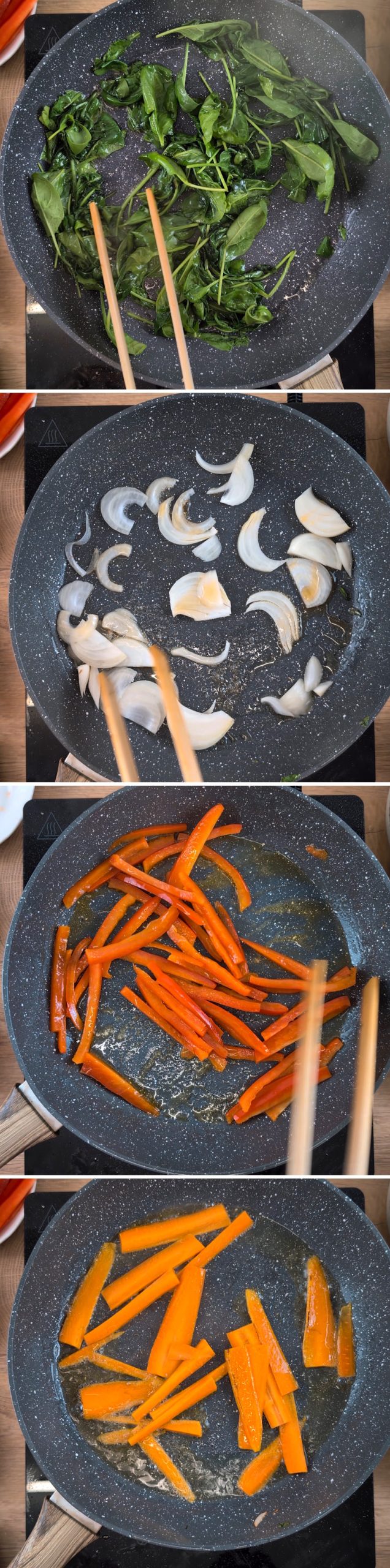
Now it’s time to fry the vegetables: Please fry them one at a time so that they all retain their crunch and flavour!
Add a little oil to a frying pan and start by frying the spinach until it wilts. Then remove it from the pan and add a little more oil. Next, fry the onion, pepper and carrot in batches, one after the other, over a medium heat with a pinch of salt, and set everything aside.
Step 6
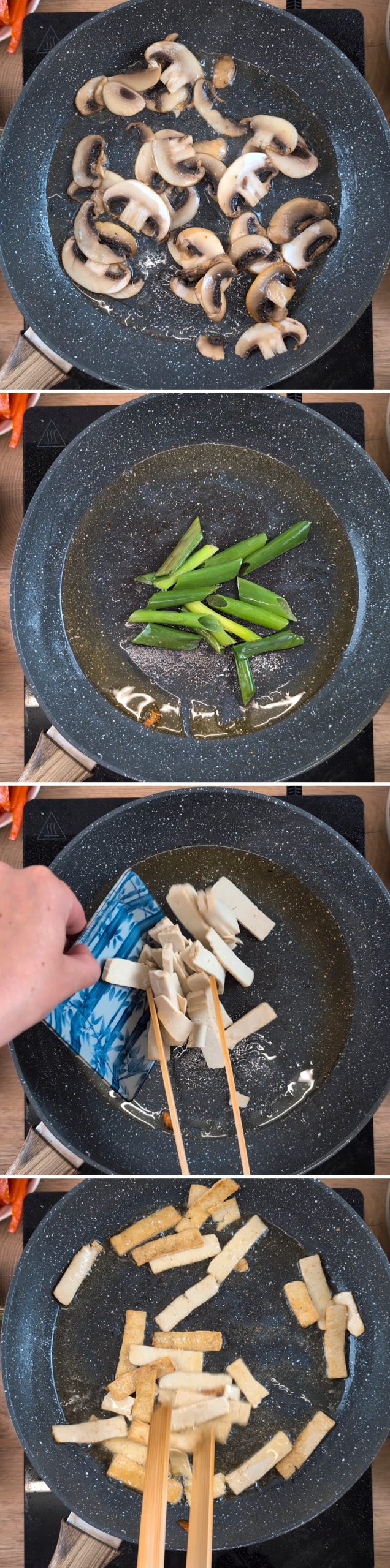
Next, add the mushrooms and spring onions as well.
Finally, fry the Tofu or your chosen alternative in the pan.
7. Step
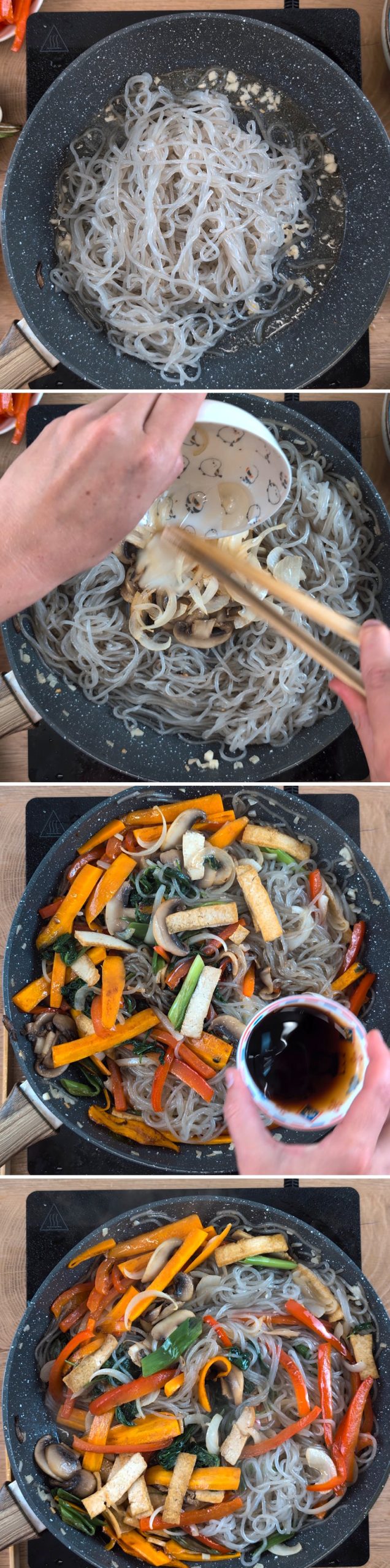
Now add 1 tbsp sesame oil to the pan, briefly fry the garlic in it, and then add the glass noodles . Immediately afterwards, add all the vegetables and the Tofu (or alternatively chicken or omelette) to the pan.
Season with 2 tablespoons soya sauce, 1 tablespoon sesame oil, 1 tablespoon honey and a little salt and pepper. Gently fold everything together and leave to cook for a further 2–3 minutes over a medium heat until everything is well combined.
7. Step
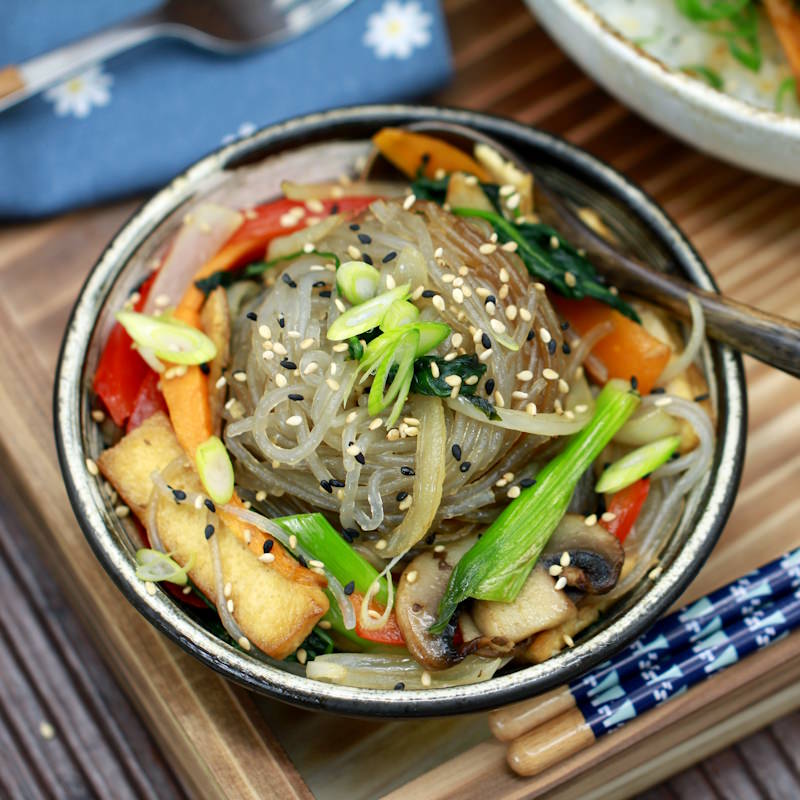
To finish, sprinkle your Japchae with 1 tbsp toasted sesame seeds – and your Korean glass noodle salad is ready!
Tip: Japchae tastes just as good warm as it does cold – so it’s perfect for a Bento box or for meal prep in the fridge.
Fancy some more delicious inspiration from Korea? You’ll find even more quick recipe ideas here:

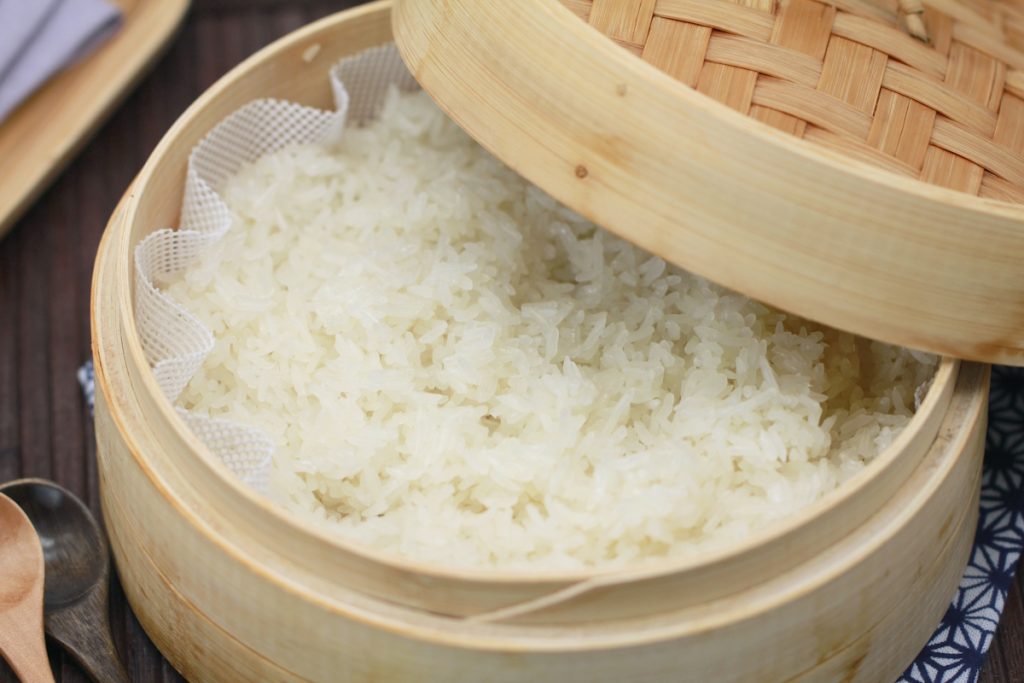
Thai Sticky Rice: How to steam Thai sticky rice (Khao Niao) properly
Thai sticky rice, also known as Khao Niao, is a very simple basic recipe, but…

Kimchi Fried Rice: Make your own quick kimchi Bokkeumbap | in 20 minutes
Kimchi Fried Rice, also known as Kimchi Bokkeumbap, is a classic rice dish from everyday…
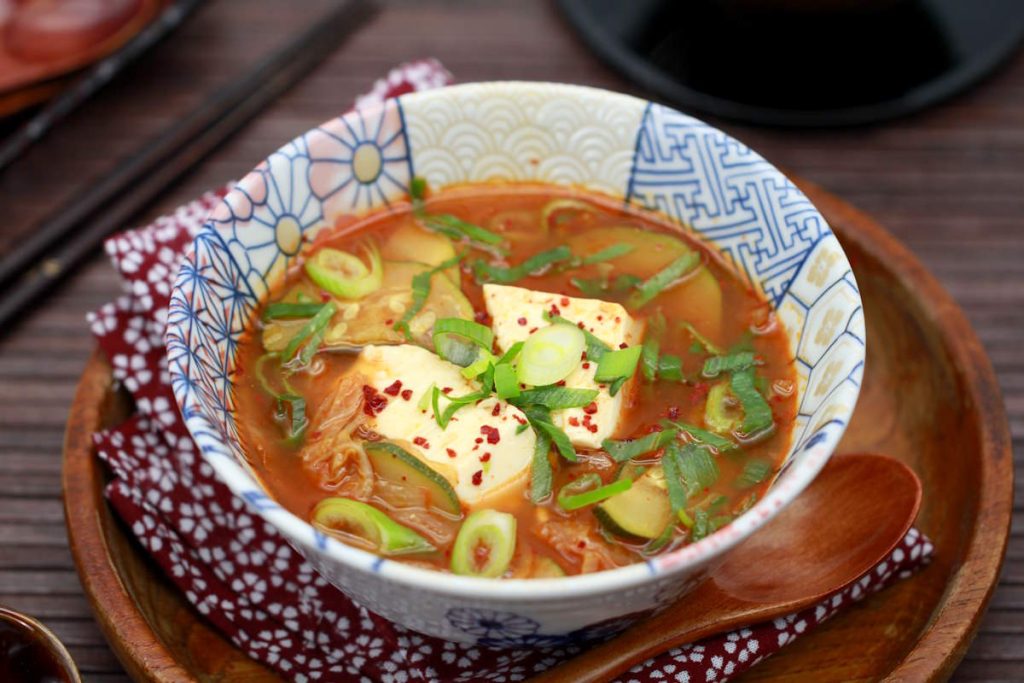
Sundubu Jjigae: Spicy Korean Tofu stew with courgette, Kimchi & Anchovy Dashima
Sundubu Jjigae is one of the best-known Korean stews and is an integral part of…
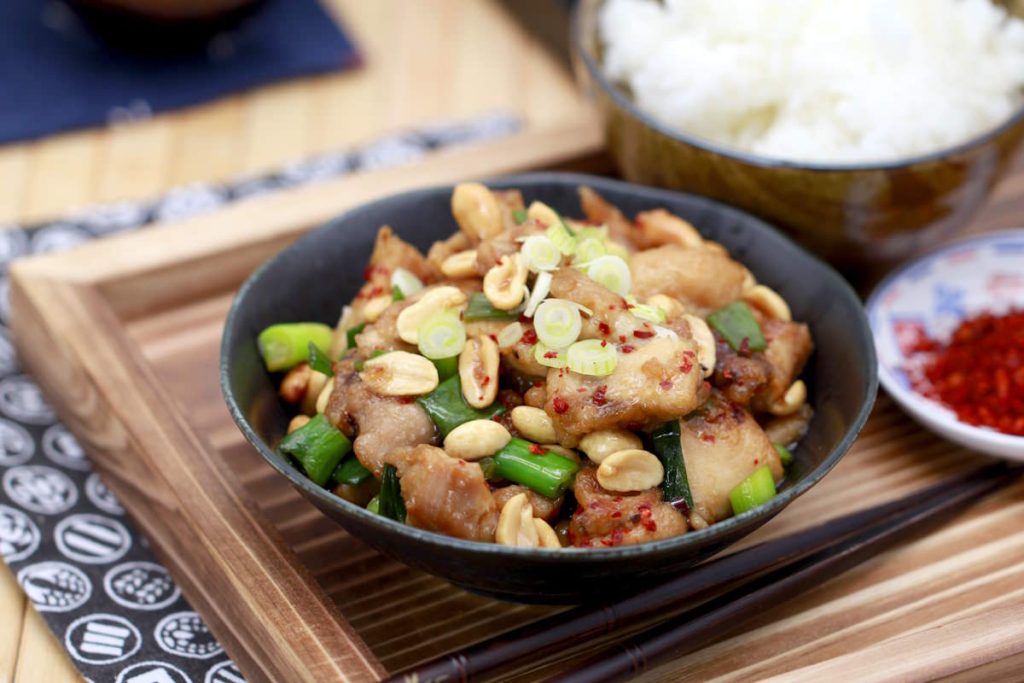
Make your own Gong Bao Chicken: Classic Kung Pao Chicken from Sichuan cuisine with peanuts & chilli
Gong Bao Chicken is a classic stir-fry dish from Sichuan cuisine that requires just a…

Beijing soup: Make your own Suan La Tang | Chinese hot and sour soup
Beijing Soup (Suan La Tang) is a classic sour and spicy soup from Chinese cuisine….
Have you tried out the recipe yet? Let me know in the comments – I can’t wait to hear from you.