

Language:


When I think of Korean food, Bulgogi is always right at the top of the list. This tender, caramelised beef with its slightly sweet marinade, which is a bit reminiscent of BBQ but clearly screams ‘Korea’, is real comfort food for me. Incidentally, the word Bulgogi translates quite literally as ‘fire meat’; and that’s exactly what you get here: Finely sliced beef, marinated in a mixture of pear, soy sauce, garlic, ginger and sesame oil, then seared at a high heat.
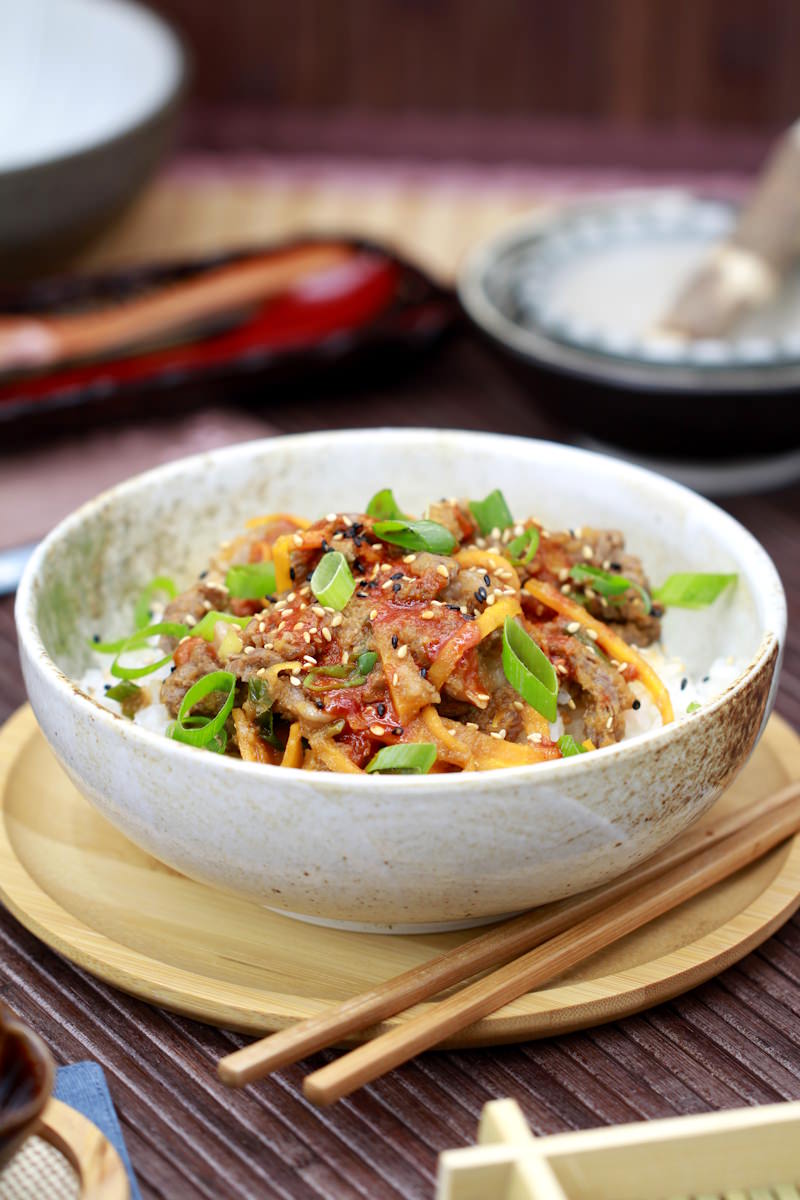
Personally, I love the version with Nashi pears in the spicy-sweet marinade. It makes the meat particularly tender and adds a fruity sweetness that goes perfectly with the salty and spicy flavours. If you can’t get hold of Nashi pears, a small ordinary pear will do just fine.
You can serve your Bulgogi the classic way with rice or – as is often done in Korea – wrap it in lettuce leaves, spread a little ssamjang on top and eat it with your hands. It tastes particularly good when combined with a few side dishes such as Kimchi, pickled radish or a fried egg.
TOP RECOMMENDATION
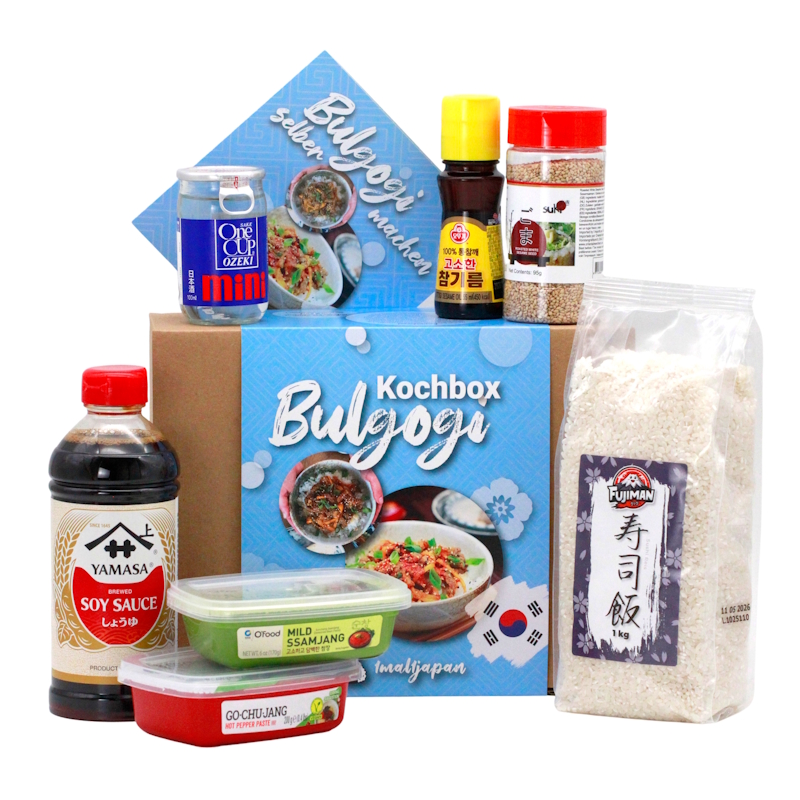
Bulgogi Kochbox | für koreanisches Feuerfleisch
8-tlg. Set für 10 Portionen koreanisches Feuerfleisch, inkl. Anleitung, für Korean BBQ. Die Bulgogi Kochbox enthält alles, was du für bis zu zehn Portionen koreanisches…
In stock
Where does Bulgogi actually come from?
Bulgogi is one of the best-known dishes in Korean cuisine and dates back to a centuries-old tradition. Originally, it was known as ‘Maekjeok’ and grilled on skewers over an open fire – similar to Japanese yakitori or Turkish shashlik. Over time, this evolved into the bulgogi we know today, where the meat is first marinated in a flavourful sauce and then grilled or pan-fried . In Korea, it is a typical family dish, often served at celebrations or social gatherings – simple, yet full of flavour.
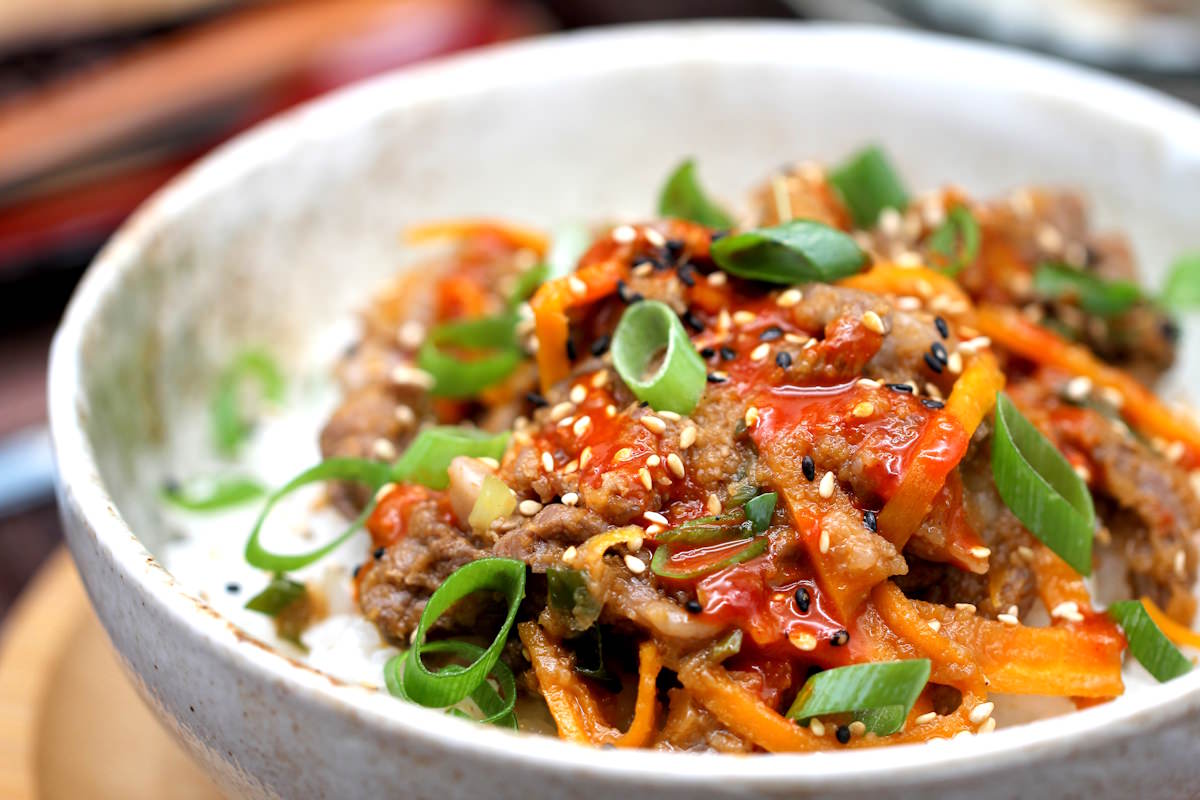
Making your own bulgogi: Here’s how
Making Bulgogi at home is easier than you might think, and with the right marinade, it turns into a wonderfully aromatic dish that tastes just like Korea. All you need is good quality beef, a bit of preparation and a few typical ingredients from Korean cuisine.
The key ingredients for Bulgogi:
- Meat: Well-marbled beef such as entrecôte, fillet or rump is ideal. If you freeze the meat for about 30 minutes before slicing, you can cut it particularly thinly. This ensures tender, juicy bites later on.
- Marinade: The base is a mixture of puréed Nashi pear (or a sweet pear), onion, garlic, ginger, soy sauce, honey, toasted sesame oil and, if you like, a dollop of gochujang. The pear provides natural sweetness and makes the meat wonderfully tender.
- For frying: A combination of neutral oil (e.g. rapeseed oil) and sesame oil adds flavour and heat. The meat is fried in a pan or on a griddle along with thin carrot sticks and spring onions.
- Side dishes: Traditionally, Bulgogi is served with rice. However, you can also wrap the meat in lettuce leaves, spread with a little ssamjang and eat it with your hands, just like the Koreans do. It’s particularly delicious with Kimchi, pickled vegetables or a fried egg.
Here’s how it works:
First, prepare the marinade and leave the meat to marinate in it overnight. The next day, all you need to do is cook the rice, chop the vegetables and sear the marinated meat well. As soon as the sauce has caramelised slightly, add spring onions and toasted sesame seeds, and your homemade Bulgogi is ready to serve.

Tip
If you make a larger batch, you can also freeze the marinated meat. That way, you’ll always have a portion of Korean BBQ ready to go. Simply defrost, fry, and you’re done.
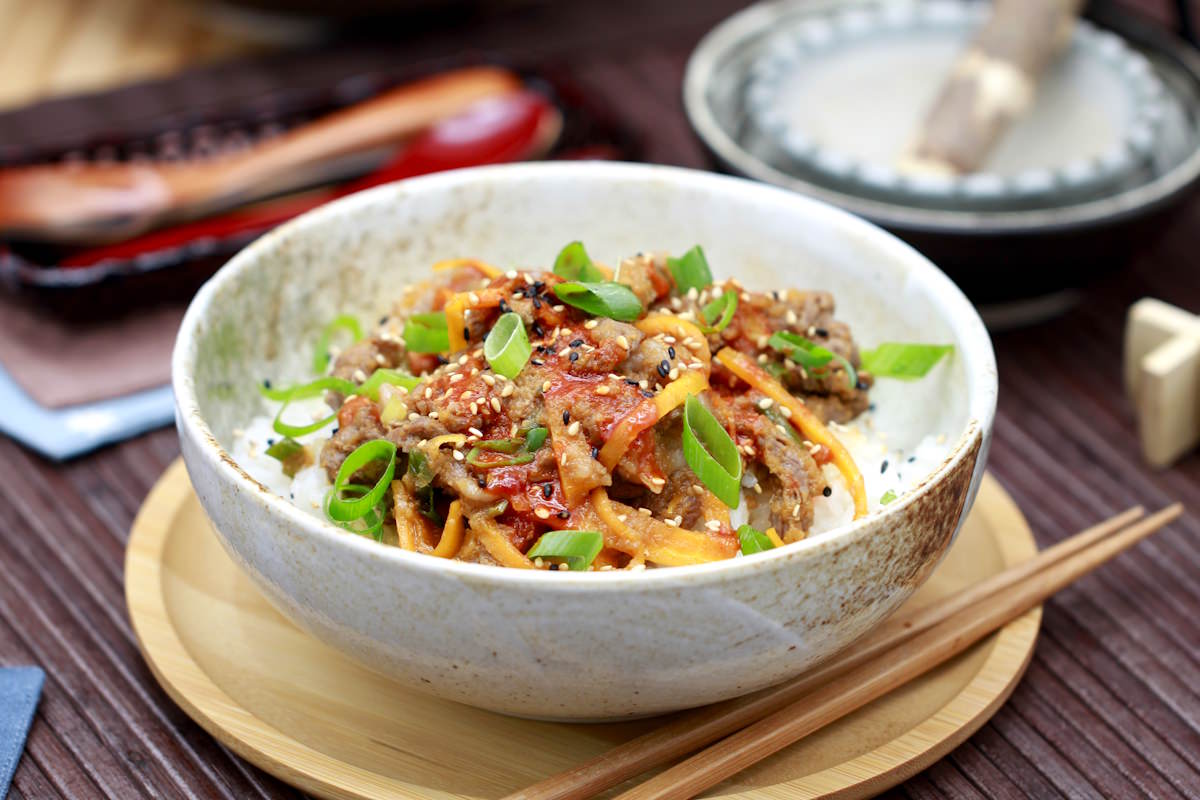
Popular variations: Bulgogi with a twist
Although the classic version with beef is the best-known style of bulgogi, there are many delicious variations that taste just as good and sometimes even suit your own kitchen or daily routine better.
With chicken (Dak Bulgogi 닭불고기): Instead of beef, you can also use chicken; skinless, boneless chicken thighs work best as they remain juicy when fried. The marinade remains essentially the same, only the frying method changes slightly: chicken takes a little longer and should be cooked through thoroughly. Perfect for a slightly lighter, but just as flavourful version.
Vegetarian with Tofu or mushrooms: Tofu absorbs the Bulgogi marinade particularly well. It’s best to squeeze out the excess liquid beforehand and pat it dry thoroughly so that it becomes nice and crispy when fried. The dish also works wonderfully with thick mushrooms such as king oyster mushrooms or oyster mushrooms. Simply cut them into thick strips, marinate and fry vigorously – this creates a real burst of Umami.
A bit spicier, for those who like it: If you like it spicy, you can increase the amount of gochujang in the marinade or stir in a little Gochugaru (im Shop ansehen) as well. Finely chopped fresh chilli also adds extra heat; combined with the sweetness of the pear, this creates a really lovely contrast.
With glass noodles, almost like Japchae: You can create a particularly hearty version by adding Korean glass noodles (dangmyeon) to the Bulgogi. Simply cook them separately, drain them and add them to the pan in the final few minutes; they soak up the remaining marinade and make the dish even more filling. This turns the Bulgogi into an almost Japchae-inspired stir-fry with a bit of bite.
Have you ever made your own Bulgogi? Perhaps even on the barbecue or with Tofu instead of meat? I’d love to hear in the comments how you like to prepare your Bulgogi. Have fun trying it out!

Bulgogi
Serves 2 | 30 minutes | 724 kcal
🖨️ Print PDF 📌 Save pinBulgogi is a real star of Korean cuisine: tender beef, marinated in a sweet and spicy sauce with soy sauce, pear and sesame oil, then seared and served with rice. Here you’ll find step-by-step instructions on how to make bulgogi yourself, what’s important when it comes to the marinade, and which variations you can try, including vegetarian or extra spicy versions!
Ingredients (2 servings)
For the meat:
300 g beef(e.g. beef fillet, entrecôte or rump)
2 spring onions
1 small carrot
2 tbsp sesame oil (im Shop ansehen)*
2 tbsp neutral oil for frying (e.g. rapeseed oil)
For the marinade:
½ Nashi pear (alternatively: small sweet pear)
1 small onion
2 garlic cloves
20 g fresh ginger
2 tbsp Shoyu (im Shop ansehen)*
1 tbsp honey or sugar
2 tbsp sesame oil
1 tbsp Ssamjang (im Shop ansehen)*
1 tbsp Sake (im Shop ansehen)* (optional)
1 tsp Gochujang (im Shop ansehen)*
a little pepper
To serve:
2 tbsp toasted sesame seeds (im Shop ansehen)*
2 servings of rice (to the recipe)
Useful tools:
Japanese grater (im Shop ansehen)
Santoku knife (im Shop ansehen)
Preparation (30 minutes + marinating time)
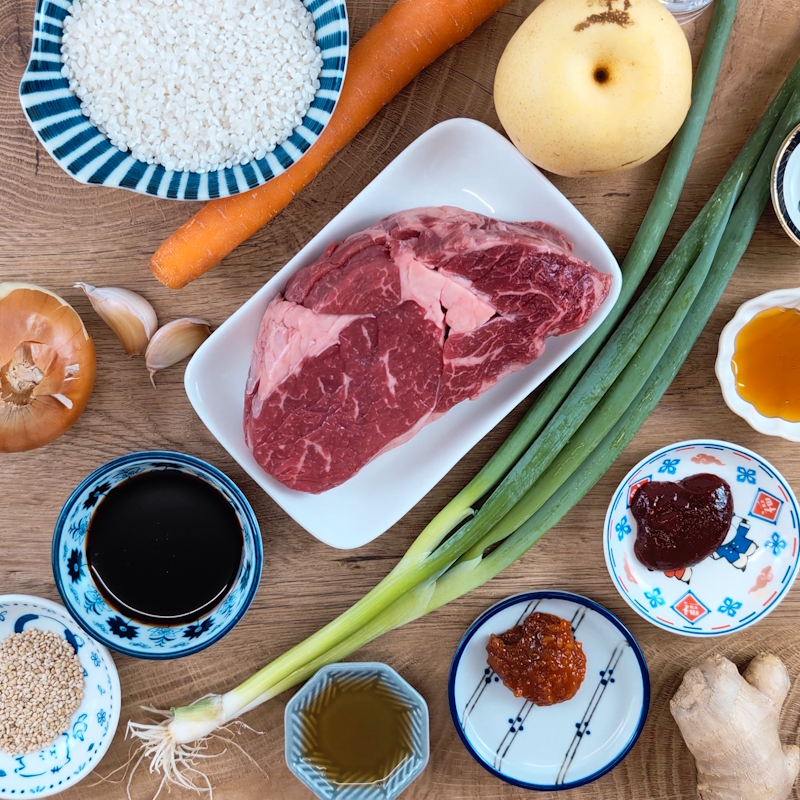
Step 1
PLEASE NOTE: It’s best to start the day before, as the meat needs time to marinate!
First, we’ll check that we have all the ingredients for the Korean Bulgogi.
To ensure everything goes smoothly later on, we’ll prepare a few things in advance: To help you slice the meat particularly thinly, place it in the freezer for about 30 minutes beforehand – this will make it firmer and easier to work with.
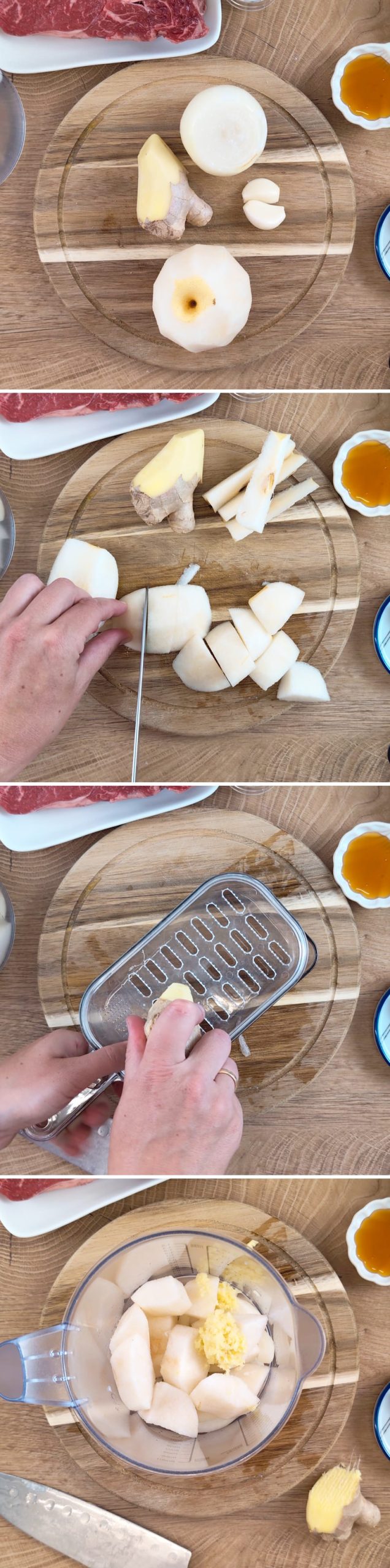
Step 2
Prepare the marinade: Peel a Nashi pear (we only need half, though), a small onion and two cloves of garlic. Chop them roughly and place them together in a tall container – a blender works just as well, of course. Peel the ginger as well, grate it finely and add it to the mixture.
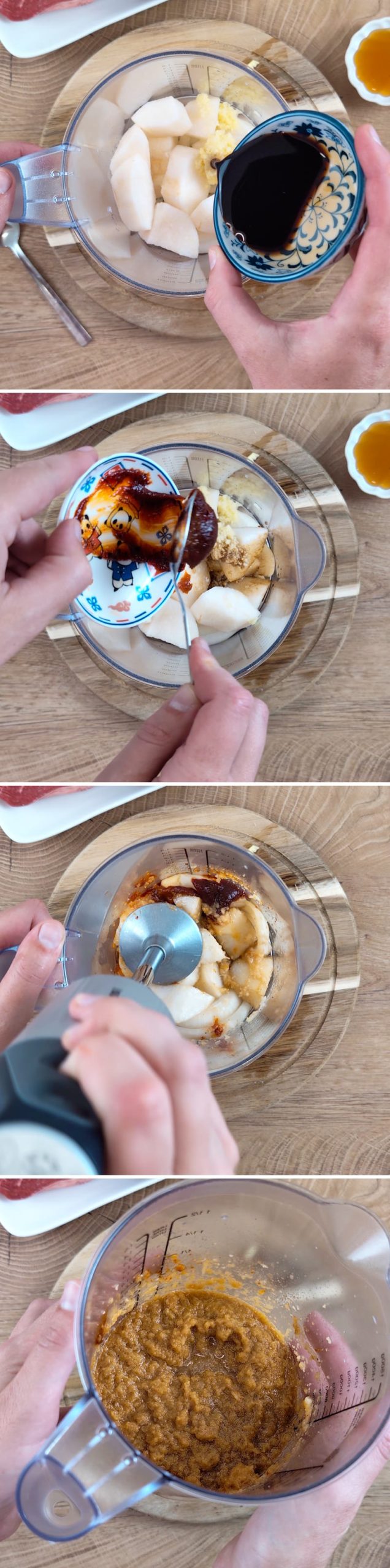
Step 3
Then add 2 tablespoons of soya sauce, 1 tablespoon of honey, 2 tablespoons of sesame oil, 1 tablespoon of ssamjang, 1 tablespoon of sake, 1 teaspoon of gochujang and a little freshly ground black pepper. Mix everything together until you have a smooth, slightly creamy marinade.
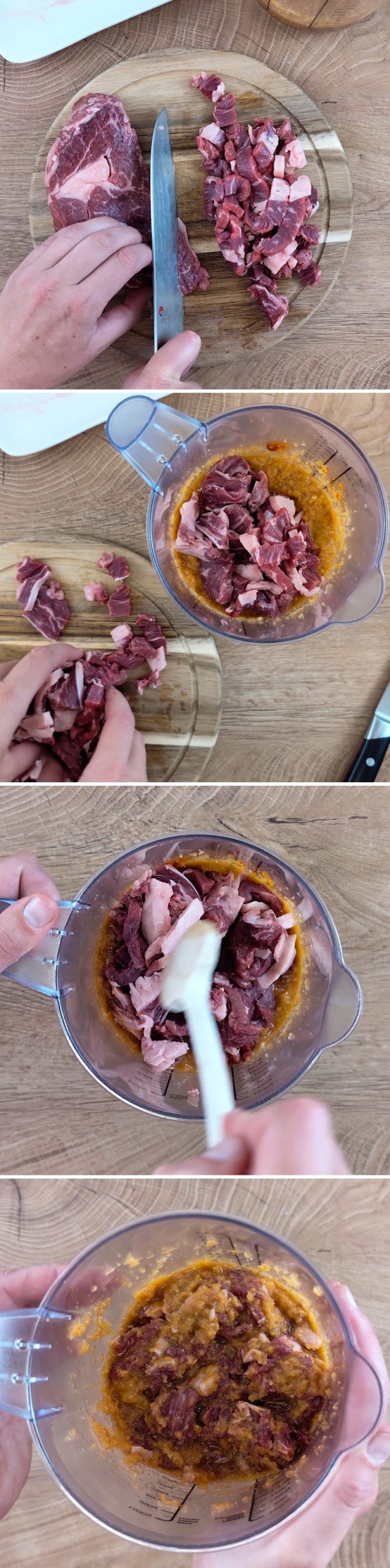
Step 4
Prepare the meat: Take out the beef , then cut it into very thin strips or slices (about 2–3 mm thick) and place them in a large bowl. Add the meat to the prepared marinade and mix everything together thoroughly. The slices should be completely coated. Cover the bowl and place it in the fridge for at least 1 hour – preferably overnight. This allows the meat to really soak up the flavours.
Step 5
The next day, we’ll prepare the side dishes: First, sort out the rice (you can find the full recipe here). Rinse 200 g of short-grain rice thoroughly in cold water until the water runs clear. Then add it to the rice cooker or saucepan with the same amount of water (so 200 ml of water for 200 g of rice) and cook for 13 minutes or according to the instructions on the packet. Leave it to rest for 10 minutes before serving.
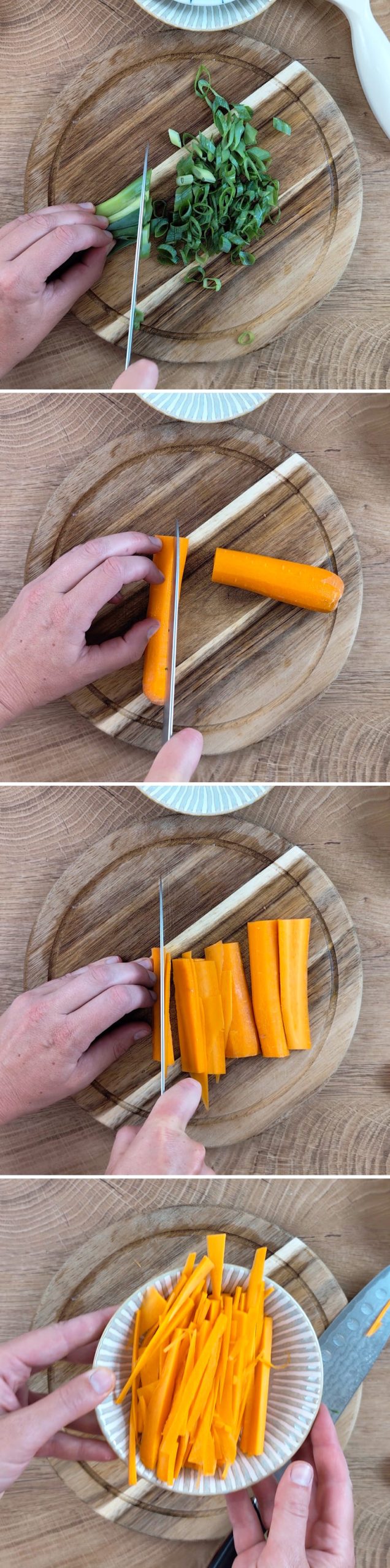
In the meantime, wash 2 spring onions and slice them into fine rings. Peel a carrot, cut it in half lengthways and slice it into thin strips.
Step 6
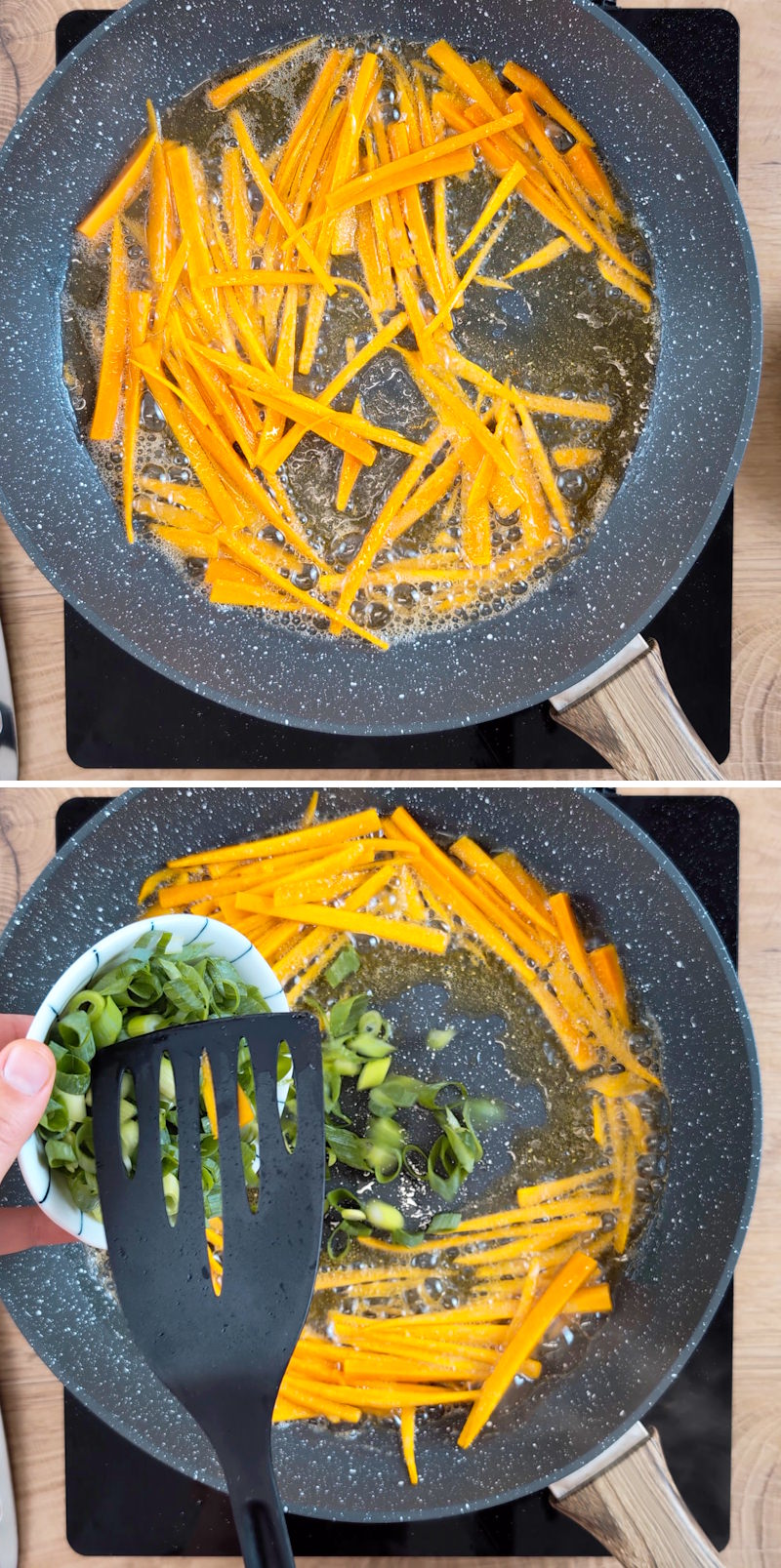
Heat 2 tbsp sesame oil and 2 tbsp neutral oil in a large frying pan (or griddle pan). First, sauté the carrot sticks for about 2 minutes over a medium heat, then add half the spring onions and fry them together. Both can be allowed to brown slightly; this brings out the roasted flavours.
Step 7
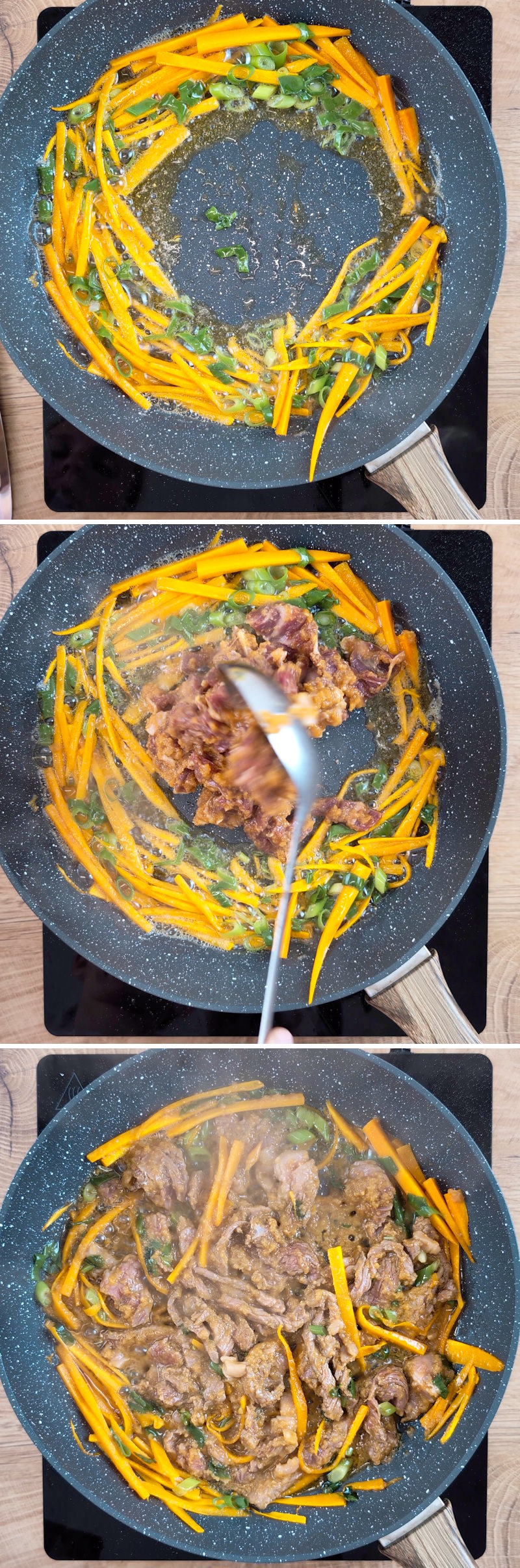
Push the vegetables to the edge of the pan and place the marinated meat in the centre. Sear it over a high heat until it browns and the marinade caramelises slightly. This only takes 2–3 minutes. Important: If you’re cooking for several people or your pan is small, it’s best to fry the meat in two batches. This prevents it from releasing too much liquid and boiling rather than frying.
Step 8
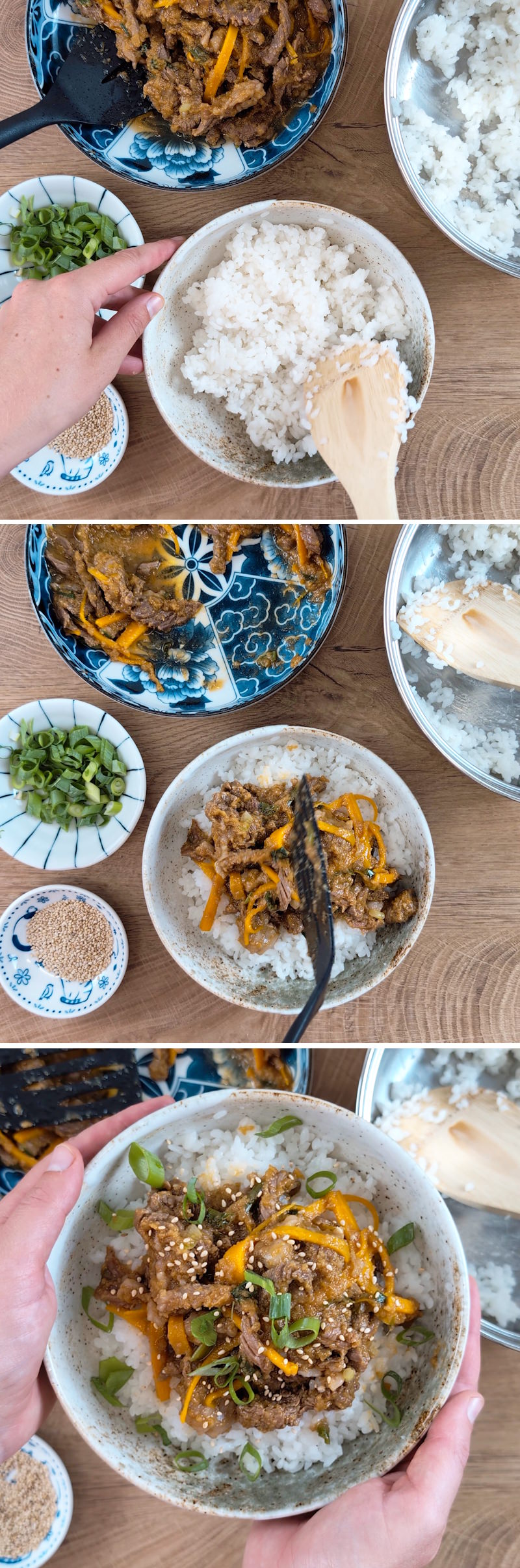
Divide the rice between bowls, top with the hot Bulgogi and vegetables, and garnish with the remaining spring onions and a little sesame. If you like, mix a small portion of ssamjang with a little water until smooth and pour it over as a spicy sauce – or serve the whole thing in the traditional way in a crisp lettuce leaf. Done!
Fancy some more delicious inspiration from Korea? You’ll find even more quick recipe ideas here:

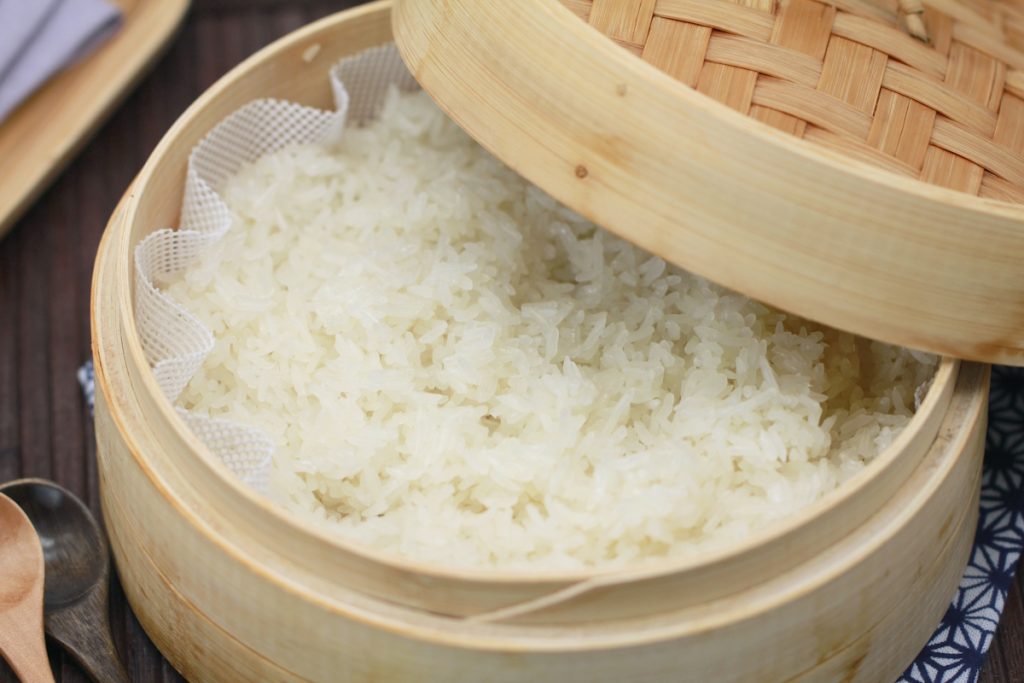
Thai Sticky Rice: How to steam Thai sticky rice (Khao Niao) properly
Thai sticky rice, also known as Khao Niao, is a very simple basic recipe, but…
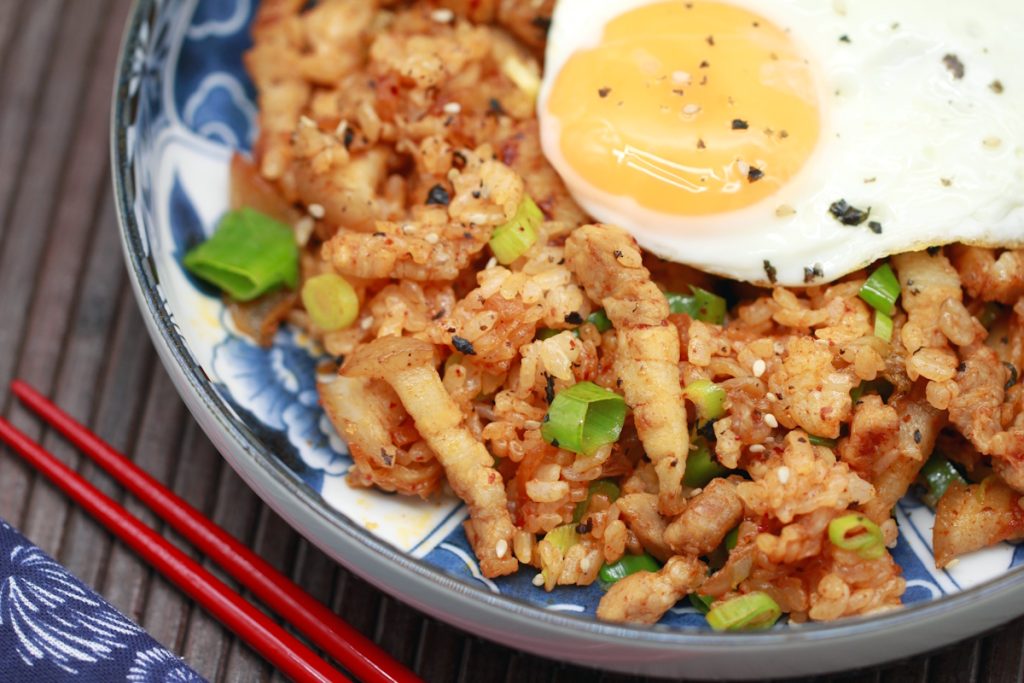
Kimchi Fried Rice: Make your own quick kimchi Bokkeumbap | in 20 minutes
Kimchi Fried Rice, also known as Kimchi Bokkeumbap, is a classic rice dish from everyday…
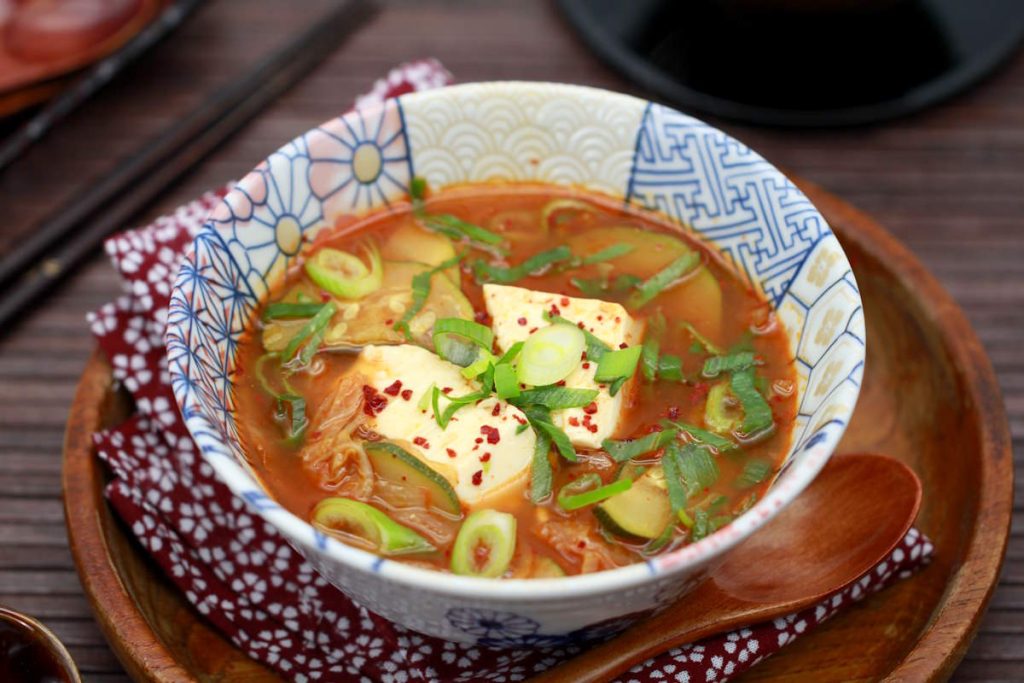
Sundubu Jjigae: Spicy Korean Tofu stew with courgette, Kimchi & Anchovy Dashima
Sundubu Jjigae is one of the best-known Korean stews and is an integral part of…
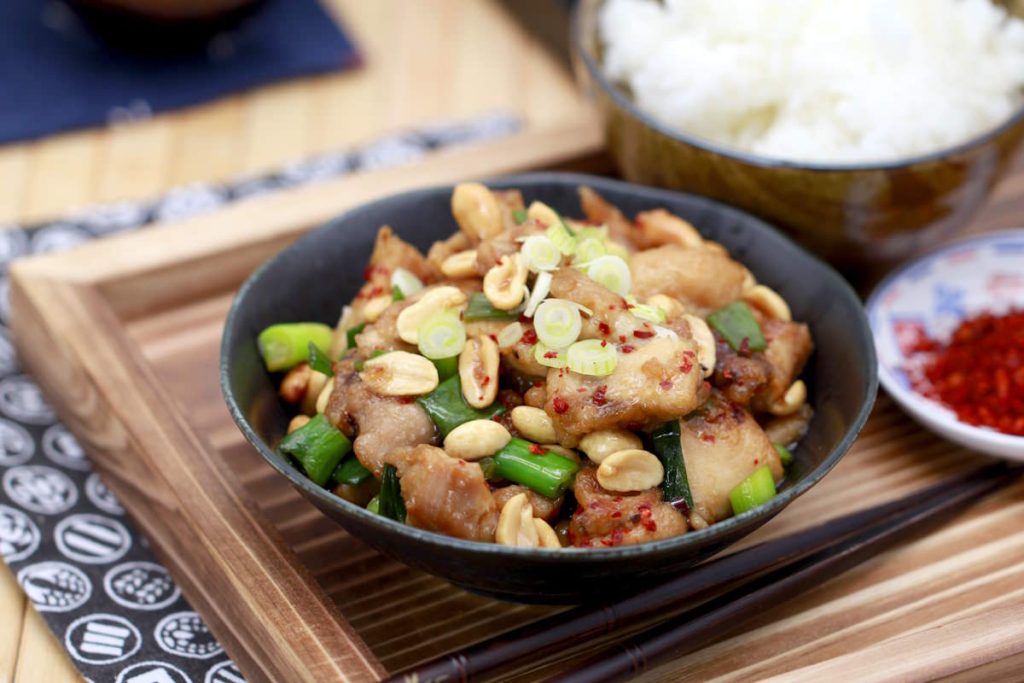
Make your own Gong Bao Chicken: Classic Kung Pao Chicken from Sichuan cuisine with peanuts & chilli
Gong Bao Chicken is a classic stir-fry dish from Sichuan cuisine that requires just a…
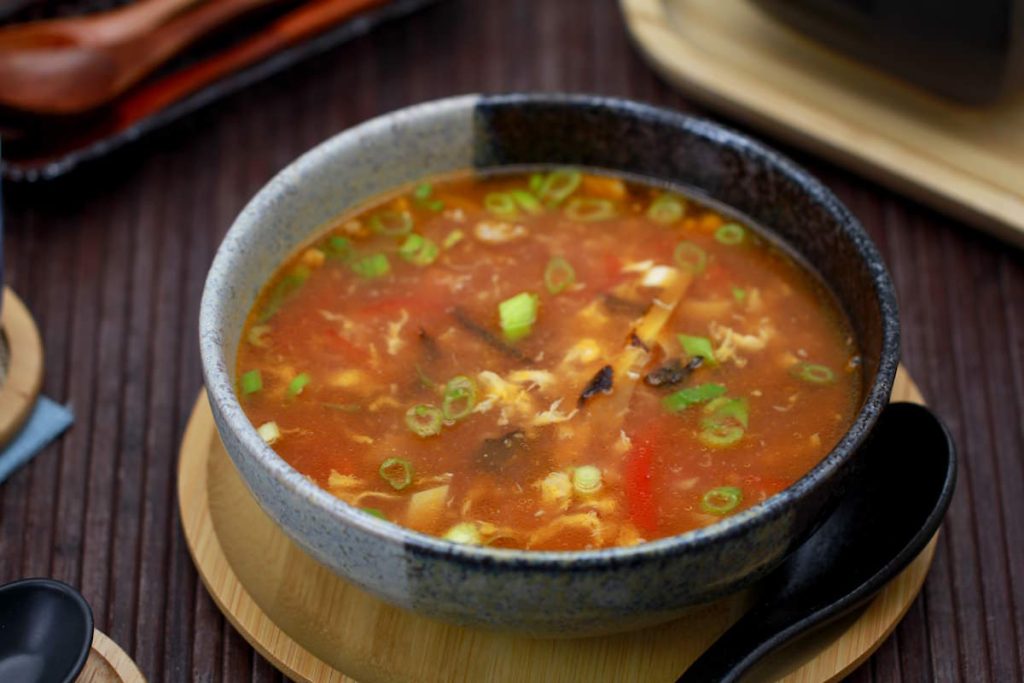
Beijing soup: Make your own Suan La Tang | Chinese hot and sour soup
Beijing Soup (Suan La Tang) is a classic sour and spicy soup from Chinese cuisine….
Have you tried the recipe yet? Let me know in the comments – I can’t wait to hear from you.