
Language:


If I could only choose one Korean street food that really works every time, it would be Tteokbokki. These little cylindrical rice cakes in a spicy, sweet-and-salty sauce are simply iconic: warm, spicy, filling and, above all, irresistible! I love them just as much on chilly days as I do as comfort food whilst working from home, and the best bit? You can recreate them in your own kitchen with just a few ingredients. Classic with fish cakes, or vegetarian with Tofu: it’s up to you!
What exactly is Tteokbokki?
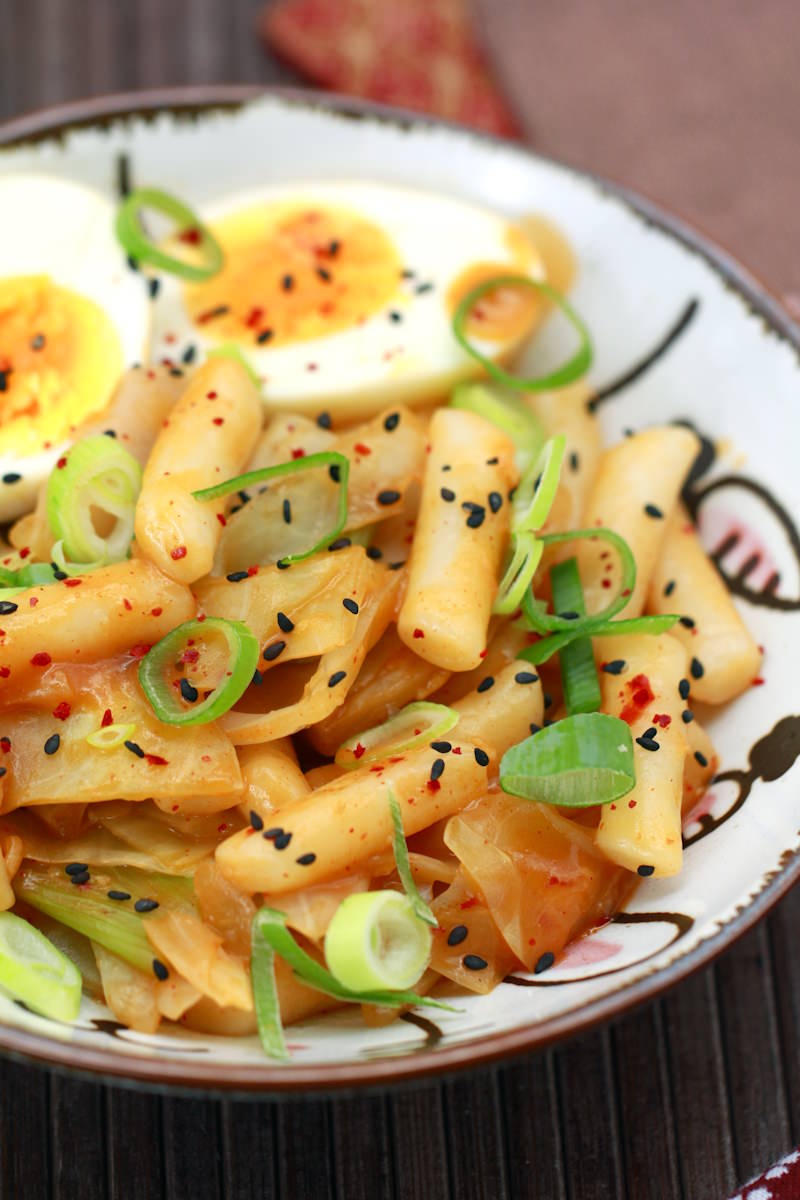
Tteokbokki (떡볶이) is one of Korea’s best-known street food dishes. The name roughly translates as ‘fried rice cake’. Tteok means rice cake, Bokki means fried or braised. The base: chewy, soft Garae-tteok rice cakes and a rich sauce made from gochujang, soy sauce, sugar and garlic. Fish cakes, eggs and spring onions are usually added. Everything is cooked together in Dashi stock until the sauce thickens and the rice cakes absorb the flavour perfectly.
TOP RECOMMENDATION
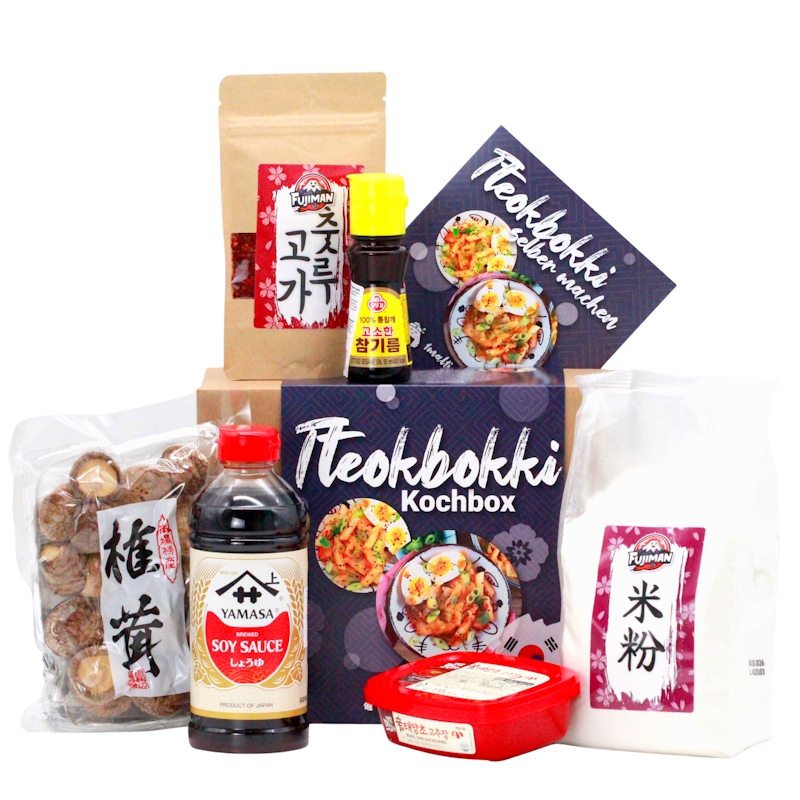
Tteokbokki Kochbox | für koreanische, scharfe Reiskuchen
7-tlg. Set für 4 Portionen koreanische, scharfe Reiskuchen, inkl. Anleitung, für Korean Streetfood Fans. Mit der Tteokbokki Kochbox bereitest du das beliebte koreanische Streetfood ganz…
In stock
The typical Tteokbokki sauce is fiery red, pleasantly sweet and full of Umami. But don’t worry – you can also adapt it to be milder or even vegetarian, depending on your taste. The combination of texture, flavour and spice makes Tteokbokki a real favourite, not just in Korea!
From the royal kitchen to the streets
Did you know that Tteokbokki was originally served without any chilli at all? The first recipe comes from the Korean royal court cuisine of the Joseon Dynasty: Gungjung Tteokbokki – a mild, soy sauce-based version with beef and vegetables. It was only after the Korean War that gochujang became popular, and with it the spicy Tteokbokki we know today. According to legend, it was a coincidence: a restaurant owner in Seoul is said to have accidentally cooked rice cakes in spicy sauce, thereby sparking a street food phenomenon.
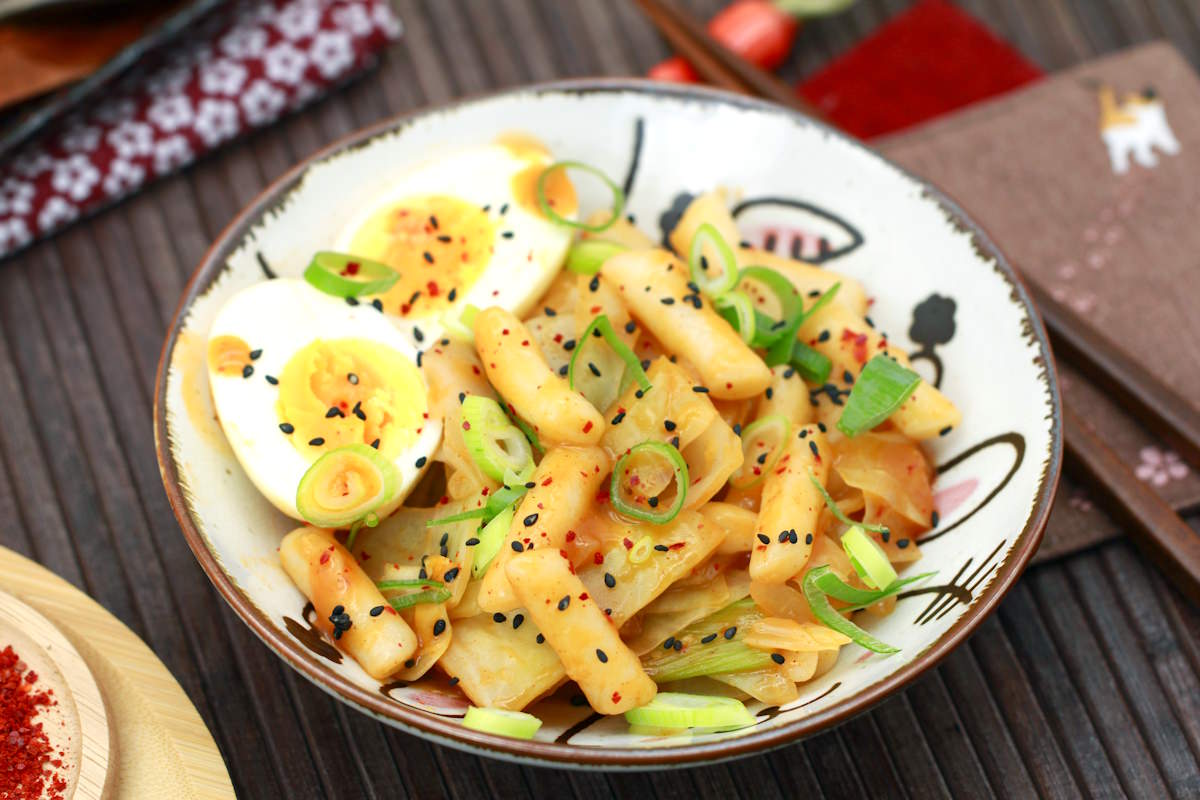
Since then, Tteokbokki has established itself in snack bars, bunsik bars and at markets. And in countless variations, from rosé Tteokbokki with cream sauce to versions with cheese, seafood or curry. But no matter how fancy: for many, the classic street food version with fish cakes remains the original.

Tteokbokki Variations
Not all Tteokbokki is the same – depending on the region, occasion or taste, there are different ways of preparing it. Here are three popular variations:
Jjajang Tteokbokki: Probably the most unusual version is prepared with a savoury black bean sauce (Jjajang). It is less common, but particularly popular with children as it contains no chilli at all. In terms of flavour, it is reminiscent of Jjajangmyeon, but with rice cakes instead.
Classic Tteokbokki: This is the best-known version, which you can get on almost every street corner in Korea. It is prepared with a bright red sauce made from gochujang, sugar or starch syrup, fish cakes, eggs and spring onions. Spicy, sweet, hearty and absolutely addictive 😀
Gungjung Tteokbokki: This milder version originates from the royal court cuisine of the Joseon Dynasty. Soy sauce is used instead of gochujang, along with beef, vegetables, pine nuts and sesame seeds. An elegant classic with plenty of Umami and historical flair. Perfect for anyone who prefers it less spicy.
Making Tteokbokki yourself: Here’s how
Cooking Tteokbokki at home is much easier than you might think, and you don’t need ten special ingredients. The only important thing is that you know a few basics about the ingredients, then you can recreate the original street food in your own kitchen!
Rice cakes: fresh, frozen or homemade?
For this recipe, you’ll need what are known as Garae-tteok – these are cylindrical rice cakes with a particularly chewy, elastic texture. They are the main ingredient and give Tteokbokki its very special bite. You have various options:
- Frozen rice cakes from an Asian supermarket: be sure to soak them in warm water for about 30 minutes so that they become soft and pliable.
- Chilled rice cakes (e.g. from vacuum-sealed packaging): these must also be soaked. Otherwise, they will be too dry.
- Freshly made: If you want to make your own rice cakes, you can do so with just two ingredients (fine rice flour (im Shop ansehen) and Korean sesame oil (im Shop ansehen)) and a steamer (im Shop ansehen).
Depending on the variety, you can therefore skip or adjust the soaking step, but they should definitely be soft and pliable before you start.
No post found!
Fish cakes or Tofu: the choice is yours
Traditionally, fish cakes are used in Tteokbokki. More specifically, eomuk – thin slices of fish that are very popular in Korea. You can buy them frozen in Asian shops. For the vegetarian version, you can use Tofu: preferably firm or fried Tofu, sliced. Other ingredients such as fried tempeh or seitan are also possible.
Also typical: boiled eggs, which cook in the sauce, and white cabbage and spring onions, which add freshness and a bit of crunch.
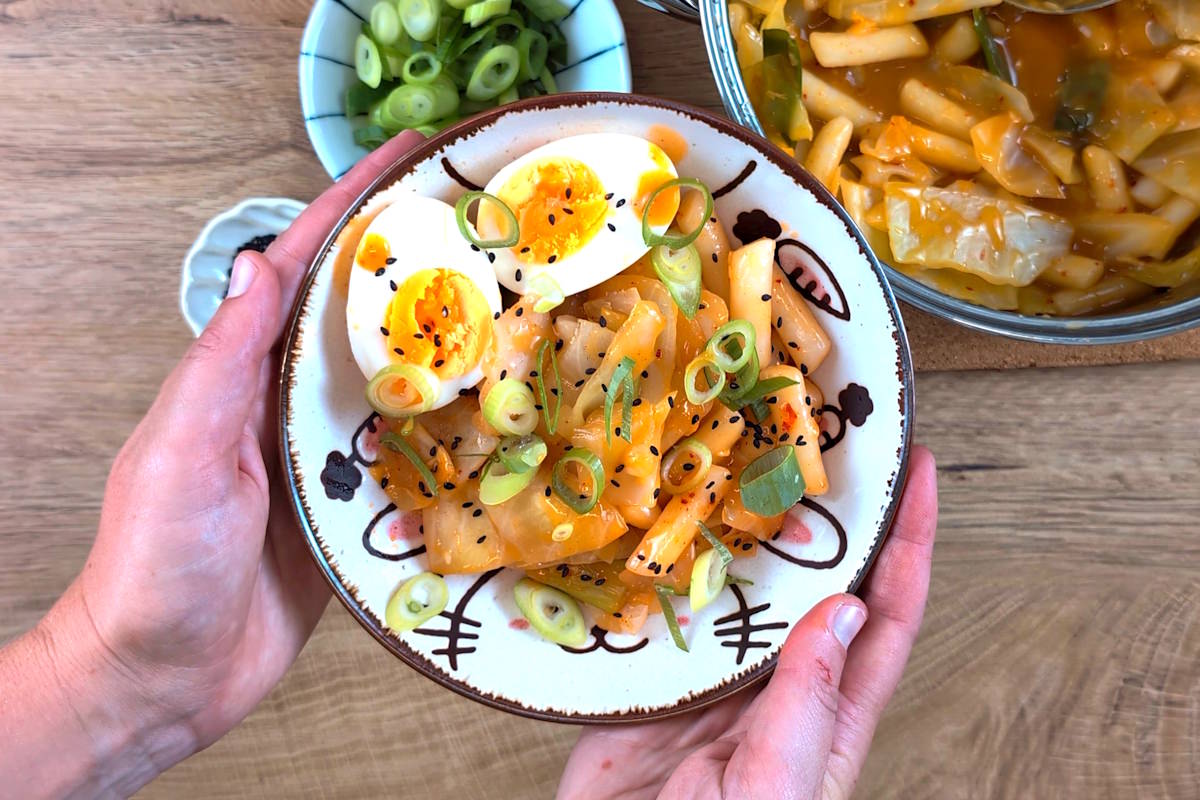
The sauce: spicy, sweet and full of Umami
The seasoning sauce, also known as Yangnyeom sauce, is the heart of the dish. Its base consists of:
- the fermented chilli paste Gochujang, combined with:
- soya sauce
- sugar
- grated garlic
- Gochugaru (Korean chilli powder)
Everything is stirred into a Dashi stock (e.g. made from shiitake mushrooms) until the flavours blend together. The rice cakes cook in this sauce, absorbing more flavour with every passing minute. Depending on your preference, you can adjust the heat to suit by adding more or less gochujang, or an extra dash of chilli oil if you like it really hot.
Finally, a spoonful of sesame oil rounds it all off, adding a slightly nutty aroma and the finishing touch.
TOP RECOMMENDATION
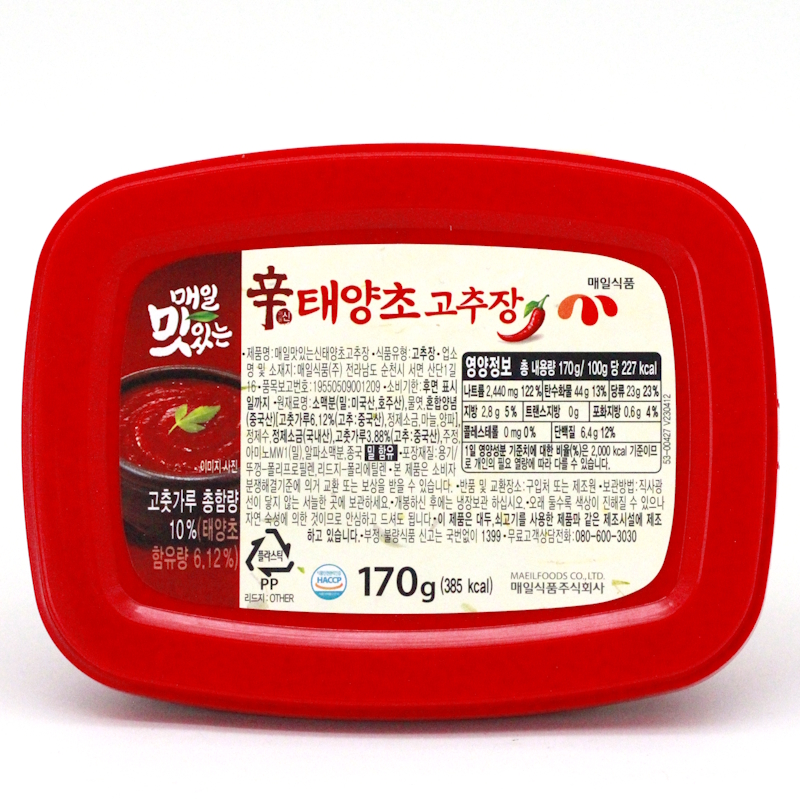
Gochujang 170 g koreanische Chilipaste (aus Korea)
Koreanische Chilipaste für Bibimbap, Tteokbokki & Marinaden. Diese Gochujang Chilipaste von Maeilfoods ist eine fermentierte, süß-scharfe Würzpaste aus Korea. Sie eignet sich ideal für klassische…
In stock
Tteokbokki is a dish in its own right, but with a small side dish such as Kimchi, pickled radish (danmuji) or Gimbap, it becomes the perfect soul food meal. Korean tea or a cool drink with yuzu also go wonderfully with it.
Whether classic with fish cakes or with Tofu and extra vegetables: Tteokbokki is wonderfully versatile. Perhaps you’d even like to create your own version? I look forward to your comments: tell me how you like to enjoy your rice cakes best – and whether you prefer the sauce mild or really spicy. Have fun cooking and 맛있게 드세요 – massitge deuseyo!
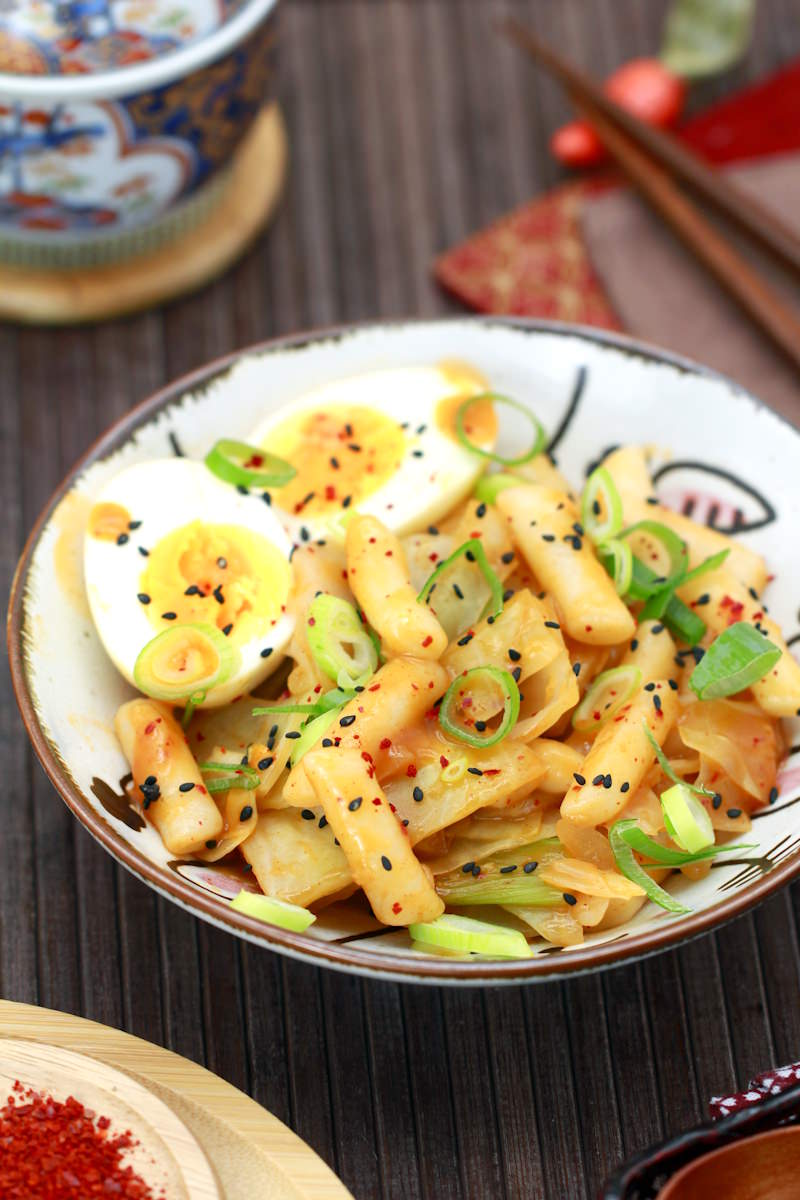

Tteokbokki
Serves 2 | 60 minutes | 531 kcal
🖨️ Print PDF 📌 Save pinTteokbokki is pure street food bliss from Korea: deliciously soft rice cakes simmering in a spicy sauce with gochujang, garlic and soy sauce, accompanied by crisp cabbage and a fried egg on top. Whether as a snack, a quick dinner or Korean comfort food: with this recipe, you can bring that legendary flavour straight into your home.
Ingredients (2 servings)
400 g Korean rice cakes (Tteok) (im Shop ansehen) or make your own Garaetteok (see recipe)*
2 eggs
200 g white cabbage
100 g fish cakes(Eomuk from the frozen food section; alternatively: firm Tofu or deep-fried Tofu pockets)
3 spring onions
For the Yangnyeom sauce:
3 garlic cloves
6 tbsp soy sauce (im Shop ansehen)*
2 tbsp sugar
2–3 tbsp gochujang (im Shop ansehen)*
1 tbsp Gochugaru (im Shop ansehen)*
a pinch of salt (to taste)
For the stock:
500 ml Dashi (made from approx. 25 g dried Shiitake (im Shop ansehen)*)
1 tbsp sesame oil (im Shop ansehen)*
To serve:
2 tbsp black toasted sesame seeds (optional) (im Shop ansehen)*
Useful tools:
Yukihiara pot
Santoku knife (im Shop ansehen)
Grater (im Shop ansehen)
2-in-1 strainer & skimmer (im Shop ansehen)
Preparation (60 minutes)
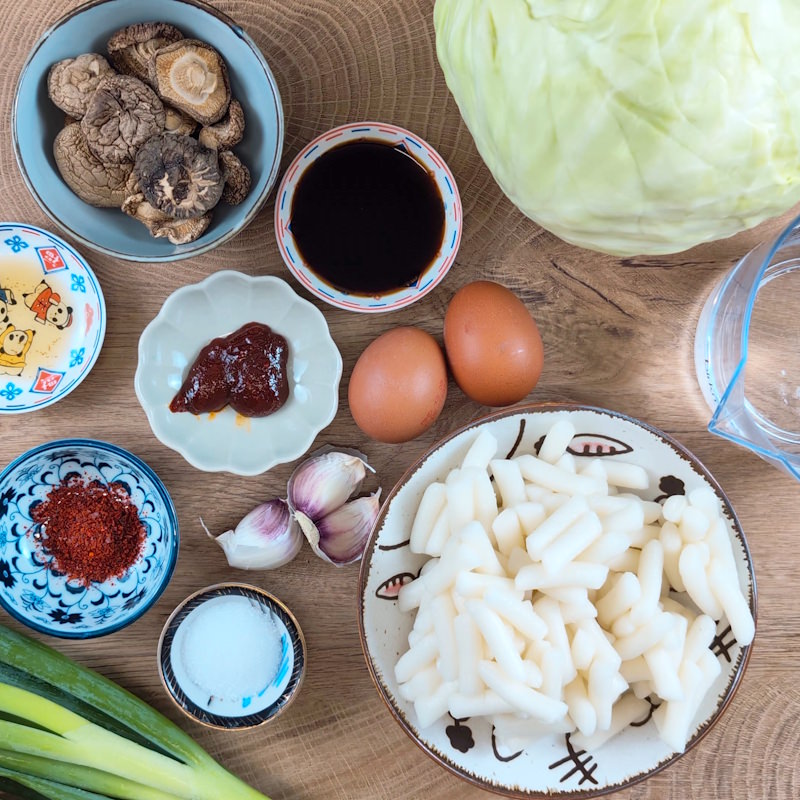
Step 1
First, we check that we have all the ingredients for the Korean Tteokbokki.
Tip: If you are using frozen fish cakes, make sure to defrost them in good time.
Step 2
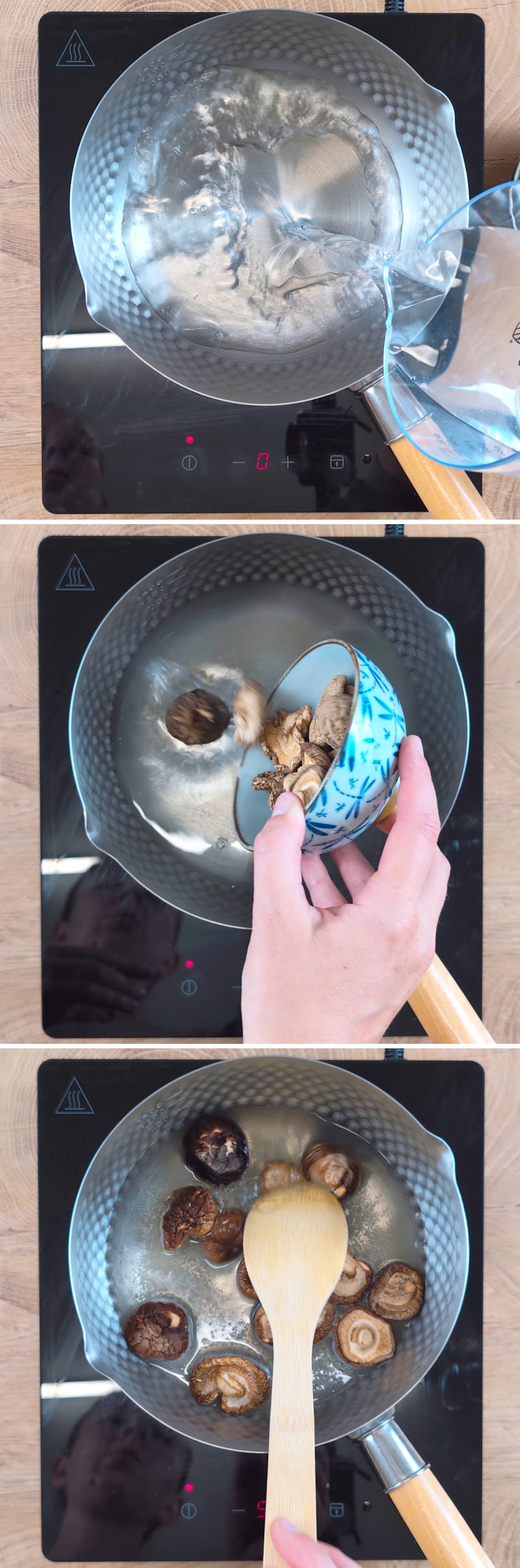
First, prepare the Dashi stock: Pour 500 ml of cold water into a saucepan. Add 25 g of dried shiitake and heat the water to 60°C. Then turn off the heat, remove the saucepan from the hob and leave to infuse for 30 minutes with the lid on.
Tip: You are also welcome to use a ready-made Dashi stock.
Step 3
Also, we need to prepare the rice cakes:
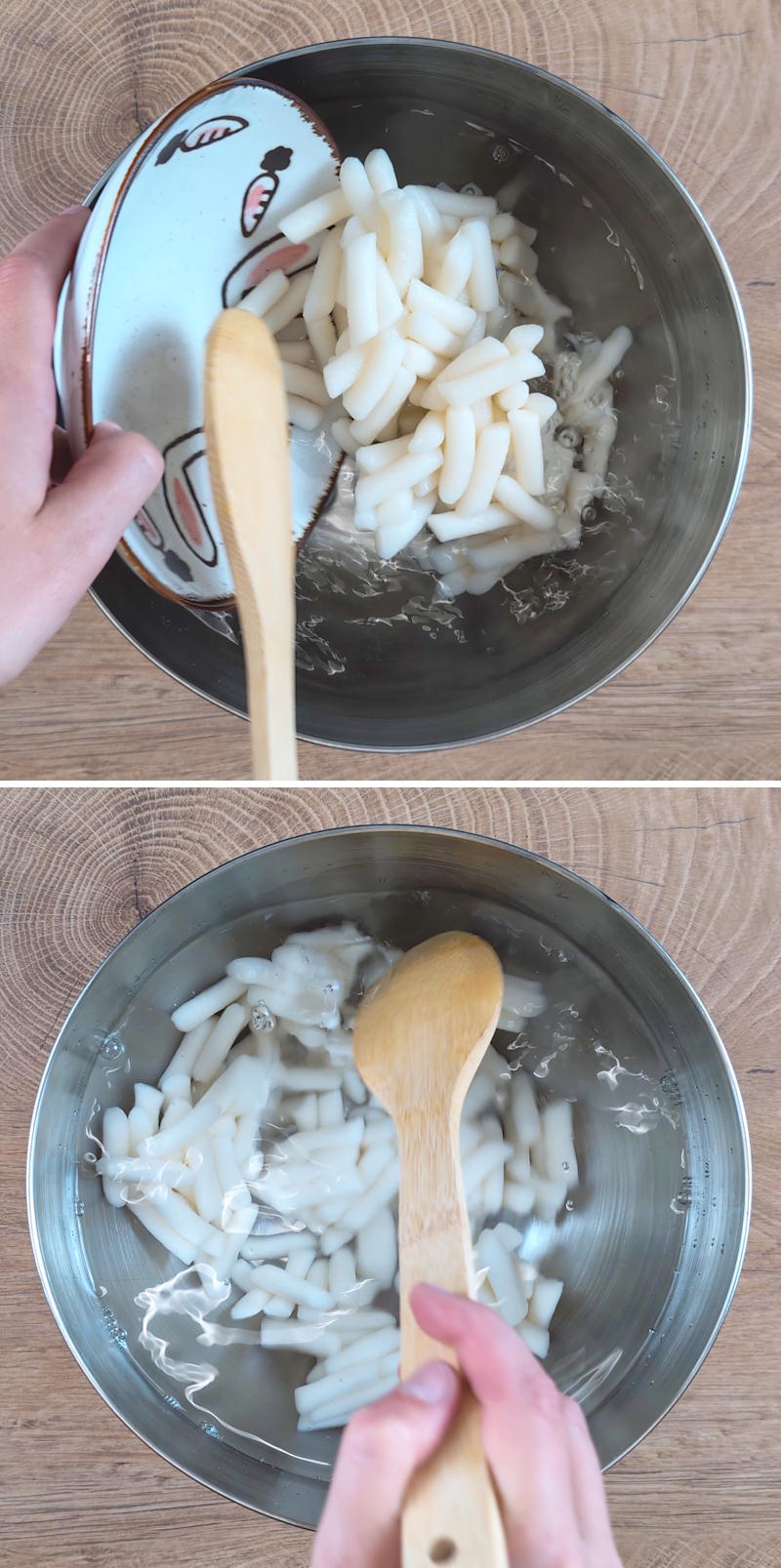
For frozen rice cakes: Soak the rice cakes in warm water for 30 minutes.
For rice cakes from the fridge: Also soak packaged rice cakes from the fridge to increase their moisture content.
For fresh rice cakes: If you’re using homemade, fresh rice cakes that are already soft, skip this step.
Step 4
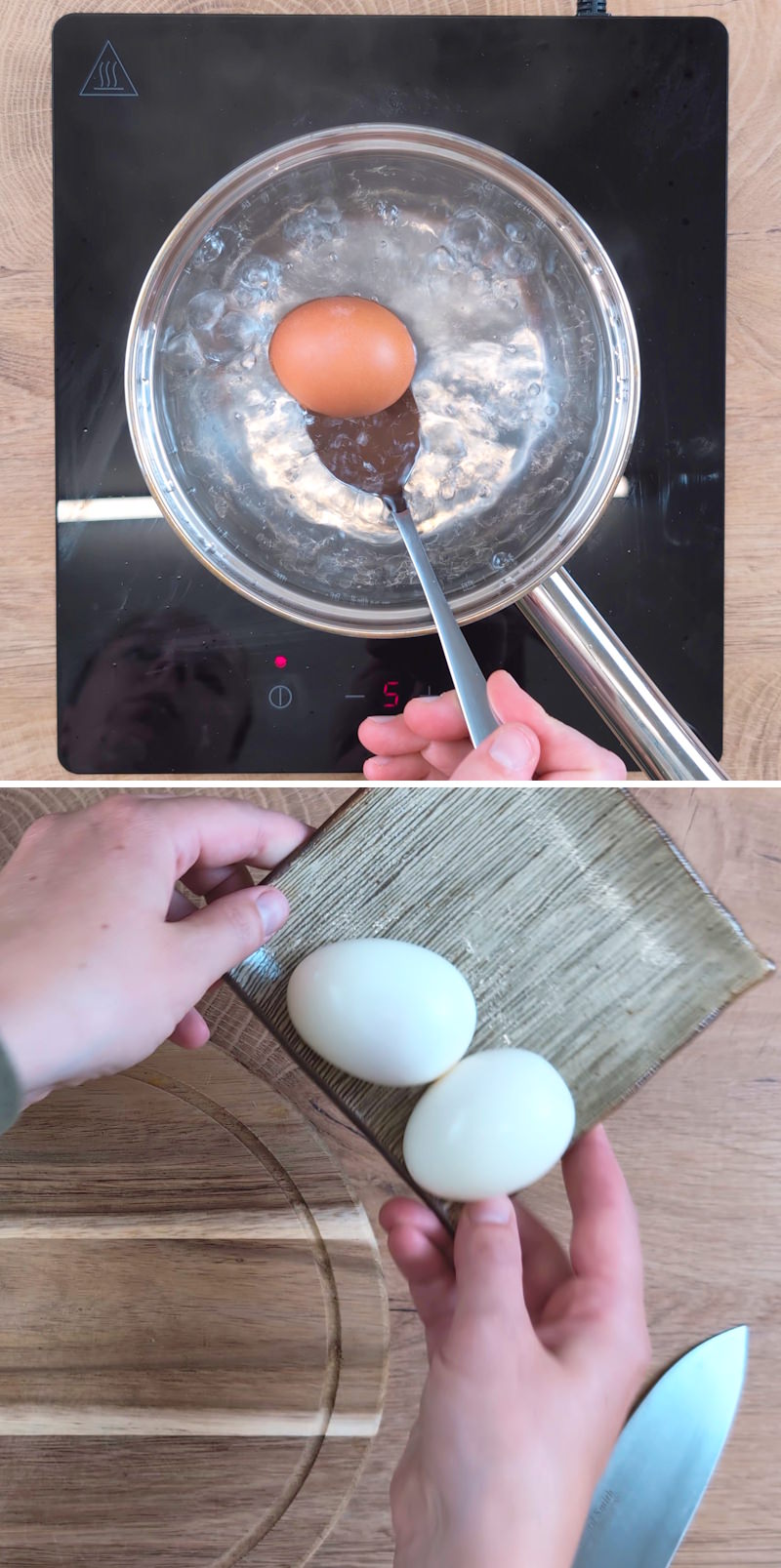
Boil the eggs for about 8 minutes, then plunge them into cold water. Peel and set aside.
Step 5
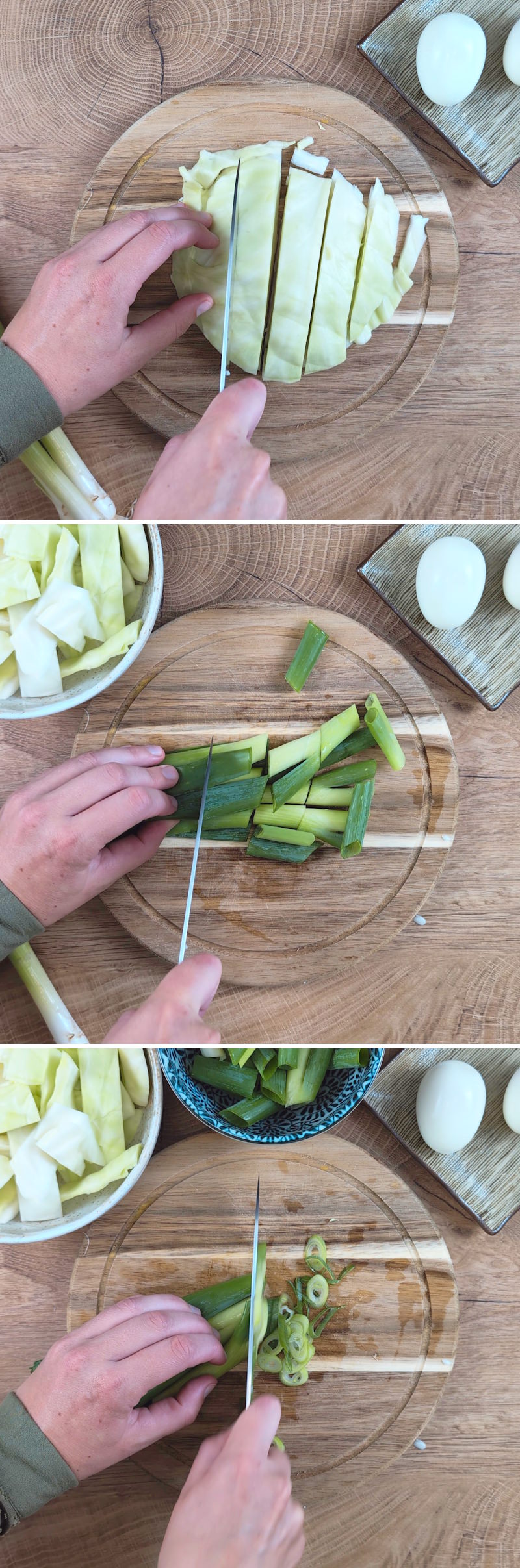
Wash the white cabbage and weigh out 200 g. Cut it into pieces approximately 3 × 6 cm in size.
Cut the defrosted fish cakes into bite-sized strips as well (if using Tofu: cut into thick slices or cubes).
Wash the spring onions : cut 2 spring onions diagonally into wide rings. Cut 1 spring onion into fine rings.
Step 6
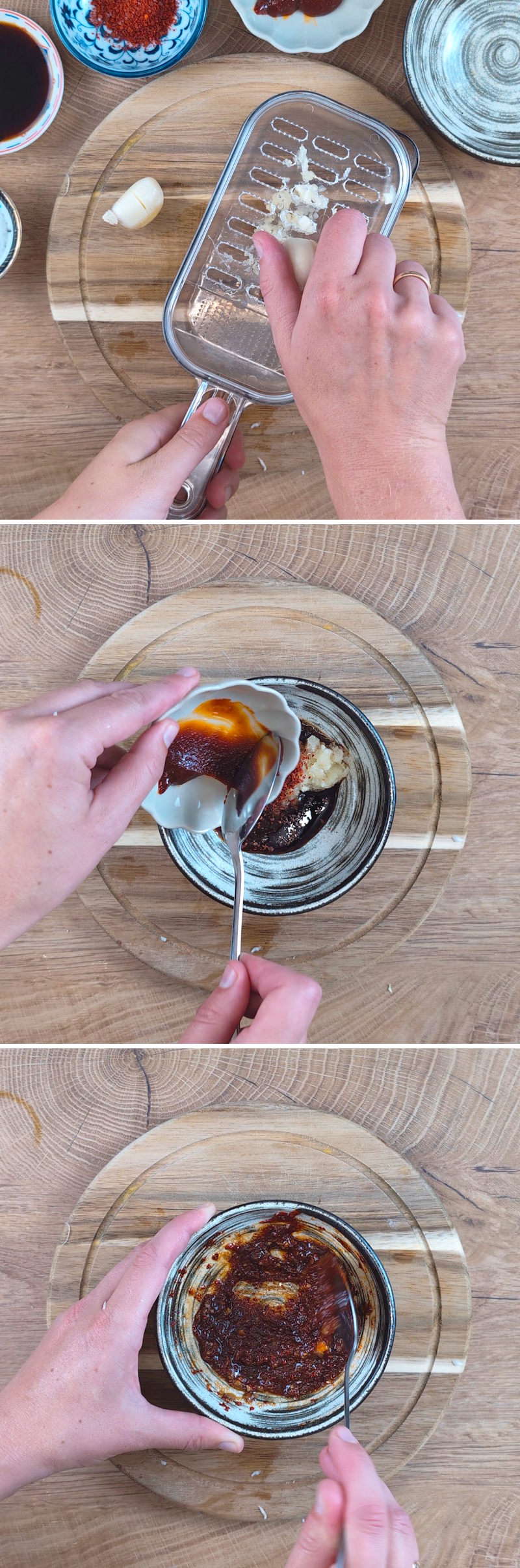
For the Yangnyeom sauce: Peel and finely grate the garlic and mix it with 6 tbsp soy sauce, 2 tbsp sugar, 1–2 tbsp gochujang, 1 tbsp Gochugaru and, optionally, a pinch of salt. This is your Yangnyeom sauce; it can be spicy, sweet and really nice and hot.
Step 7
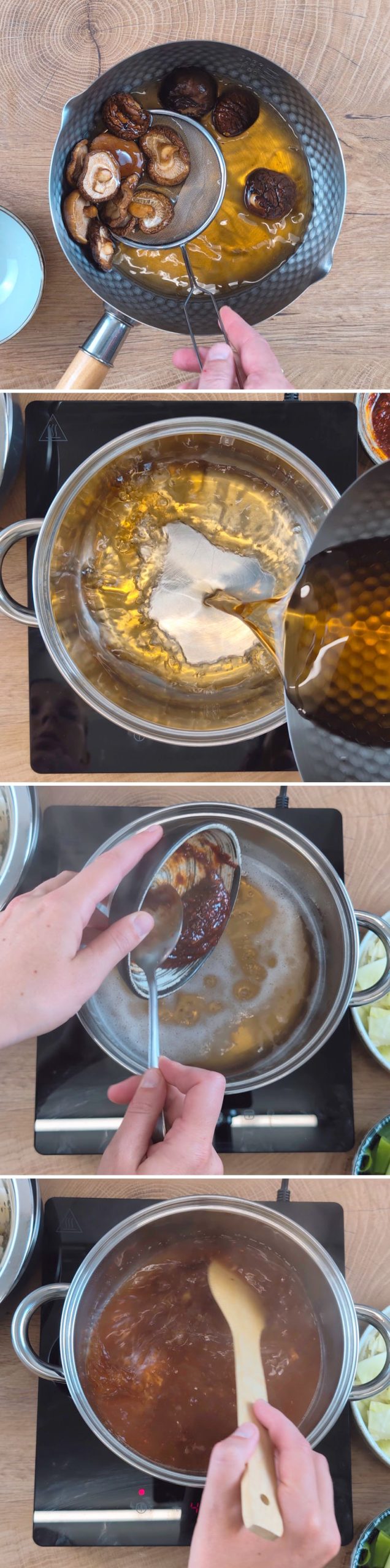
Once they have steeped, remove the shiitake mushrooms (feel free to reuse them in other recipes) from the Dashi stock and heat the broth in a large saucepan. Then add the yangnyeom sauce and stir thoroughly until it has dissolved completely.
Step 8
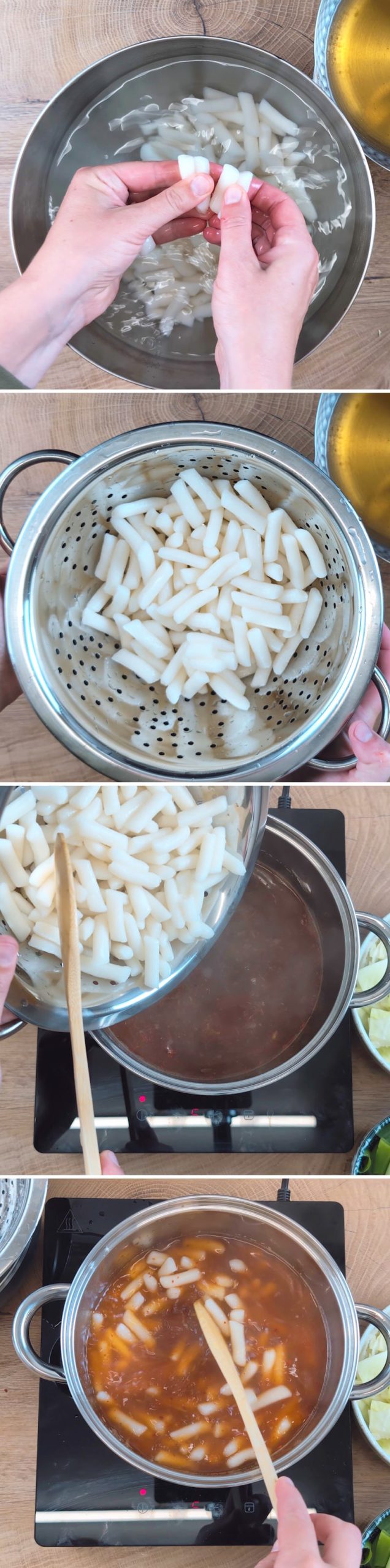
Separate the prepared rice cakes slightly with your hands if necessary, then drain. As soon as the stock is boiling, add the soaked rice cakes to the pan.
Step 9
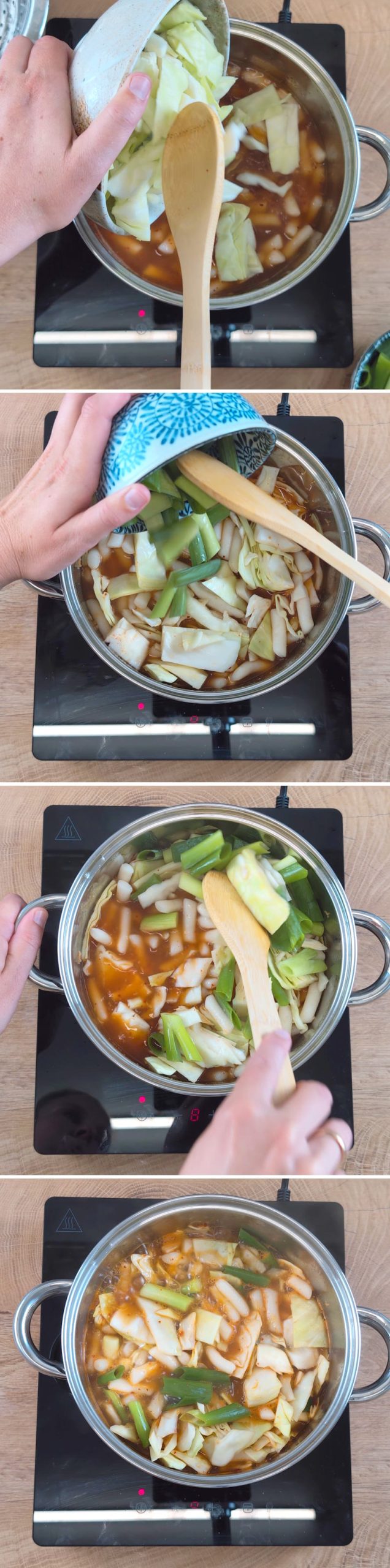
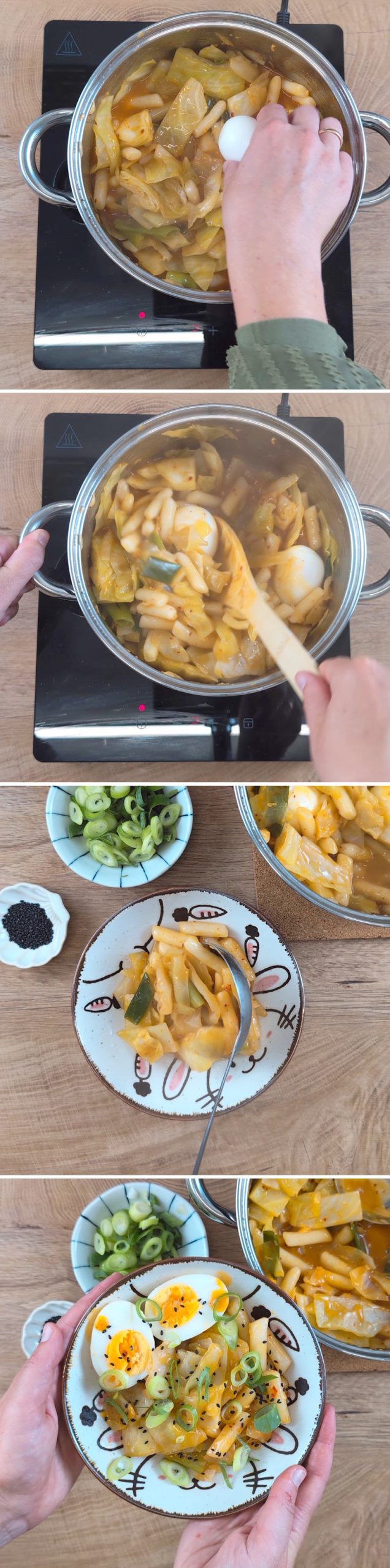
Now also add the white cabbage, the coarsely chopped spring onions and, if desired, fish cakes or tofu. Let everything cook for 5 minutes on a high heat, then simmer for another 10 minutes on a low heat. Stir every now and then; the sauce should become nice and creamy.
Step 10
Now add the whole eggs and the sesame oil to the pot. Simmer for another 5 minutes – done!
To serve, halve the eggs and place them in deep bowls together with the tteok and vegetables. Garnish everything with the finely chopped spring onions and, if you like, sprinkle some black toasted sesame seeds on top. Delicious!
Fancy some more delicious inspiration from Korea? You can find even more quick recipe ideas here:

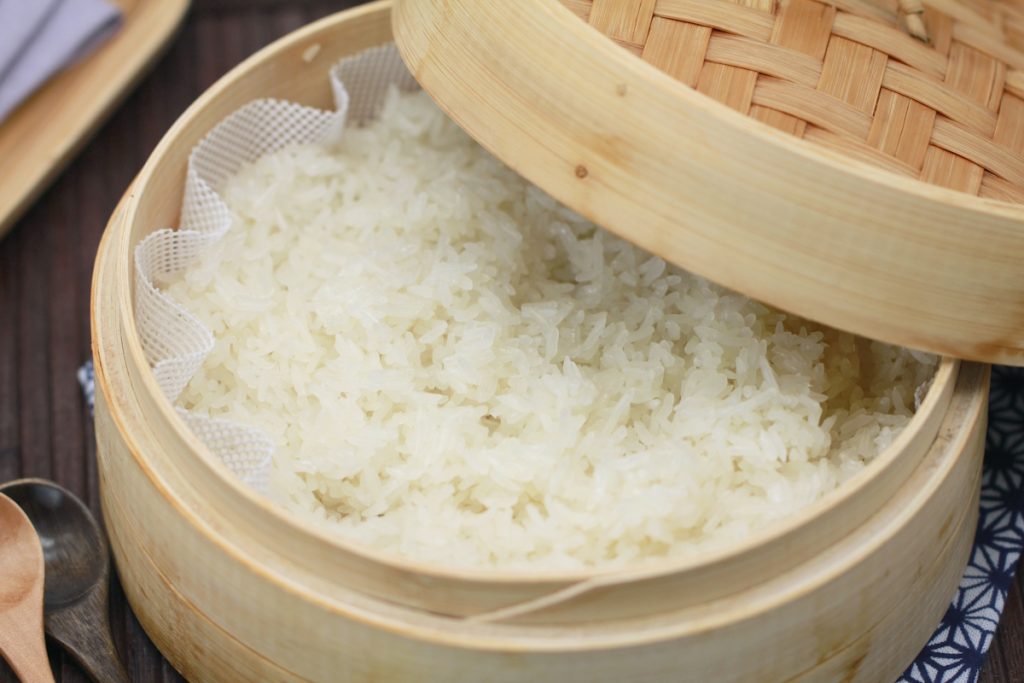
Thai Sticky Rice: How to steam Thai sticky rice (Khao Niao) properly
Thai sticky rice, also known as Khao Niao, is a very simple basic recipe, but…
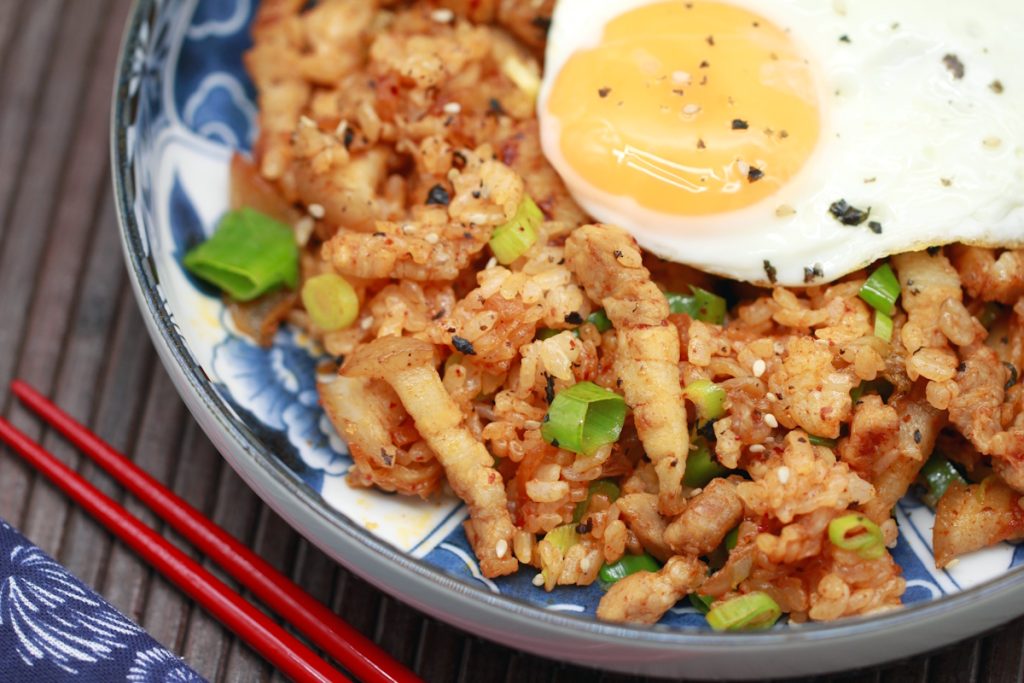
Kimchi Fried Rice: Make your own quick kimchi Bokkeumbap | in 20 minutes
Kimchi Fried Rice, also known as Kimchi Bokkeumbap, is a classic rice dish from everyday…
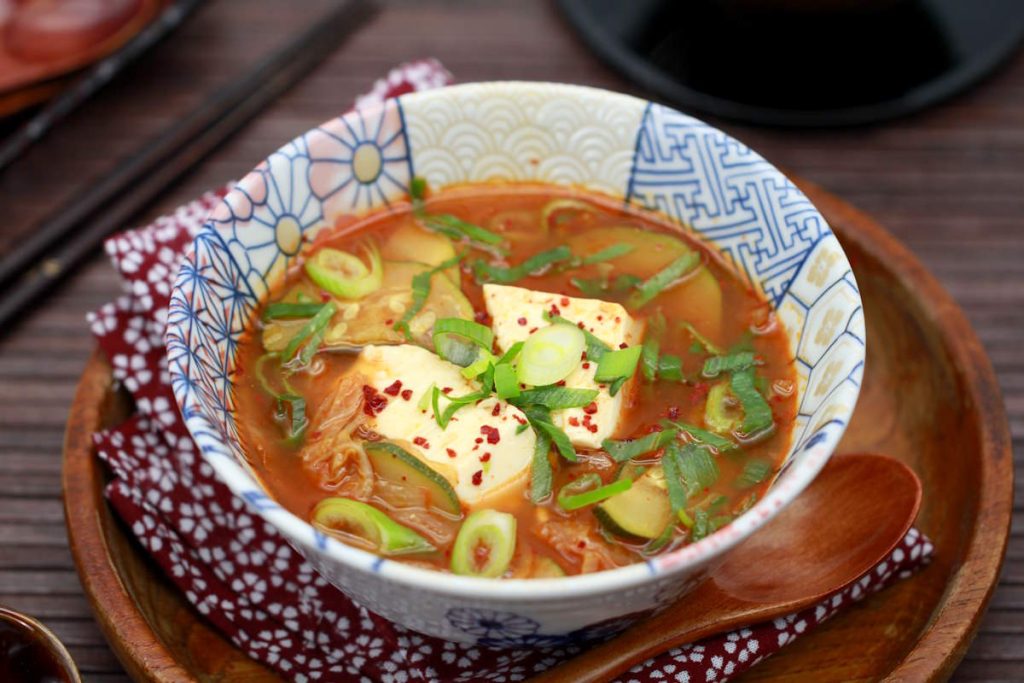
Sundubu Jjigae: Spicy Korean Tofu stew with courgette, Kimchi & Anchovy Dashima
Sundubu Jjigae is one of the best-known Korean stews and is an integral part of…
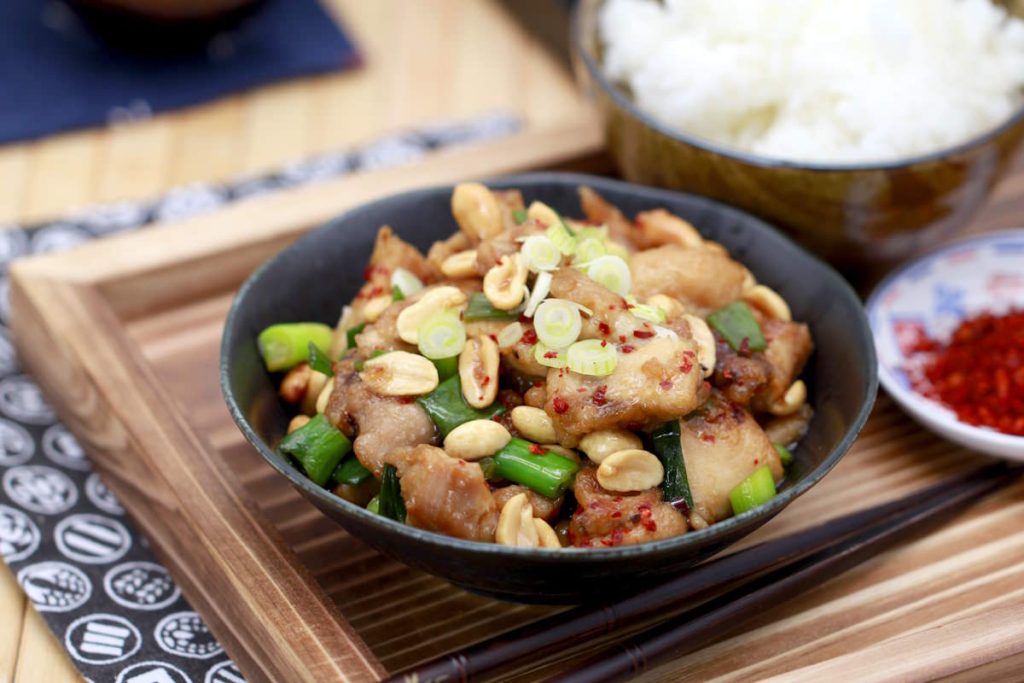
Make your own Gong Bao Chicken: Classic Kung Pao Chicken from Sichuan cuisine with peanuts & chilli
Gong Bao Chicken is a classic stir-fry dish from Sichuan cuisine that requires just a…
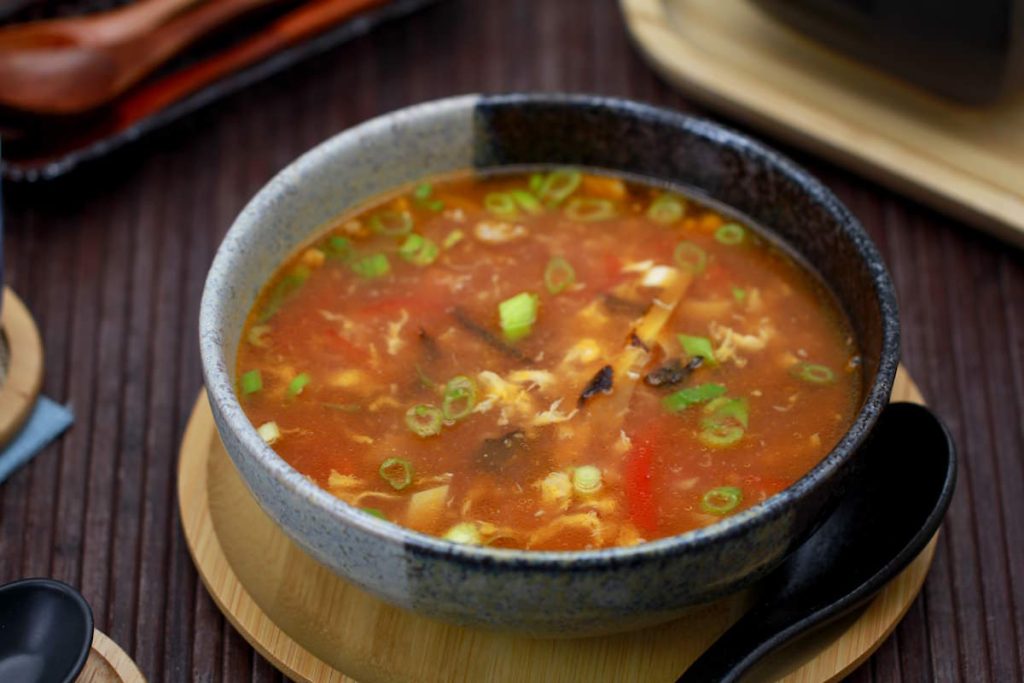
Beijing soup: Make your own Suan La Tang | Chinese hot and sour soup
Beijing Soup (Suan La Tang) is a classic sour and spicy soup from Chinese cuisine….
Have you tried the recipe yet? Let me know in the comments – I can’t wait to hear from you.