
Language:


Gyudon is quite simply the perfect Japanese Donburi! Thinly sliced beef, cooked in a delicious Dashi sauce with cooked onions, served on a bed of fluffy Japanese white rice. So much flavour in a single bowl… With this recipe, you can now make this rice bowl in your own kitchen! Not only is it extremely easy to prepare, but it’s also a quick, nutritious meal that always fills you up 😉.
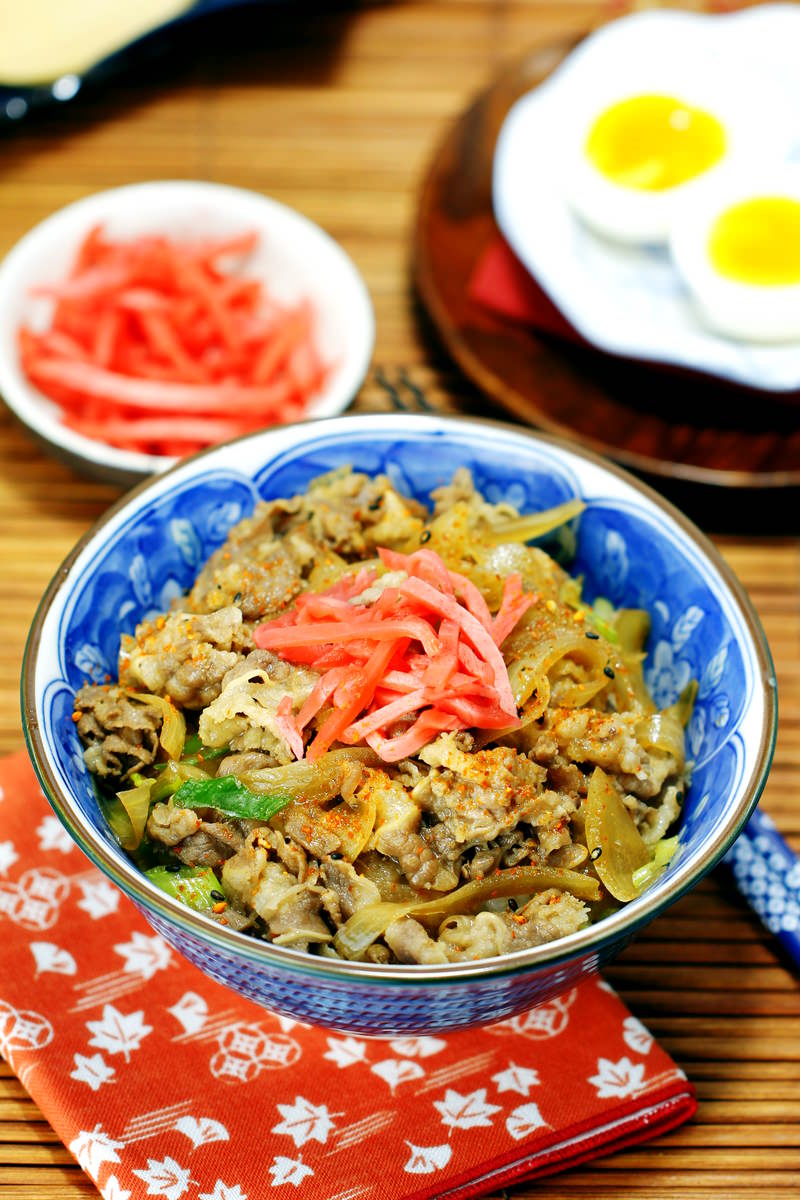
Gyudon is a typical Japanese home-cooked dish. The recipe has been a staple of Japanese cuisine for over 150 years. It’s the perfect quick meal for a busy weekday evening!
Whilst every household in Japan prepares Gyudon slightly differently, the main ingredients are essentially always the same: thinly sliced beef, onions, eggs, Dashi, a few Japanese spices and, of course, freshly steamed rice. Today I’ll show you how to make this delicious main course yourself at home 😊.
Like all other Donburi (for example oyakodon or butadon), Gyudon is always served over a warm bowl of freshly steamed rice. “Gyu” means beef, whilst “don” translates as the bowl of rice in which it is served.
The recipe for Gyudon, as we know and cook it today, originally dates back to a very different era, namely the Japanese Meiji era (1868–1912). Until that time, eating beef was strictly forbidden in Japan. The consumption of meat not only contradicted Buddhist philosophies. Rather, it was not permitted to eat farm animals used for labour in the fields!
OUR RECOMMENDATION
Cookbook ‘Dashi to Dango’
Discover the fascinating world of Japanese cuisine with my cookbook “Dashi to Dango” – simple and enjoyable in your own kitchen.
With loving attention to detail and exquisite recipes, you’ll become a master of traditional dishes that will enchant your palate. Don’t wait any longer – start your culinary adventure and bring the magic of Japan into your kitchen!
But at the end of the 19th century, everything changed… as Western culture began to take root in Japan. From Yokohama, a dish called Gyunabe</ , in which beef and onions were stewed with Miso paste. Gradually, people began pouring their leftover gyunabe broth over rice. Eikichi Matsuda, the owner of Japan’s most famous Gyudon chain, Yoshinoya, based in Tokyo, was the first to serve this as Gyudon.
Today, there are a total of around 4,100 restaurants and snack bars specialising in Gyudon. They are divided among three major fast-food chains known throughout the islands of Japan: Sukiya, Yoshinoya and Matsuya.

Tip
If you ever find yourself in Japan, it’s well worth trying a bowl of Gyudon from each chain, as they all taste different and are absolutely delicious!
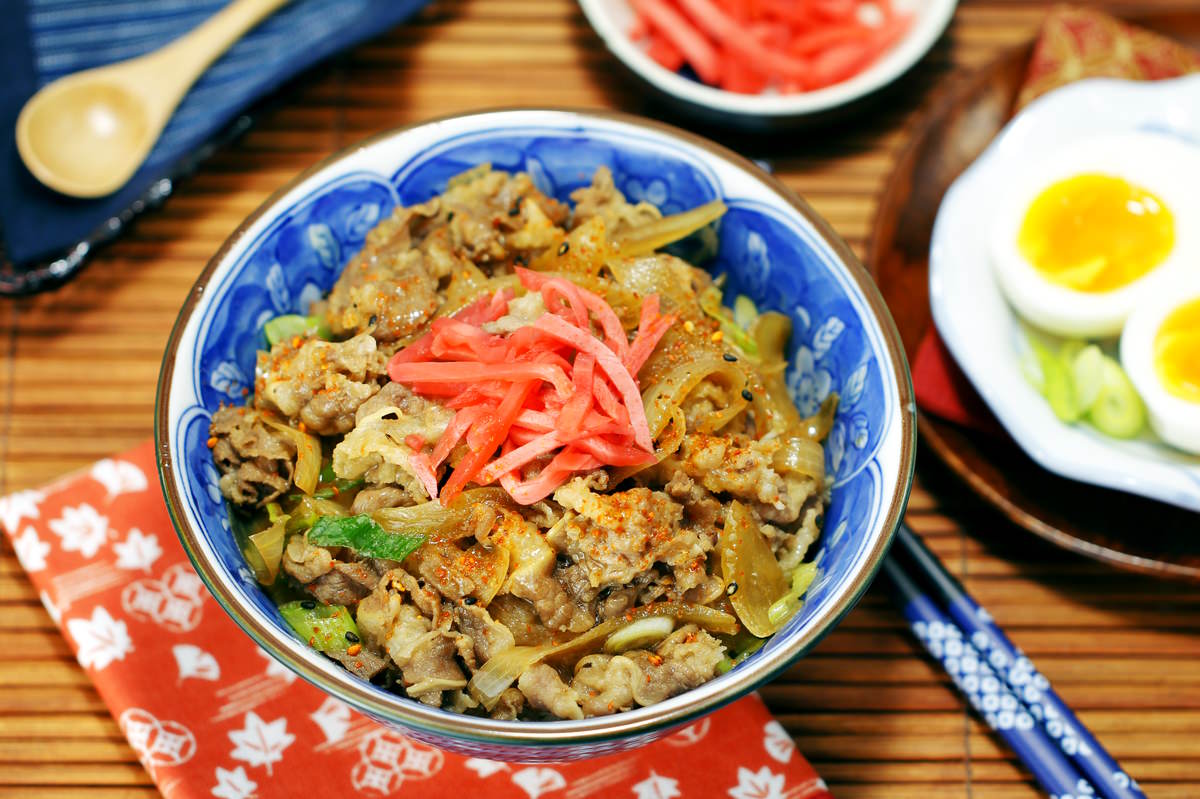
Here in Germany, it’s very difficult to find Gyudon in a restaurant, as none of the major chains have established a presence here yet. But the dish is very easy to make at home! You’ll be surprised at how simple and delicious it is!
The key to this recipe is choosing the right meat!
To be honest, Gyudon is known as a kind of fast food. It’s quite cheap and really quick to prepare, so you don’t need to use ‘expensive’ beef. Even restaurants like Sukiya and Yoshinoya use “just” thinly sliced beef belly.
Tip
I recommend buying thinly sliced beef from an Asian supermarket. You’ll find it in the frozen food section. For Gyudon, you should choose what is known as ‘Sliced Beef for Hot Pot’.
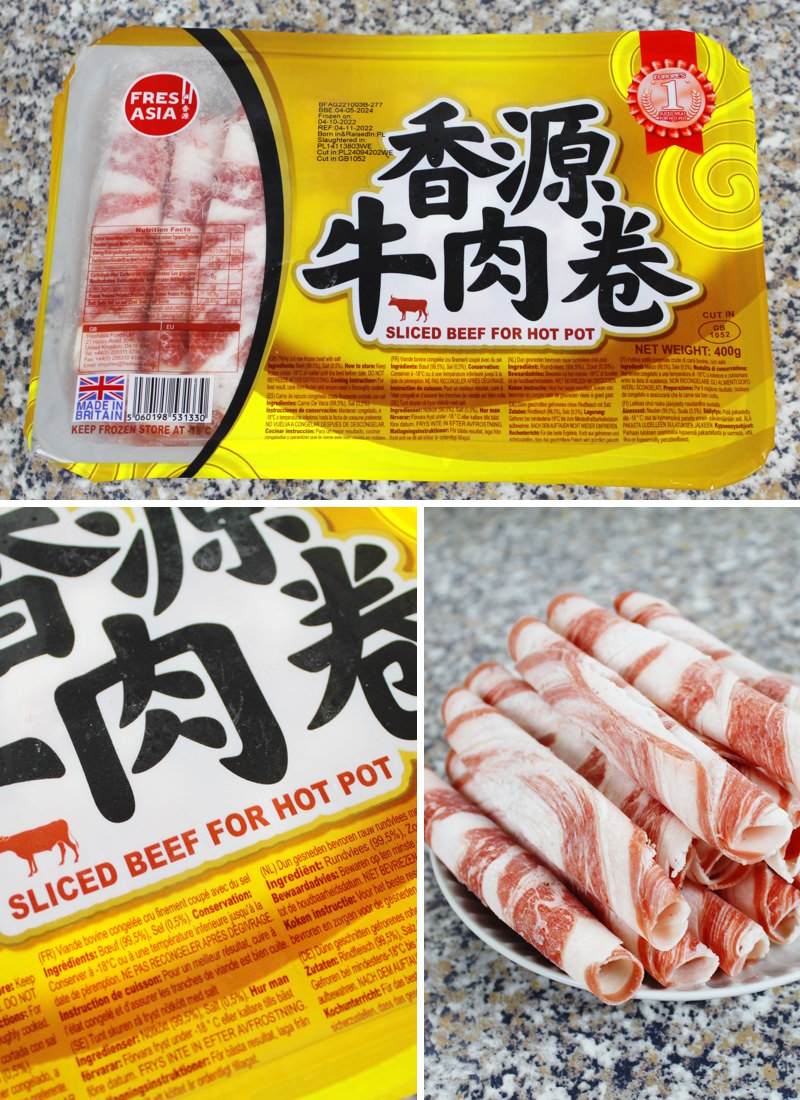
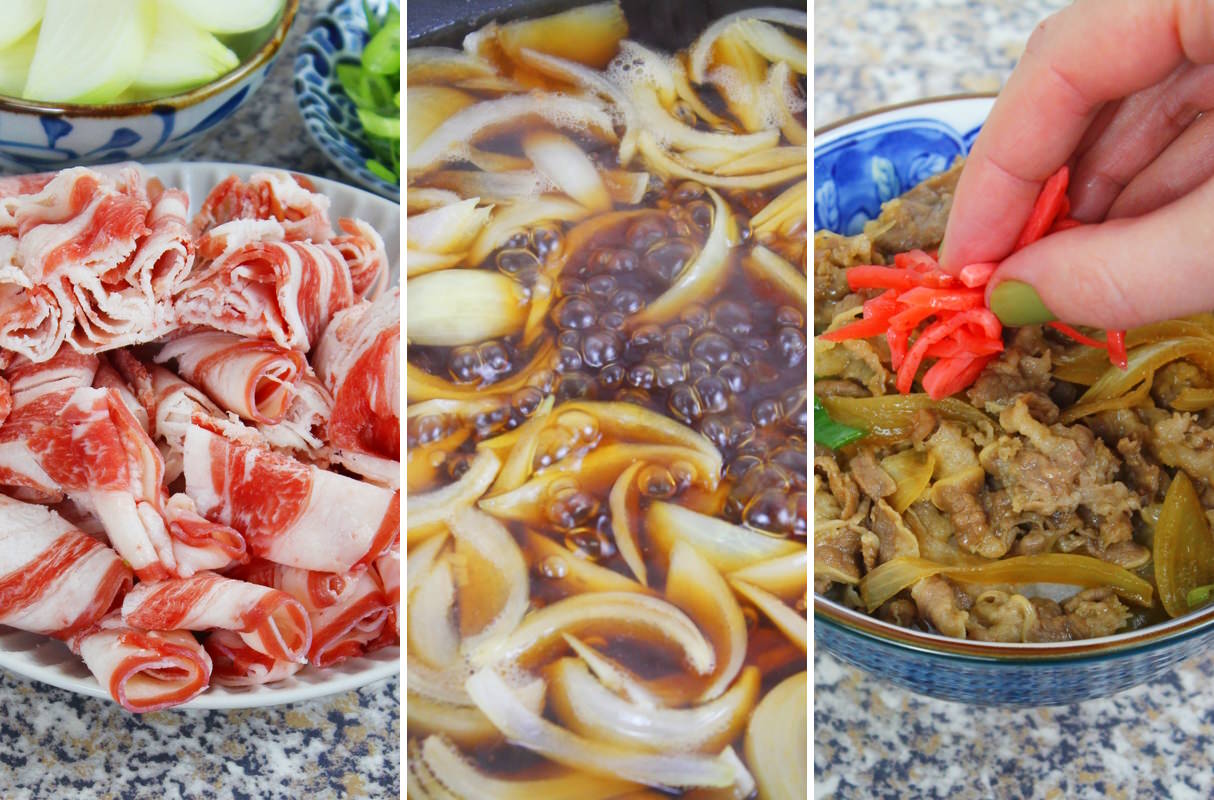
Alternatively, you can buy fresh rump steak or entrecôte. However, these cuts of meat are known for tending to be a bit tough, so it is important to slice them thinly:
To achieve finely sliced pieces, wrap the meat in cling film and place it in the freezer for 45 minutes. Then take it out, unwrap it and slice it as thinly as possible using a large sharp knife. The result doesn’t have to be perfect, as the meat will shrink back together during cooking anyway.
The beef is then cooked in a light Dashi stock, seasoned with soy sauce, Sake, Mirin and sugar. The onions braised in this become melt-in-the-mouth tender, and the sweet sauce goes perfectly with white rice. To top it off, add boiled eggs, a little pink beni shoga ginger and shichimi togarashi chilli!
The result tastes fantastic and is quick and easy to make at home. I wish you every success and hope you enjoy cooking – if you have any questions or suggestions, please feel free to use the comments section below the recipe 😊. Let’s get started:
Gyudon
serves 2 | 30 minutes | 708 kcal
🖨️ Print PDF 📌 Save pinGyudon is simply the perfect Japanese Donburi! Thinly sliced beef, cooked in a delicious Dashi sauce with cooked onions, served on a bed of fluffy Japanese white rice. So much flavour in a single bowl… With this recipe, you can now make this rice bowl in your own kitchen!
Ingredients (serves 2)
2 portions Rice (see recipe in a saucepan or in a rice cooker)*
200 g finely sliced beef (available in Asian shops, e.g. “Sliced Beef for Hot Pot”; alternatively rump steak, entrecôte or, for the original version: skirt steak)
2 soft-boiled eggs (for size M eggs, approx. 7–8 minutes)
1 onion
1 spring onion
2 tbsp oil (e.g. rapeseed oil)
200 ml Dashi broth (im Shop ansehen)* (to the recipe)
3 tbsp Shoyu (im Shop ansehen)*
2 tbsp Sake (im Shop ansehen)*
2 tbsp Mirin (im Shop ansehen)*
1 tbsp Sugar
a little Beni Shoga (red pickled ginger) (im Shop ansehen)*
a little Shichimi Togarashi (im Shop ansehen)*
Preparation (30 minutes)
Step 1
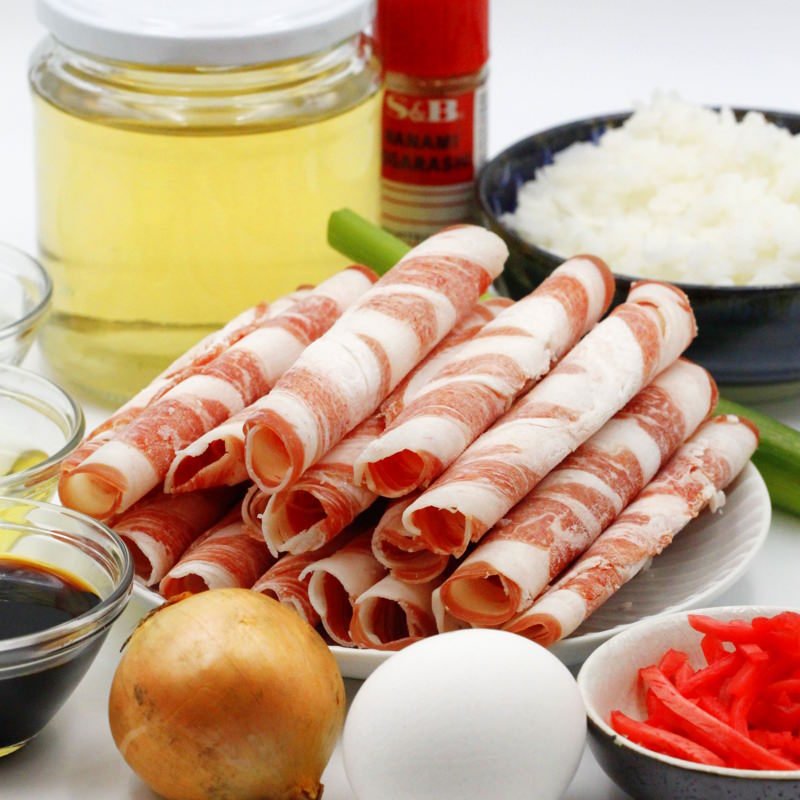
Prepare the raw materials for Gyudon and cook the rice (see the recipe here in a rice cooker or in a saucepan). In addition, the brodo Dashi made from Kombu and Shiitake should now be ready (click here for the recipe) .
Step 2
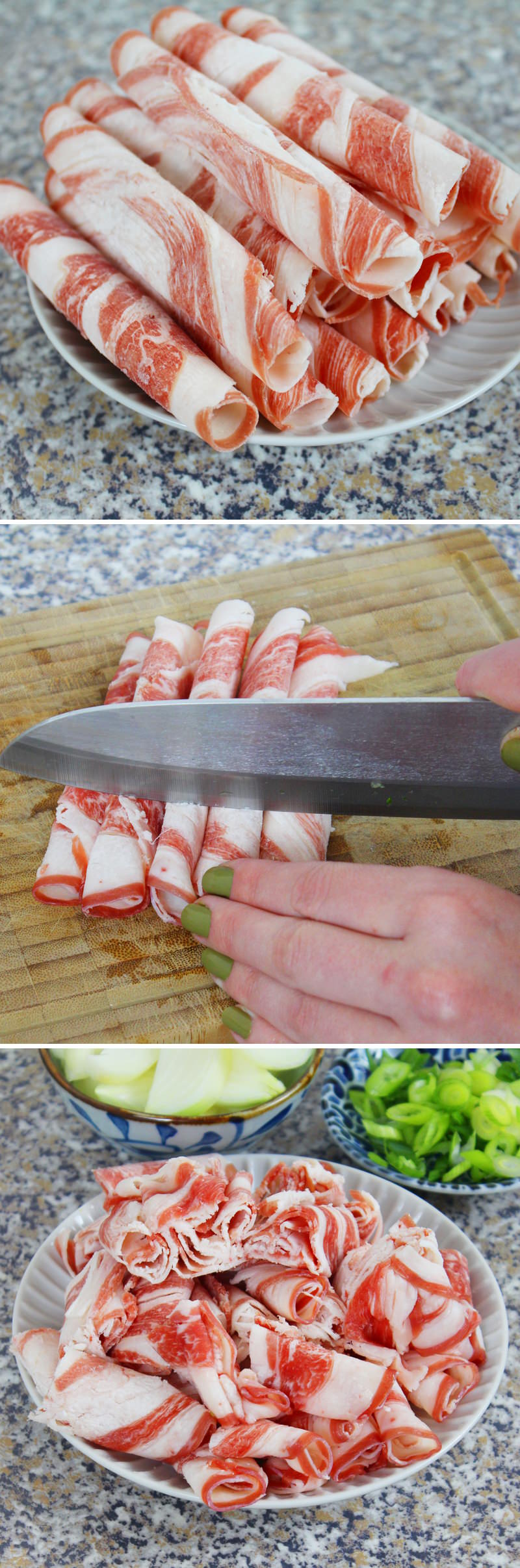
For beef from an Asian shop (frozen): Do not defrost the finely sliced, rolled-up beef ; instead, cut it into thirds whilst still frozen using a knife, so that you end up with strips about 4 cm wide.
Alternatively, for fresh beef (e.g. rump steak or entrecôte): Wrap the meat in cling film and place in the freezer for 45 minutes. Then take it out, unwrap it and cut it into slices as thin as possible using a large sharp knife. Tip: The result doesn’t have to be perfect, as the meat will shrink back together during cooking anyway.
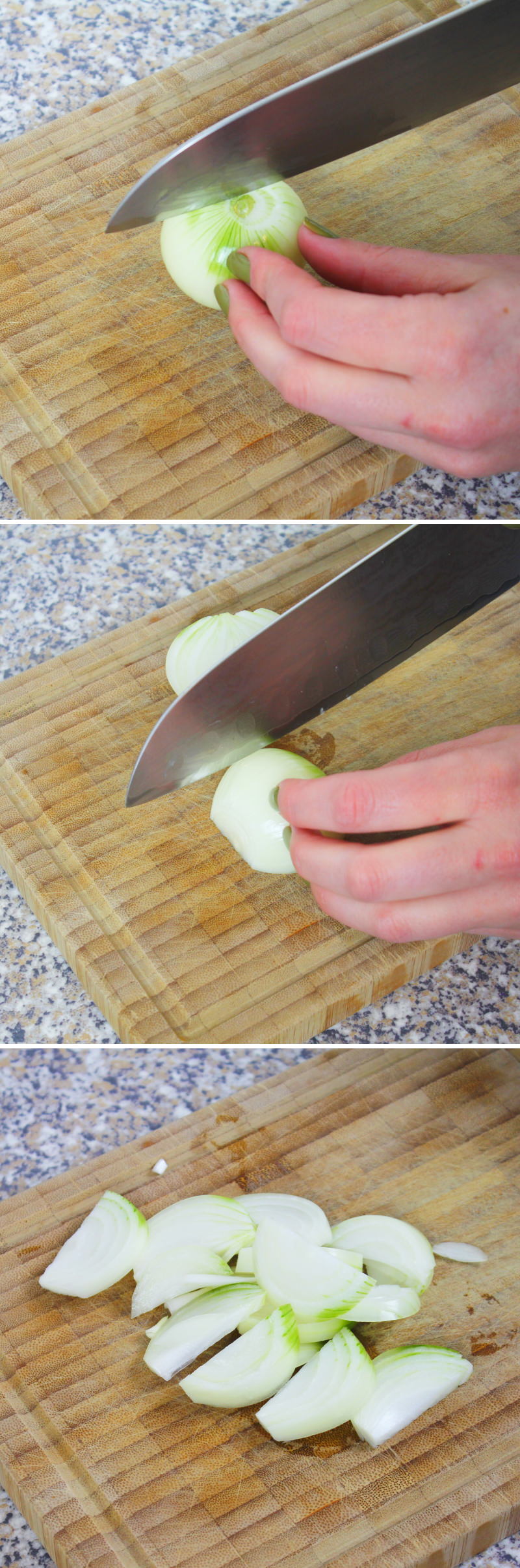
Step 3
Now peel the onion , then cut it in half and slice each half into thin strips.
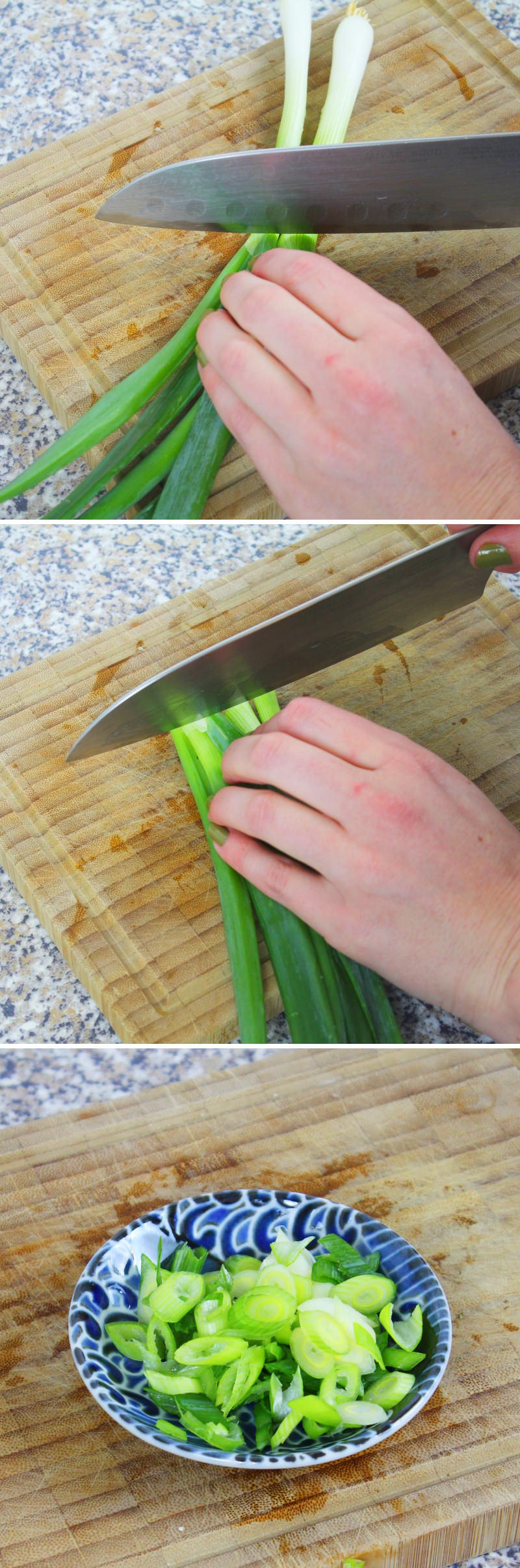
Step 4
Also, wash the spring onion , dry it and slice it into thin rings.
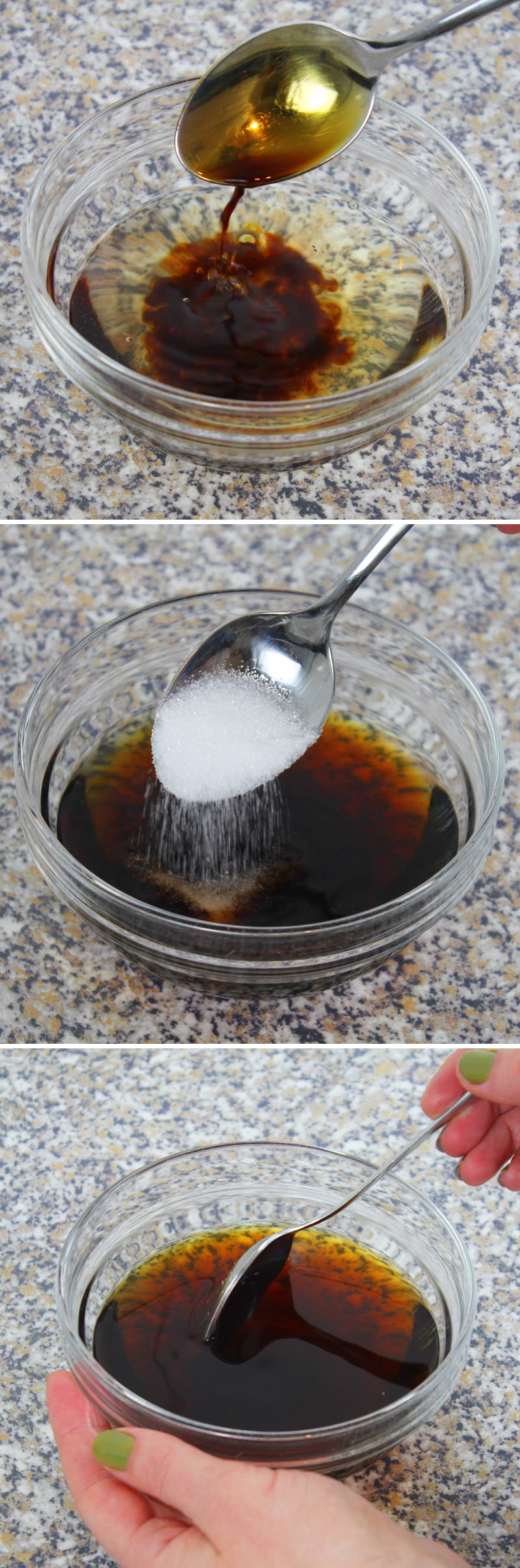
Step 5
Now, for the sauce, mix the Dashi broth with soy sauce, Sake, Mirin and sugar in a bowl until the sugar has dissolved.
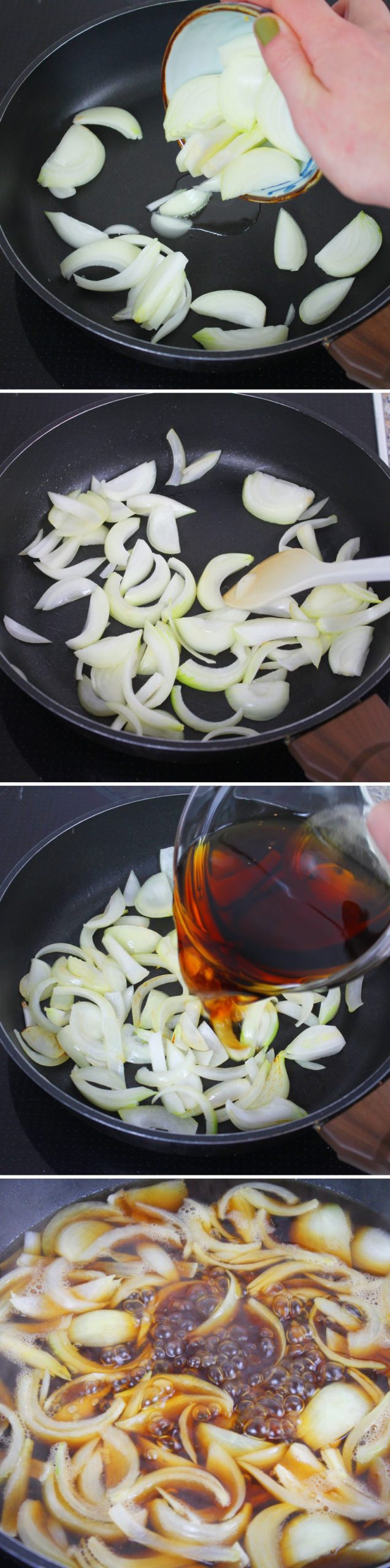
Step 6
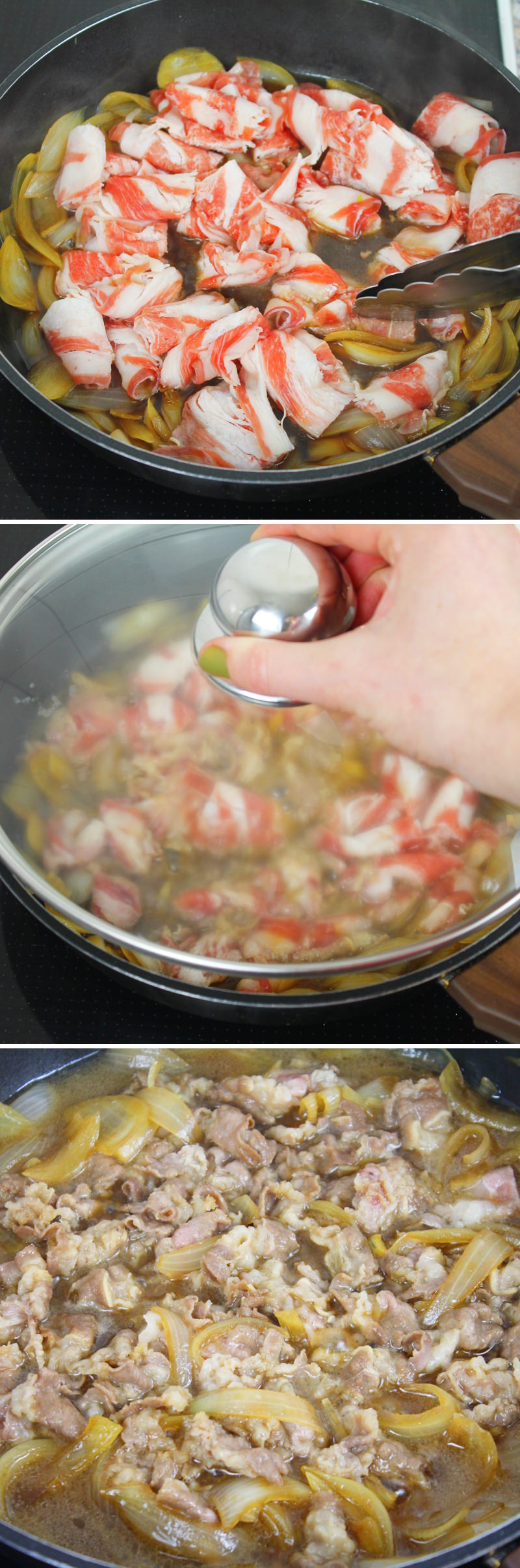
Now, in a medium-sized frying pan (please note: we will also need a lid for the pan later), heat the oil and briefly fry the onion strips in the hot pan, then pour the prepared sauce over them. Simmer everything until the onion is nice and soft.
Step 7
Now add the beef to the onions in the pan and mix well with the sauce. Then place a lid on the pan and simmer everything for 5 to 10 minutes (depending on how thick the meat is cut) until the meat is no longer pink.
Step 8
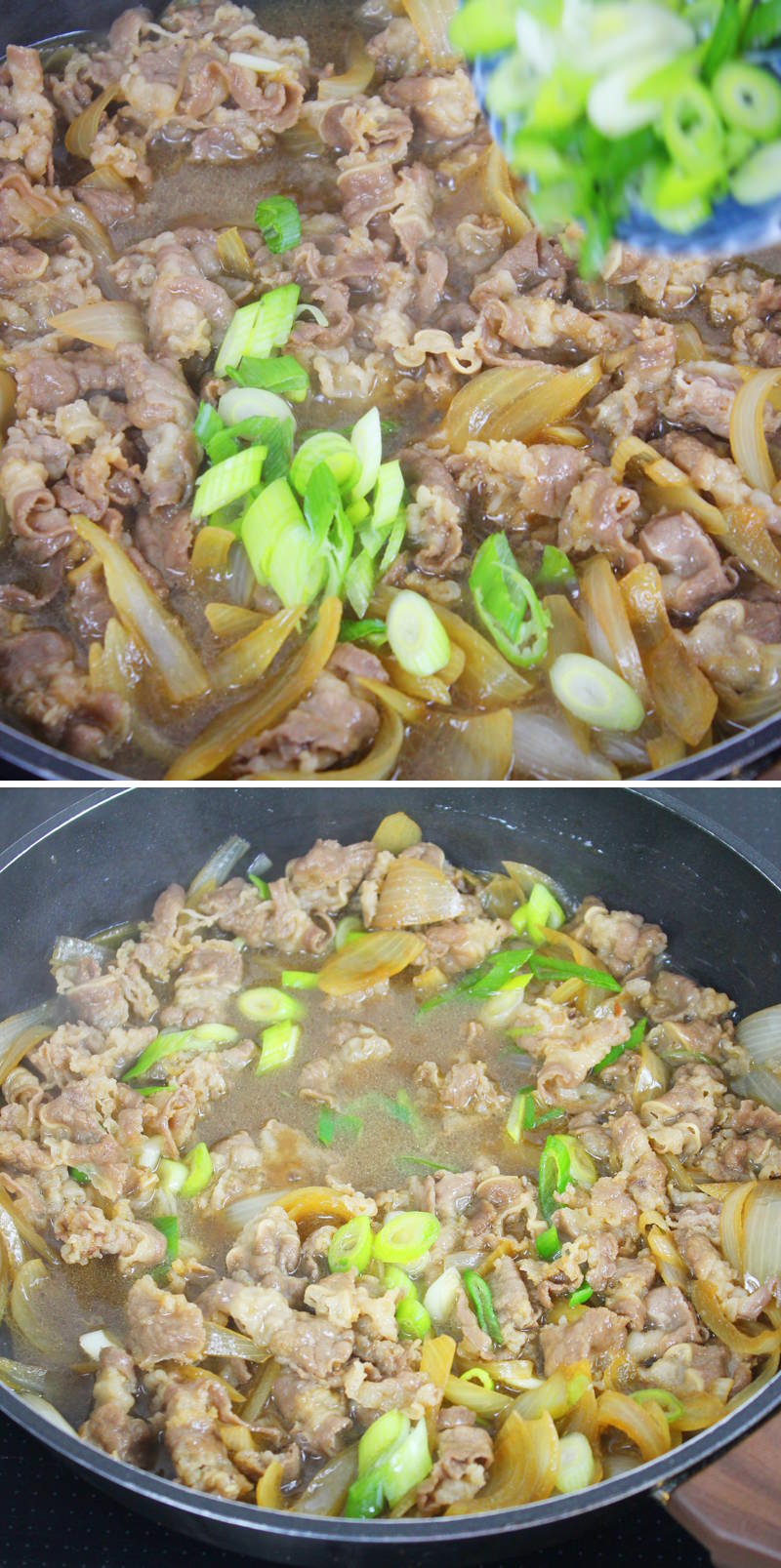
Turn off the heat and stir the spring onion rings into the meat.
Step 9
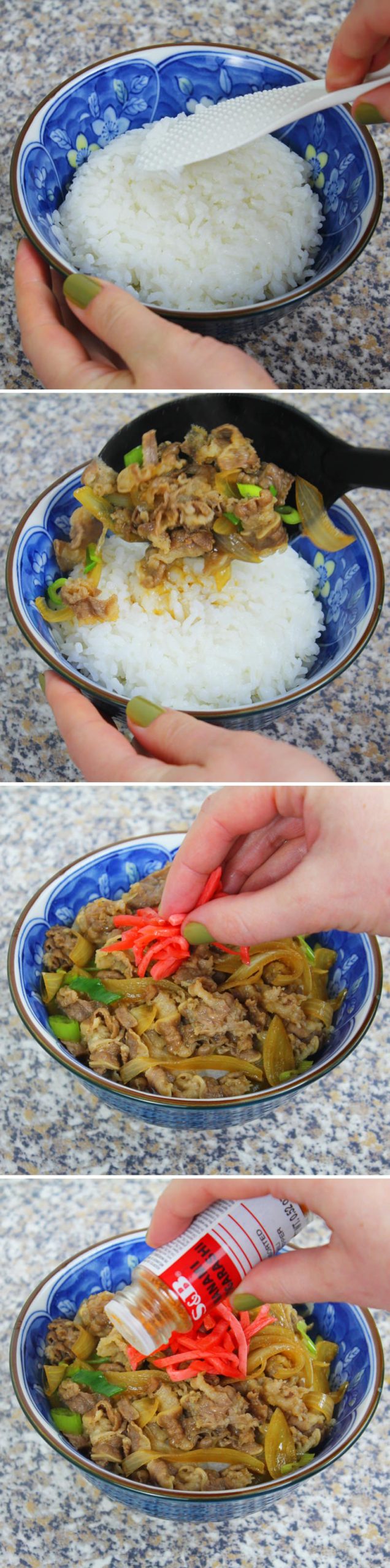
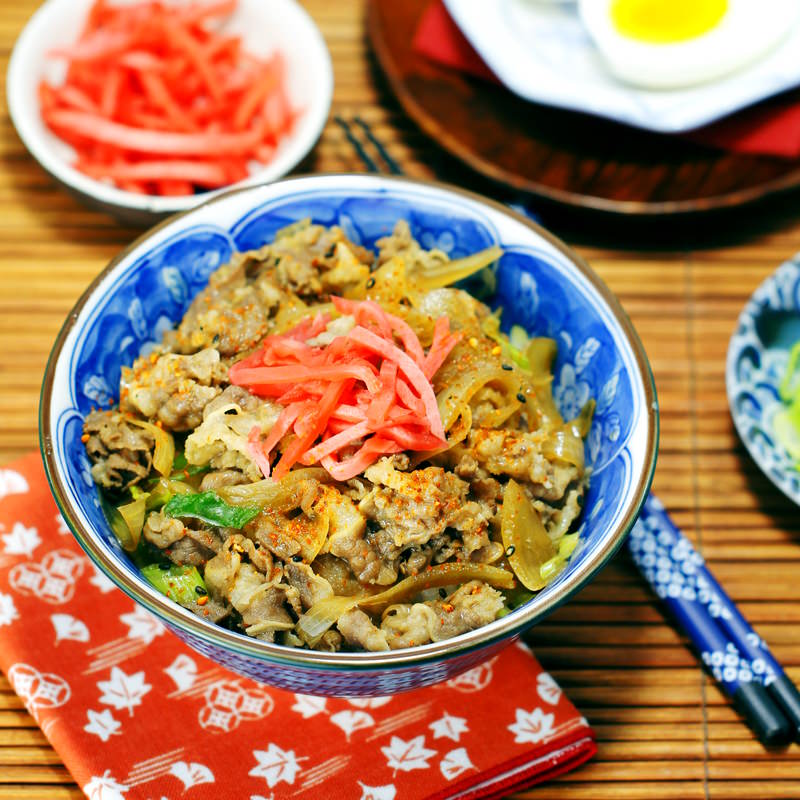
Now spoon the rice into bowls and add the contents of the pan as a topping. Garnish everything with Beni Shoga and a little Shichimi Togarashi.
Step 10
Done – Itadakimasu!
Are you looking for even more wonderful rice recipes from Japan? Here are a few ideas:
Tendon – Donburi with crispy Tempura on rice
With this recipe for Tendon , you can conjure up crispy tempura made from prawns…
Have you tried the recipe? Let me know in the comments – I can’t wait to hear from you.