

Language:


Miso soup is much more than just a side dish in Japan – it’s a warm embrace in a bowl! It is served daily in almost every Japanese household, whether for breakfast, lunch or dinner. What makes this Misoshiru soup so special is its simple yet flavourfully complex composition: the combination of Umami-rich Dashi and savoury Miso.
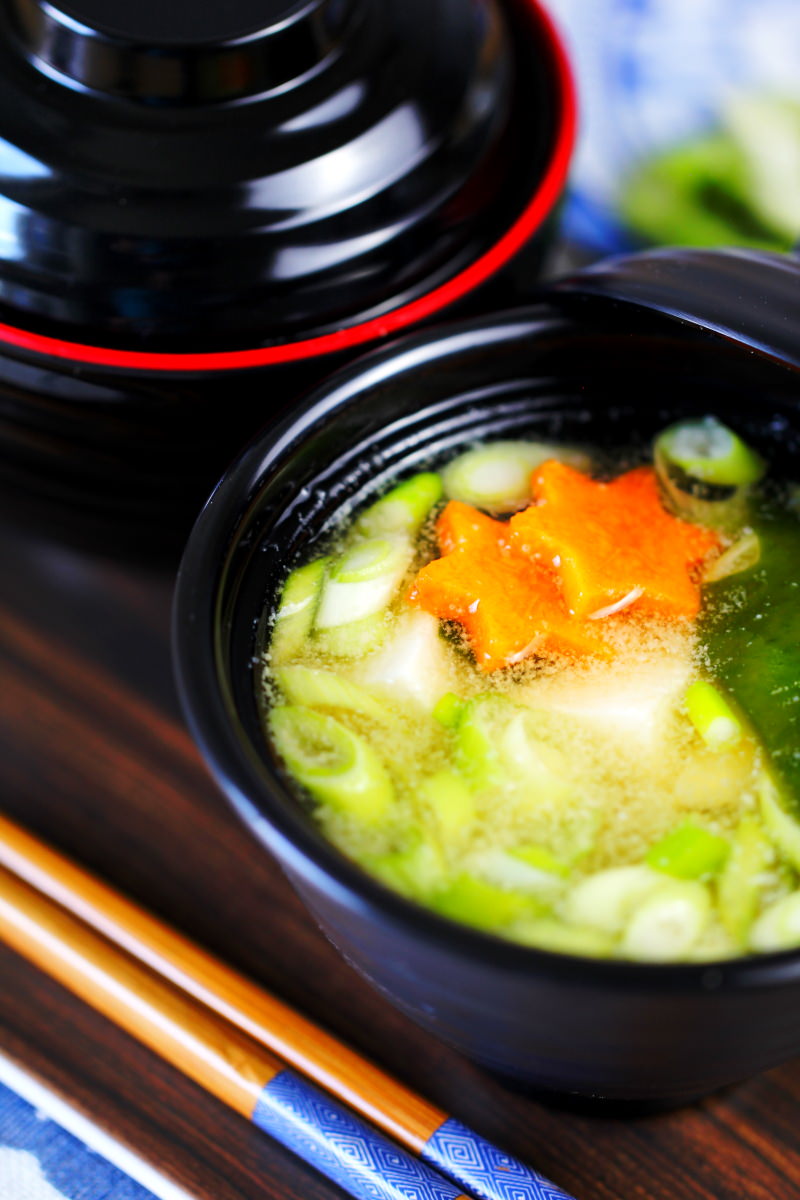
Miso is a fermented soya bean paste and gives the soup its distinctive flavour, which is deep yet pleasantly mild. Various ingredients are added, such as silken tofu, spring onions, Wakame seaweed or vegetables. But the best thing about miso soup is that it can be easily adapted to suit your own preferences.
It takes just a few passages, but the result is all the more impressive. Whether as a comforting breakfast or as an accompaniment to a full Japanese meal – miso soup is suitable for many occasions and is ready in no time. Especially when paired with rice or a small salad, it is a perfect accompaniment to almost any dish.
What exactly is miso soup?
Miso soup, or Misoshiru (味噌汁) in Japanese, is a classic that forms part of almost every Japanese meal. It is usually served with a bowl of steaming rice and is an integral part of traditional Japanese cuisine. An authentic Miso soup always consists of three essential components: Dashi, Miso paste and a selection of seasonal or regional ingredients. The combination of ingredients varies depending on the region and season, which makes Miso soup incredibly versatile.
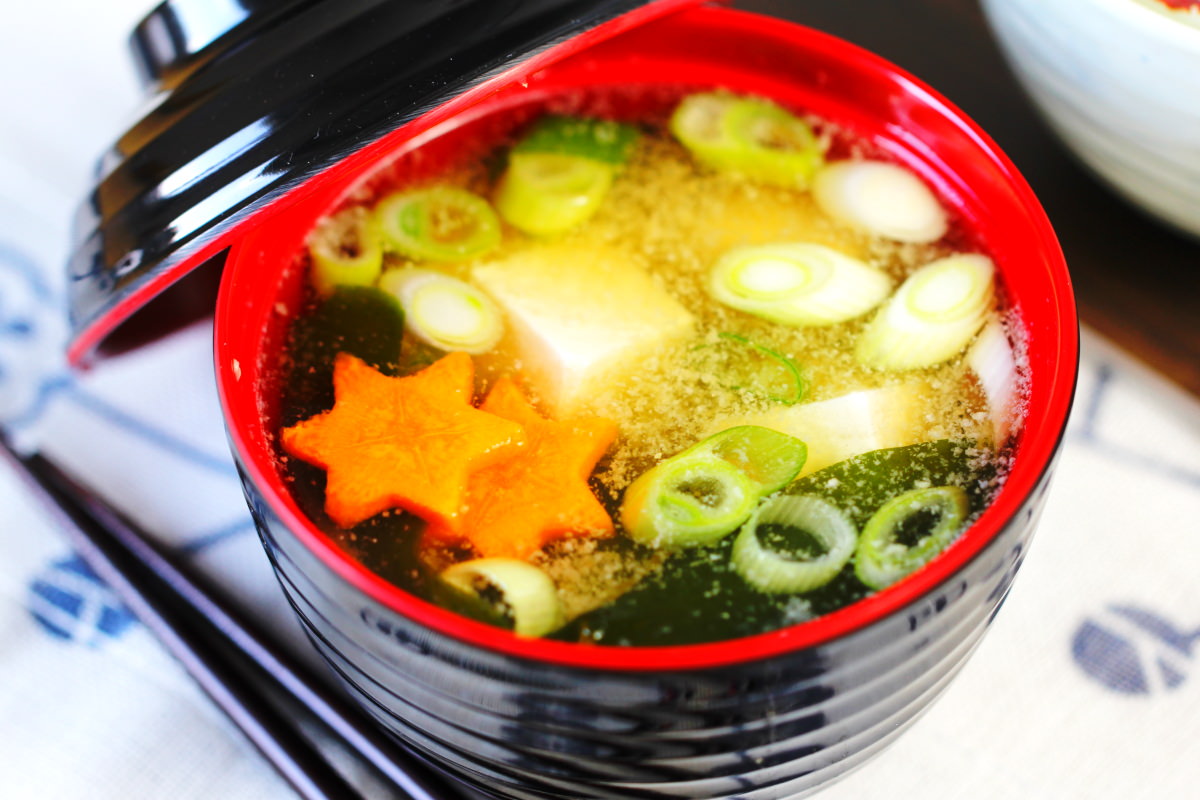
Traditionally, a combination of Tofu and Wakame seaweed is used, but there are countless other variations. Root vegetables, sprouts, mussels or even deep-fried Tofu constantly lend the soup new flavours. This makes miso soup an incredibly varied dish that should feature in every collection of Japanese recipes.
Dashi & Miso: The basis of Misoshiru
Miso paste is a fermented soya bean paste and is one of the best-known ingredients in Japanese cuisine. Its distinctive, savoury-salty flavour lends a depth of flavour to many dishes, not just soups. Miso is not only versatile but also available in various varieties – from mild Shiro Miso to strong Aka Miso. The differences in colour and flavour resulting from the fermentation process allow you to tailor the Misoshiru soup perfectly to your own preferences or seasonal conditions.
CUSTOMER FAVOURITE
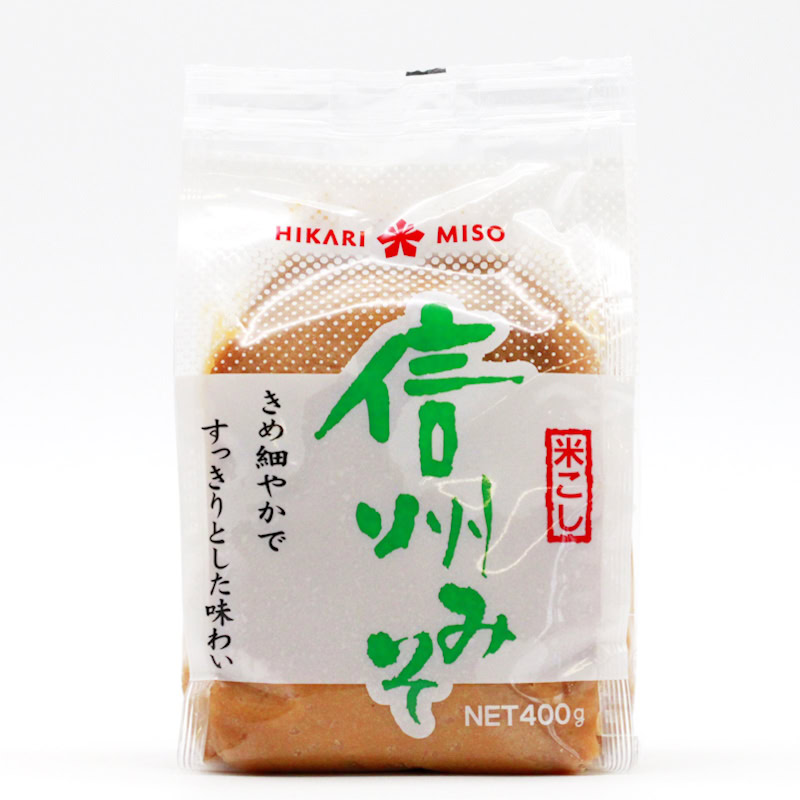
Miso Paste Shinshu Shiro 400 g (aus Japan)
Helle japanische Miso Paste für Suppen, Marinaden & Dressing. Diese Shinshu Shiro Miso Paste von Hikari ist eine helle, mild fermentierte Würzpaste aus Sojabohnen. Sie…
In stock
Dashi, the traditional Japanese broth, forms the backbone of Miso soup. The clear broth consists mainly of Kombu (dried seaweed) and Katsuobushi (dried bonito flakes), which quickly release their flavours into the water and create the famous Umami taste. This fifth taste enhances the natural flavour of the ingredients without overpowering them, ensuring that every element of the soup comes into its own.
No post found!
Tofu & Wakame: A classic combination
A typical miso soup recipe combines the Dashi and Miso base with Tofu and Wakame, a particularly sweet and crunchy type of seaweed. Wakame (im Shop ansehen) has been a staple of Japanese cuisine for centuries and is harvested after two years of growth, dried and sold ready for cooking. In soups, it adds a pleasant crunch and a mild flavour that harmonises wonderfully with the hearty broth.
Tofu (im Shop ansehen), the delicate soya product, is another key ingredient in Japanese cuisine. Silken tofu (Kinugoshi) is often used in soups, as its soft, almost silky texture complements the clear broth beautifully. Cotton Tofu (Momen) can also be used if you prefer a firmer texture. The mild flavour of the Tofu absorbs the aromas of the broth wonderfully, making the soup a pleasant, comforting dish.
With these basic ingredients, you can conjure up a Miso soup that tastes different every time – depending on seasonal ingredients or your own creativity.
The best variations for Miso soup from Japan
You’re probably familiar with the classic Misoshiru with Tofu and Wakame – but there are many more delicious variations! Colourful, fresh vegetables in particular make Misoshiru a real highlight. It’s especially recommended to choose seasonal vegetables, as they simply taste best when in season.
To add the perfect vegetables to your Miso soup, there are just a few simple things to bear in mind:
- Don’t add more than three types of vegetable to the soup – the rule here is: less is more!
- Cook the ingredients in the broth in the correct order: root vegetables first, then mushrooms, and finally light vegetables such as spinach.
- Only stir in the Miso paste once the vegetables are cooked.
- Herbs and garnishes are always added to the dish right at the very end.
The most popular ingredients for delicious, homemade Miso soup variations, sorted by season:
| Spring | green asparagus, sprouts, spring onions |
| Summer | courgette, aubergine, daikon radish, mushrooms |
| Autumn | Potatoes, pumpkin, okra, carrots, onions |
| Winter | Spinach, kale, deep-fried Tofu (Aburaage) |
Other ingredients, such as various vegetables, are added at the indicated point in the recipe (*).
Delicious Japanese meals with Misoshiru
On its own, Miso soup is incredibly flavourful, but it is traditionally served as part of a larger meal. In Japan, meals are not usually served in courses – everything is brought to the table at once! The soup, rice, side dishes and main course are served simultaneously, so that everyone has their own set of bowls and plates.
Did you know that Miso soup is eaten at any time of day in Japan? Whether for breakfast, lunch or dinner – it’s always a good choice! Here are a few menu suggestions:
Breakfast: Nattodon (fermented soya beans with sticky rice), Miso soup, Sake no Teriyaki (salmon in teriyaki sauce), Tamagoyaki (Japanese omelette) and Shiozuke (vegetables pickled in salt)
Lunch: Tori no Karaage (fried chicken), sticky rice, Miso soup and Amasuzuke (vegetables pickled in rice vinegar)
Dinner: Yasai no Tempura (vegetable Tempura), Sticky rice, Nasu Dengaku (Aubergine with Miso Glaze), Miso Soup, Shiozuke and fresh fruit
A light Miso soup is the perfect addition to any meal. With this recipe, you can bring a piece of Japanese tradition into your home! Do you have any questions about the Miso soup recipe, or would you like to share your results with the community? Simply leave a comment below this post. Have fun experimenting and enjoy!
Misoshiru
serves 4 | 45 minutes | 53 kcal
🖨️ Print PDF 📌 Save pinA light Miso soup is a real all-rounder. This recipe is a must-have for your cooking repertoire and is definitely a key part of a successful Japanese meal! Here you’ll find simple, step-by-step instructions on how to prepare it properly.
Ingredients (4 servings)
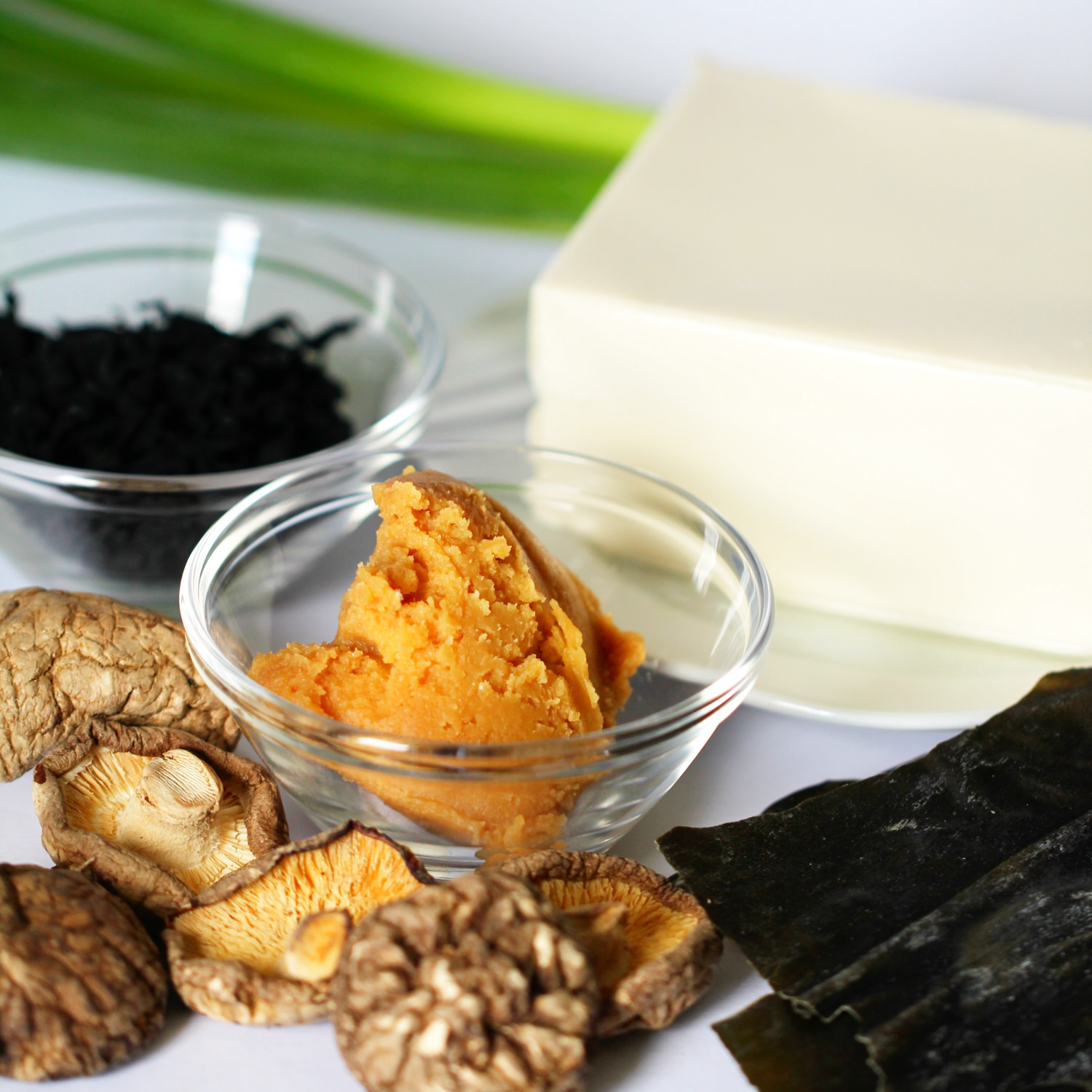
4 tbsp (heaped) Miso paste (im Shop ansehen)*
4 strips of Kombu (each approx. 2 x 10 cm) (im Shop ansehen)*
6 dried Shiitake mushrooms (im Shop ansehen)*
350 g silken tofu (im Shop ansehen)*
1 tbsp Wakame (im Shop ansehen)*
2 spring onions
1 l water
Useful tools:
Yukihiara pot (im Shop ansehen)
Kitchen thermometer (auf Amazon* kaufen)
Santoku knife (im Shop ansehen)
2-in-1 strainer & skimmer (im Shop ansehen)
Preparation (15 minutes)
Step 1
Prepare the ingredients for the Misoshiru with Tofu and Wakame.
Step 2
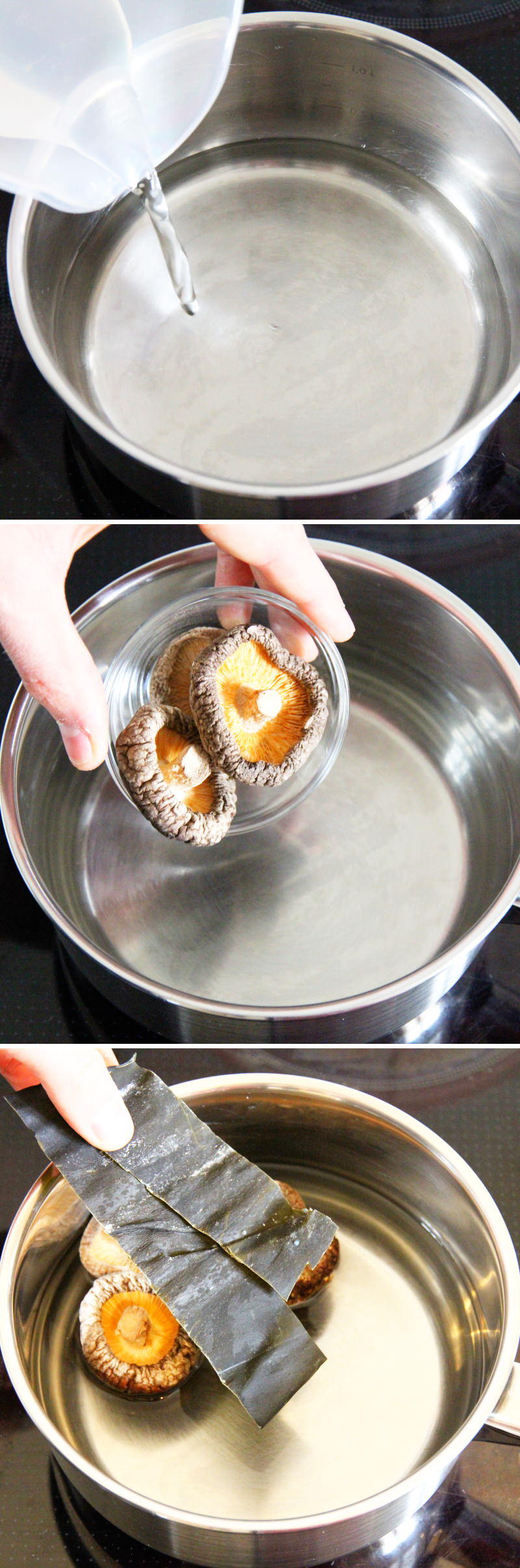
Pour the cold water into a saucepan and add the dried Shiitake mushrooms and Kombu strips (best cut to size with scissors).
Step 3
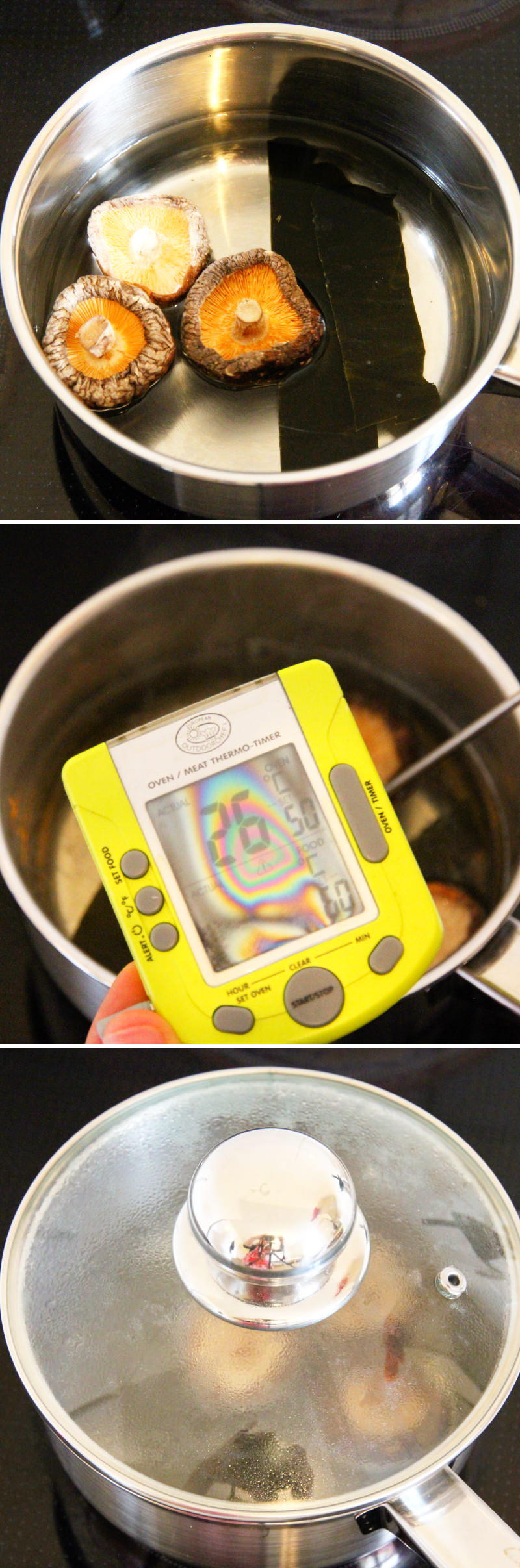
Heat the water to 60°C (approximately when the water begins to steam) — check with a kitchen thermometer — and once the temperature is reached, turn off the heat and remove the pan from the hob. Leave the stock to infuse for 30 minutes with the lid on.
Step 4
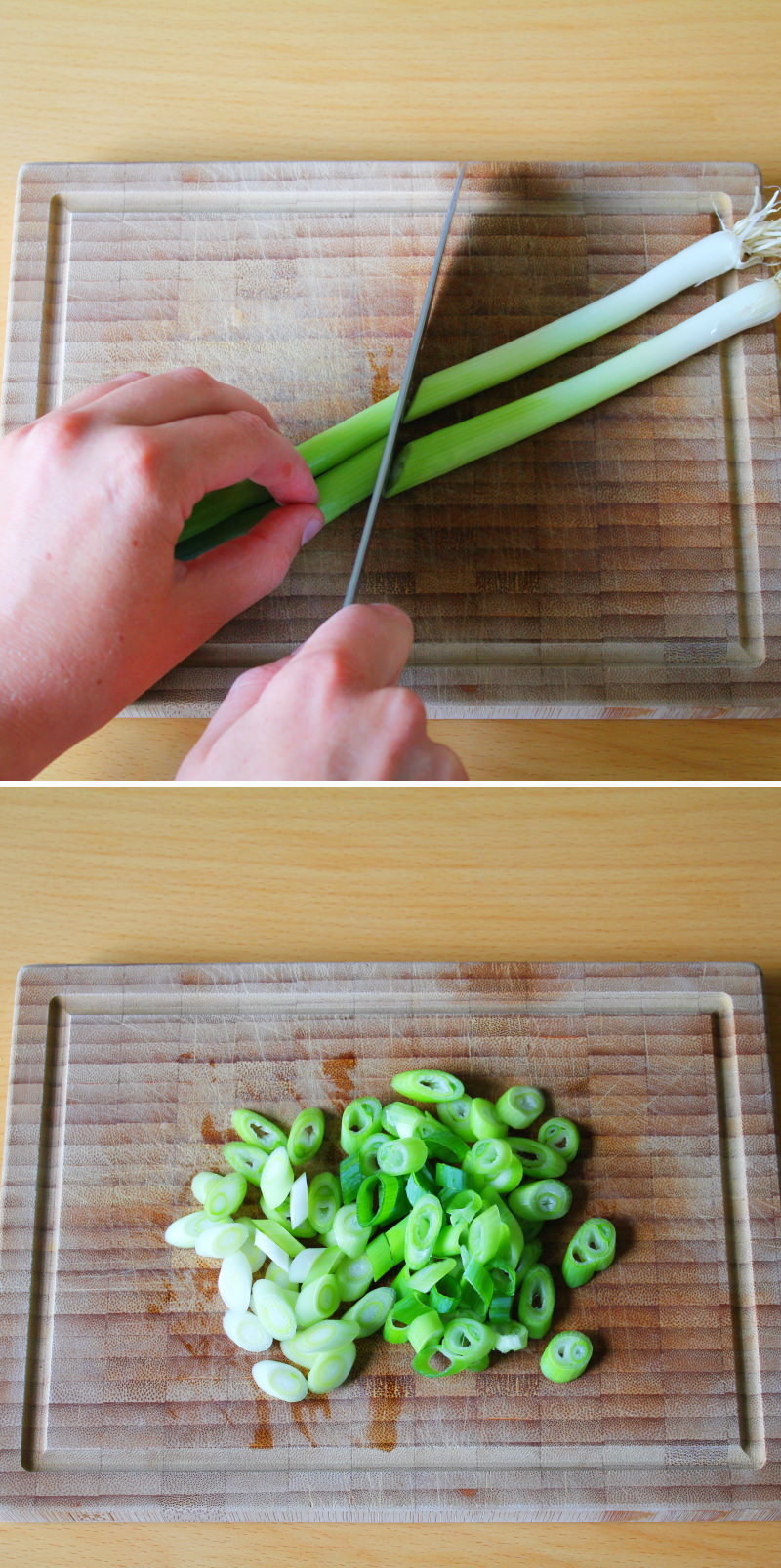
Meanwhile, prepare the spring onions and slice them into fine rings. It is best to split them in the middle with a large knife, fold them together and cut them into fine rings from the top down, removing the root end.
Step 5
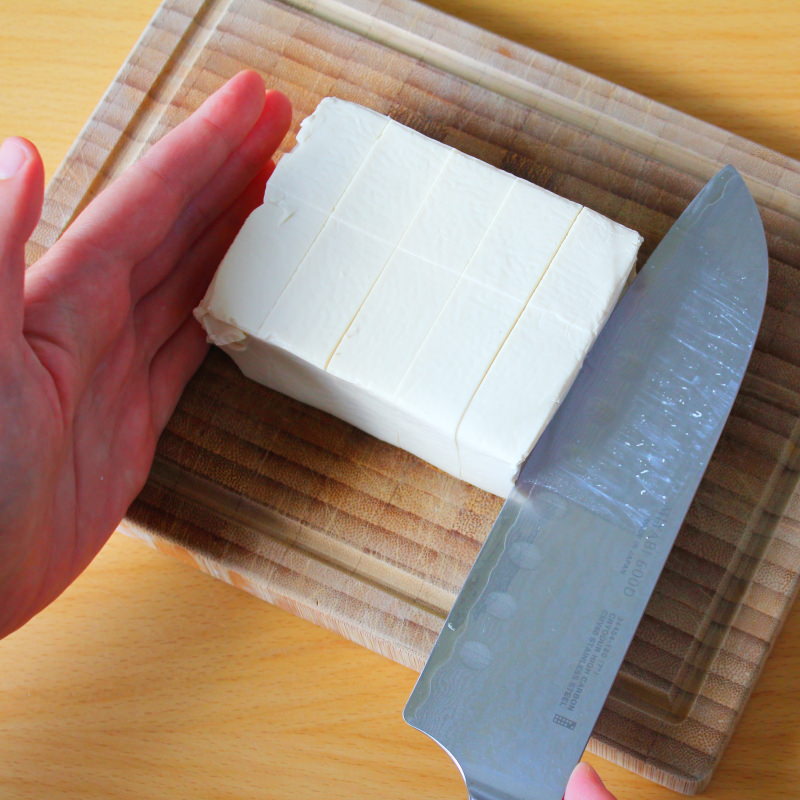
Drain the Tofu and cut it into bite-sized pieces (about 2 cm cubes) using a large knife.
Step 6
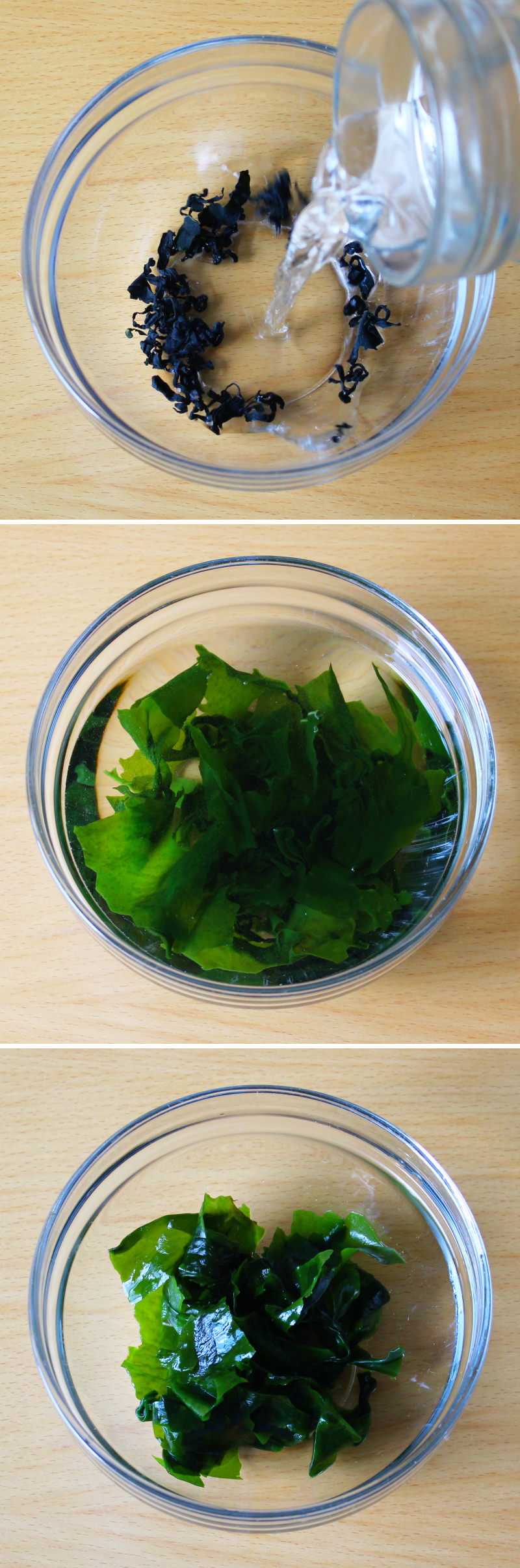
So, pour cold water over the Wakame in a bowl so that it is completely covered, and leave to soak for 10 minutes. Then drain through a sieve and gently squeeze out the remaining liquid with your hands.

Step 7
The Dashi broth made with Shiitake and Kombu is ready after 30 minutes. Strain it through a fine sieve into another pot to obtain a clear broth. Bring the finished Dashi stock to the boil over a high heat. (* You can now add further ingredients of your choice). Then turn off the hob and leave the saucepan on the hot hob (the stock should be hot, but must not be boiling).
Carefully add the sliced silken tofu to the Dashi stock.
Step 8
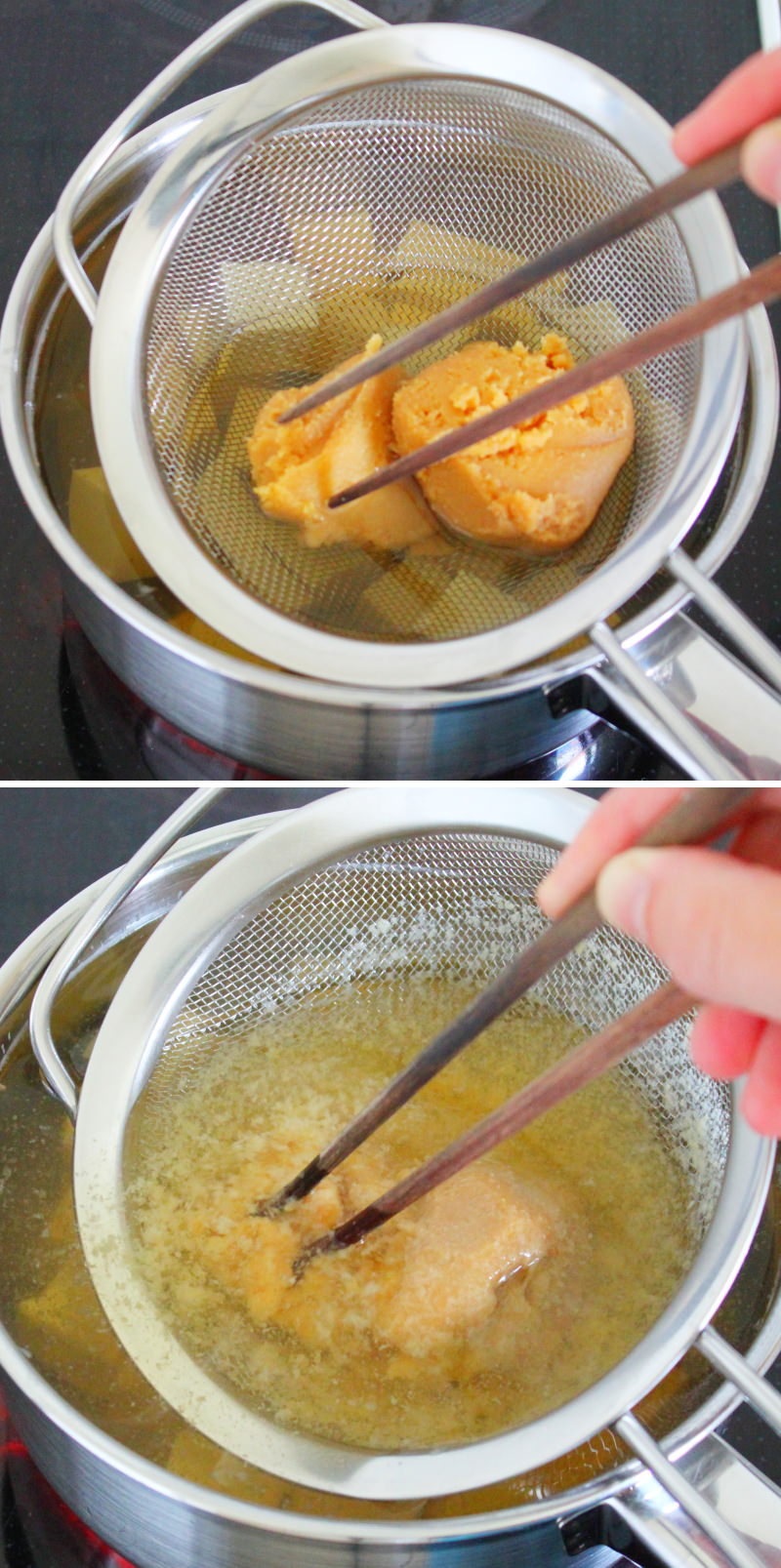
Using a fine-mesh metal sieve or a large ladle, stir in the Miso paste. To do this, place the sieve over the rim of the pot and stir the Miso paste into the liquid using, for example, a spoon or chopsticks.
Step 9
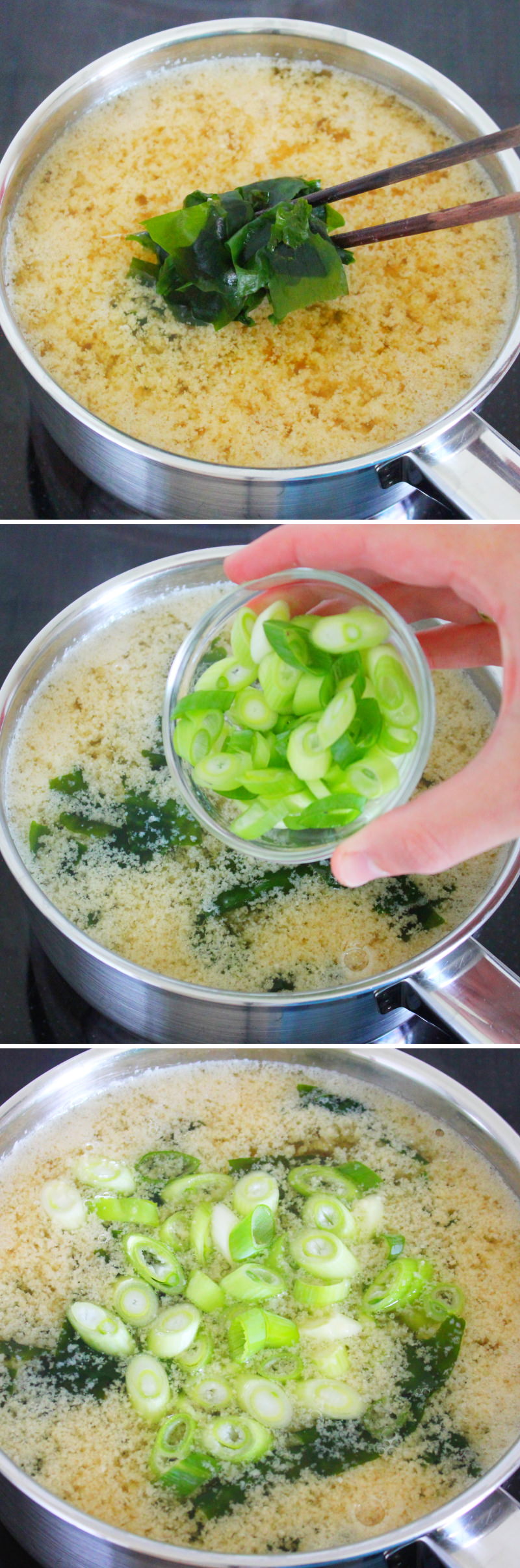
Add the previously prepared spring onion rings and soaked Wakame seaweed.
Step 10
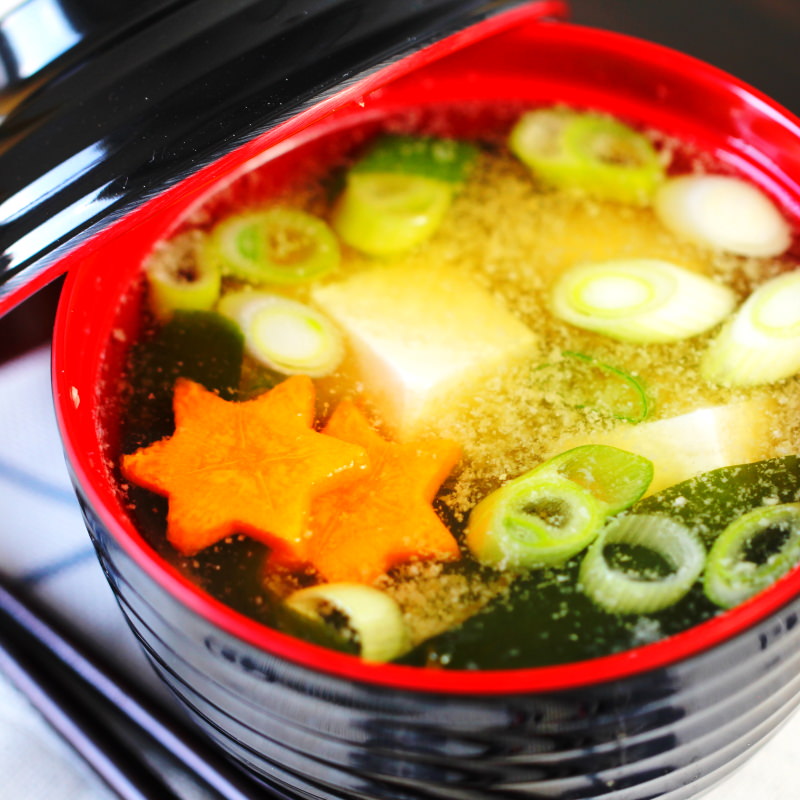
Serve the finished Misoshiru hot in small bowls. Miso soup is sipped directly from the bowl, and the accompaniments are eaten with chopsticks – a spoon is not usually provided. Ready – Itadakimasu!
Are you looking for even more wonderful Japanese recipes featuring Miso paste? Here you’ll find my most popular recipe ideas:
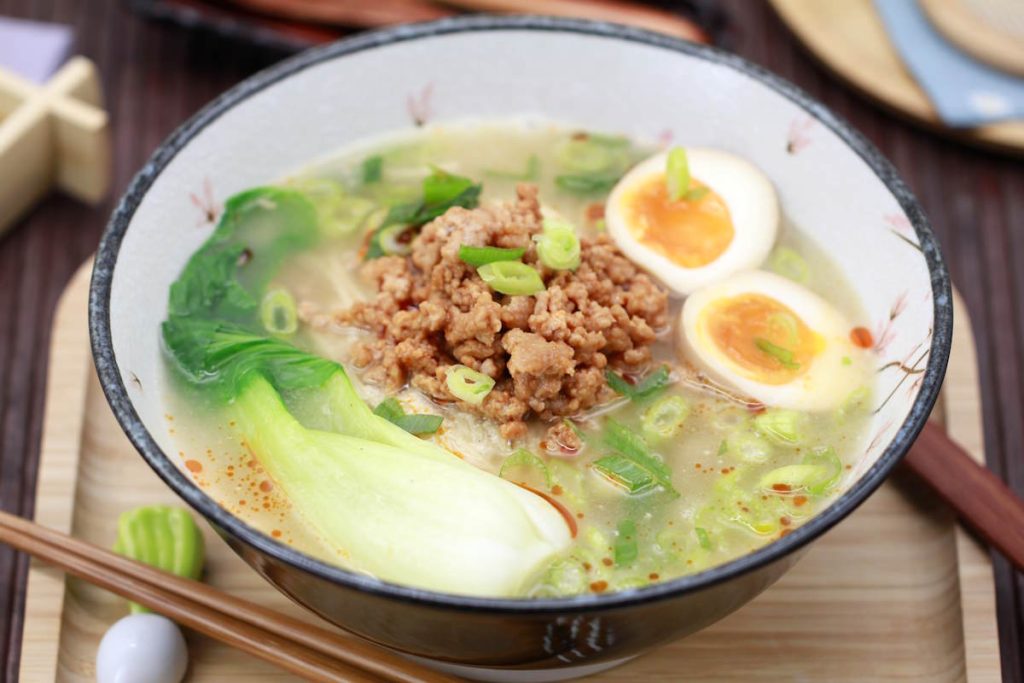
Make your own Tantanmen: creamy sesame Ramen with spicy Miso minced meat, pak choi & ramen eggs
Tantanmen is a Ramen soup for those who like it creamy but not heavy. A…
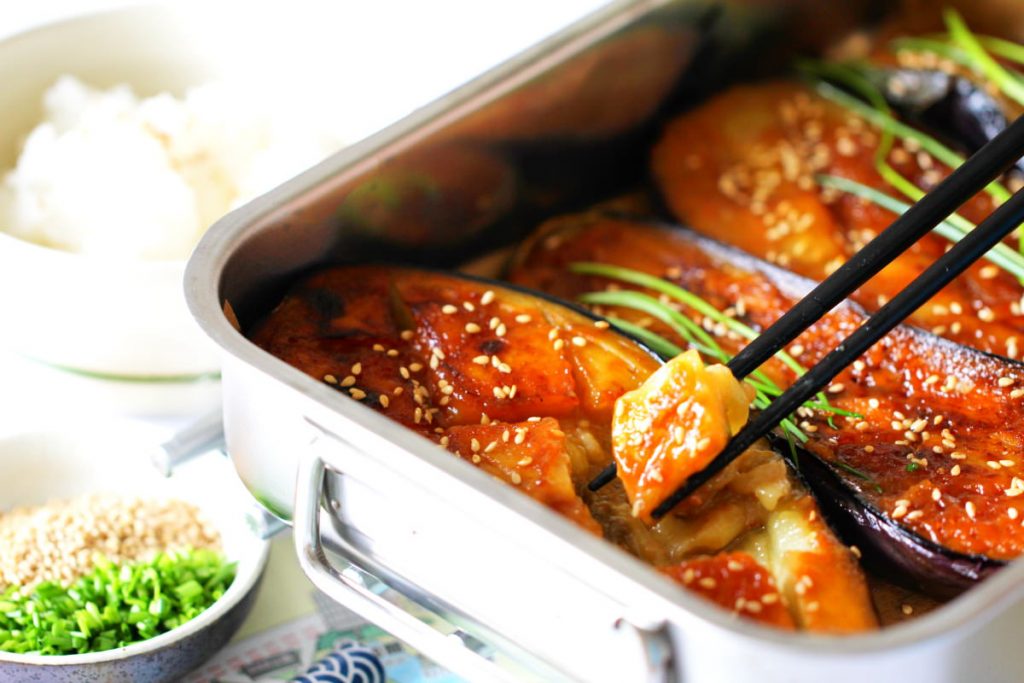
Nasu Dengaku: Oven-baked aubergines glazed with Miso – simple & irresistible
Nasu Dengaku is a true classic of Japanese cuisine and perfect as a side dish…
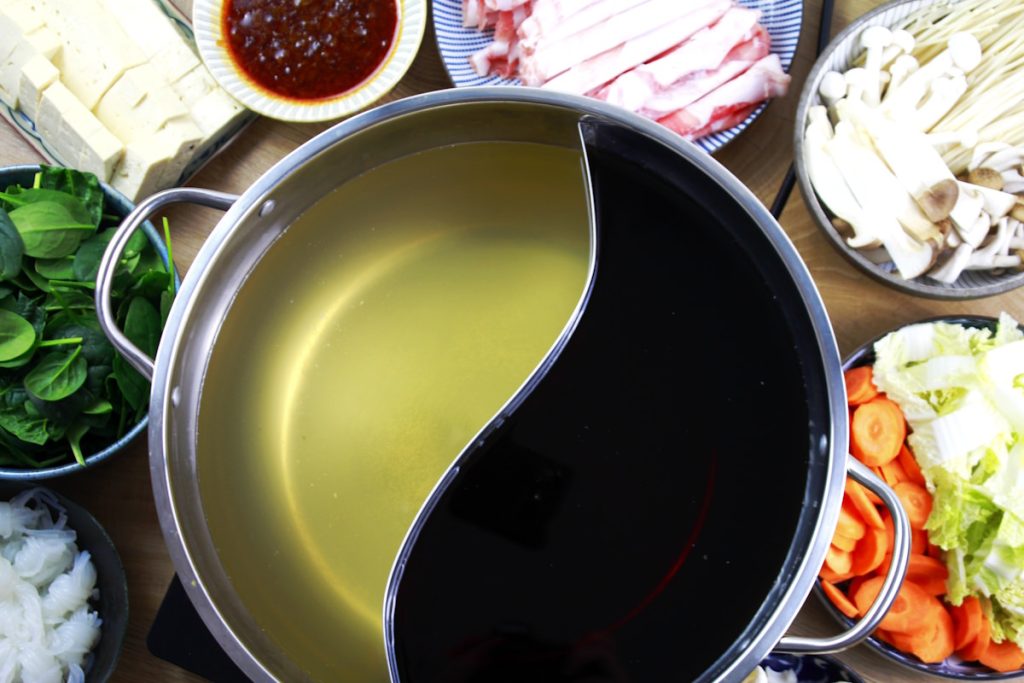
Shabu Shabu Guide: Everything you need to know – broth, dips & the best ingredients!
Shabu Shabu is more than just a dish – it’s a culinary tradition that brings…

Quick Miso Udon: Spicy noodle soup with Miso, Tofu & Shimeji mushrooms
If you’re looking for a quick, comforting meal that’s both easy to prepare and incredibly…

Make 4 types of Ramen Tare yourself in under 30 minutes – authentic, simple & quick!
Hey ramen fans! Get ready for a real taste sensation with my super-simple recipe for…
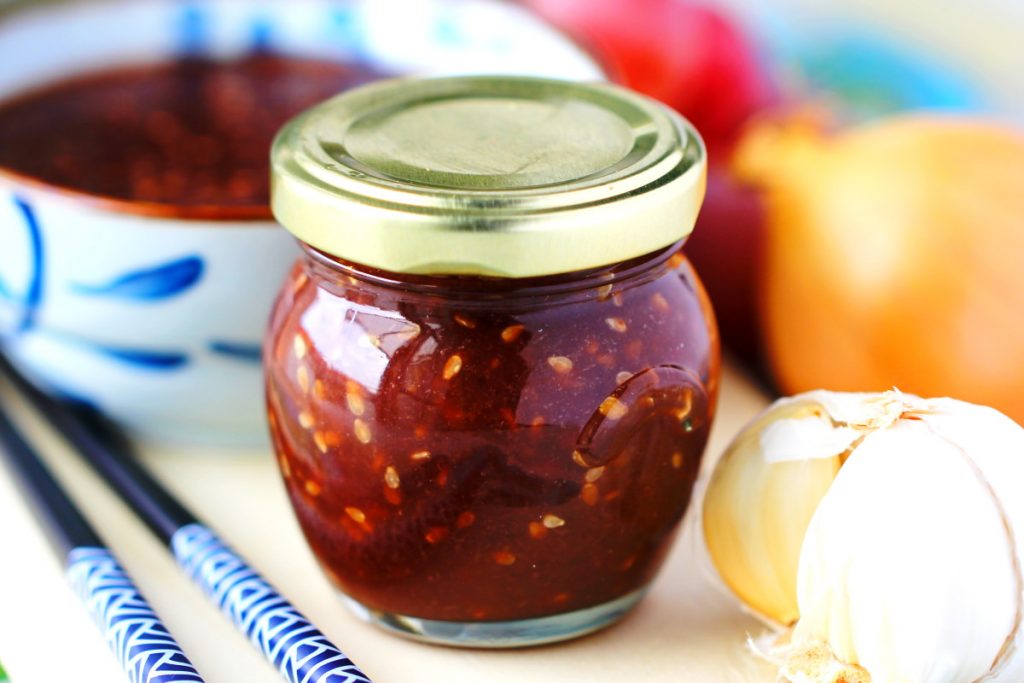
Fruity & delicious: make your own simple and flavourful teppanyaki sauce!
In just a few simple steps and in less than 15 minutes, you can conjure…
Have you tried the recipe yet? Let me know in the comments, I’m really looking forward to hearing from you.